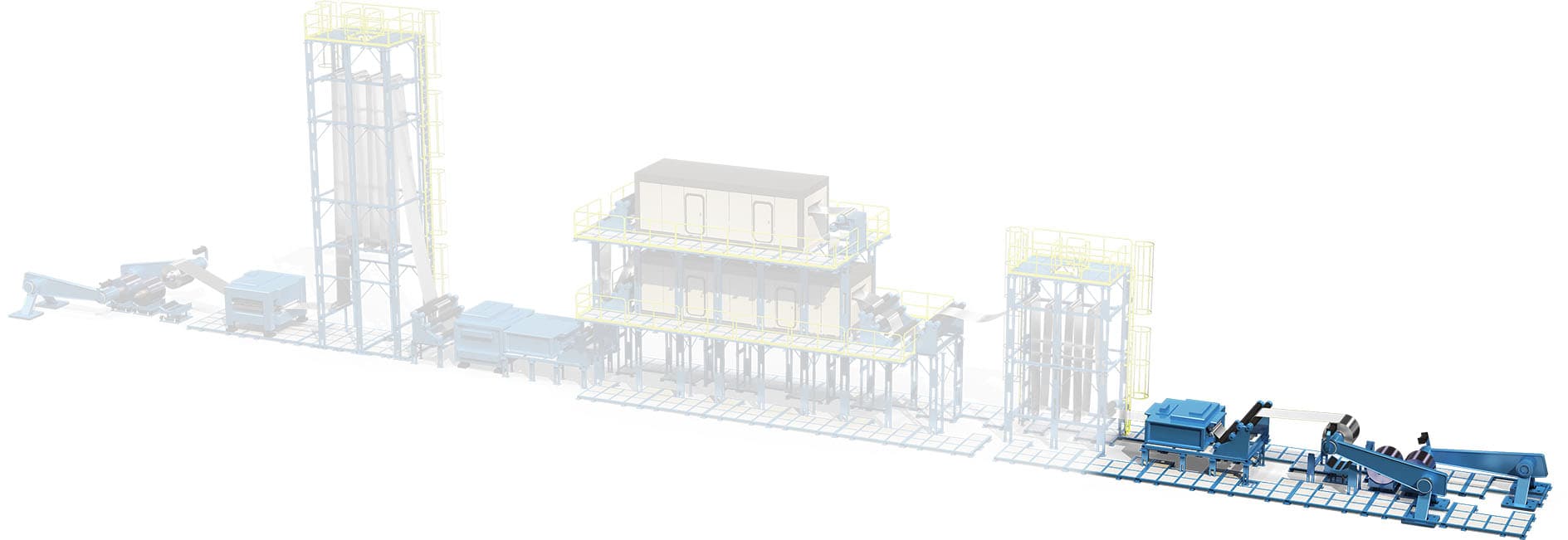
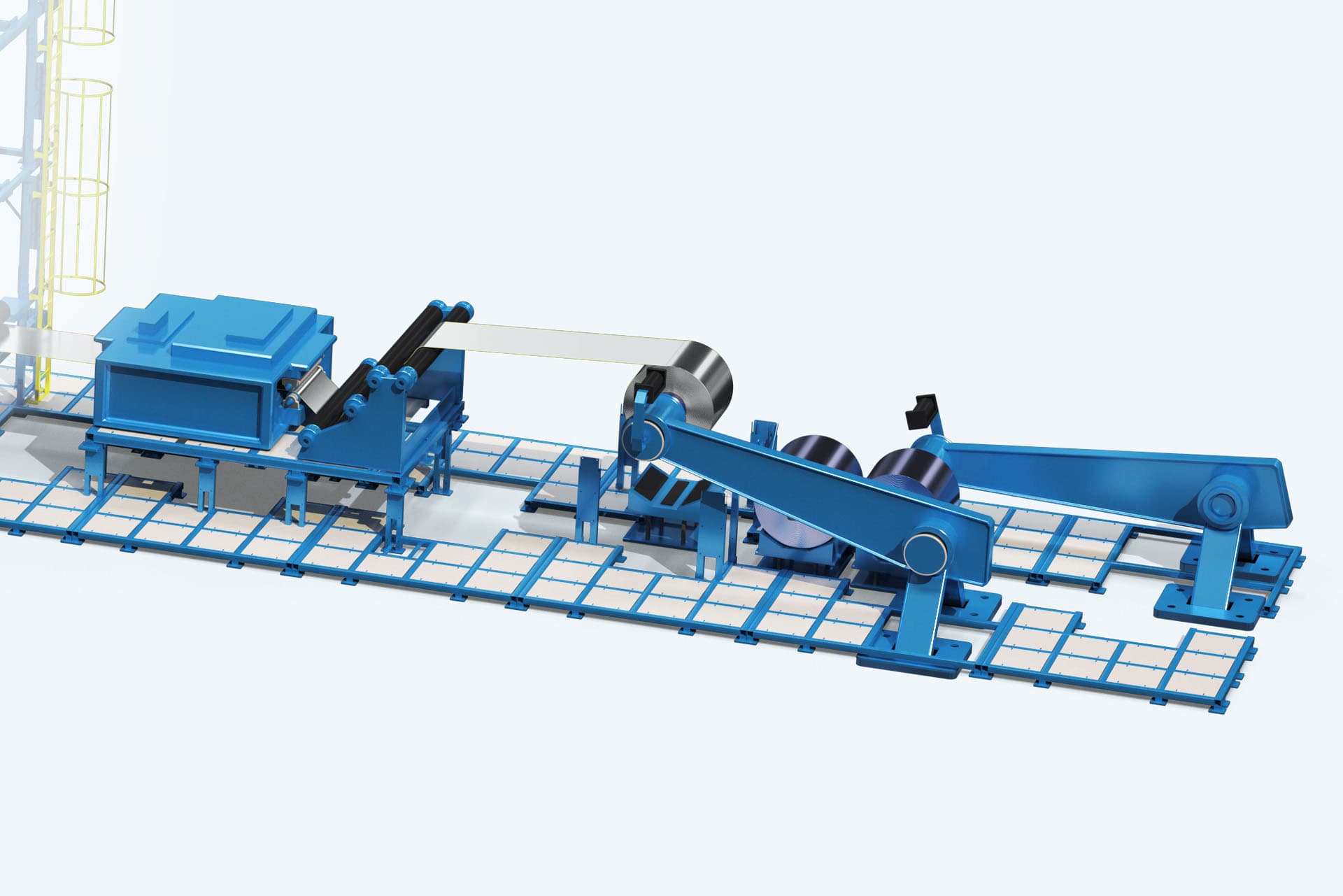
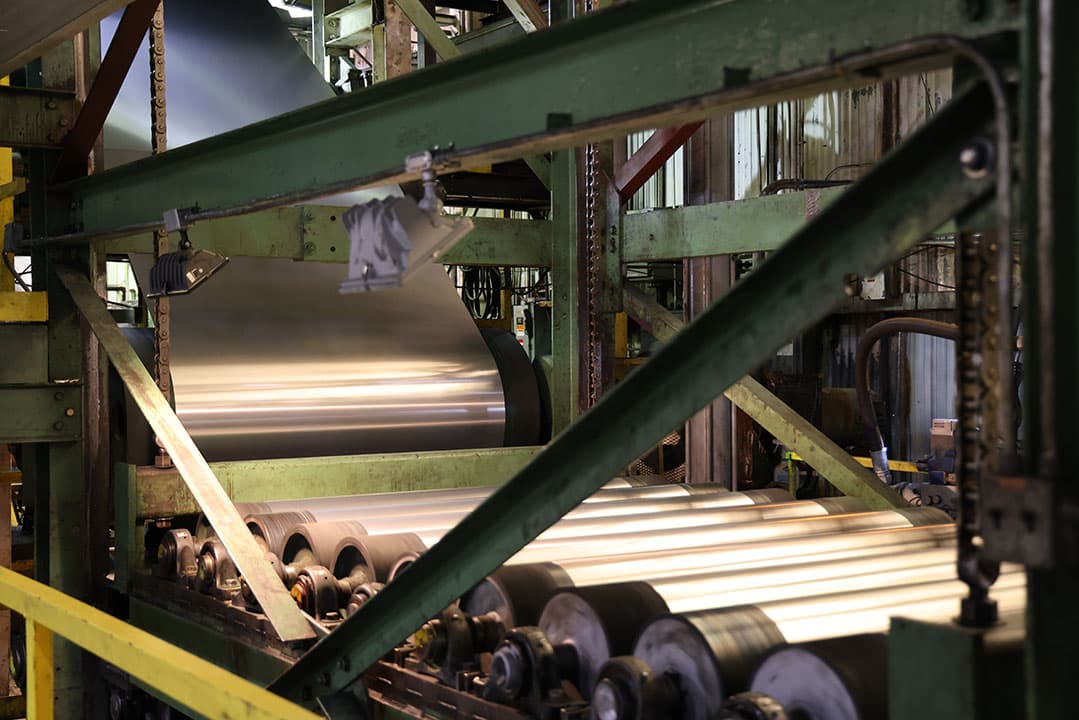
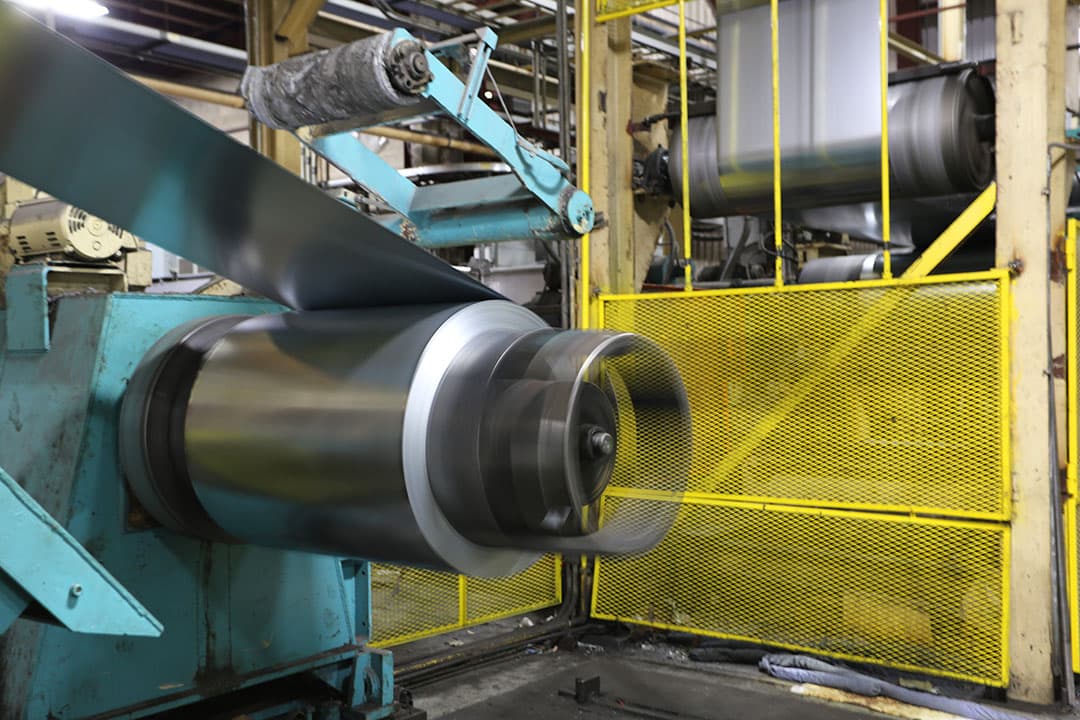
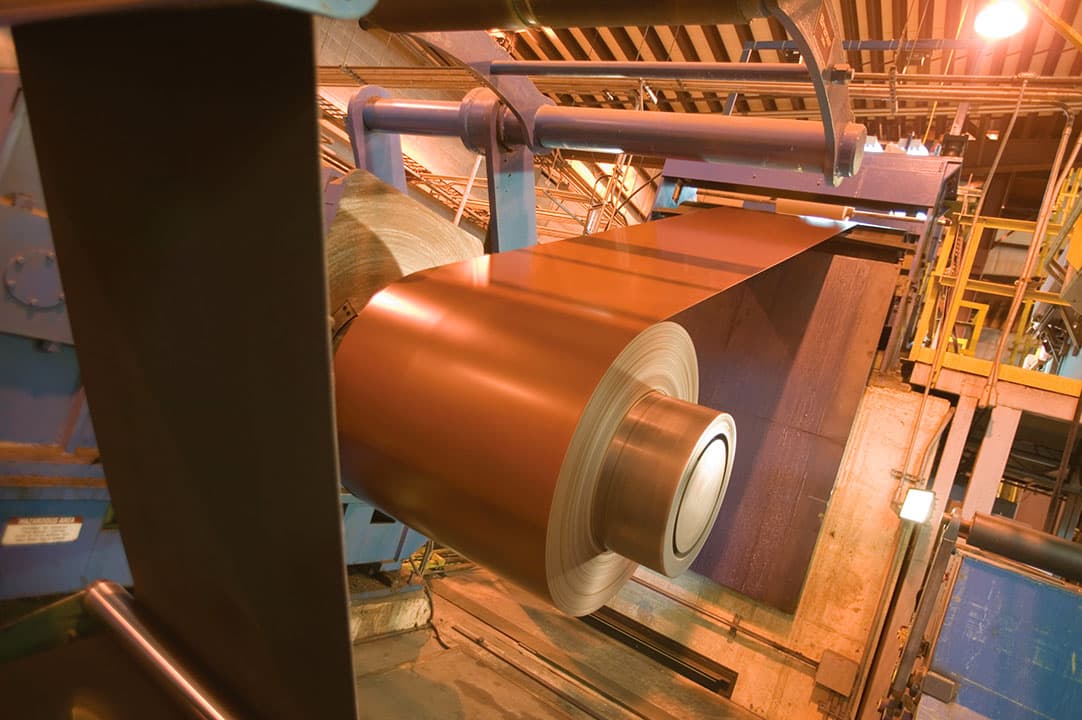
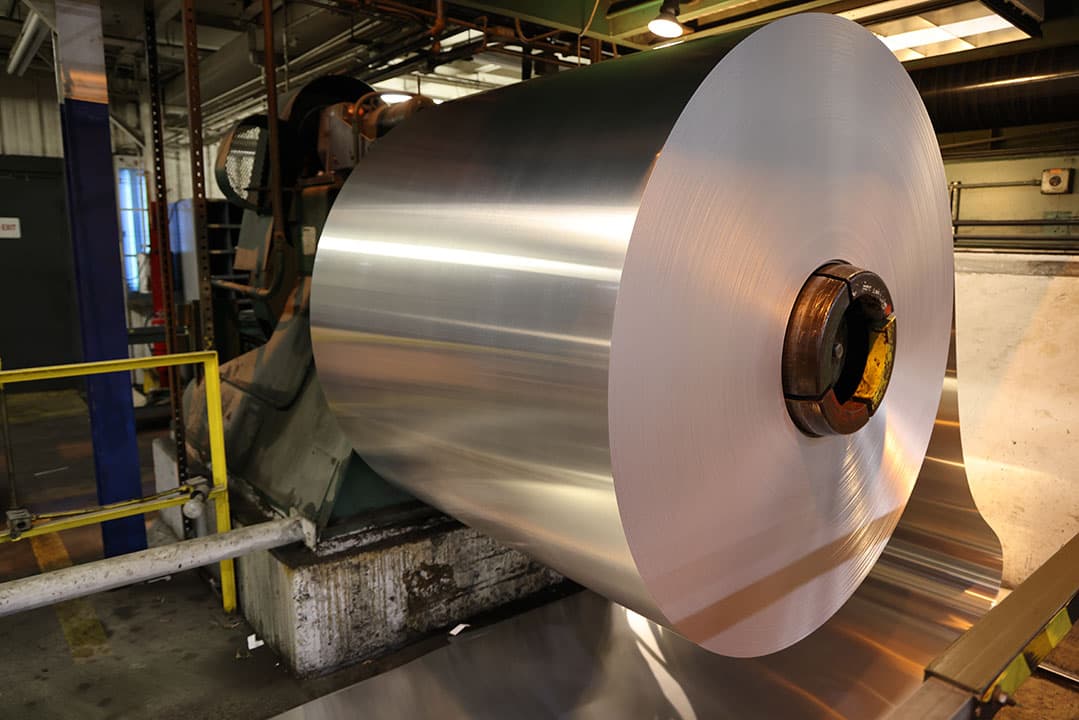
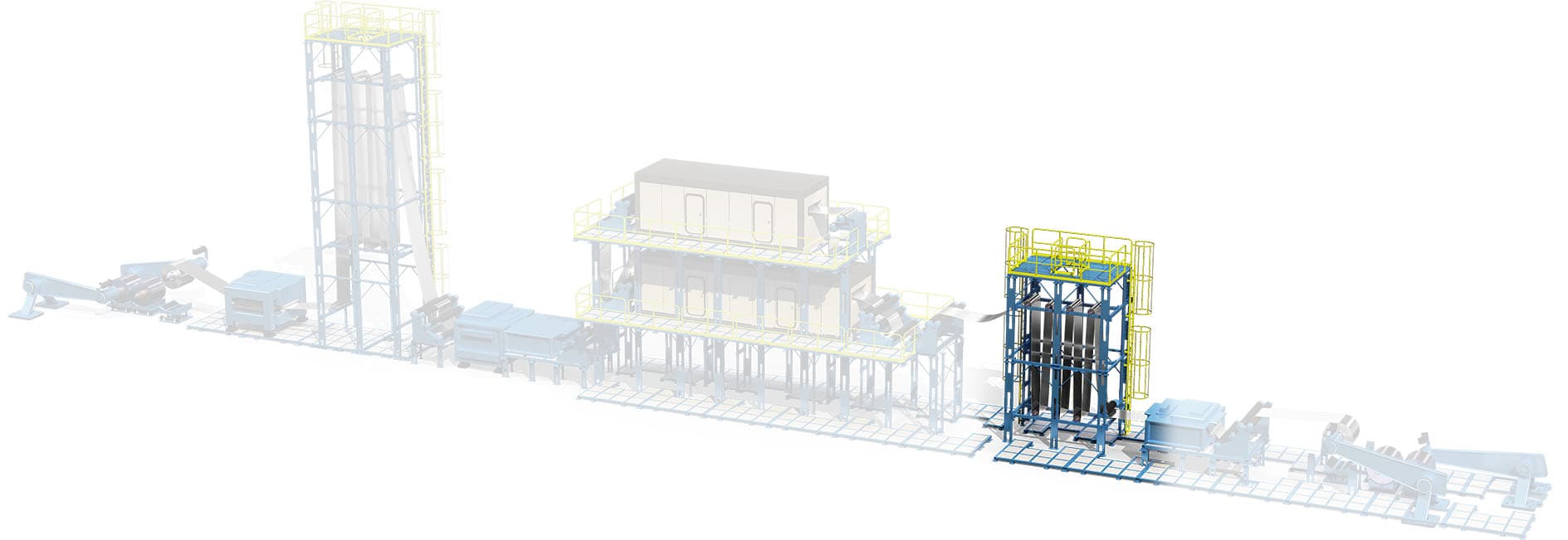
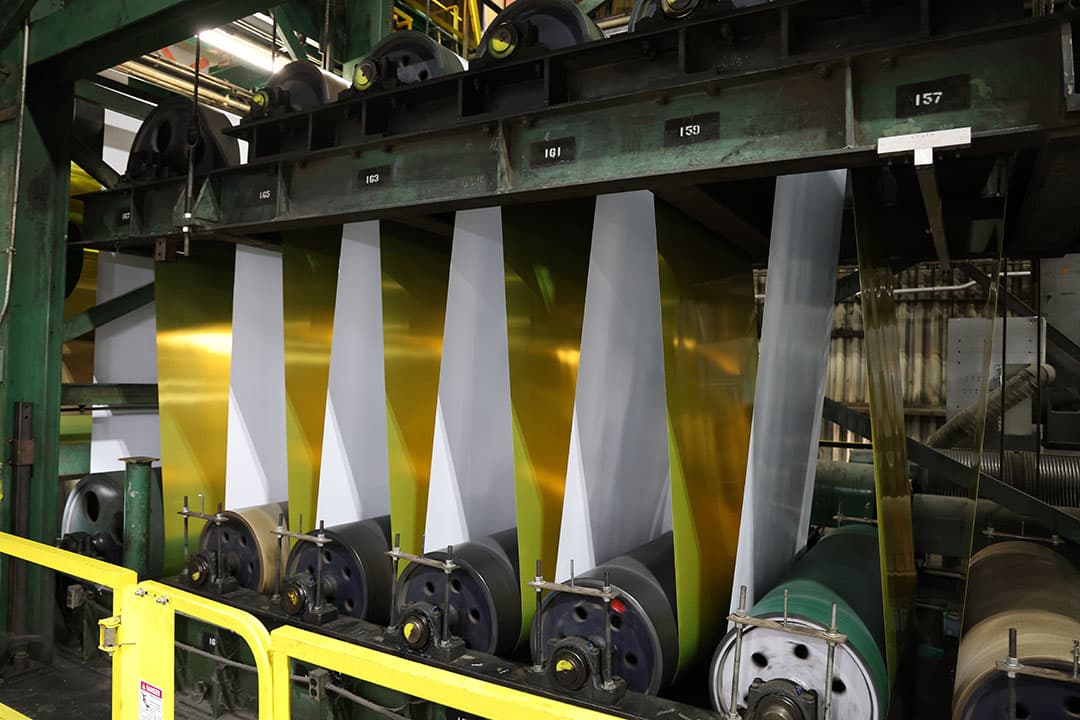
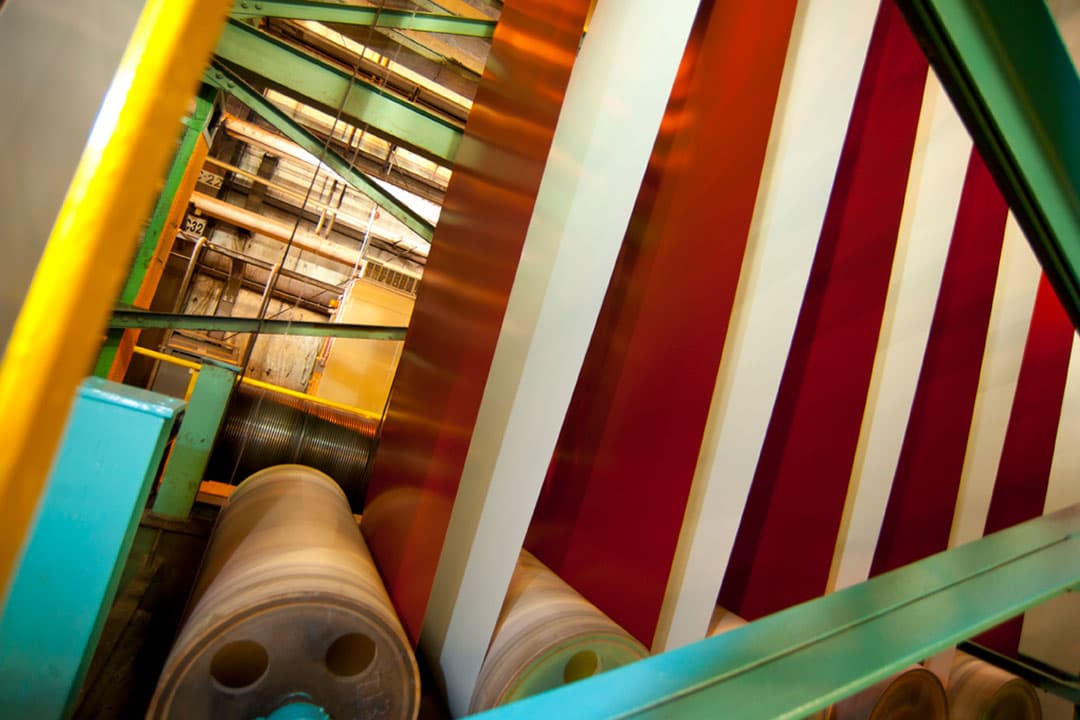
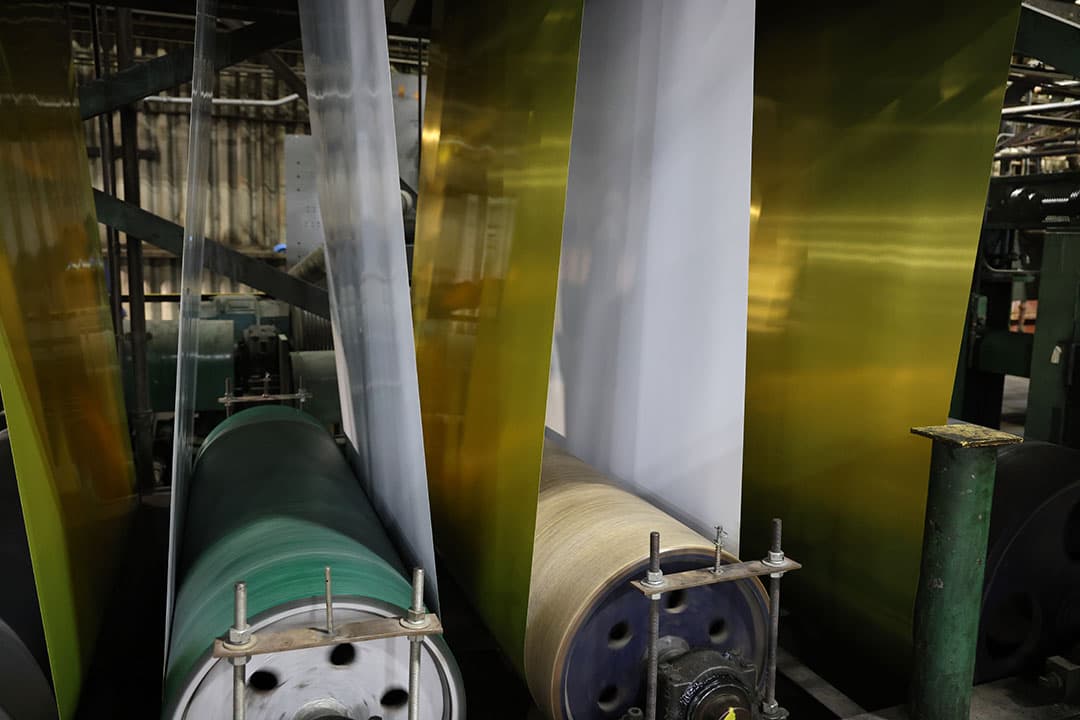
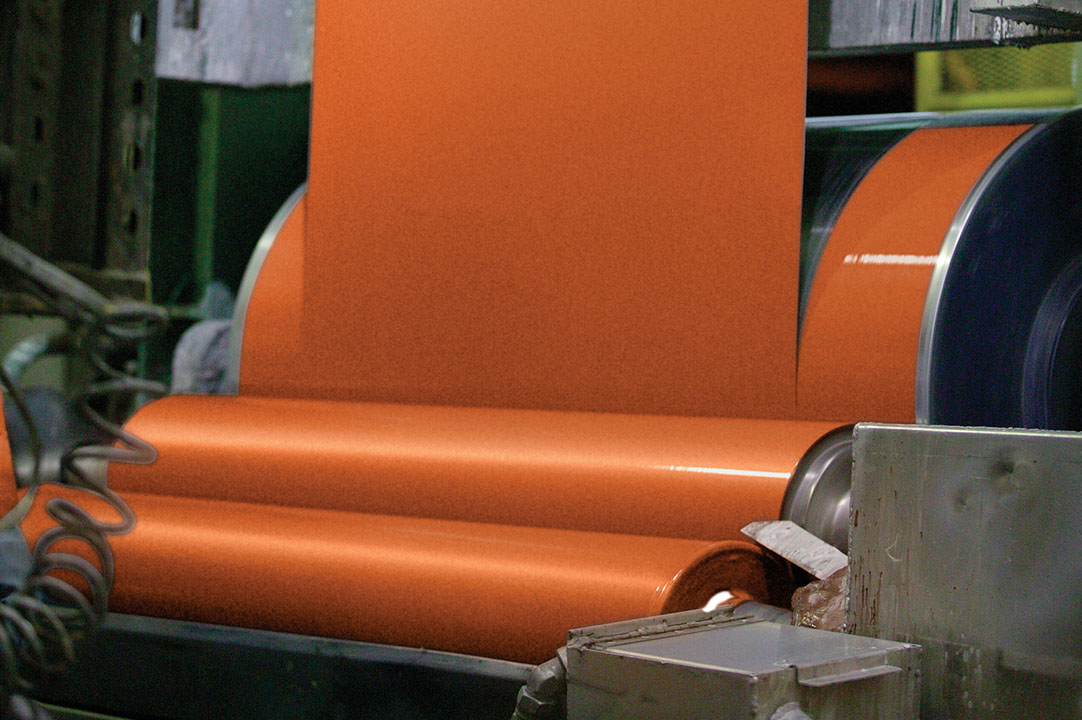
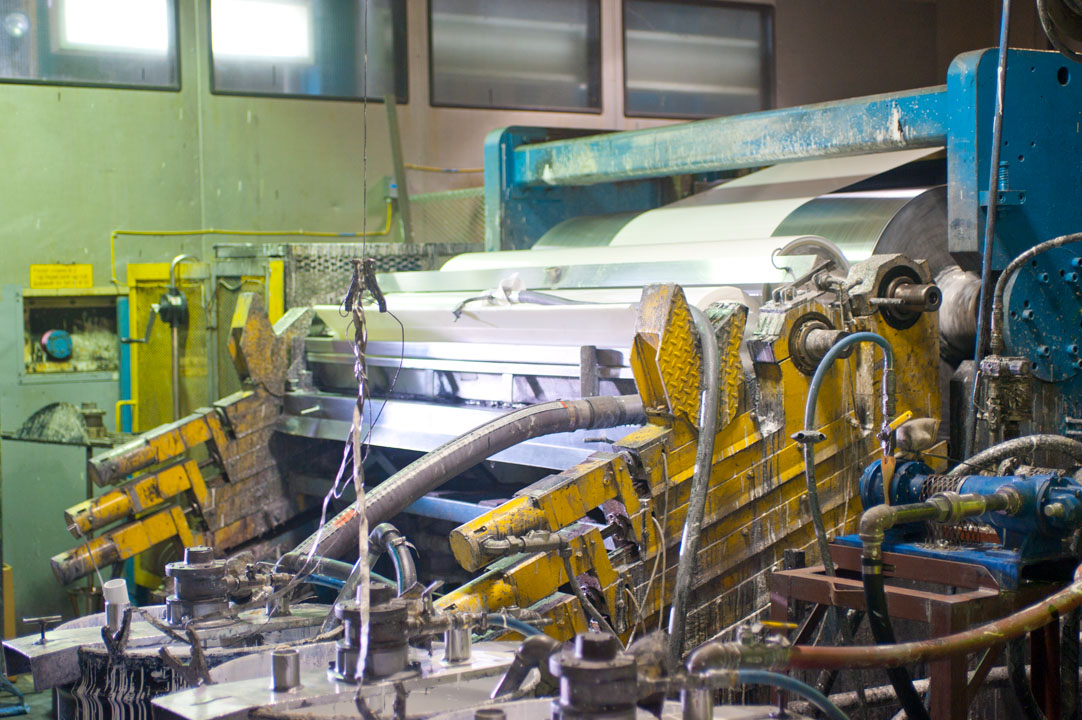
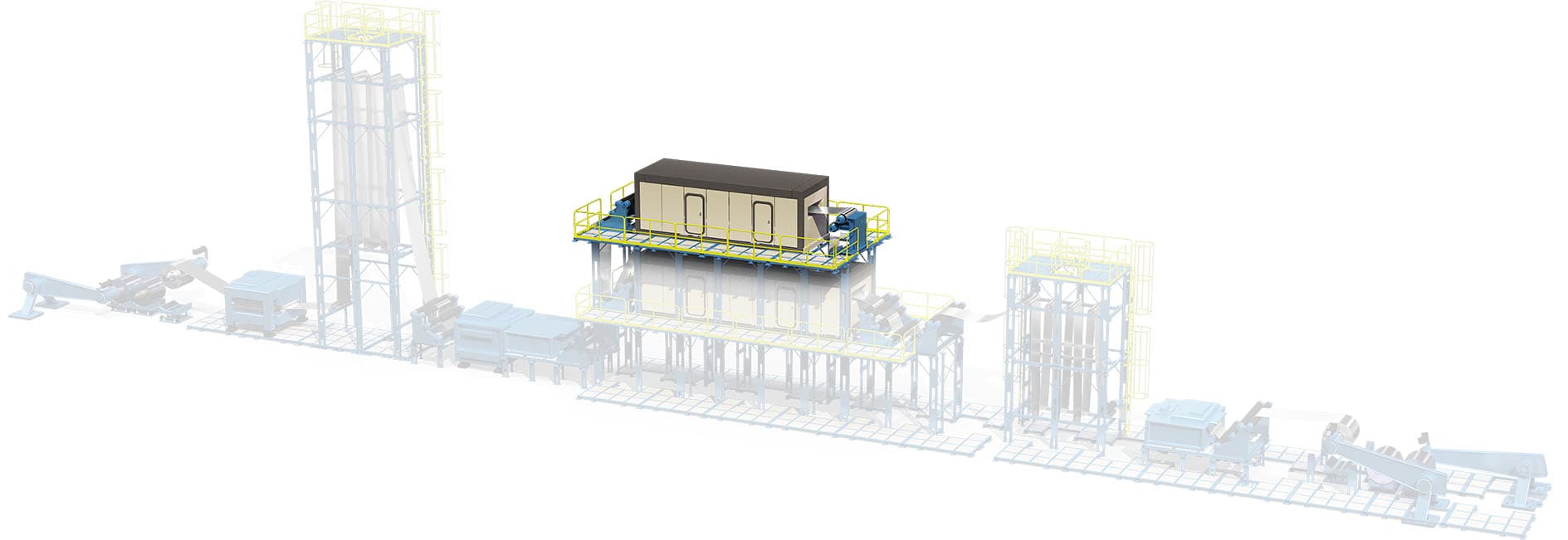
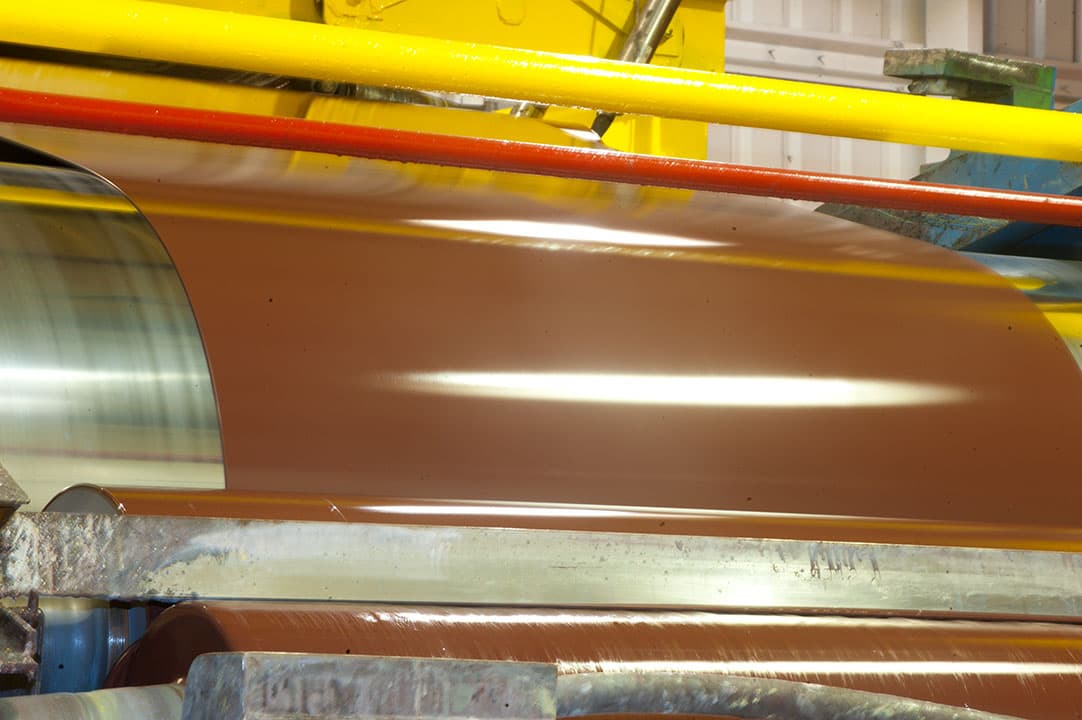
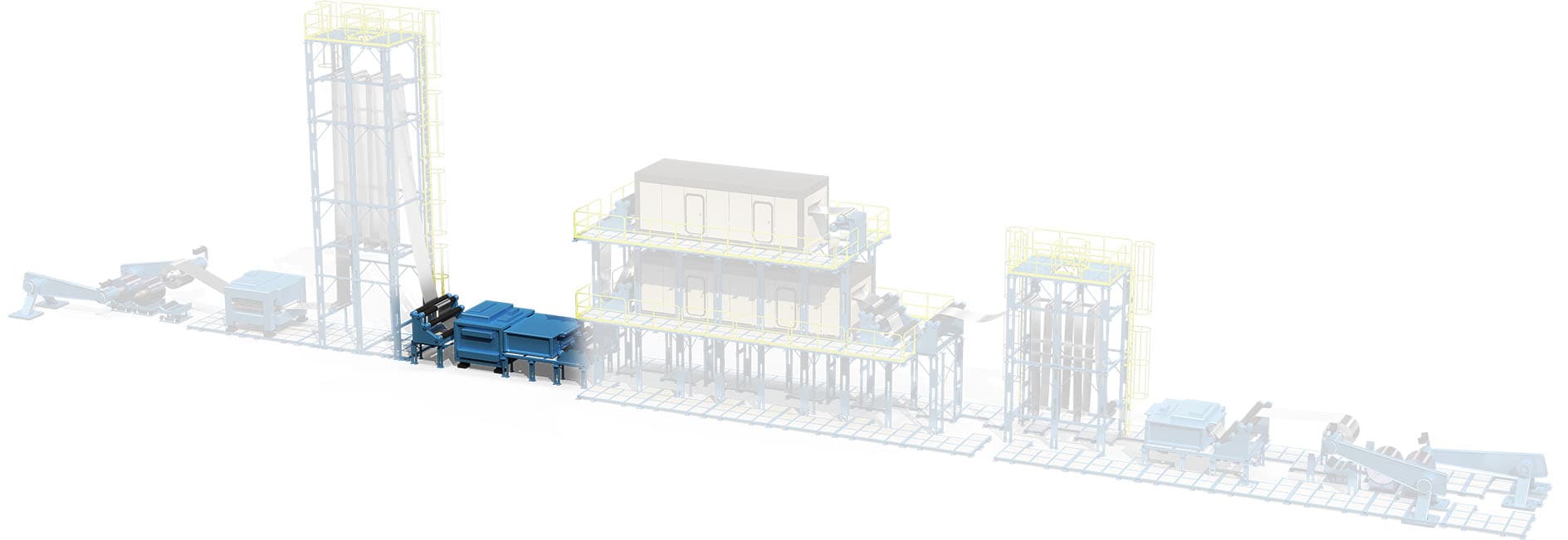
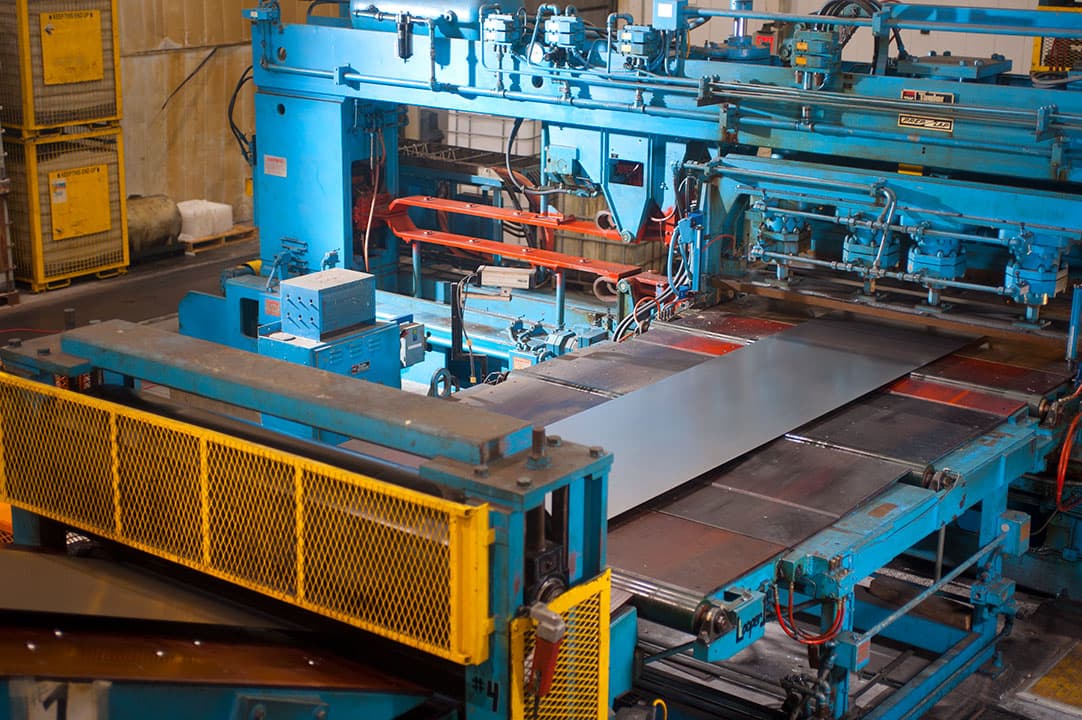
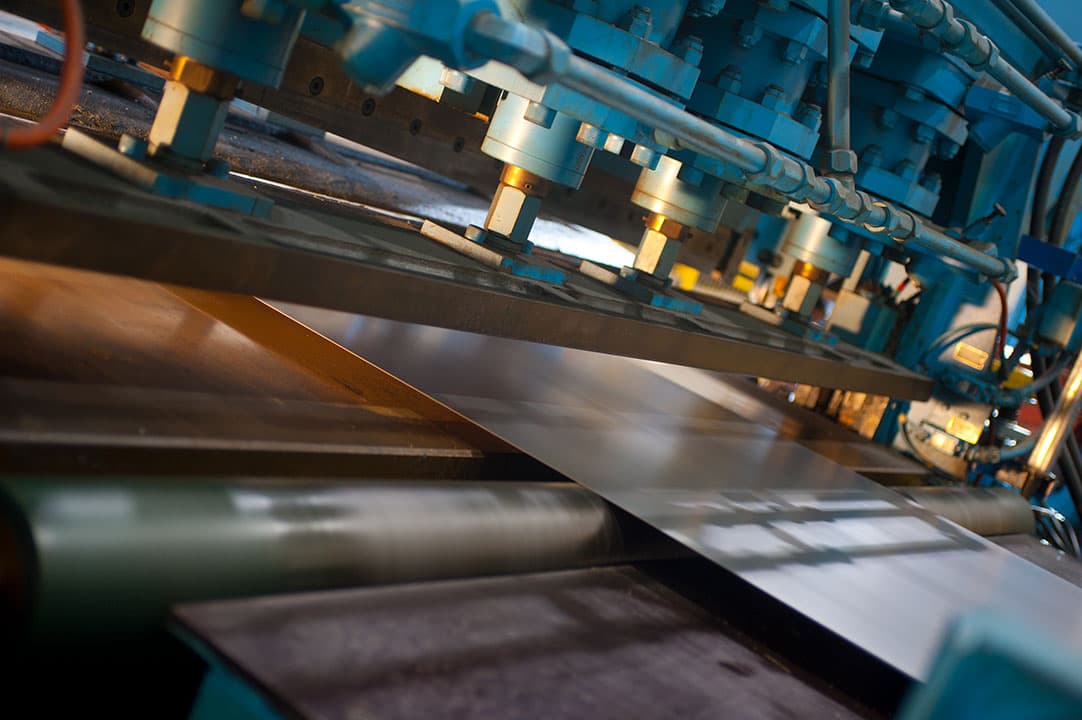
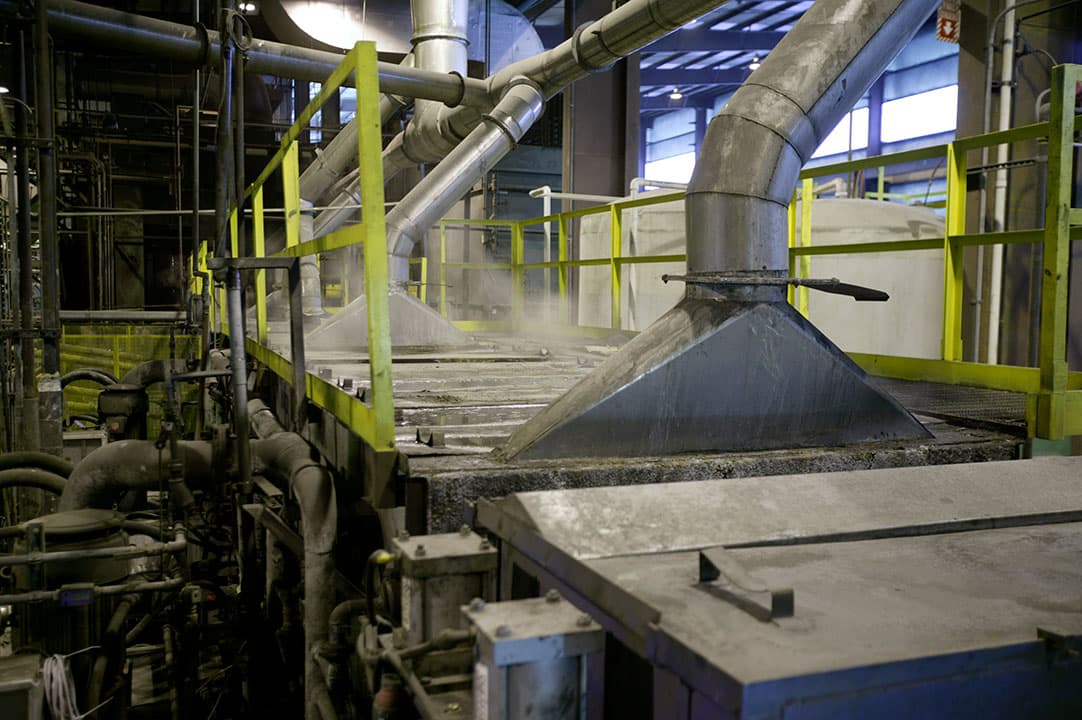
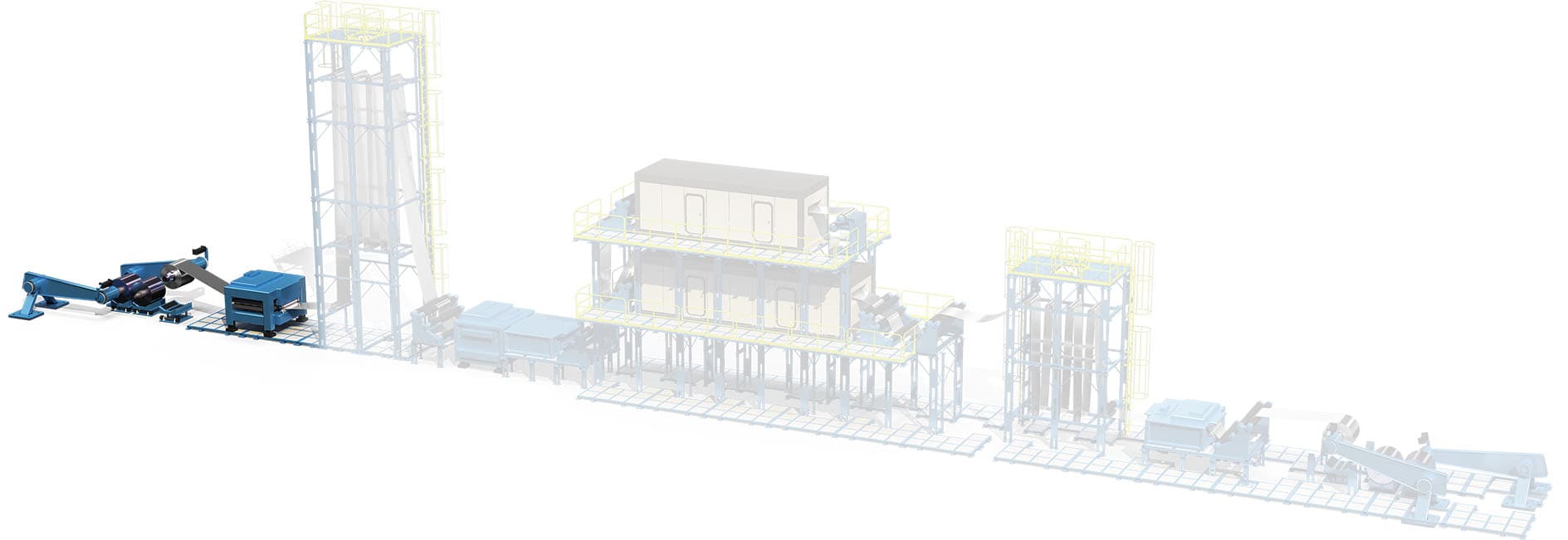
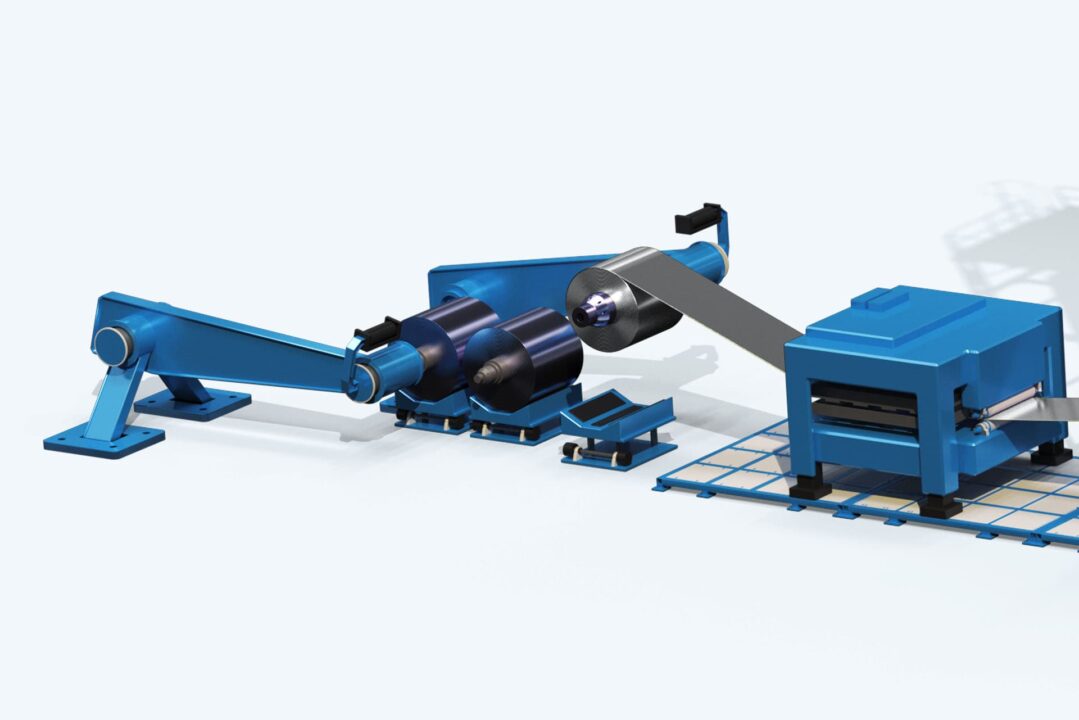
Once the metal is cleaned, treated, and painted, the strip is rewound into a coil size prescribed by the customer. From there, the coil is removed from the line and packaged for shipment or additional processing.
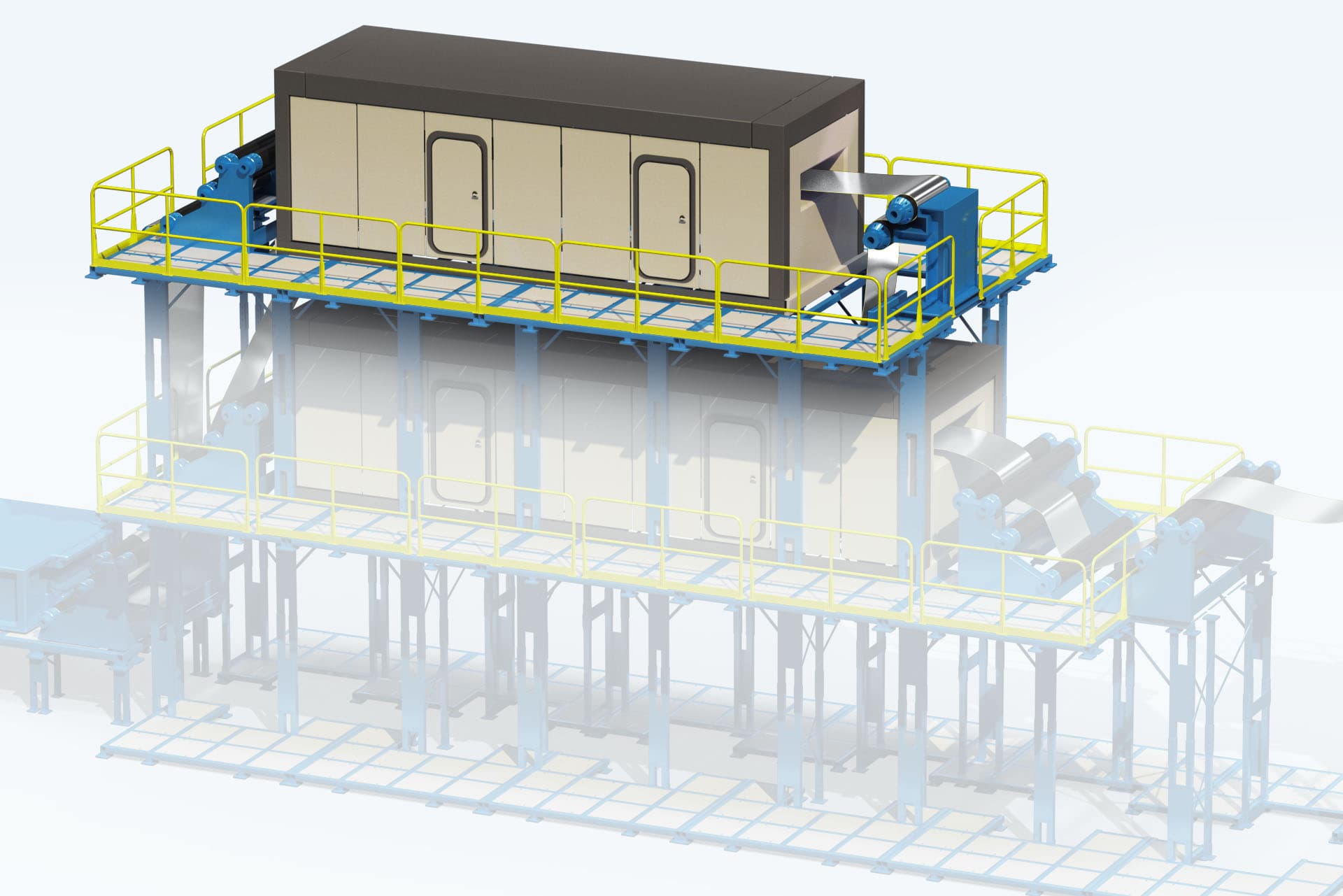
After the primer is applied and cured, then the metal strip enters the finish coat station where a topcoat is applied. Topcoats provide color, corrosion resistance, durability, flexibility and any other required physical properties. Like primers, the topcoat is cured using thermal cure ovens.
Oven
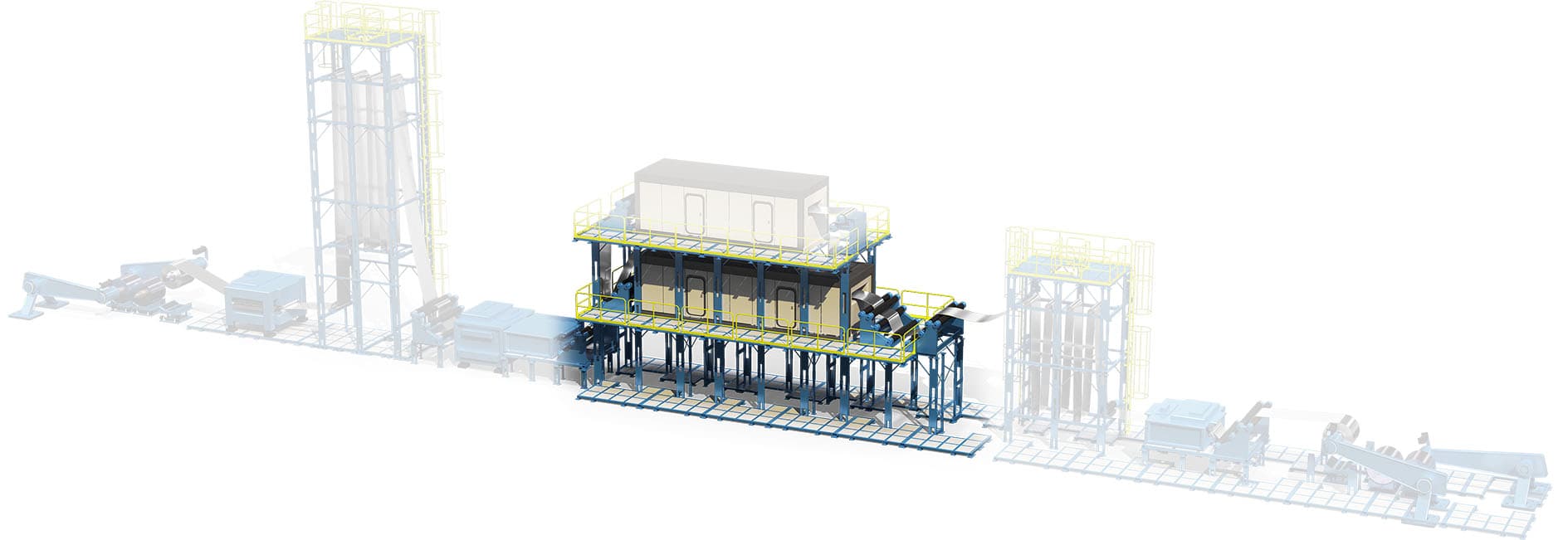
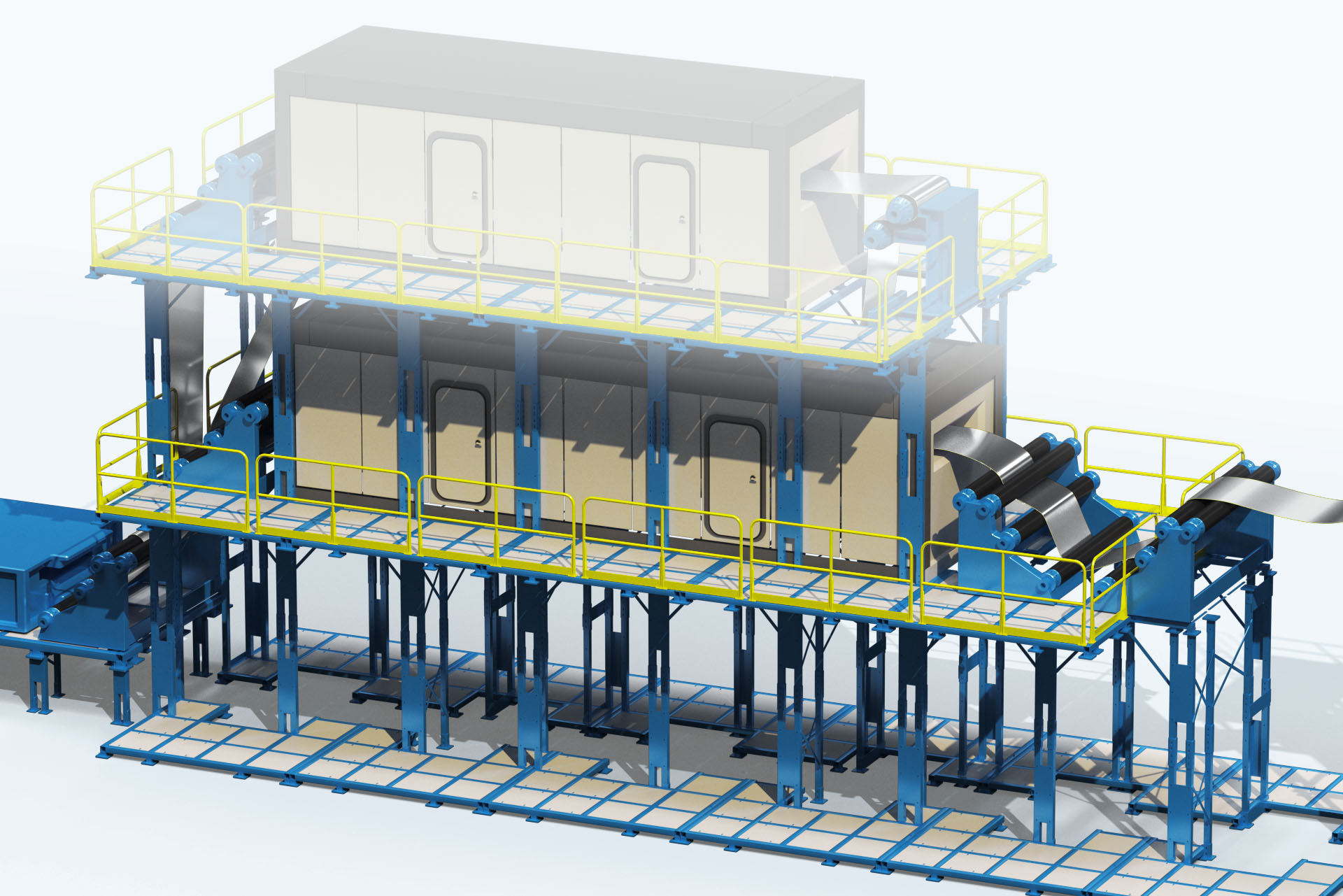
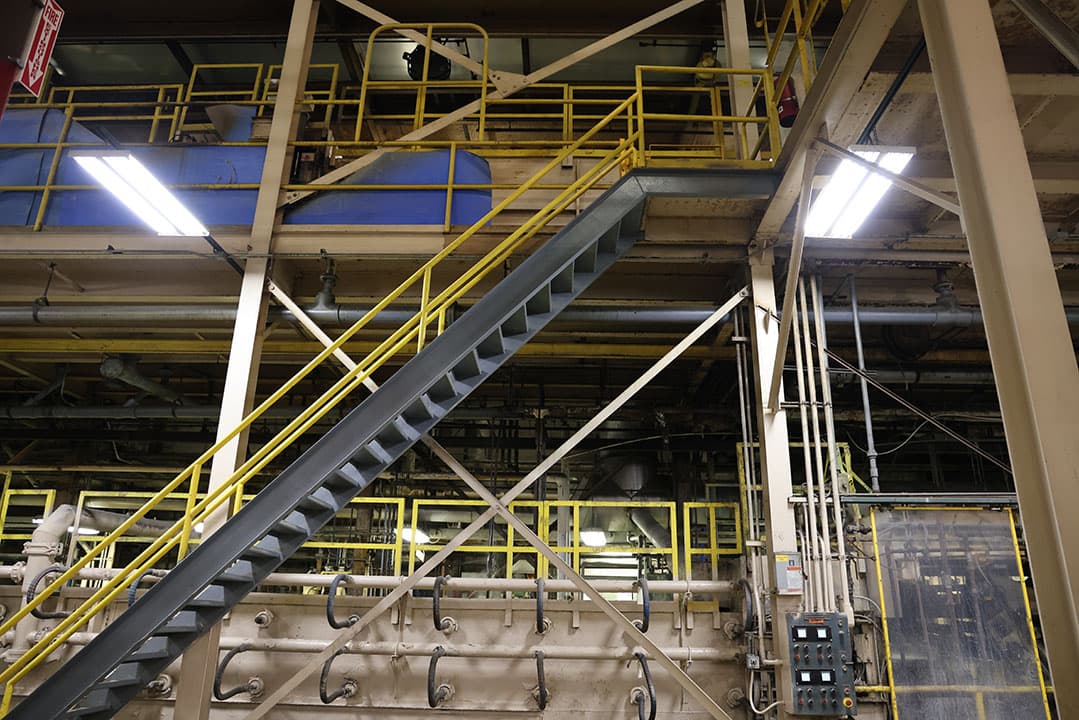
Coil coating ovens can range from 130 feet to 160 feet and will cure the coatings in 13 to 20 seconds.
During this stage, the strip enters the prime coat station whereby a primer is applied to the clean and treated metal. After the primer is applied, the metal strip travels through a thermal oven for curing. Primers are used to aid in paint adhesion, improve corrosion performance and enhance aesthetic and functional attributes of the topcoat.
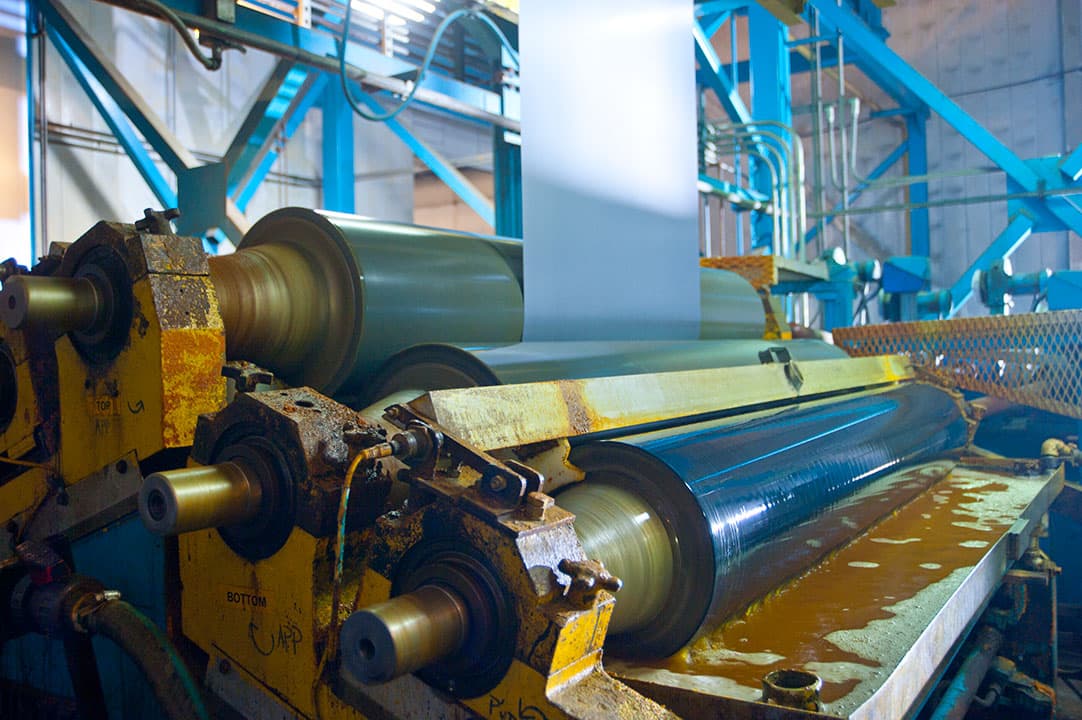
S Wrap Coater
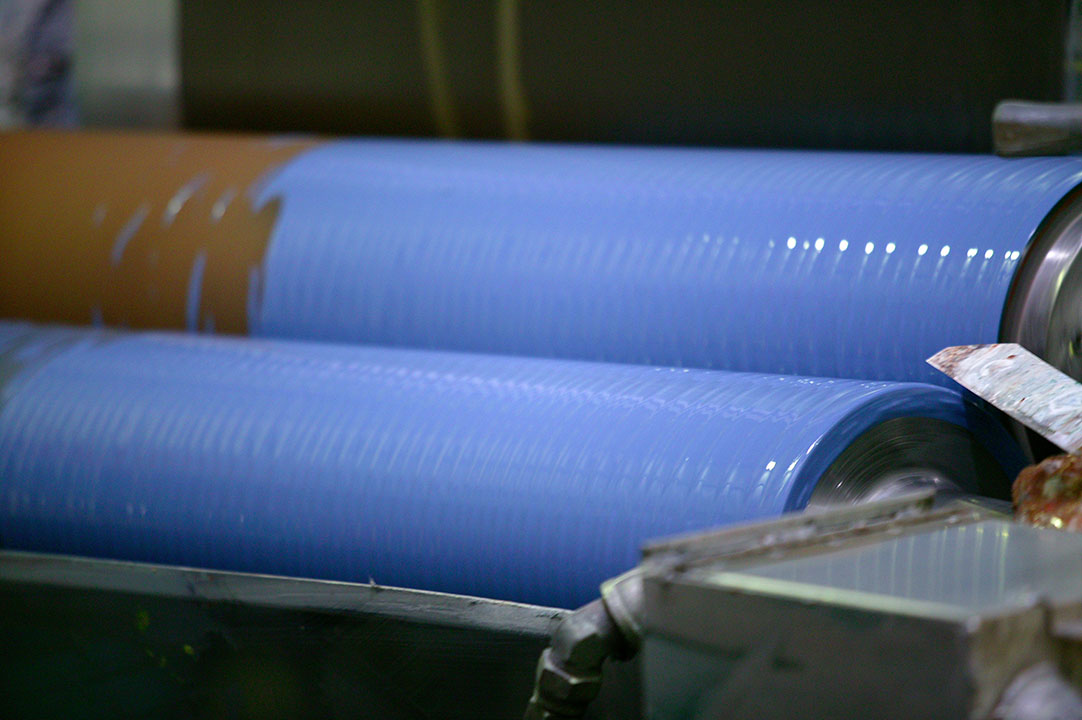
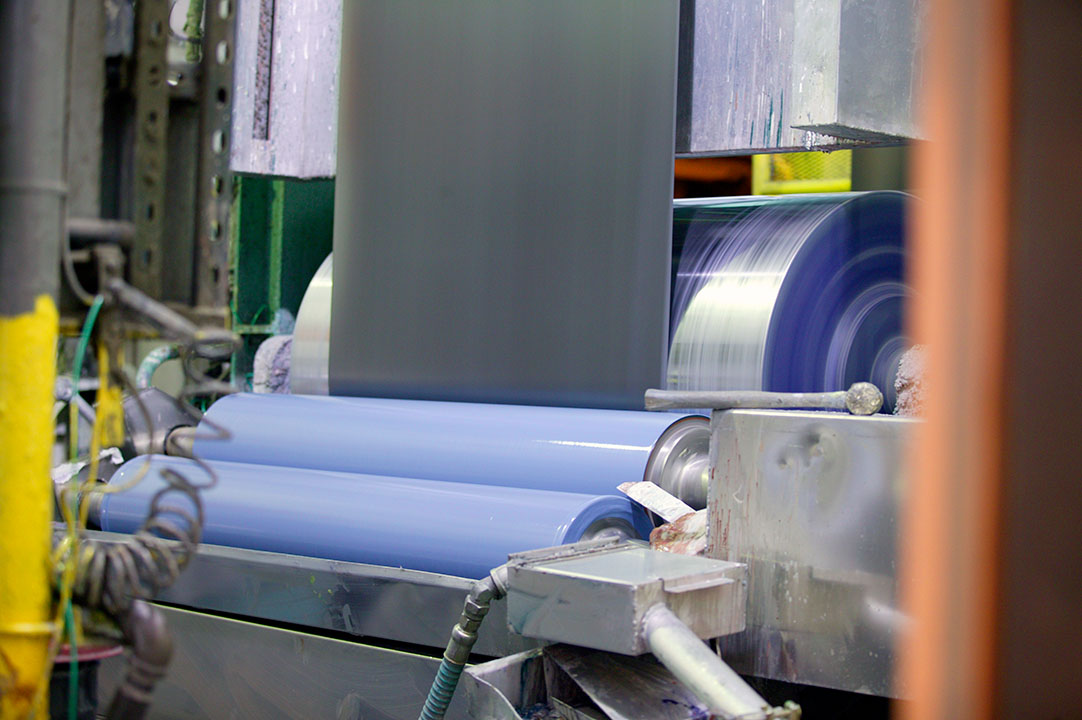
The S wrap coater design allows for primers and paints to be applied to the top and back side of the metal strip simultaneously in one continuous pass.
The cleaning and pretreating section of the coil coating process focuses on preparing the metal for painting. During the cleaning stage, dirt, debris, and oils are removed from the metal strip. From there, the metal enters the pretreatment section and/or a chemical coater whereby chemicals are applied to facilitate paint adhesion and enhance corrosion resistance.
Dried-In-Place
In this stage a chemical that provides enhanced corrosion performance is applied. This treatment can be chrome free if required.
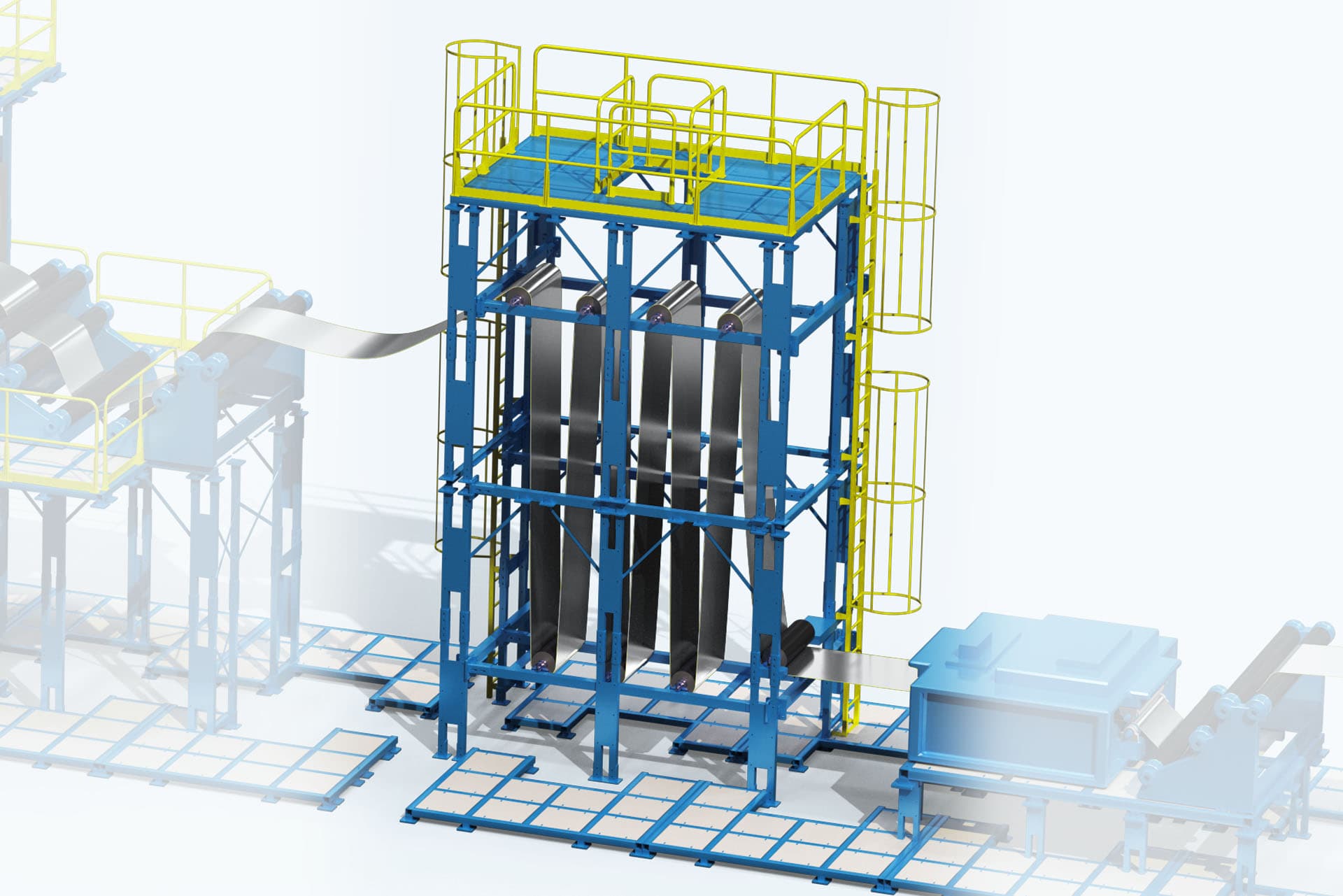
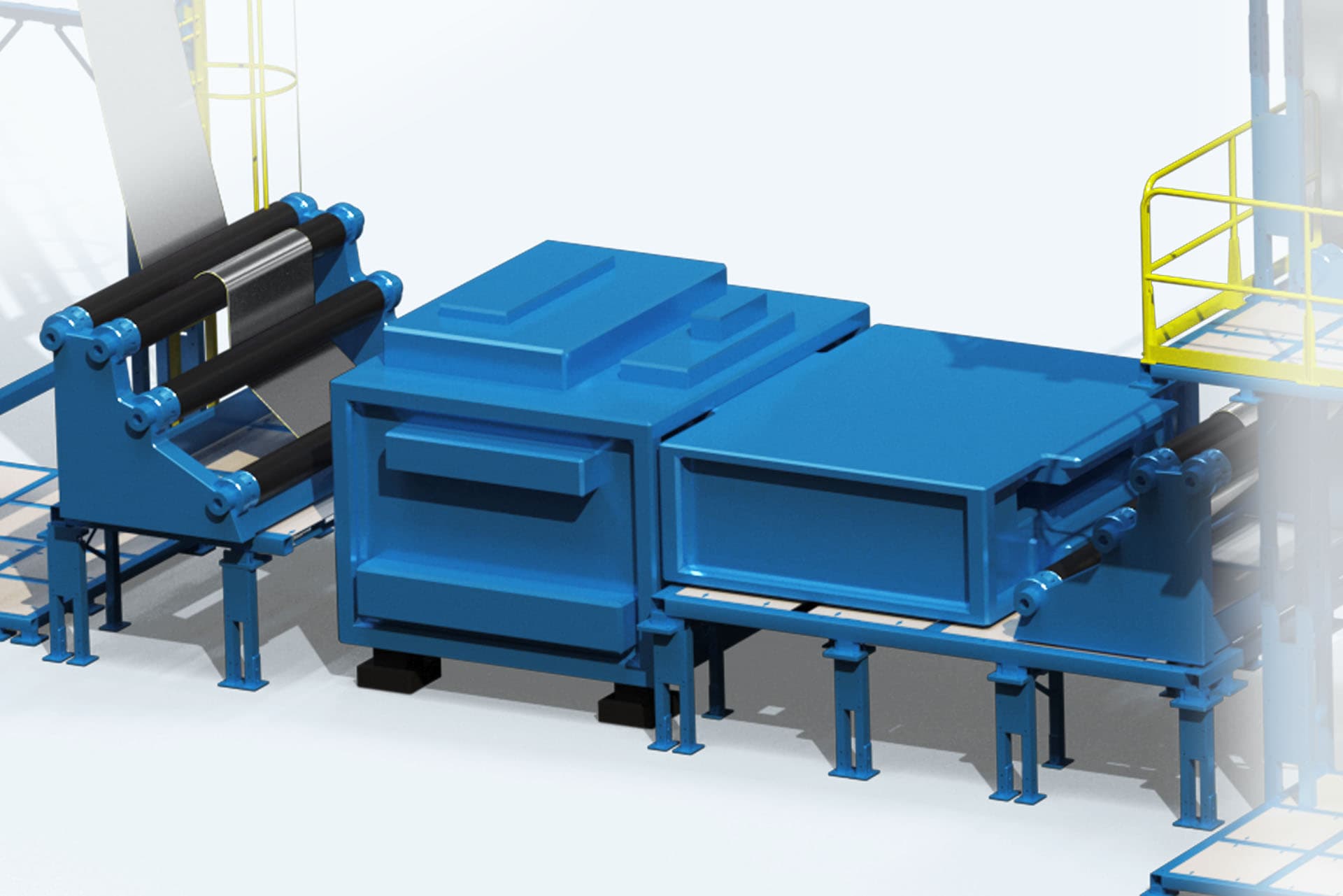
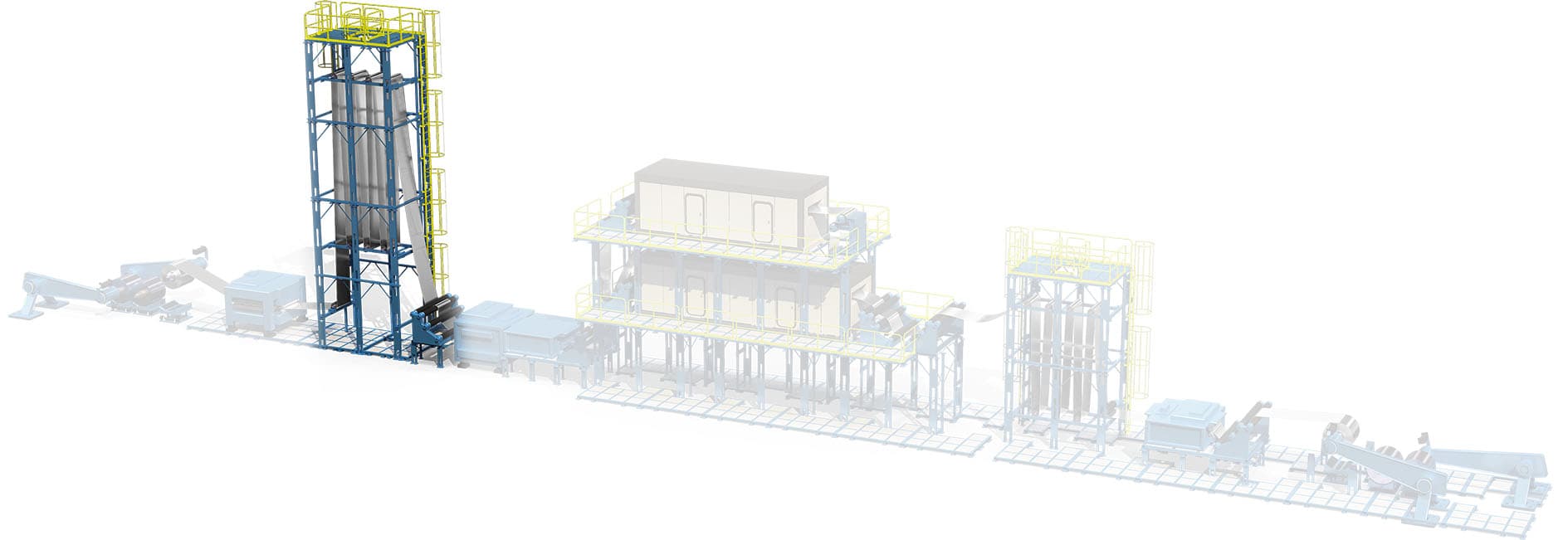
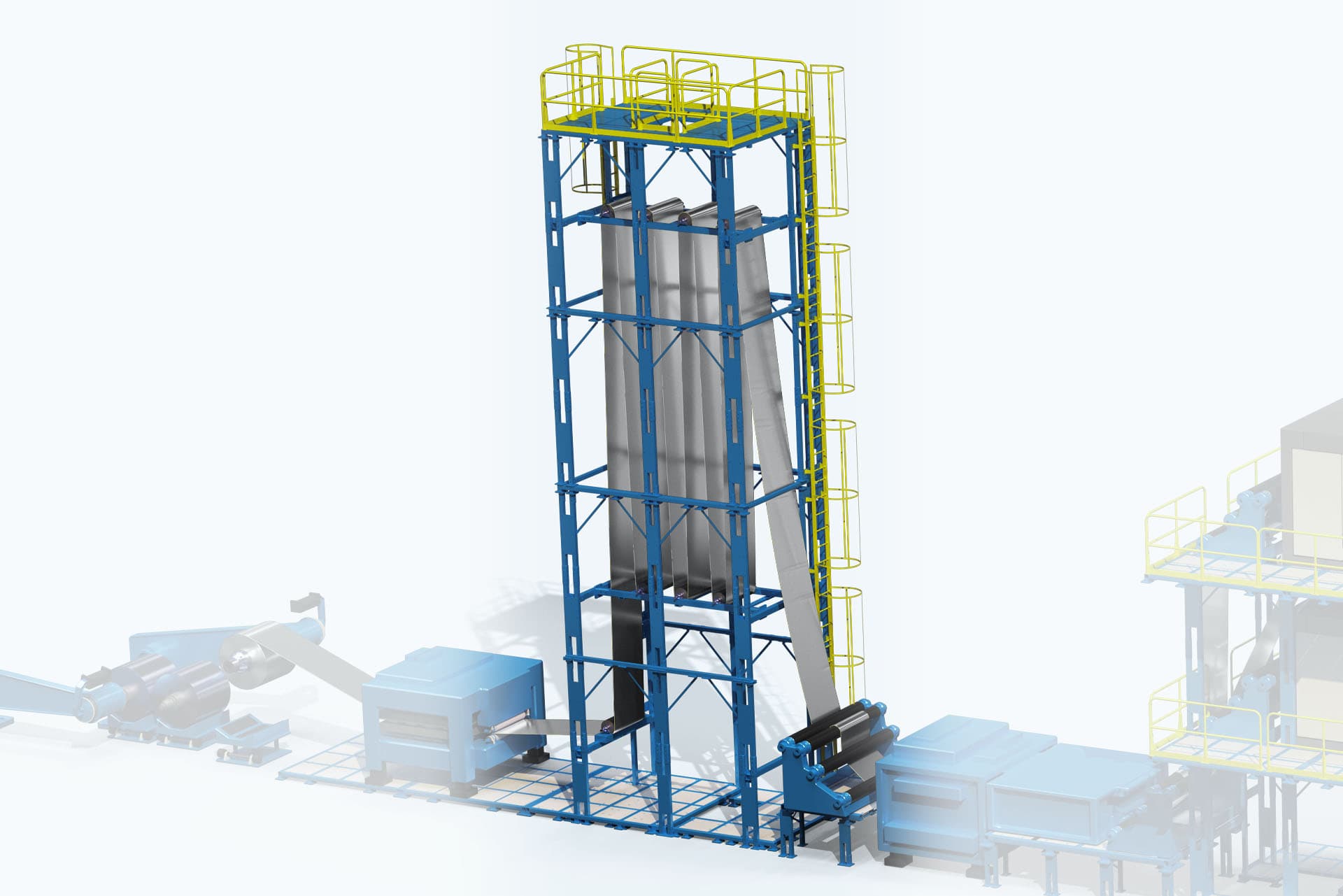
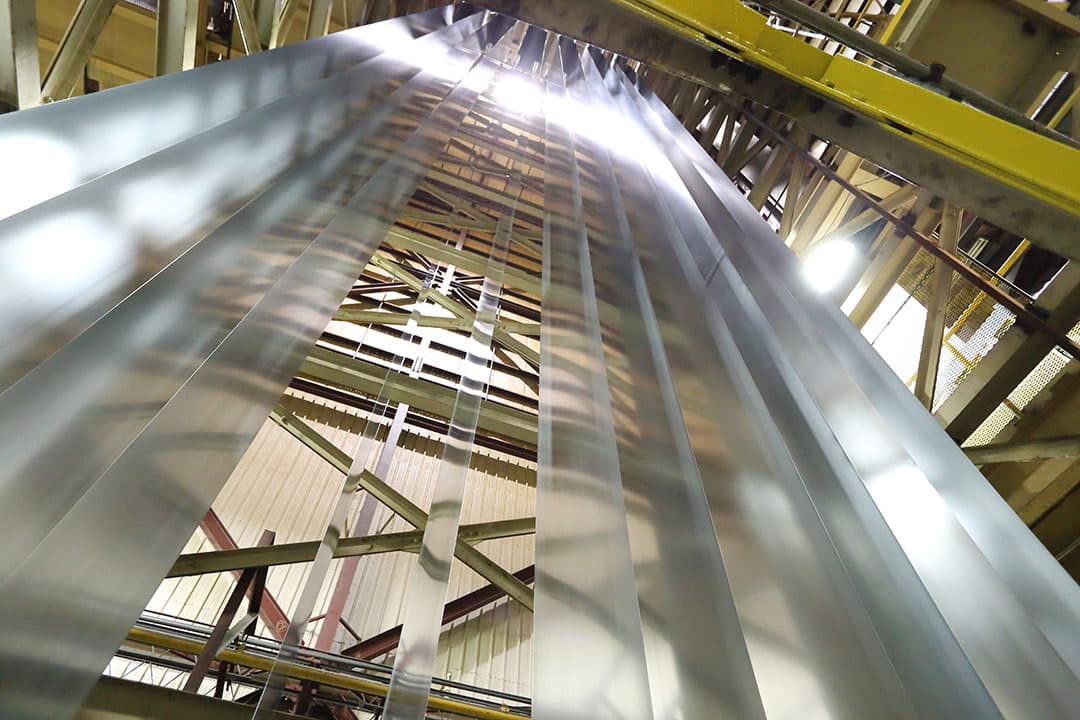
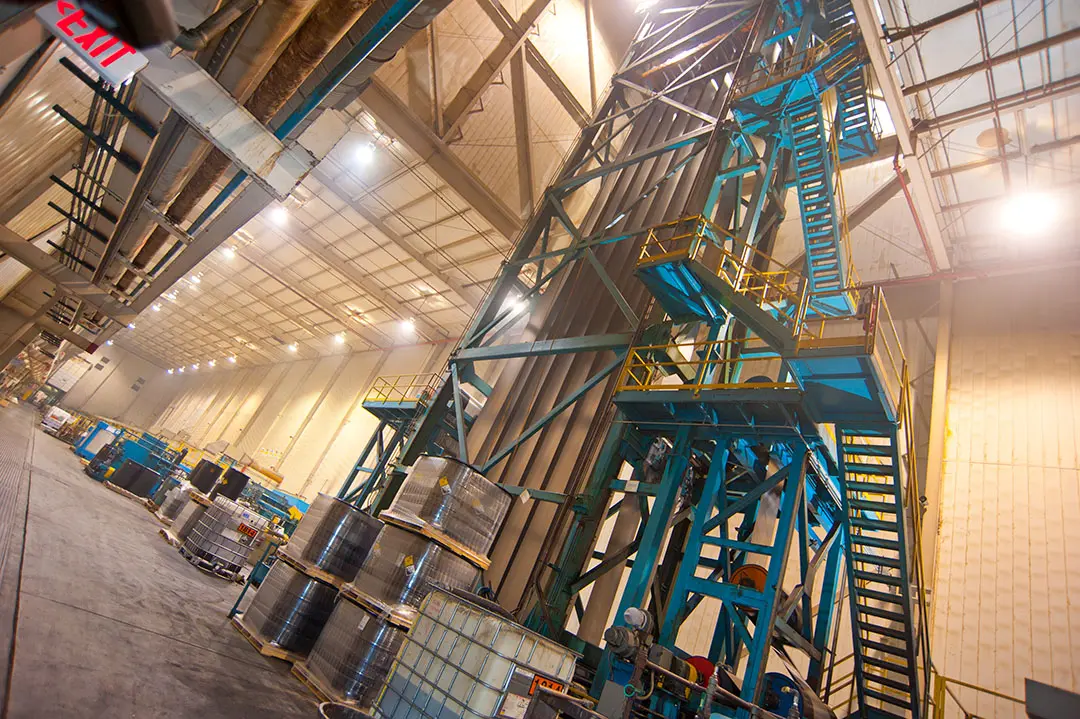
The accumulator is a structure that adjusts up and down to store material, which makes continuous operation of the coil coating process possible. This accumulation will continue to feed the coil coating processes while the entry end has stopped for the stitching process. As much as 750 feet of metal can be collected.
The Brookfield Zoo, just outside Chicago, is a world class facility. Since 1934, the zoo has always done things the right way. Brookfield was the first zoo to have a panda in the United States, the first to have a nearly extinct black rhino born in a zoo, the first to have an inland dolphinarium (yes, that's a word) and the first to use moats and natural barriers instead of bars and cages.
Constantly improving facilities for their guests and animals, educating visitors, supporting endangered species and maintaining wildlife around Chicago, Brookfield Zoo strives to be a leader in all aspects of zoology.
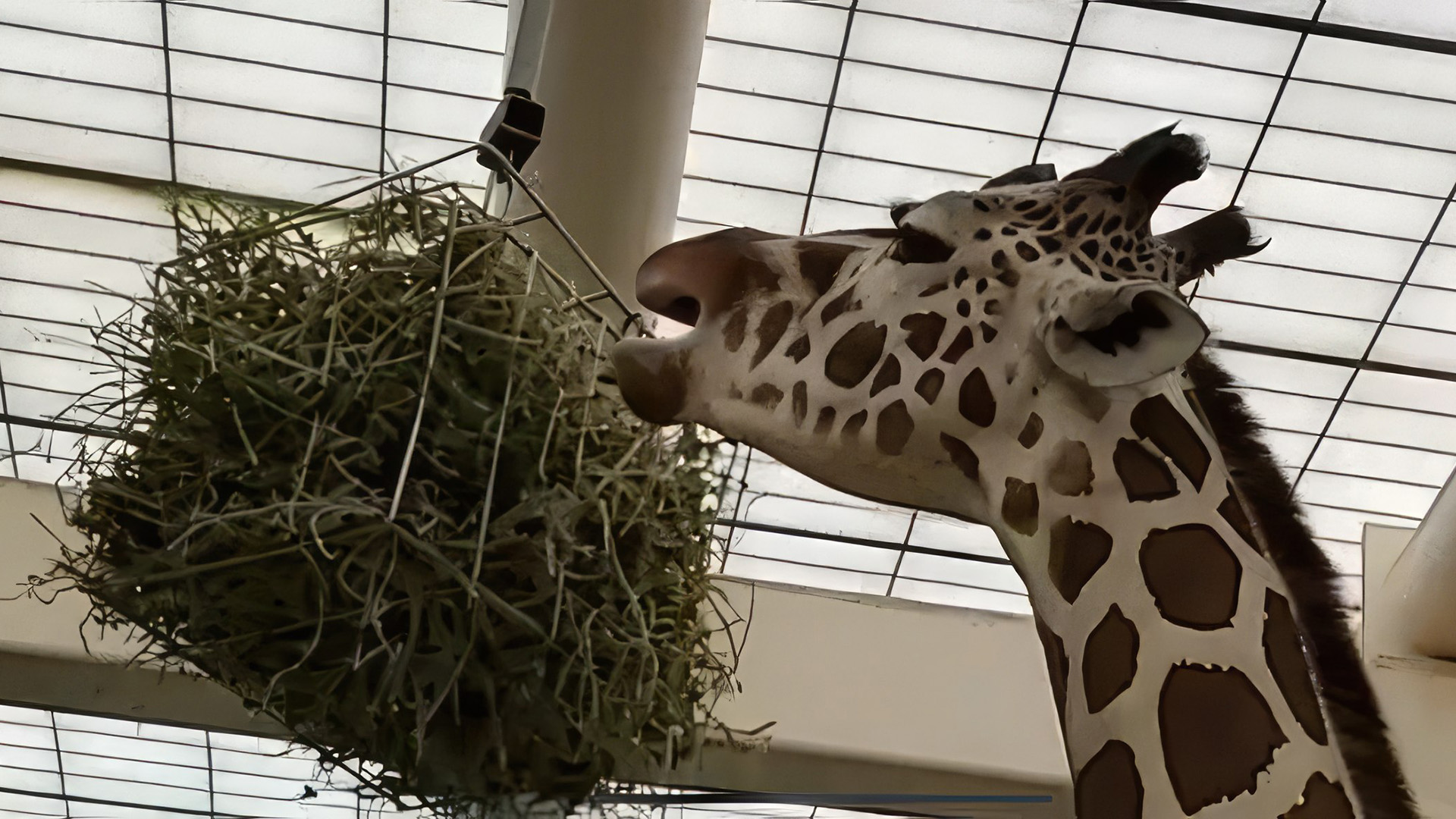
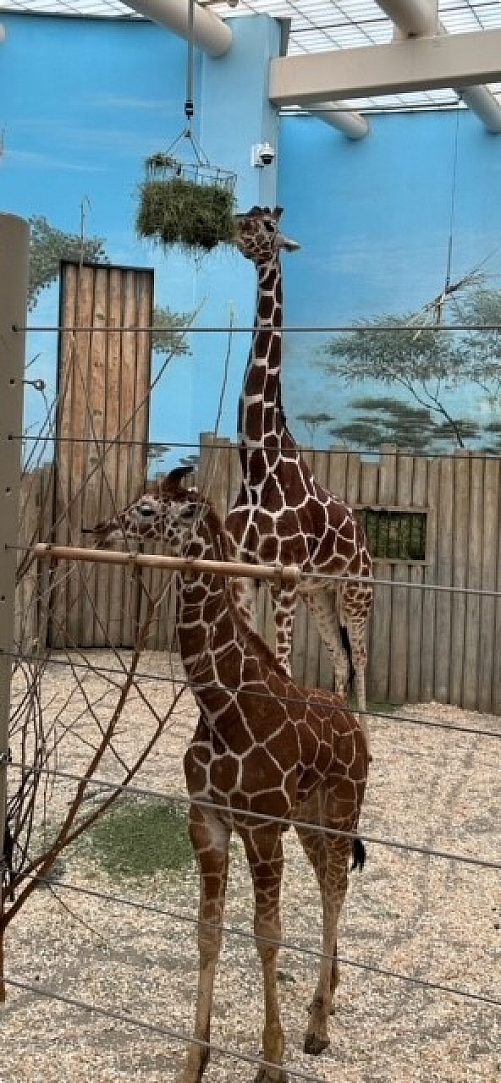
In 2023 the zoo faced a “tall” challenge. The task was to provide feeding baskets to giraffes that have course tongues up to 20″ long that can literally lick coatings off steel. The baskets, positioned high off the ground use to be painted with animal friendly paint, required frequent re-painting, which aside from time consuming, was a safety concern for personnel when needing re-work. After years of repeated maintenance, a smart decision was made to solve the problem by using hot-dip galvanizing. Hot-dip galvanizing offers several advantages, including long-term durability, safe coating for animals and avoiding maintenance which interrupts the giraffe enclosure.
The galvanizing acts as a barrier between the metal of the feeding basket and the surrounding environment. The barrier protects the metal from rusting, from frequent hosing down of giraffe enclosure and the giraffe’s destructive tongue. Having easy to clean baskets is crucial for the ongoing health of the giraffes. Giraffes pull hay through the basket’s bars as if they are pulling leaves or twigs from trees making for a more natural feeding. Fortunately, zinc is a natural occurring element that plays an extremely important role in the environment and animal’s health so ingesting zinc is not an issue. In fact, all organisms need zinc as essential component for sustaining life.
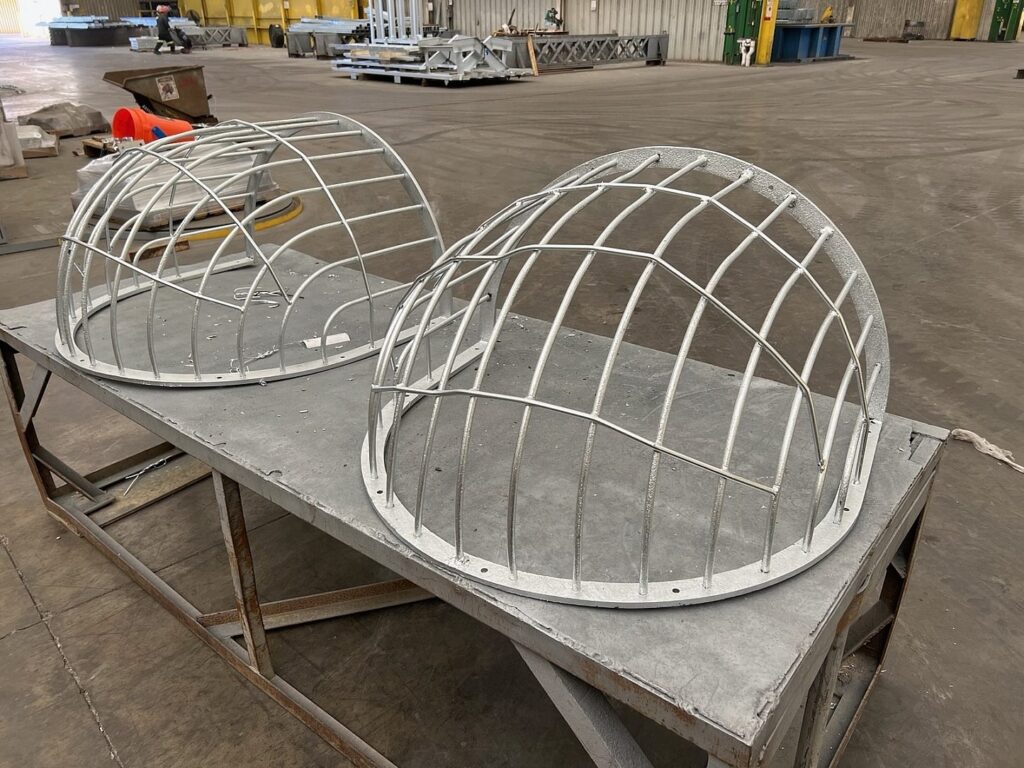
Upon conferring with an outside fabricator, AZZ and the zoo’s fabrication coordinator, John Martinez, met to review this unique project. Time was a concern, although the zoo’s newest baby giraffe, Kinda, won’t reach the hanging baskets that her 14 foot tall mother and 19 foot tall father reach now, she will reach them soon! The two took a tour of the galvanizing plant, reviewed other finished and in-process projects and discussed the basket design and use. AZZ provided information to Martinez about the animal friendly use of zinc in this application. Ultimately, a solution that was safe, sustainable and long lasting was agreed upon and ready to move to production. To complete this project, the existing baskets first needed to be stripped of the old paint, have minor modifications in design and then galvanized. This work was done at the galvanizer’s facility.
Due to Chicago’s brutal winters, the giraffe’s indoor enclosure is used more than half the year so the baskets need to withstand frequent high pressure cleaning. The keepers don’t want to disrupt the giraffe’s routine with maintenance on difficult to reach baskets, so “one and done” was the goal ! With 2.2 million visitors each year and a cute new baby giraffe, the galvanized feeding baskets won’t be the main attraction but they do support the Brookfield Zoo’s path to constantly improve the animal and guest experience.
“We should have switched to hot-dip galvanizing years ago. “