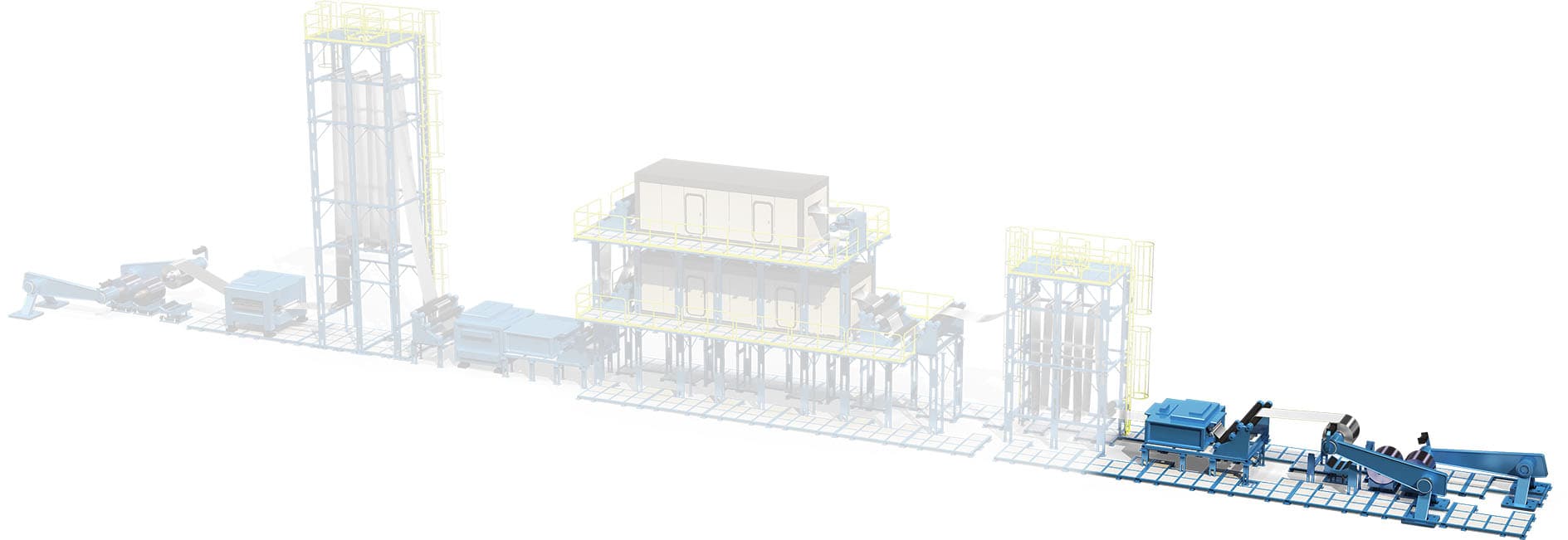
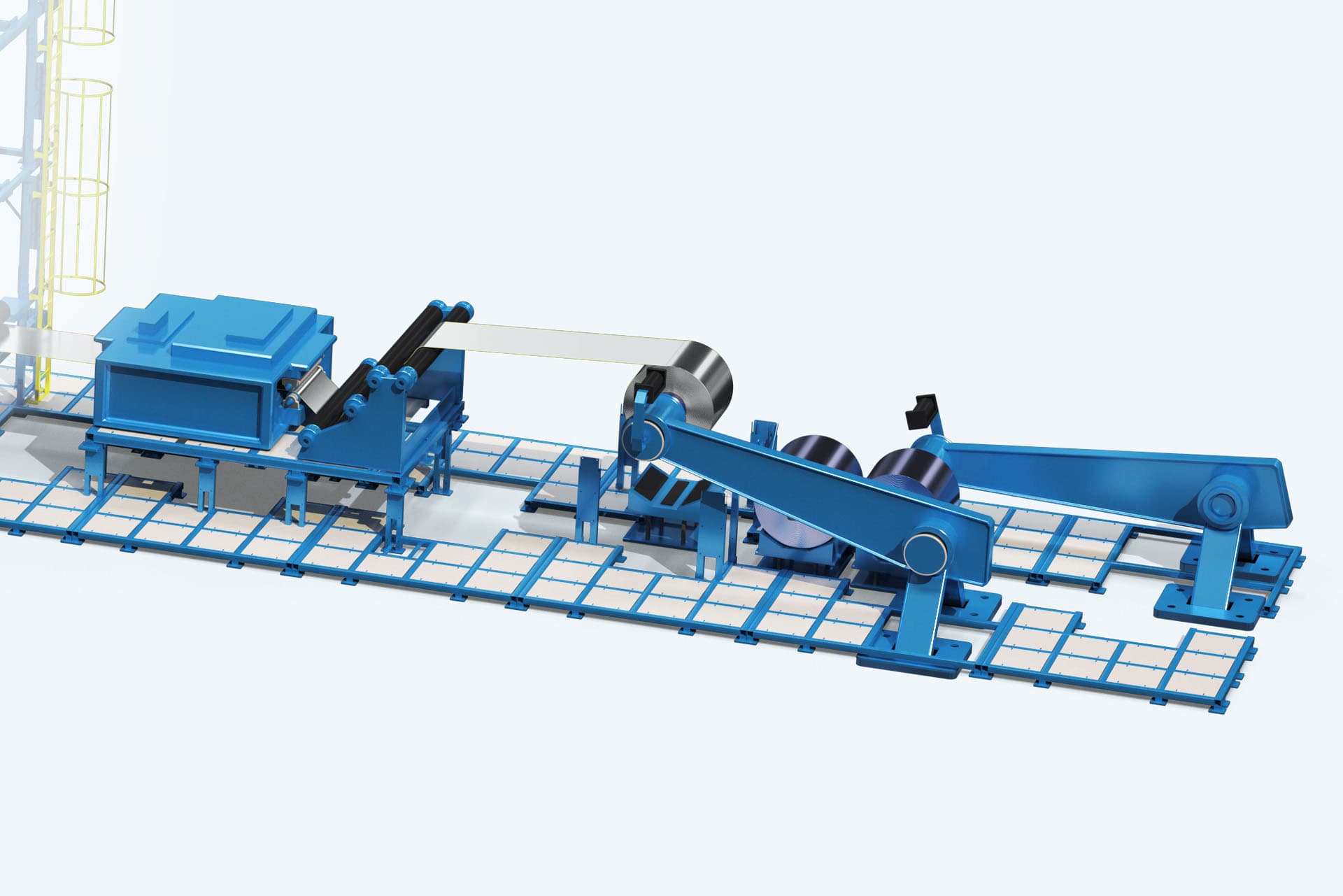
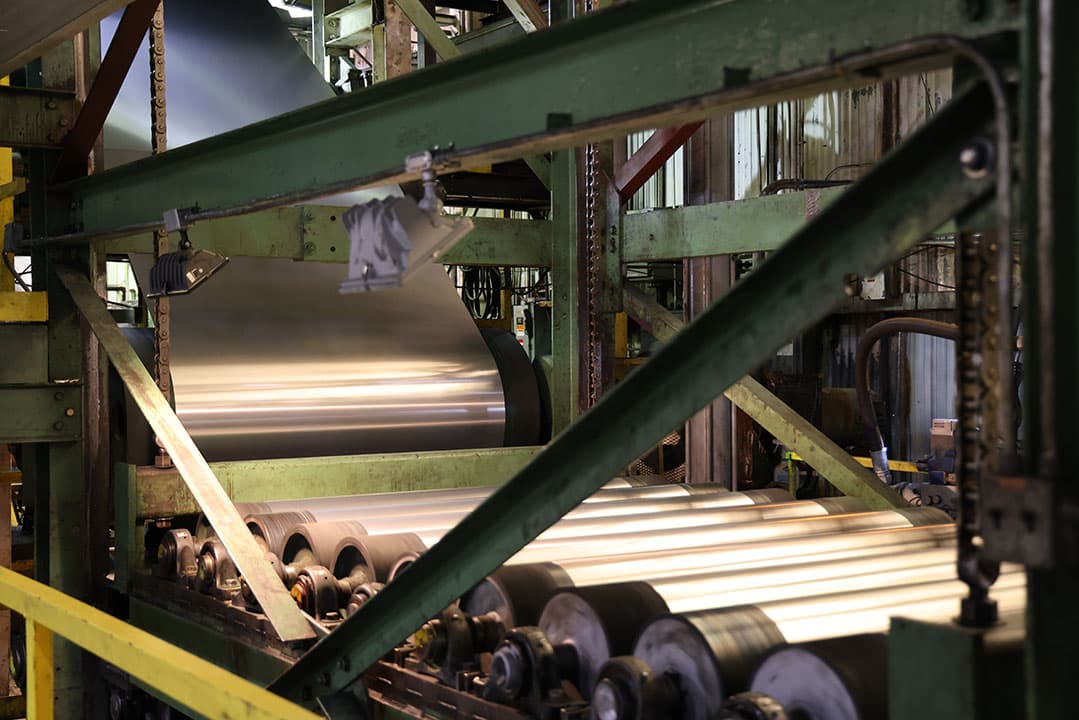
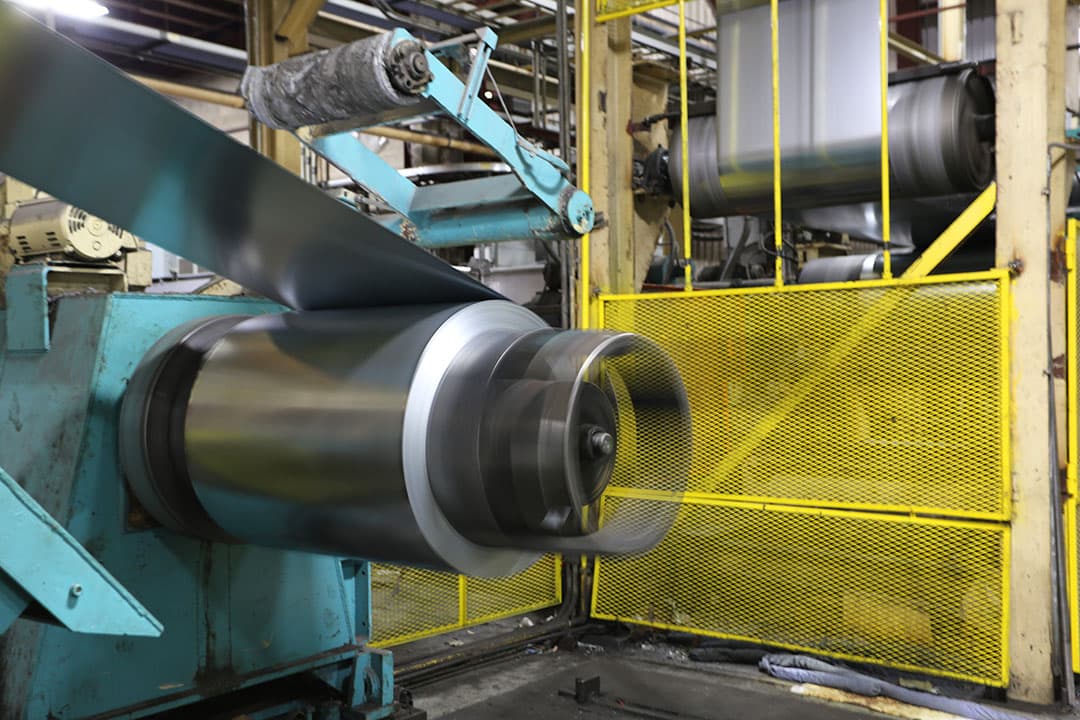
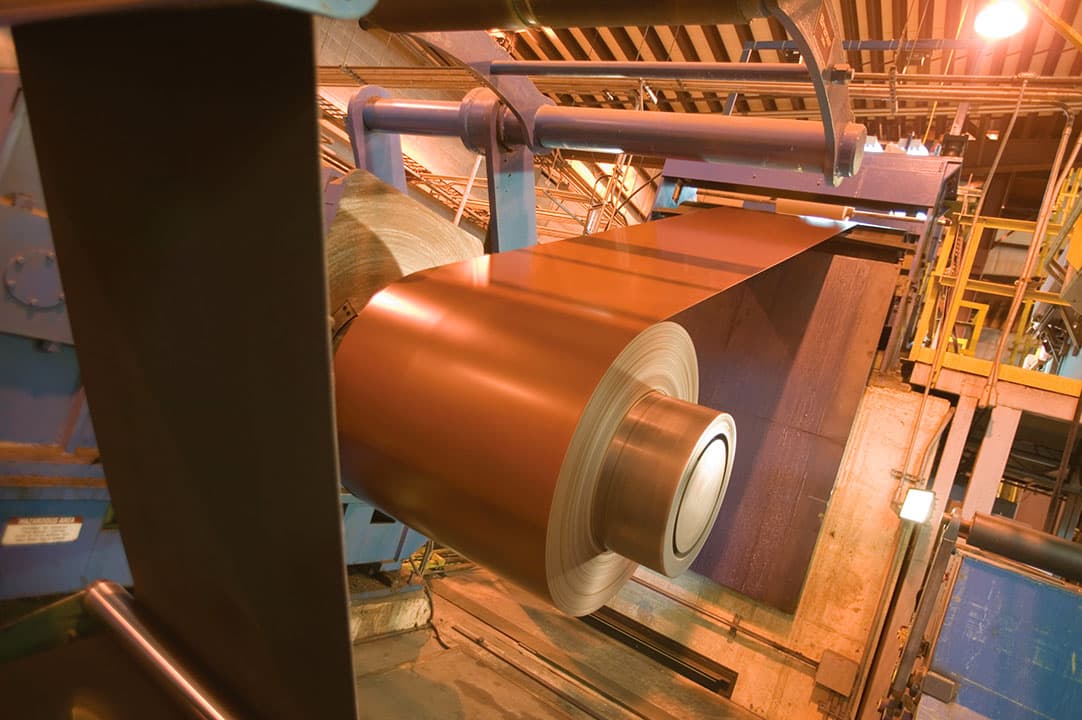
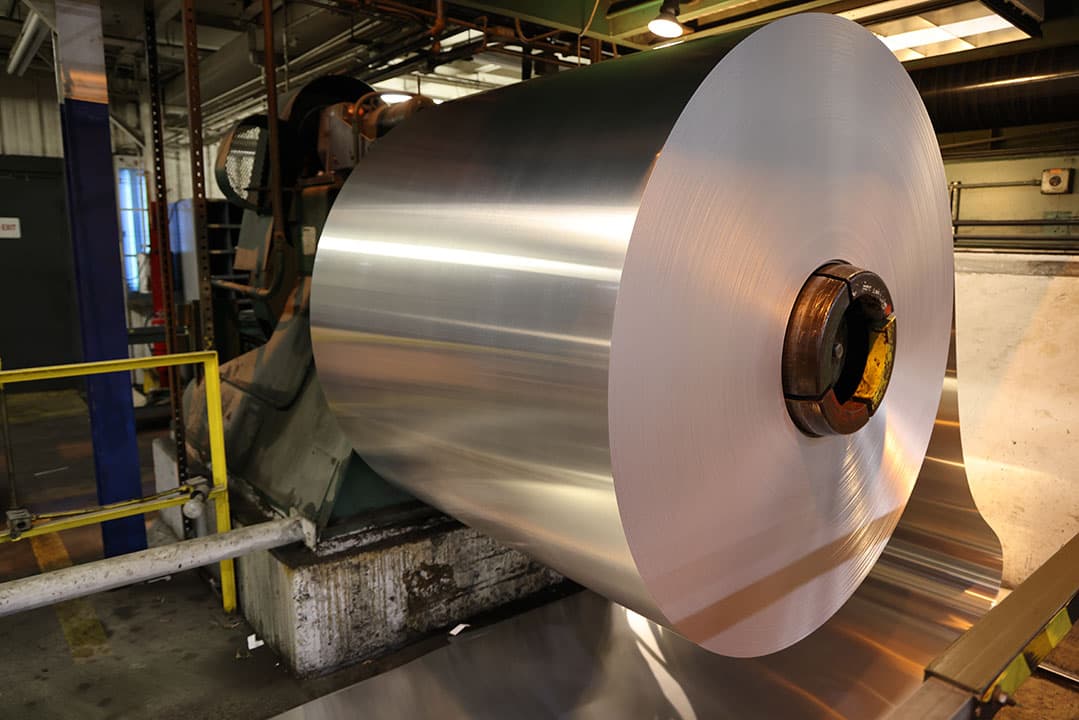
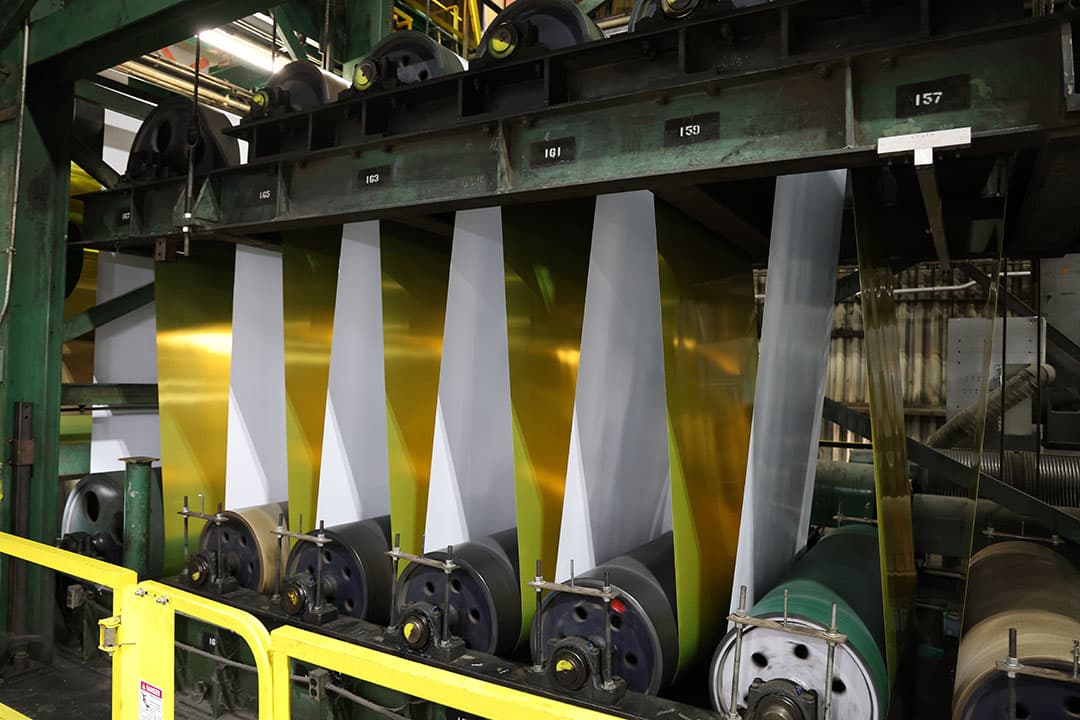
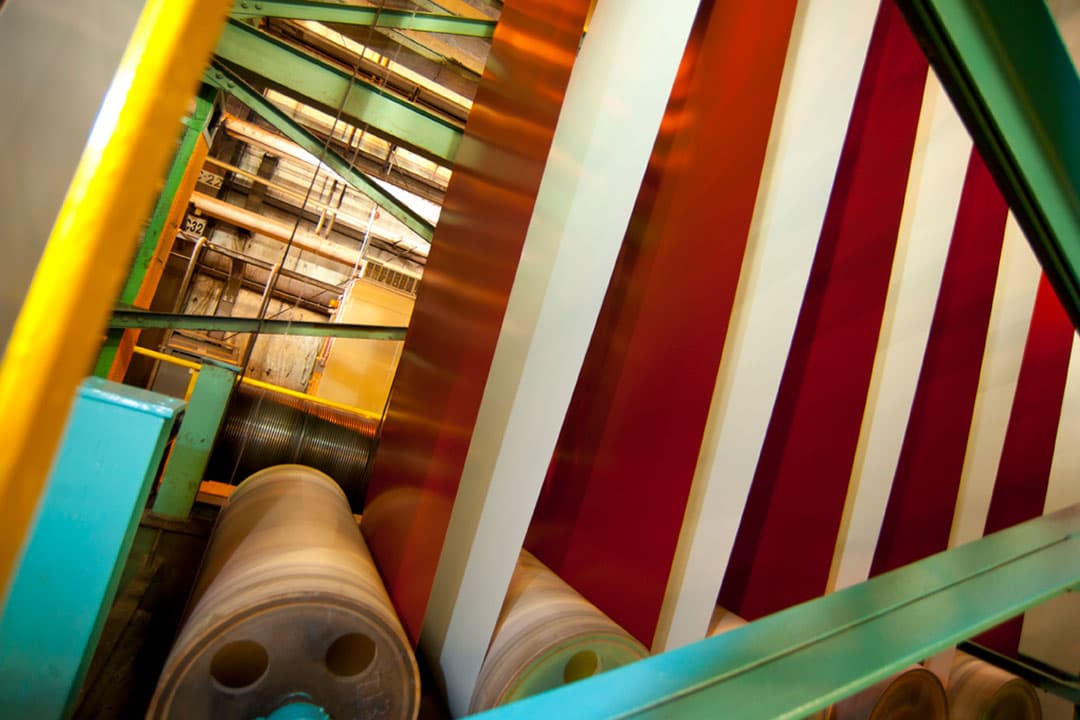
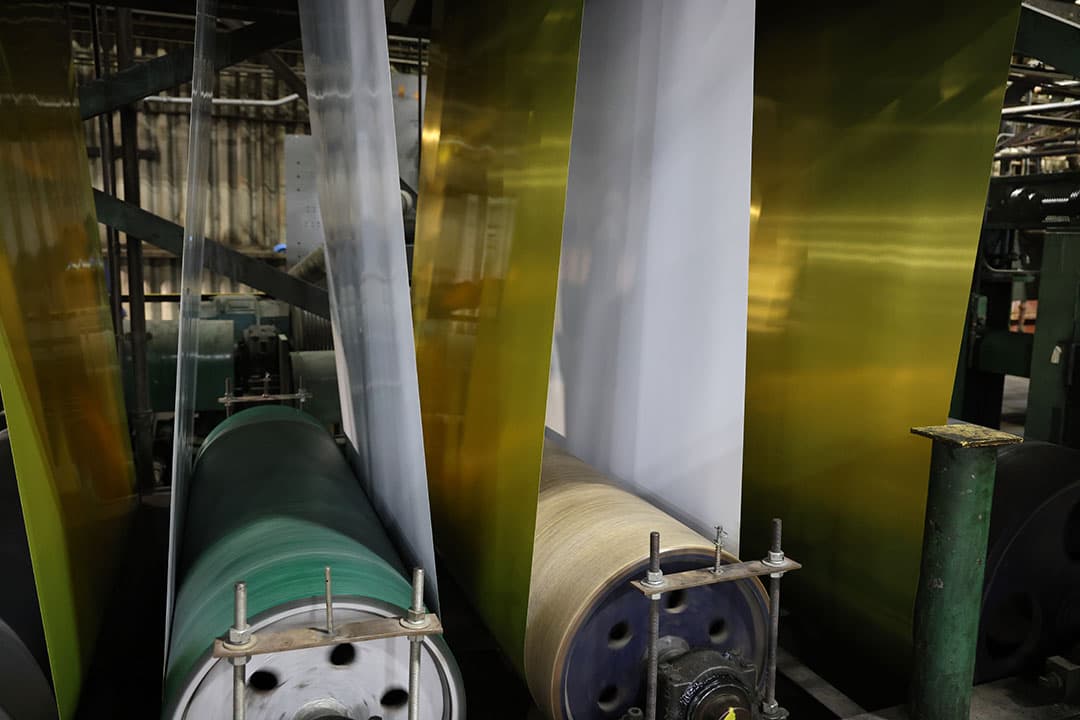
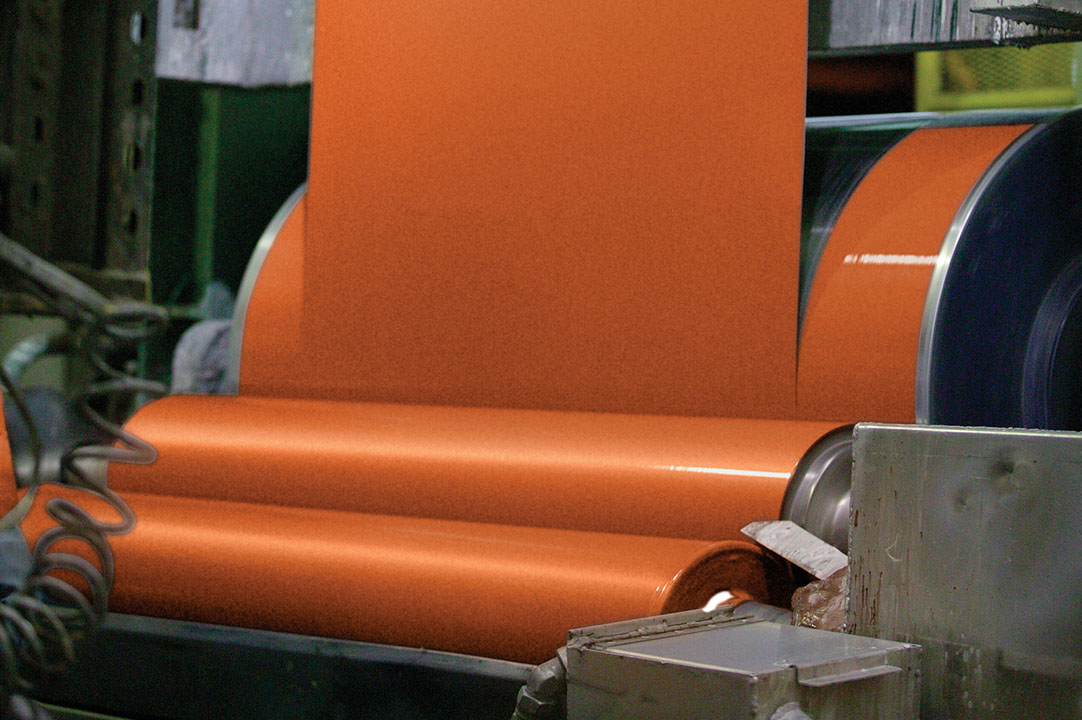
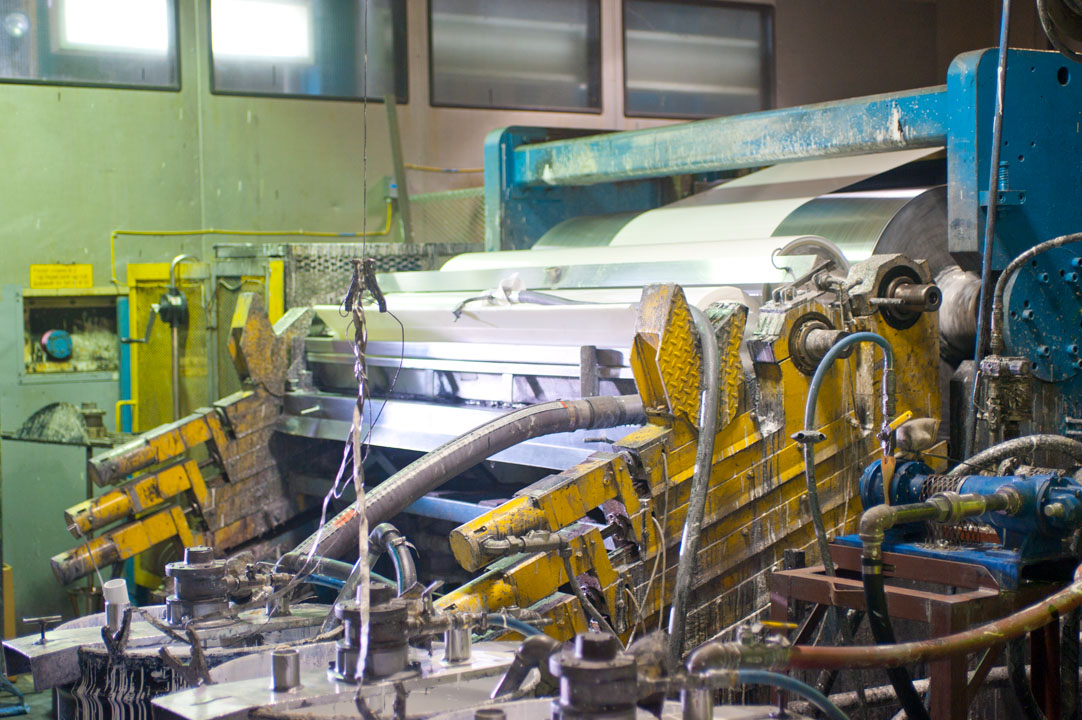
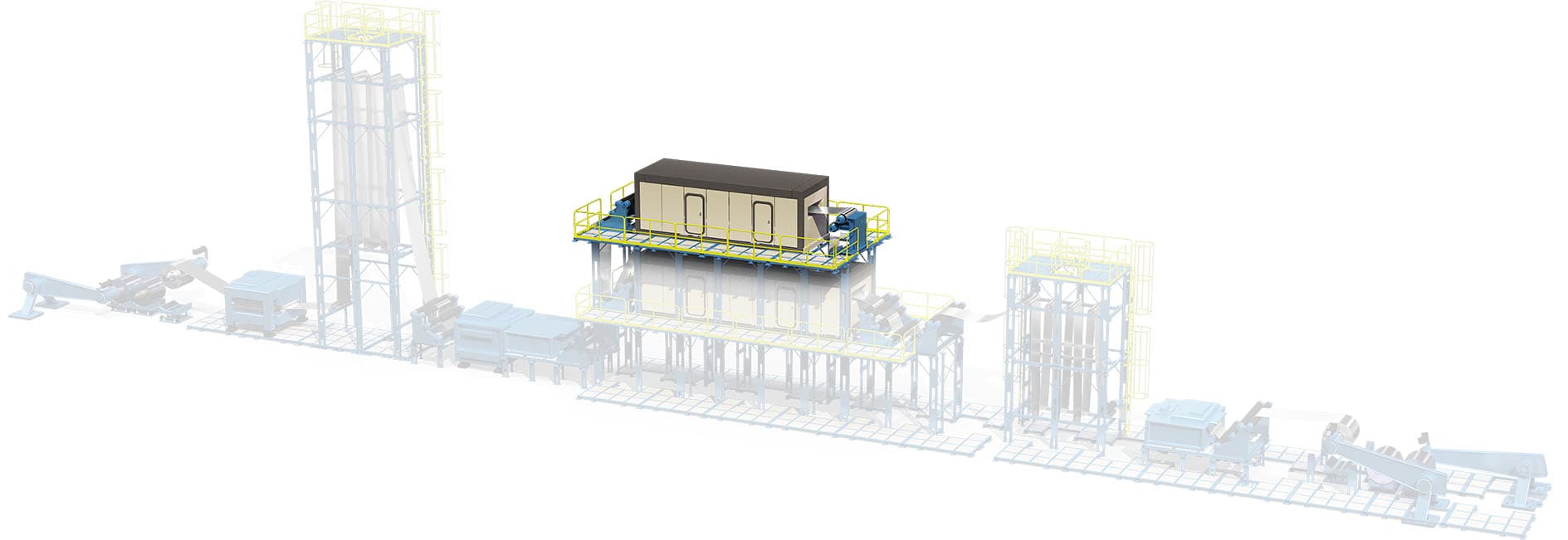
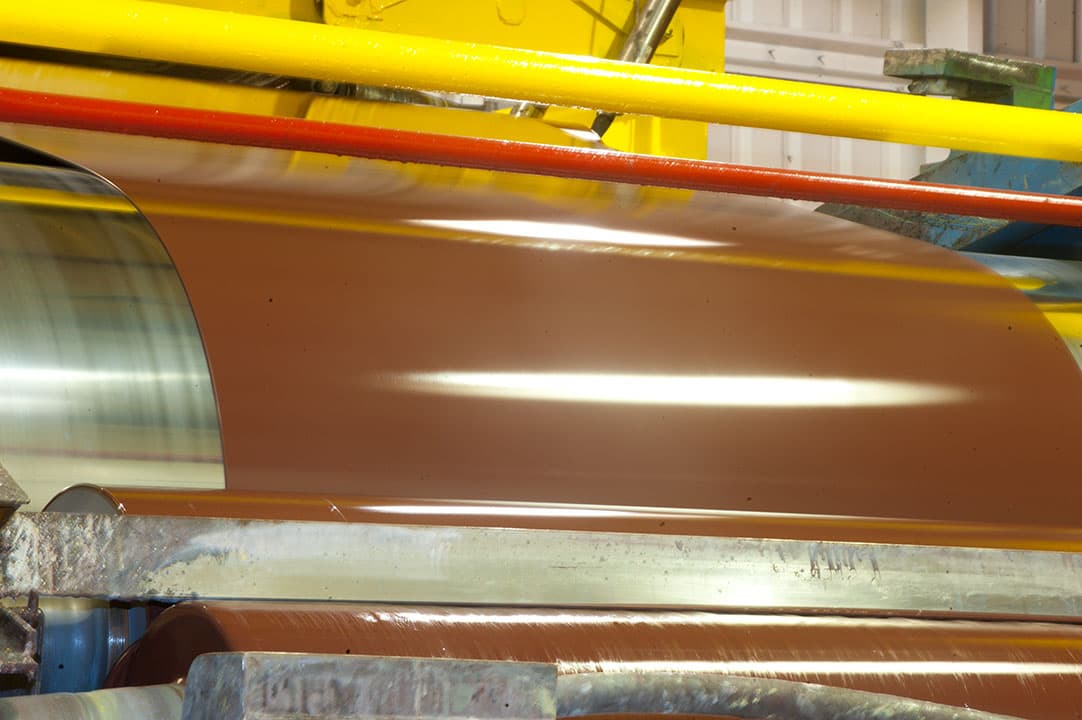
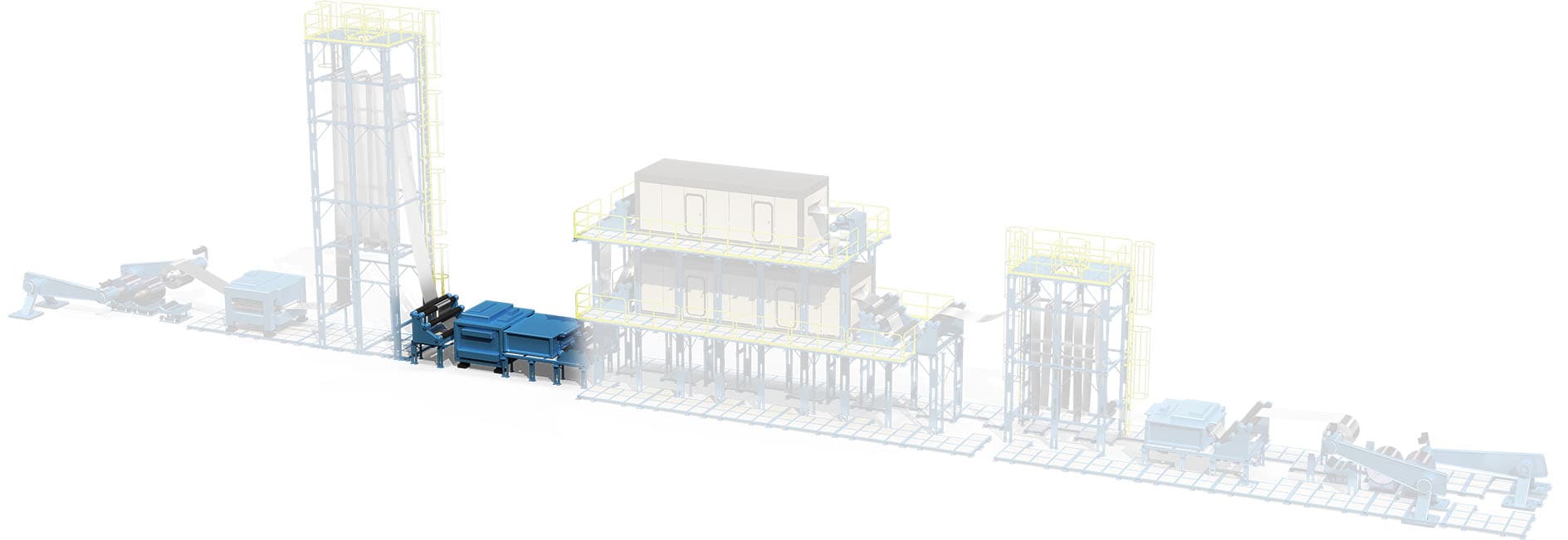
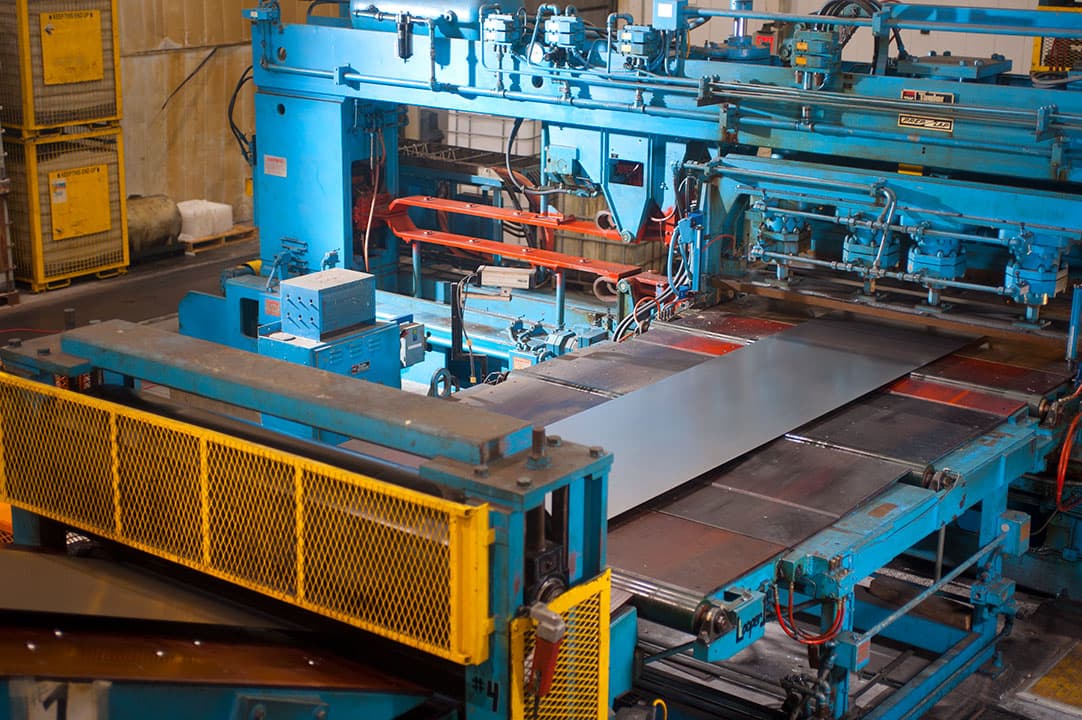
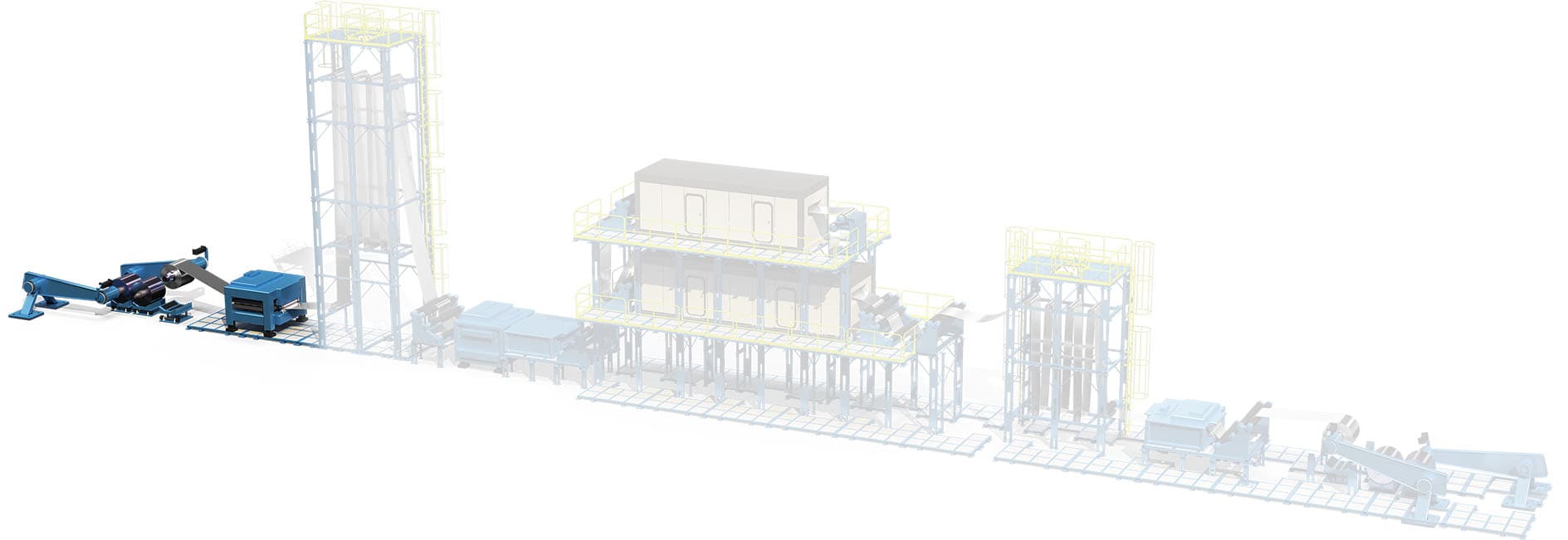
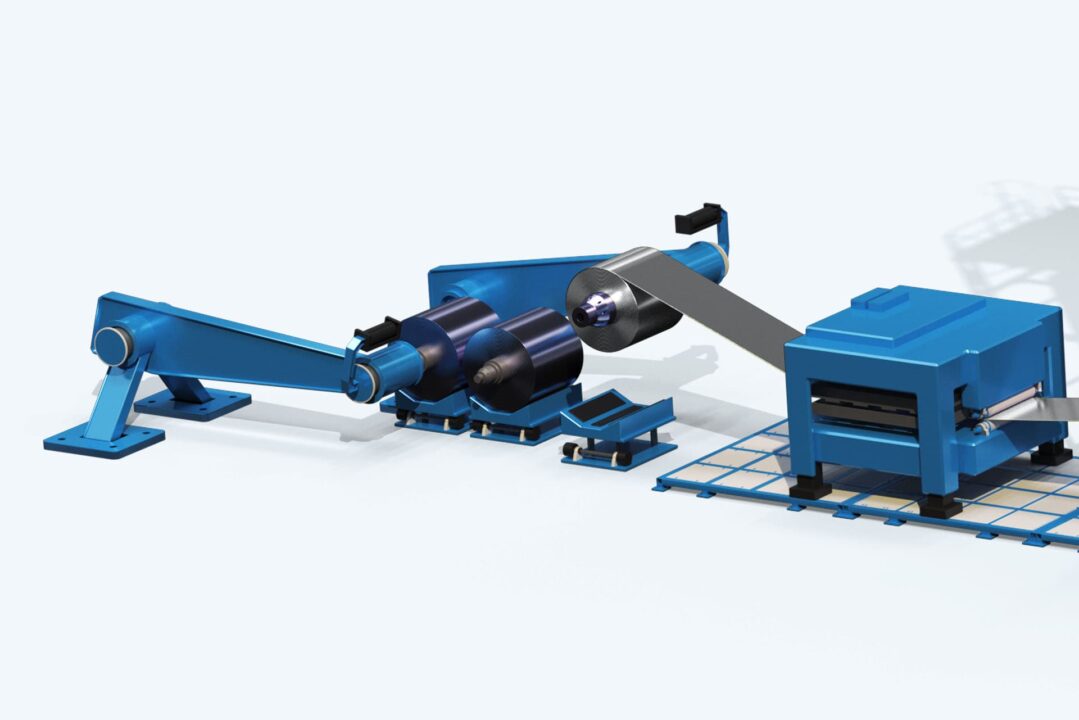
Once the metal is cleaned, treated, and painted, the strip is rewound into a coil size prescribed by the customer. From there, the coil is removed from the line and packaged for shipment or additional processing.
After the primer is applied and cured, then the metal strip enters the finish coat station where a topcoat is applied. Topcoats provide color, corrosion resistance, durability, flexibility and any other required physical properties. Like primers, the topcoat is cured using thermal cure ovens.
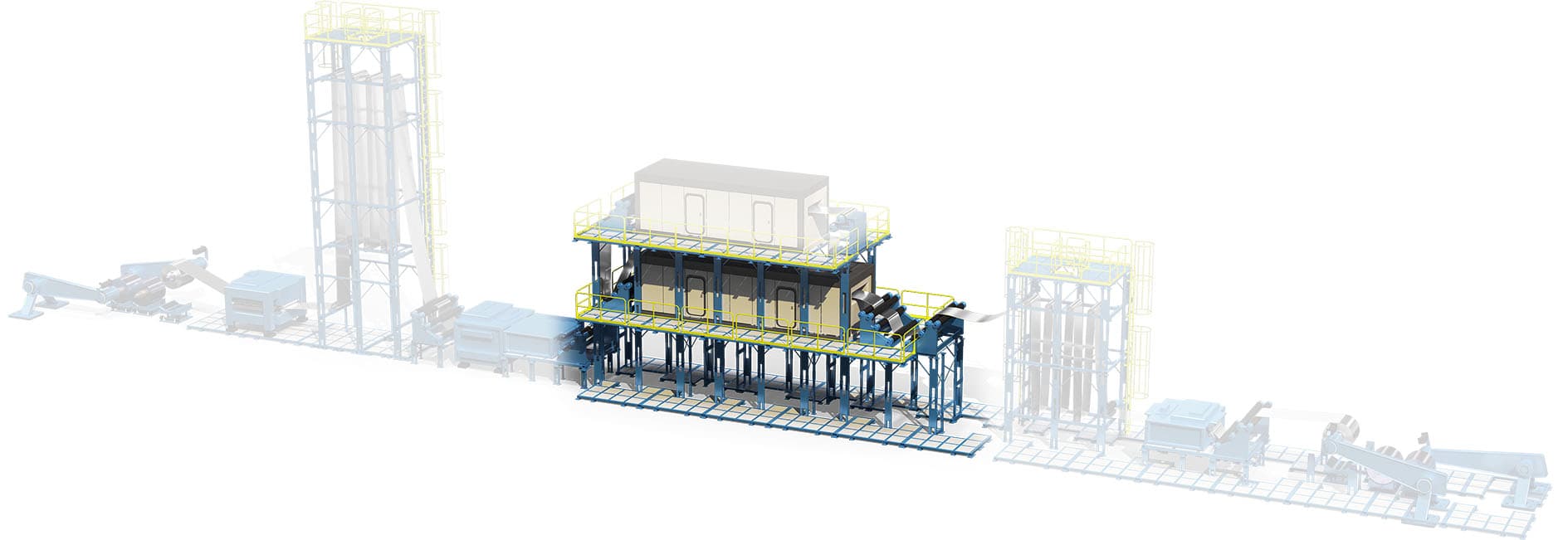
Oven
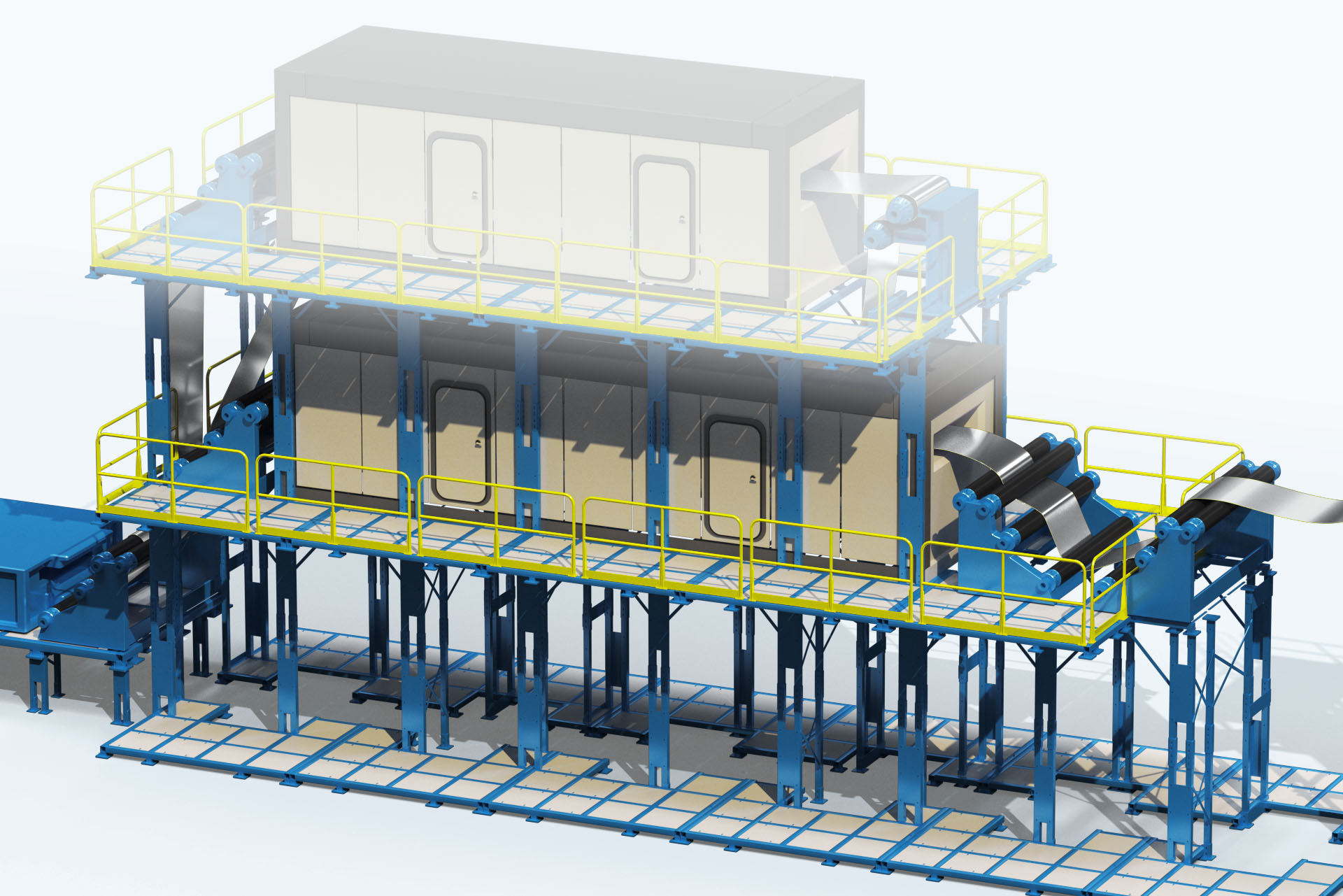
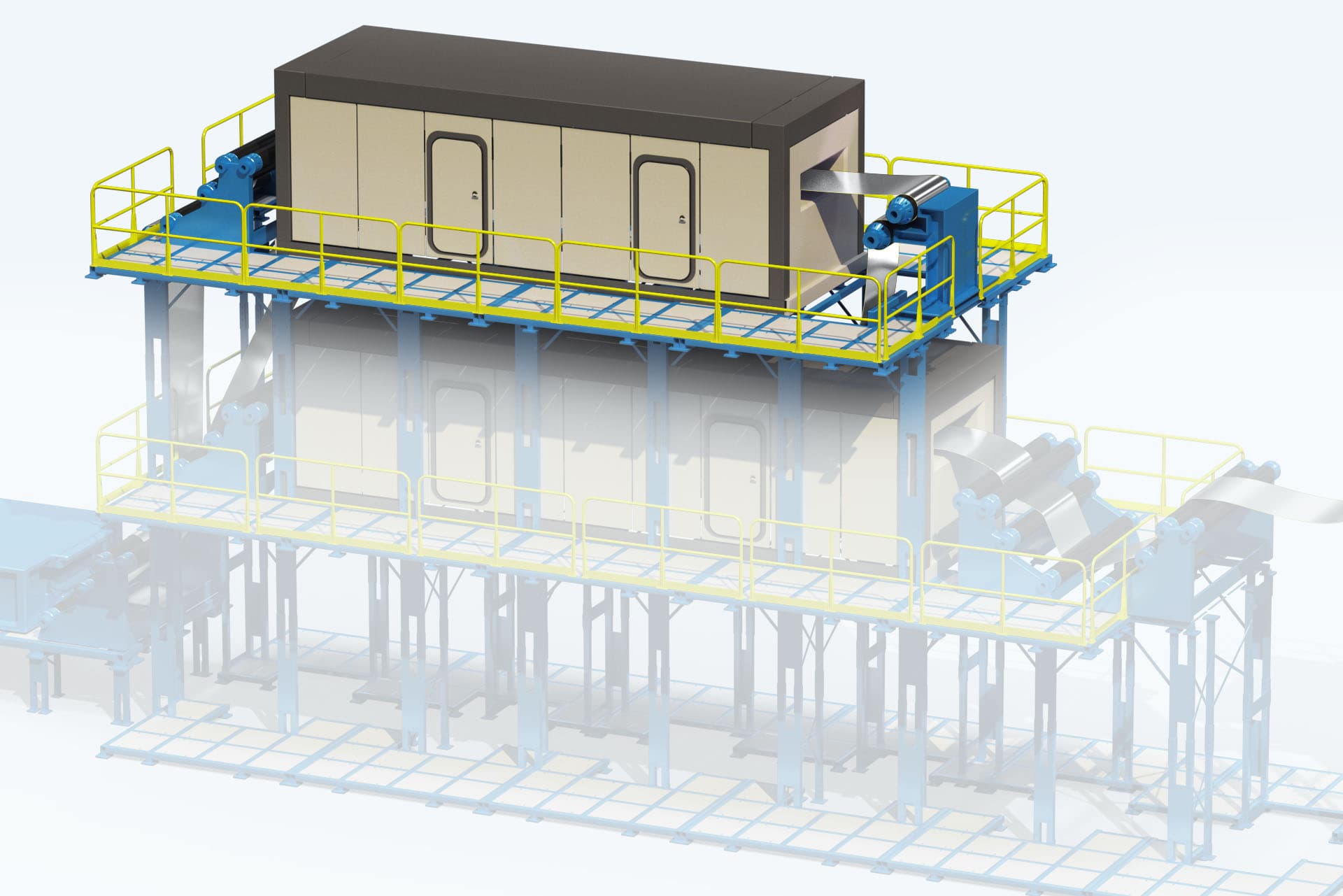
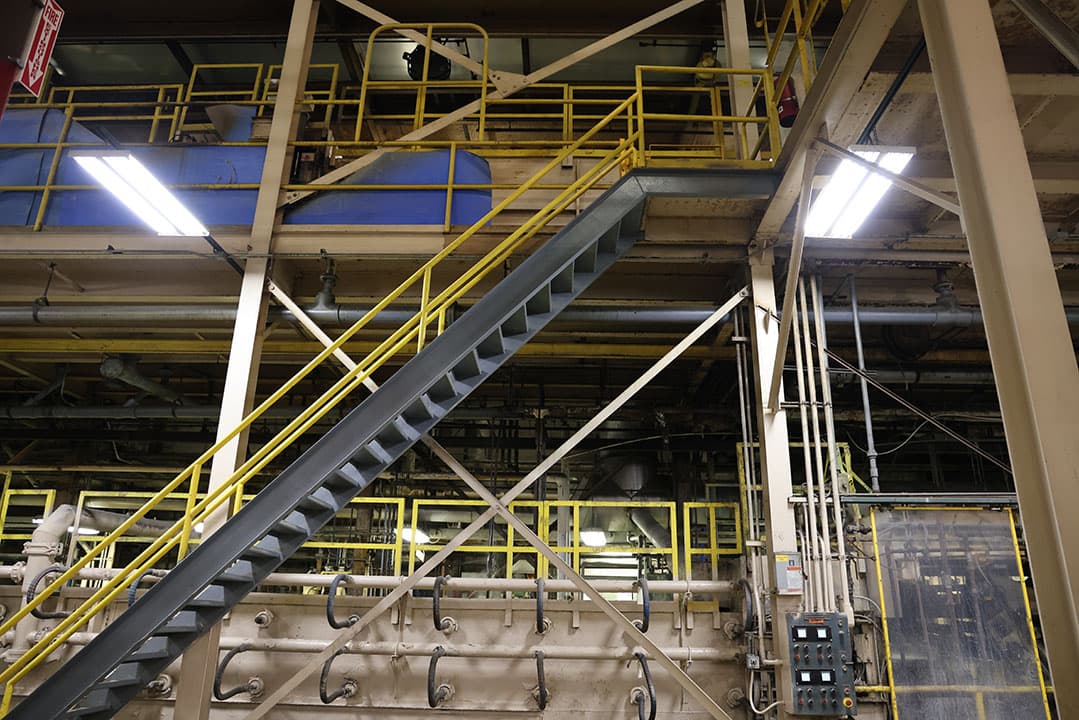
Coil coating ovens can range from 130 feet to 160 feet and will cure the coatings in 13 to 20 seconds.
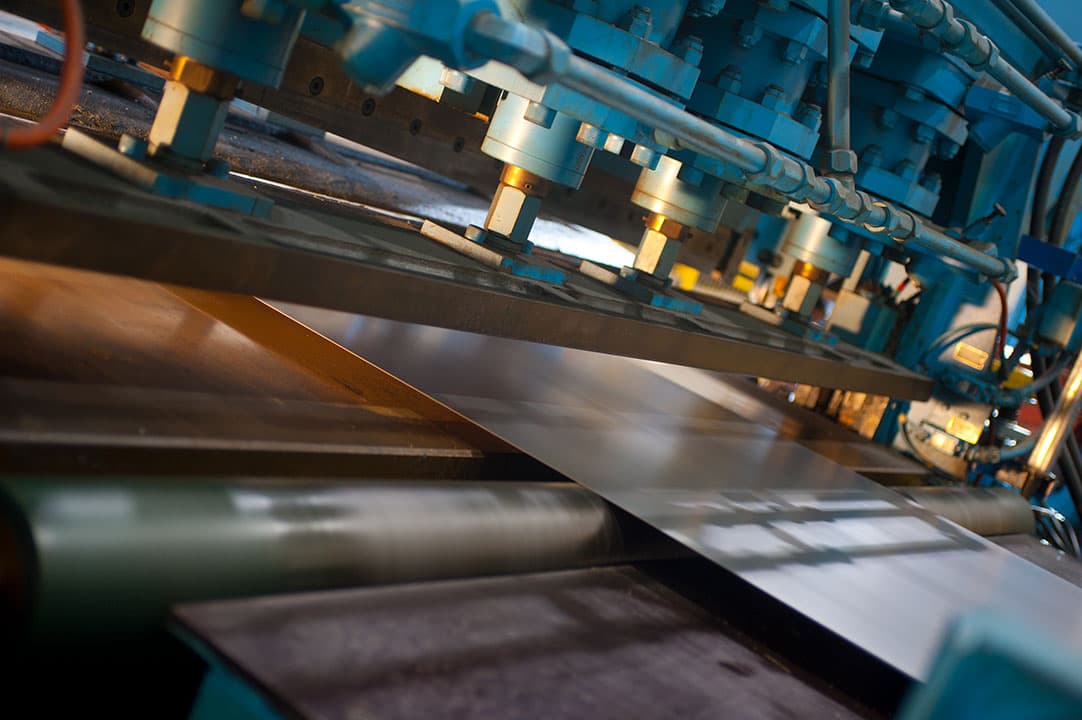
During this stage, the strip enters the prime coat station whereby a primer is applied to the clean and treated metal. After the primer is applied, the metal strip travels through a thermal oven for curing. Primers are used to aid in paint adhesion, improve corrosion performance and enhance aesthetic and functional attributes of the topcoat.
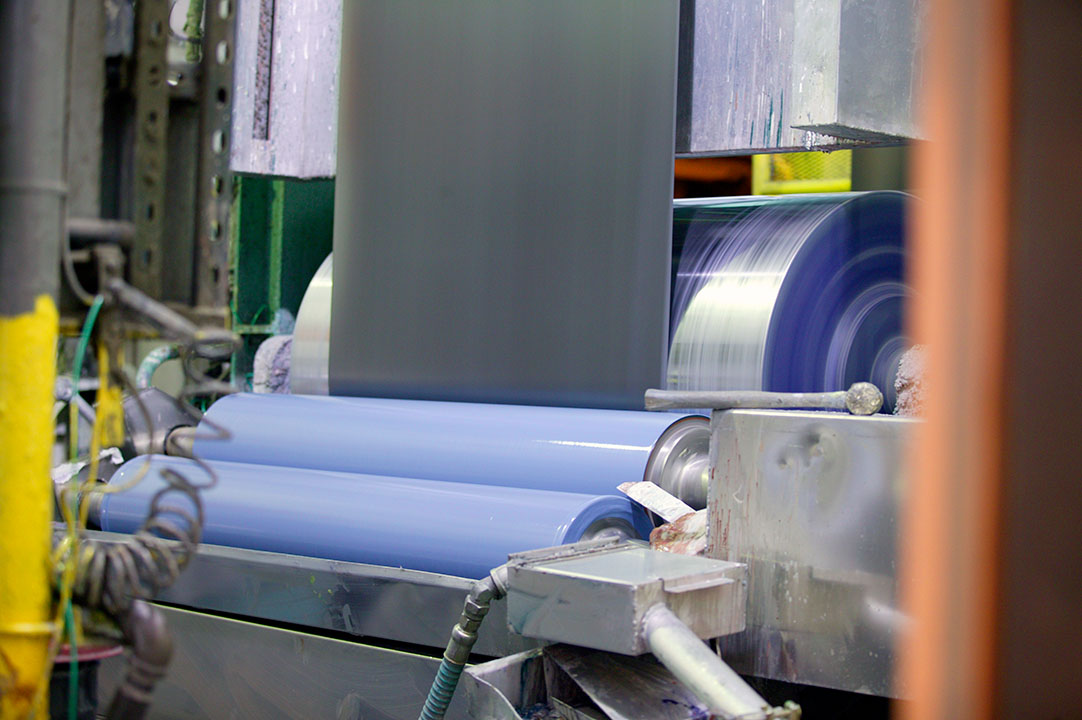
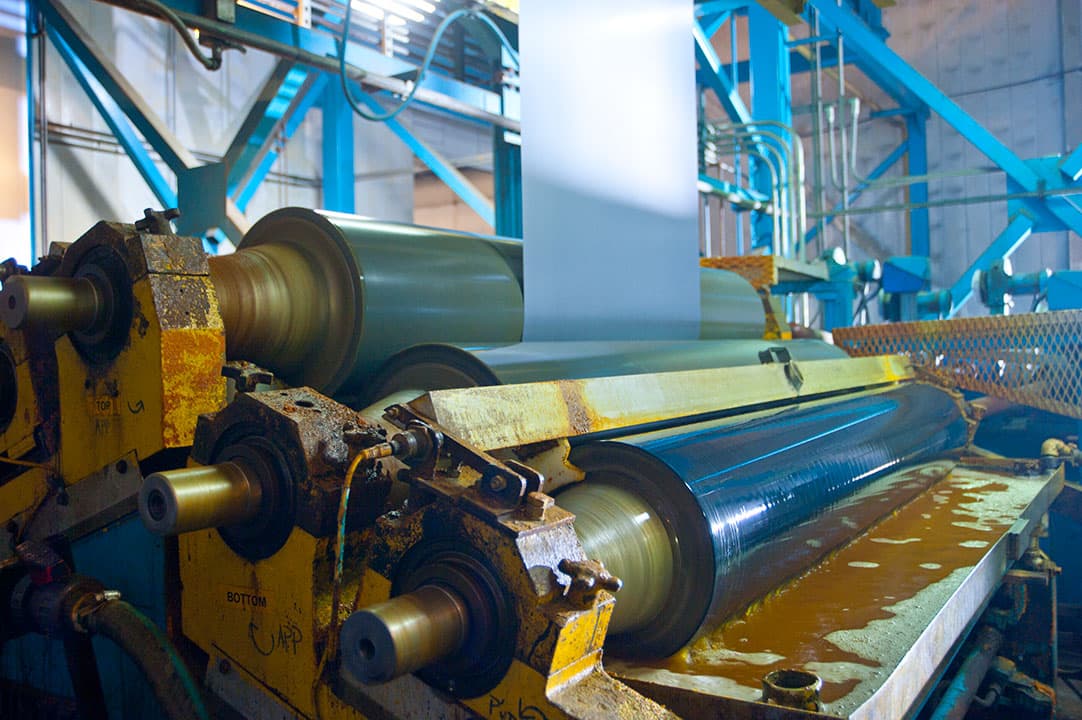
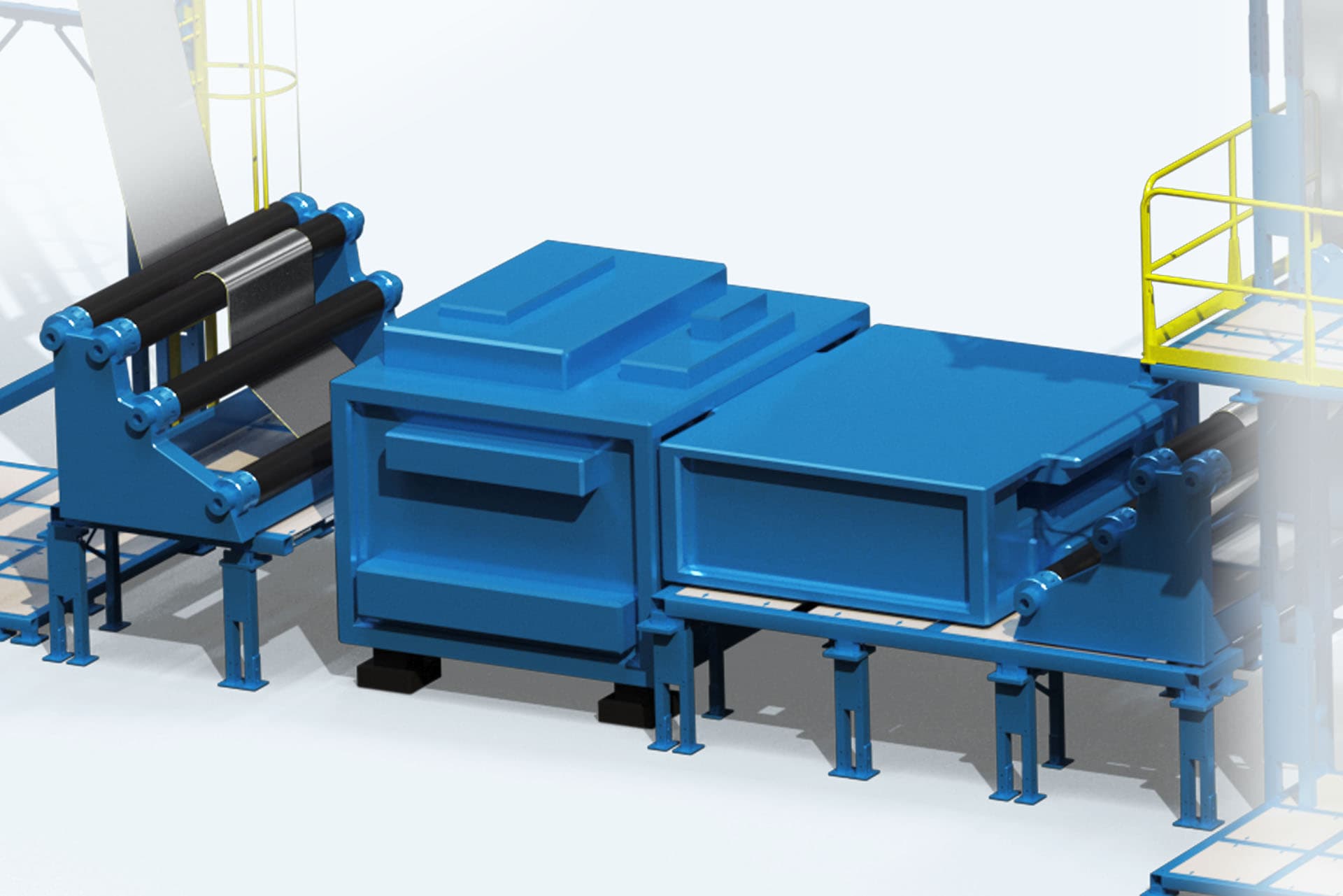
S Wrap Coater
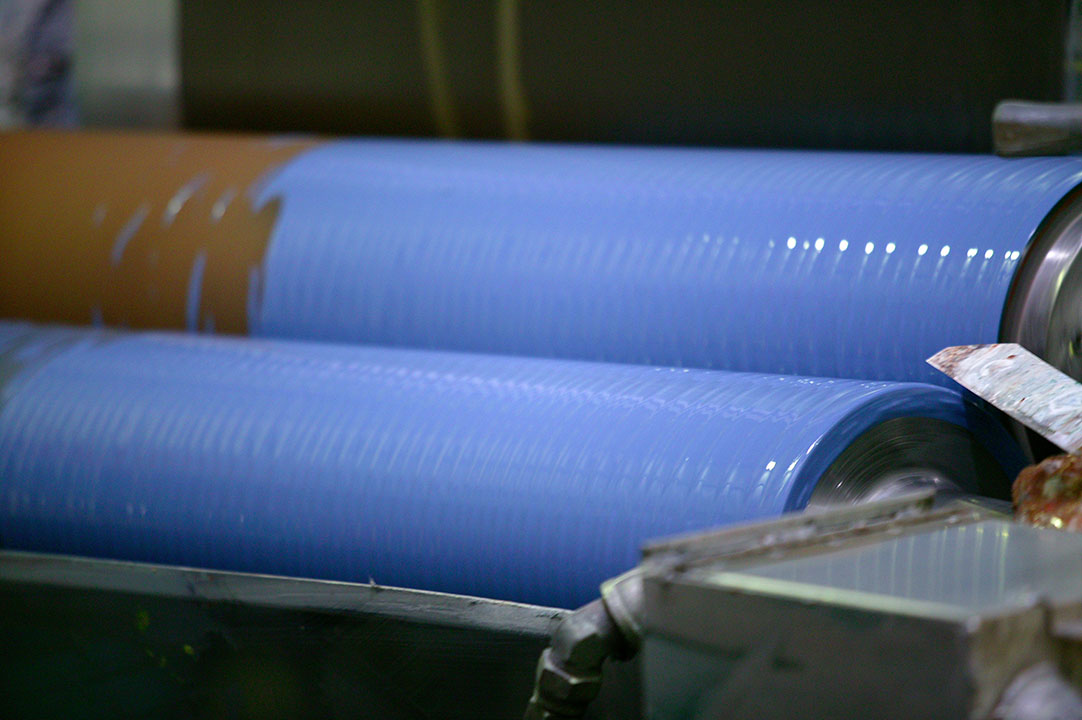
The S wrap coater design allows for primers and paints to be applied to the top and back side of the metal strip simultaneously in one continuous pass.
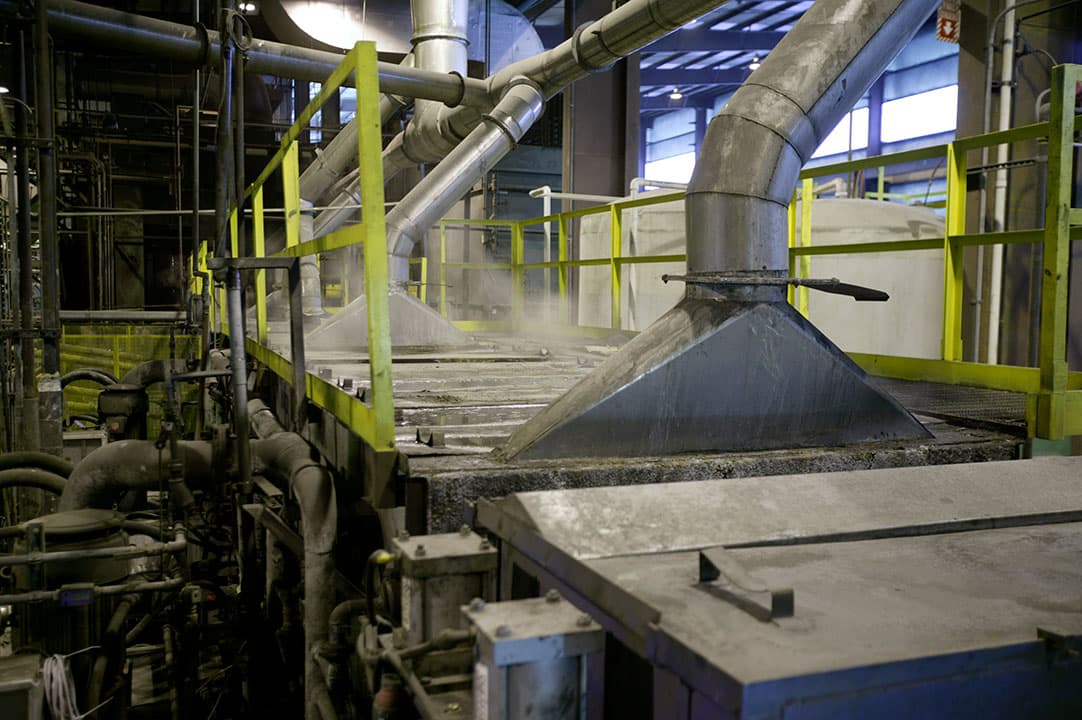
The cleaning and pretreating section of the coil coating process focuses on preparing the metal for painting. During the cleaning stage, dirt, debris, and oils are removed from the metal strip. From there, the metal enters the pretreatment section and/or a chemical coater whereby chemicals are applied to facilitate paint adhesion and enhance corrosion resistance.
Dried-In-Place
In this stage a chemical that provides enhanced corrosion performance is applied. This treatment can be chrome free if required.
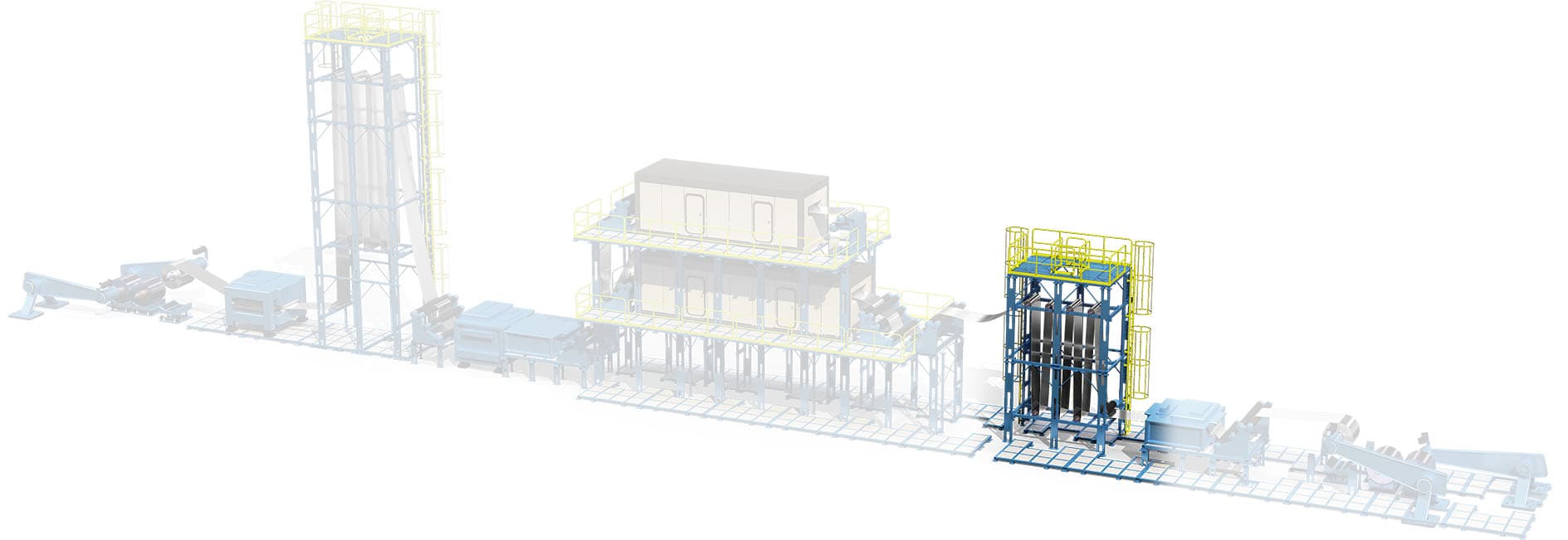
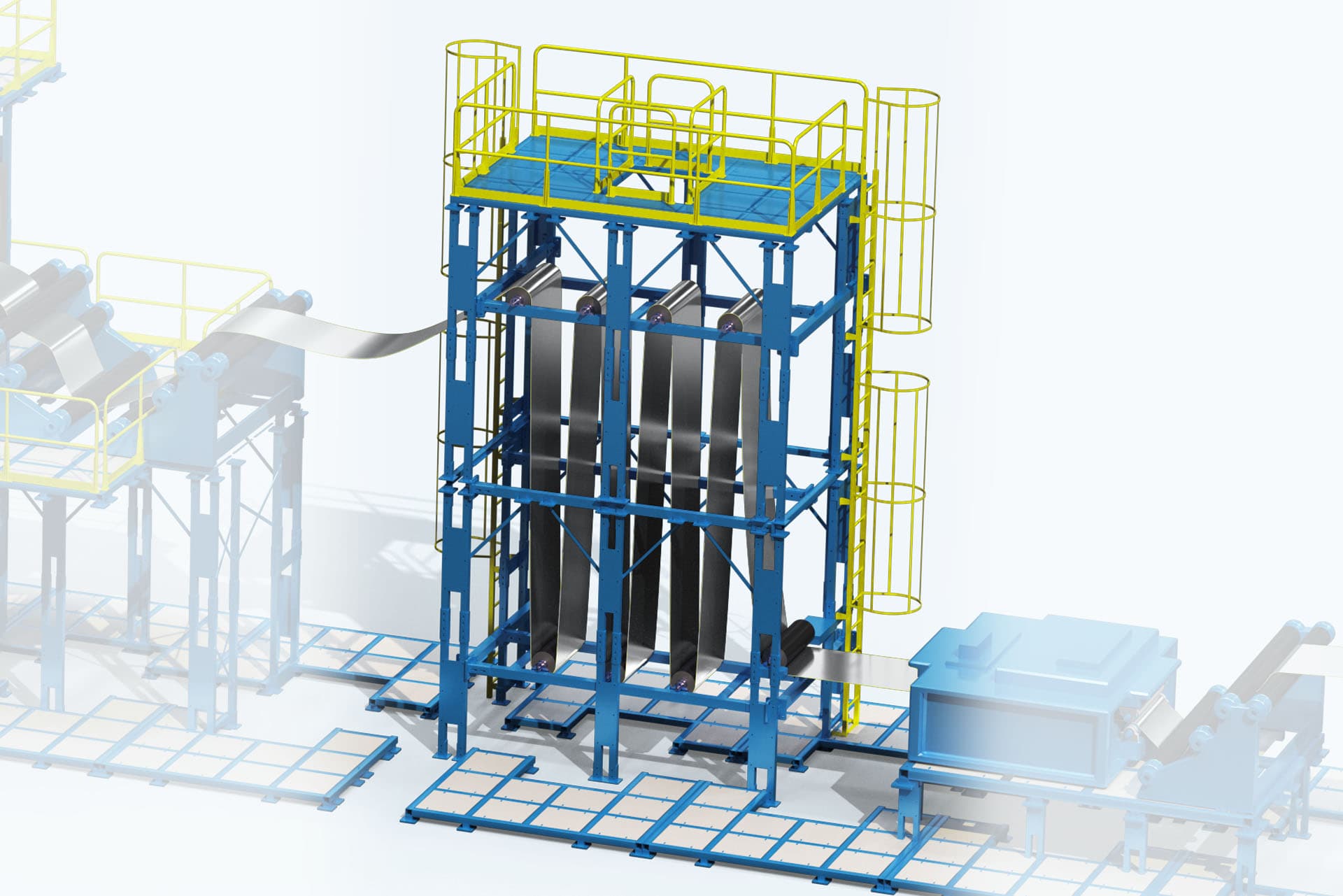
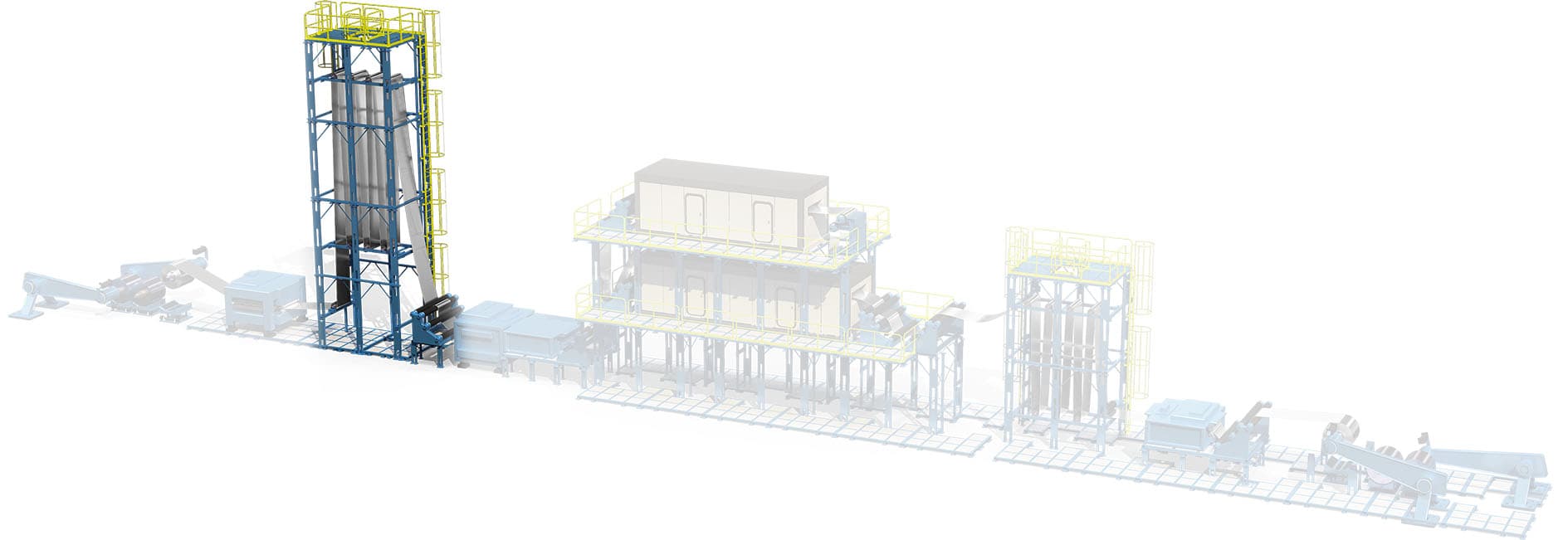
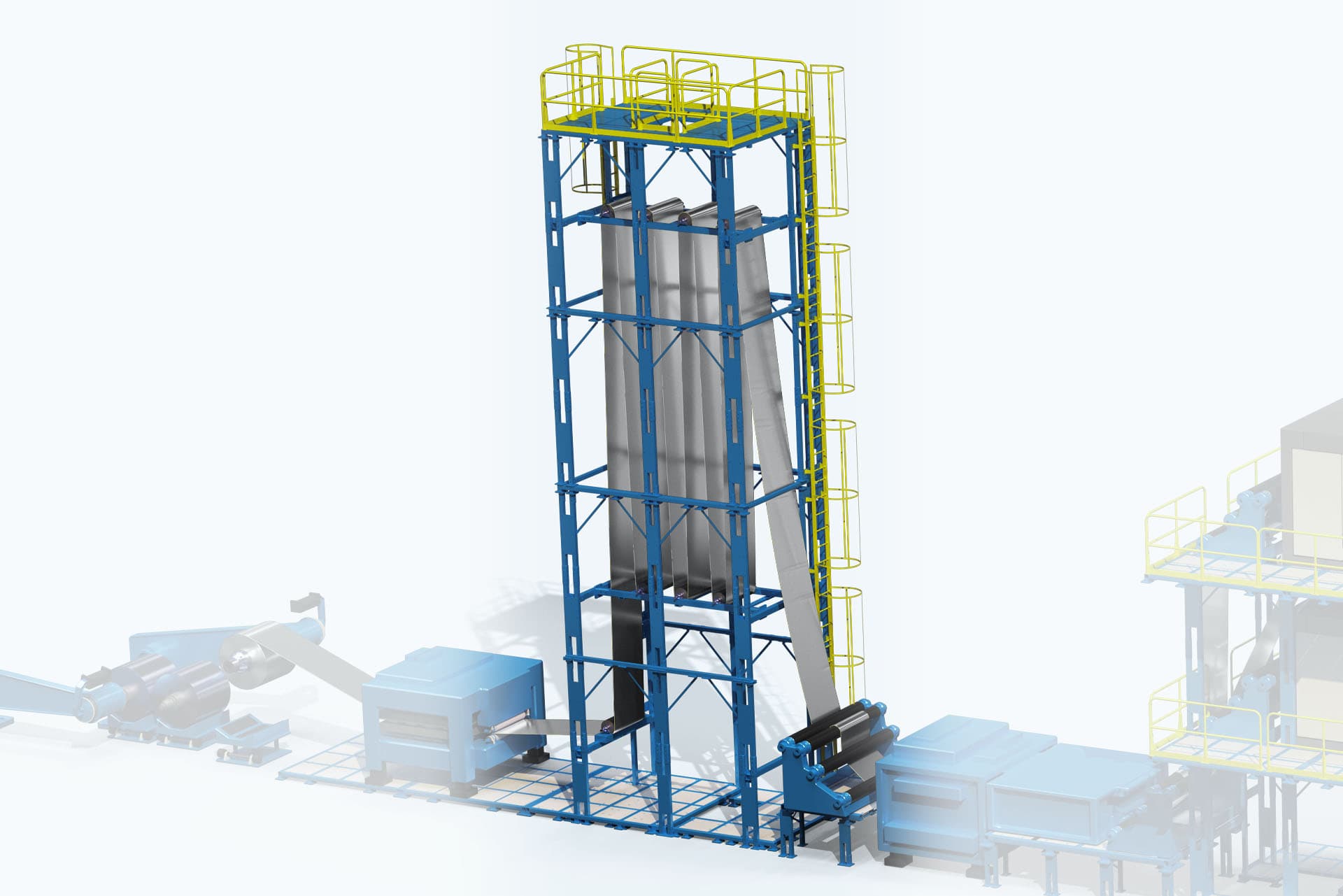
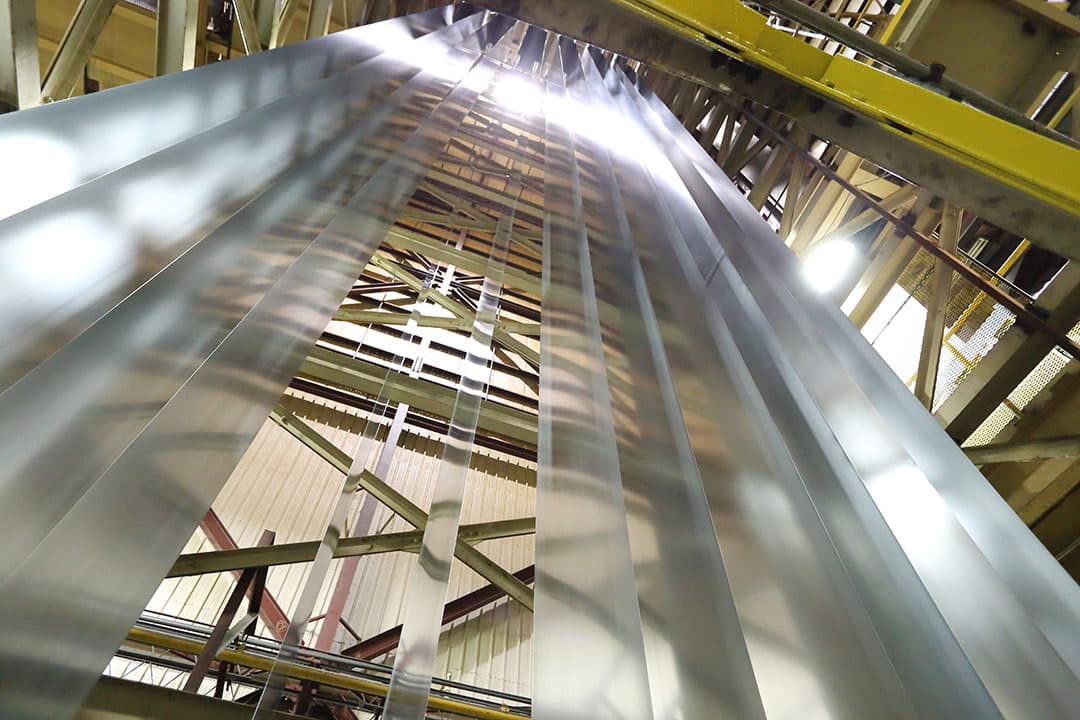
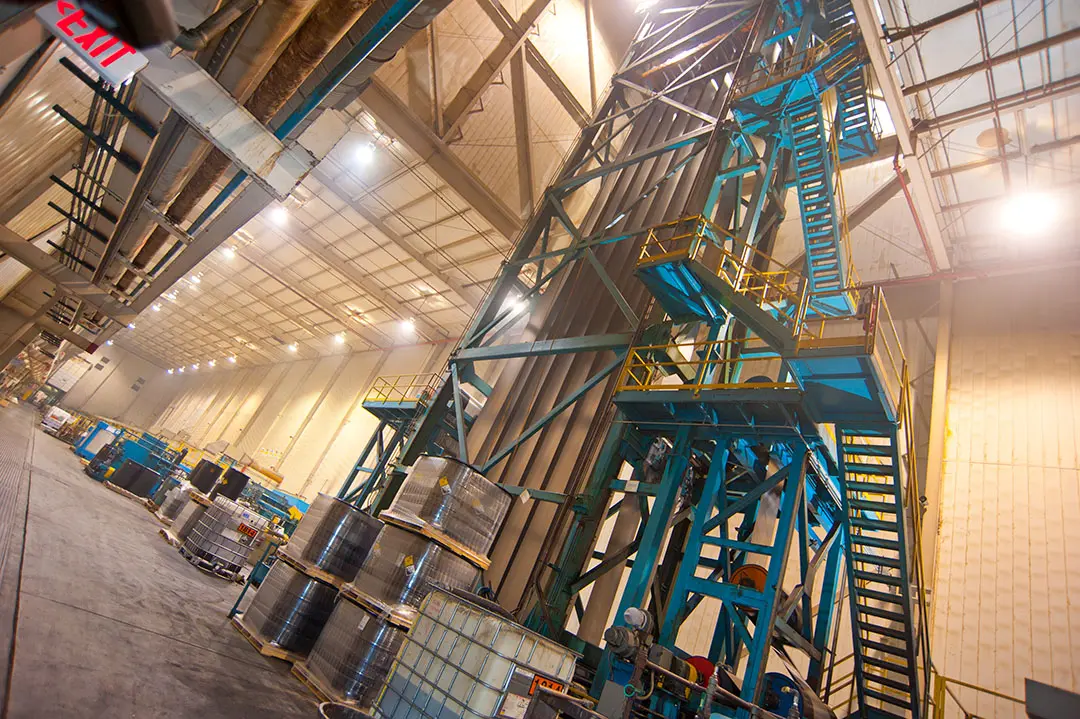
The accumulator is a structure that adjusts up and down to store material, which makes continuous operation of the coil coating process possible. This accumulation will continue to feed the coil coating processes while the entry end has stopped for the stitching process. As much as 750 feet of metal can be collected.
For months on end, parents, grandparents, aunts, uncles, and an assorted mix of friends and family, drive to baseball games in cars loaded down with collapsible lawn chairs, portable coolers, and sports bags. In many areas, you would be hard pressed to find a room full of people where not a single one had at least a few memories of picking at the grass in leftfield, or going to a game to cheer on a young player.
When the Clifton Forge Little League in Allegheny County, Virginia needed two baseball fields to mentor children and host tournaments, the organization was fortunate to connect with the innovative and talented design/buildLAB at Virginia Tech’s School of Architecture. Students who participate in this project-based experiential learning program conduct research and help implement cutting-edge construction methods and architectural designs. The design/buildLAB collaborates with industry experts to create charitable projects that will enrich local communities.
As a result of the dedicated efforts and vision of the design/buildLAb team, Sharon Fields transformed from a dream into a reality for the children of Allegheny County. The two fields and press box feature two 45’ by 25’ backstops fabricated out of a light gauge steel tubing, which was progressively dipped and reassembled in the field. This material allowed for easy handling and assembling for the team. AZZ Galvanizing – Bristol was pleased to help with the construction and was recently recognized for its work on the project by the American Galvanizers Association for Excellence in Hot Dip Galvanizing: Civic Contribution.
A key factor in the design of Sharon Fields, which recently won the 2016 AIA Blue Ridge Design & Construction award, is the durable, maintenance-free materials chosen by the Virginia Tech team. The architectural students knew the Clifton Forge Little League Team operates as a non-profit with a tight budget and needed the new facility to offer longevity and low maintenance costs. The hot-dip galvanized steel they chose for the project will ensure that several generations of Little Leaguers will be able to enjoy the new fields. This zinc-coated material is long lasting – offering corrosion protection in a variety of climates as well as a natural, clean, rust-free look. For this project in particular, the material was a wise choice because the student architects knew the backstops would be exposed to rain, sunlight and cold temperatures yet still have to protect spectators season after season.
AZZ Galvanizing – Bristol is proud to have helped in the construction of this useful community facility, and looks forward to seeing Allegheny Country families enjoy it for years to come.
To learn more about AZZ and its processes, visit AZZ.com today!
In 1836, a French scientist by the name of Sorel took out numerous patents on a process originally developed in 1742 by another French scientist named Melouin. This process was one in which cleaned steel was dipped into molten zinc. Because Sorel understood the electrochemical nature of corrosion and why zinc protected the steel, he named the process “galvanization,” after the Italian scientist Luigi Galvani, who had done early experiments in electricity.
Sorel’s understanding also built on the work of Sir Humphrey Davey, who, in 1824, showed that when two different metals were electrically connected and immersed in water, one metal was protected while the other corroded more quickly. Thus was born galvanization, a process whereby zinc is sacrificed to protect steel in steel products.
AZZ recently installed a new kettle for galvanizing steel at their facility. Jamie Atkins, Plant Manager at AZZ Galvanizing Services in Minneapolis, MN, spoke recently about the new kettle, the history of galvanization, and the implications of this new equipment for the customers.
Atkins points out that, although galvanization is hardly a new technology, as a procedure dated back a couple hundred years, the installation of this new kettle is a huge step in efficiencies and capacity for this plant. Its comparatively simple elemental process creates a highly reliable and corrosive-resistant material.
He further explains that the zinc has to be above 820 degrees F to be effectively galvanized, but it doesn’t need to be above 845 degrees because you don’t gain anything by being hotter. Atkins also points out that “You have to get your steel completely clean: no scale, no rust, no paint, nothing on the surface that’s a barrier to the bare steel” for galvanization to be most successful.
When you dip the clean steel into the hot zinc, the metallurgical reaction bonding the zinc and steel creates four layers of the coating. At the bottom layer reside a mix of zinc and iron. As layers extend outward from the steel, there is increasingly more zinc with decreasing iron, so that the outer layer is a completely zinc surface.
“In the 50s, when they started galvanizing here at AZZ, the process was not really that much different. The process still had acid that cleaned the steel. You still had a hot bath of zinc you dipped it in. Then you pulled it out, you cleaned it, and you shipped it back to your customer,” according to Atkins. Now, however, the technology has changed, creating a better product through a much more efficient process. “
AZZ, Inc. is a global provider of galvanizing, welding solutions, specialty electrical equipment, and highly engineered services. We support the power generation, transmission, distribution, and industrial markets through protection of metal and electrical systems used to build and enhance the world’s infrastructure. The new kettle is a another step forward in efficiencies and capacity for this plant.
To learn more about what AZZ Inc. can do for your business, visit us online at AZZ.comtoday!
McKinney, Texas was chosen by Money Magazine in 2014 as the best place to live in the country. When you visit, it’s not difficult to see why. This town of 161,905 people is prosperous, forward-thinking, and boasts many great events and places for families to enjoy. One of these excellent facilities is the recently constructed McKinney Aquatics Center, a sustainably built recreation center for kids and families looking to escape the Texas heat while still being active together. AZZ Galvanizing – Crowley was proud to help with the construction of such a wonderful facility, and was recently recognized for its work on the project by the American Galvanizers Association for Excellence in Hot Dip Galvanizing.
This new center was constructed after several years of dreaming, planning, and coordinating. Featuring a gymnasium, sports court, elevated track, child care area, classrooms, locker rooms and a 10,000-square foot pool—the $30 million, 80,000-square-foot facility is an incredible asset to the community. Project leaders expect it to be fully self-sustaining in three years.
One particularly exciting aspect of the project is the sustainable manner in which it was built. The core of the center is formed by hot-dip galvanized steel to ensure several generations of McKinney citizens will be able to enjoy it. This zinc-coated material is long-lasting, offering corrosion protection as well as consistent, rust-free beauty. Vastly superior to paint that would deteriorate consistently over time and need to be frequently reapplied, hot-dip galvanized steel is maintenance-free.
AZZ Galvanizing – Crowley is very pleased to have played such a central role in the construction of this beautiful facility and looks forward to seeing McKinney families enjoy it for years to come.
To learn more about AZZ and its products, visit AZZ.com today!
With the installation of a new, more efficient, and safer kettle, the plant is now able to galvanize material that is 30 feet long, a significant increase from our previous capacity. In the past, our customers in the area often had to drive long distances to galvanize large materials. Now, even their largest projects can be serviced in Minneapolis, saving significant time and money.
With our previous kettle, after dipping about 20,000 pounds the kettle would lower 20 degrees. This meant time and energy was spent reheating the kettle in order to dip more material. This new kettle can dip 40,000 pounds with a change of only 5 degrees. With this upgrade we will be able to increase production by roughly 50 percent.
The new system is also more energy efficient. The old kettle has been a part of our plant since 1988, and furnace technology has come a long way since then. We are able to use half the burners we used to, while heating in a more even and efficient manner. This new setup also has a castable concrete floor and built-in airspace to retain heat once we reach the desired temperature. While the kettle itself will have to be changed every eight years, the furnace system is designed to last us another thirty.
We also took the opportunity to upgrade our safety measures, changing the traditional 3 ½ foot safety rim to a complete enclosure around the entire system. The full enclosure has side opening doors, which allows our galvanizing specialists to work in the kettle while remaining safe from splashing and keeping our plant clean.
As a key supporter for the power generation, transmission, distribution and industrial markets, AZZ Inc. is proud to announce our latest galvanizing plant upgrade. By increasing our capacity and abilities, we are easing the burden on all of our partners and ensuring we will be able to protect your steel from corrosion far into the future.
To learn more about our services, or to see how AZZ Inc. can help your business, visit us at AZZ.com today!