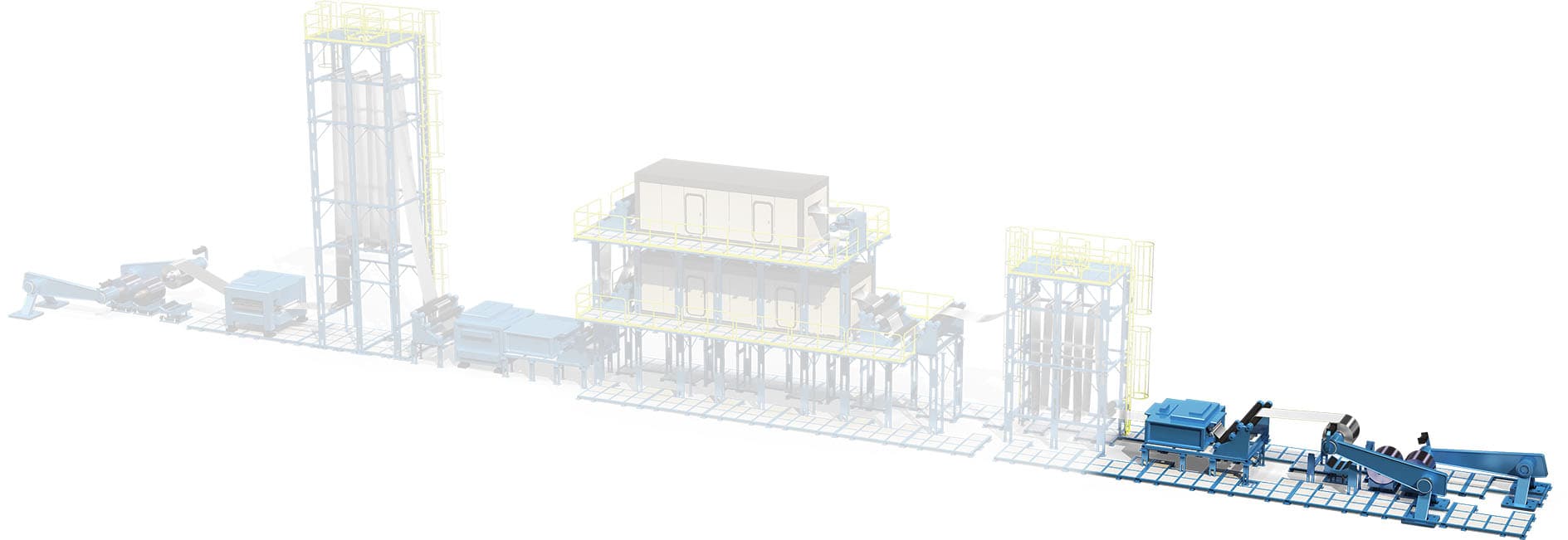
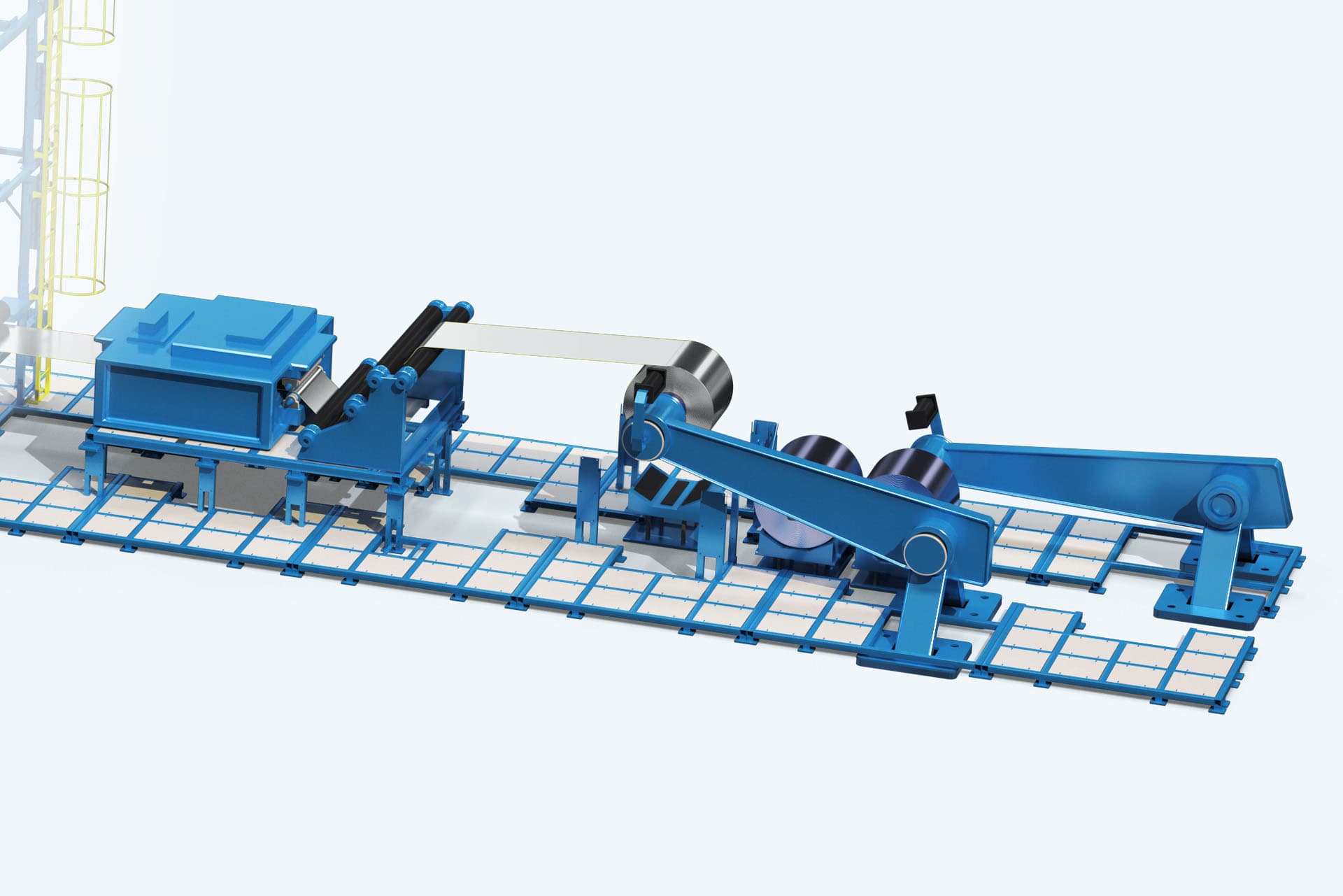
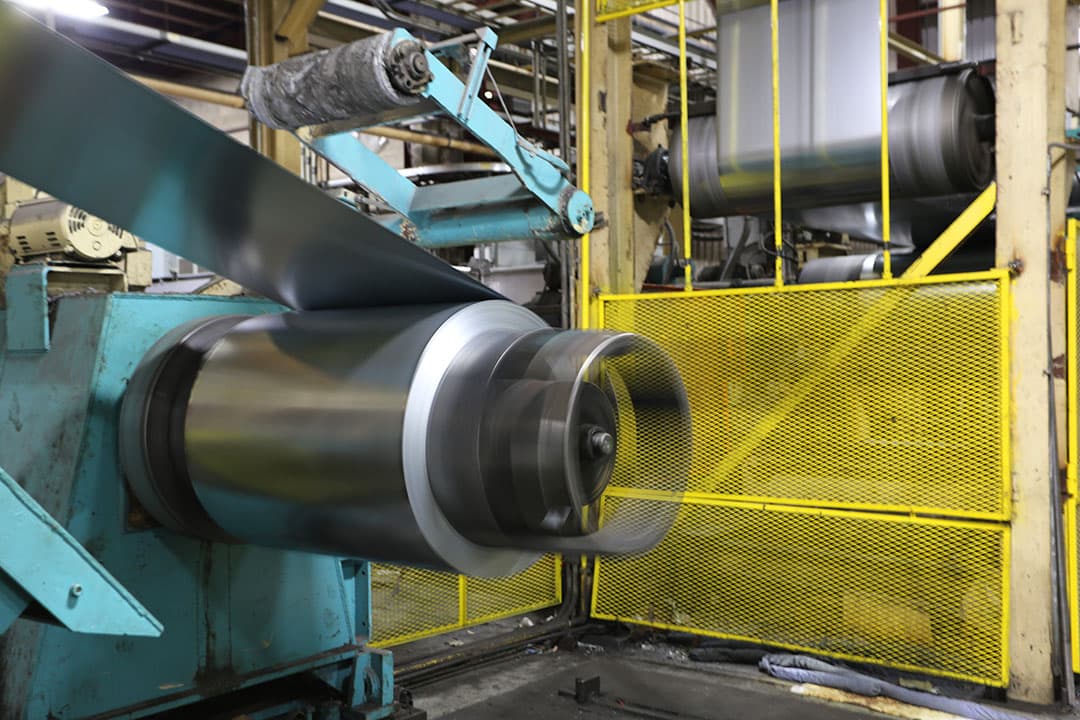
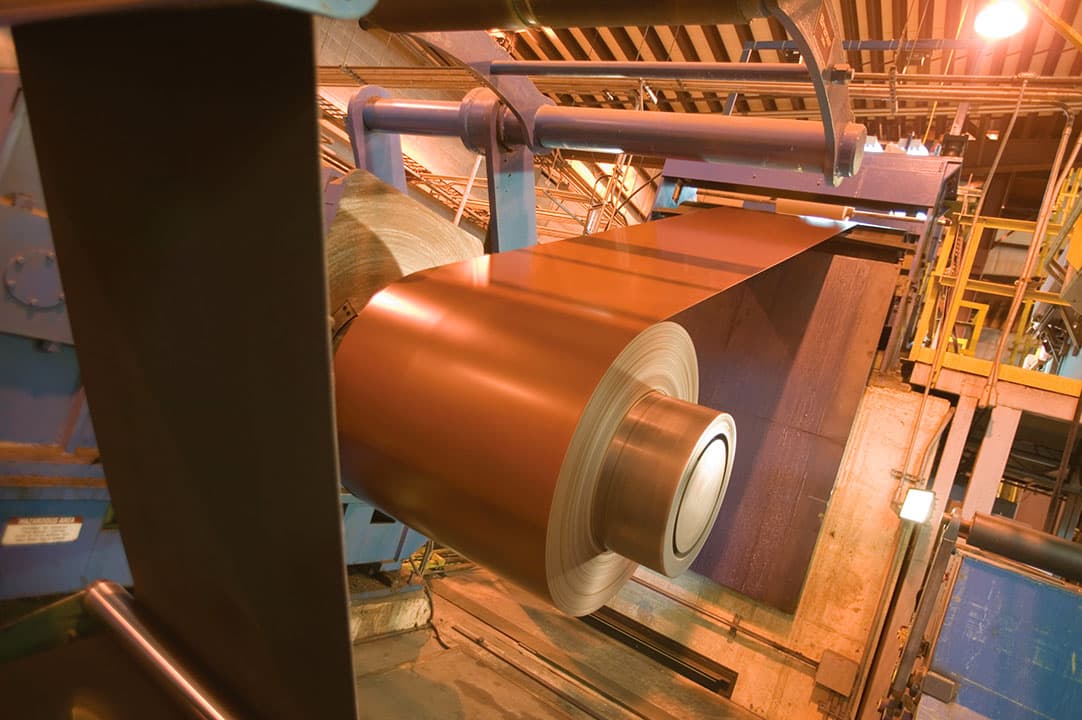
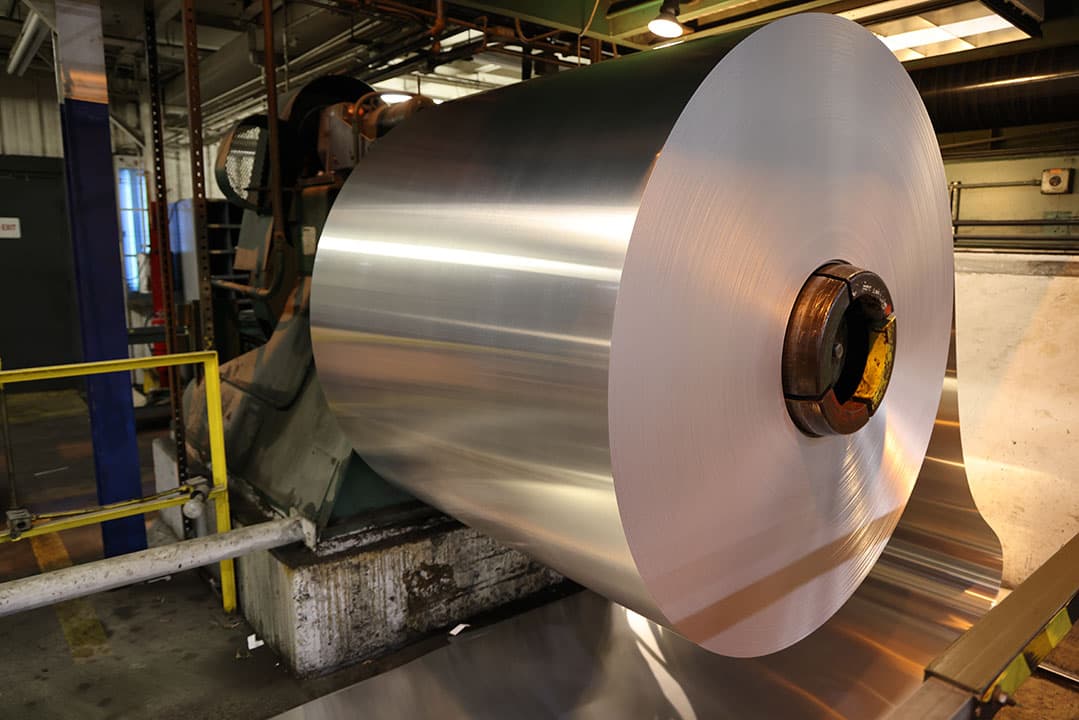
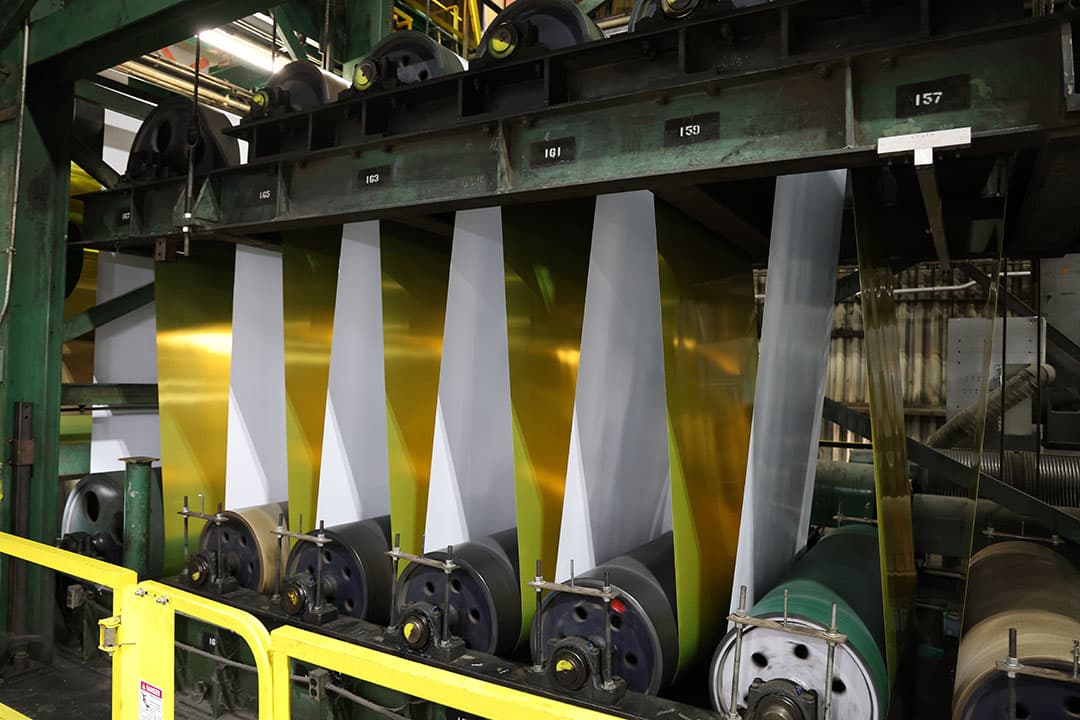
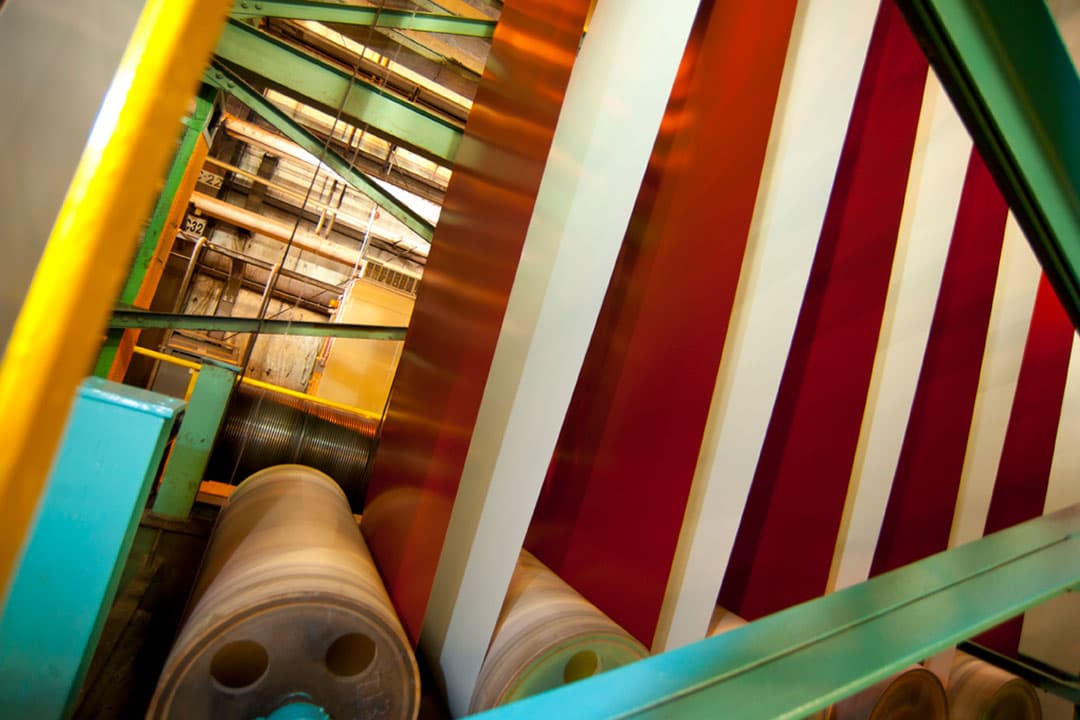
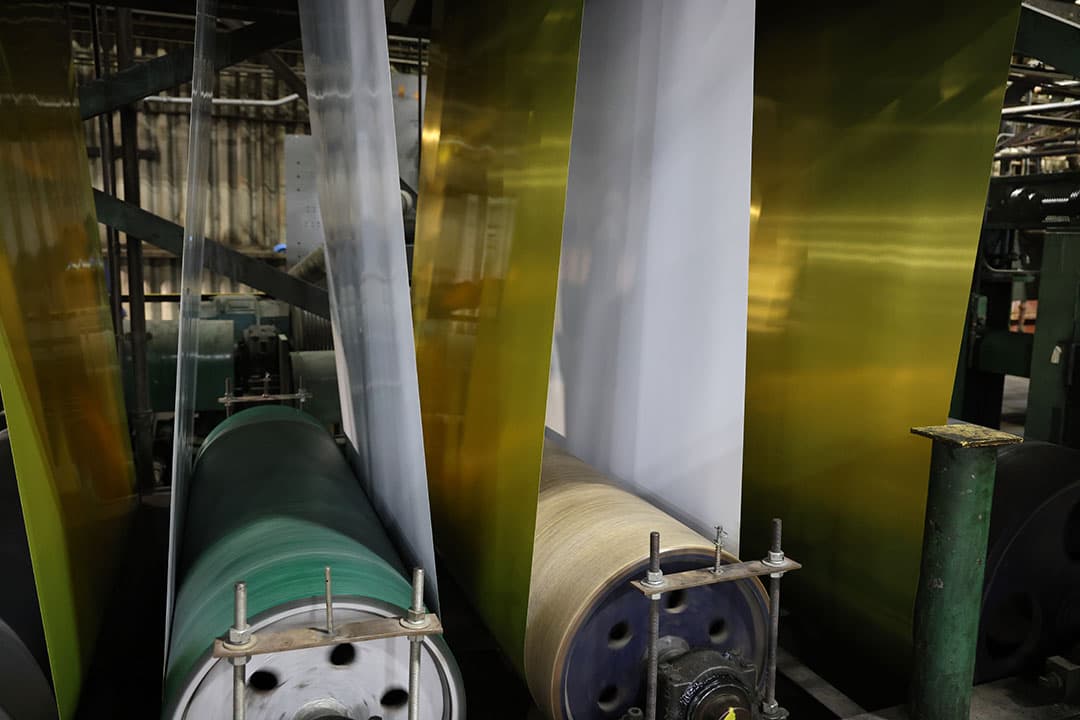
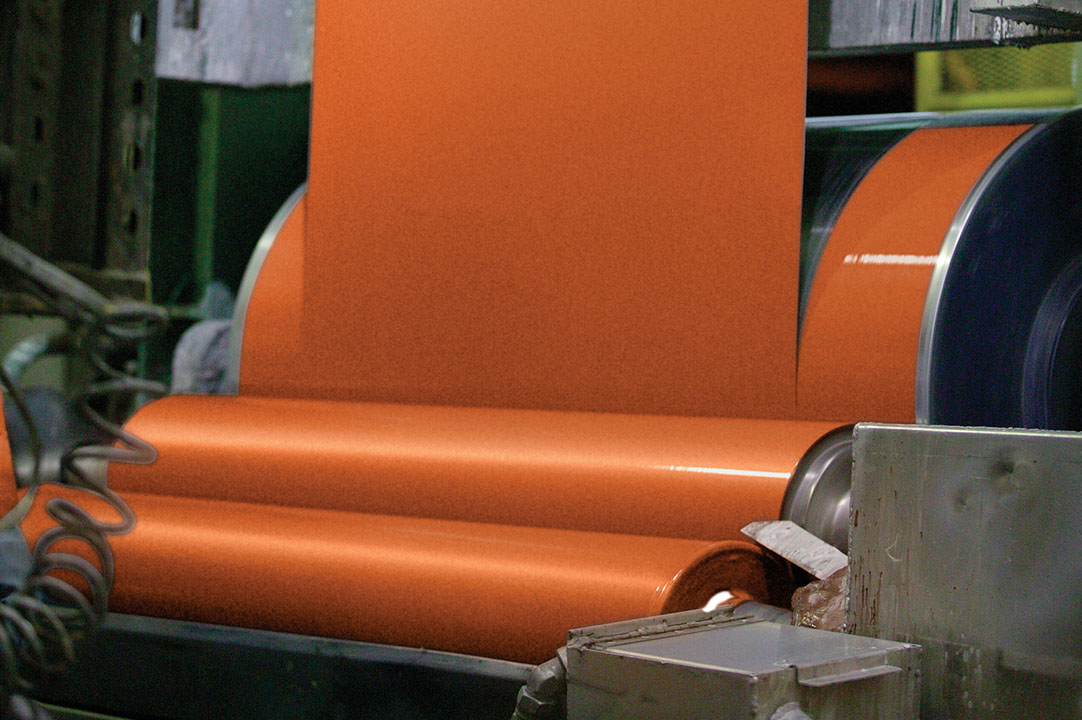
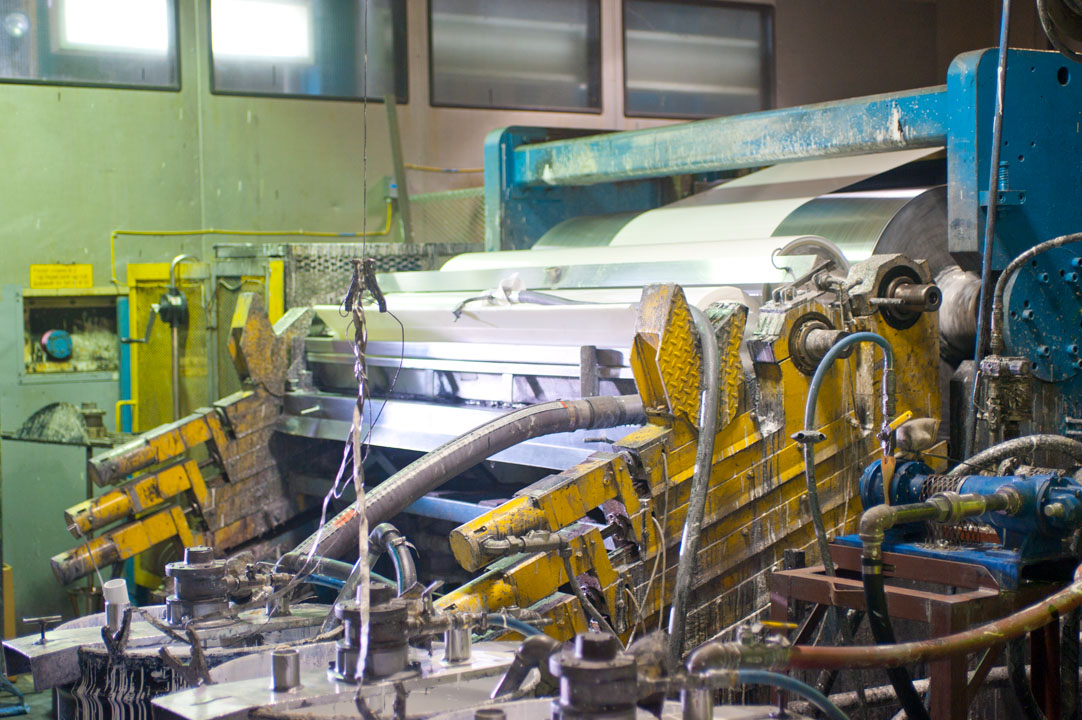
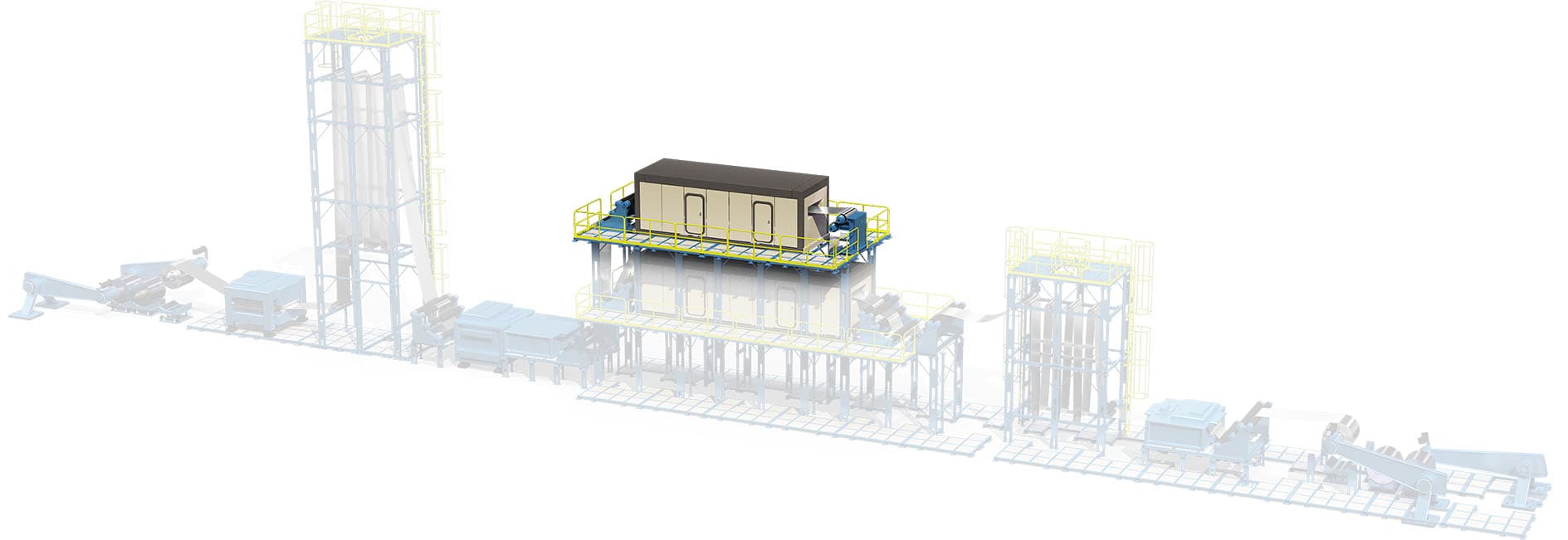
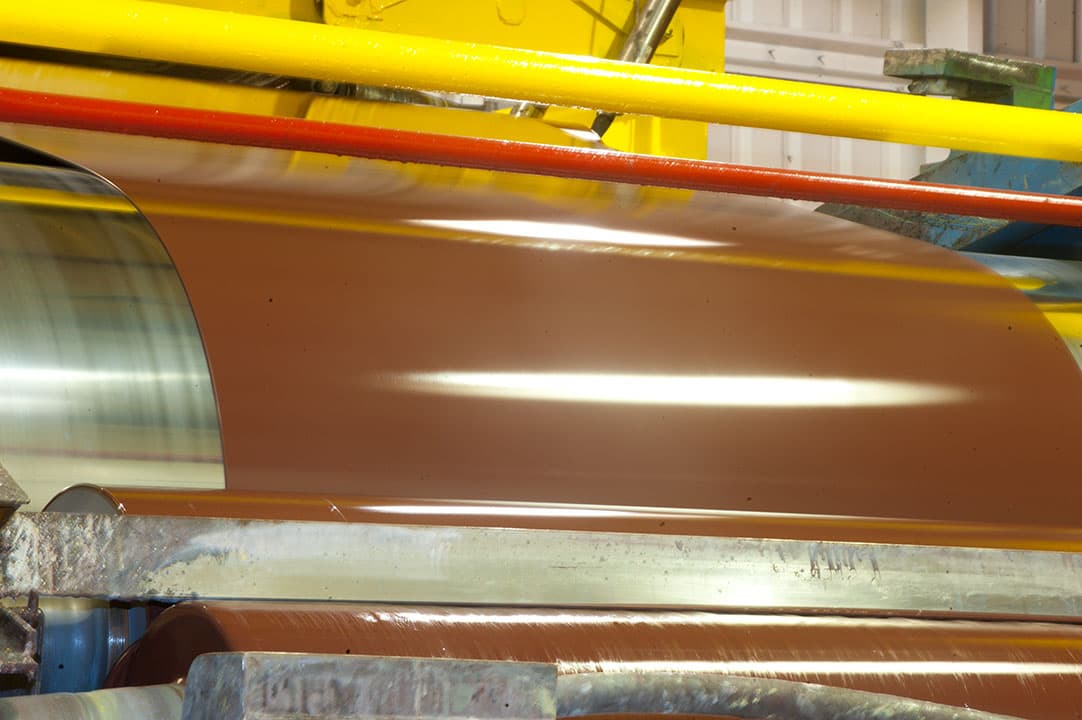
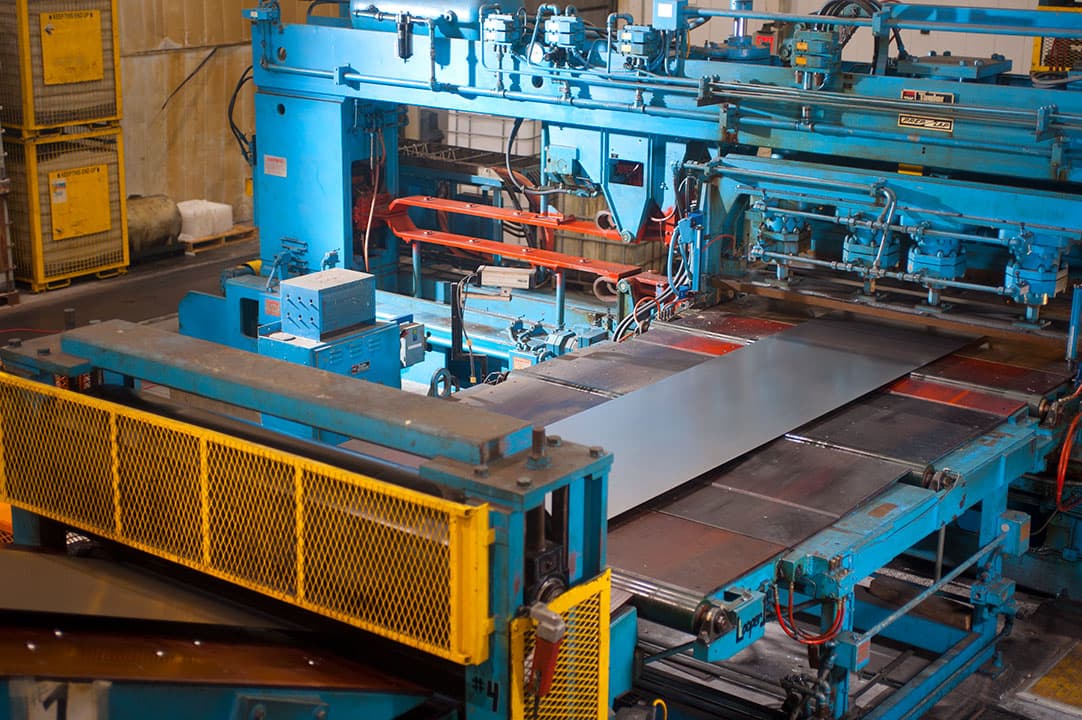
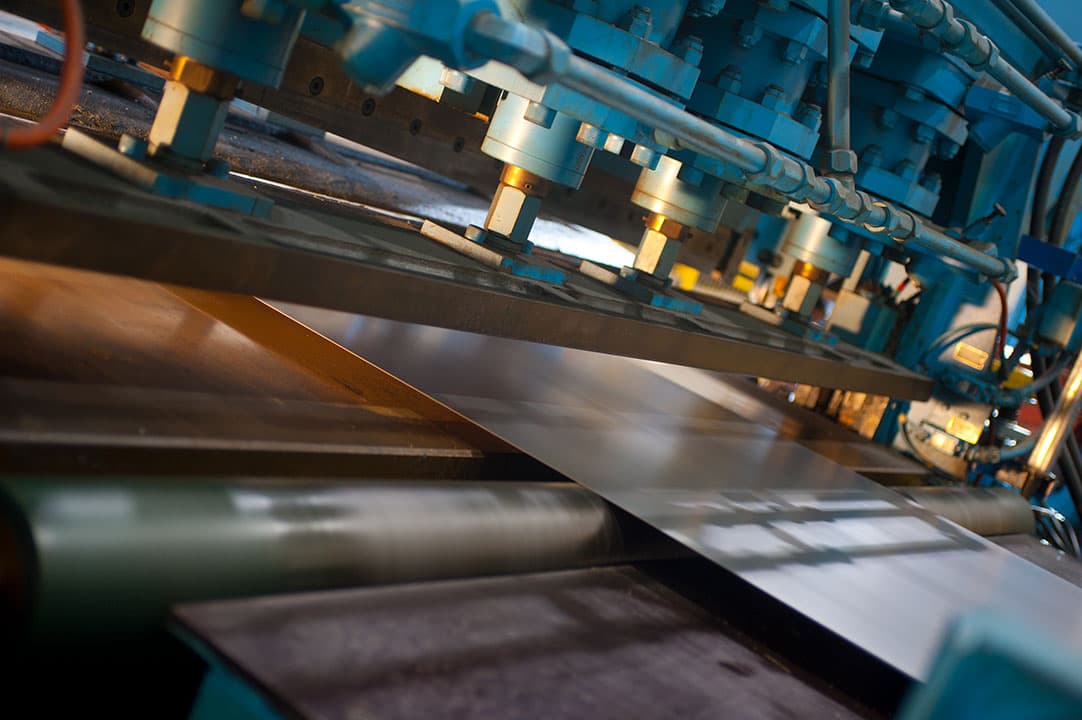
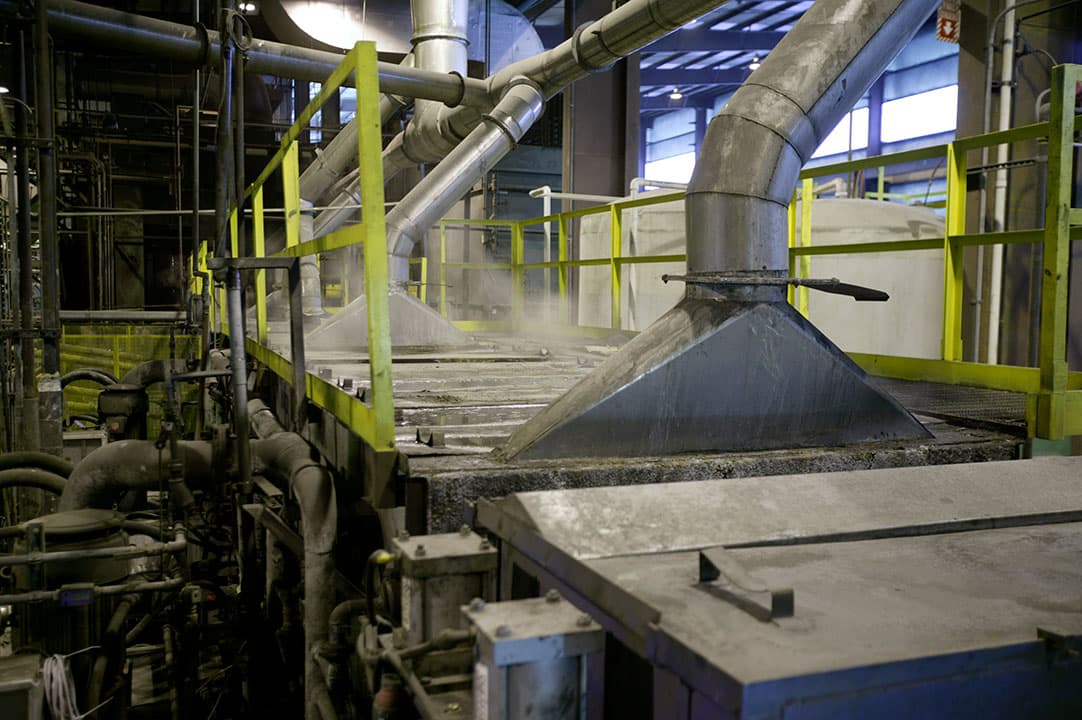
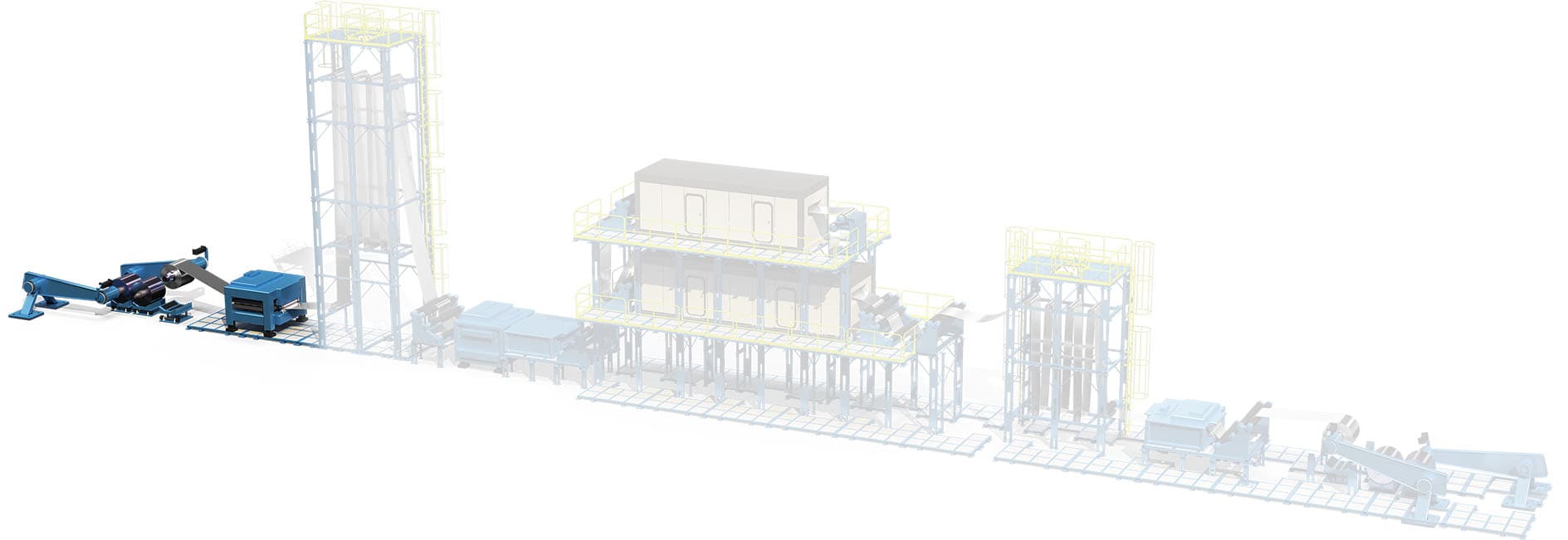
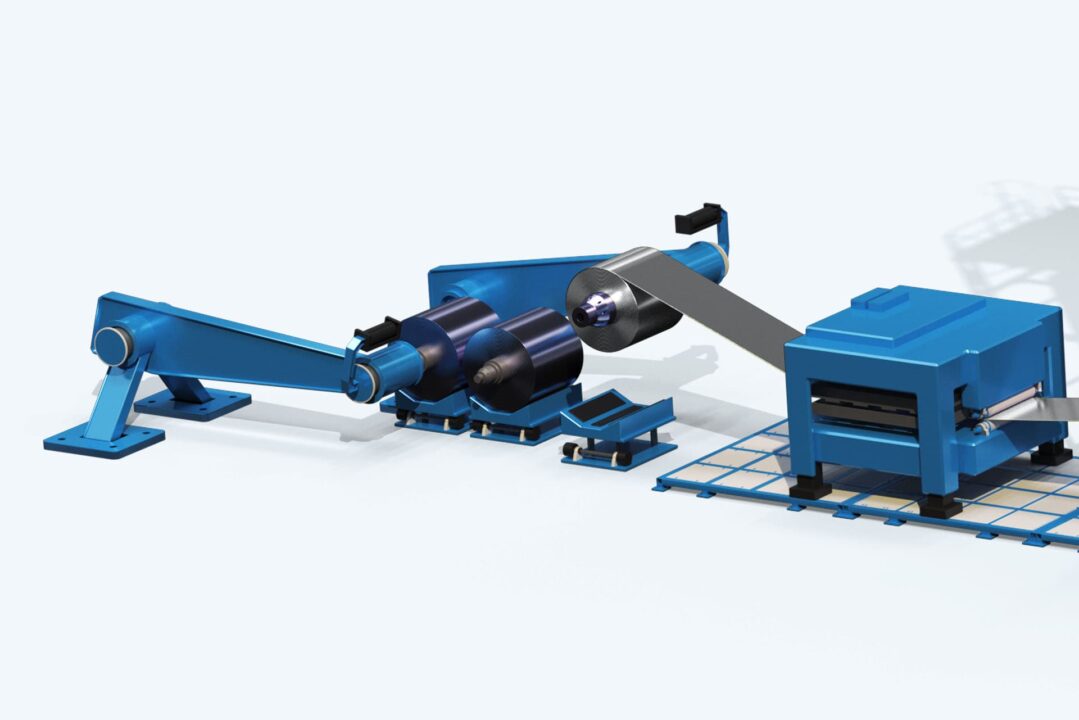
Once the metal is cleaned, treated, and painted, the strip is rewound into a coil size prescribed by the customer. From there, the coil is removed from the line and packaged for shipment or additional processing.
After the primer is applied and cured, then the metal strip enters the finish coat station where a topcoat is applied. Topcoats provide color, corrosion resistance, durability, flexibility and any other required physical properties. Like primers, the topcoat is cured using thermal cure ovens.
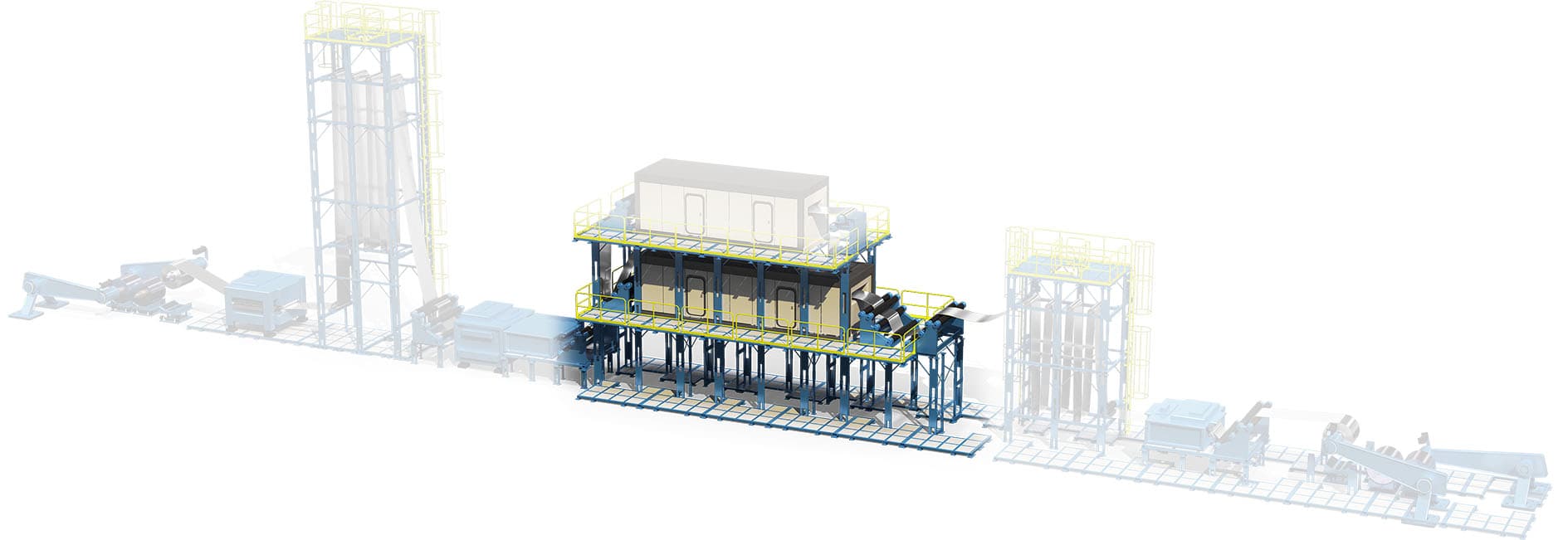
Oven
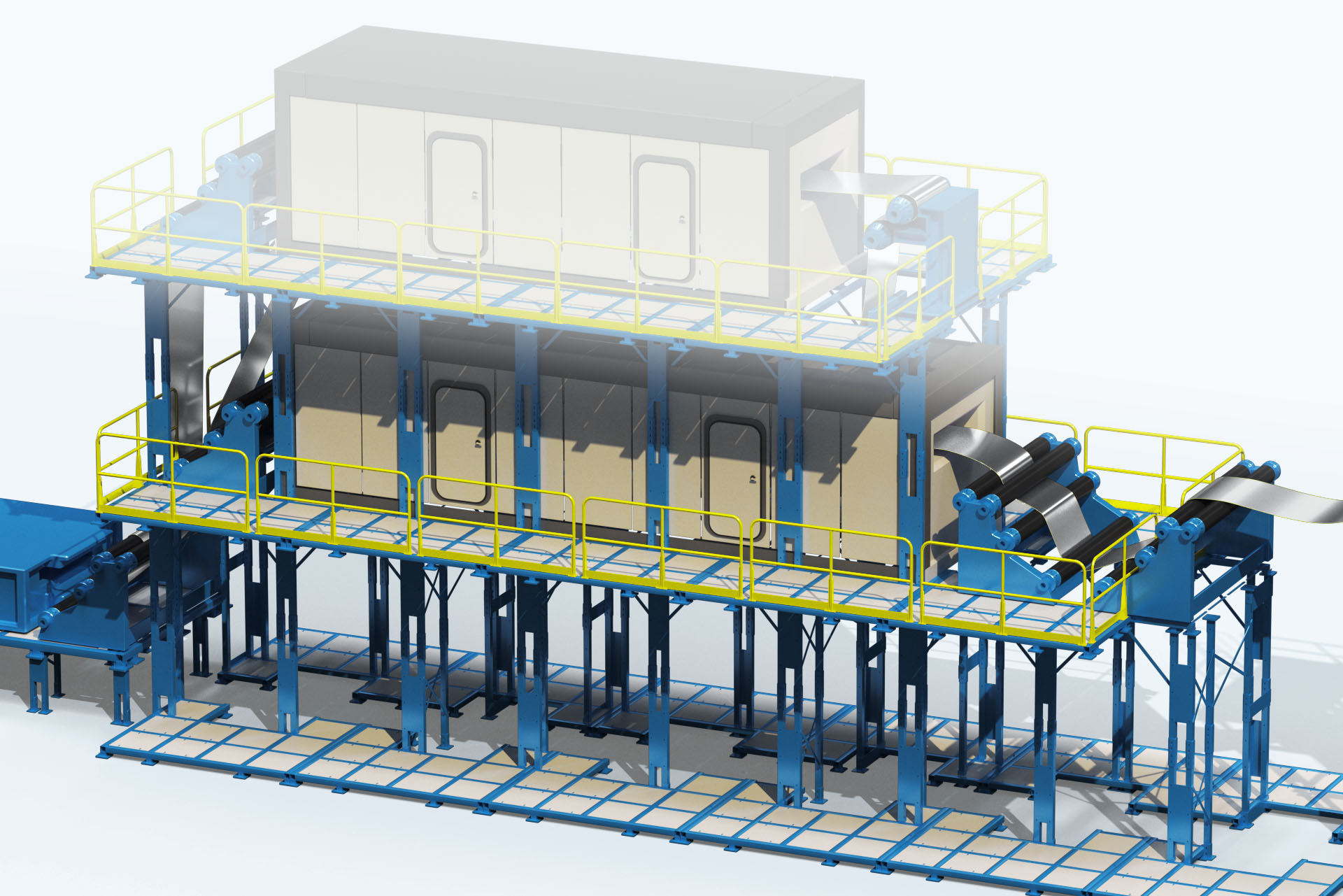
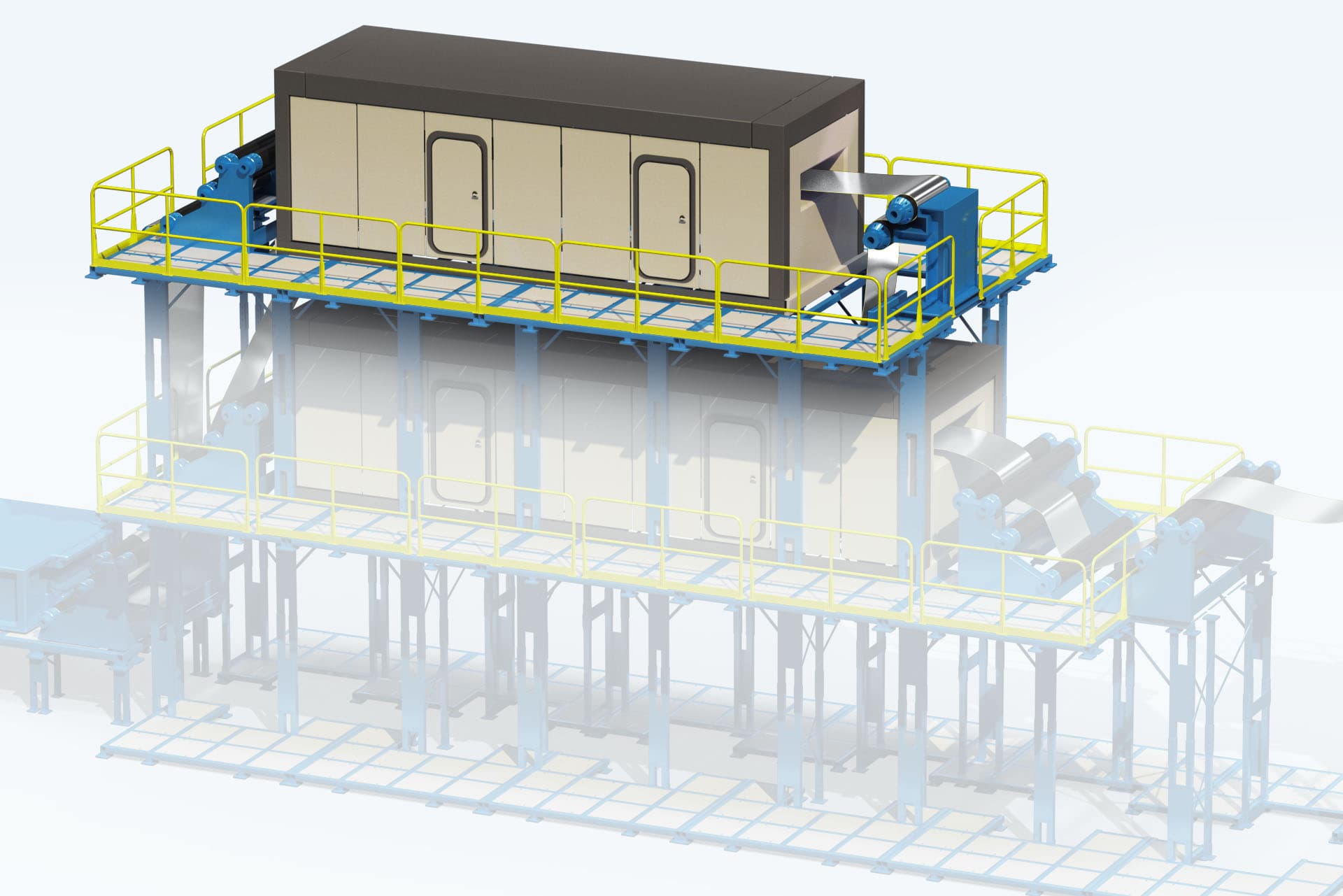
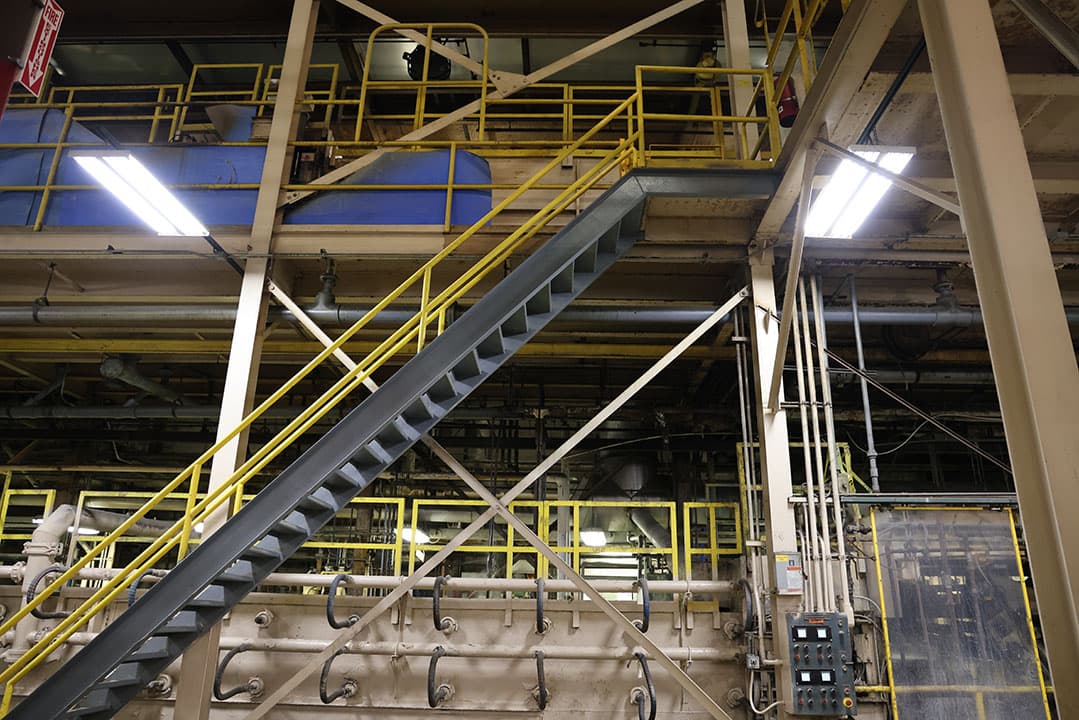
Coil coating ovens can range from 130 feet to 160 feet and will cure the coatings in 13 to 20 seconds.
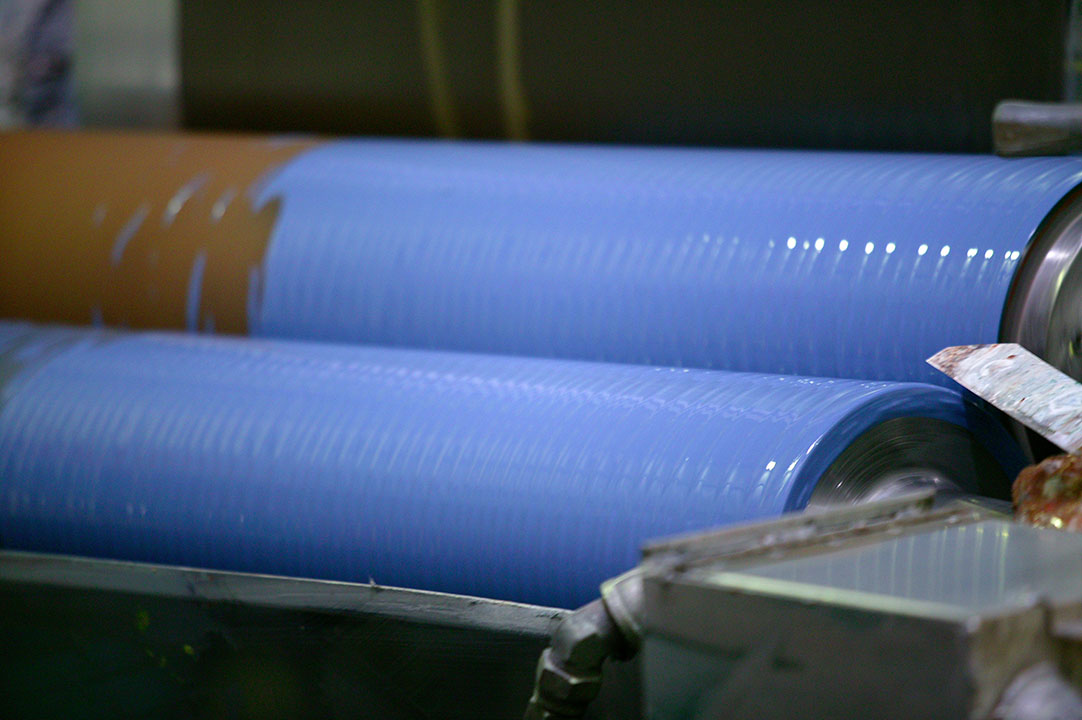
During this stage, the strip enters the prime coat station whereby a primer is applied to the clean and treated metal. After the primer is applied, the metal strip travels through a thermal oven for curing. Primers are used to aid in paint adhesion, improve corrosion performance and enhance aesthetic and functional attributes of the topcoat.
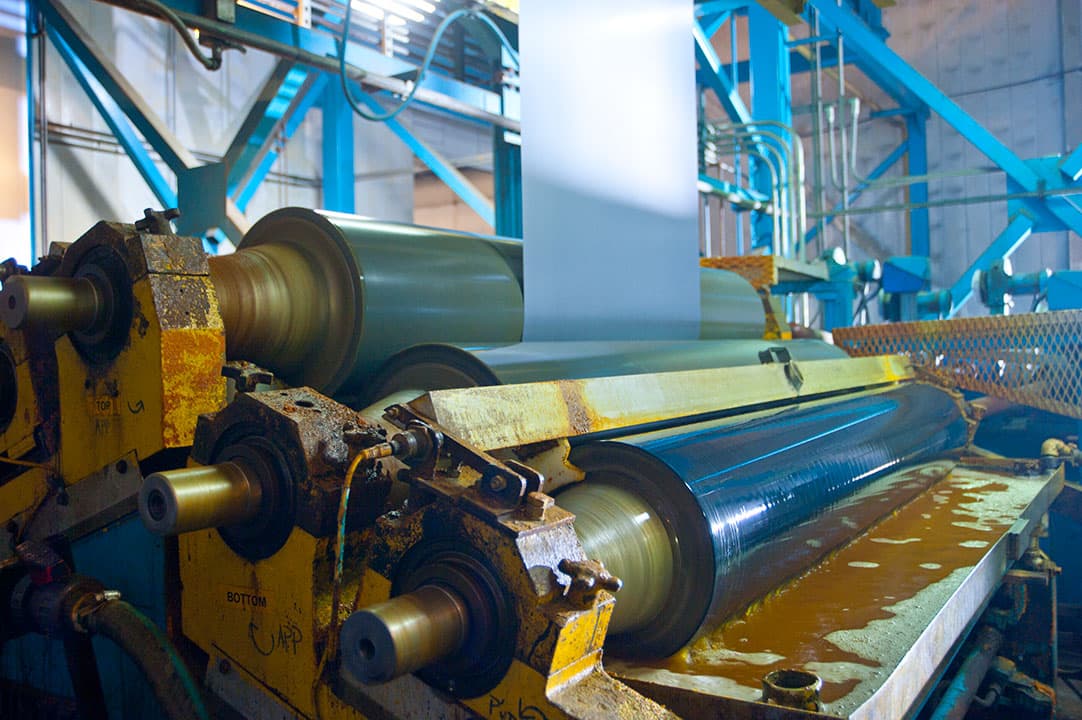
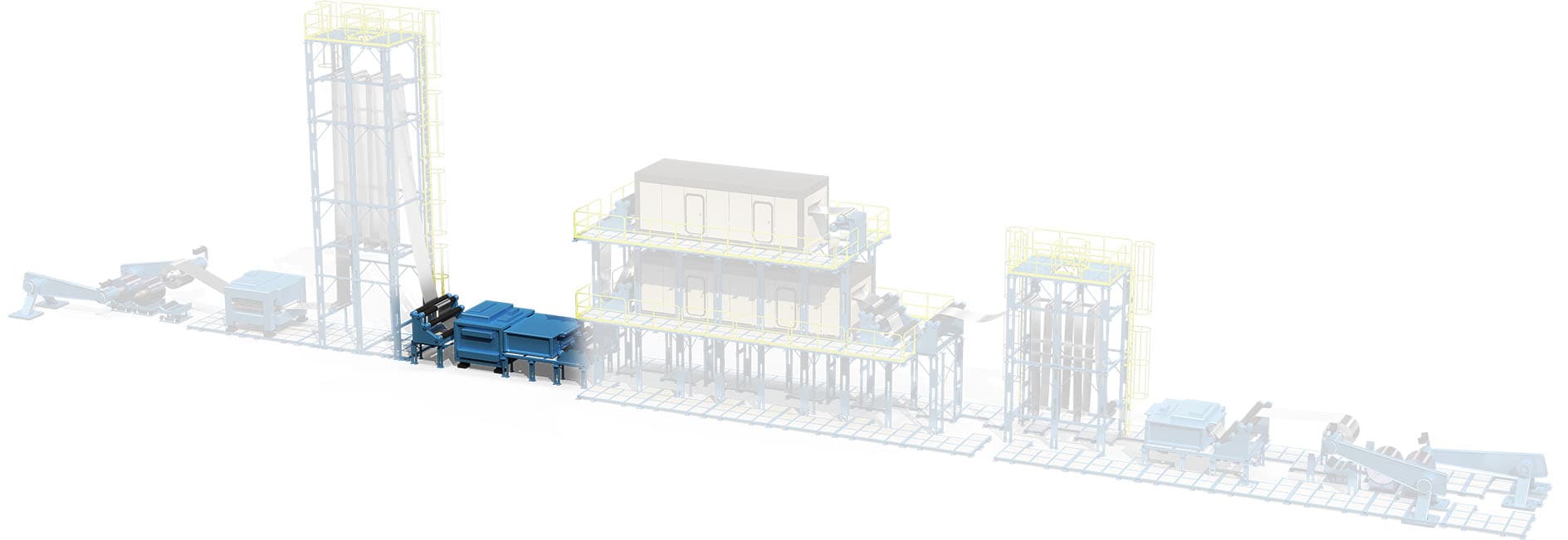
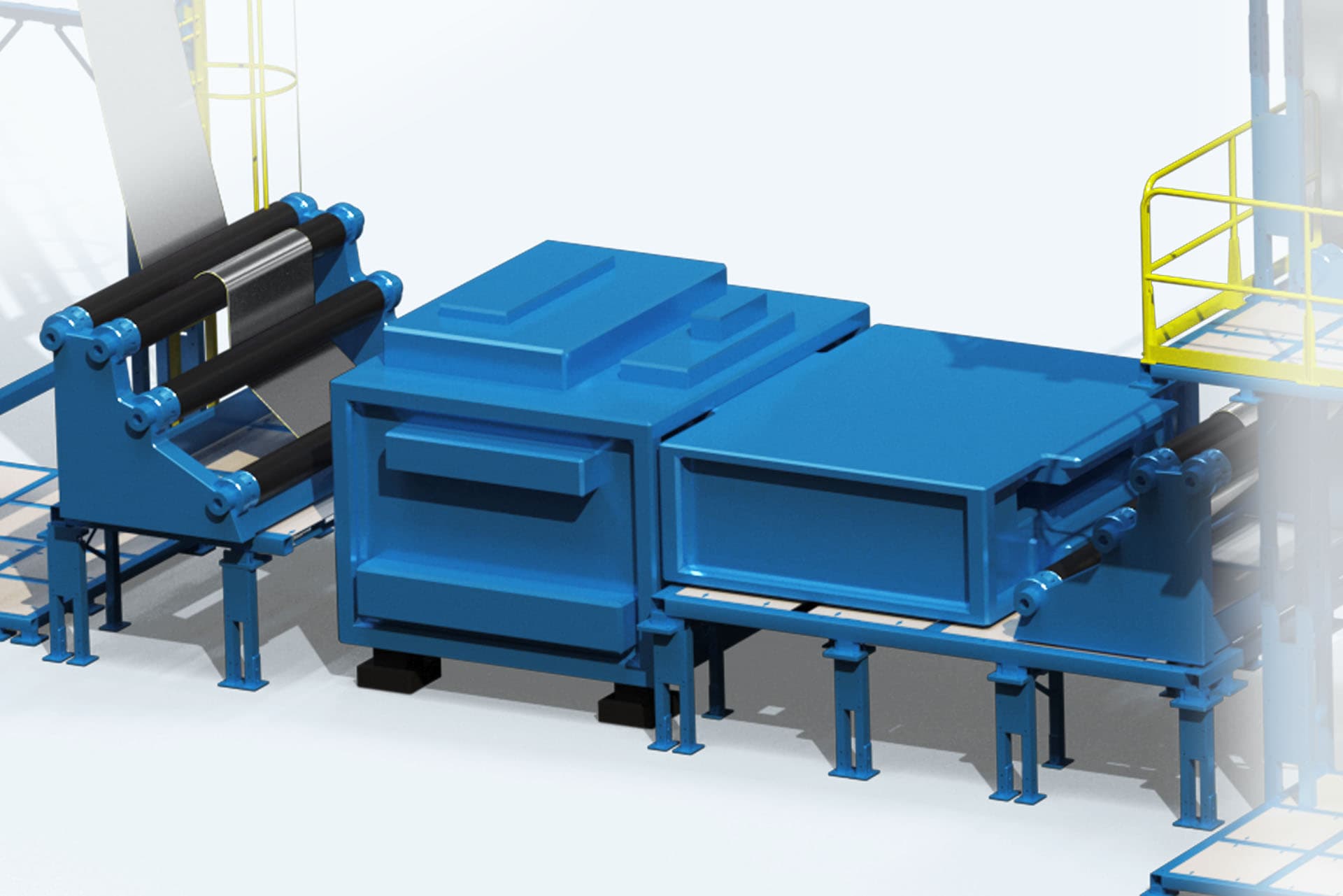
S Wrap Coater
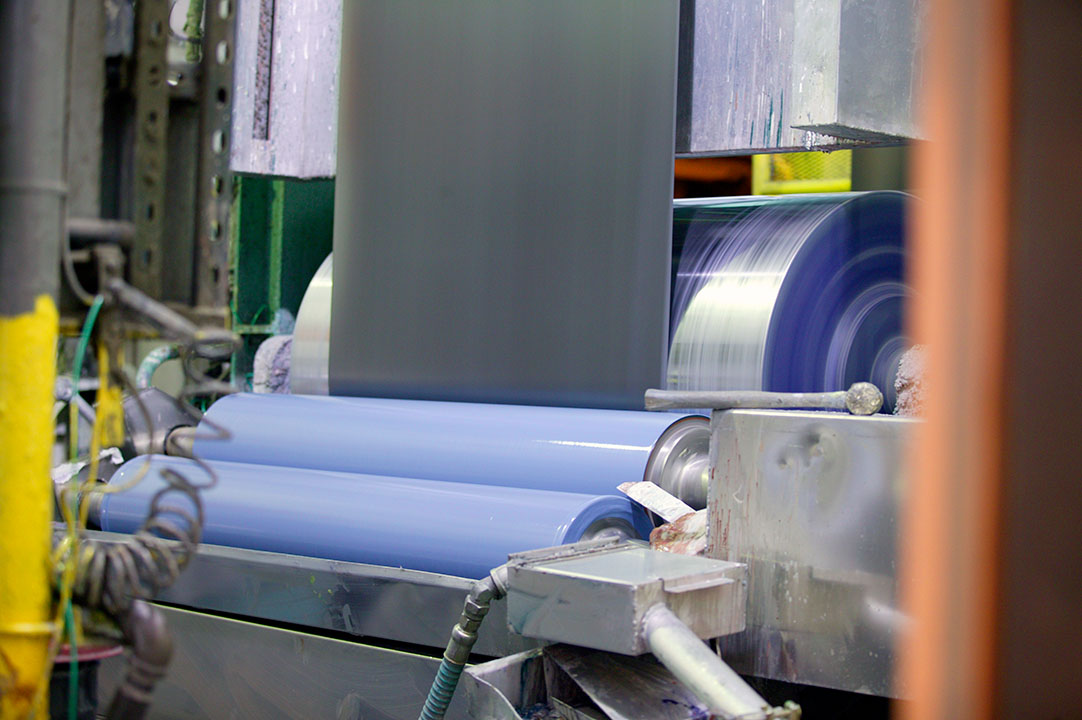
The S wrap coater design allows for primers and paints to be applied to the top and back side of the metal strip simultaneously in one continuous pass.
The cleaning and pretreating section of the coil coating process focuses on preparing the metal for painting. During the cleaning stage, dirt, debris, and oils are removed from the metal strip. From there, the metal enters the pretreatment section and/or a chemical coater whereby chemicals are applied to facilitate paint adhesion and enhance corrosion resistance.
Dried-In-Place
In this stage a chemical that provides enhanced corrosion performance is applied. This treatment can be chrome free if required.
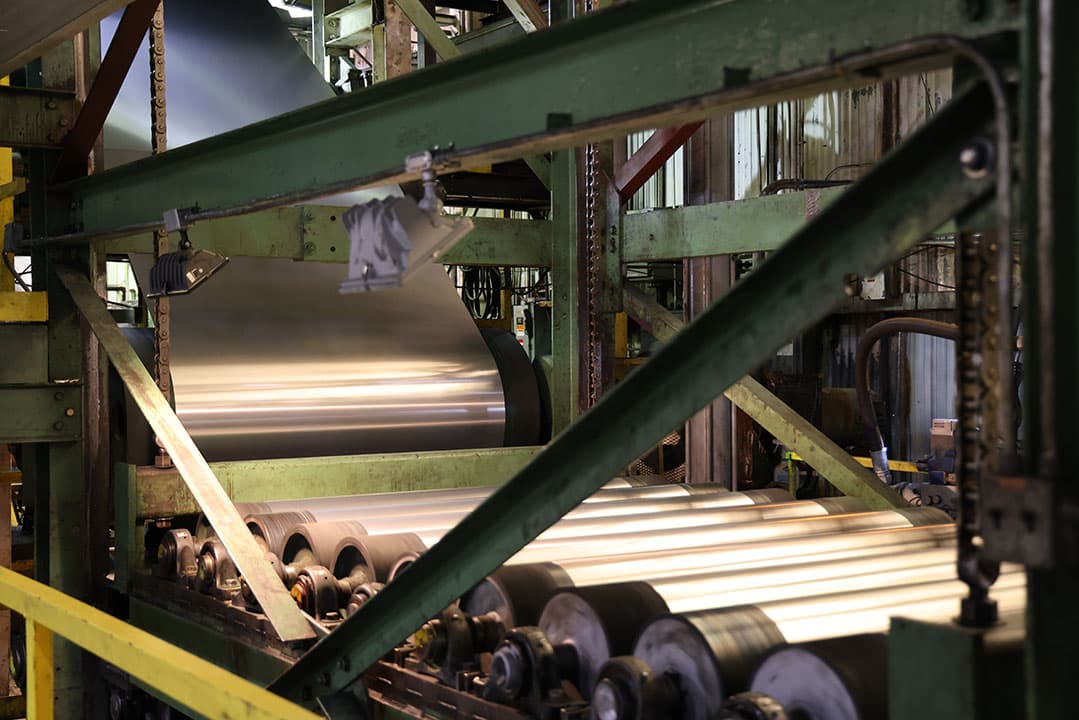
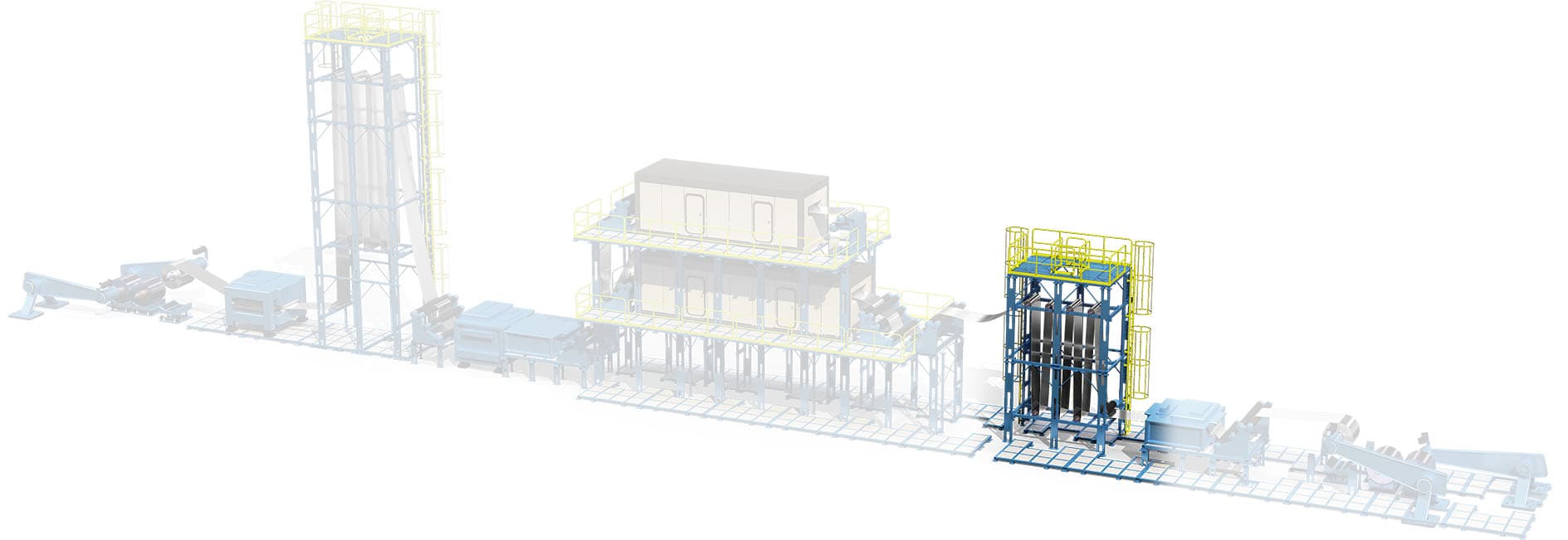
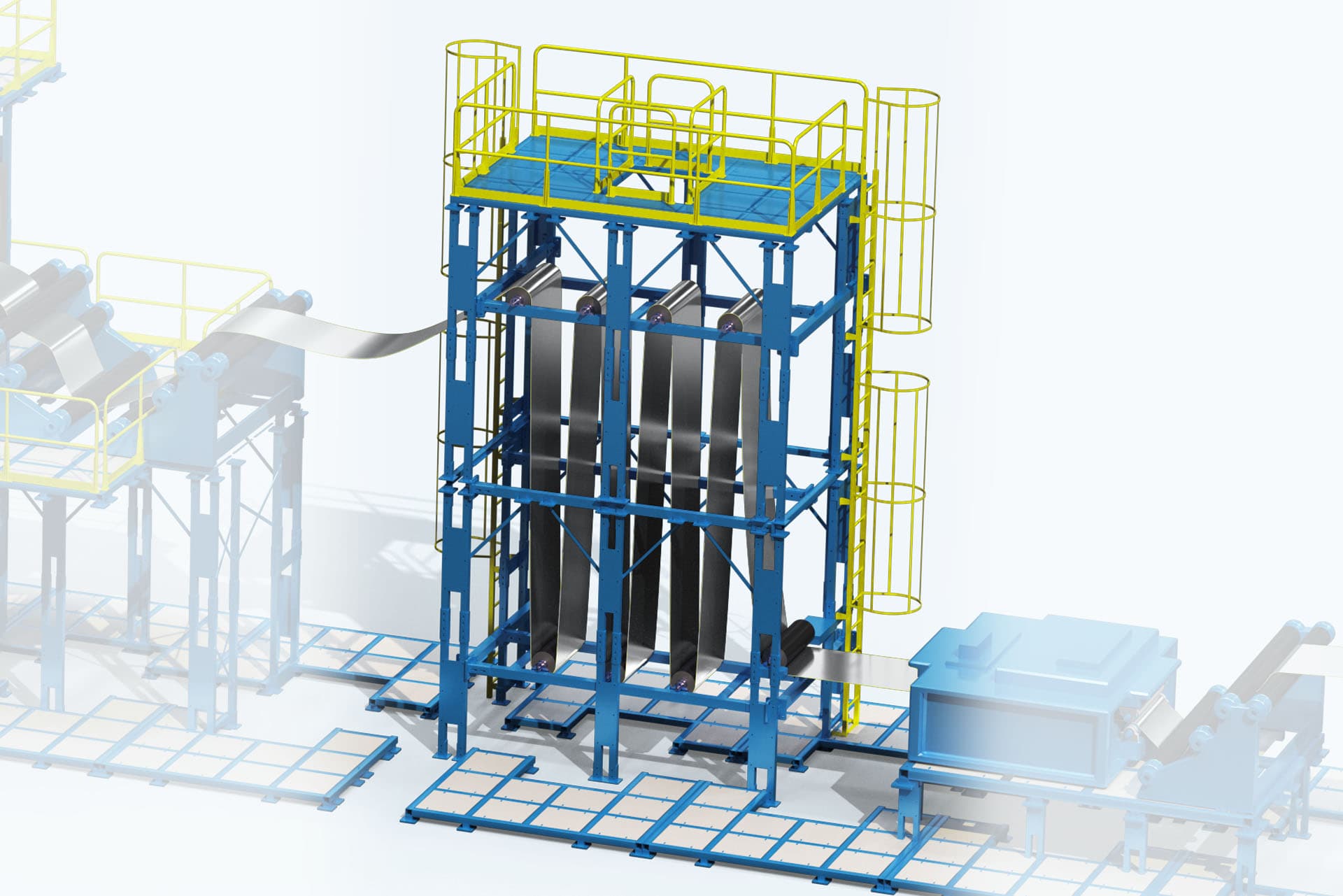
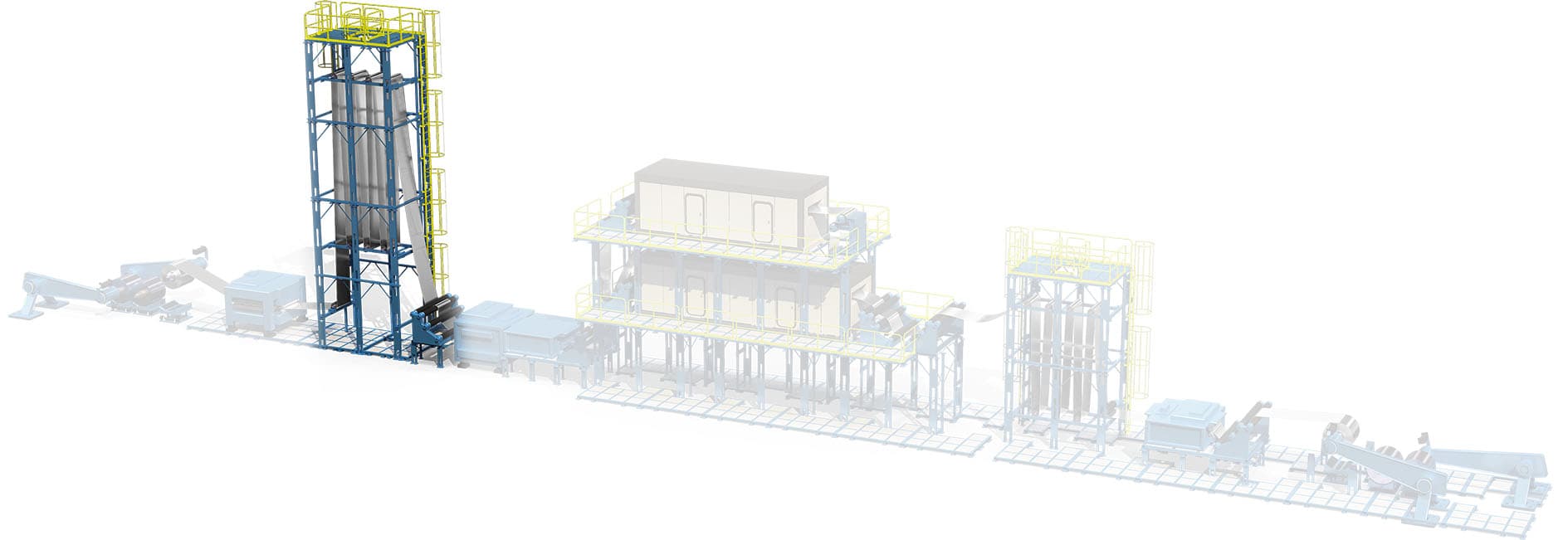
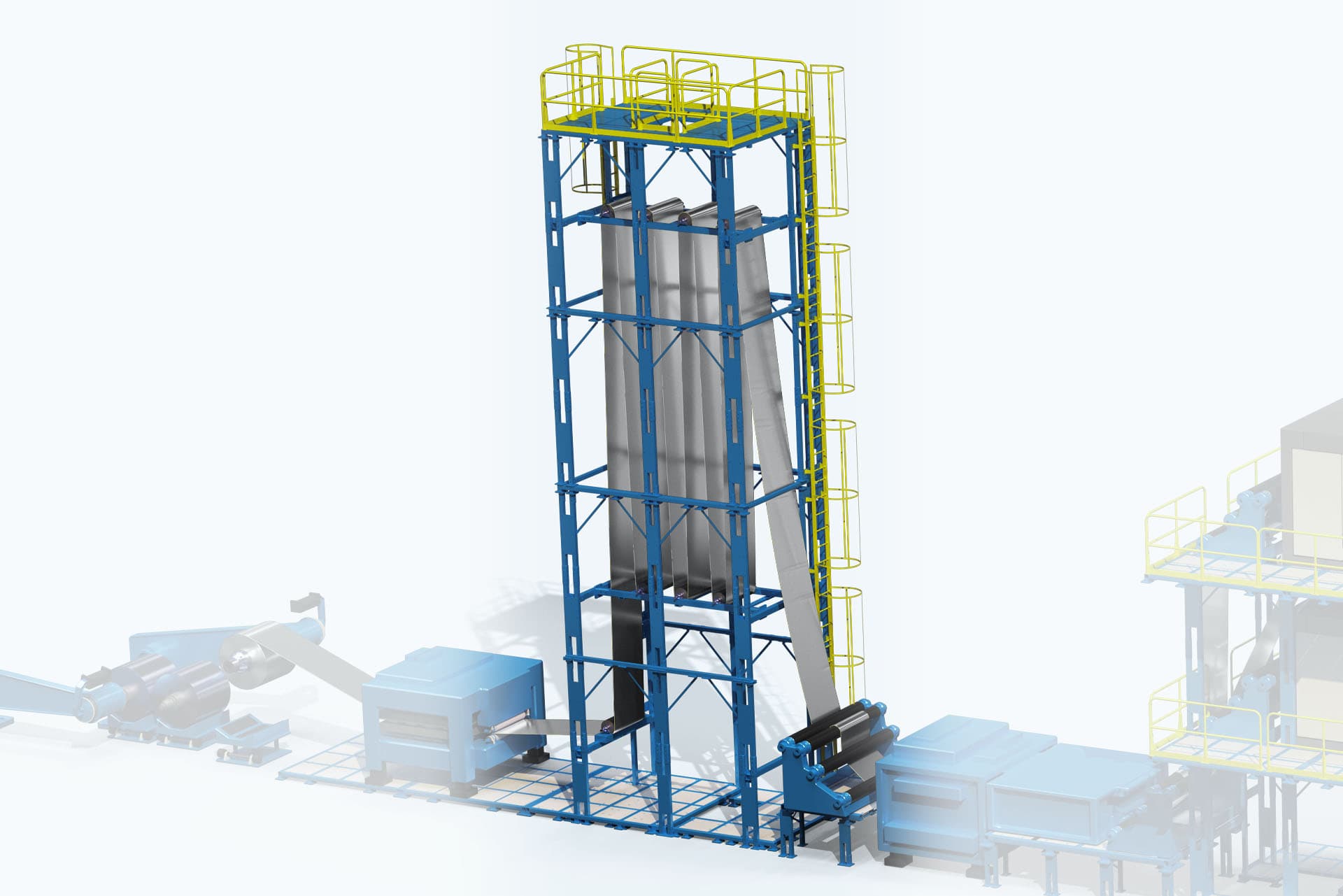
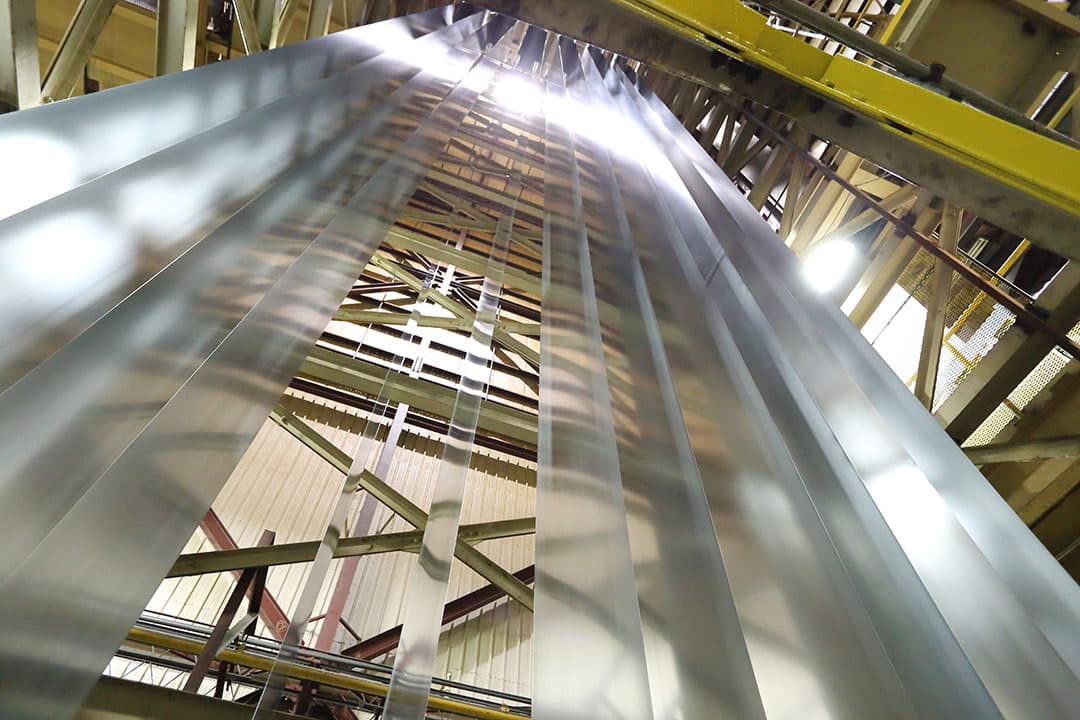
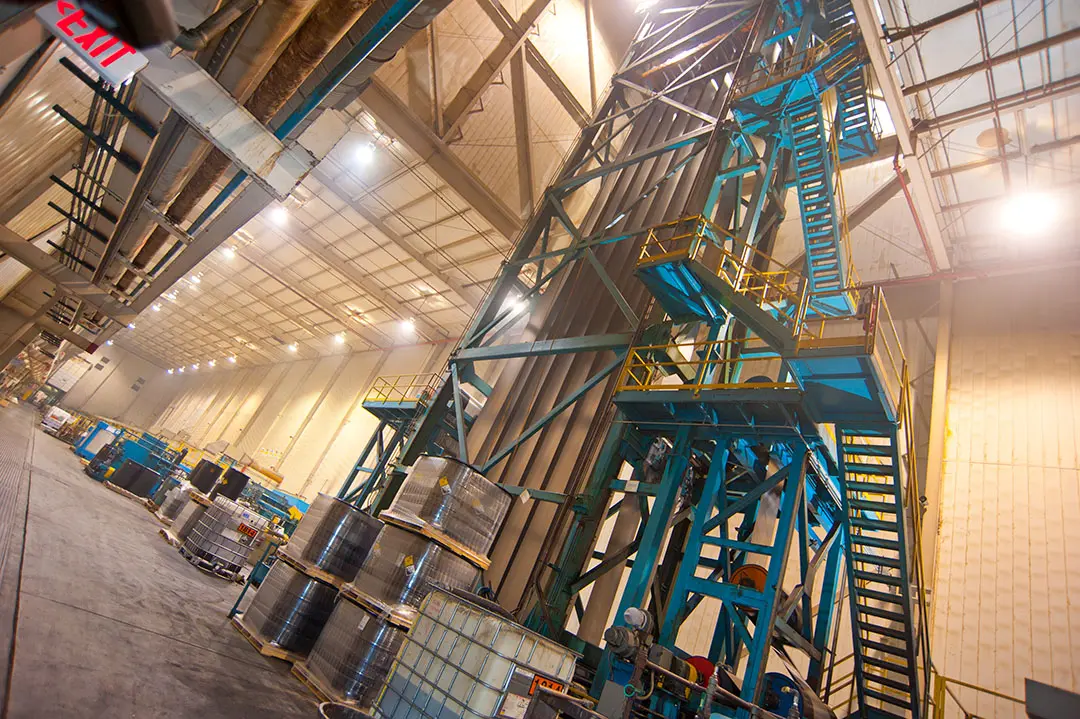
The accumulator is a structure that adjusts up and down to store material, which makes continuous operation of the coil coating process possible. This accumulation will continue to feed the coil coating processes while the entry end has stopped for the stitching process. As much as 750 feet of metal can be collected.
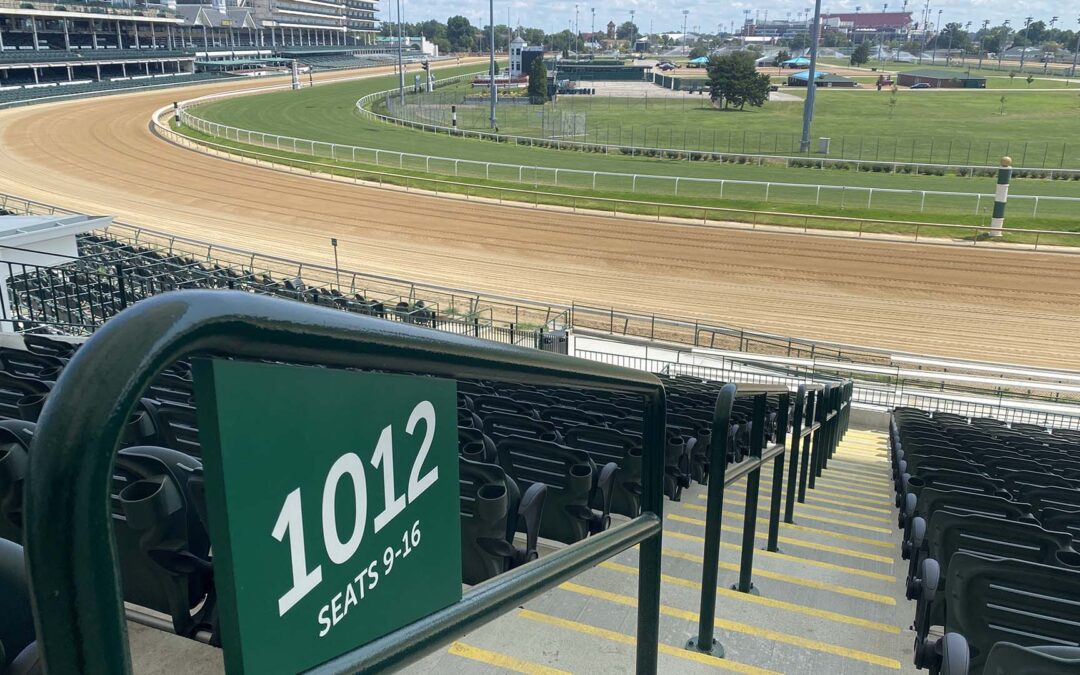
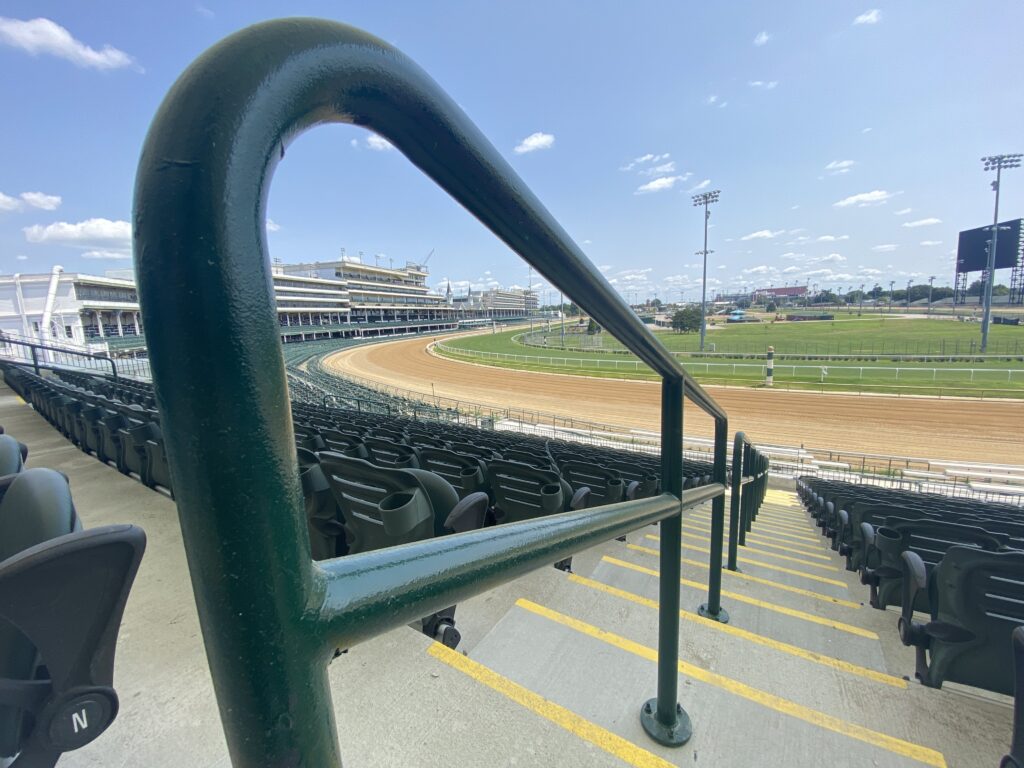
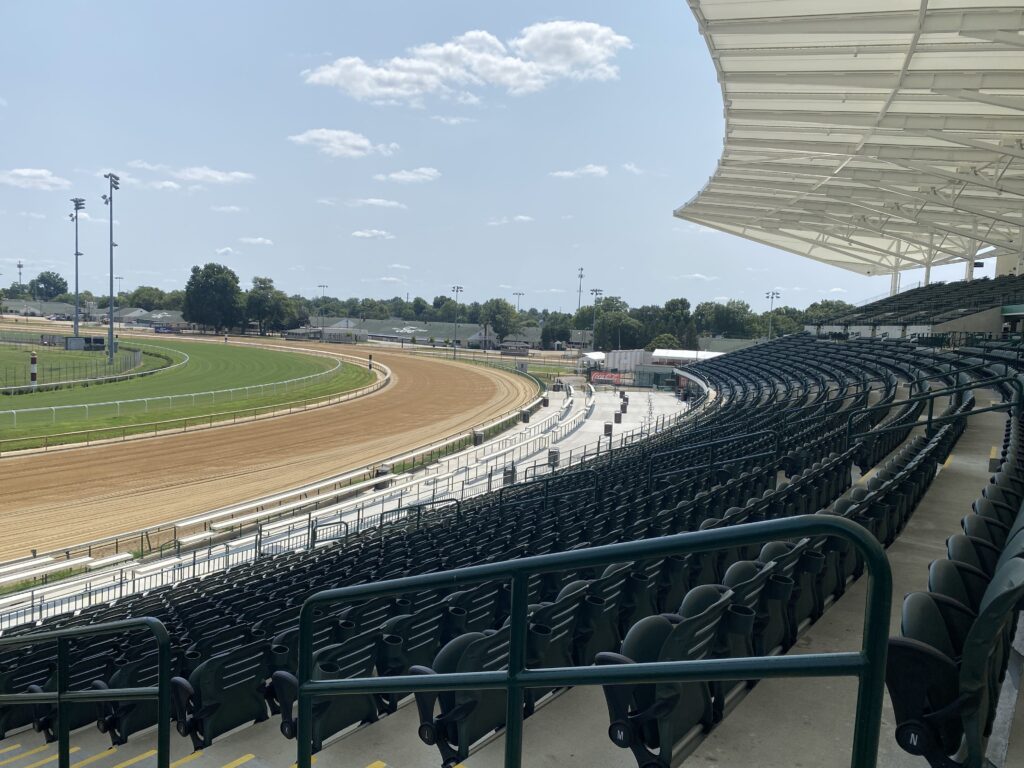
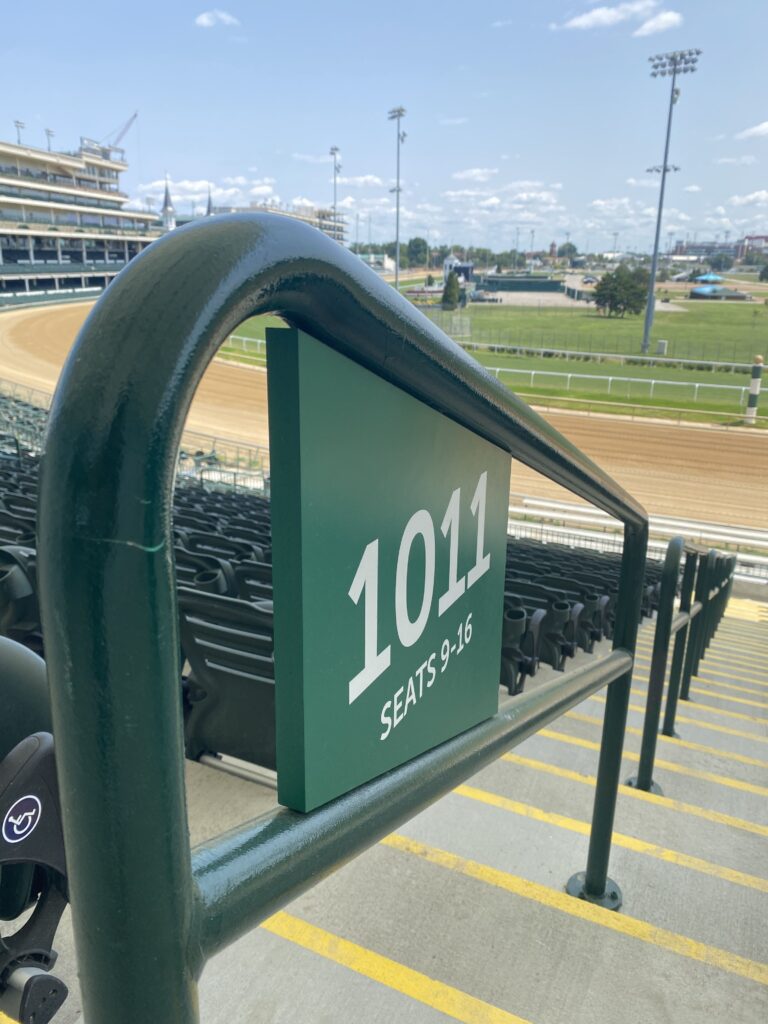
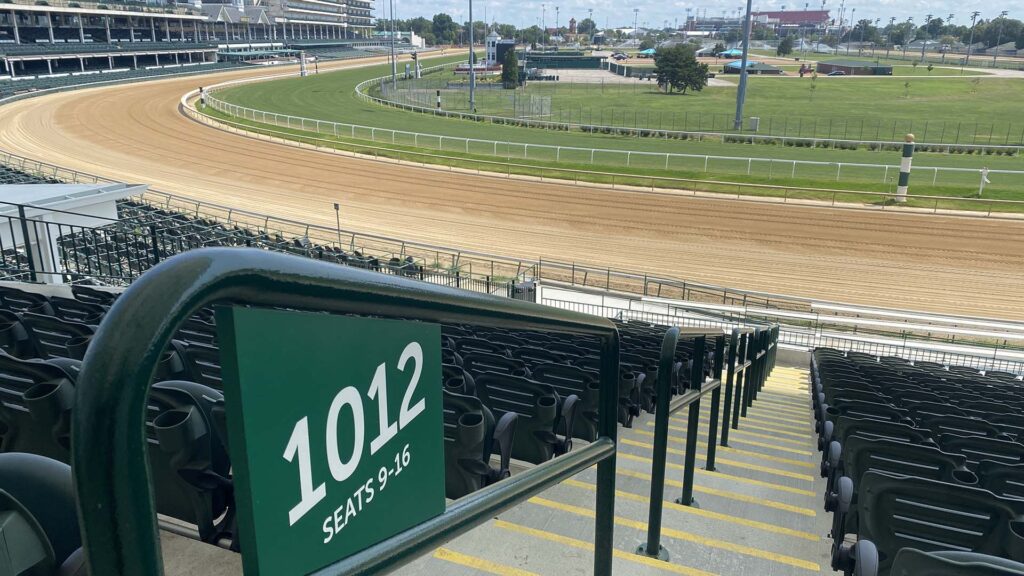
It’s one of the most iconic views in sports, and with the recent Turn 1 upgrade, that experience has been elevated in a way that feels both modern and true to the track’s legacy.
What was once a temporary seating area has been transformed into a permanent, premium destination with expanded capacity, covered seating, and thoughtfully designed spaces that bring fans closer to the action. The scale of the project is impressive, but what makes it work day in and day out are the details. The elements people interact with without thinking twice. The features that need to perform just as well on a quiet day as they do when more than 150,000 people fill the venue for the Kentucky Derby.
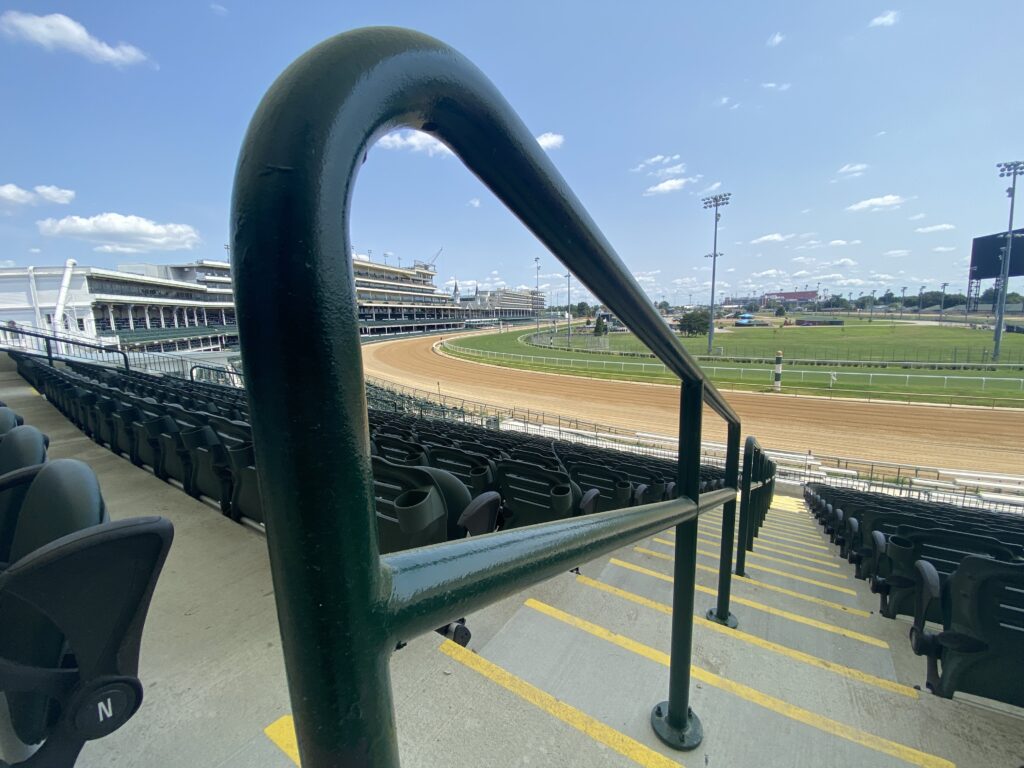
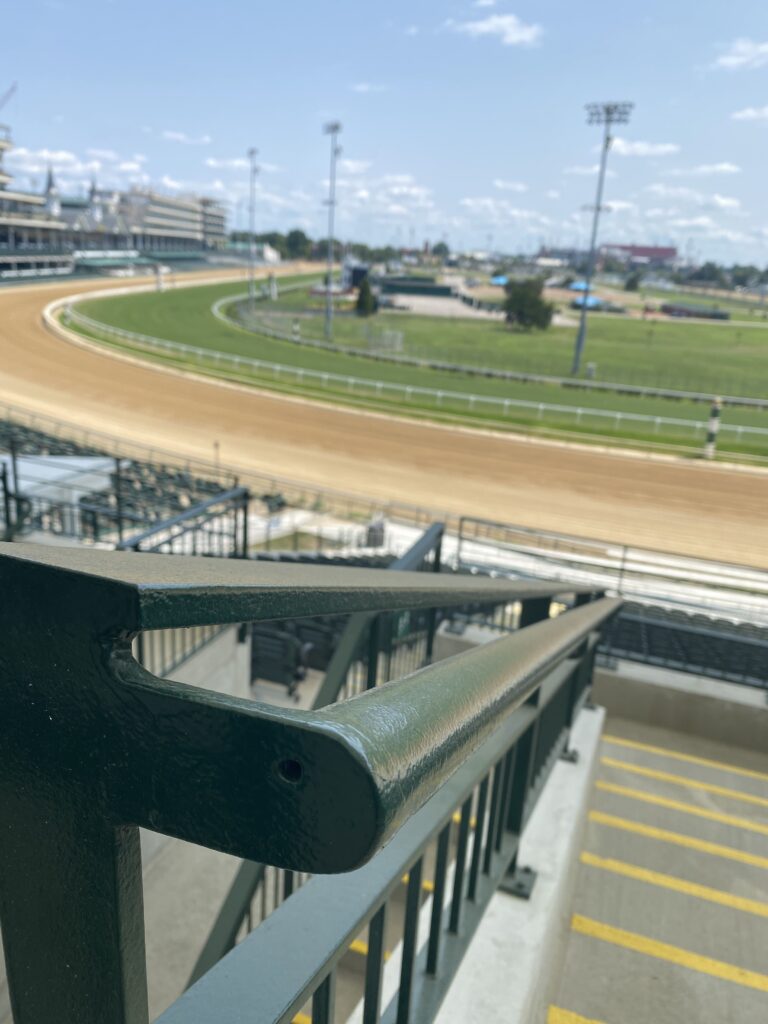
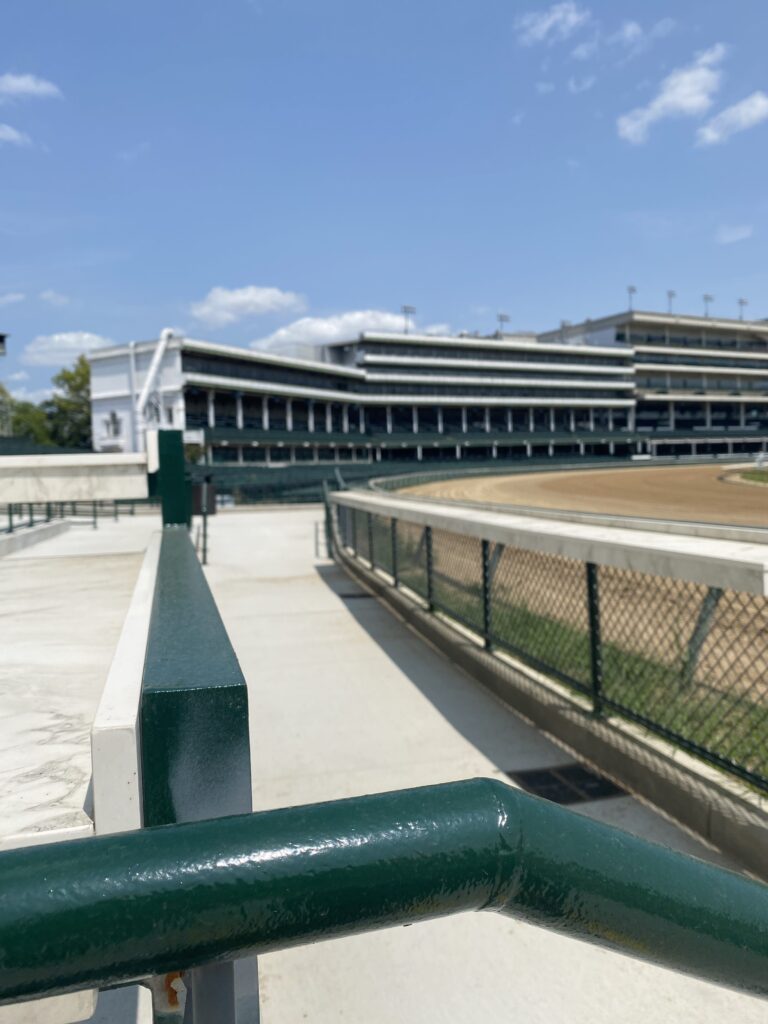
That’s where AZZ’s role comes into play. As part of the Turn 1 upgrade, AZZ Galvanizing – Plymouth provided hot-dip galvanizing for all of the handrails throughout the space. It’s a focused scope, but an important one. Handrails are constantly in use, exposed to the elements, and expected to maintain both their appearance and integrity over time. In this case, they were finished as part of a duplex system, combining galvanizing with an additional coating layer to deliver both corrosion protection and a consistent, high-quality finish.
The benefit of a duplex system is not just additive, it is synergistic. The galvanized layer protects the steel beneath, while the topcoat extends the life of the system even further, often delivering significantly longer performance than either system alone. For a venue like Churchill Downs, that means fewer maintenance concerns, longer service life, and a better experience for guests year after year.
It’s not the headline feature of the project. Most visitors won’t notice it. But as they move through the space, find their seats, and lean in to catch that first turn, it’s part of what makes the experience feel seamless. At a place defined by tradition, even the smallest upgrades are built to last.
Key Takeaways
AZZ Galvanizing – Plymouth provided hot-dip galvanizing for all handrails in the Turn 1 upgrade
Handrails were finished as part of a duplex system for enhanced durability and appearance
Duplex systems extend service life by combining galvanizing with a protective topcoat
High-touch components like handrails require long-term corrosion protection and performance
Small, often overlooked details play a critical role in the overall fan experience
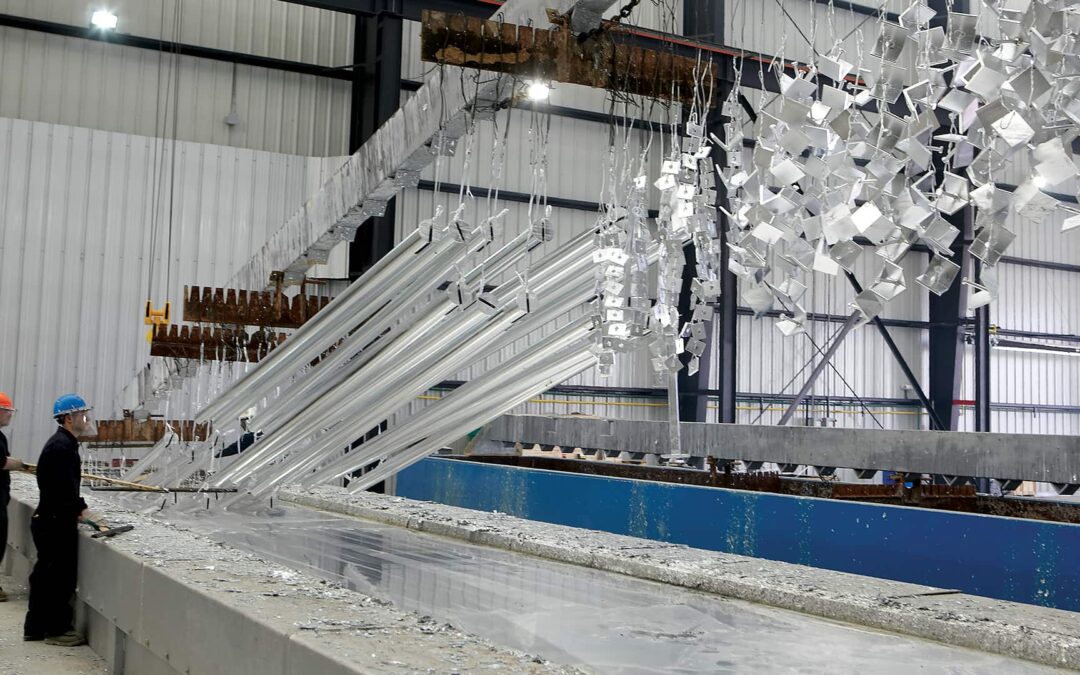
Stripping and re-galvanizing is a well-established process that allows steel to be restored rather than replaced, extending the life of existing assets while maintaining high levels of corrosion protection. The process involves removing the original zinc coating, typically through a controlled acidic solution, and then reprocessing the steel through the standard galvanizing cycle to apply a new protective layer.
This approach is commonly used when a galvanized coating does not meet specification due to thickness variation or surface defects, allowing the material to be corrected without scrapping it. It is also relevant when steel is modified after galvanizing through cutting, welding, or drilling, which exposes bare steel and compromises protection. In these cases, re-galvanizing can restore a uniform coating across the entire component. Over time, even high-quality galvanized coatings will eventually be consumed in aggressive environments, and re-galvanizing offers a way to renew protection and extend service life. It may also be considered when steel is repurposed into a more corrosive environment that demands a higher level of protection.
Before proceeding, several important factors should be evaluated. The base steel must remain structurally sound, as re-galvanizing does not address section loss or underlying damage. The design must still accommodate proper venting and drainage to ensure safe processing and coating quality. Repeated galvanizing cycles can increase coating thickness, which may impact tolerances for threaded or precision components. There is also potential for thermal distortion, particularly with thin or asymmetrical sections, so geometry and fabrication details should be reviewed in advance.
In some situations, localized repair methods such as zinc-rich coatings or metallizing may be sufficient, particularly for small damaged areas. However, when damage is widespread or long-term performance is critical, full re-galvanizing provides a more consistent and durable solution. By restoring the entire coating system, it eliminates variability and ensures uniform corrosion protection across the surface.
From a lifecycle perspective, stripping and re-galvanizing offers clear advantages. It extends the usable life of steel without the cost and lead time associated with new fabrication, while also reducing material waste. For infrastructure, industrial equipment, and structural applications, this makes it a practical and sustainable strategy for maintaining long-term performance.
Key Takeaways
Stripping and re-galvanizing removes the existing zinc coating and applies a new one
It is commonly used to correct coating issues, accommodate fabrication changes, or extend service life
The base steel must be structurally sound and suitable for reprocessing
Re-galvanizing restores corrosion protection comparable to a new coating
It offers both economic and sustainability advantages by reusing existing steel
Note: Guidance adapted from technical resources published by the American Galvanizers Association on stripping and re-galvanizing practices.
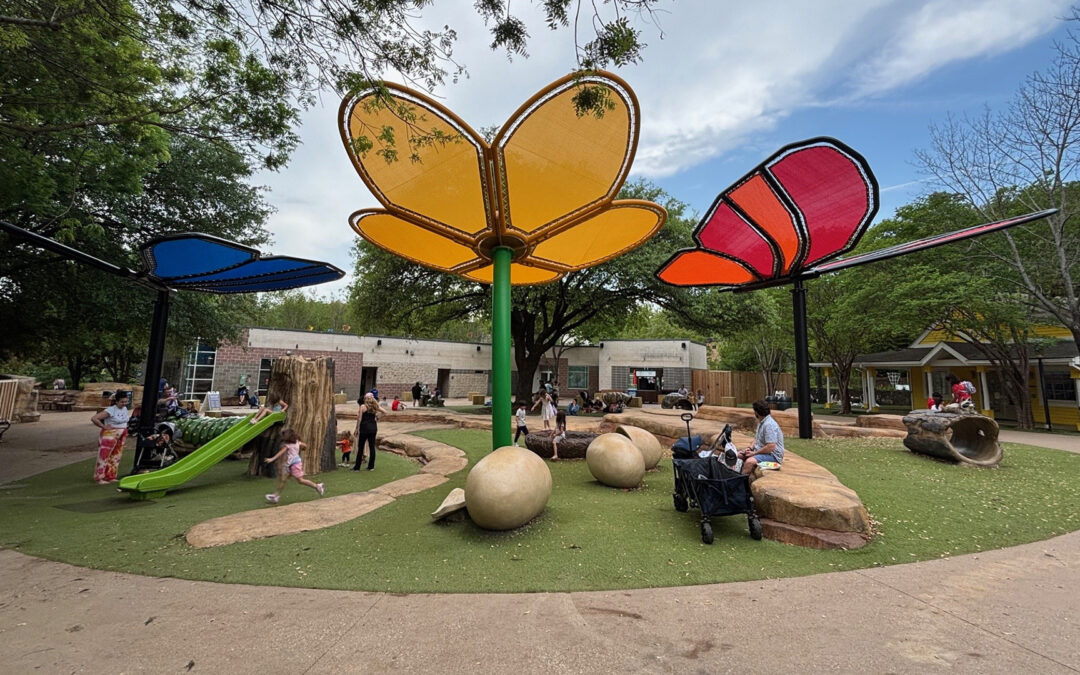
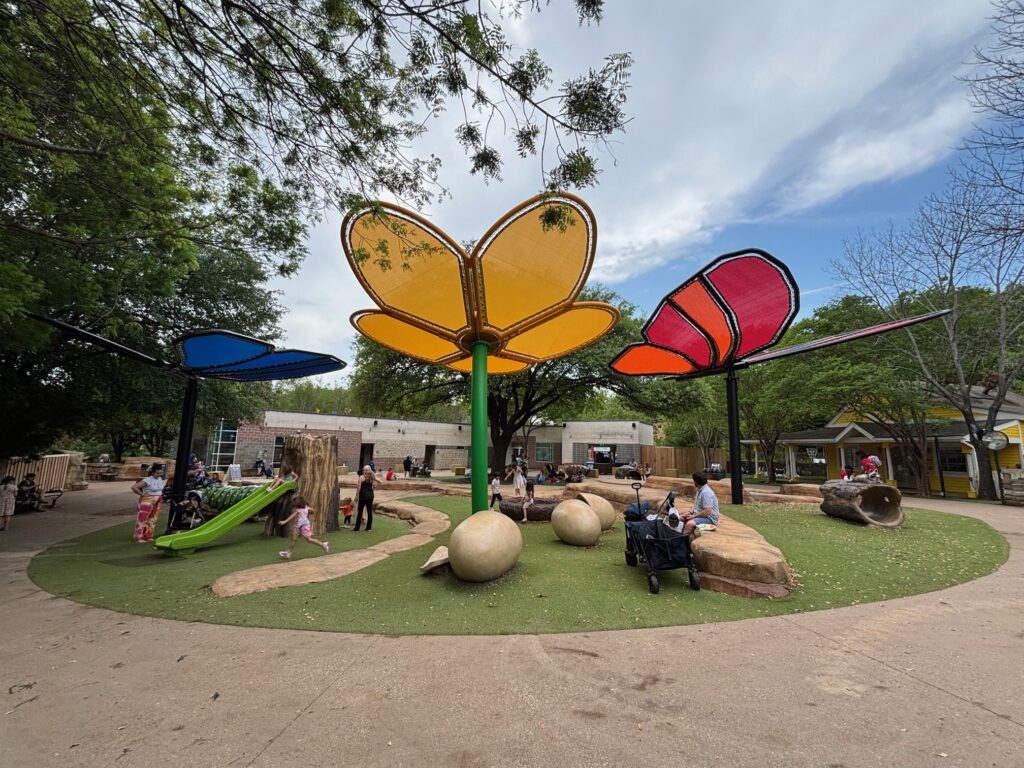
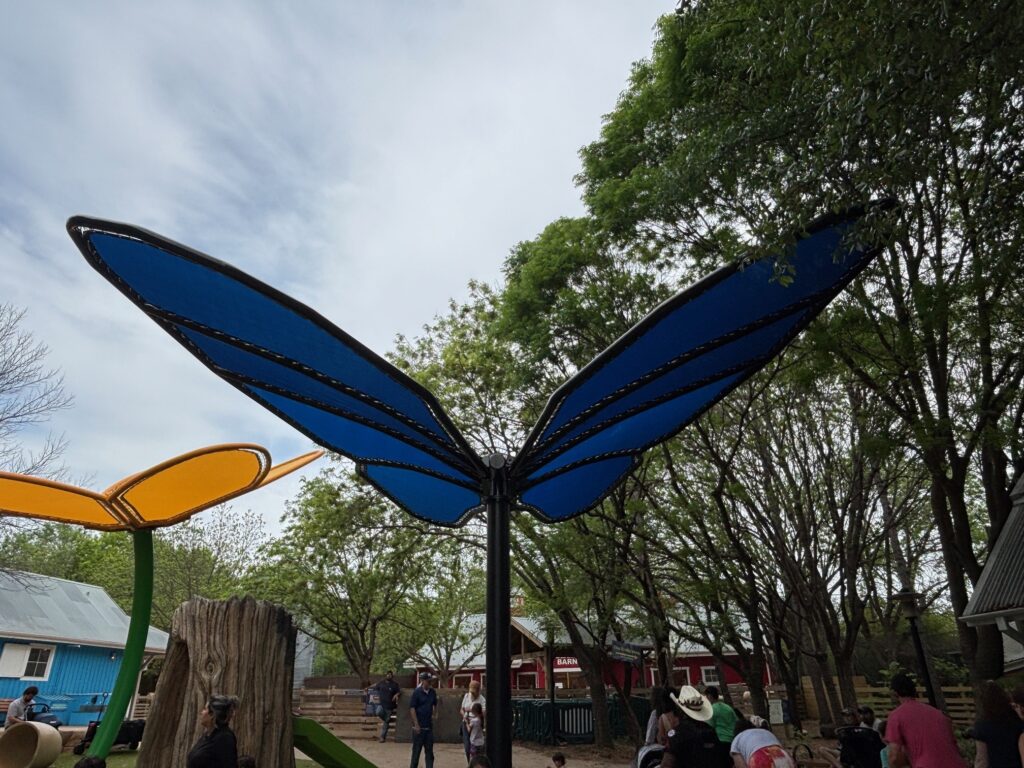
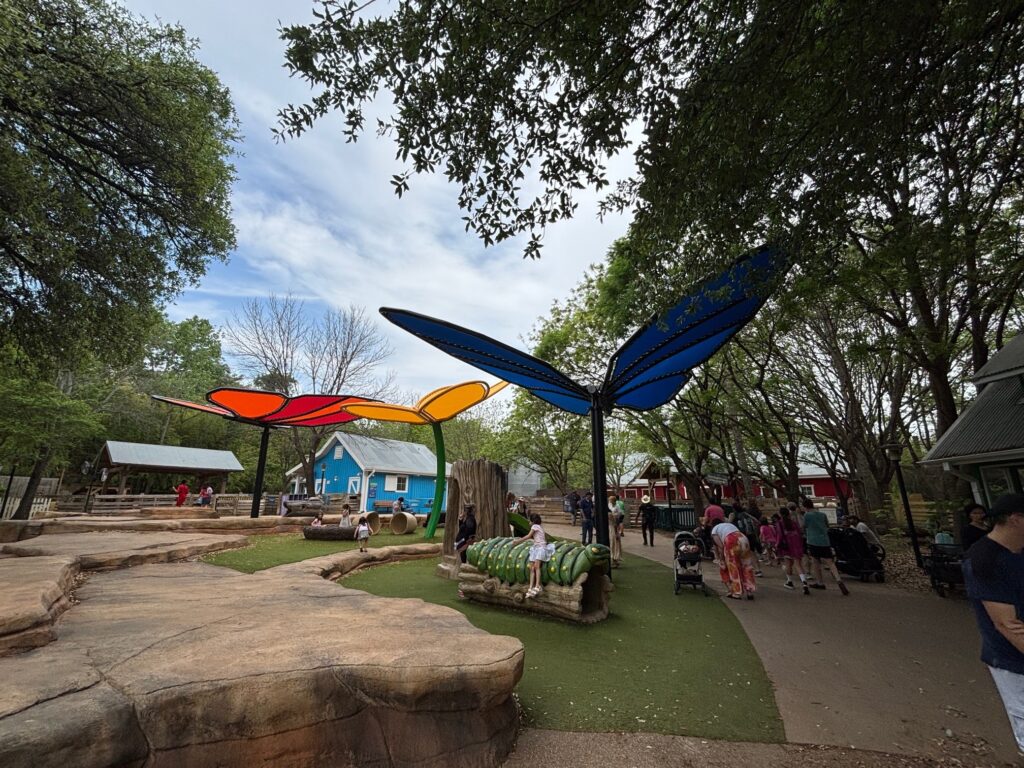
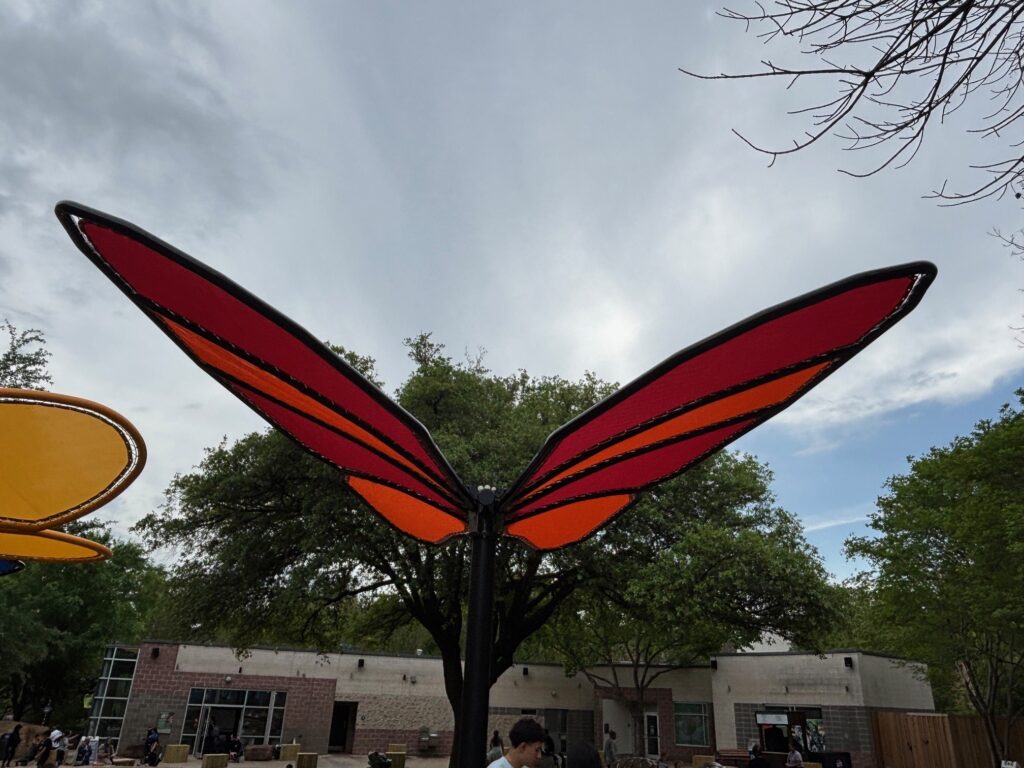
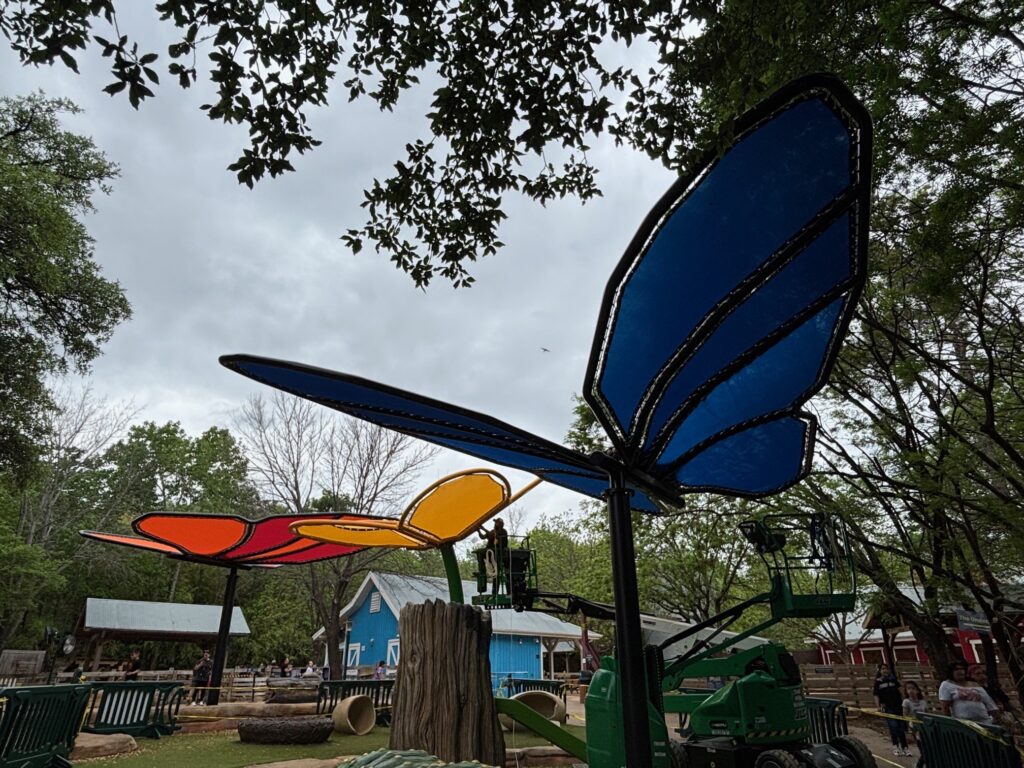
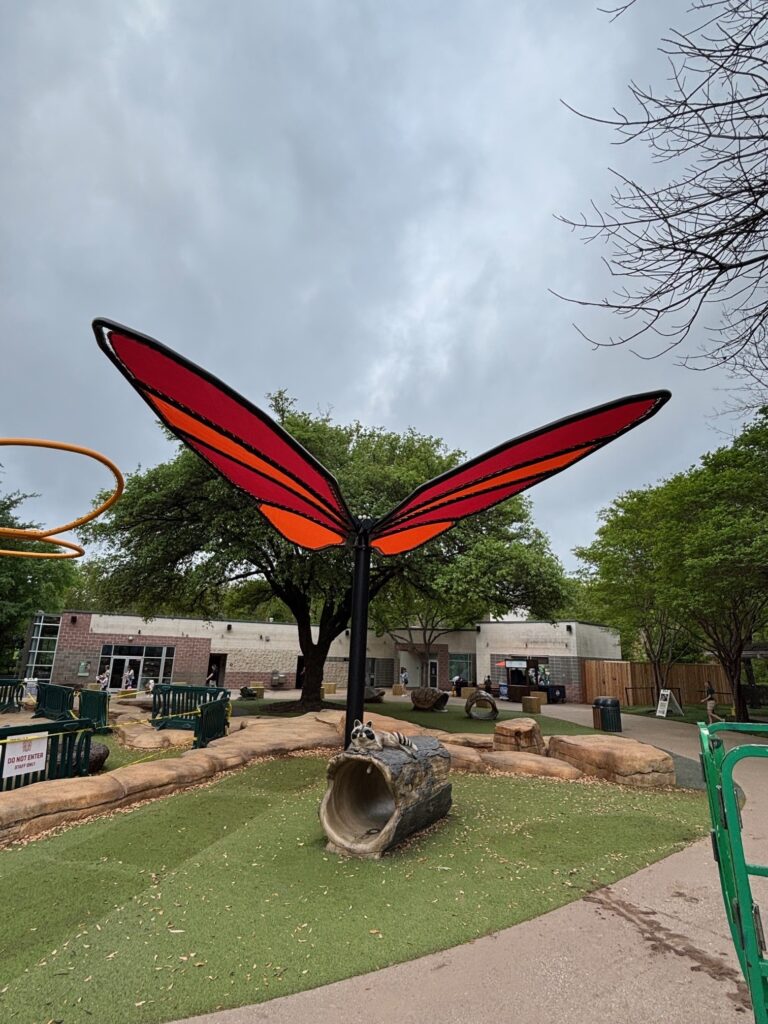
This awning system, installed at a Texas zoo, does exactly that, combining structural performance with a dynamic, design-forward aesthetic.
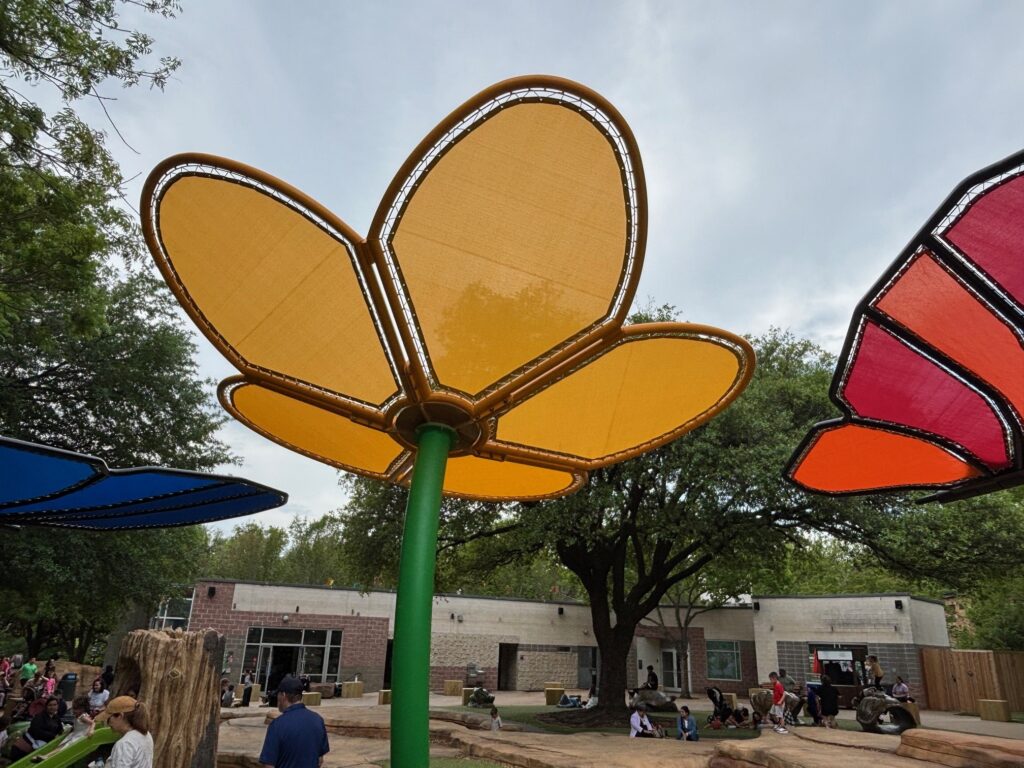
At the center of the concept is a winged structure engineered in a range of fixed configurations, including Wings-Up, Wings-Flat, and Wings-Down formations. Each installation is designed with a specific orientation in mind, allowing the structure to deliver a distinct visual identity while complementing its surroundings. Paired with fabric panels available in a variety of colors, the system brings both flexibility in design and visual energy to a high-traffic public setting.
Where Performance Meets Design
Projects like this highlight the role powder coating can play beyond basic protection. In an outdoor environment like a zoo, coatings must stand up to constant exposure while supporting the overall design vision.
In this case, powder coating delivers:
Long-term resistance to weathering and UV exposure
Color consistency across complex geometries
A clean, uniform finish that enhances the visual impact of the structure
The result is a finish that performs reliably while helping the structure maintain its appearance over time.
Inspired by Nature, Designed for Impact
Installed in a setting centered around nature and exploration, the structure draws inspiration from organic forms.
Even in a fixed position, the variation in wing orientation creates shifting patterns of light and shadow, adding depth and visual interest throughout the day.
Built for Custom Applications
Applications like this demonstrate the versatility of powder coating in custom architectural projects. Whether the goal is bold visual expression or seamless integration into a themed environment, powder coating provides the flexibility to support a wide range of outcomes.
For designers and fabricators, that means fewer compromises between performance and appearance and more opportunities to bring creative concepts to life.
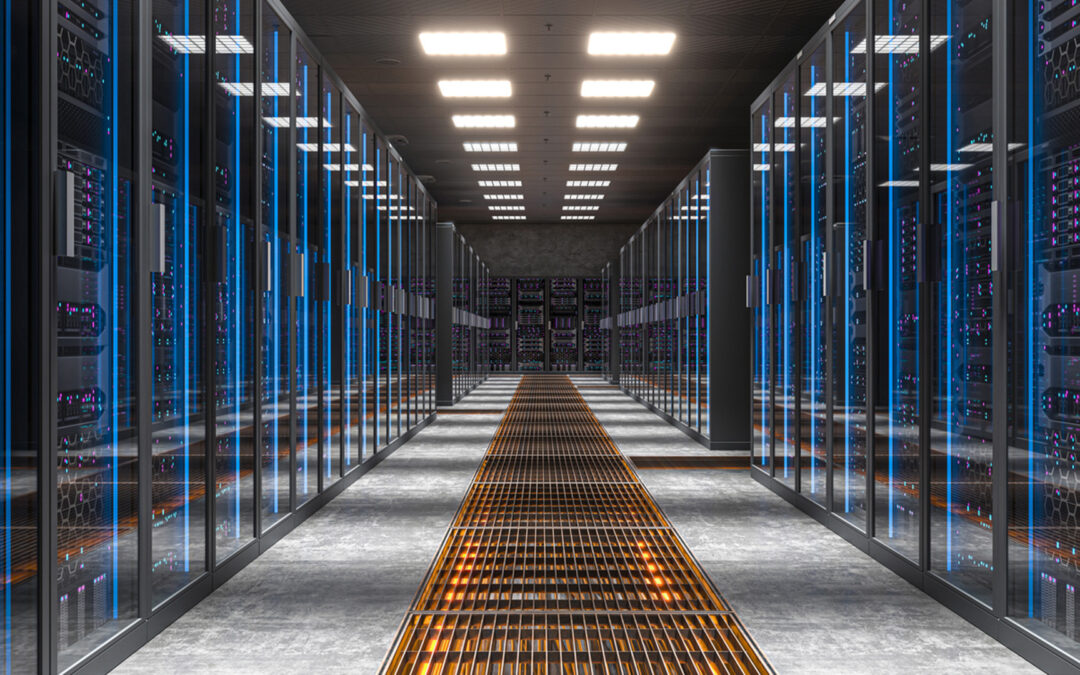
Reliability is not optional. Every structural component, support system, and piece of hardware must be built to last, often in environments where corrosion can quietly compromise performance over time.
Hot-dip galvanizing plays a critical role in meeting these expectations.
Built for Longevity in Critical Environments
Data centers are designed for continuous operation, often with minimal tolerance for maintenance disruptions. Whether located in humid regions, coastal environments, or areas with fluctuating temperatures, exposed steel components are subject to corrosion that can lead to costly repairs or premature replacement.
Hot-dip galvanizing provides a metallurgically bonded zinc coating that protects steel from corrosion both as a barrier and through cathodic protection. This dual layer of defense ensures long-term durability, even in aggressive environments.
For data center developers and operators, this translates into extended service life and reduced lifecycle costs.
Supporting a Wide Range of Applications
Galvanized steel is used throughout data center infrastructure, often in ways that are not immediately visible but are essential to overall performance. Common applications include:
Structural steel components and framing
Equipment supports and platforms
Cable management systems and trays
Electrical and utility infrastructure
Exterior elements exposed to the environment
These components must maintain structural integrity over decades of service, making corrosion protection a key design consideration from the outset.
Consistency and Scale Across a National Footprint
With projects spanning multiple regions, consistency in quality and turnaround is essential. A network of galvanizing facilities allows for efficient processing and reliable delivery, helping keep construction timelines on track.
AZZ Metal Coatings operates more than 40 facilities across North America, providing the scale and geographic reach needed to support data center projects wherever they are built. This network ensures that fabricators and contractors have access to consistent galvanizing services without unnecessary logistical complexity.
Designed for Total Cost of Ownership
Initial material selection is only one part of the equation. Over the lifespan of a data center, maintenance, repair, and replacement costs can significantly impact total cost of ownership.
Hot-dip galvanizing reduces the need for ongoing maintenance and eliminates the periodic recoating required by many alternative systems. The result is a more predictable and cost-effective solution that aligns with the long-term operational goals of data center owners and operators.
A Proven Solution for Critical Infrastructure
Data centers are among the most demanding infrastructure environments in operation today. The materials used in their construction must deliver durability, reliability, and performance without compromise.
Hot-dip galvanizing has a long track record in protecting critical infrastructure across industries. Its application within the data center sector continues to grow as developers recognize the value of specifying corrosion protection that performs for decades.
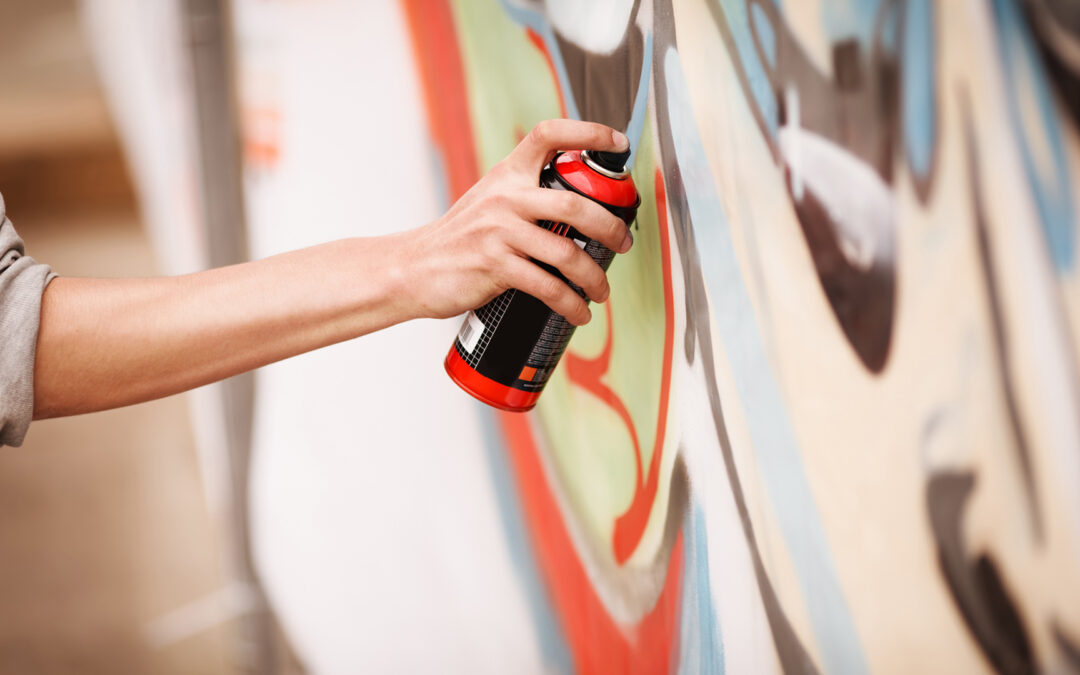
From pedestrian bridges and railings to light poles and utility structures, exposed steel surfaces are frequent targets. Removing graffiti without damaging the underlying coating can be a challenge.
With traditional paint systems, graffiti removal often creates a second problem. Aggressive cleaning methods such as solvents, thinners, or scrubbing can degrade the coating itself. This leads to discoloration, reduced protection, and the need for costly touch-ups or recoating.
Hot-dip galvanized steel offers a fundamentally different outcome.
Why Graffiti Is Less Problematic on Galvanized Steel
Unlike paint systems that sit on the surface, hot-dip galvanizing forms a metallurgically bonded zinc coating. This bond creates a tough, abrasion-resistant barrier that is integral to the steel, not just applied to it.
The result is two key advantages:
Durability during cleaning The coating can withstand scrubbing and chemical cleaners without compromising corrosion protection.
Poor paint adhesion Without surface preparation, graffiti paints often do not adhere strongly to galvanized surfaces, making removal easier.
In many cases, graffiti can be removed with minimal effort, sometimes with simple power washing.
How to Remove Graffiti from Hot-Dip Galvanized Steel
One of the most compelling advantages of galvanizing is the simplicity of maintenance. Proven cleaning methods include:
Solvent cleaning Acetone, MEK, or commercial paint removers effectively dissolve graffiti without damaging the zinc coating.
Alkaline cleaners Suitable for breaking down paints and markers
Pressure washing Often effective due to weak adhesion of graffiti to zinc surfaces
After cleaning, it is important to:
Rinse thoroughly with fresh water to remove any residual chemicals
Avoid abrasive pads or steel brushes, which may remove surface zinc and affect long-term performance
Short-term exposure to cleaning chemicals does not impact long-term corrosion protection when proper rinsing is performed.
Ideal Applications
Hot-dip galvanized steel is especially well suited for environments where both durability and ease of maintenance are critical:
Pedestrian bridges and walkways
Transit infrastructure
Light poles and sign structures
Utility and communication equipment
Public spaces and parks
In these applications, reduced maintenance translates directly to lower lifecycle costs and improved asset uptime.