For utilities, infrastructure owners, and industrial operators, this makes below-grade protection one of the most critical considerations in the lifecycle of steel assets. AZZ Metal Coatings offers specialized solutions designed to protect steel in these demanding environments. By combining the proven performance of hot-dip galvanizing with advanced below-grade coating systems, AZZ helps extend the service life of steel components that operate where corrosion risks are highest.
Why Below-Grade Protection Matters
Soils can vary dramatically in corrosivity depending on moisture content, pH levels, salt concentration, and microbial activity. When steel transitions from above ground to below grade, corrosion can become concentrated at the ground line, where changing oxygen levels and soil conditions create a highly reactive environment.
This is why many steel structures experience their most severe corrosion precisely at this transition zone. Transmission poles, lighting columns, traffic signal structures, sign supports, and similar infrastructure are all vulnerable at the ground line if not properly protected.
Without the right coating system, corrosion at this location can compromise structural integrity long before the rest of the structure shows significant deterioration.
AZZ’s Ground Line and Below-Grade Coating System
To address these challenges, AZZ developed specialized ground line and below-grade coating systems engineered to perform in harsh soil conditions.
These systems begin with hot-dip galvanizing, which provides metallurgically bonded zinc protection across the entire steel surface. Galvanizing delivers two important forms of protection:
- Barrier protection, which physically isolates steel from the environment
- Cathodic protection, where zinc sacrificially protects exposed steel if the coating is damaged
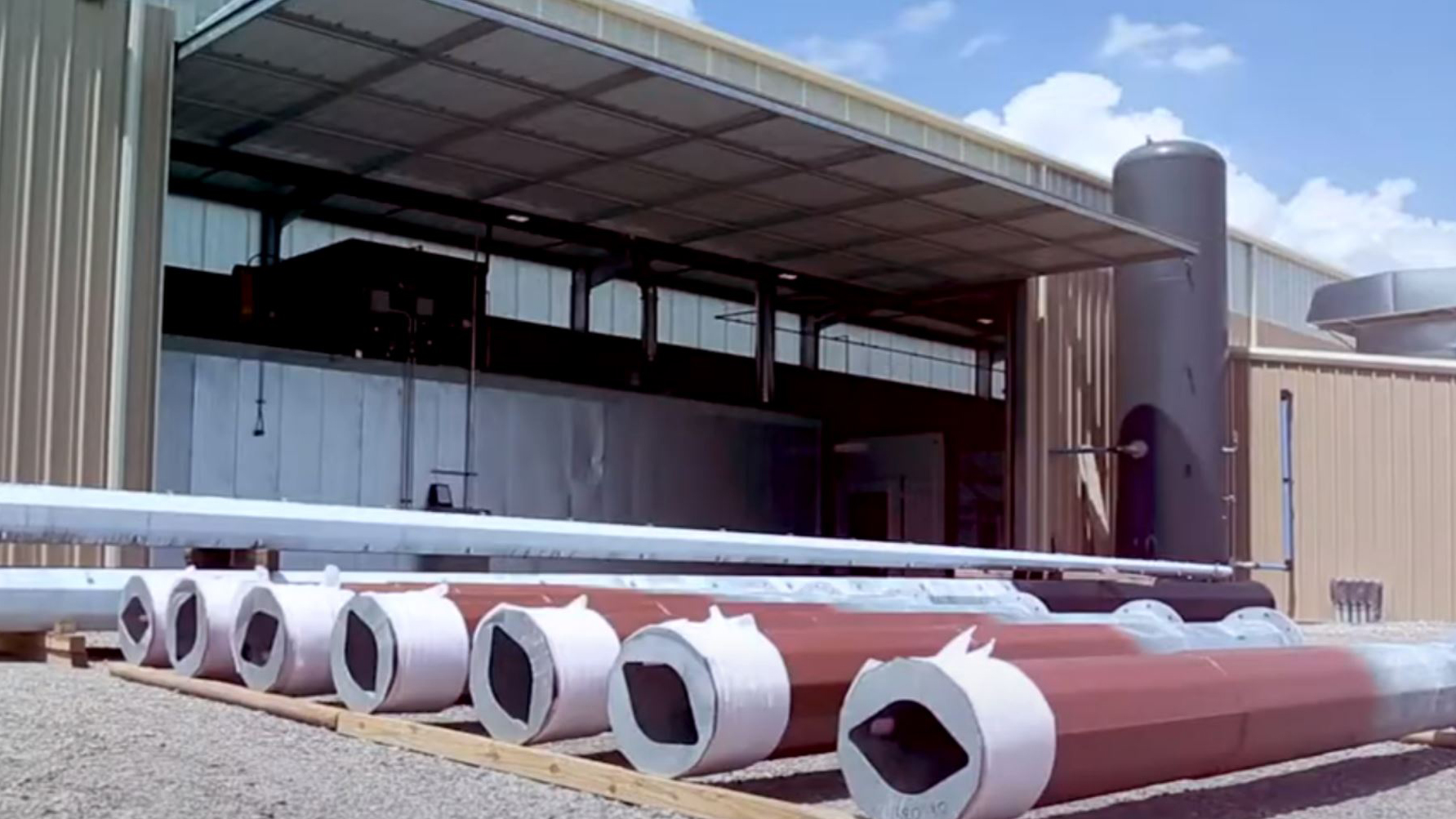
For the below-grade portion of the structure, AZZ applies an additional protective coating designed specifically for soil contact environments. This system creates a durable barrier against moisture, chemicals, and soil contaminants while working in conjunction with the galvanized layer beneath it.
The result is a robust duplex protection system tailored to the demands of below-grade service.
Applications Across Critical Infrastructure
AZZ’s below-grade coating capabilities support a wide range of infrastructure and industrial applications where corrosion protection is essential to long-term reliability.
Common applications include:
- Utility transmission and distribution poles
- Highway and transportation lighting structures
- Traffic signal and sign supports
- Communication and broadband infrastructure
- Industrial structural supports installed in soil or concrete
By addressing corrosion risk at the ground line and below grade, these systems help infrastructure owners avoid premature repairs, structural replacements, and costly service disruptions.
Designed for Long-Term Performance
One of the primary advantages of galvanized steel is its ability to provide decades of maintenance-free protection in atmospheric environments. When combined with specialized below-grade coatings, this protection extends into soil contact zones where corrosion risk is greatest.
For asset owners and engineers, this translates into:
- Longer service life for critical structures
- Reduced maintenance requirements
- Lower lifecycle costs
- Improved reliability of infrastructure systems
With facilities across North America, AZZ Metal Coatings works closely with customers to select coating systems that match the specific environmental conditions and performance requirements of each project.
Full-Spectrum Corrosion Protection
Below-grade protection is one piece of AZZ’s broader corrosion protection capabilities. From hot-dip galvanizing and duplex systems to specialized coatings for harsh environments, AZZ delivers solutions that protect steel throughout its entire service life.
For projects where steel extends below the surface, proper protection at the ground line can make the difference between decades of reliable performance and premature failure. AZZ’s below-grade coating capabilities ensure that steel is protected not just where it’s visible, but where it matters most.
To learn more about AZZ’s corrosion protection solutions, visit AZZ.com or connect with the AZZ Metal Coatings team to discuss your next project.