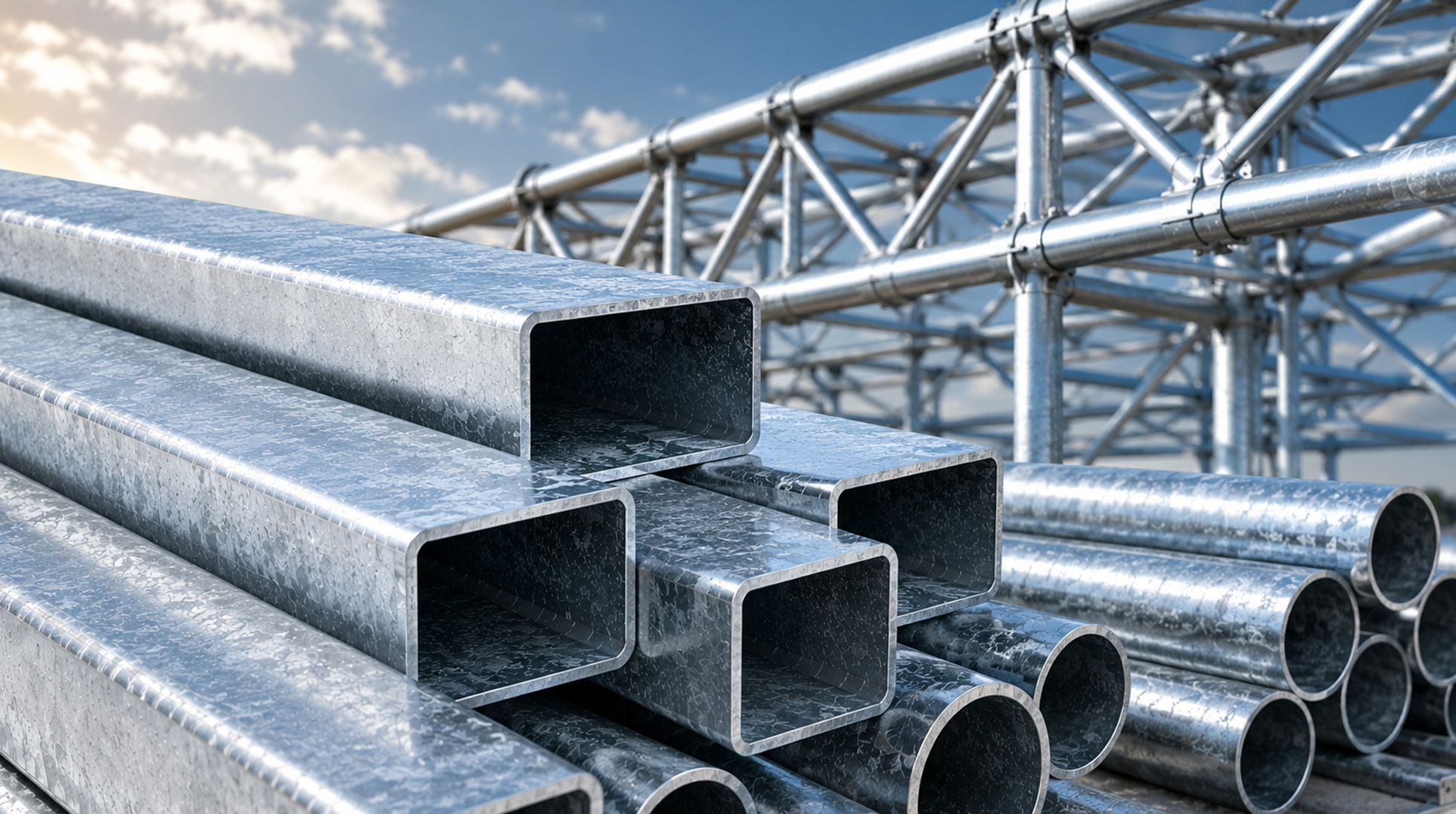
Hollow structural sections (HSS), pipe, tube steel, and other enclosed fabrications are commonly used in utility, transportation, industrial, architectural, and infrastructure applications. When these fabrications are specified for hot-dip galvanizing, proper venting and drainage become critical design considerations.
Unlike open structural shapes, tubular fabrications contain enclosed spaces that must allow cleaning solutions, air, flux, and molten zinc to move freely throughout the galvanizing process. Failure to provide adequate venting and drainage can result in coating defects, trapped zinc, increased processing costs, and potentially unsafe conditions during galvanizing.
By considering galvanizing requirements early in the design process, fabricators and engineers can help ensure a high-quality coating while minimizing delays and rework.
Why Venting and Drainage Matter
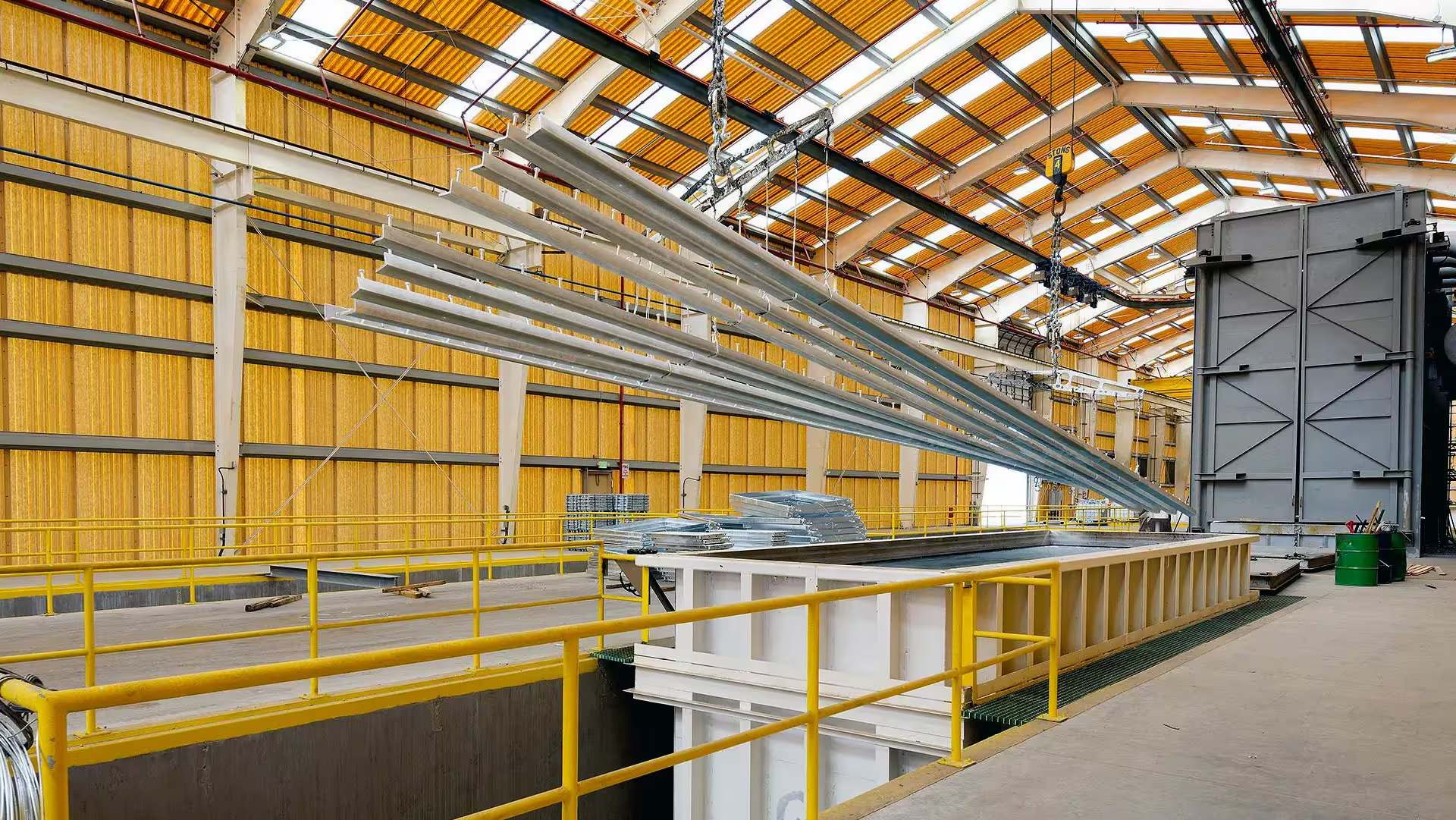
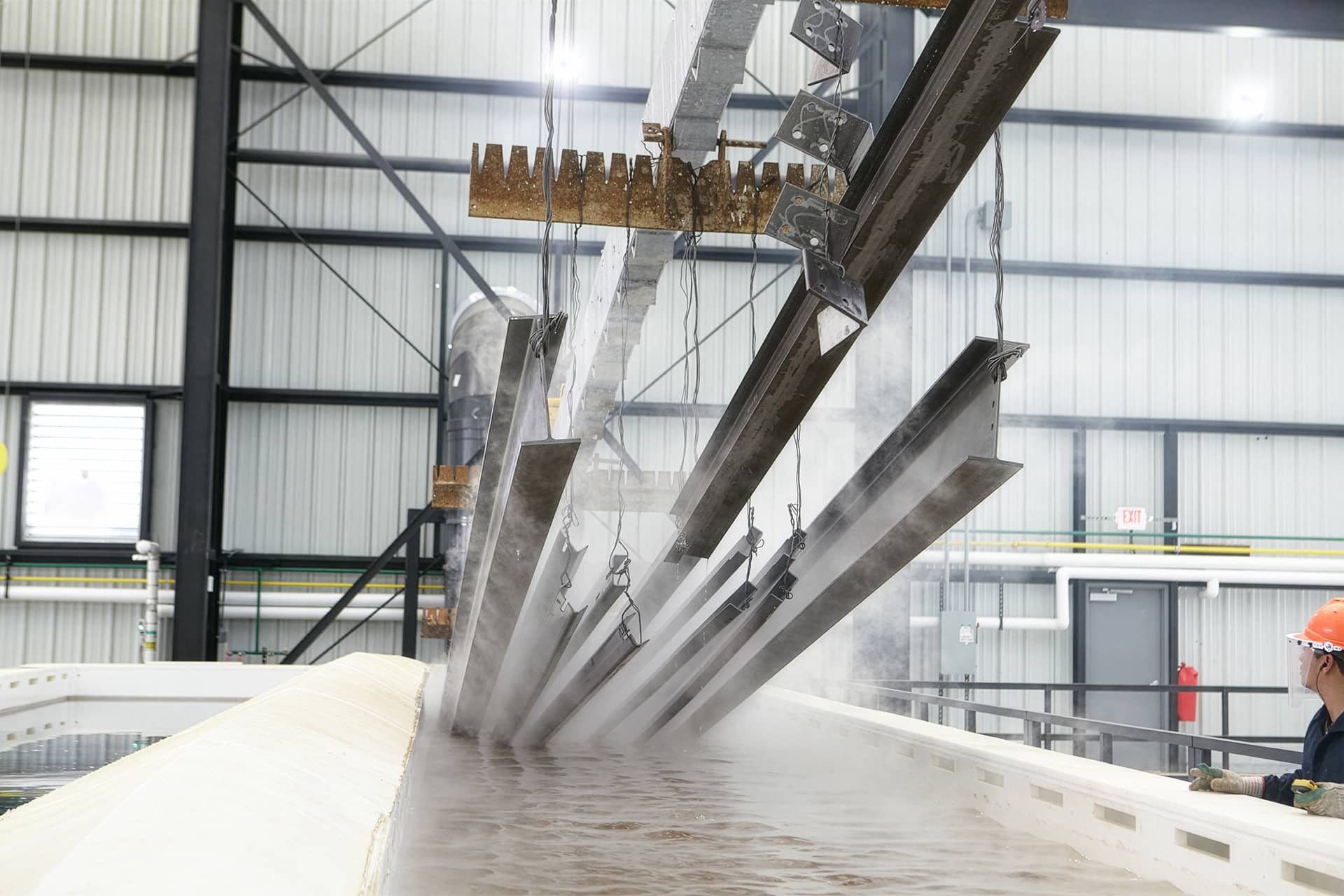
Hot-dip galvanizing is a total immersion process. During cleaning, pickling, fluxing, galvanizing, and cooling, solutions and molten zinc must be able to enter and exit enclosed members without restriction.
Proper venting and drainage help:
- Prevent trapped air pockets
- Allow complete cleaning of internal surfaces
- Promote uniform zinc coverage
- Enable excess zinc to drain during withdrawal
- Reduce the risk of pressure buildup
- Improve overall coating quality
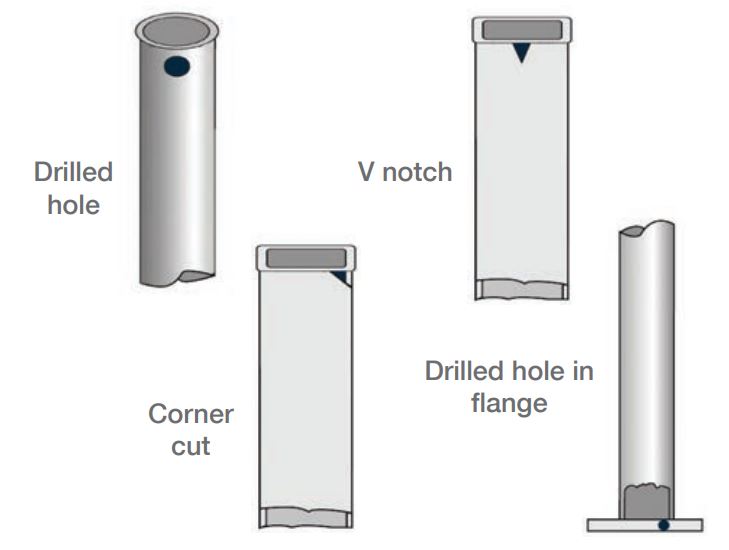
Figure 1. Common vent hole options for tubular fabrications, including drilled holes, V-notches, corner cuts, and flange openings. Source: American Galvanizers Association Design Guide.
The goal is simple: provide a continuous path for air, cleaning solutions, and molten zinc to flow through every enclosed section of the fabrication.
Design with the Galvanizing Process in Mind
One of the most effective ways to improve galvanizing results is to consider how a fabrication will be immersed into and withdrawn from the galvanizing kettle.
Vent holes should be located at the highest points of enclosed members during immersion so trapped air can escape. Drain holes should be positioned at the lowest points to allow solutions and molten zinc to flow freely from the fabrication.
Whenever practical, open-ended members provide the best results because they maximize flow and drainage throughout the galvanizing process.
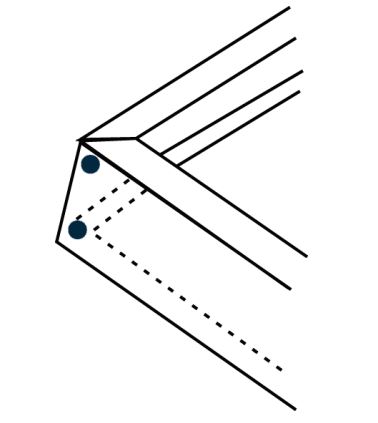
Figure 2. Recommended vent and drain hole placement for end plates and enclosed sections. Positioning openings near corners promotes unrestricted flow and reduces trapped air pockets. Source: American Galvanizers Association Design Guide.
Design details that appear minor during fabrication can have a significant impact on galvanizing quality and processing efficiency.
Best Practices for Tubular Fabrications
Several design practices consistently improve galvanizing outcomes for HSS and tubular fabrications.
Maximize Internal Flow
Provide the largest practical openings between interconnected members whenever possible. Larger openings improve movement of cleaning solutions and molten zinc while reducing the likelihood of trapped materials.
Place Openings Near Connections
Vent and drain holes should be positioned as close to welds and intersections as practical. This improves communication between connected members and promotes complete coating coverage.
Consider Corner Placement
For square and rectangular HSS, corner openings often provide better venting and drainage performance than centered openings because they eliminate air pockets that can develop during immersion.
Coordinate Early
Consulting with your galvanizer during the design phase can help identify potential issues before fabrication begins.
Handrail Design Example
Handrails represent one of the most common examples of tubular fabrication design for galvanizing.
The preferred design incorporates internal venting through member intersections, minimizing the number of visible external vent holes while still allowing unrestricted movement of solutions and zinc throughout the assembly.
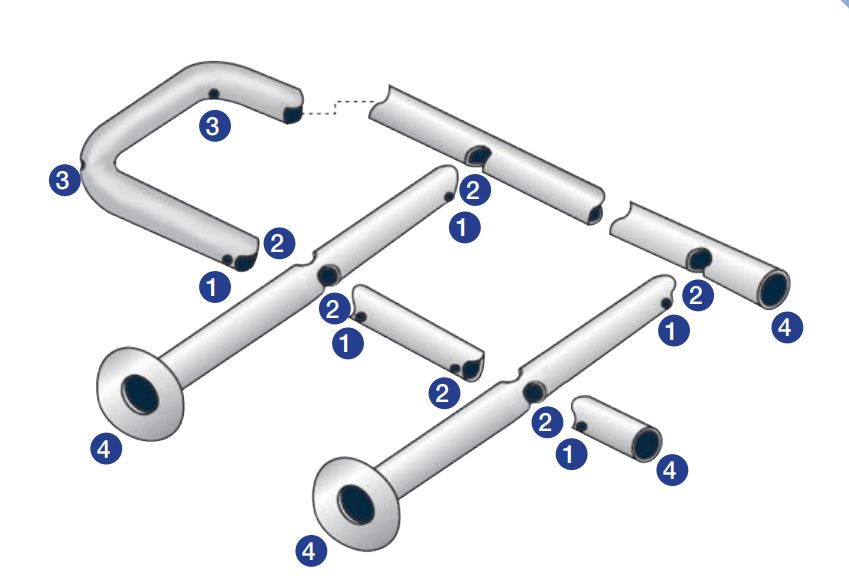
Figure 3. Preferred handrail design incorporating internal venting and drainage through member intersections. Source: American Galvanizers Association Design Guide.
This approach often provides the best balance between appearance, manufacturability, and galvanizing performance.
Acceptable Alternative Designs
In some applications, preferred venting configurations may not be practical due to fabrication constraints or aesthetic considerations.
Alternative venting arrangements can still provide acceptable galvanizing results when properly designed.
Figure 4. Alternative handrail venting and drainage configuration. Source: American Galvanizers Association Design Guide.
The key requirement remains unchanged: all enclosed spaces must allow unrestricted movement of air, cleaning solutions, and molten zinc.
Common Design Issues to Avoid
Many galvanizing challenges can be traced back to a handful of common design details.
Avoid:
- Sealed sections with no venting provisions
- Undersized vent holes
- Internal diaphragms that block flow
- Drain holes located away from low points
- Connections that create zinc traps
- End plates with centered openings that trap air
Addressing these issues during design and detailing can help improve coating quality while reducing processing challenges.
Design Tip: Involve Your Galvanizer Early
Small changes made during detailing can have a significant impact on galvanizing quality, turnaround time, and overall project success.
Early coordination allows designers, fabricators, and galvanizers to identify potential venting and drainage concerns before fabrication begins, reducing the likelihood of costly modifications later in the project.
Key Takeaways
- Proper venting and drainage are essential for safe and effective hot-dip galvanizing of tubular fabrications.
- Vent holes should be located at high points and drain holes at low points based on the orientation of the fabrication during immersion.
- Larger openings and unobstructed internal pathways improve cleaning, coating coverage, and zinc drainage.
- Corner venting and drainage details often perform better than centered openings in square and rectangular HSS.
- Handrails and other interconnected tubular assemblies benefit from internal venting through member intersections whenever possible.
- Common issues such as sealed sections, undersized holes, and zinc traps can lead to coating defects and processing challenges.
- Early collaboration with your galvanizer can help optimize design details and avoid costly modifications later in the project.
Note: Guidance related to tubular fabrication design, venting, and drainage was adapted from technical resources published by the American Galvanizers Association.