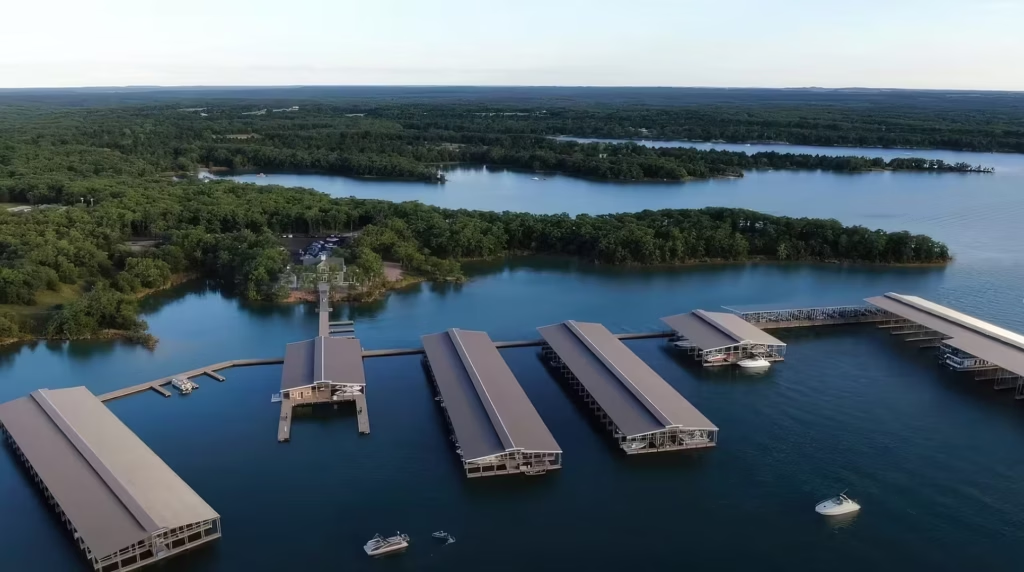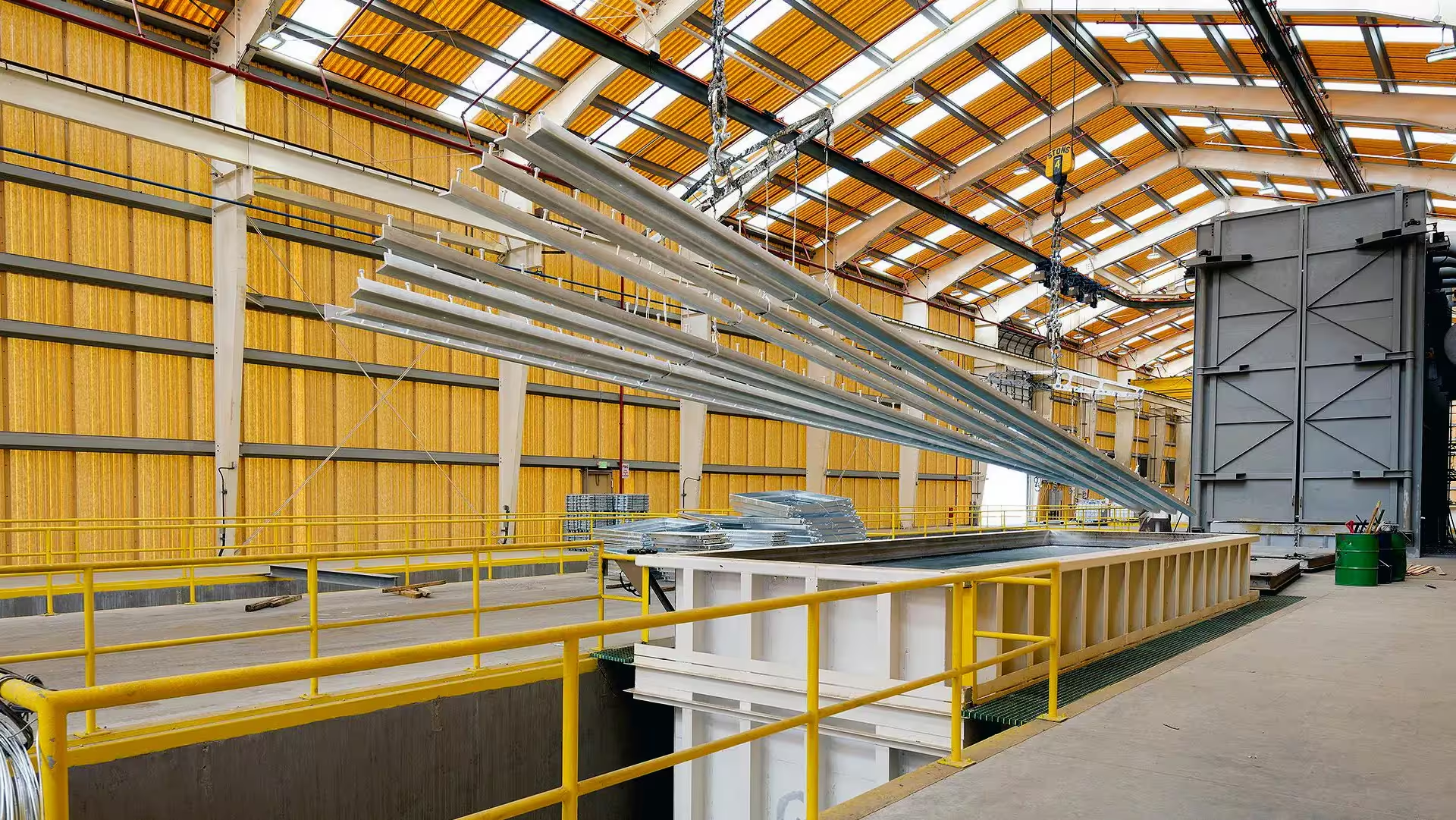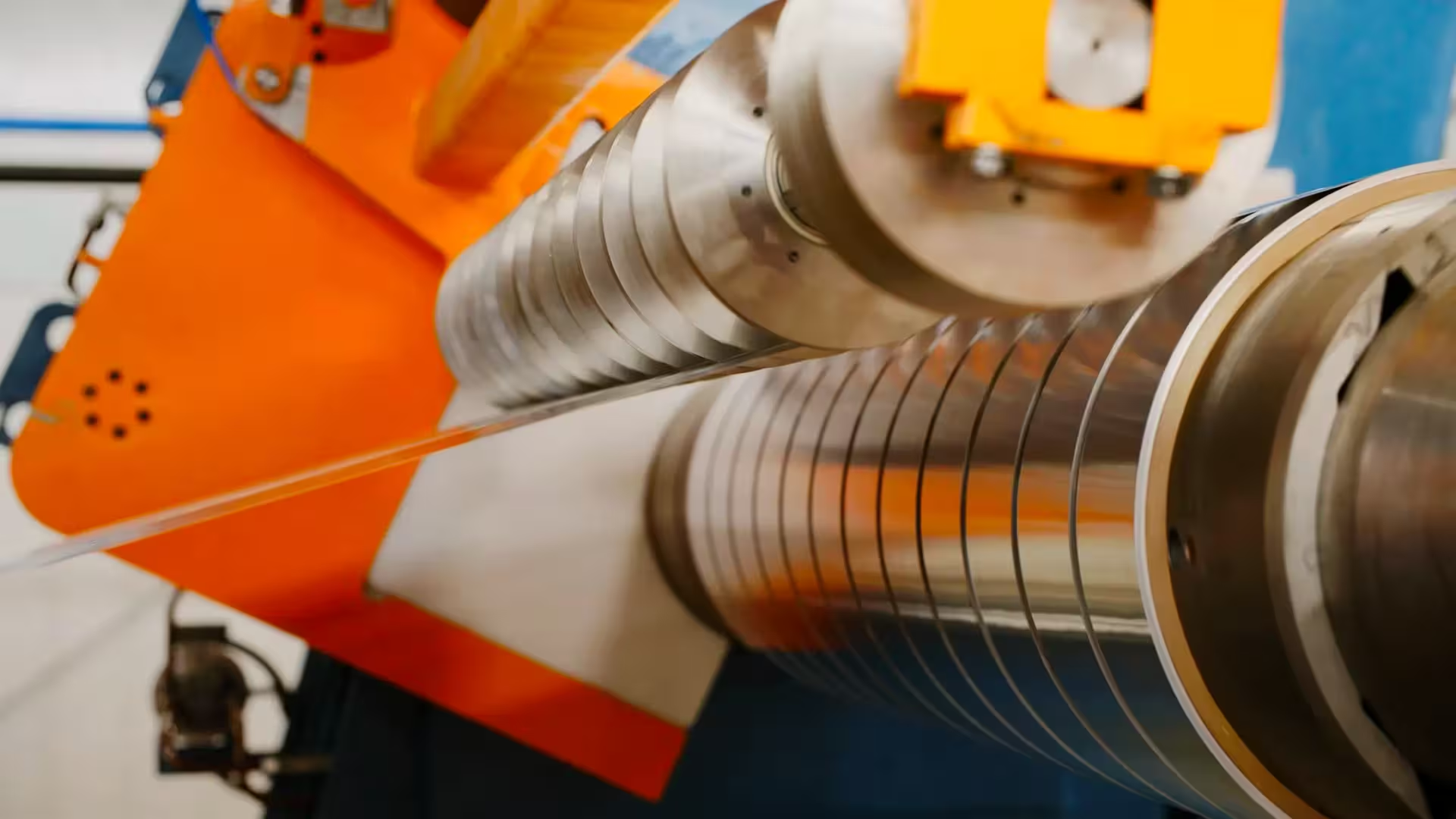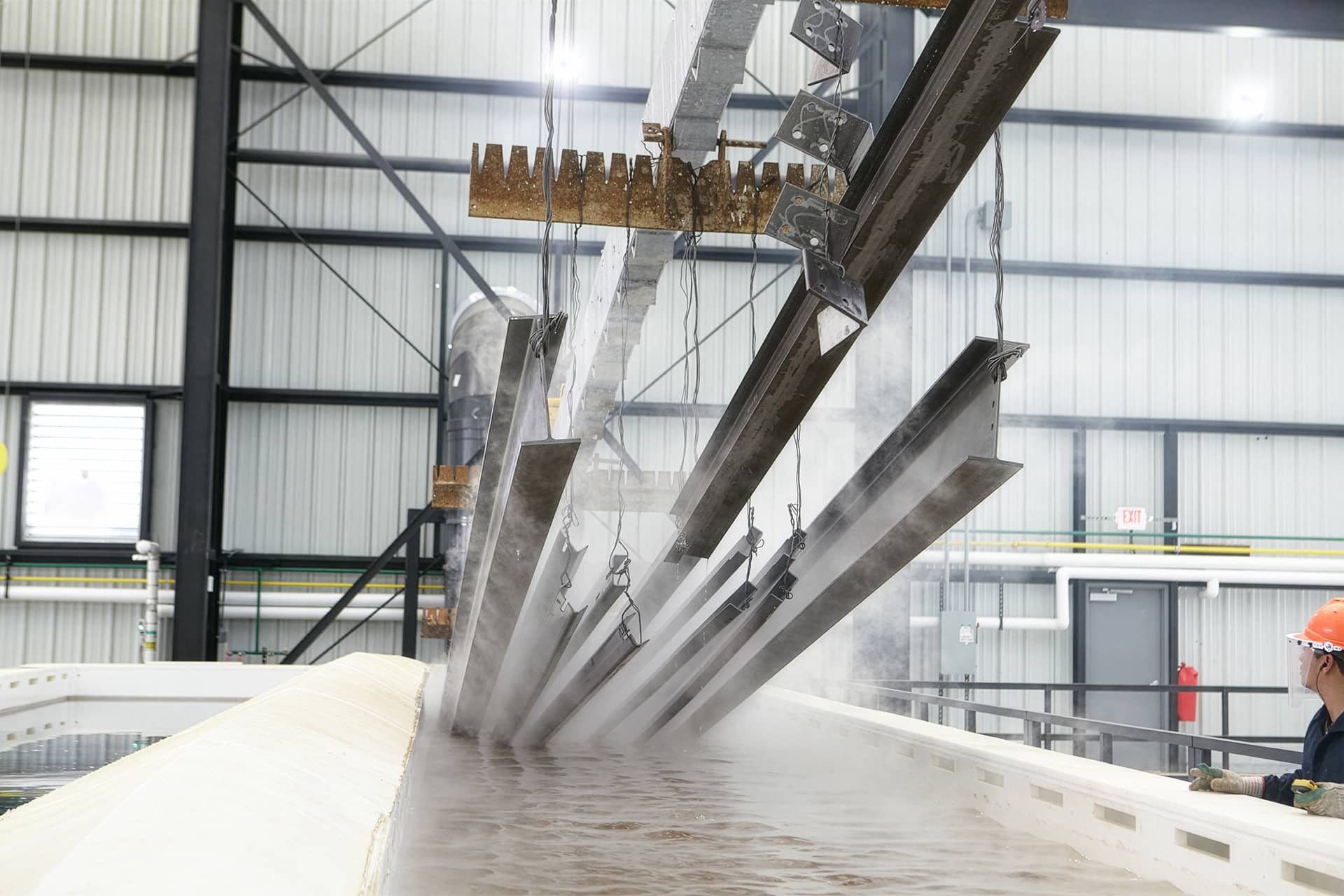
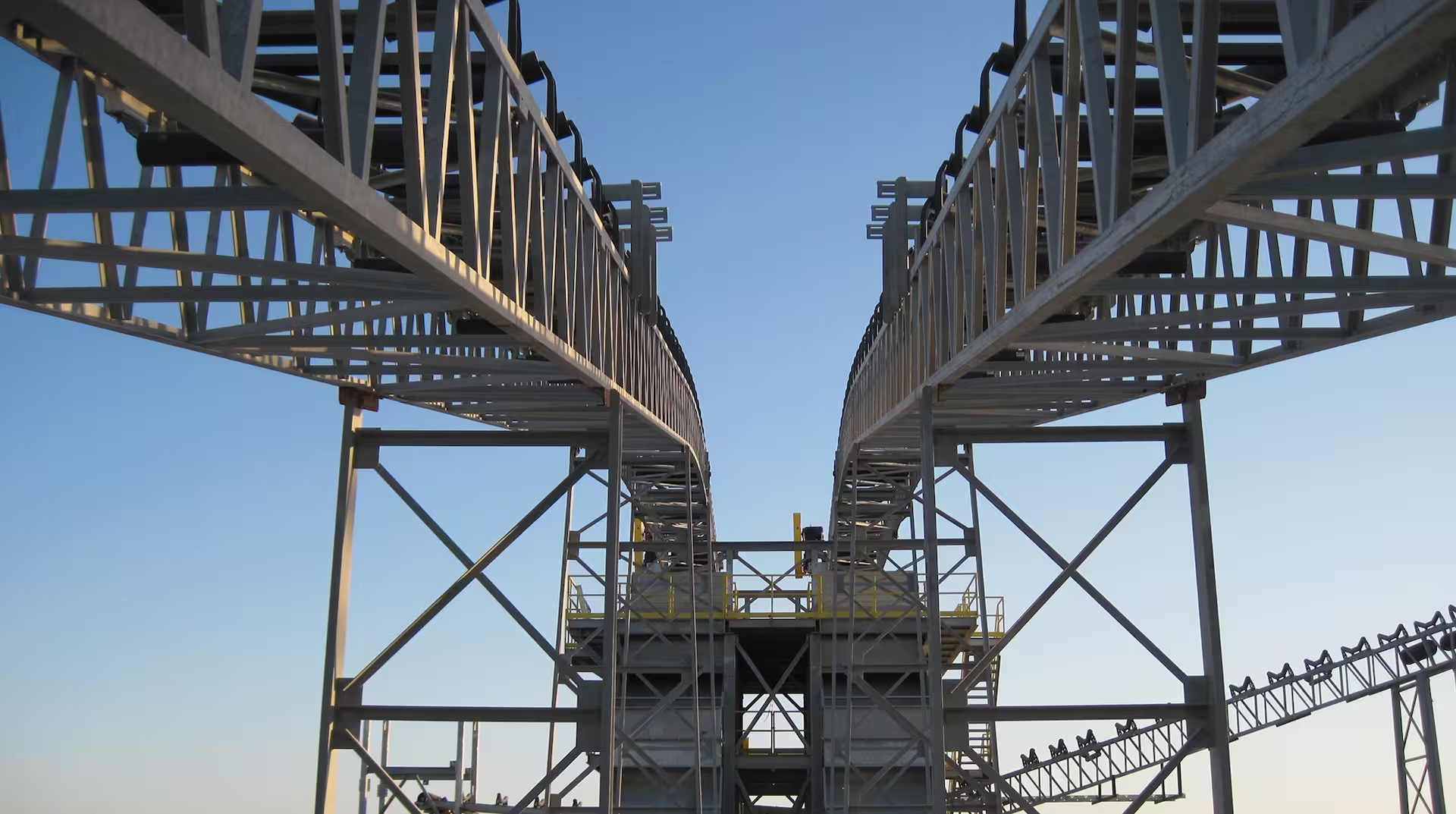
Coal travels from mines to river terminals. Bulk commodities are loaded onto barges for shipment. Recycled aggregates are processed and prepared for reuse.
While motors, belts, rollers, and controls often receive much of the attention, the structural steel supporting these systems faces its own challenge: corrosion.
Conveyor galleries, transfer towers, support frames, platforms, stairs, catwalks, and access structures are routinely exposed to moisture, abrasion, dust, chemicals, temperature fluctuations, and harsh outdoor environments. Left unprotected, corrosion can increase maintenance requirements, shorten service life, and contribute to costly operational disruptions.
For many facility owners, hot-dip galvanizing provides a practical solution by delivering long-term corrosion protection that helps keep critical material handling infrastructure in service for decades.
Engineered to Keep Resources Moving
Material handling systems are designed around a simple objective: move product efficiently from one location to another. Whether the material is coal, aggregates, grain, wood products, or recycled materials, interruptions can have significant operational and financial consequences.
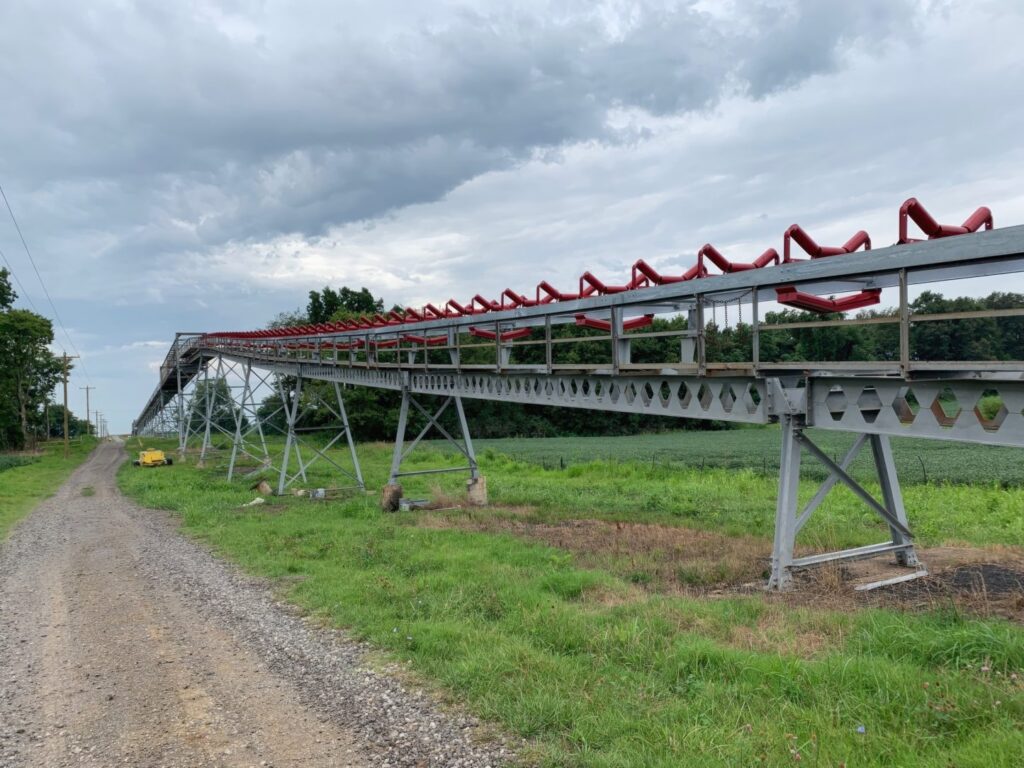
The Henderson County Mine Conveyor System in Kentucky illustrates the scale of modern material handling infrastructure. The project involved approximately six miles of conveyor structures used to transport coal from the mine to the Ohio River. More than one million pounds of steel components, including support legs, frame channels, and return idlers, were hot-dip galvanized to provide long-term protection against weather exposure, moisture, abrasion, and the demands of continuous service.
Project stakeholders cited galvanizing’s abrasion resistance, resistance to moisture entrapment, and long time to first maintenance as key factors in the coating selection process. For facilities where uptime is essential, reducing maintenance demands can provide benefits that extend well beyond the coating itself.
Built for Harsh Environments
Material handling systems frequently operate in environments where corrosion can quickly become a maintenance concern.
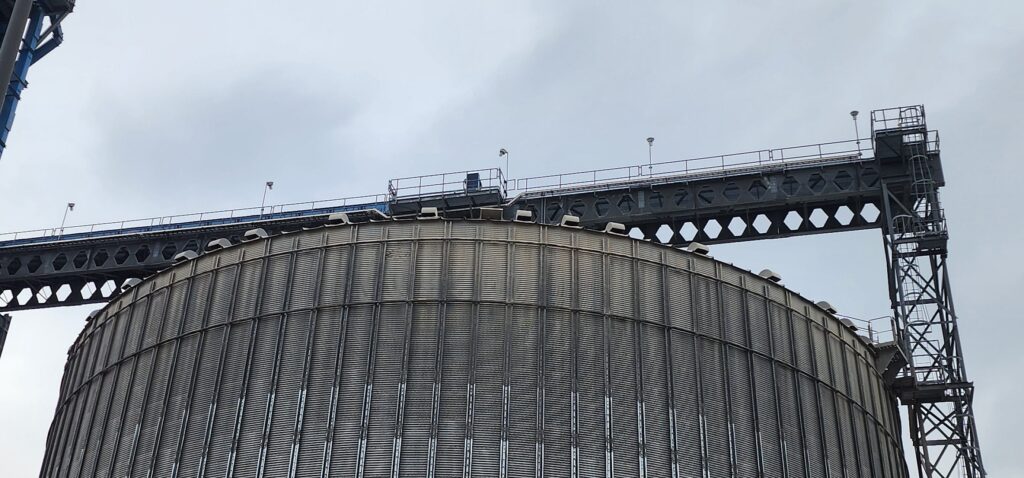
The Barge Loadout Belt Conveyor project on the Mississippi River provides a compelling example. The facility includes conveyor galleries, support towers, portal frames, stairs, handrails, grating, and chip conveyors operating in a damp environment exposed to moisture and corrosive conditions. These conditions can accelerate corrosion and increase maintenance demands on unprotected steel.
By utilizing hot-dip galvanizing, the project team selected a corrosion protection system capable of protecting the facility’s structural steel for decades while minimizing future maintenance requirements.
The lesson extends well beyond marine applications. Whether operating in coastal regions, mining operations, industrial facilities, or aggregate processing plants, conveyor infrastructure often faces environmental conditions that make long-term corrosion protection a critical design consideration.
When Maintenance Means Downtime
One of the greatest challenges associated with conveyor and material handling systems is maintaining infrastructure without disrupting operations.
Conveyor structures are frequently located in areas where access can be difficult, whether along miles of overland conveyor, within processing facilities, at marine terminals, or in underground mining environments. Maintenance activities often require careful planning, specialized equipment, and operational downtime, all of which can add cost and complexity.
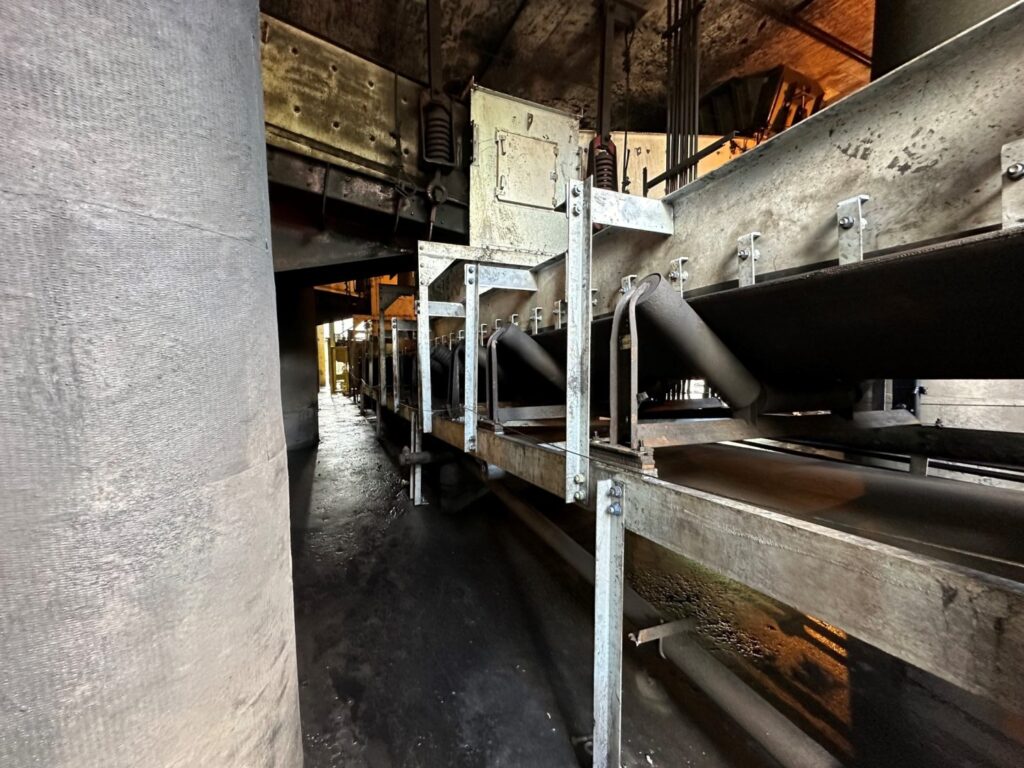
The Buchanan Coal Mine project demonstrates this reality. The facility incorporated galvanized frames, cross members, brackets, and hardware to reduce future maintenance demands and extend service life in a corrosive operating environment.
For facility owners, the value extends beyond coating performance alone. Every maintenance activity that can be delayed or avoided helps reduce labor costs, minimize disruptions, and improve overall operational efficiency.
Supporting Recycling and Resource Recovery
The benefits of galvanizing are equally valuable in recycling and aggregate processing operations.
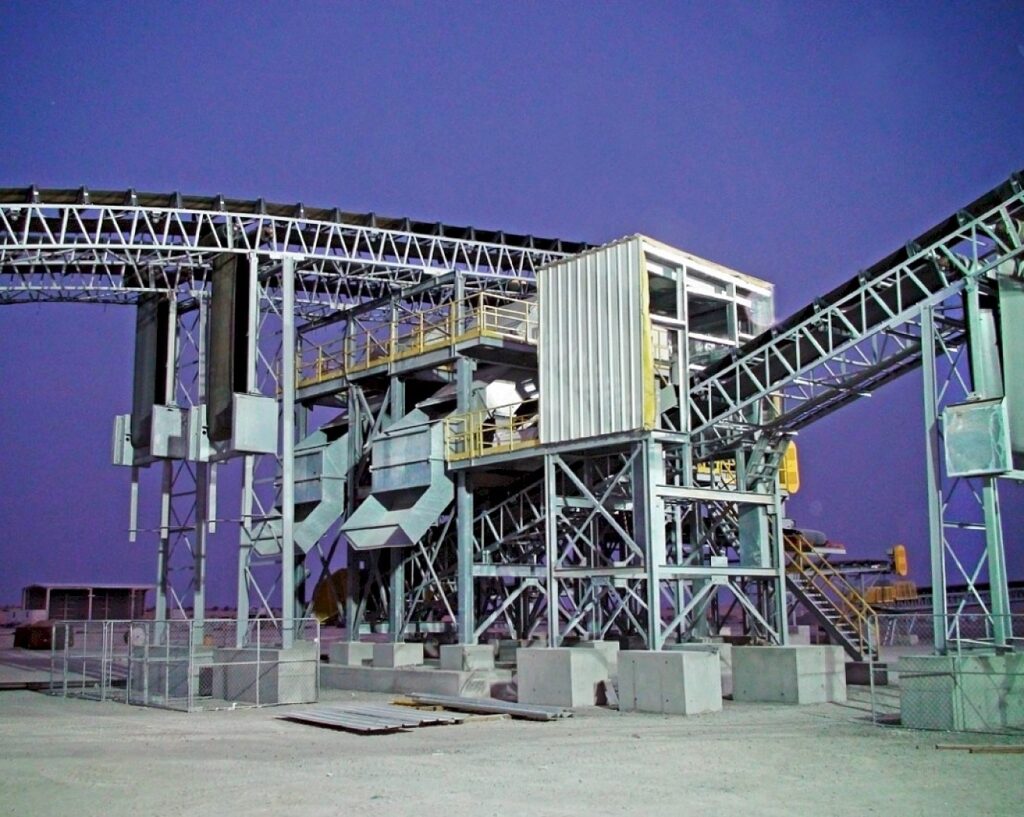
At the Abu Dhabi Aggregate Recycling Plant, galvanized steel supports conveyor systems and processing infrastructure designed to recover and repurpose construction materials. Operating in an environment characterized by heat, dust, abrasion, and continuous operation, the facility required durable steel infrastructure capable of delivering reliable long-term performance.
Although the materials being handled differ significantly from those found in mining or marine facilities, the underlying challenge remains the same: maintaining reliable operations while minimizing maintenance requirements.
Designed for Long-Term Performance
The environments surrounding conveyor and material handling systems can be demanding, but the objective remains constant: keep materials moving safely and efficiently.
Hot-dip galvanizing helps support that objective by protecting the structural steel that forms the backbone of these systems. From conveyor galleries and transfer towers to platforms, walkways, and support frames, galvanized steel provides durable corrosion protection that can help extend service life, reduce maintenance demands, and support reliable operations for decades.
When downtime is costly and maintenance access is difficult, investing in long-term corrosion protection is about more than preserving steel. It’s about protecting productivity.
Key Takeaways
- Material handling systems depend on more than belts and motors. Conveyor galleries, transfer towers, support frames, platforms, and walkways are critical structural components that must withstand years of exposure to demanding operating environments.
- Corrosion can directly impact productivity. As steel infrastructure deteriorates, maintenance requirements increase, access becomes more challenging, and the risk of operational disruptions grows.
- Hot-dip galvanizing provides long-term corrosion protection. The metallurgically bonded zinc coating helps protect steel from moisture, abrasion, and environmental exposure, often delivering decades of service with minimal maintenance.
- Reduced maintenance supports increased uptime. By extending the life of structural steel components, galvanizing can help minimize shutdowns, reduce repair costs, and improve overall operational efficiency.
- The benefits span multiple industries. From mining and bulk commodity terminals to recycling and aggregate processing facilities, galvanized steel continues to support reliable material handling operations in a wide range of environments.
- Protecting steel helps protect productivity. When downtime is costly and maintenance access is difficult, investing in durable corrosion protection becomes an investment in long-term operational performance.