Why Aquatic Environments Accelerate Corrosion
For owners and designers, selecting a corrosion protection system that delivers long-term durability while minimizing maintenance is critical to the lifecycle performance of these facilities.
Although swimming pools and waterparks may appear similar to typical freshwater environments, the presence of chlorine and elevated humidity creates unique corrosion conditions.
Chlorinated water contains dissolved chemicals that increase the conductivity of the water, allowing electrochemical corrosion reactions to occur more easily. As water evaporates from pools and splash zones, chlorinated moisture can also settle on nearby steel surfaces. Even when components are not directly submerged, this moisture can contribute to corrosion.
High humidity levels further intensify the problem. Indoor aquatic facilities often operate in warm environments with elevated humidity levels, creating a consistently damp atmosphere that encourages corrosion. Steel surfaces may remain wet for extended periods, allowing corrosion reactions to continue over time.
Frequent splashing and wet-dry cycles also contribute to corrosion. Water slides, wave pools, and splash features continuously expose surrounding structures to moisture, while chemical residues can accumulate on metal surfaces.
Protecting Steel in Aquatic Facilities
Because aquatic environments can be highly corrosive, protective coatings play a critical role in extending the service life of steel components. Coating systems must resist both continuous moisture exposure and the effects of chlorinated water.
Hot-dip galvanizing provides durable corrosion protection for many aquatic facility applications. During the galvanizing process, steel is immersed in molten zinc, creating a metallurgically bonded coating that protects the steel from corrosion.
The zinc coating serves as a barrier between the steel and the surrounding environment while also providing sacrificial protection. If the coating becomes damaged, zinc continues to protect the exposed steel by corroding preferentially to the base metal.
In many aquatic environments, corrosion products that develop on the zinc surface can form a protective scale that slows further corrosion.
Where Galvanized Steel Is Used in Aquatic Facilities
Hot-dip galvanized steel is commonly used throughout pools, waterparks, and aquatic facilities in applications such as:
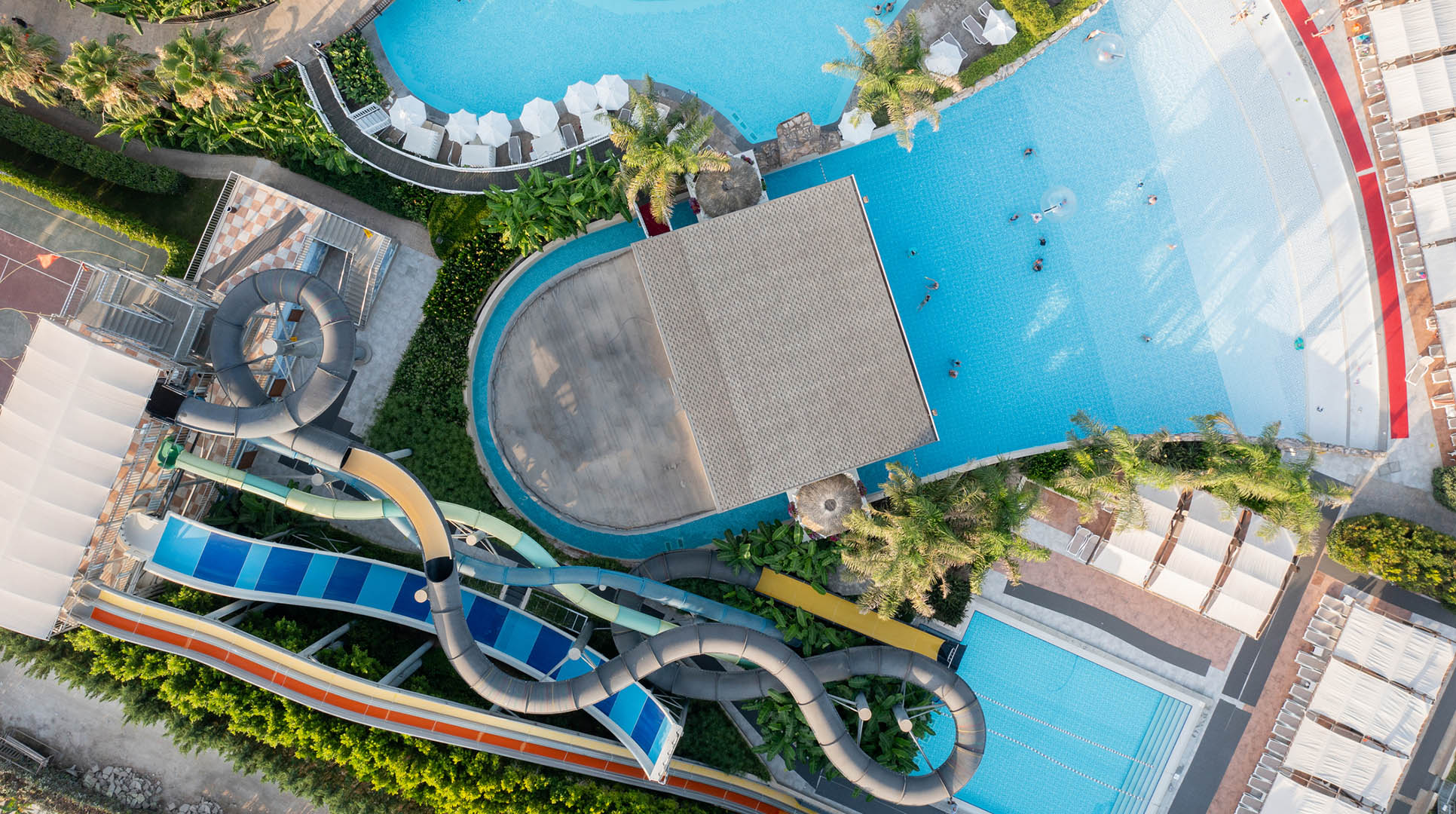
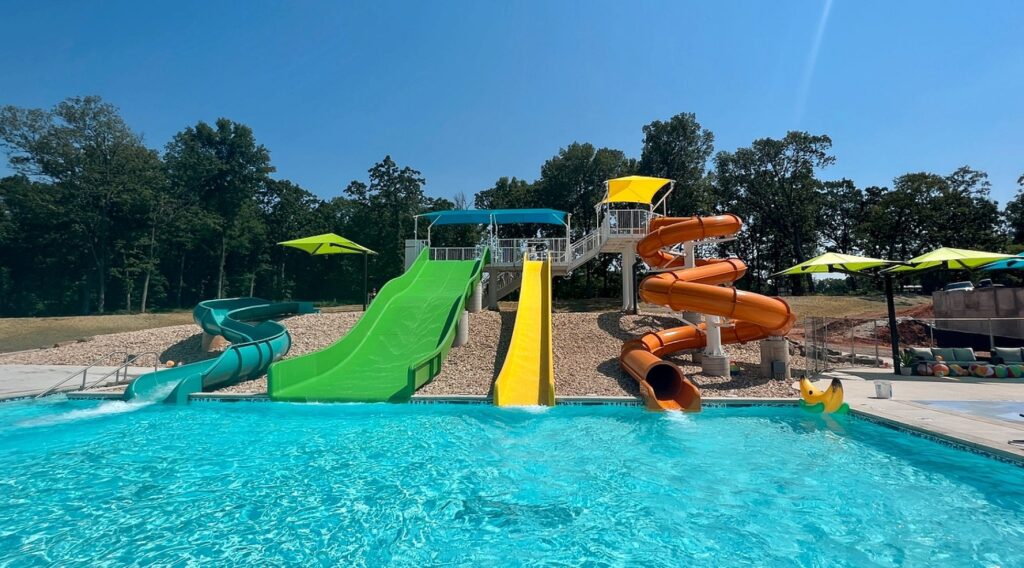
- water slide support structures
- pool handrails and ladders
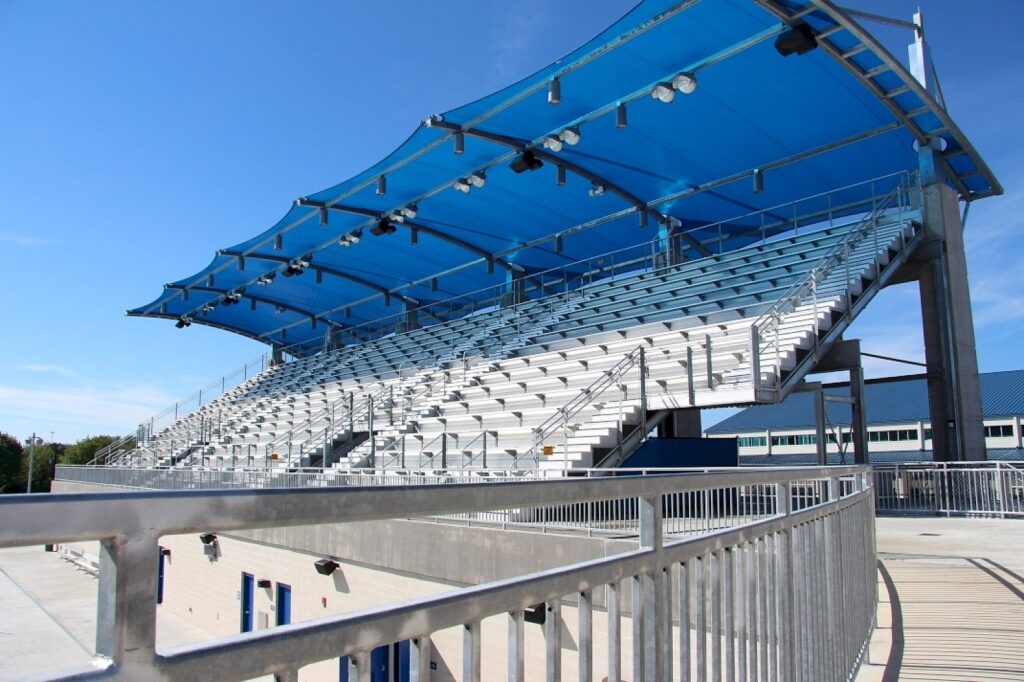
- shade structures and architectural steel
- maintenance platforms and access stairs
- fencing and perimeter structures
- equipment supports and utility structures
These applications benefit from the durability of galvanized coatings, particularly in environments where frequent maintenance or repainting may be difficult.
Designing for Long-Term Durability
In addition to selecting appropriate coatings, proper design practices can help extend the lifespan of steel in aquatic environments.
Allowing for proper drainage and avoiding areas where water can collect are important design considerations. Steel components should also be designed to promote airflow and allow moisture to evaporate whenever possible.
In some cases, duplex coating systems that combine galvanizing with paint or powder coating may be used to provide additional corrosion protection in particularly aggressive environments.
Aquatic Facility Projects Using Galvanized Steel
Several aquatic facilities have successfully used galvanized steel to provide durable corrosion protection in high-moisture environments.
The Northside Swim Center incorporates galvanized structural steel throughout the aquatic complex, helping protect exposed steel components from continuous moisture and splash exposure.
At Camp Barnabas, galvanized steel supports accessible aquatic recreation features designed for durability and minimal maintenance in an outdoor water environment.
These projects demonstrate how galvanized steel can provide reliable corrosion protection in facilities where moisture, chemicals, and heavy use place significant demands on structural materials.
Long-Term Performance in Aquatic Environments
Aquatic facilities require materials capable of withstanding constant exposure to moisture, chemicals, and fluctuating environmental conditions. By selecting durable corrosion protection systems and designing structures with long-term performance in mind, project teams can help ensure steel components remain safe and reliable for decades.
Hot-dip galvanized steel continues to provide dependable corrosion protection in many aquatic applications, helping pools and waterparks maintain the structural durability required to support safe and enjoyable recreational environments.