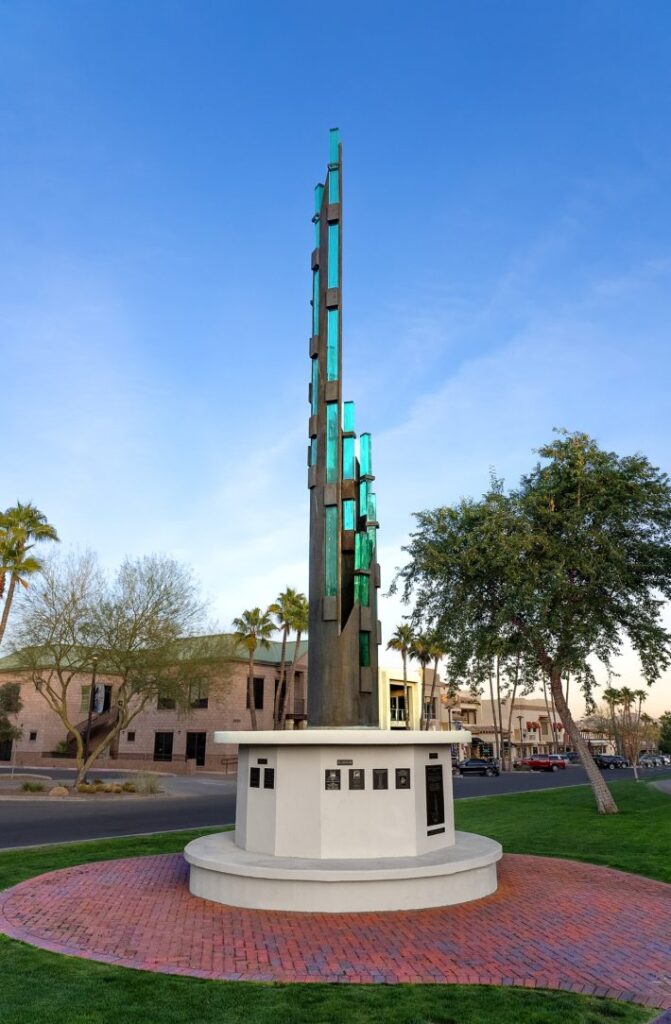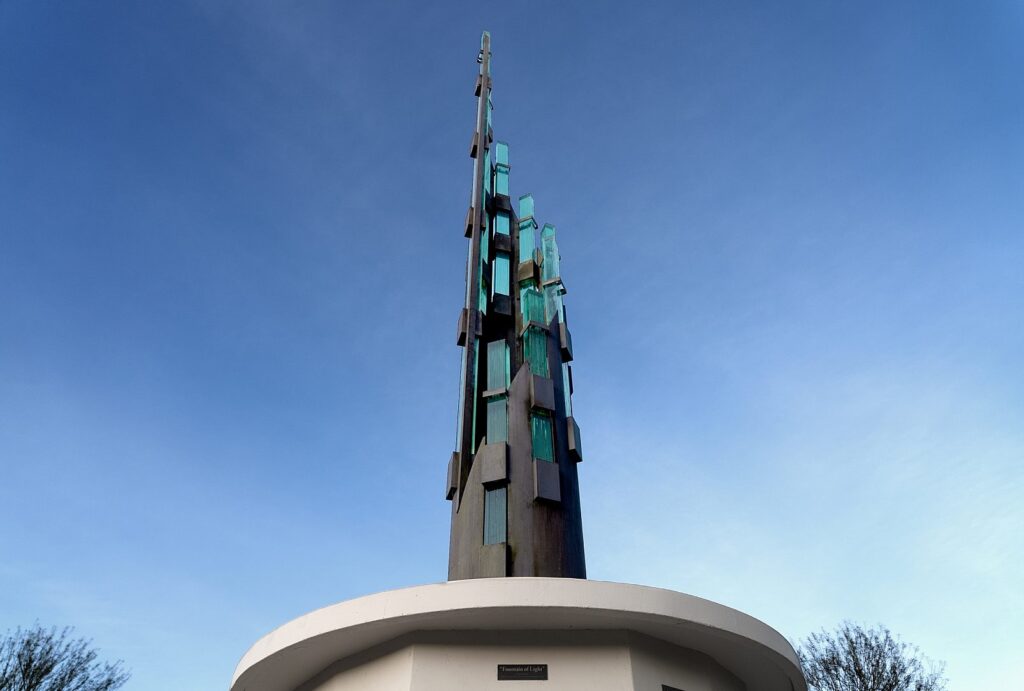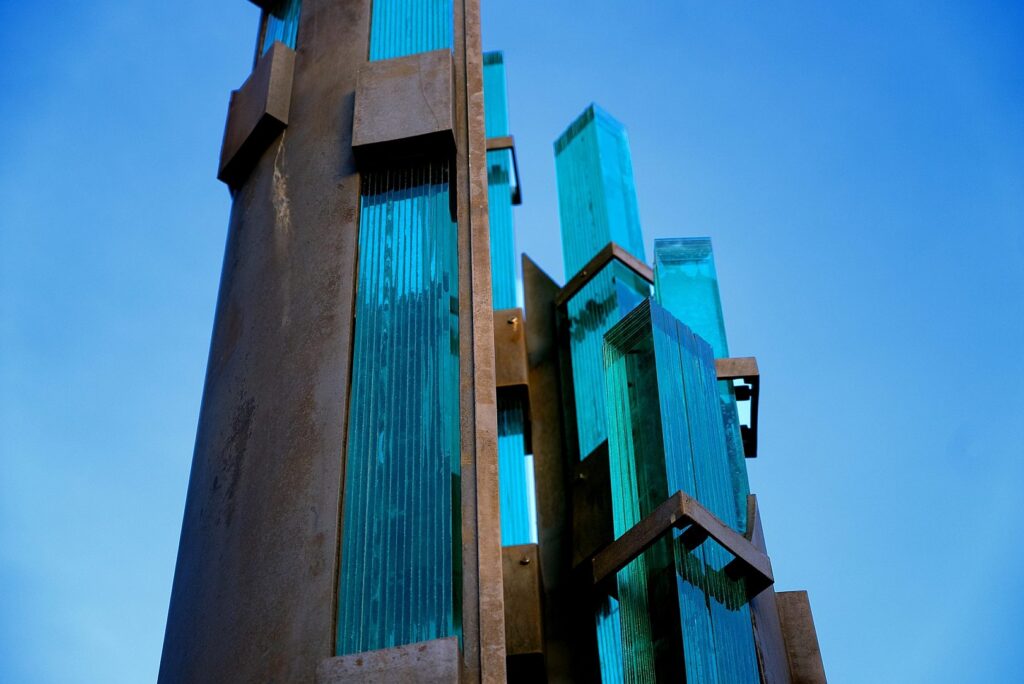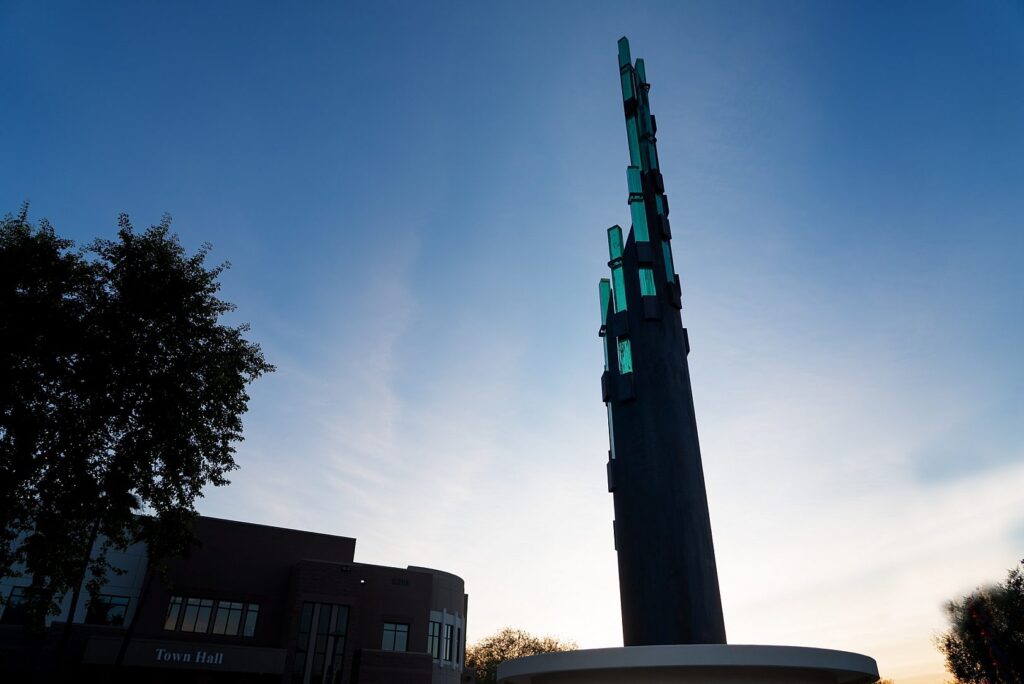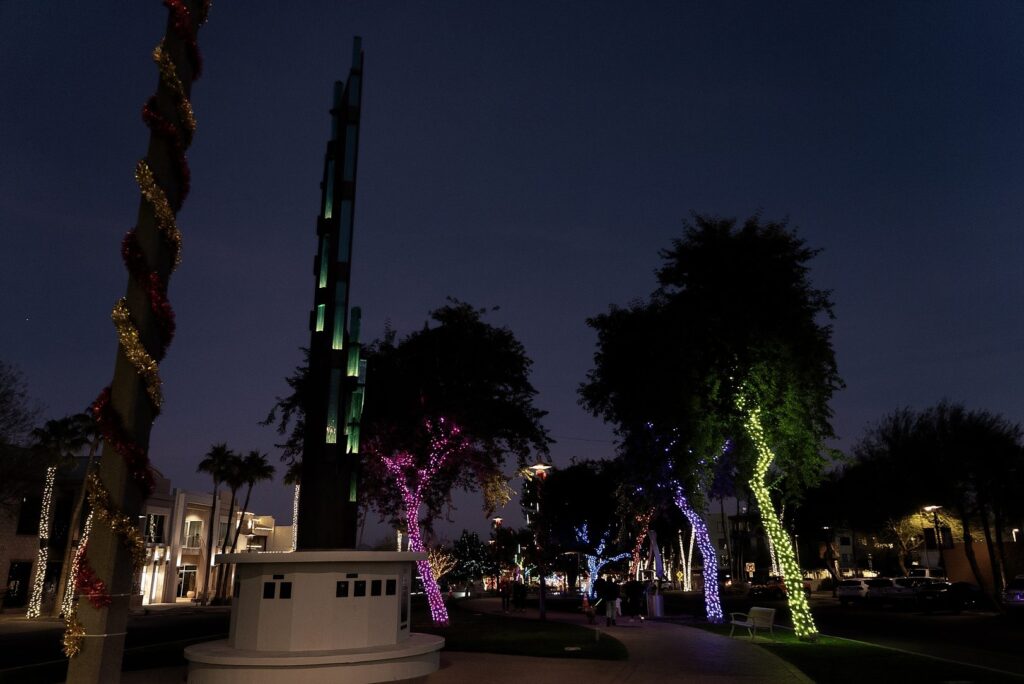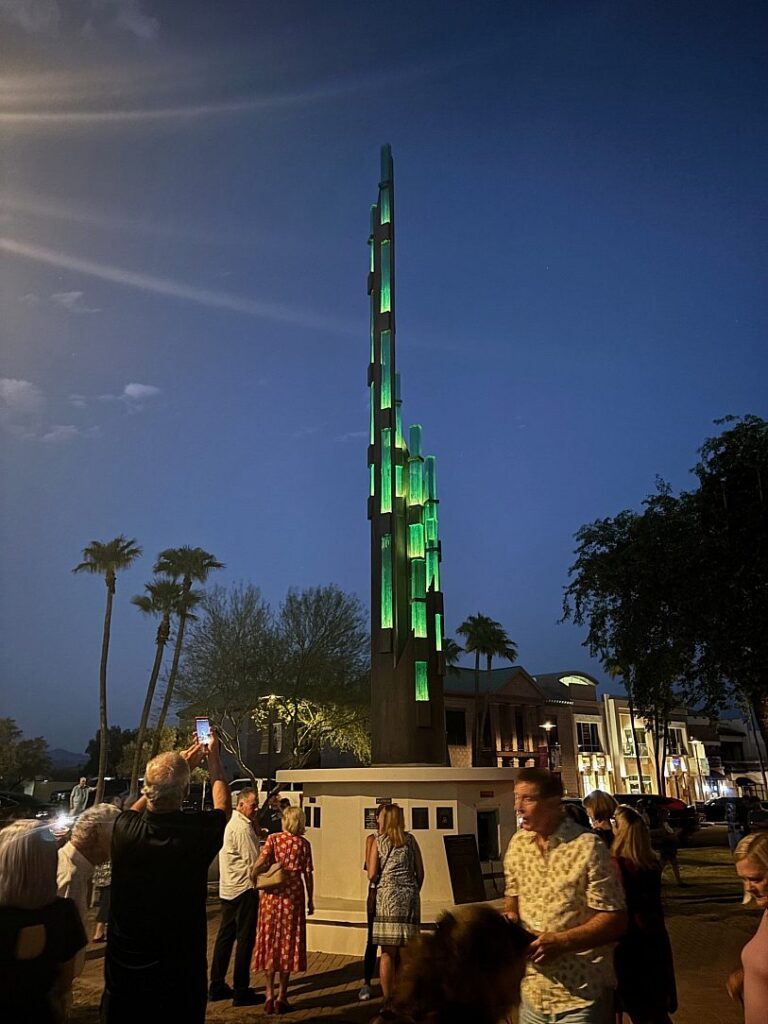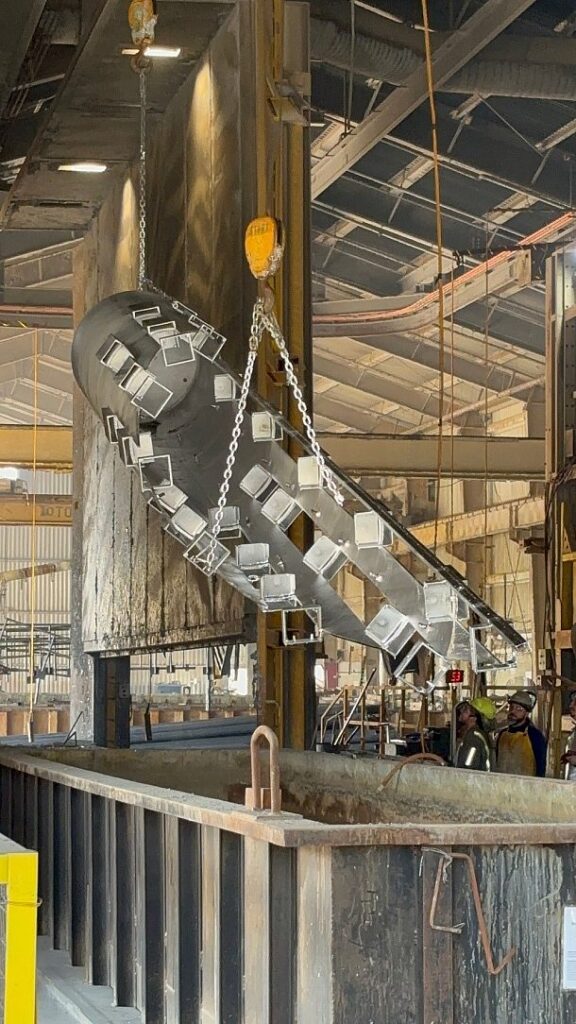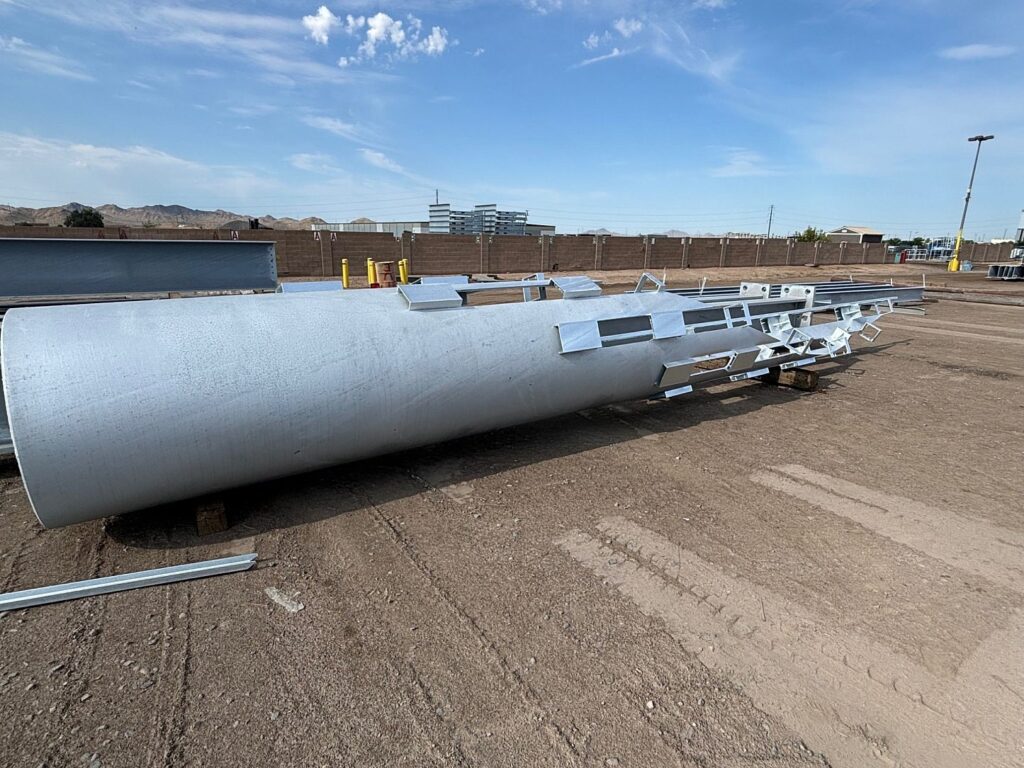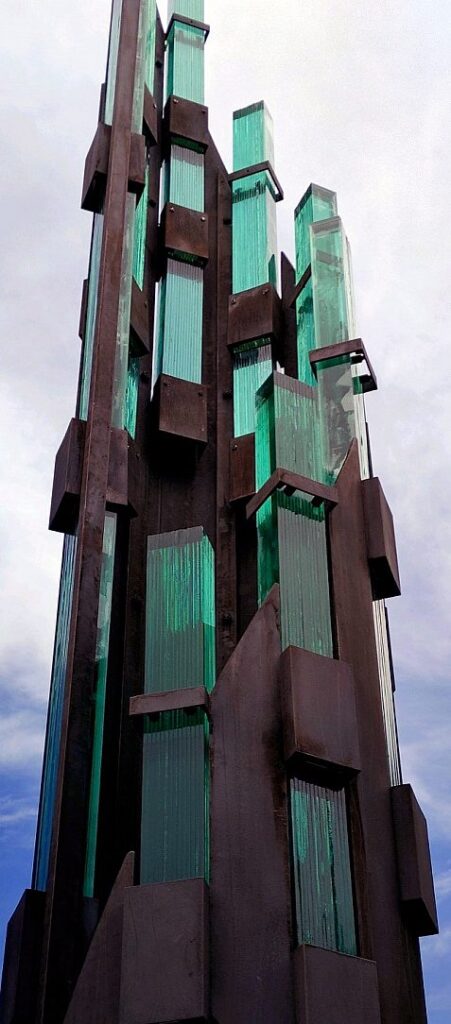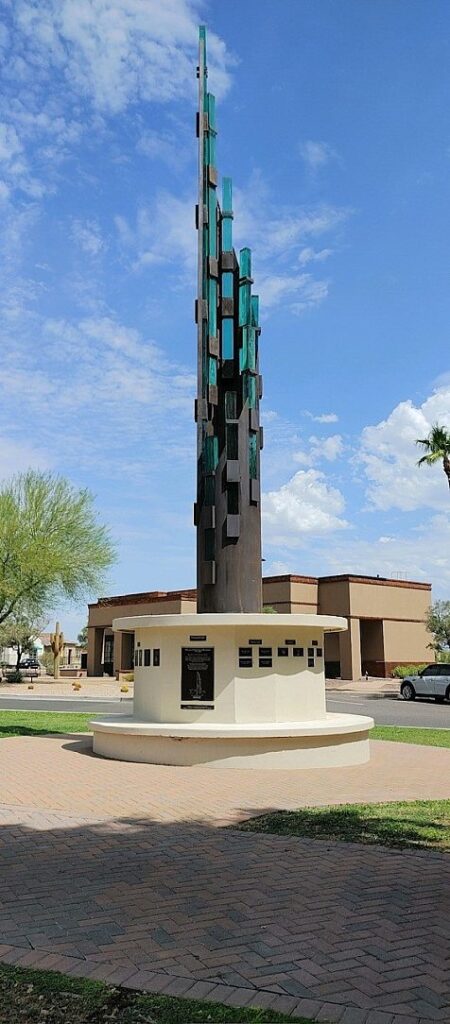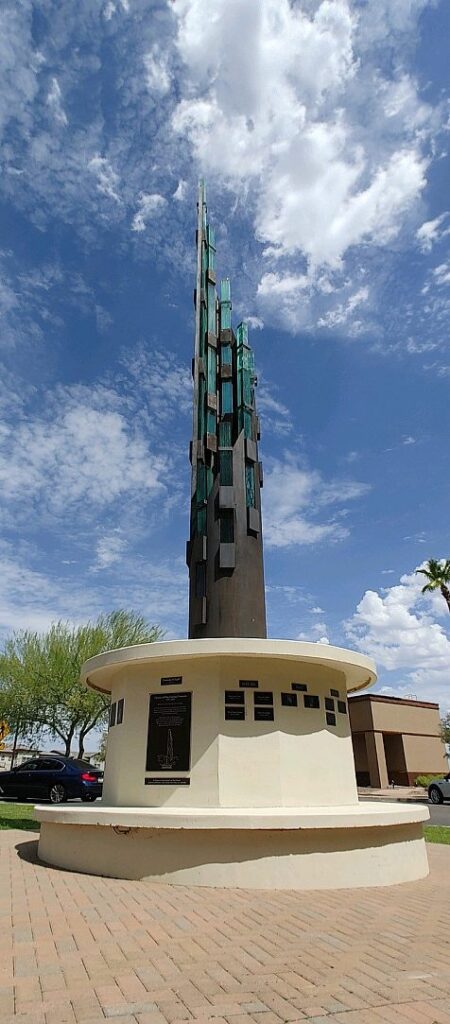
Inspired by the grand fountain itself, the towering glass spire serves as a tribute to the enduring beauty and spirit of the community. The sculpture’s intricate design and long-term vision highlight the vital role of hot-dip galvanizing (HDG) in creating public art that can stand the test of time.
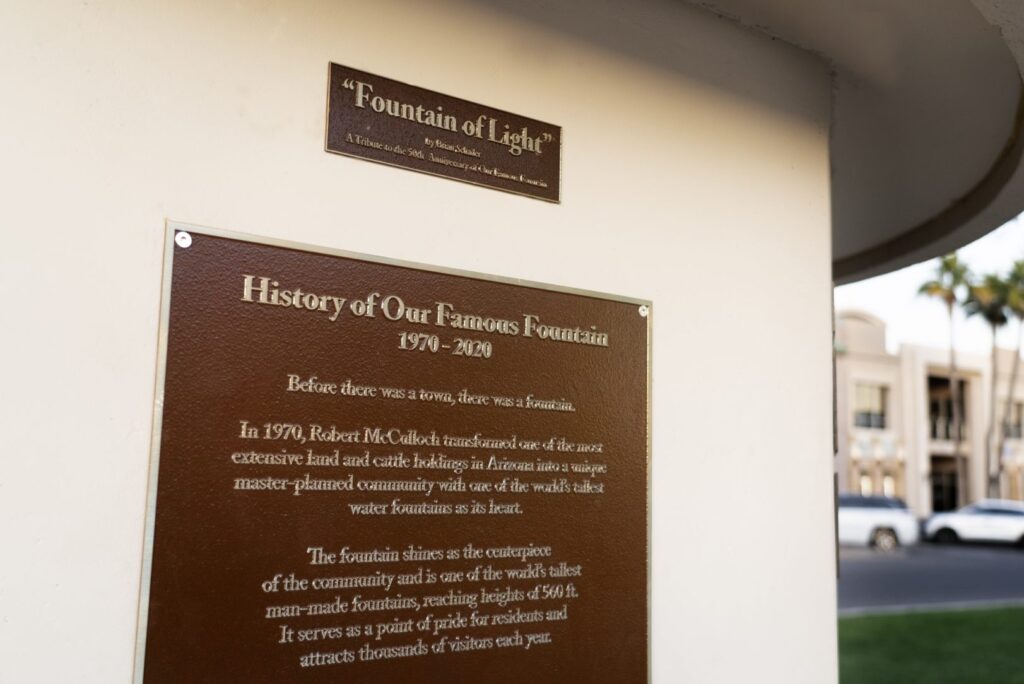
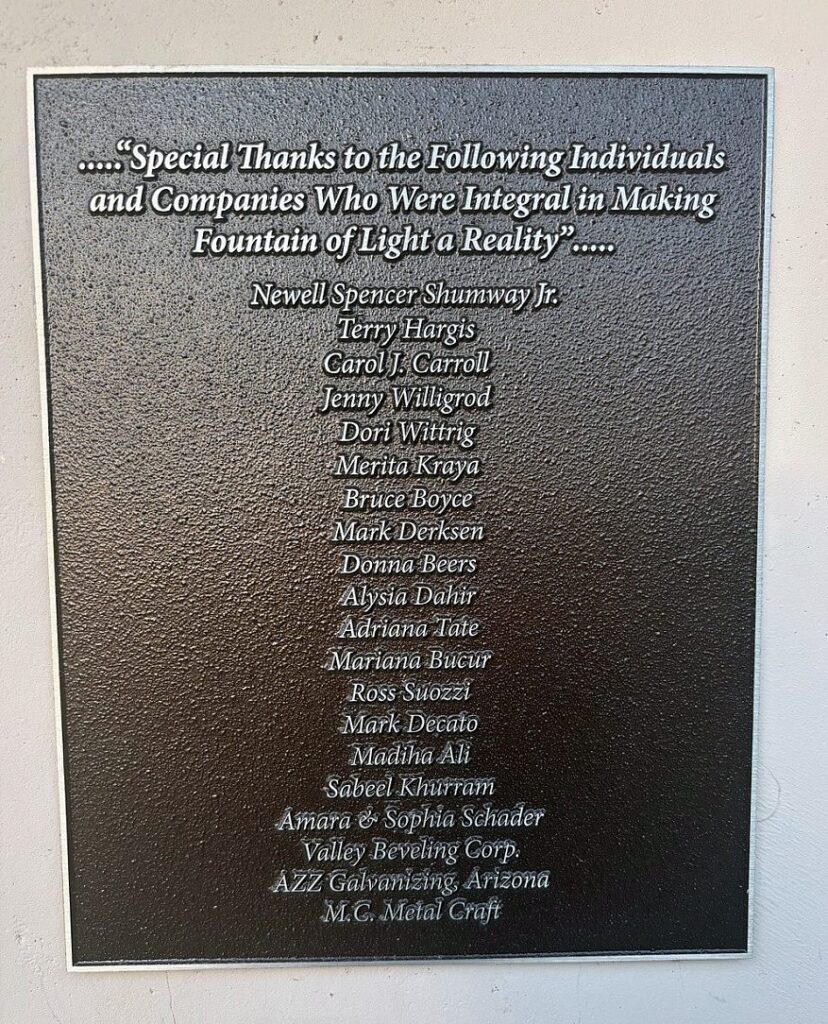
Schader envisioned a piece that would not only captivate but also endure. He designed the spire with soft interior lighting to comply with the town’s dark sky-friendly codes, creating a glowing tribute that integrates seamlessly with Fountain Hills’ commitment to preserving its natural nightscape. The sculpture’s base provides a seating area for residents and visitors to reflect while learning about the town’s history through bronze plaques honoring past mayors and recognizing those who made the installation possible.
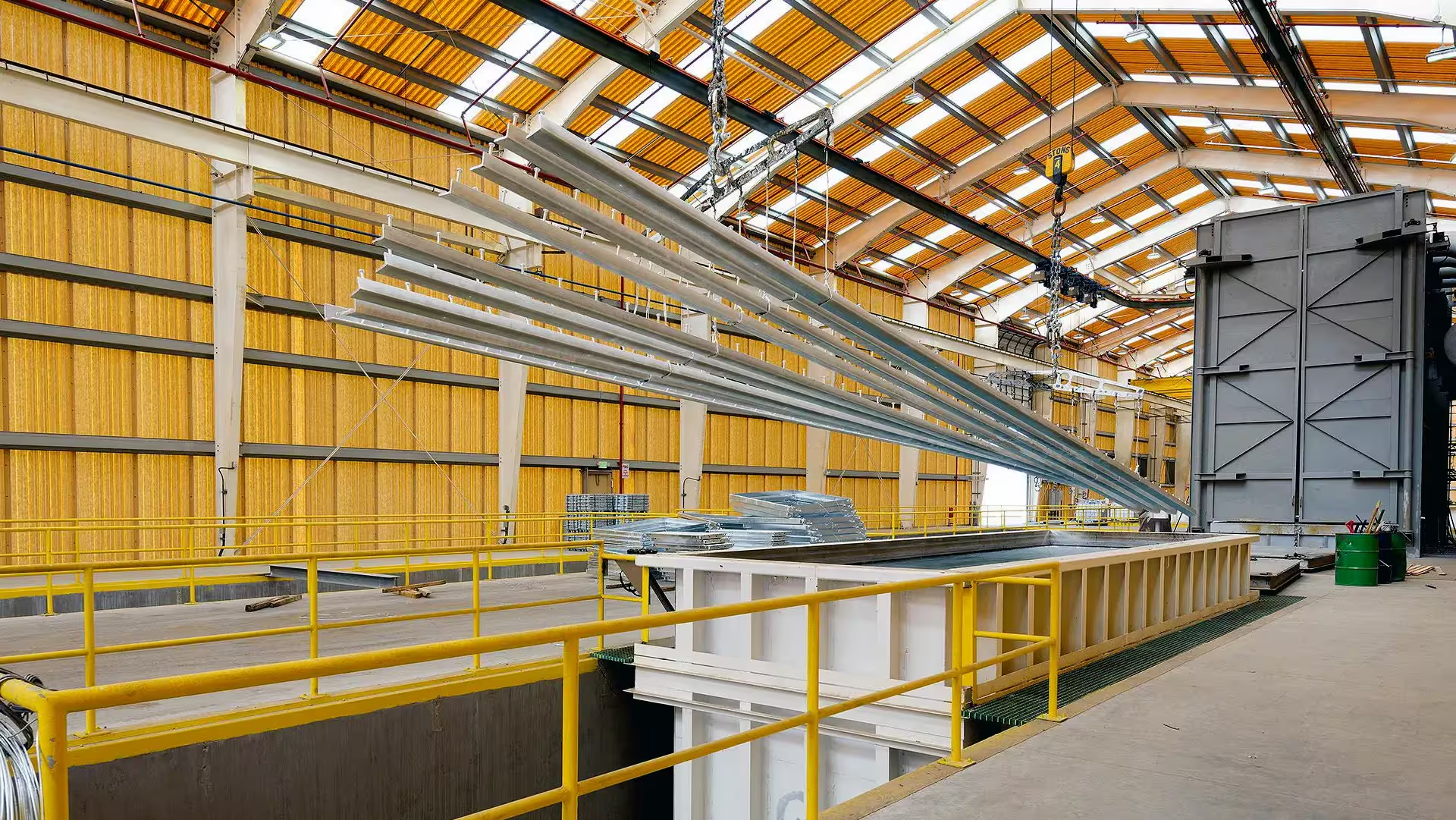
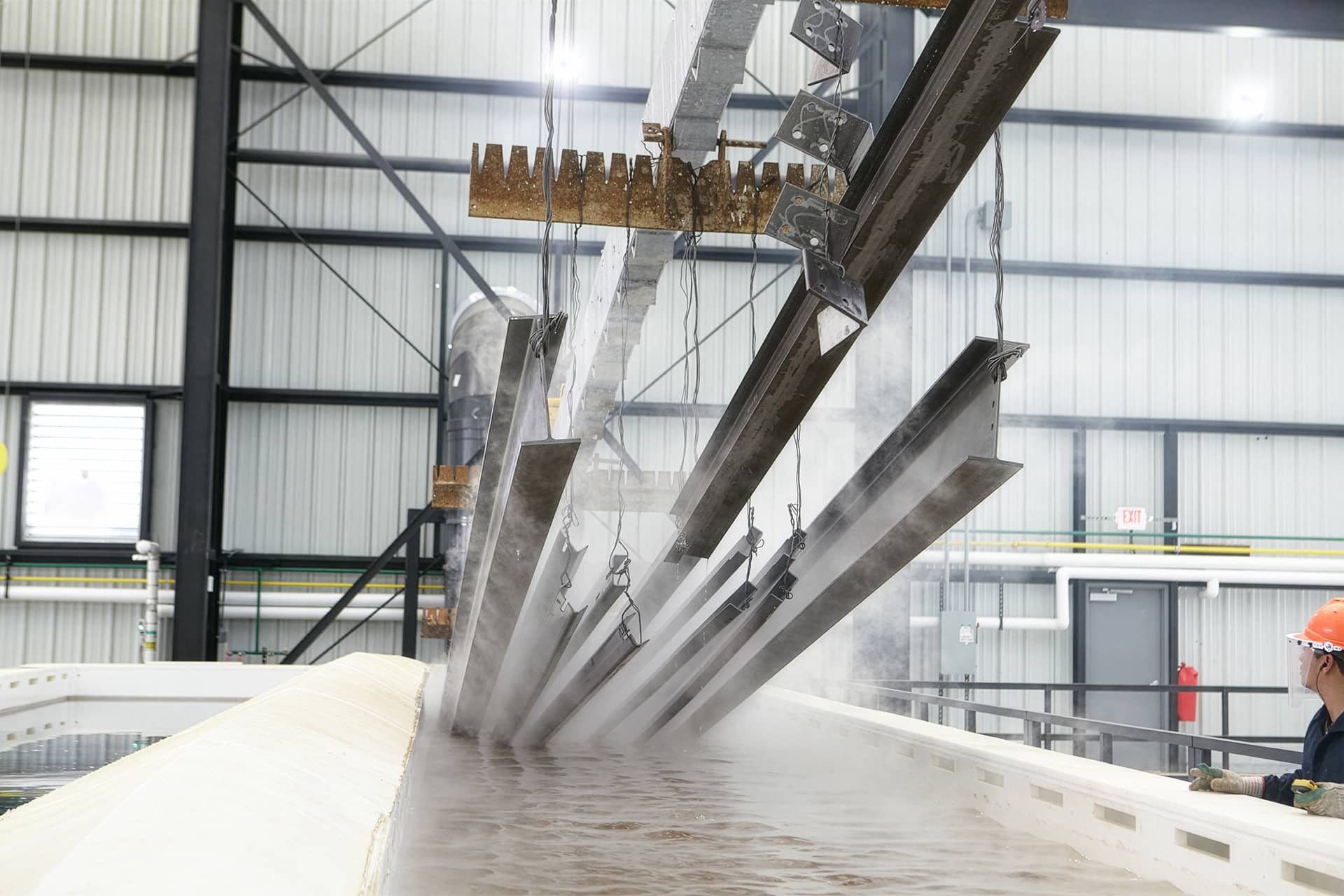
Creating a landmark of this scale posed significant challenges, from addressing structural integrity and exposure to the elements to ensuring long-term sustainability and minimal maintenance. After extensive research, Schader selected hot-dip galvanizing for the sculpture’s structural elements due to its unparalleled durability, aesthetic versatility, and ability to withstand environmental challenges. HDG ensures long-term corrosion protection, even in harsh outdoor conditions, and offers a range of finishes to suit artistic preferences. Whether a contemporary silver finish or a rustic bronze patina was desired, HDG provided the flexibility Schader needed while guaranteeing the structure’s longevity.
“I'd like to create art that outlasts my great-great-grandchildren. With that in mind, I've humbly come to understand the concept that nothing lasts forever. The process of hot-dip galvanizing was chosen during my journey of educating myself about the environmental impact on exposed sculptural elements. I wanted to carefully select a coating that would not only be aesthetically pleasing but also provide longevity. Hot-dip galvanizing became a clear choice once I learned about the available acid patinas that could be applied when a darker finish was desired. Whether the project calls for a contemporary silver finish or a more rustic bronze hue, hot-dip galvanizing just fits the bill, and I can rest assured it will stand the test of time and withstand whatever Mother Nature throws at it,” Schader explained.
The sculpture’s presence has already made a profound impact on the community. Positioned prominently near the town’s centerpiece fountain, it has quickly become a focal point for residents and visitors alike. The spire draws people to its base, encouraging interaction and reflection. Its visibility ensures that it not only enhances the town’s cultural landscape but also reinforces Fountain Hills’ reputation as a place of beauty, innovation, and pride.
Sponsored by the Fountain Hills Cultural and Civic Association, the Town of Fountain Hills, and the Public Art Committee, the sculpture celebrates the town’s past and future. It stands as a testament to community collaboration, artistry, and the commitment to preservation. By incorporating hot-dip galvanizing, the new public art piece ensures a lasting legacy, inspiring and connecting the community for generations to come.
"I'd like to create art that outlasts my great, great grandchildren. With that in mind, I've humbly come to understand the concept that, nothing lasts forever. The process of hot-dip galvanizing was chosen during my journey of educating myself in the matters of environmental impact on exposed sculptural elements".