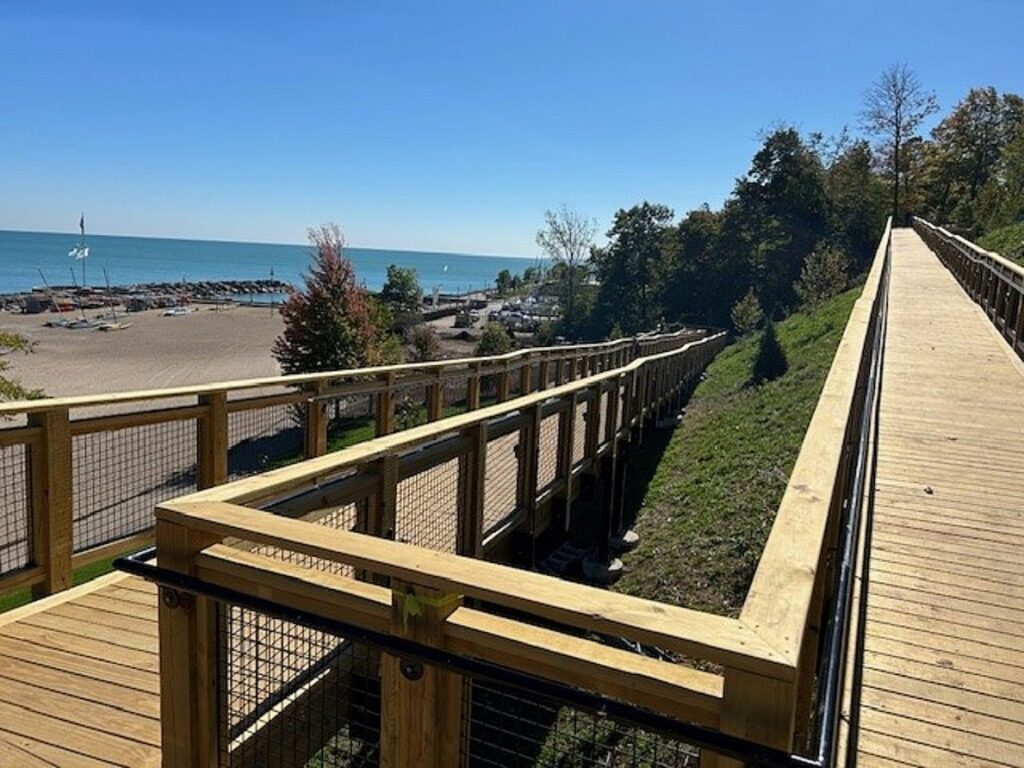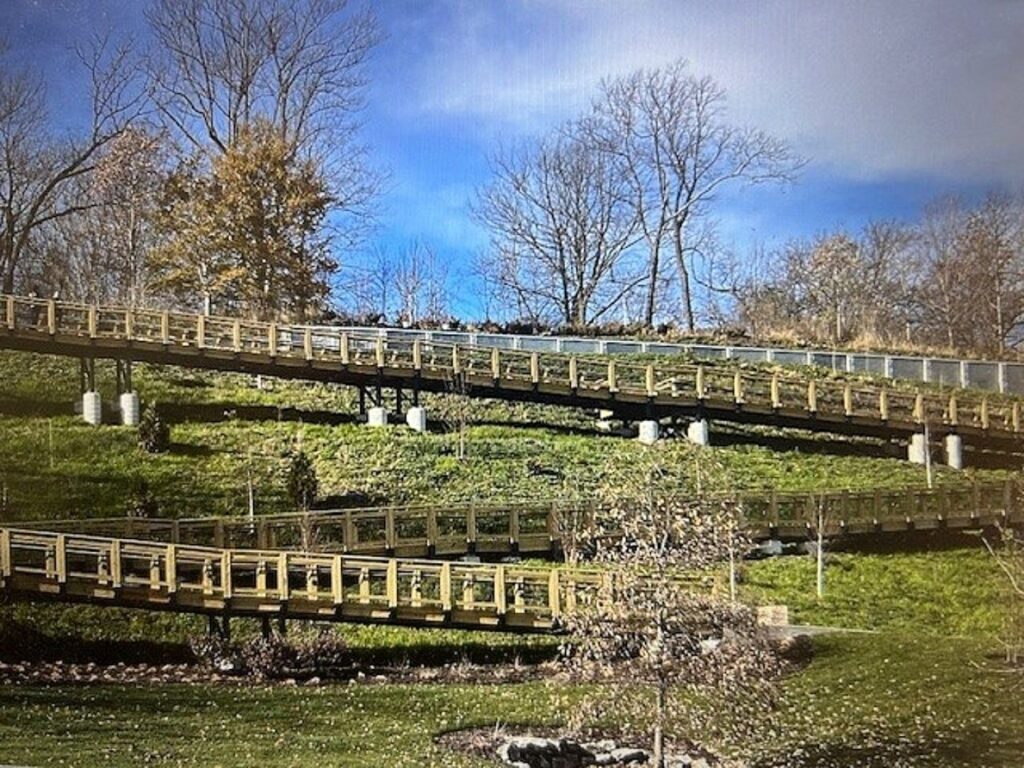
The previous path had deteriorated due to erosion, leading to its closure and compelling pedestrians to use a narrow, vehicle-shared road without sidewalks. The newly constructed ramp addresses these issues by offering a wheelchair and stroller-friendly route, thereby enhancing safety and accessibility for all visitors.
The pathway is situated along the Lake Michigan waterfront, an area known for its harsh environmental conditions. High humidity, fluctuating temperatures and exposure to wind-driven rain, snow and ice accelerate corrosion and weathering. Additionally, the use of road salt during winter months increases the risk of structural degradation. To withstand these challenges, the design incorporated materials known for their durability and resilience.
Galvanized steel posts were selected to support the boardwalk, providing robust protection against rust and corrosion. The choice ensures the structural integrity of the pathway over time, even under constant exposure to moisture and harsh elements. The black powder coated galvanized handrails not only enhance the visual appeal by complementing the wooden deck and posts but also adds an extra layer of protection against wear and tear. This combination results in a durable and low-maintenance solution that aligns with the city's commitment to sustainable infrastructure.
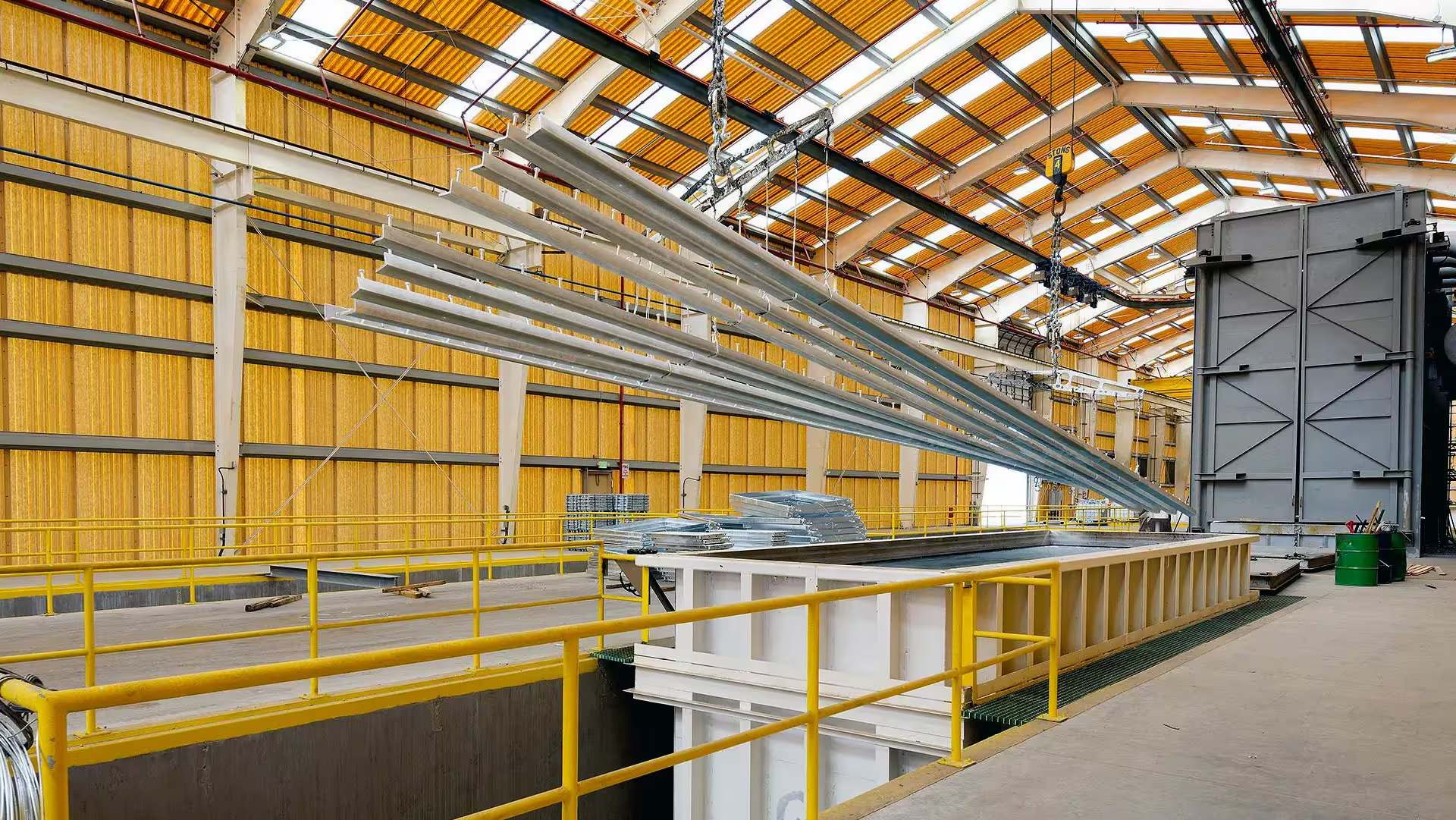
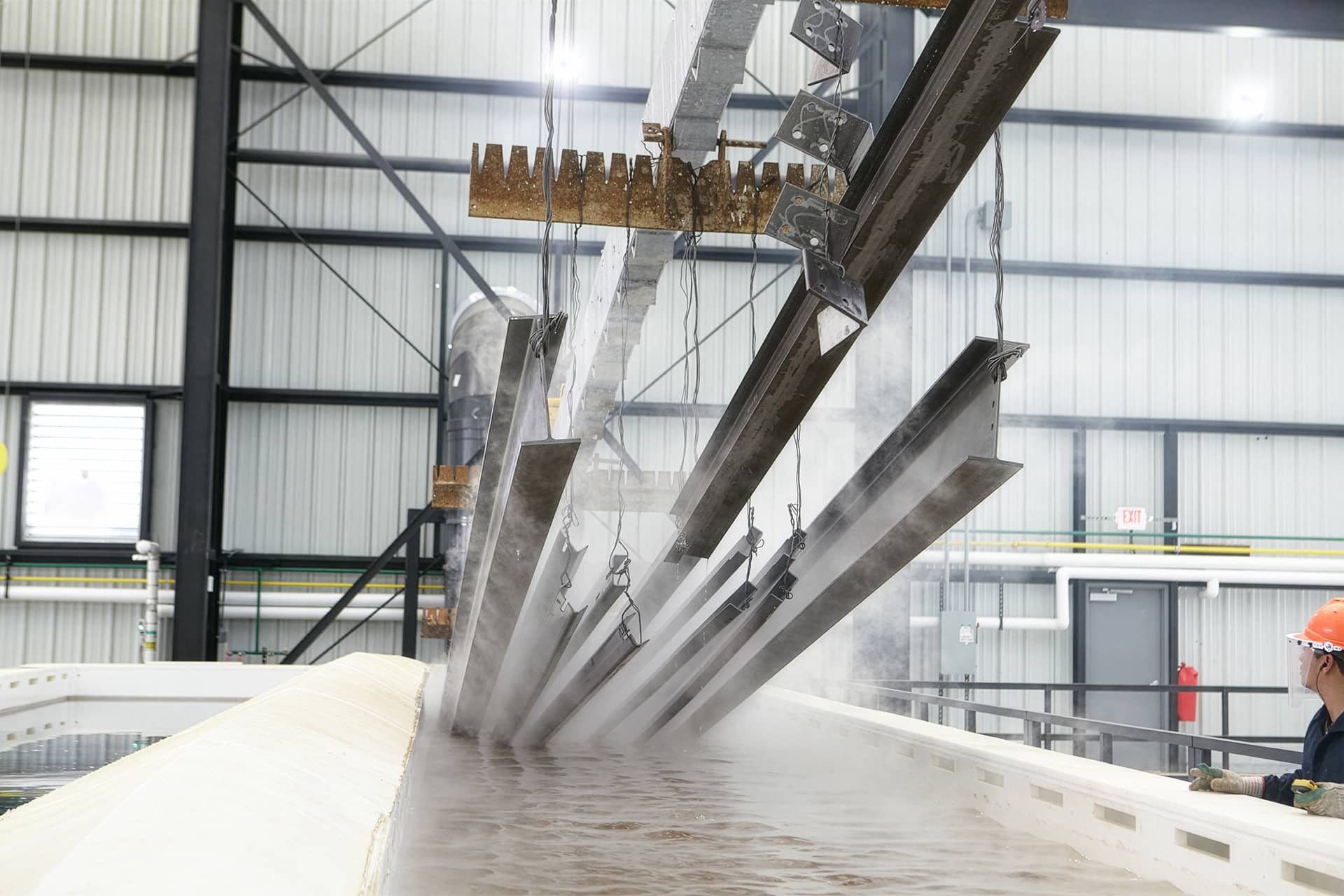
Hot-dip galvanizing was chosen for its exceptional durability and cost-effectiveness. This process involves immersing steel into molten zinc, forming a corrosion-resistant coating that can last over 75 years. By minimizing the need for frequent maintenance and reducing life-cycle costs, galvanizing proved to be the ideal choice for this project. The application of powder coating to the handrails provides an attractive and durable finish that resists chipping and scratching. The combination of galvanizing and powder coating, known as a duplex system, offers superior corrosion protection and extends the structure's lifespan by 1.5 to 2.3 times compared to using either method alone.
The project's timeline required efficient processes to meet the 13-month completion deadline. The quick application and one week turnaround time associated with galvanizing ensured the project remained on schedule. Furthermore, the sustainable aspects of hot-dip galvanizing, such as its environmentally friendly process and use of recyclable zinc, aligned with Lake Forest's commitment to green initiatives.
The Forest Park Beach Pathway project exemplifies the application of hot-dip galvanizing and powder coating in public infrastructure. This durable, low-maintenance and visually appealing solution not only enhances accessibility and safety for the community but also ensures the pathway will withstand the challenging waterfront environment for decades to come.
"The black powder coated galvanizing is a great look for the hillside pathway and will last for generations." - Bernard Pondexter, Engineering Assistant at The City of Lake Forest, IL.