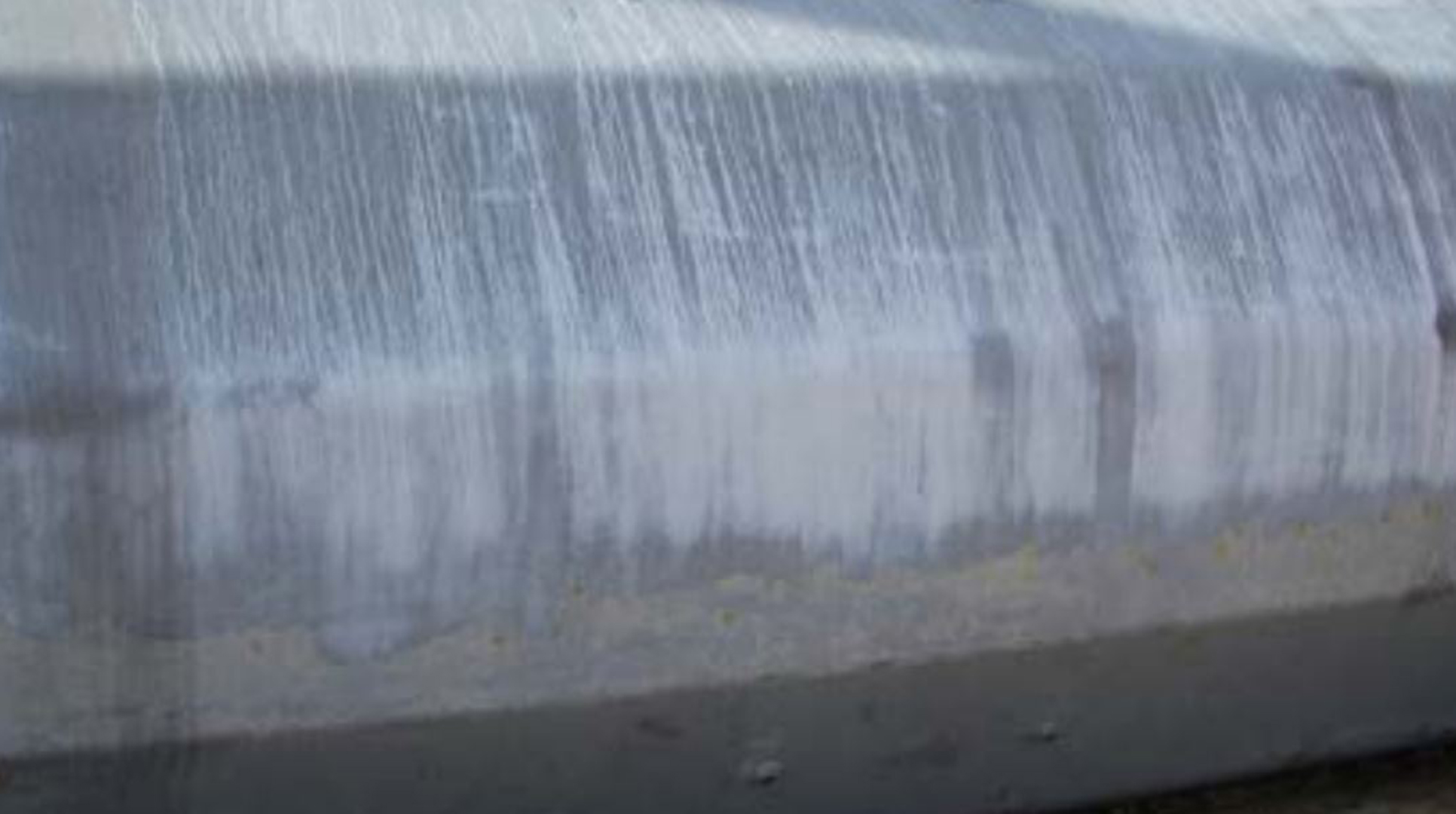
While it may appear concerning at first glance, wet storage stain is typically a storage and handling issue rather than an indication of poor galvanizing quality.
The condition most commonly develops during transportation, outdoor storage, or jobsite staging when freshly galvanized components are tightly nested, bundled, or exposed to prolonged moisture without adequate ventilation. Because newly galvanized steel has not yet fully developed its stable zinc patina, these conditions can temporarily interrupt the normal weathering process of the zinc coating.
What Causes Wet Storage Stain?
Hot-dip galvanized steel protects against corrosion through a zinc coating that reacts naturally with the environment over time. Under normal atmospheric exposure, the zinc develops a stable protective patina that significantly slows future corrosion and contributes to the long service life associated with galvanized steel.
However, when moisture becomes trapped between galvanized surfaces and oxygen circulation is restricted, the natural patina development process cannot occur properly. Instead, the zinc reacts with water and oxygen to form a powdery surface deposit known as wet storage stain.
Wet storage stain is most commonly associated with:
- Newly galvanized steel
- Tightly stacked or nested material
- Components stored outdoors before installation
- Exposure to condensation or standing water
- Limited airflow during storage or shipment
Does Wet Storage Stain Affect Performance?
In many cases, wet storage stain is primarily cosmetic and does not significantly impact the long-term corrosion protection of the galvanized coating. Light surface staining will often weather away naturally once the material is exposed to normal outdoor conditions with proper airflow and regular wet-dry cycles.
More severe or prolonged cases, however, can consume portions of the zinc coating and potentially reduce the overall protective life of the galvanized steel if left unaddressed. This is why proper storage and handling immediately following galvanizing are important.
The presence of wet storage stain does not automatically indicate a problem with the galvanizing process itself. In fact, the zinc coating is still functioning sacrificially, reacting to environmental exposure to protect the underlying steel from corrosion.
Preventing Wet Storage Stain
Wet storage stain is largely preventable through proper handling and storage practices.
Recommended best practices include:
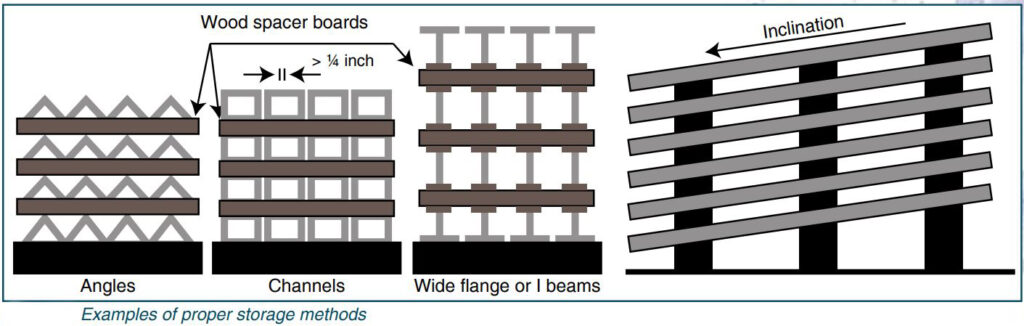
- Storing galvanized steel in dry, well-ventilated areas
- Avoiding tight stacking of freshly galvanized components
- Allowing airflow between stored pieces
- Storing material at an angle to encourage water drainage
- Keeping galvanized steel elevated off the ground
- Minimizing prolonged exposure to condensation or trapped moisture
These precautions help the zinc coating develop its stable protective patina naturally and reduce the likelihood of wet storage stain during storage or transportation.
Cleaning Wet Storage Stain
When wet storage stain does occur, the appropriate response depends on the severity of the condition.
For light staining, normal weathering may gradually remove the deposits over time. Heavier accumulations can often be cleaned using a nylon brush or approved cleaning solutions that will not damage the galvanized coating.
Aggressive cleaning methods or harsh chemicals should generally be avoided unless specifically recommended by galvanizing professionals or technical guidance.
The Bigger Picture
One of the primary advantages of hot-dip galvanizing is its ability to provide long-term corrosion protection in demanding environments. The zinc coating serves as both a durable barrier and a sacrificial layer that corrodes preferentially to protect the steel beneath.
While wet storage stain may temporarily affect the appearance of newly galvanized steel, it is typically manageable and preventable through proper storage and handling practices. With appropriate care, galvanized steel can continue delivering decades of corrosion protection across infrastructure, utility, transportation, industrial, and architectural applications.
Key Takeaways
- Wet storage stain occurs when moisture becomes trapped between galvanized surfaces with limited airflow
- It most commonly develops on newly galvanized steel during storage or transportation
- Light cases are often cosmetic and may weather away naturally over time
- Severe cases can reduce zinc coating thickness if left unaddressed
- Proper storage, drainage, and ventilation are the best prevention methods
- Wet storage stain does not automatically indicate poor galvanizing quality
- Appropriate handling practices help galvanized steel achieve maximum service life
Note: Guidance related to wet storage stain, galvanized steel storage practices, coating performance, and cleaning methods was adapted from technical resources published by the American Galvanizers Association.