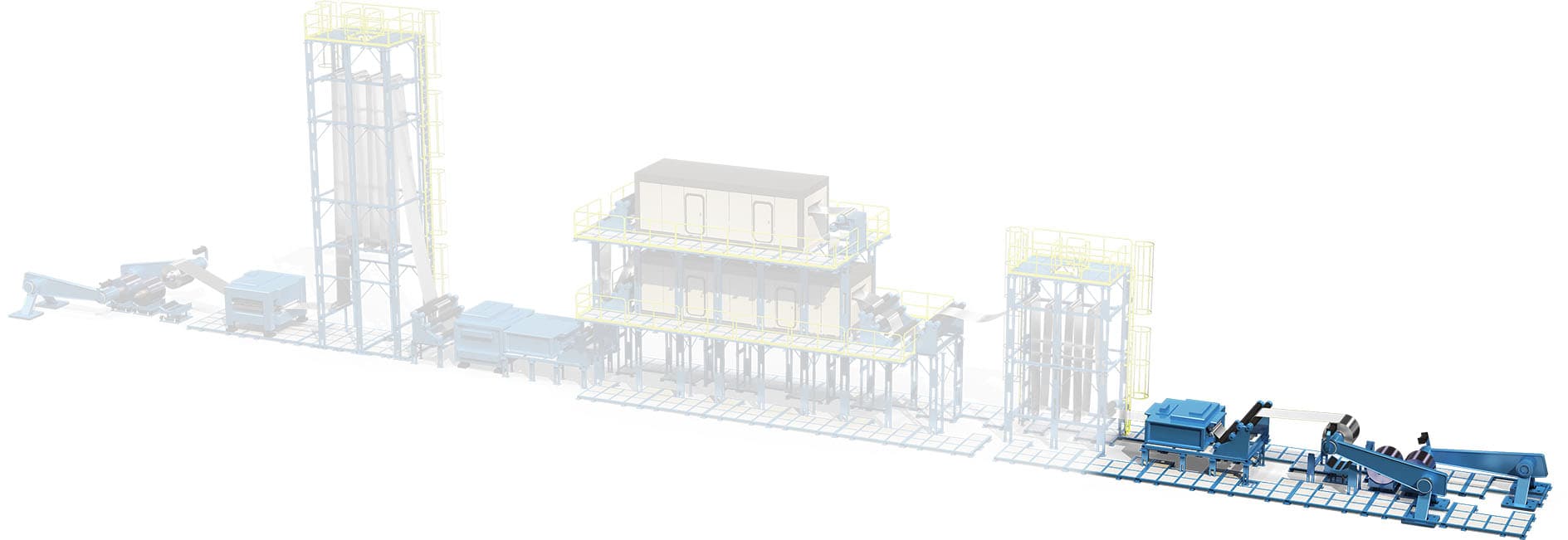
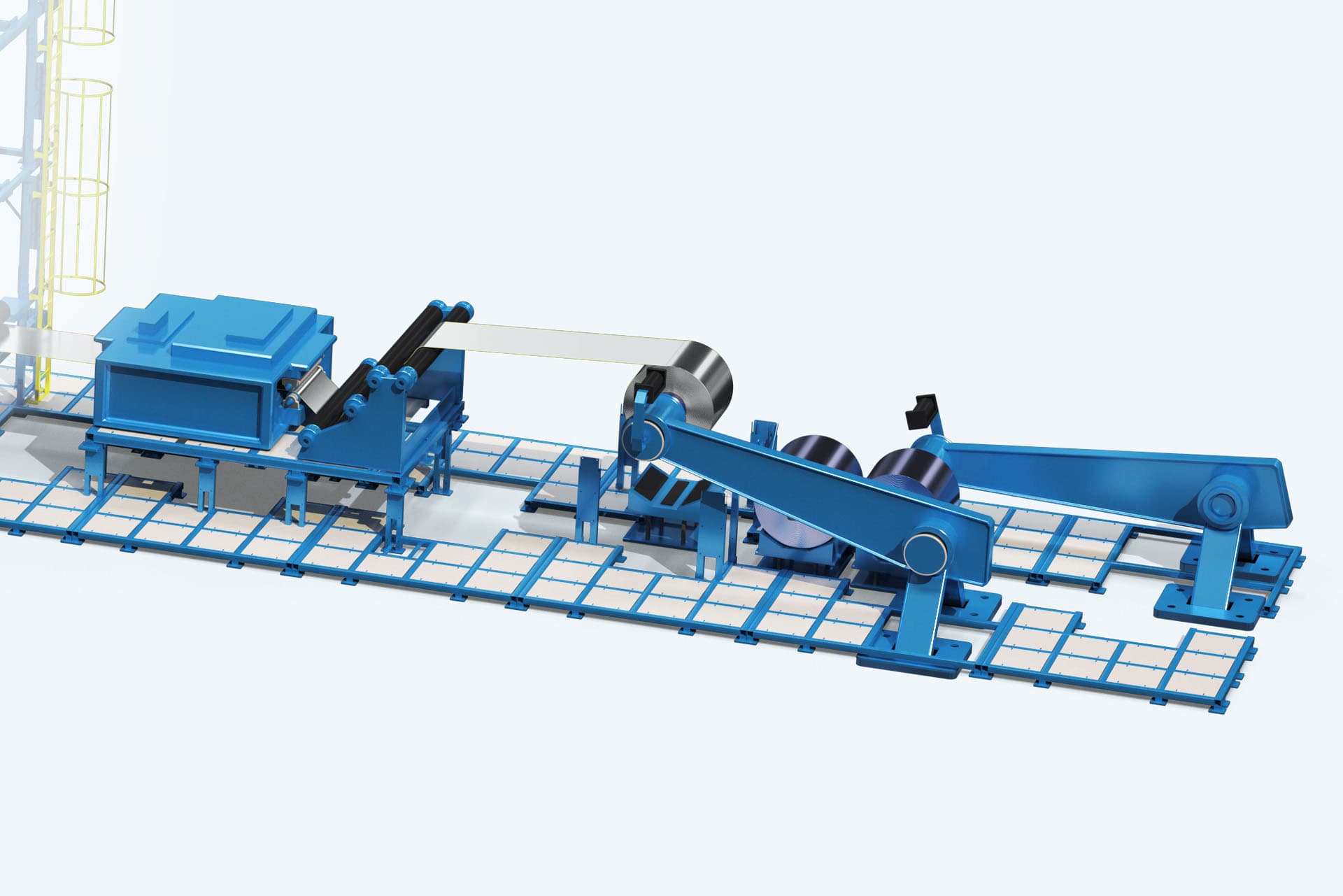
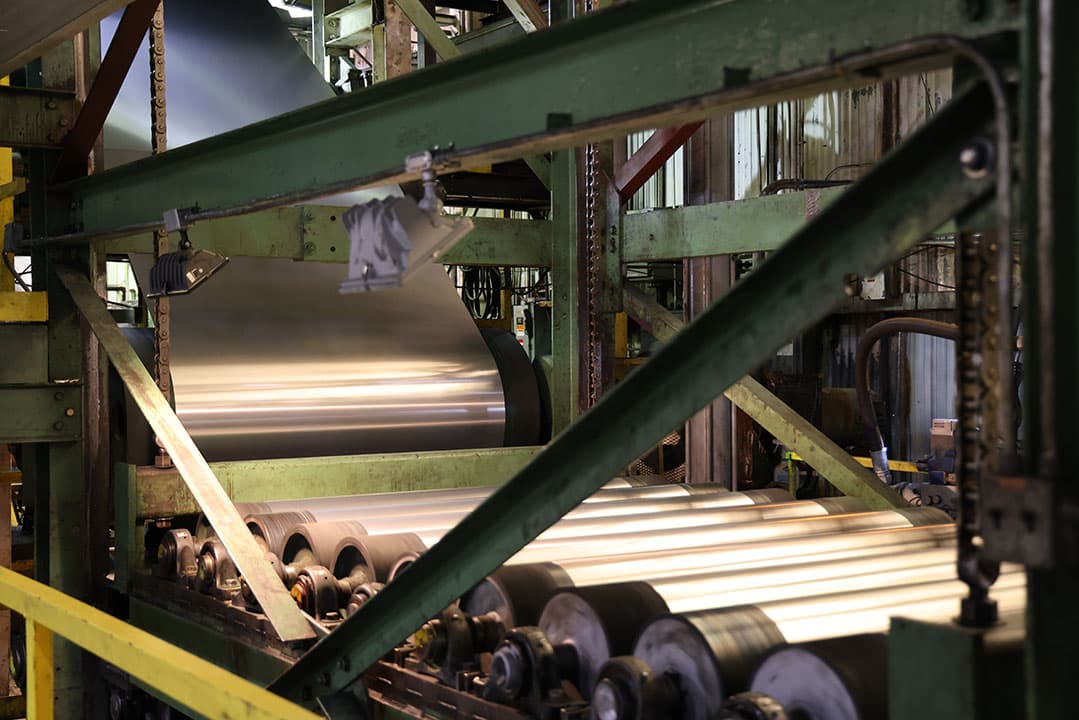
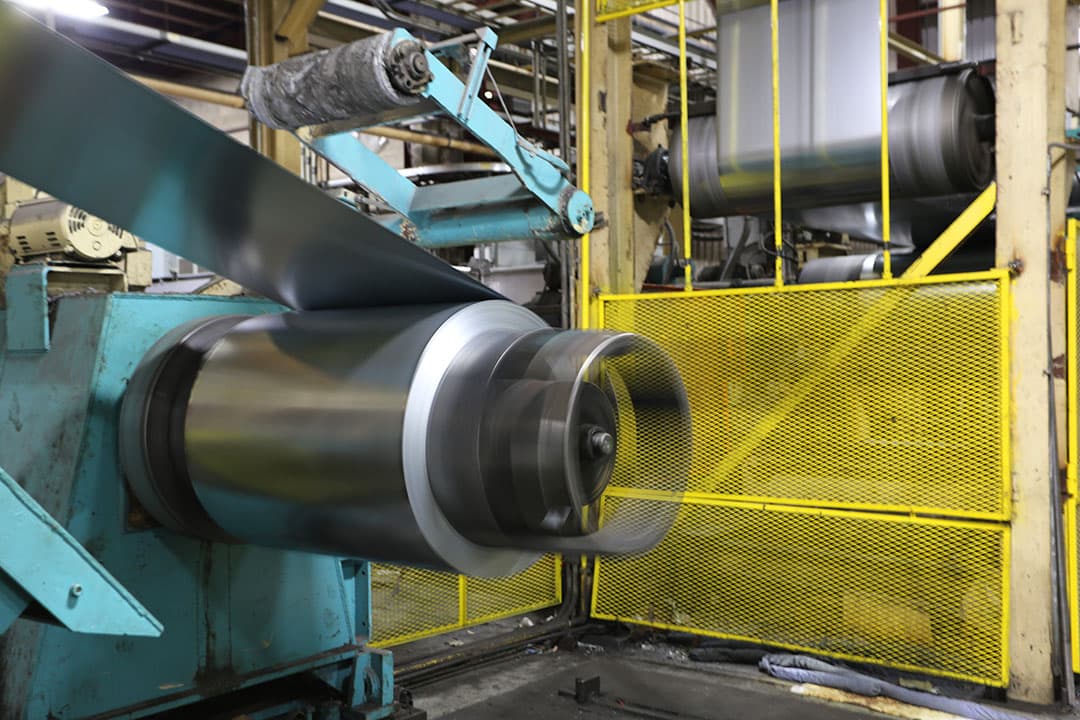
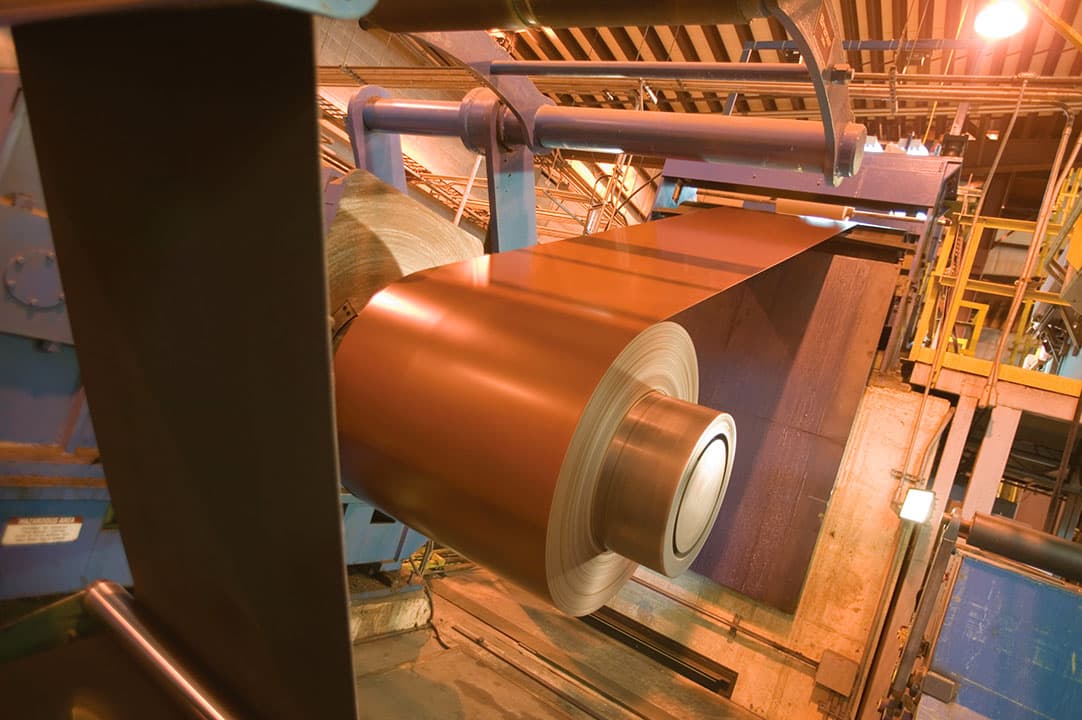
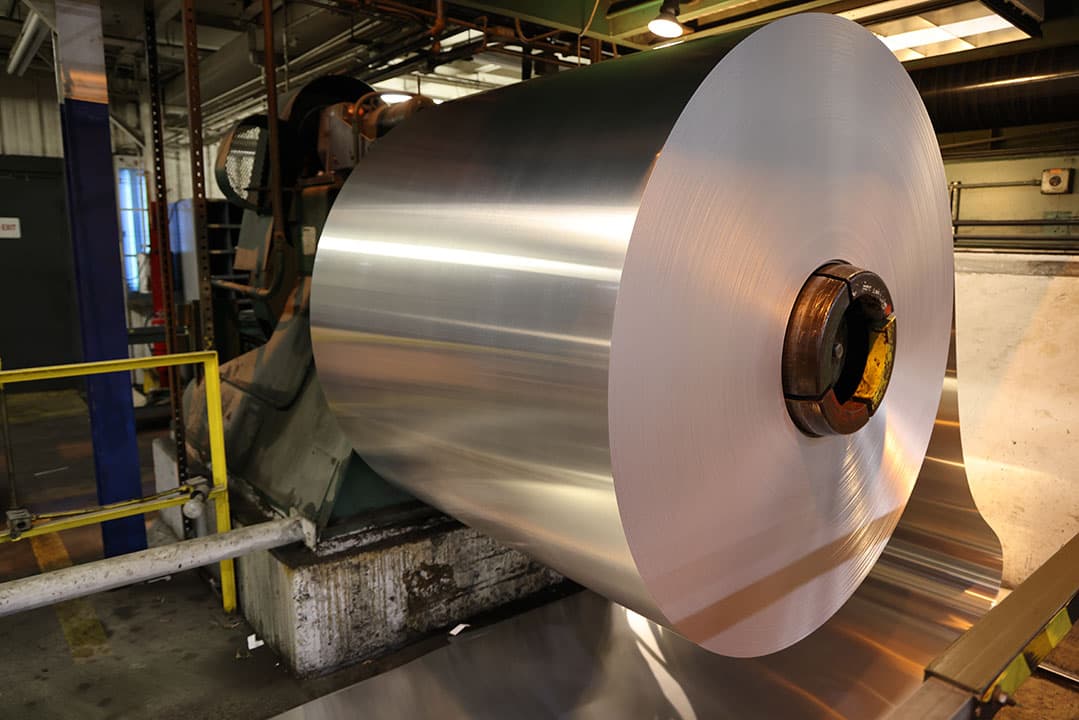
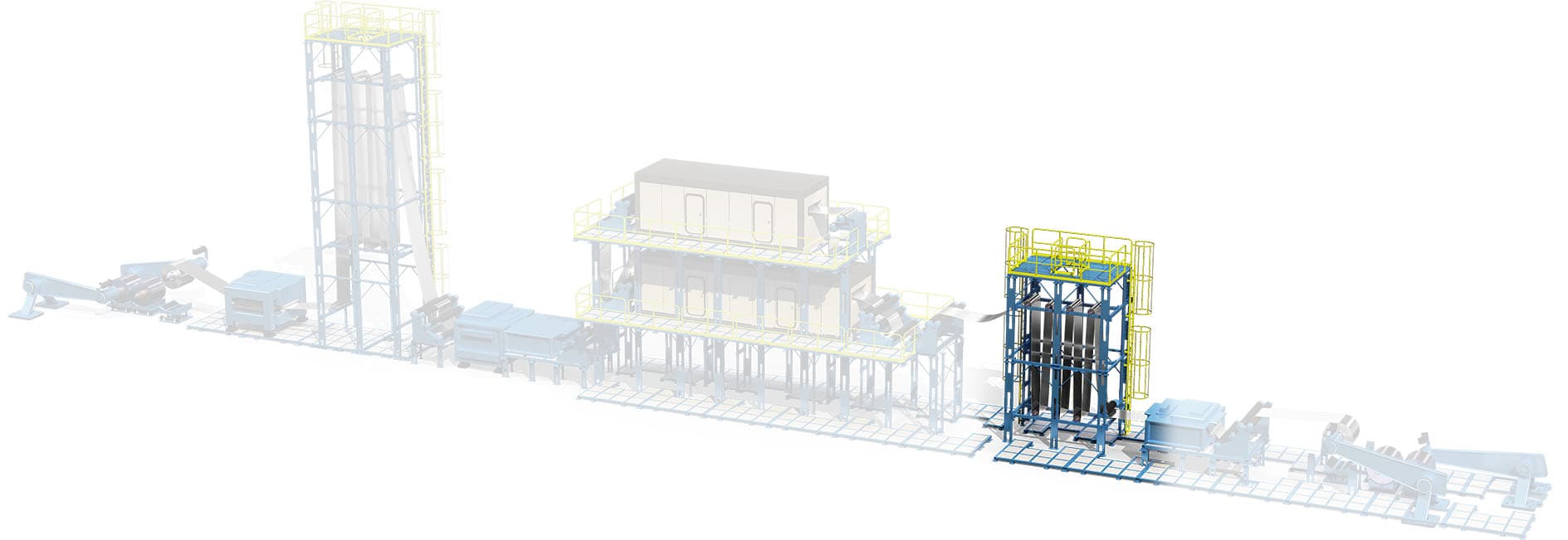
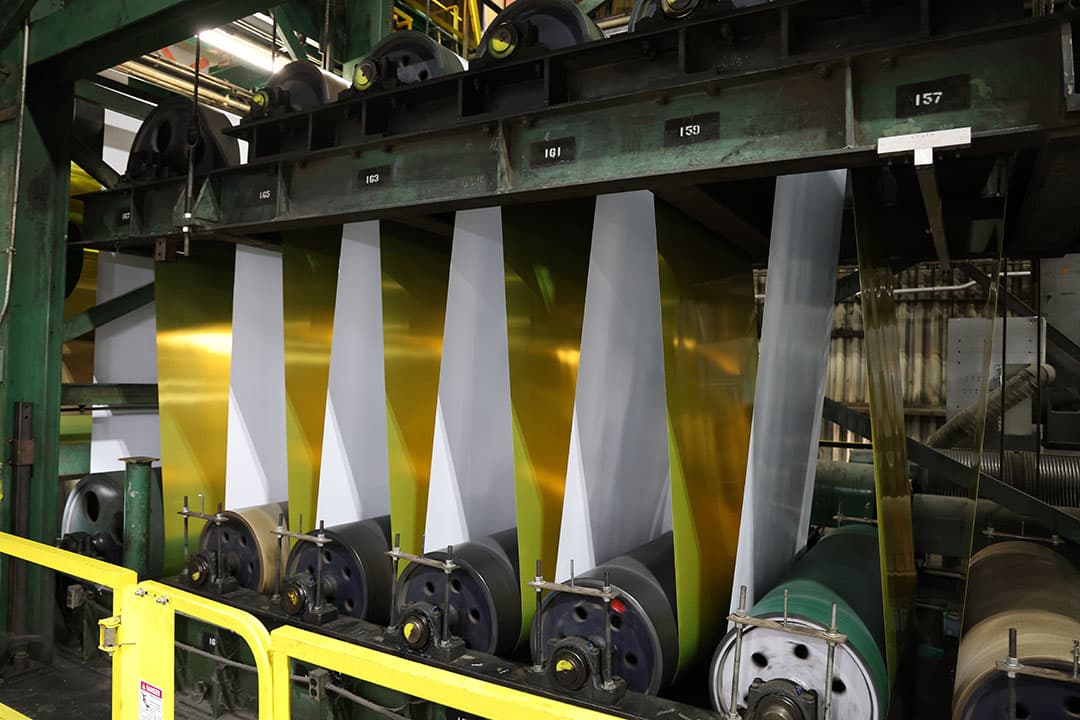
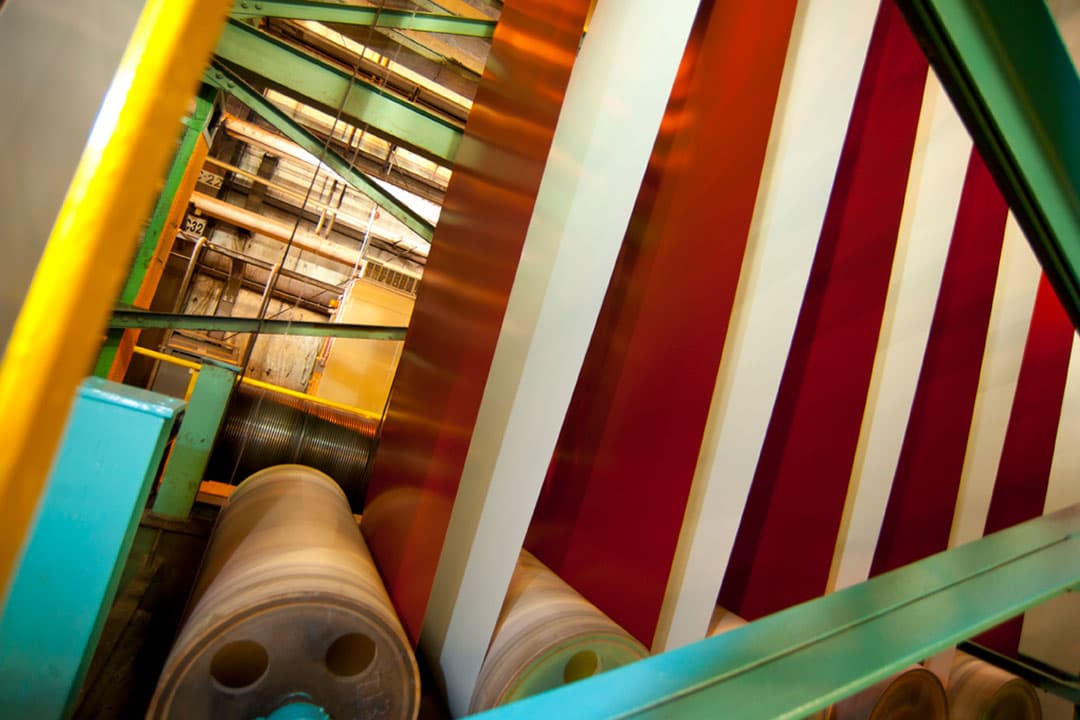
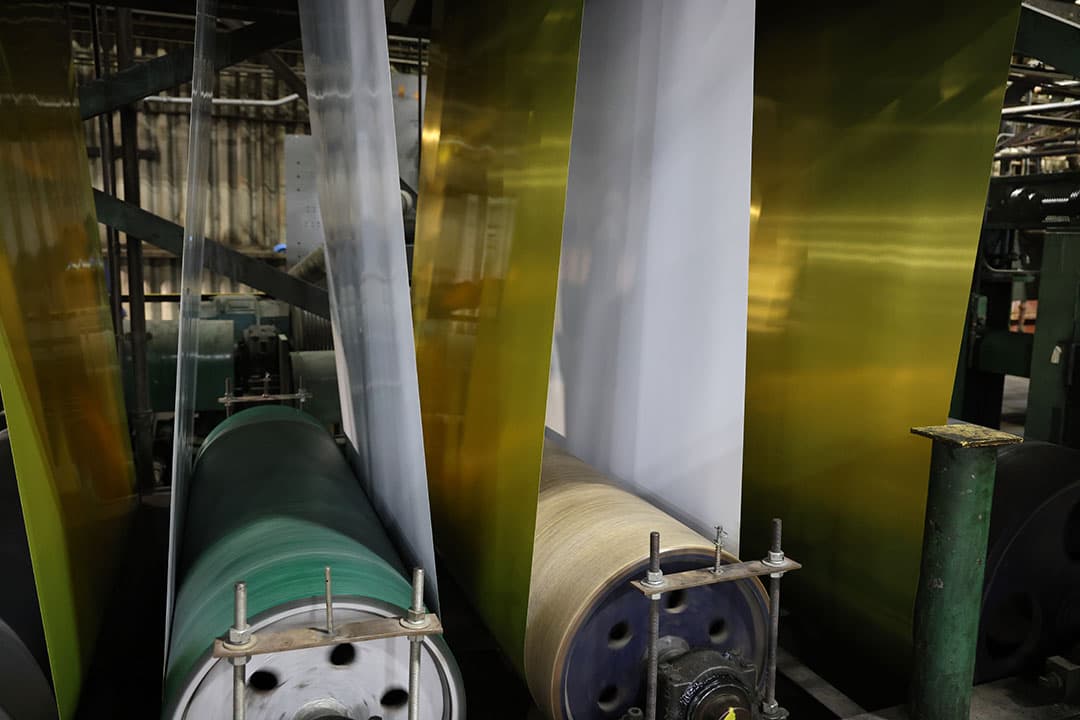
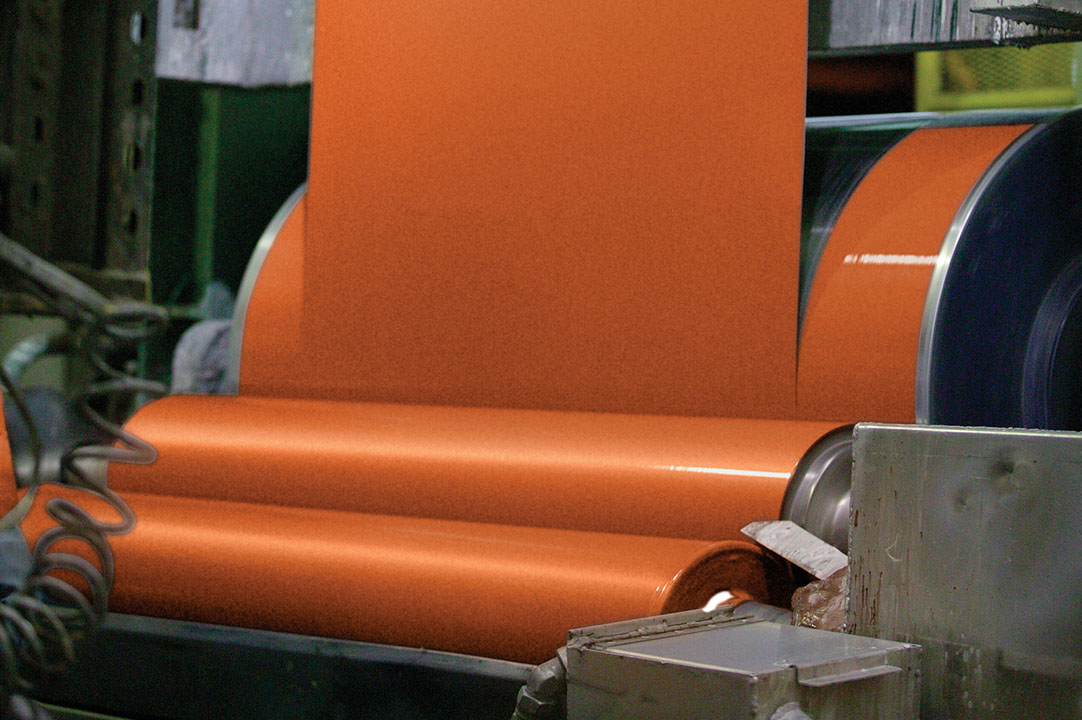
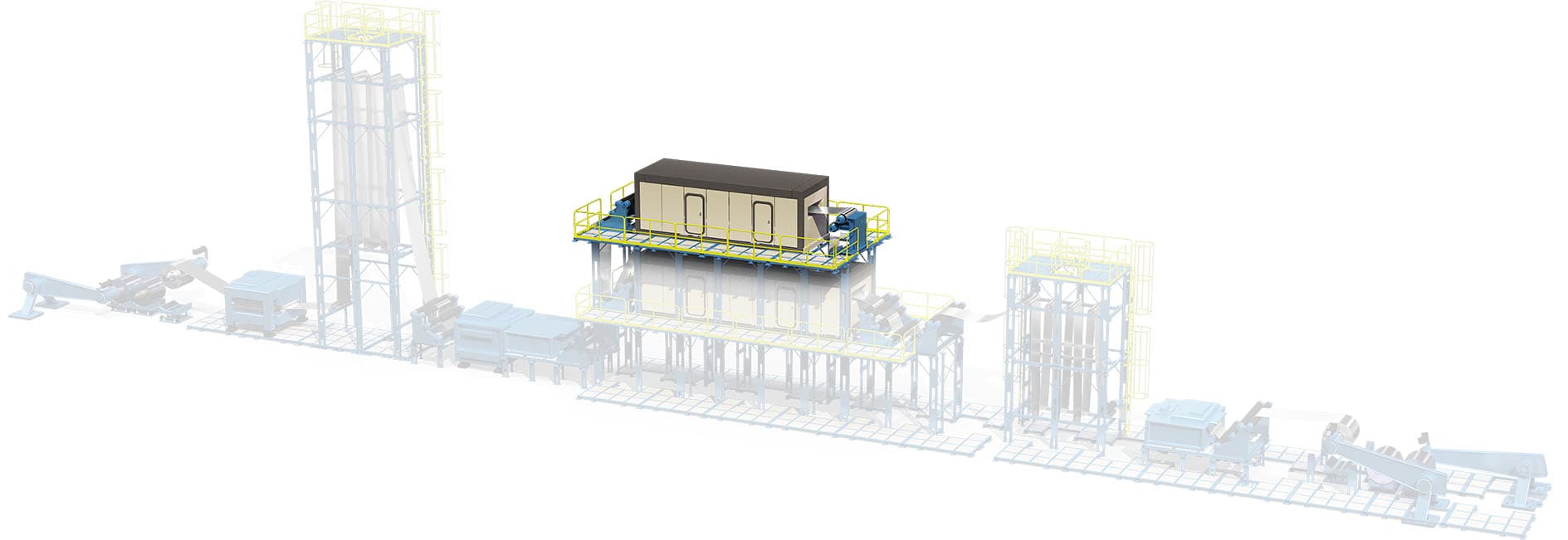
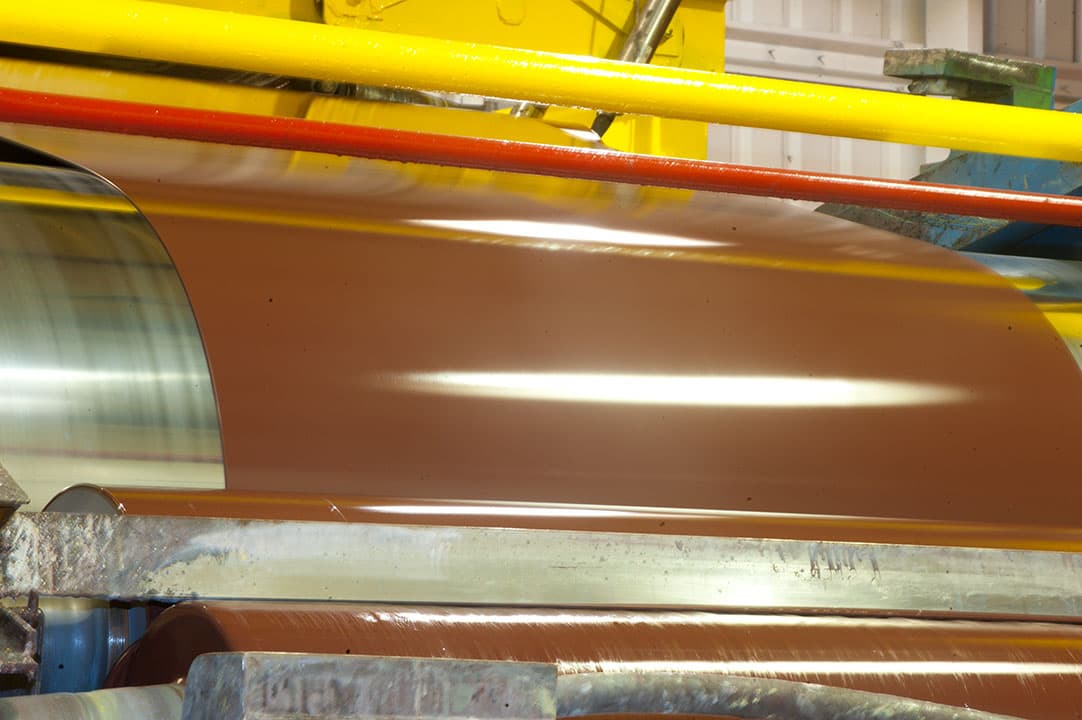
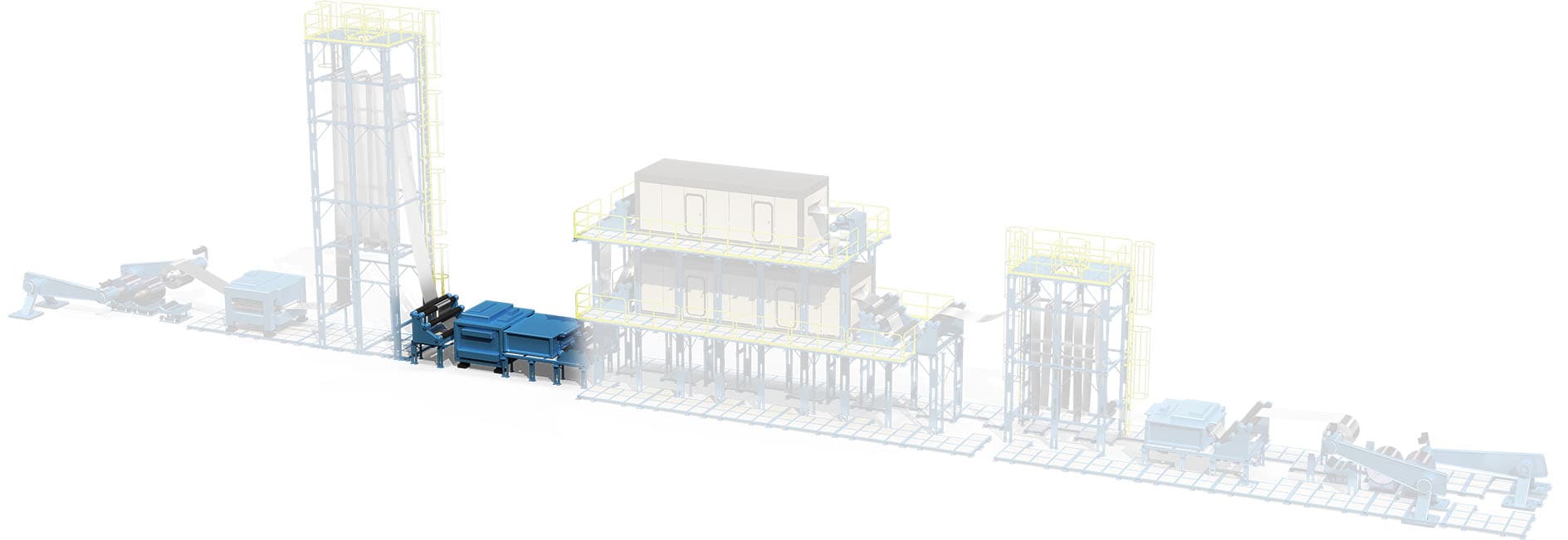
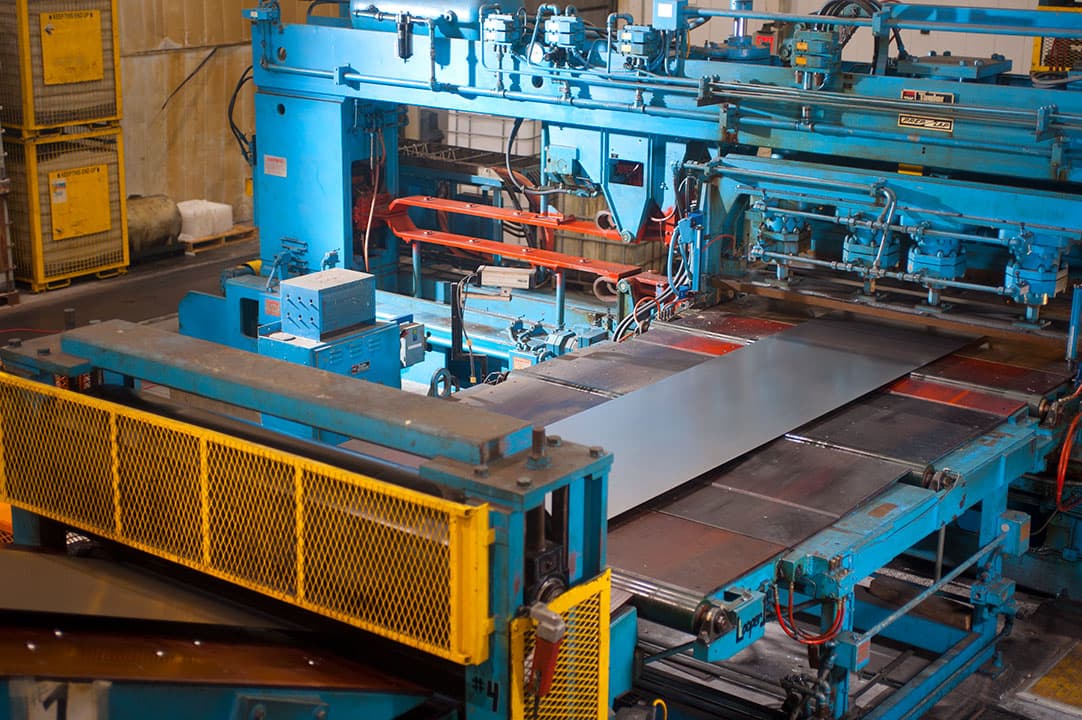
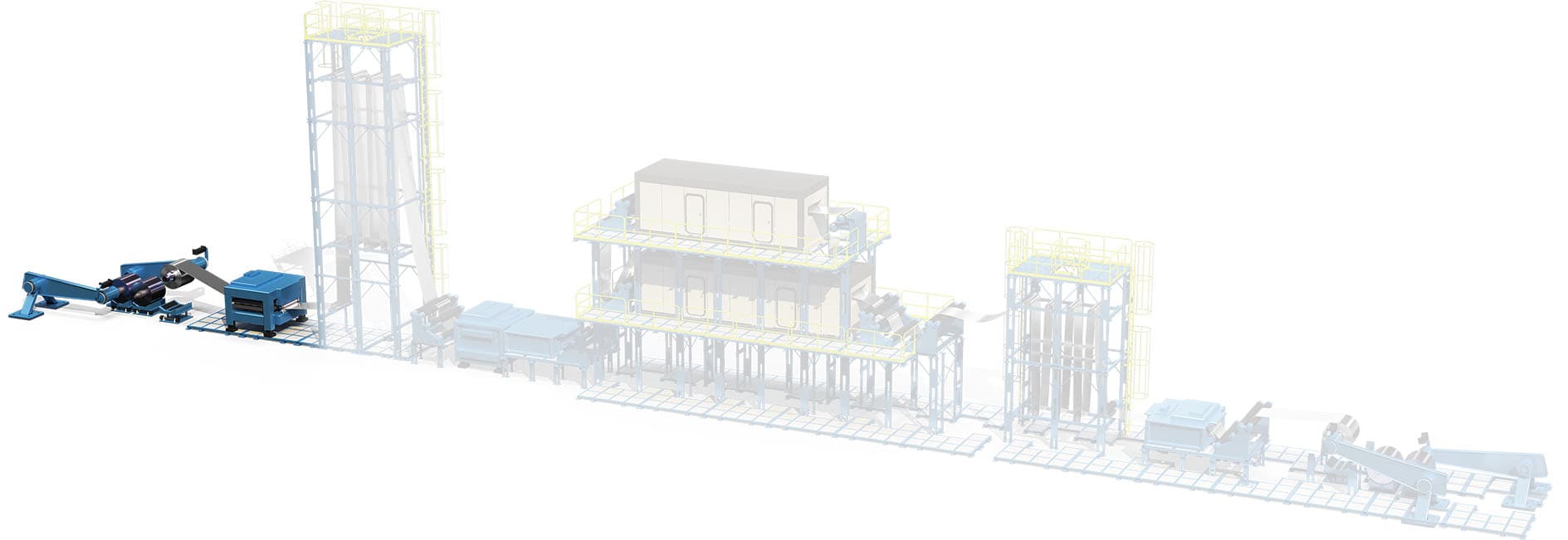
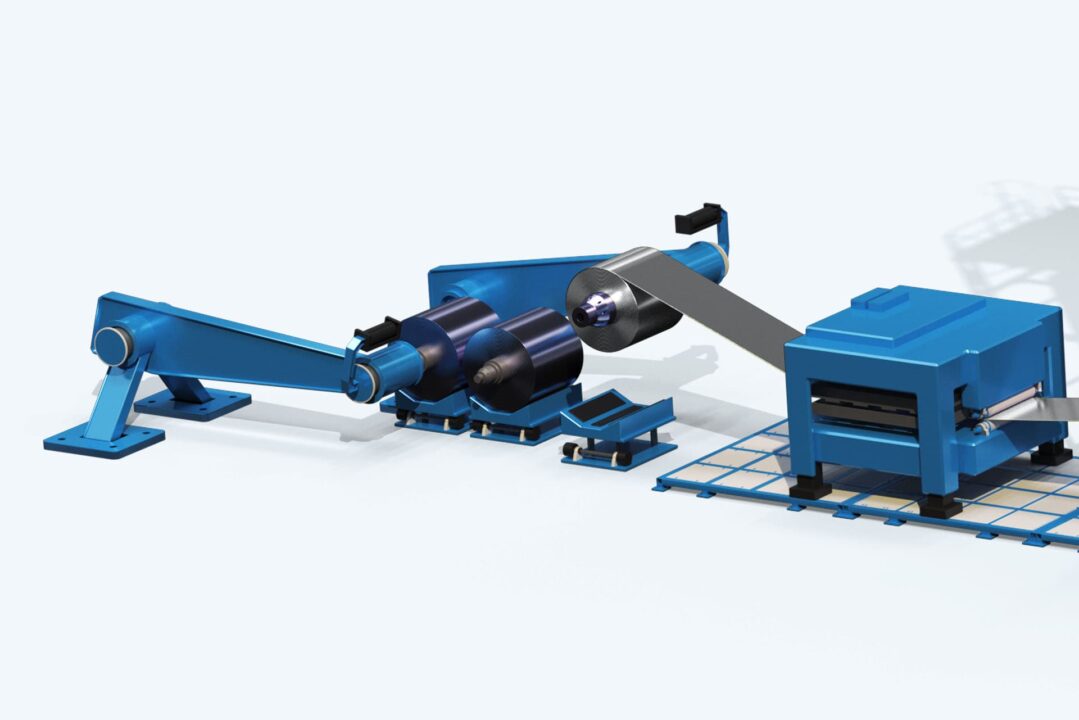
Once the metal is cleaned, treated, and painted, the strip is rewound into a coil size prescribed by the customer. From there, the coil is removed from the line and packaged for shipment or additional processing.
After the primer is applied and cured, then the metal strip enters the finish coat station where a topcoat is applied. Topcoats provide color, corrosion resistance, durability, flexibility and any other required physical properties. Like primers, the topcoat is cured using thermal cure ovens.
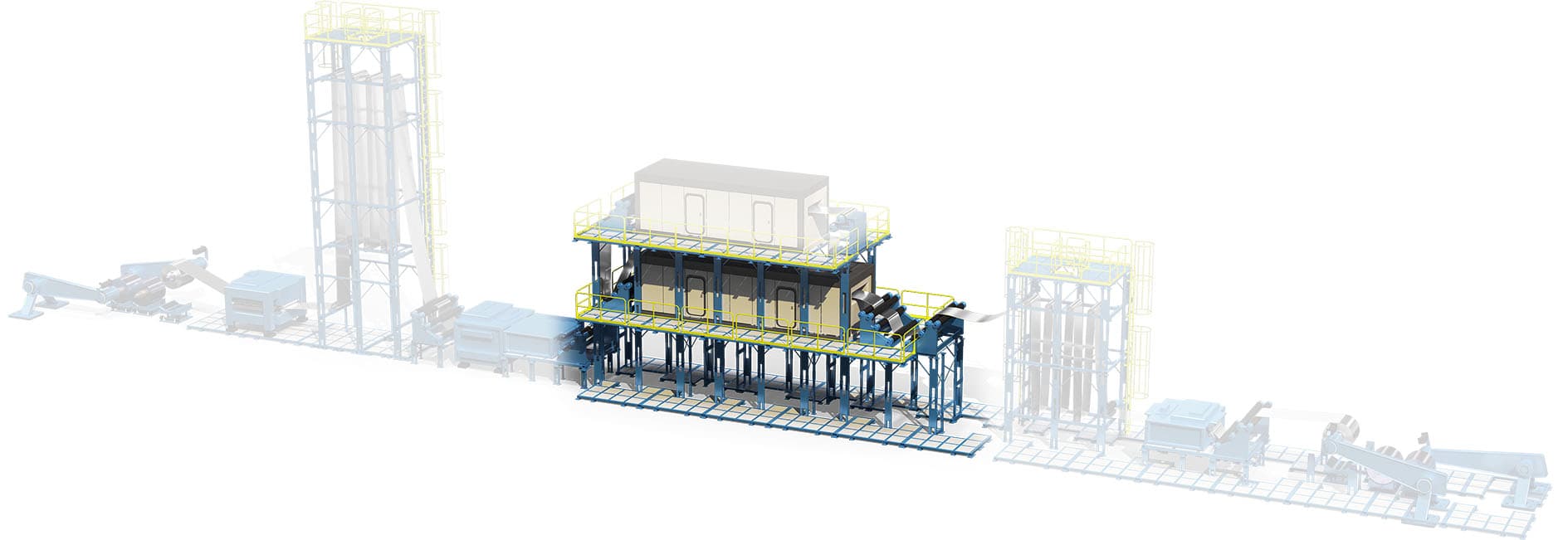
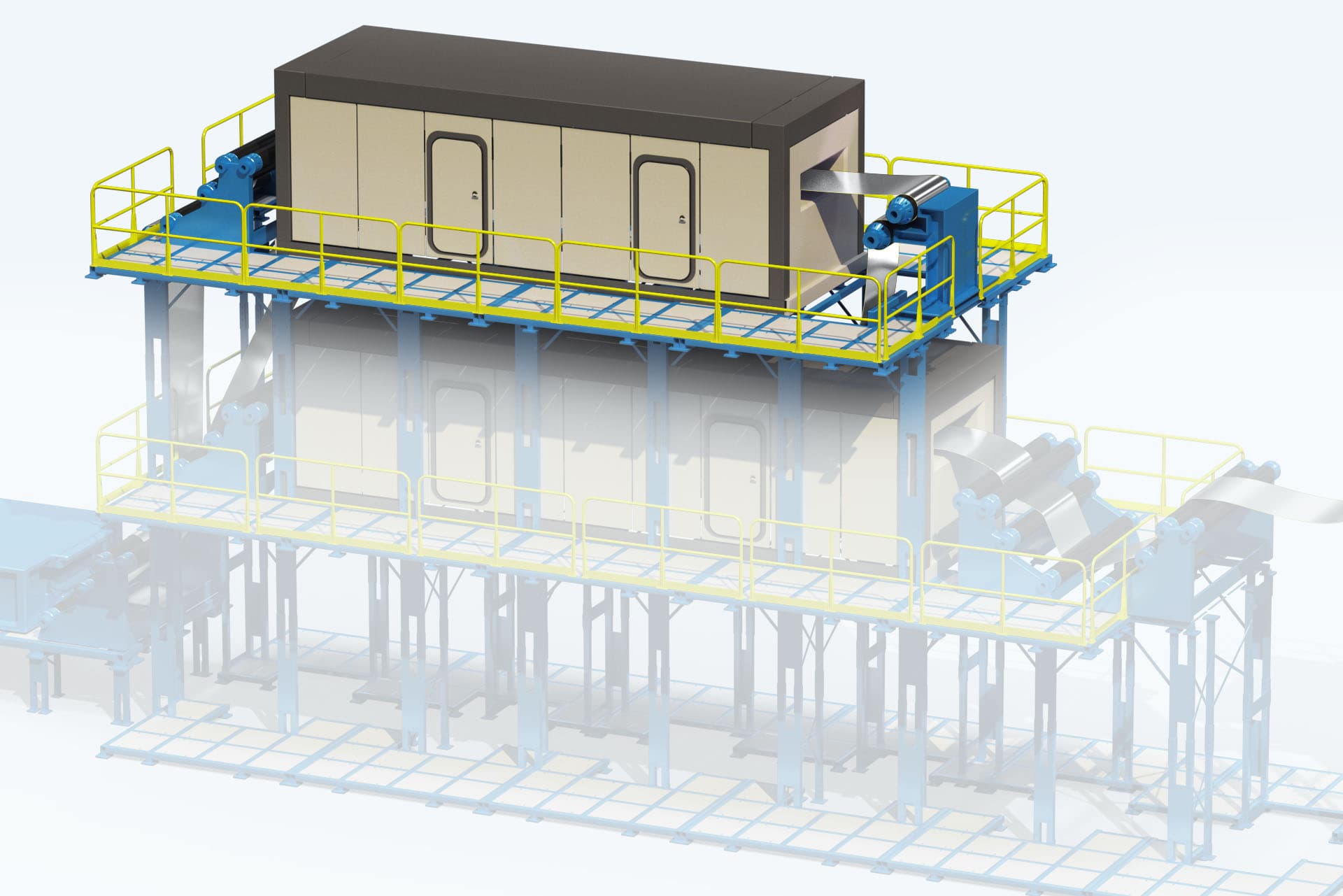
Oven
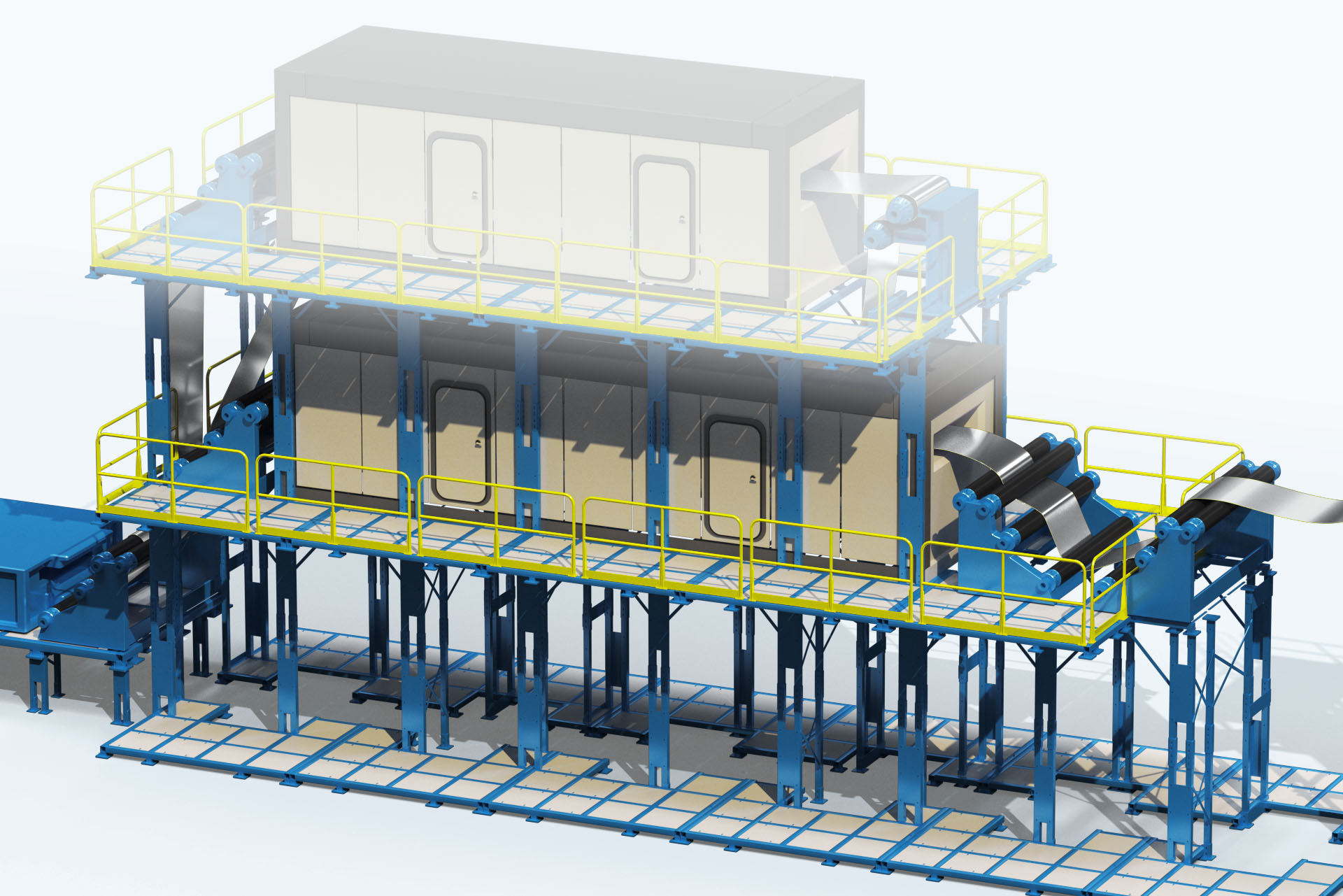
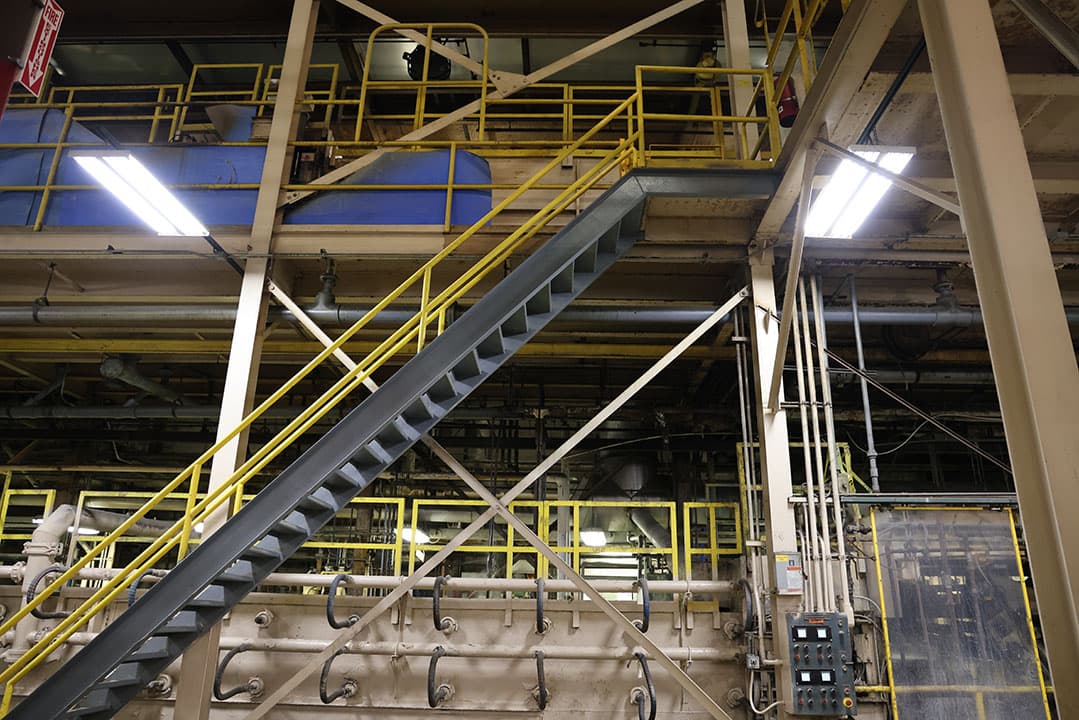
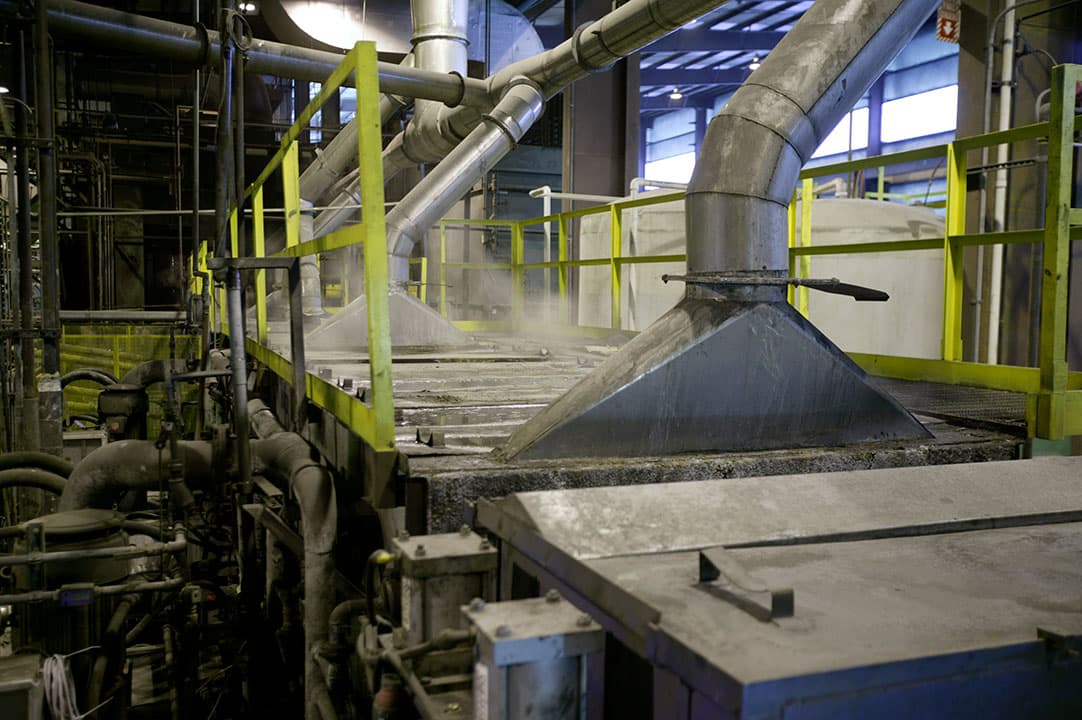
Coil coating ovens can range from 130 feet to 160 feet and will cure the coatings in 13 to 20 seconds.
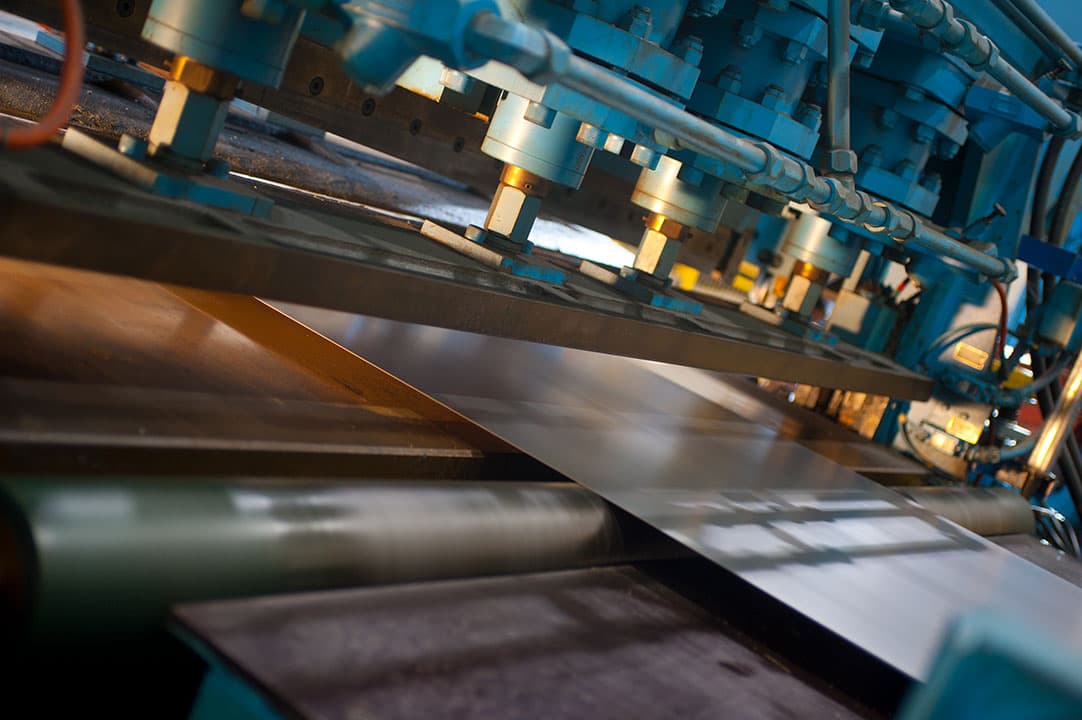
During this stage, the strip enters the prime coat station whereby a primer is applied to the clean and treated metal. After the primer is applied, the metal strip travels through a thermal oven for curing. Primers are used to aid in paint adhesion, improve corrosion performance and enhance aesthetic and functional attributes of the topcoat.
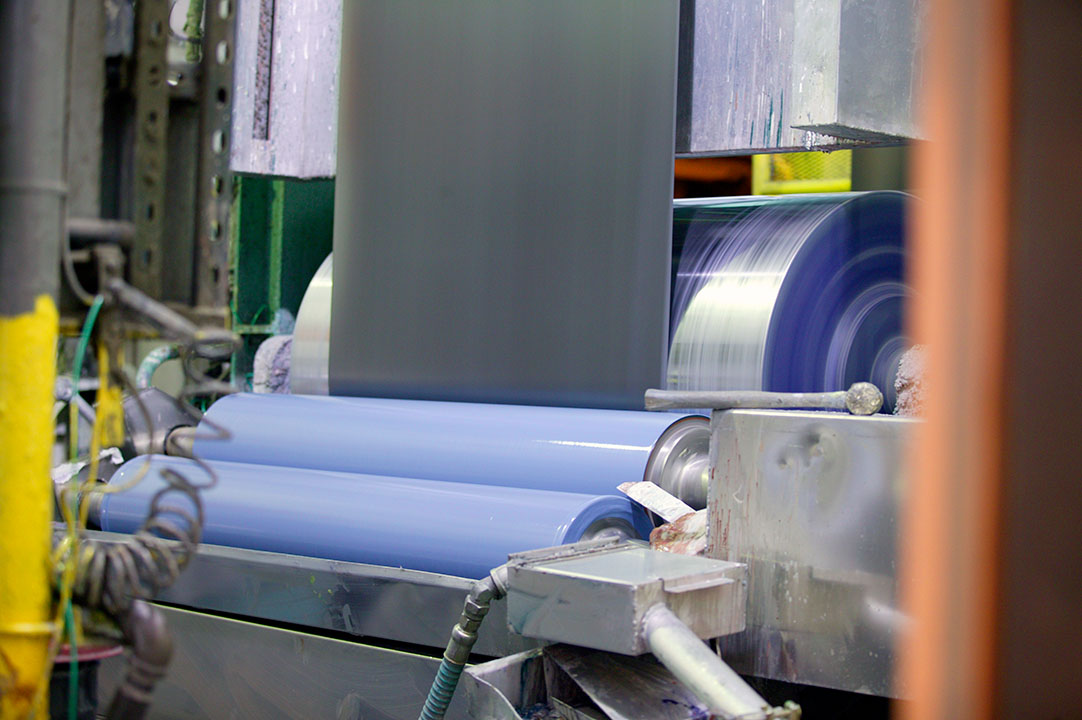
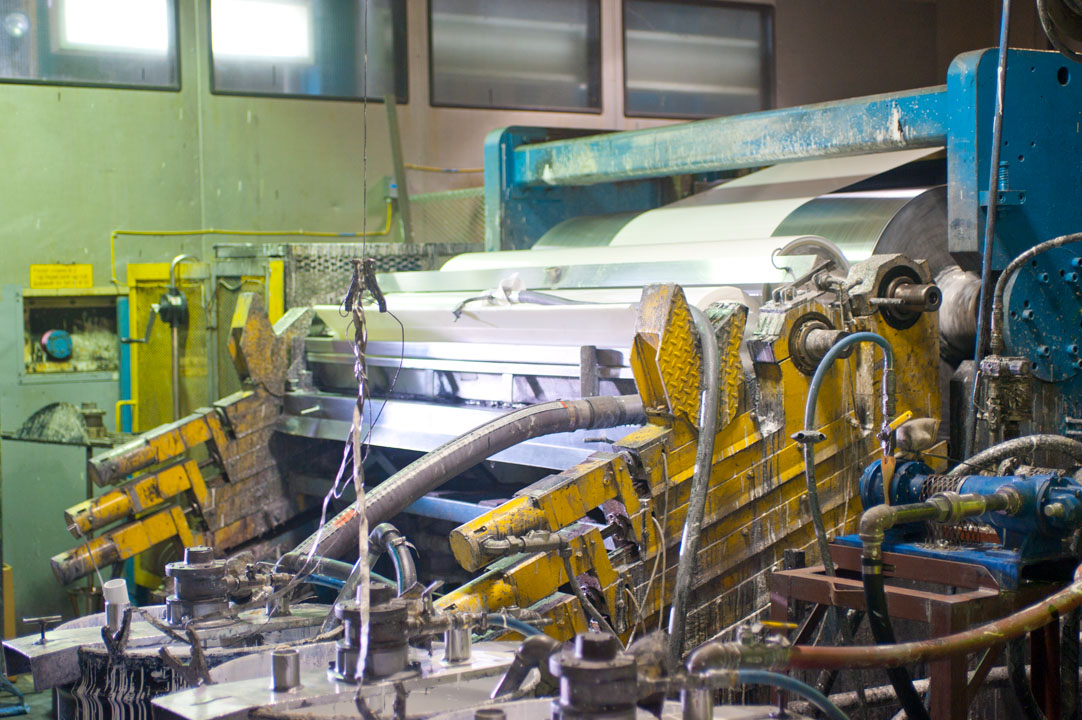
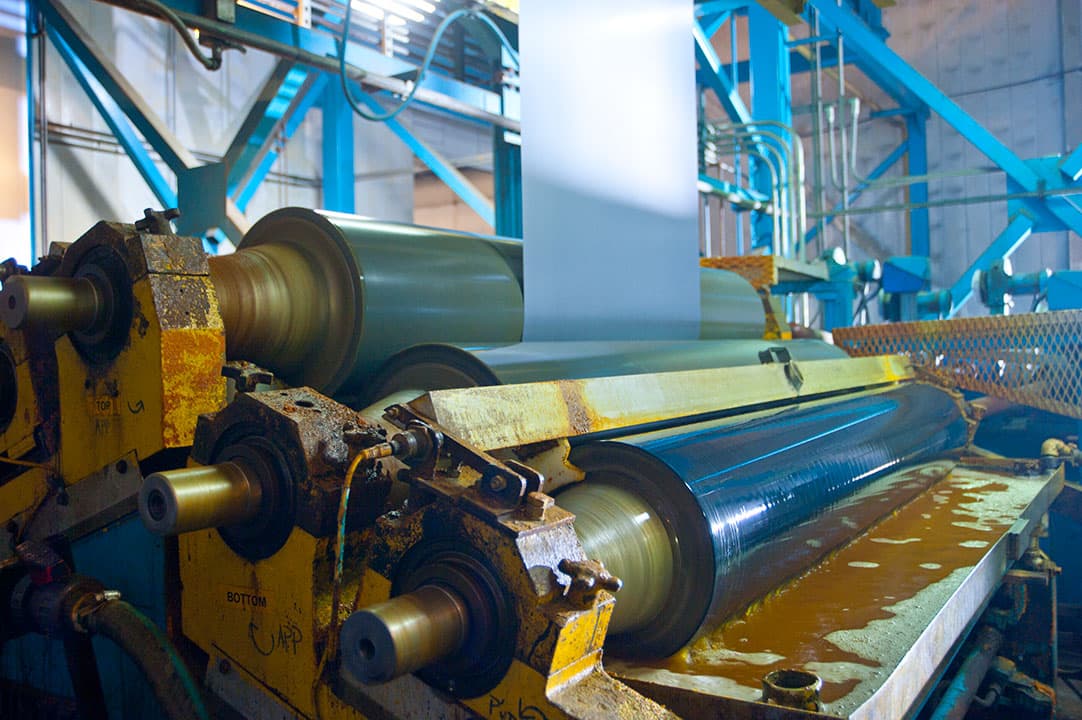
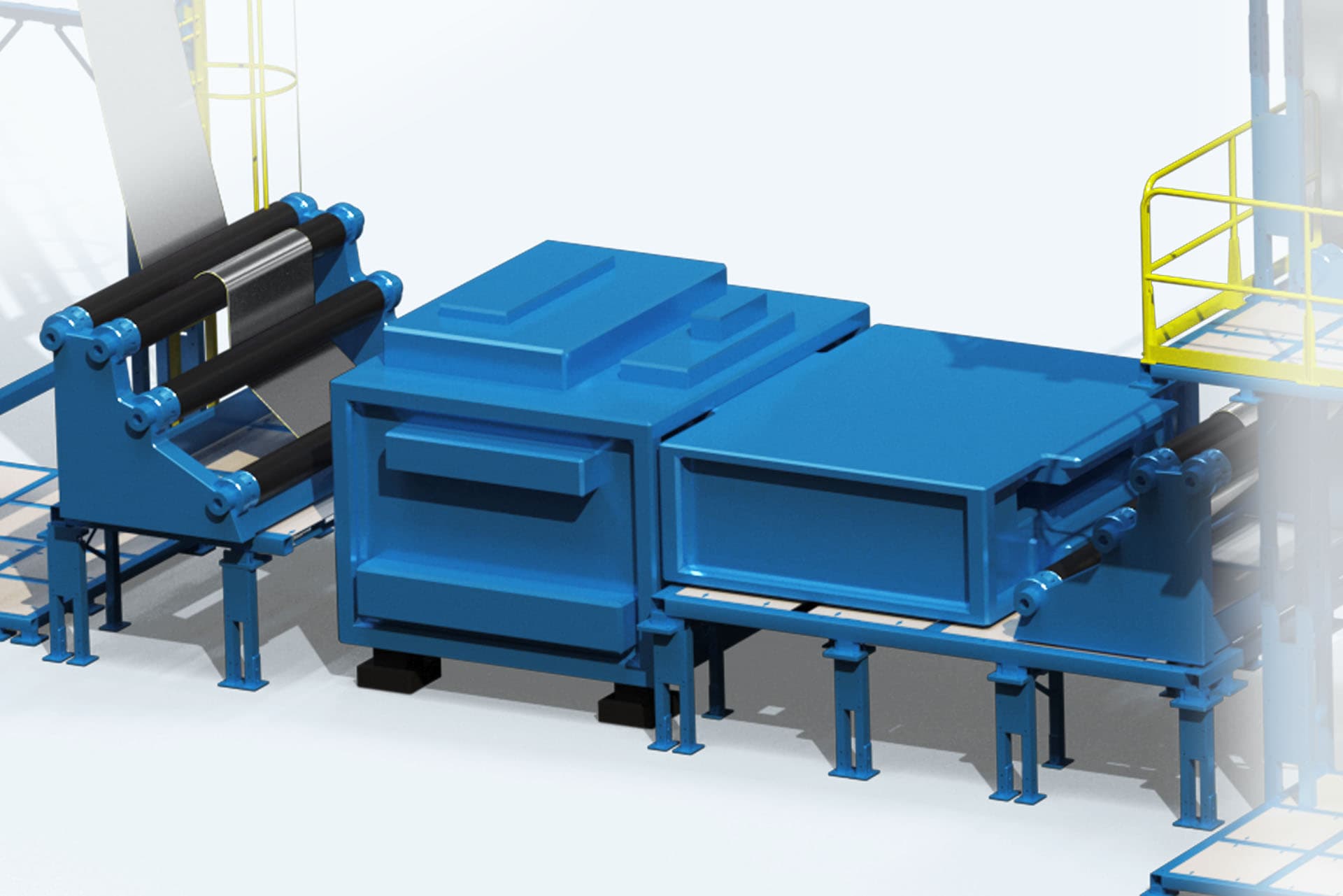
S Wrap Coater
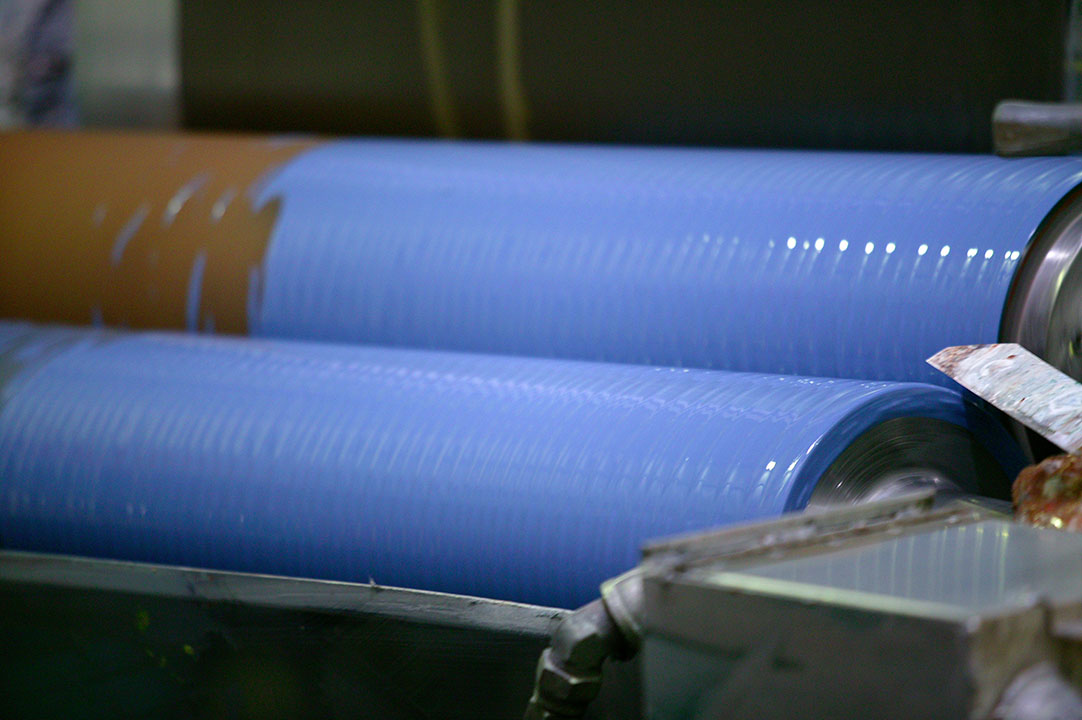
The S wrap coater design allows for primers and paints to be applied to the top and back side of the metal strip simultaneously in one continuous pass.
The cleaning and pretreating section of the coil coating process focuses on preparing the metal for painting. During the cleaning stage, dirt, debris, and oils are removed from the metal strip. From there, the metal enters the pretreatment section and/or a chemical coater whereby chemicals are applied to facilitate paint adhesion and enhance corrosion resistance.
Dried-In-Place
In this stage a chemical that provides enhanced corrosion performance is applied. This treatment can be chrome free if required.
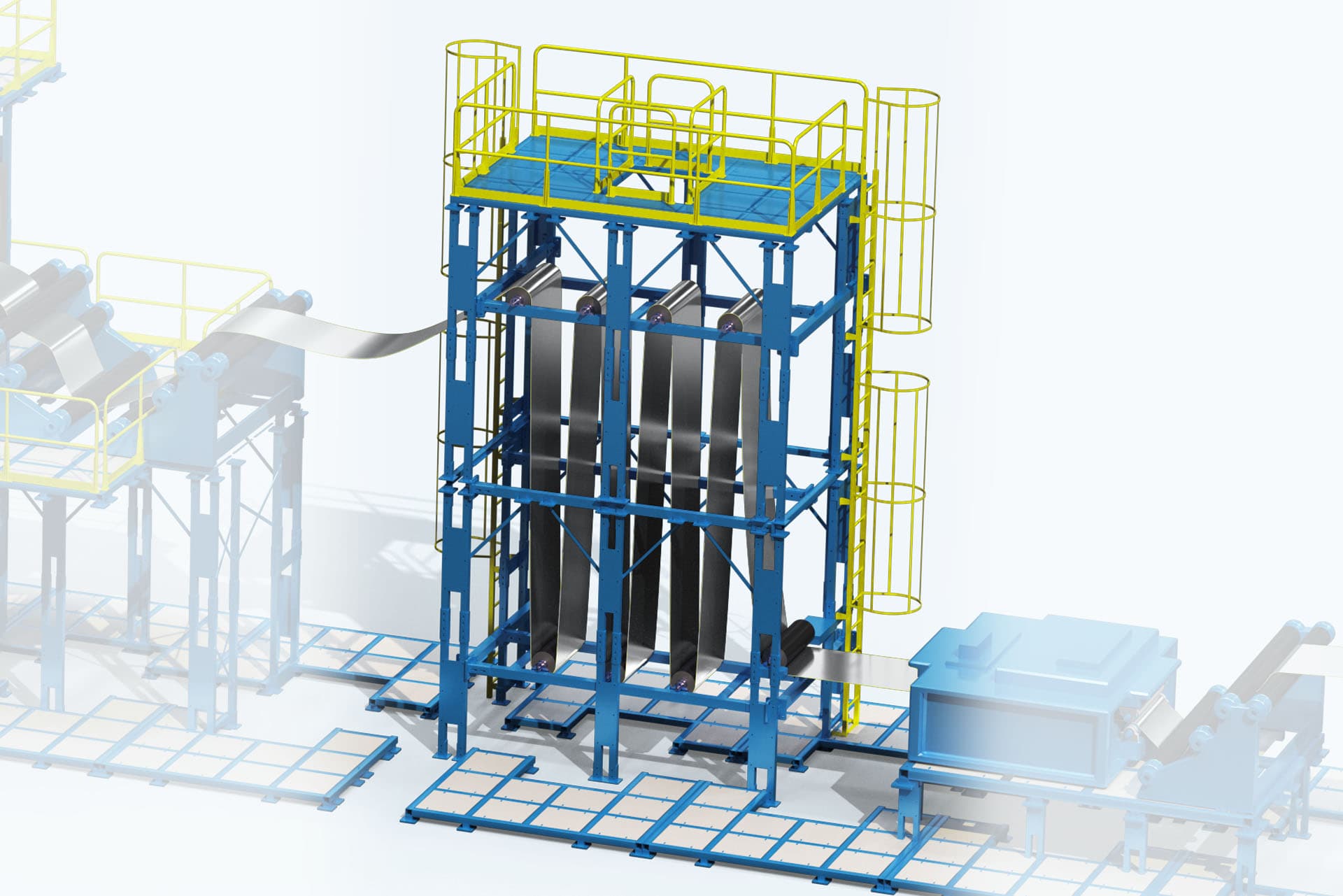
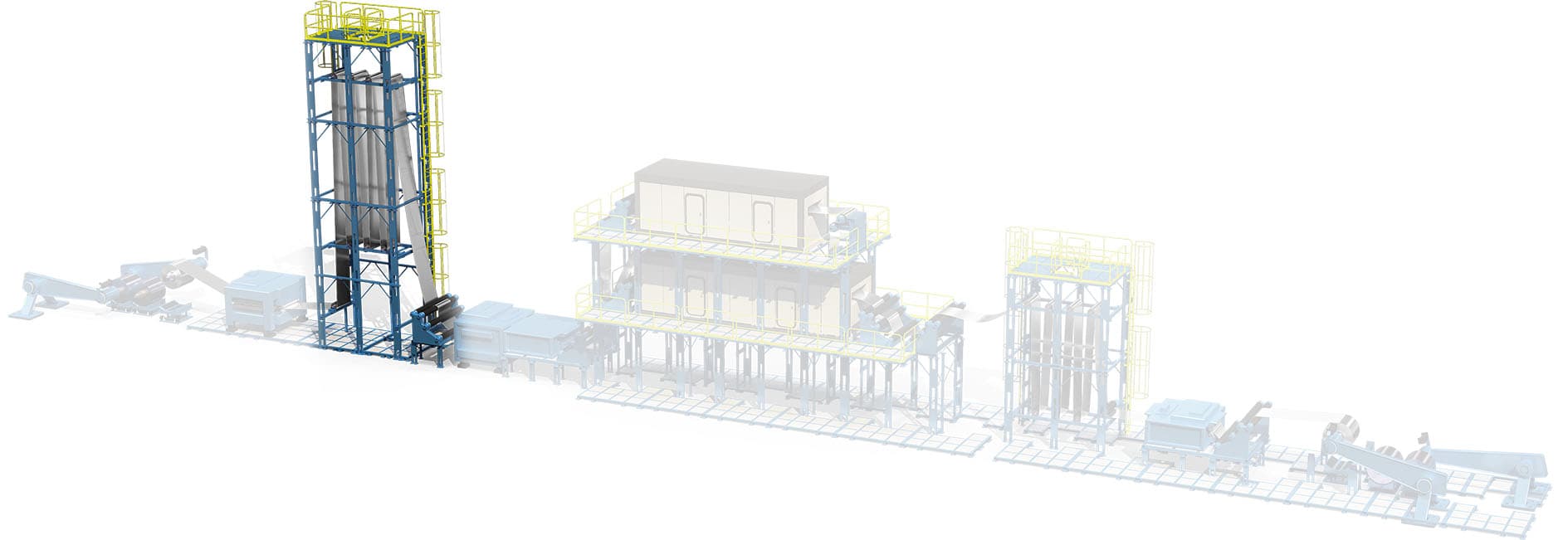
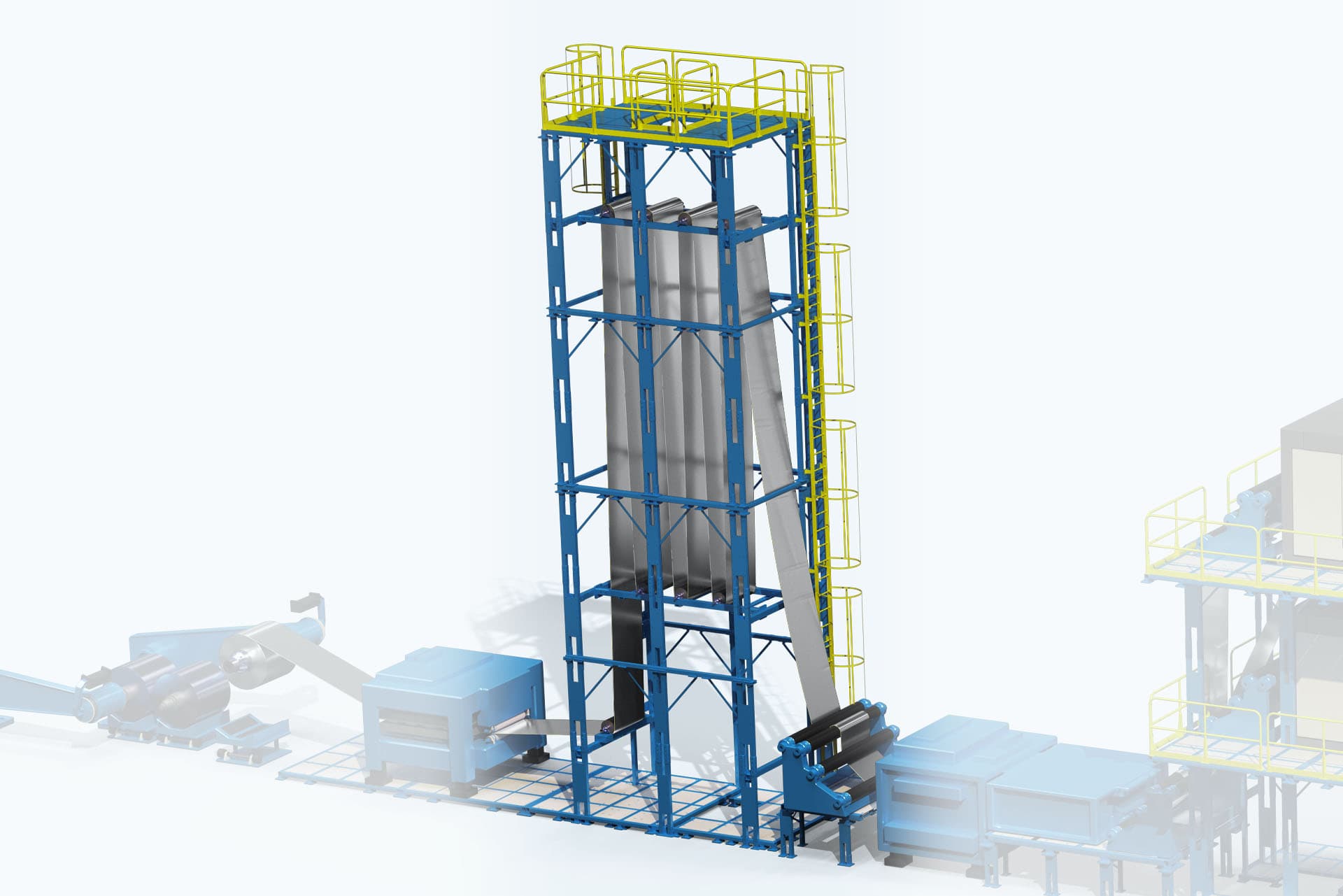
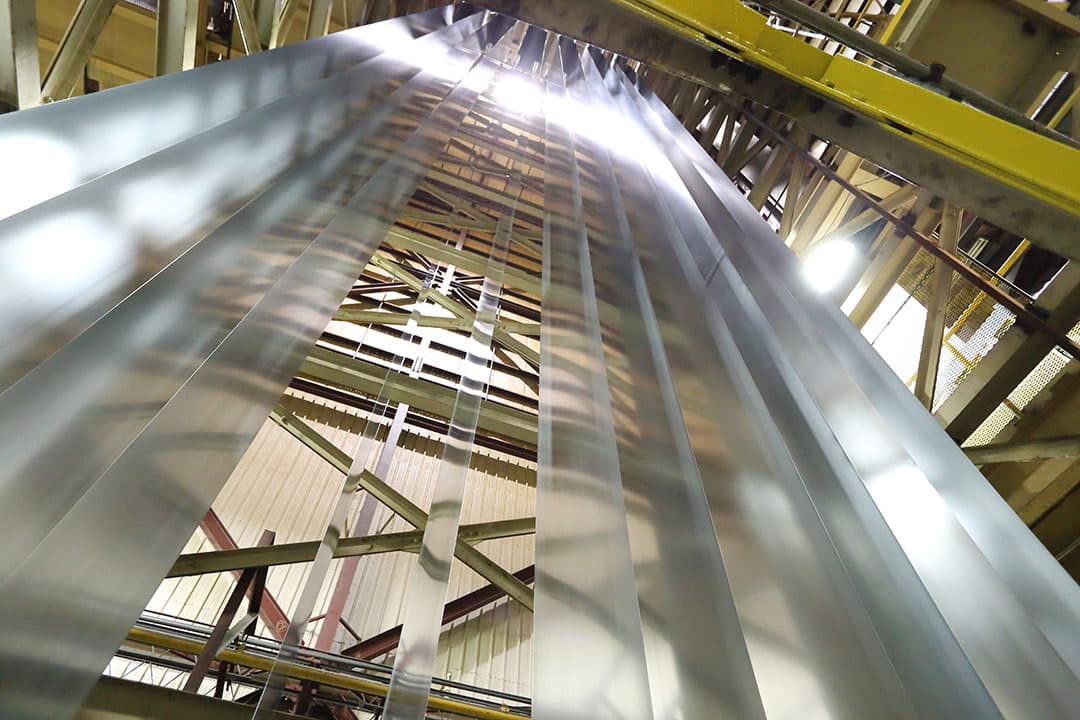
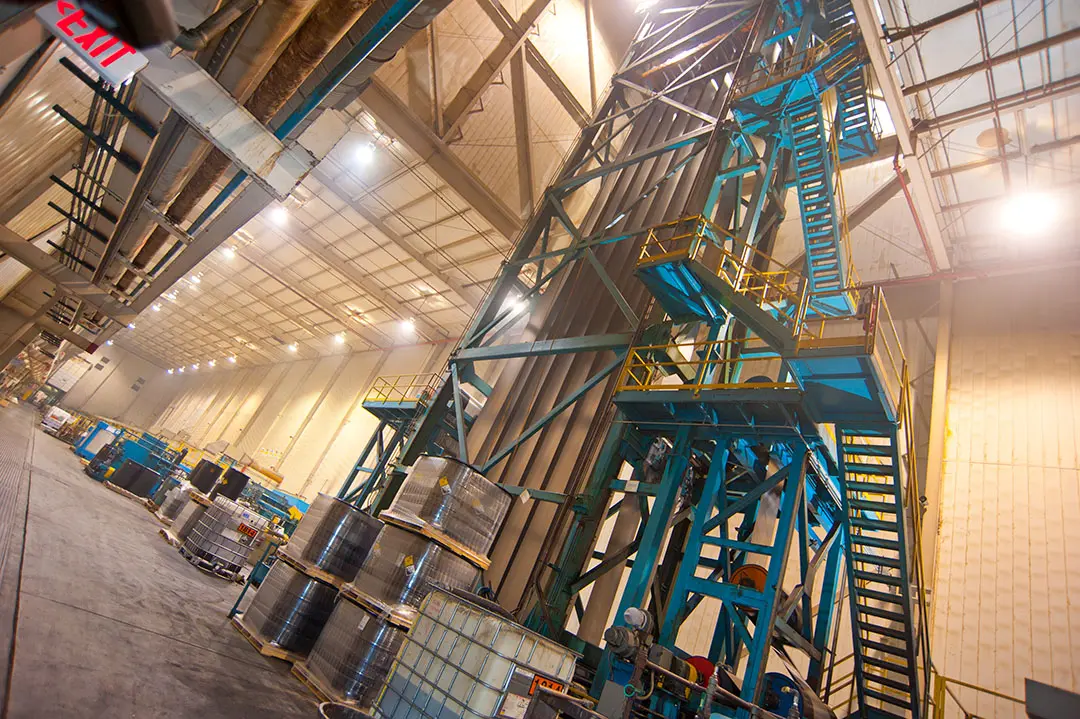
The accumulator is a structure that adjusts up and down to store material, which makes continuous operation of the coil coating process possible. This accumulation will continue to feed the coil coating processes while the entry end has stopped for the stitching process. As much as 750 feet of metal can be collected.
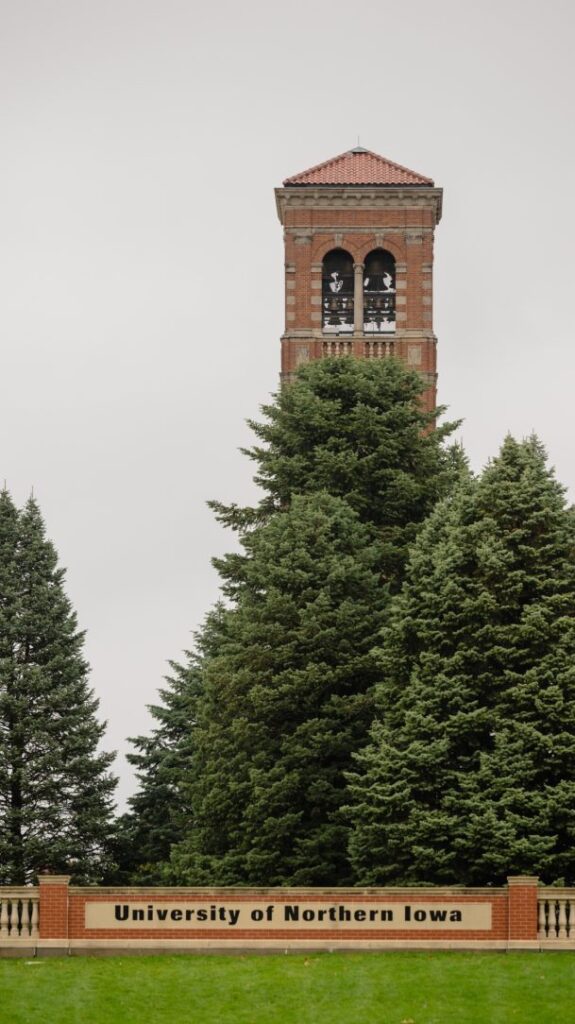
In the heart of the University of Northern Iowa's campus stands the Campanile—a symbol of history, unity, and the passage of time.
Since its inception in 1925 as a memorial from the University of Northern Iowa Alumni Association, this majestic tower has not only marked the passage of time but also woven itself into the fabric of the institution’s identity.
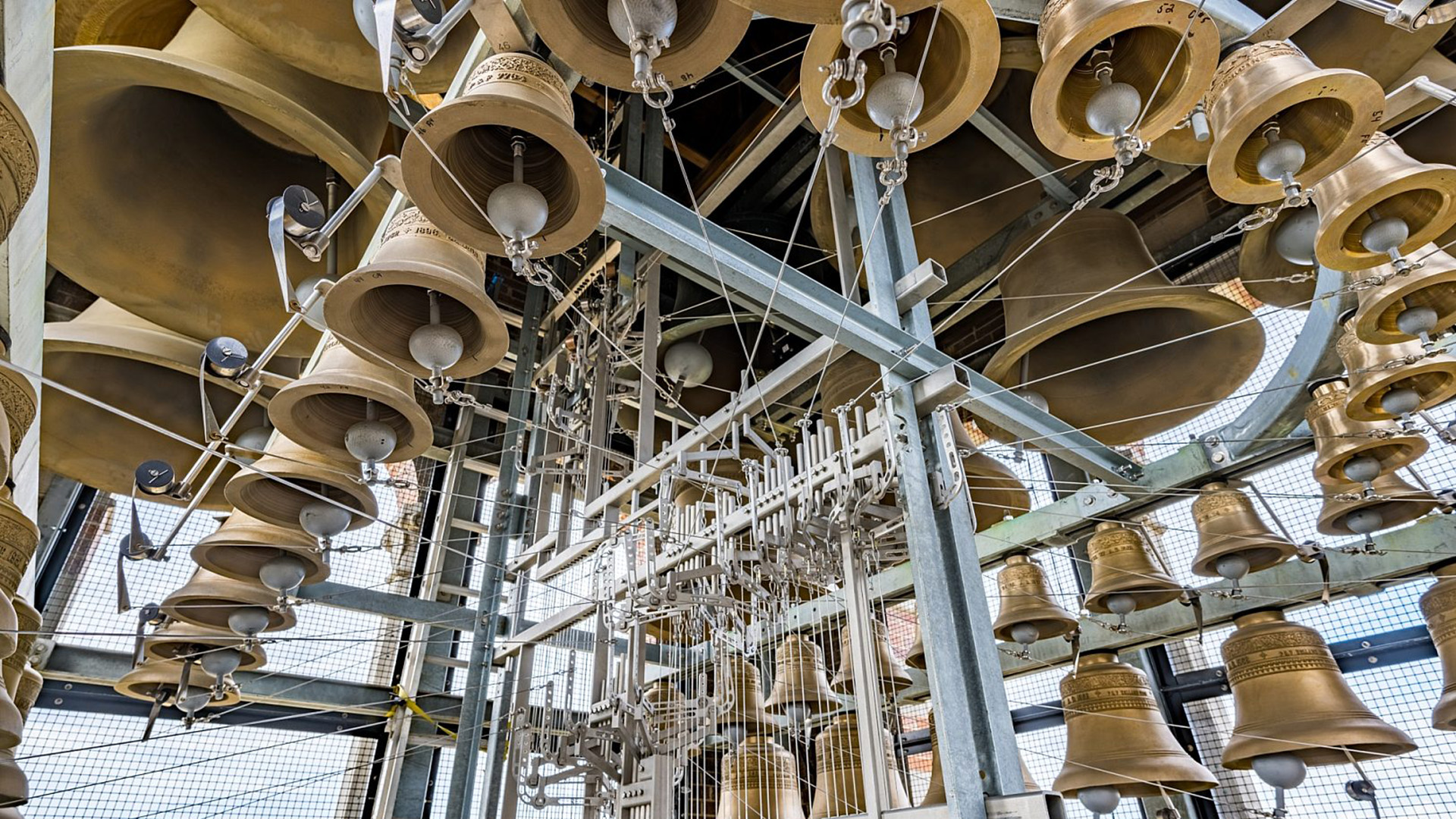
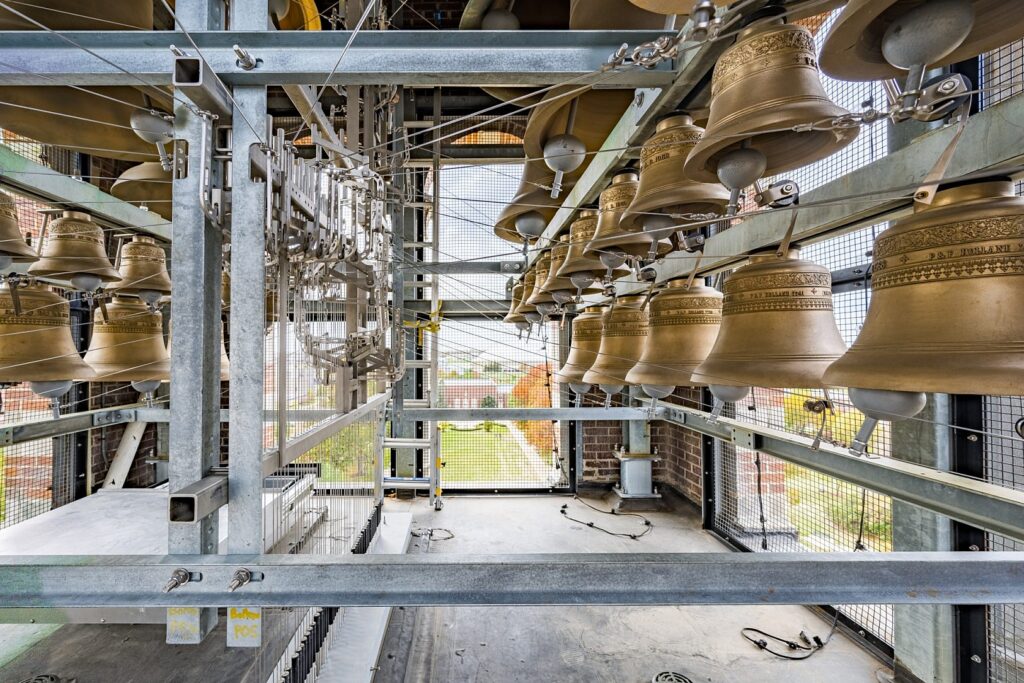
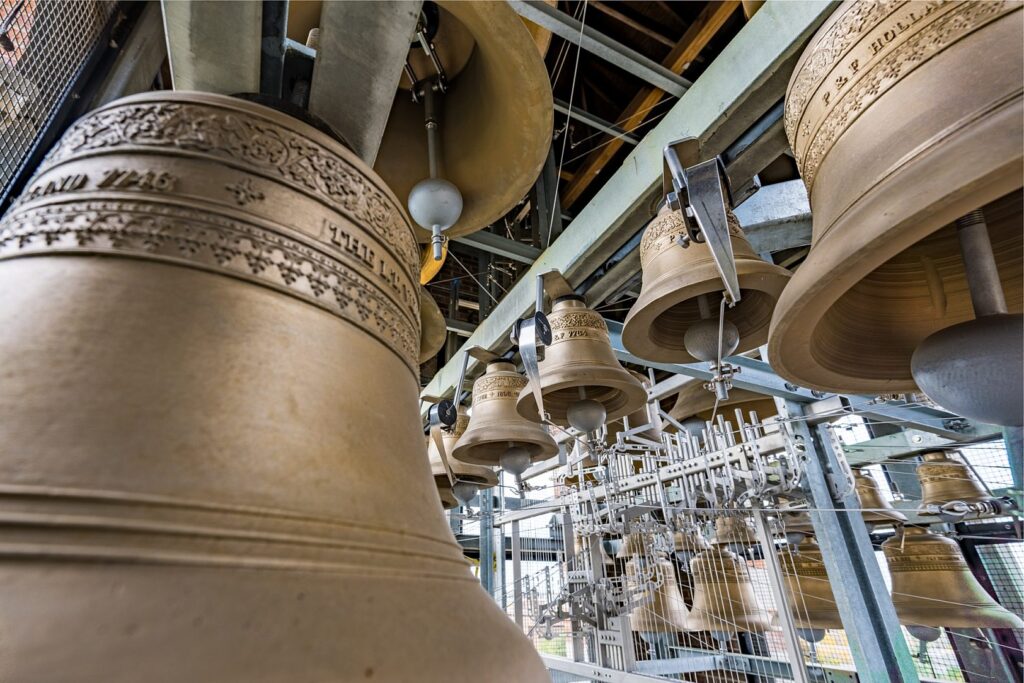
Just as the university has evolved over the years, so has the Campanile. An ambitious project was planned and funded to refurbish the Campanile’s existing bells and add nine new bells to create a 56-bell, five-octave instrument with a vastly expanded musical range.
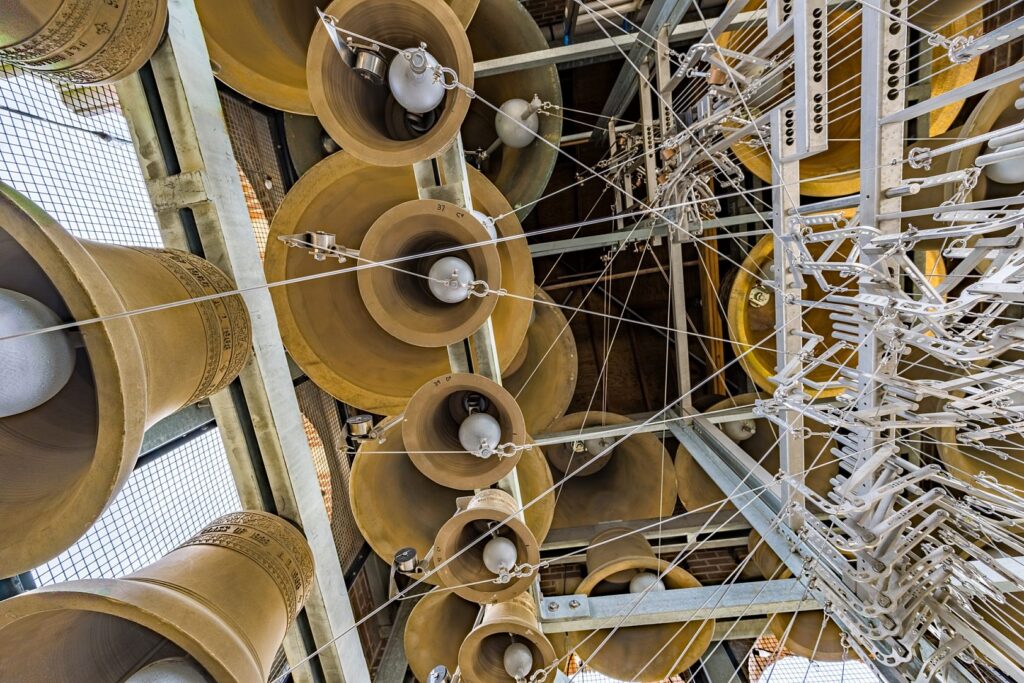
Taking on the restoration and additions to this iconic structure, The Verdin Company of Cincinnati, embraced an approach to not only revitalize the Campanile’s physical form but also ensure its lasting endurance against the harsh Iowa weather—be it the freezing winters, sweltering summers, or unpredictable storms, by choosing to hot dip galvanize.
In addition to an unforgiving climate, the list of complex challenges involved with such a refurbishment is lengthy. Bell towers such as UNI’s Campanile are architectural landmarks with historical or cultural significance. Refurbishing such structures requires meticulous attention to preserving their historical features, including architectural details, materials, and aesthetics. Hot-dip galvanizing, and its aesthetic versatility proved to be the perfect solution to safeguard the bell’s framing. The galvanized surface develops a uniform patina, which can appear similar to the color of aged concrete or certain types of stone. This patina helps the galvanized steel or iron integrate better into its surroundings, ensuring the Campanile’s golden bells remain the sole focus.
Furthermore, the complex location of the frames increases the need for longevity, as future service would be extremely difficult and costly (fortunately, the Campanile’s existing bell frame had previously been galvanized and did not need repair).
The Campanile, with its intricate architecture and deep-seated historical value, presented a unique challenge to the restoration team. Its location atop the University of Northern Iowa’s campus meant that ensuring the structure’s longevity was of utmost importance. The restoration of the Campanile at the University of Northern Iowa stands as a model of how dedication, expertise, and innovation can breathe new life into cherished landmarks. It continues to stand tall against the backdrop of changing times, the Campanile serves as a reminder that history can be both preserved and revitalized, ensuring that its melodies and stories will continue to resonate for generations to come.