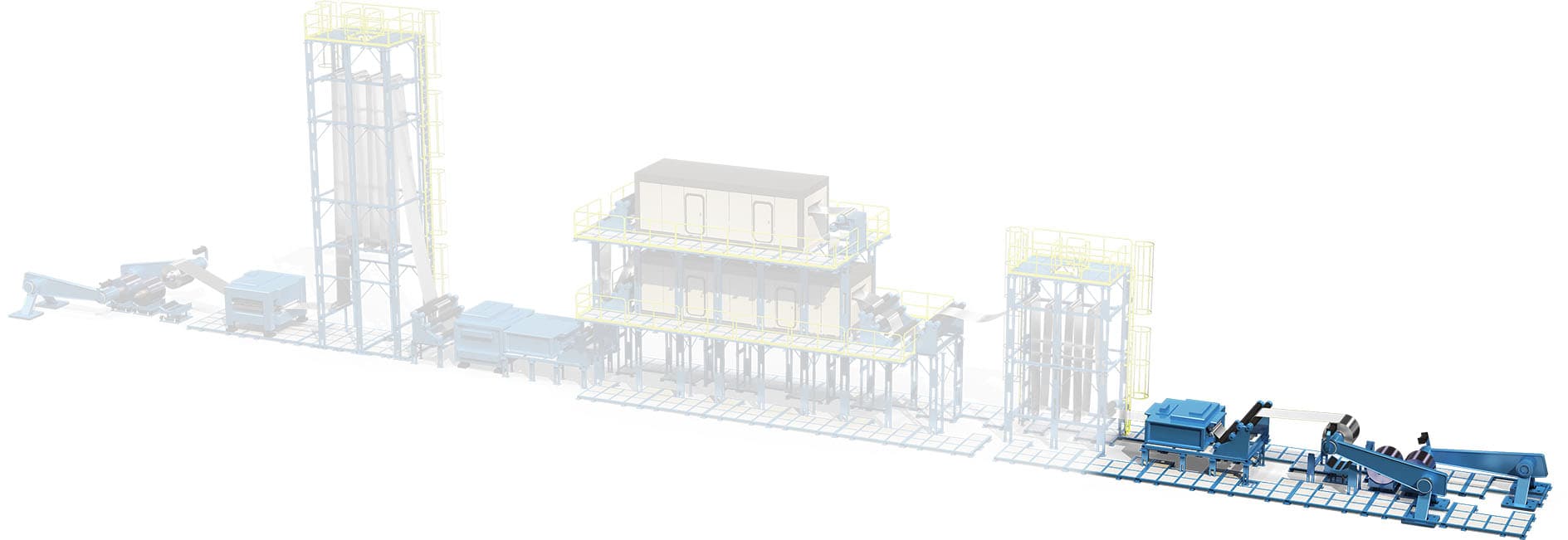
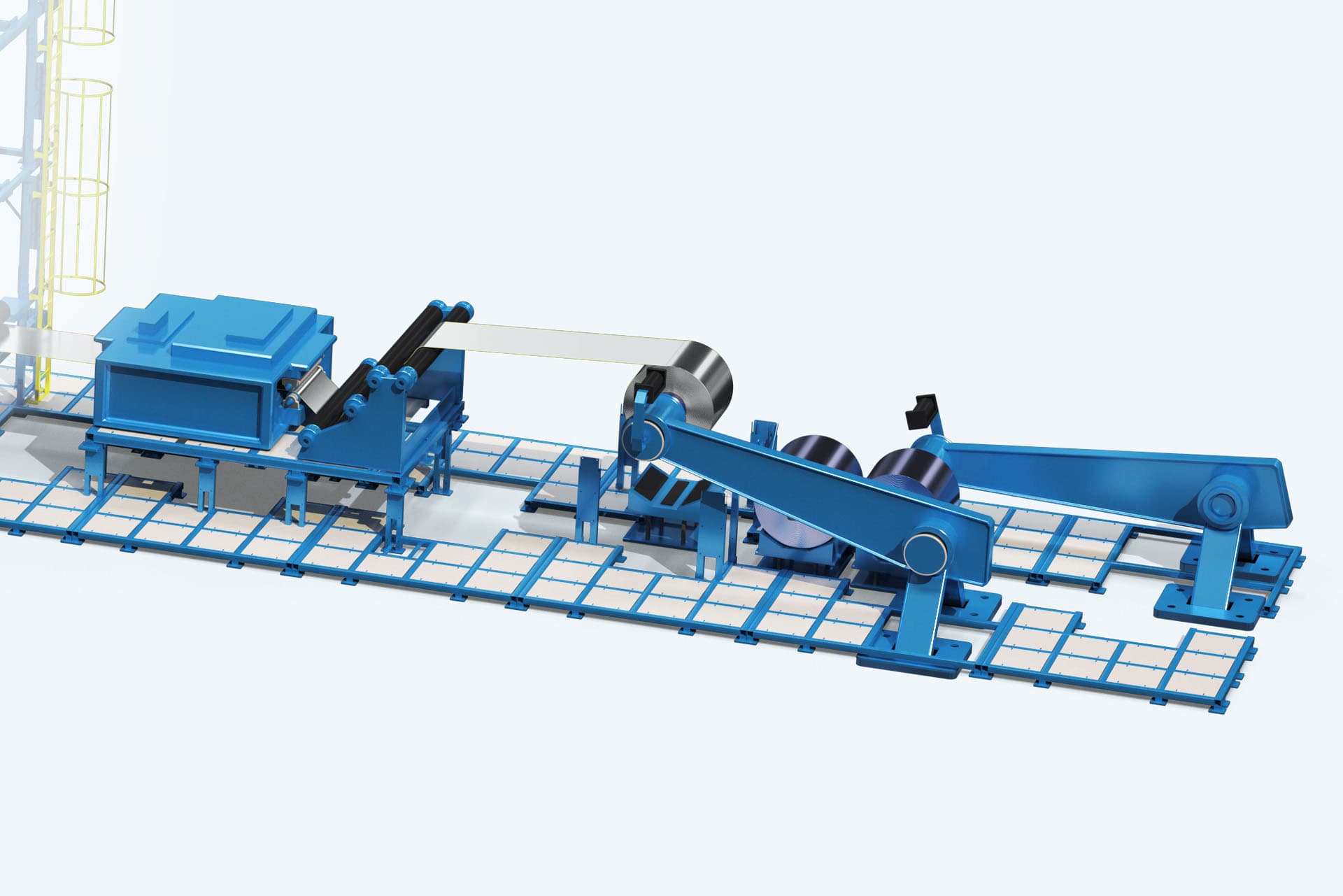
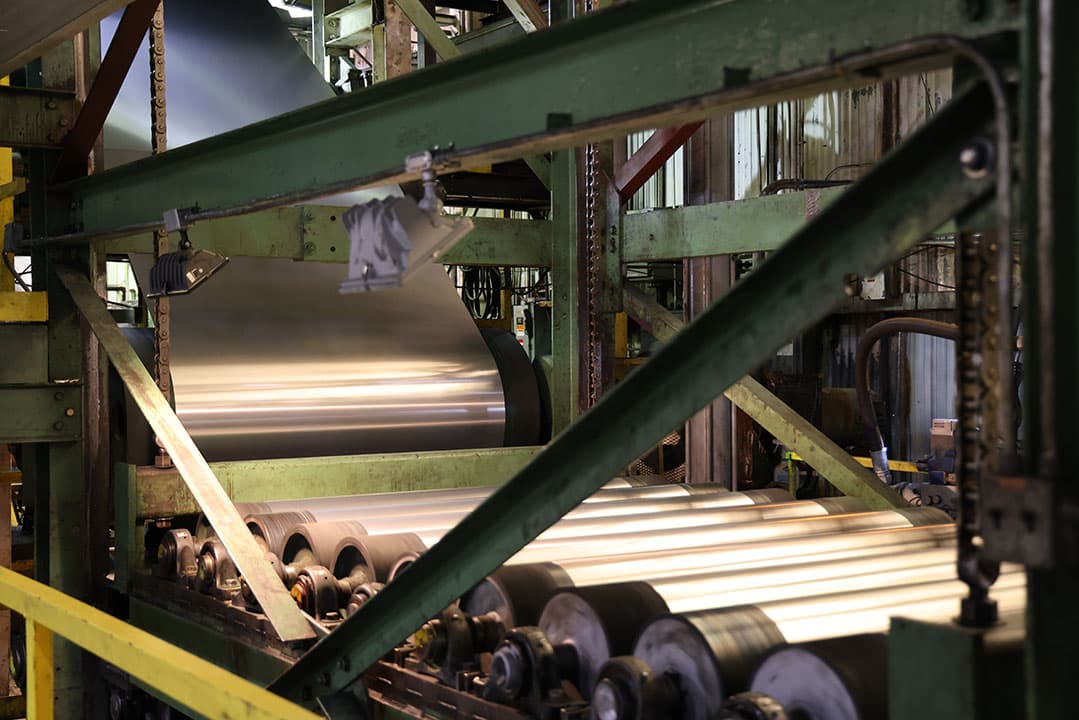
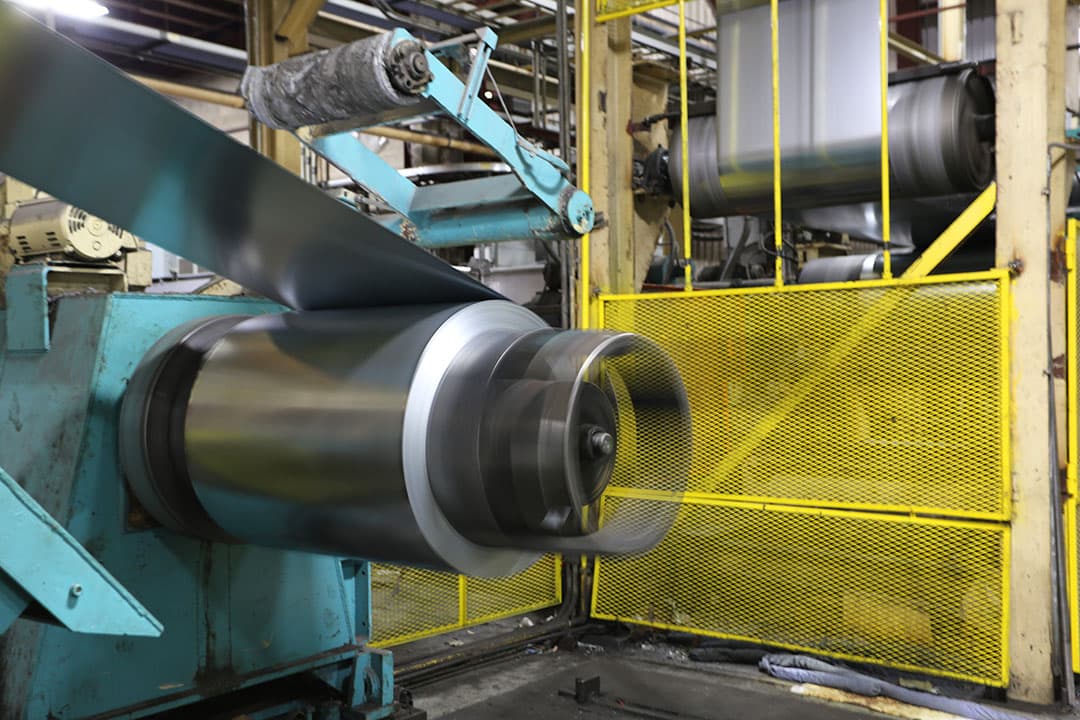
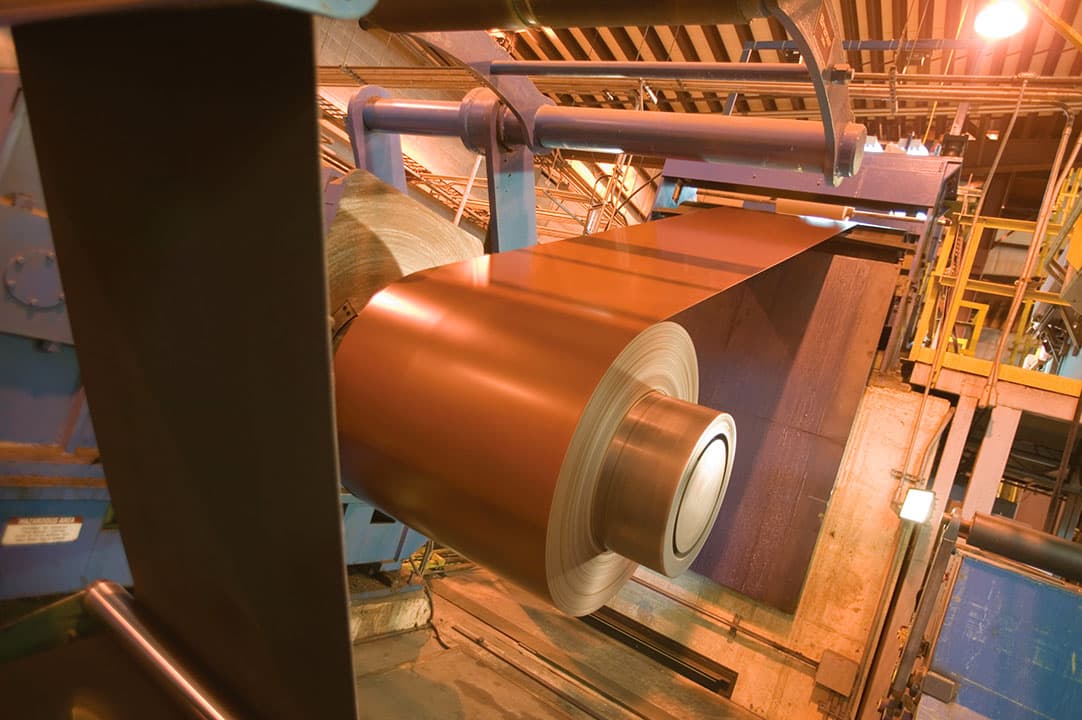
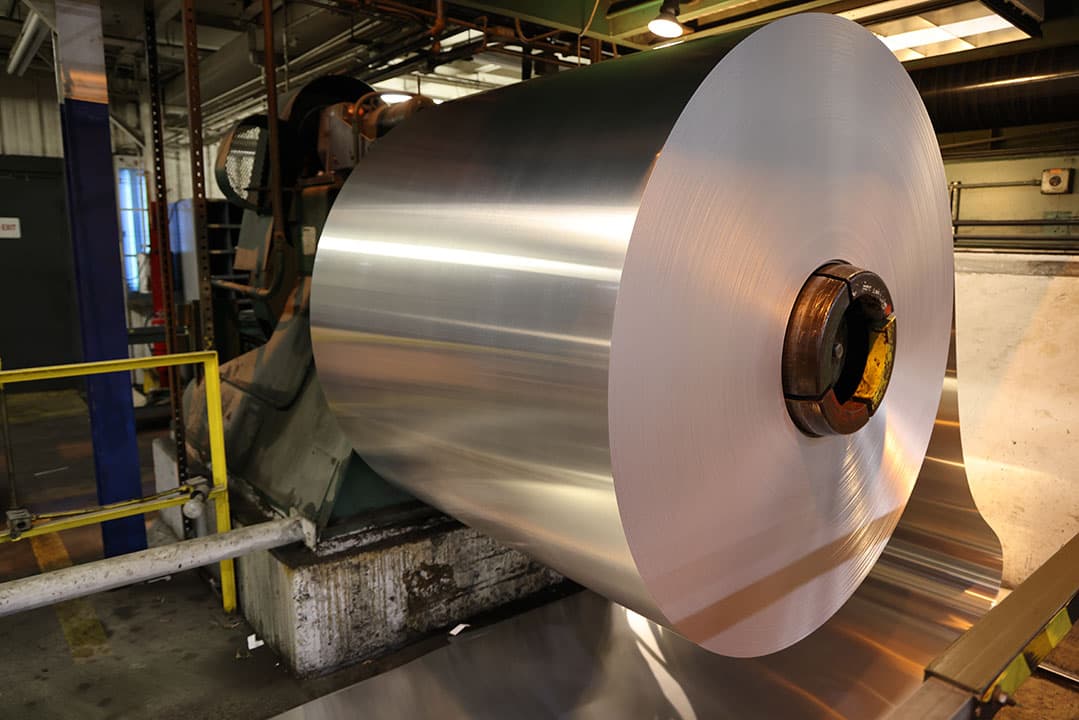
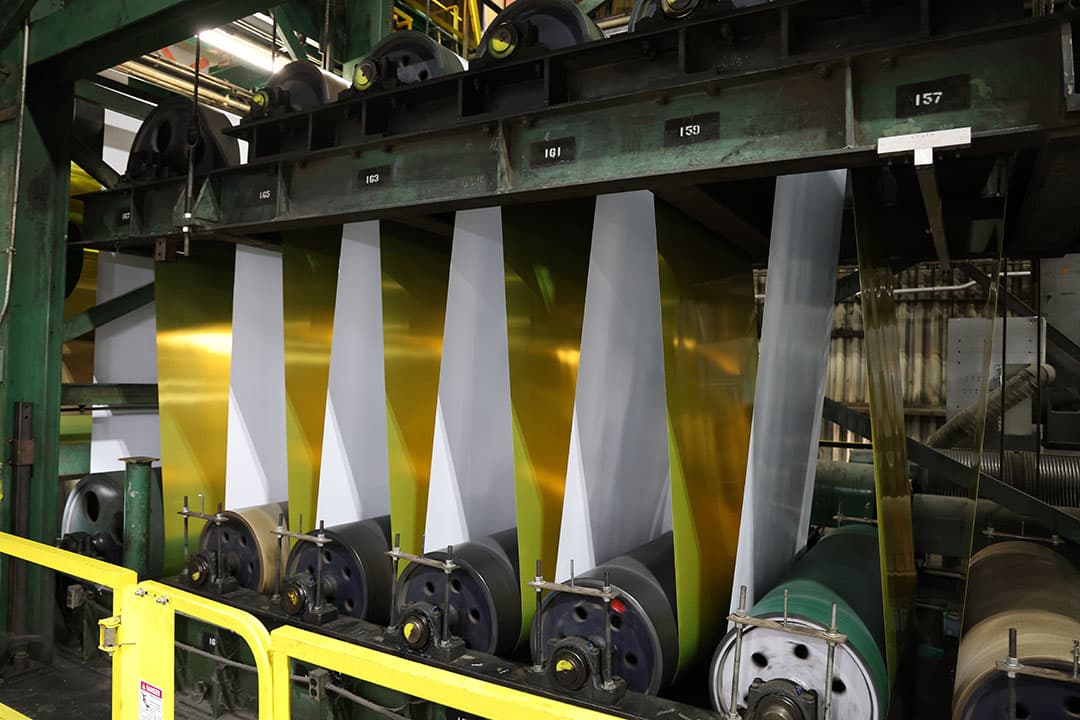
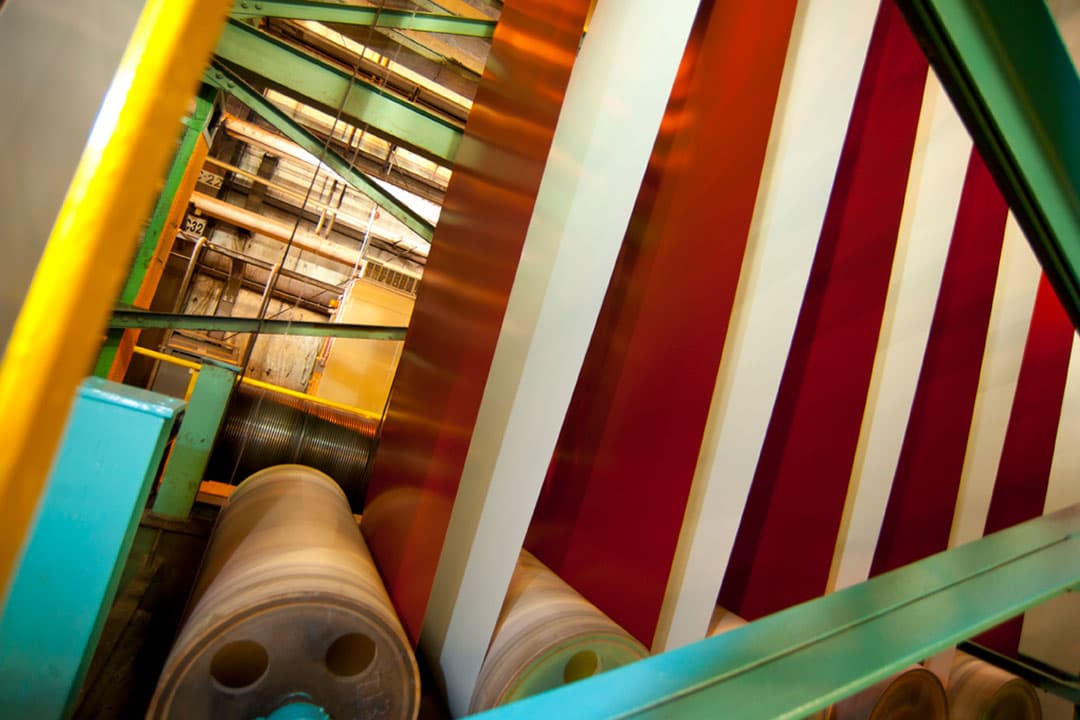
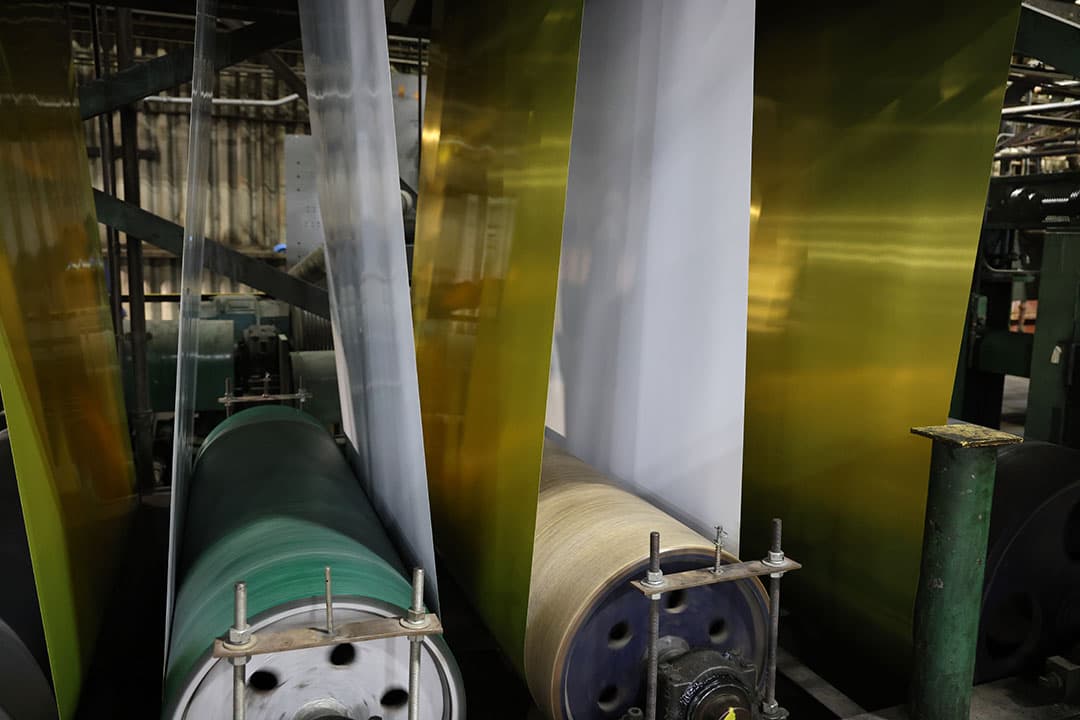
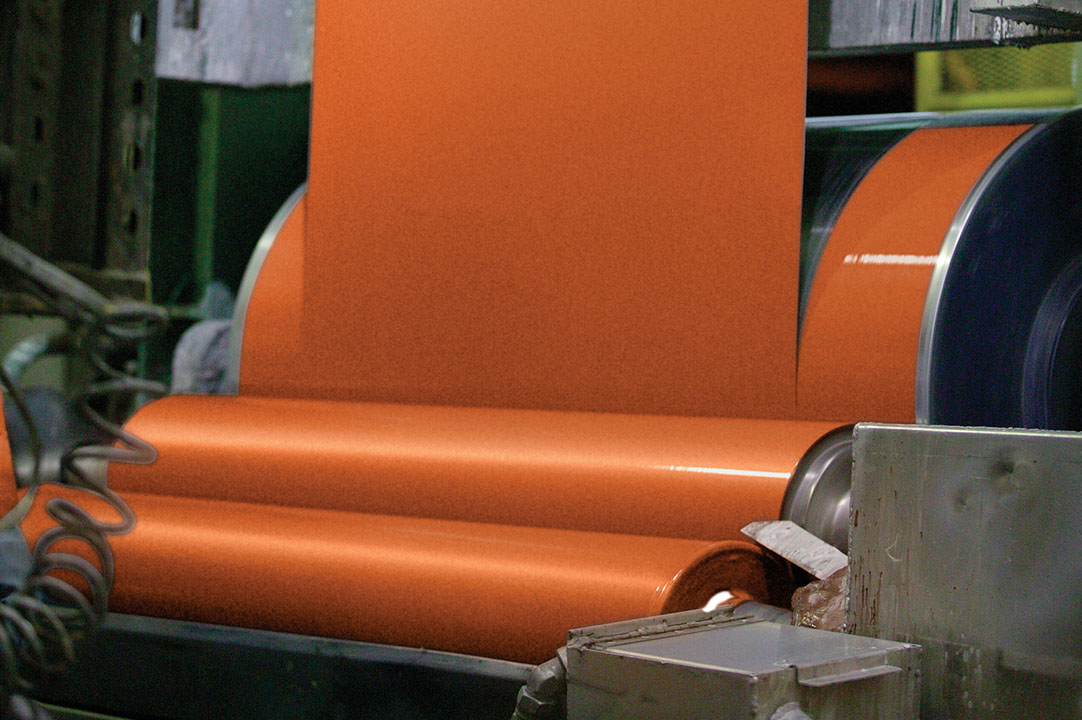
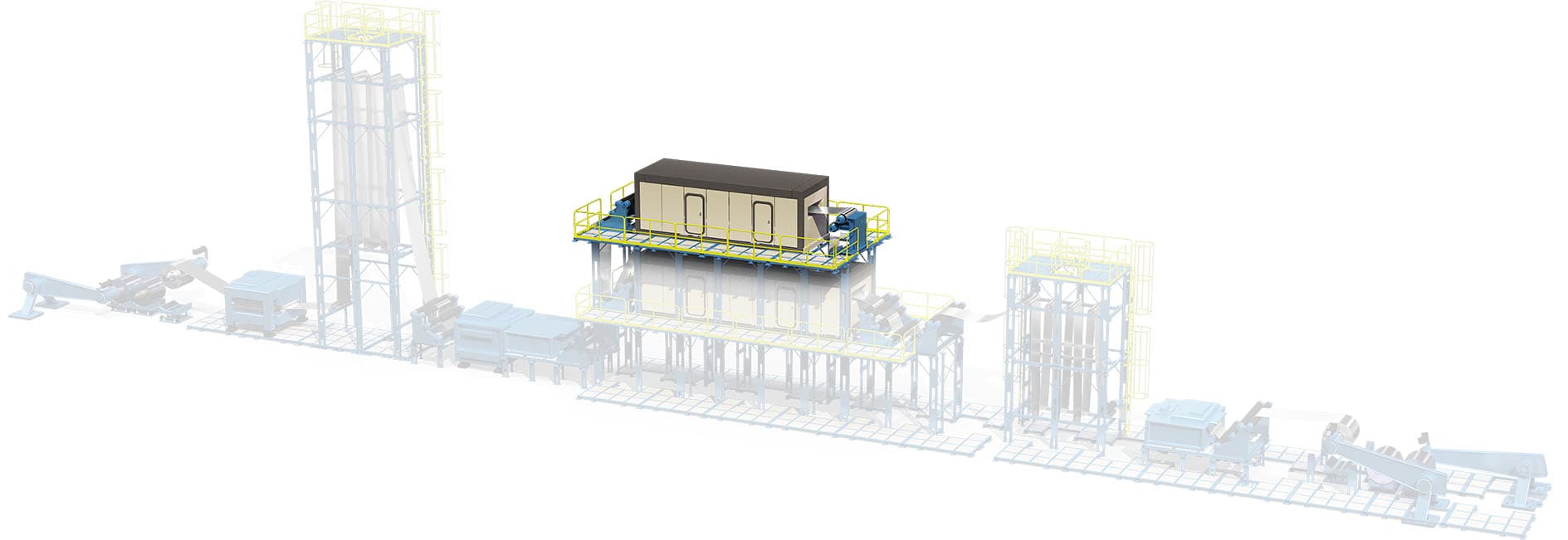
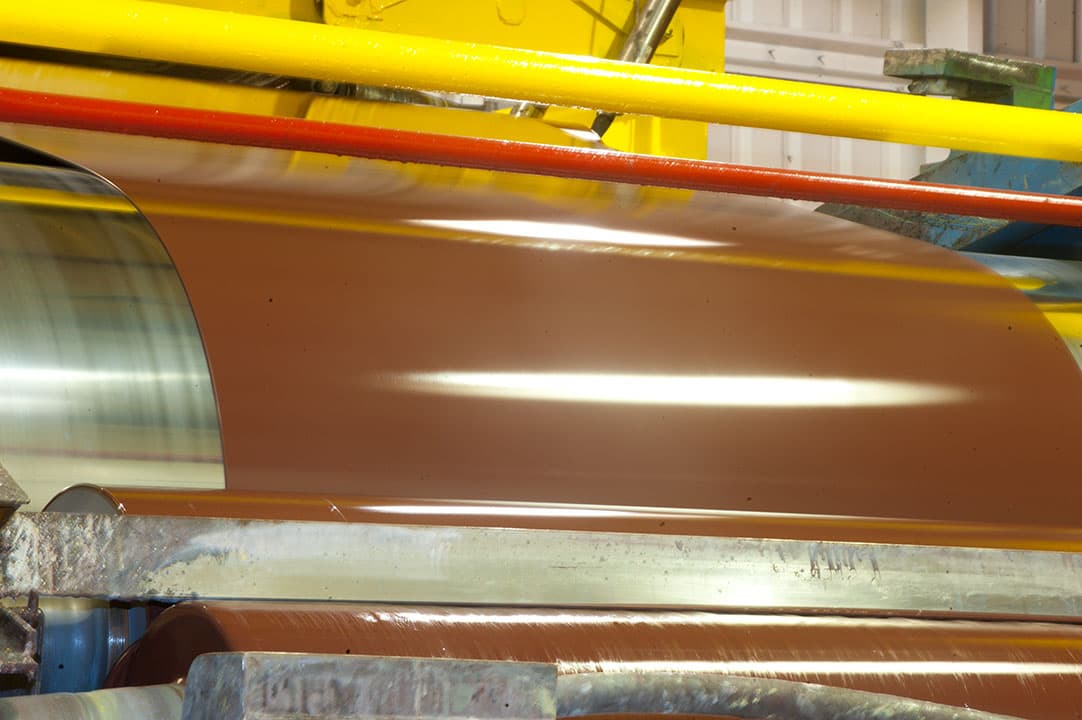
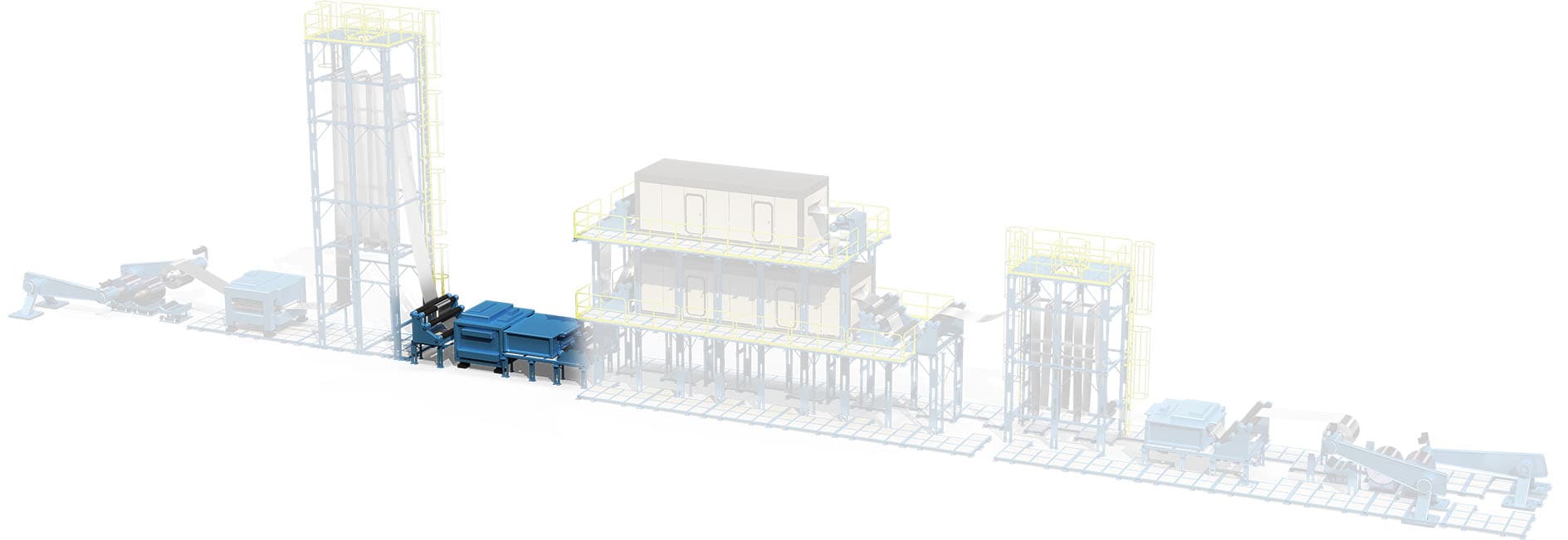
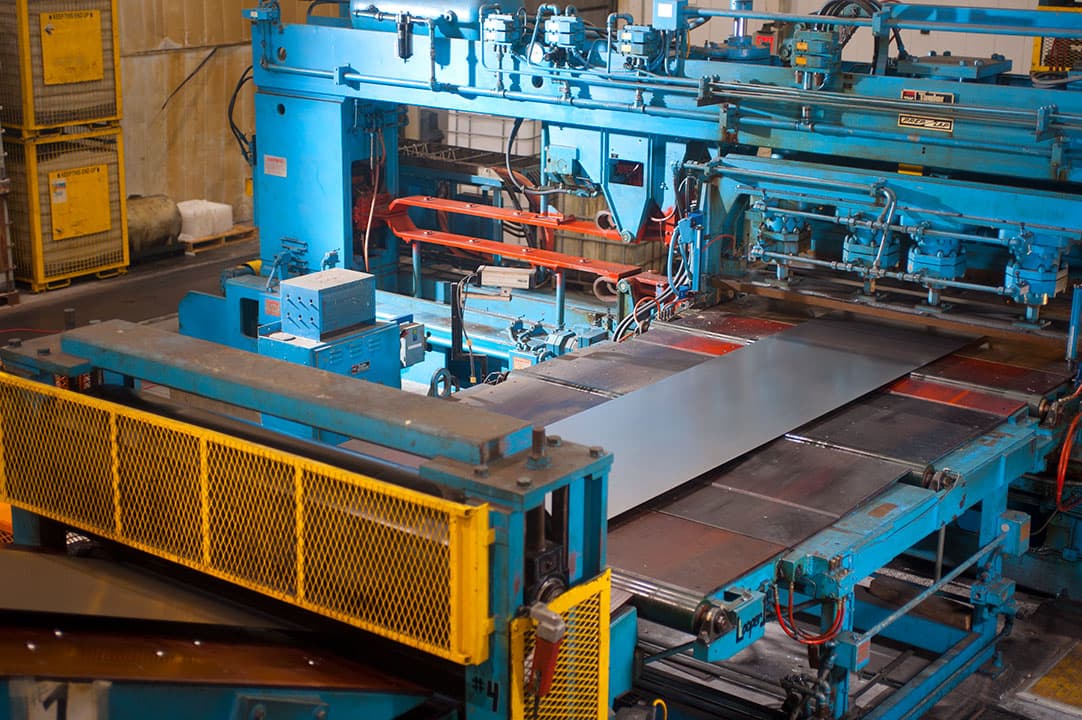
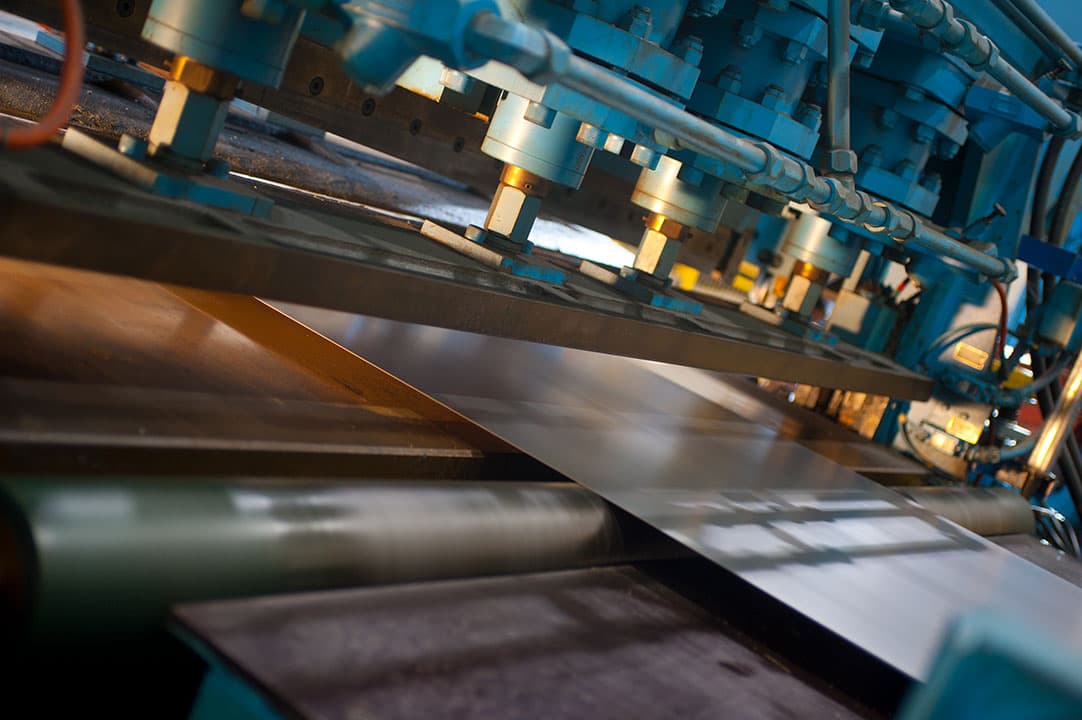
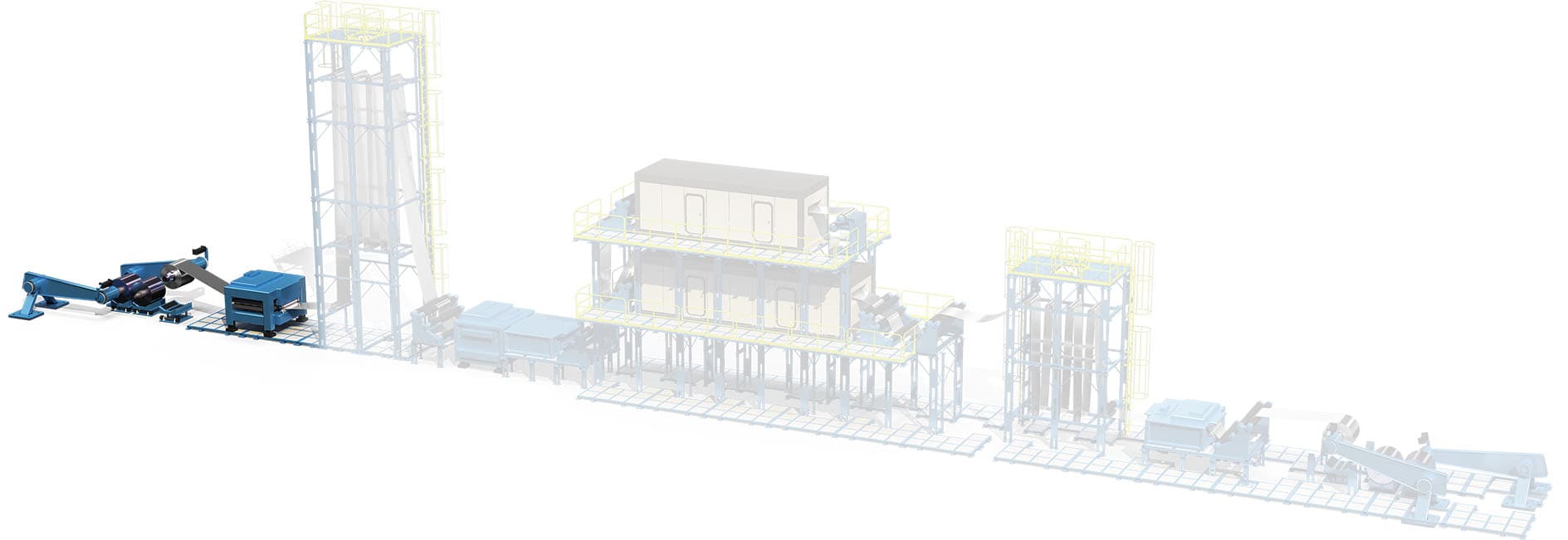
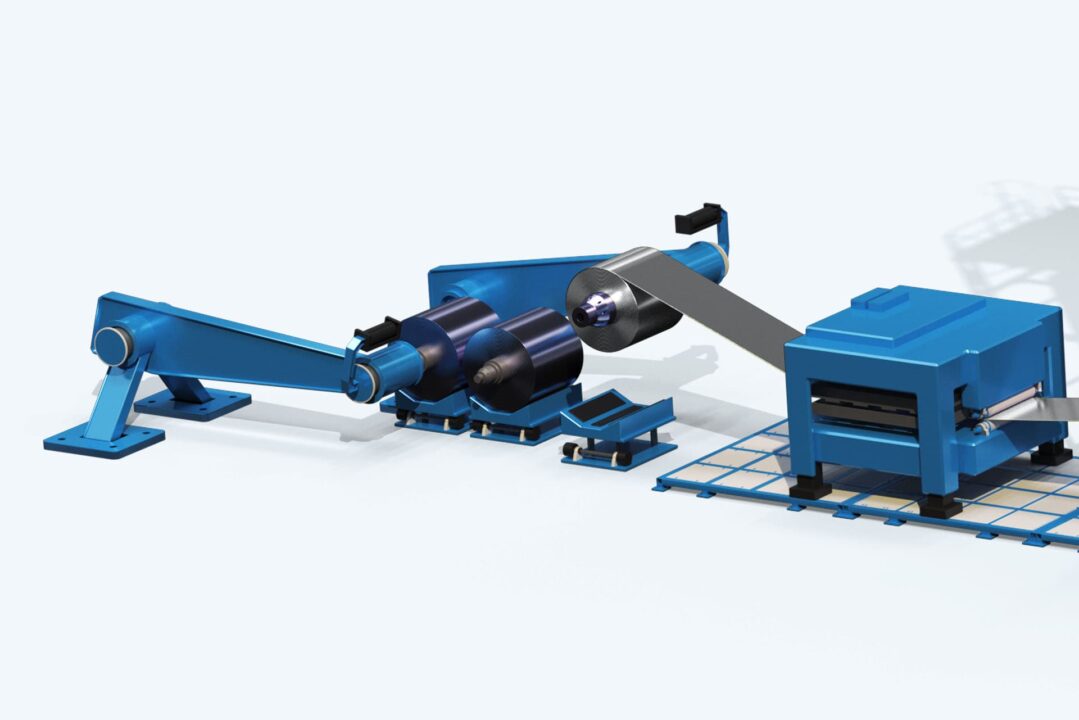
Once the metal is cleaned, treated, and painted, the strip is rewound into a coil size prescribed by the customer. From there, the coil is removed from the line and packaged for shipment or additional processing.
After the primer is applied and cured, then the metal strip enters the finish coat station where a topcoat is applied. Topcoats provide color, corrosion resistance, durability, flexibility and any other required physical properties. Like primers, the topcoat is cured using thermal cure ovens.
Oven
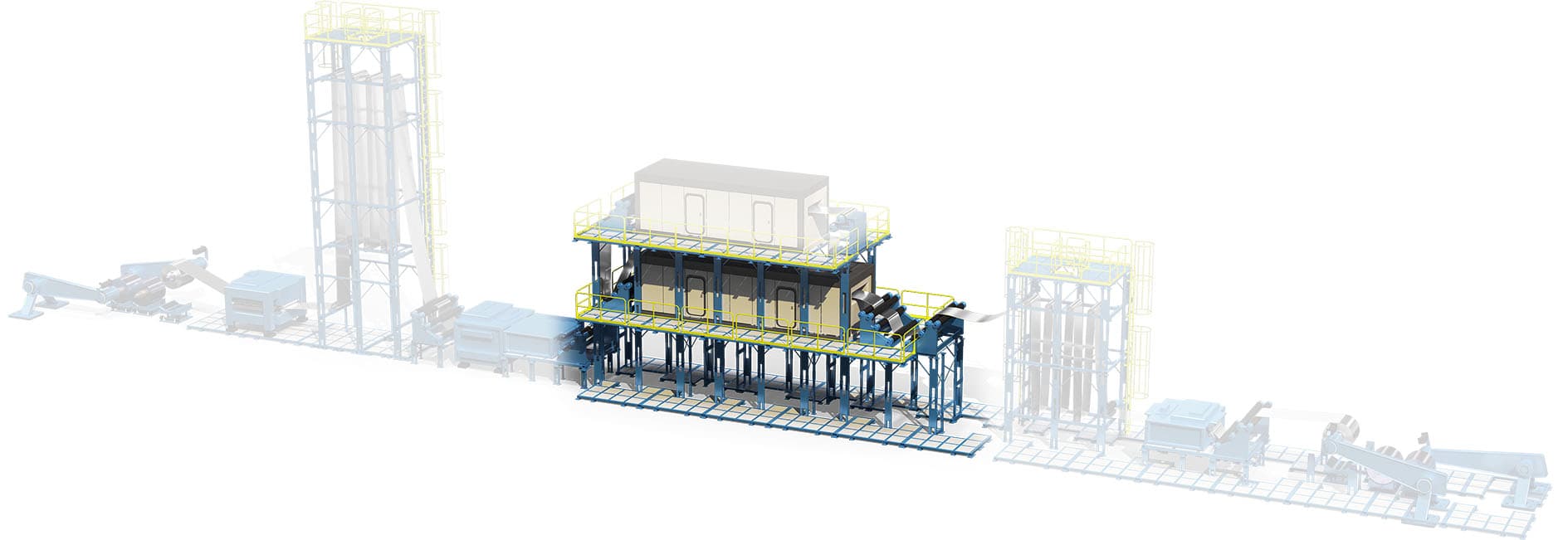
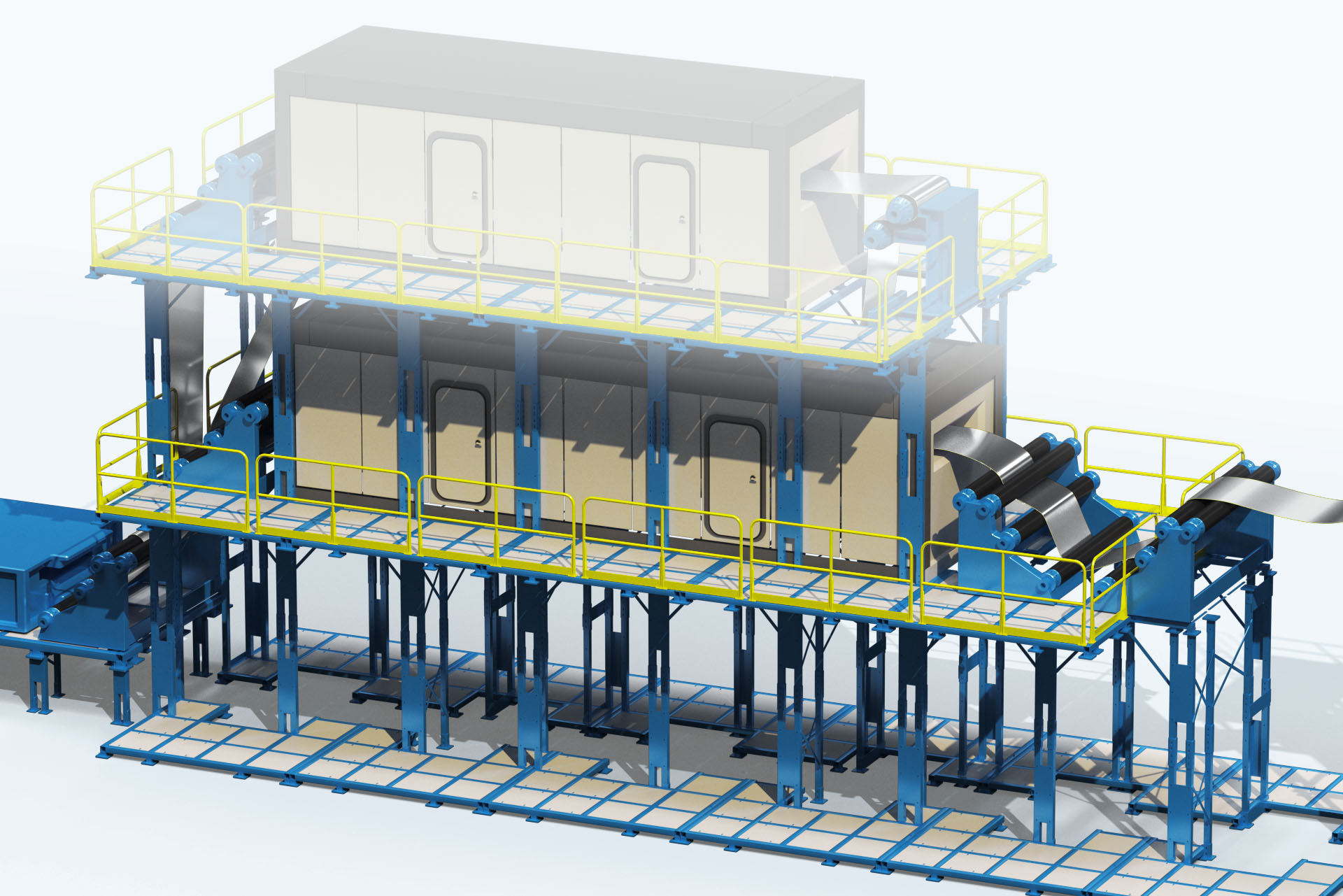
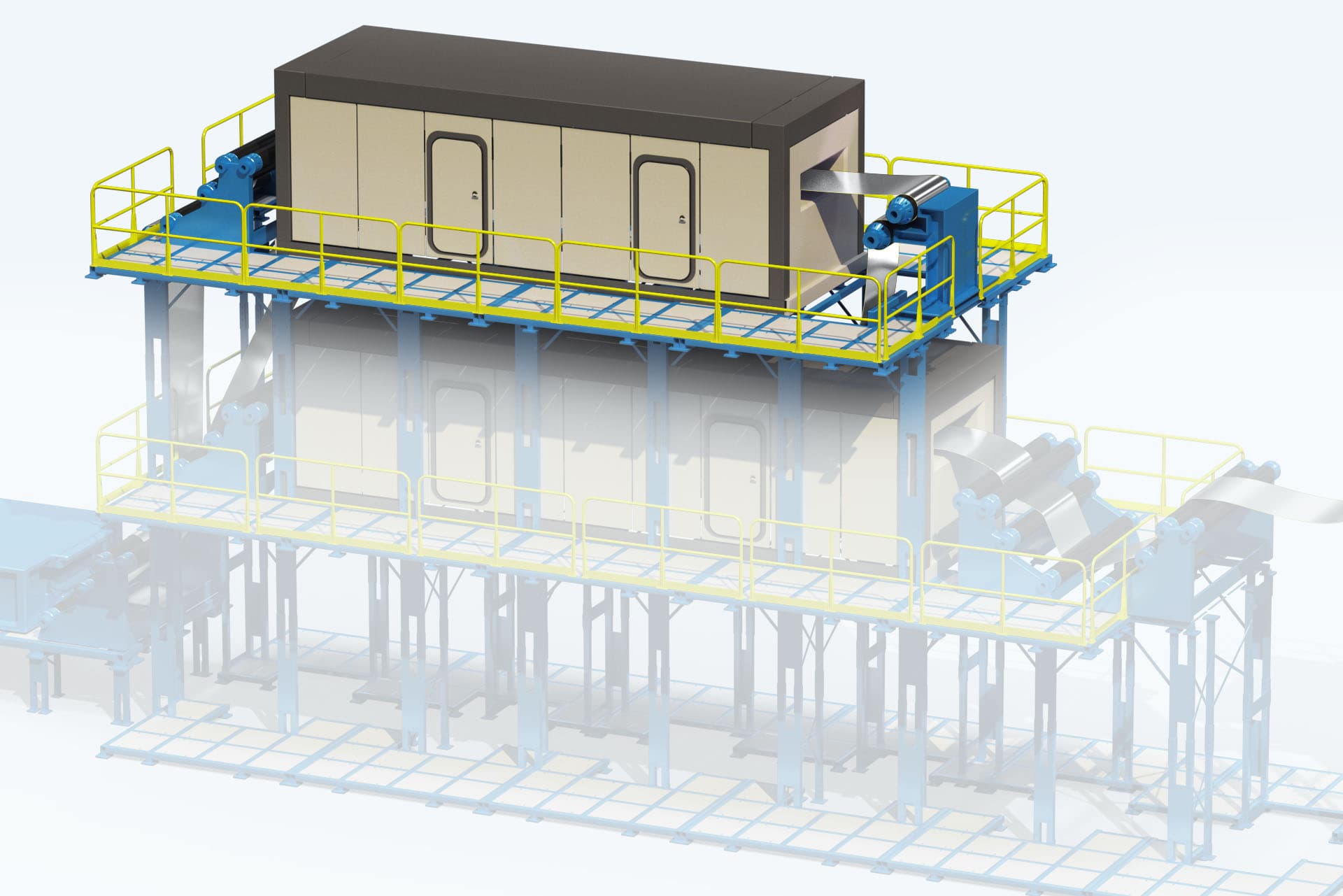
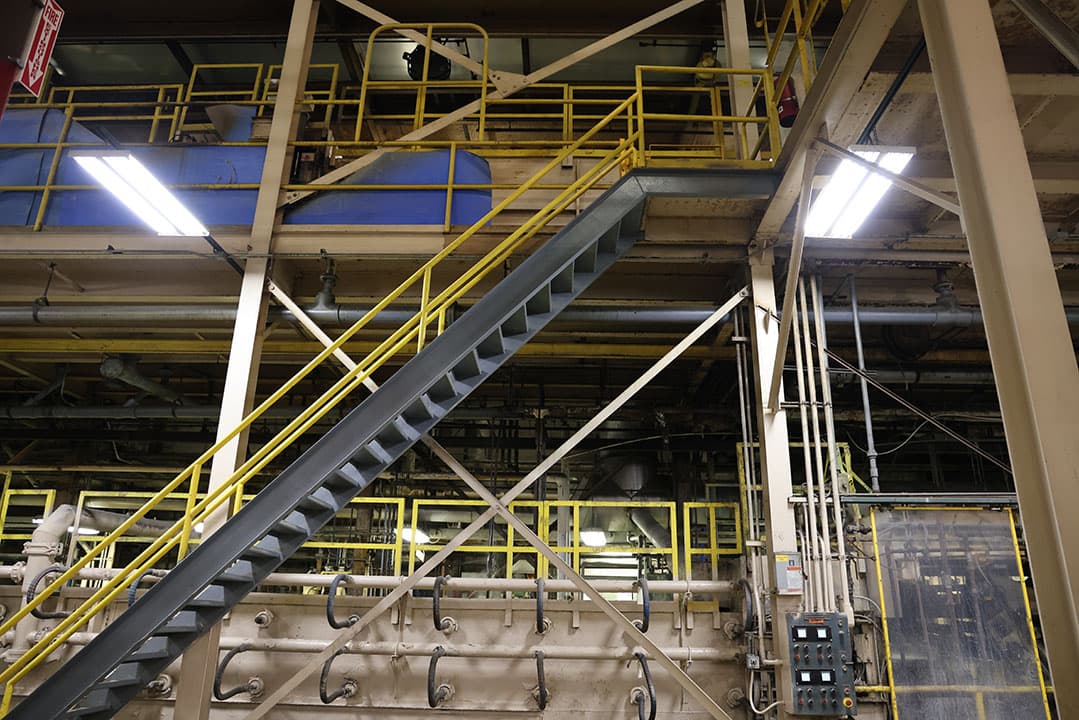
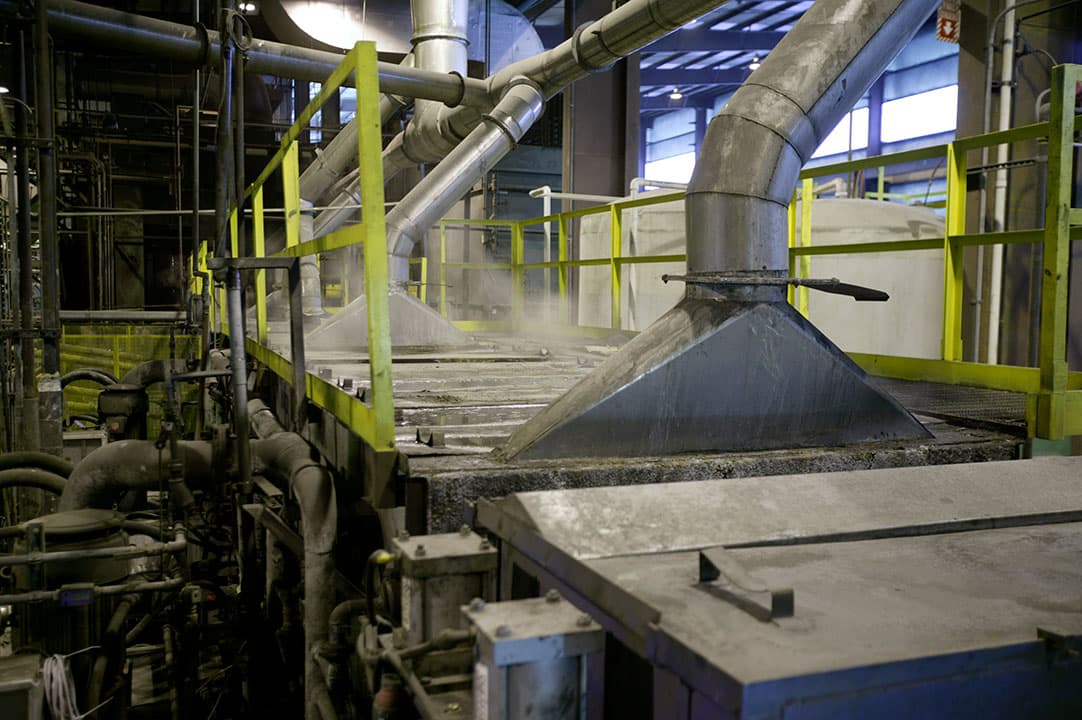
Coil coating ovens can range from 130 feet to 160 feet and will cure the coatings in 13 to 20 seconds.
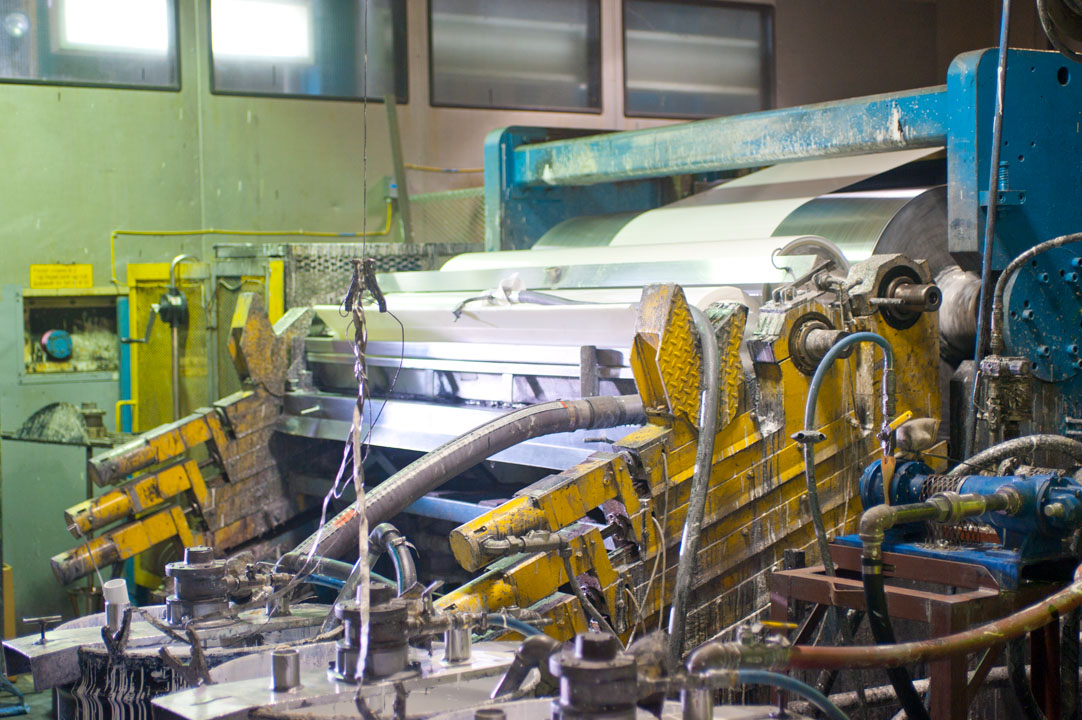
During this stage, the strip enters the prime coat station whereby a primer is applied to the clean and treated metal. After the primer is applied, the metal strip travels through a thermal oven for curing. Primers are used to aid in paint adhesion, improve corrosion performance and enhance aesthetic and functional attributes of the topcoat.
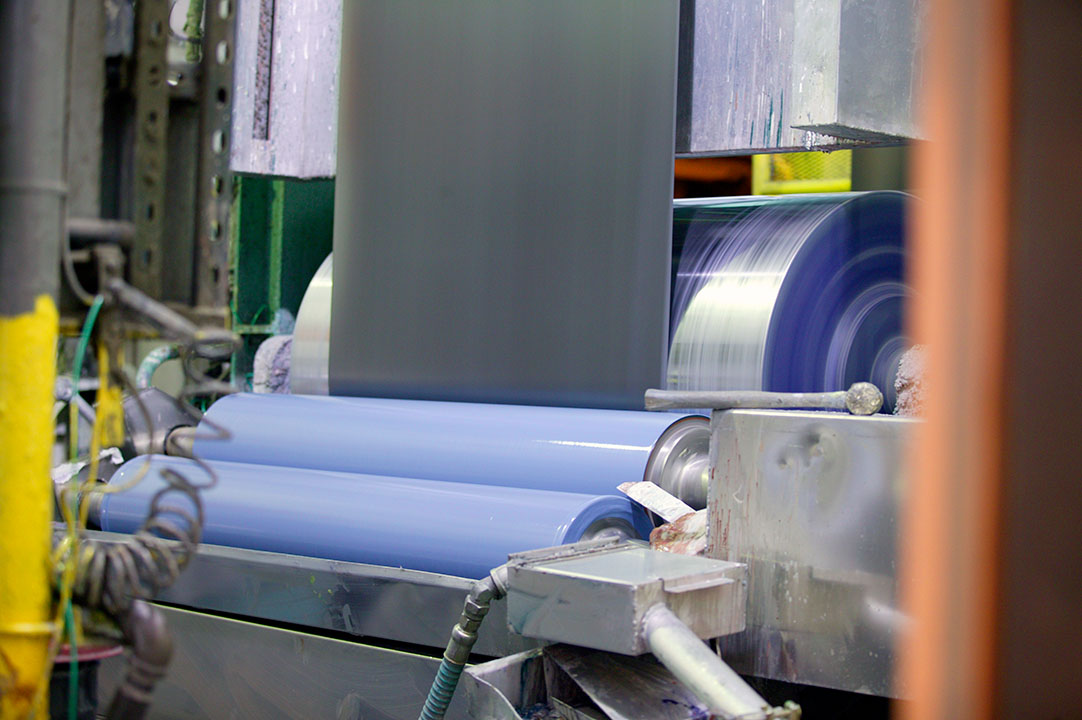
S Wrap Coater
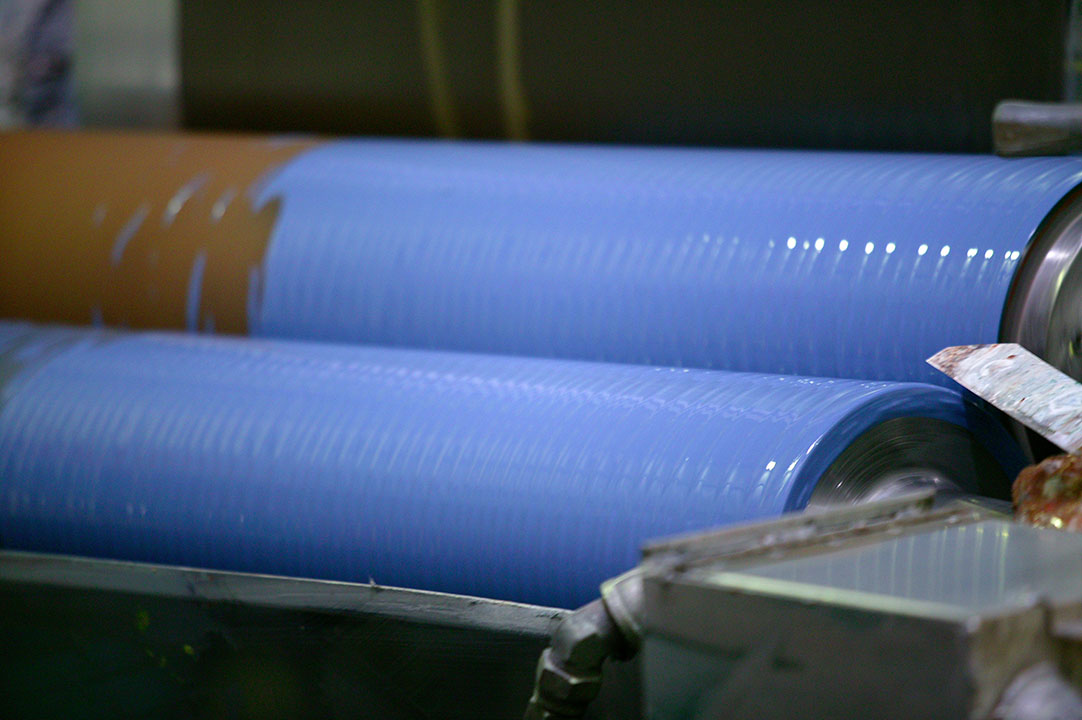
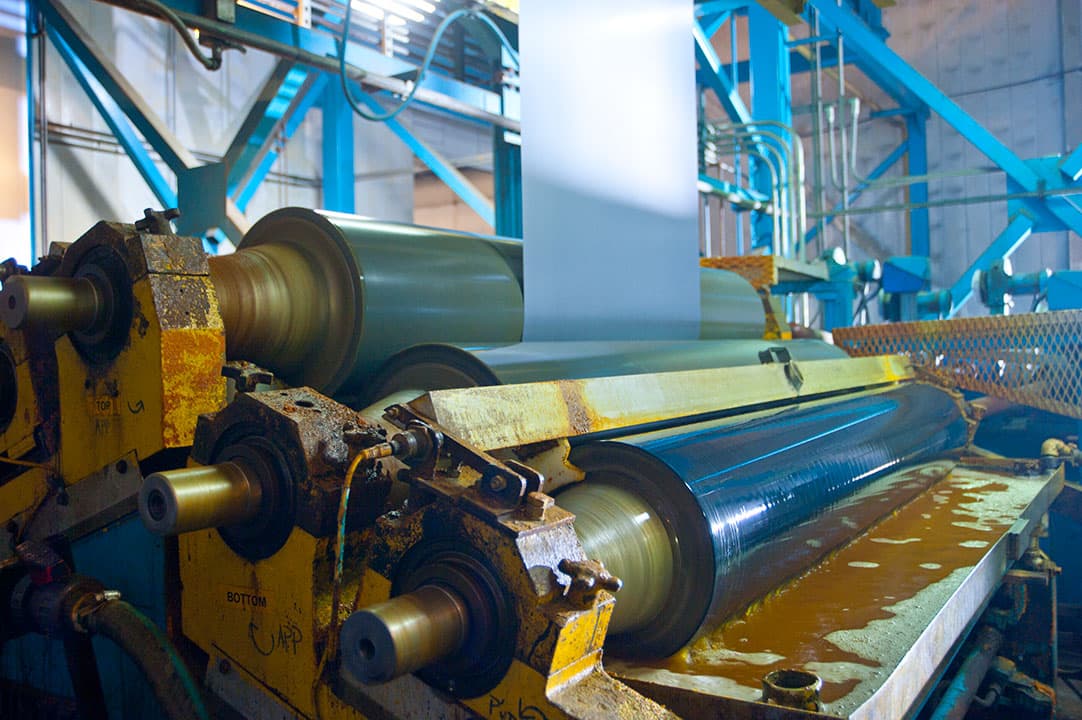
The S wrap coater design allows for primers and paints to be applied to the top and back side of the metal strip simultaneously in one continuous pass.
The cleaning and pretreating section of the coil coating process focuses on preparing the metal for painting. During the cleaning stage, dirt, debris, and oils are removed from the metal strip. From there, the metal enters the pretreatment section and/or a chemical coater whereby chemicals are applied to facilitate paint adhesion and enhance corrosion resistance.
Dried-In-Place
In this stage a chemical that provides enhanced corrosion performance is applied. This treatment can be chrome free if required.
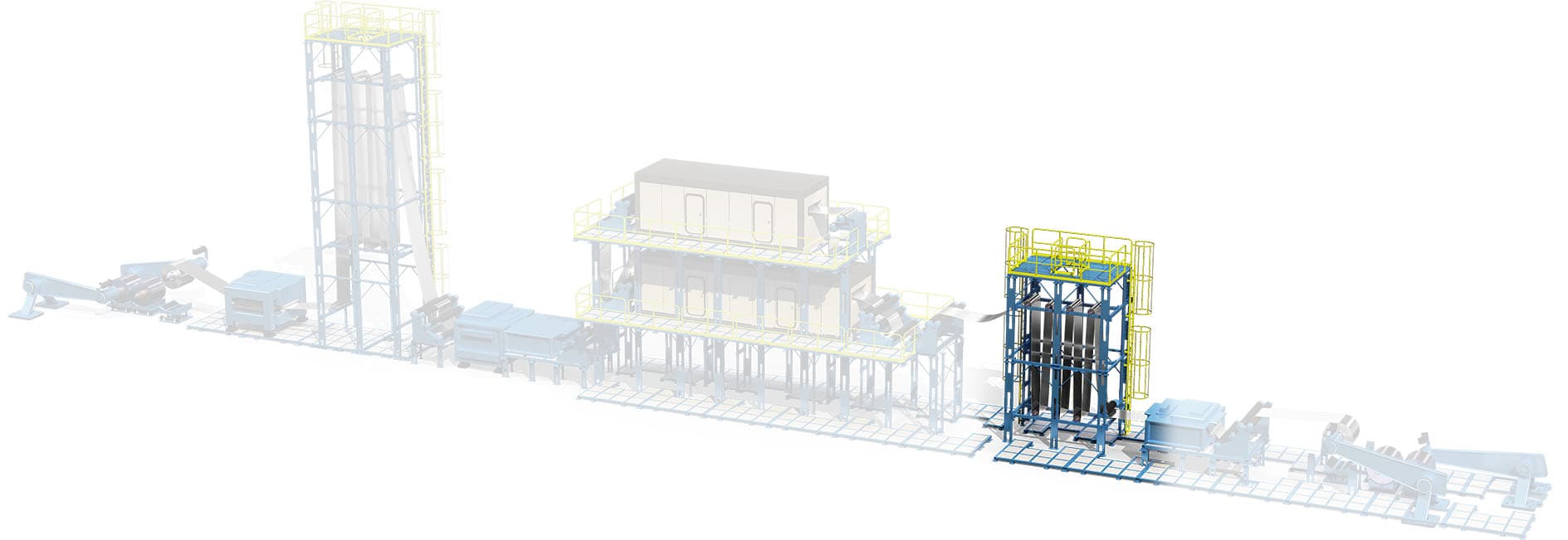
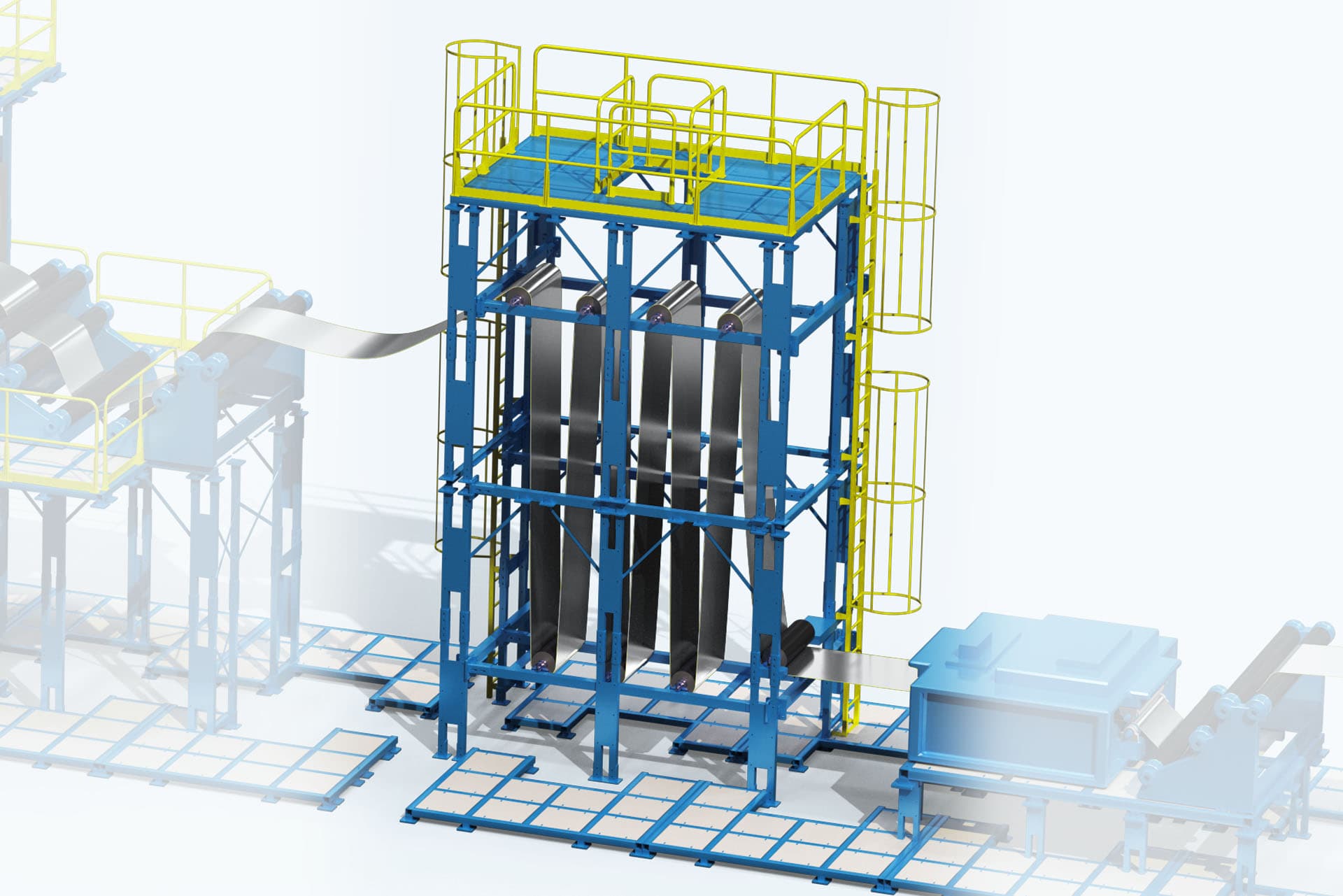
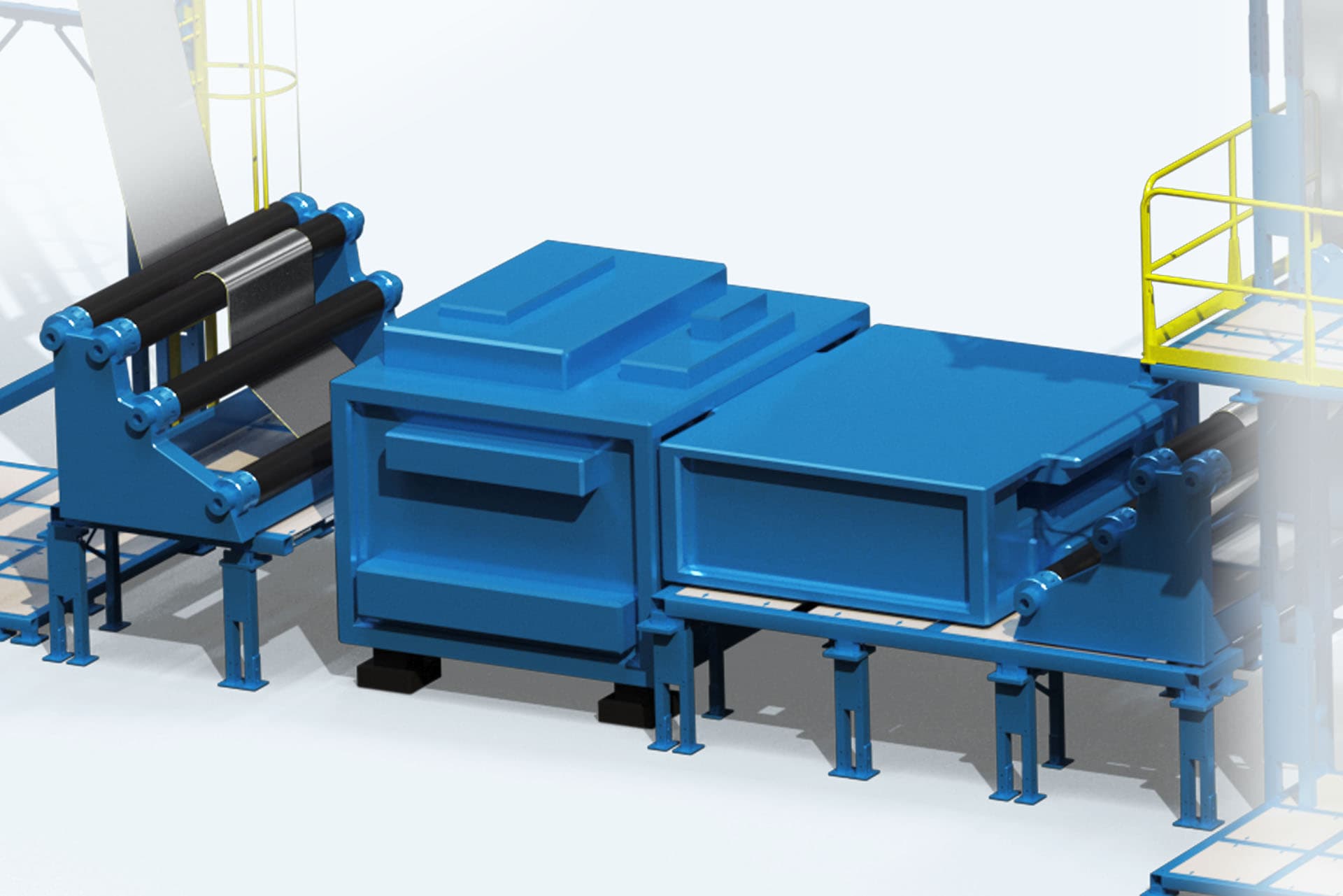
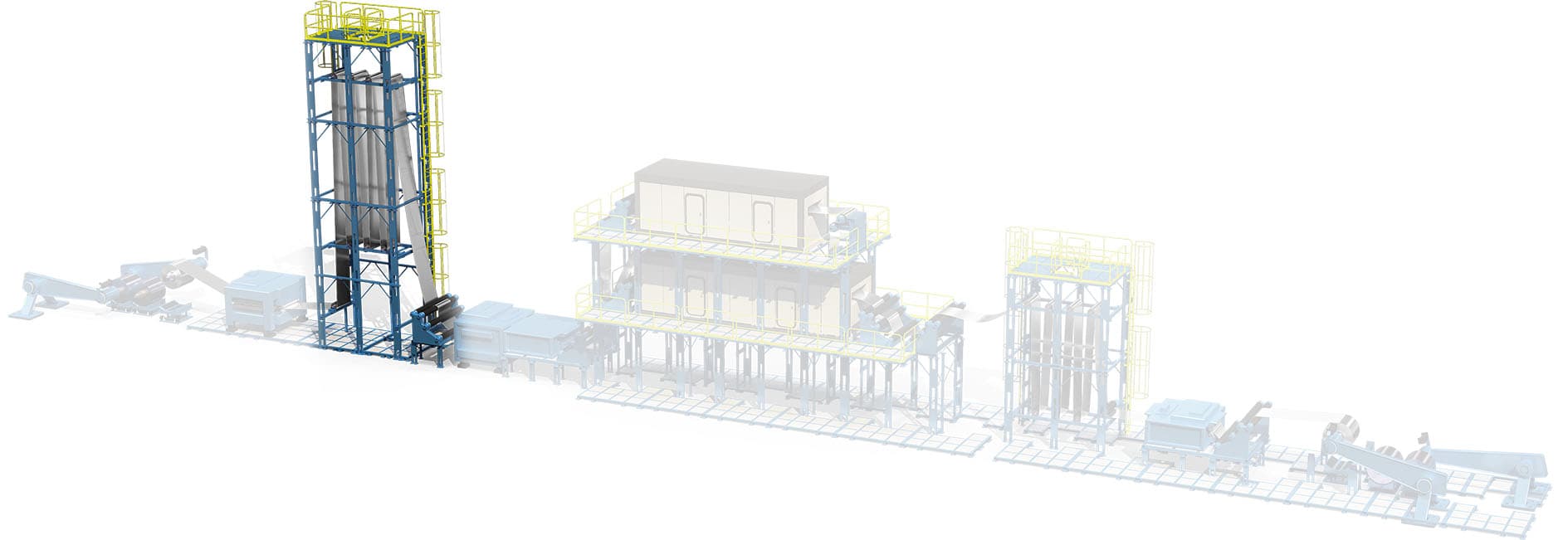
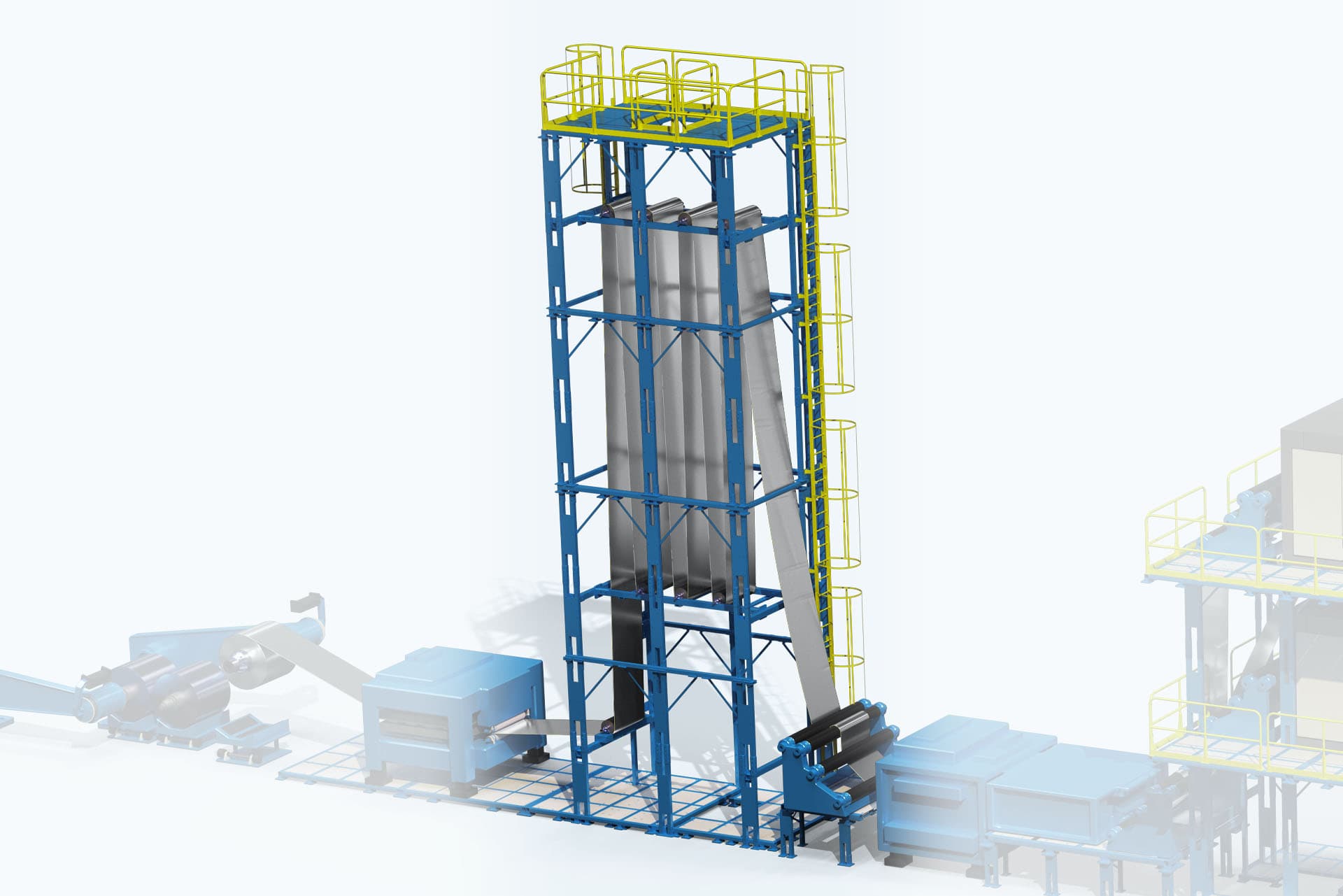
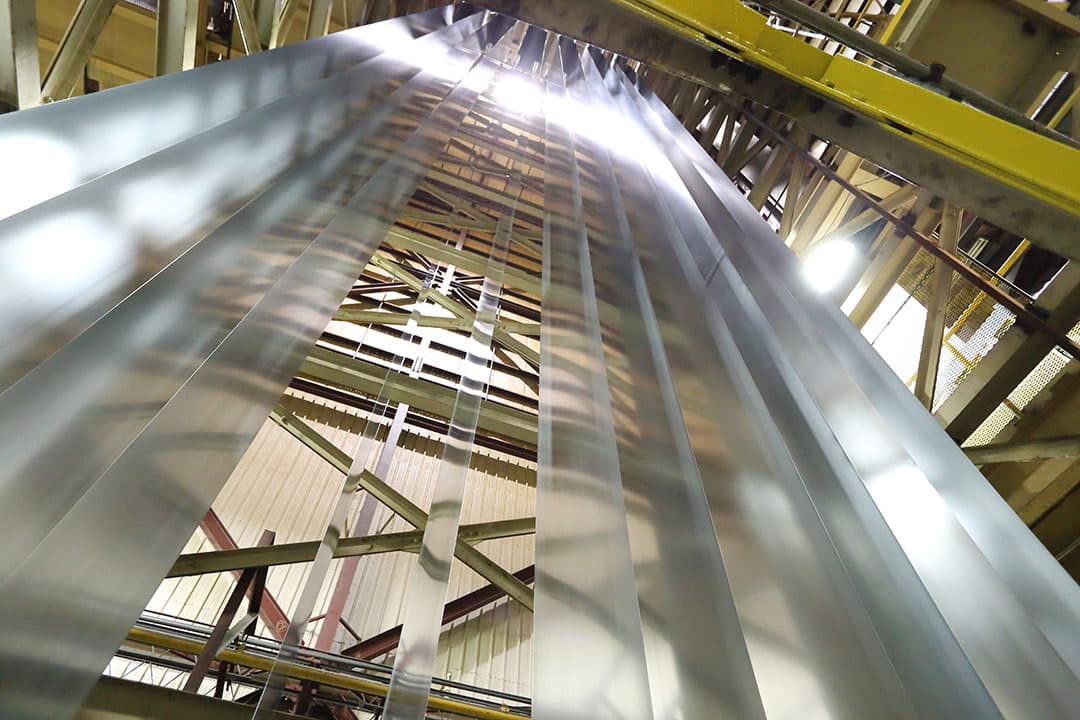
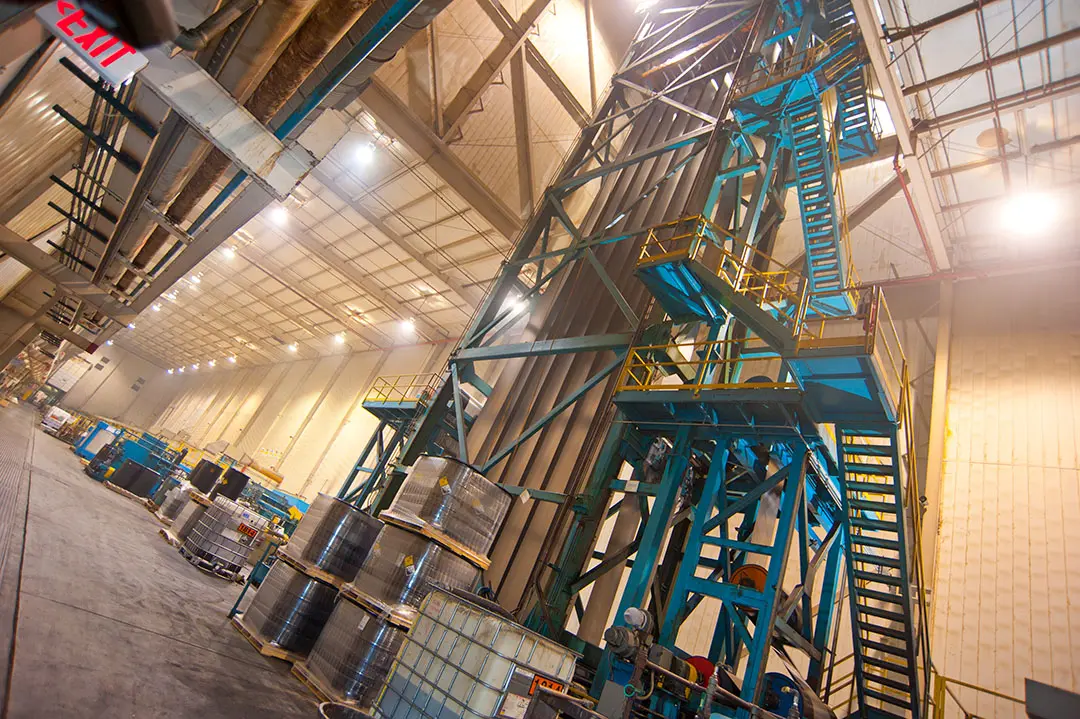
The accumulator is a structure that adjusts up and down to store material, which makes continuous operation of the coil coating process possible. This accumulation will continue to feed the coil coating processes while the entry end has stopped for the stitching process. As much as 750 feet of metal can be collected.
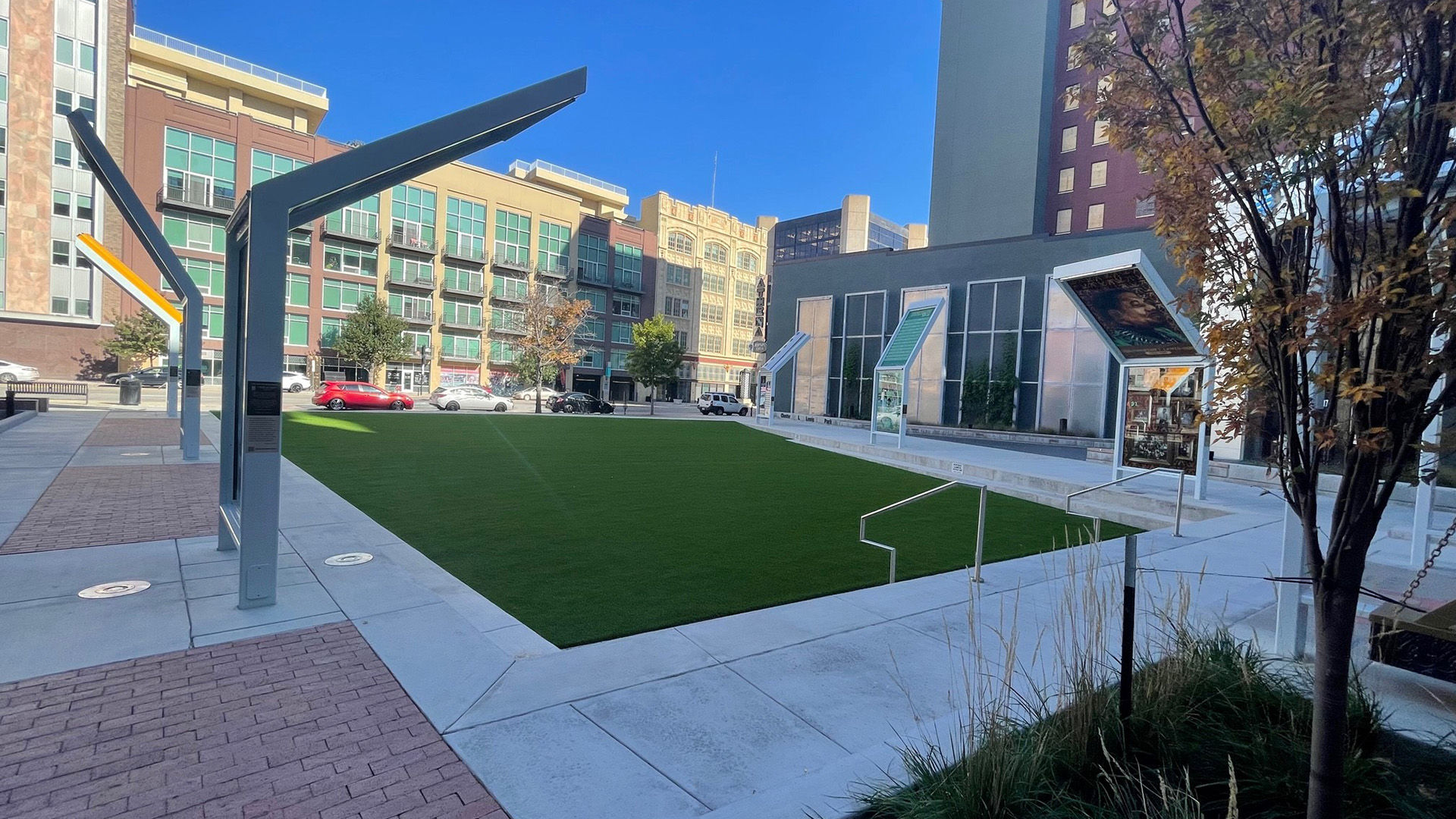
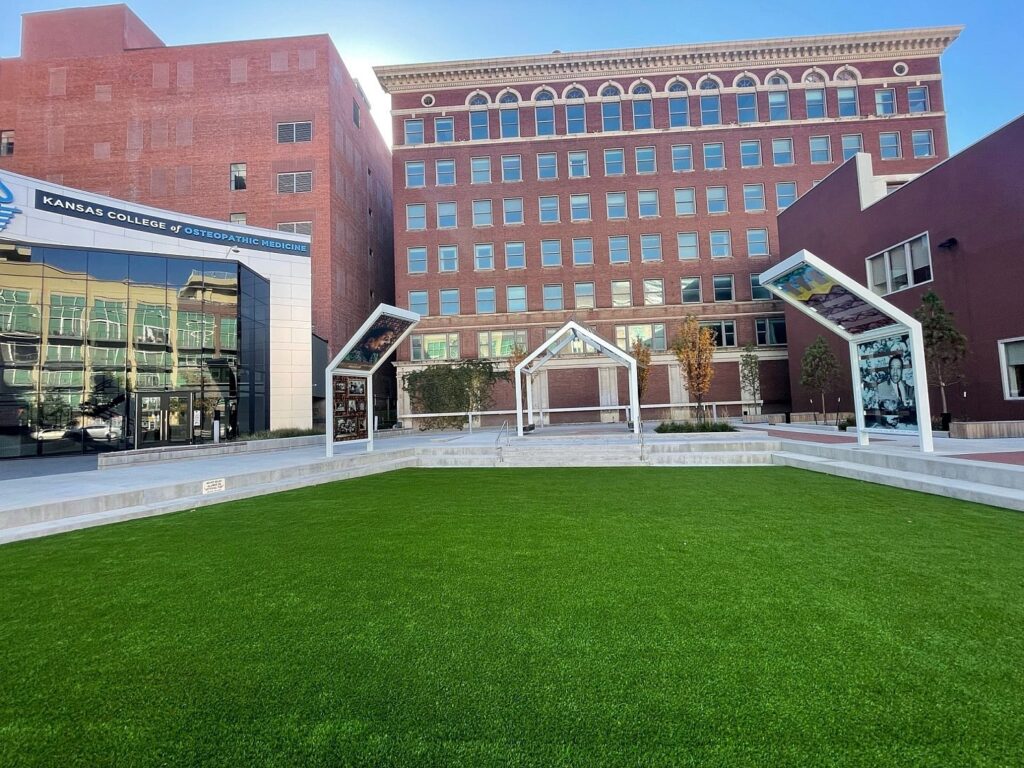
In the heart of downtown Wichita, a stunning transformation took place. A partnership between Wichita Parks & Rec Department, a design firm, an art consultant, and two talented artists set the stage for this journey.
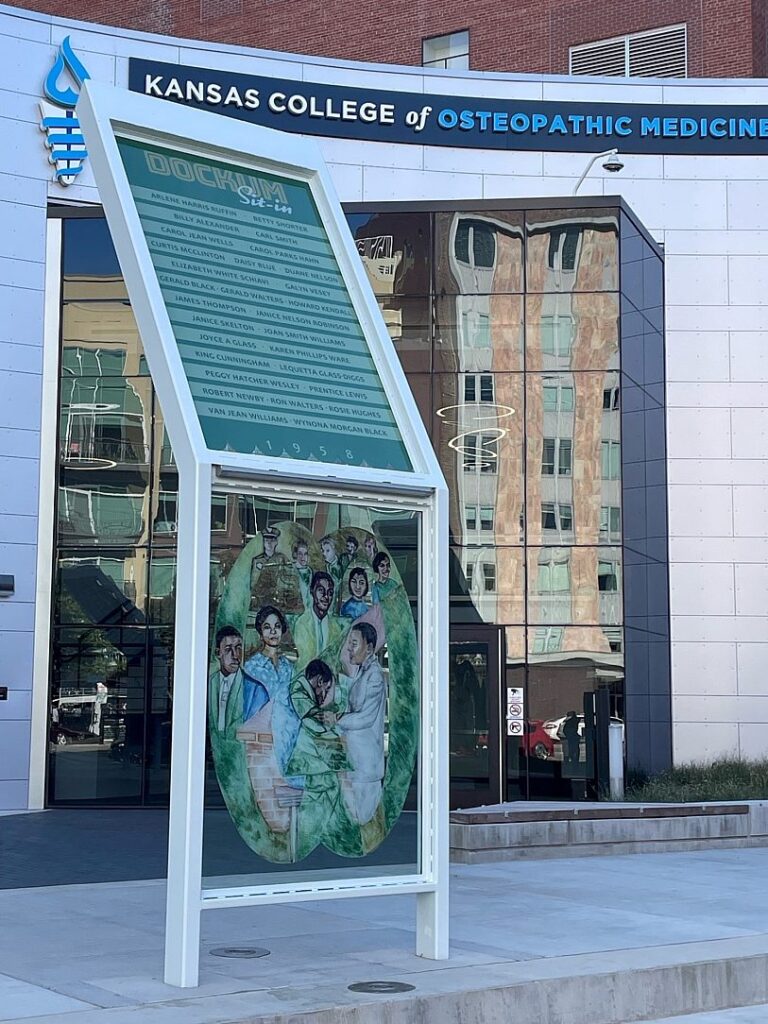
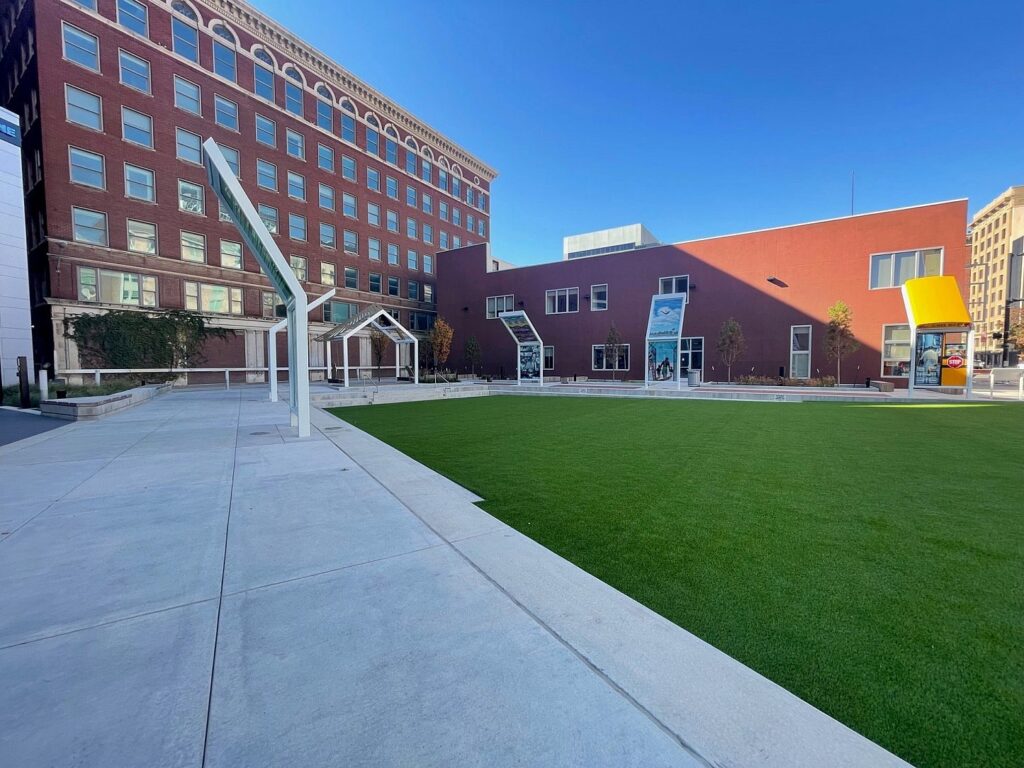
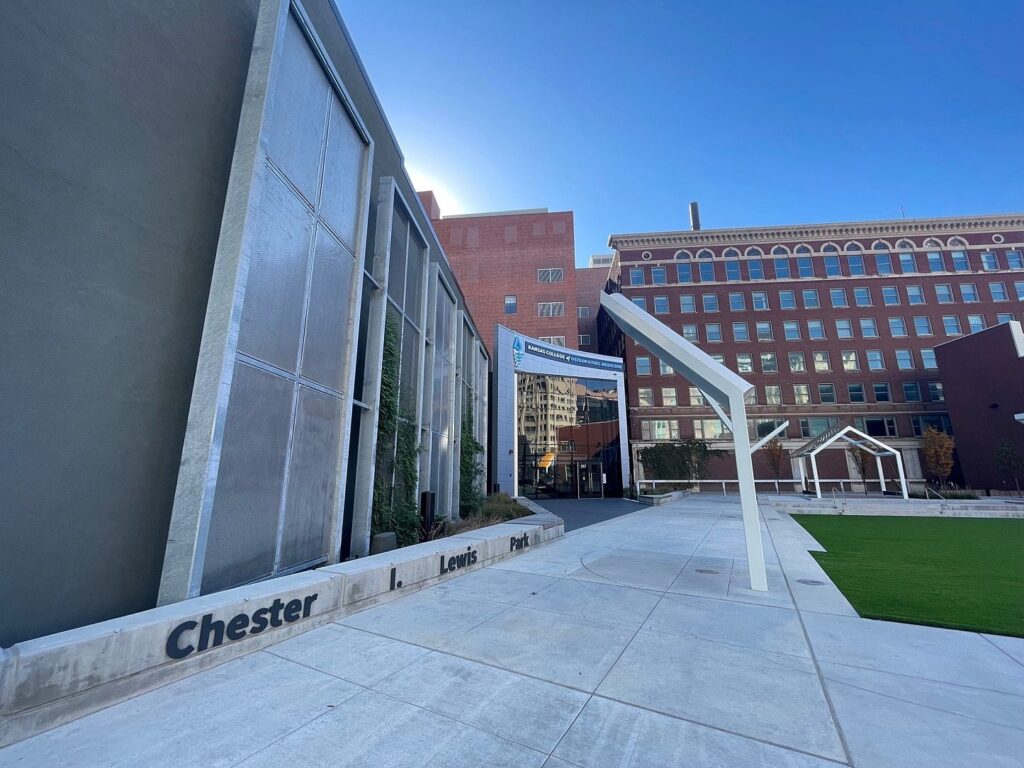
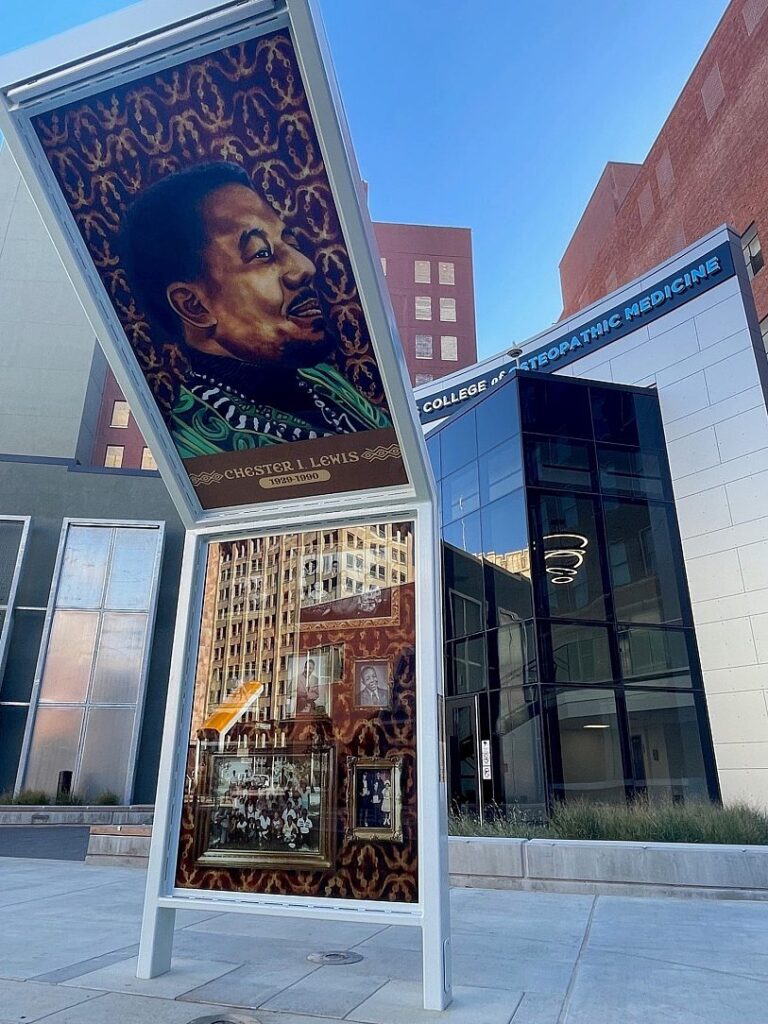
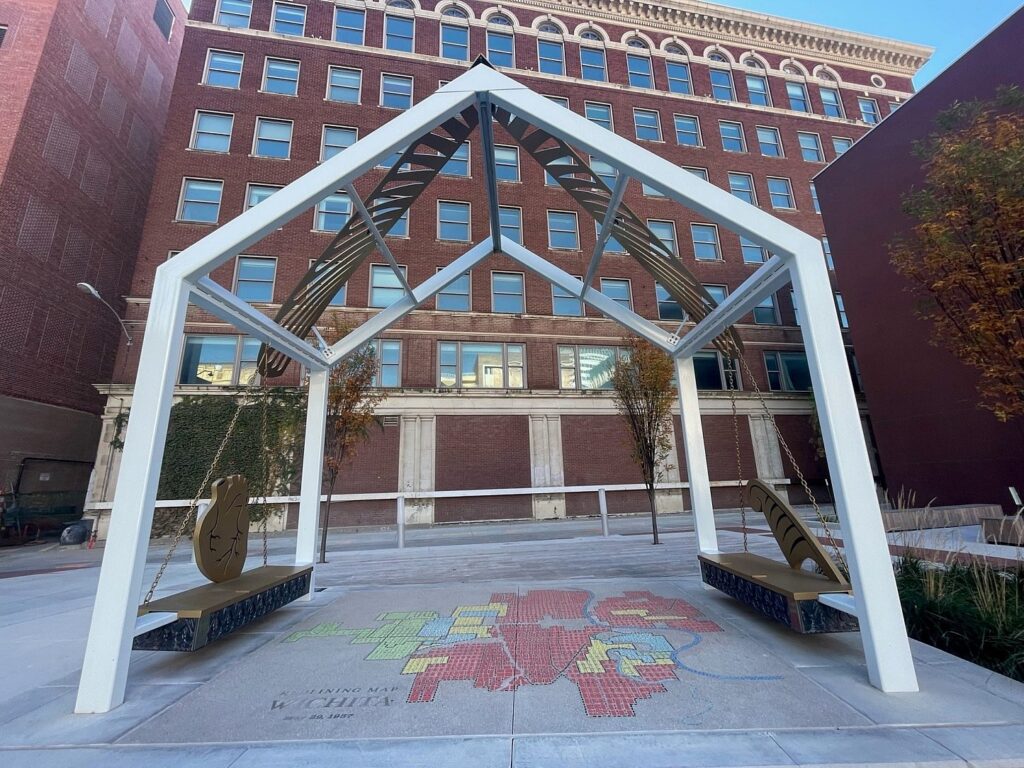
The reimagining of Chester I. Lewis Reflection Square Park was a dream to become more than just a park, and it became a living testament to the local Wichita culture and its people. As a prominent local Civil Rights leader, Chester I. Lewis provided guidance to the NAACP Youth Council during the first successful series of student sit-ins at the Dockum Drug Store lunch counter in 1958. Their courage inspired other similar sit-ins across the country and helped bring about racial equality at places including restaurants, businesses, and swimming pools. The redesign of the reflection park was driven by the aspiration to reflect the cultures of Wichita’s ethnically and racially diverse communities in the contemporary context of dialogue on race and memorials in public space.
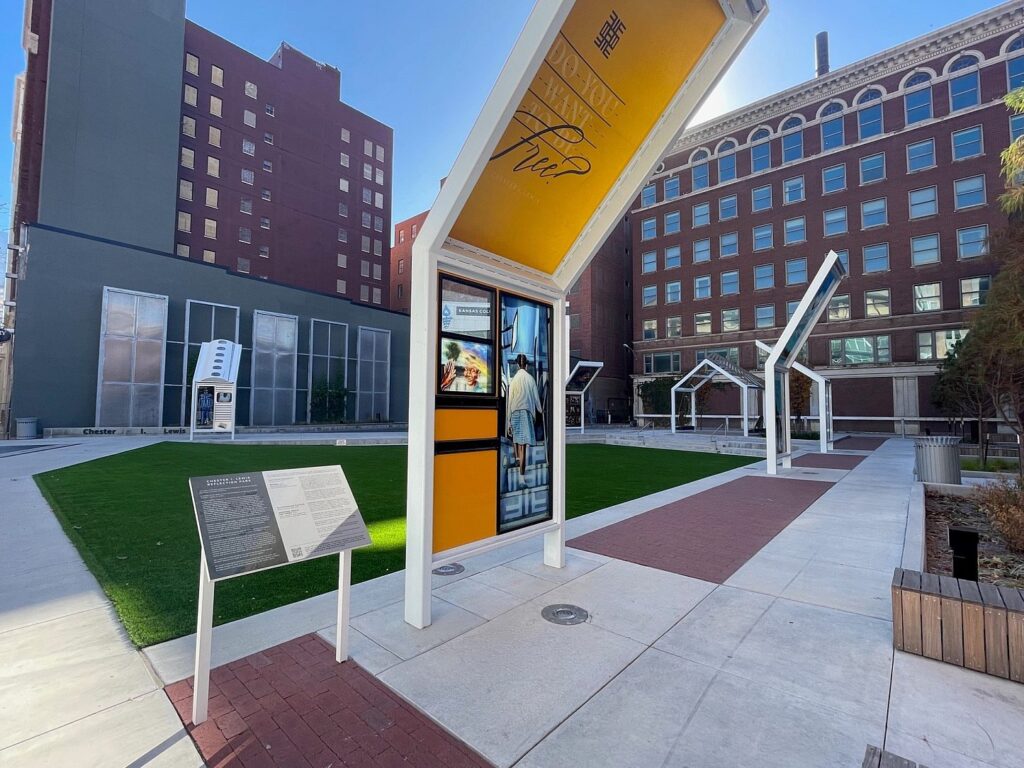
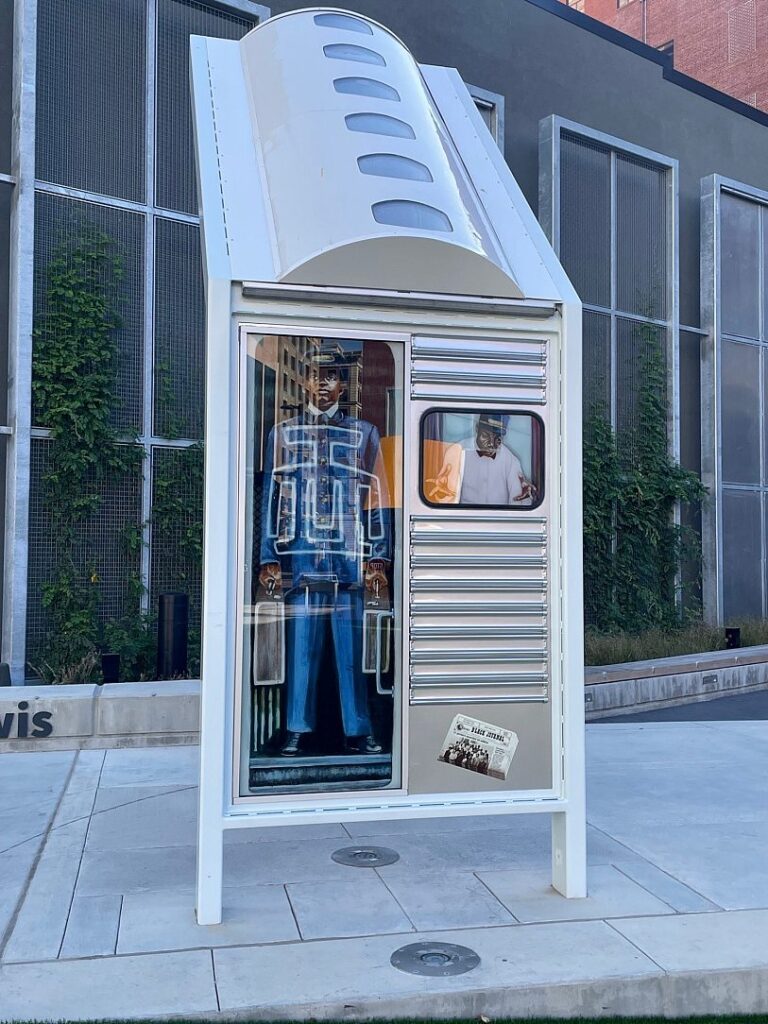
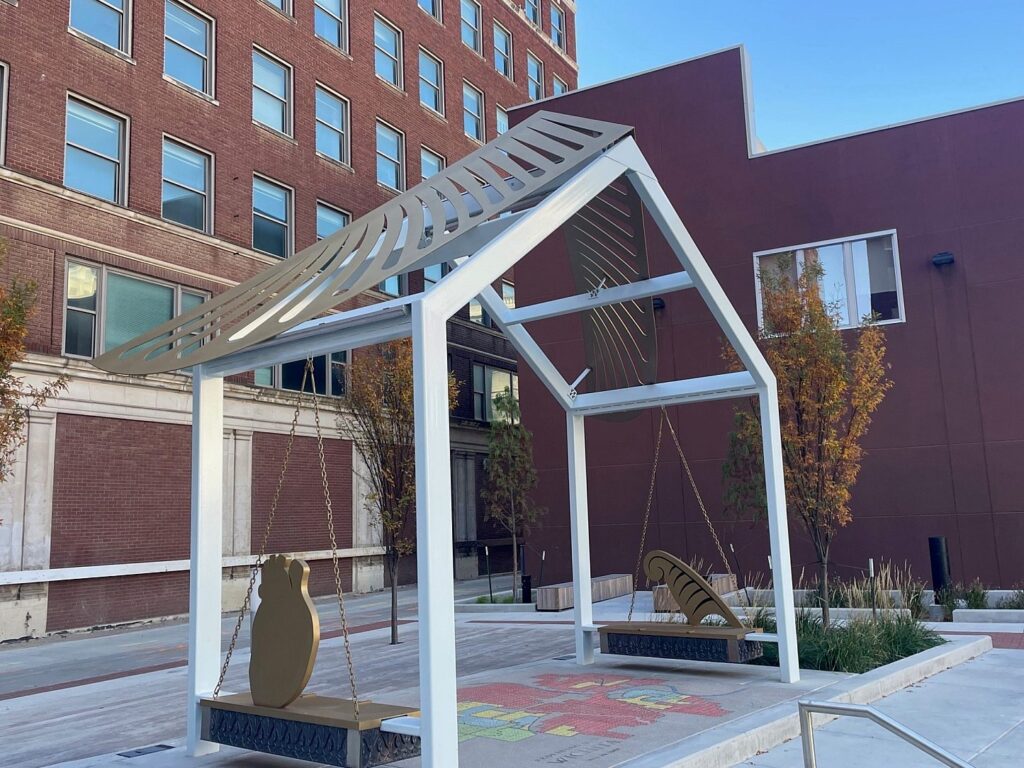
In its previously aged condition, the park was worn, underutilized, and often subject to vandalism. As a historically significant landmark, it is important to the community of Wichita to preserve the integrity of the meaning of the site while simultaneously improving the physical design. This is in part why the installation features both hot-dip galvanized & duplex coated structures in its design, as well as purely artistic elements crafted from metal that contrast and complement the galvanized structures. Contrast can also be appreciated between the tall vertical zinc-finish galvanized window structures flanking the east wall, and the white paint-over-galvanized art framed wings enveloping the turf green bed in the center of the park.
The poster frame wings feature a duplex coating that combines the incomparable protection of hot-dip galvanizing with the aesthetics of a light blue paint coating. Given that much of this park was due for replacement sooner than originally planned, the maintenance free nature of a zinc-base duplex coating is a great advantage to preserving the financial investment of the city’s park so that multiple generations can appreciate the beautiful public space, as well as Mr. Lewis himself. Due to the additional protective value of these coatings being applied in tandem, the popularity and demand for duplex systems is growing in every market, every day.
The notoriety gained for this project through various marketing efforts to promote the park, and the outdoor exposure of the components, along with the new life and popularity of the park are an excellent testimony to the benefits of hot-dip galvanizing for outdoor installation art like this and will bring galvanizing to the forefront of design specifications for similar projects in the future.
The reimagining of Chester I. Lewis Reflection Square Park was a dream to become more than just a park, and it became a living testament to the local Wichita culture and its people.