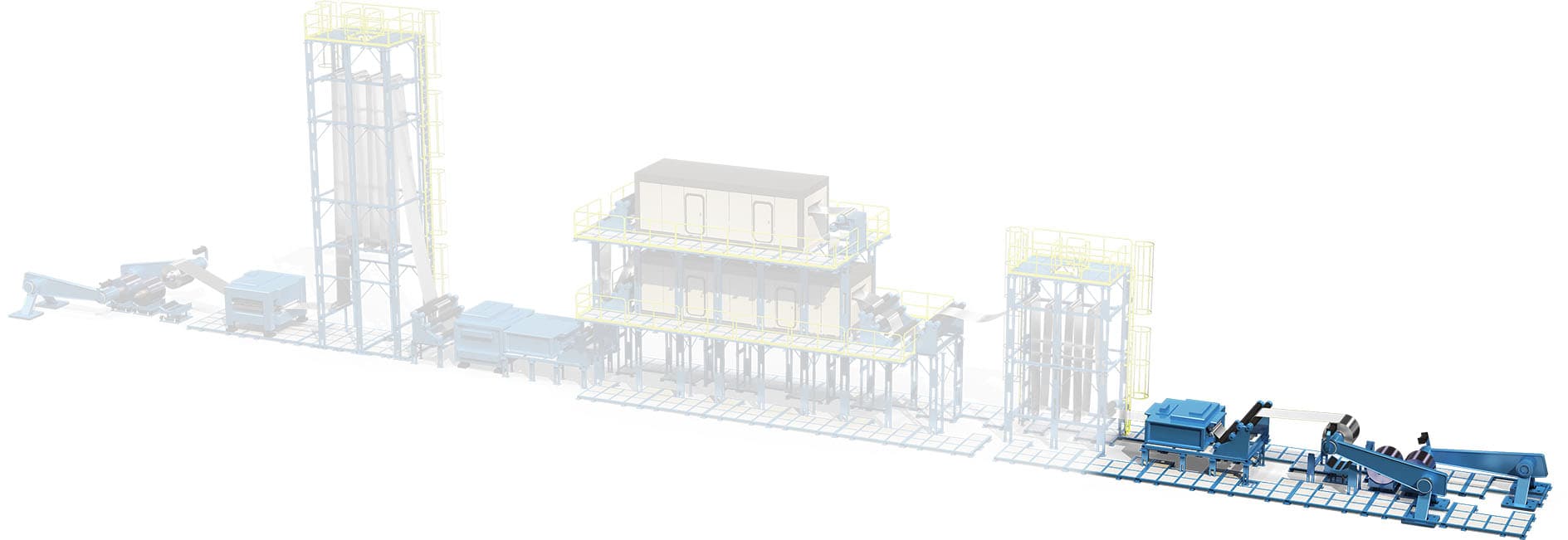
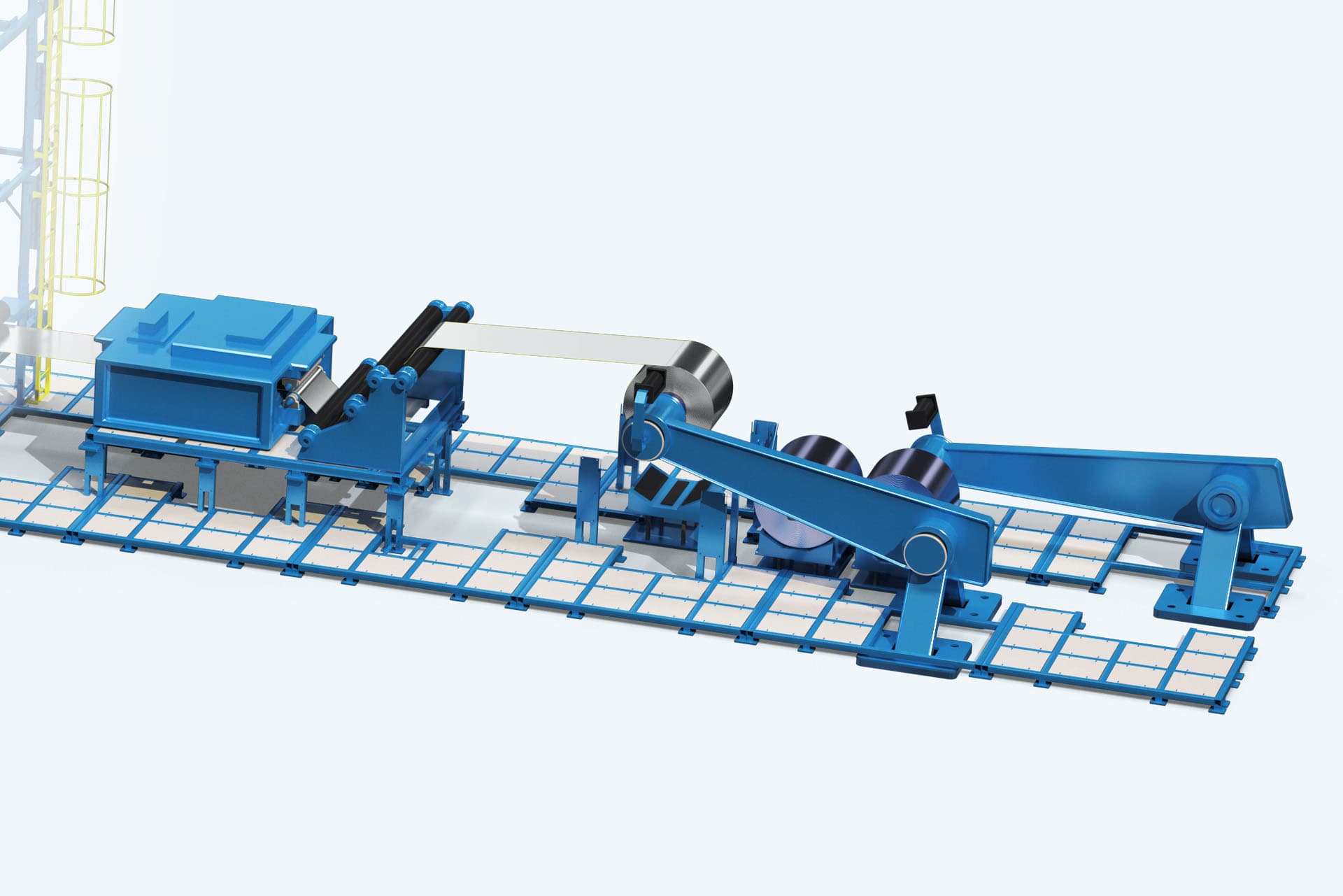
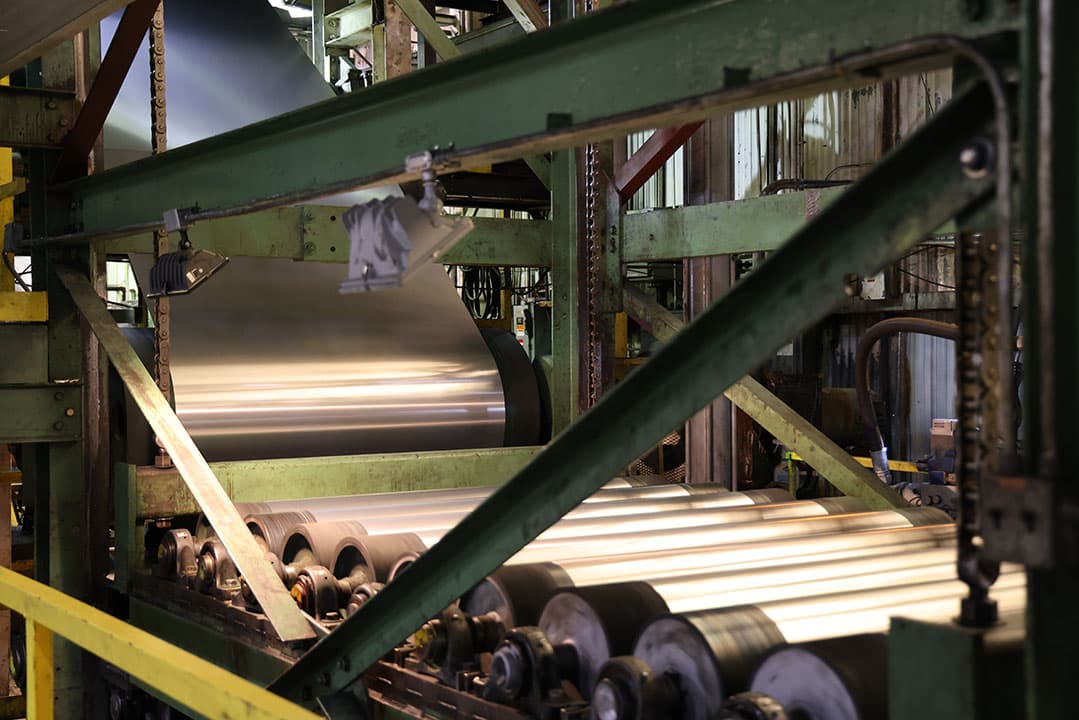
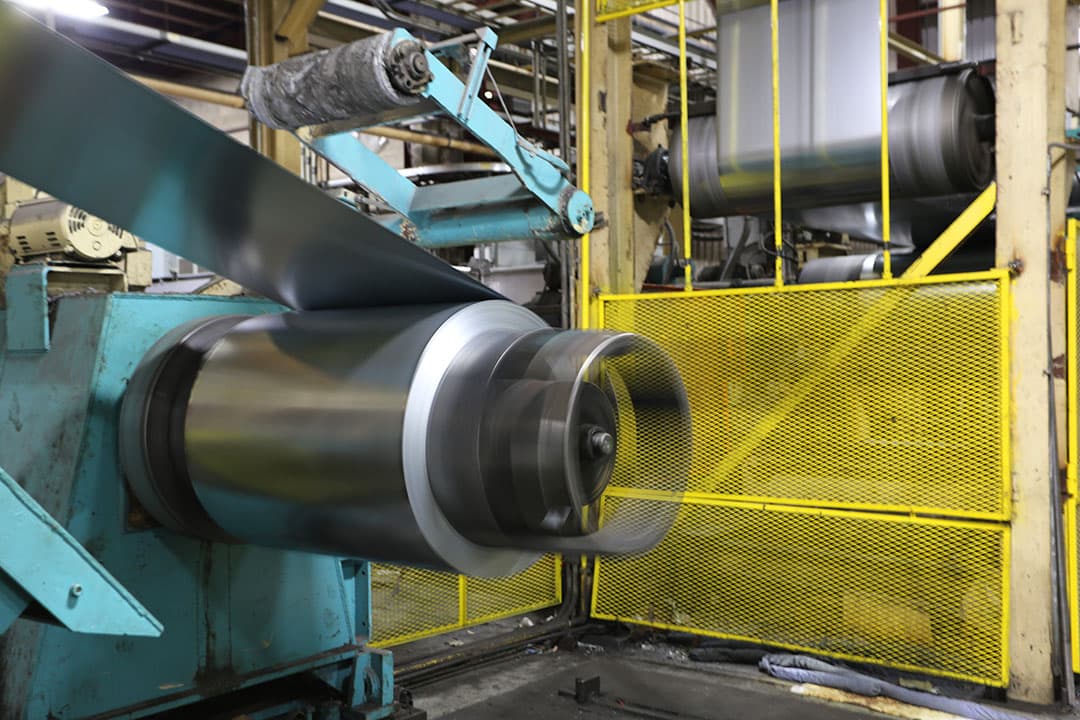
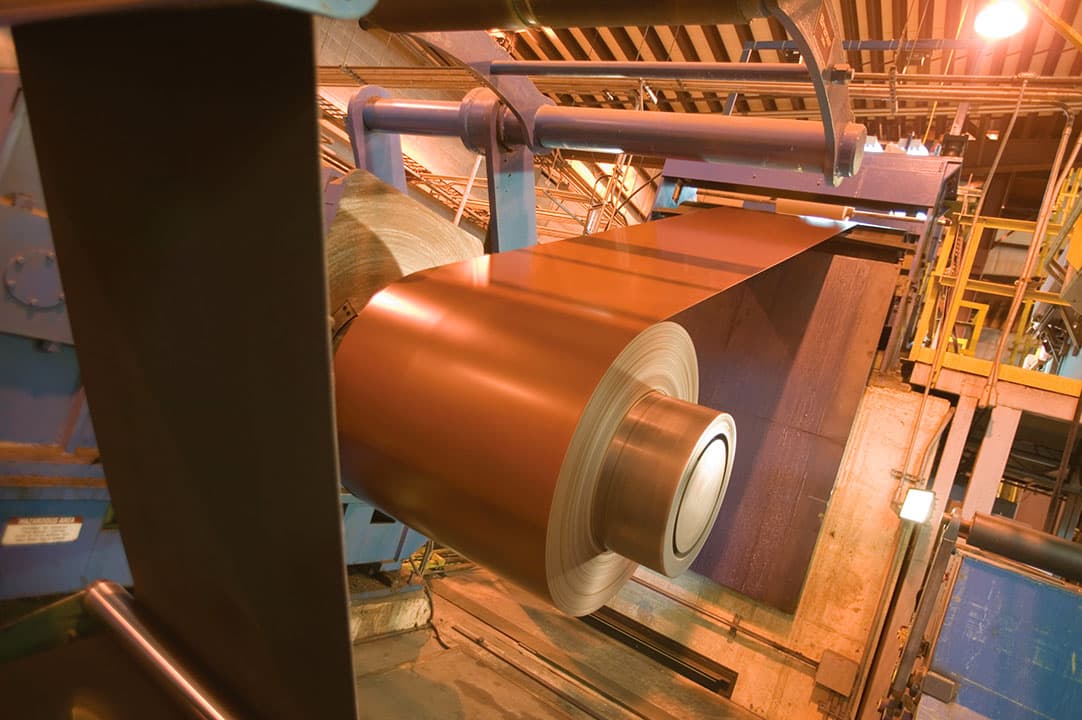
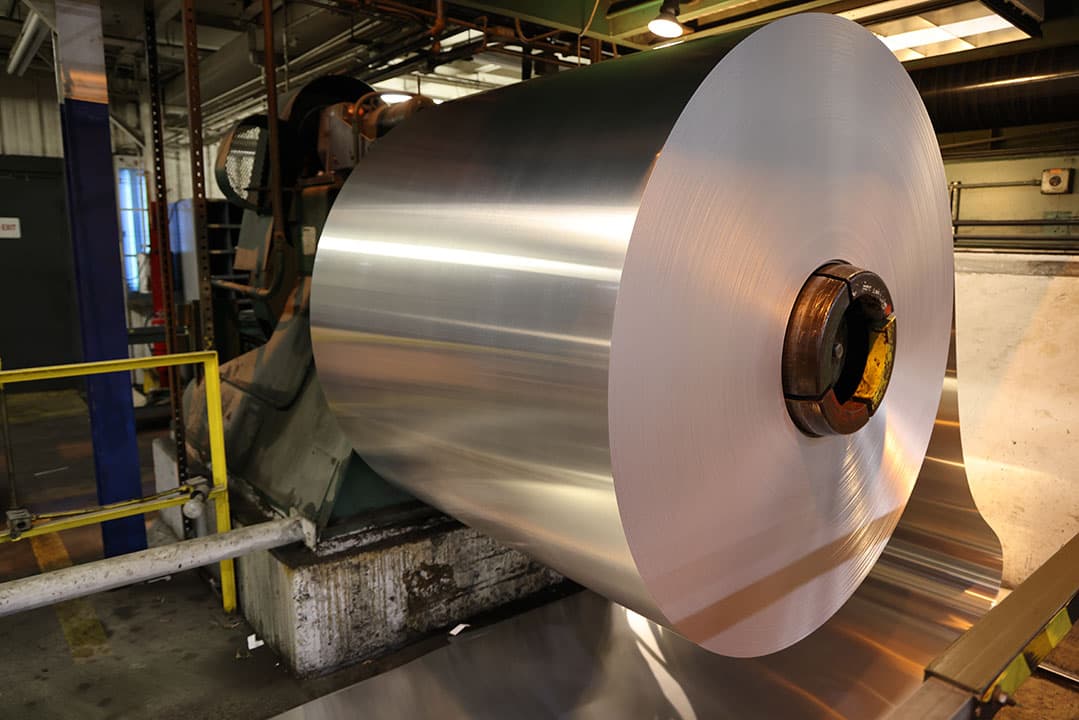
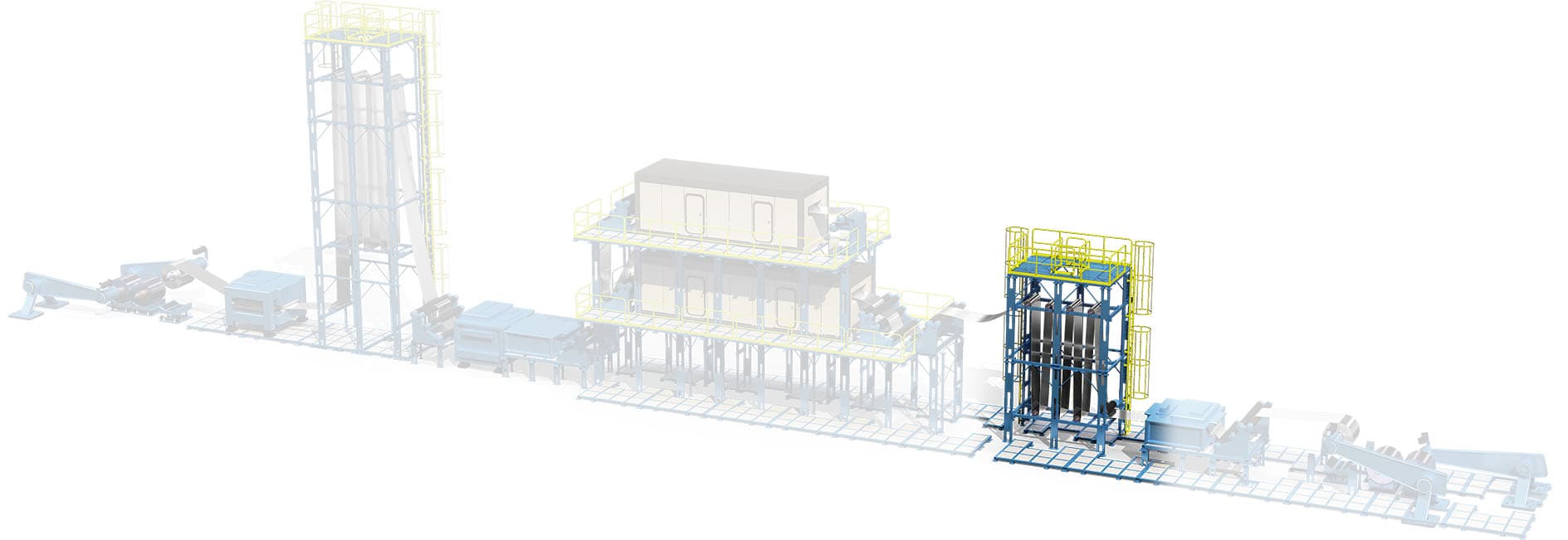
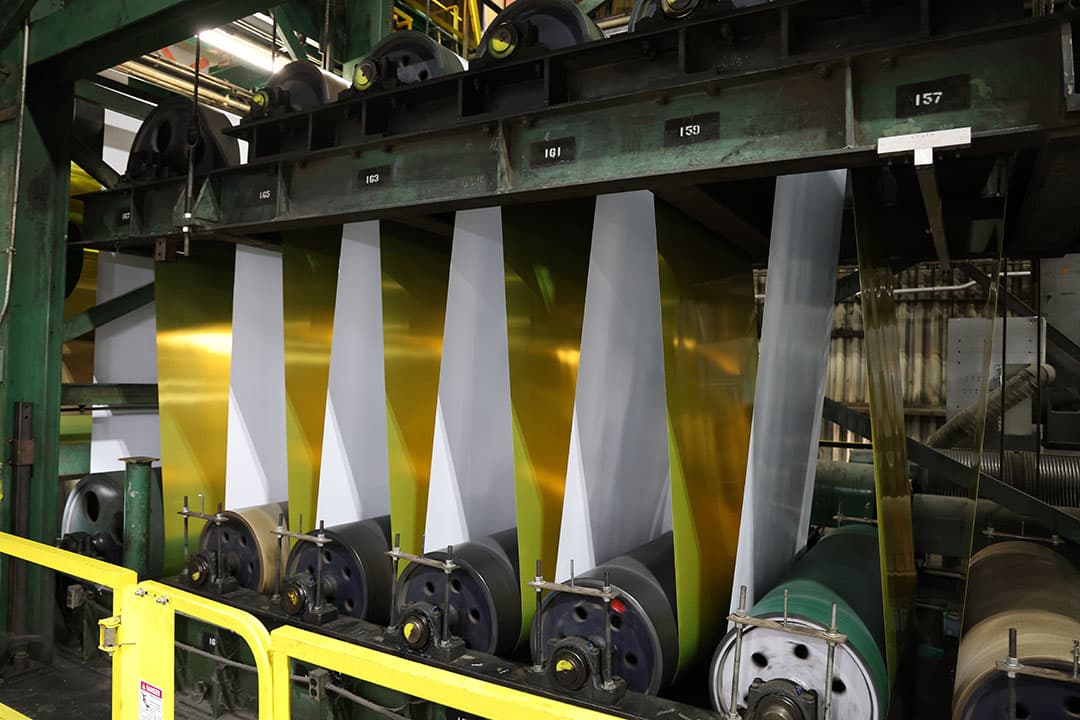
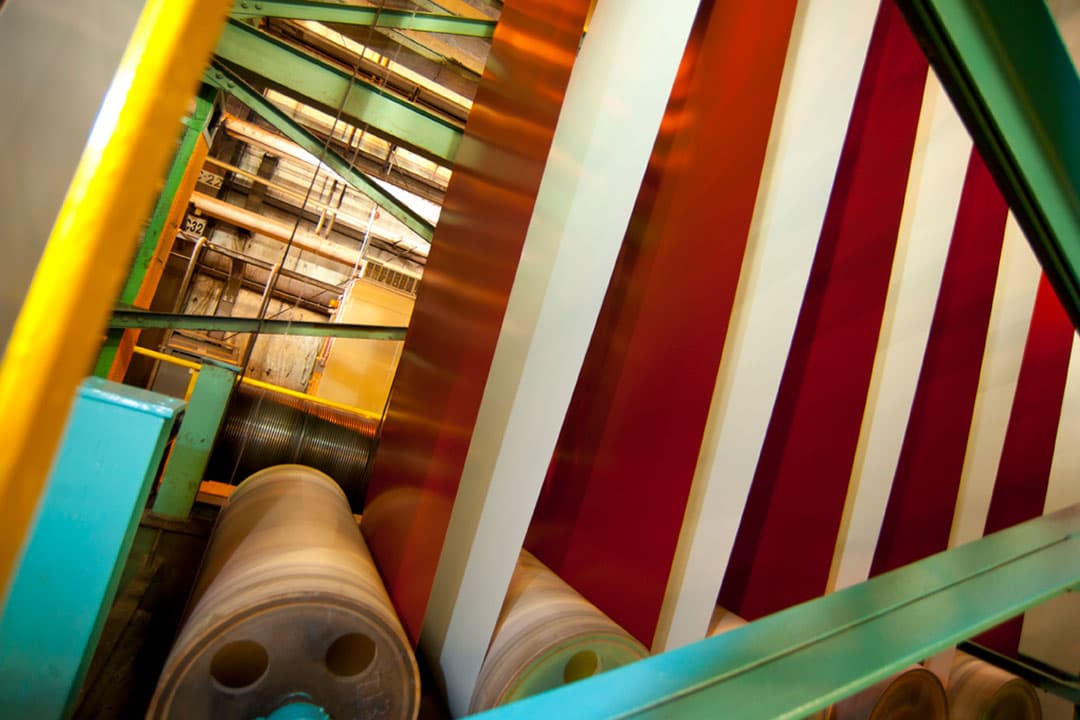
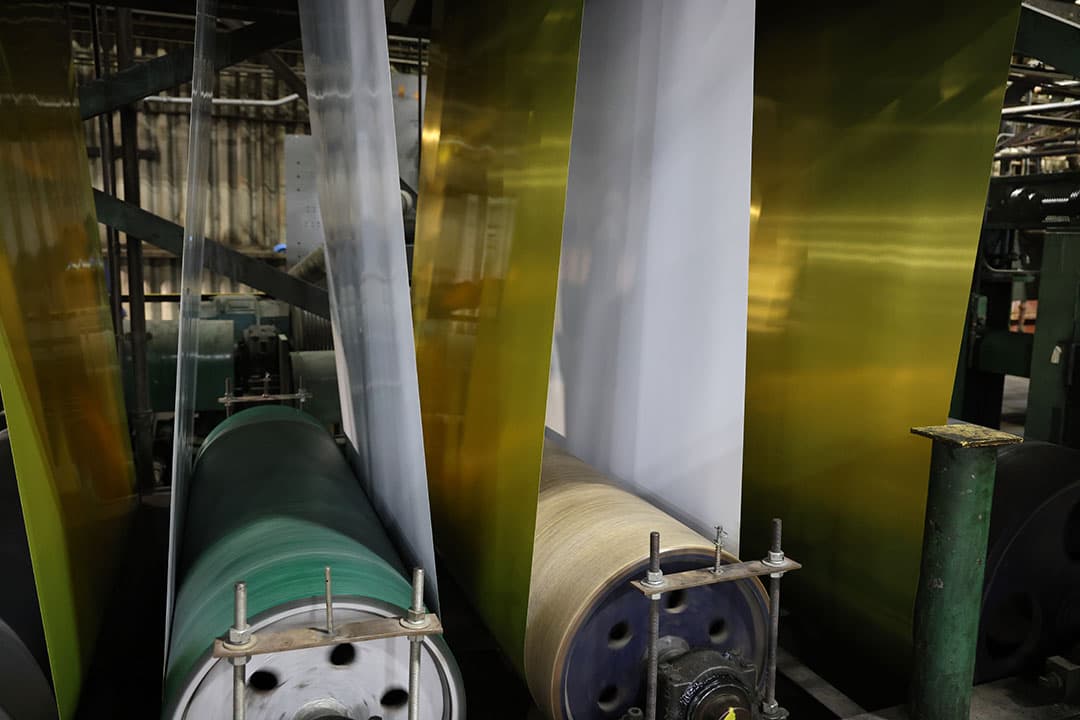
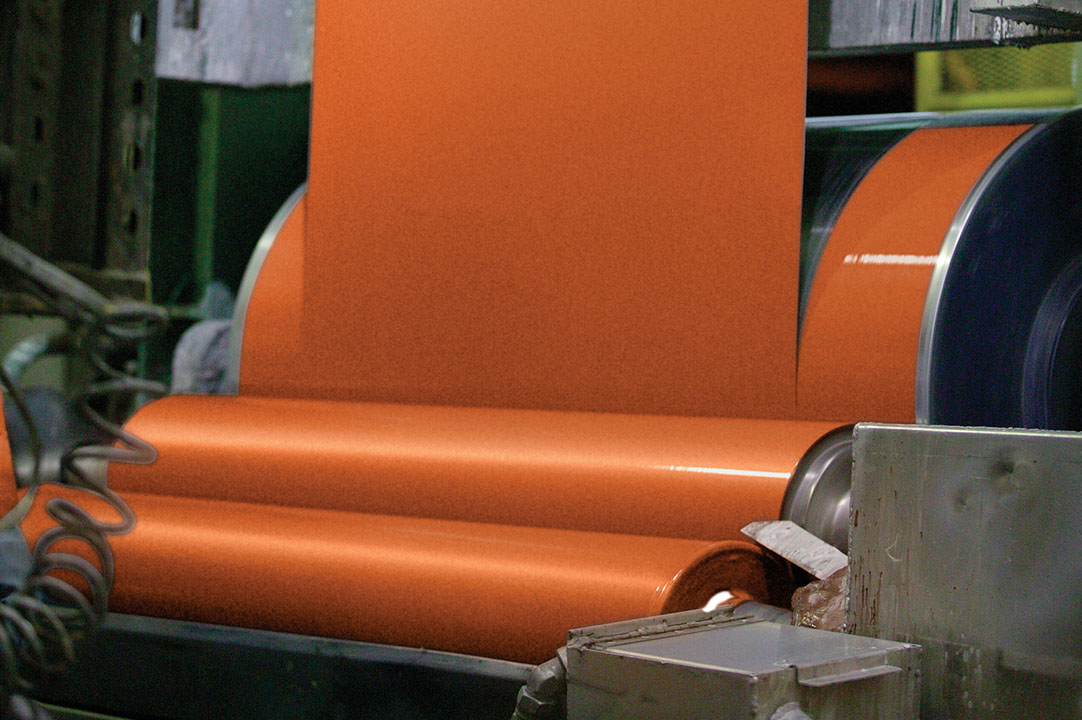
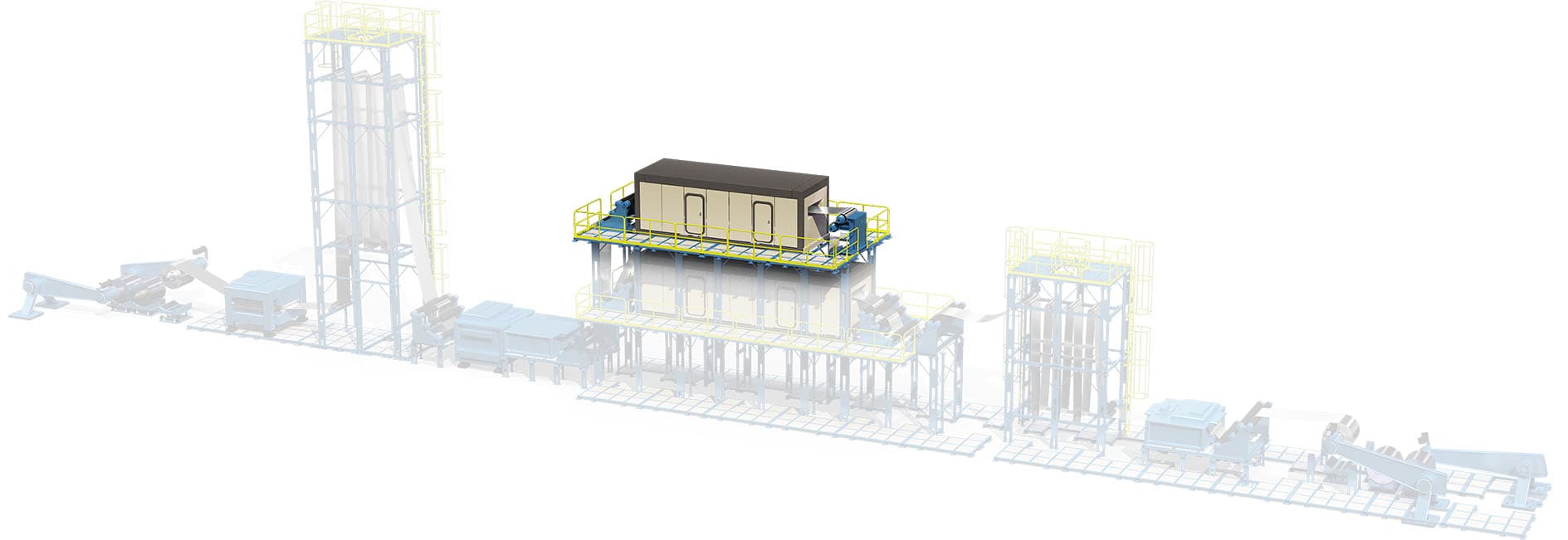
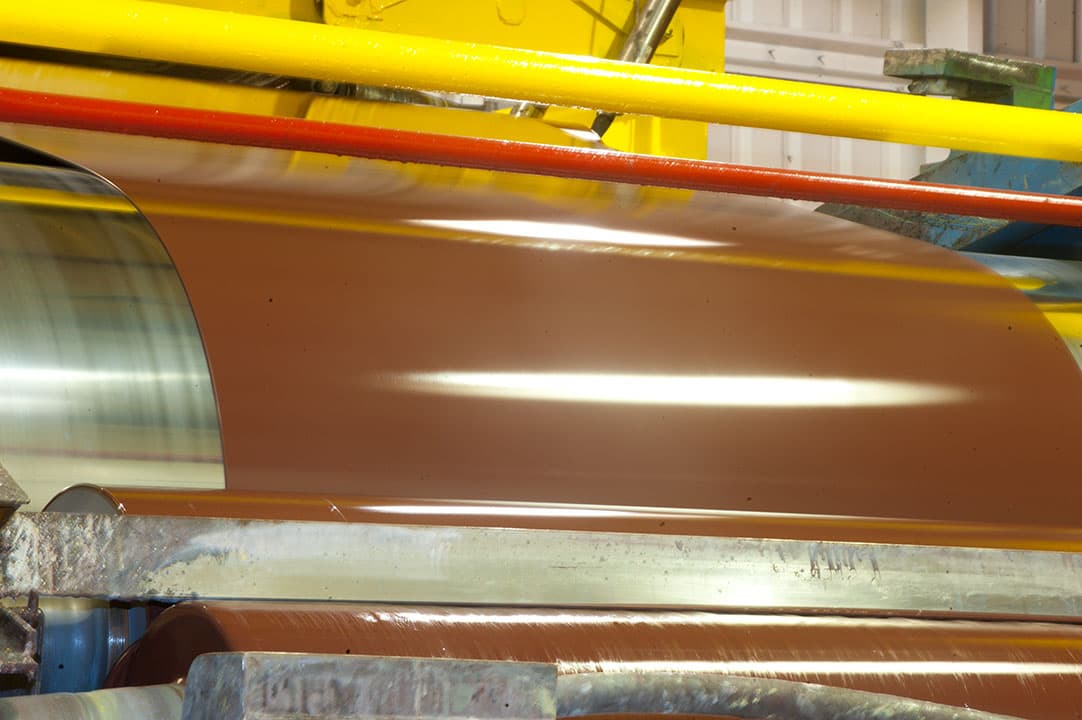
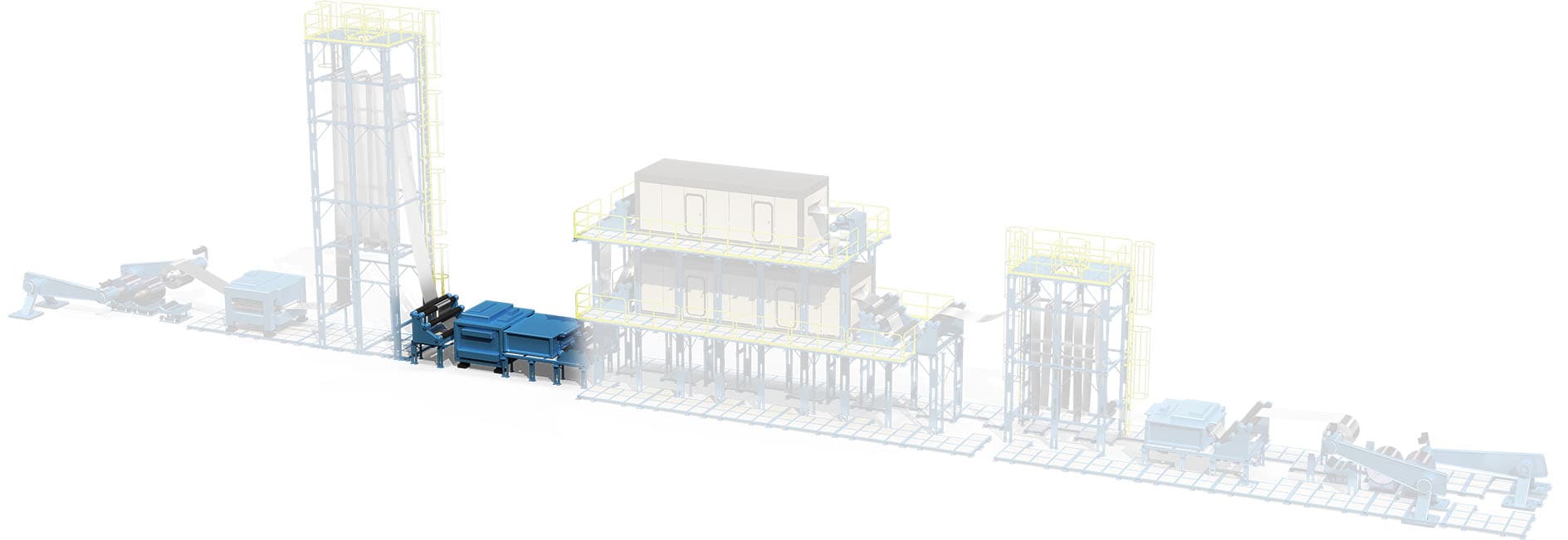
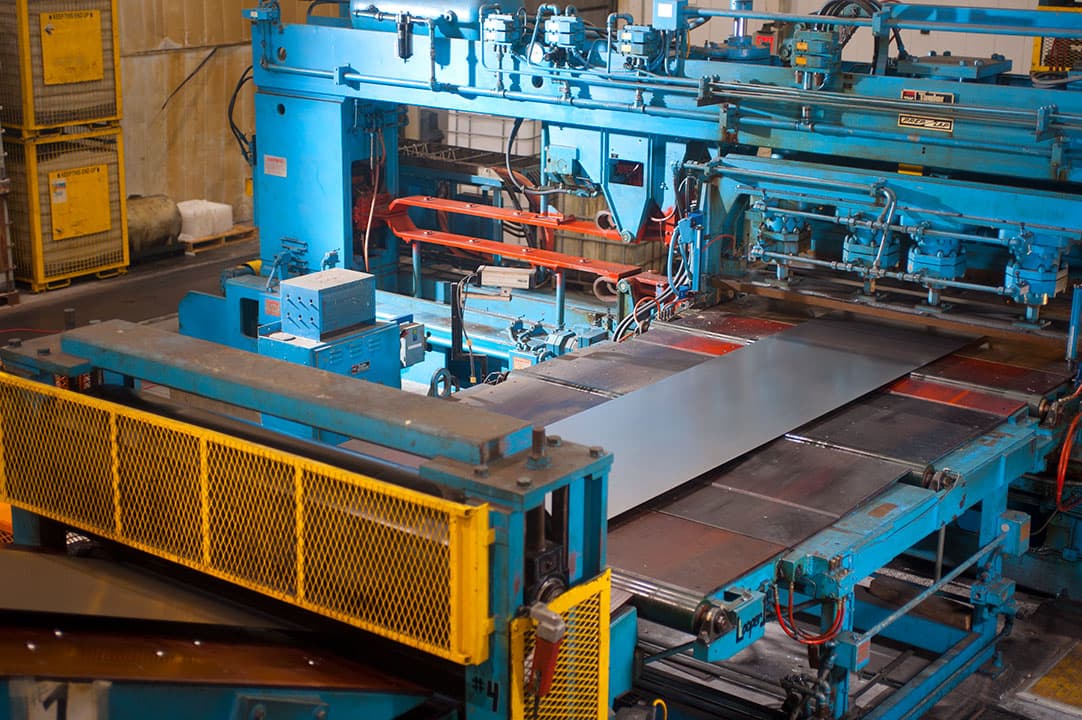
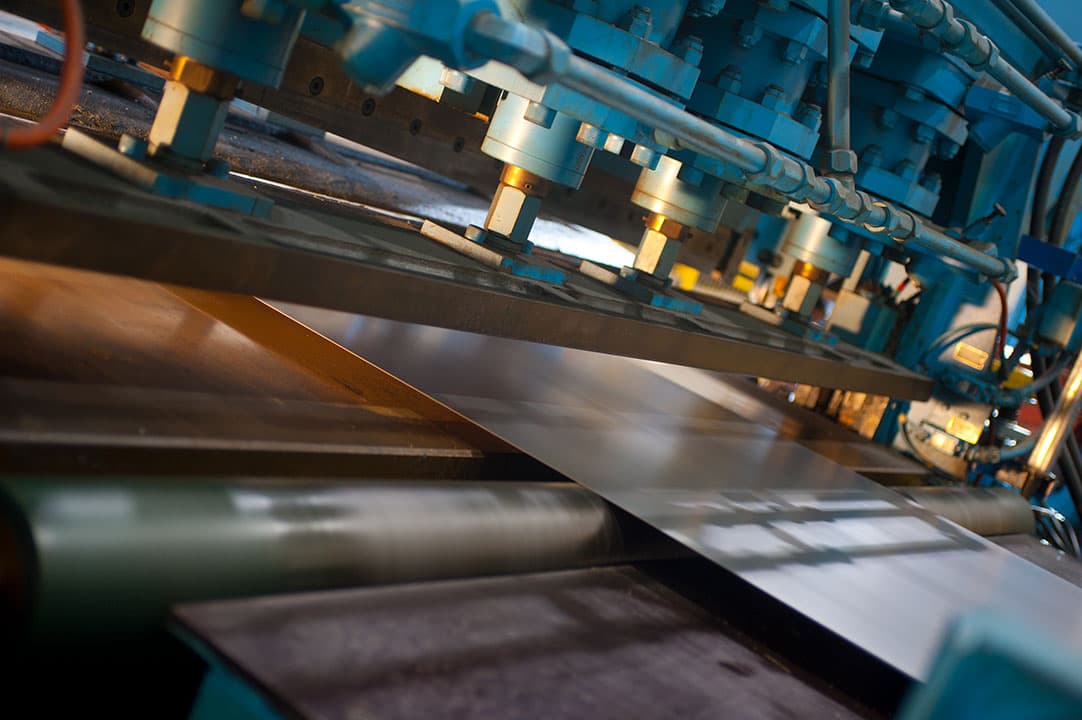
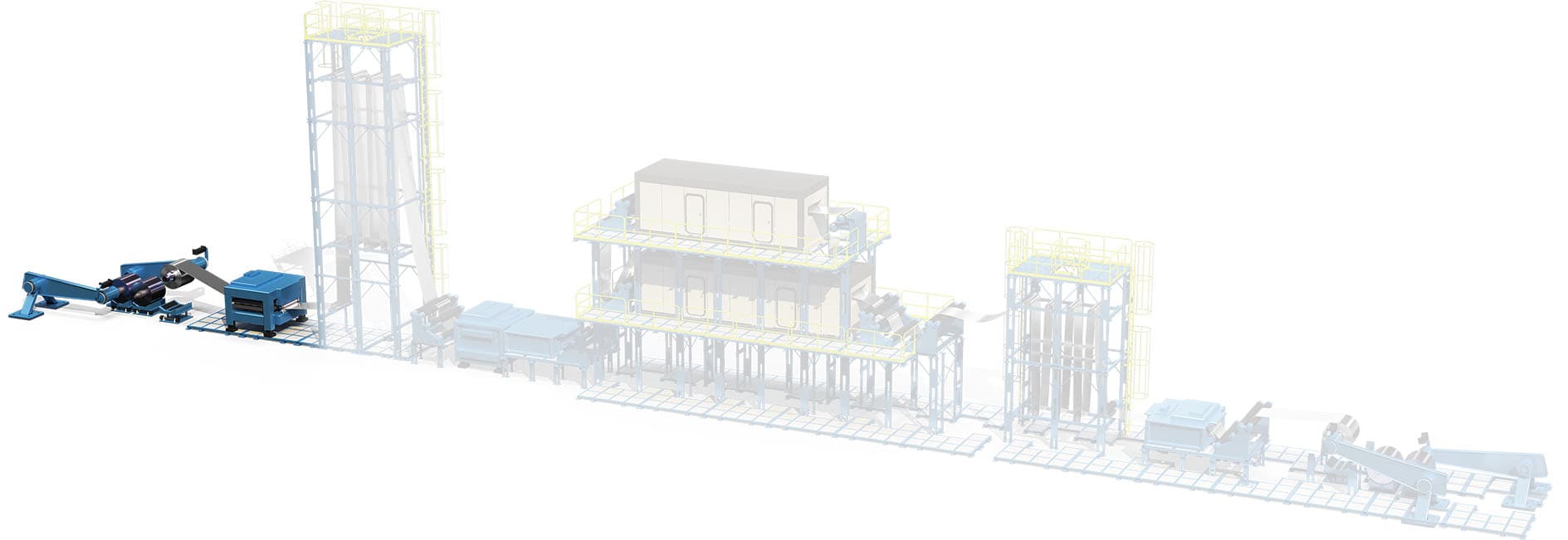
Once the metal is cleaned, treated, and painted, the strip is rewound into a coil size prescribed by the customer. From there, the coil is removed from the line and packaged for shipment or additional processing.
After the primer is applied and cured, then the metal strip enters the finish coat station where a topcoat is applied. Topcoats provide color, corrosion resistance, durability, flexibility and any other required physical properties. Like primers, the topcoat is cured using thermal cure ovens.
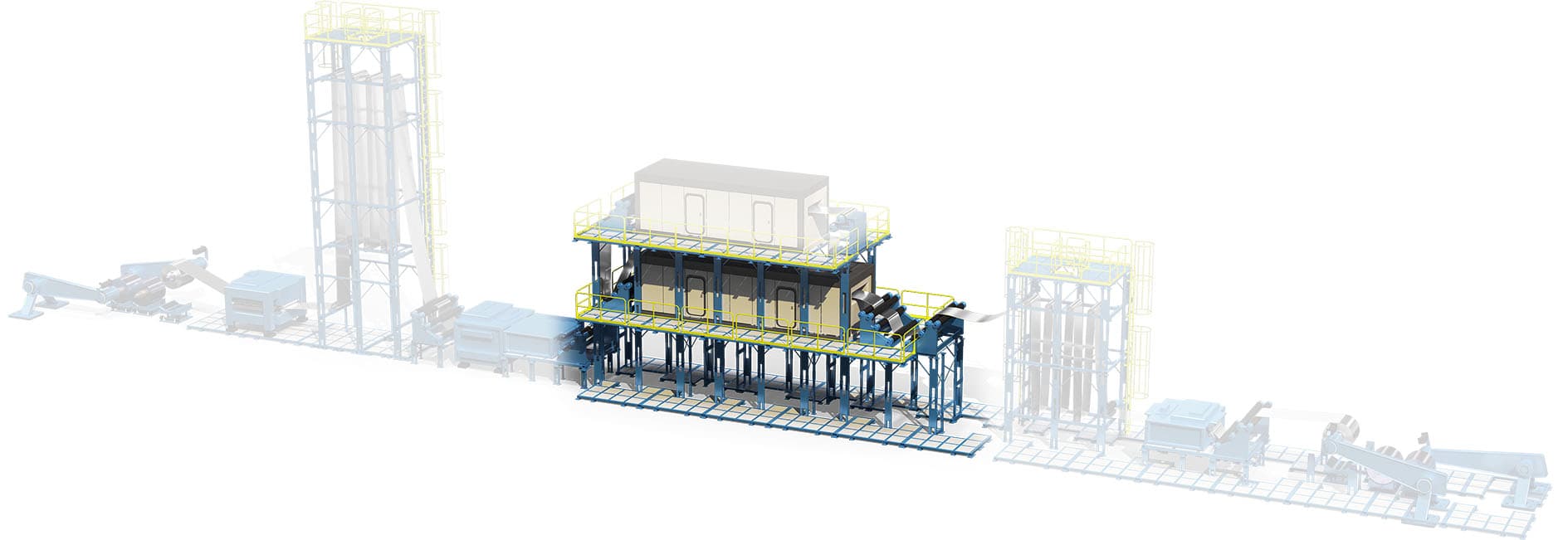
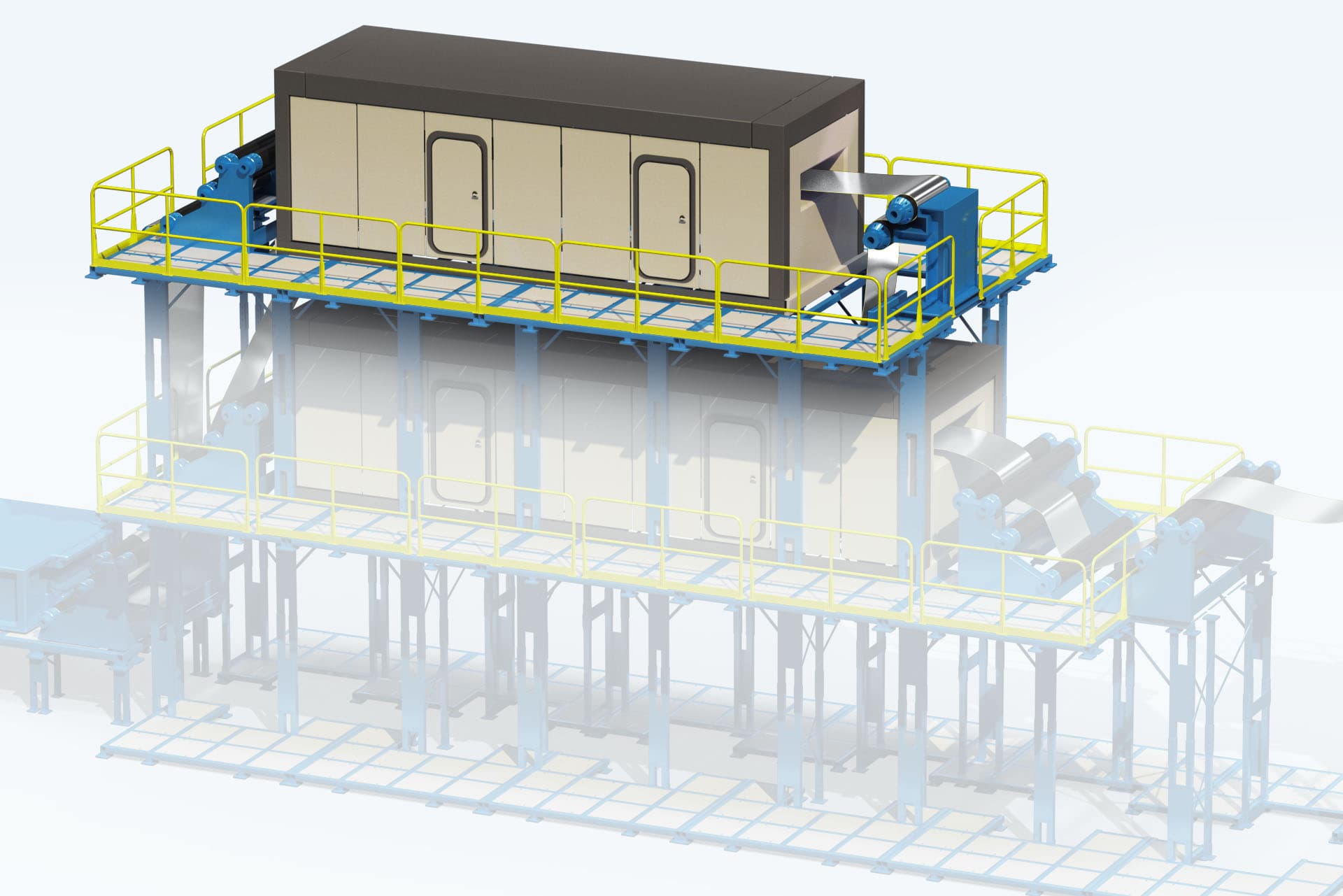
Oven
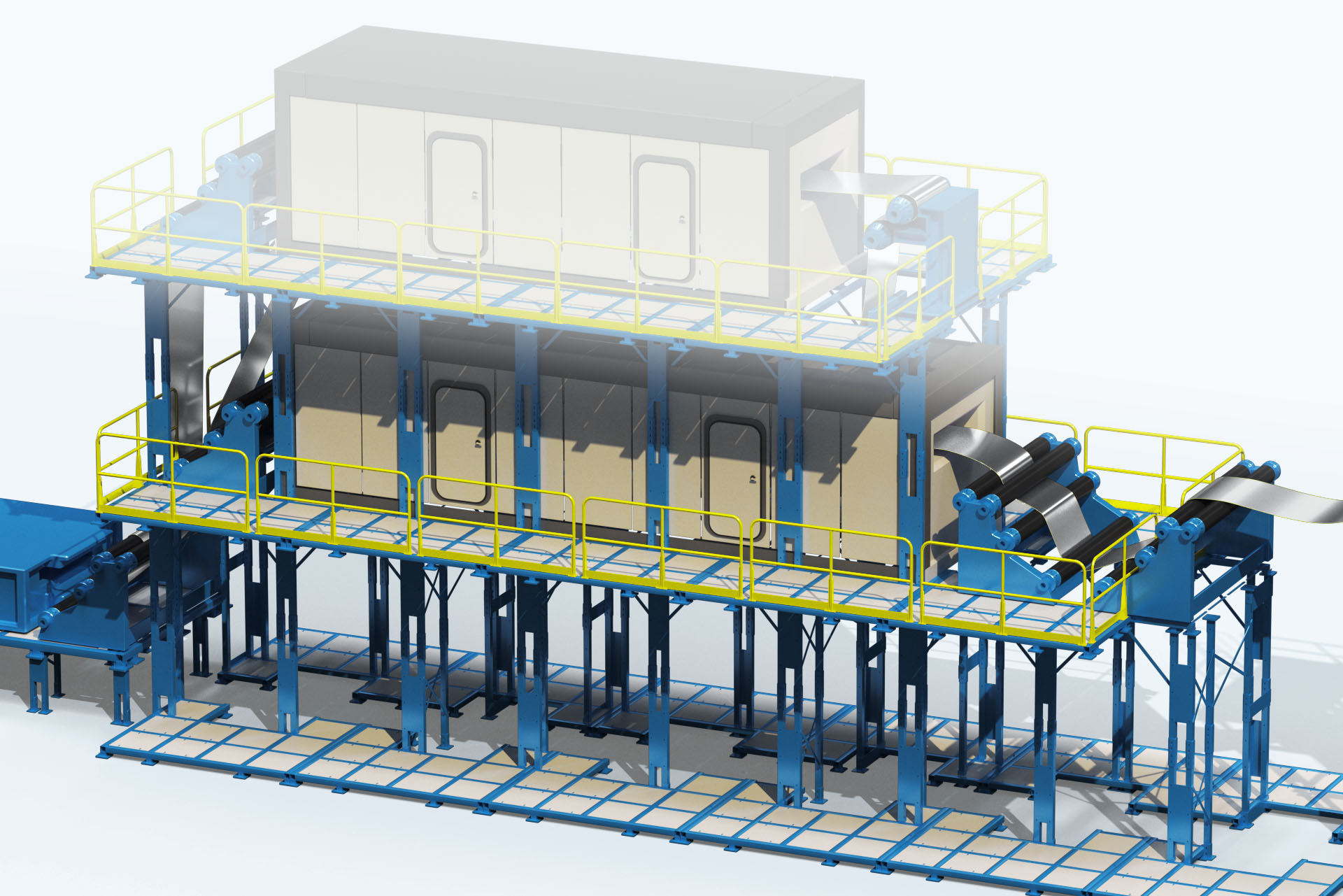
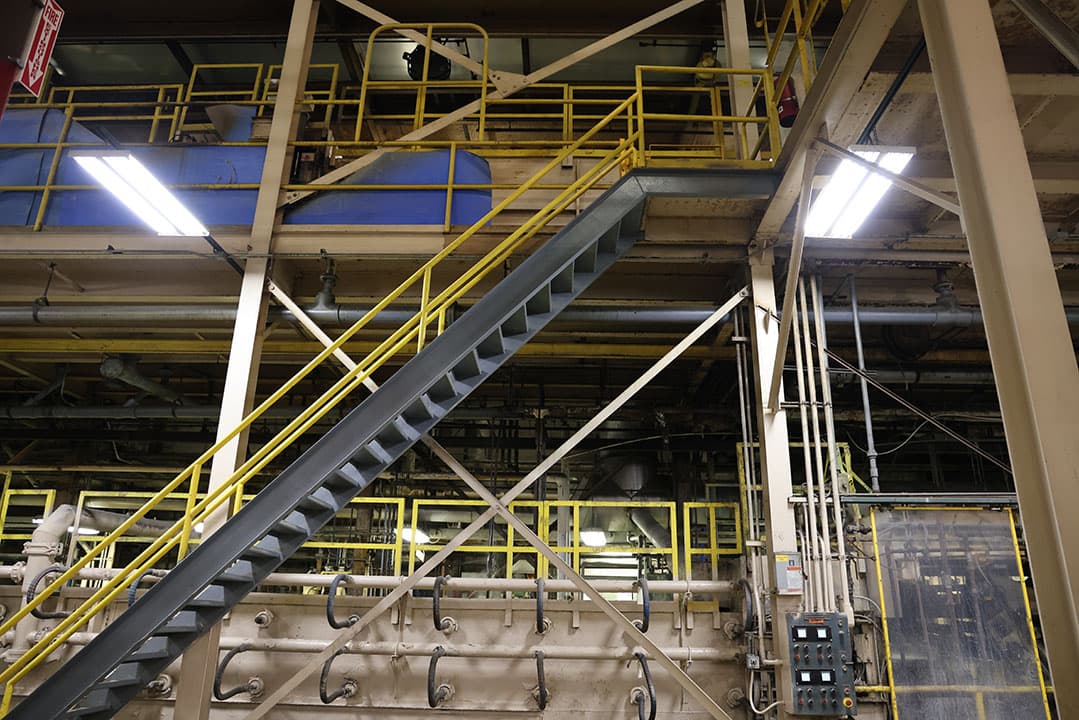
Coil coating ovens can range from 130 feet to 160 feet and will cure the coatings in 13 to 20 seconds.
During this stage, the strip enters the prime coat station whereby a primer is applied to the clean and treated metal. After the primer is applied, the metal strip travels through a thermal oven for curing. Primers are used to aid in paint adhesion, improve corrosion performance and enhance aesthetic and functional attributes of the topcoat.
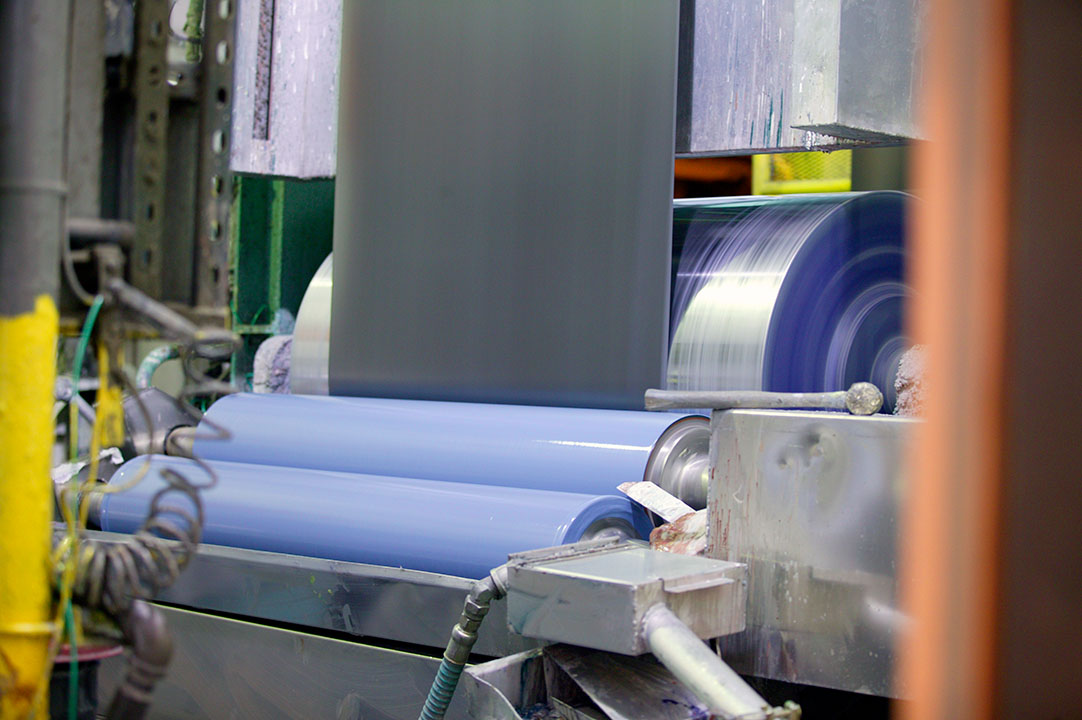
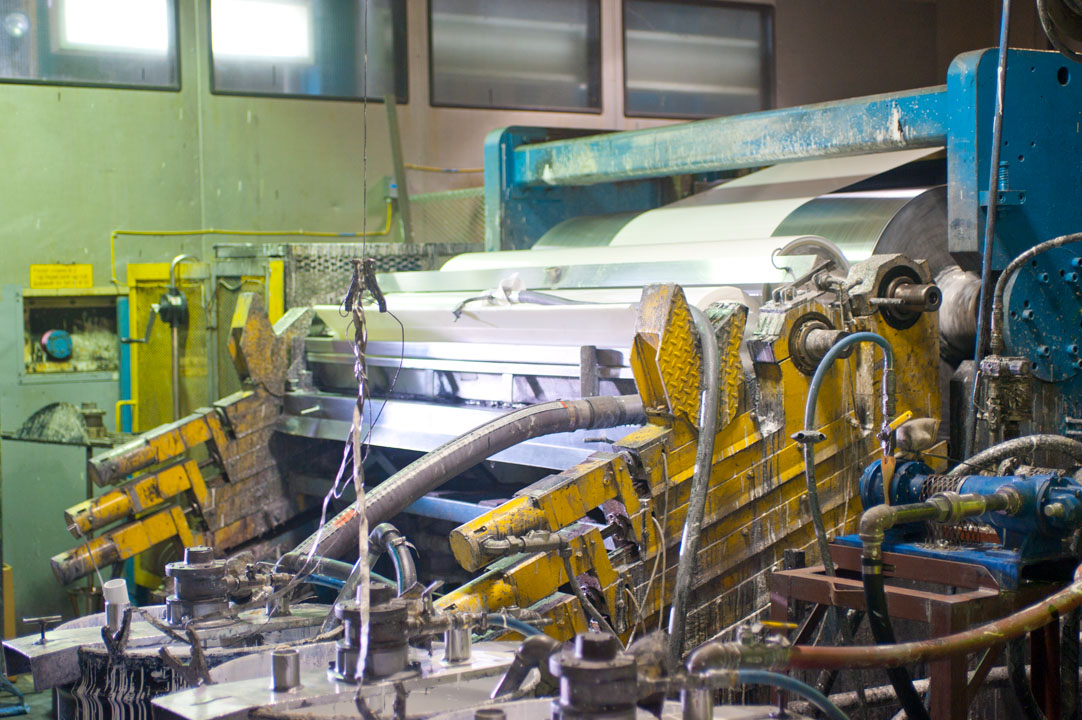
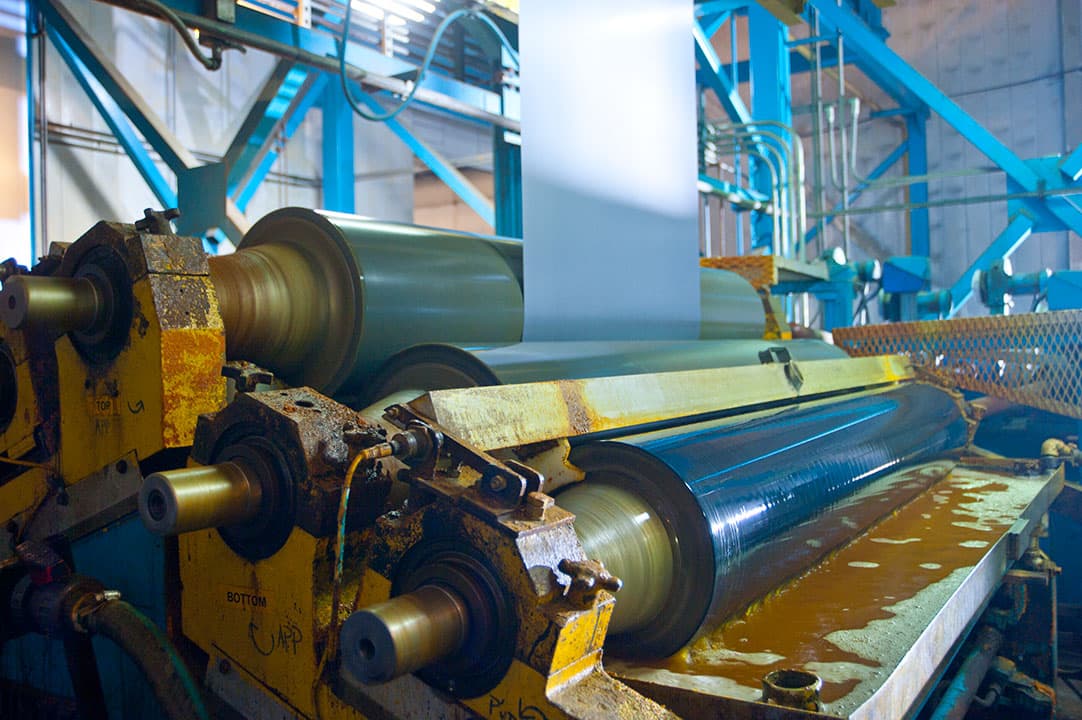
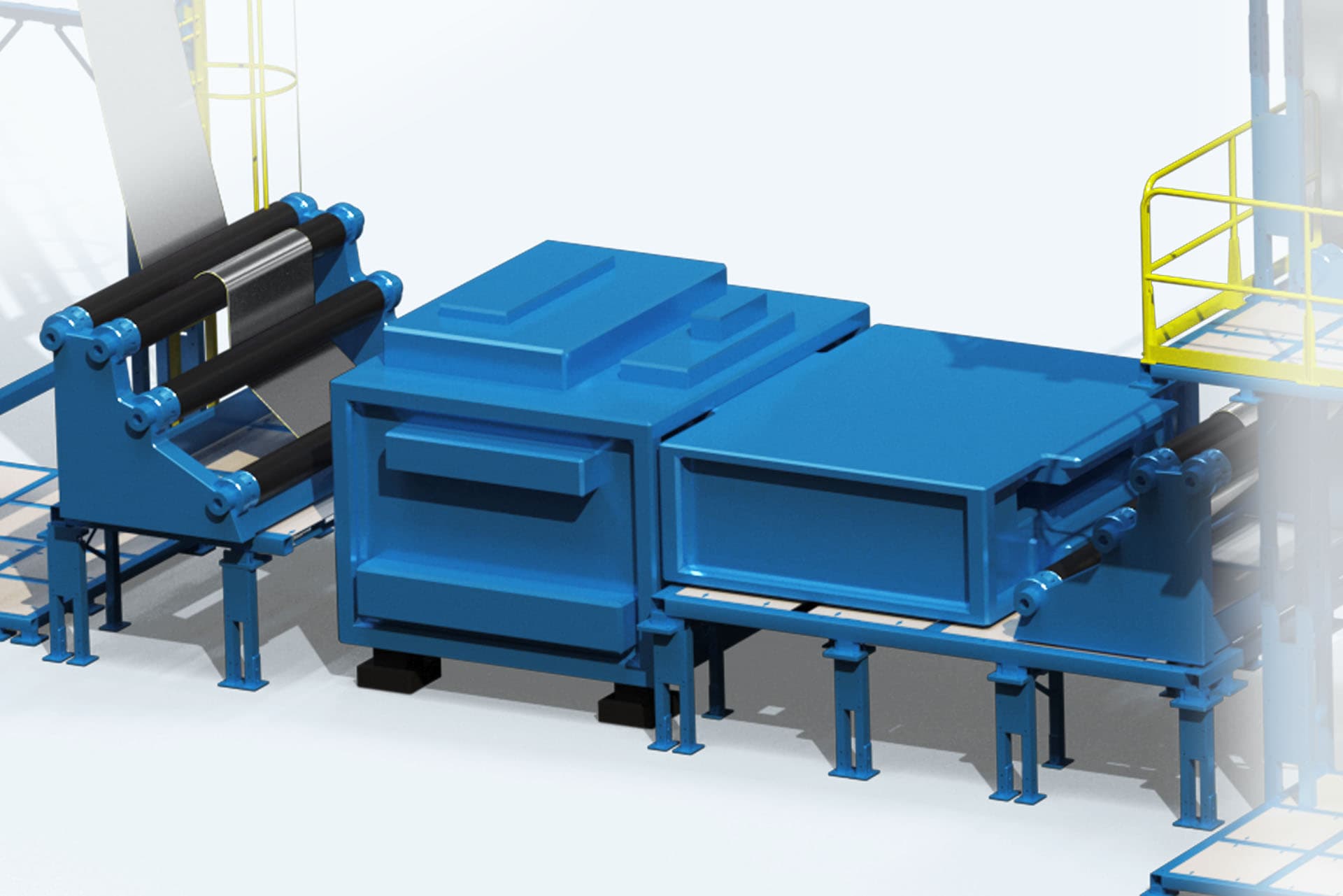
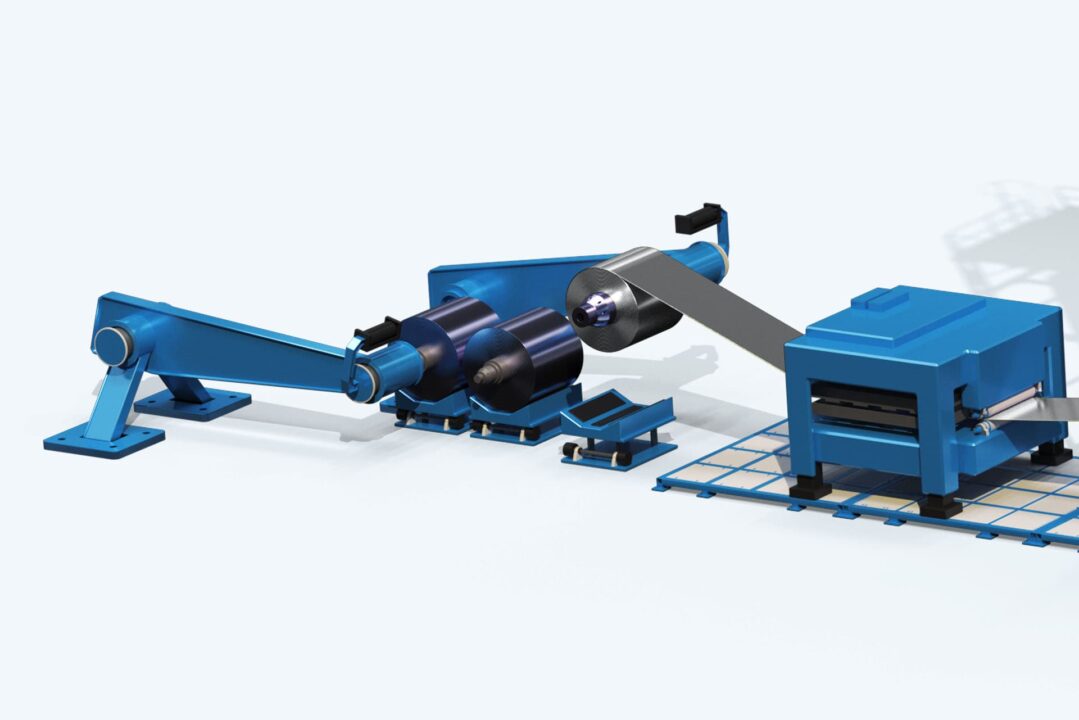
S Wrap Coater
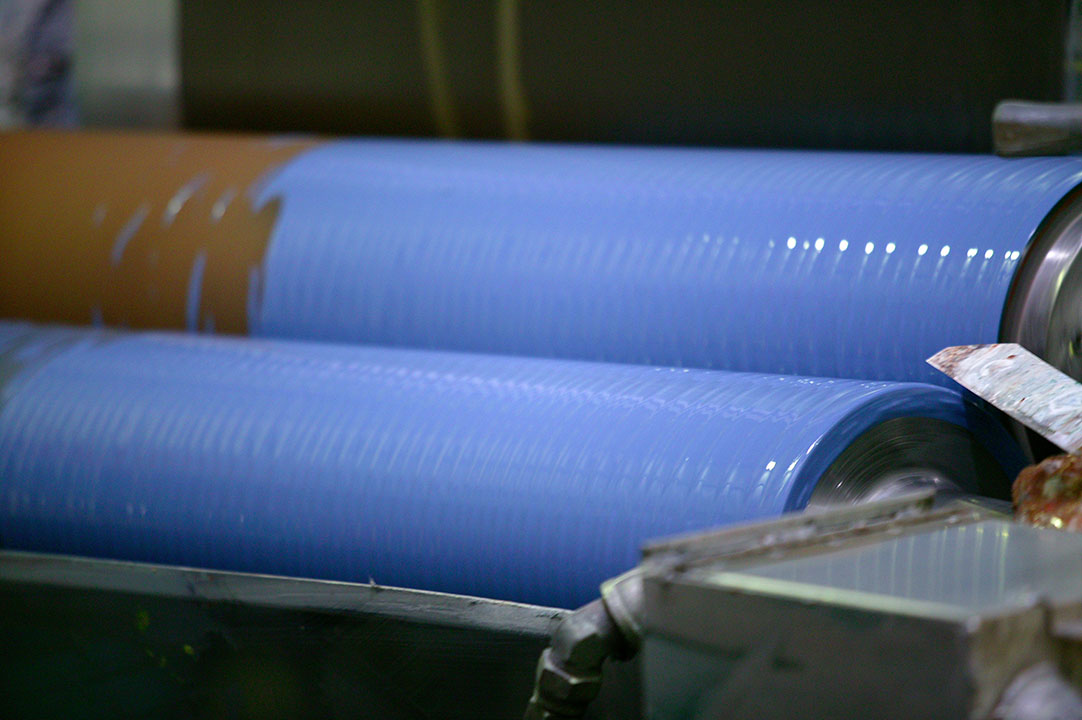
The S wrap coater design allows for primers and paints to be applied to the top and back side of the metal strip simultaneously in one continuous pass.
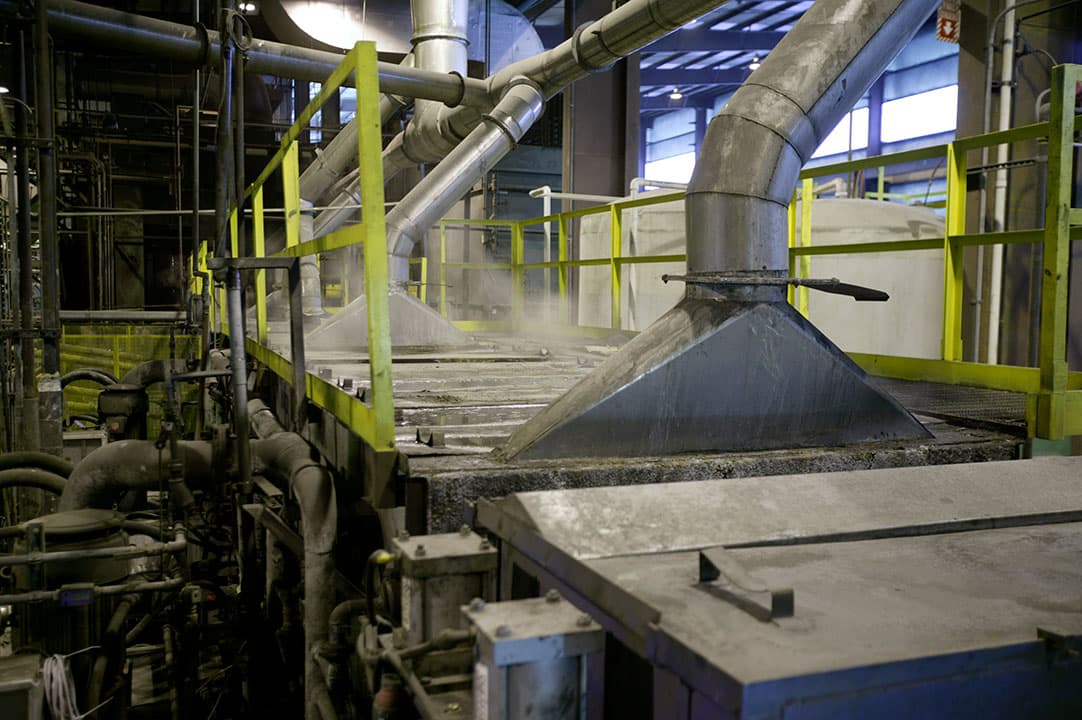
The cleaning and pretreating section of the coil coating process focuses on preparing the metal for painting. During the cleaning stage, dirt, debris, and oils are removed from the metal strip. From there, the metal enters the pretreatment section and/or a chemical coater whereby chemicals are applied to facilitate paint adhesion and enhance corrosion resistance.
Dried-In-Place
In this stage a chemical that provides enhanced corrosion performance is applied. This treatment can be chrome free if required.
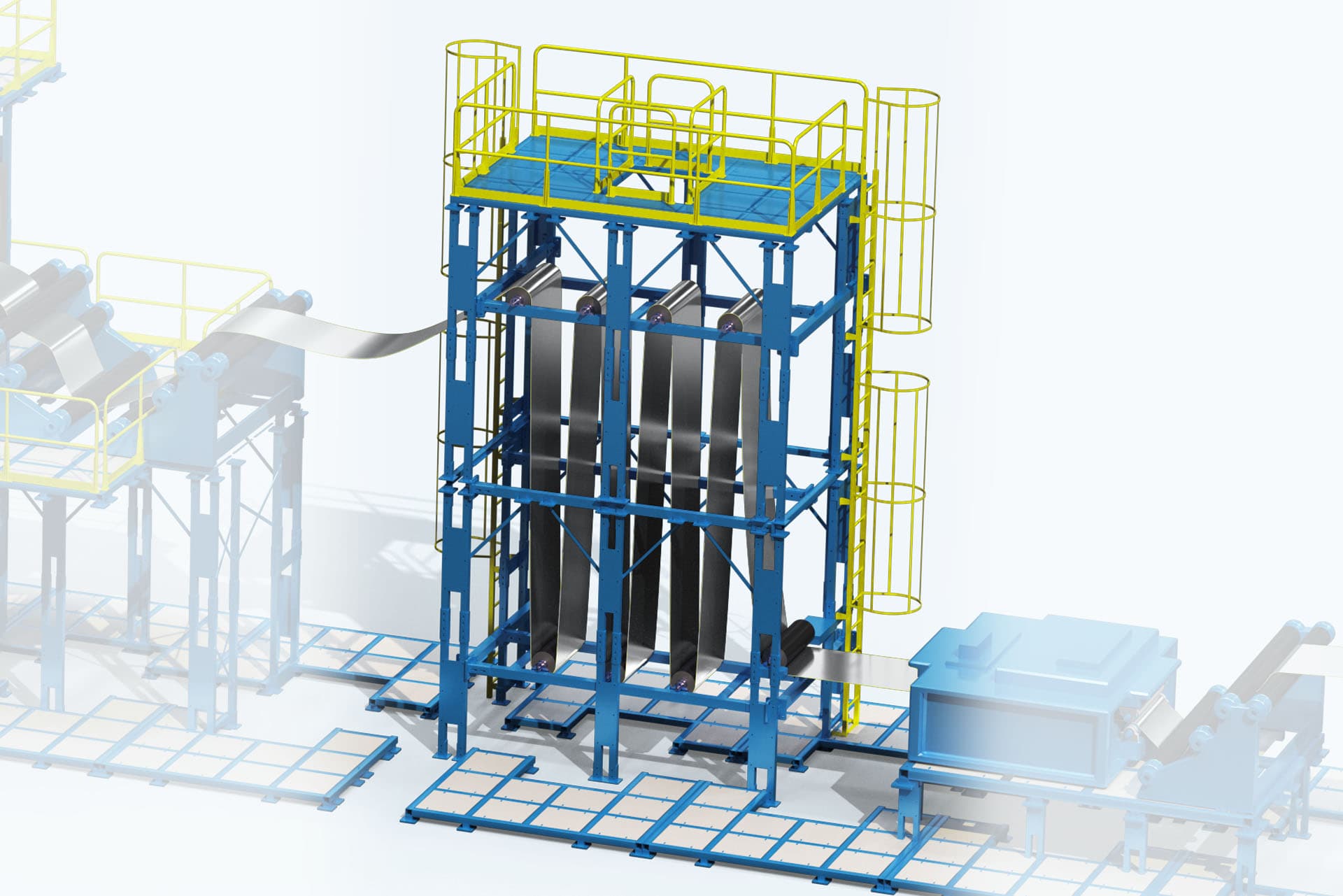
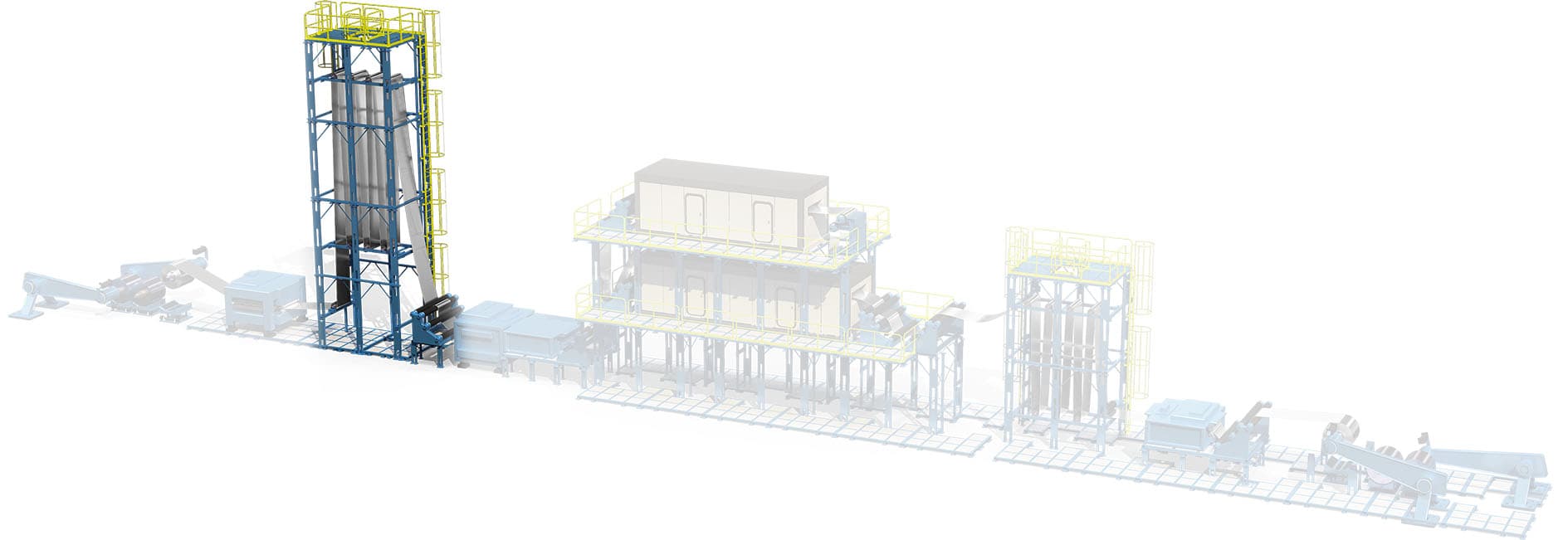
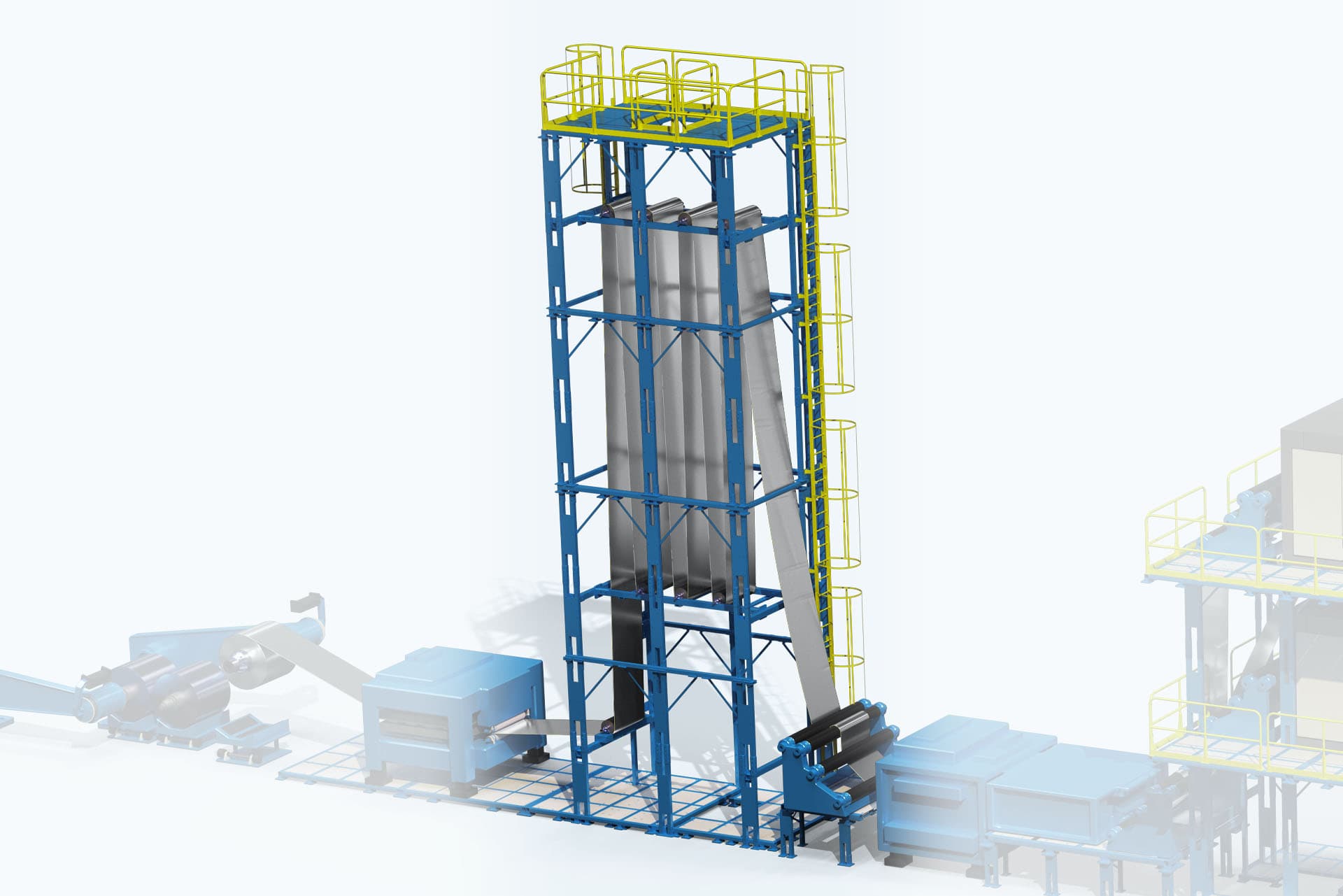
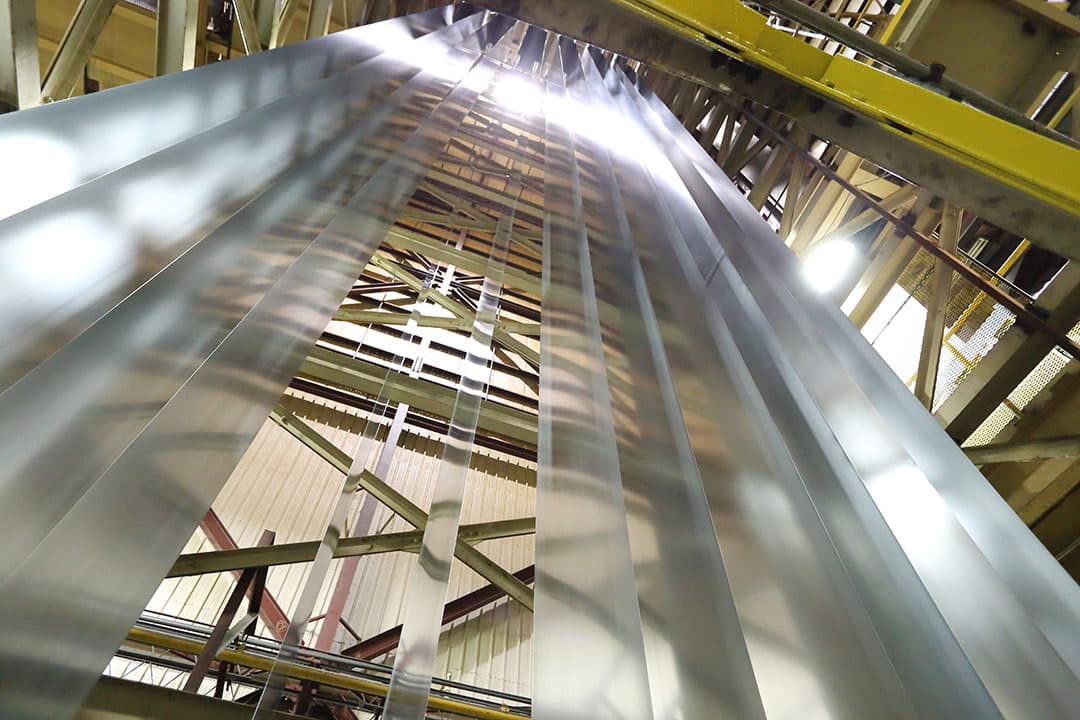
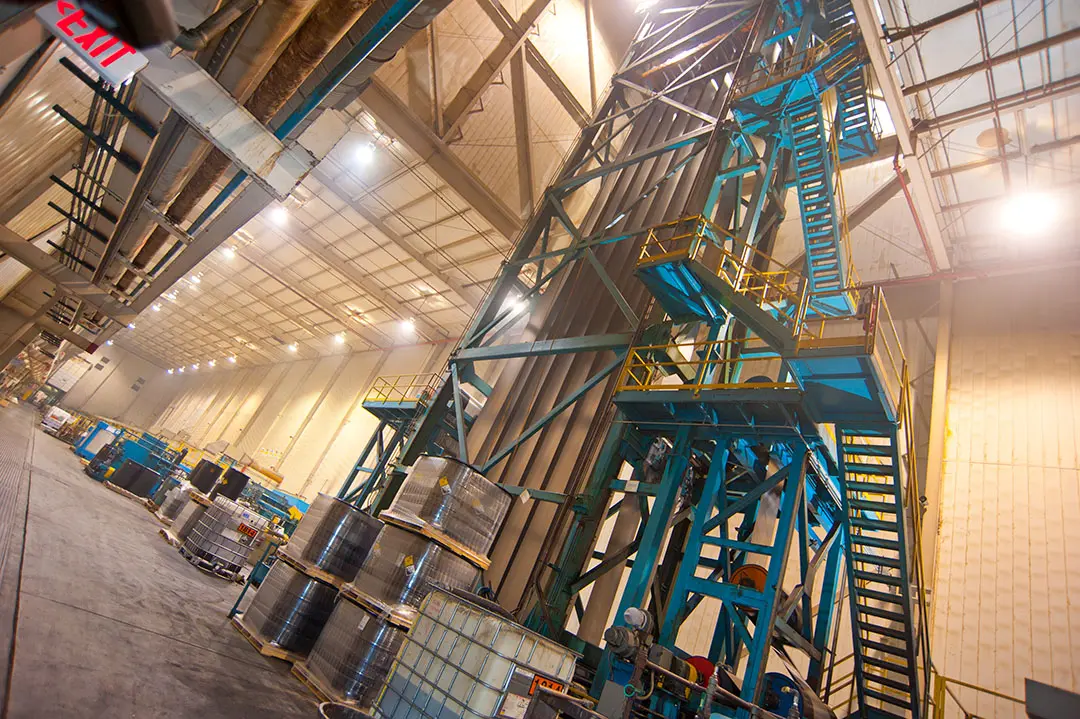
The accumulator is a structure that adjusts up and down to store material, which makes continuous operation of the coil coating process possible. This accumulation will continue to feed the coil coating processes while the entry end has stopped for the stitching process. As much as 750 feet of metal can be collected.
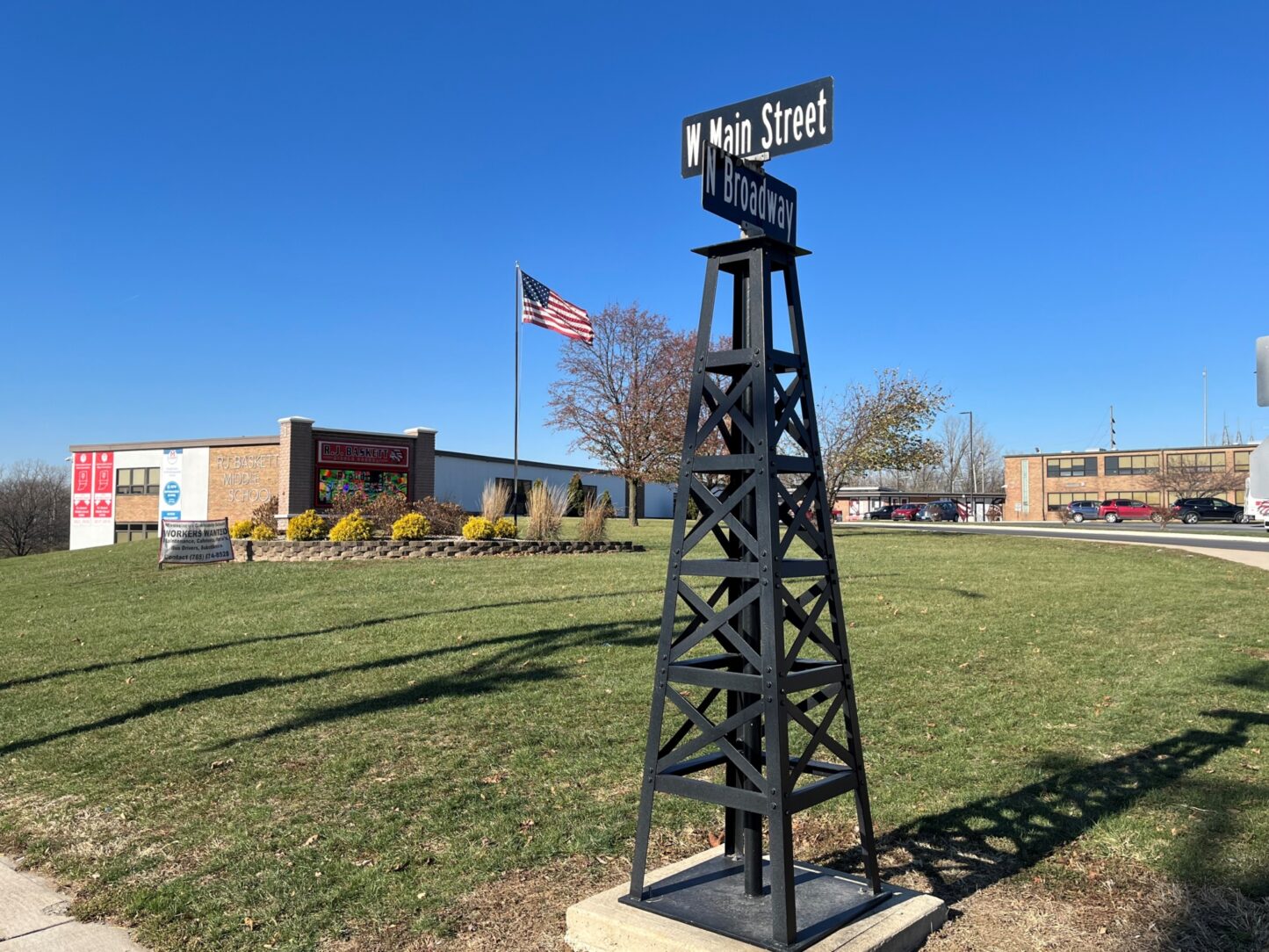
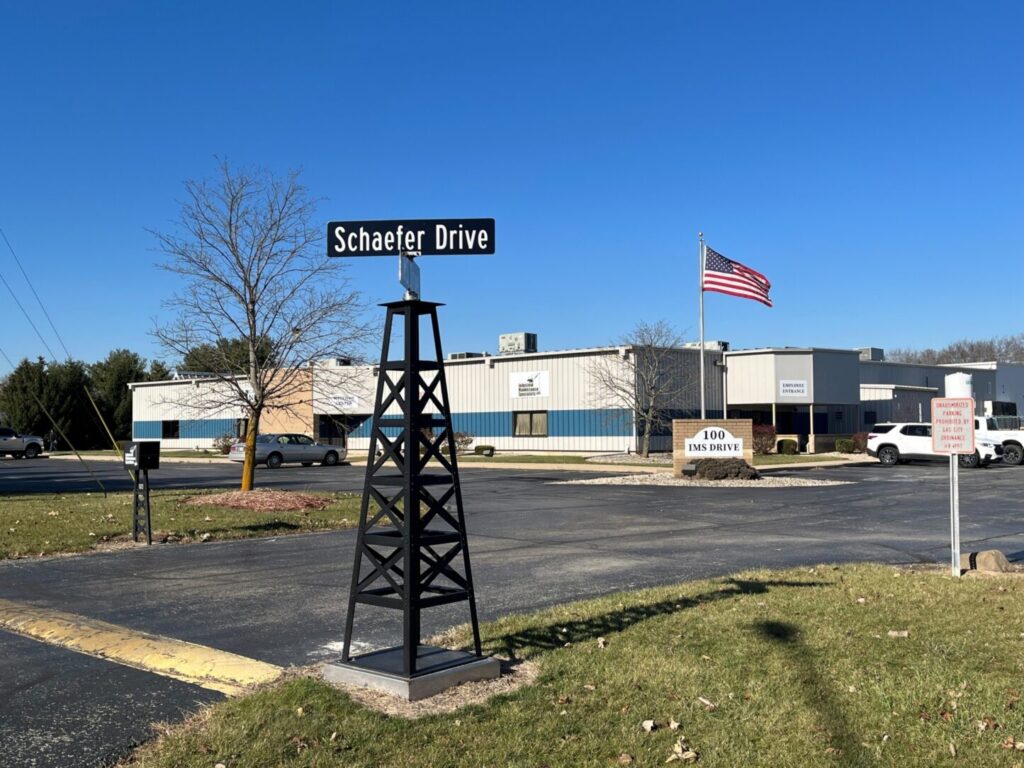
After years of being subjected to the cold Indiana winters, the appearance of the street signs were no longer ideal, and the community noticed.
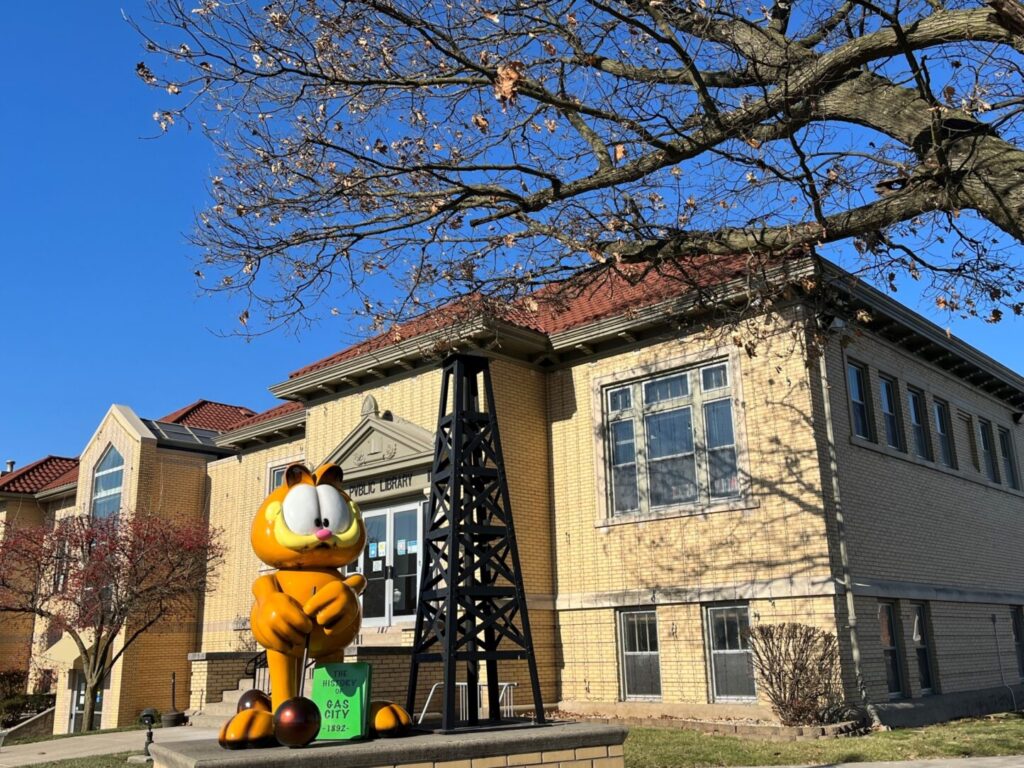
Formerly known as Harrisburg, Gas City is approximately 70 miles northeast of Indianapolis, IN. A supply of natural gas was found in 1887 and the city was renamed in 1892. There was hope to grow Gas City to a population of 25,000 from only 300. This hope dried up when the supply of natural gas ran out in 1904.
Gas City’s Gas Derrick Street Signs were originally fabricated and installed in 2012. After 8-9 years in service and subjected to the cold Indiana winters, the appearance was no longer ideal, and the community noticed.
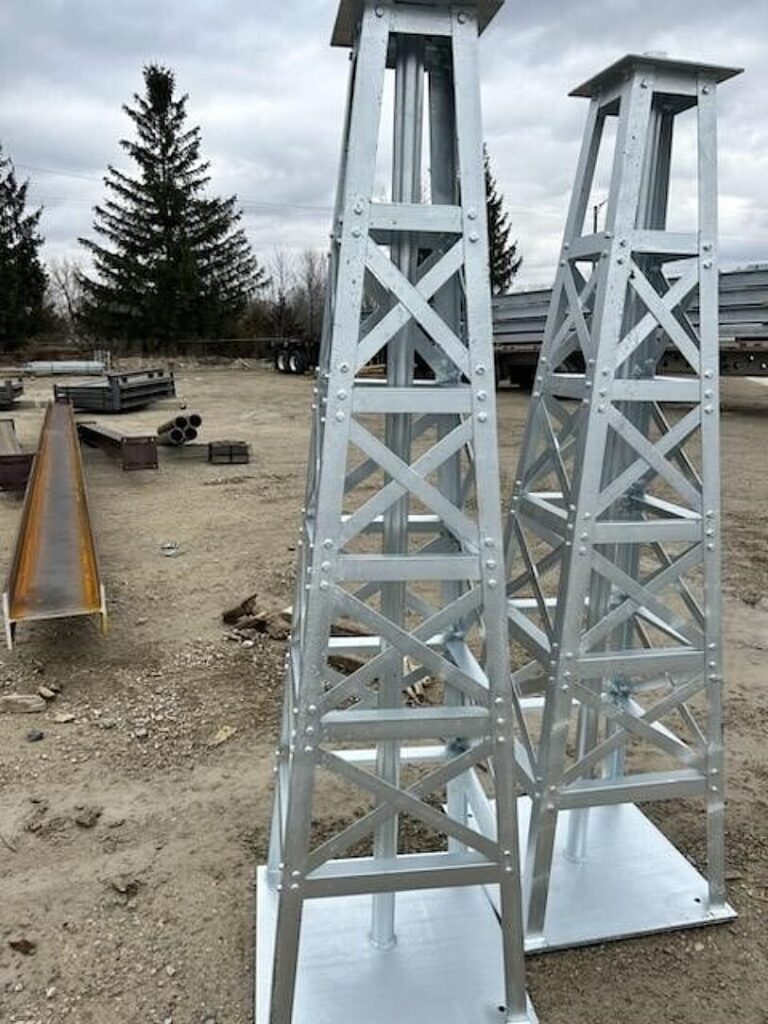
Several complaints lead the committee to search for another coating option that would last longer and protect the original investment. A local general contractor had experience hot-dip galvanizing and started the conversation about corrosion protection with AZZ Galvanizing – Muncie. After a sample was completed, the black shade of the gas derricks was still desired. AZZ Galvanizing – Muncie encouraged a duplex coating to give the street signs the black shade without sacrificing the corrosion protection.
The decision to blast, galvanize, and then powder coat the gas derrick street signs to stop the deterioration of the steel was approved. The project was broken up into two phases with almost a year in between. Jerry Long, former member and chair of the Beautification Committee and Historical Society said, “I wish we would have galvanized these originally so we wouldn’t be going through this process now.”
Deicing chemicals, accidents, and packed up snow are some of the challenges the coating life will face. By galvanizing and powder coating, the synergistic effect will take place offering a superior coating life than powder coating alone. Hot-dip galvanizing will minimize the maintenance costs that were experienced in the first ten years. The duplex coating will help to keep the remaining steel intact.
President & CEO of the Community Foundation of Grant County, Dawn Brown said, “The Community Foundation of Grant County has always been an advocate for the long-term impact that giving to an endowment brings. Thankfully, Betty Hutchins believed in the power of endowed giving as well and chose to invest their estate into the Chap and Betty Hutchins Endowment to provide ongoing support to the beautification of her hometown’s main thoroughfare. Her desire to maintain long-term sustainability is the prime reason why the volunteer Hutchins Beautification Committee felt it was only right to invest their funds toward galvanizing our historic gas derrick street signage. Both the endowment and the HDG will stand the test of time and beautify Gas City’s Main Street for many generations to come.”