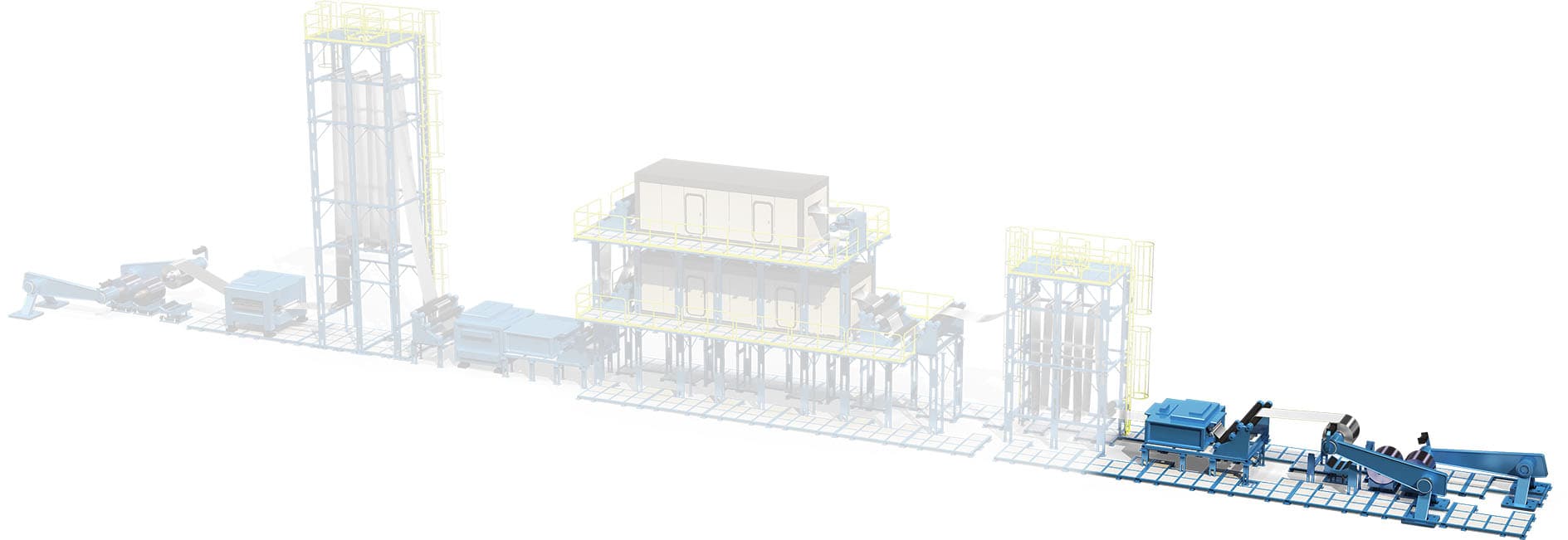
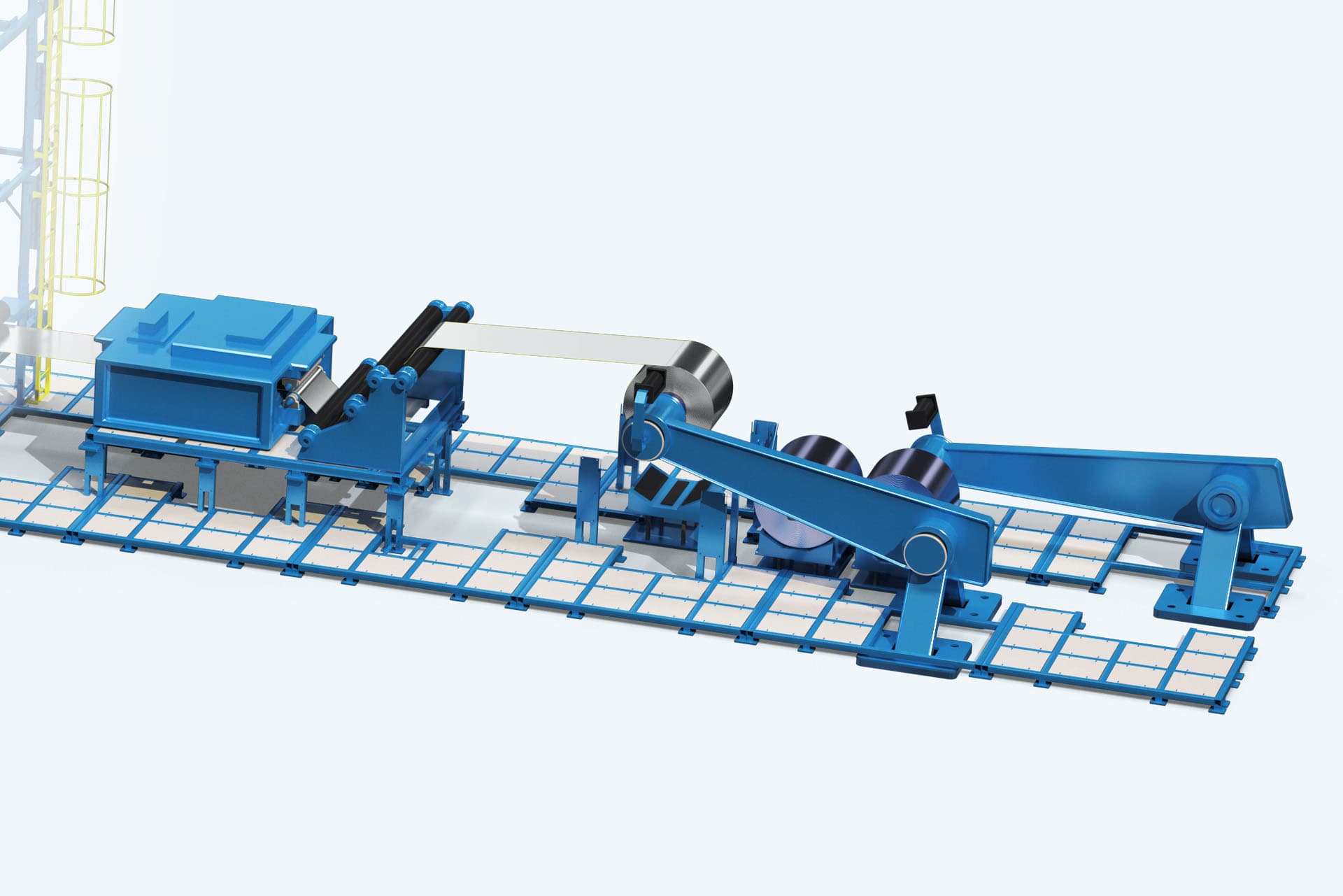
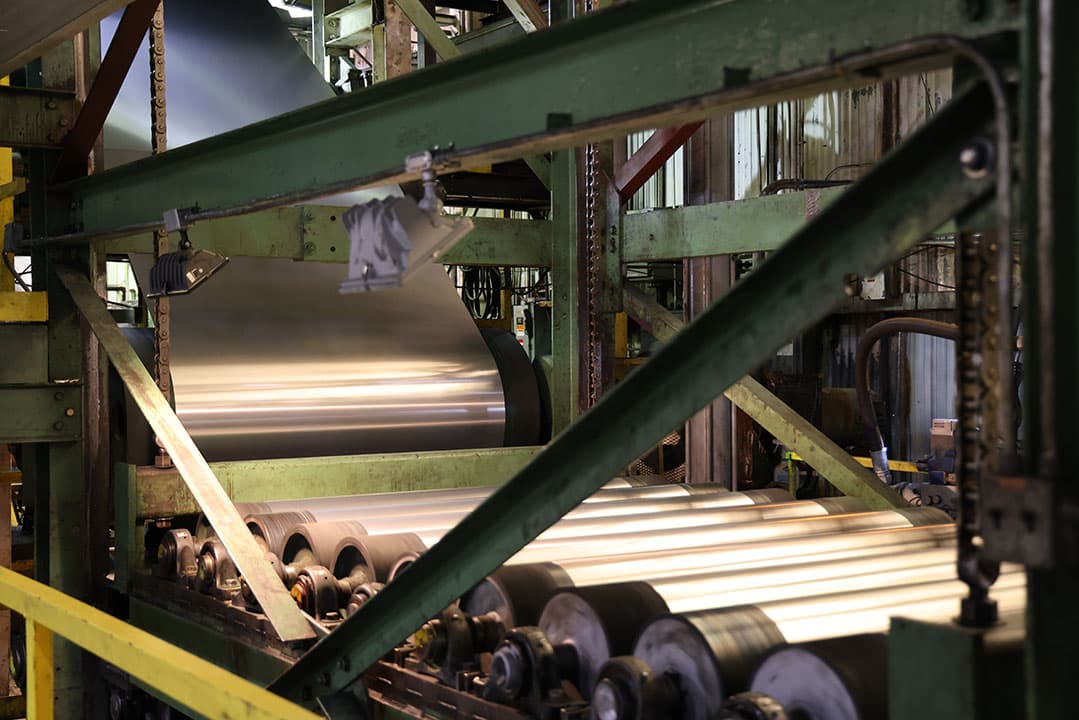
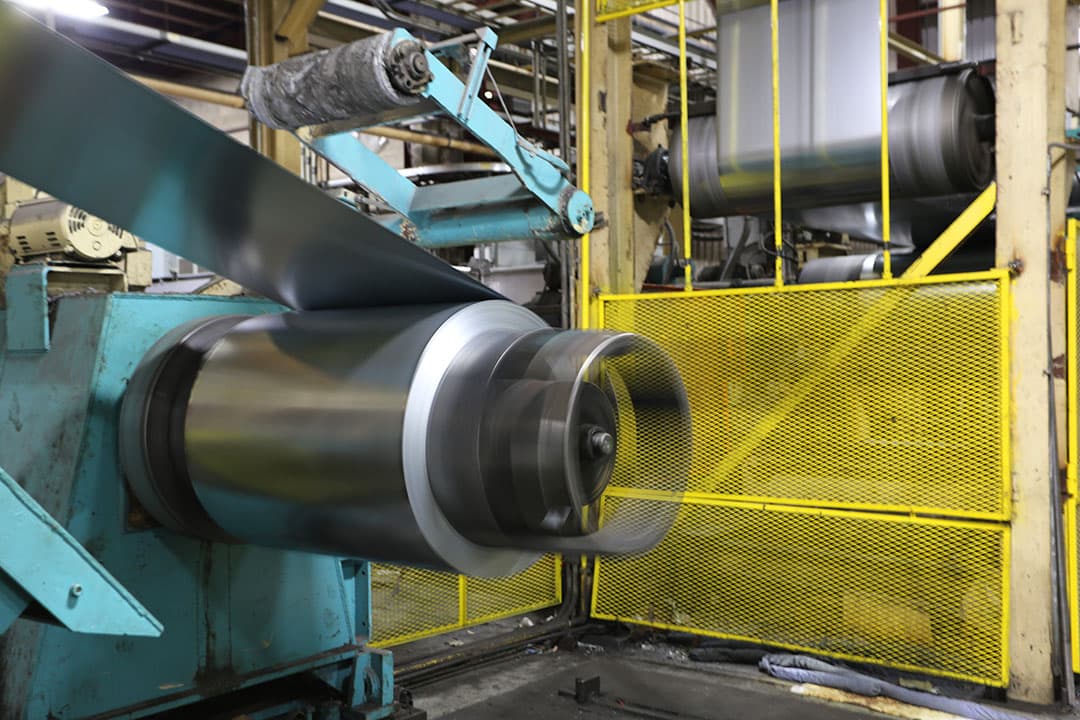
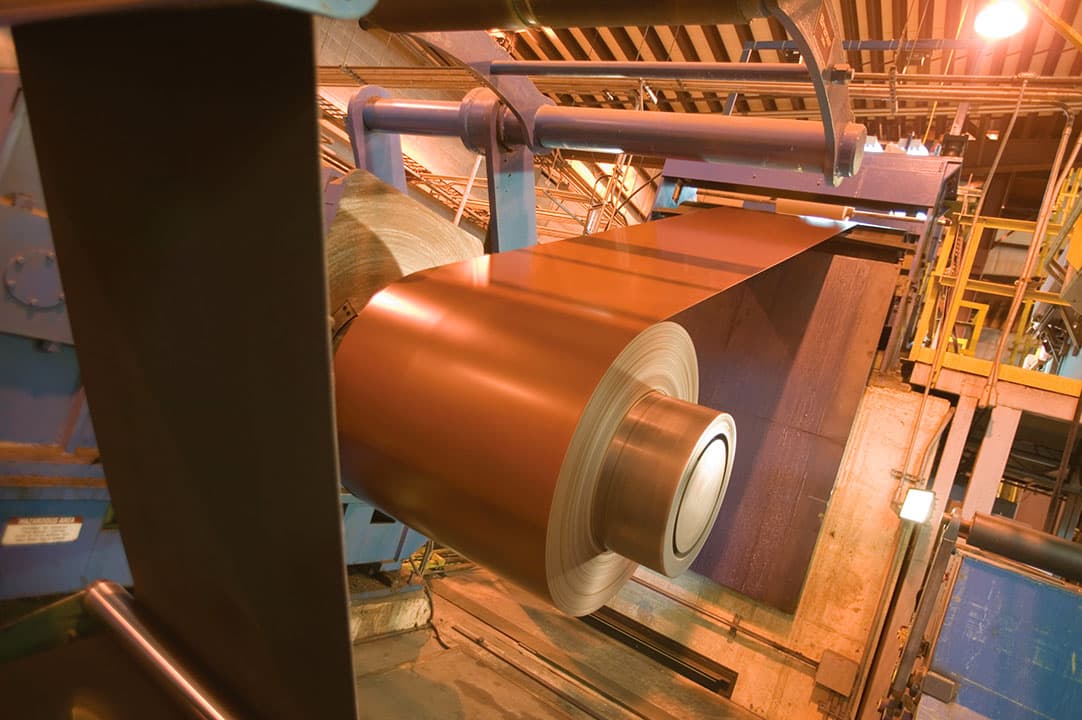
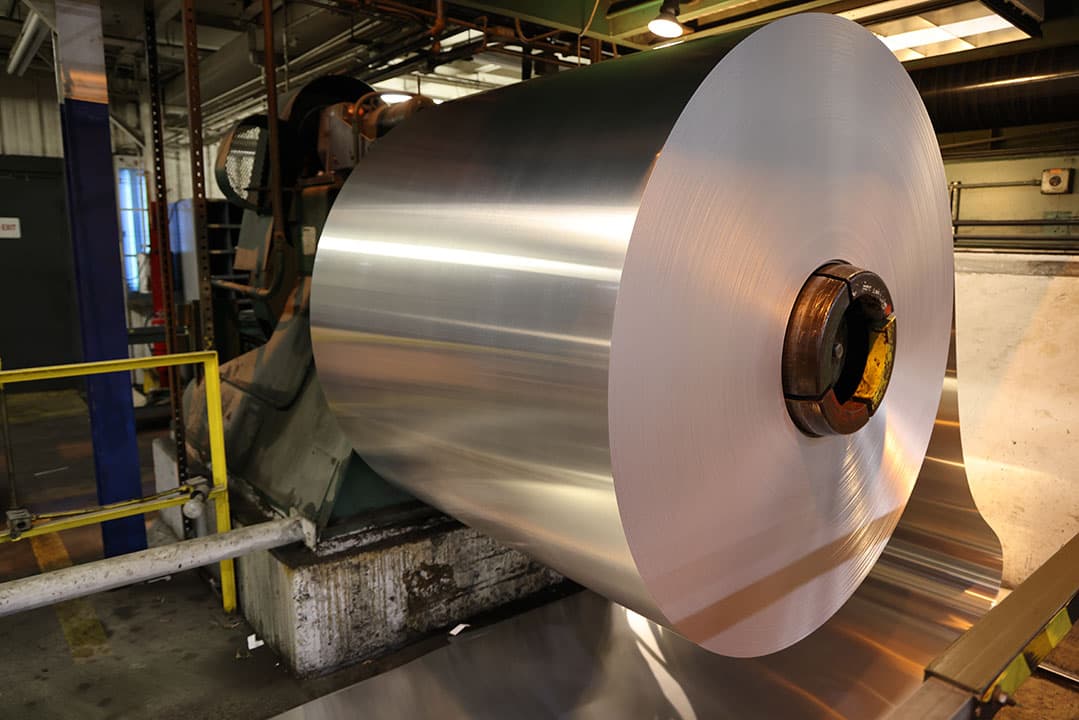
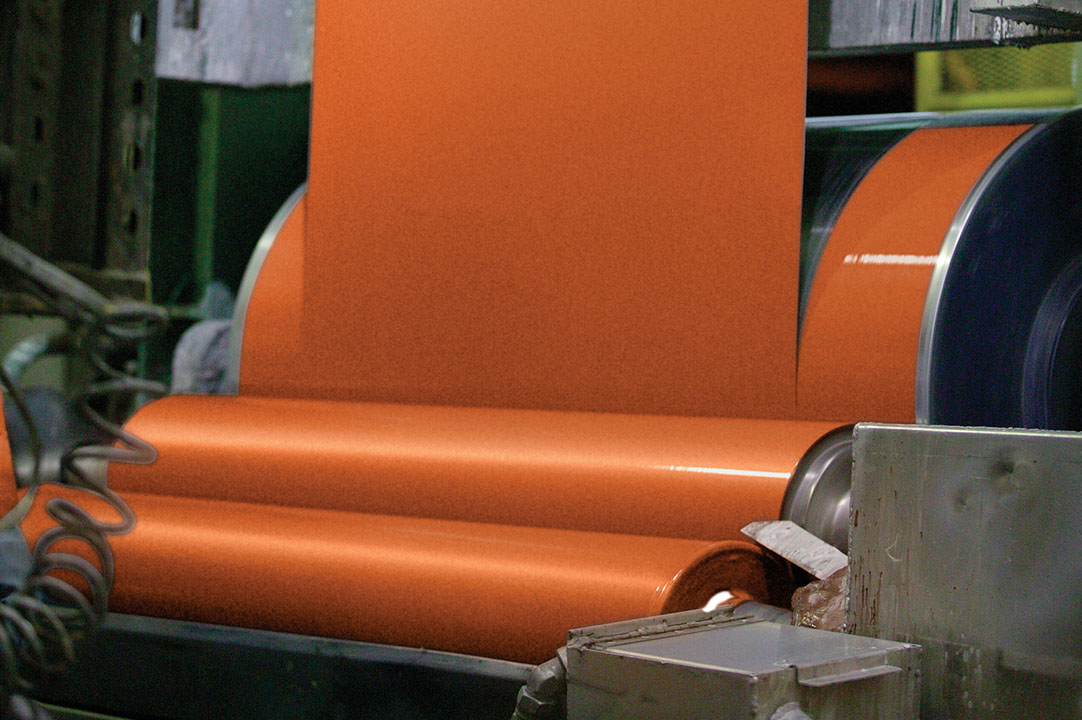
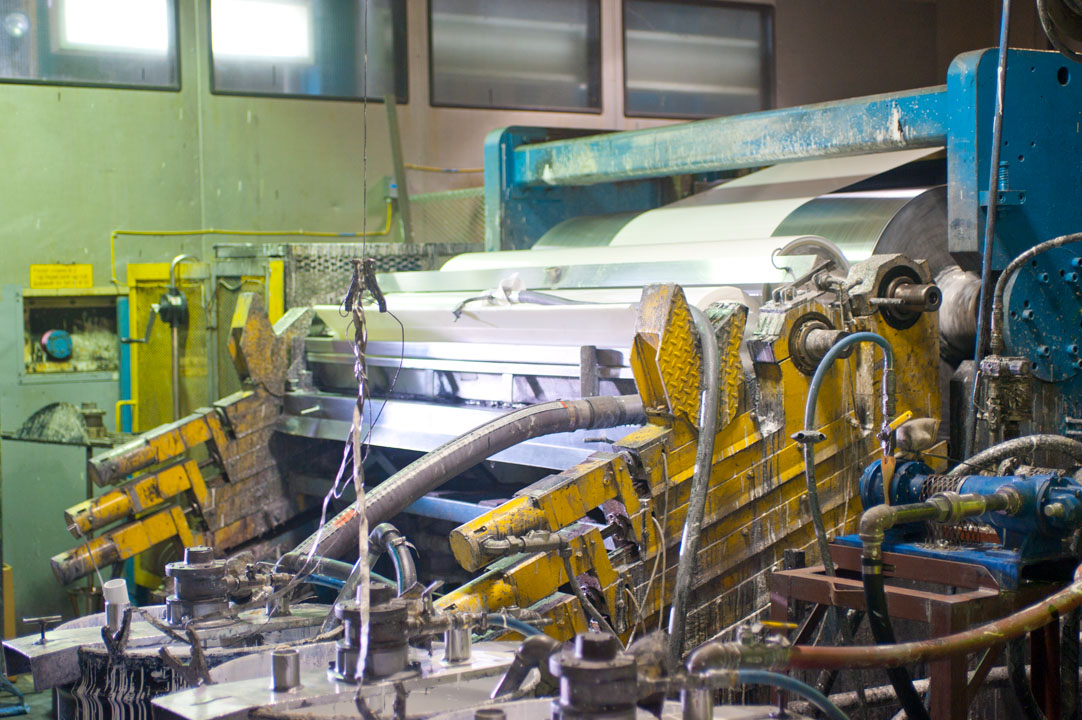
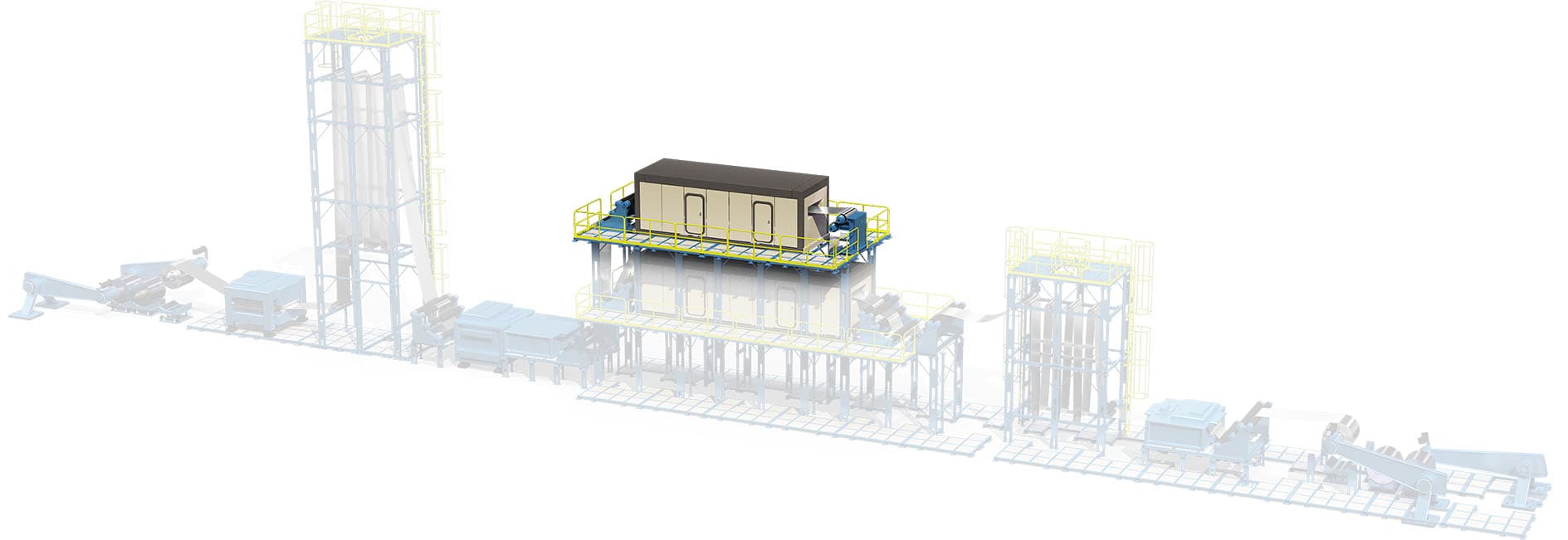
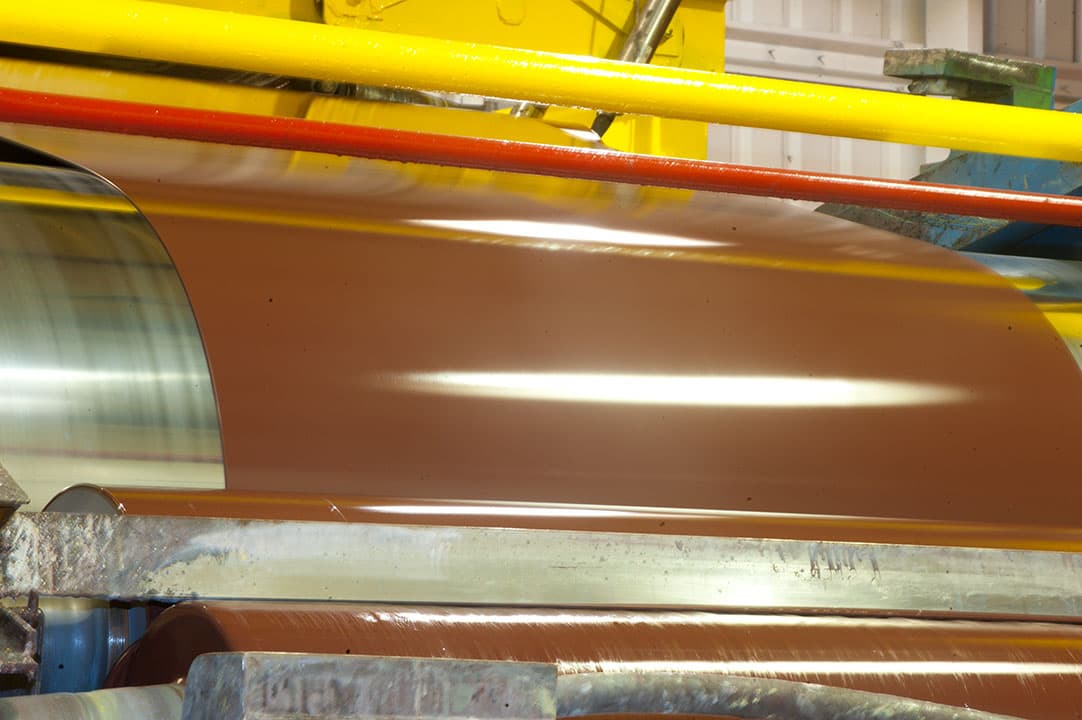
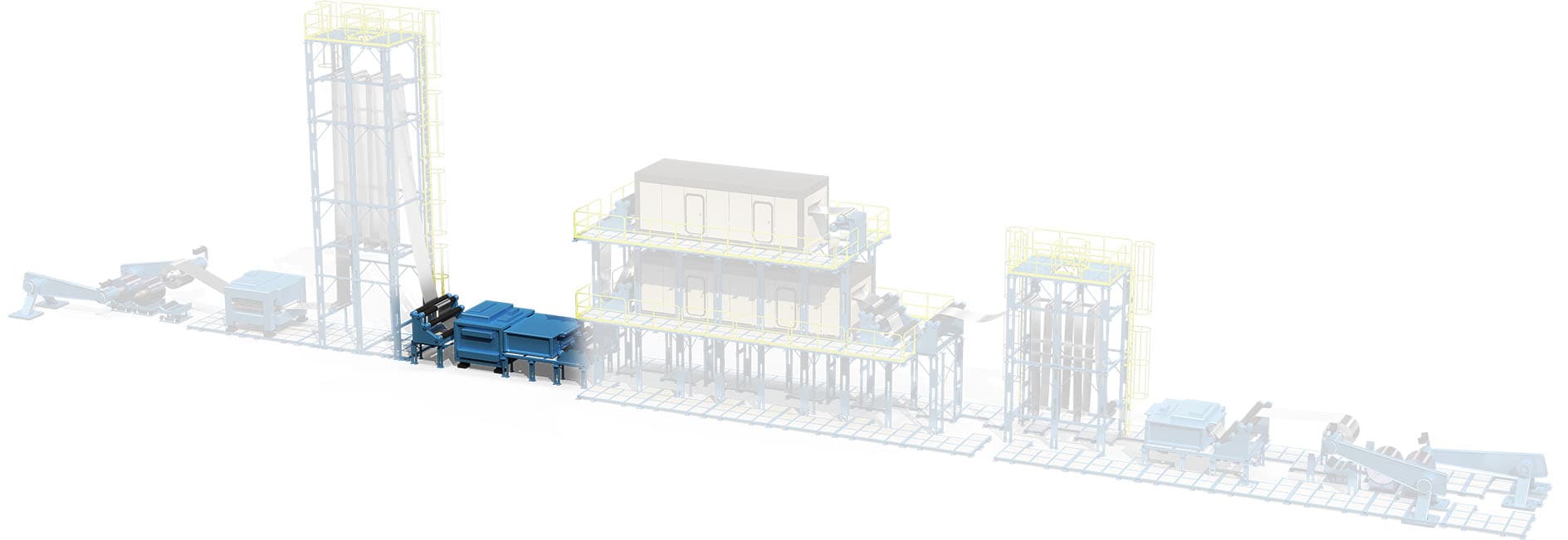
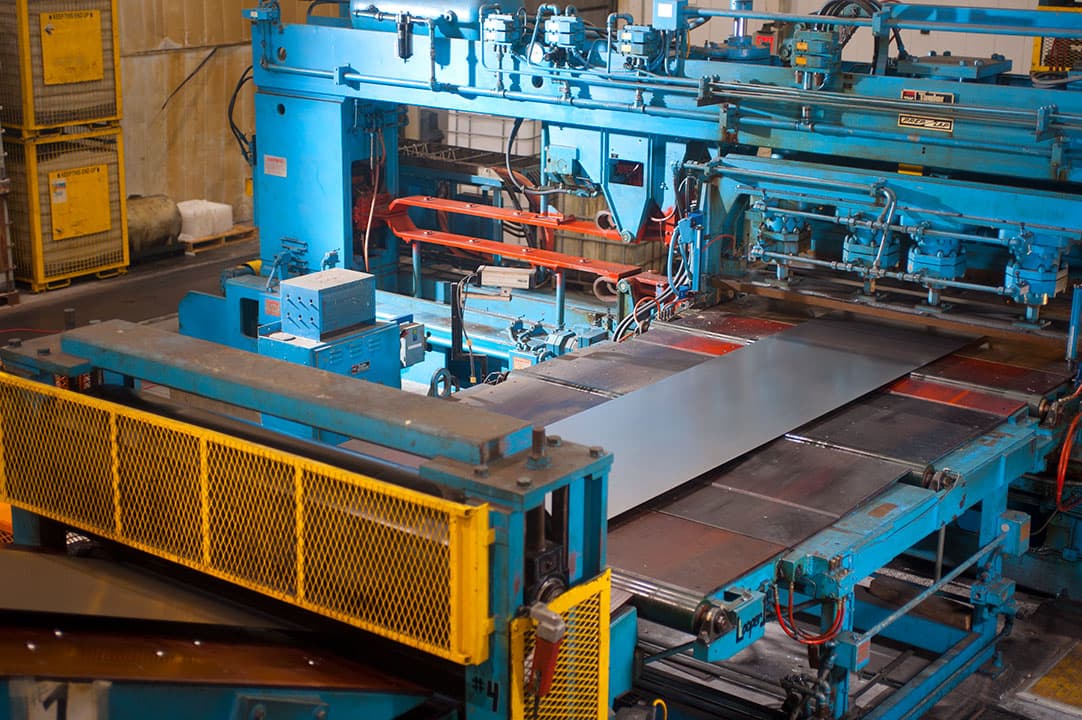
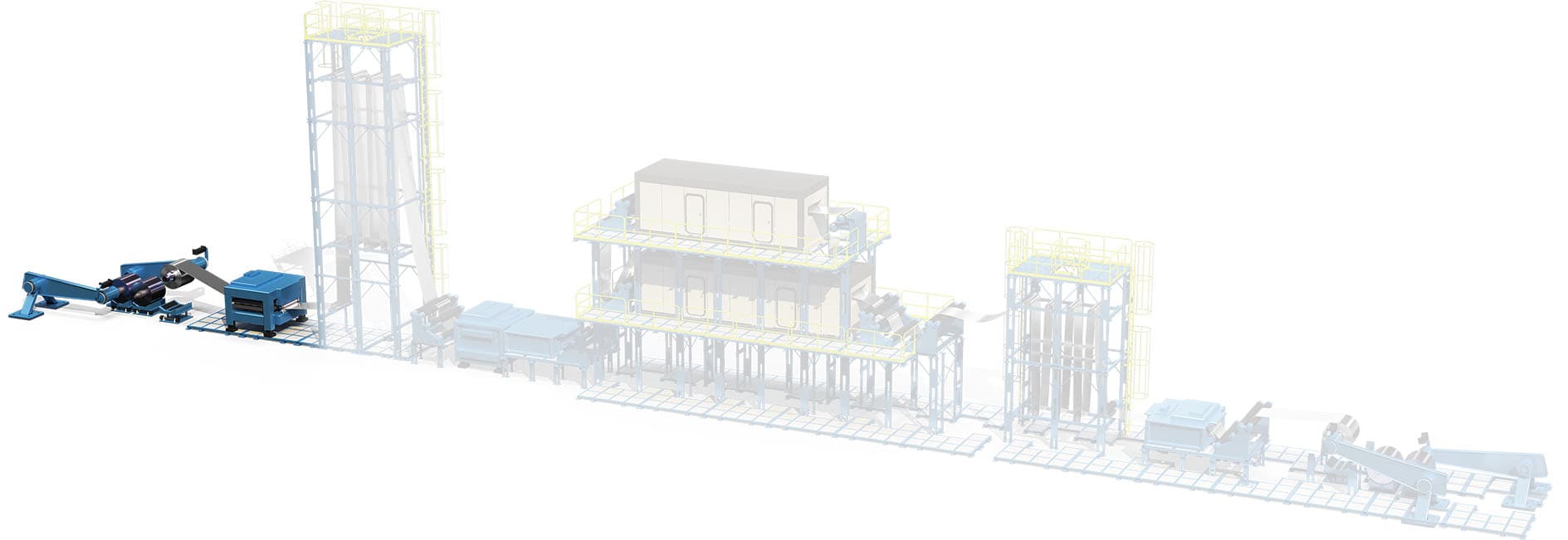
Once the metal is cleaned, treated, and painted, the strip is rewound into a coil size prescribed by the customer. From there, the coil is removed from the line and packaged for shipment or additional processing.
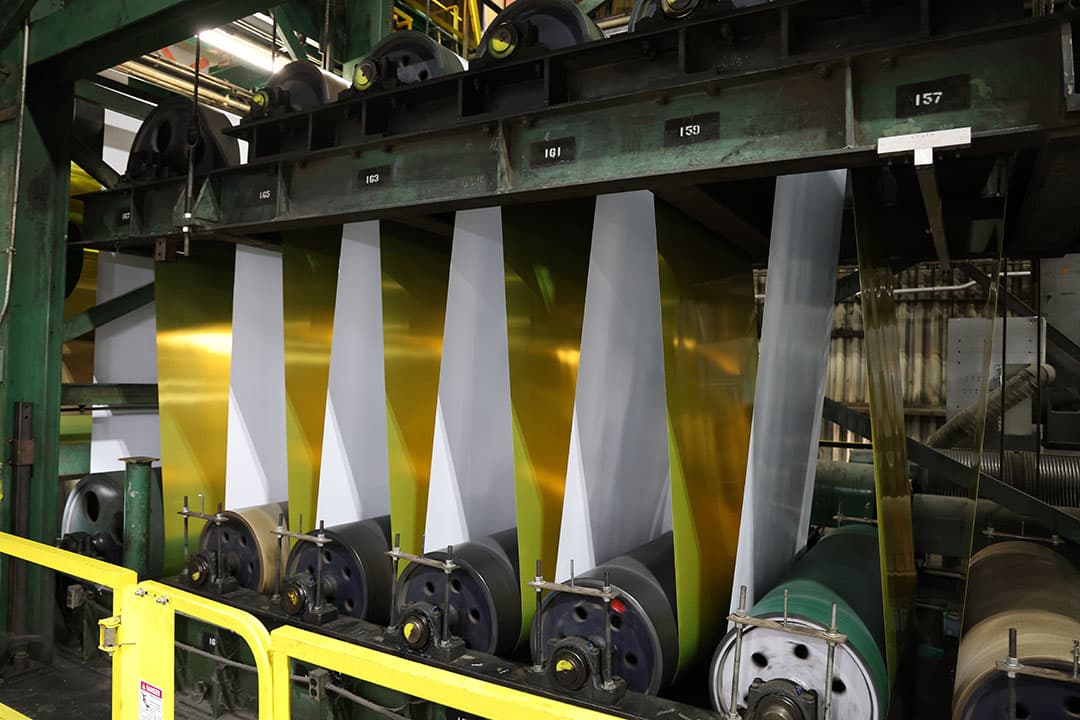
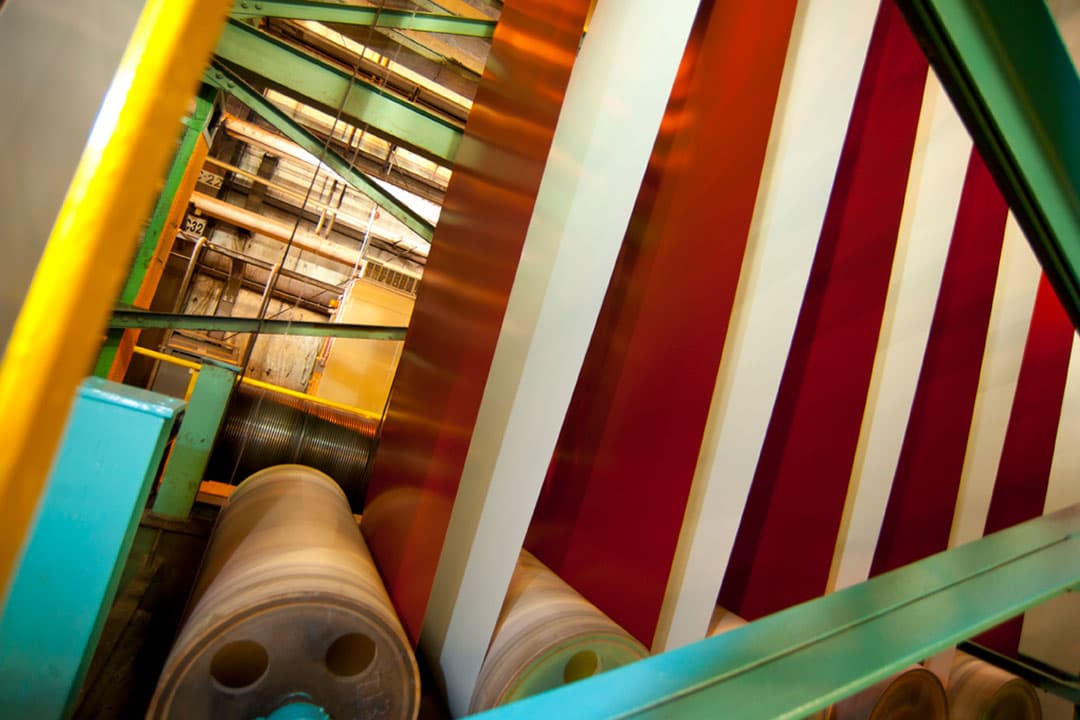
After the primer is applied and cured, then the metal strip enters the finish coat station where a topcoat is applied. Topcoats provide color, corrosion resistance, durability, flexibility and any other required physical properties. Like primers, the topcoat is cured using thermal cure ovens.
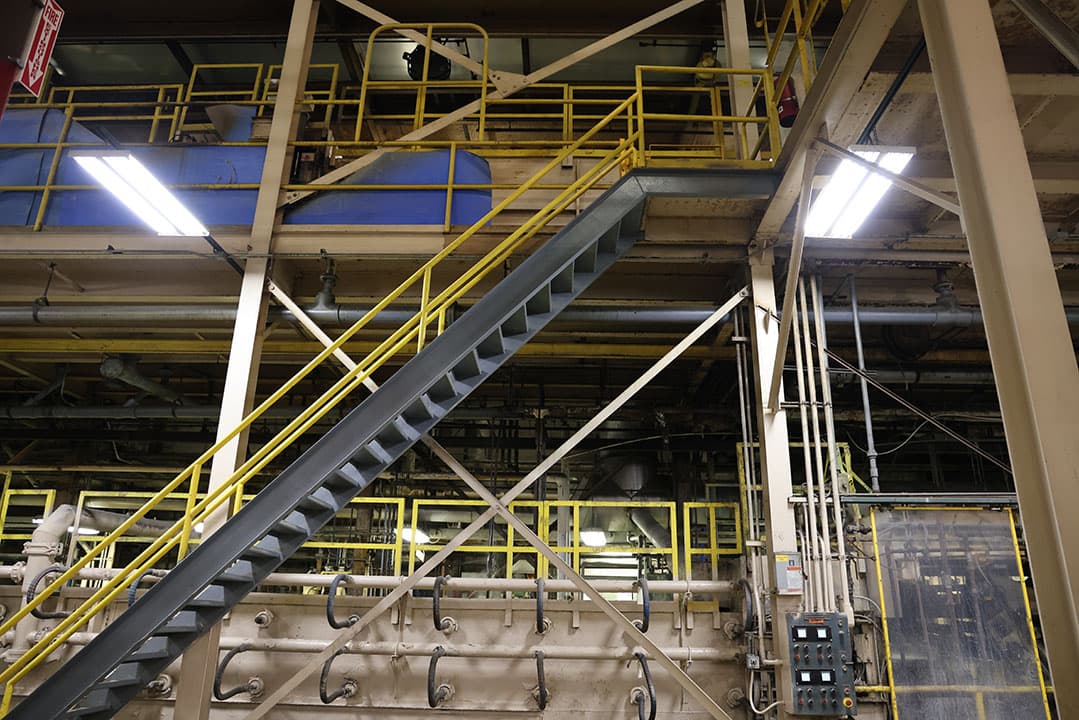
Oven
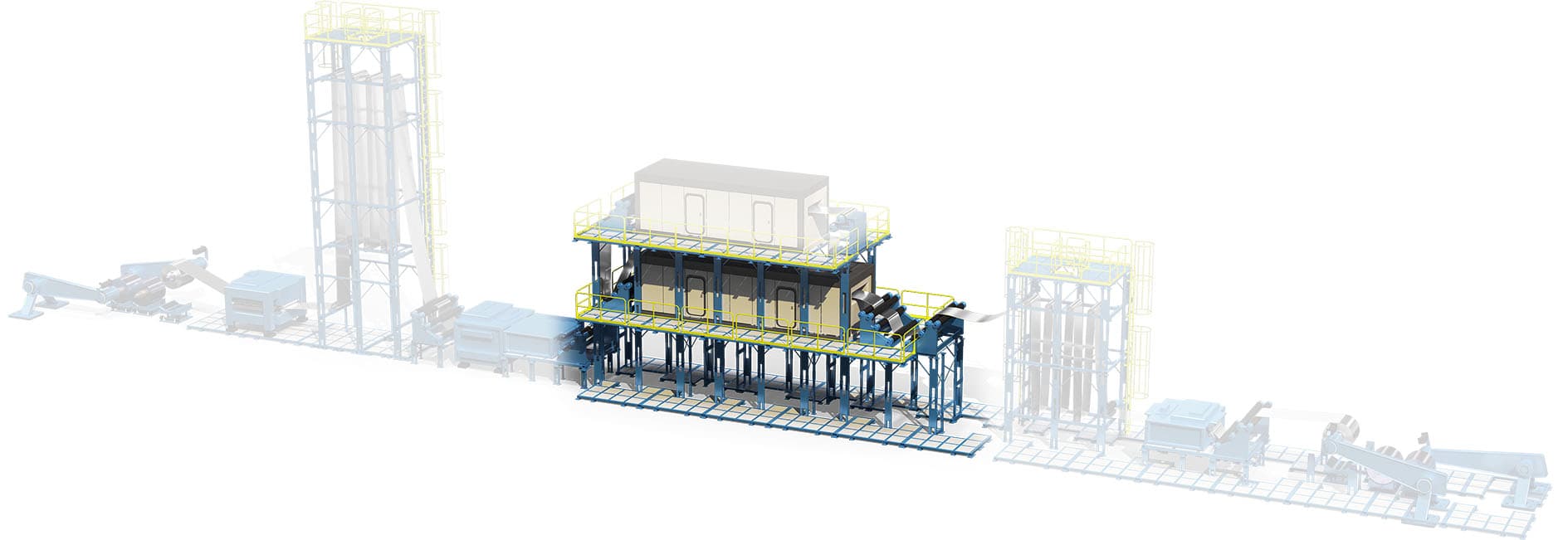
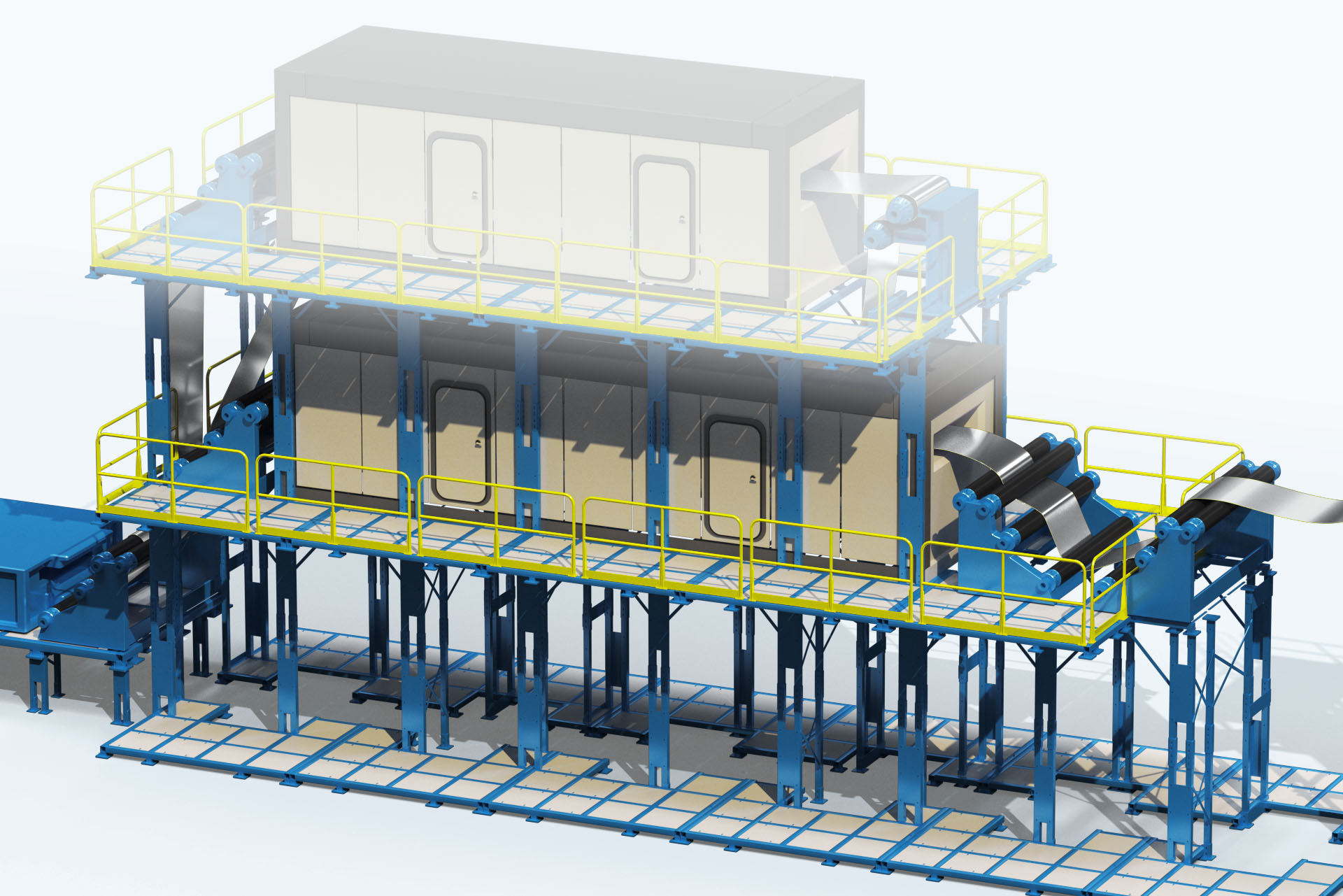
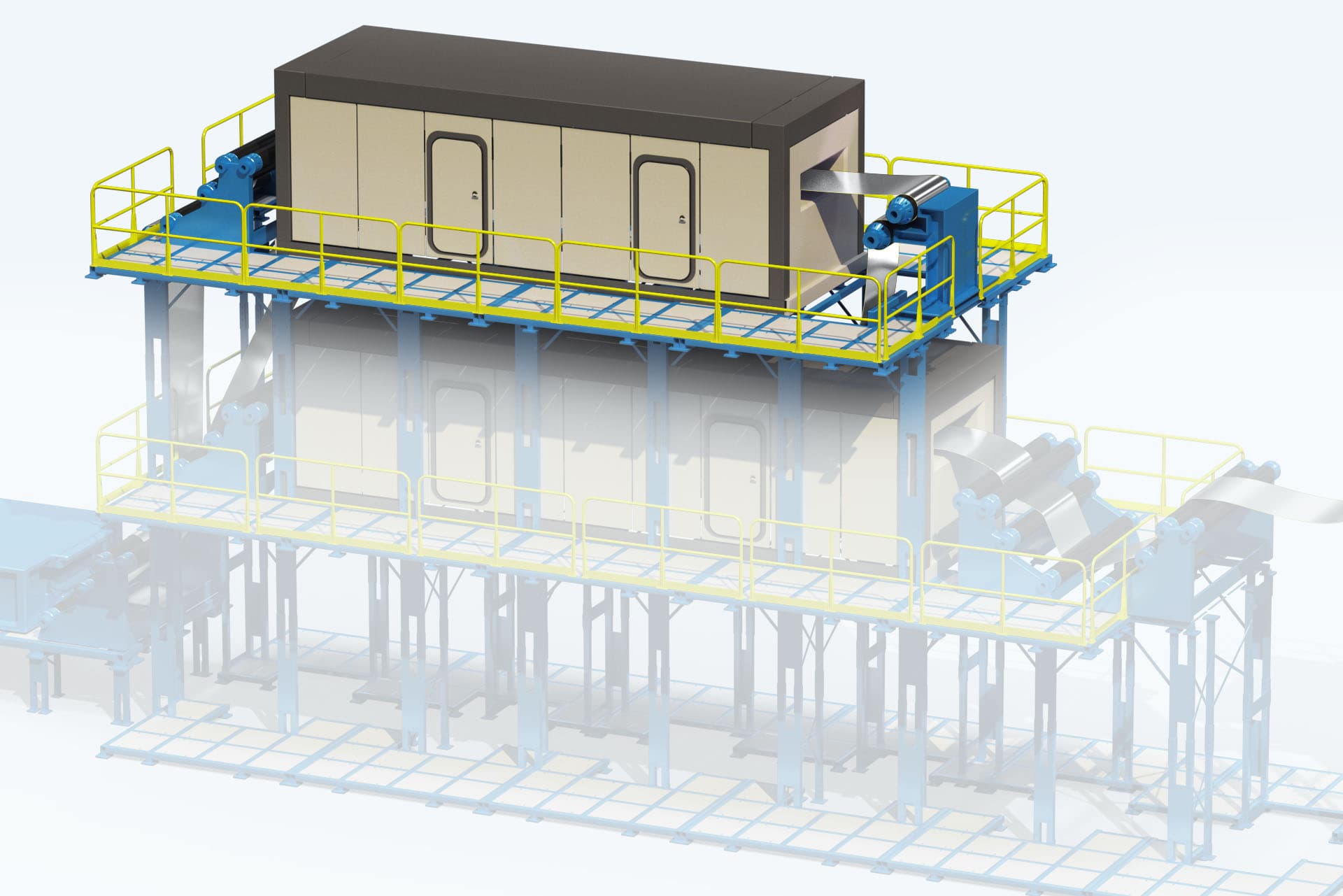
Coil coating ovens can range from 130 feet to 160 feet and will cure the coatings in 13 to 20 seconds.
During this stage, the strip enters the prime coat station whereby a primer is applied to the clean and treated metal. After the primer is applied, the metal strip travels through a thermal oven for curing. Primers are used to aid in paint adhesion, improve corrosion performance and enhance aesthetic and functional attributes of the topcoat.
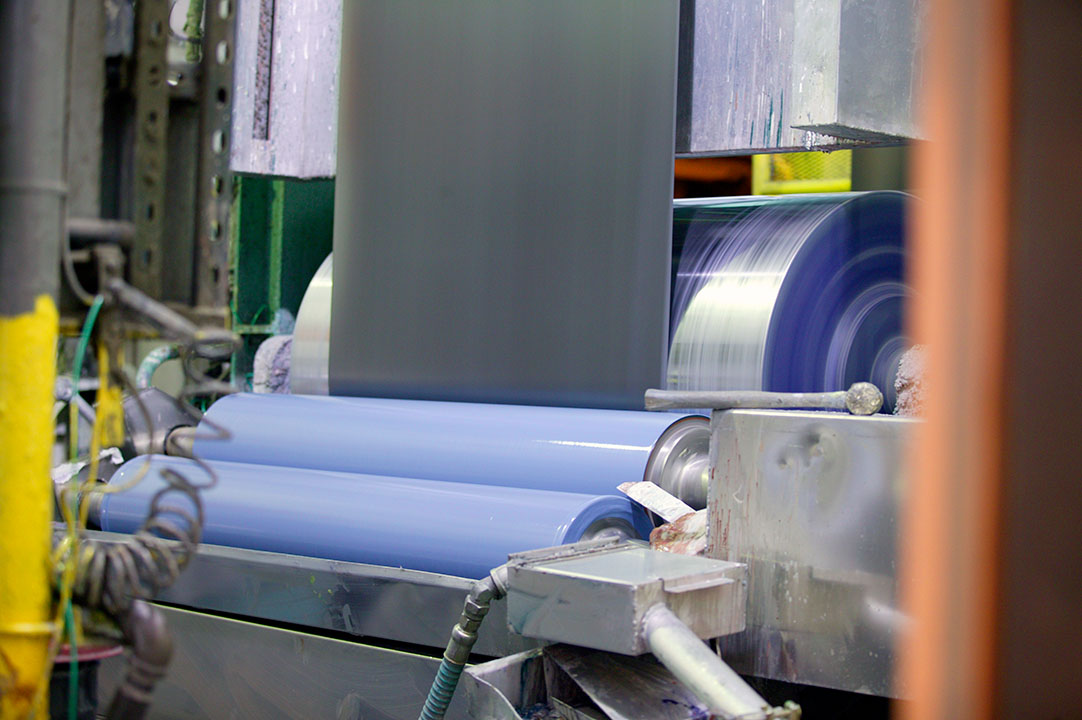
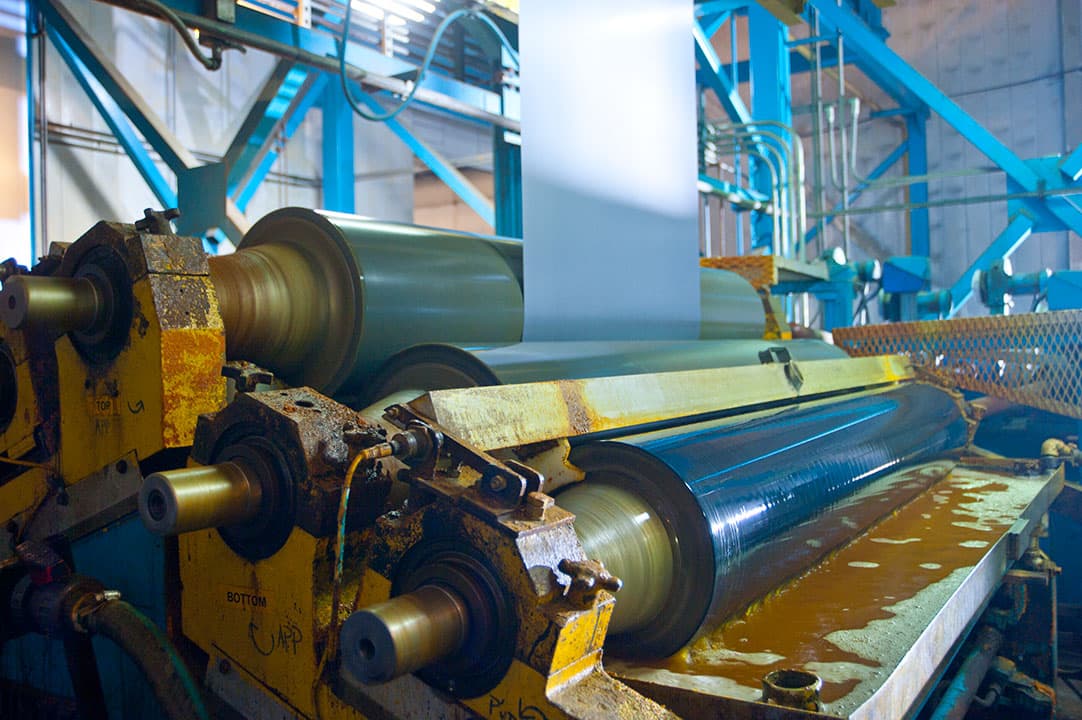
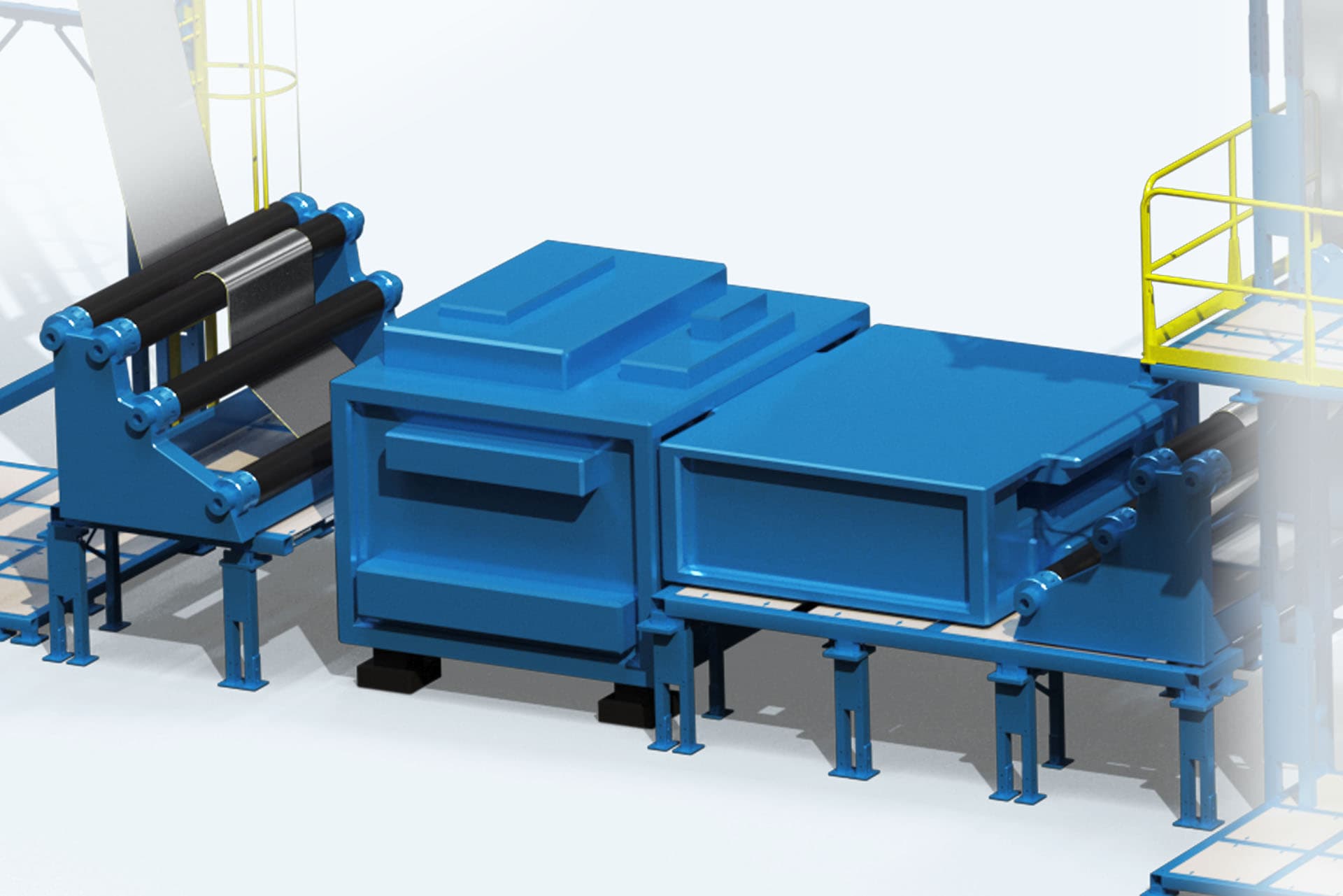
S Wrap Coater
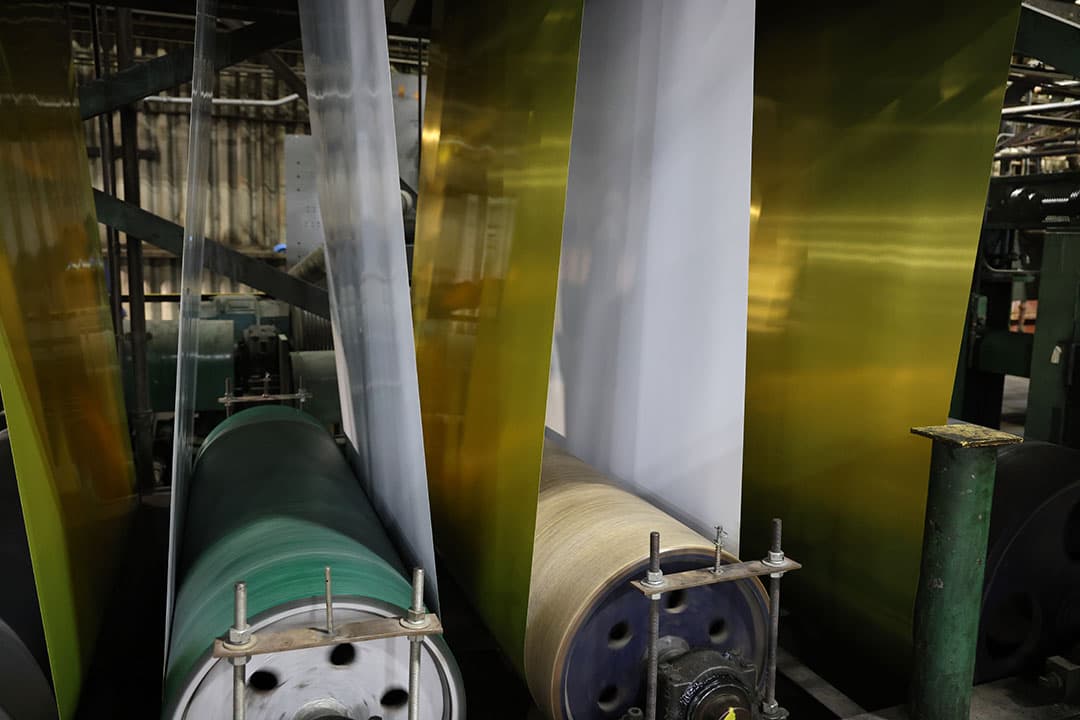
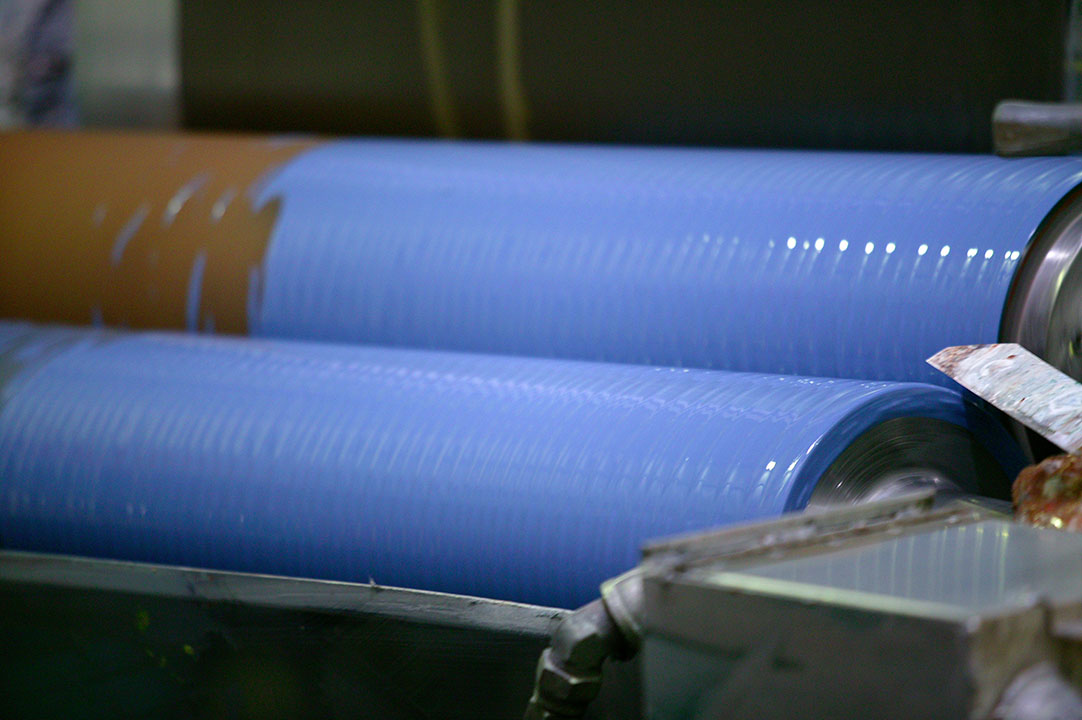
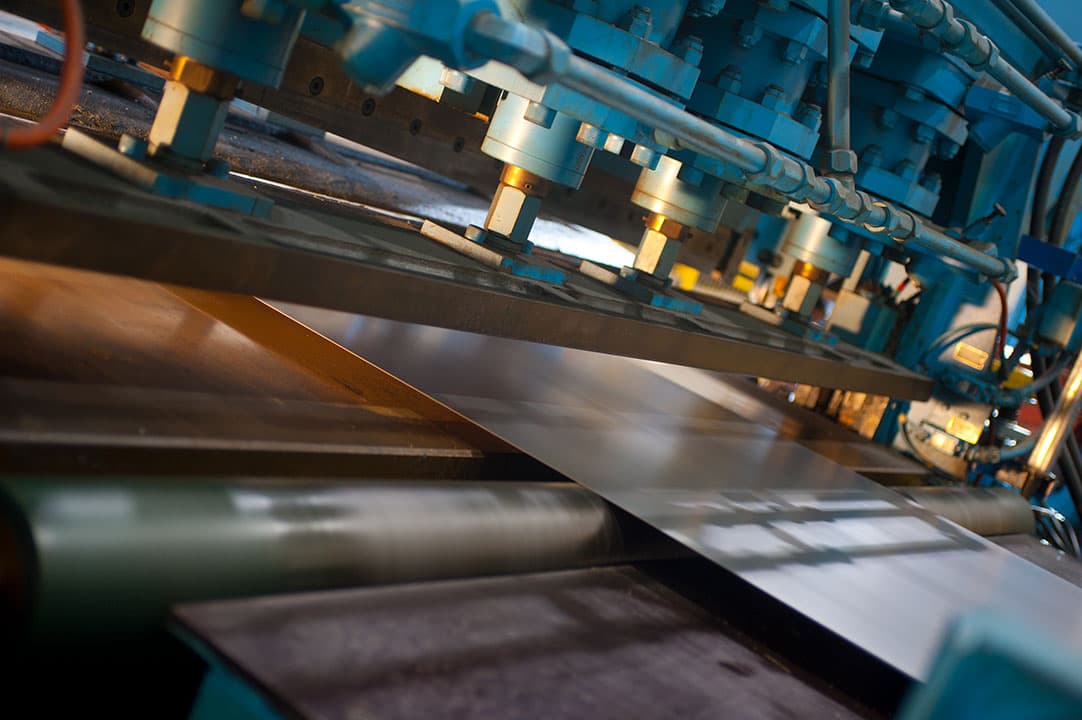
The S wrap coater design allows for primers and paints to be applied to the top and back side of the metal strip simultaneously in one continuous pass.
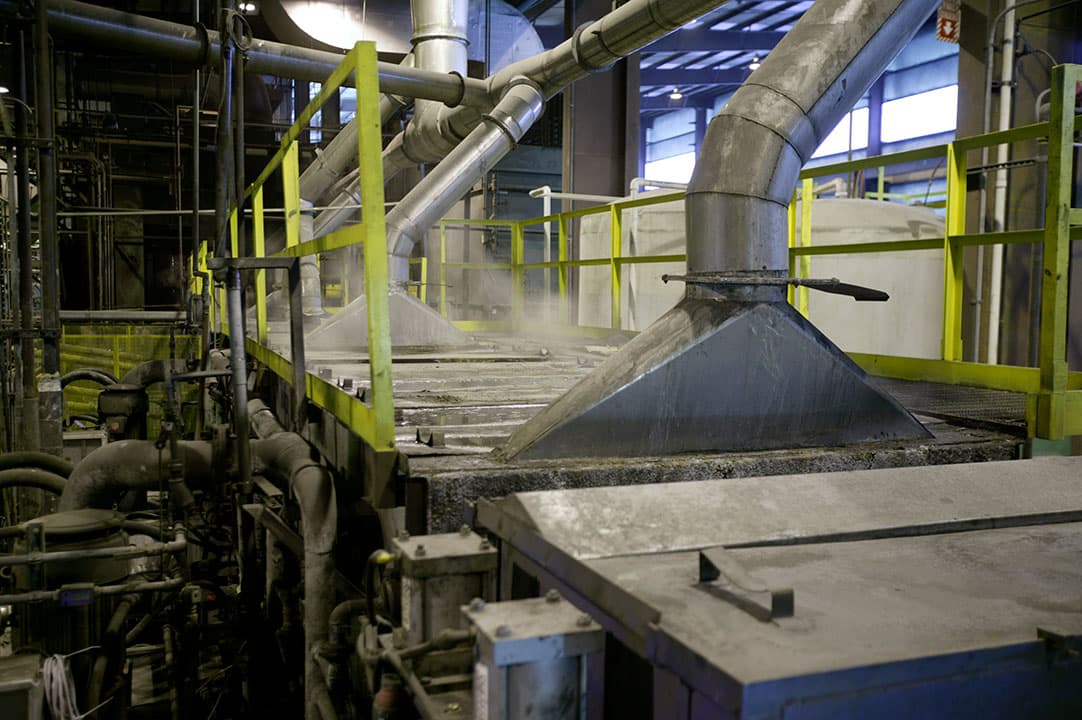
The cleaning and pretreating section of the coil coating process focuses on preparing the metal for painting. During the cleaning stage, dirt, debris, and oils are removed from the metal strip. From there, the metal enters the pretreatment section and/or a chemical coater whereby chemicals are applied to facilitate paint adhesion and enhance corrosion resistance.
Dried-In-Place
In this stage a chemical that provides enhanced corrosion performance is applied. This treatment can be chrome free if required.
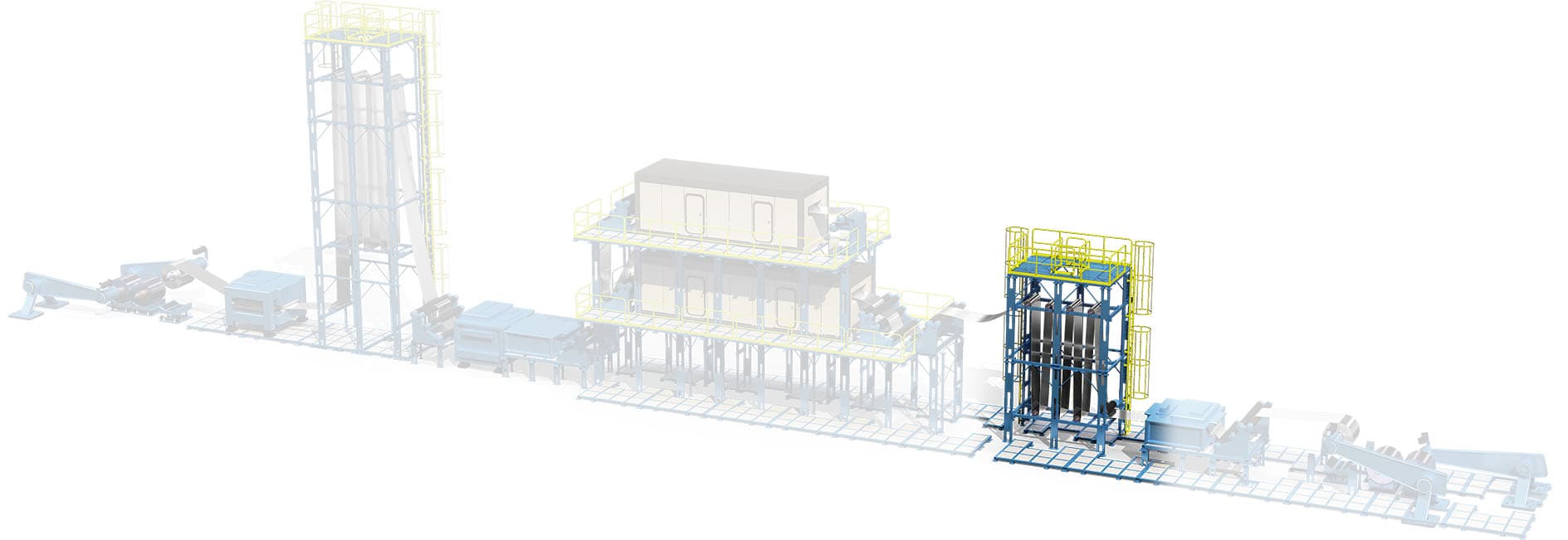
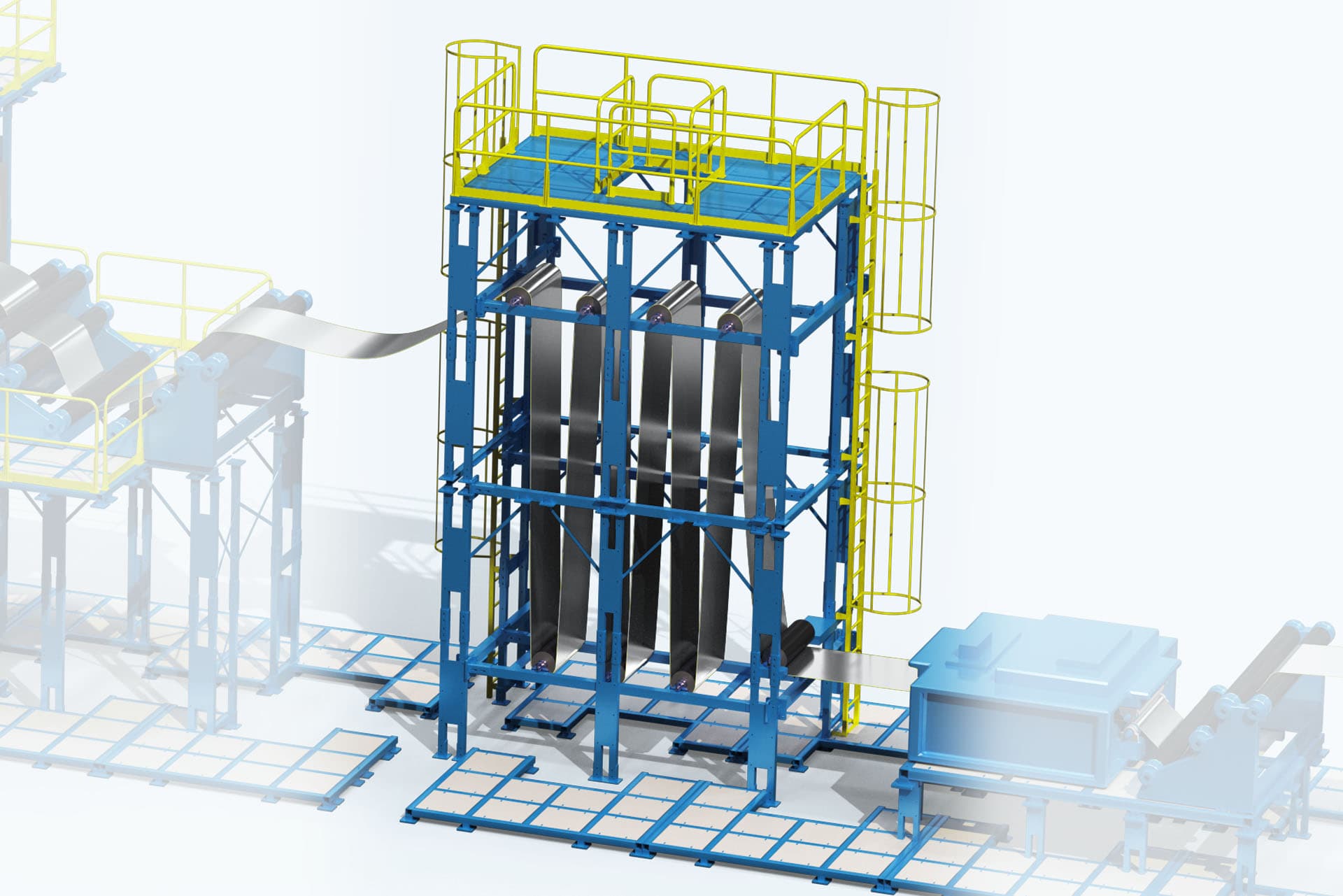
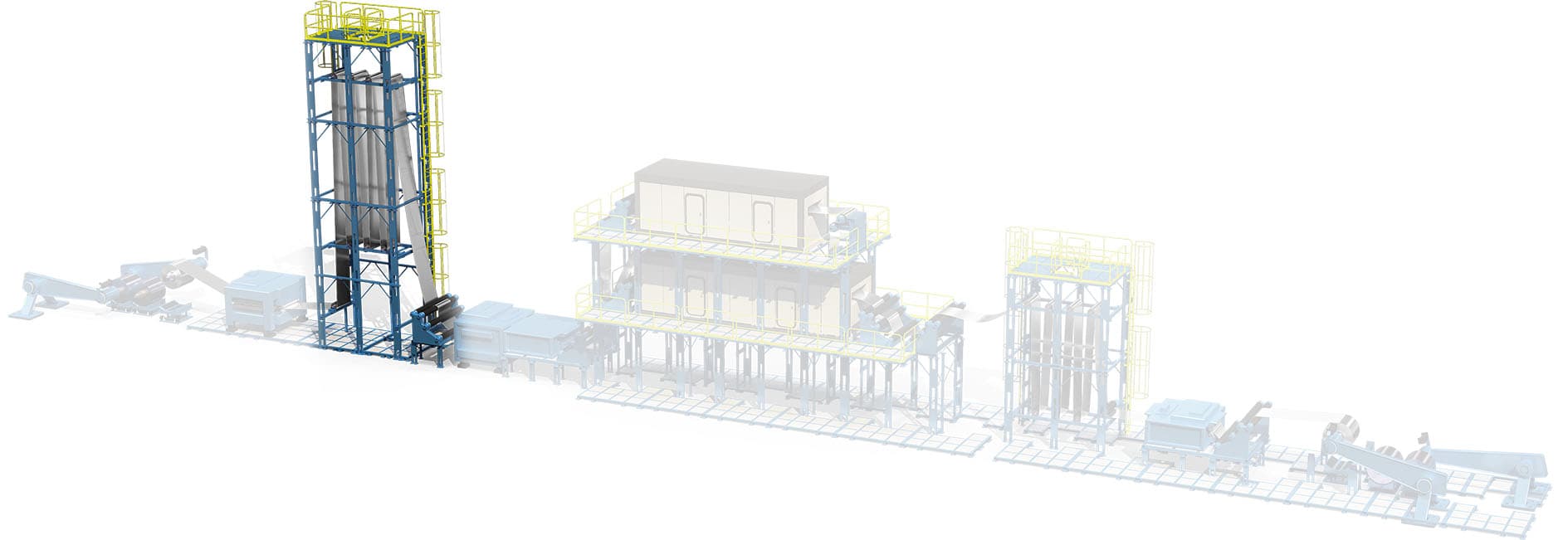
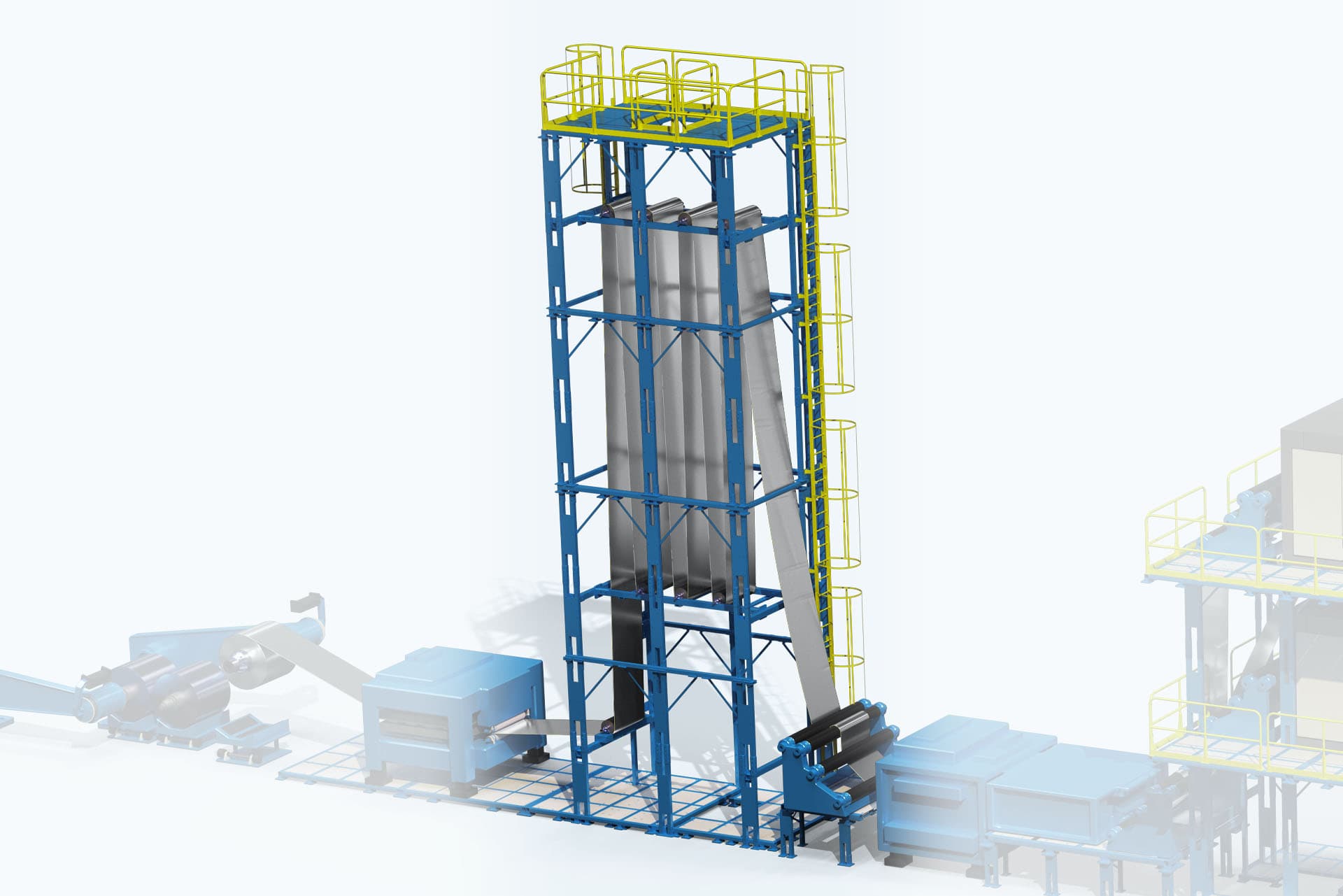
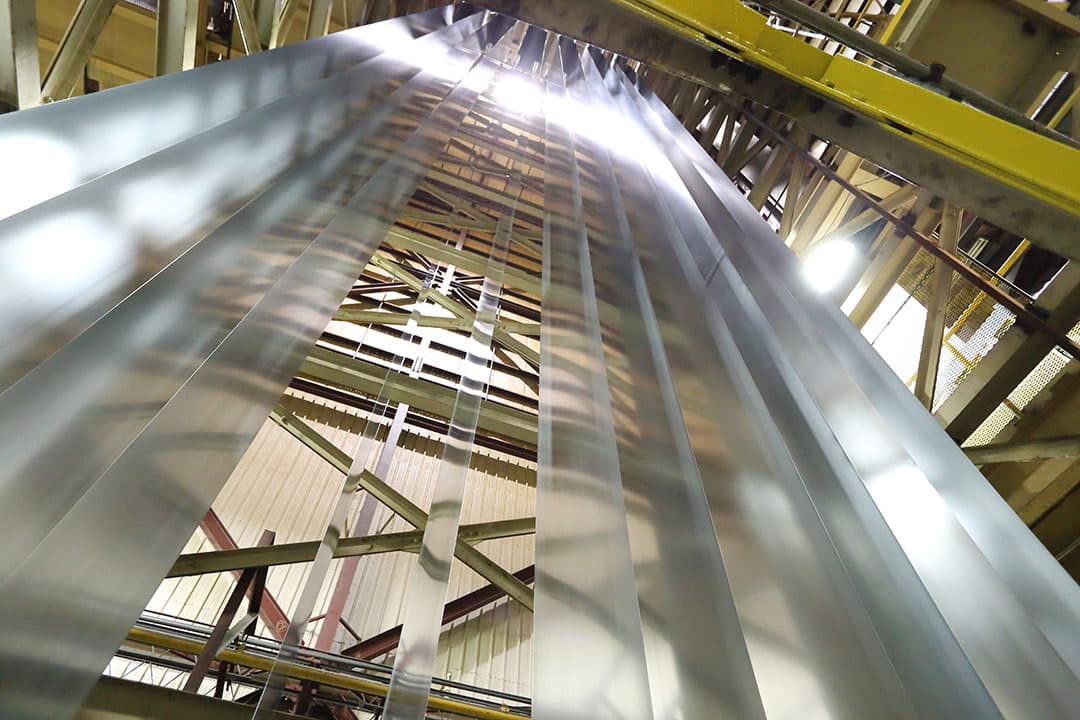
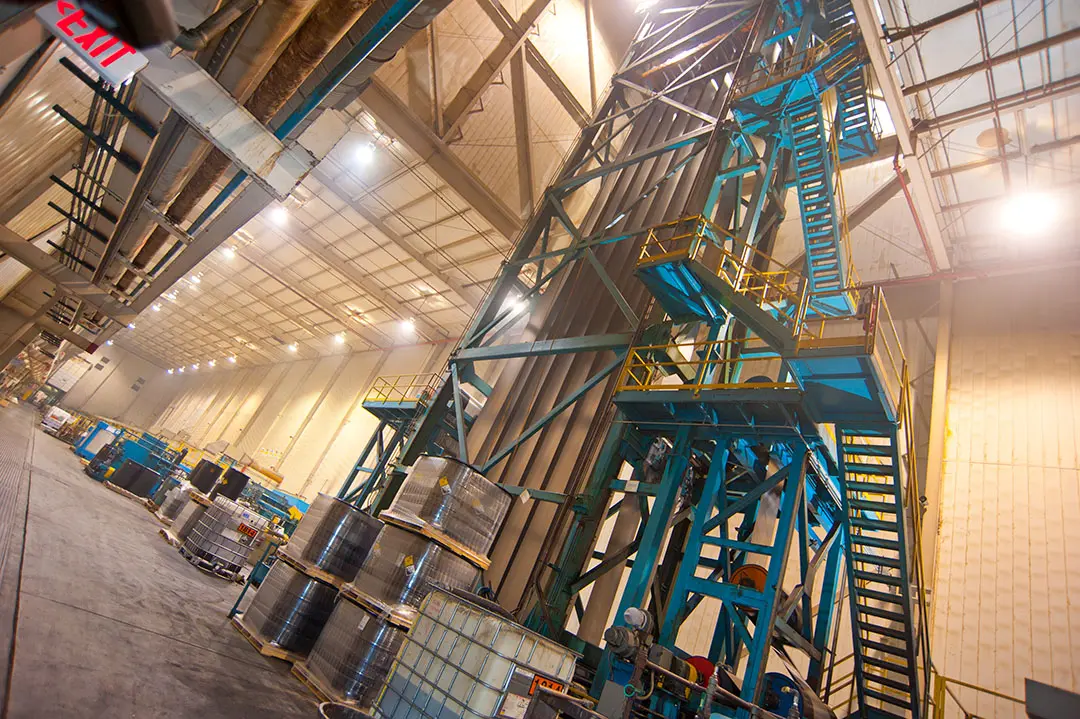
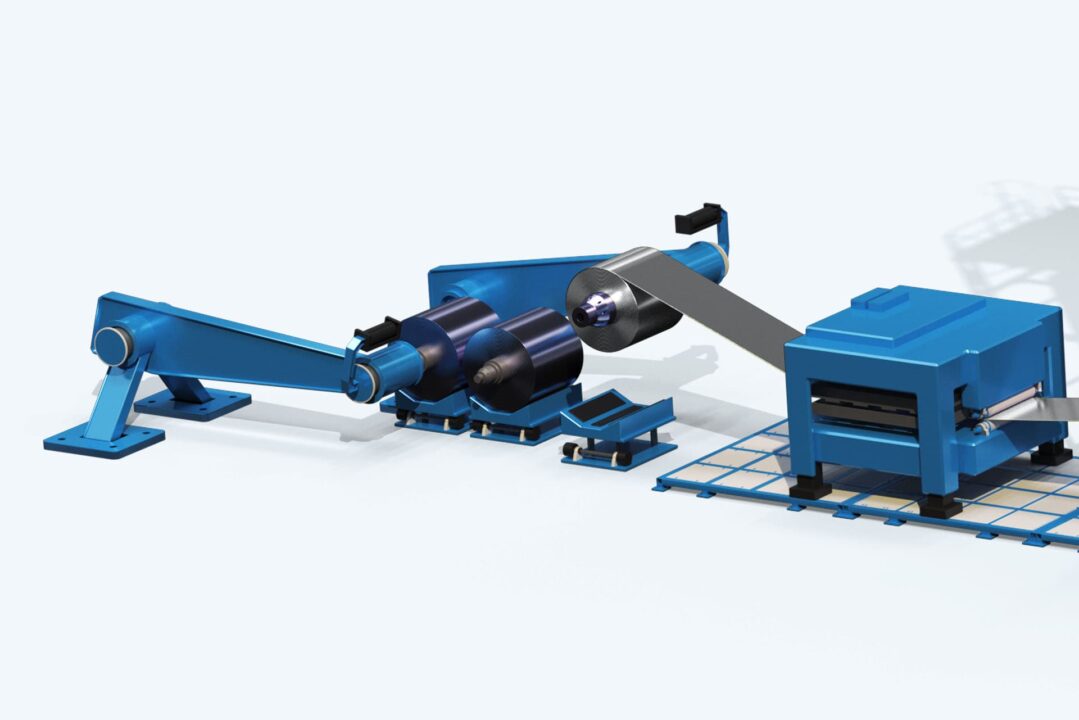
The accumulator is a structure that adjusts up and down to store material, which makes continuous operation of the coil coating process possible. This accumulation will continue to feed the coil coating processes while the entry end has stopped for the stitching process. As much as 750 feet of metal can be collected.
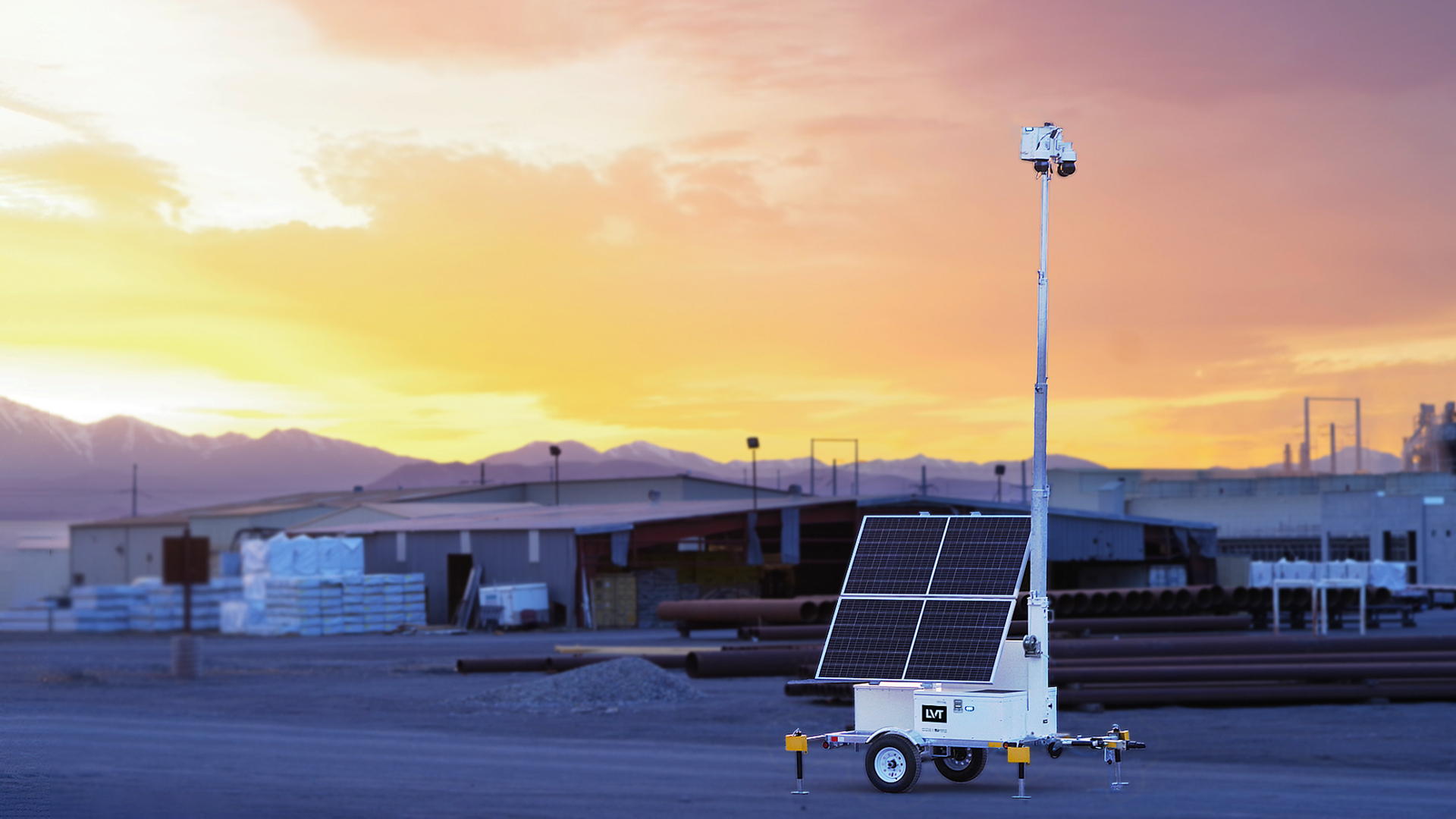
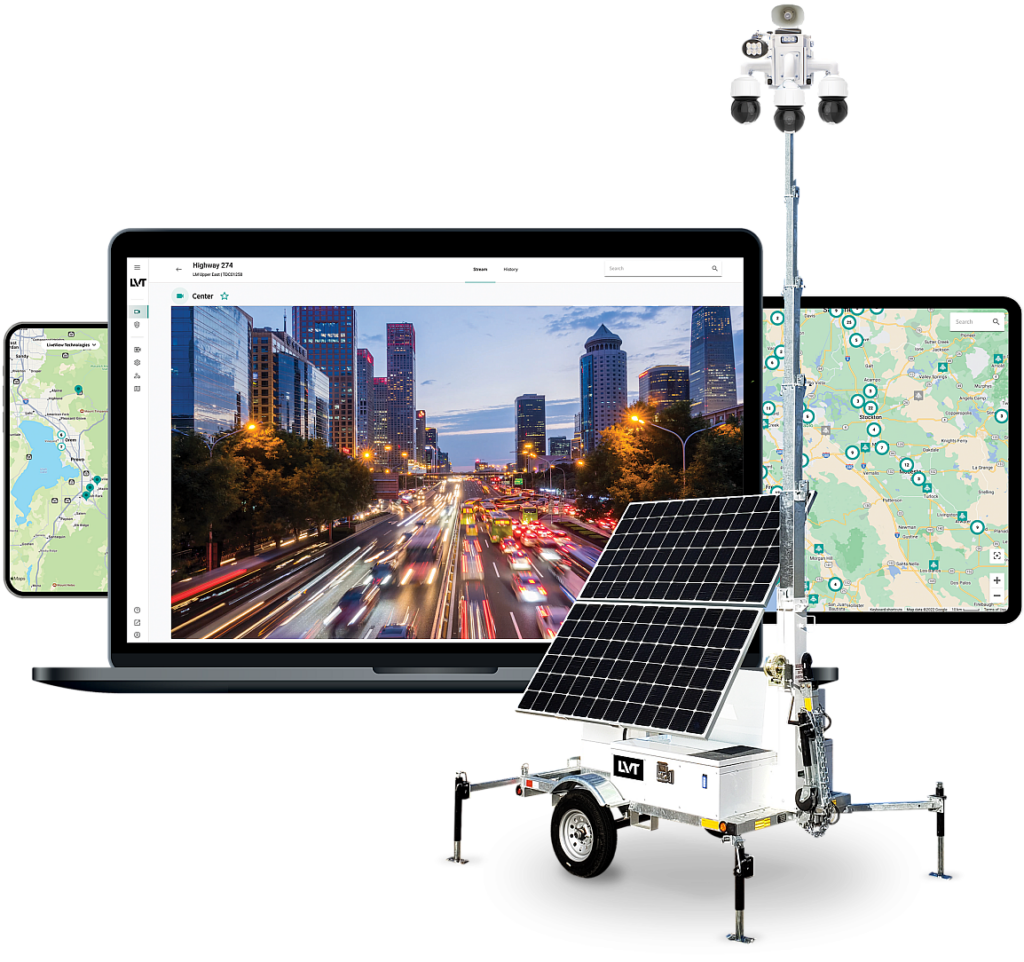
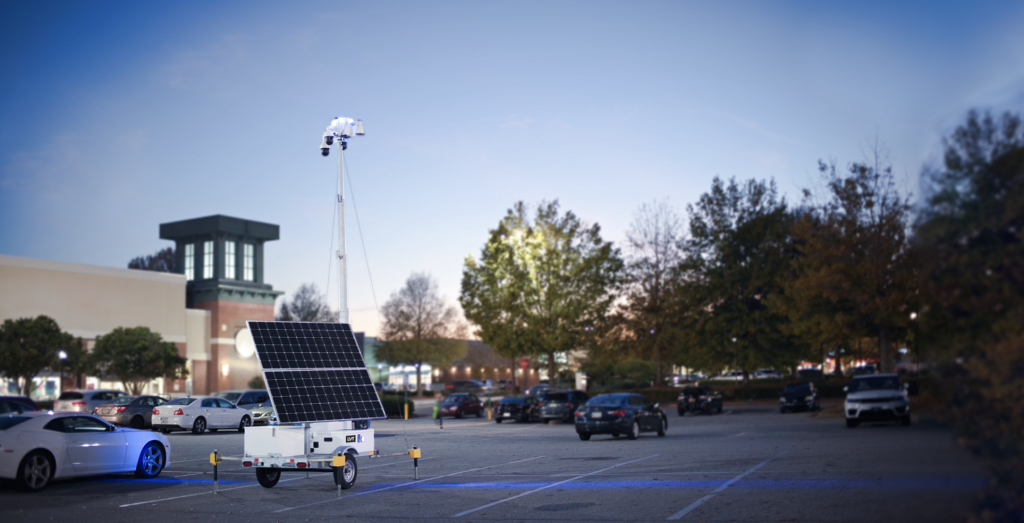
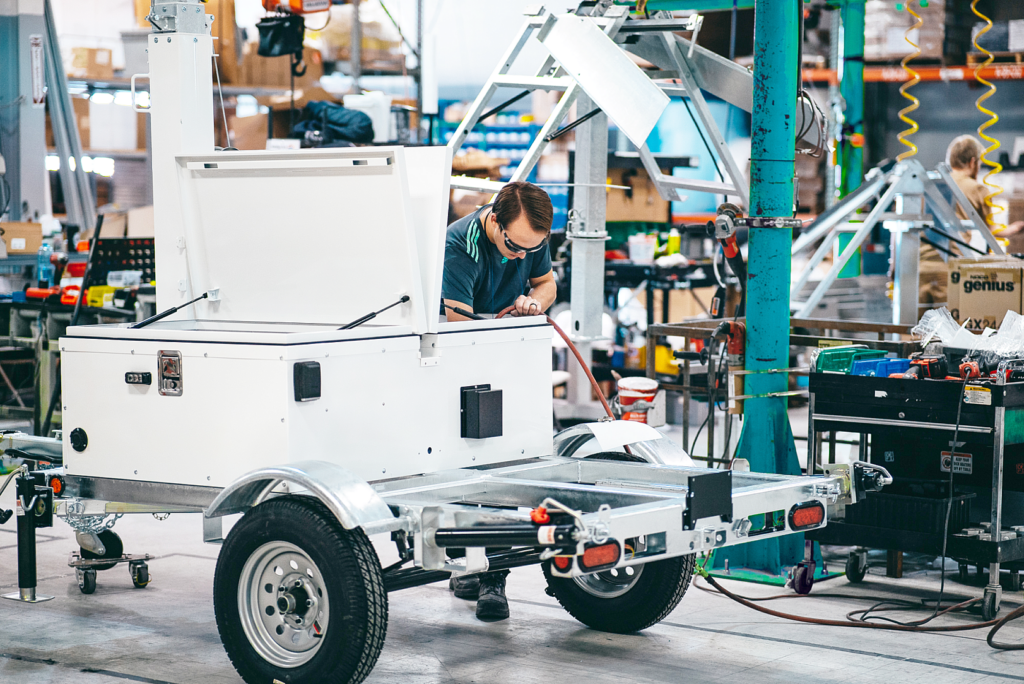
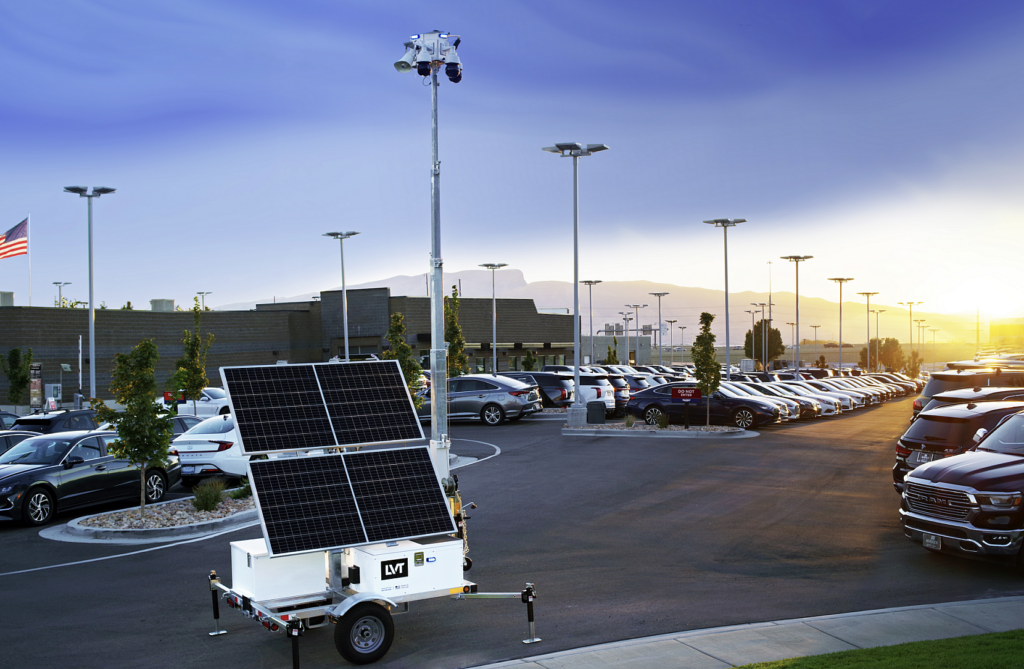
LiveView Technologies (LVT) offers advanced surveillance systems designed for flexible and remote monitoring. These systems feature high-definition cameras, real-time video streaming, and advanced analytics, all integrated into portable, solar-powered units. Ideal for various applications, including construction sites, events, and public safety, LVT's surveillance systems provide reliable, on-demand security solutions that can be quickly deployed and easily managed through a user-friendly platform.
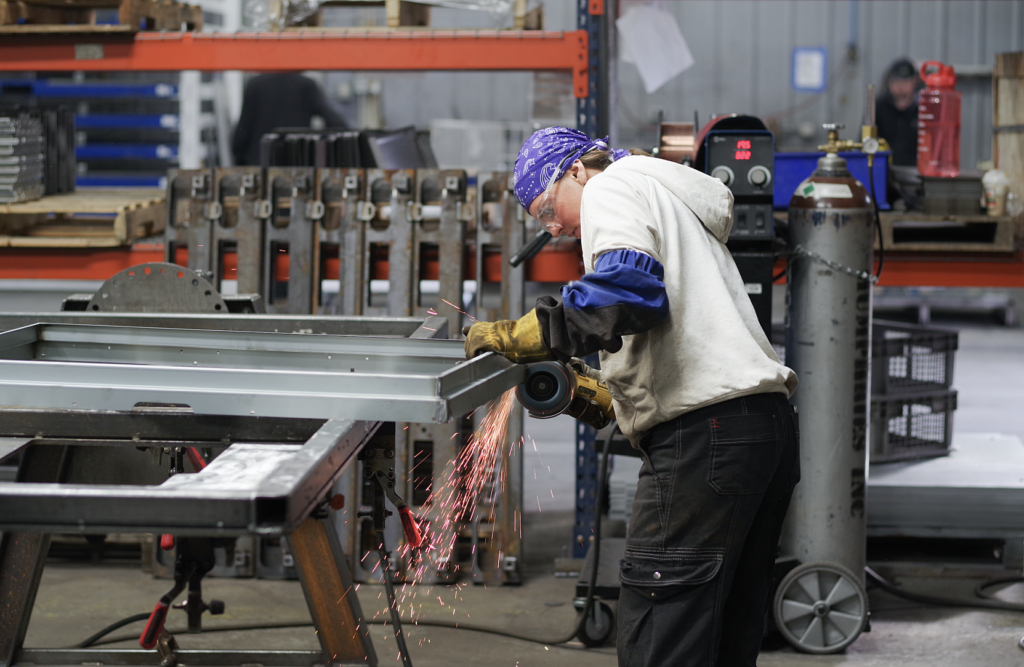
The systems’ trailer frames, fenders, 2-5” masts, solar array assemblies, mounts and wing assemblies underwent hot-dip galvanizing, ensuring superior durability, appearance, and long-lasting corrosion protection. This decision was particularly vital as many of the units were deployed along highways where durability is paramount.
Throughout the course of the project, there were challenges that required the customer and galvanizer to strategize and execute a plan that would be effective for both teams involved. Drainage needed to be executed in a specific manner to ensure smoother surfaces in certain areas. LVT addressed the challenges of vent and drain hole locations with the galvanizer, learning and adapting as the project moved forward.
The project’s uniqueness lies in its rapid deployment capability, pioneering features, and its revolutionary two-way communication with people on the ground. Incorporating advanced analytics, LVT can perform tasks without relying on human intervention. The ability for LVT to deploy surveillance systems same day and within a very short time frame meant that the galvanizer would need to maintain fluid communication, meet all project deadlines and provide a quality product that the customer would be proud of.
The profound impact of this project on the community is undeniable. A recently conducted study in which 60 LVT units were deployed across two towns revealed staggering results. Notably, there was a remarkable 40% decrease in shoplifting. The project’s effect on public safety, as evidenced by various statistics, underscores its value in enhancing community well-being and security. LVT play a pivotal role in making communities safer, leading to positive outcomes and the resolutions of criminal cases due to its modernized technology, contributing to a better future for all.
LVT continues to gain traction in the industry, spanning across multiple industries including public services, law enforcement, hospitals, higher education, and more. Catering to a diverse range of sectors, the galvanizer was able to partner with LVT in their versatile solution for protecting the communities where people work and play.
AZZ played a pivotal role in this project, offering a convenient partnership in proximity and in quality. Their expertise in hot-dip galvanizing included instructions for vent and drain hole placement was invaluable. Throughout the entire design and fabrication process the collaboration ensured a safe and successful galvanizing process, preserving the project for generations to come.
Galvanizing stood above the rest due to its ability to protect from harsh environmental conditions that would face the surveillance systems day in and day out.