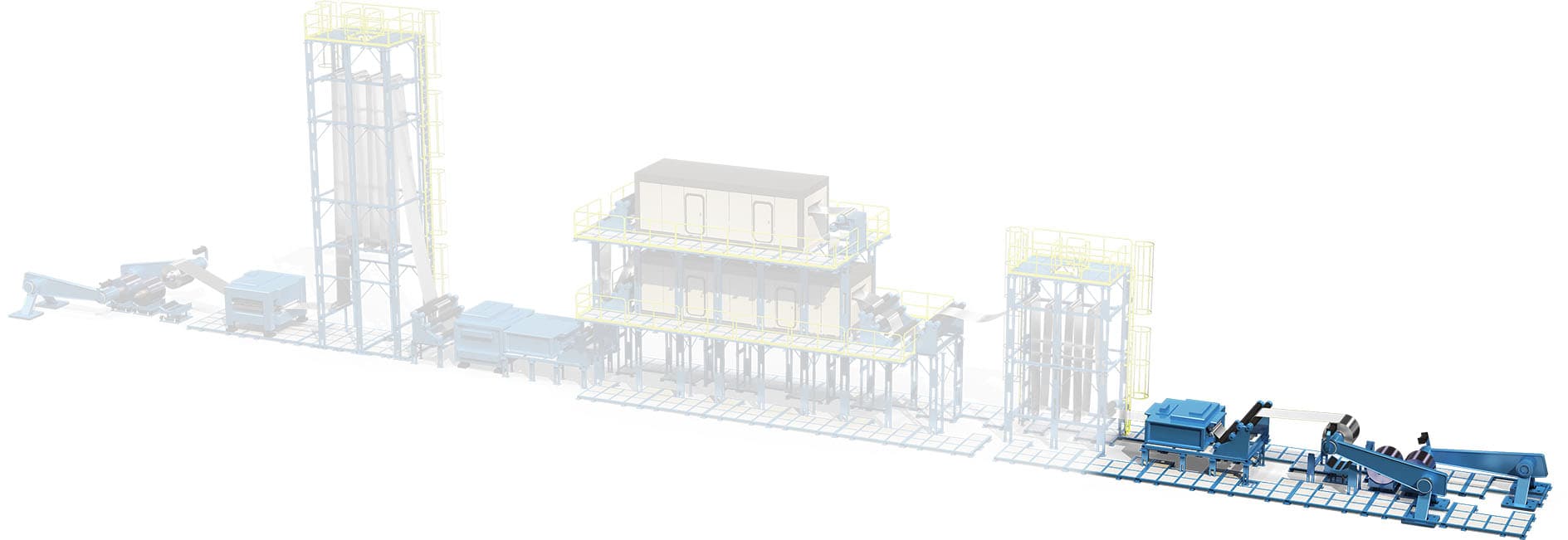
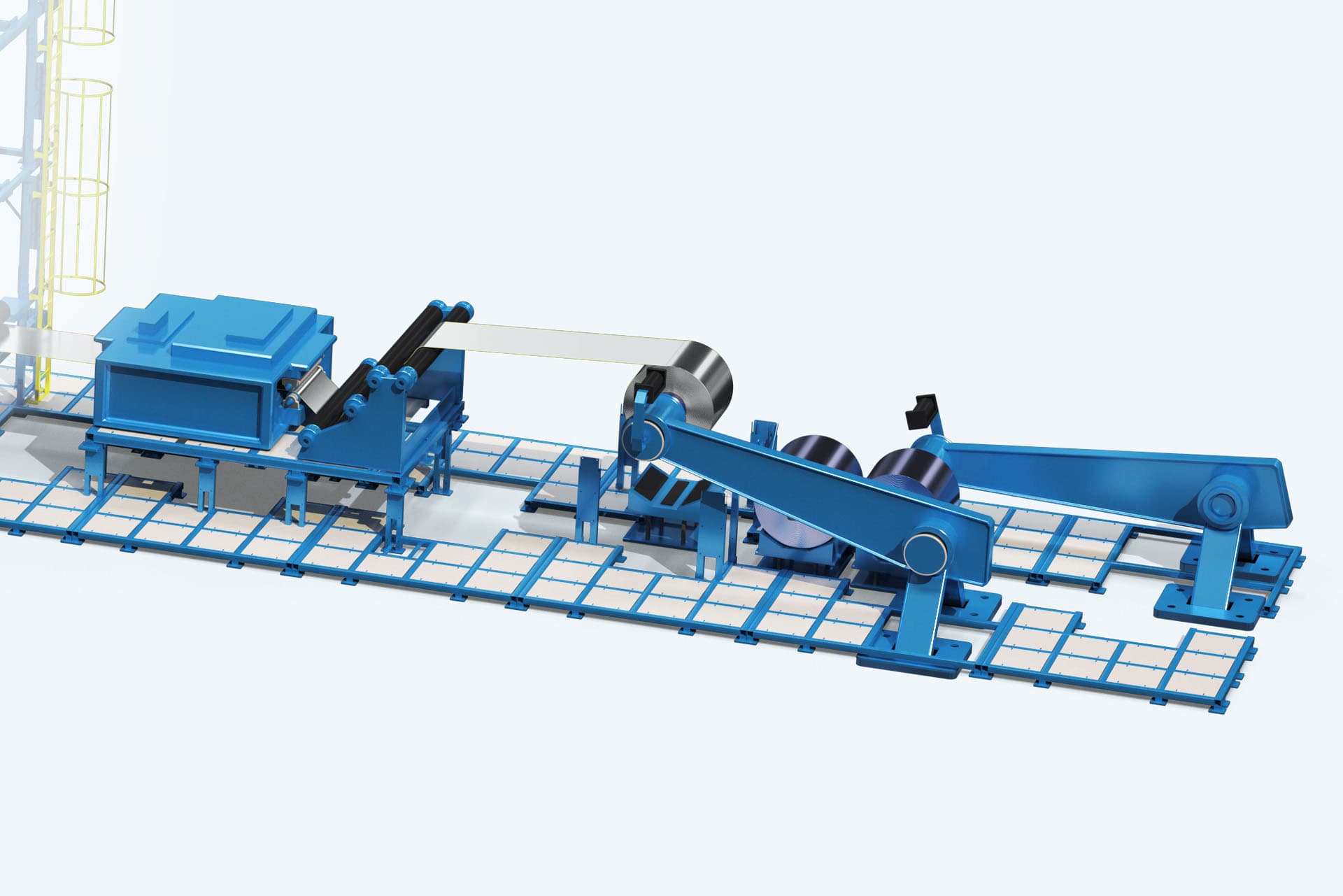
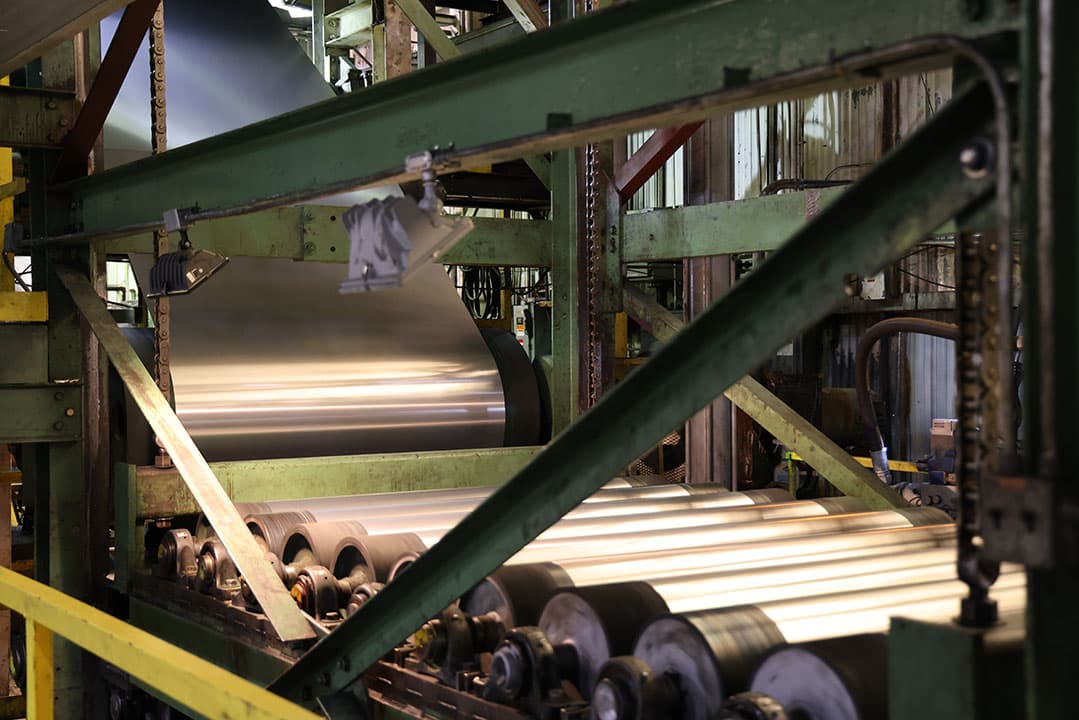
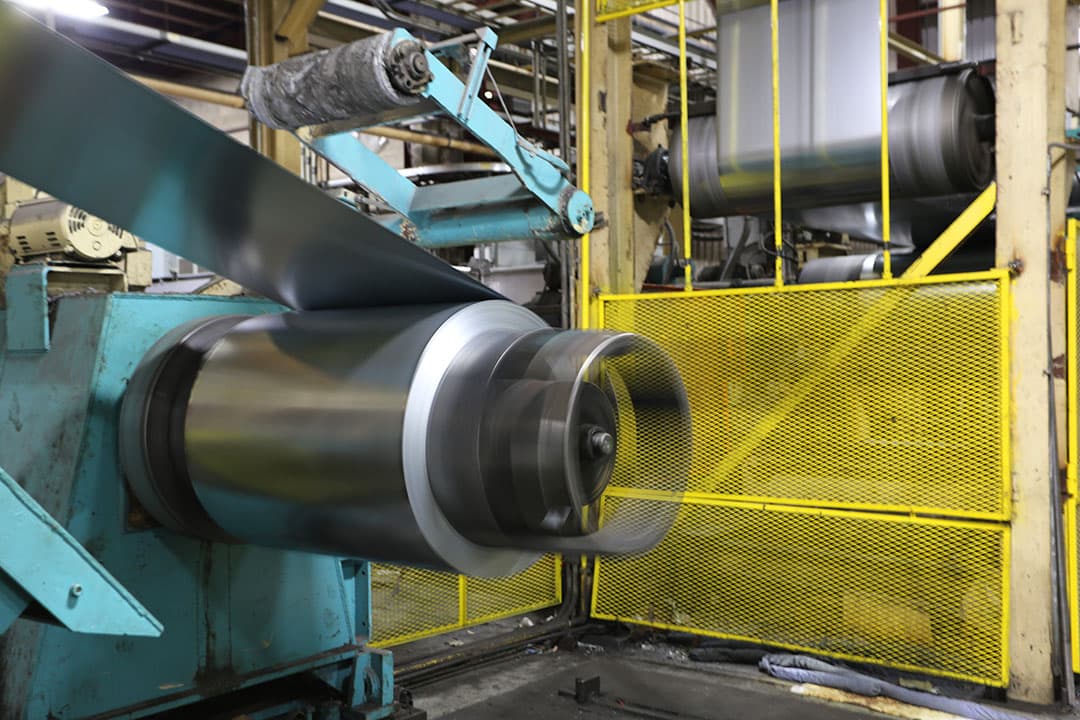
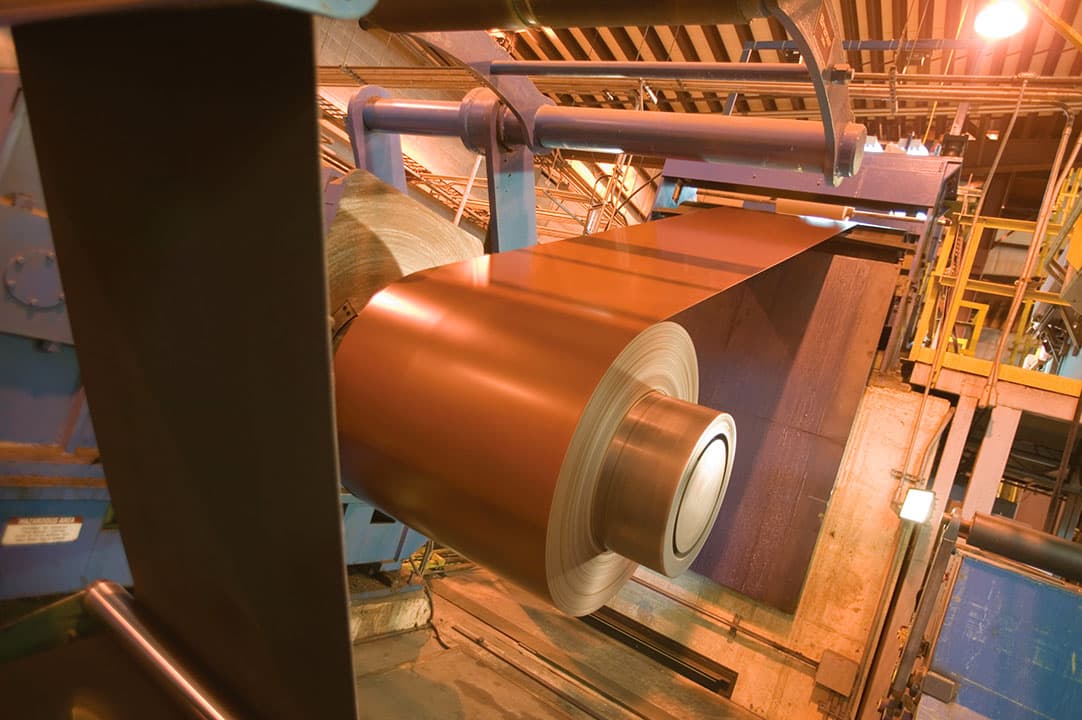
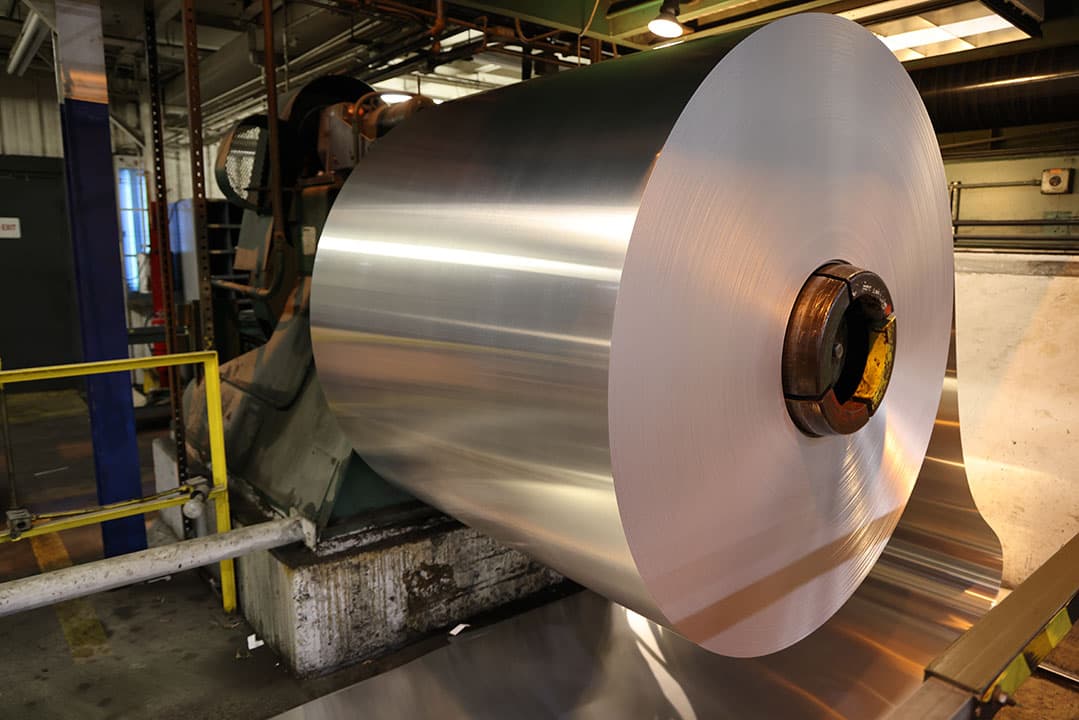
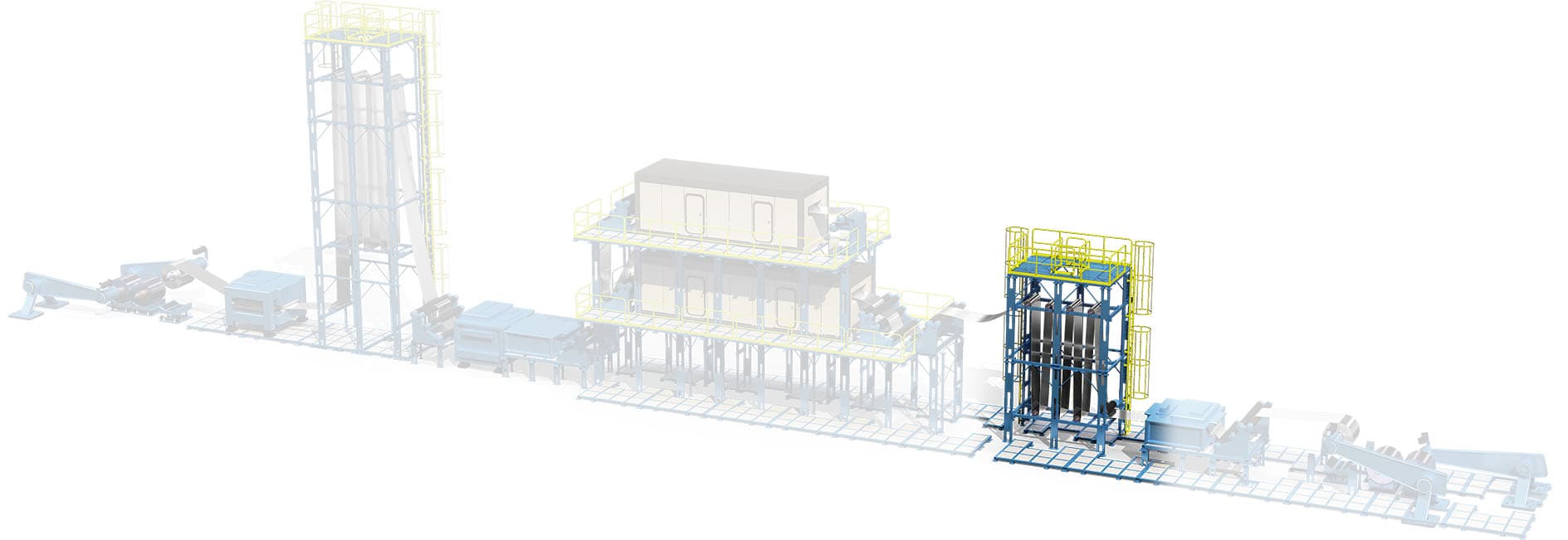
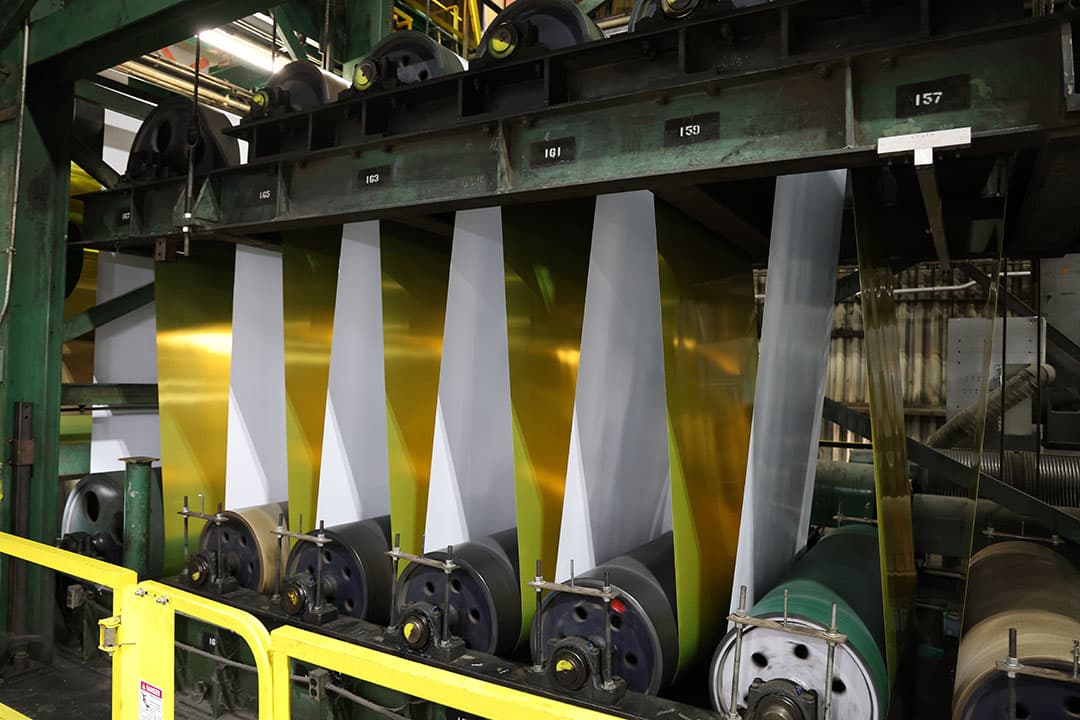
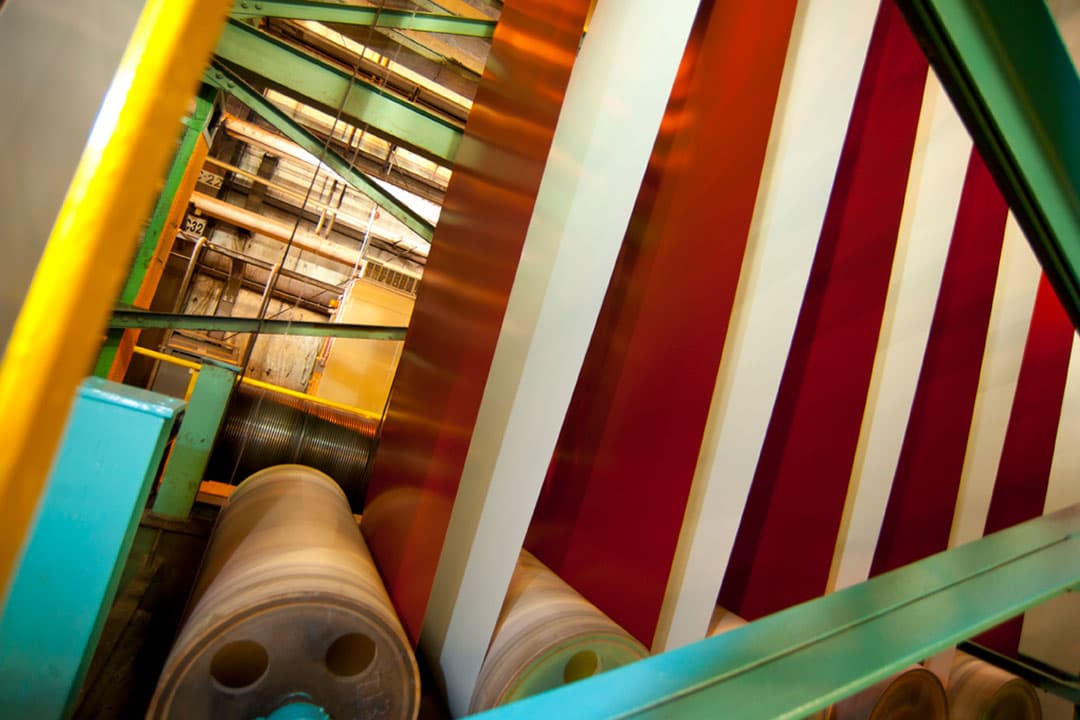
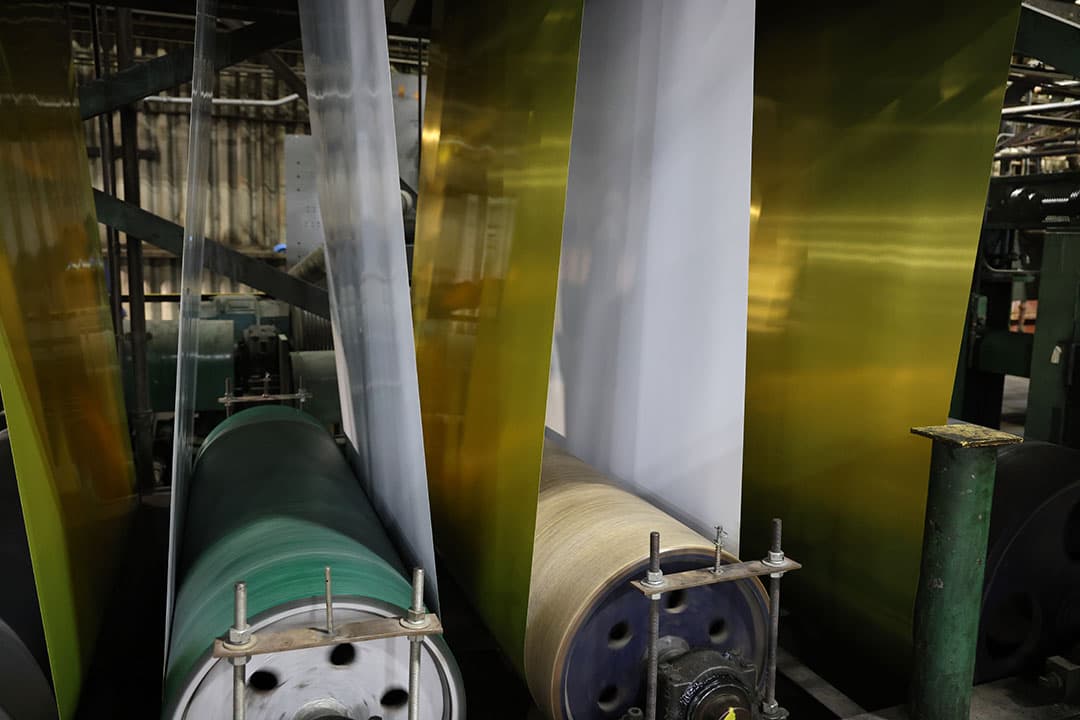
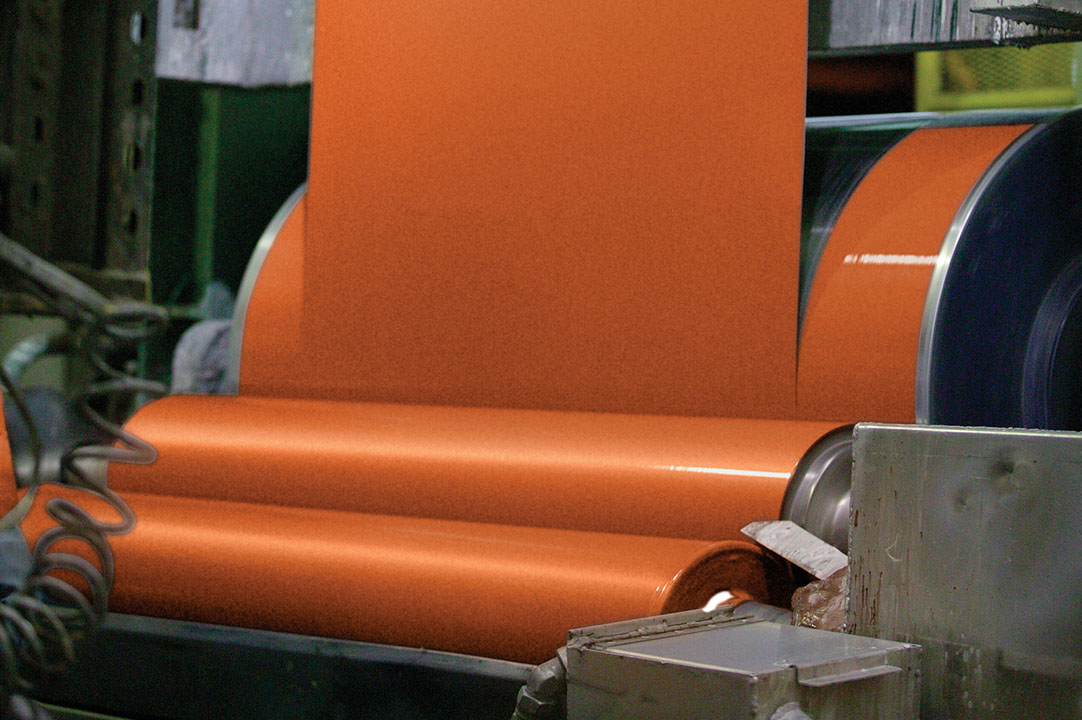
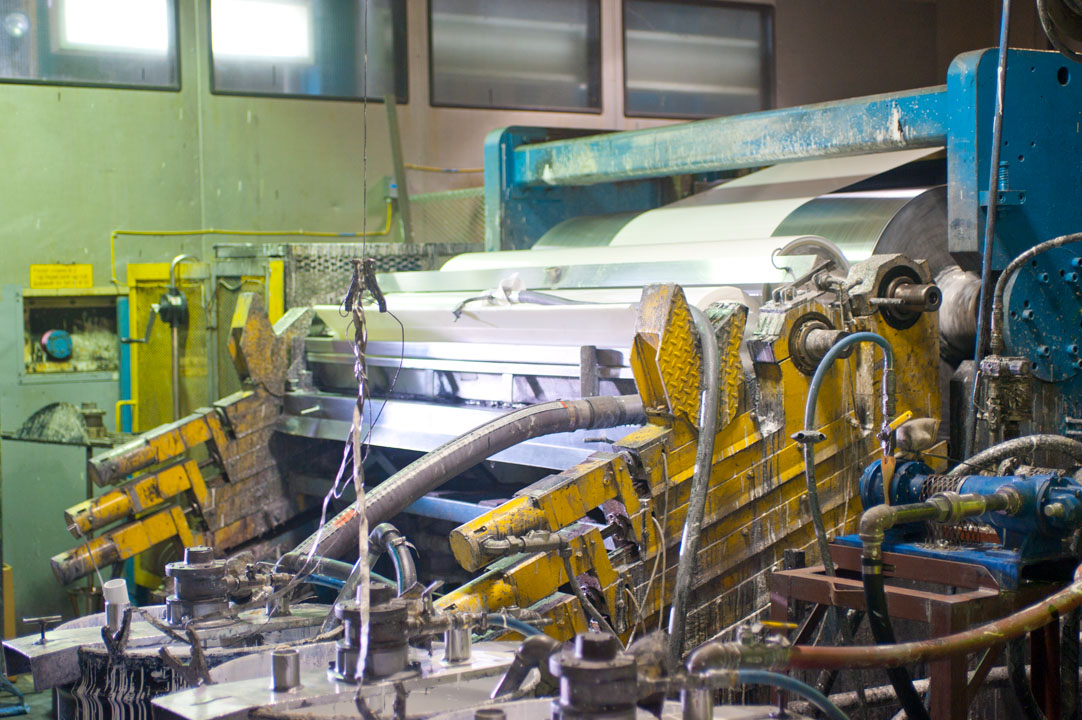
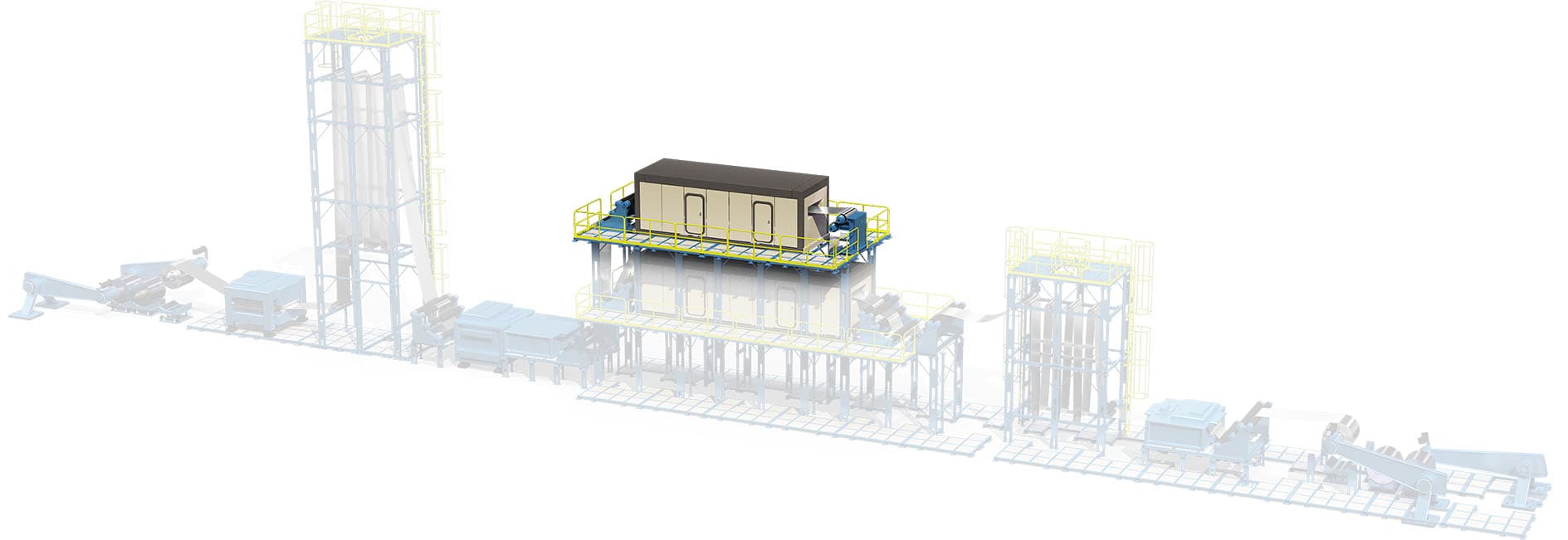
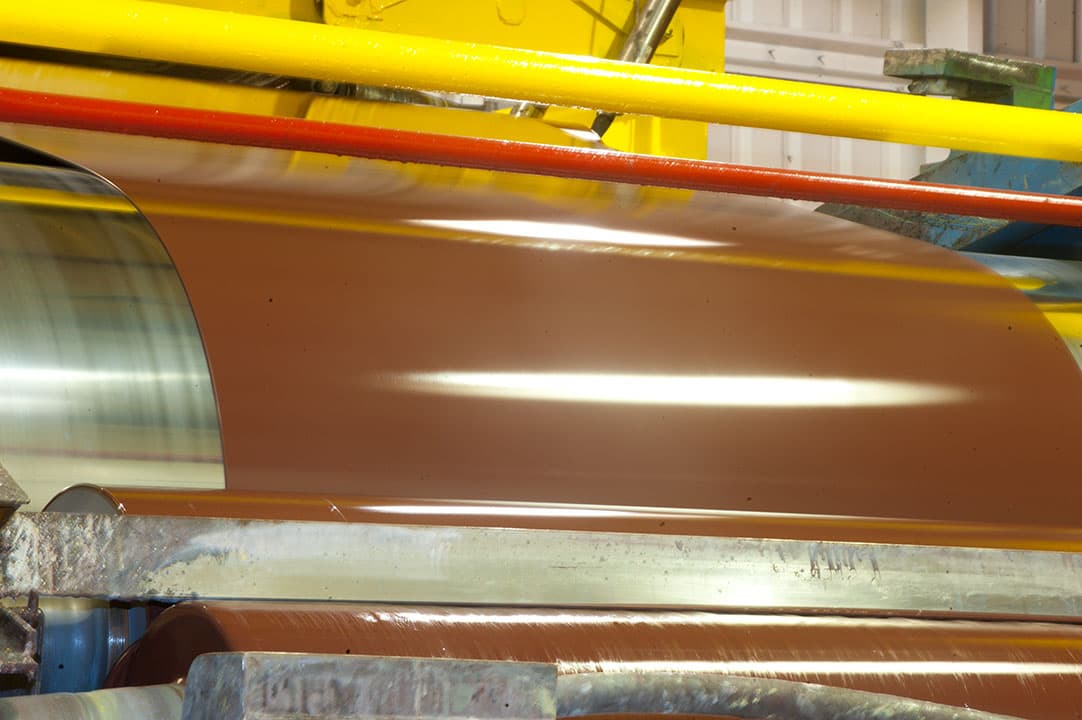
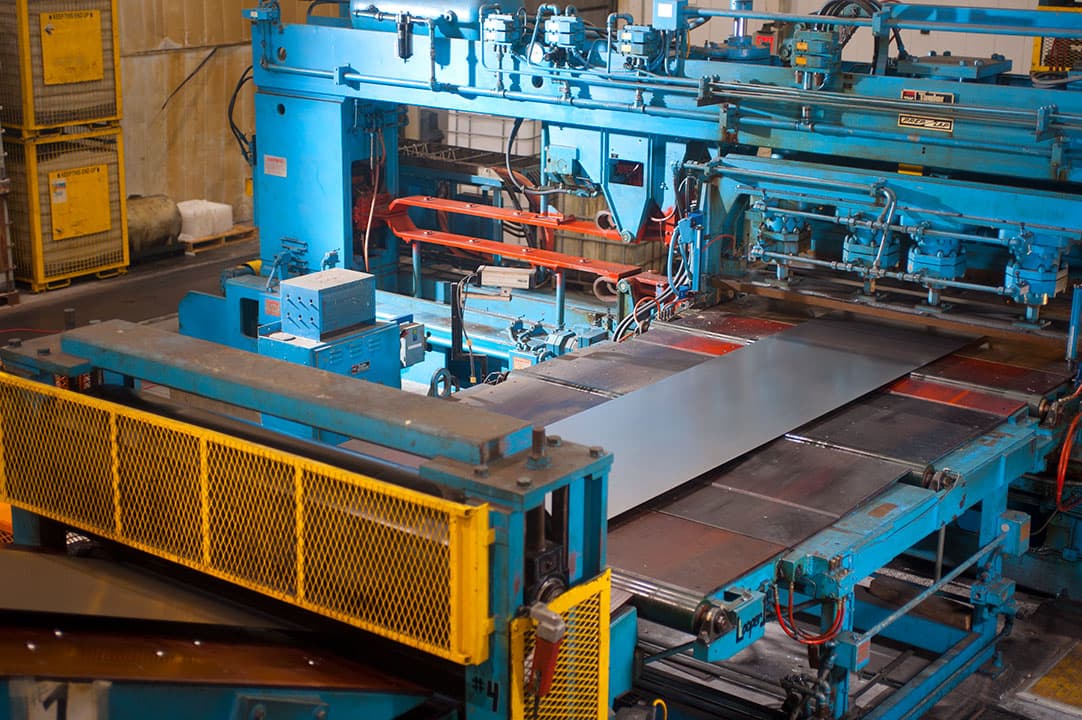
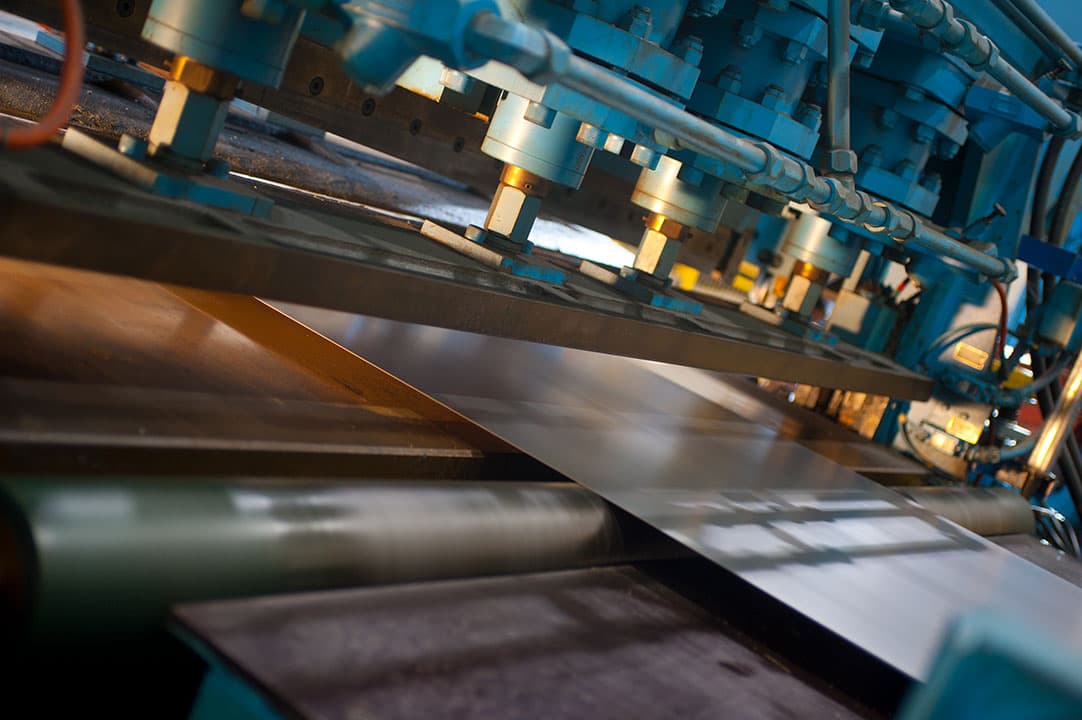
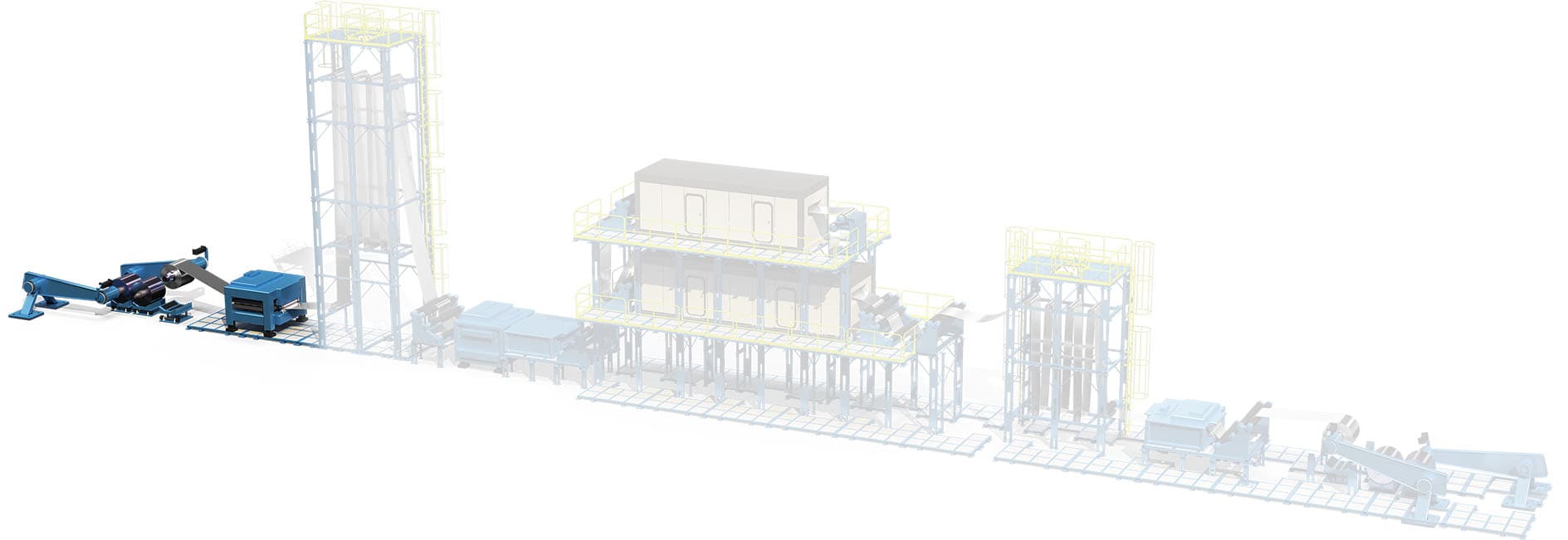
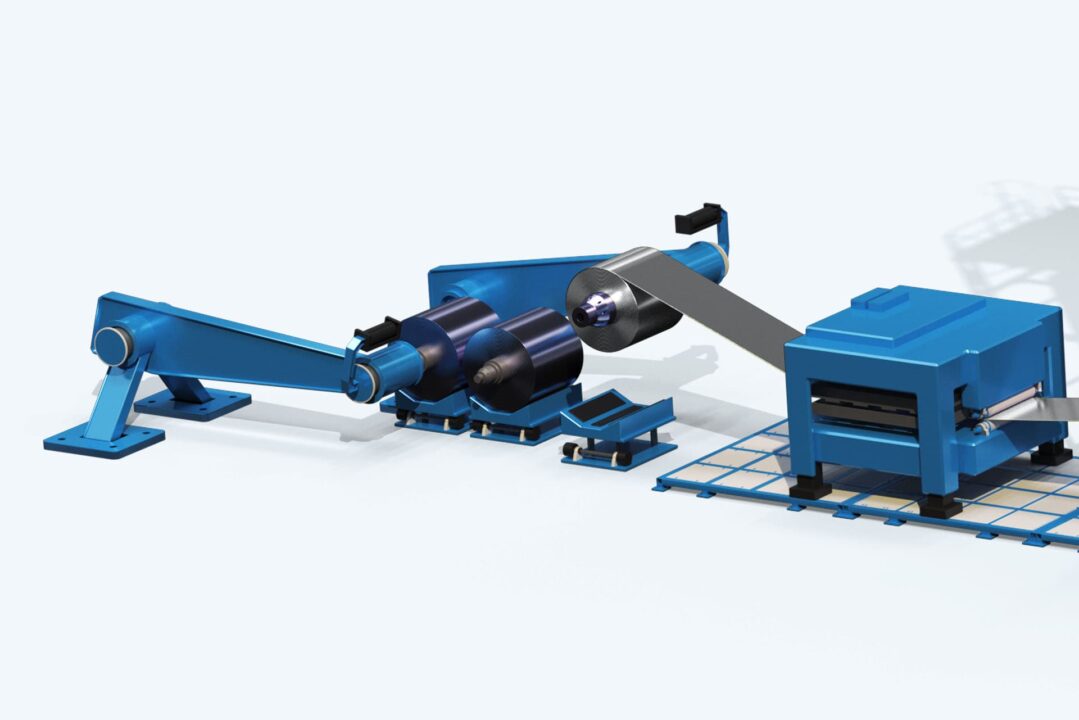
Once the metal is cleaned, treated, and painted, the strip is rewound into a coil size prescribed by the customer. From there, the coil is removed from the line and packaged for shipment or additional processing.
After the primer is applied and cured, then the metal strip enters the finish coat station where a topcoat is applied. Topcoats provide color, corrosion resistance, durability, flexibility and any other required physical properties. Like primers, the topcoat is cured using thermal cure ovens.
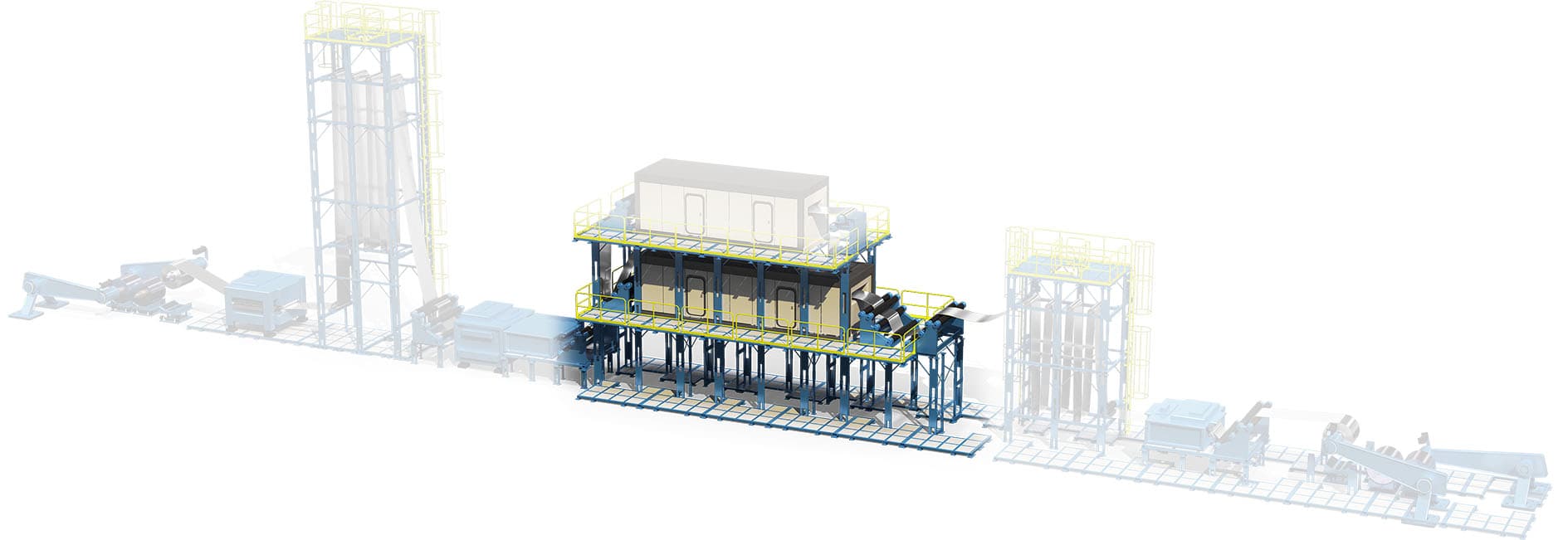
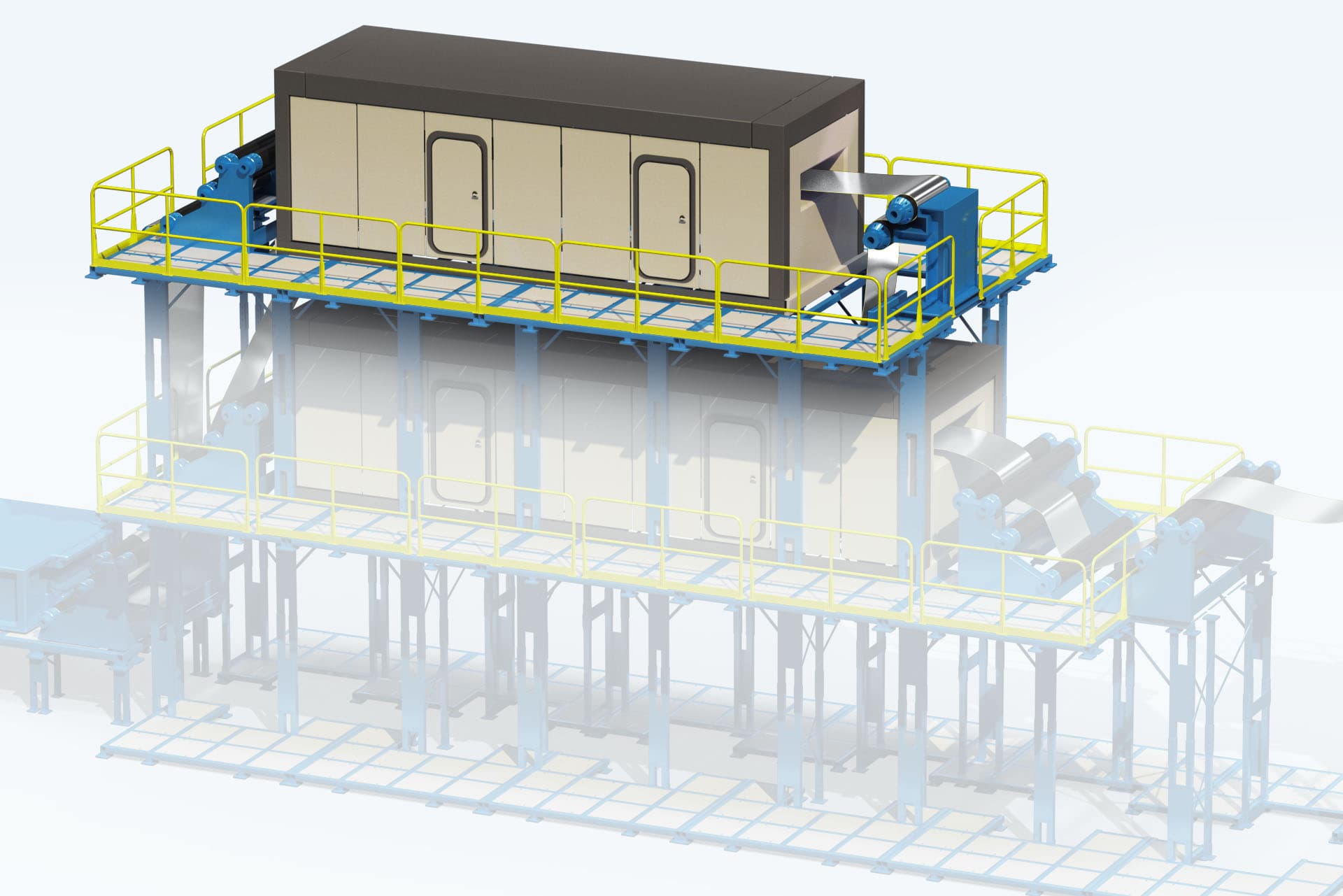
Oven
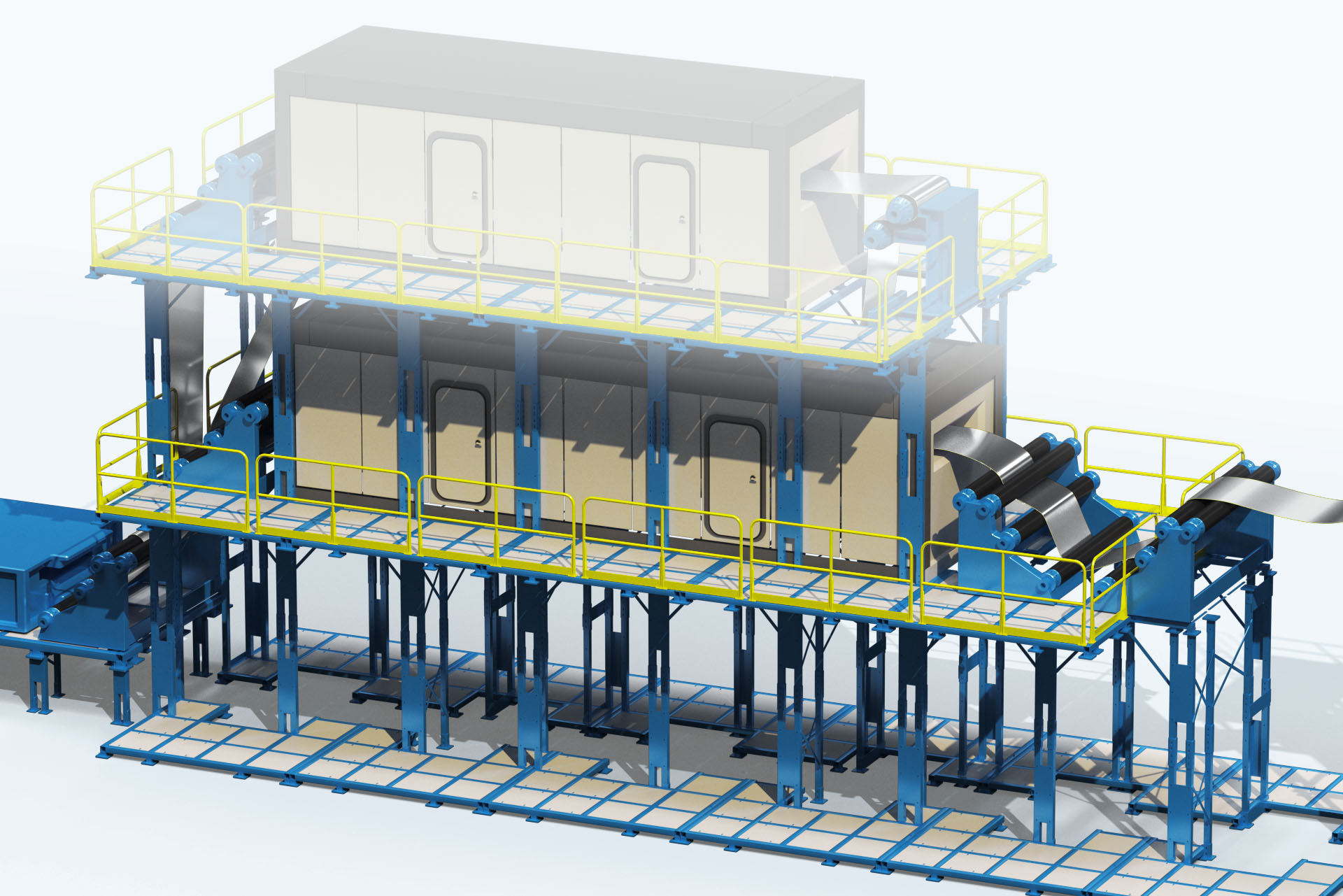
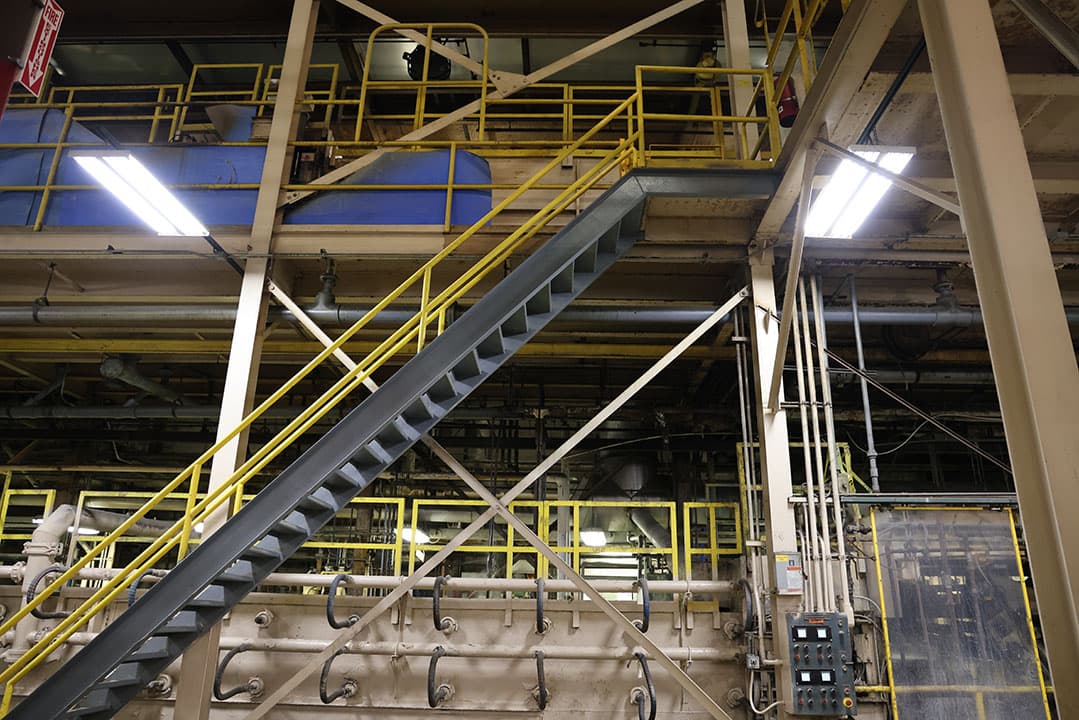
Coil coating ovens can range from 130 feet to 160 feet and will cure the coatings in 13 to 20 seconds.
During this stage, the strip enters the prime coat station whereby a primer is applied to the clean and treated metal. After the primer is applied, the metal strip travels through a thermal oven for curing. Primers are used to aid in paint adhesion, improve corrosion performance and enhance aesthetic and functional attributes of the topcoat.
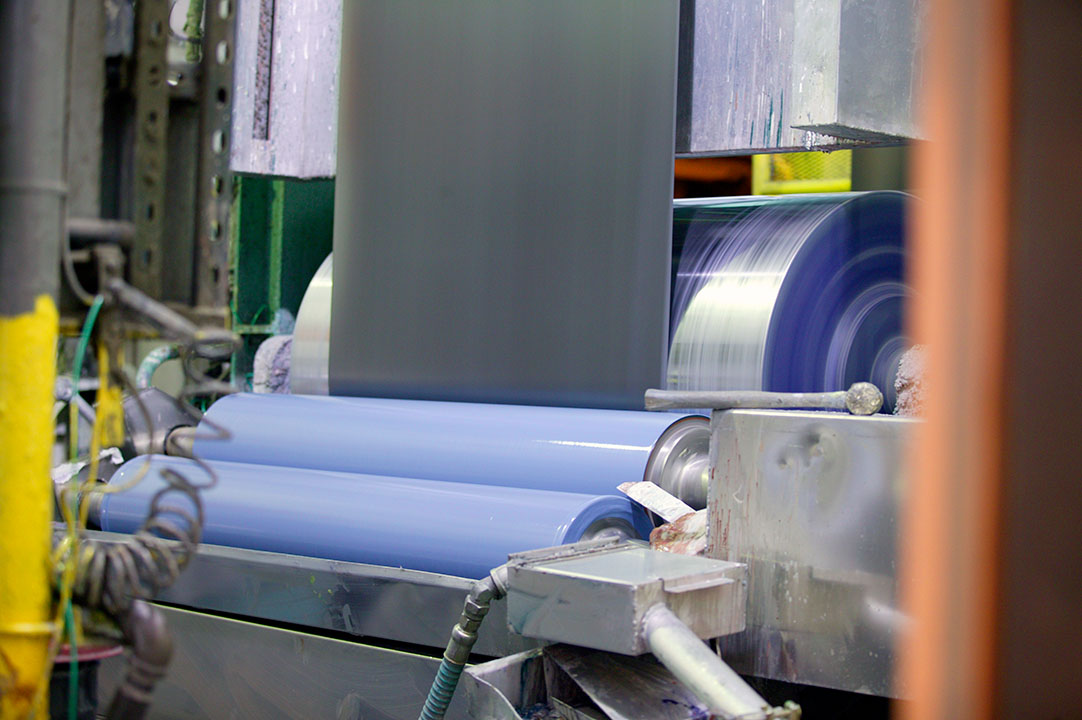
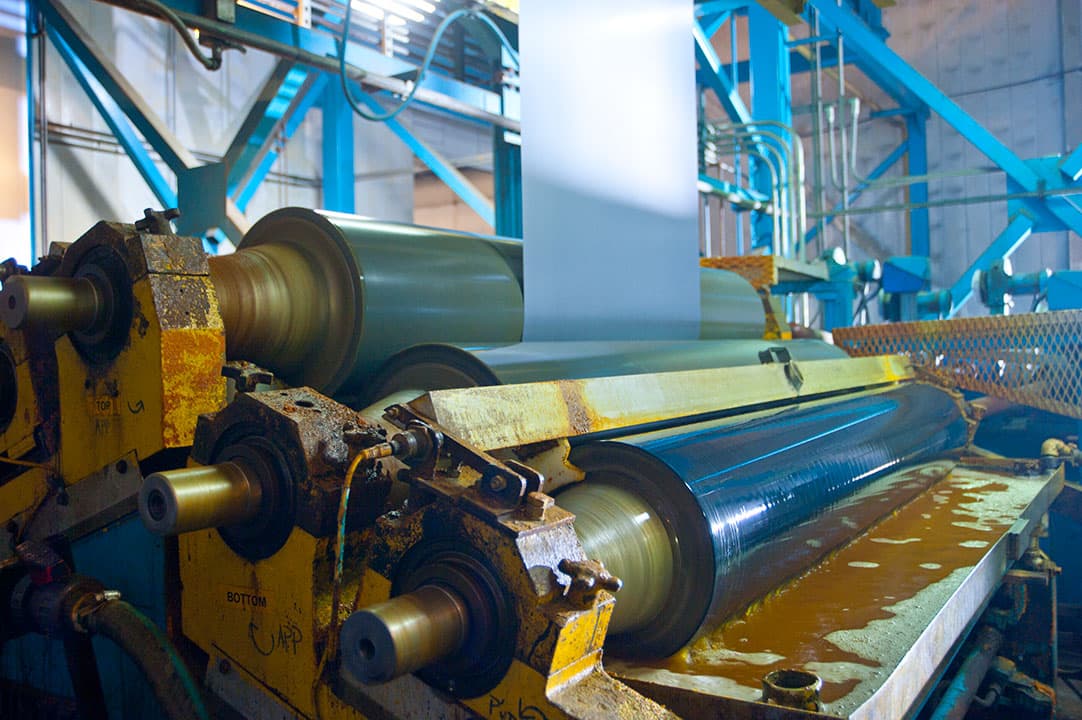
S Wrap Coater
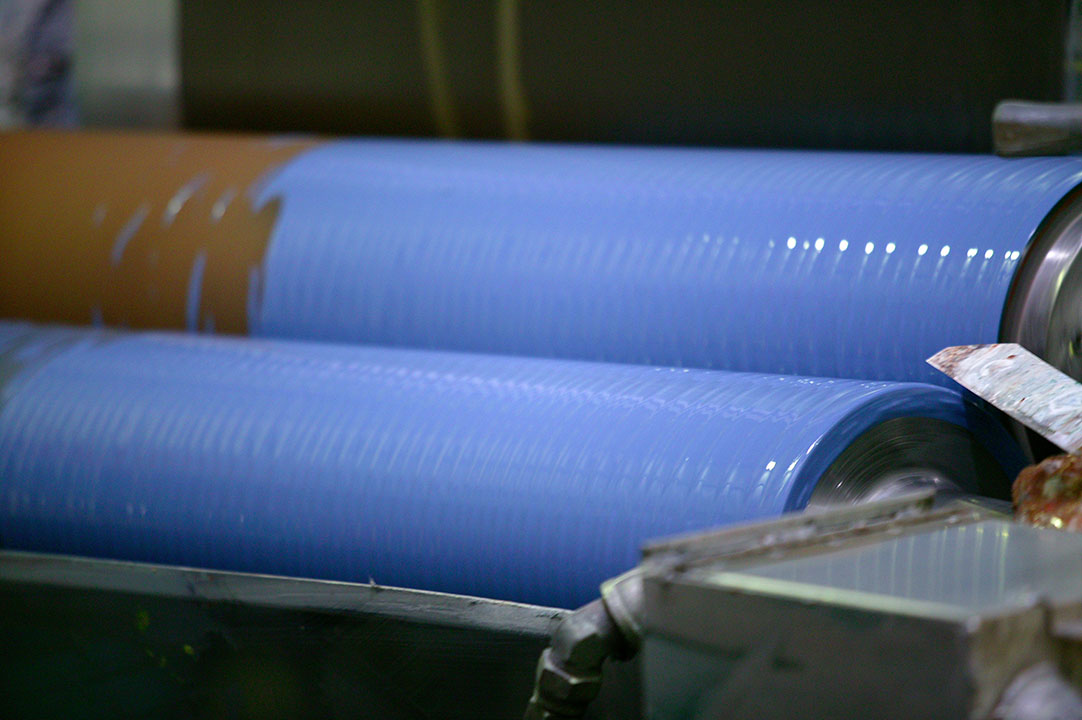
The S wrap coater design allows for primers and paints to be applied to the top and back side of the metal strip simultaneously in one continuous pass.
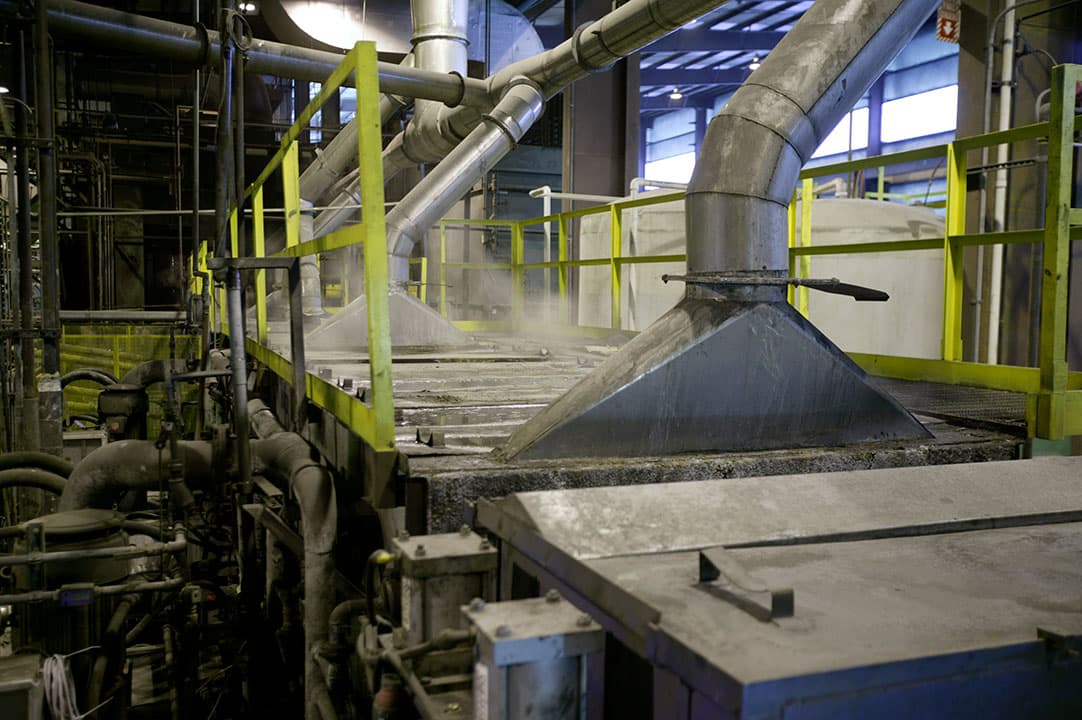
The cleaning and pretreating section of the coil coating process focuses on preparing the metal for painting. During the cleaning stage, dirt, debris, and oils are removed from the metal strip. From there, the metal enters the pretreatment section and/or a chemical coater whereby chemicals are applied to facilitate paint adhesion and enhance corrosion resistance.
Dried-In-Place
In this stage a chemical that provides enhanced corrosion performance is applied. This treatment can be chrome free if required.
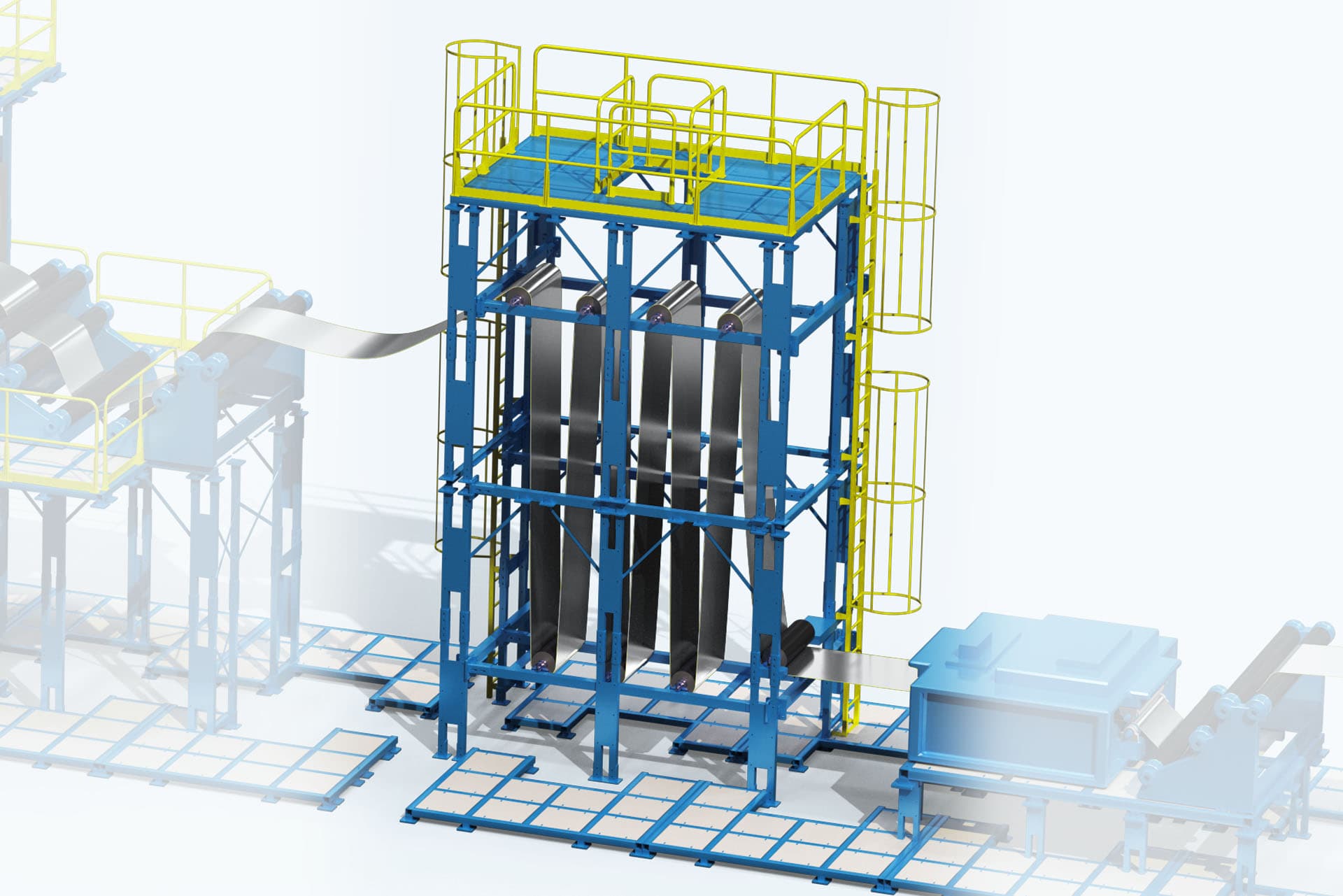
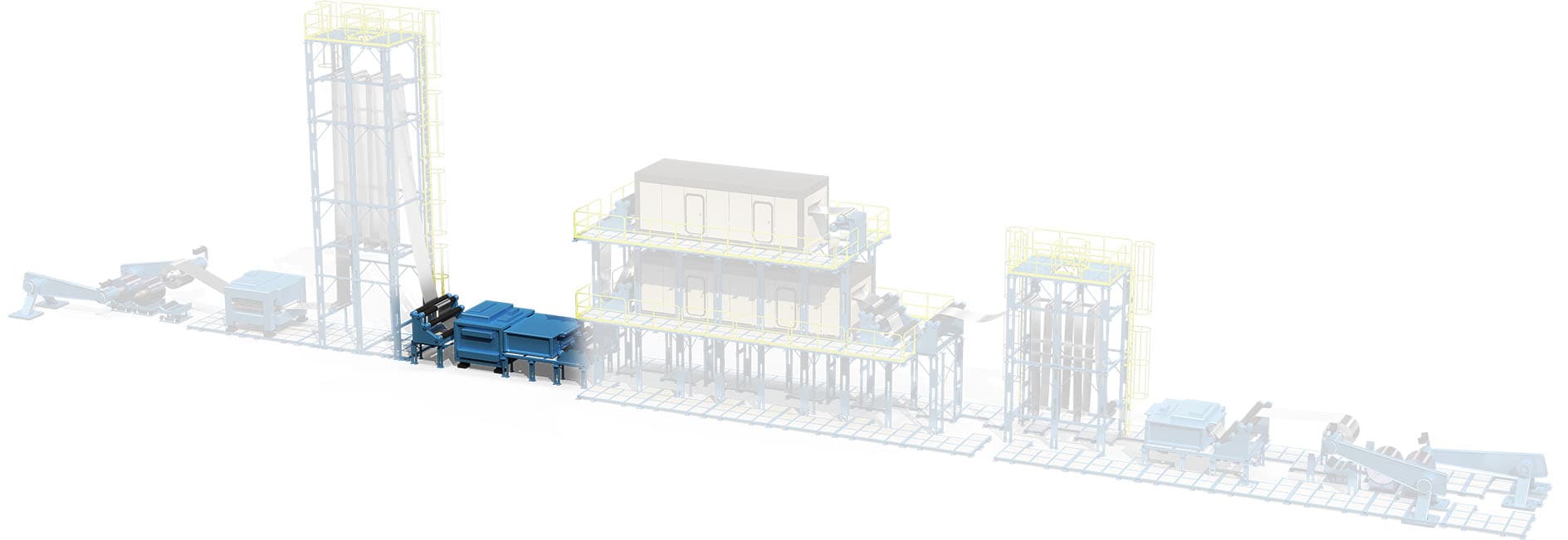
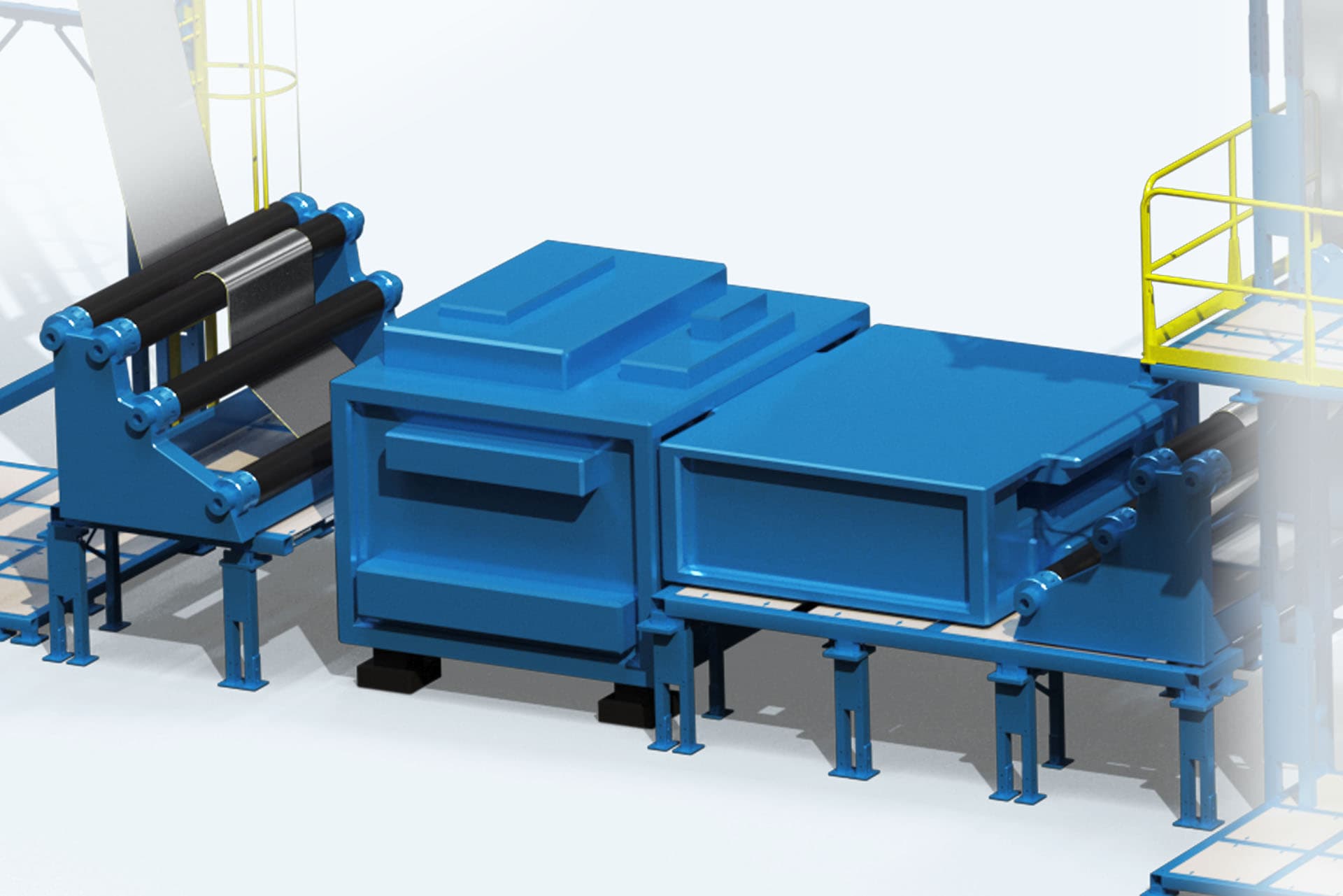
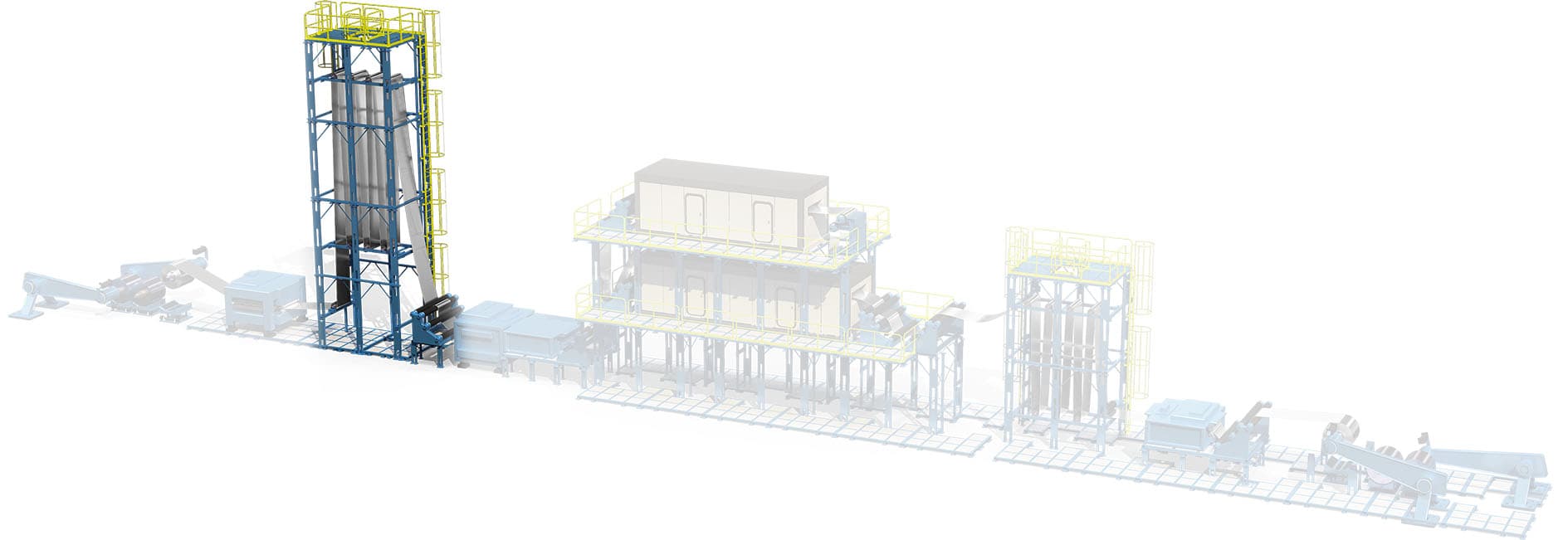
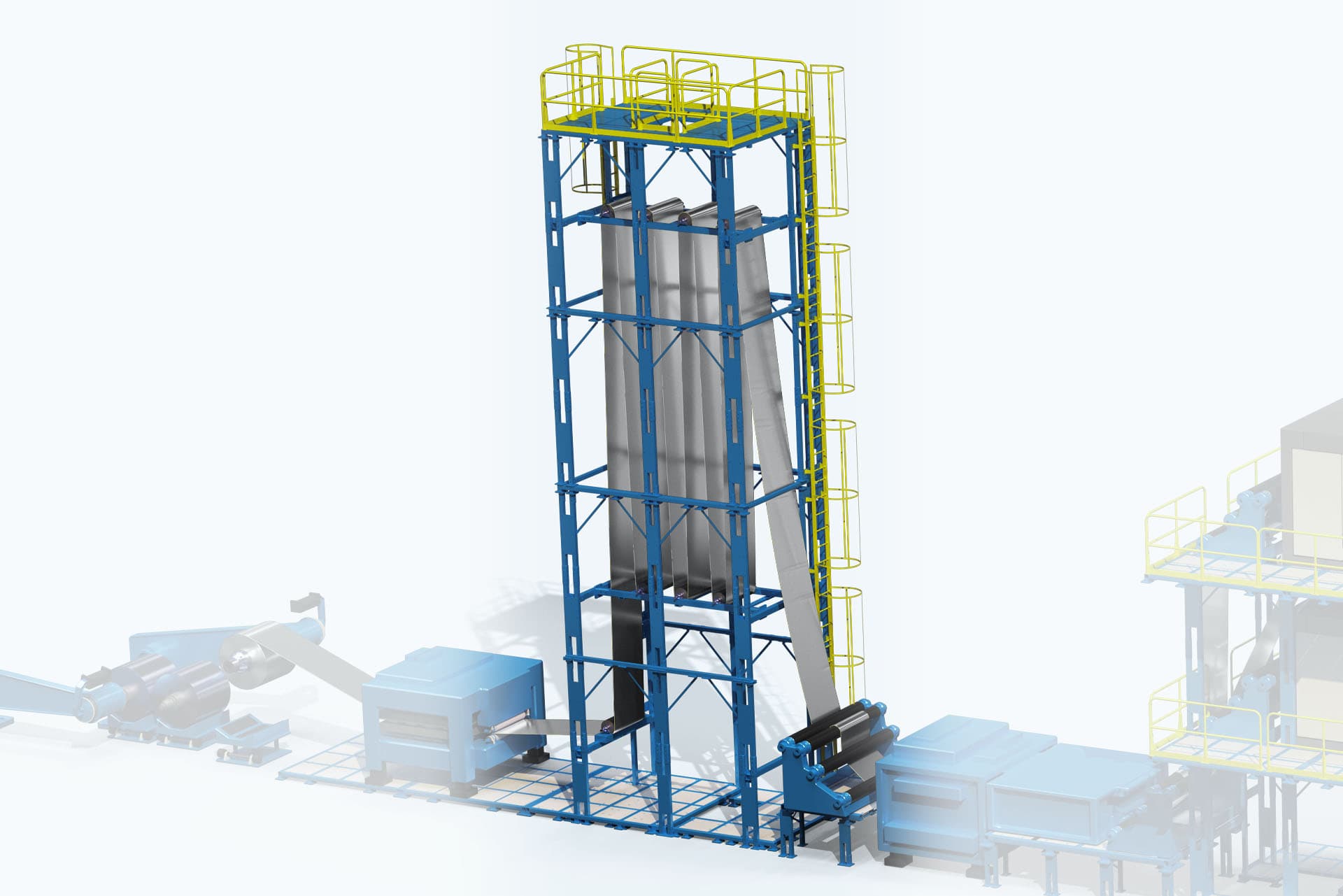
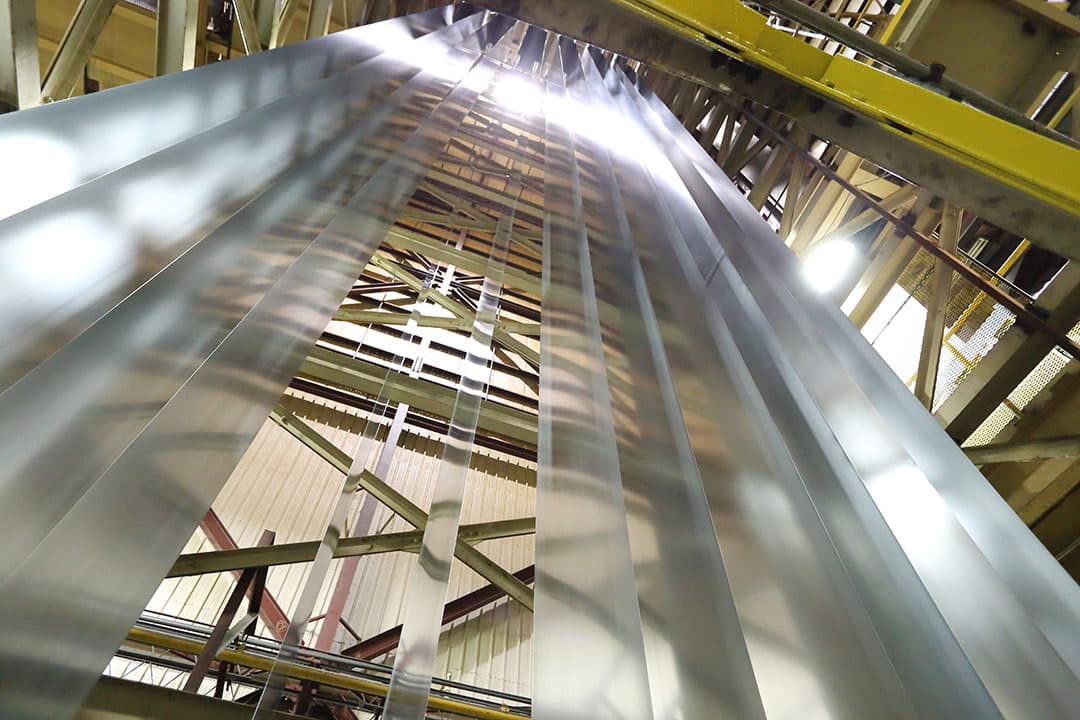
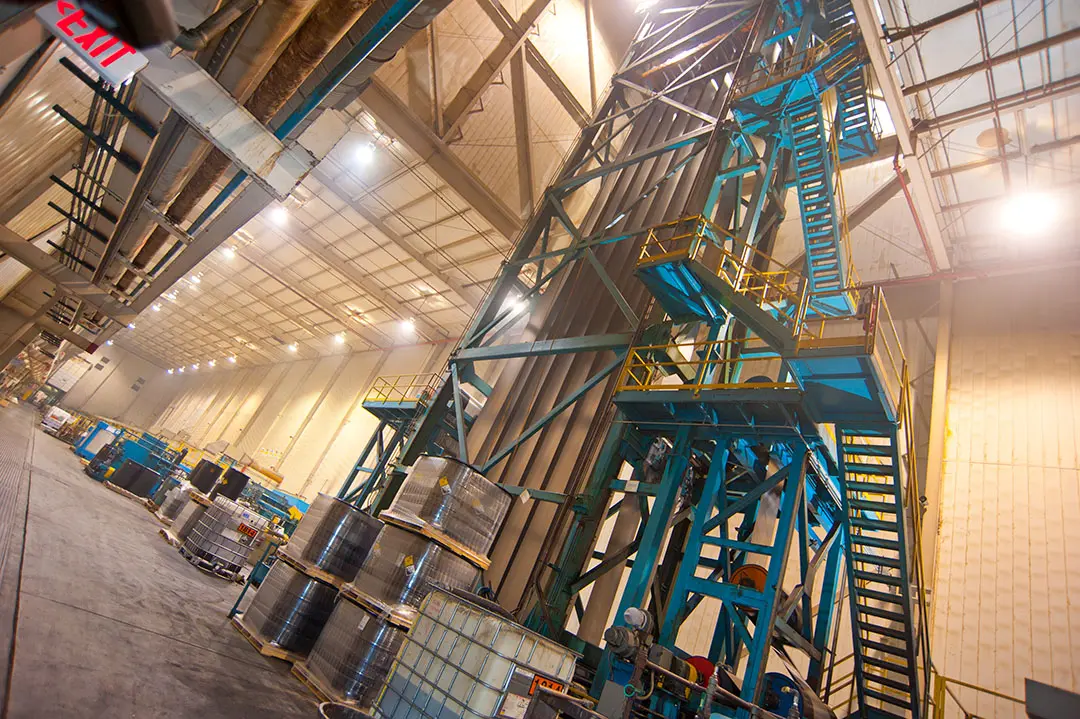
The accumulator is a structure that adjusts up and down to store material, which makes continuous operation of the coil coating process possible. This accumulation will continue to feed the coil coating processes while the entry end has stopped for the stitching process. As much as 750 feet of metal can be collected.
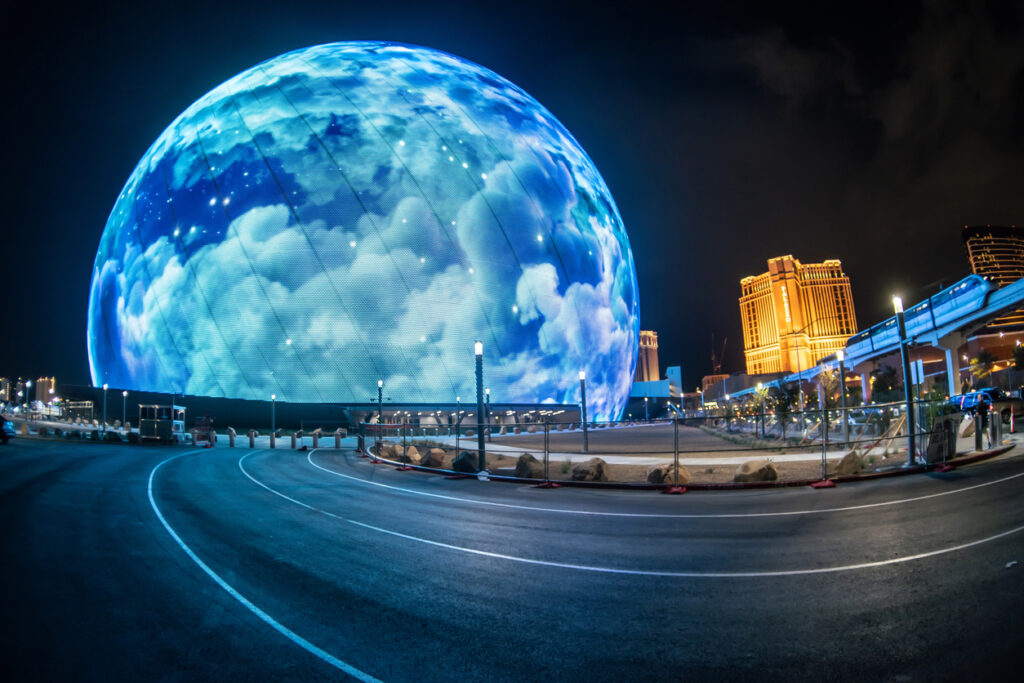
As Las Vegas’ newest iconic landmark, the MSG Sphere has captivated visitors since its official opening in September of 2023. Standing at a towering height of 366 feet and spanning an impressive width of 516 feet, this structure claims the title of the world's largest spherical object
Within its confines, you’ll find 10,000 immersive seats and space for an additional 20,000 attendees in a standing capacity. All of this unfolds beneath a colossal dome-shaped screen that envelops the audience both around and above.
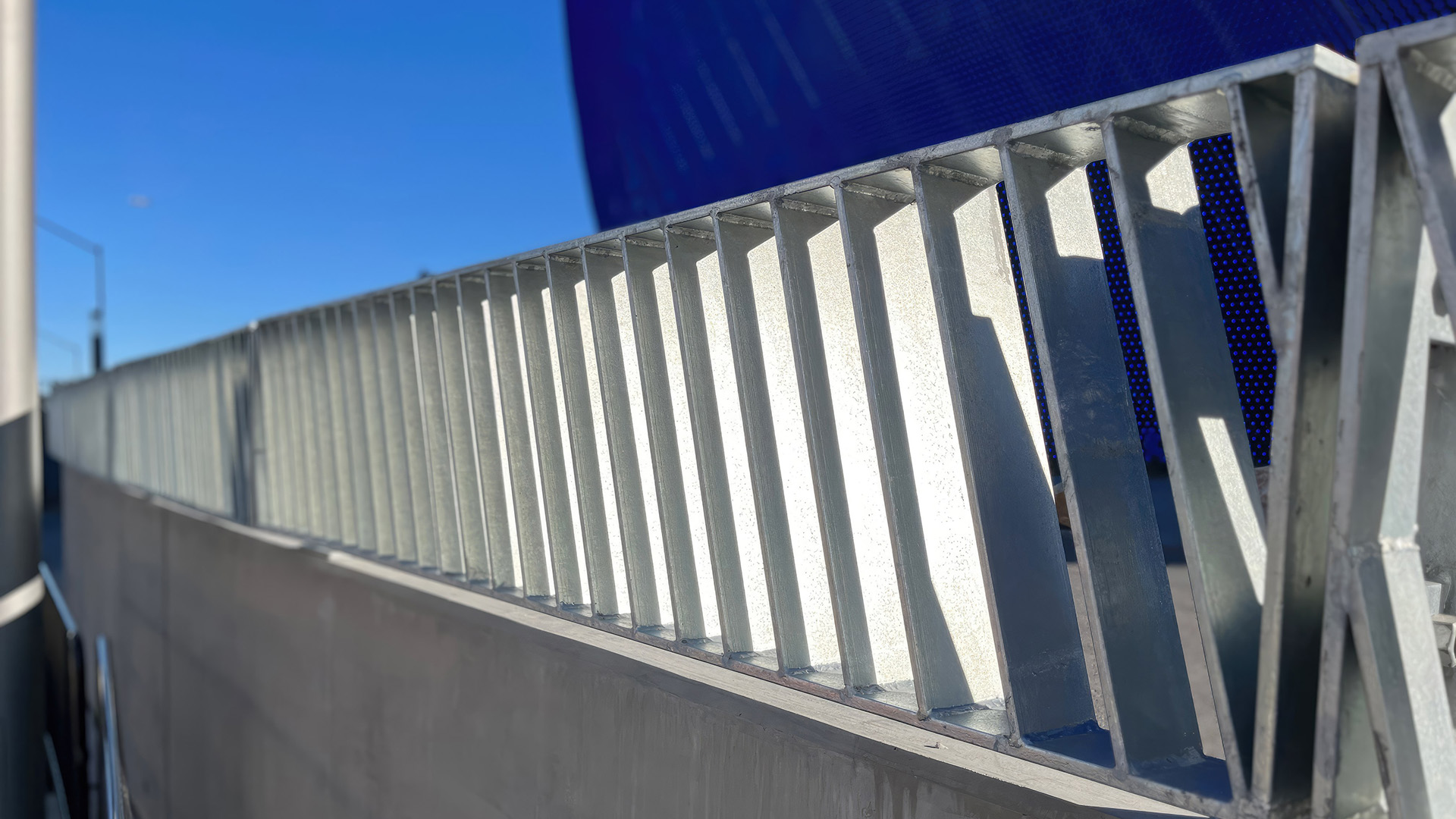
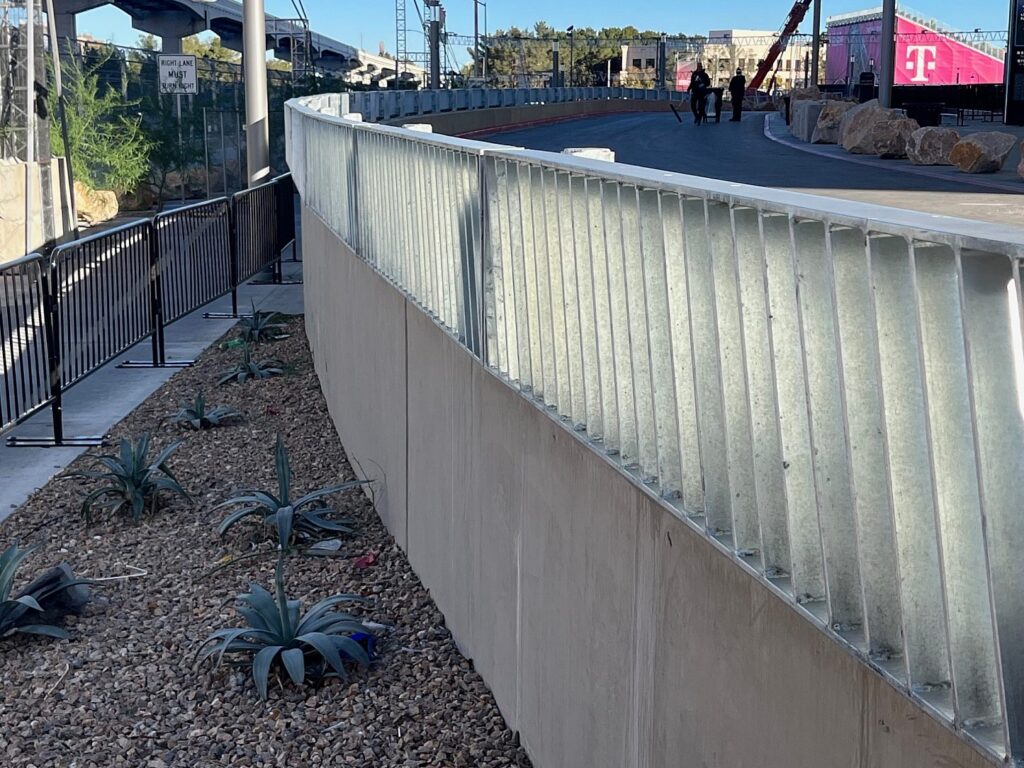
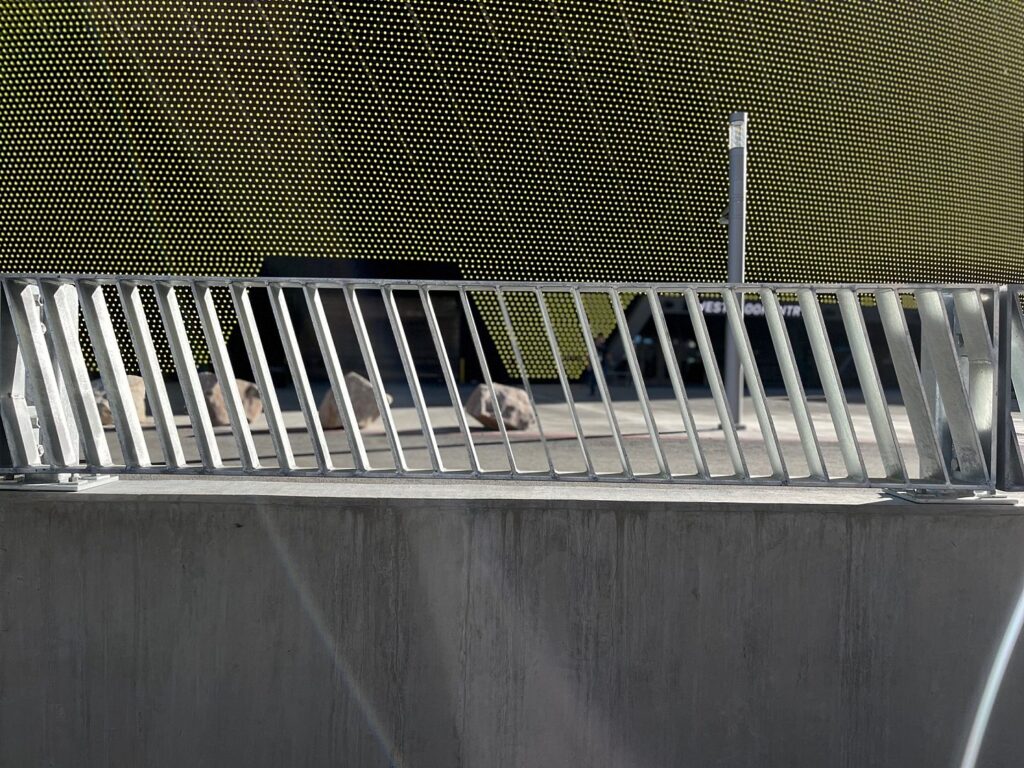
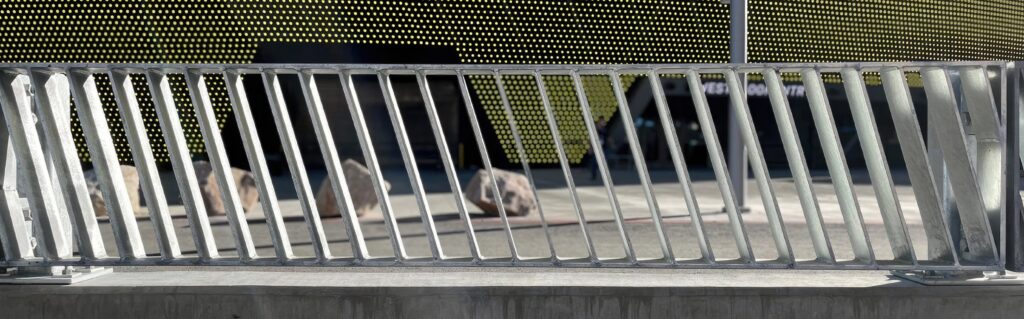
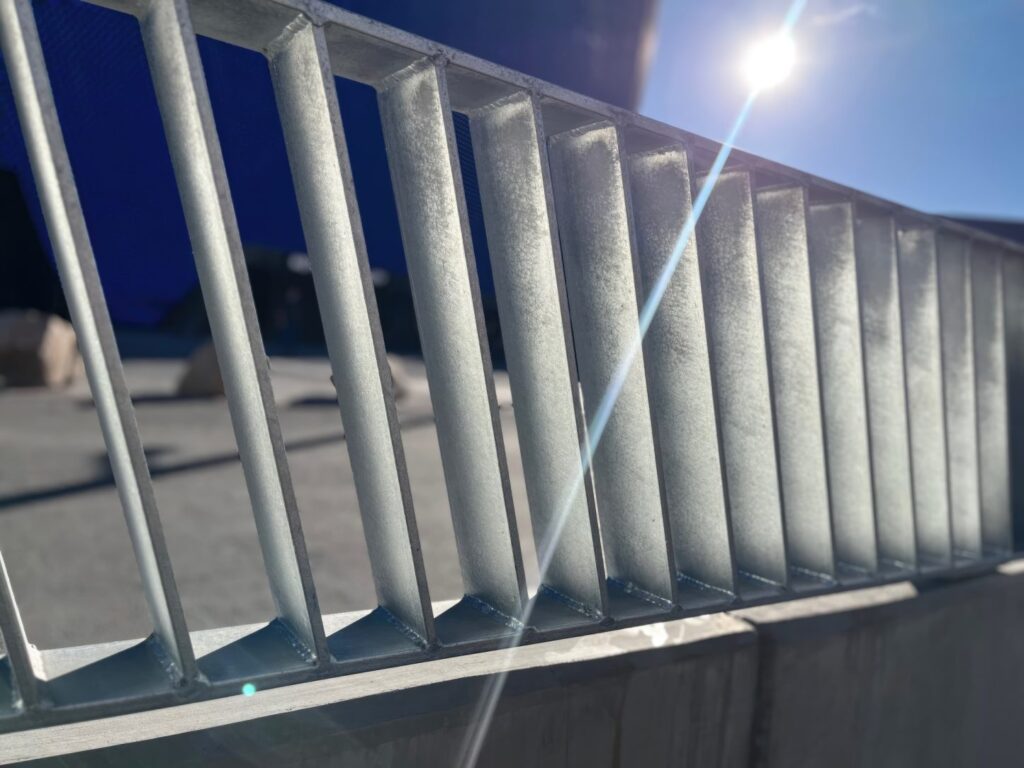
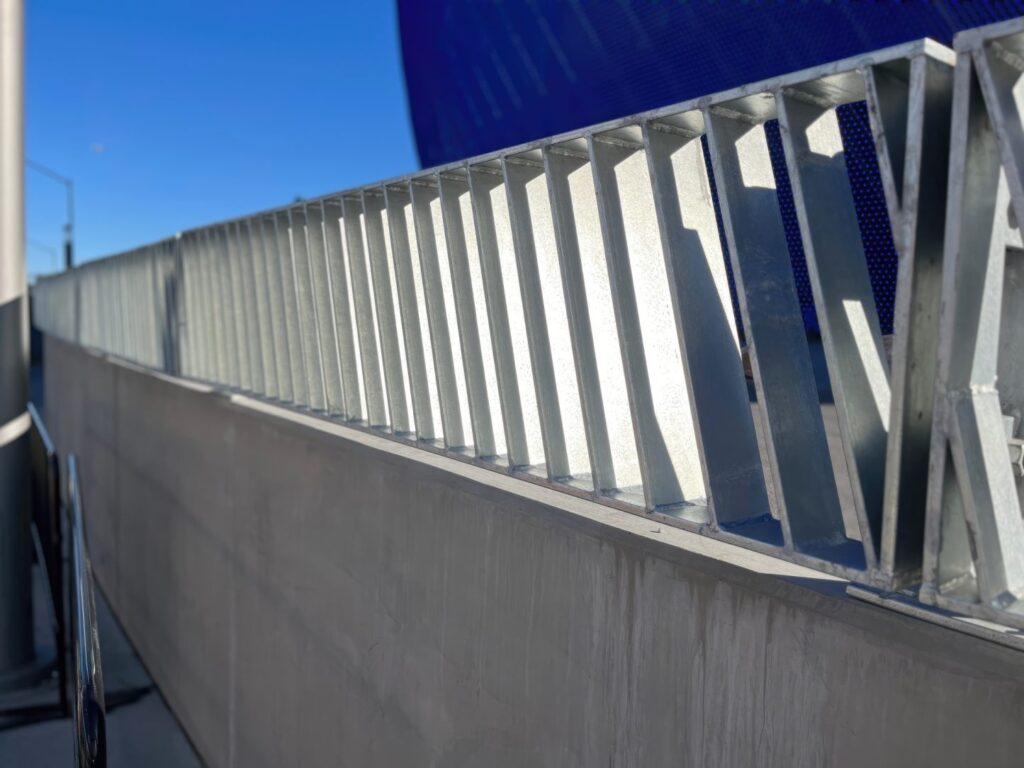
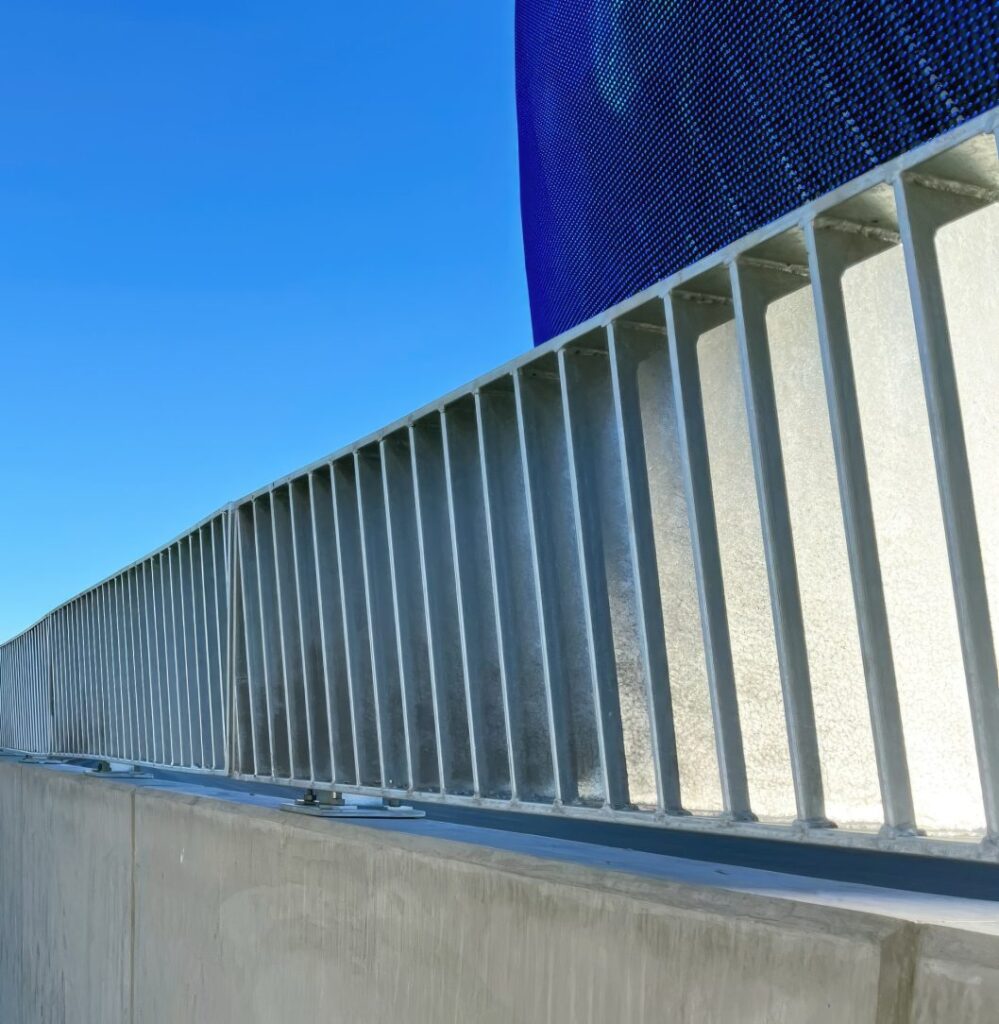
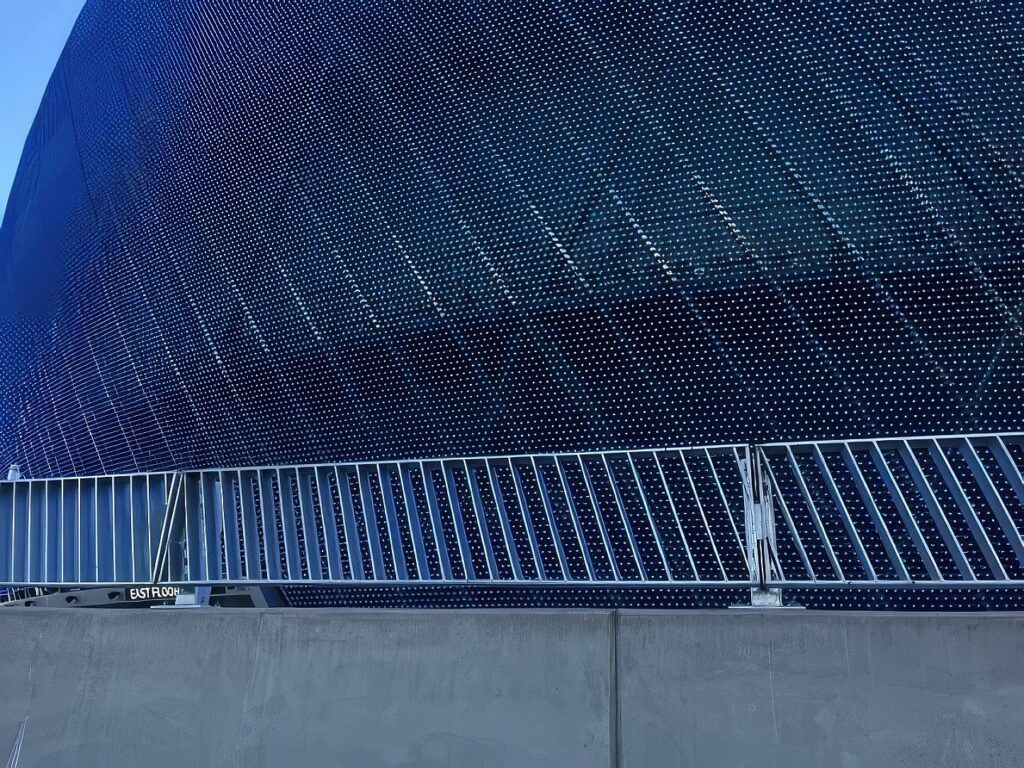
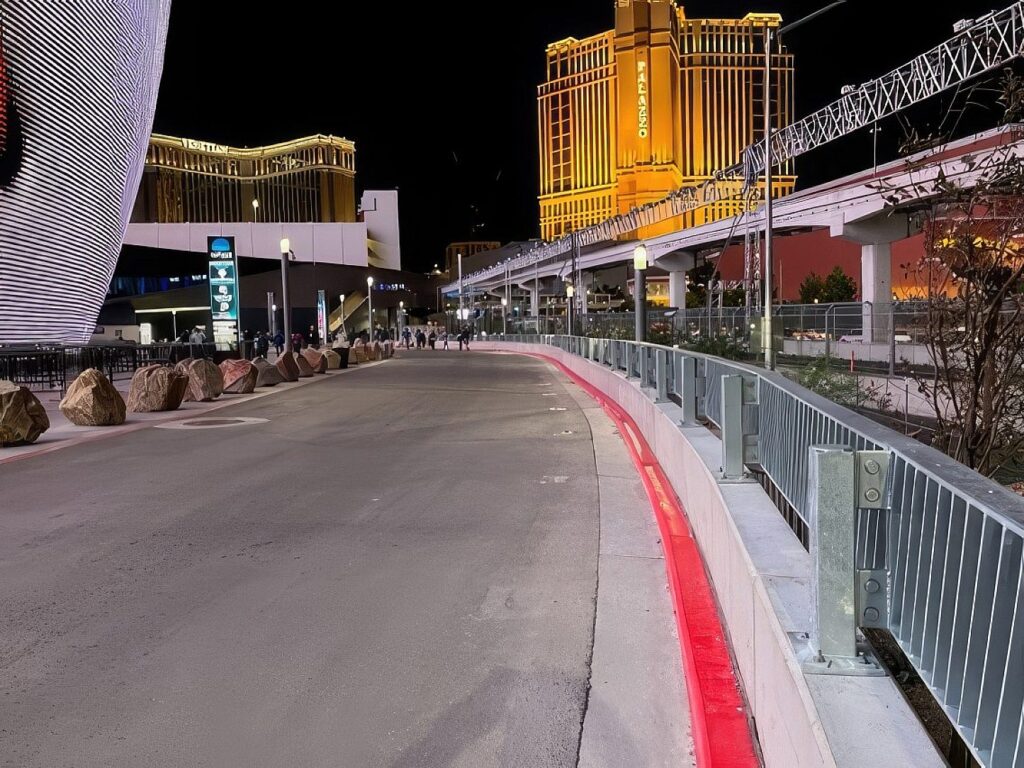
A 6-foot concrete wall encircles part of the massive structure, necessitating a guardrail for both safety and aesthetics. The 300 feet of rail seamlessly integrates into the architectural design of the Sphere. The pickets of the rail were crafted at an angle to match the structural steel on the Sphere, ensuring a harmonious and unified appearance.
To extend the guardrail’s longevity for decades to come, hot-dip galvanizing was specified. Desert climates often experience extreme temperatures, including intense heat during the day and cooler temperatures at night. Hot-dip galvanizing provides excellent protection against the corrosive effects of both high temperatures and temperature fluctuations. Additionally, intense sunlight and solar radiation in desert regions can accelerate the degradation of coatings. When compared to paint alternatives, hot-dip galvanizing is known for its ability to withstand UV radiation and offers long-lasting, maintenance free protection against the damaging effects of prolonged sun exposure.
Urban environments with high visitor traffic pose their own unique corrosion challenges. These areas can have elevated levels of air pollution, which may contribute to corrosion. Hot-dip galvanized coatings are highly resistant to atmospheric corrosion caused by pollutants, making them well-suited for handrails in busy urban environments such as the Las Vegas Strip. In settings such as a popular concert and tourist venues such as the Sphere, handrails may experience wear and tear due to high levels of pedestrian traffic. Hot-dip galvanized coatings are resistant to abrasion, helping to maintain the integrity of the coating even in areas with frequent use.
To complement its angled pickets, the galvanized coating’s neutral gray zinc patina allows the Sphere’s guardrail to blend into various architectural and environmental surroundings. This adaptability enhances the rail’s ability to complement the color scheme of a gray wall without clashing with the overall design.
As an environmentally friendly solution, the longevity of galvanized rail contributes directly to sustainability by minimizing the demand for raw materials and the energy-intensive manufacturing processes required for replacements. This not only conserves resources but also reduces the overall environmental impact associated with the production and disposal of guardrail materials.
By working closely with AZZ during the crucial design phase, the guardrail’s fabricator benefited from specialized expertise, ensuring that the designed rail met performance standards and was constructed for successful coating. AZZ assisted with the placement of vent and drain holes and advised the fabricator to crop the corners to minimize the risk of entrapment. Without question, the close and ongoing collaboration between galvanizer and fabricator helped ensure important timelines were met on the high-profile project.
When it comes to longevity in an urban or desert environment, hot-dip galvanizing is second to none. This consensus is echoed by reputable entities involved in the completion of Sin City’s latest attraction, including W&W Steel Erectors, Intrepid Metal Works, Populous Architectural, AECOM Hunt, and MSG Sphere!
When it comes to corrosion protection for guardrail, you won’t find anything better than hot-dip galvanizing.