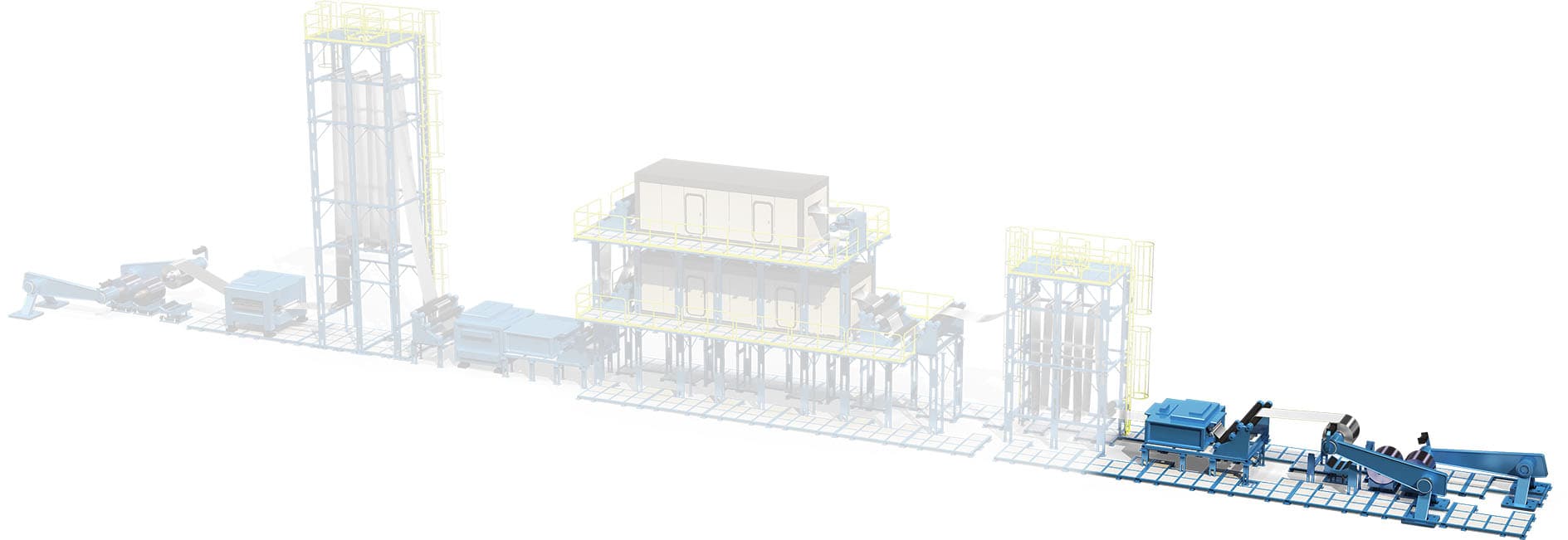
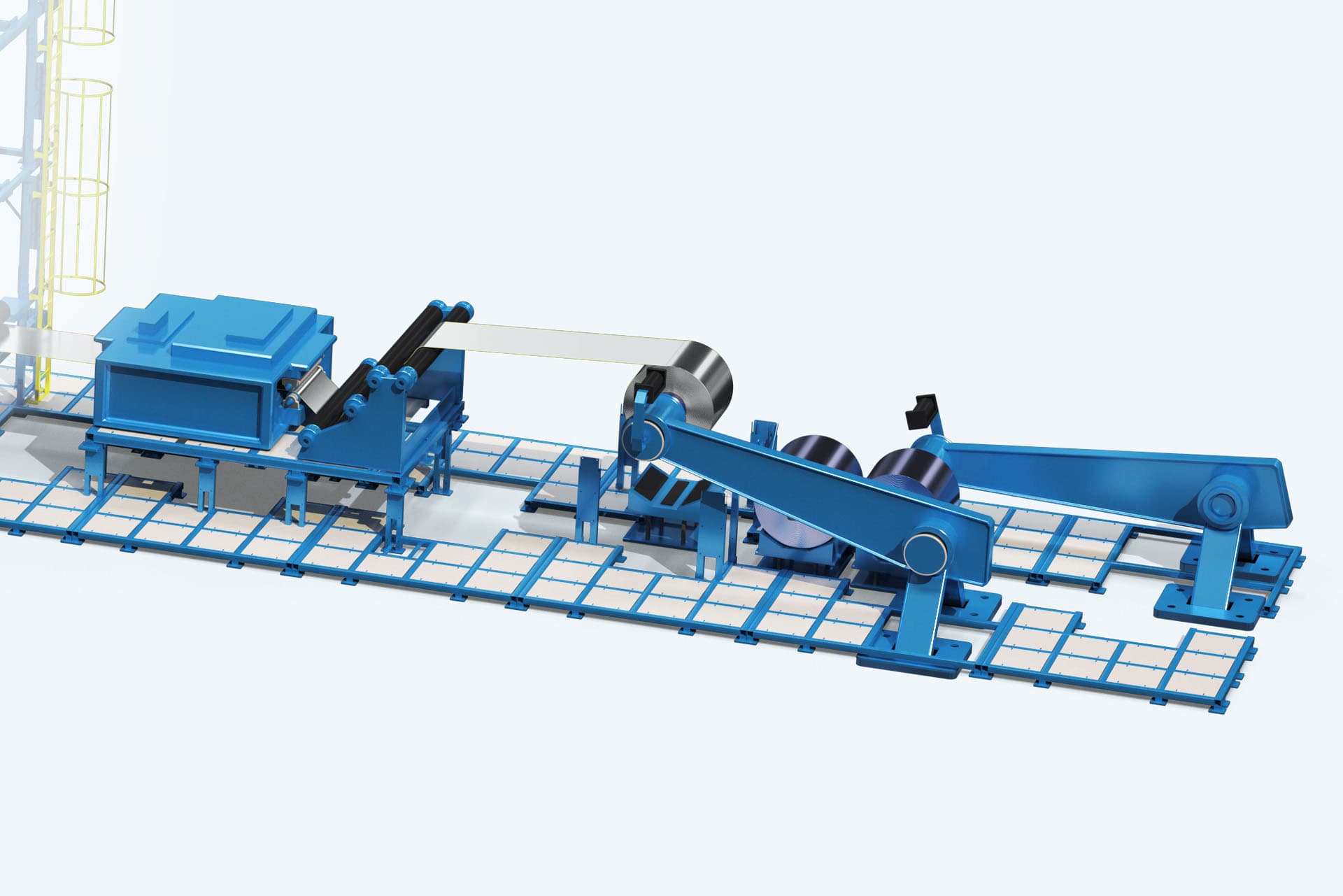
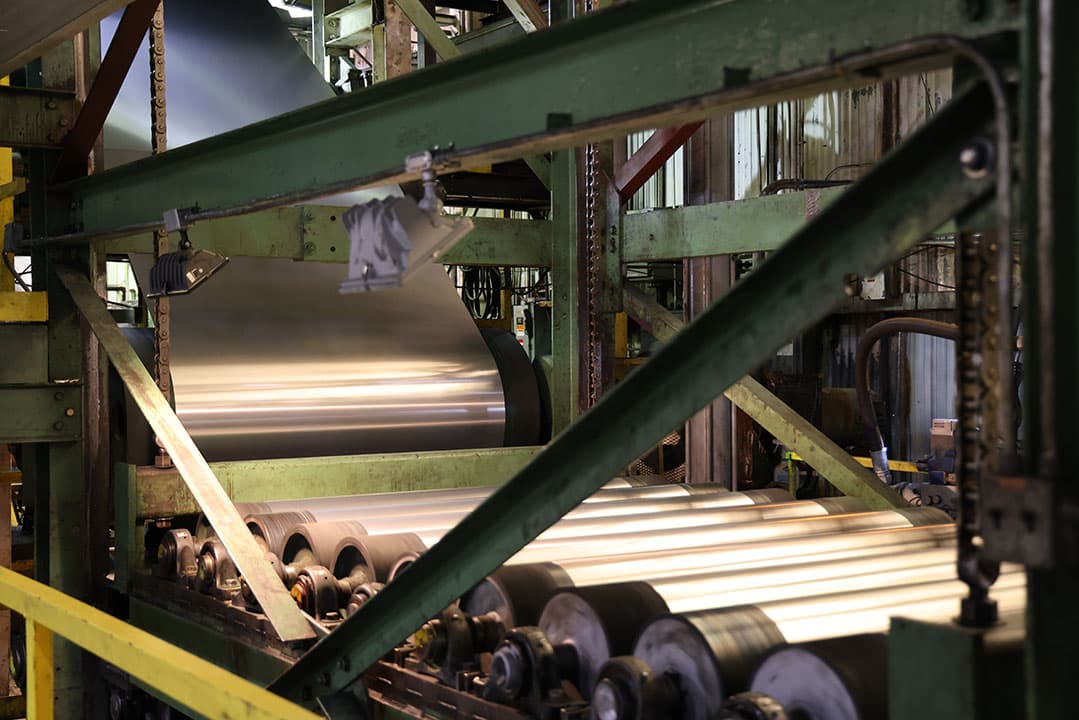
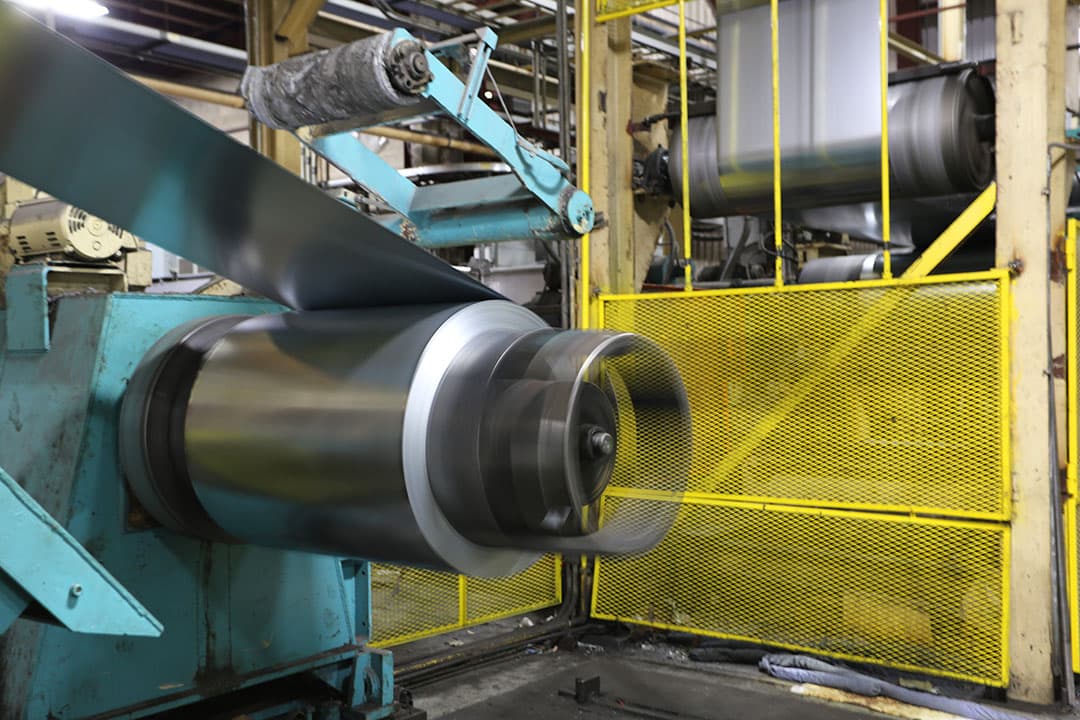
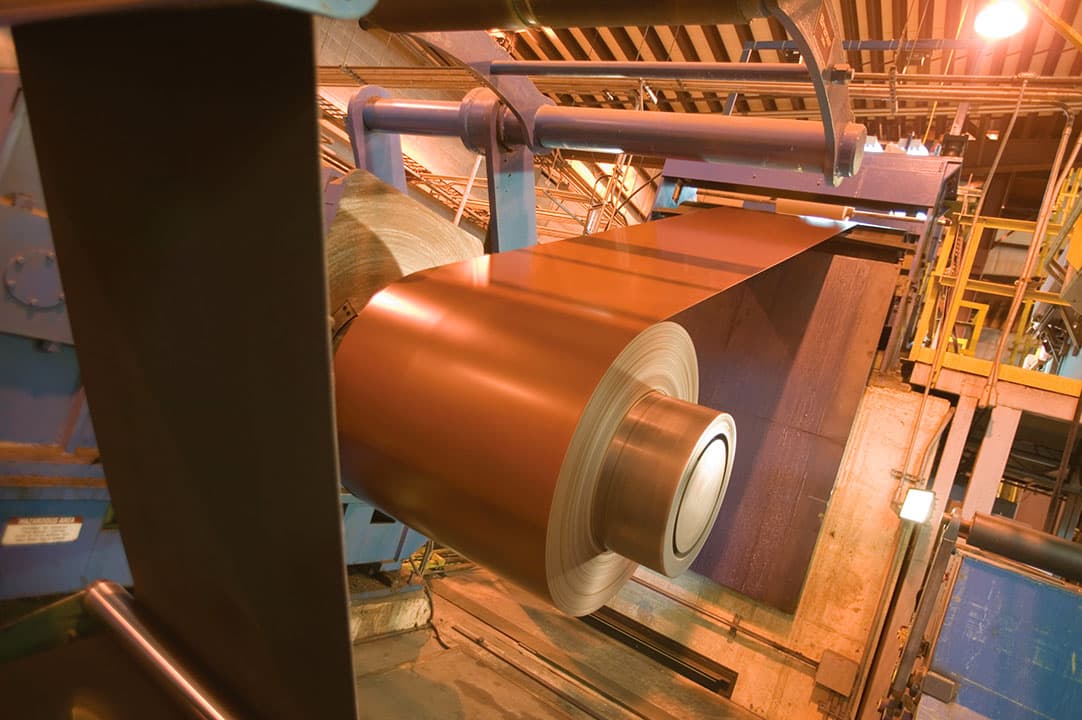
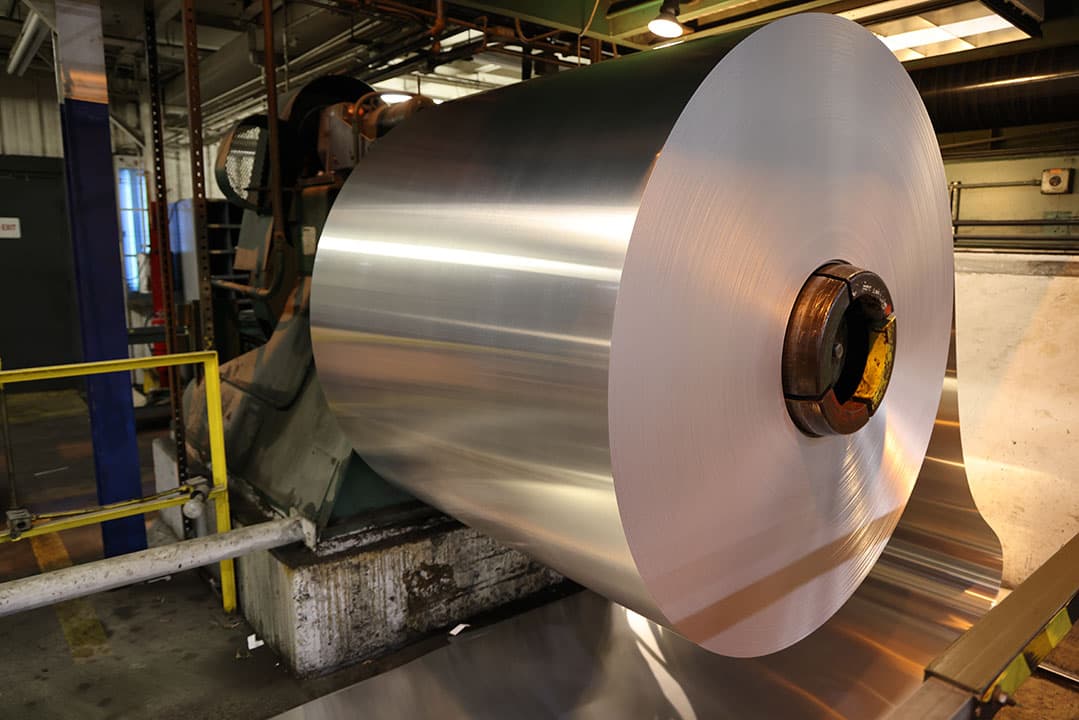
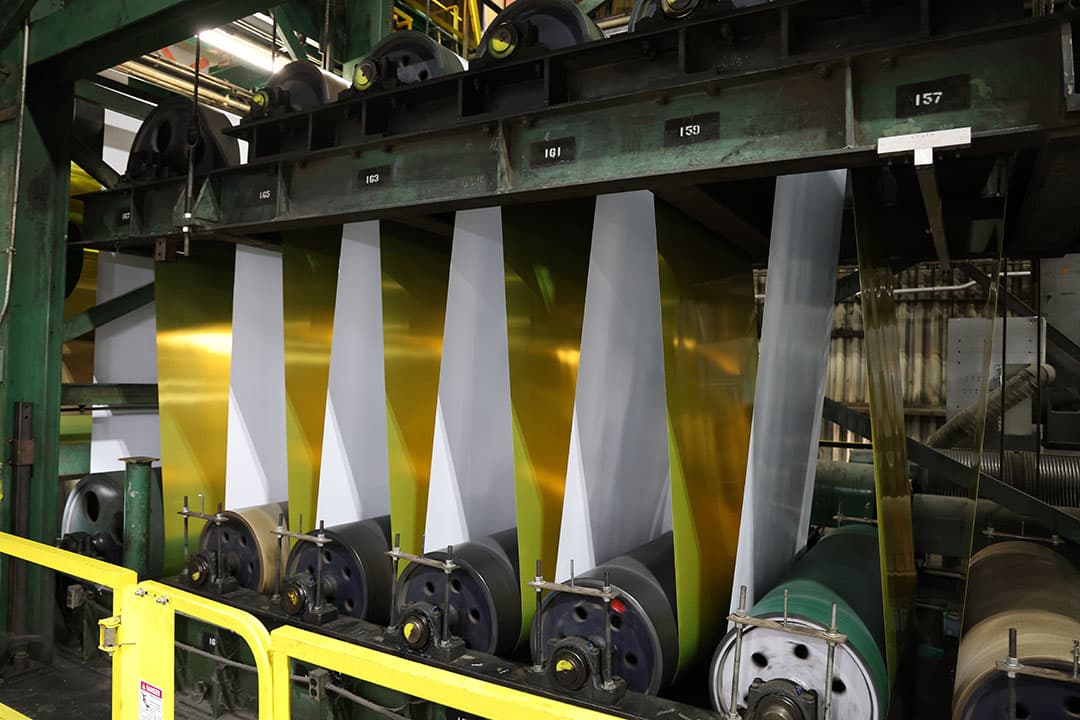
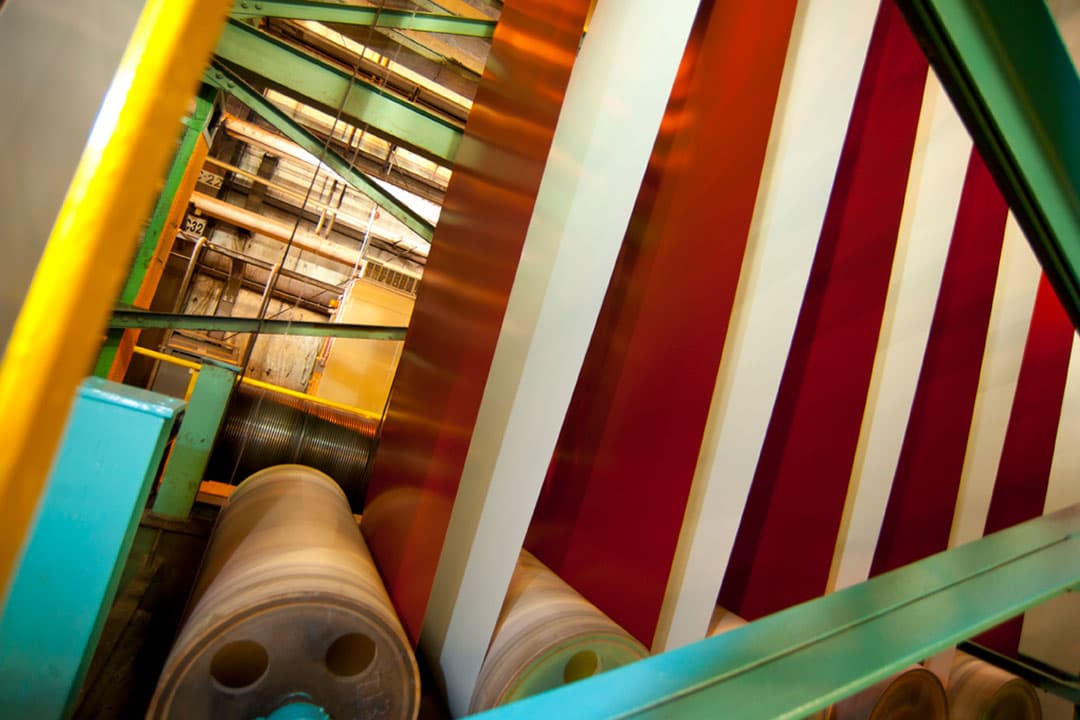
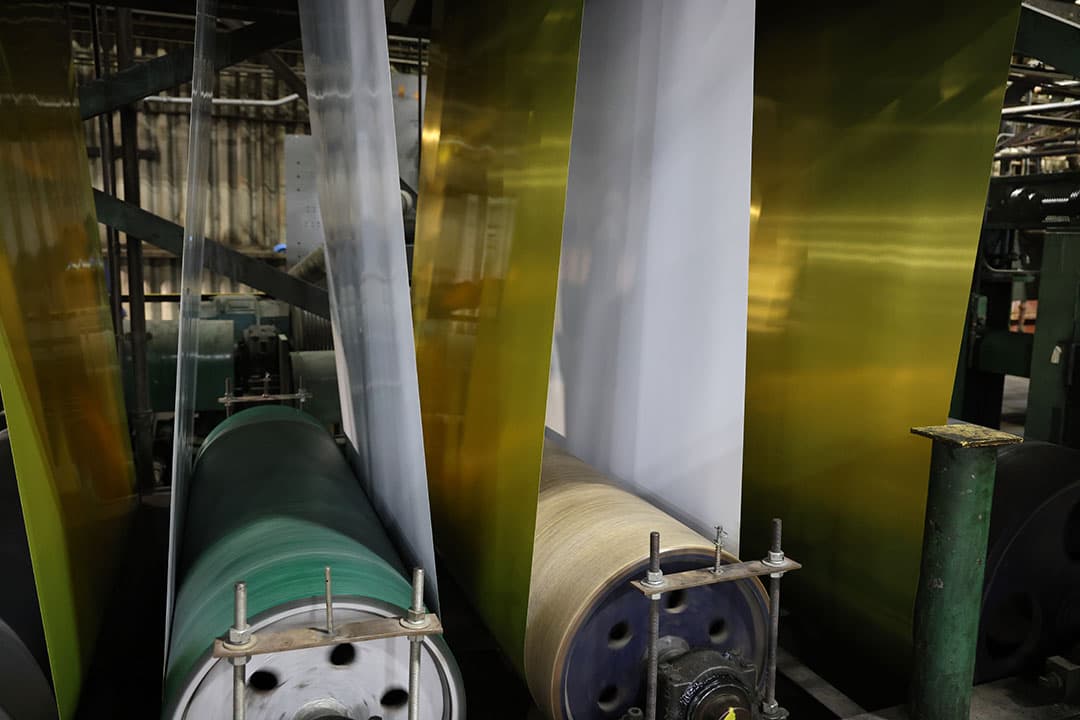
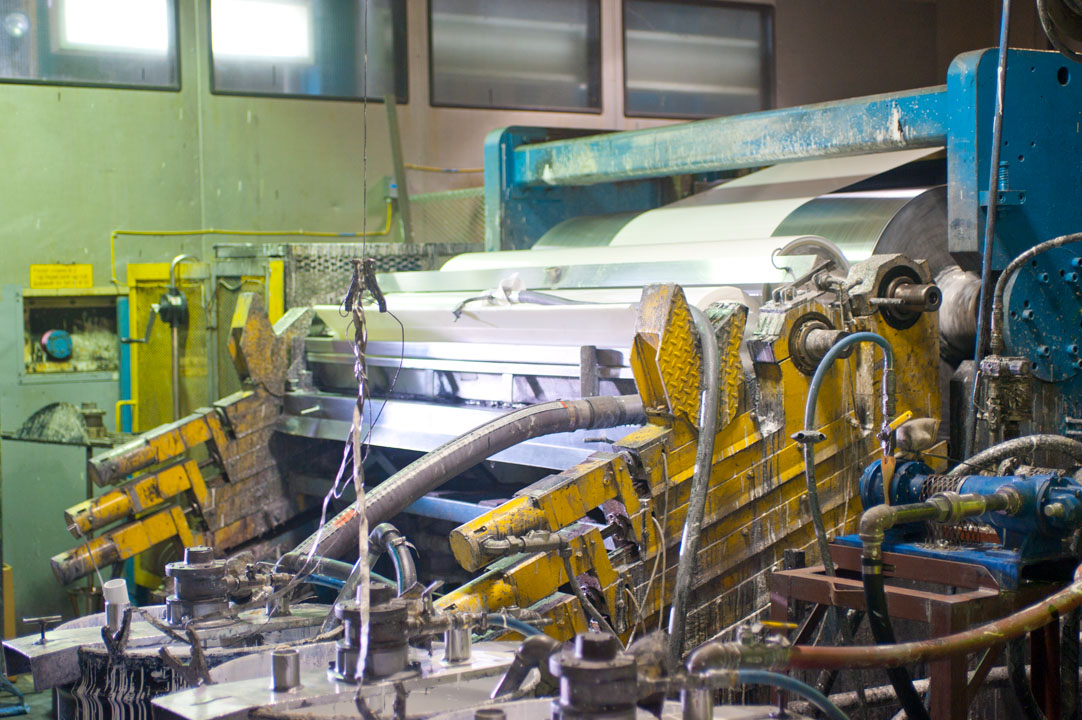
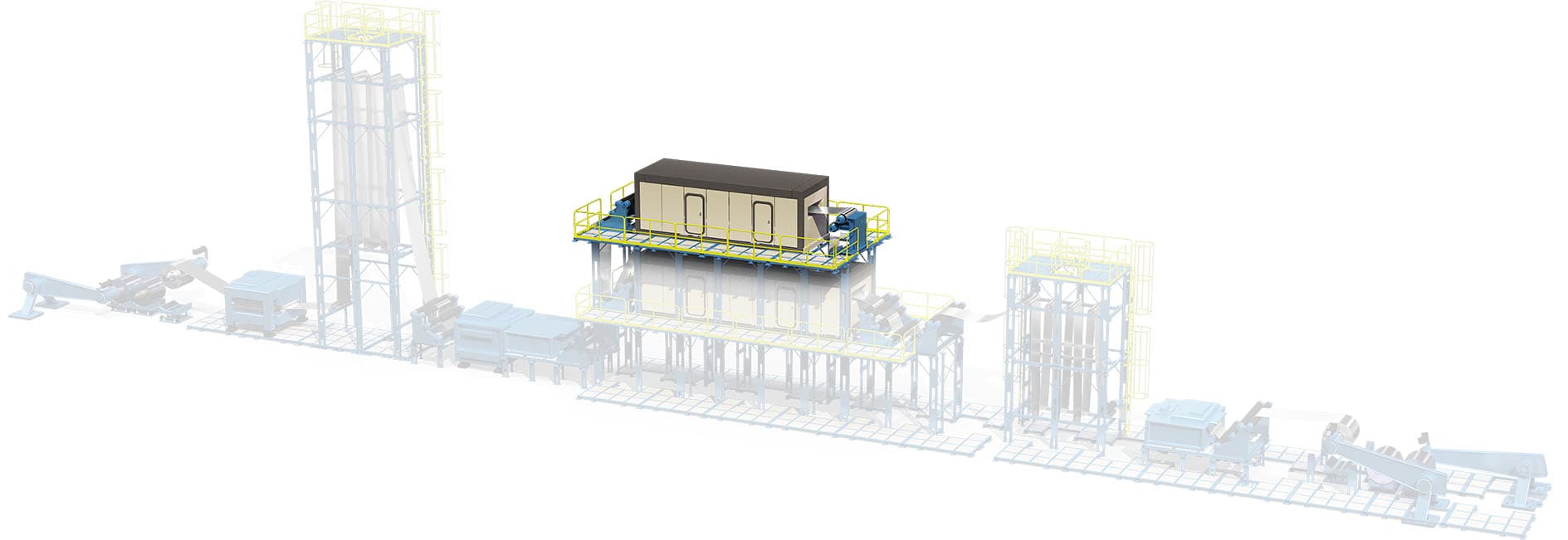
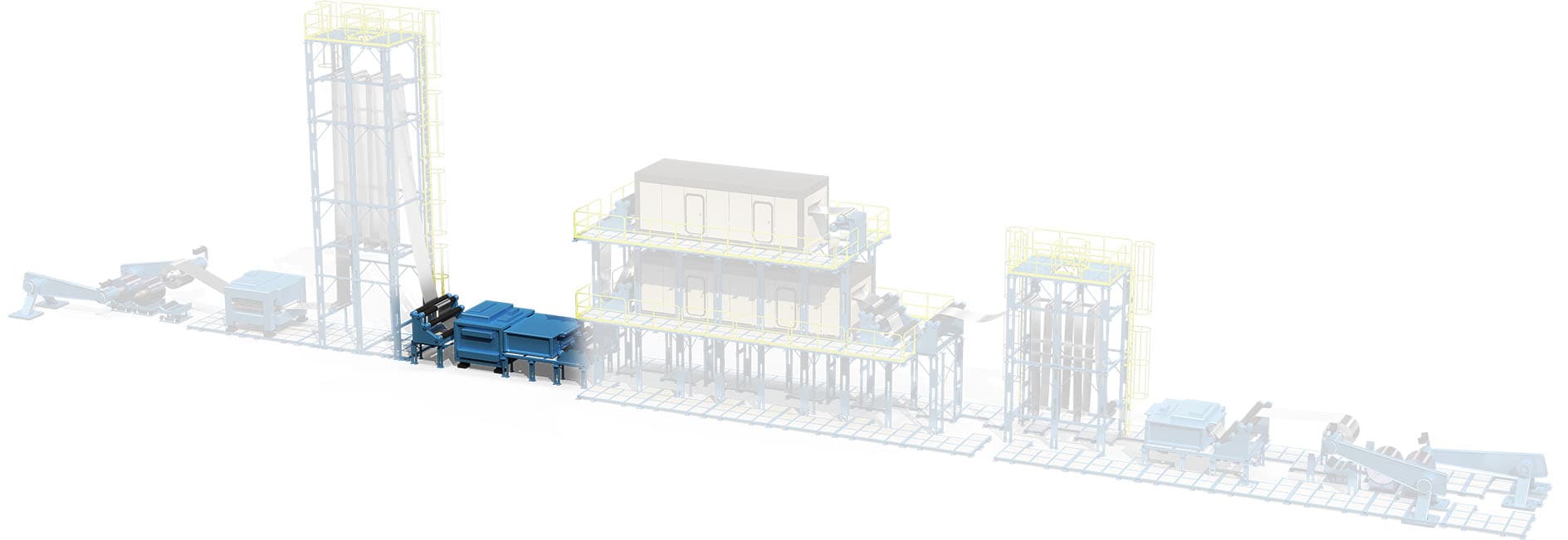
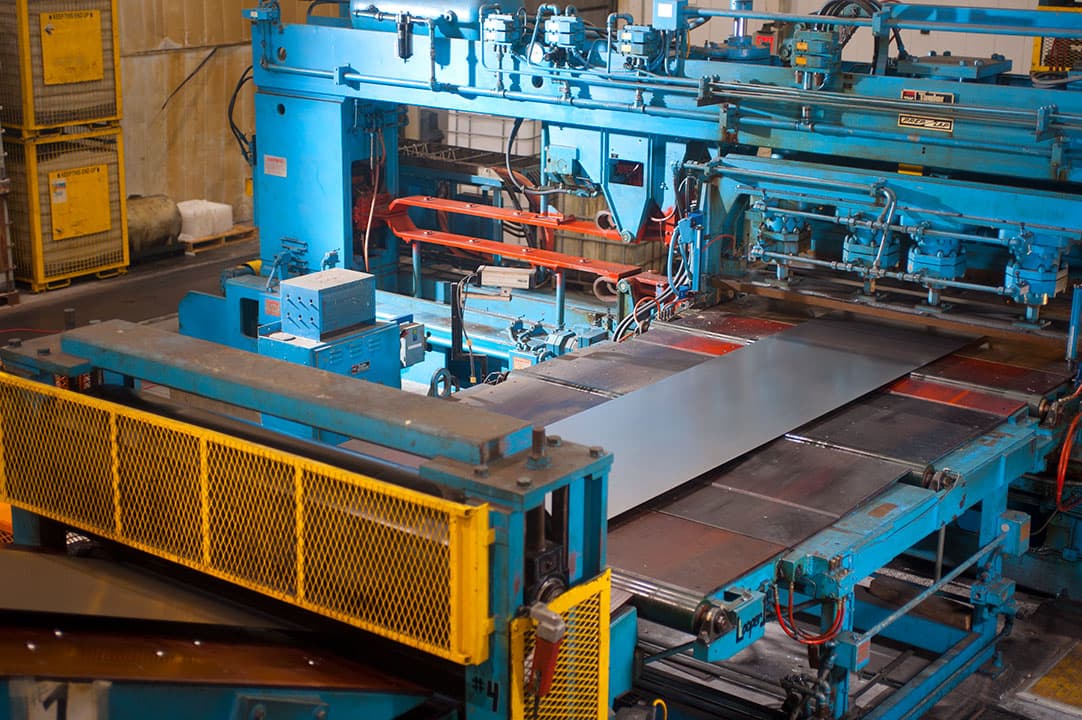
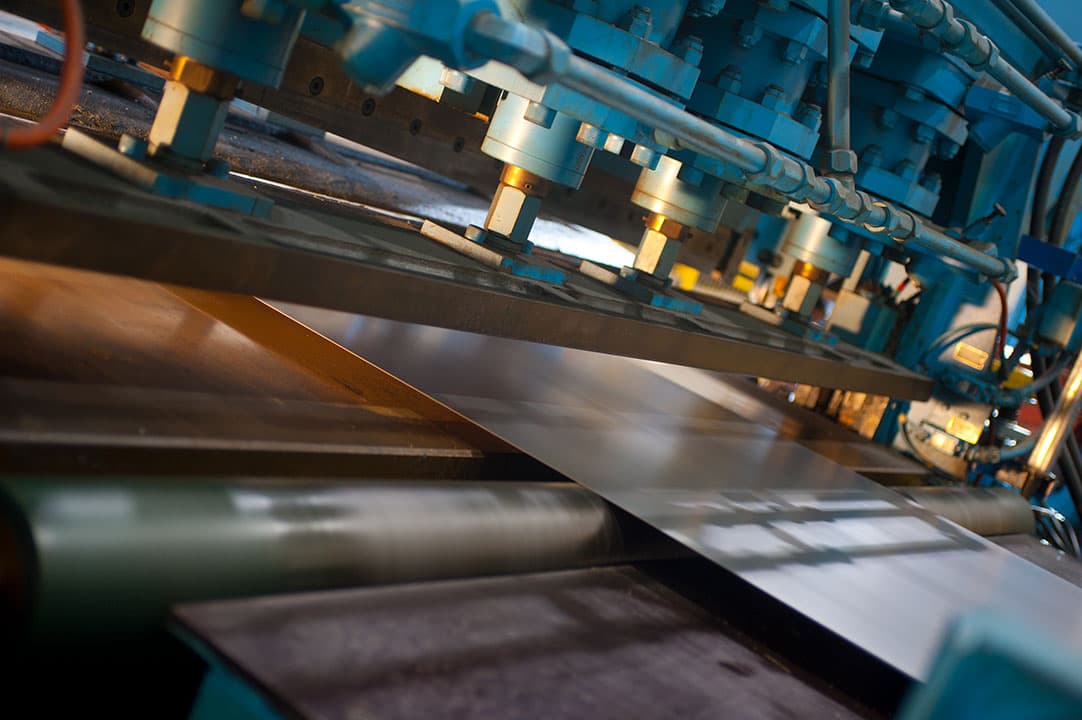
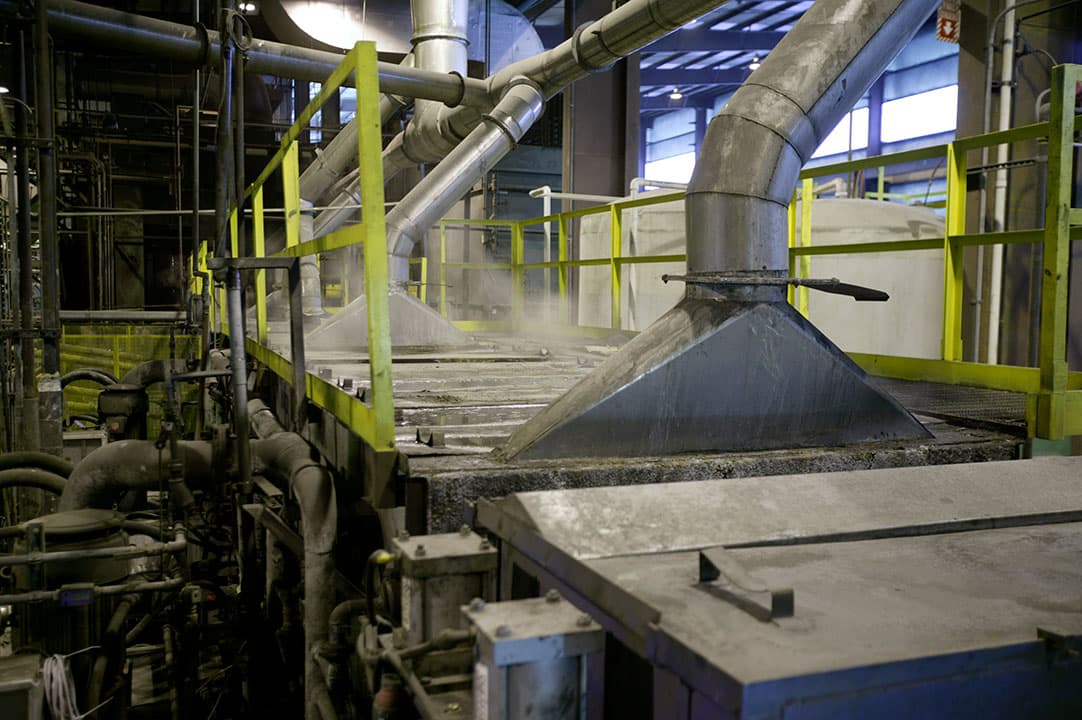
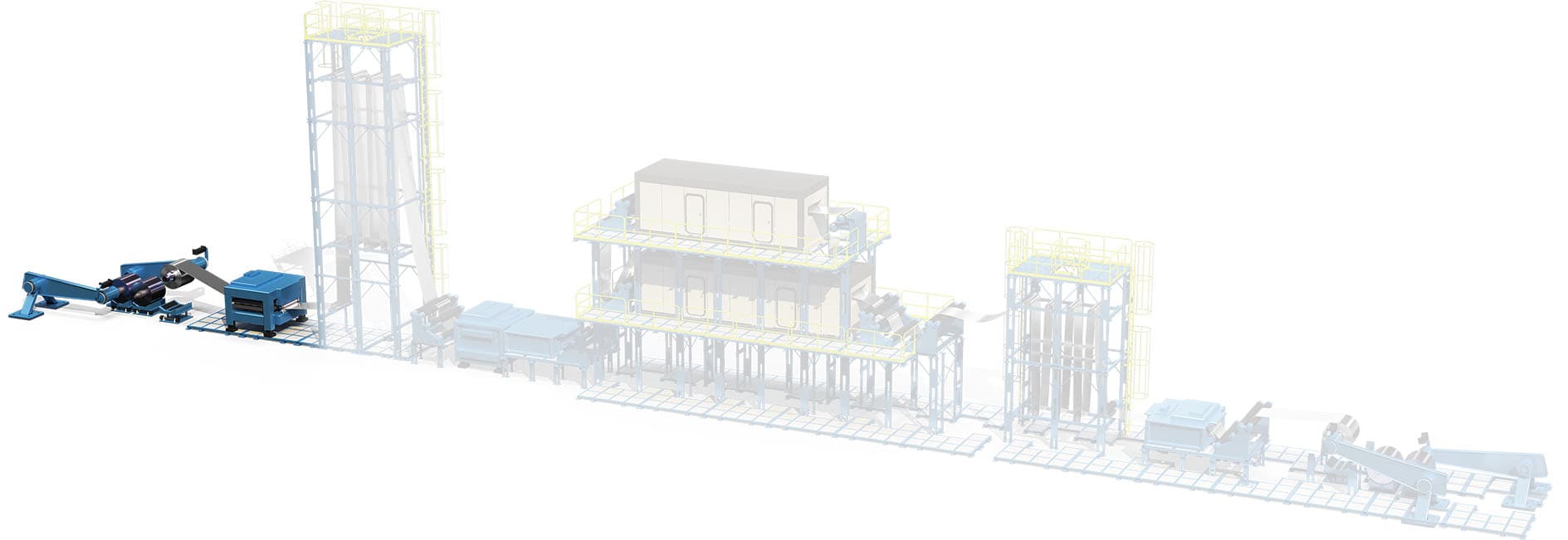
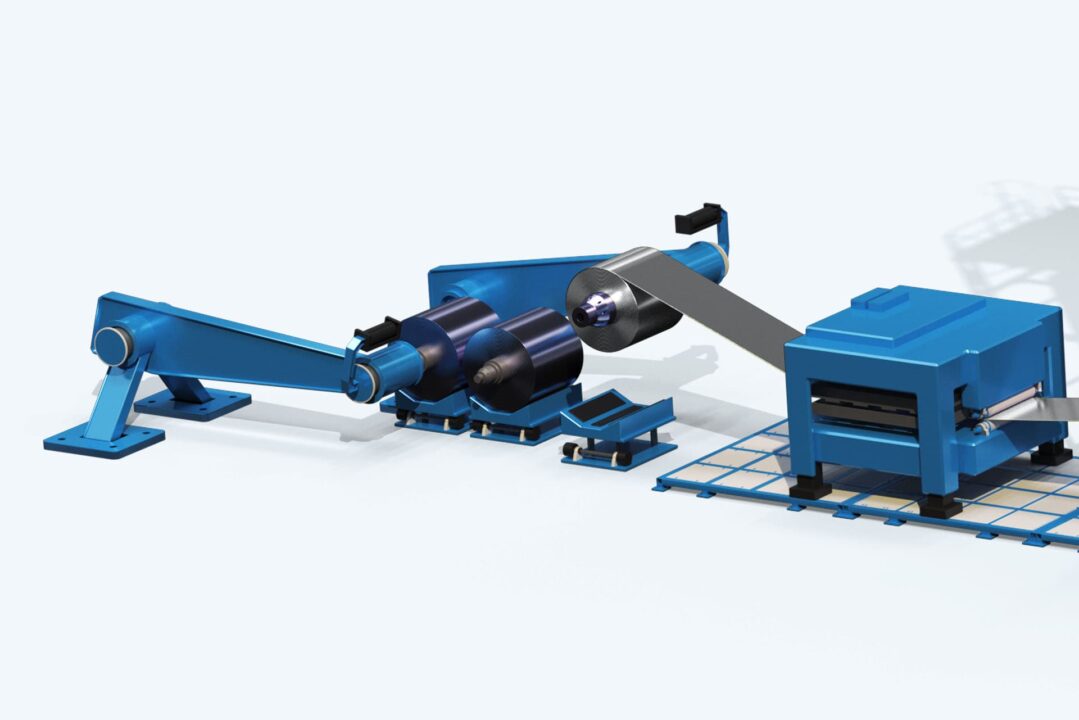
Once the metal is cleaned, treated, and painted, the strip is rewound into a coil size prescribed by the customer. From there, the coil is removed from the line and packaged for shipment or additional processing.
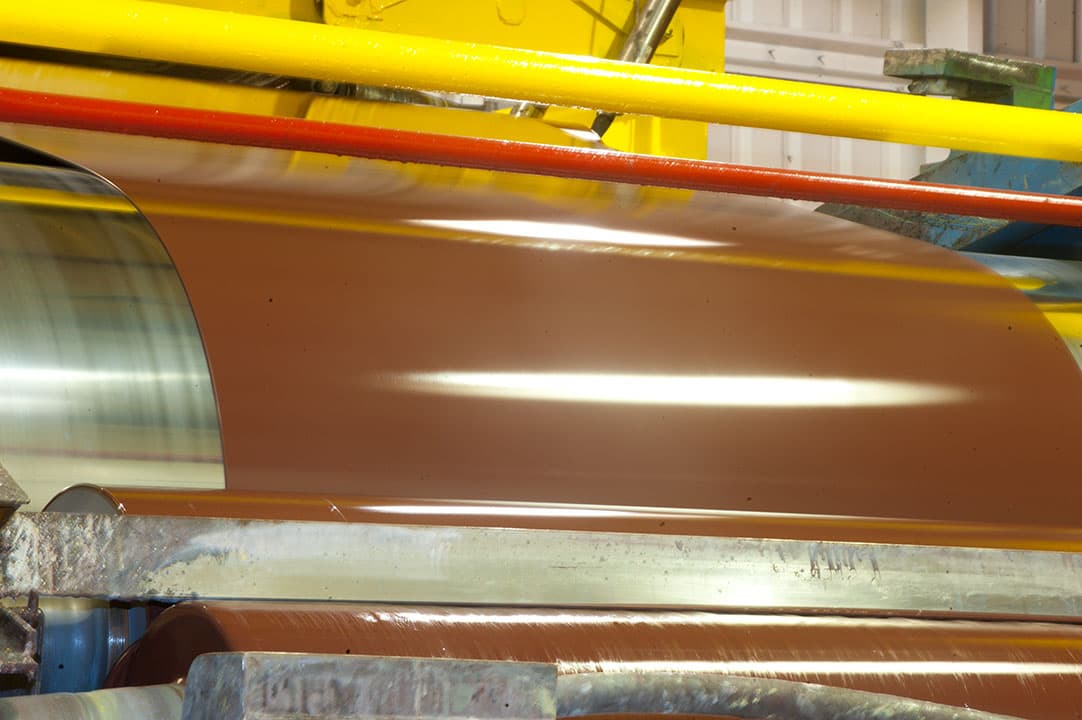
After the primer is applied and cured, then the metal strip enters the finish coat station where a topcoat is applied. Topcoats provide color, corrosion resistance, durability, flexibility and any other required physical properties. Like primers, the topcoat is cured using thermal cure ovens.
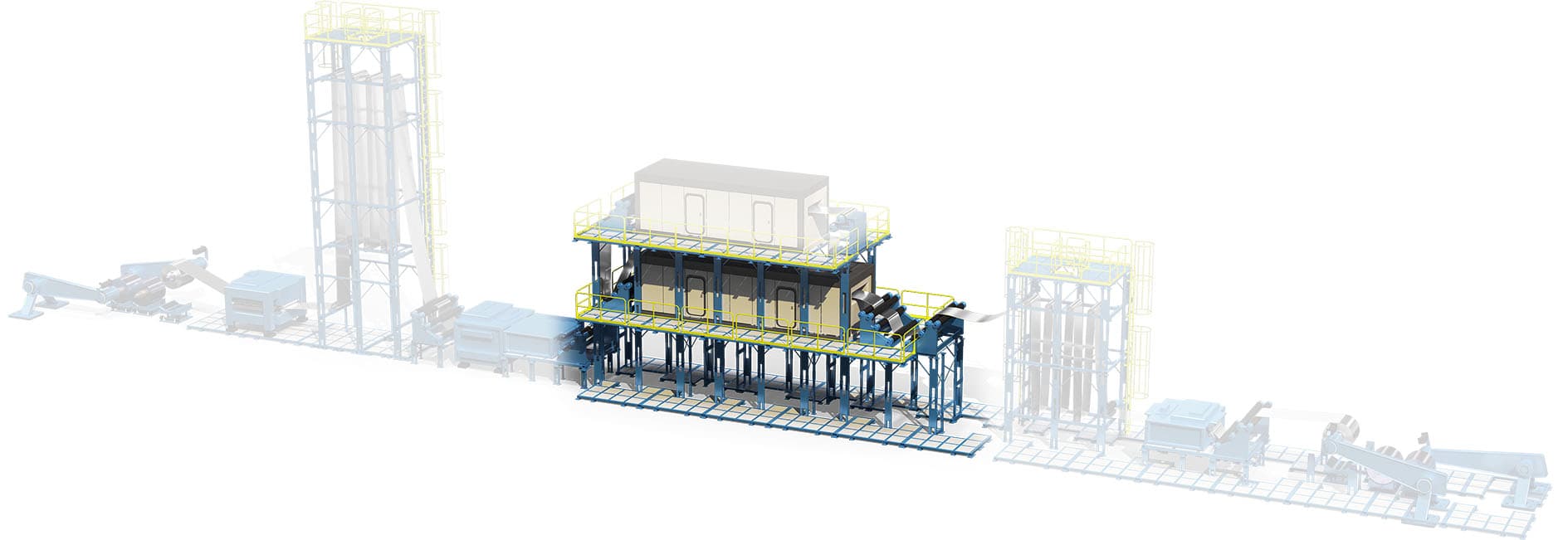
Oven
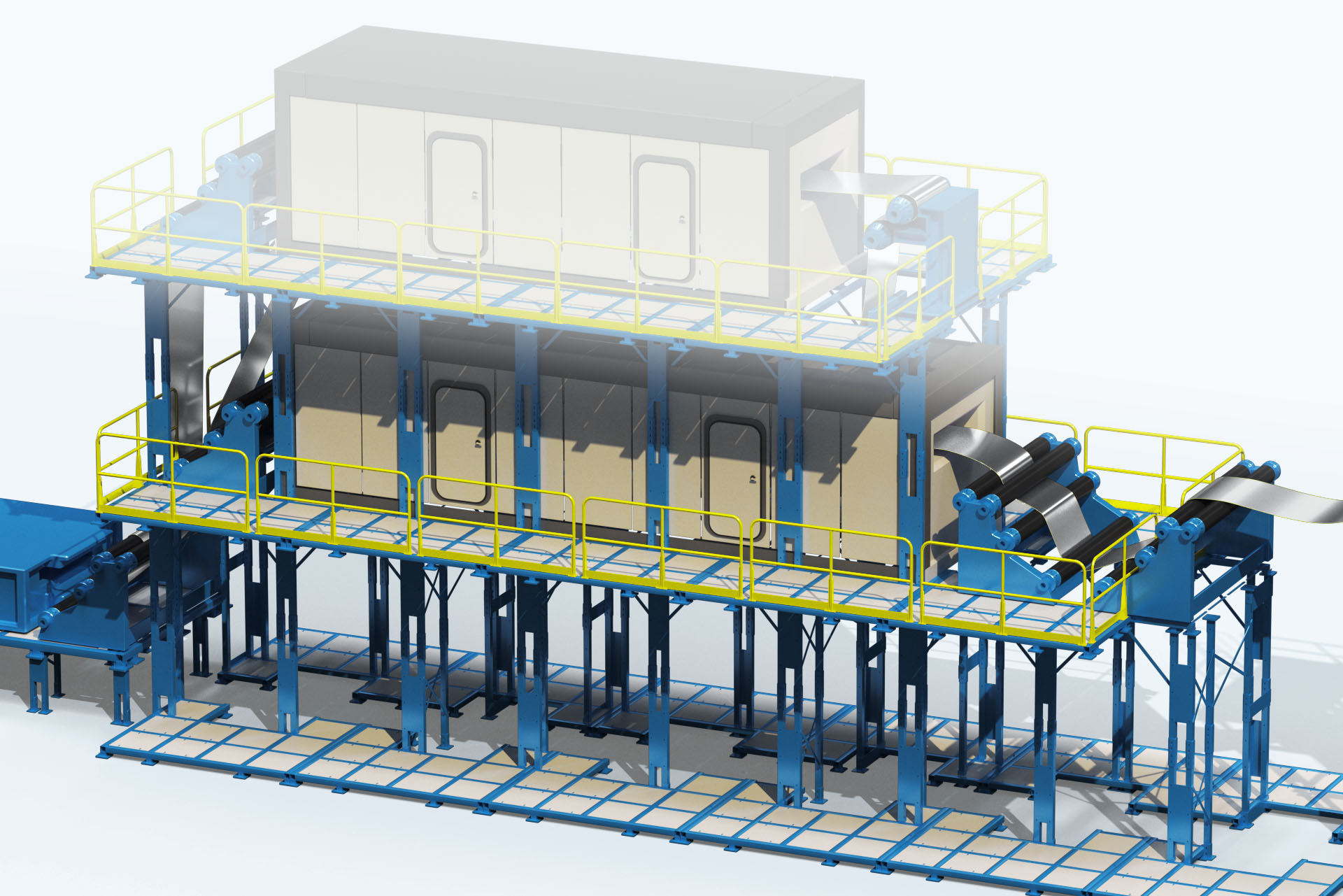
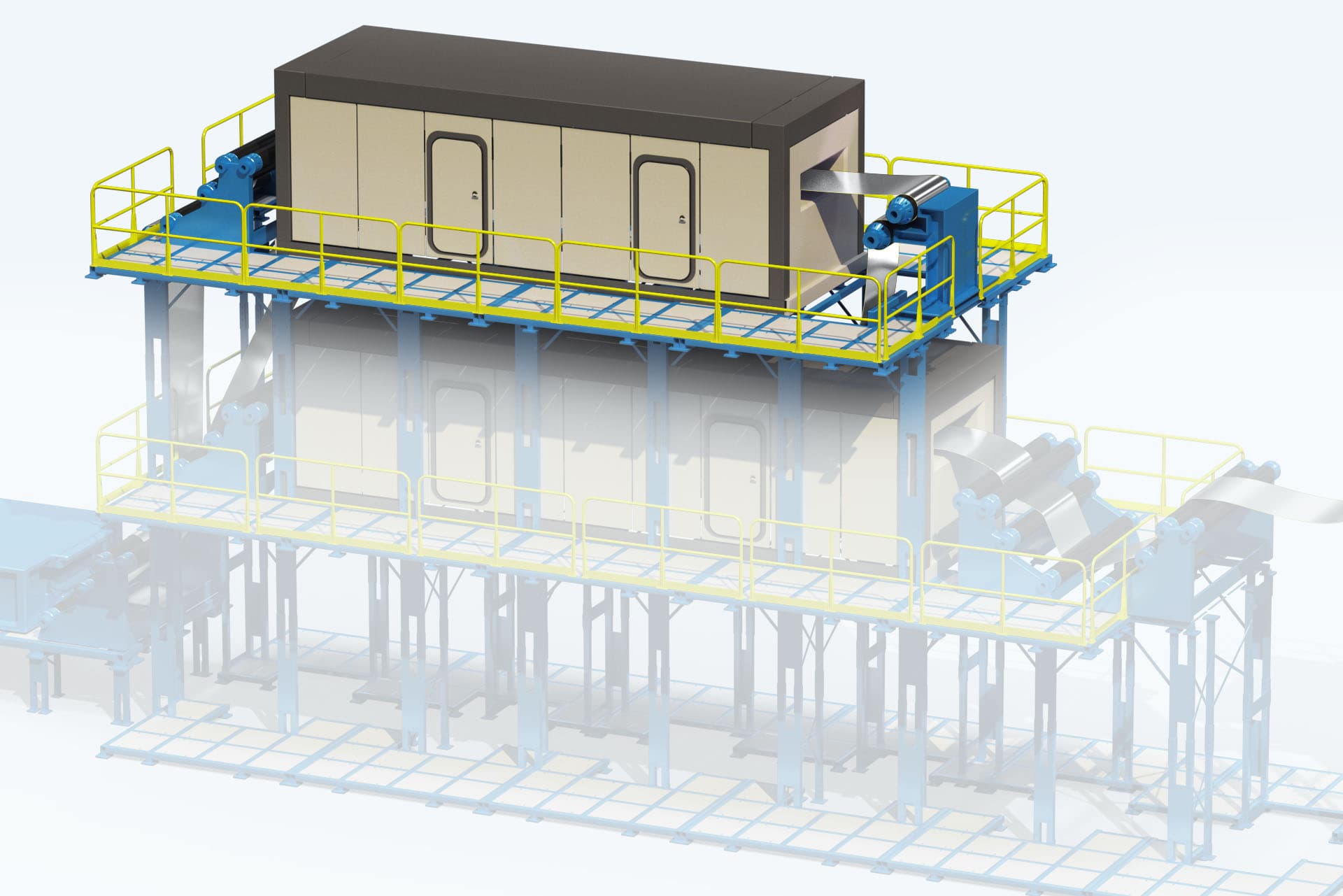
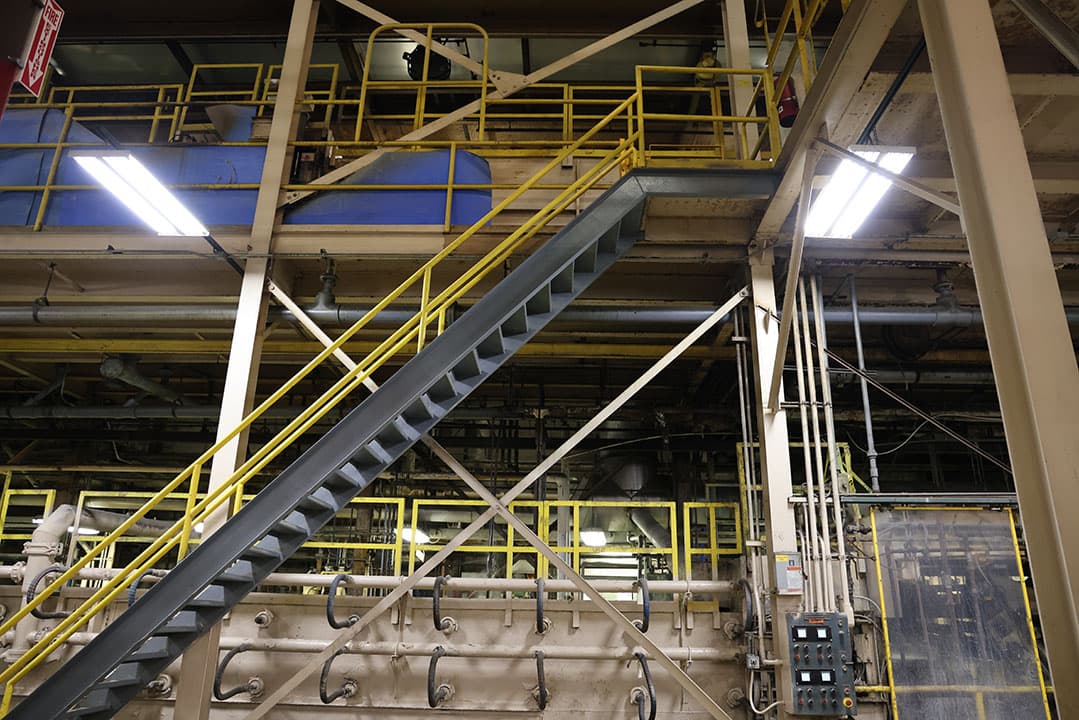
Coil coating ovens can range from 130 feet to 160 feet and will cure the coatings in 13 to 20 seconds.
During this stage, the strip enters the prime coat station whereby a primer is applied to the clean and treated metal. After the primer is applied, the metal strip travels through a thermal oven for curing. Primers are used to aid in paint adhesion, improve corrosion performance and enhance aesthetic and functional attributes of the topcoat.
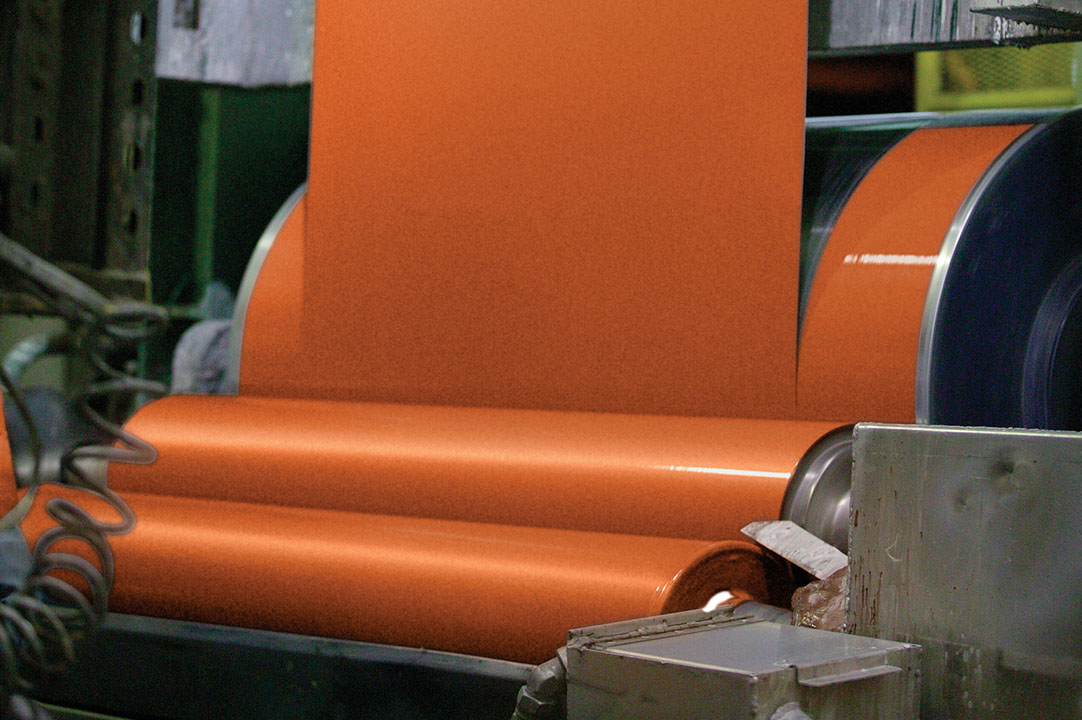
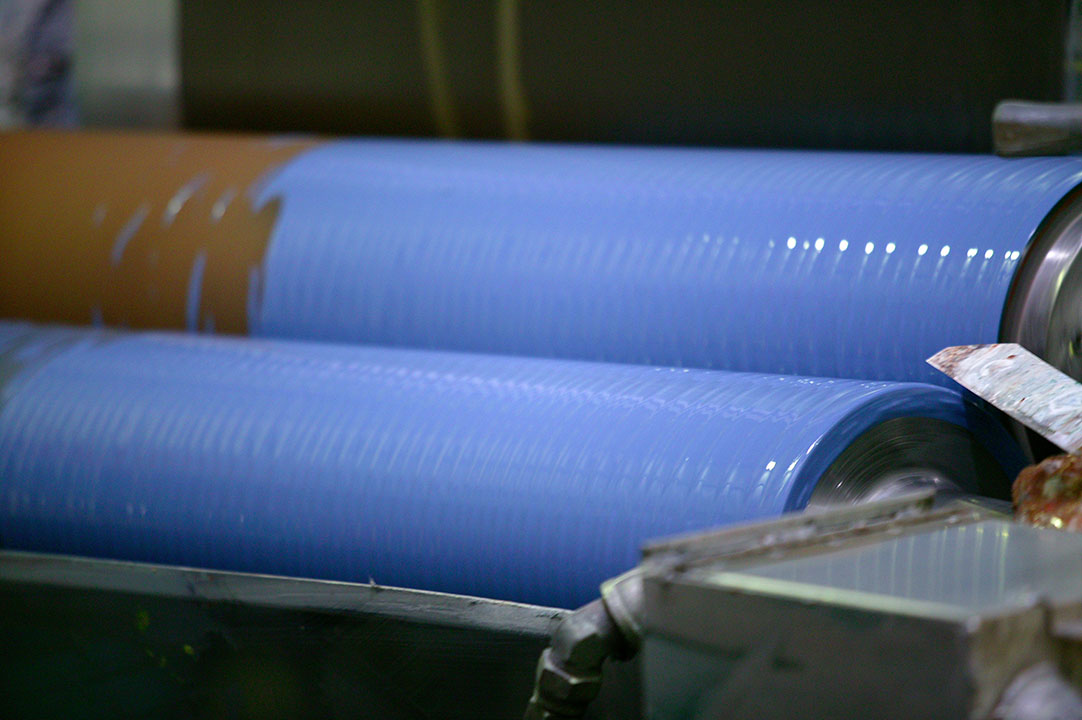
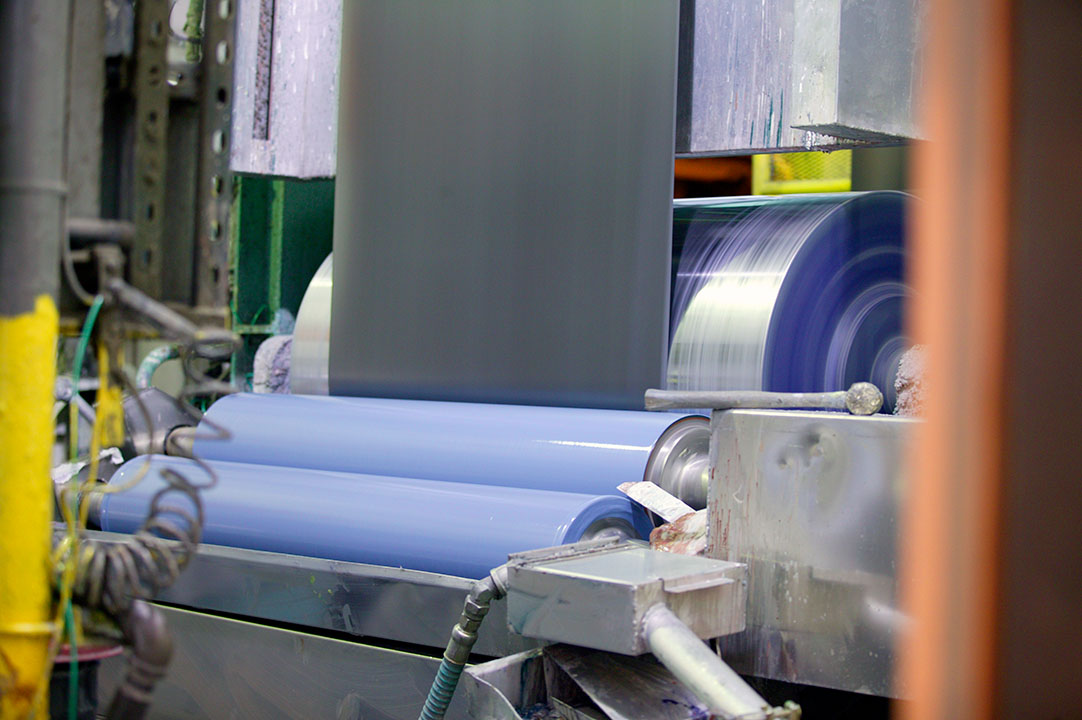
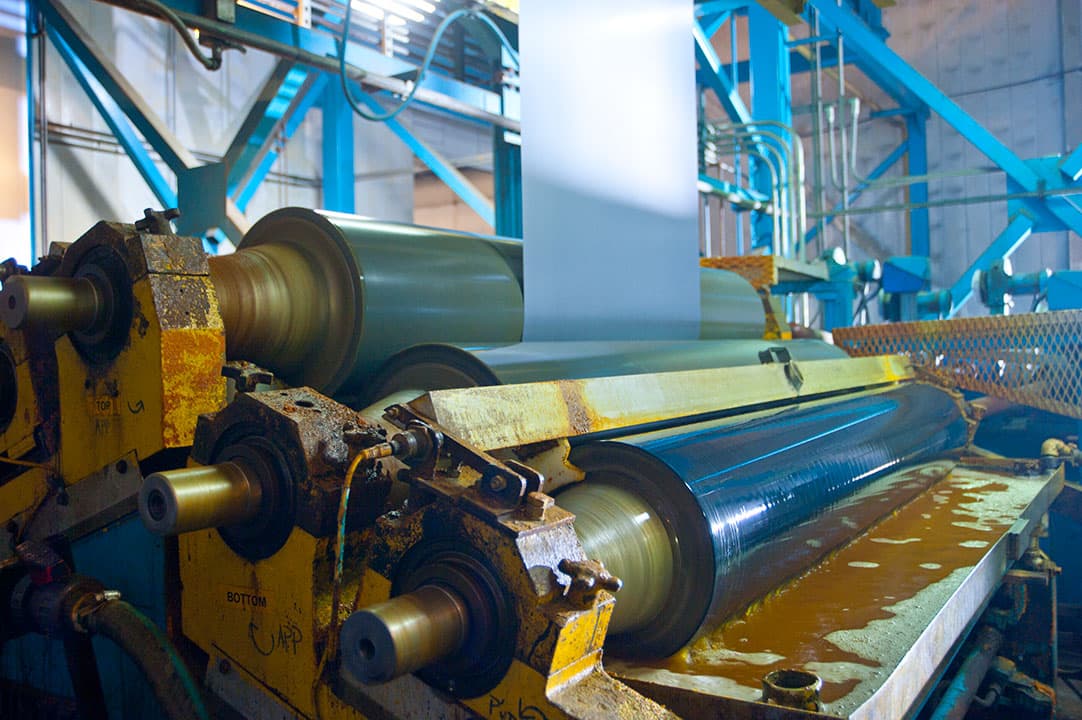
S Wrap Coater
The S wrap coater design allows for primers and paints to be applied to the top and back side of the metal strip simultaneously in one continuous pass.
The cleaning and pretreating section of the coil coating process focuses on preparing the metal for painting. During the cleaning stage, dirt, debris, and oils are removed from the metal strip. From there, the metal enters the pretreatment section and/or a chemical coater whereby chemicals are applied to facilitate paint adhesion and enhance corrosion resistance.
Dried-In-Place
In this stage a chemical that provides enhanced corrosion performance is applied. This treatment can be chrome free if required.
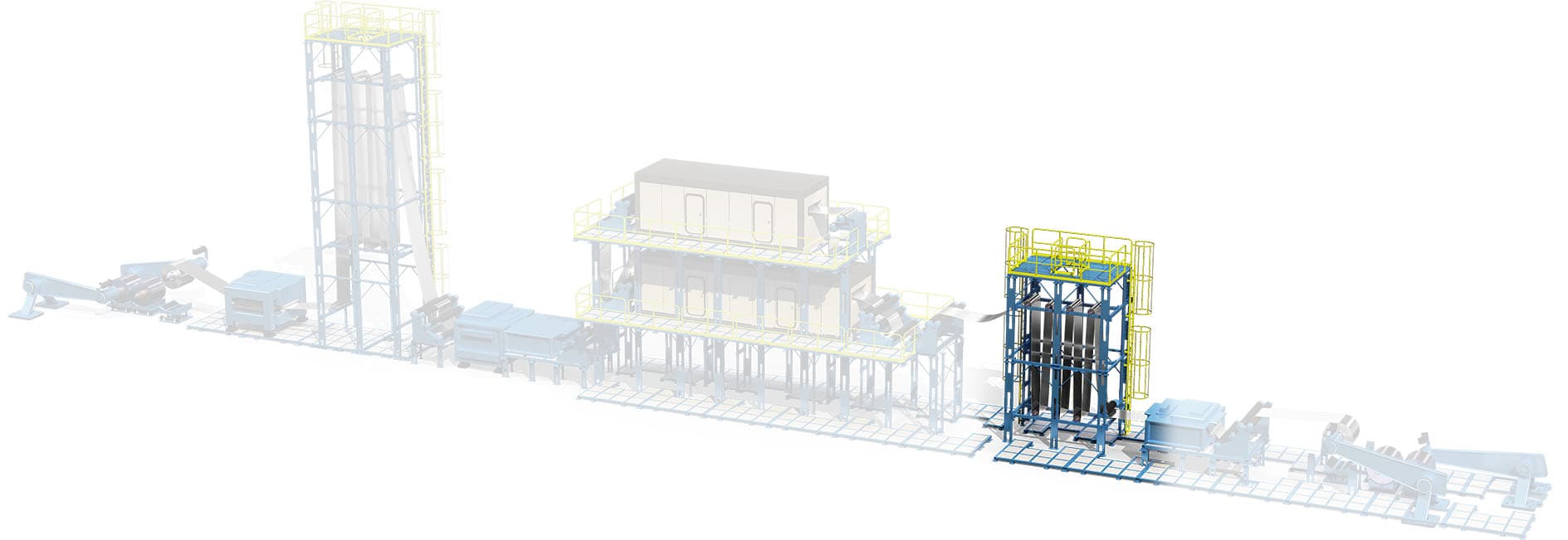
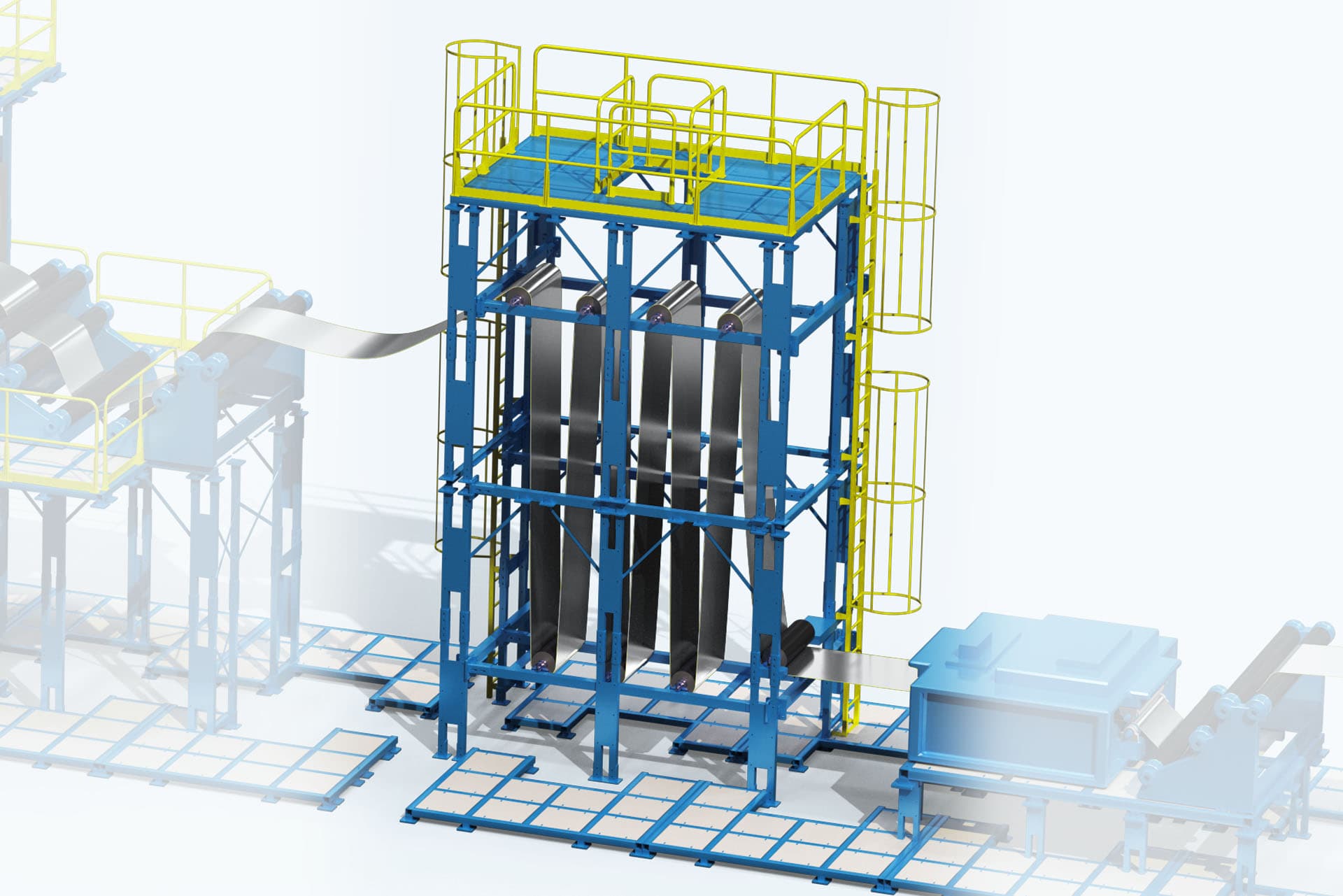
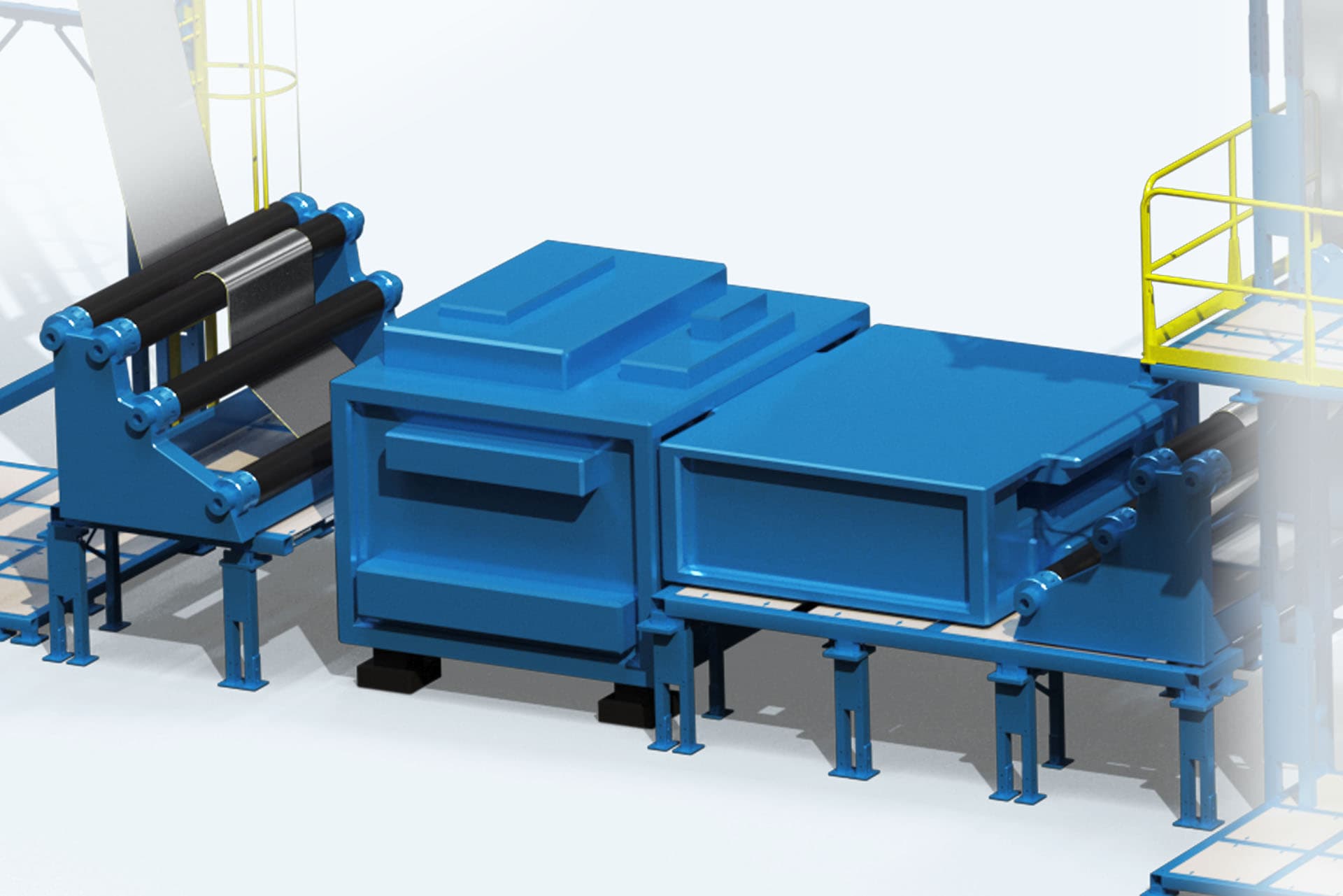
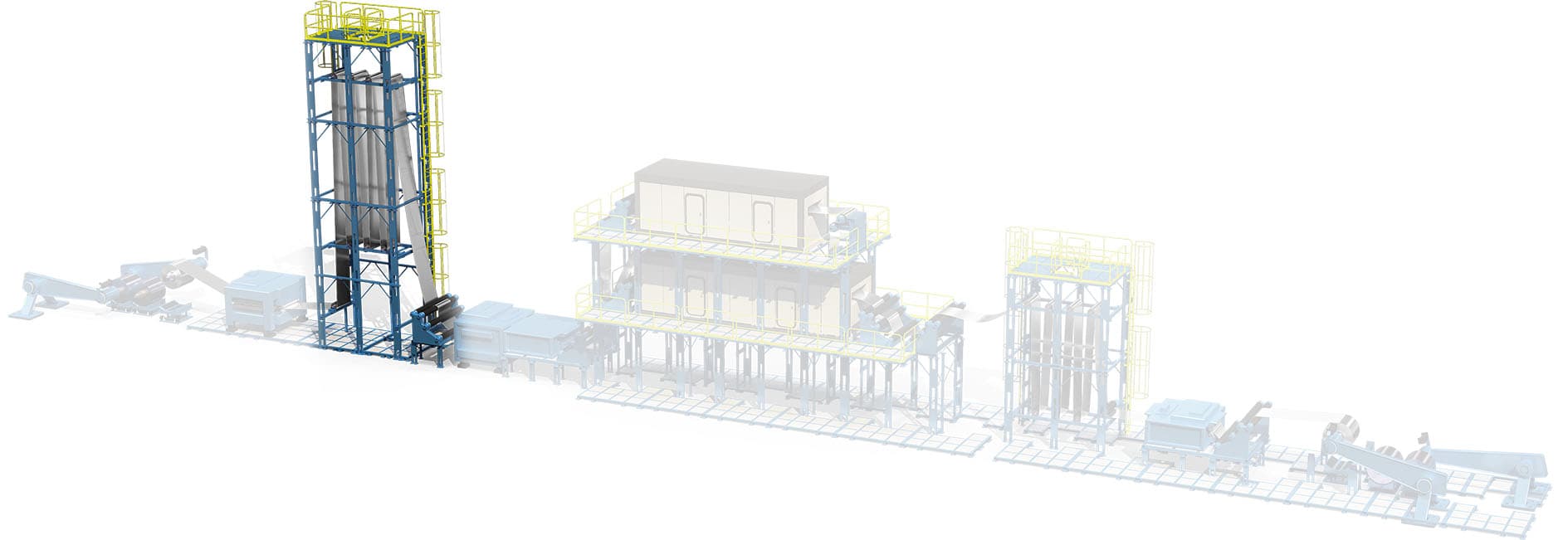
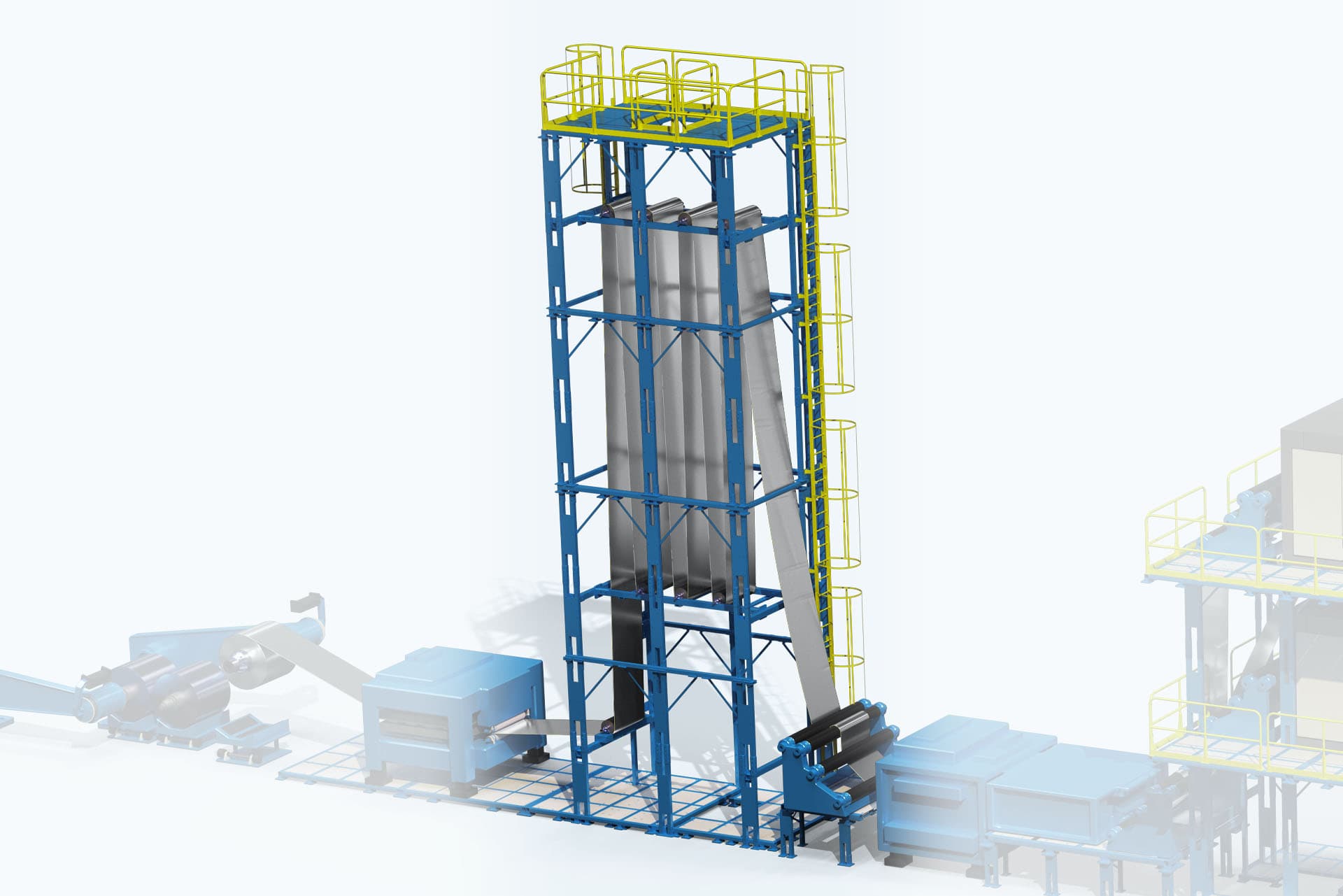
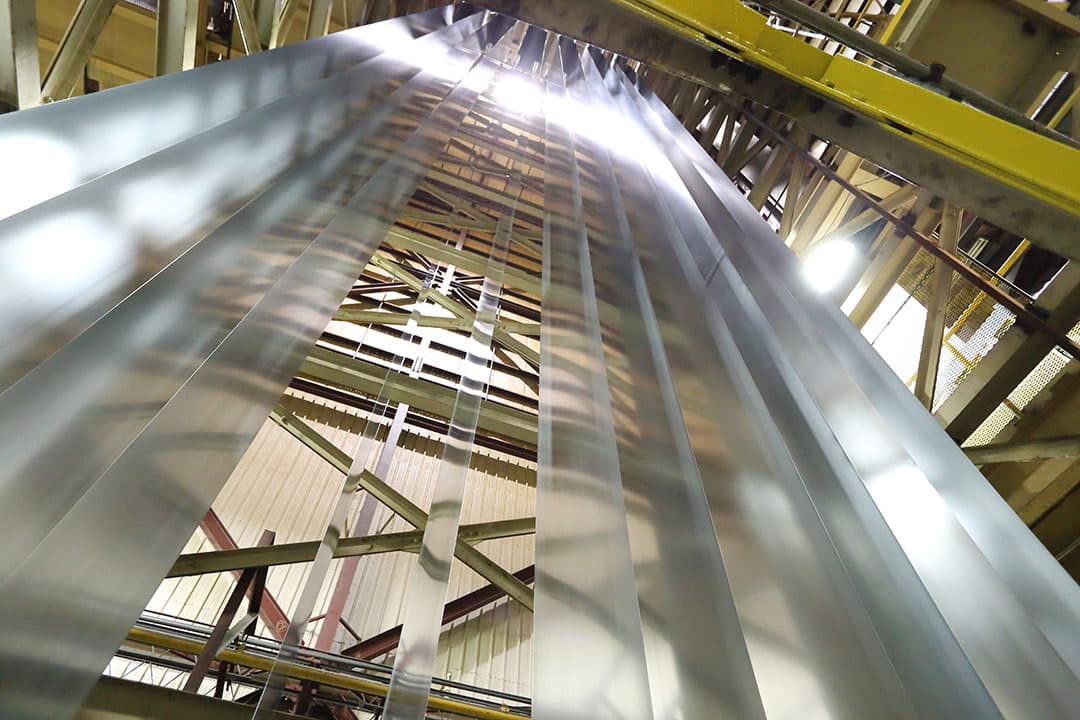
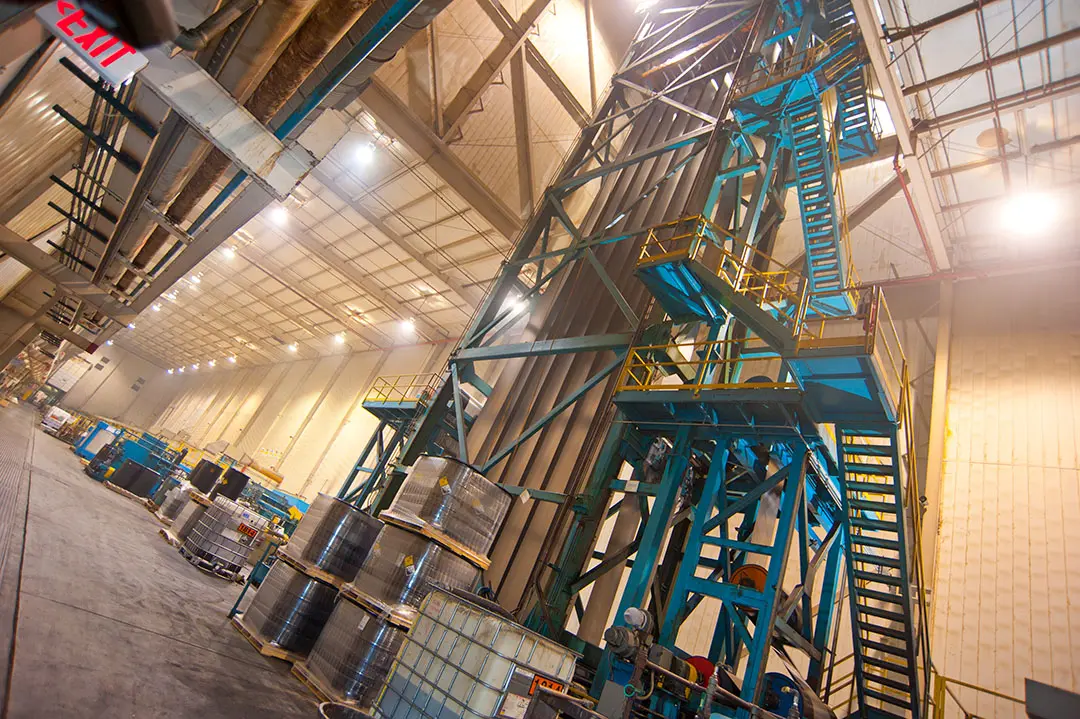
The accumulator is a structure that adjusts up and down to store material, which makes continuous operation of the coil coating process possible. This accumulation will continue to feed the coil coating processes while the entry end has stopped for the stitching process. As much as 750 feet of metal can be collected.
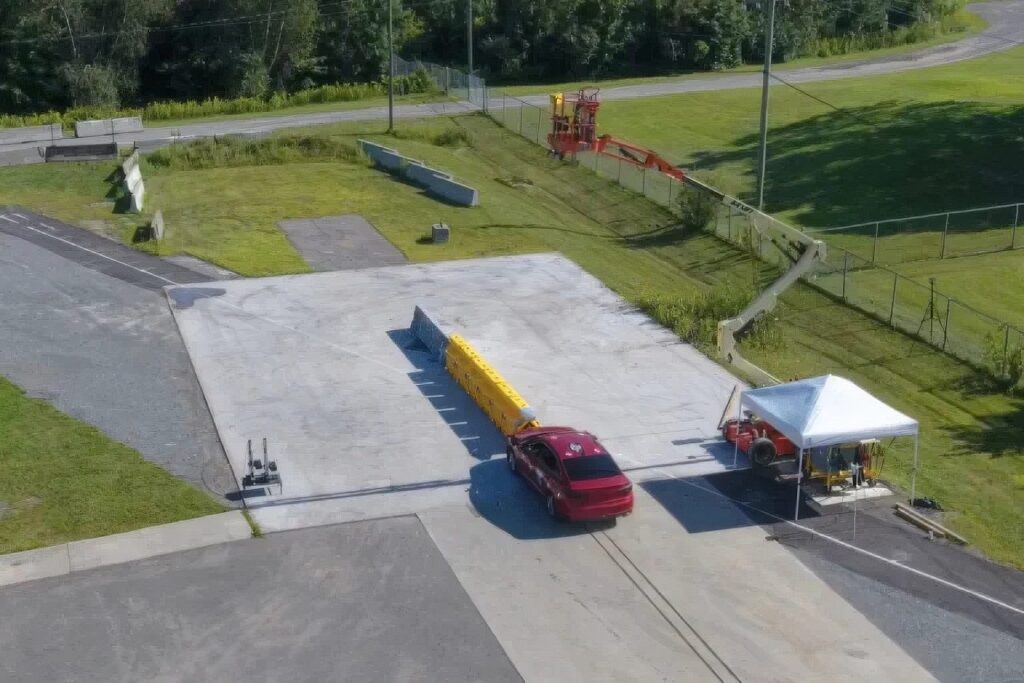
In Canada, non-redirective crash cushions play a vital role in roadside safety, particularly on high-speed highways and urban roadways. These systems are installed to protect drivers from fixed hazards in situations where redirecting vehicles away from impact points is impractical, such as around toll plazas, bridge abutments, and exit ramps.
Provincial transportation agencies and the Ministry of Transportation assess high-risk areas, ensuring that crash cushions meet stringent standards set by the Canadian Standards Association (CSA) to provide reliable energy absorption and reduce collision impact forces.
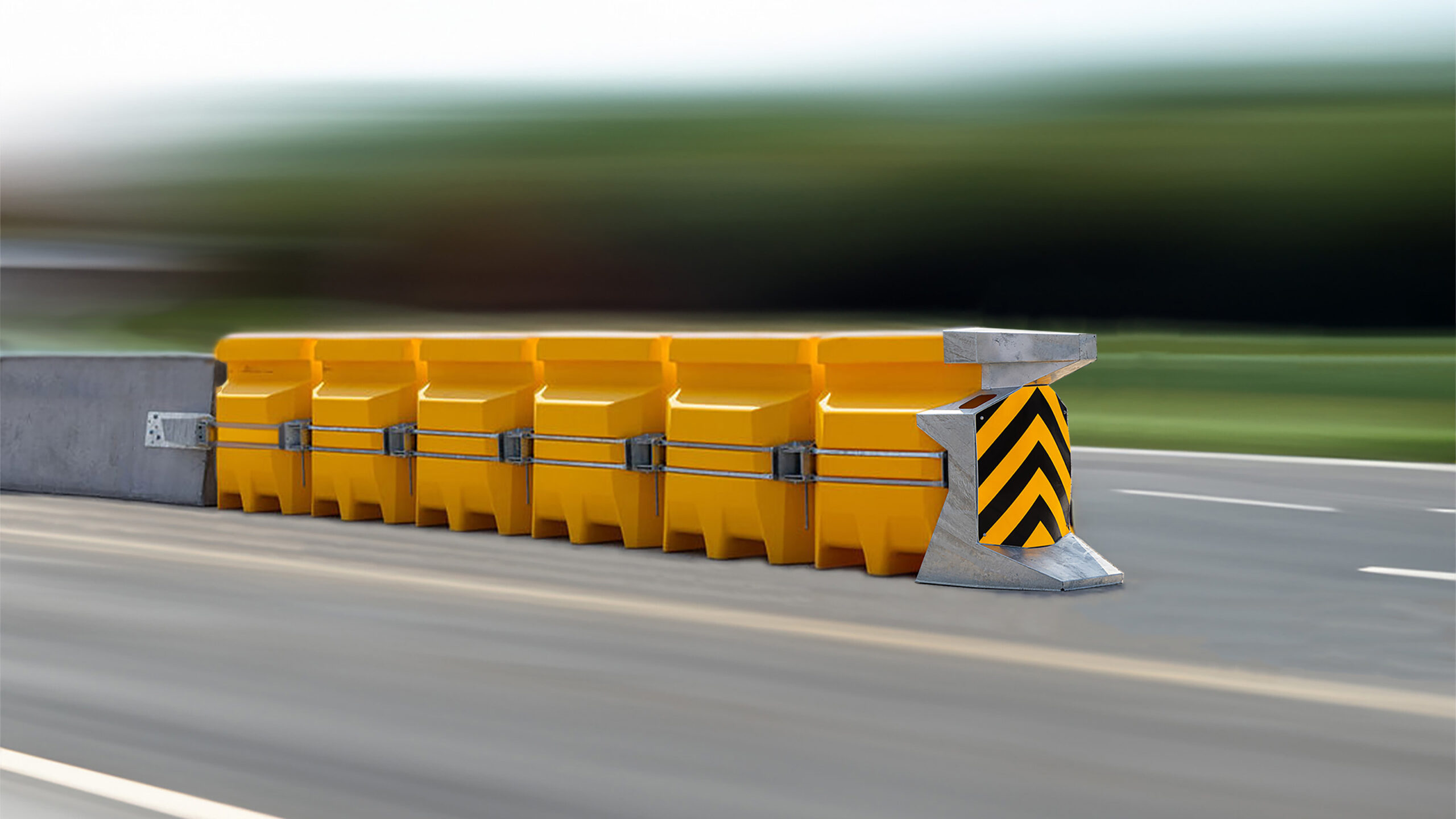
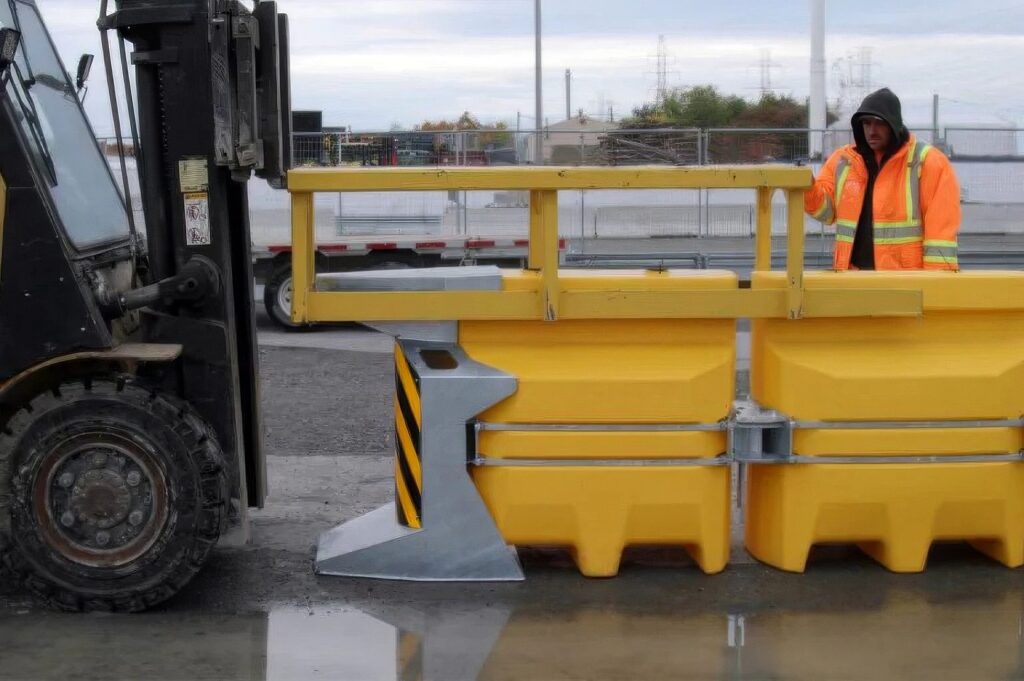
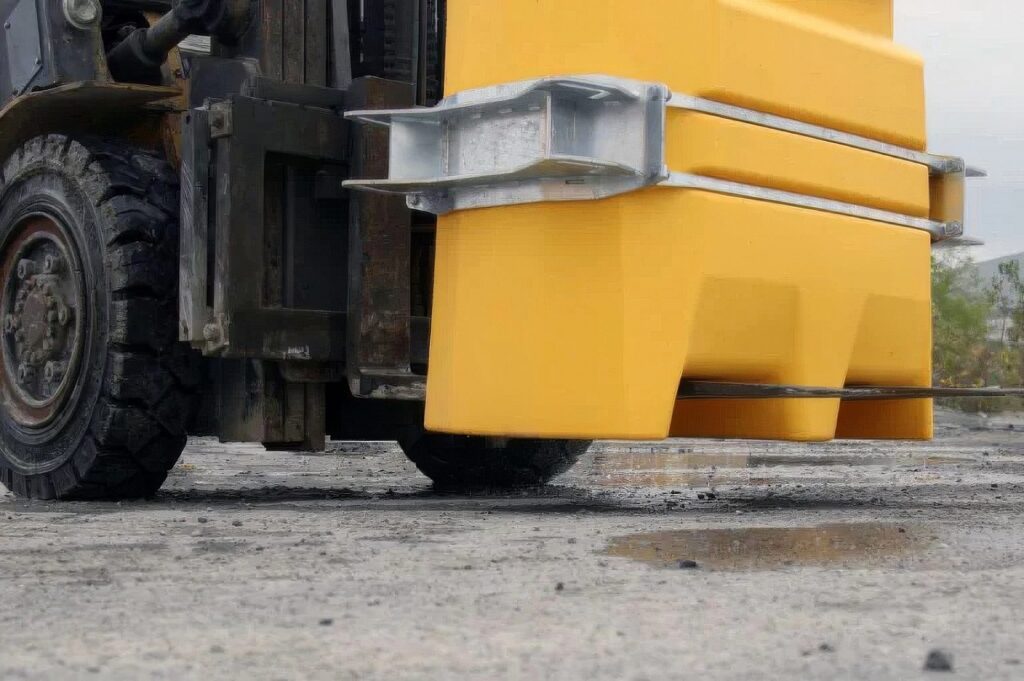
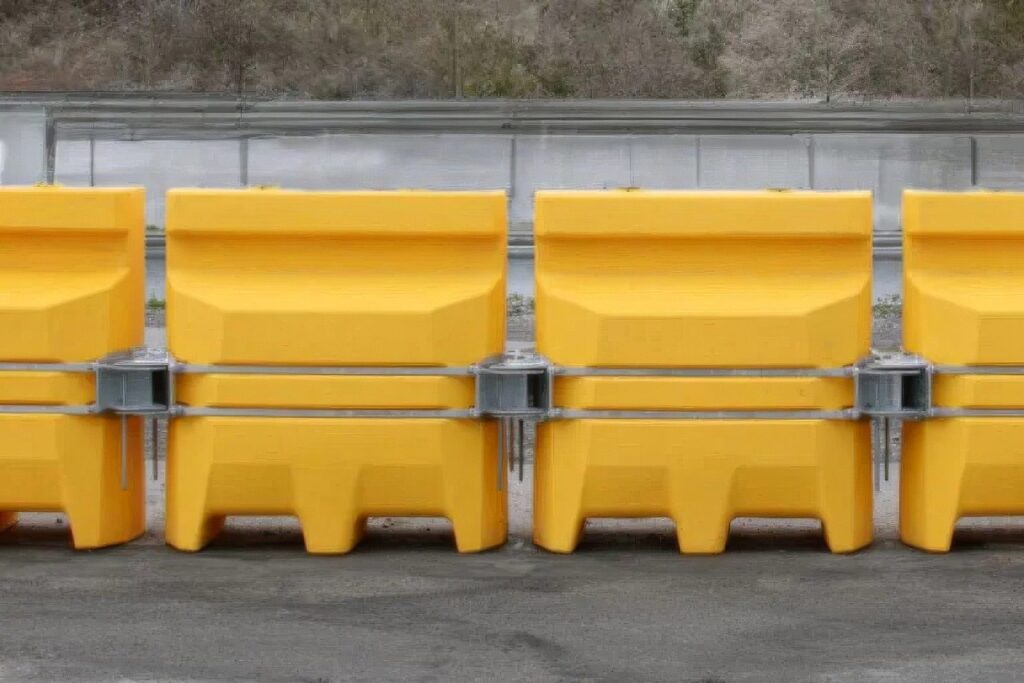
One innovative non-redirective crash cushion solution on the market is designed as a MASH-compliant, impact attenuator that excels in absorbing and dissipating collision energy. It is the first of its kind engineered to protect both movable and portable temporary barriers, adding versatility to its application across various safety needs. With an overall length of 24 feet and substantial volume when filled, this crash cushion offers unmatched protection in demanding road environments.
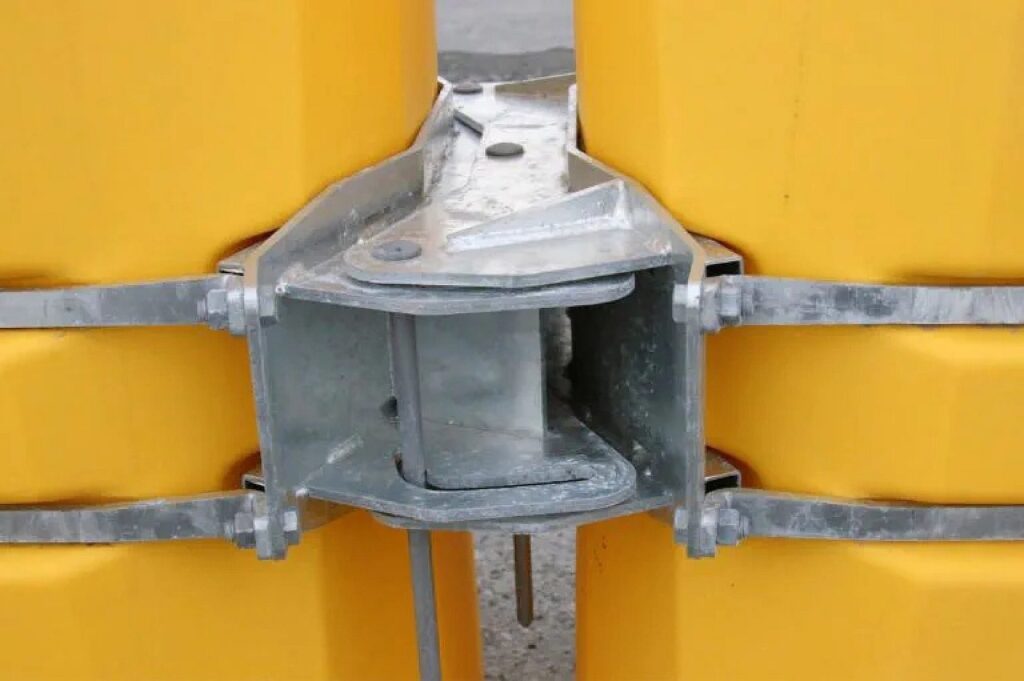
Crash cushions used in Canada face challenges unique to the harsh climate, including extreme cold, snow, ice, and high exposure to road salt. Ensuring durability under these conditions requires advanced materials and thoughtful design. Compliance with Canadian safety standards often necessitates the use of steel and engineered plastics capable of withstanding corrosion and compressing upon impact to reduce injury. To meet these requirements and increase longevity, this crash cushion incorporates hot-dip galvanizing.
The galvanizing process immerses each cushion component in molten zinc, creating a durable, bonded coating that resists corrosion. This protective layer shields against harsh environmental conditions, a critical factor in Canada, where extreme winters and salt exposure are constant threats to material integrity. The zinc coating not only provides robust corrosion resistance but also significantly reduces maintenance needs, making this cushion an ideal, low-maintenance solution for high-risk, hard-to-reach areas such as sharp curves, toll plazas, and urban medians. By extending the product’s lifespan, galvanizing minimizes long-term replacement and upkeep costs, providing a cost-effective solution for transportation agencies focused on durability and safety.
This galvanized crash cushion aligns with Canada’s Vision Zero initiatives, designed to reduce accident severity, lower injury rates, and enhance protection for both motorists and infrastructure. In challenging climates, hot-dip galvanizing offers durable, long-term protection, allowing transportation agencies to confidently deploy these non-redirective crash cushions in high-risk areas. The result is a more resilient and sustainable safety solution that supports Canada’s ambitious road safety goals, providing reliable, easy-to-install protection in even the most extreme conditions.
The success of this crash cushion, with its enhanced durability and longevity due to hot-dip galvanizing, highlights the crucial role galvanizing plays in demanding infrastructure applications. As this product continues to prove its resilience and value, it sets a new standard for high-performance, corrosion-resistant solutions, potentially driving increased demand for hot-dip galvanizing across the road safety and infrastructure sectors.
The success of this crash cushion, with its enhanced durability and longevity due to hot-dip galvanizing, highlights the crucial role galvanizing plays in demanding infrastructure applications.