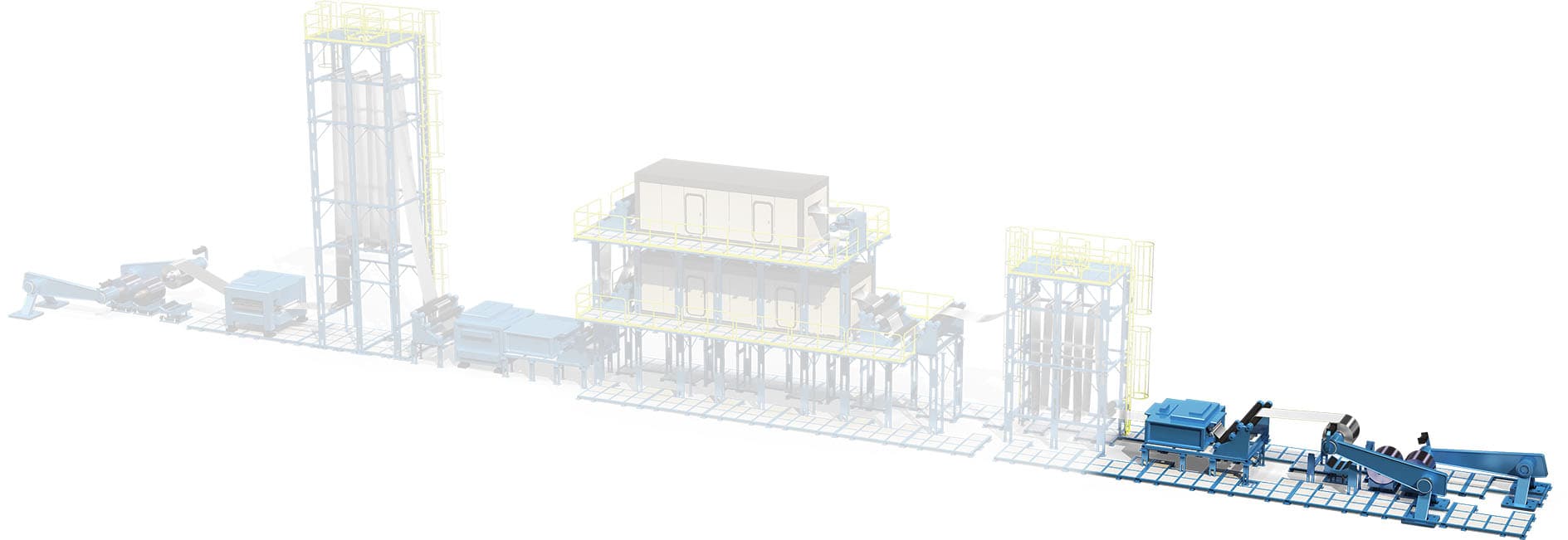
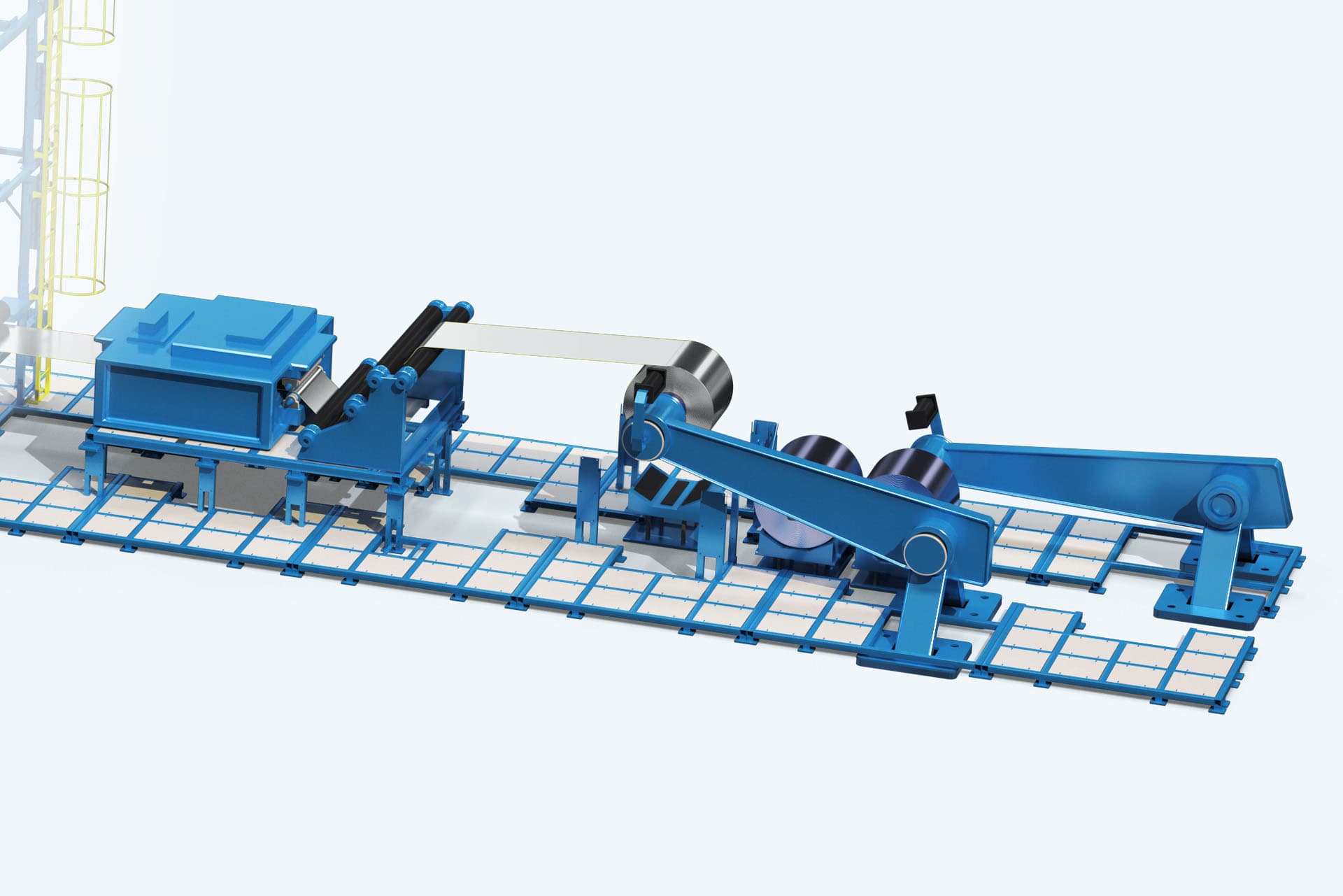
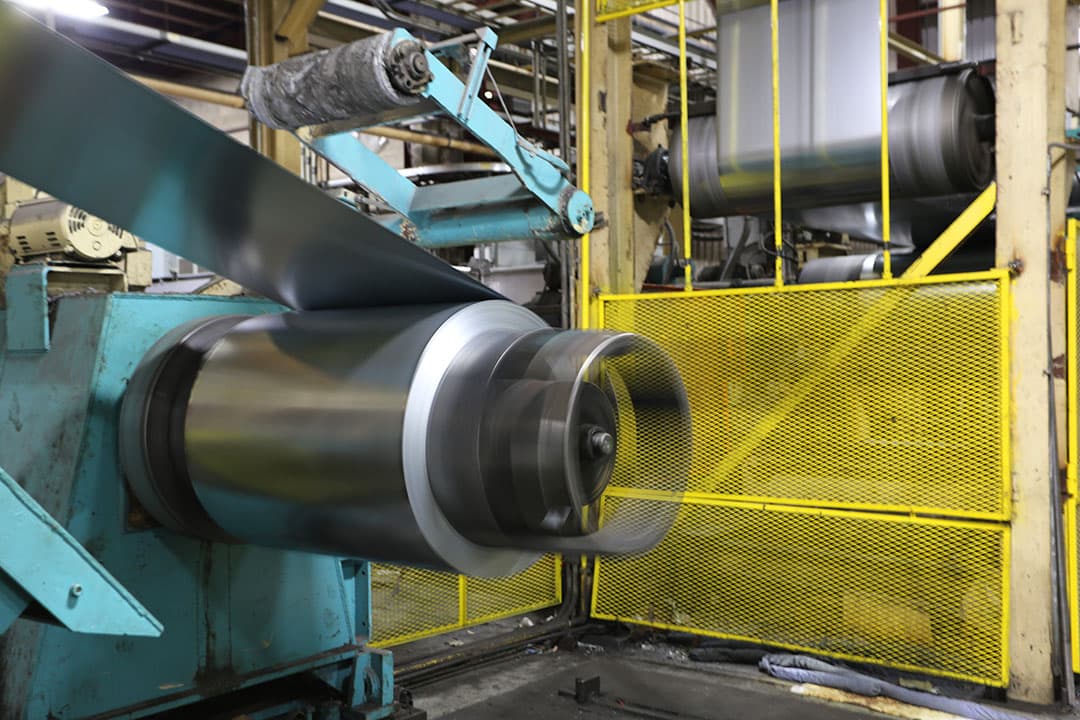
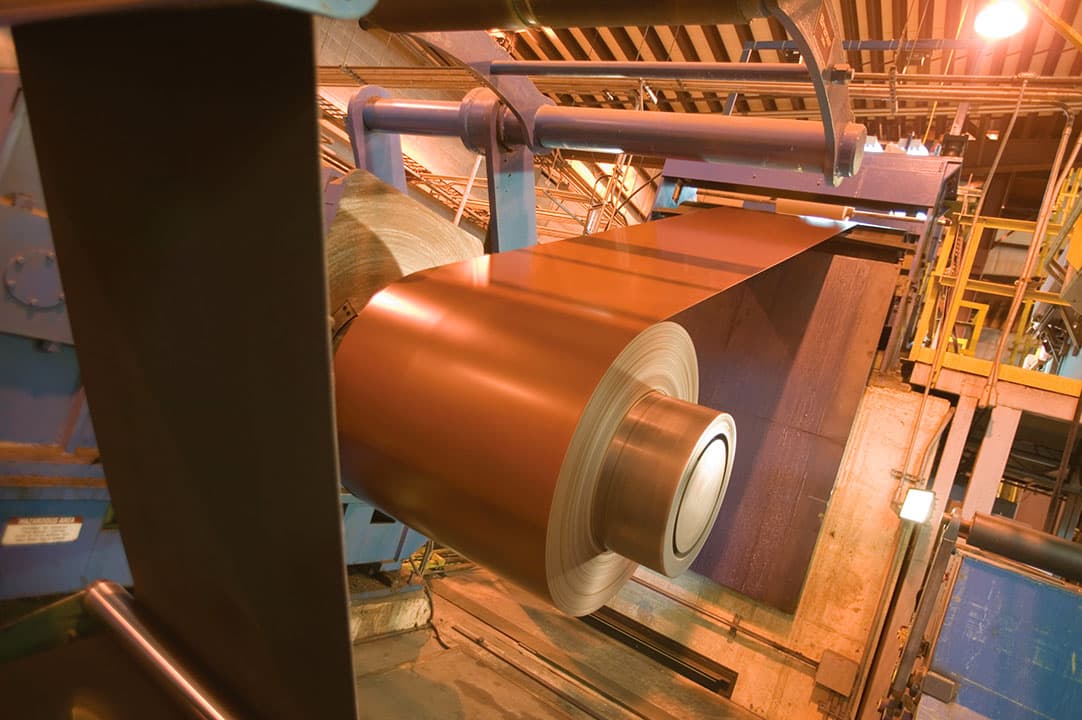
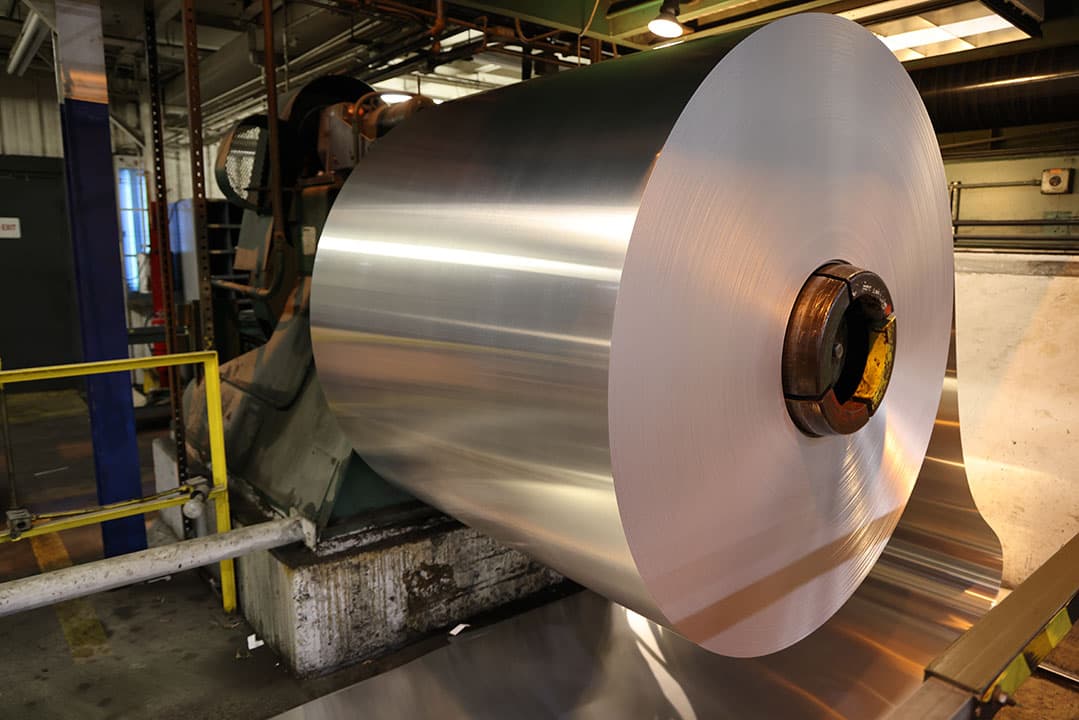
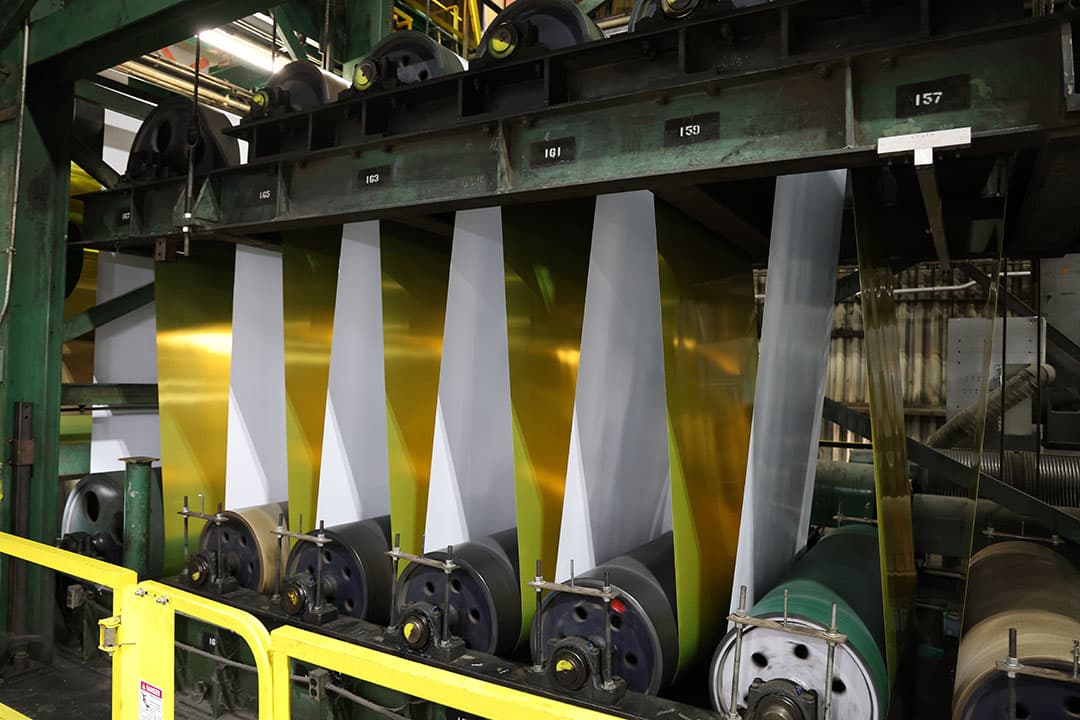
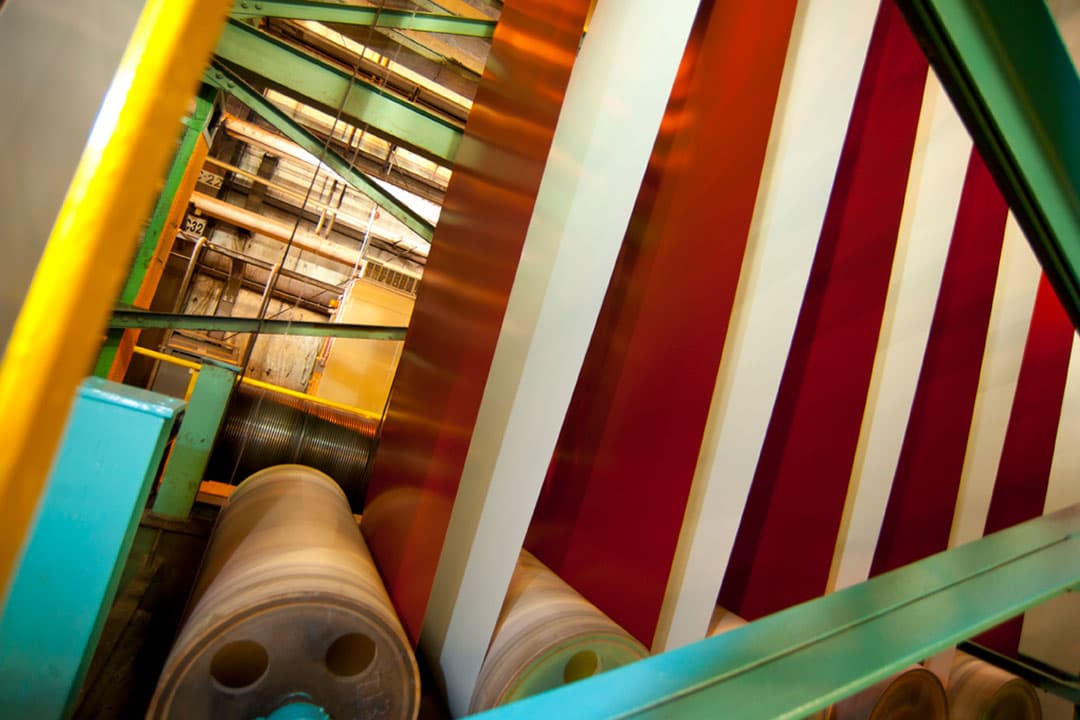
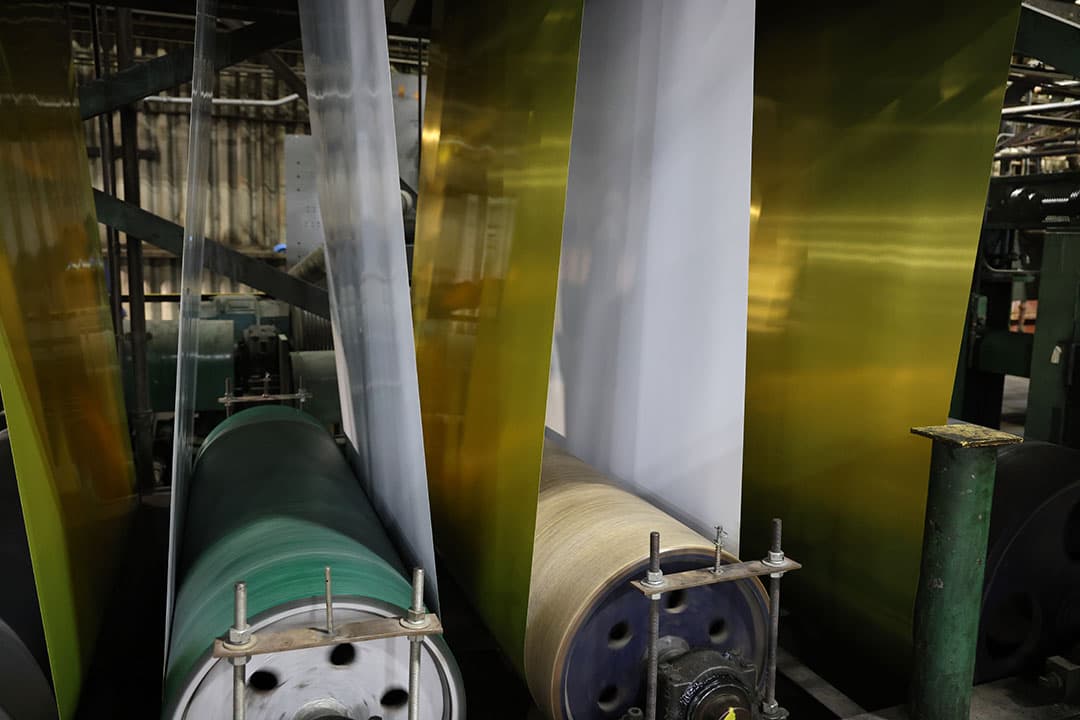
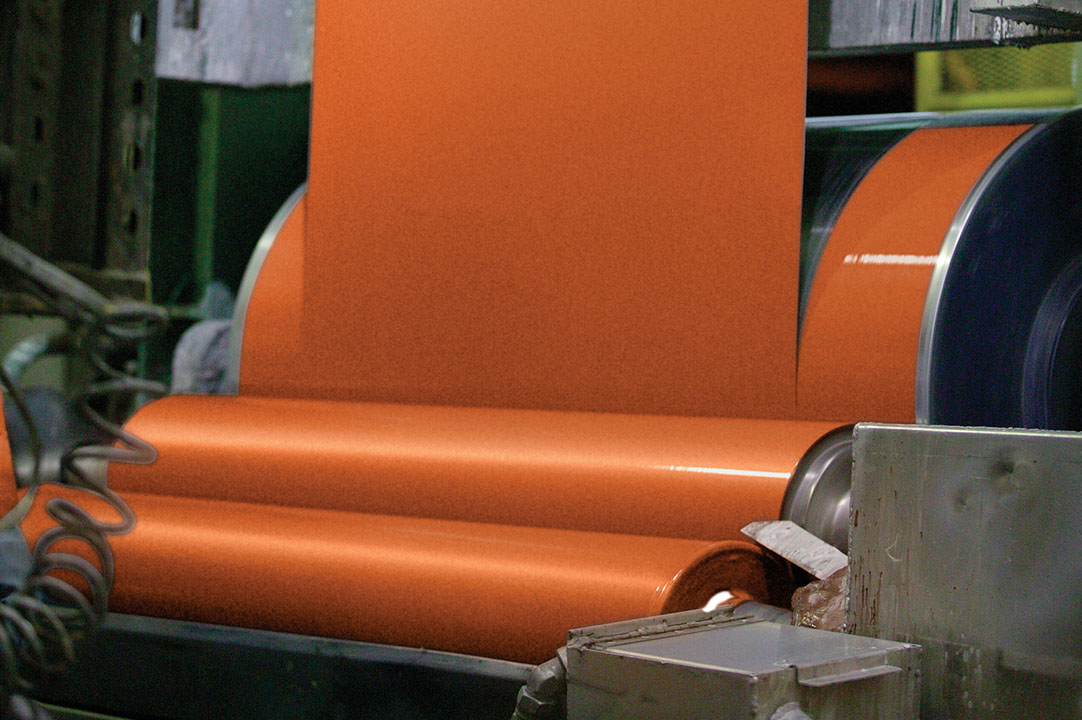
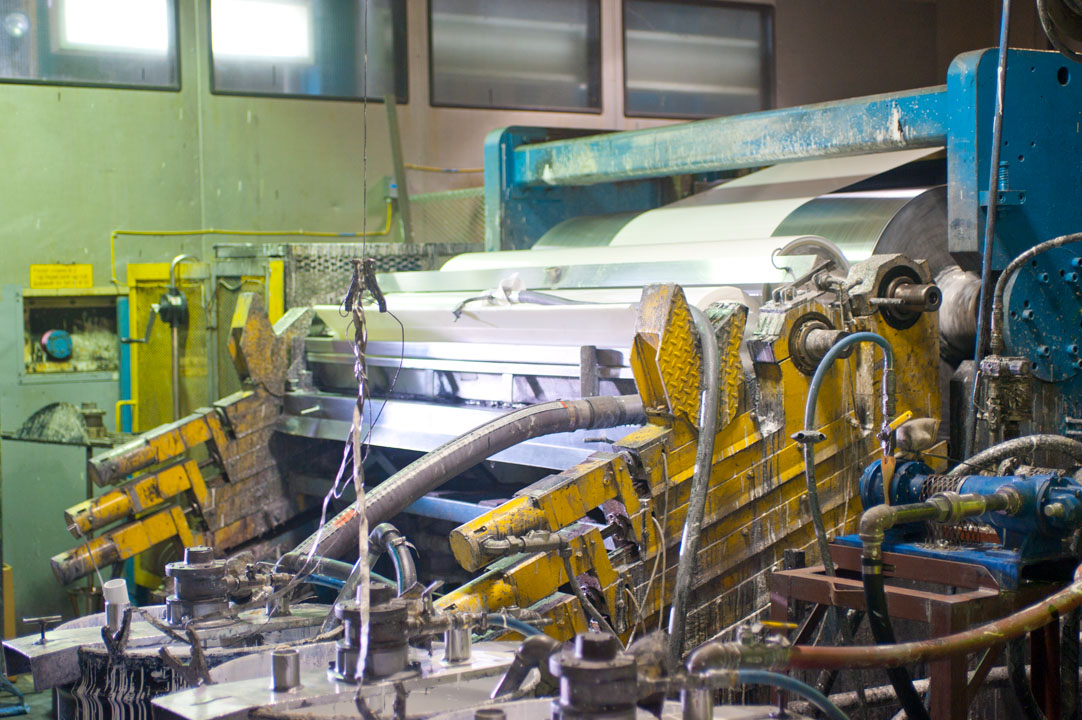
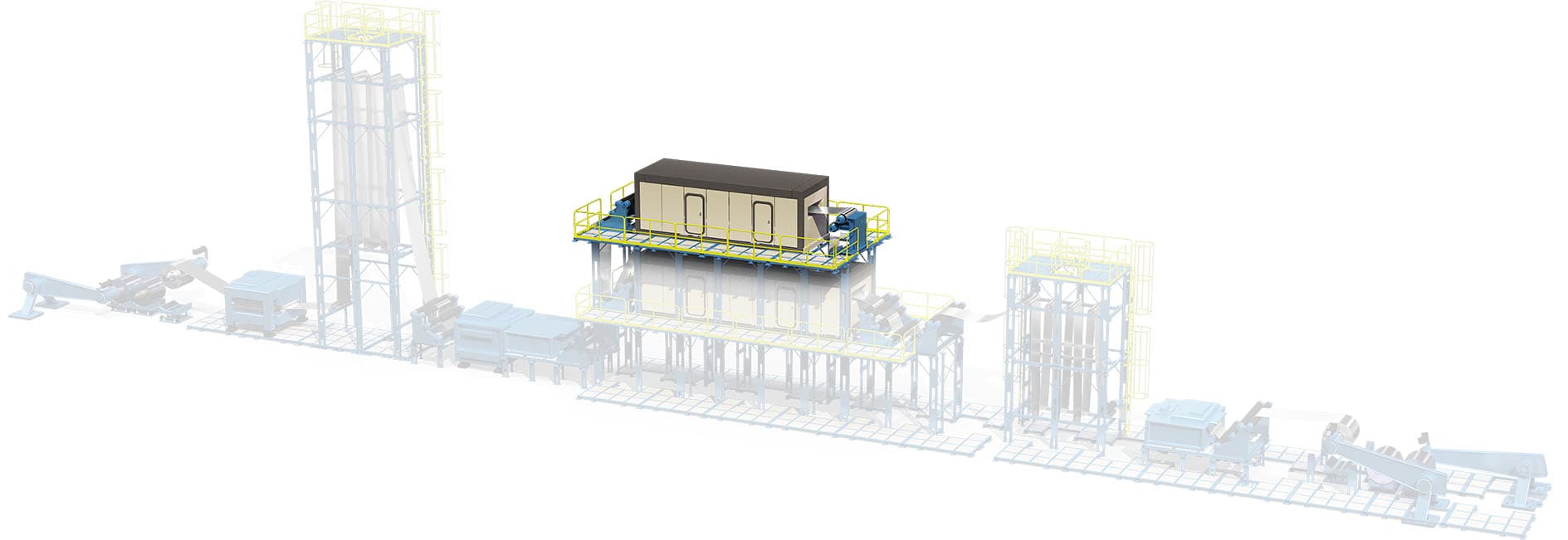
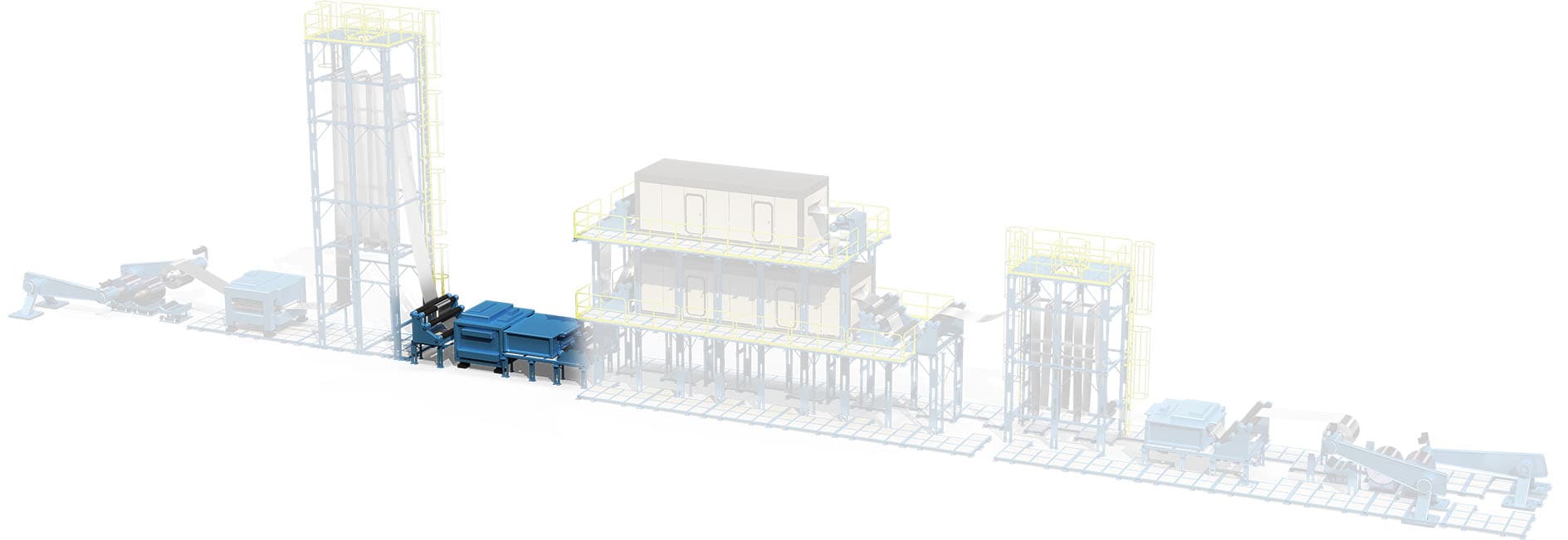
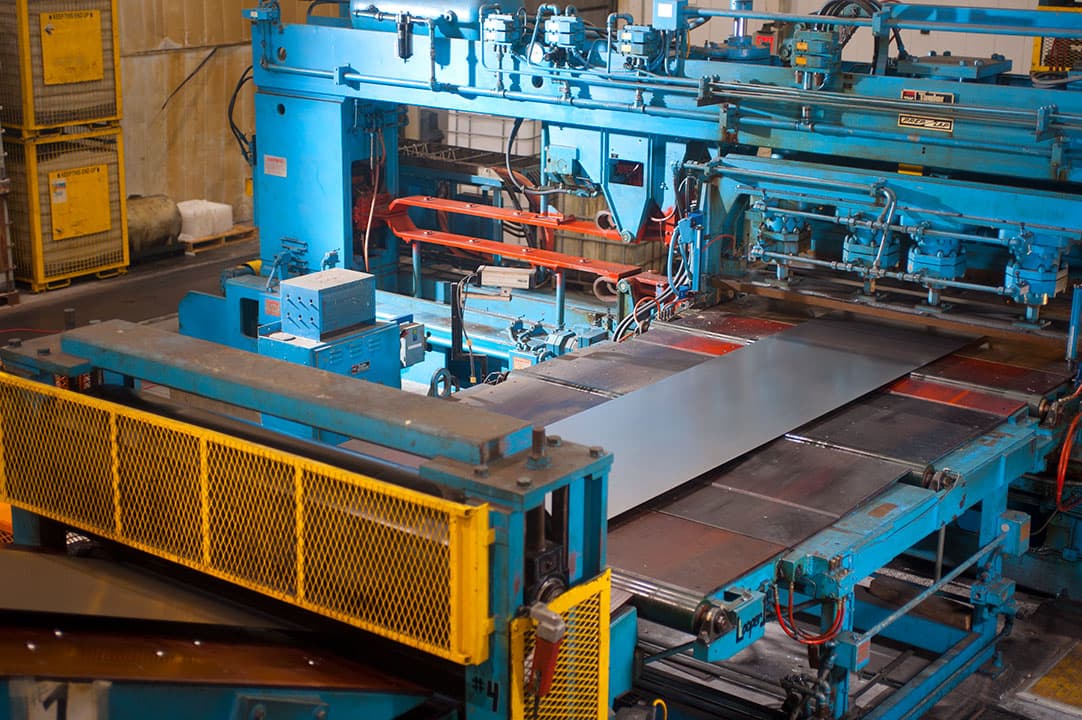
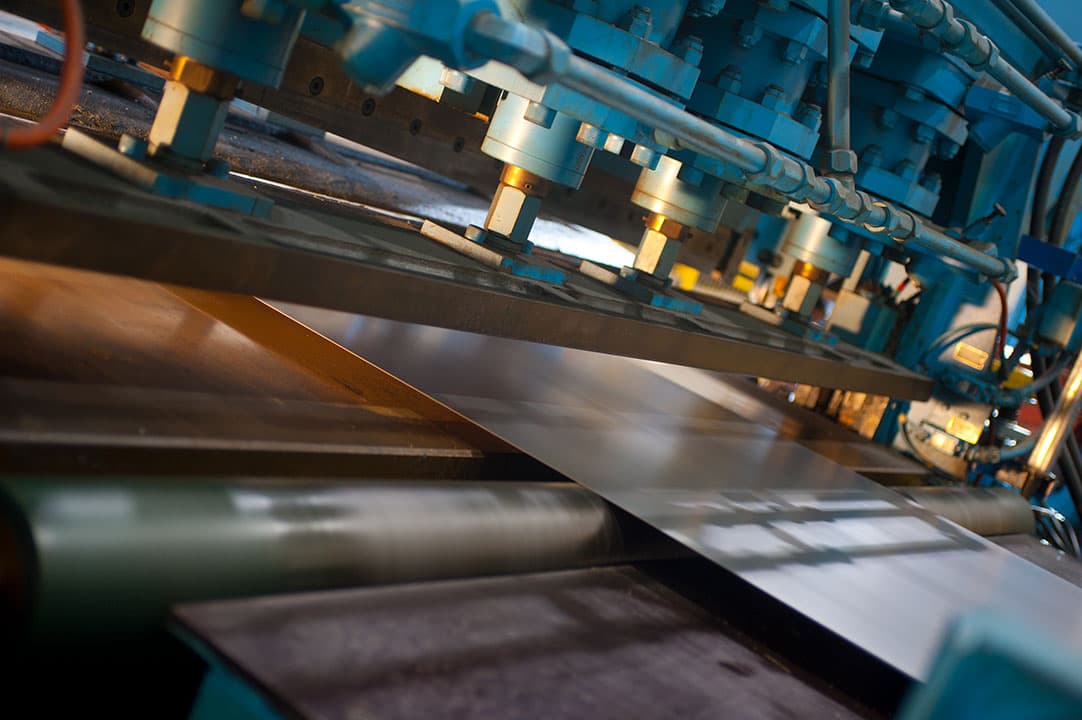
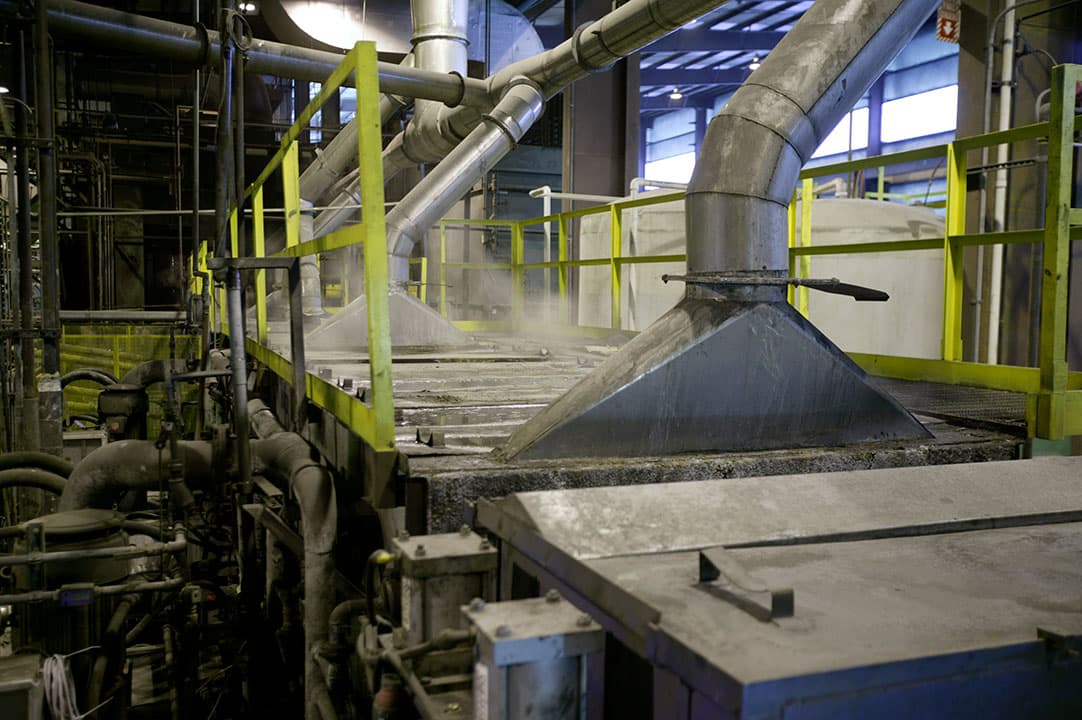
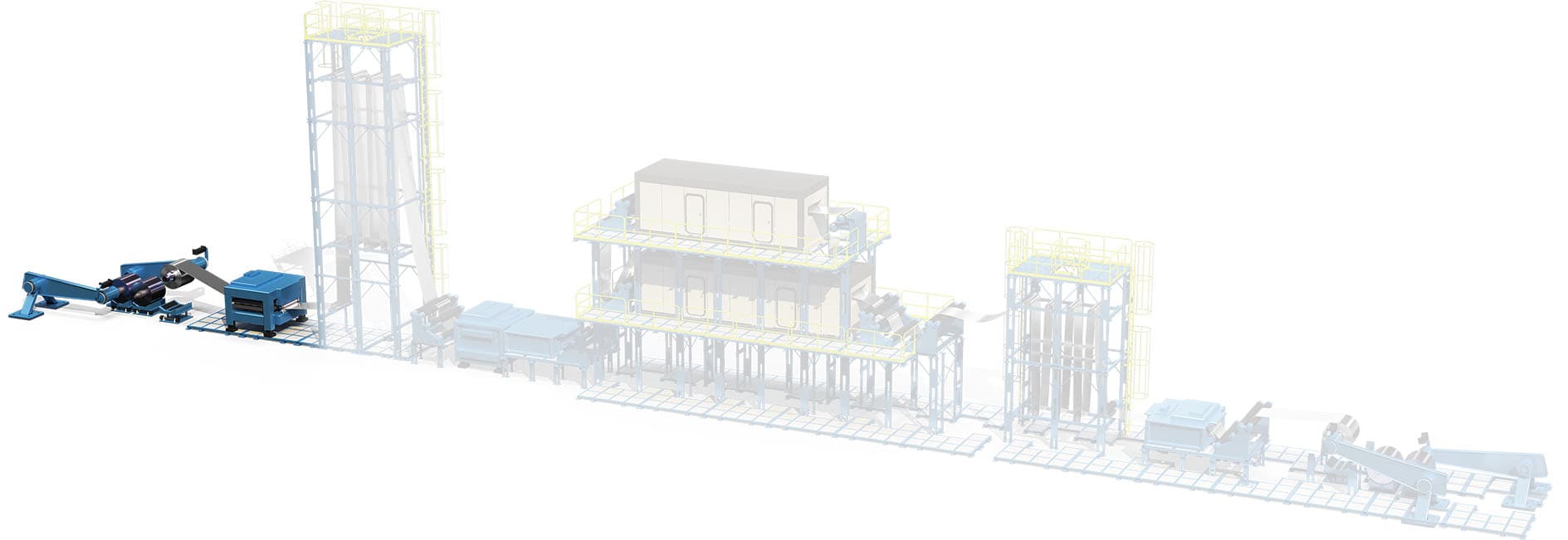
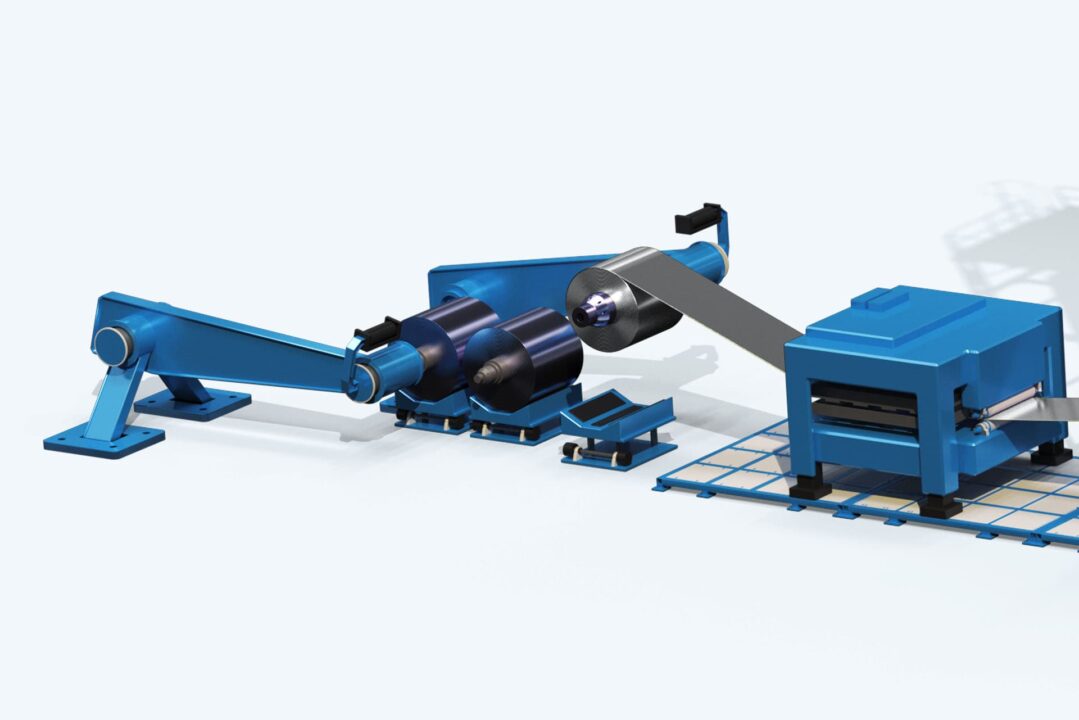
Once the metal is cleaned, treated, and painted, the strip is rewound into a coil size prescribed by the customer. From there, the coil is removed from the line and packaged for shipment or additional processing.
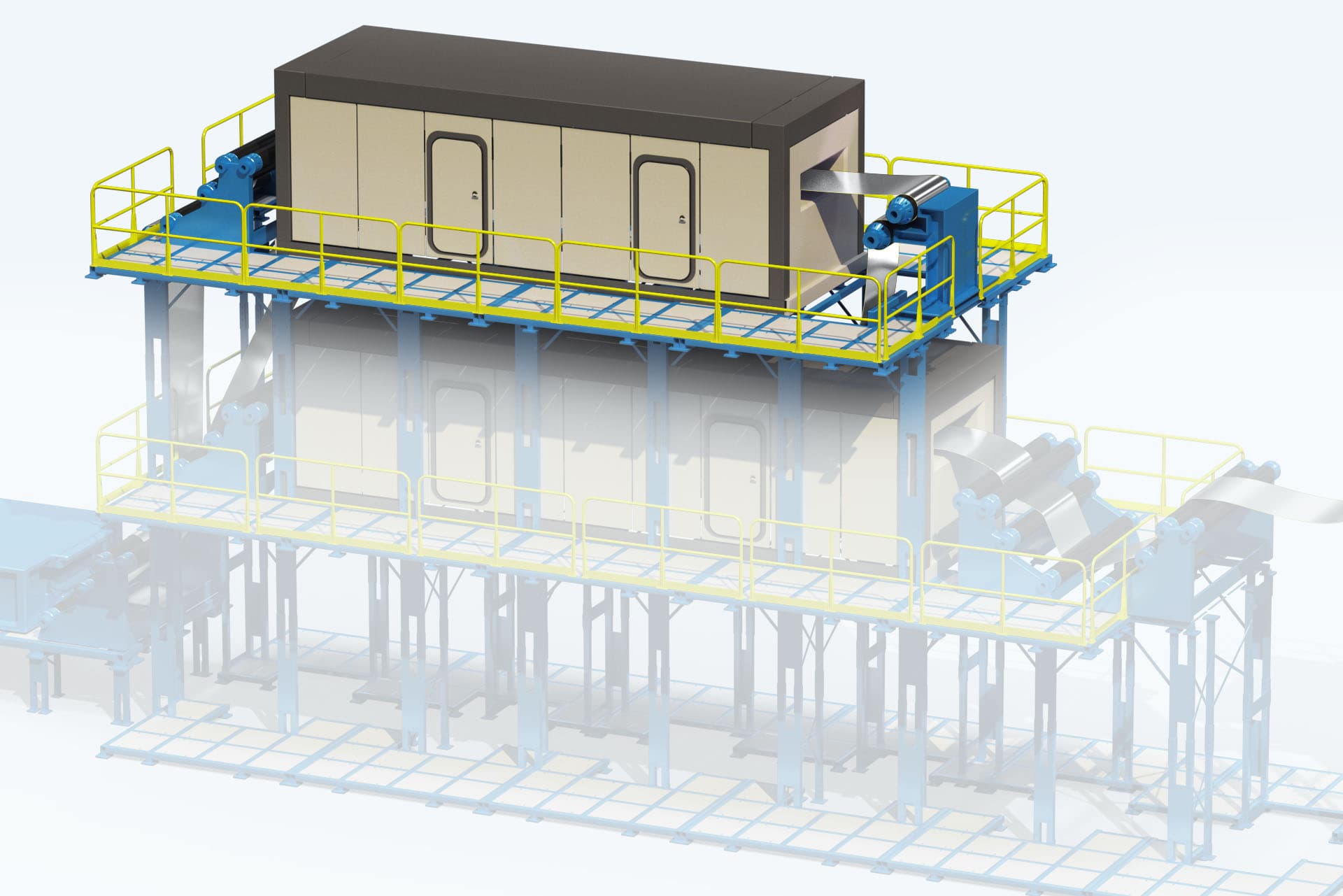
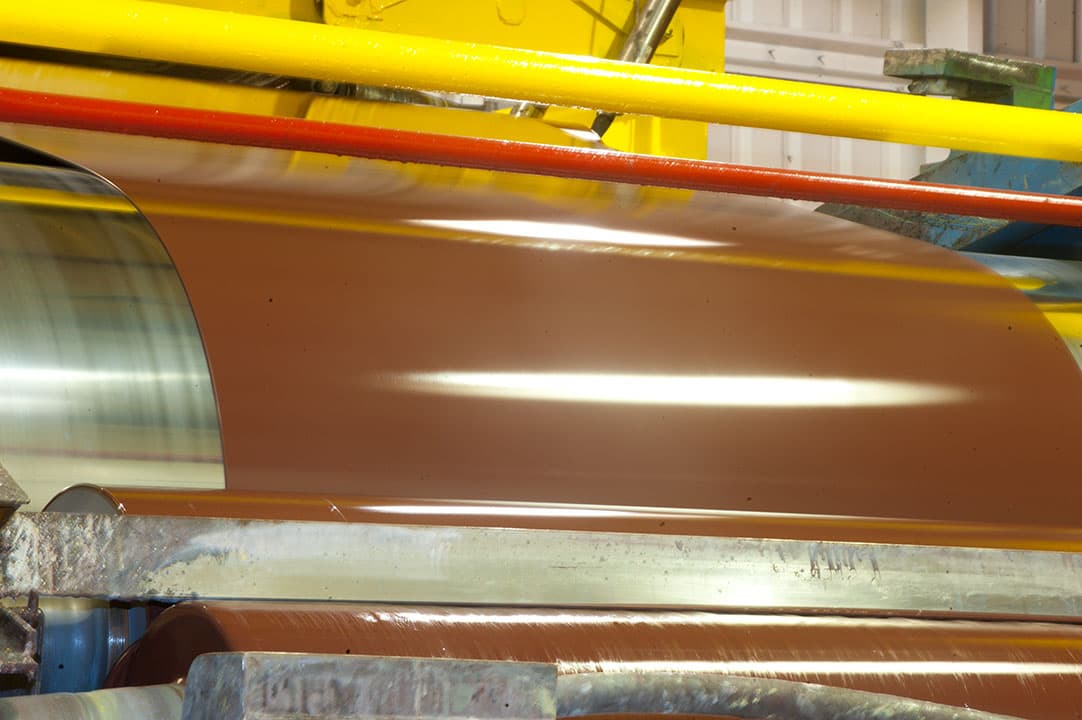
After the primer is applied and cured, then the metal strip enters the finish coat station where a topcoat is applied. Topcoats provide color, corrosion resistance, durability, flexibility and any other required physical properties. Like primers, the topcoat is cured using thermal cure ovens.
Oven
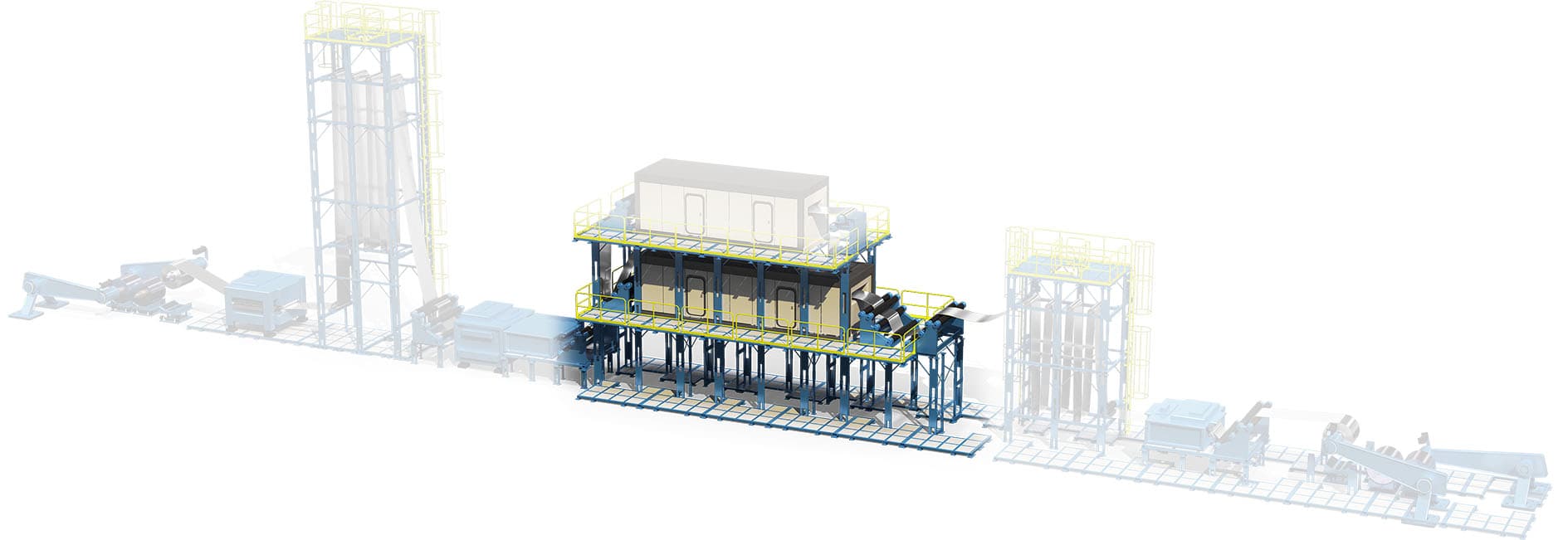
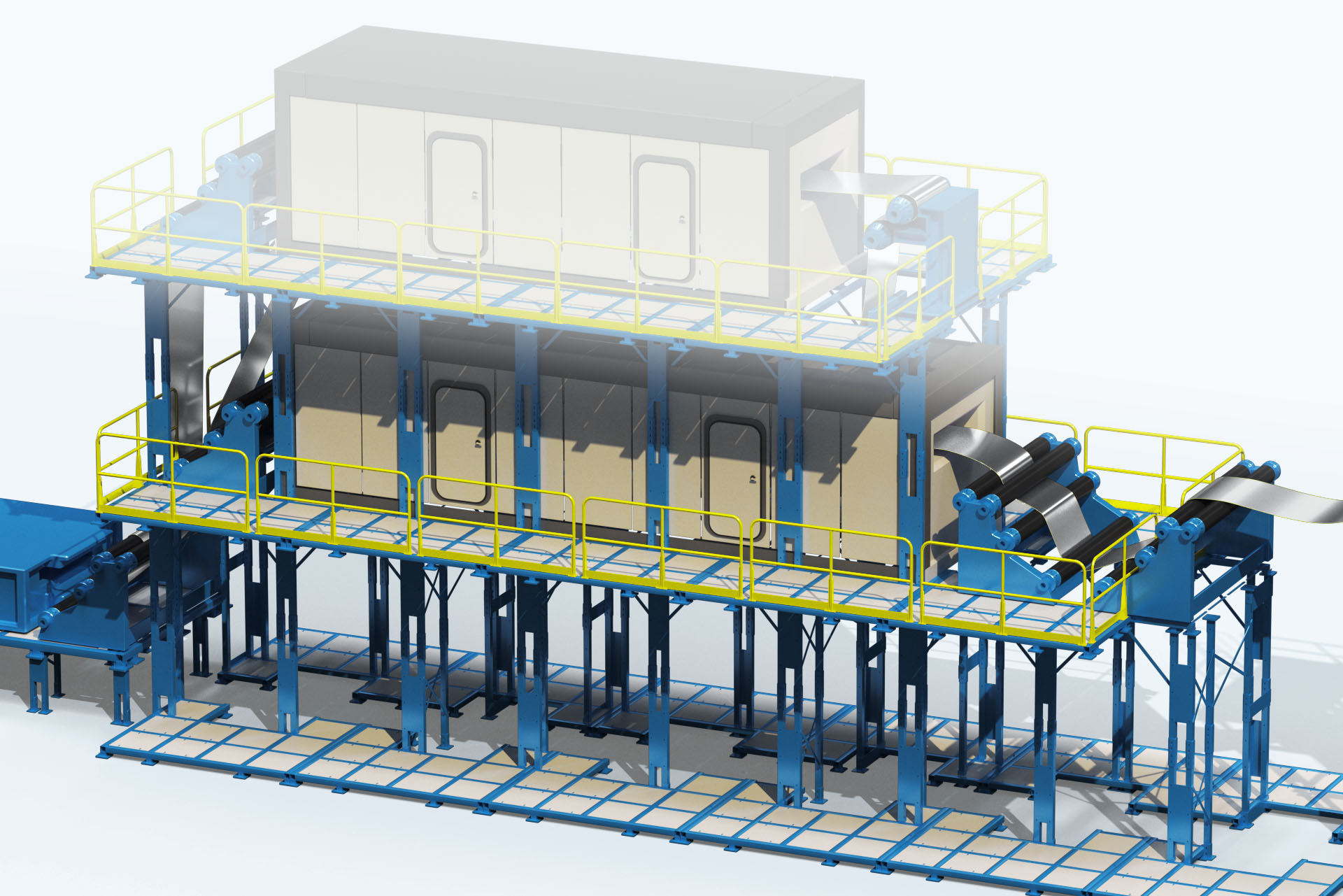
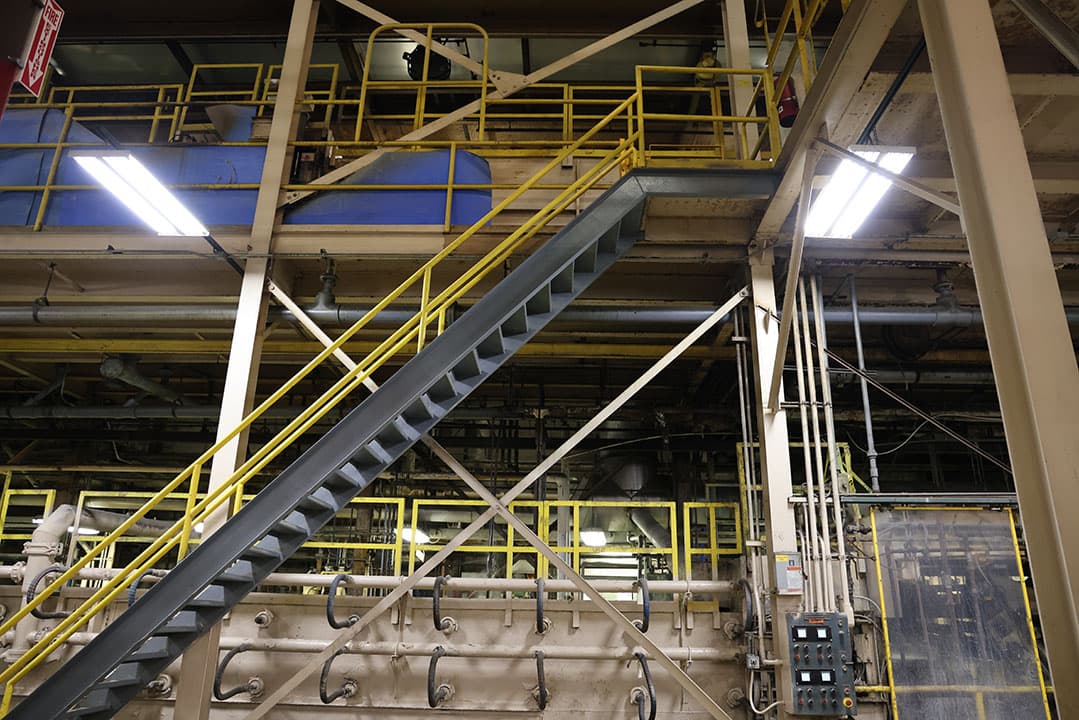
Coil coating ovens can range from 130 feet to 160 feet and will cure the coatings in 13 to 20 seconds.
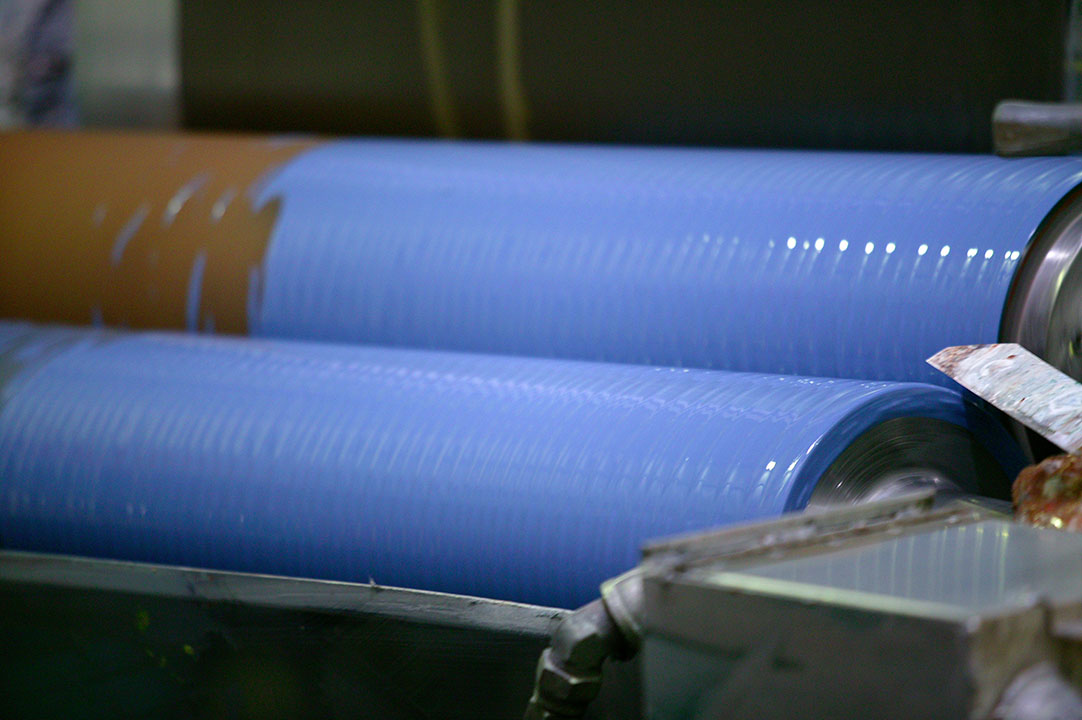
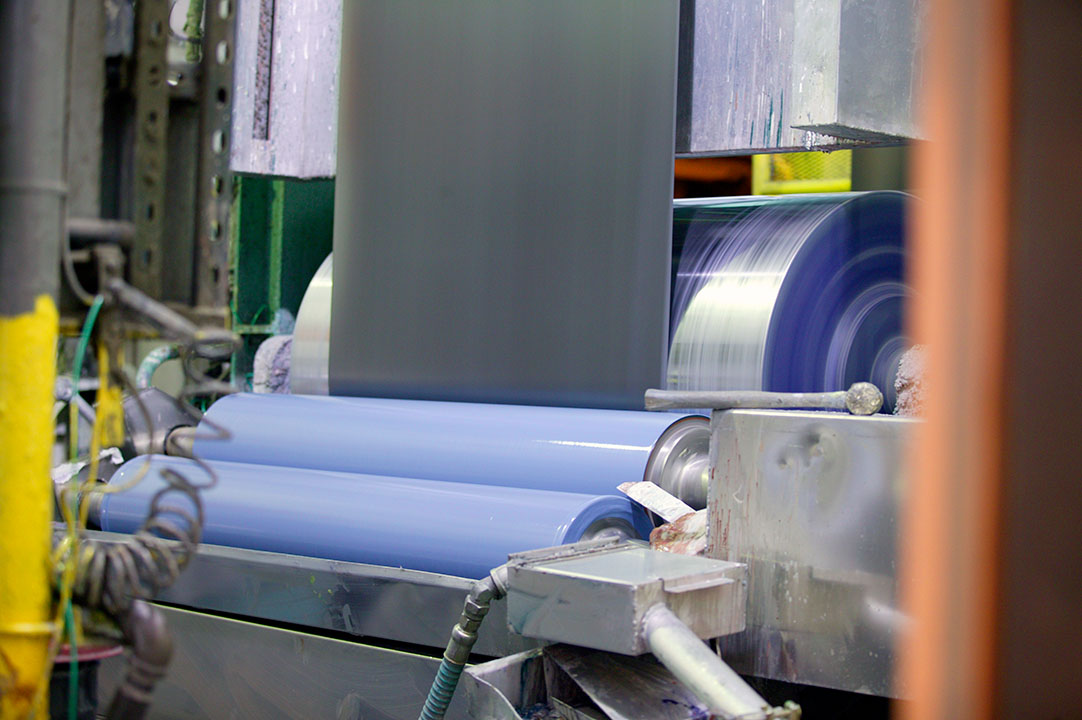
During this stage, the strip enters the prime coat station whereby a primer is applied to the clean and treated metal. After the primer is applied, the metal strip travels through a thermal oven for curing. Primers are used to aid in paint adhesion, improve corrosion performance and enhance aesthetic and functional attributes of the topcoat.
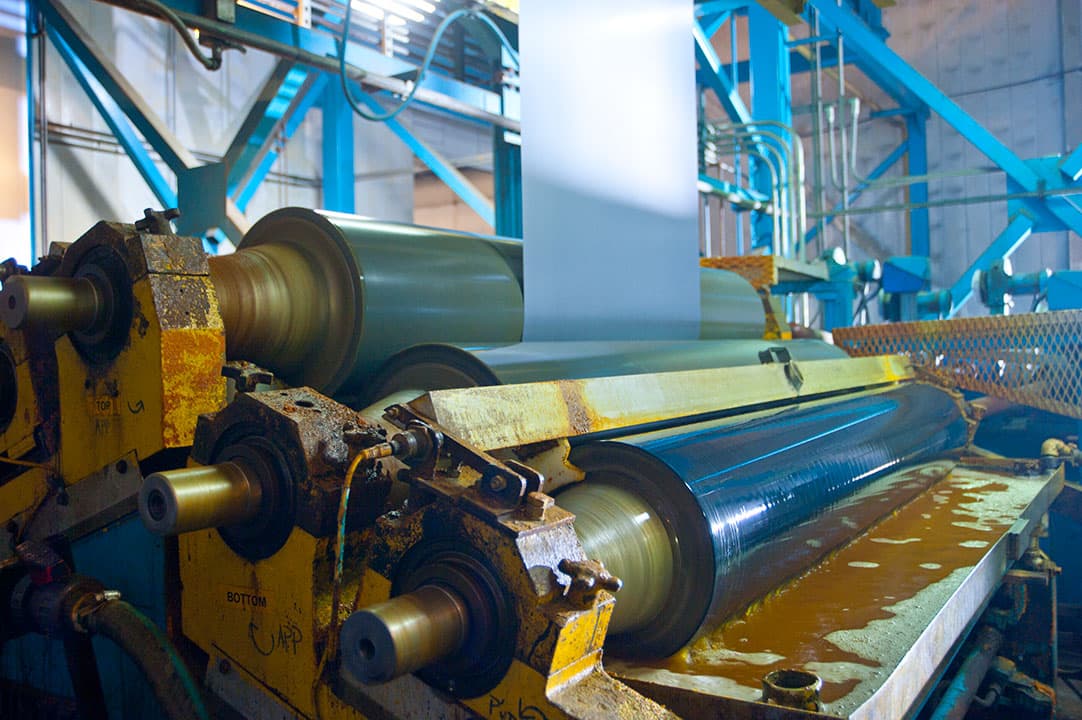
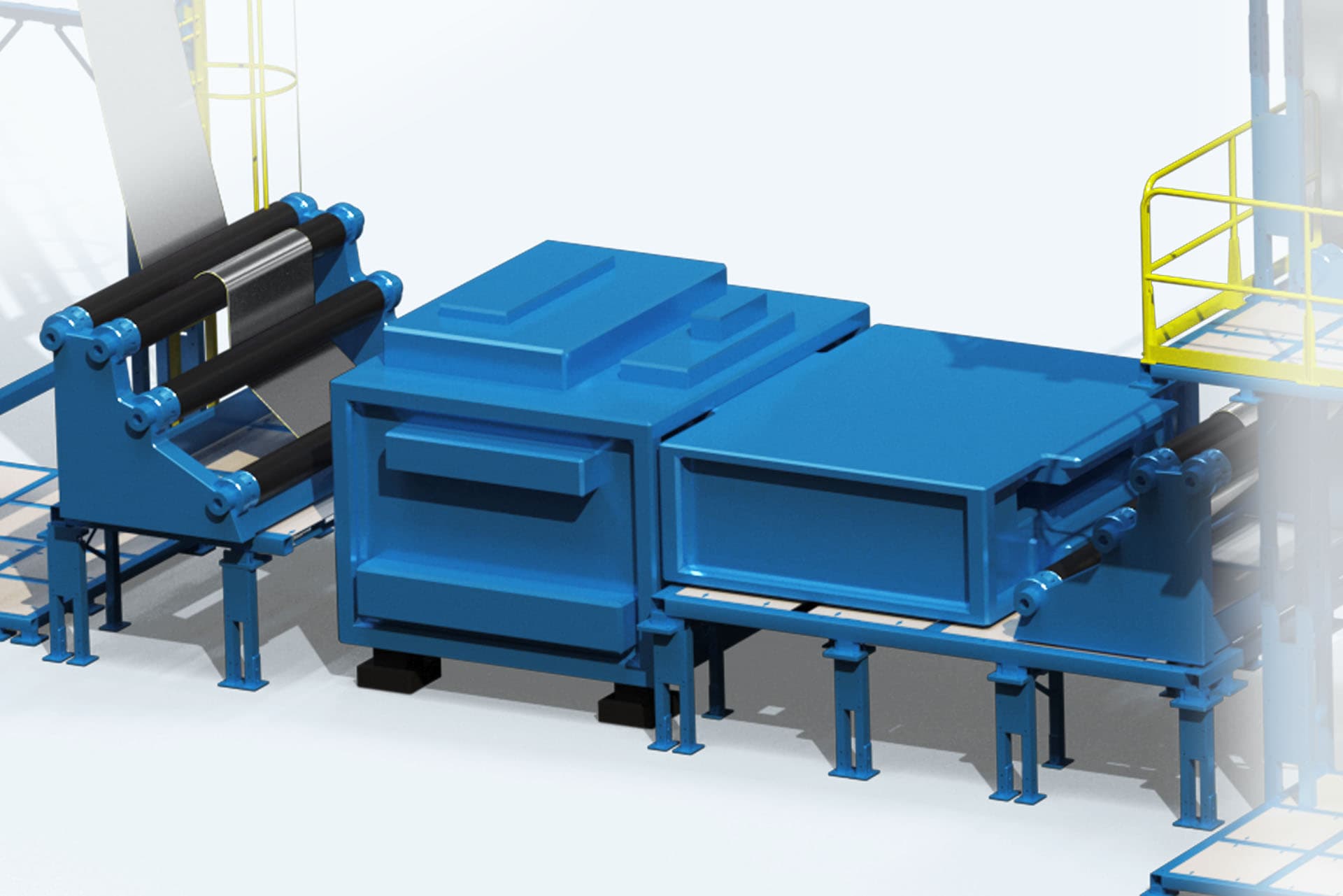
S Wrap Coater
The S wrap coater design allows for primers and paints to be applied to the top and back side of the metal strip simultaneously in one continuous pass.
The cleaning and pretreating section of the coil coating process focuses on preparing the metal for painting. During the cleaning stage, dirt, debris, and oils are removed from the metal strip. From there, the metal enters the pretreatment section and/or a chemical coater whereby chemicals are applied to facilitate paint adhesion and enhance corrosion resistance.
Dried-In-Place
In this stage a chemical that provides enhanced corrosion performance is applied. This treatment can be chrome free if required.
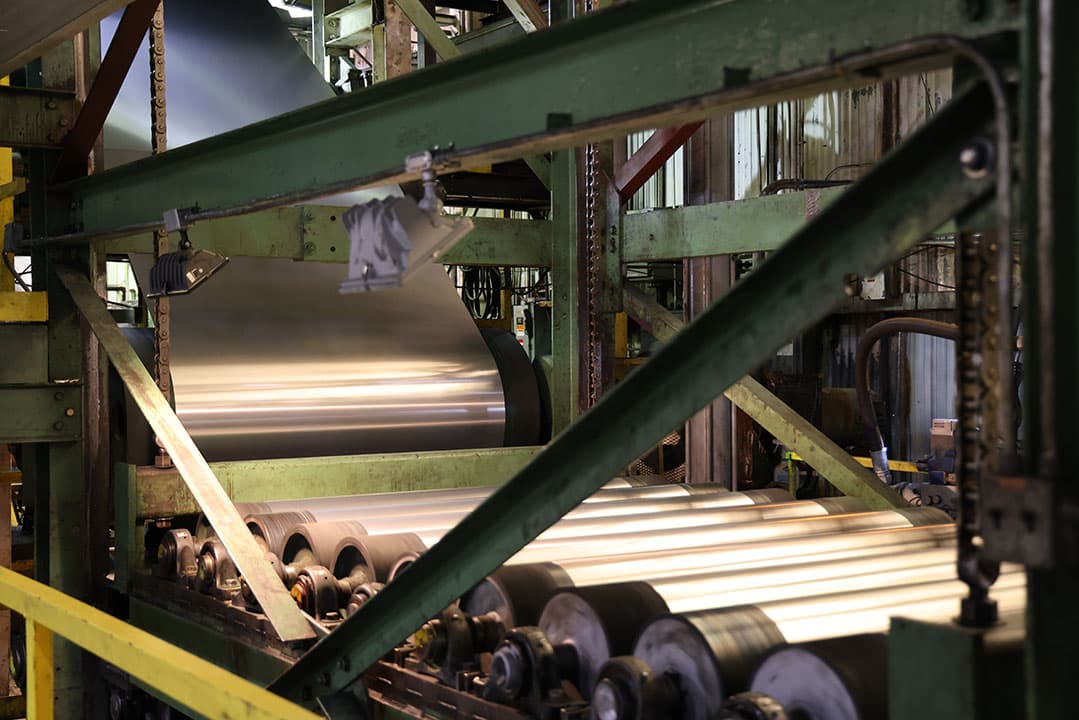
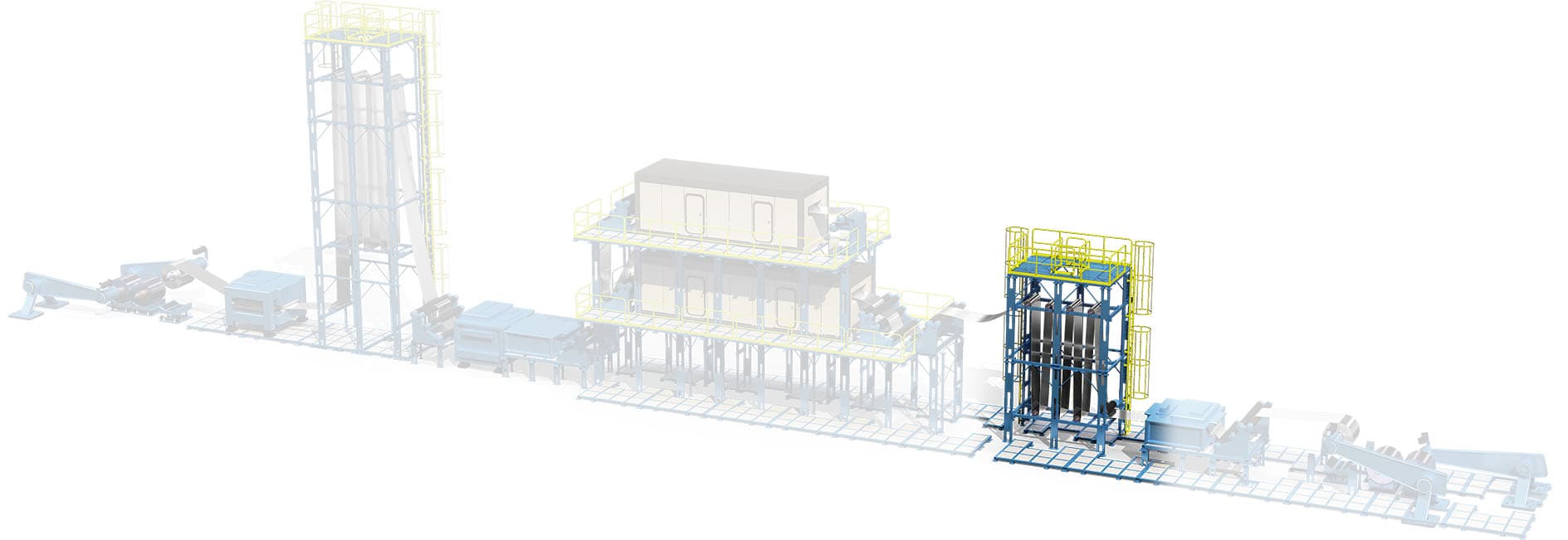
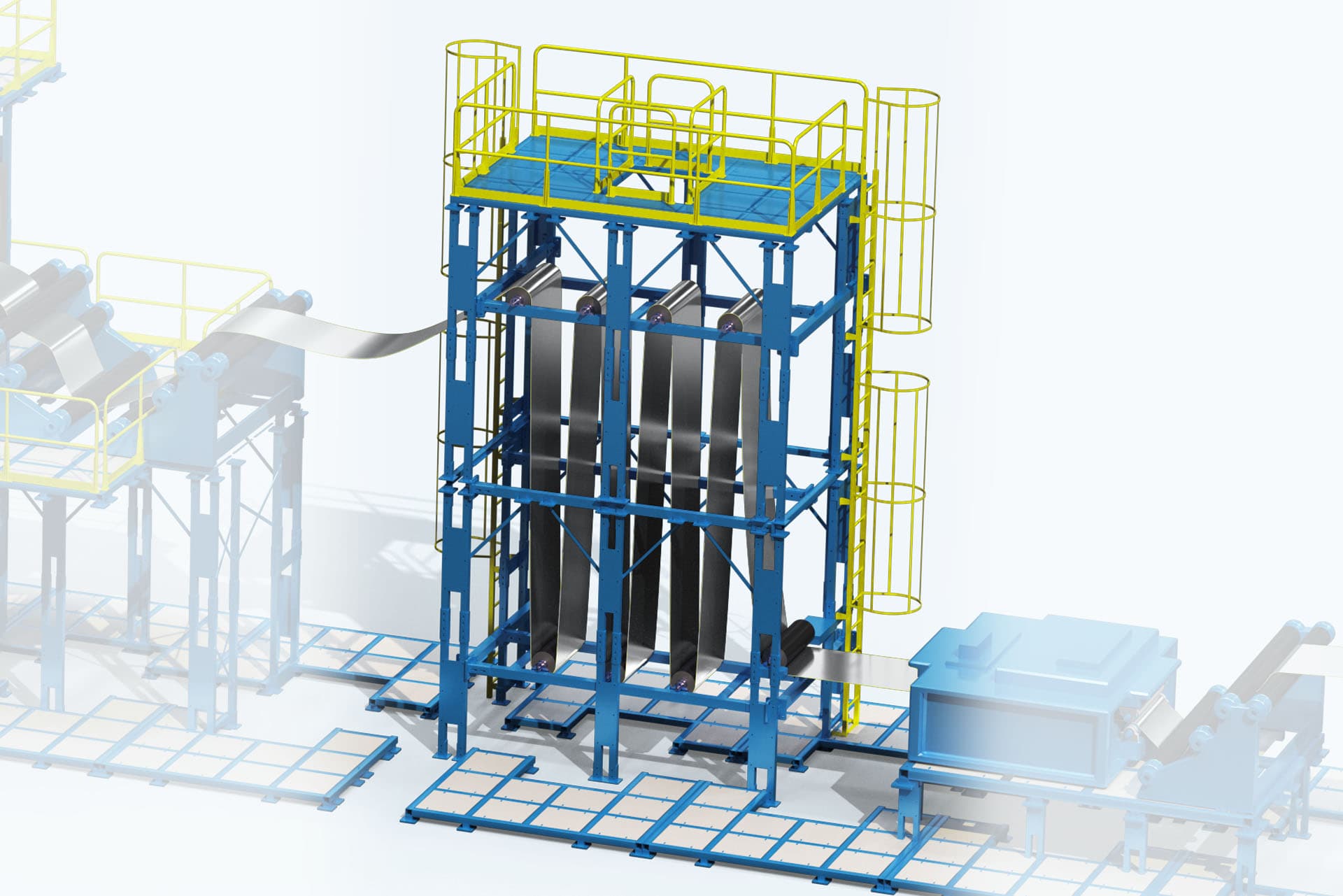
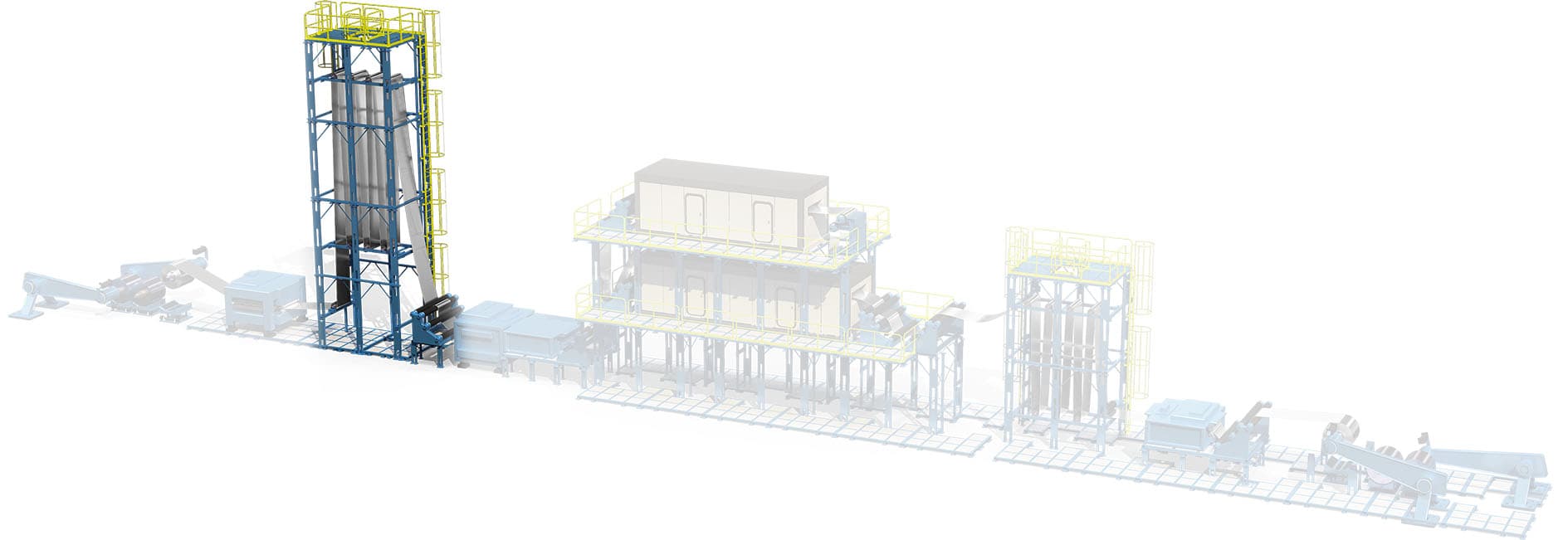
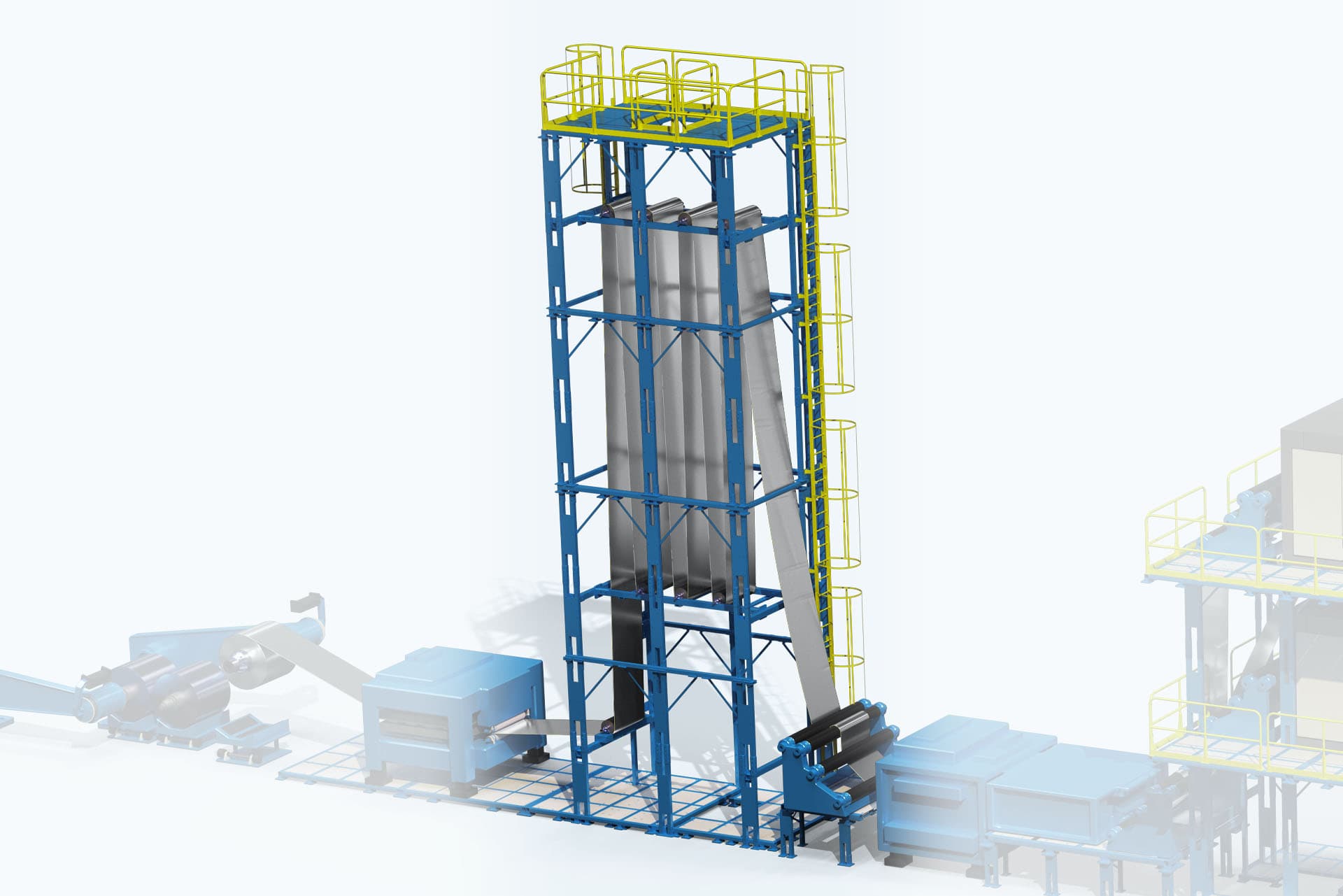
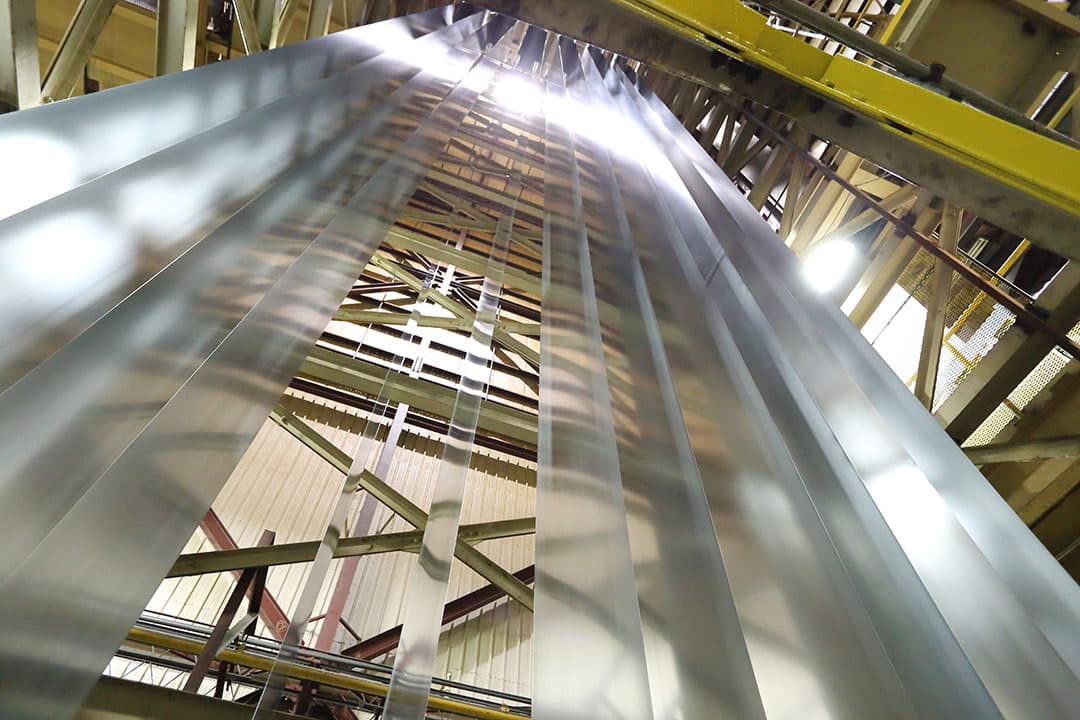
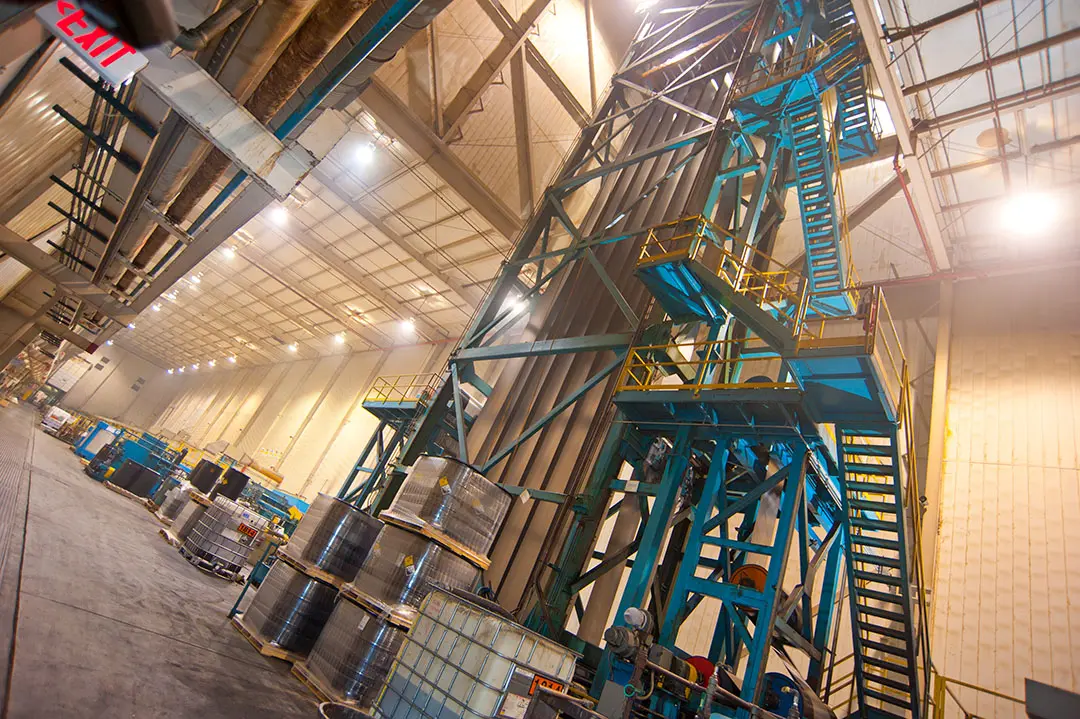
The accumulator is a structure that adjusts up and down to store material, which makes continuous operation of the coil coating process possible. This accumulation will continue to feed the coil coating processes while the entry end has stopped for the stitching process. As much as 750 feet of metal can be collected.
The South Bend Potawatomi Zoo is located in South Bend, Indiana, and is the oldest zoo in the state. It was established in 1902 and has since grown to house over 400 animals, representing more than 150 species.
The zoo is known for its dedication to wildlife conservation and education, offering visitors a chance to learn about various animals and their habitats. With its beautiful grounds and diverse animal exhibits, the South Bend Potawatomi Zoo remains a popular destination for families and animal enthusiasts alike.
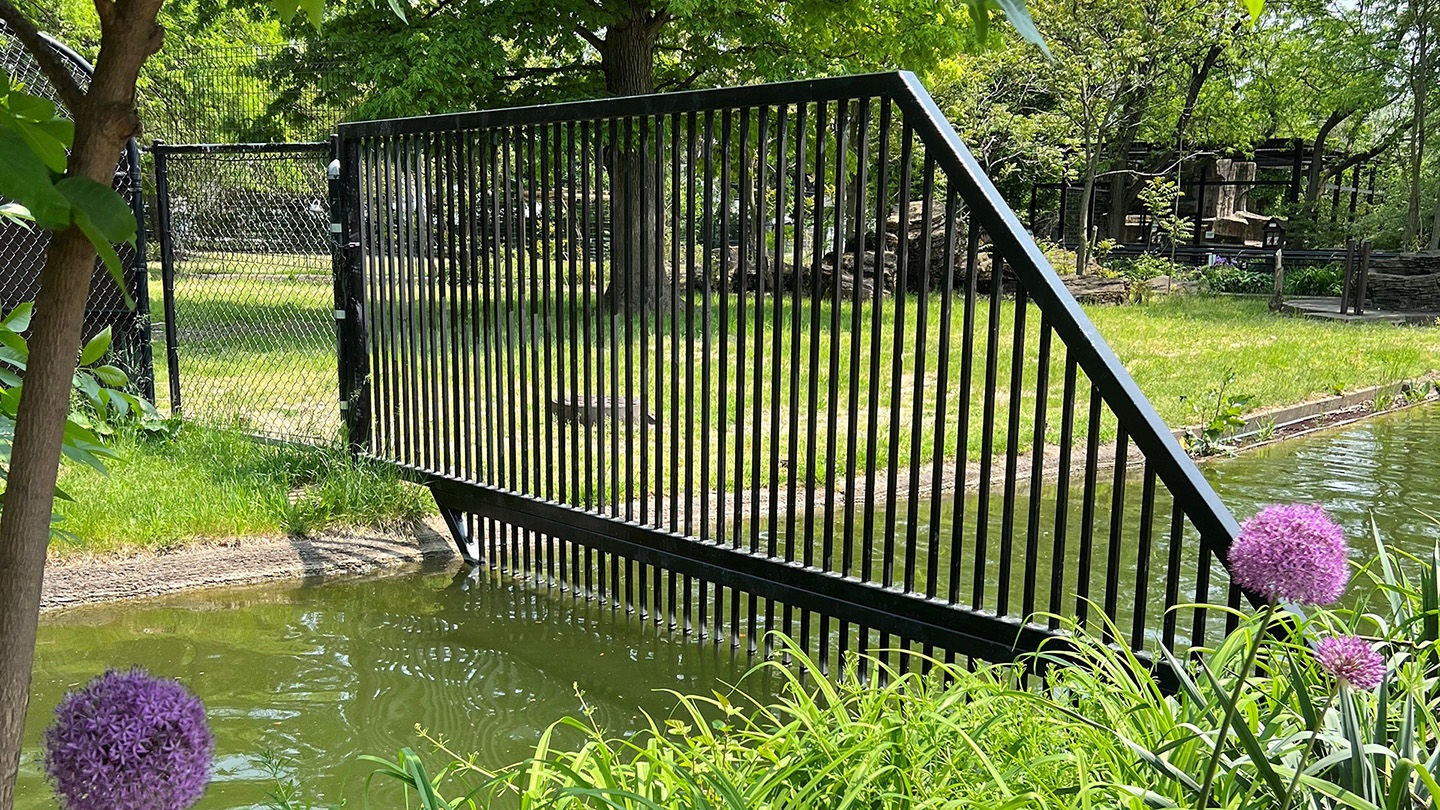
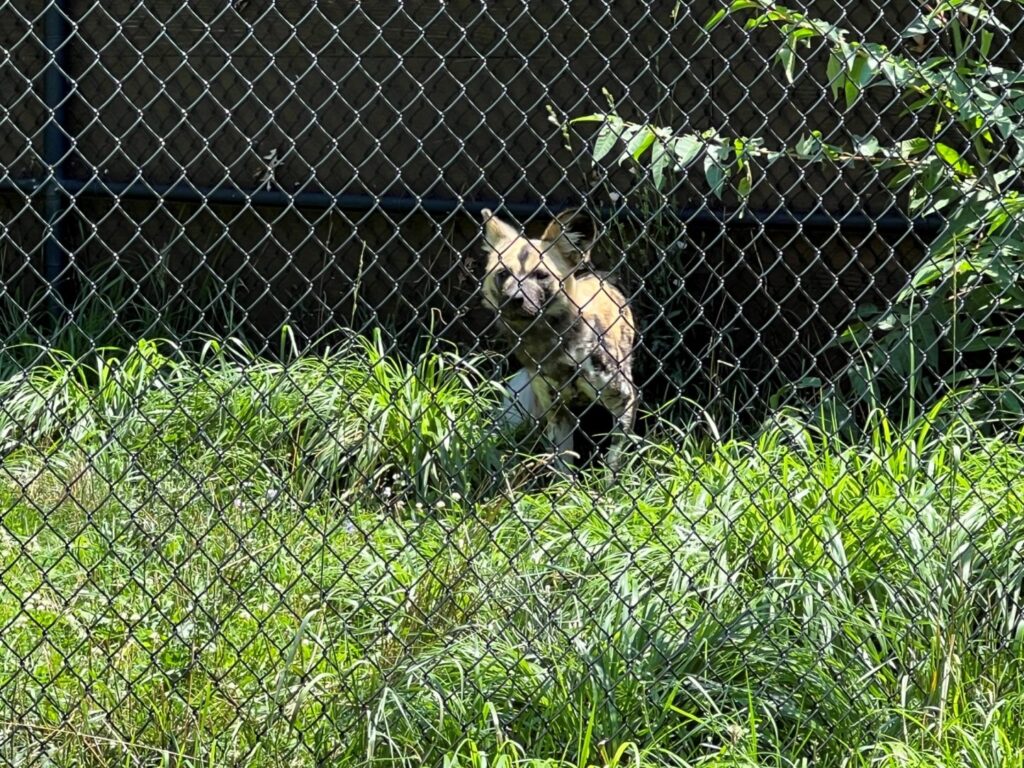
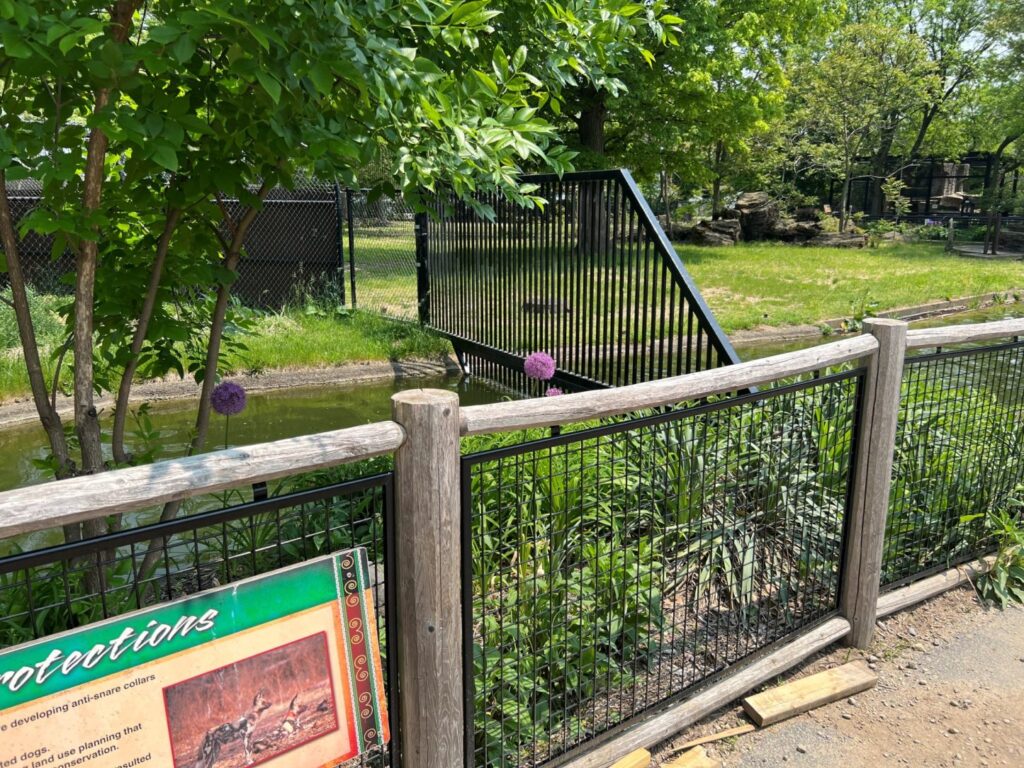
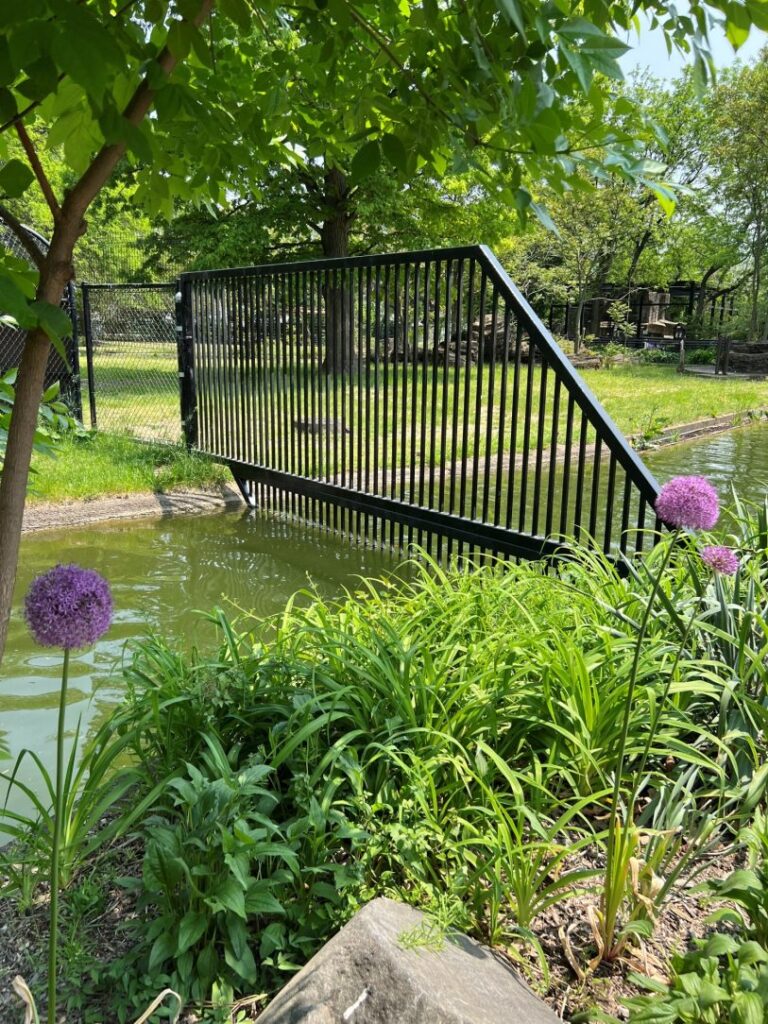
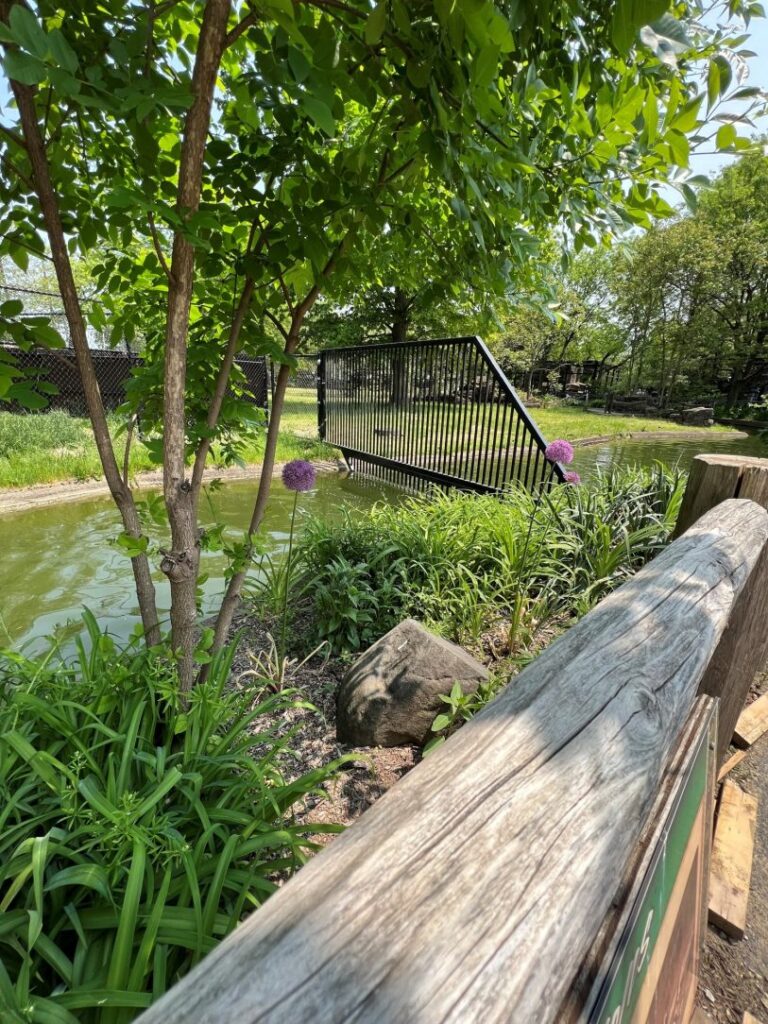
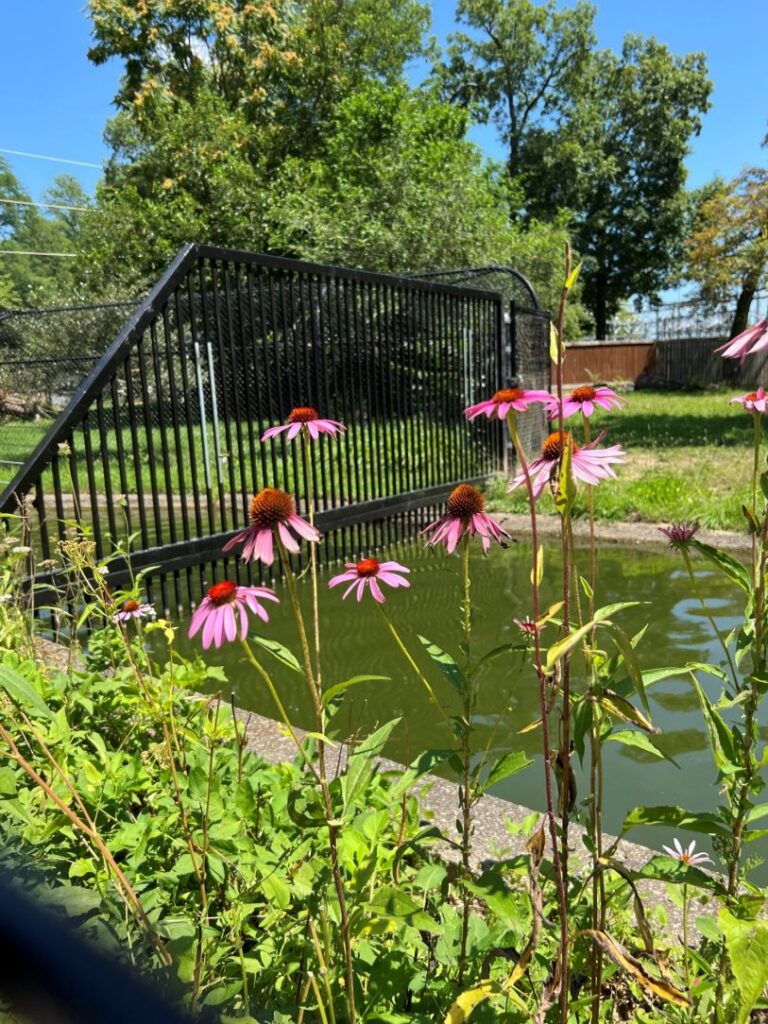
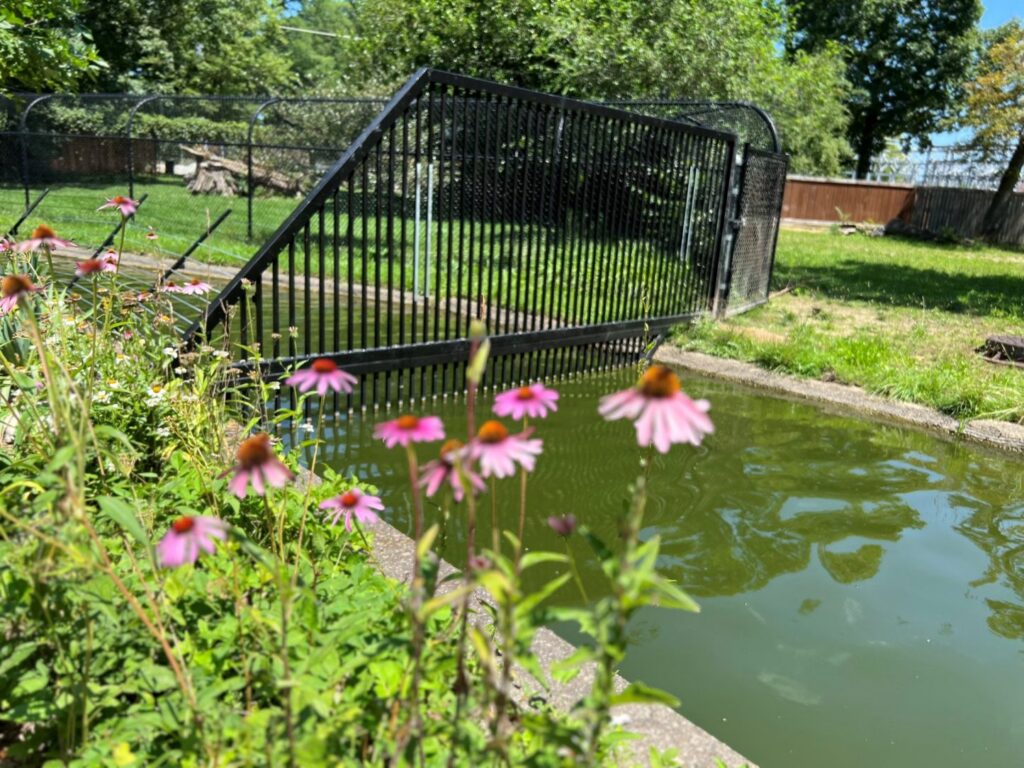
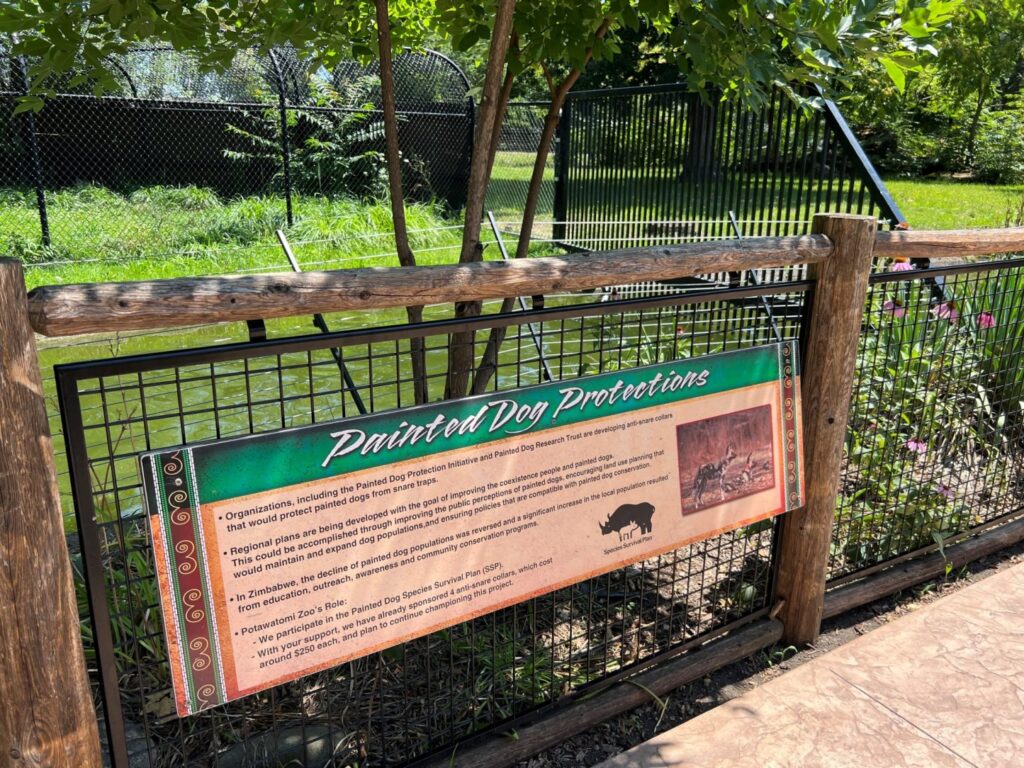
Early in 2023, the zoo made a significant decision to upgrade its African Painted Dog exhibit by adding a moat and a gate to the enclosure. The zoo wanted to improve their African dog enclosure in order to enhance both animal welfare and visitor safety. The moat acts as a natural barrier, allowing the African dogs to roam freely in a more spacious and enriching environment while still ensuring their containment. The gate adds an additional layer of security, providing a controlled entry point for zoo staff and facilitating the management of the exhibit during feeding and enrichment activities. This thoughtful upgrade not only offers a more authentic experience for the animals but also enhances the overall viewing experience for visitors, promoting education and awareness about African dog conservation.
In a harsh environment such as a zoological installation, enclosure materials are subject to frequent impact from both animals and personnel. Additionally, extreme conditions posed by the moat, rainfall, frequent cleanings and unforgiving South Bend winters present a formidable challenge.
The zoo carefully evaluated their options for this new gate. They considered the options of galvanizing, painting, and powder coating. Ultimately, they landed on the decision to hot-dip galvanize and paint the gate due to this duplex coating providing the highest level of corrosion resistance, durability, and overall aesthetic. Furthermore, the zoo decided to reach out to their local galvanizer to discuss vent and drain holes for hot-dip galvanizing. They knew this project would be difficult due to the amount of internal venting required. By consulting with experts in the galvanizing process, the zoo demonstrated a proactive approach in ensuring the gate’s longevity and functionality.
Proper vent and drain holes are essential in hot-dip galvanizing to allow air to escape during the process and to facilitate drainage of any excess zinc. This collaboration with the galvanizer highlights the zoo’s dedication to maintaining the highest standards in exhibit construction, ultimately contributing to the well-being of the African dogs and the overall success of their conservation efforts.
The zoo’s decision to galvanize and paint the gate was driven by the unique challenges posed by the exhibit, with half of the gate submerged underwater. The hot-dip galvanizing provides essential protection against corrosion, ensuring the gate’s structural integrity despite being in a submerged environment. Additionally, painting the gate with a neutral and water-resistant color not only enhances its appearance but also makes it highly visible and aesthetically pleasing for visitors. It also significantly increases the life span of the gate. By combining galvanizing and painting, the zoo showcases its commitment to providing a safe, durable, and visually appealing exhibit, making it an exemplary institution in animal care and conservation efforts.
They landed on the decision to hot-dip galvanize and paint the gate due to this duplex coating providing the highest level of corrosion resistance, durability, and overall aesthetic.