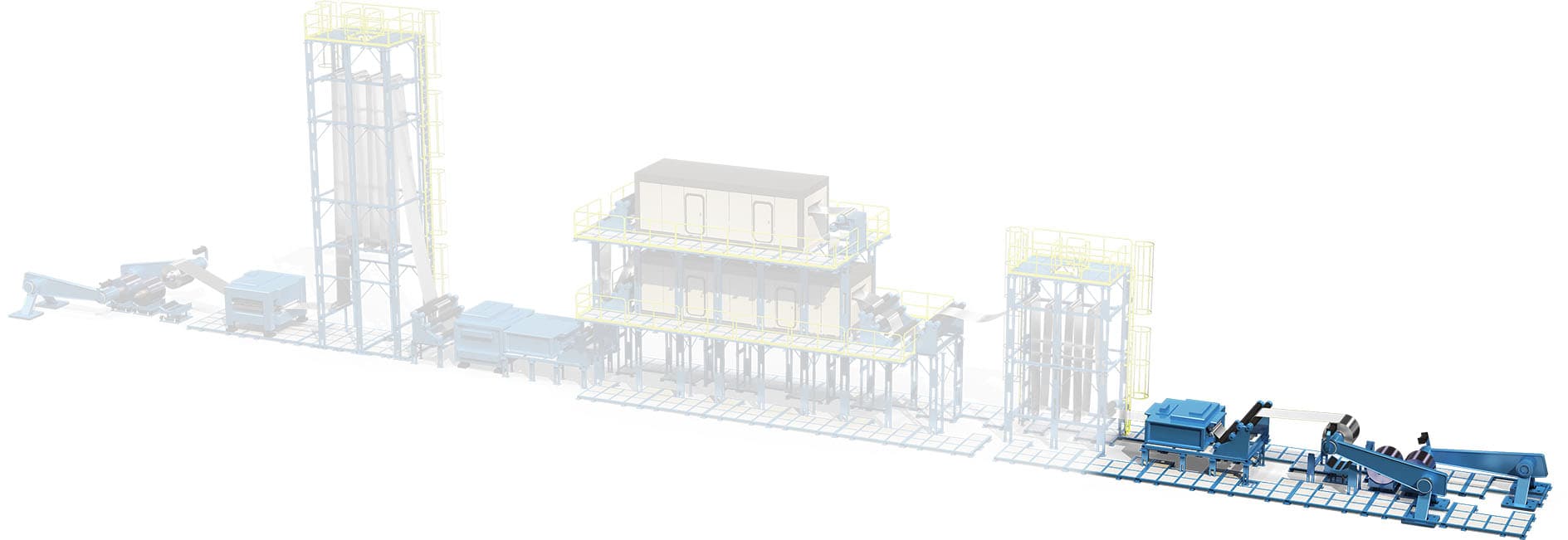
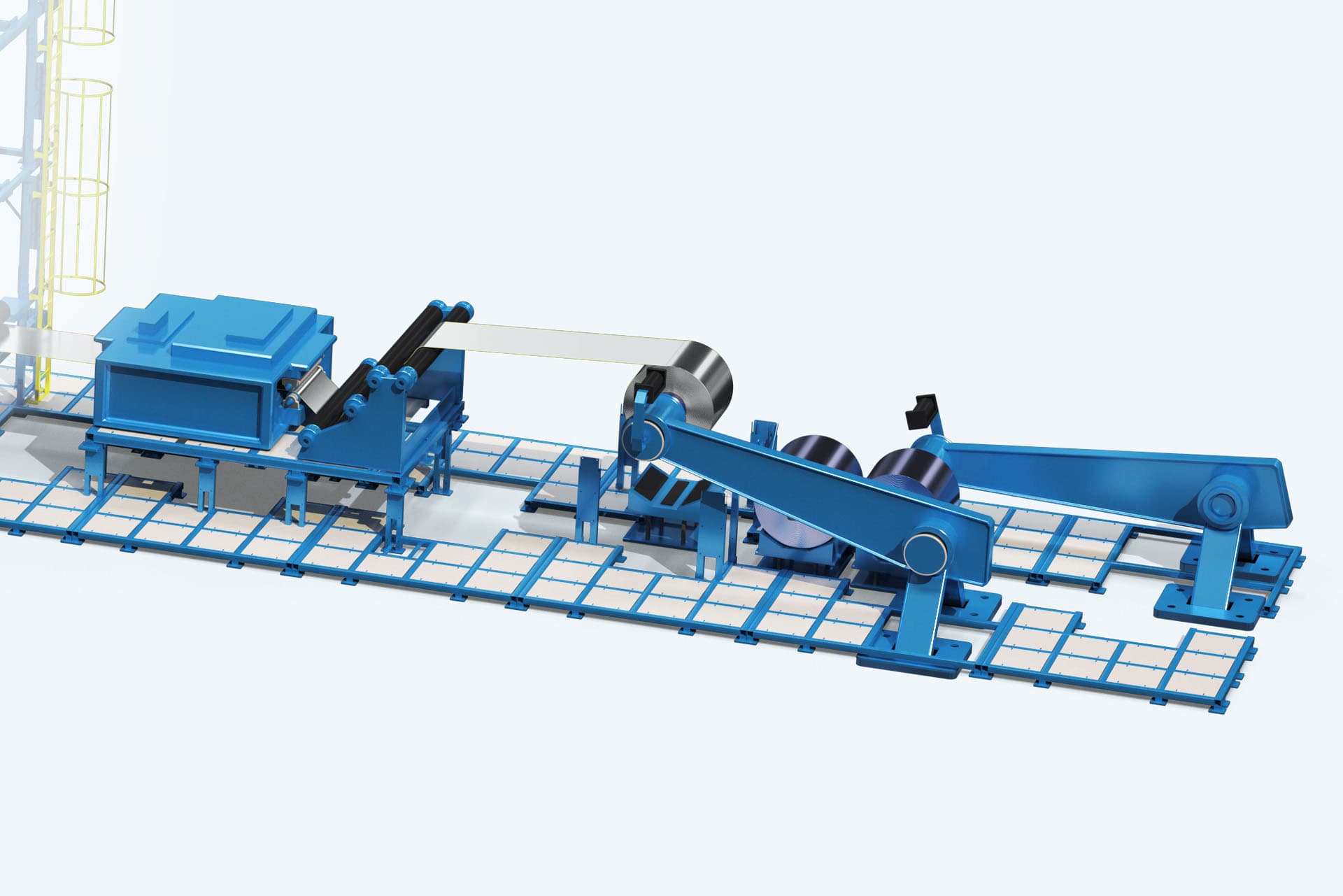
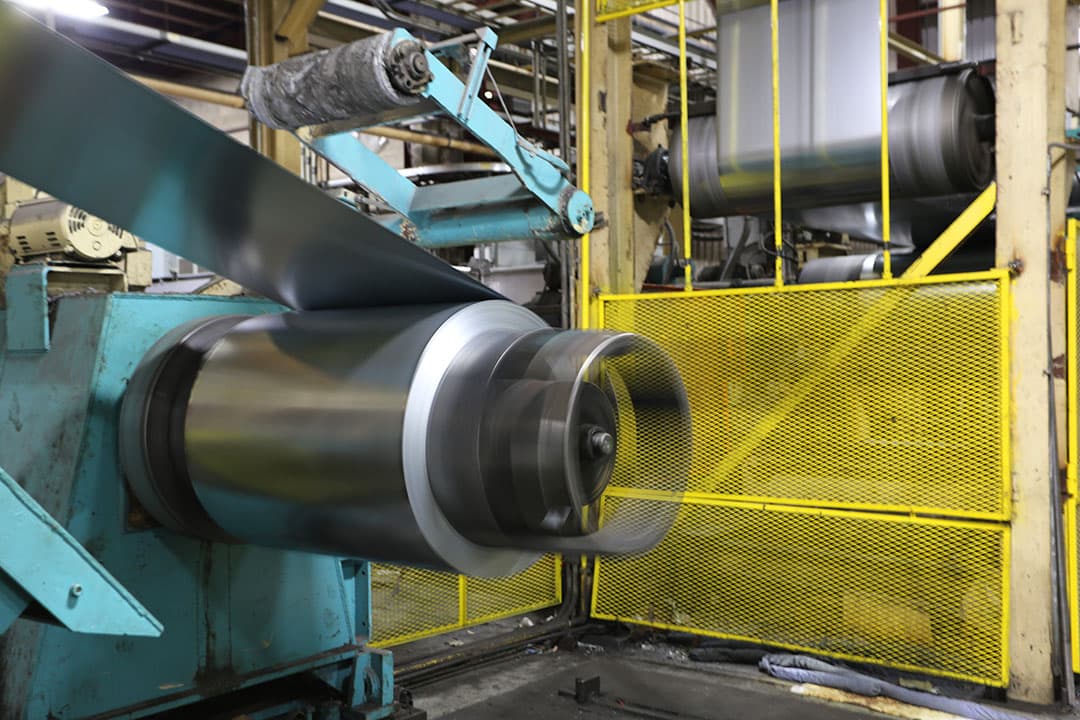
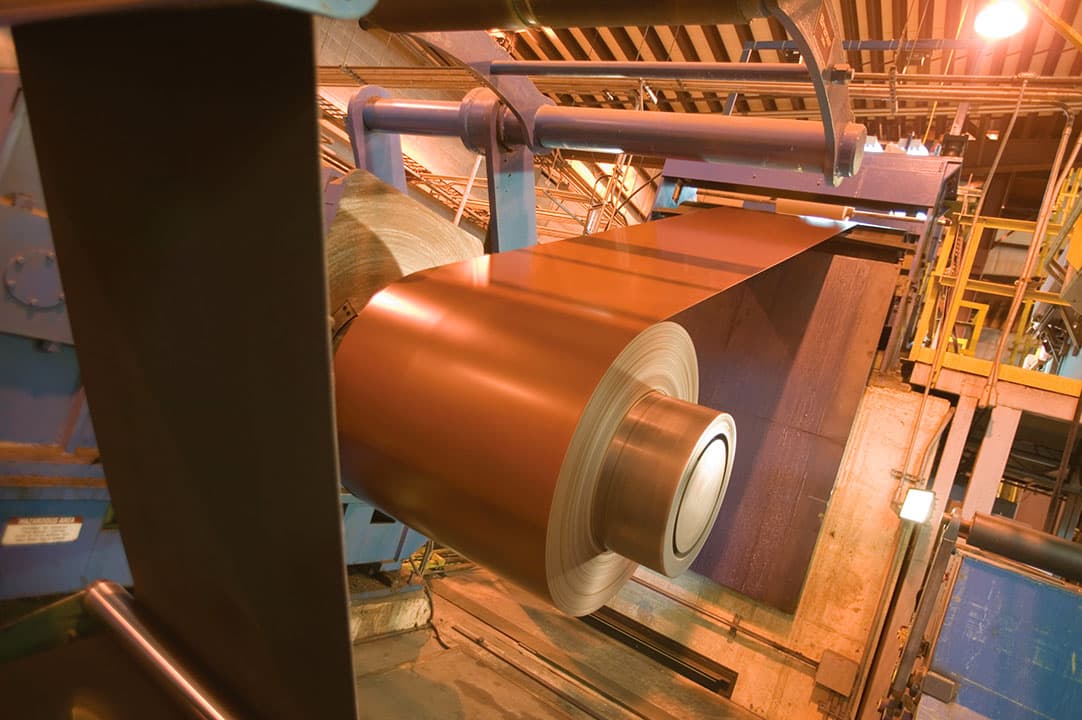
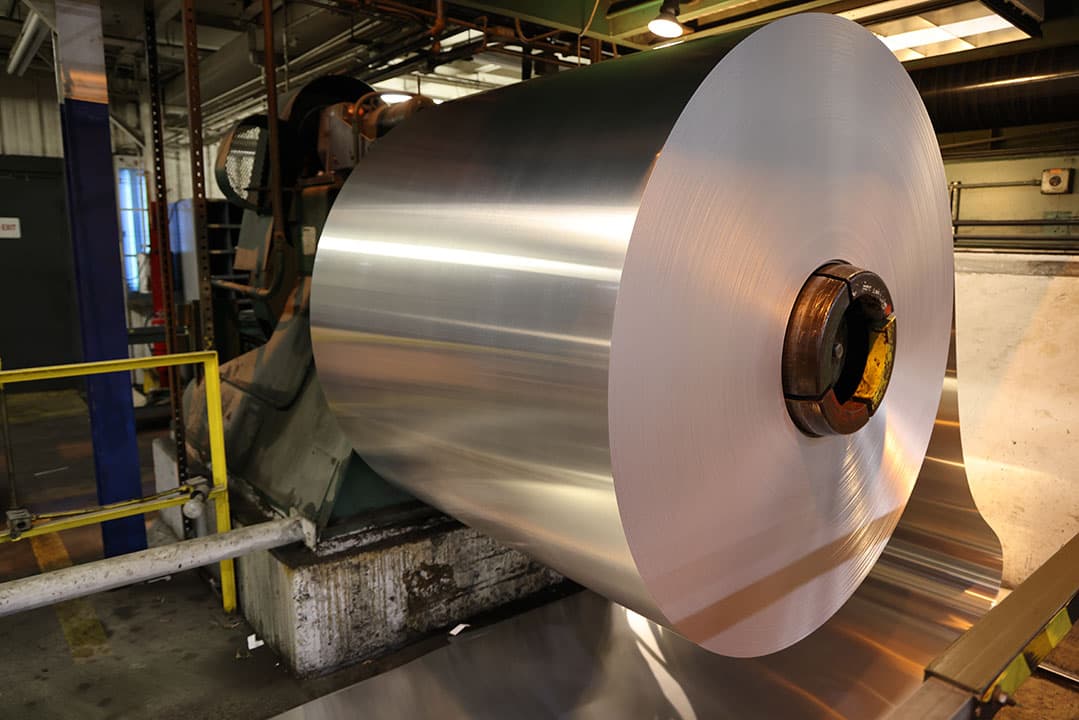
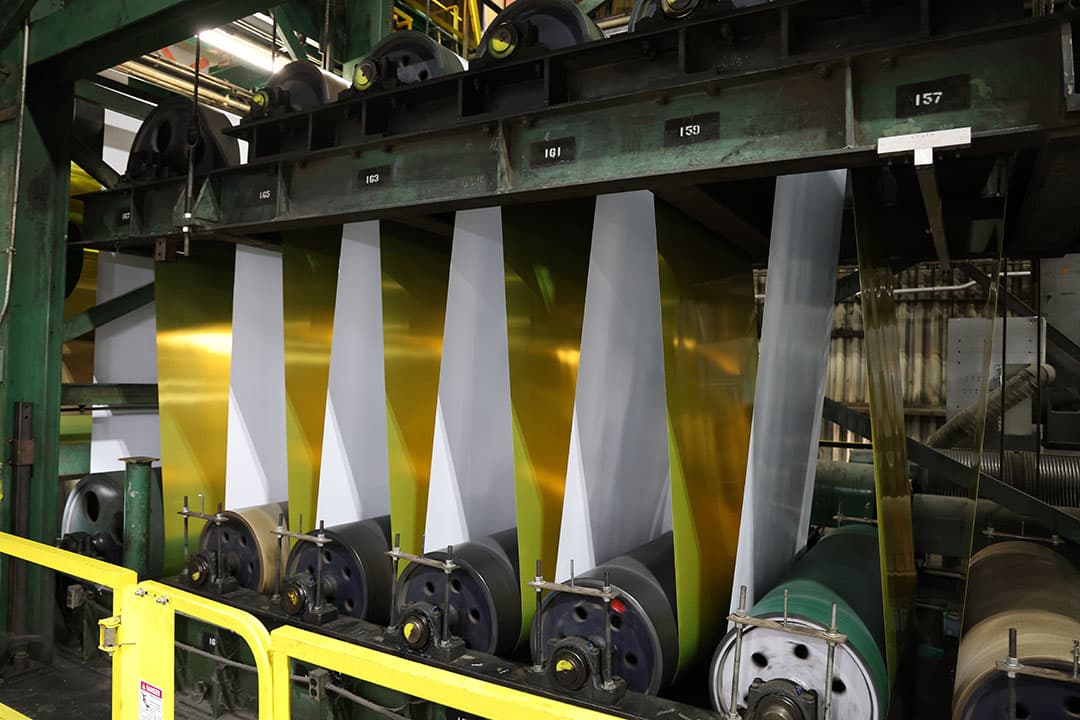
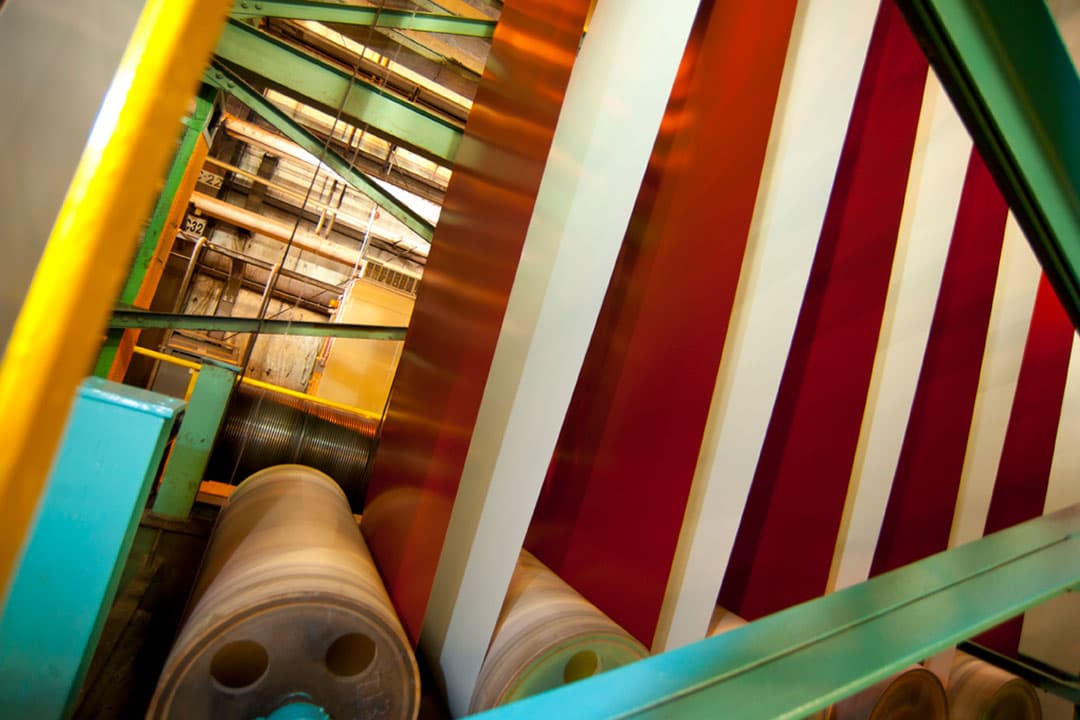
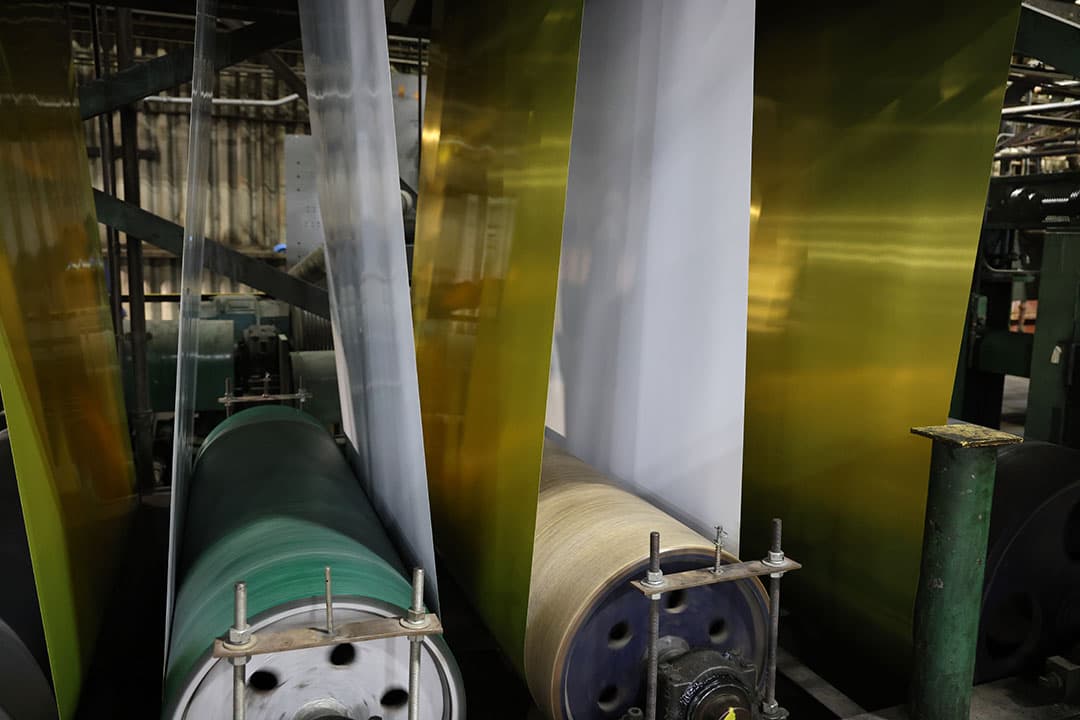
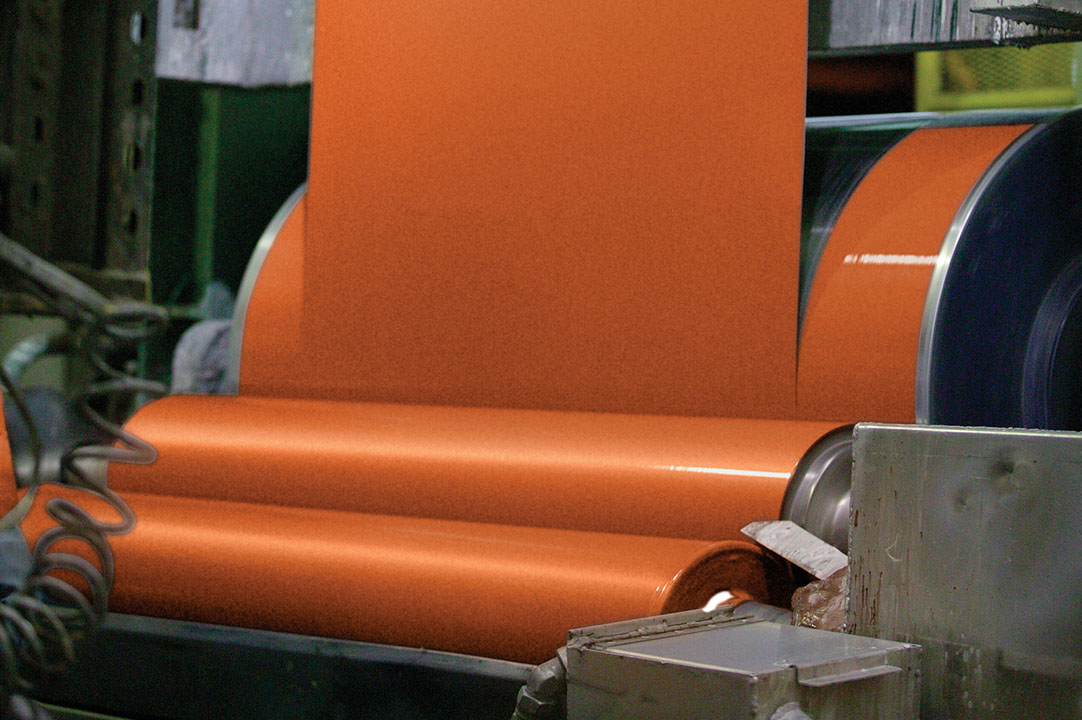
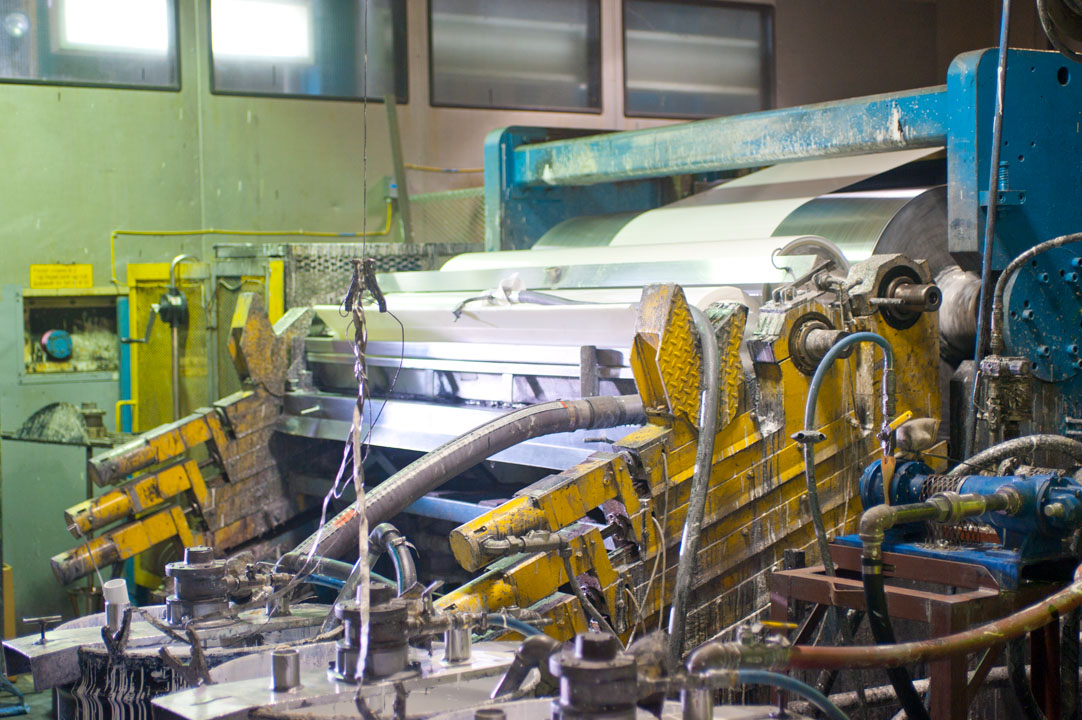
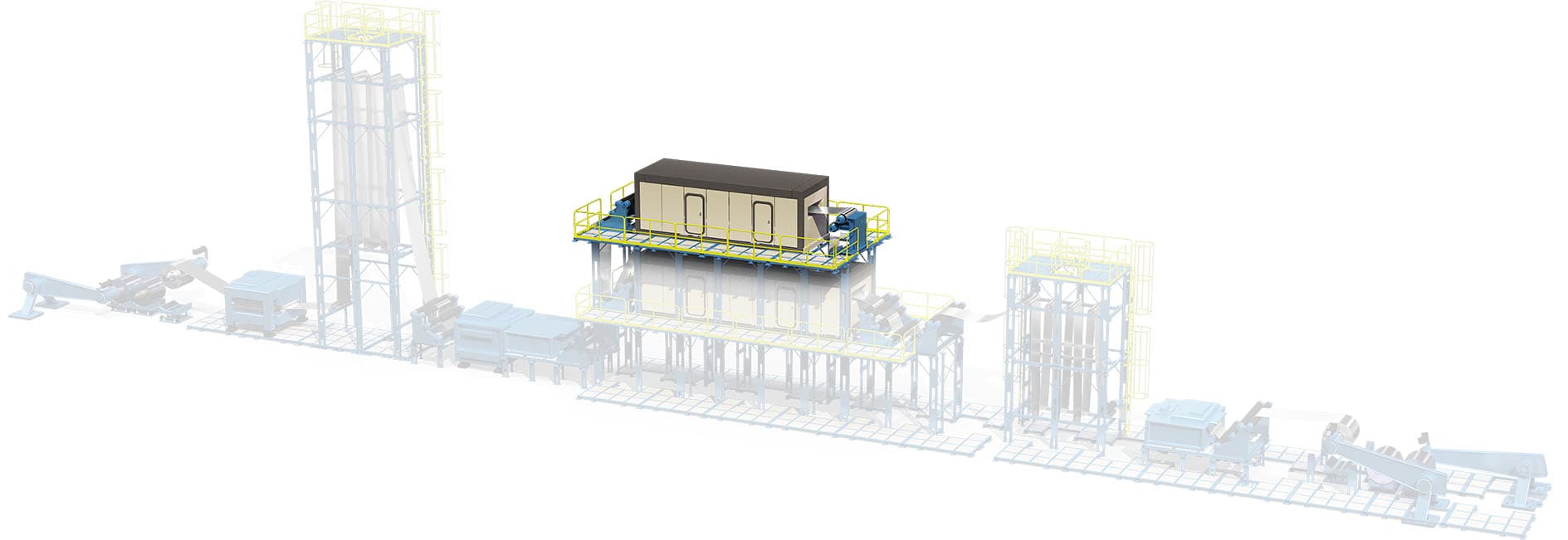
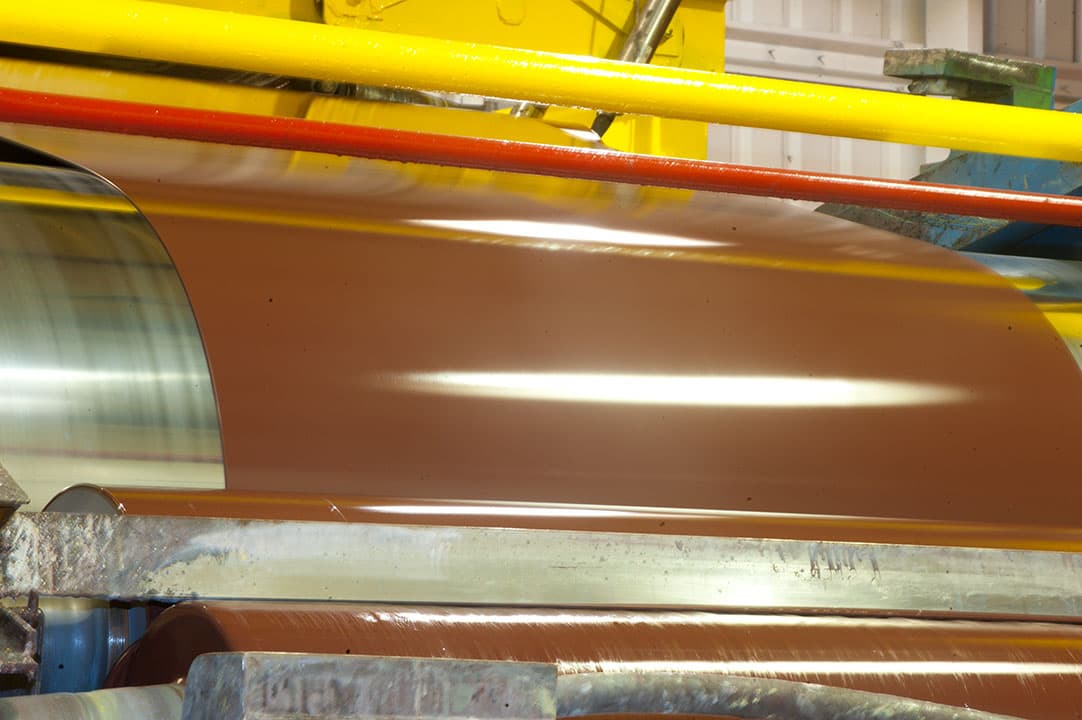
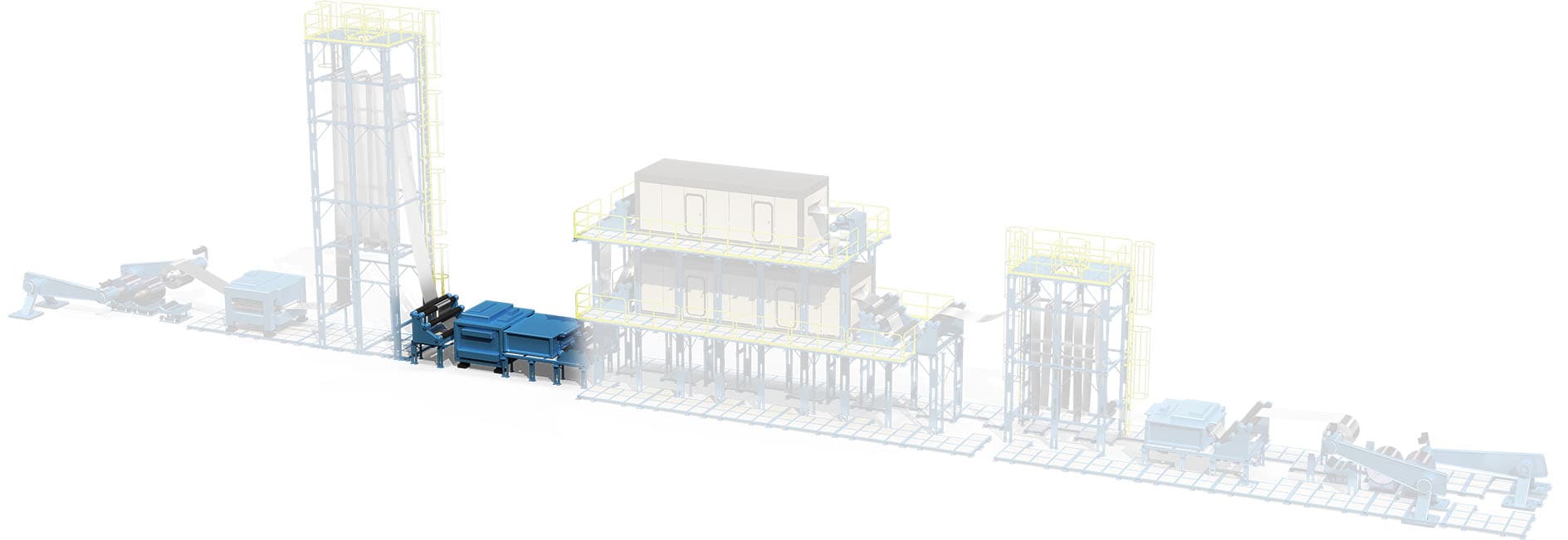
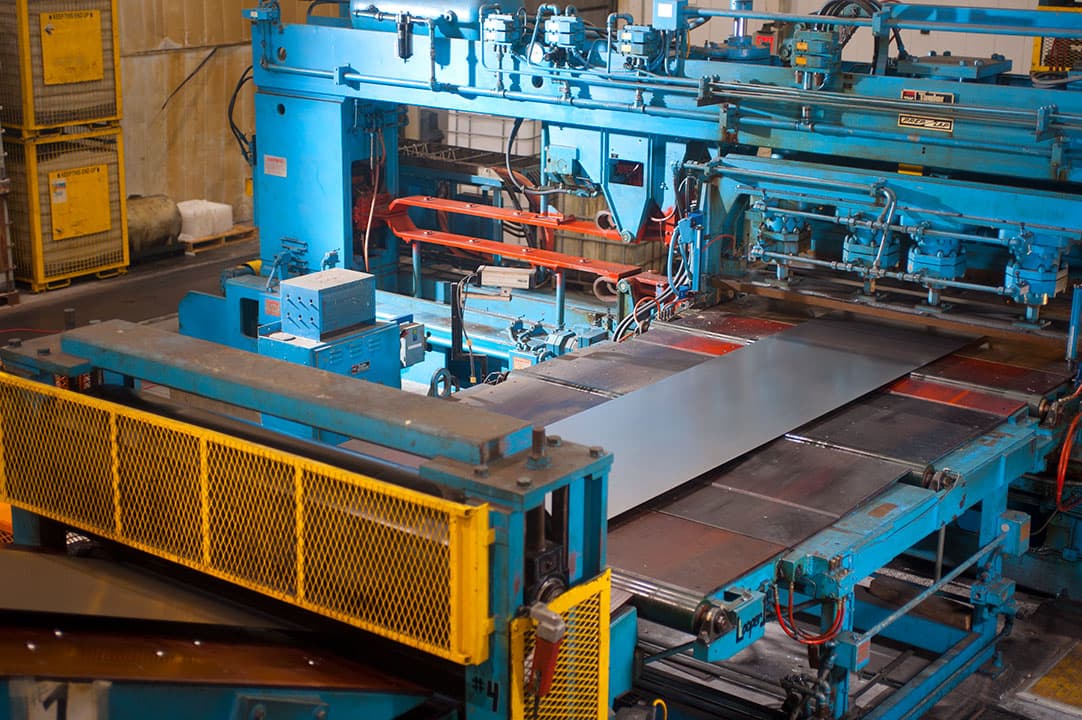
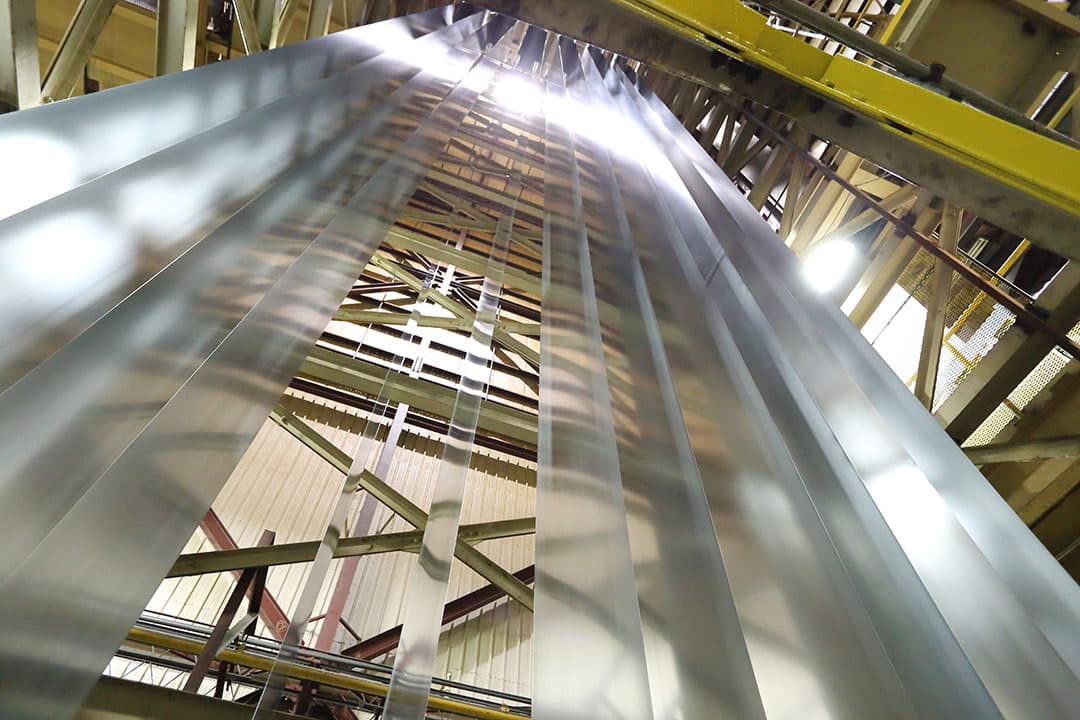
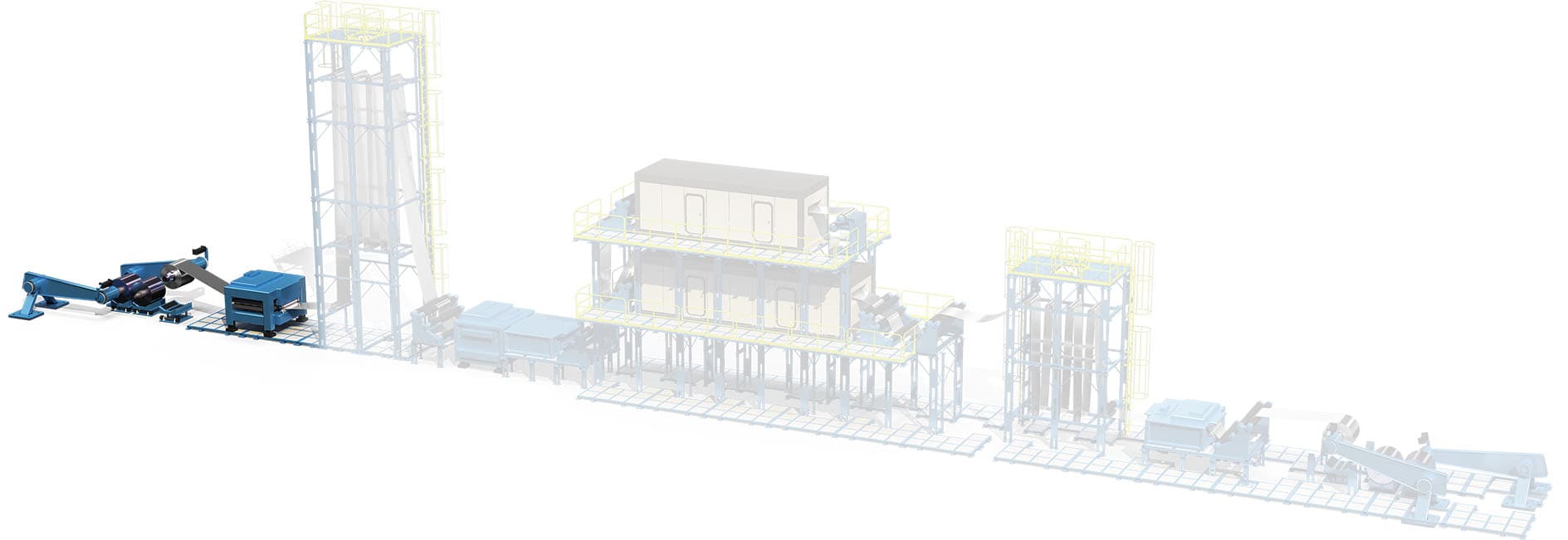
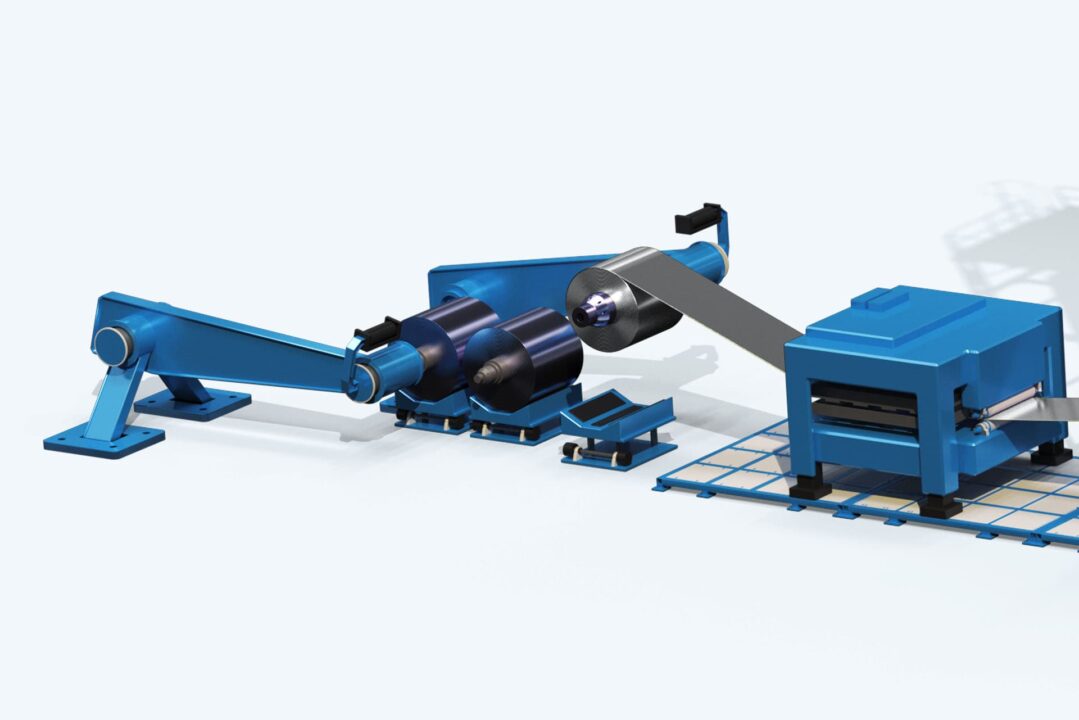
Once the metal is cleaned, treated, and painted, the strip is rewound into a coil size prescribed by the customer. From there, the coil is removed from the line and packaged for shipment or additional processing.
After the primer is applied and cured, then the metal strip enters the finish coat station where a topcoat is applied. Topcoats provide color, corrosion resistance, durability, flexibility and any other required physical properties. Like primers, the topcoat is cured using thermal cure ovens.
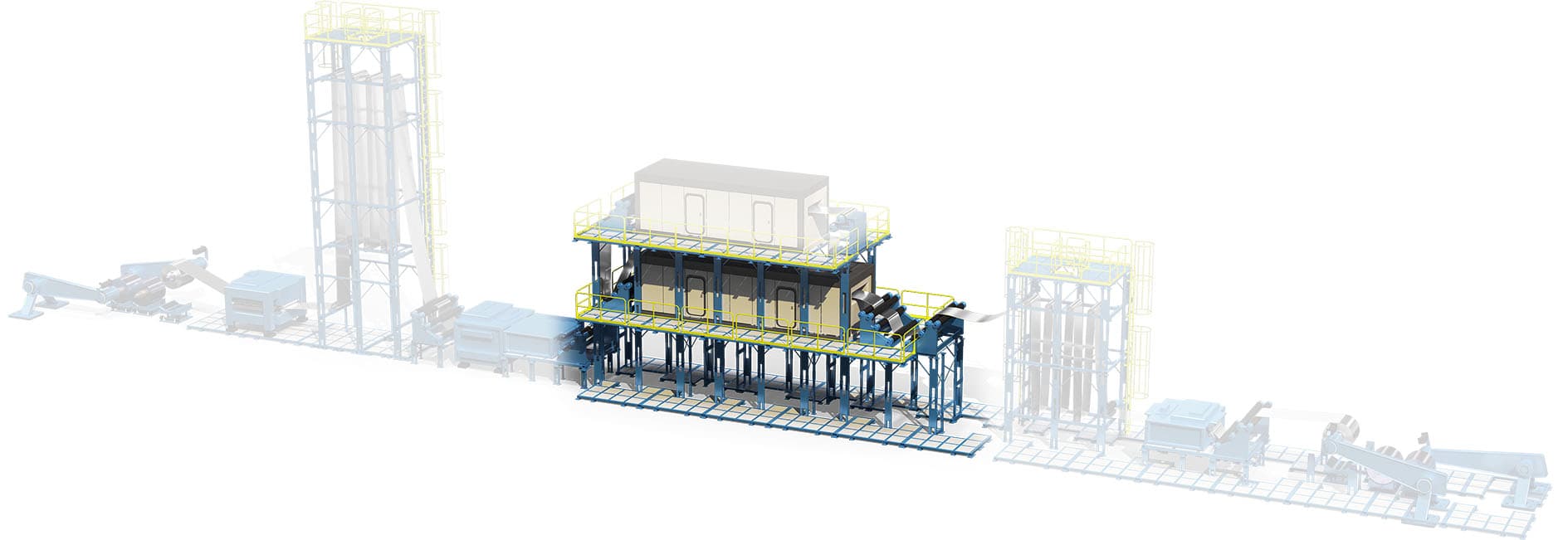
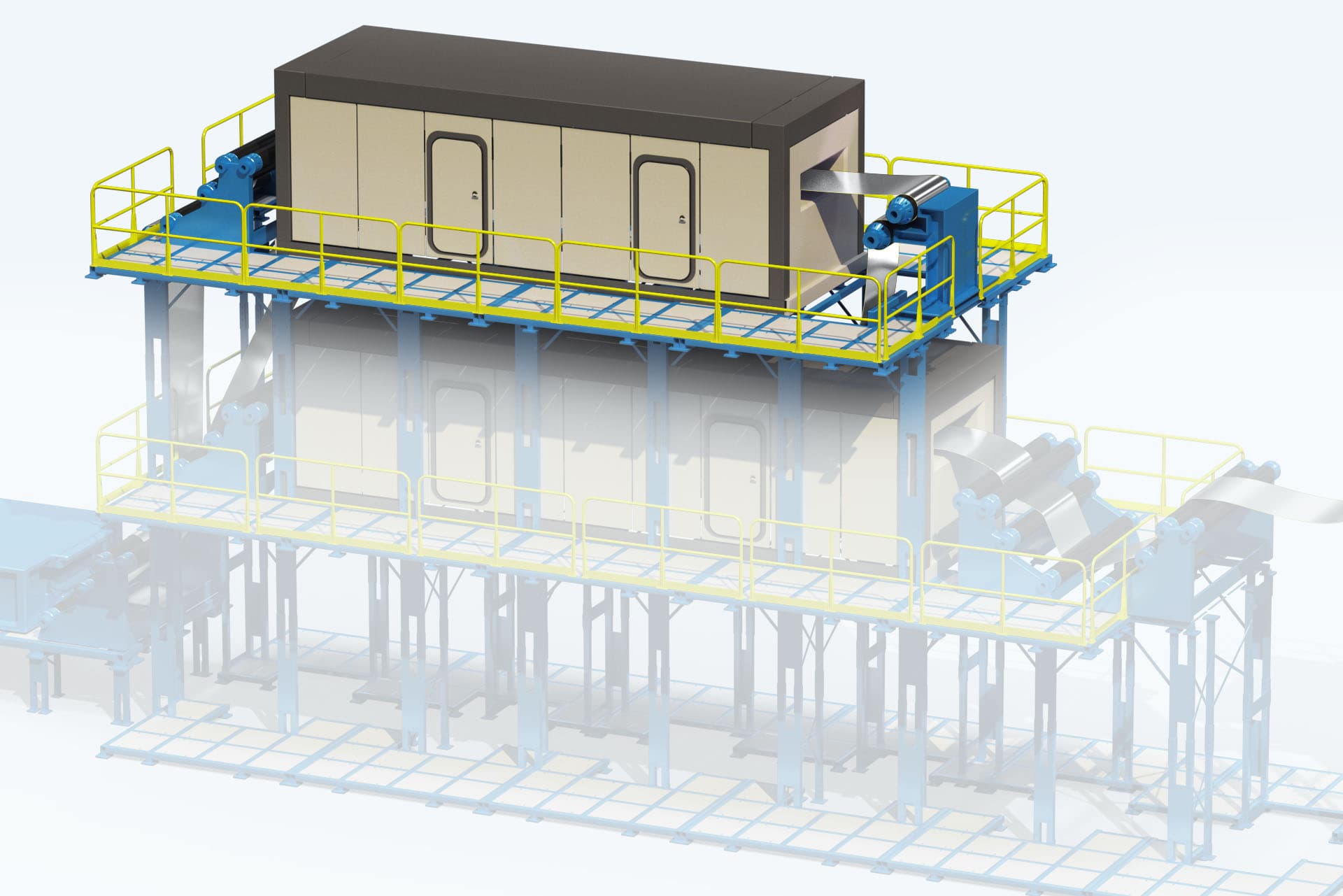
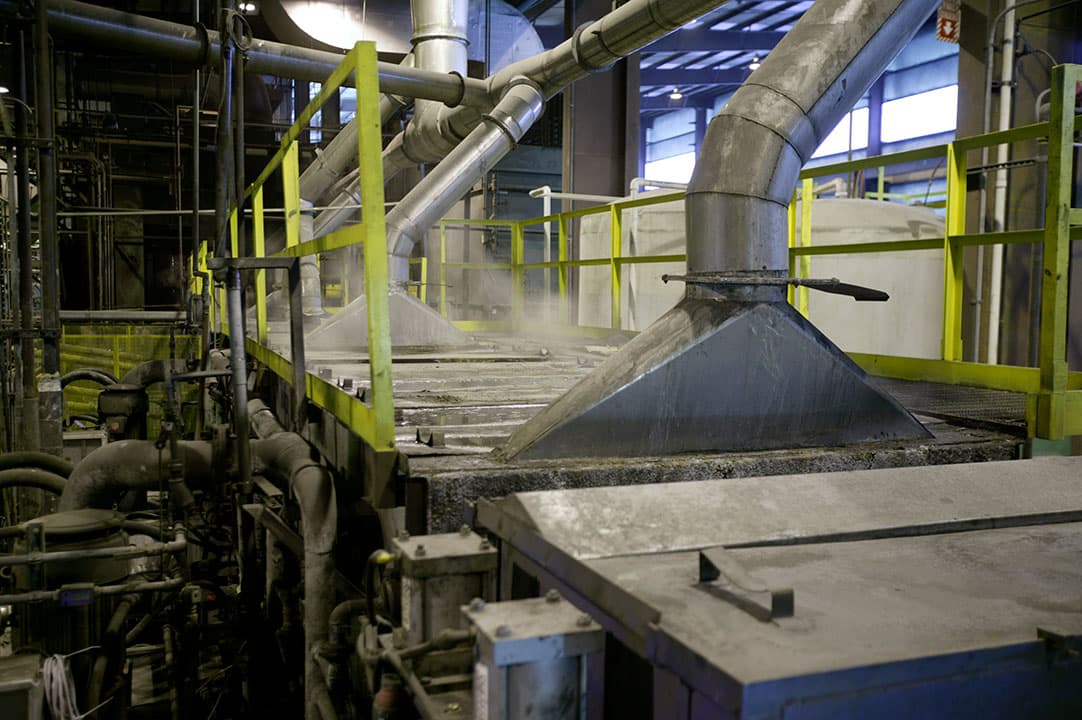
Oven
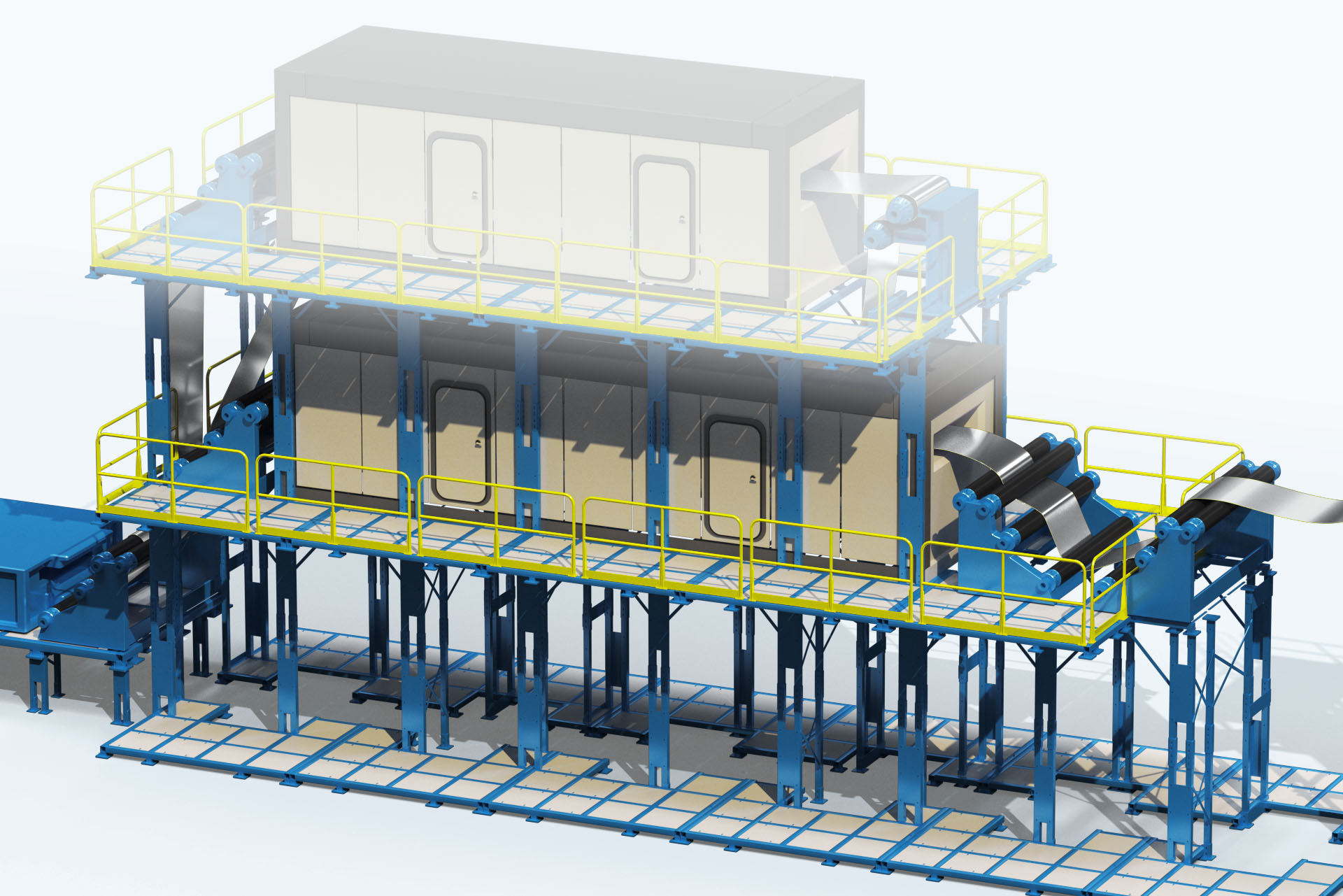
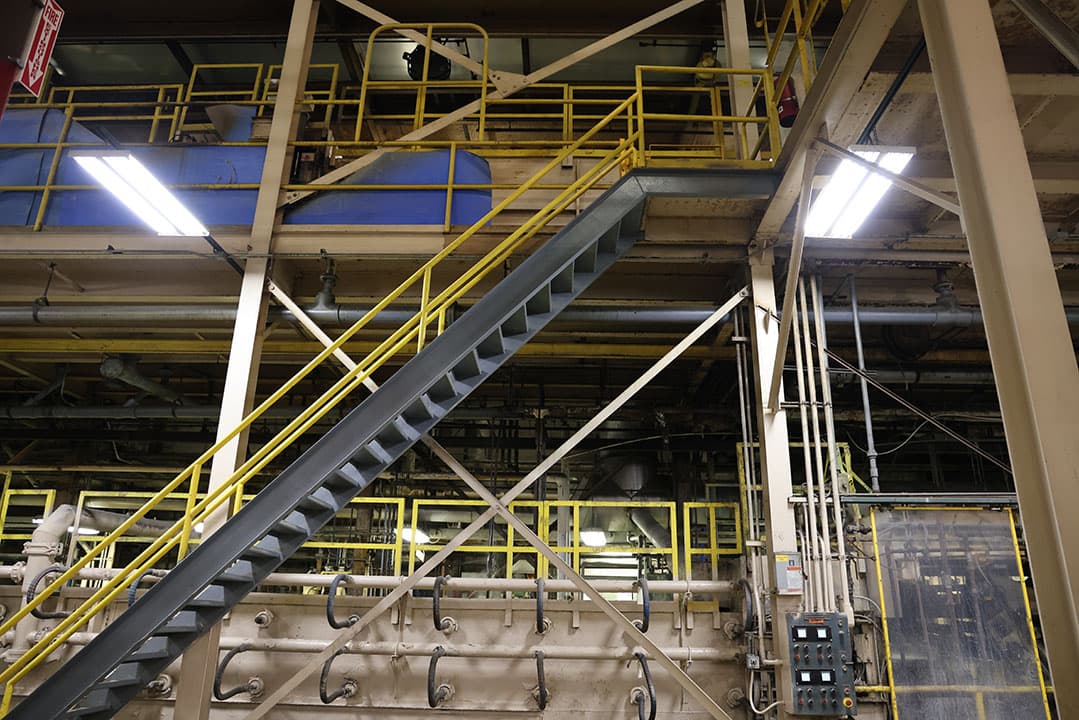
Coil coating ovens can range from 130 feet to 160 feet and will cure the coatings in 13 to 20 seconds.
During this stage, the strip enters the prime coat station whereby a primer is applied to the clean and treated metal. After the primer is applied, the metal strip travels through a thermal oven for curing. Primers are used to aid in paint adhesion, improve corrosion performance and enhance aesthetic and functional attributes of the topcoat.
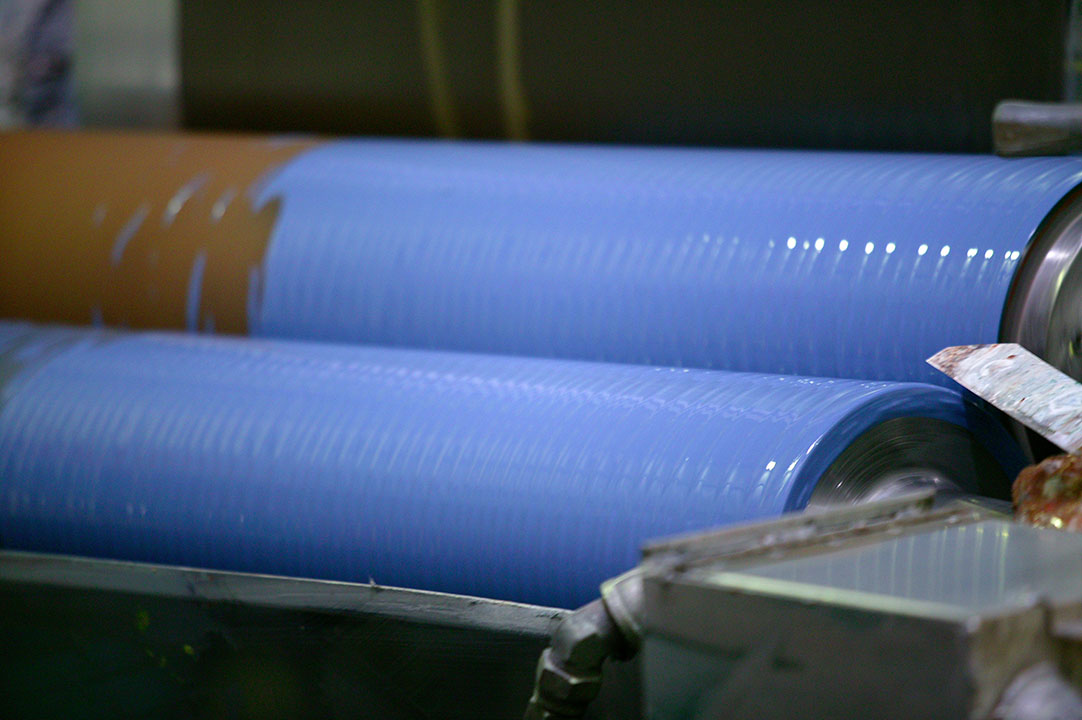
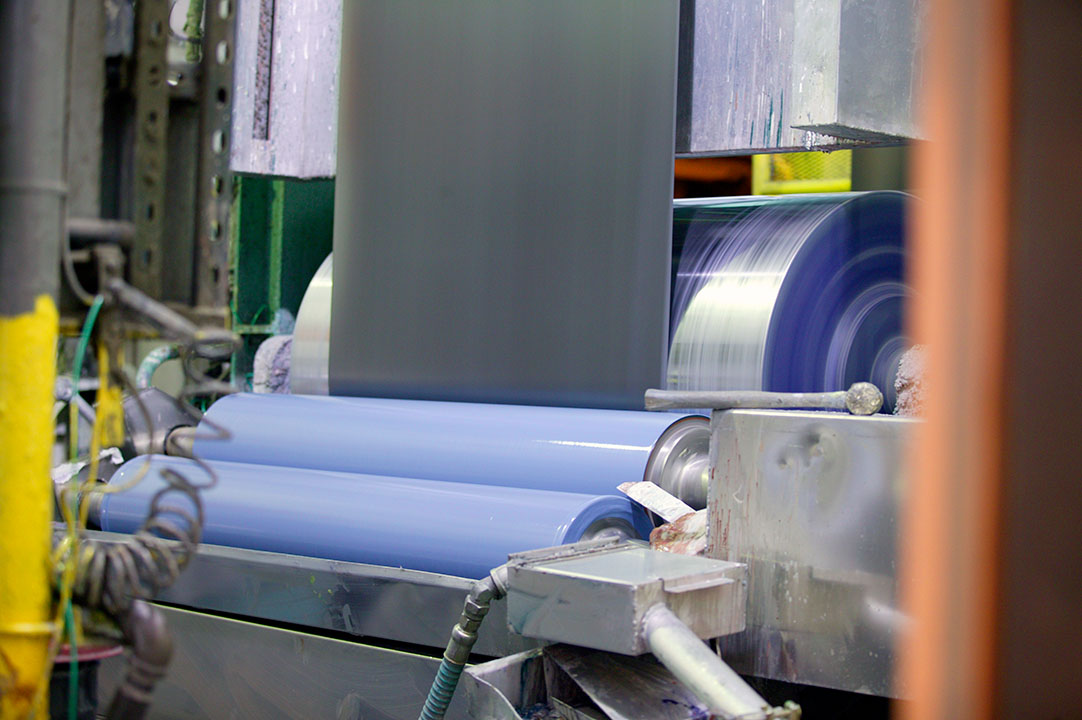
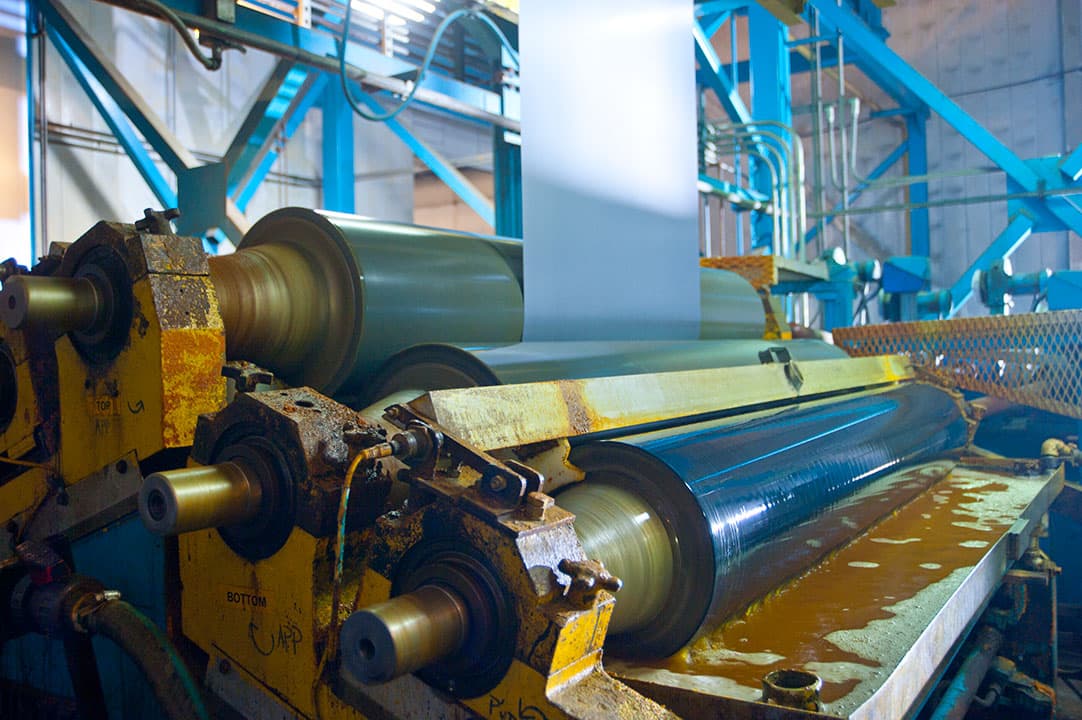
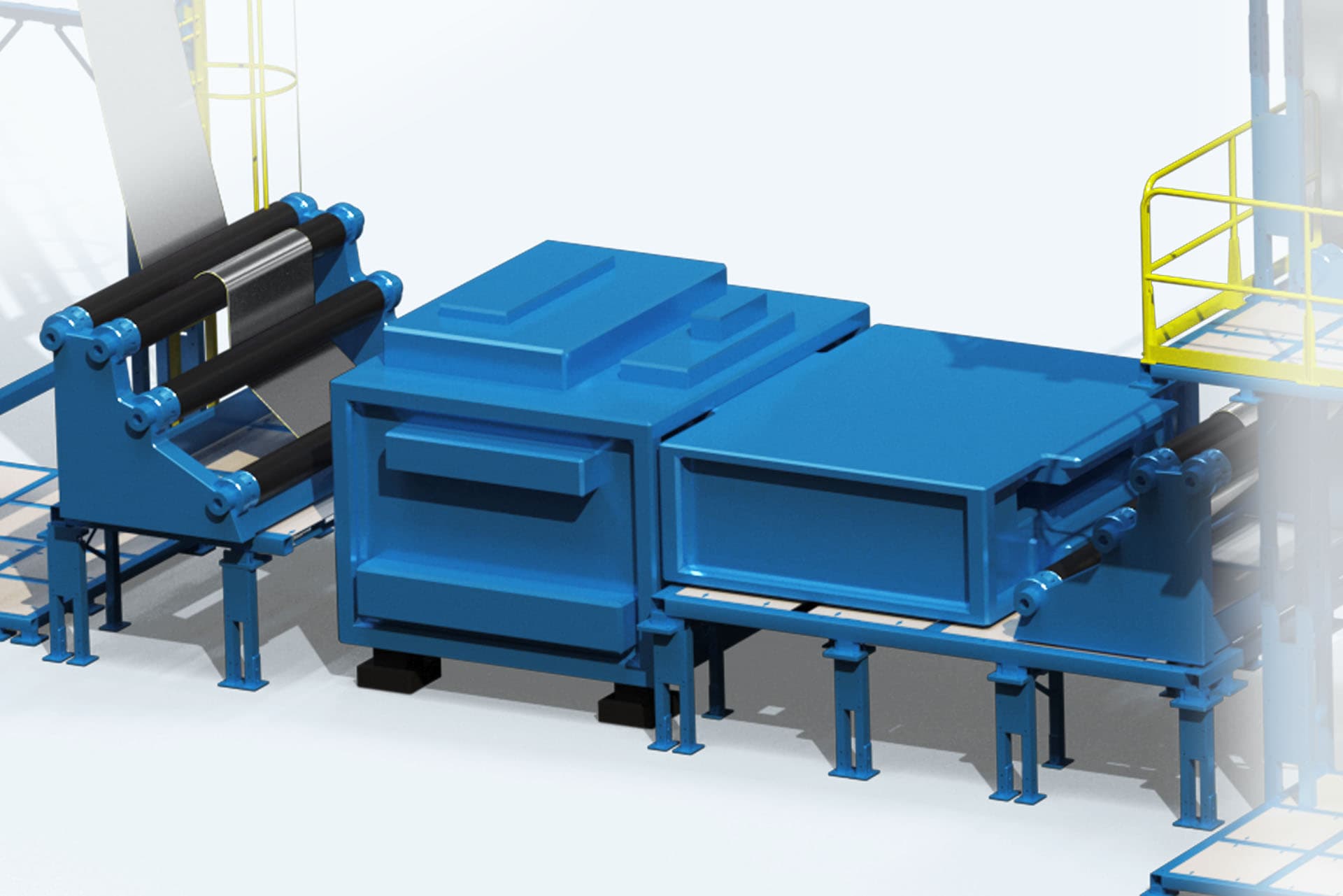
S Wrap Coater
The S wrap coater design allows for primers and paints to be applied to the top and back side of the metal strip simultaneously in one continuous pass.
The cleaning and pretreating section of the coil coating process focuses on preparing the metal for painting. During the cleaning stage, dirt, debris, and oils are removed from the metal strip. From there, the metal enters the pretreatment section and/or a chemical coater whereby chemicals are applied to facilitate paint adhesion and enhance corrosion resistance.
Dried-In-Place
In this stage a chemical that provides enhanced corrosion performance is applied. This treatment can be chrome free if required.
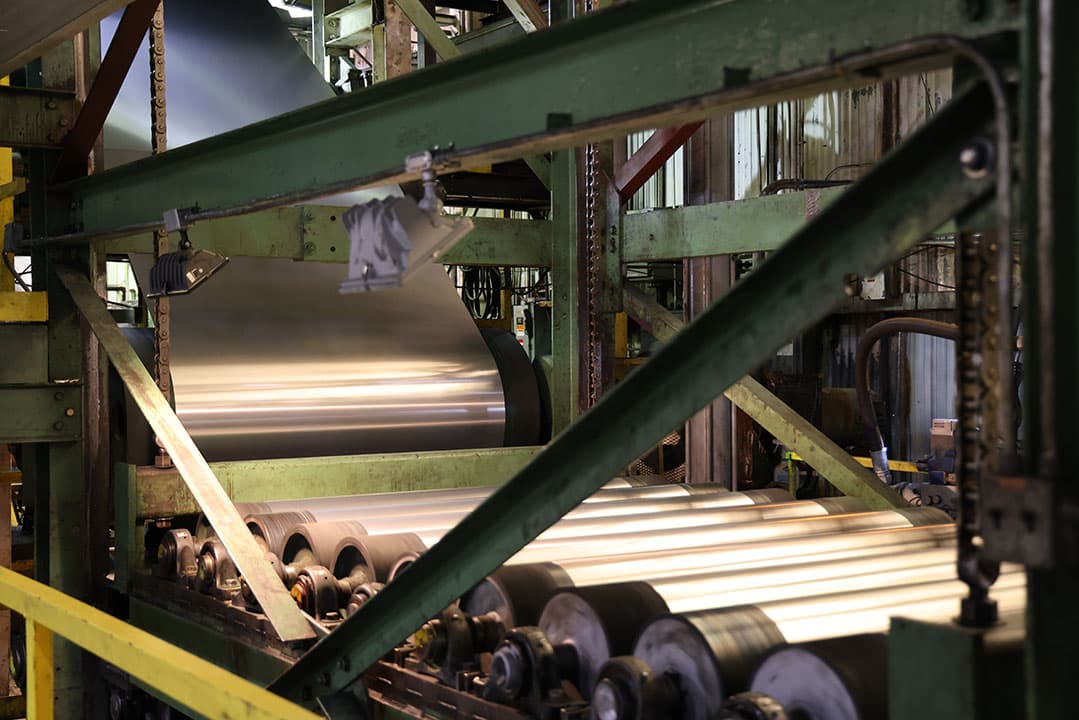
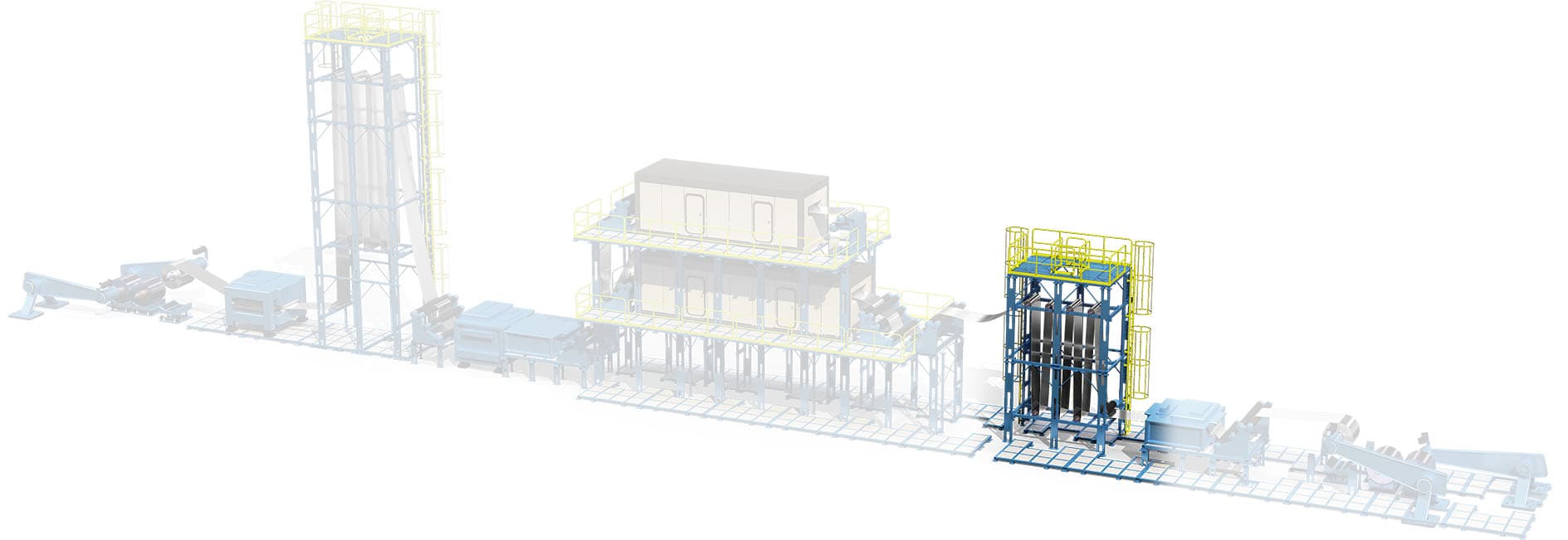
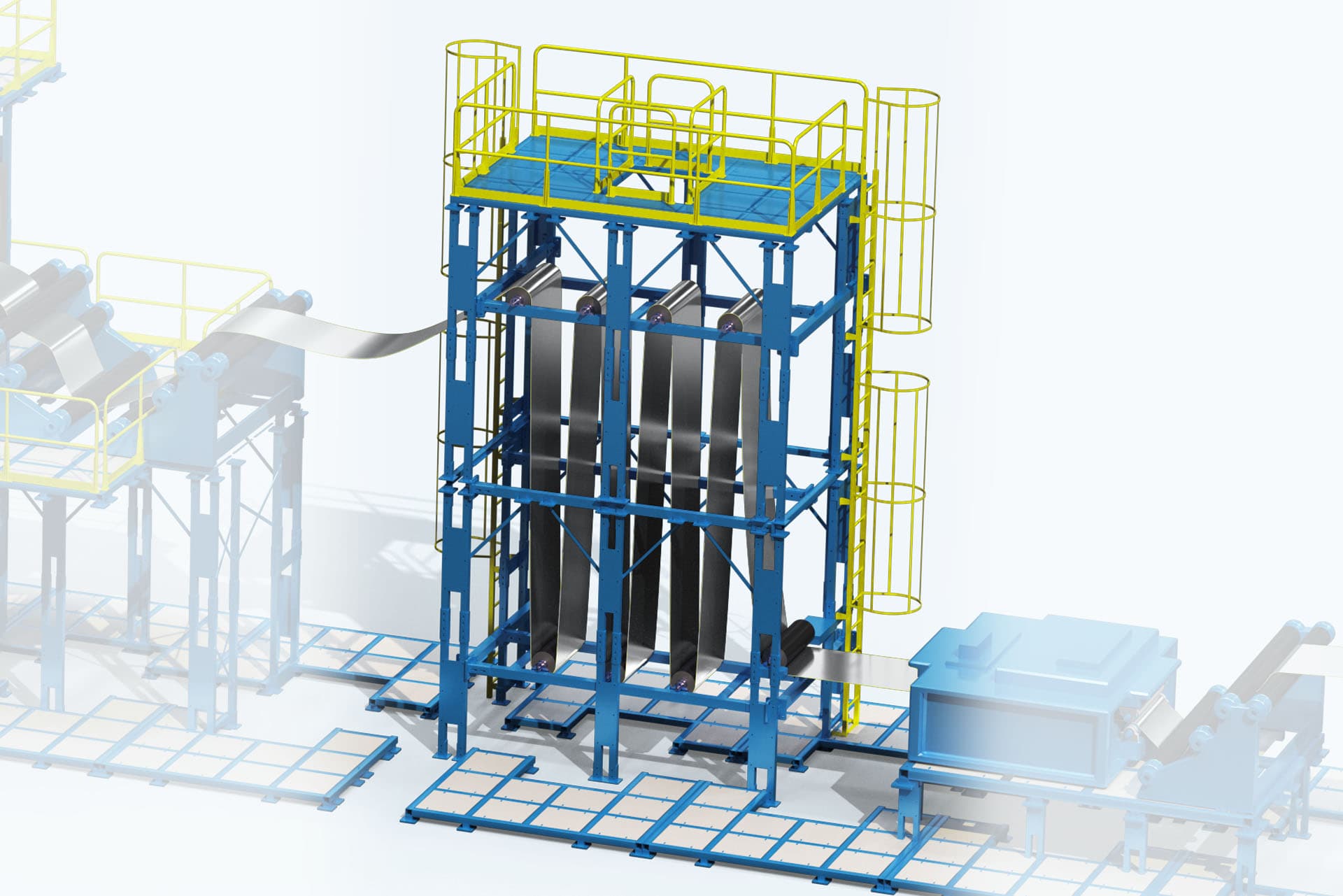
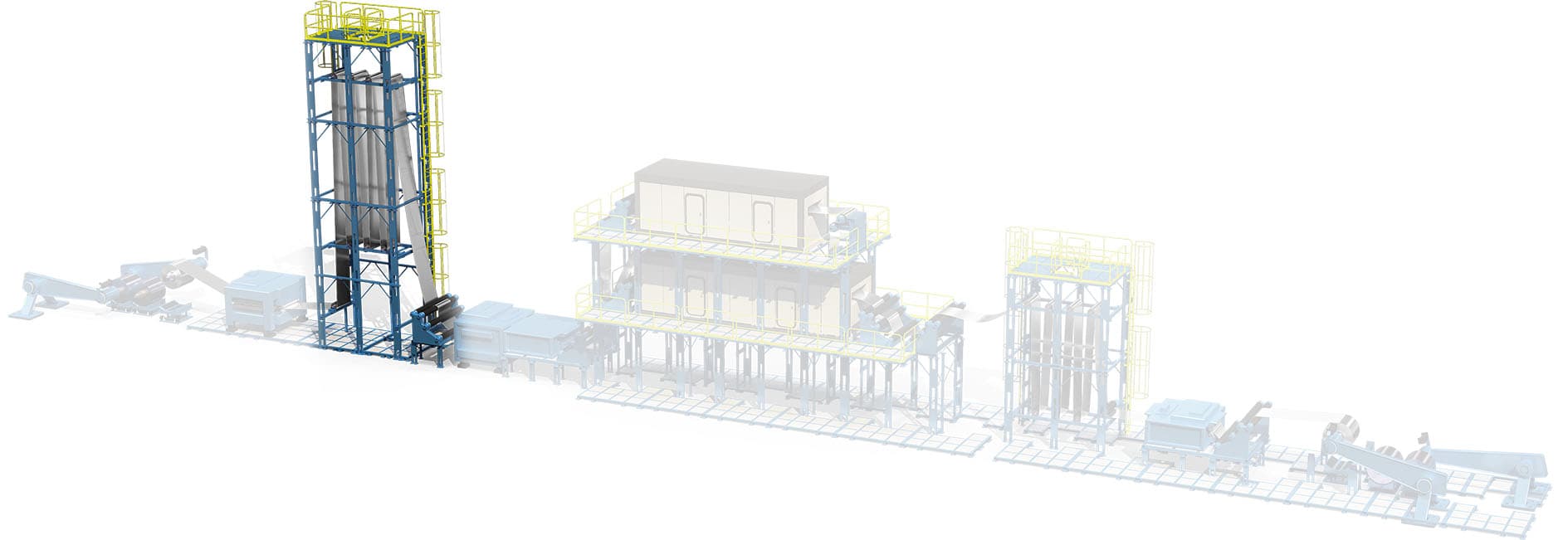
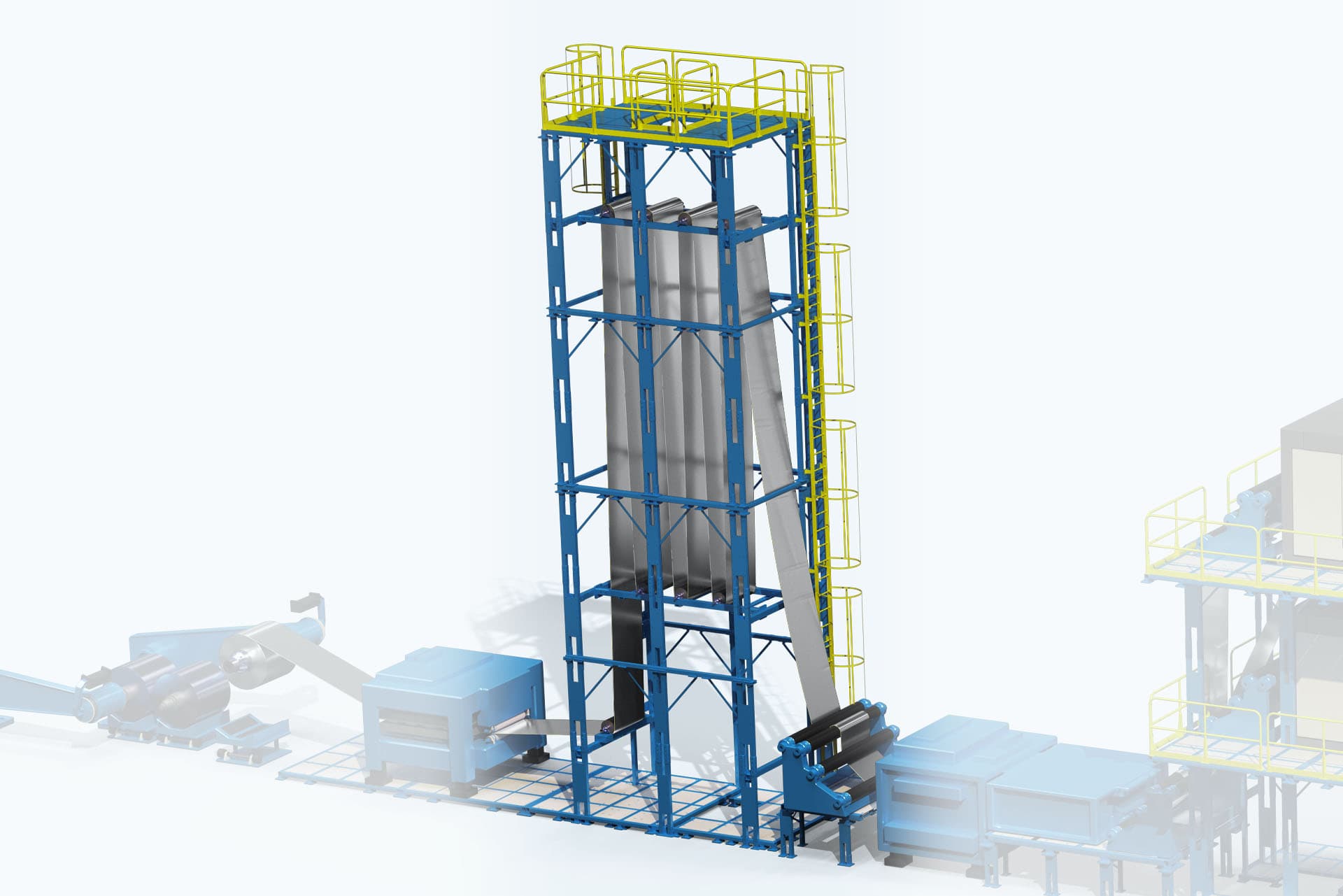
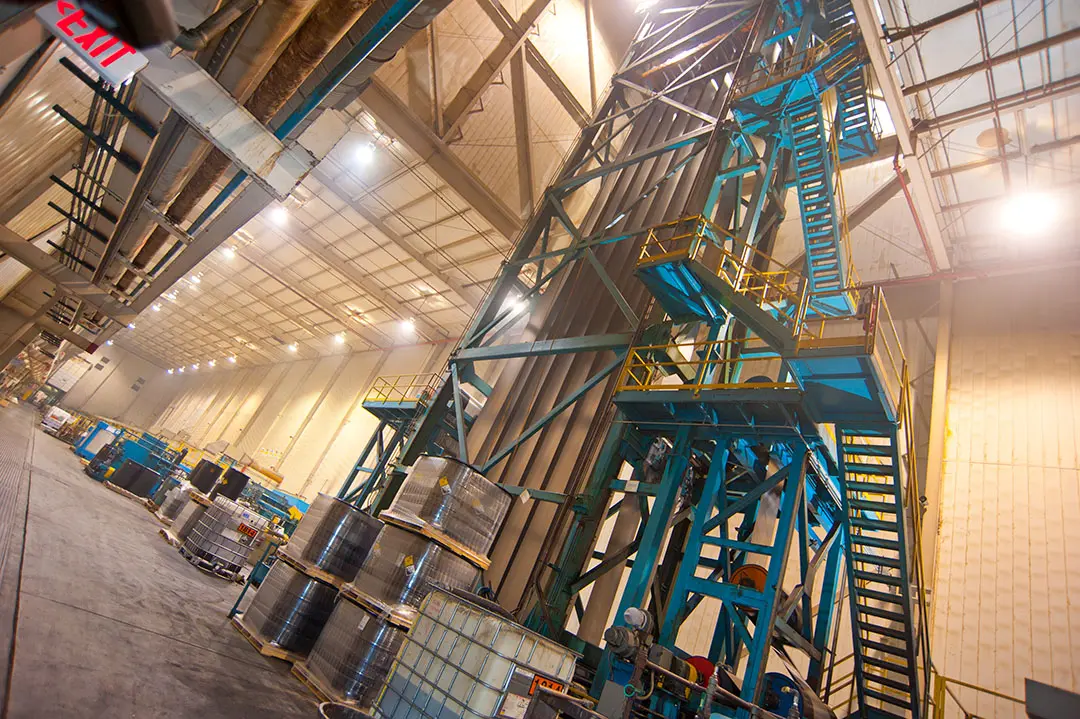
The accumulator is a structure that adjusts up and down to store material, which makes continuous operation of the coil coating process possible. This accumulation will continue to feed the coil coating processes while the entry end has stopped for the stitching process. As much as 750 feet of metal can be collected.
Modern life is marked by an array of security challenges, from the protection of critical infrastructure to the prevention of vehicular attacks in high-risk areas such as government building, airports, military bases and embassies. As a result, vehicle security barriers have emerged as versatile and robust solutions to these challenges, showcasing their worth in a rapidly evolving security landscape.
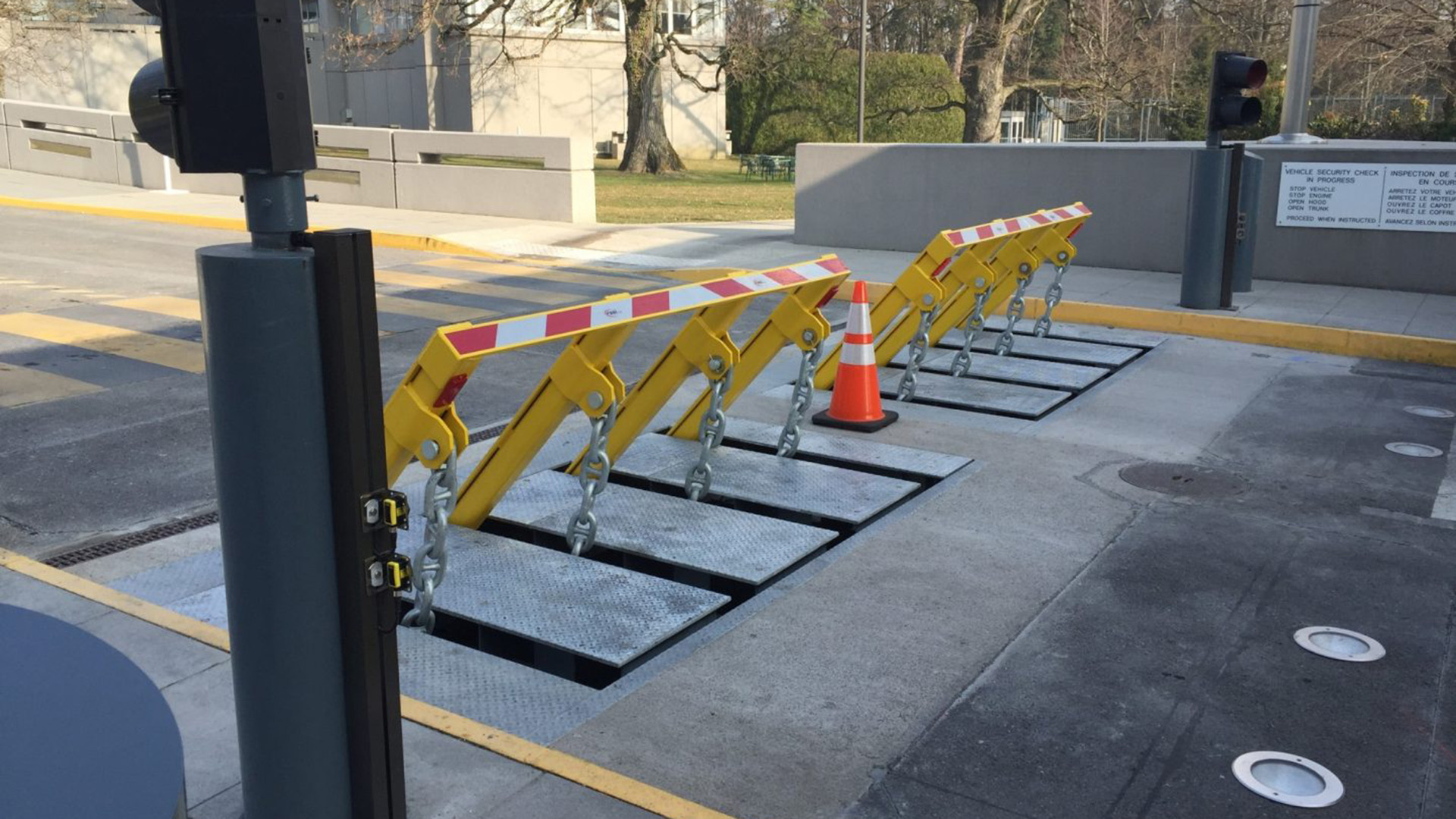
As the world’s most experienced supplier of 100 percent electric (non-hydraulic) barrier systems, RSSI Barriers, LLC manufactures anti-ram vehicle barriers that operate in all climates. The company’s most deployed system, the RSS-2000 Electric Finger Wedge Barrier installs in a shallow foundation 24″ below grade, placing the installation above most underground utilities.
The impressively strong RSS-2000 is crash tested and proven to stop a 15,000 lbs. vehicle traveling 50 miles per hour. In the event of a power failure, the barrier can be operated via battery backup system or raised/lowered manually. Unlike traditional systems, the barrier uses clean and reliable electric motors, alleviating all the operational maintenance and costs associated with hydraulic devices.
In October of 2023, the RSS-2000 wedge barrier was placed outside of the Des Moines Federal Courthouse. Operated by the judiciary staff as well as the US Marshals service, the barriers can be viewed by pedestrian and vehicular traffic as they do face the adjacent roadway to prevent incidental or attempted intentional forced entry to the protected area.
In the “UP” position, the barrier presents a visible obstacle to approaching vehicles capable of stopping and destroying heavily loaded trucks moving at high speeds. Red strobe lights on the posts flash to provide caution when the barriers are deployed. Upon impact, forces are transferred though the posts into the foundation. In the “DOWN” position, the barrier is completely flush with the roadway and will not damage tires, snowplows, sweeping machines, etc. A servo electromechanical actuator operates the barrier.
It comes as no surprise that structural integrity is paramount to crash tested and rated active vehicle barriers. Accordingly, hot-dip galvanized steel is widely utilized throughout the application: the barrier’s vault assembly is hot-dip galvanized for corrosion protection and the active barrier component is constructed of reinforced steel tubular post connected by a crash bar and reinforced by galvanized chain.
Galvanized steel barriers are unquestionably more cost effective and longer lasting than those protected by any other weather proofing solution. Even in environments with heavy salt use to mitigate snow on the roadways, the hot-dip galvanized barrier vaults hold up extremely well. In lieu of using stainless steel, RSSI has been able to confidently offer an extended corrosion warranty to guarantee the product will hold up even in a highly corrosive environment.
Even in temperate climates active vehicle barriers that are primed and painted vs. galvanized have a significantly shorter lifespan. Since RSSI began hot-dip galvanizing all their crash rated barrier products over 20 years ago, many government entities that specify AVB products will no longer accept lesser coatings offered by other manufacturers.
Additionally, the RSS-2000 barrier vault is directly encased in concrete and RSSI routinely retrofits galvanized barrier vaults that are 10+ years old with new internal components. After inspection, these retrofit barriers are recommissioned with the same warranty as a brand-new barrier, a testament to the unmatched corrosion protection provided by hot-dip galvanizing.
With the successful implementation of the RSS-2000 wedge barriers at the courthouse, RSSI is proudly anticipating additional projects and continued growth within both the public and private sectors. RSSI stands behind the security and protection of their products, supplying barriers for a multitude of facilities including commercial, military defense, government and military facilities.
Galvanized steel barriers are unquestionably more cost effective and longer lasting than those protected by any other weather proofing solution.