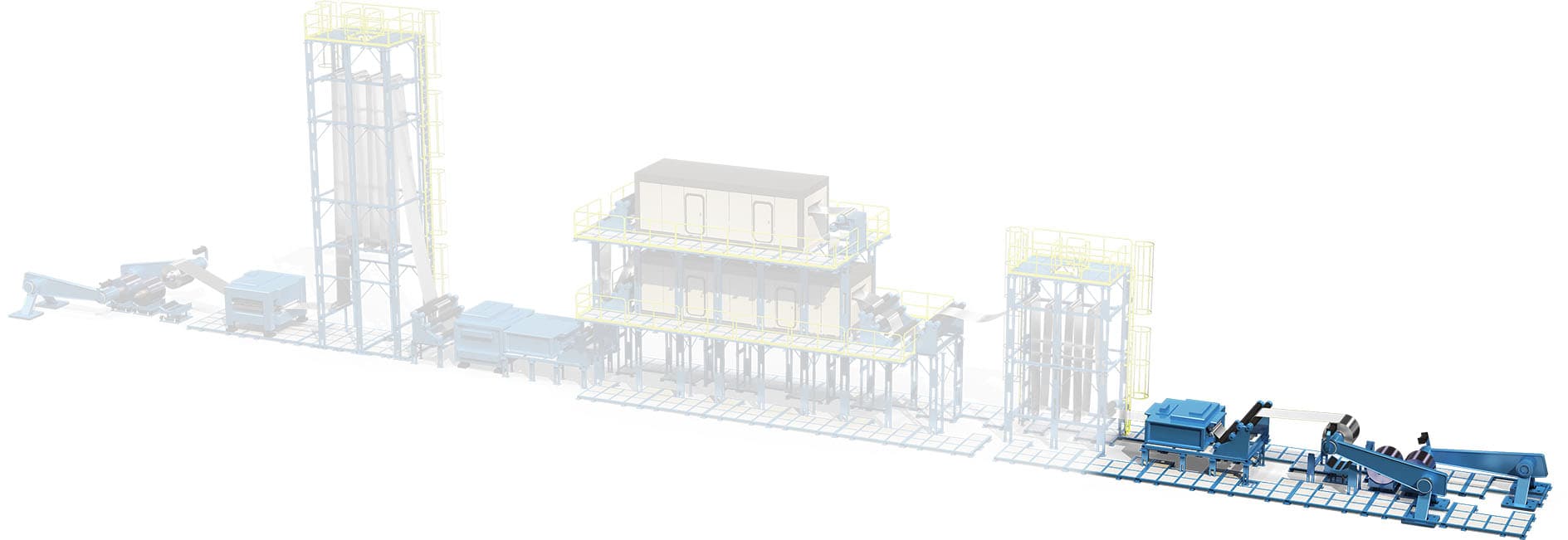
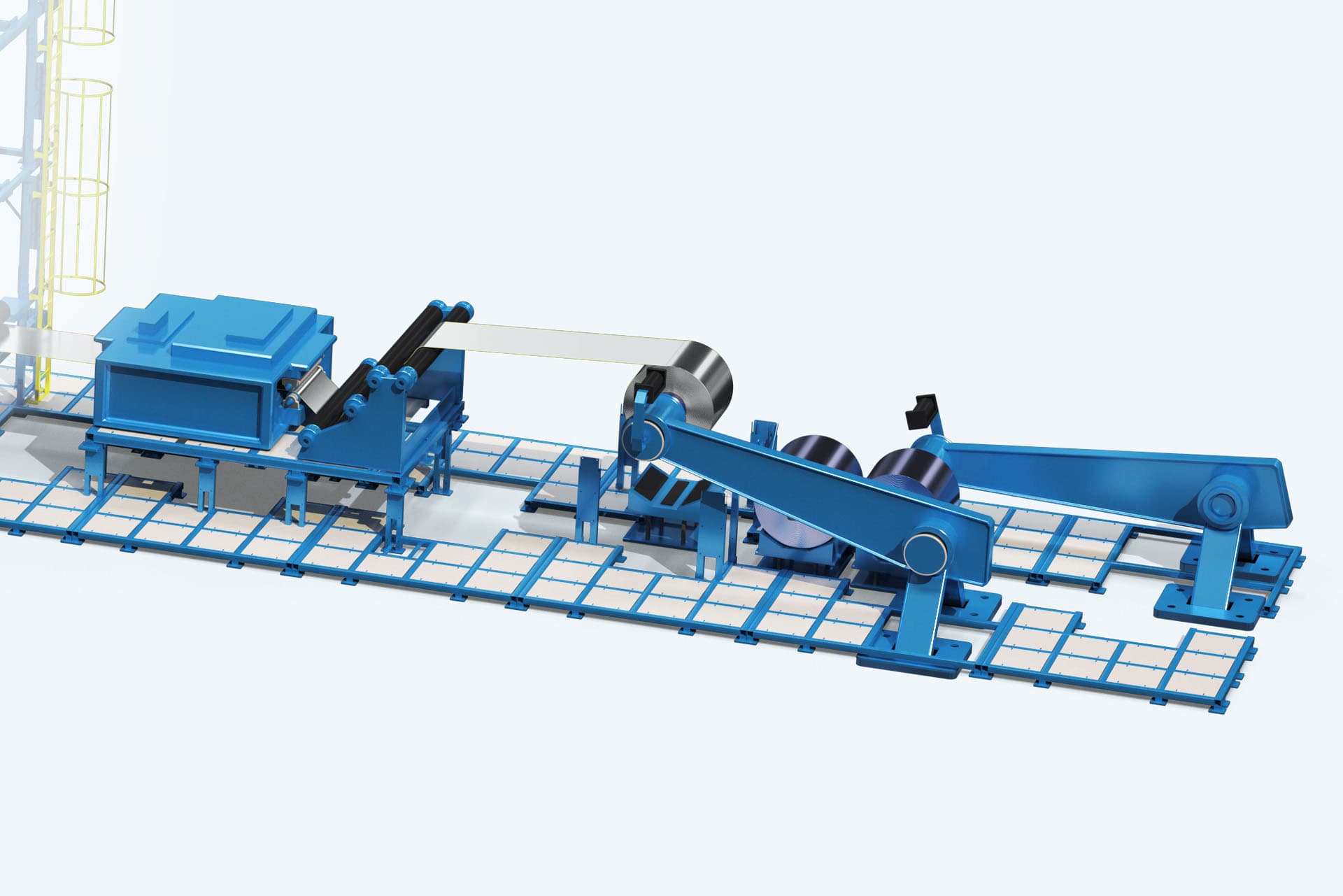
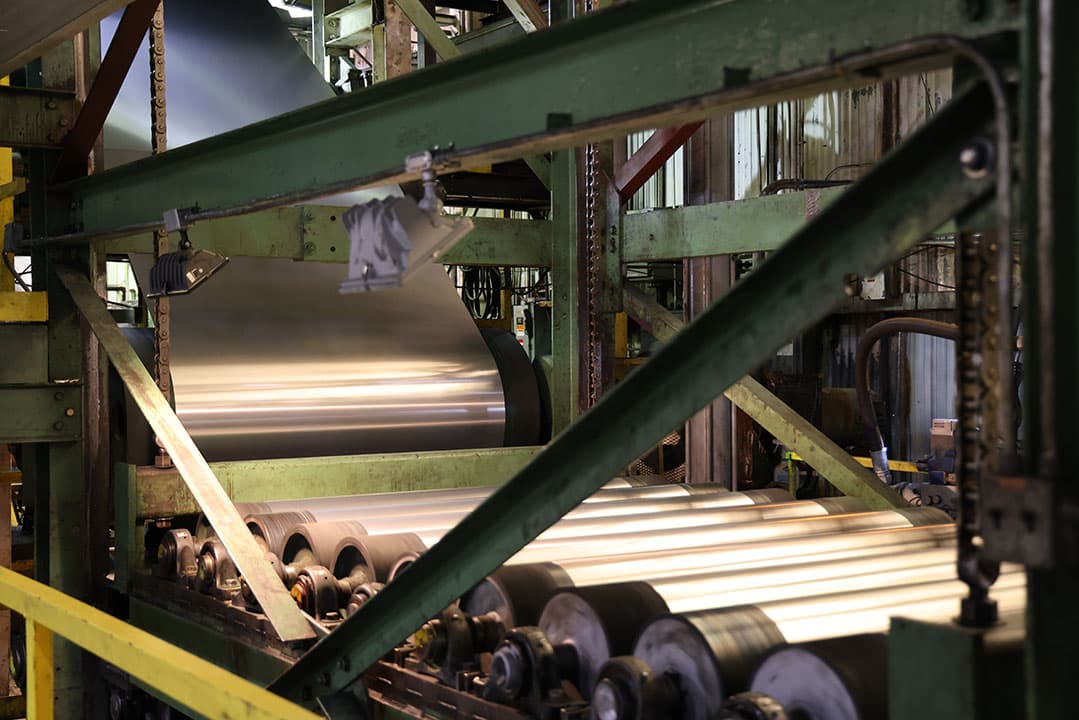
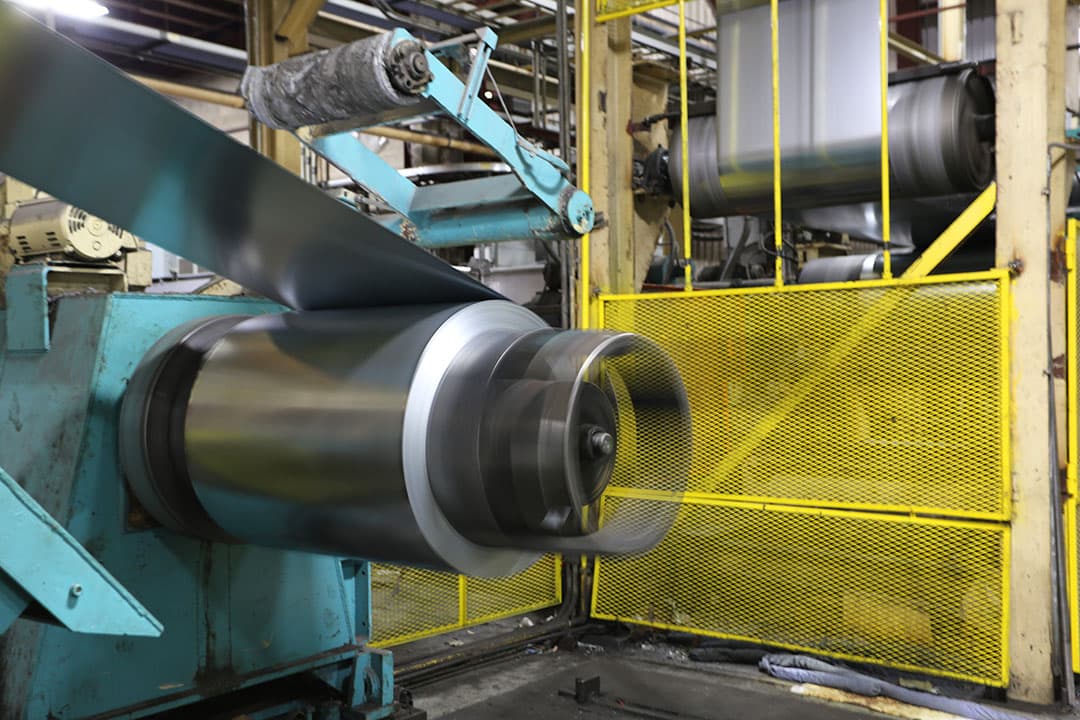
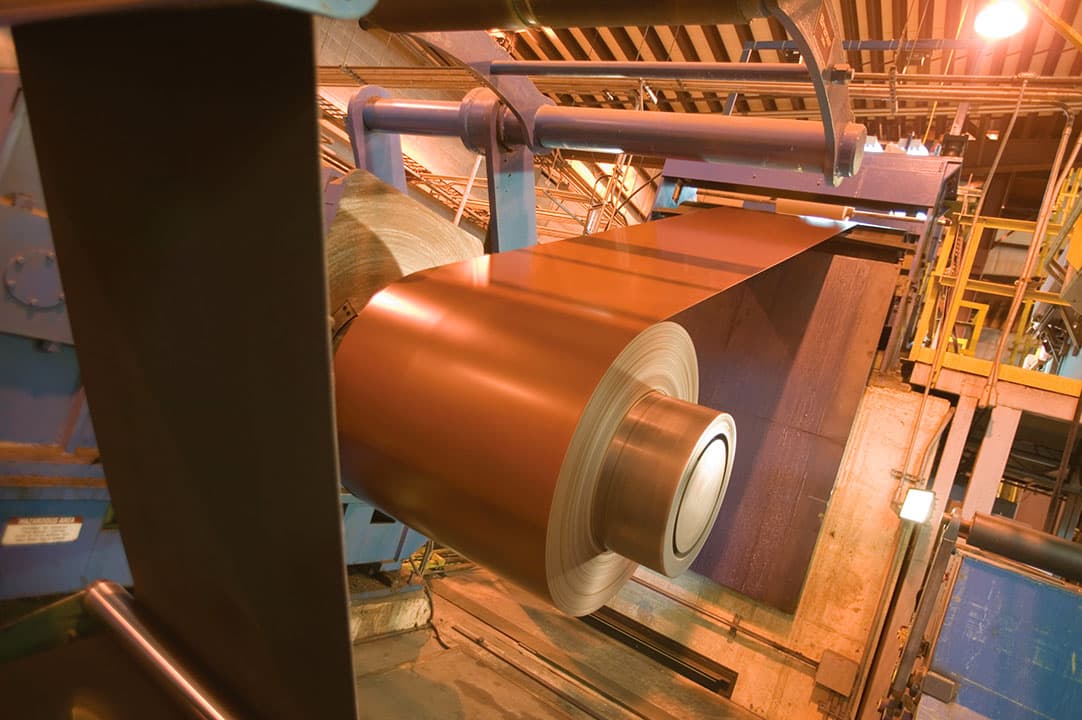
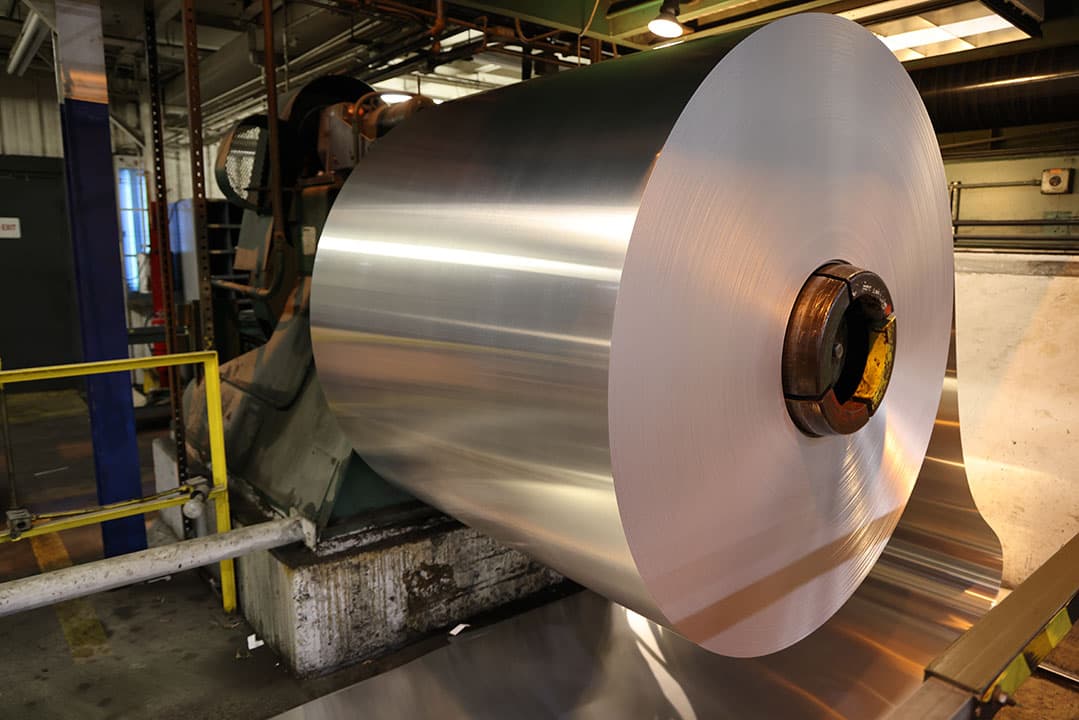
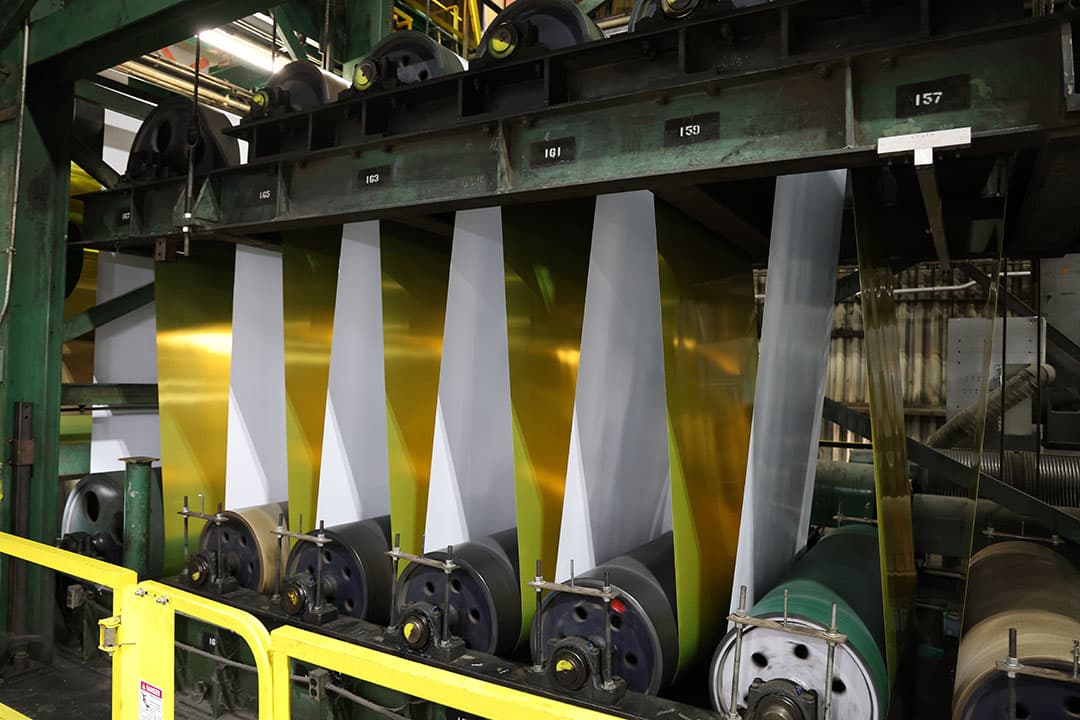
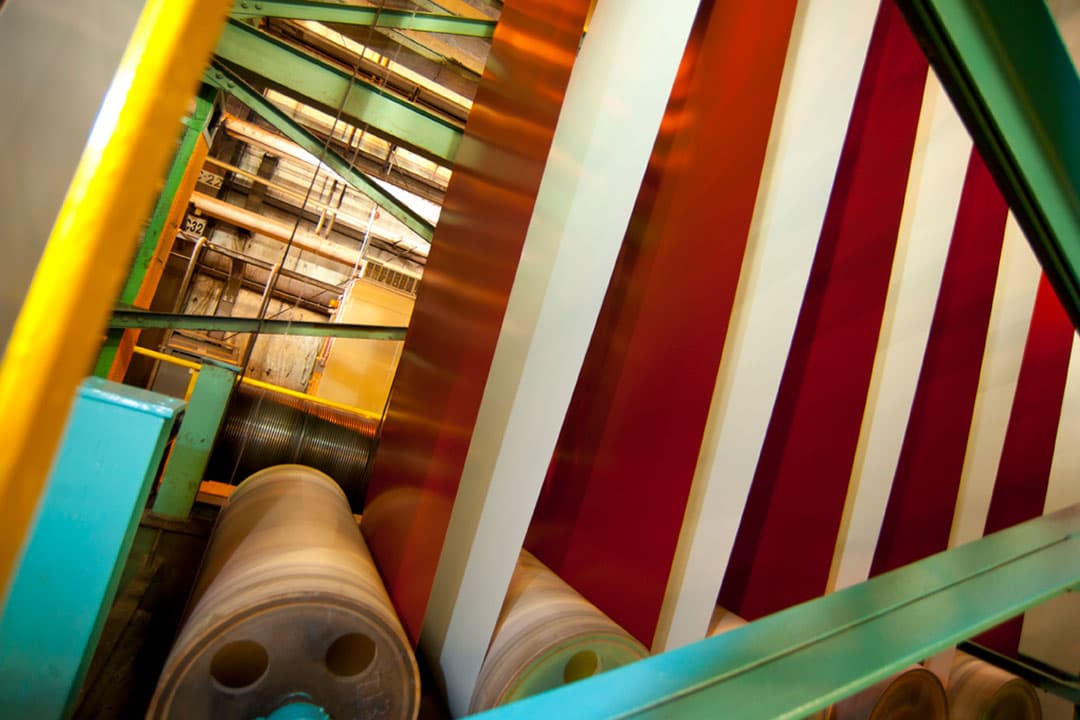
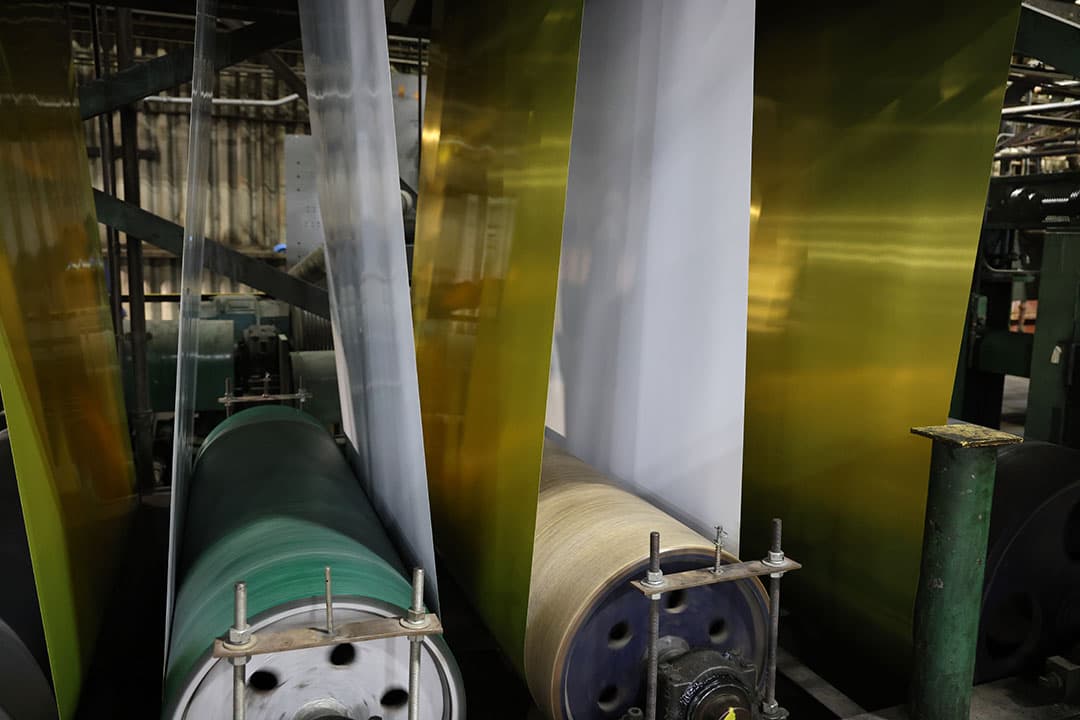
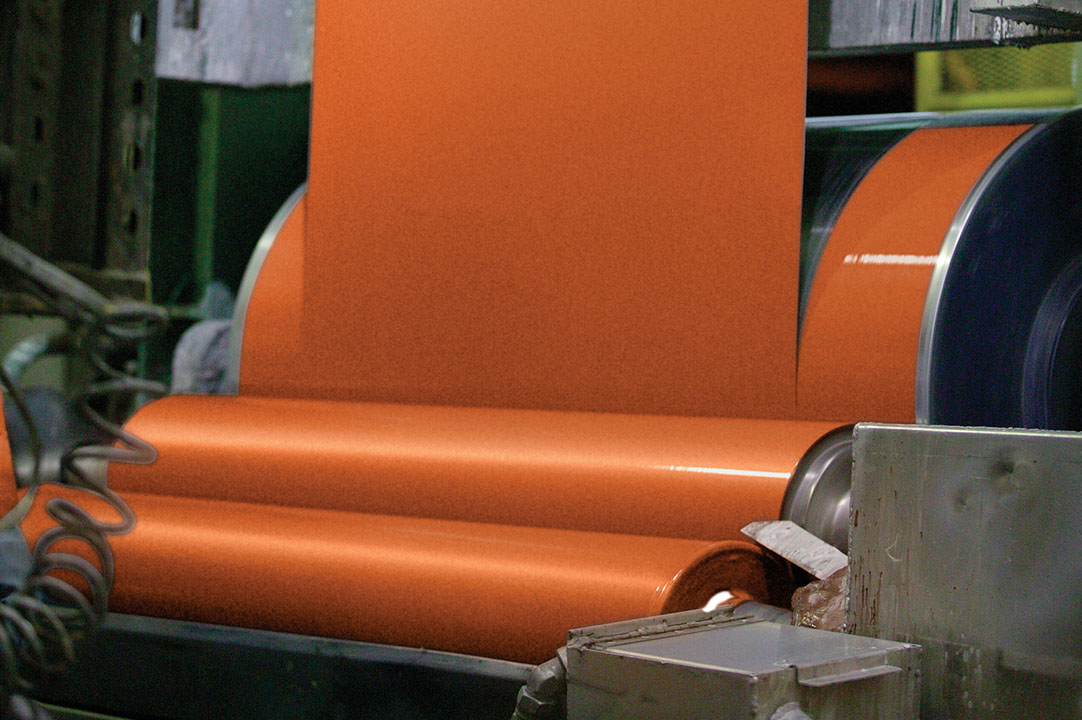
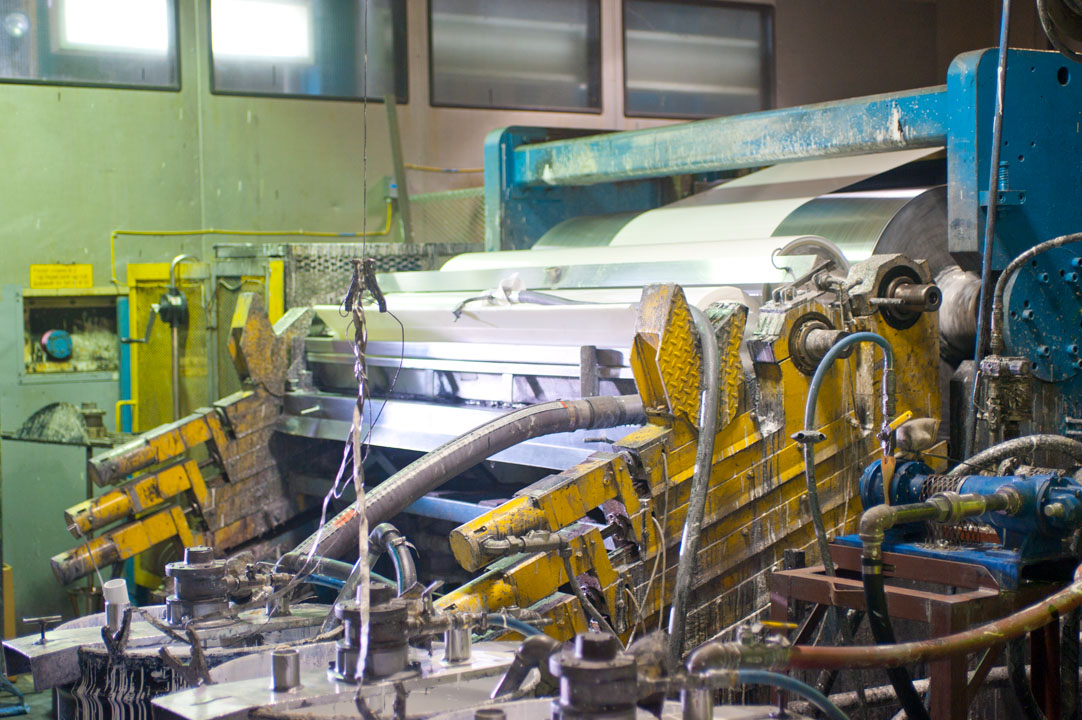
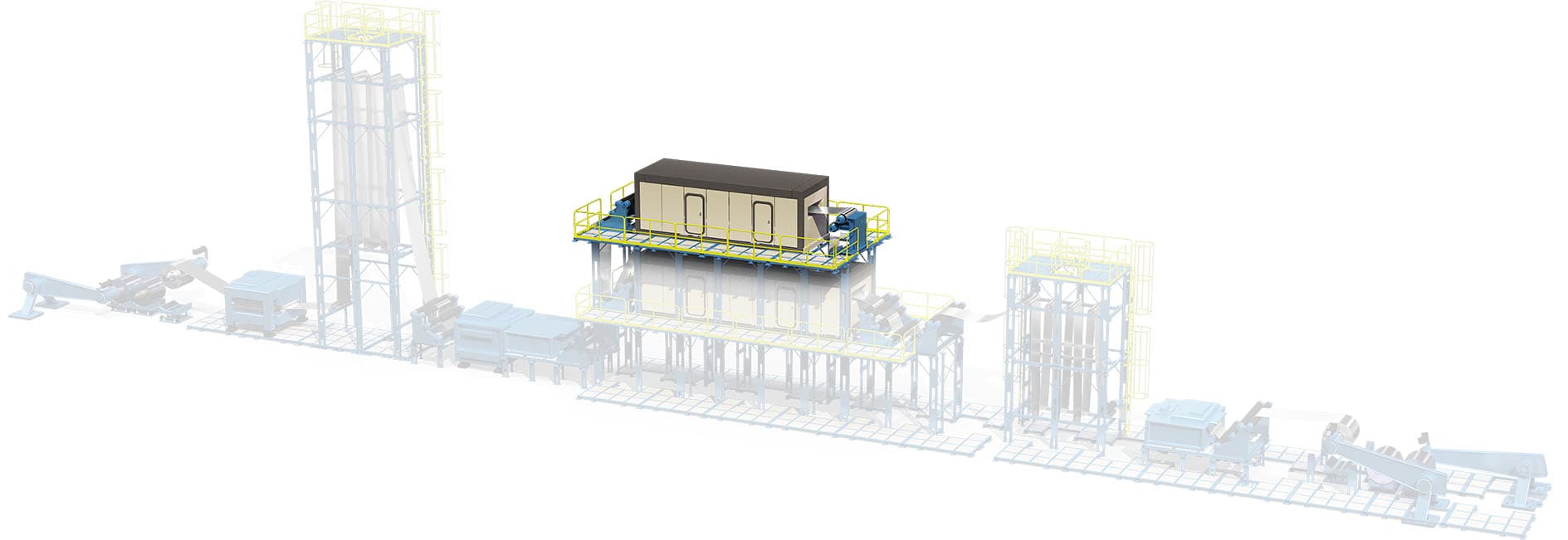
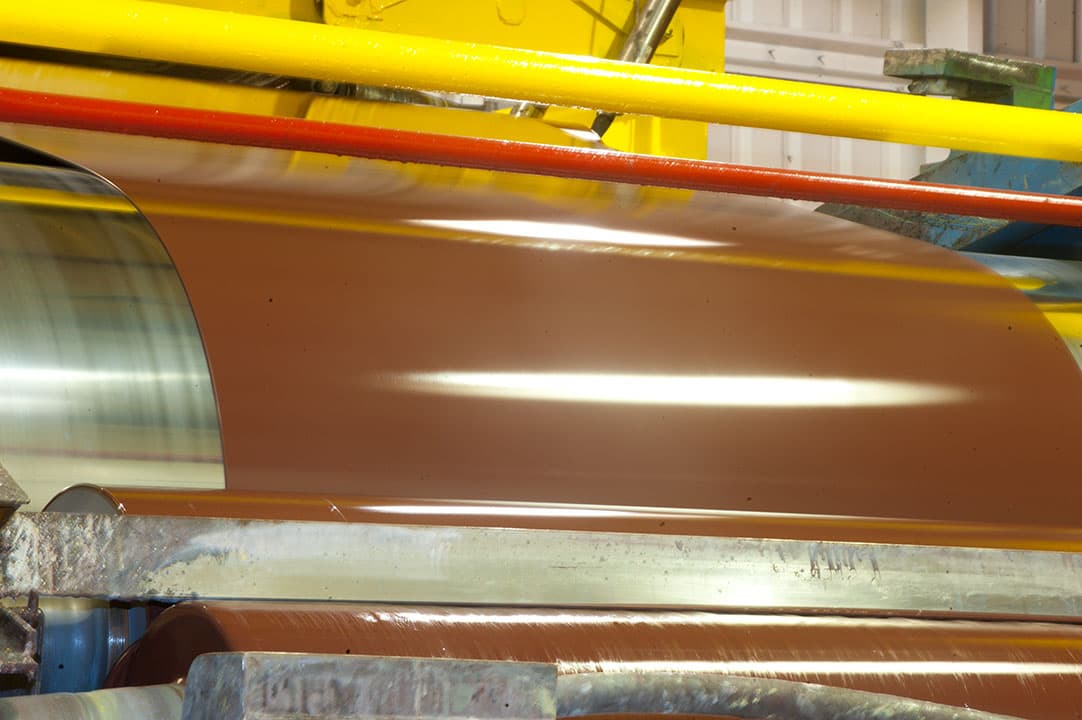
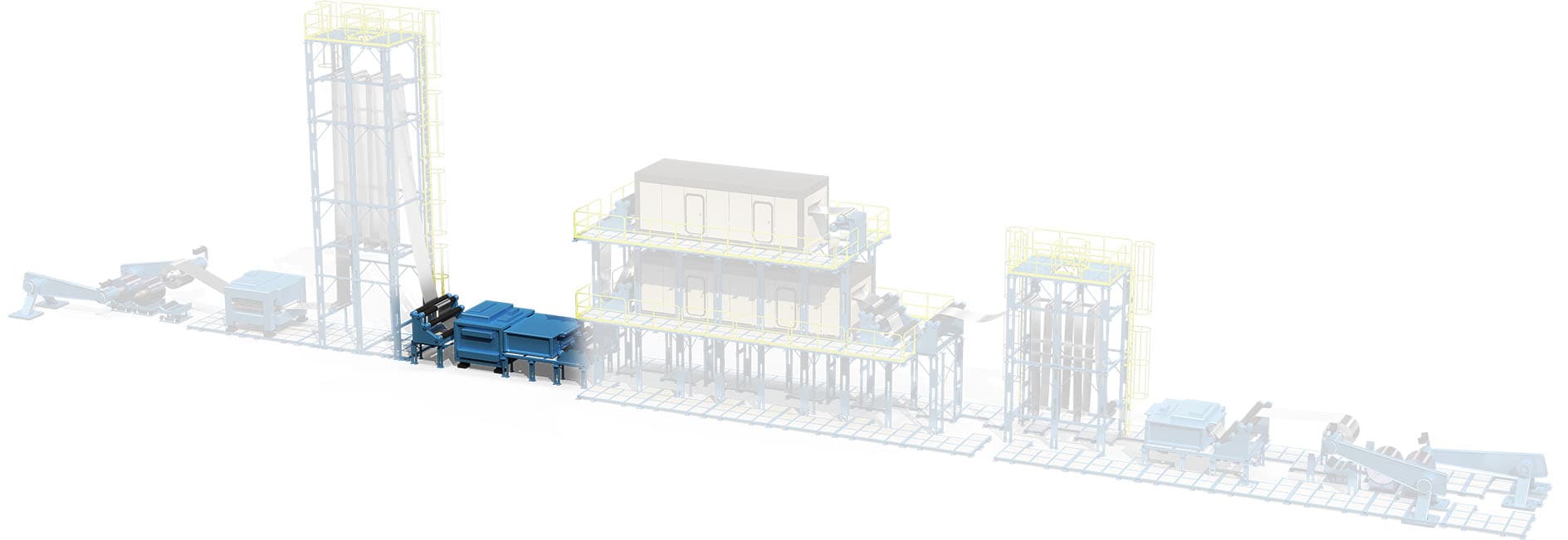
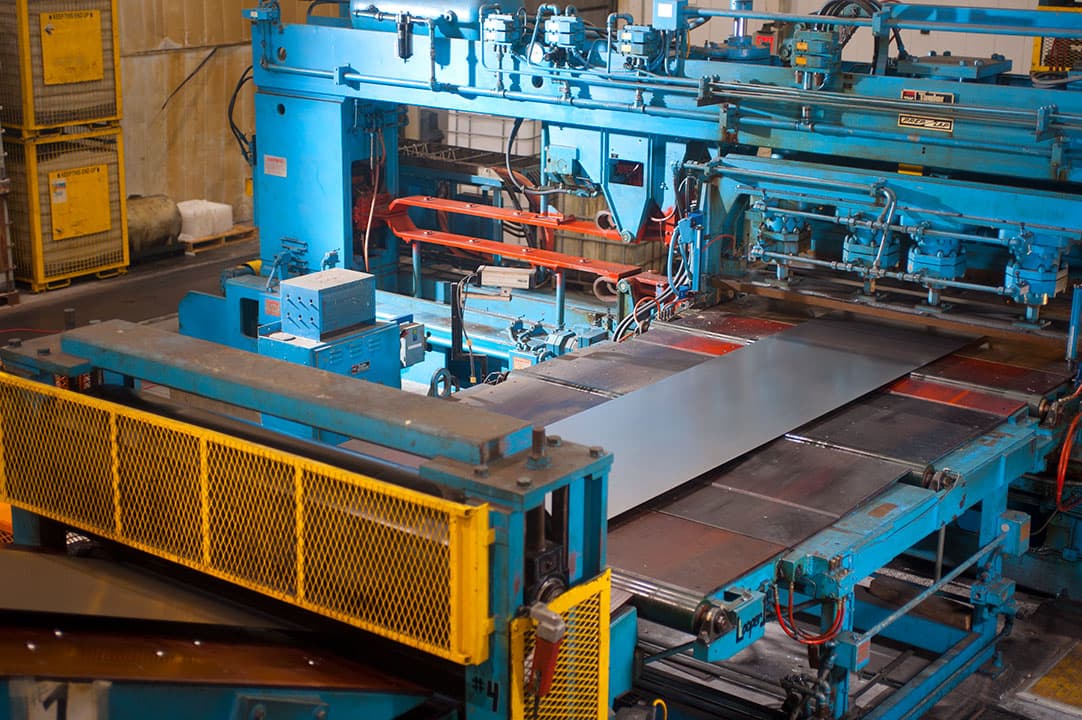
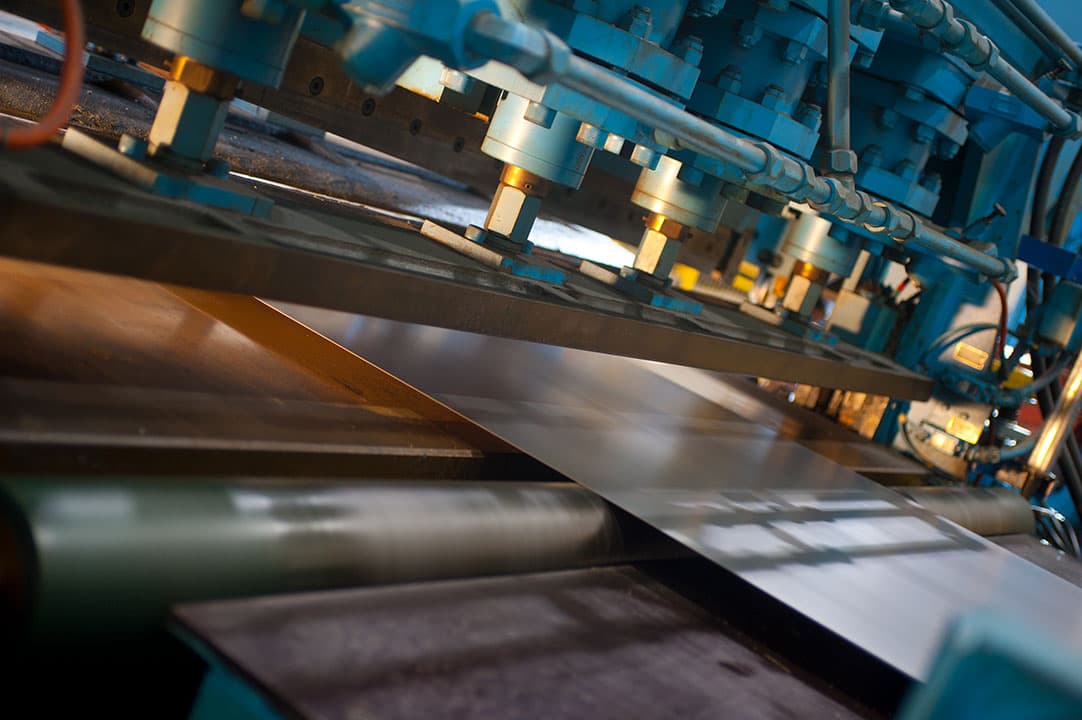
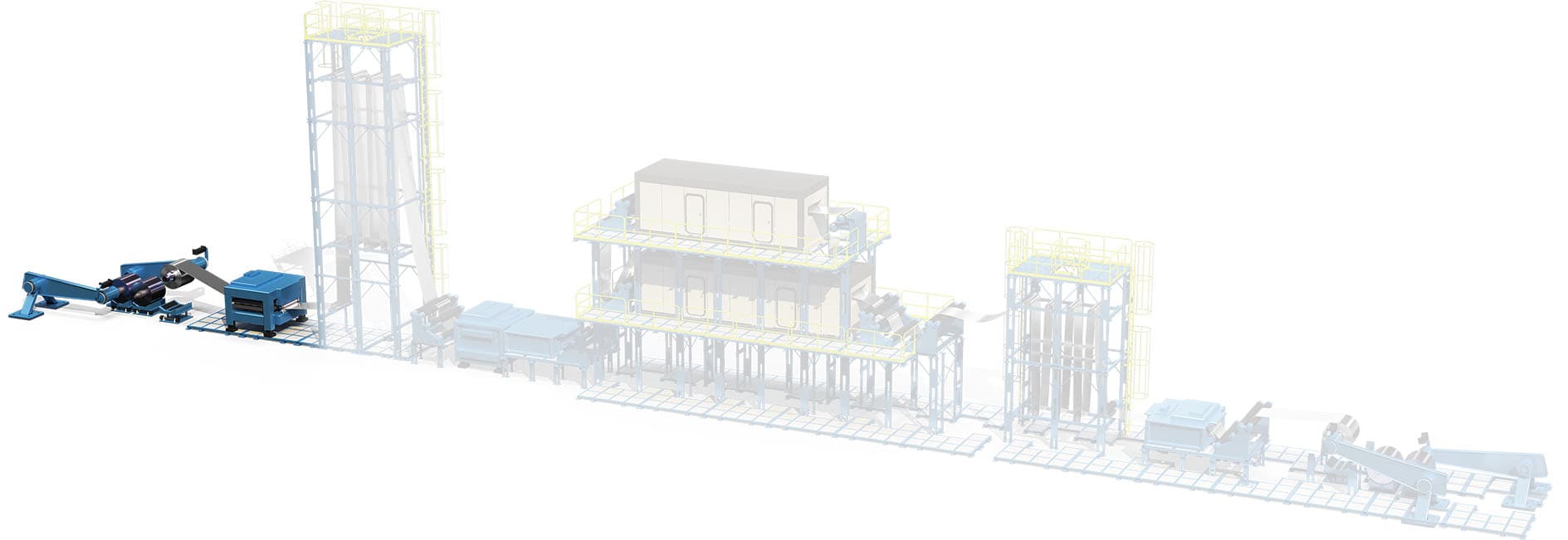
Once the metal is cleaned, treated, and painted, the strip is rewound into a coil size prescribed by the customer. From there, the coil is removed from the line and packaged for shipment or additional processing.
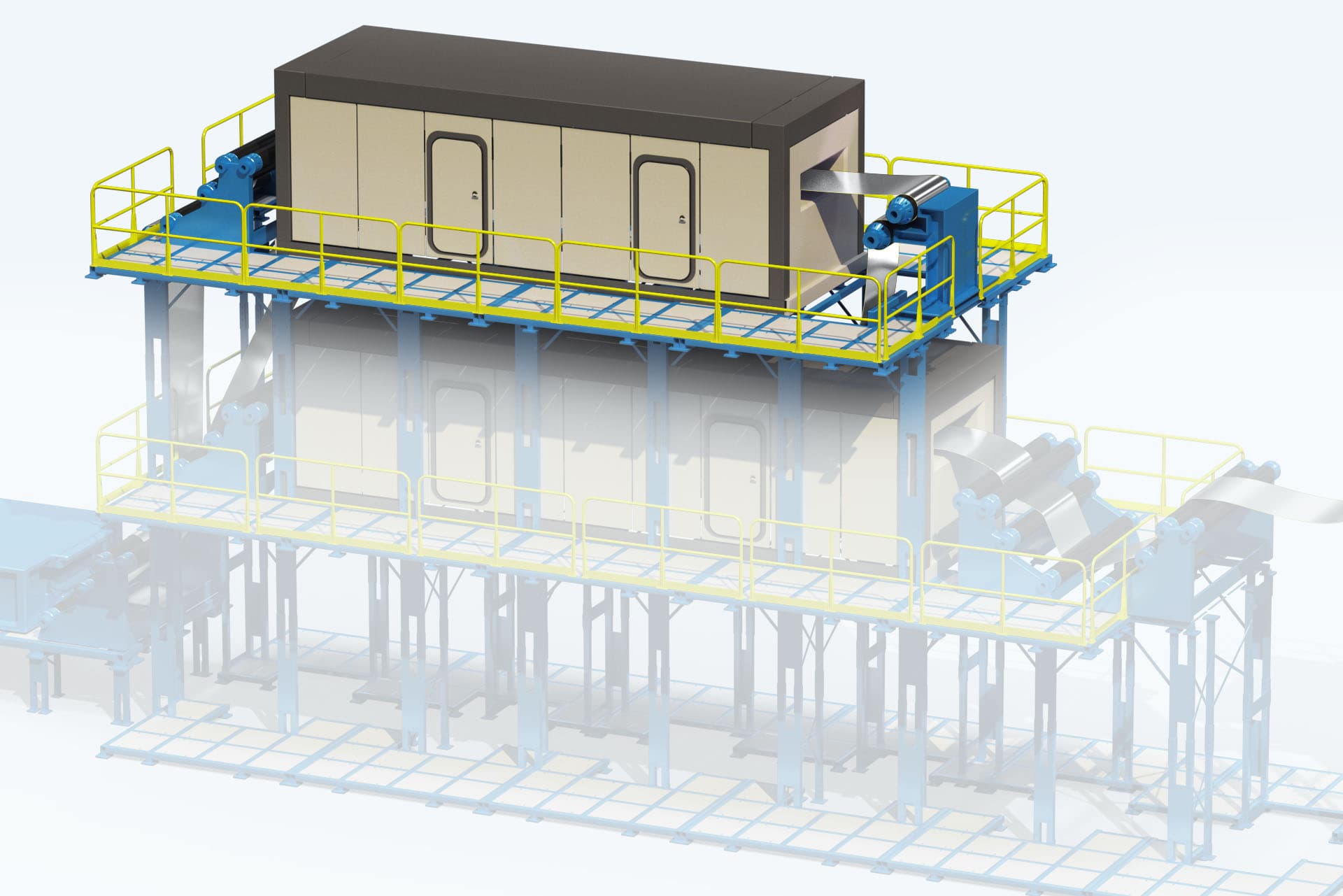
After the primer is applied and cured, then the metal strip enters the finish coat station where a topcoat is applied. Topcoats provide color, corrosion resistance, durability, flexibility and any other required physical properties. Like primers, the topcoat is cured using thermal cure ovens.
Oven
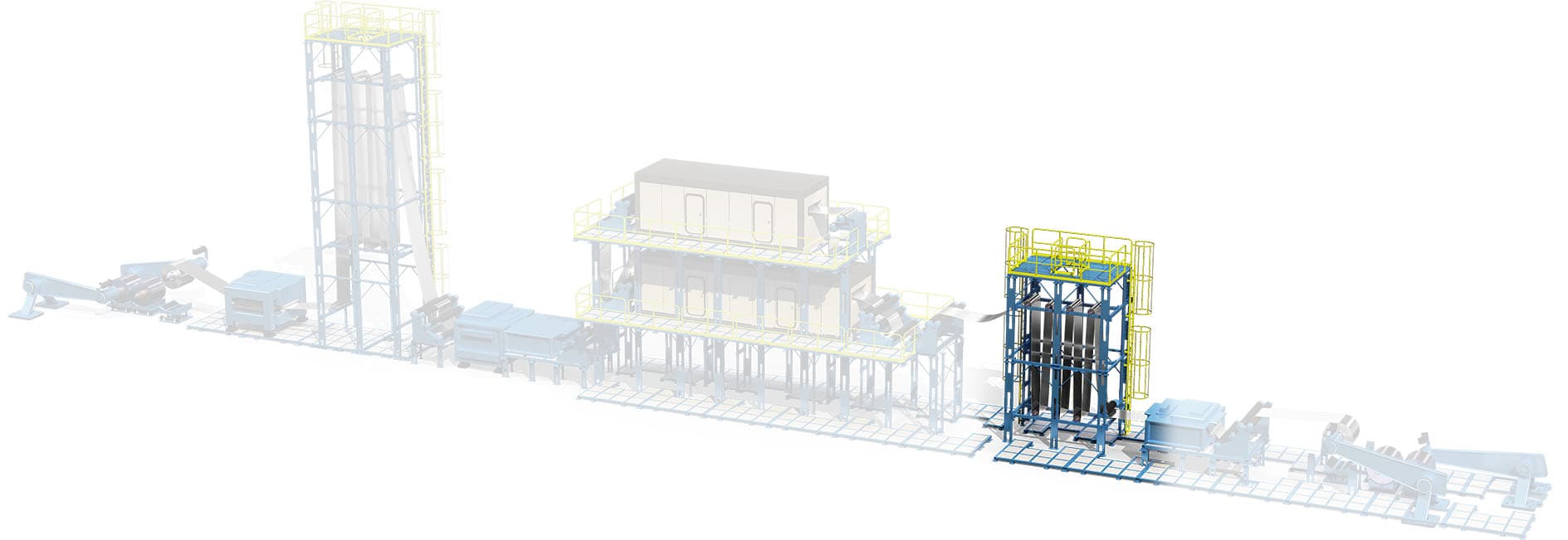
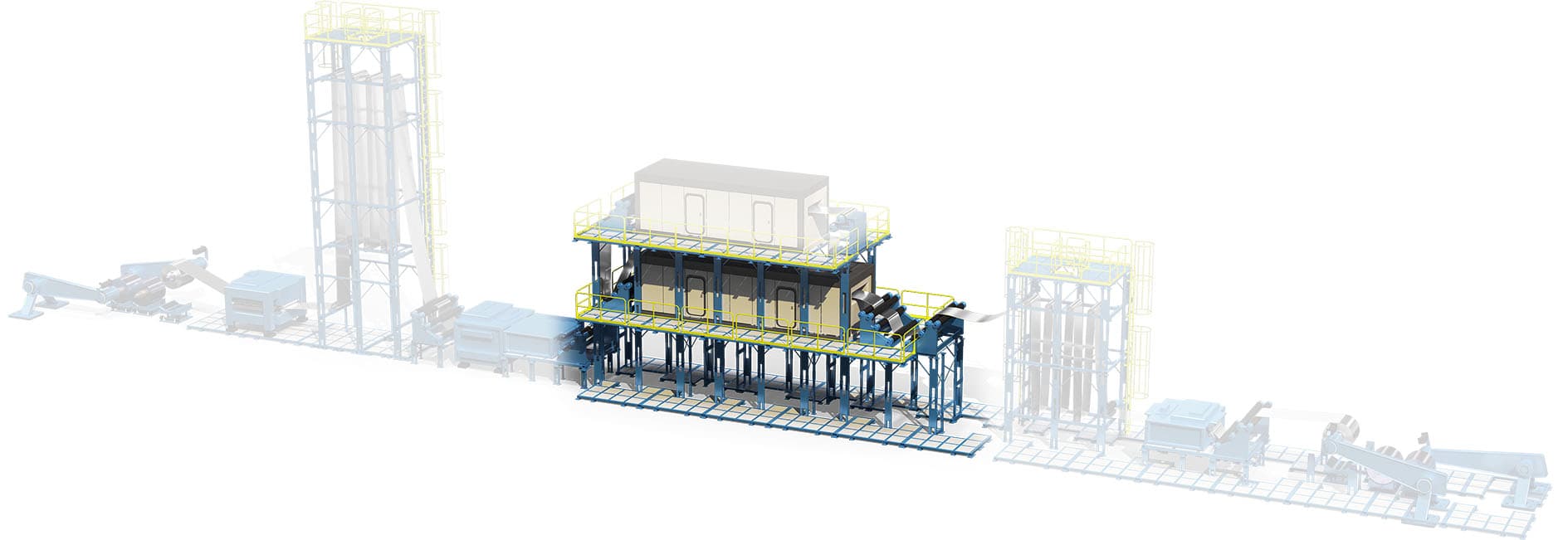
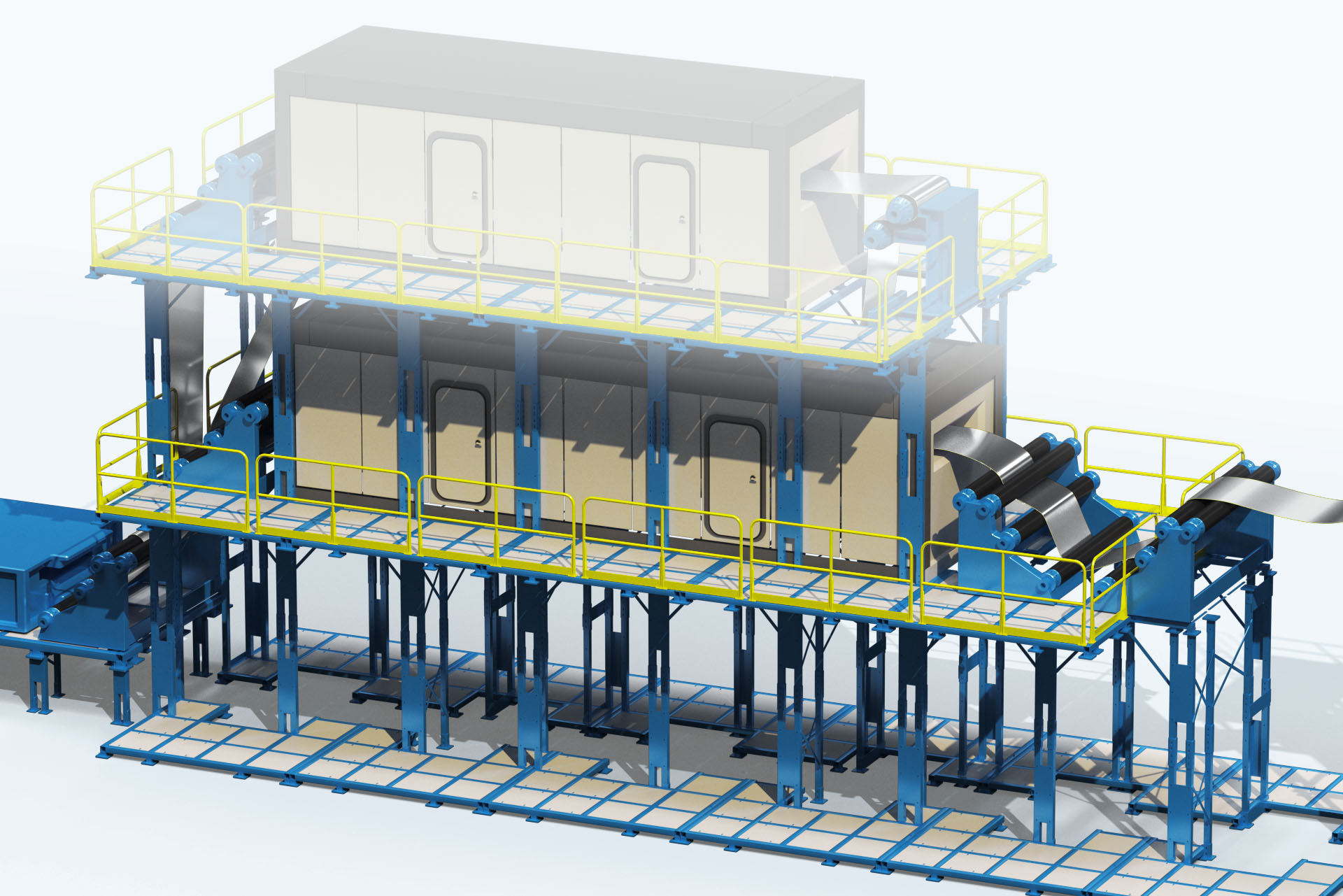
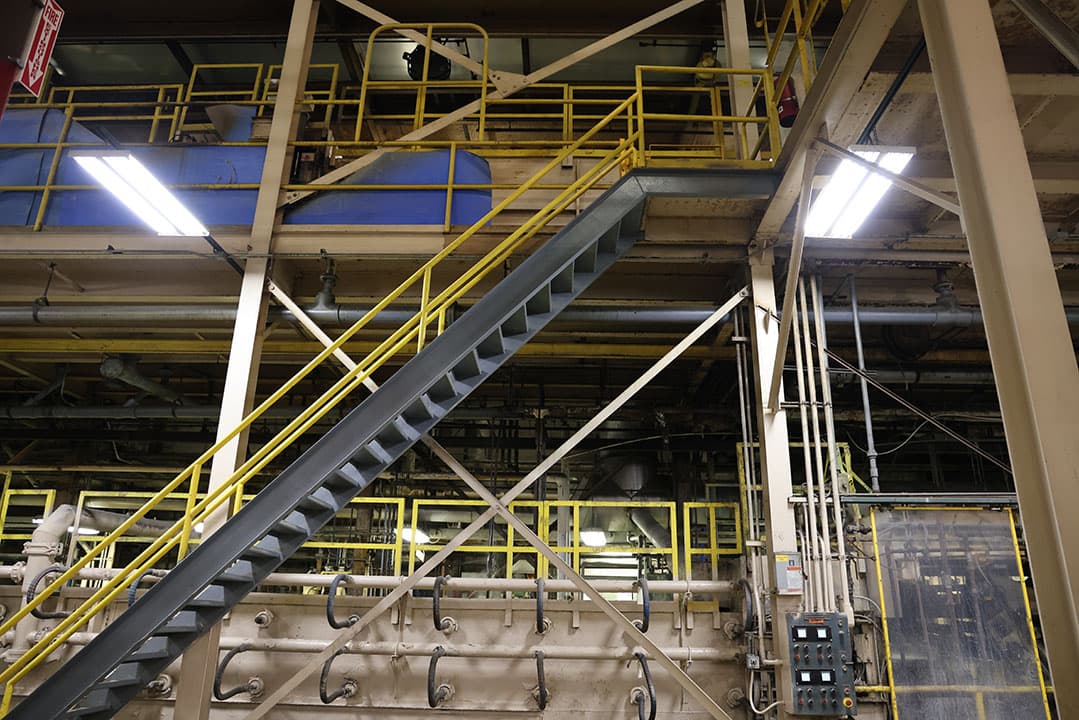
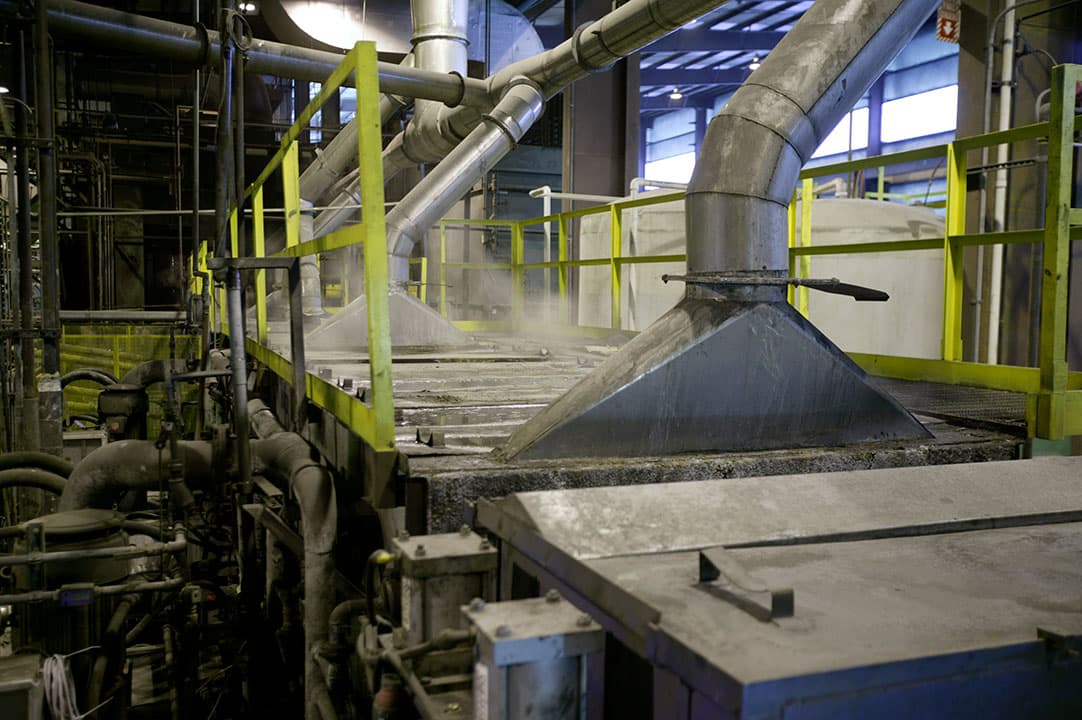
Coil coating ovens can range from 130 feet to 160 feet and will cure the coatings in 13 to 20 seconds.
During this stage, the strip enters the prime coat station whereby a primer is applied to the clean and treated metal. After the primer is applied, the metal strip travels through a thermal oven for curing. Primers are used to aid in paint adhesion, improve corrosion performance and enhance aesthetic and functional attributes of the topcoat.
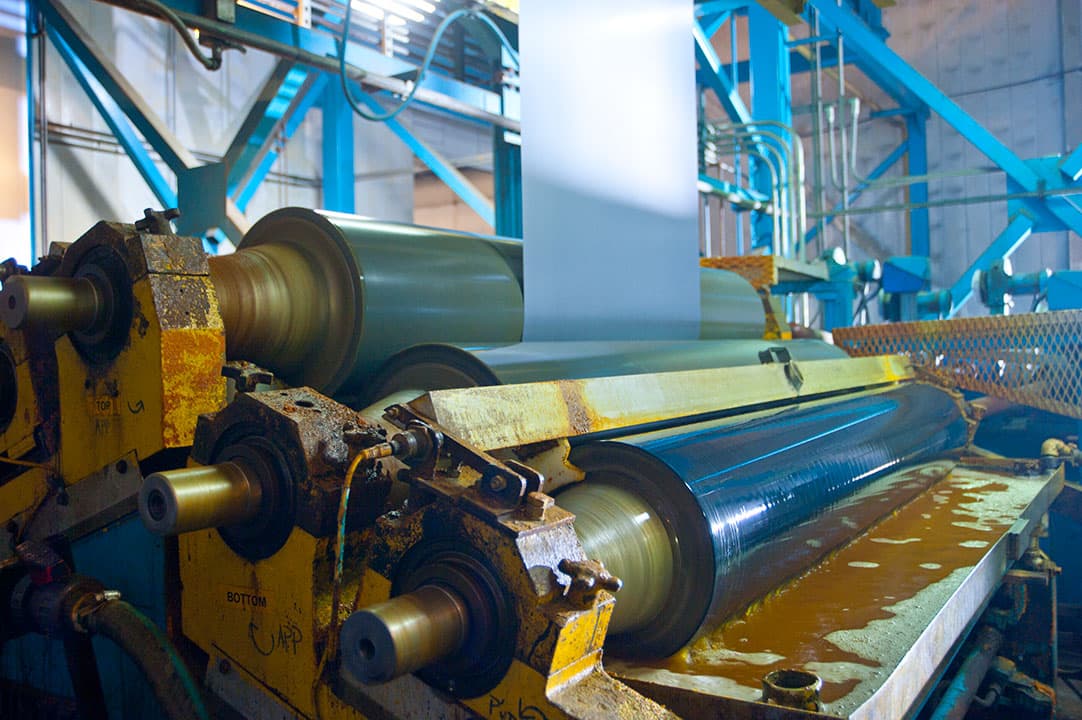
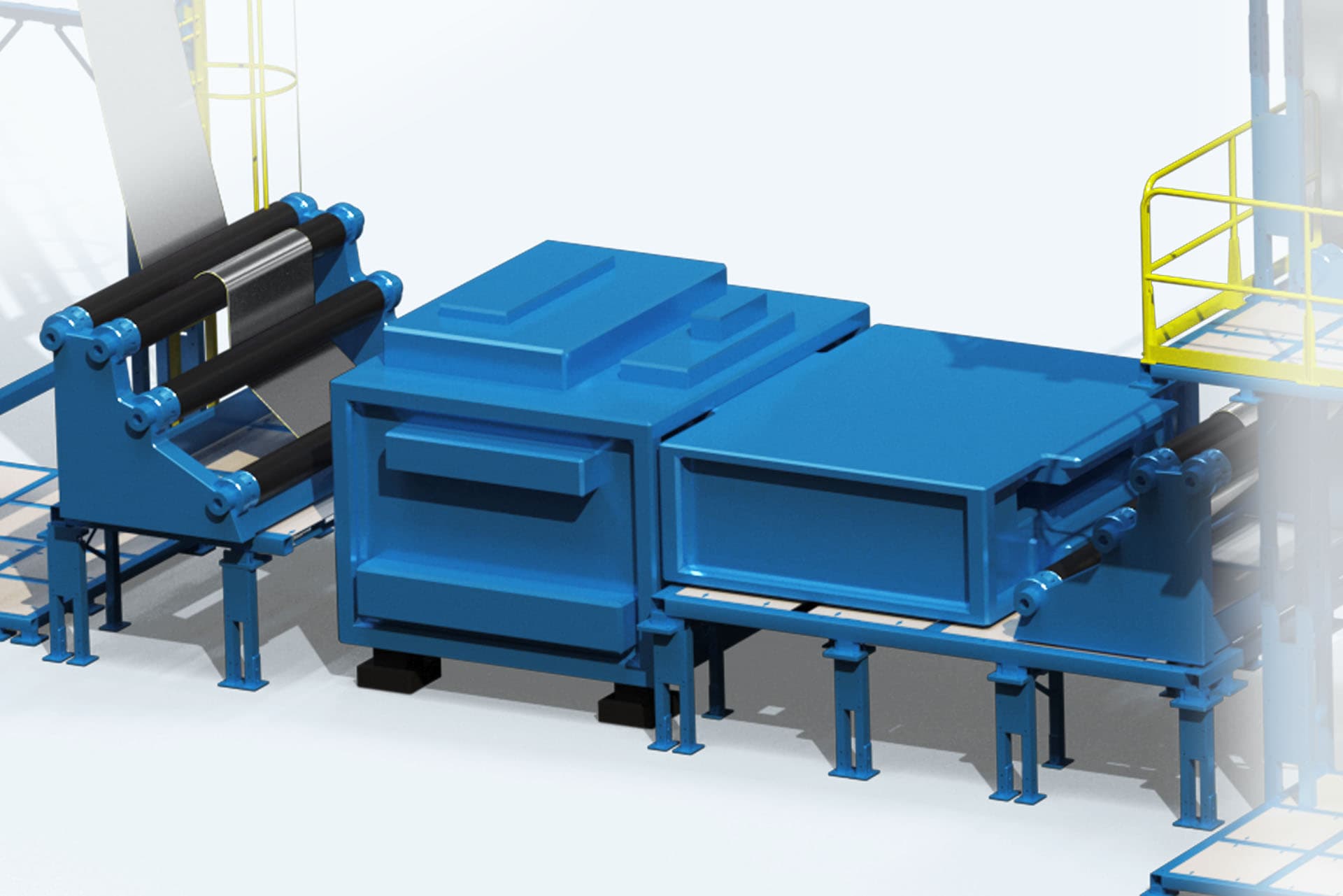
S Wrap Coater
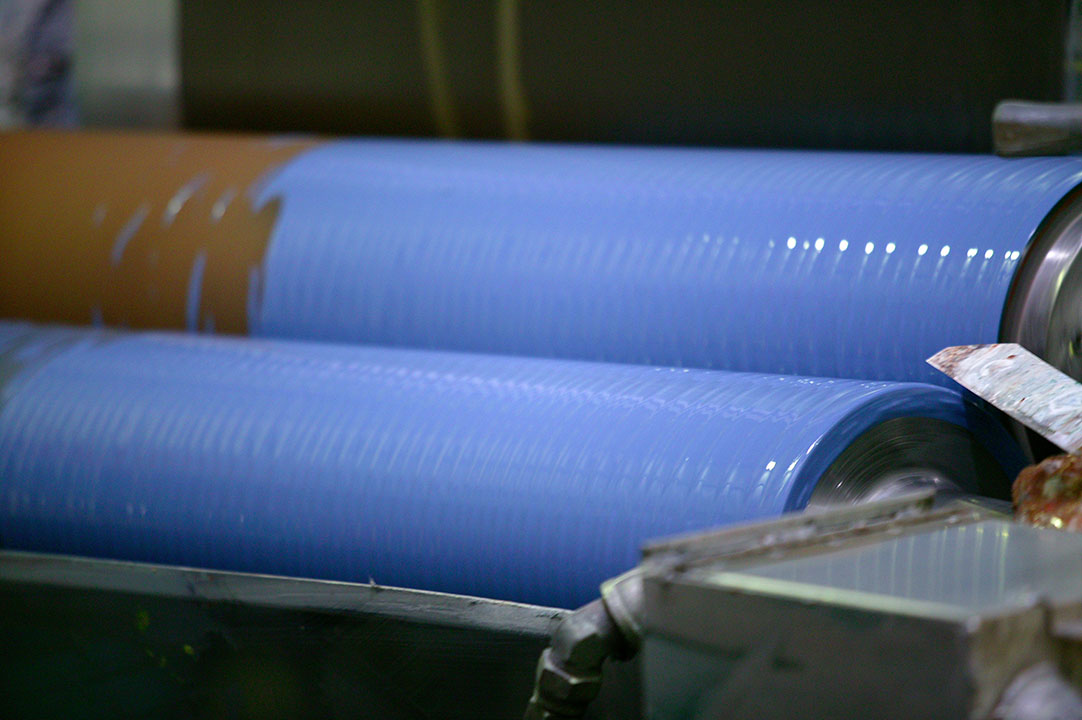
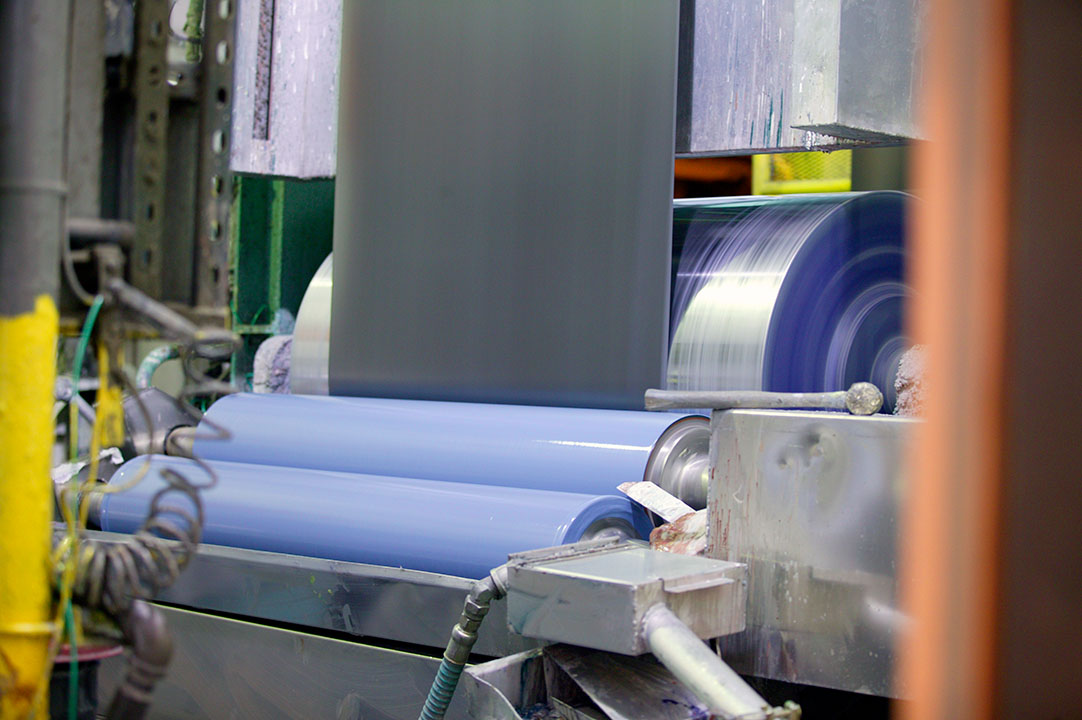
The S wrap coater design allows for primers and paints to be applied to the top and back side of the metal strip simultaneously in one continuous pass.
The cleaning and pretreating section of the coil coating process focuses on preparing the metal for painting. During the cleaning stage, dirt, debris, and oils are removed from the metal strip. From there, the metal enters the pretreatment section and/or a chemical coater whereby chemicals are applied to facilitate paint adhesion and enhance corrosion resistance.
Dried-In-Place
In this stage a chemical that provides enhanced corrosion performance is applied. This treatment can be chrome free if required.
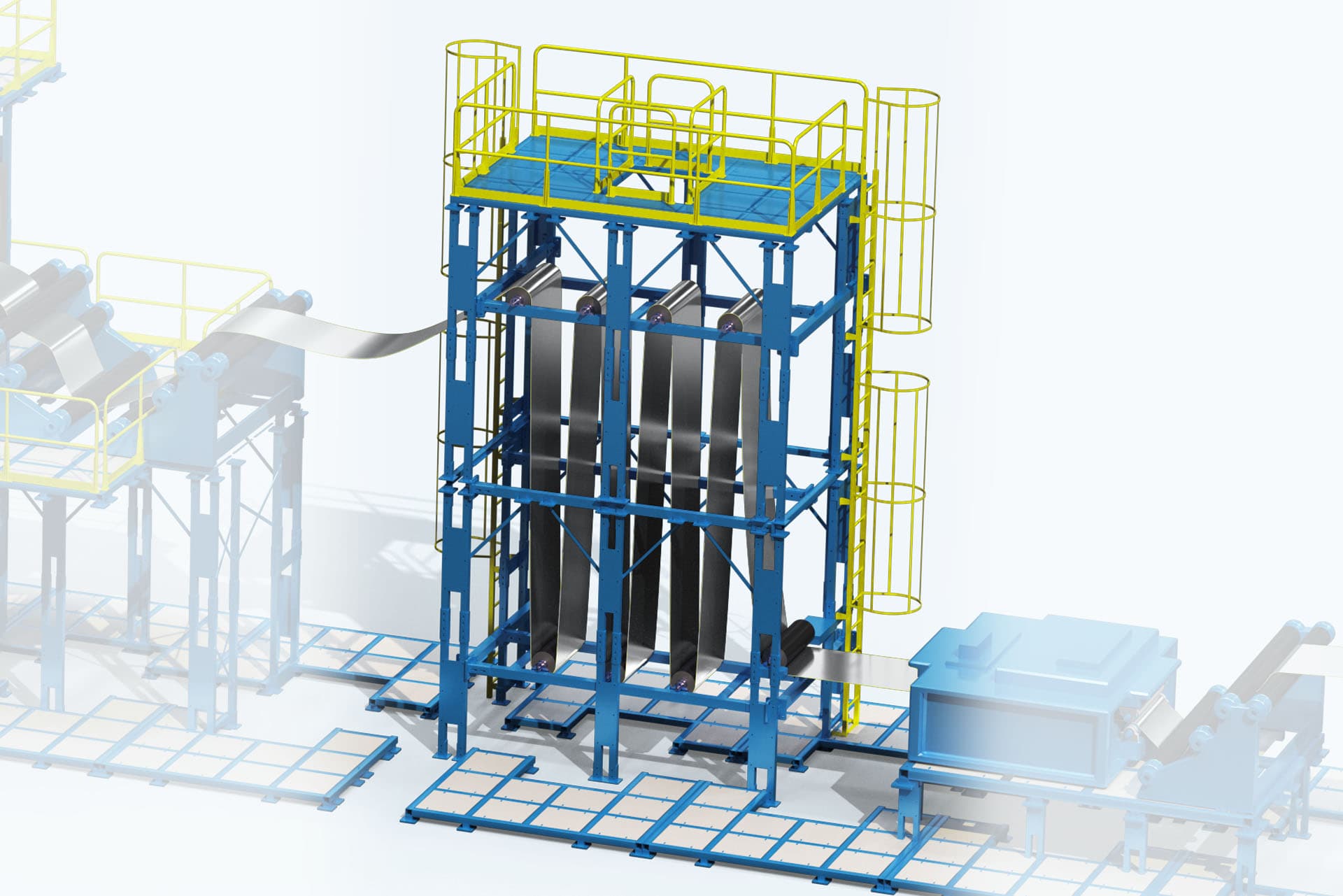
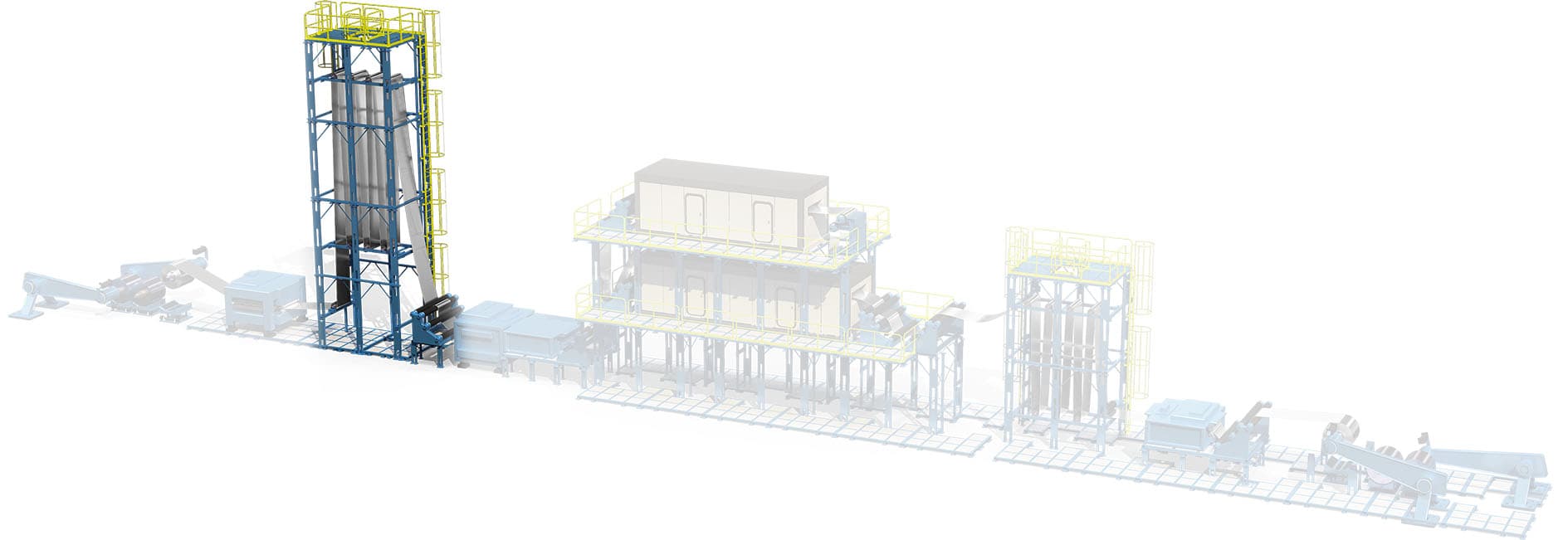
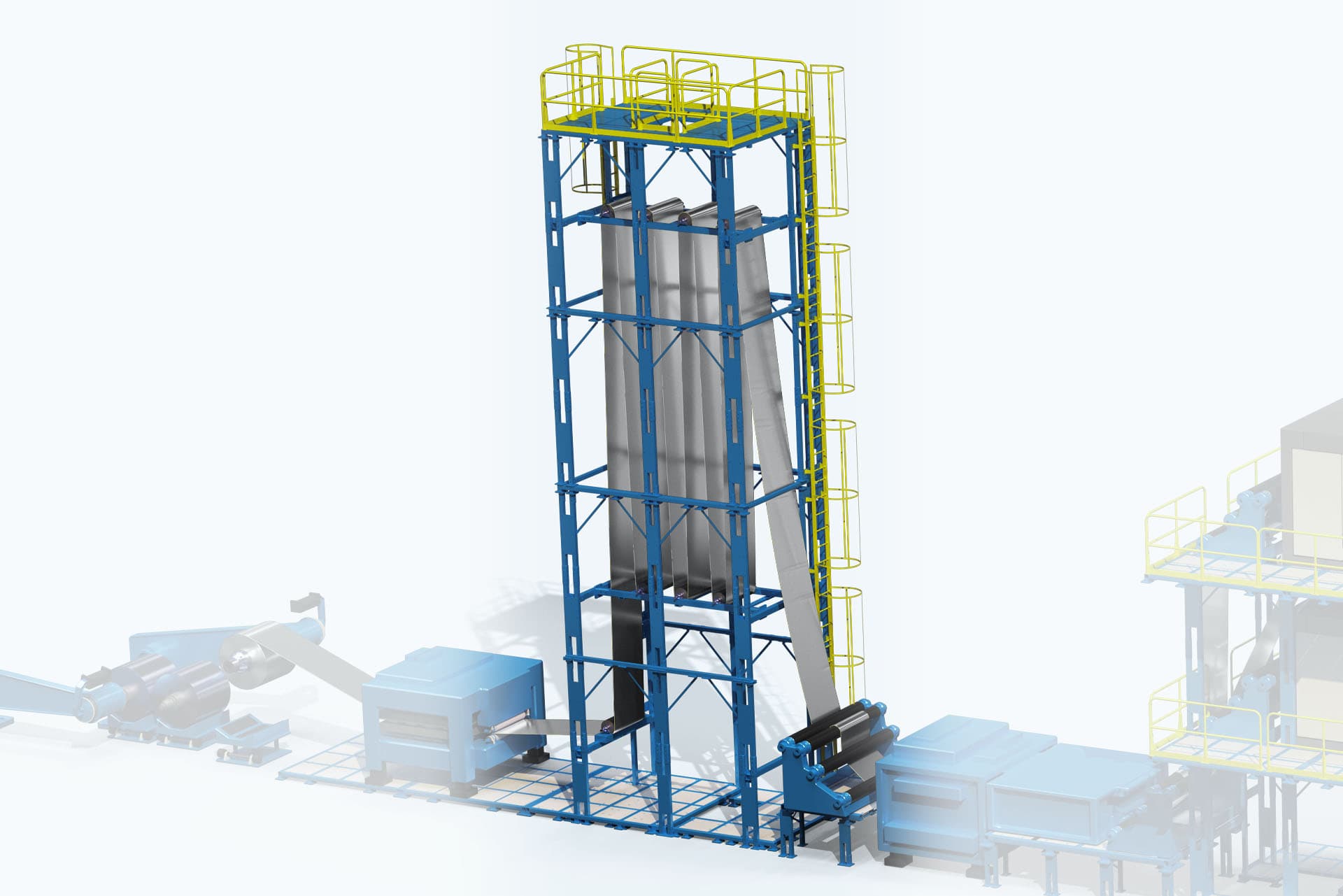
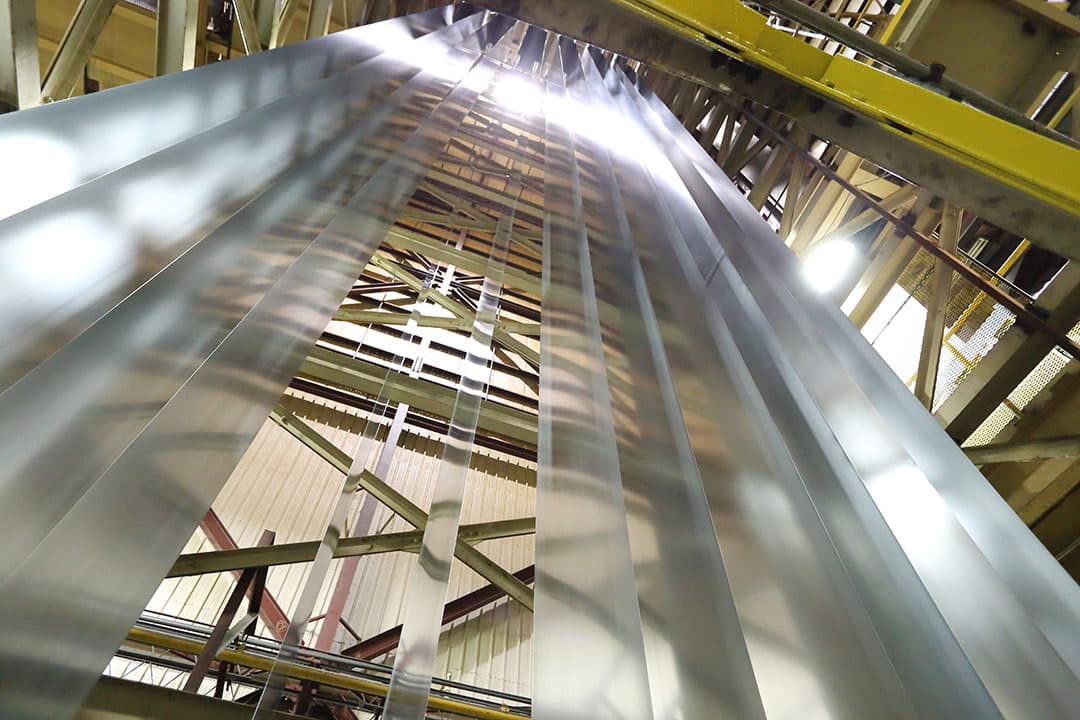
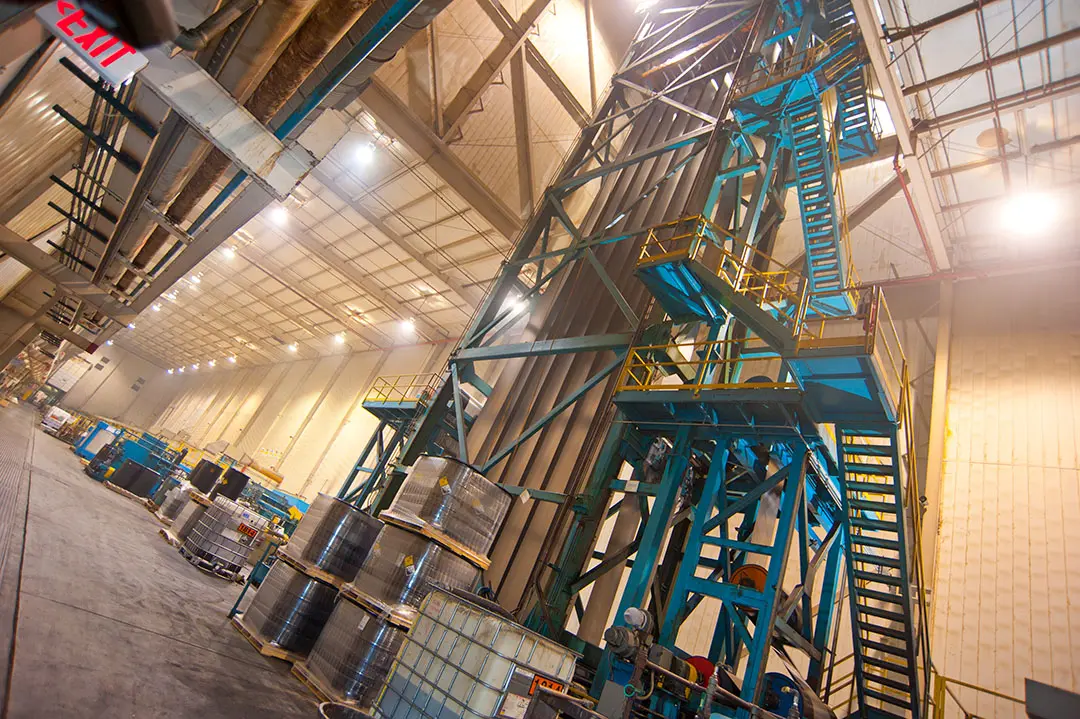
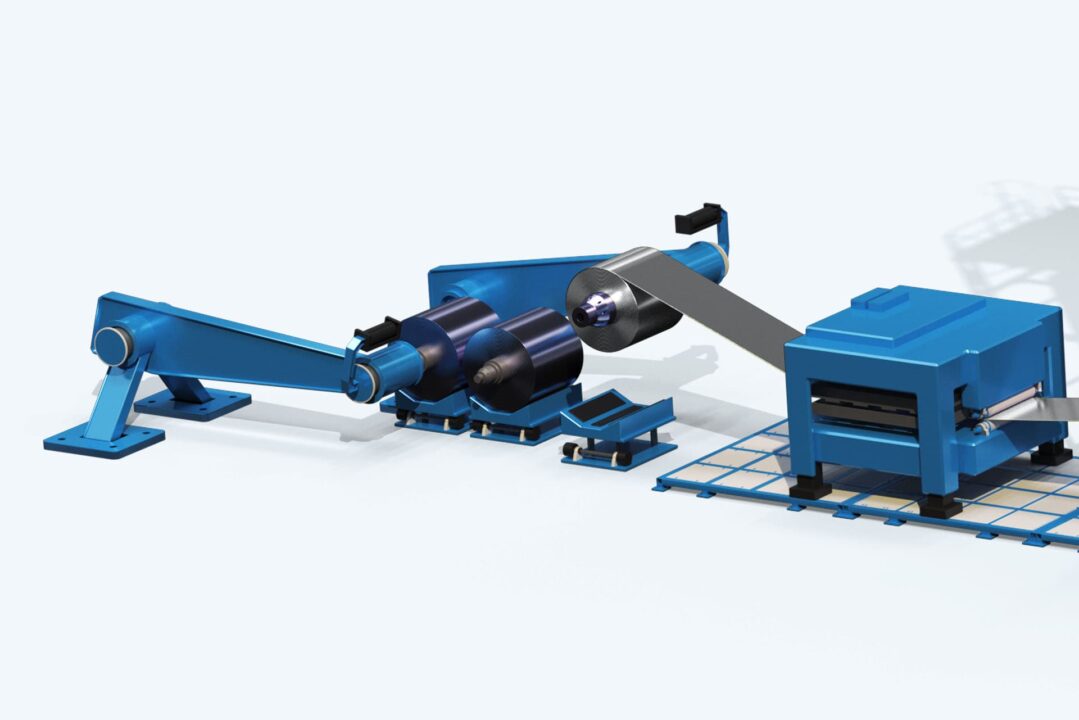
The accumulator is a structure that adjusts up and down to store material, which makes continuous operation of the coil coating process possible. This accumulation will continue to feed the coil coating processes while the entry end has stopped for the stitching process. As much as 750 feet of metal can be collected.
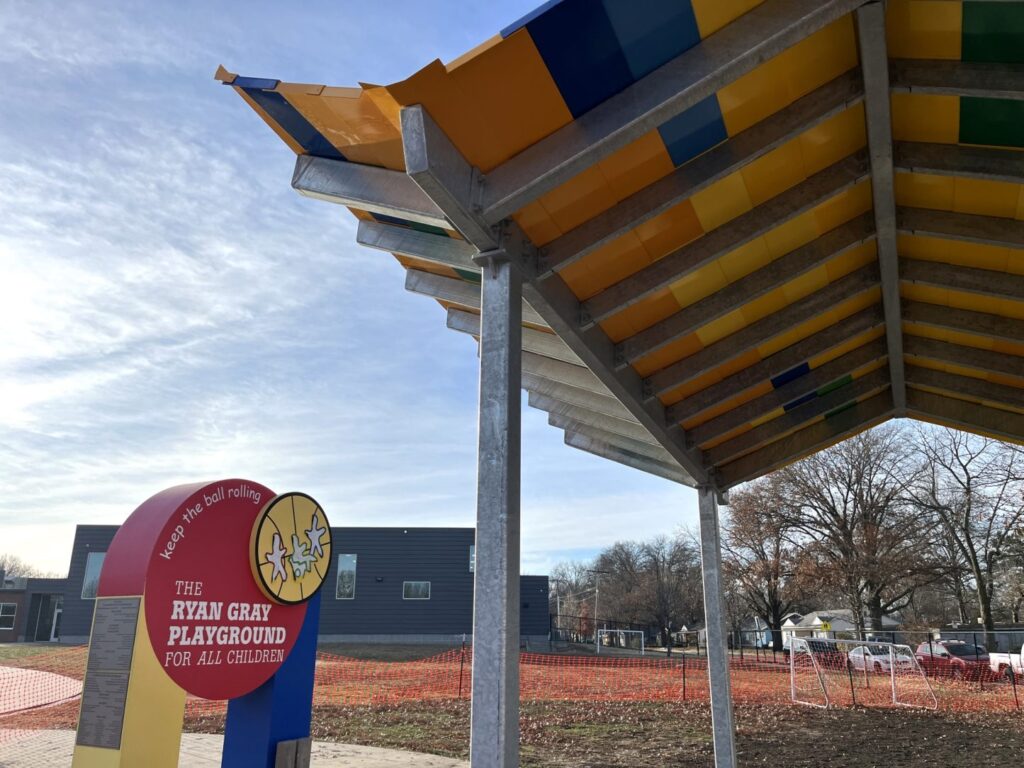
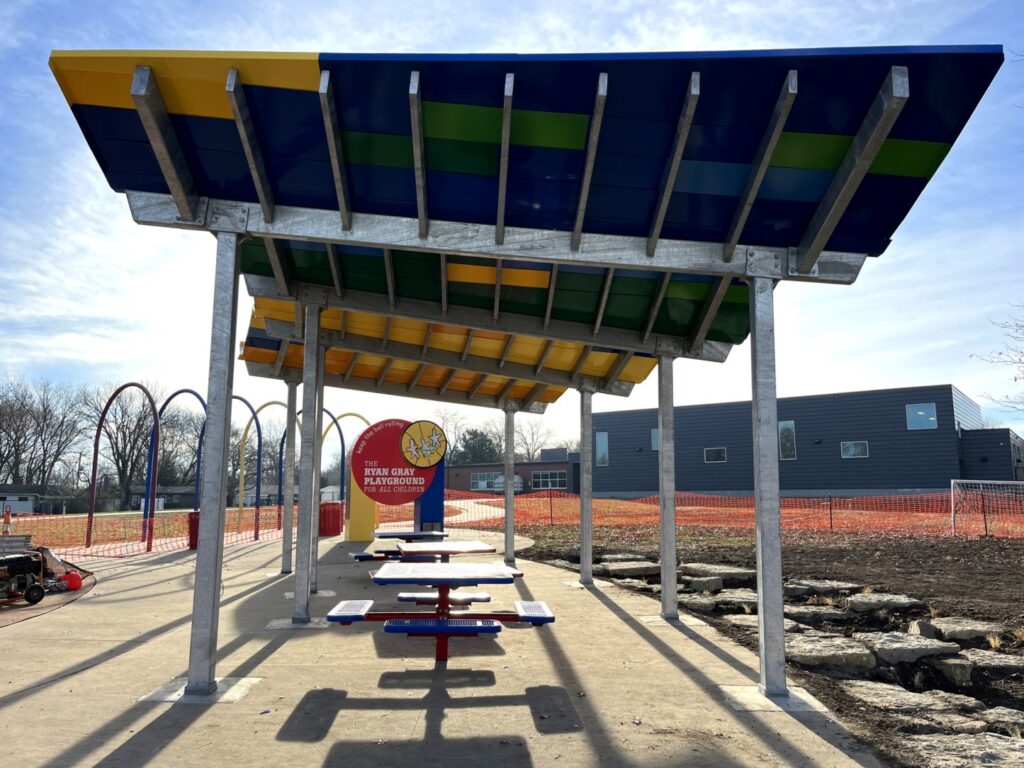
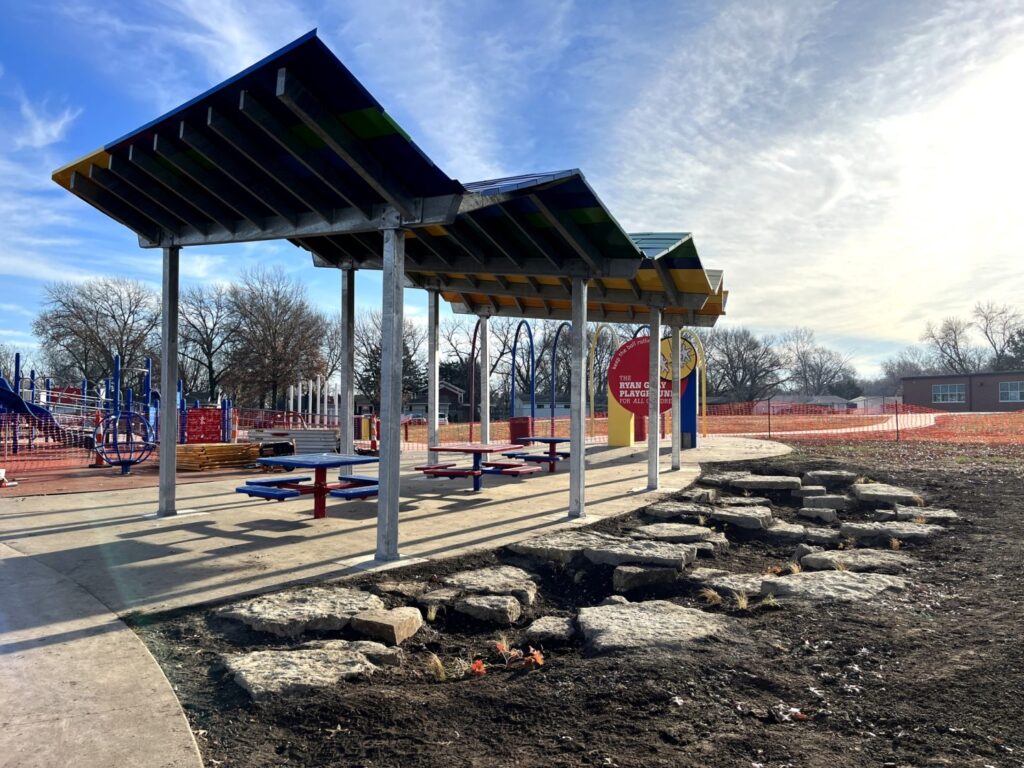
Ryan Gray Playground Pavilion (AGA Excellence Awards Winner)
The Ryan Gray Playground for All Children was the first ADA accessible playground in the State of Kansas when it opened in 1993. The playground was built in memory of Ryan Gray – a disabled student at Hillcrest Elementary, where the playground is located.
The Ryan Gray Playground for All Children was the first ADA accessible playground in the State of Kansas when it opened in 1993. The playground was built in memory of Ryan Gray – a disabled student at Hillcrest Elementary, where the playground is located. Although renovated and updated in the last decade, the playground has lacked shade. During the fall semester of 2023, KU Architecture collaborated with the Hillcrest Elementary Parent Teacher Organization (PTO) to fundraise, design, and build a new shade pavilion adjacent to the playground.
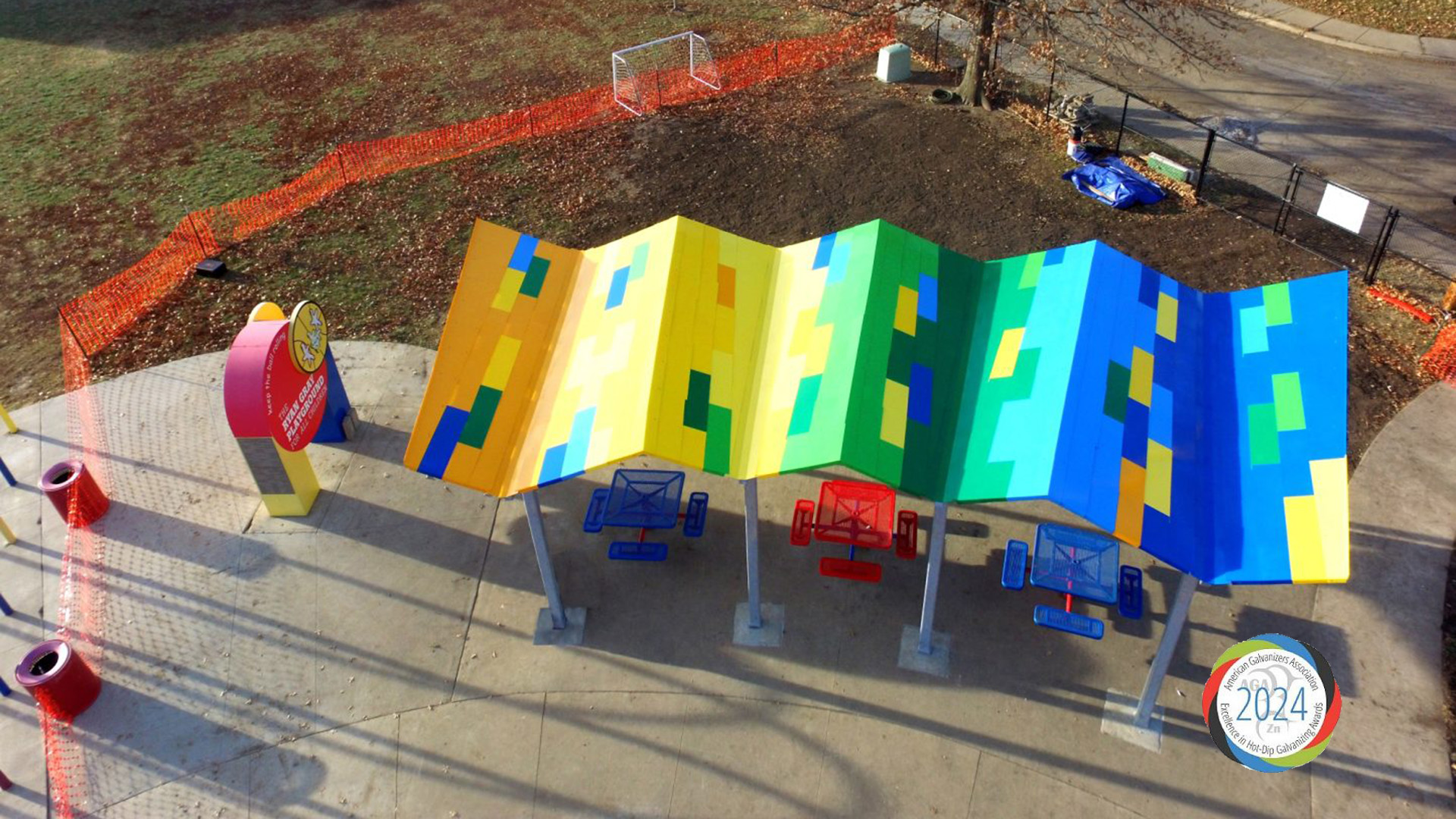
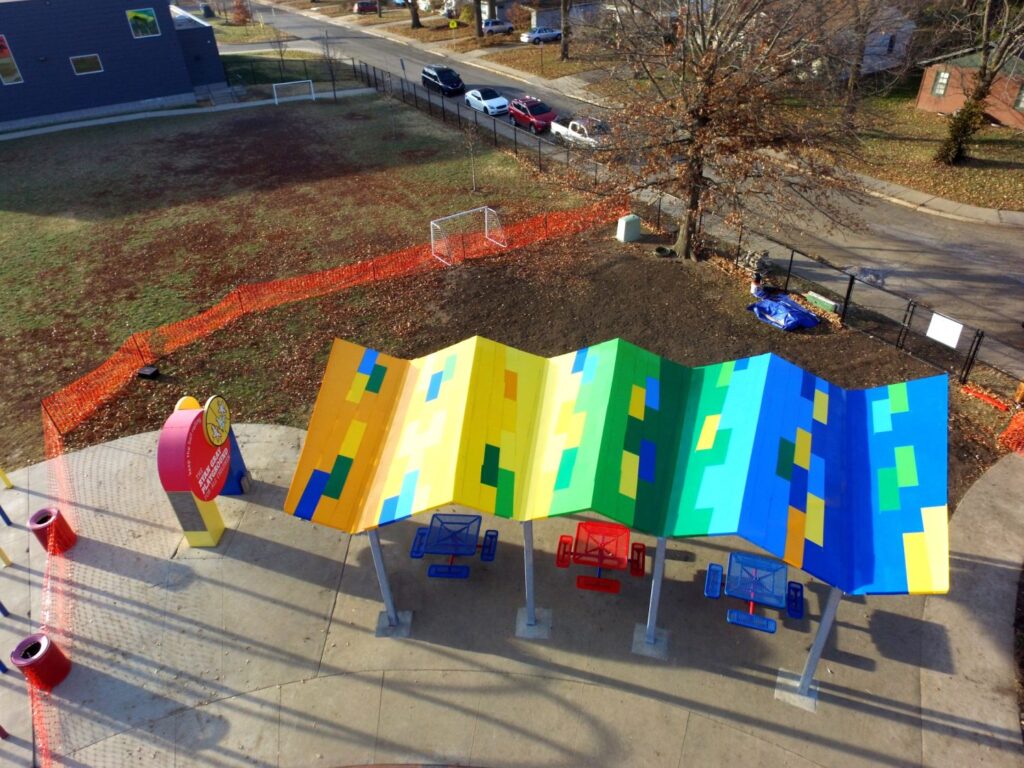
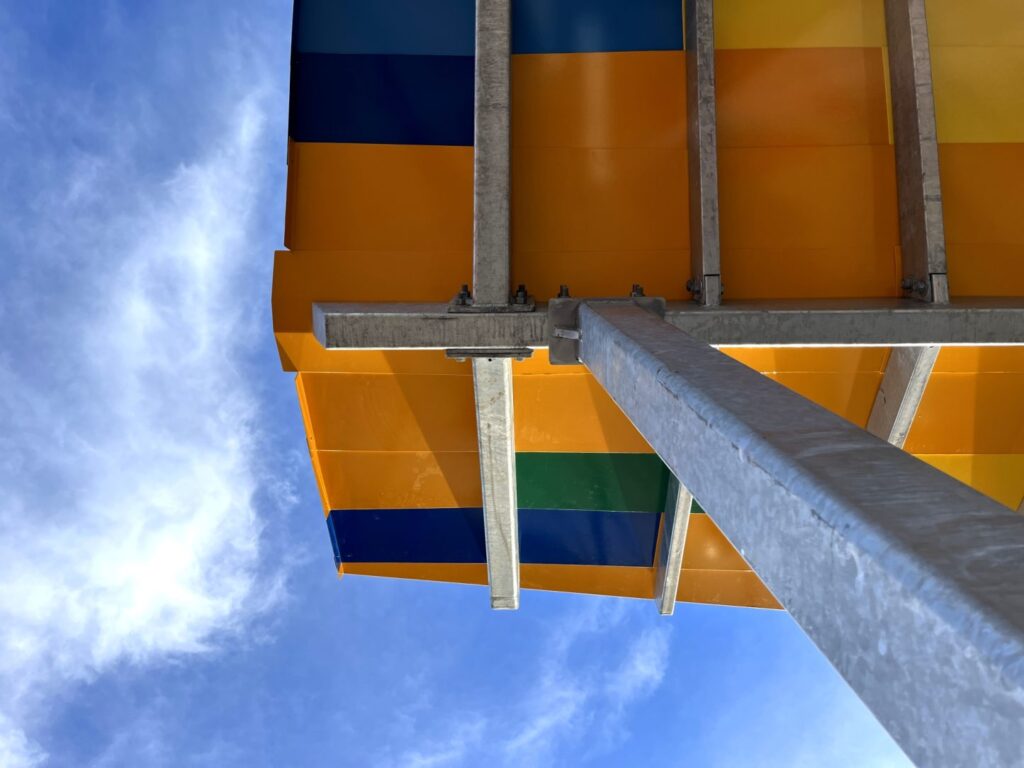
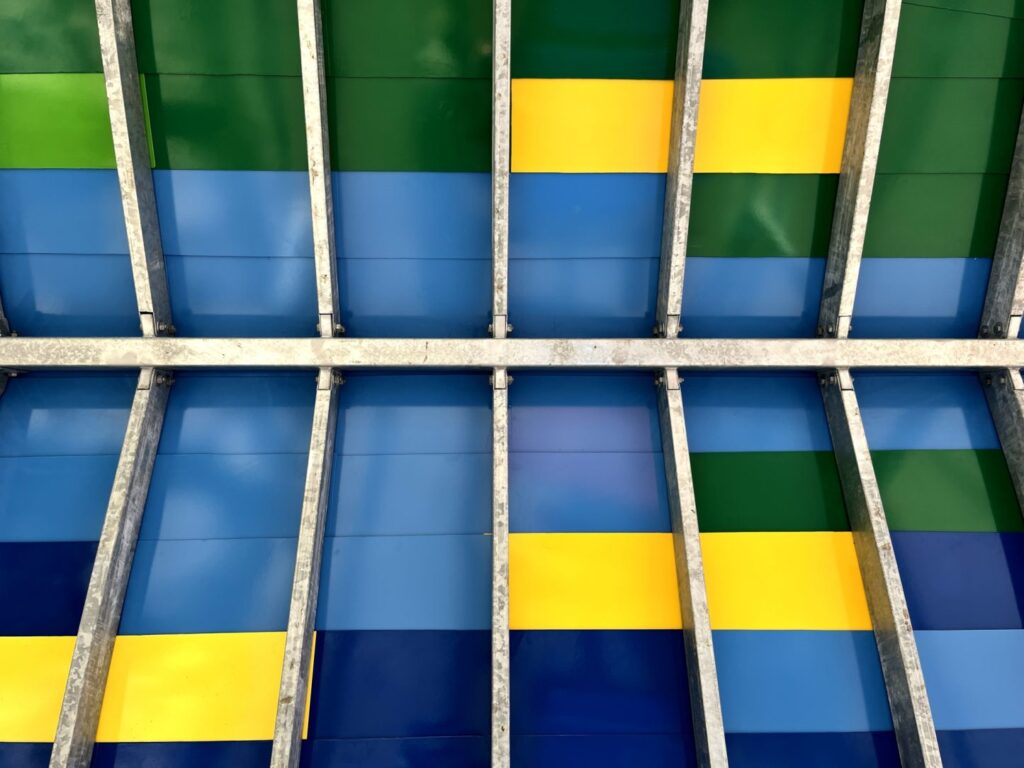
The pleated form of the pavilion follows the existing curved concrete slab and picnic benches to seamlessly blend in with the existing playground. The colorful roof tiles complement an already vibrant playground and reflect the international heritage of the student body at Hillcrest Elementary. The existing playground signage is framed by the roof and columns of the new shade pavilion to strengthen the unique forms already present at the site.
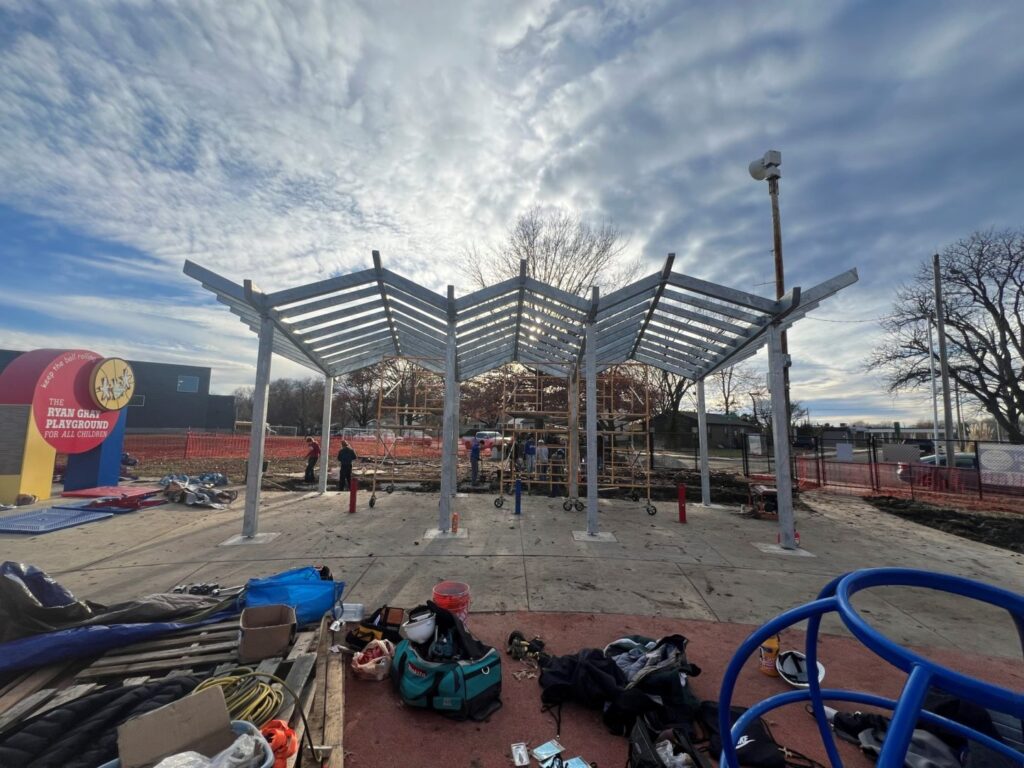
From the beginning of the project, USD 497 requested the pavilion be low maintenance, due to an already stretched thin workforce providing upkeep across the district’s properties. The longevity of hot-dip galvanizing, particularly in the Midwestern climate, was an attractive option to ensure the project would be maintenance-free for decades.
An existing relationship with the nearest AZZ galvanizing plant ensured the project would be done with the utmost concern toward quality and finish for this community-based project. Throughout the project, architecture students learned the standards and expectations for hot-dip galvanizing and developed drawings and diagrams to indicate lift points and vent holes to ensure a successful process. These drawings were shared with the galvanizers to determine any additional vents and to collaborate on the aesthetic impact on those vent locations. In most cases, the vent holes were determined to also provide moisture drainage in the final structure.
In short, by collaborating with AZZ, the project had a final appearance that exceeded expectations and benefitted from the early conversations. Both parties had vested interest in the project, and the community was improved as a result.
“These projects are so rich with real-world content for the students. I can’t imagine a better experience for them to get the holistic picture of what it takes to build even a relatively simple structure.”