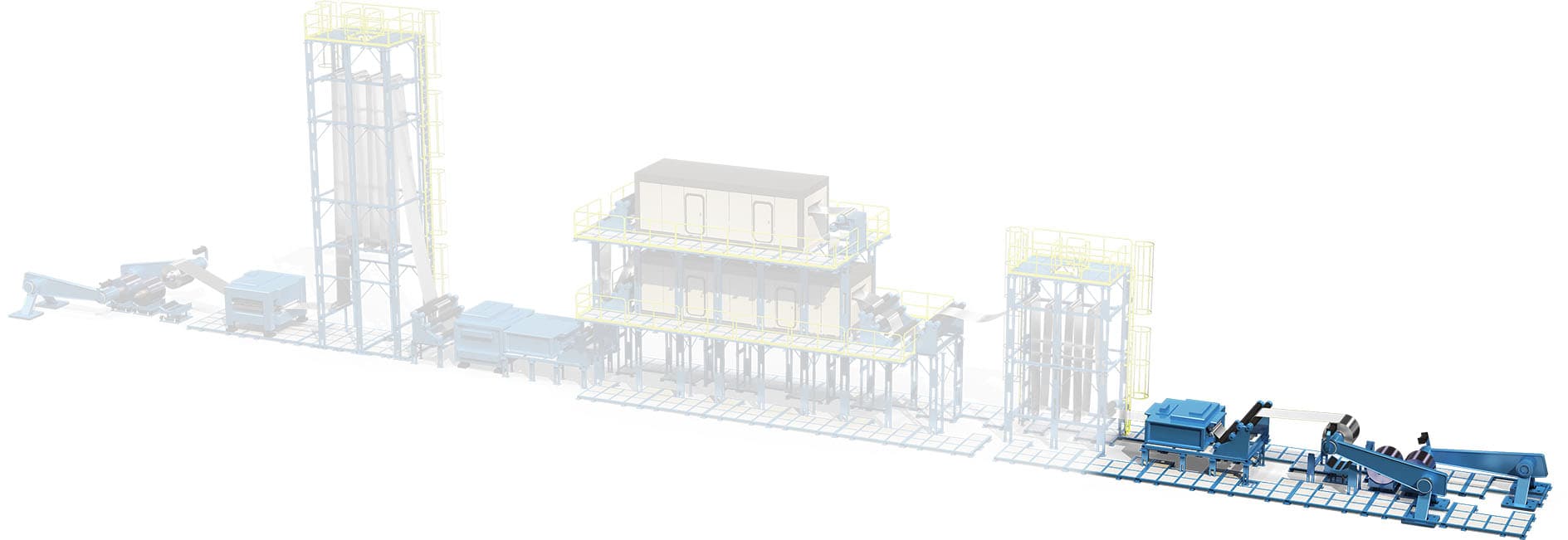
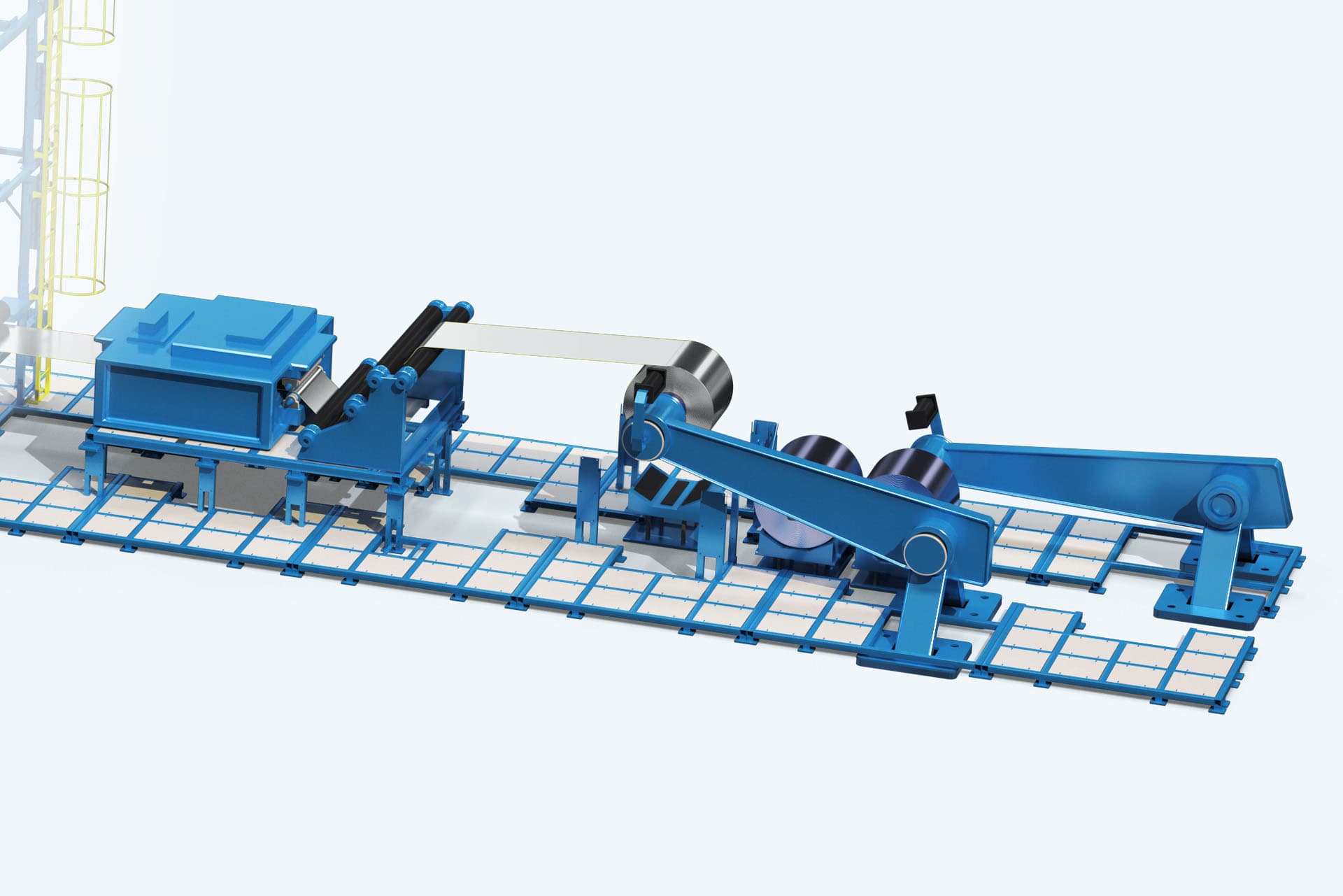
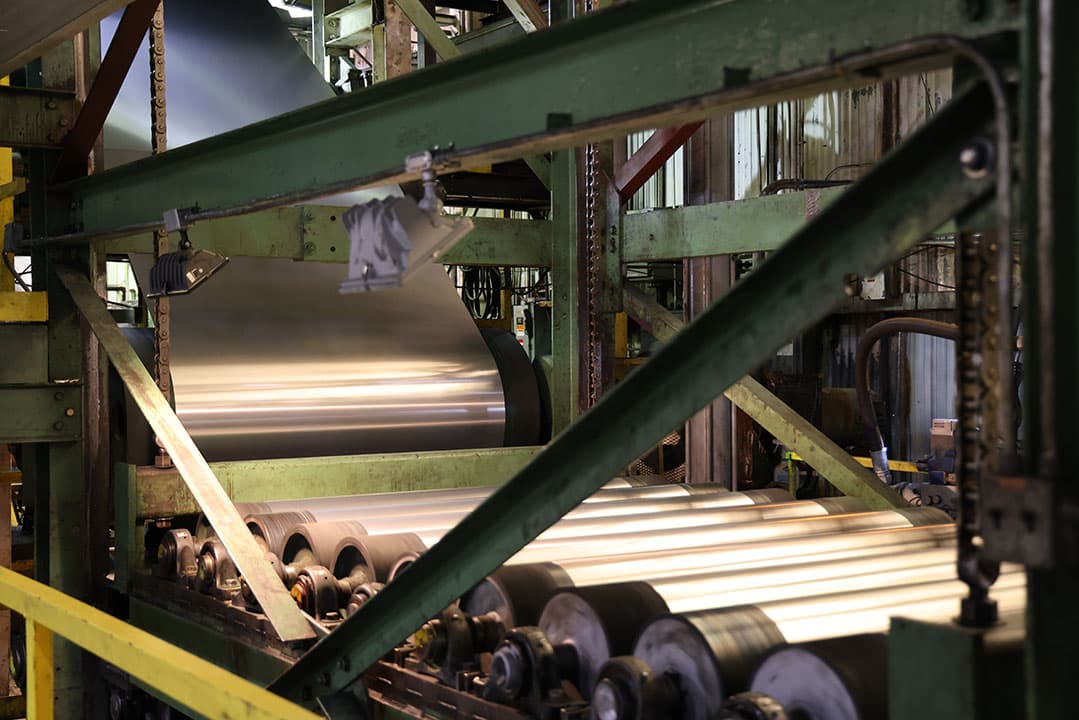
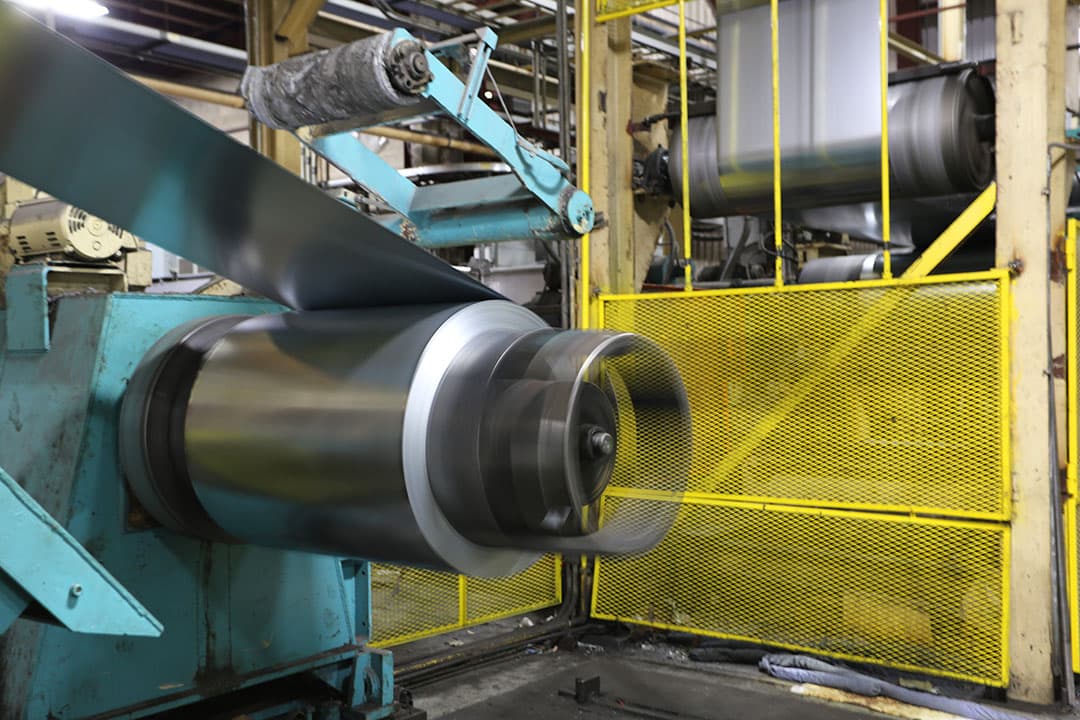
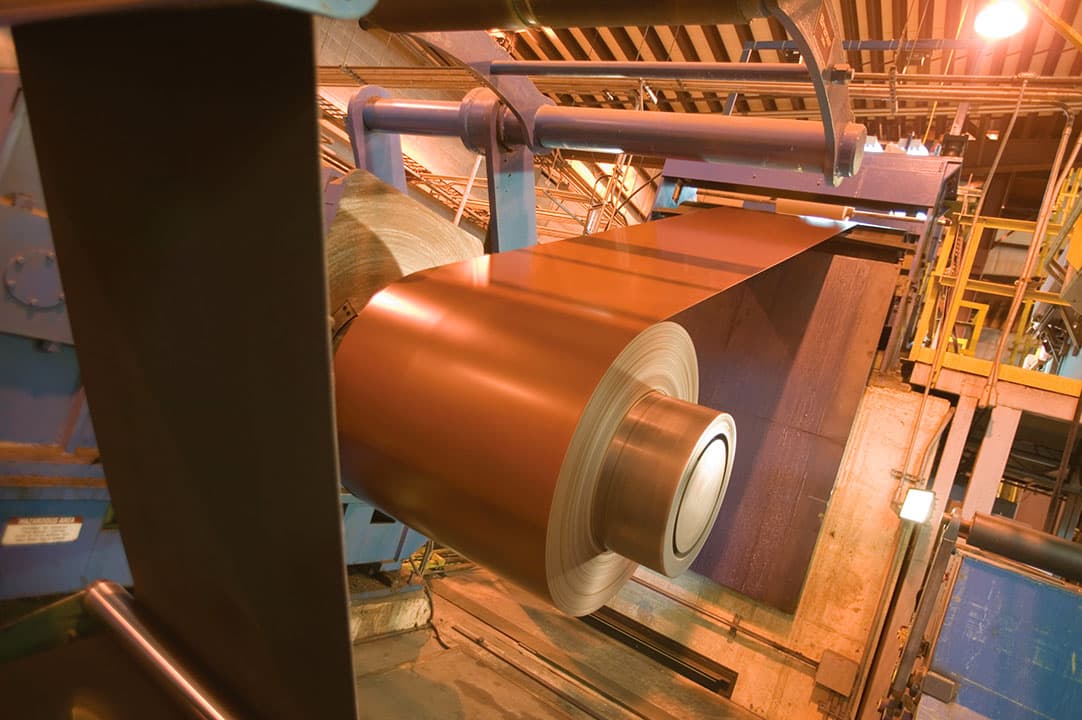
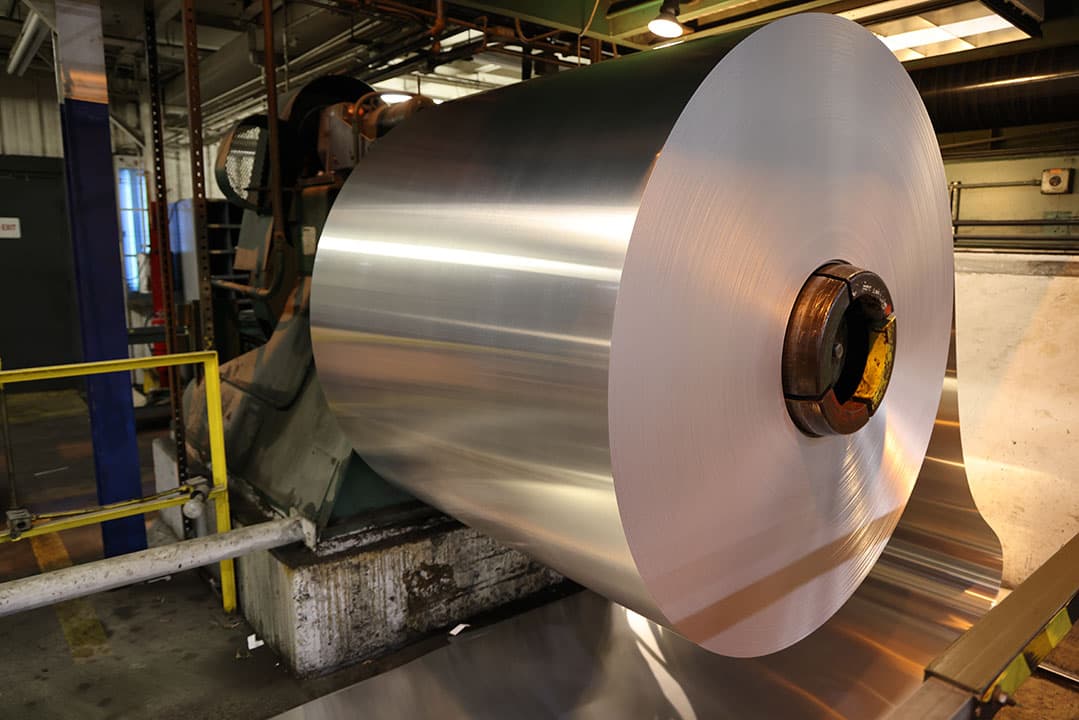
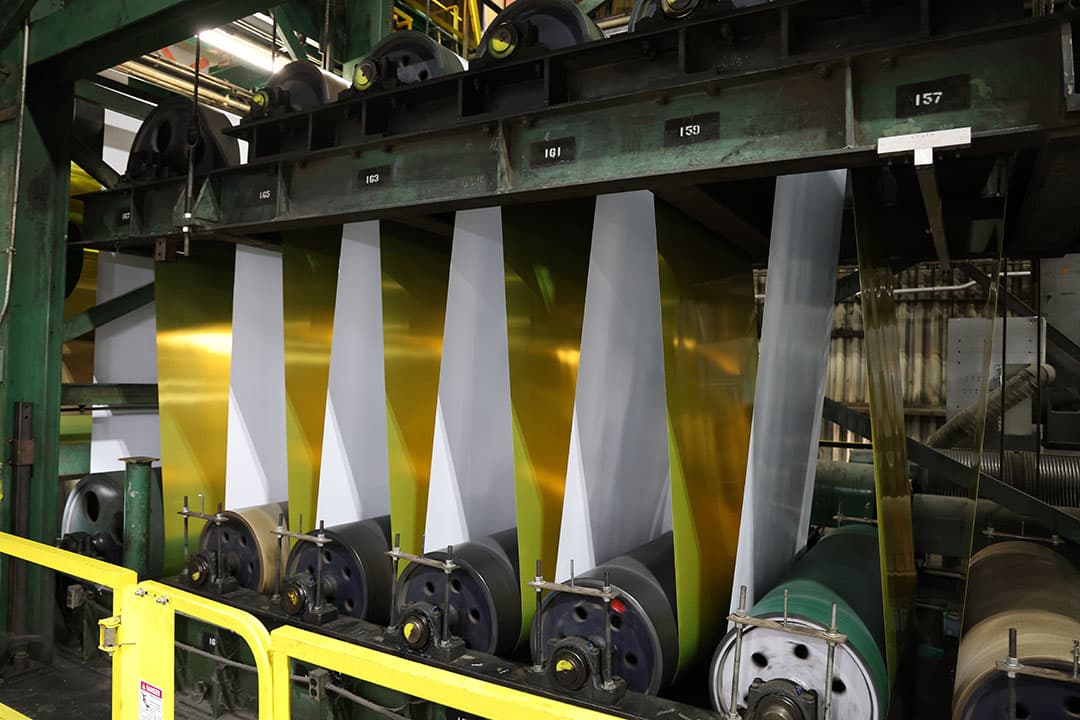
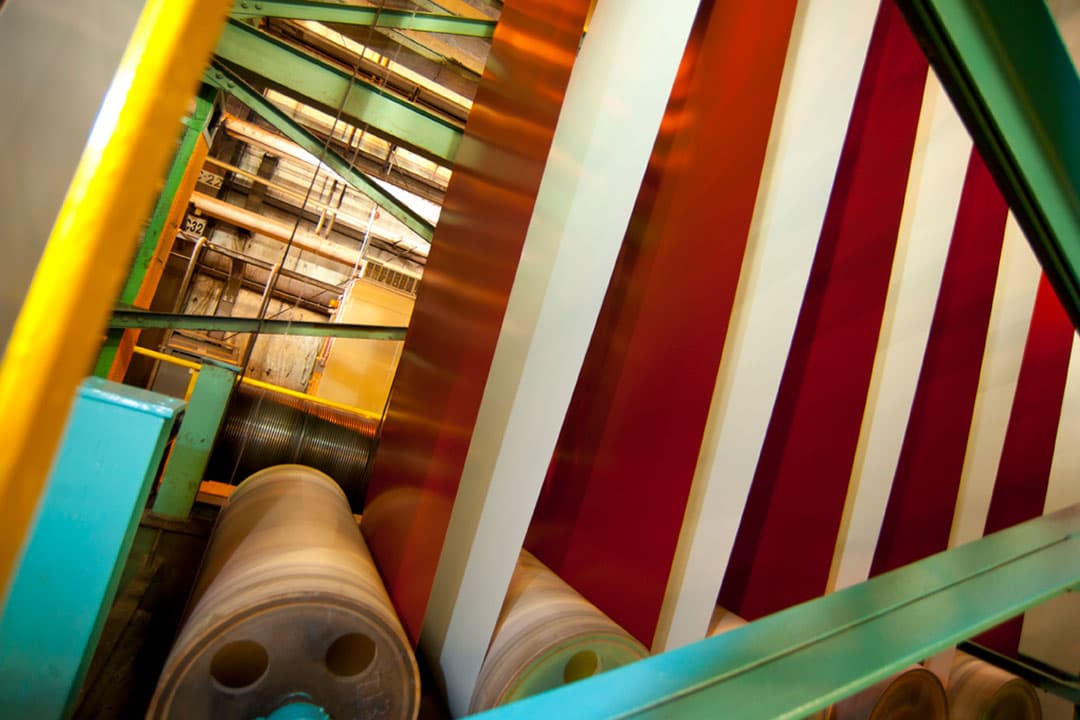
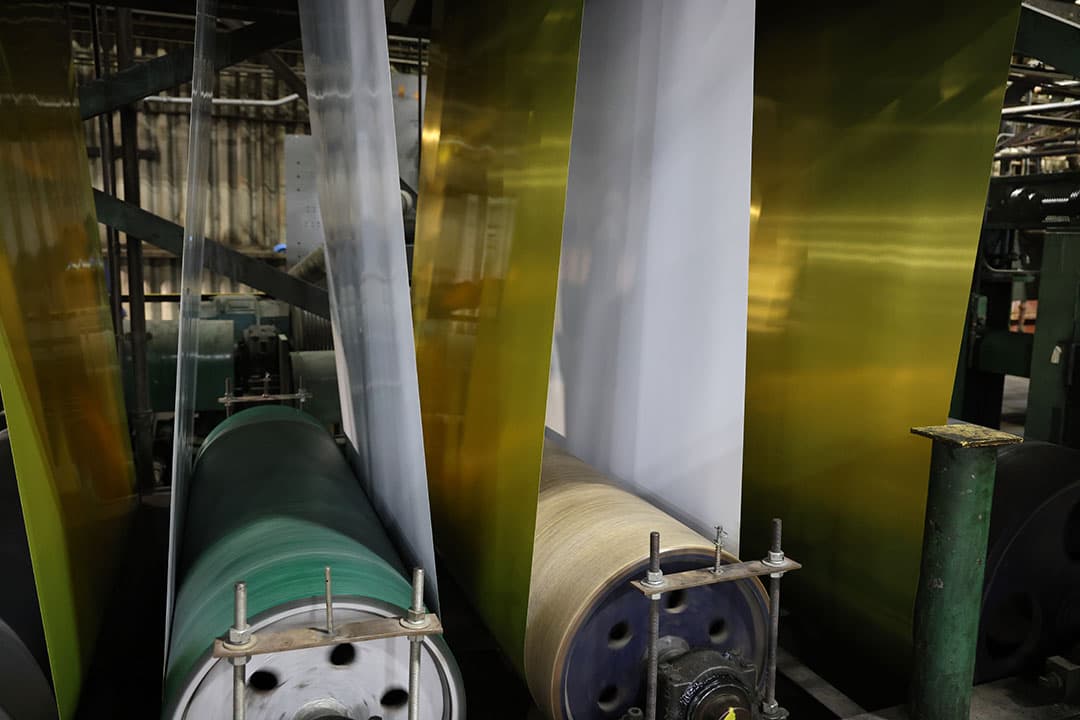
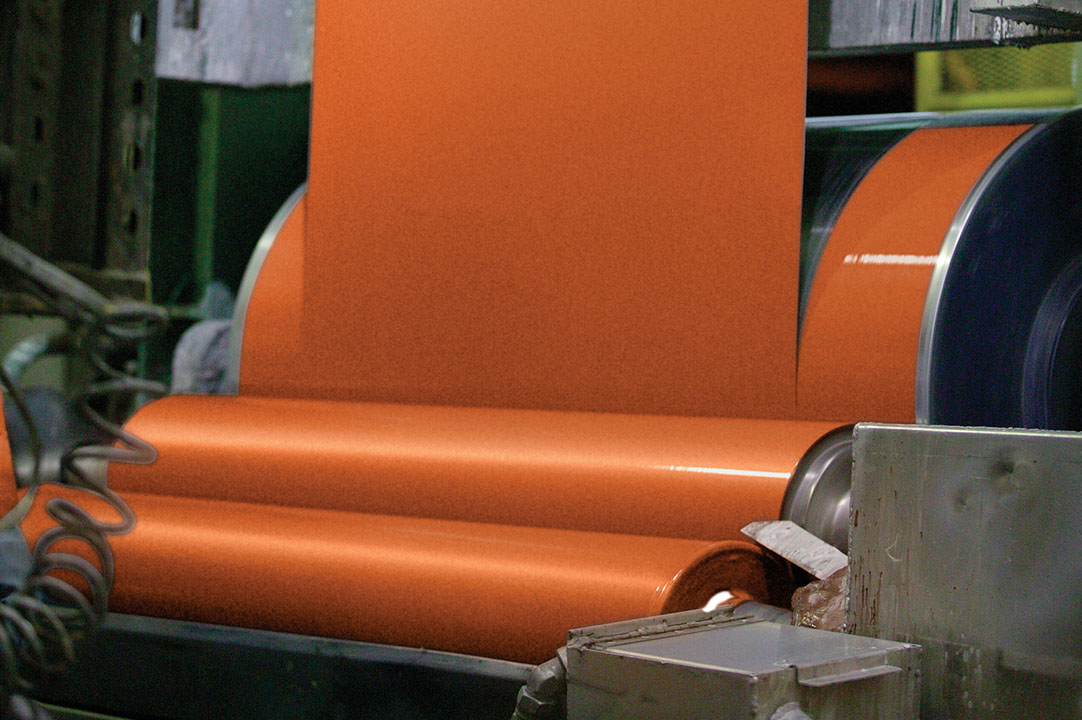
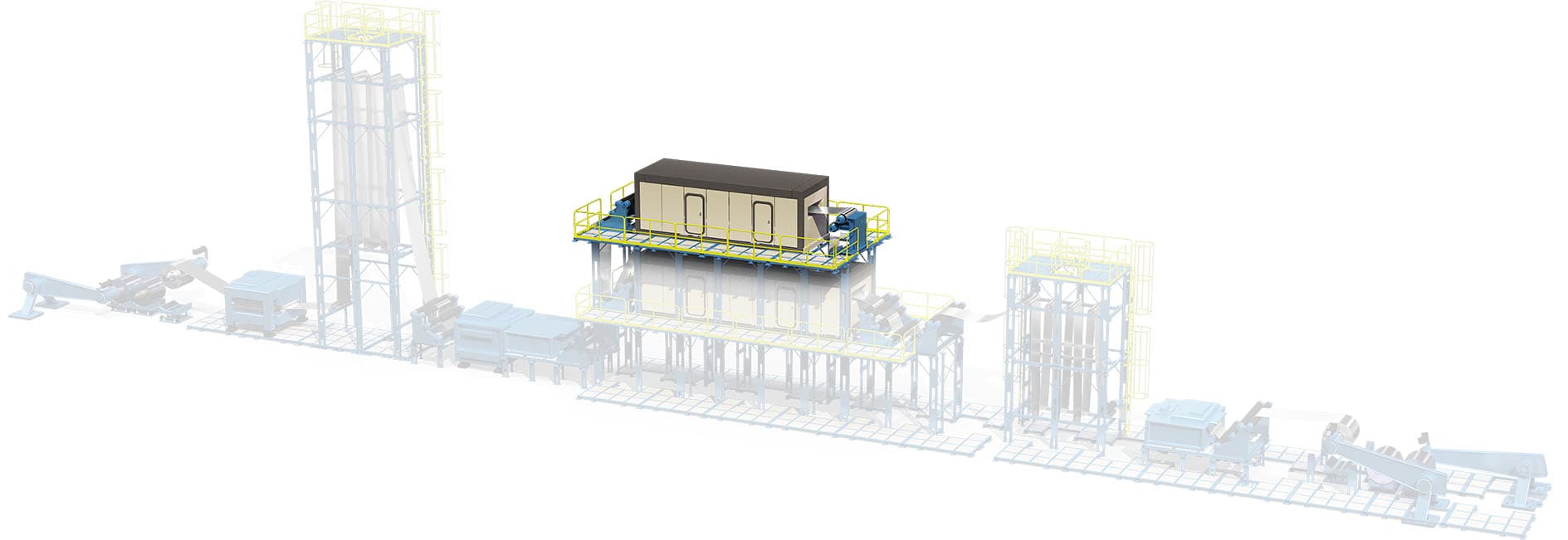
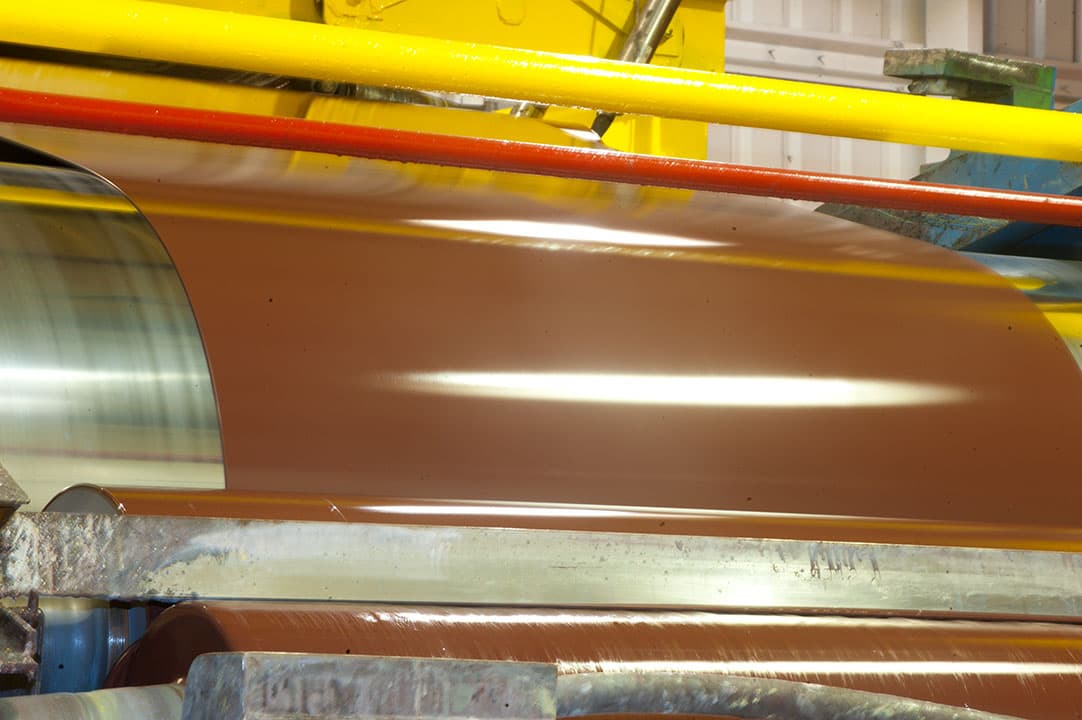
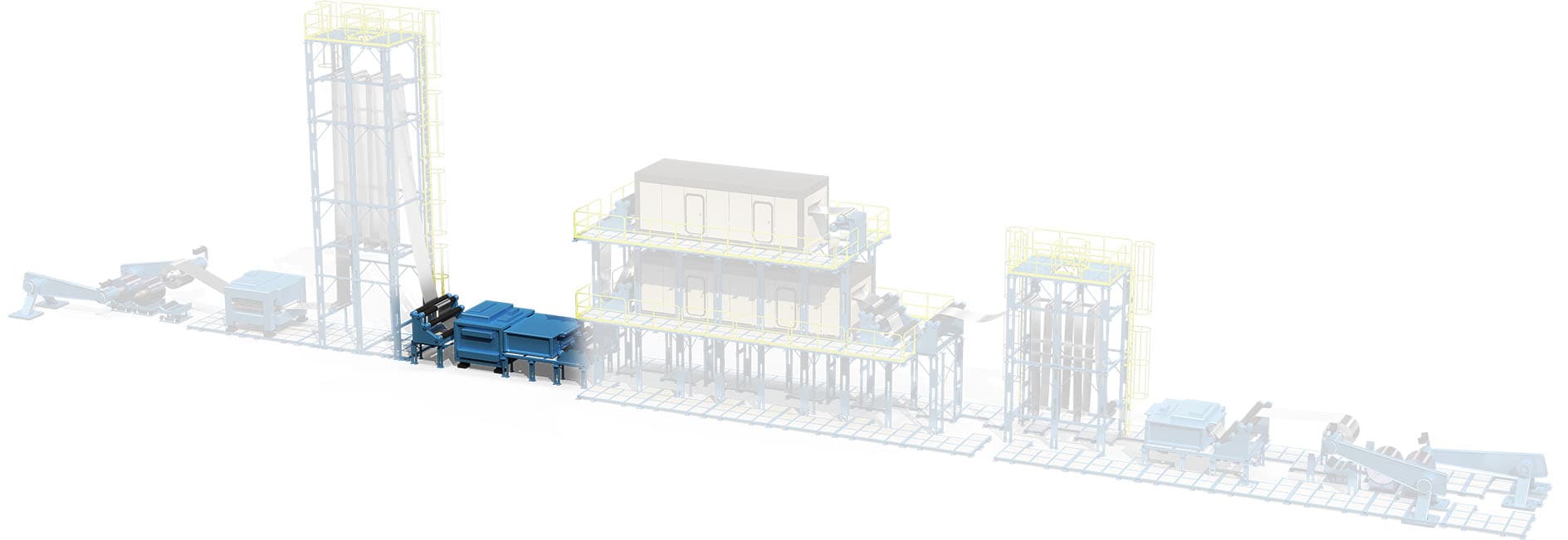
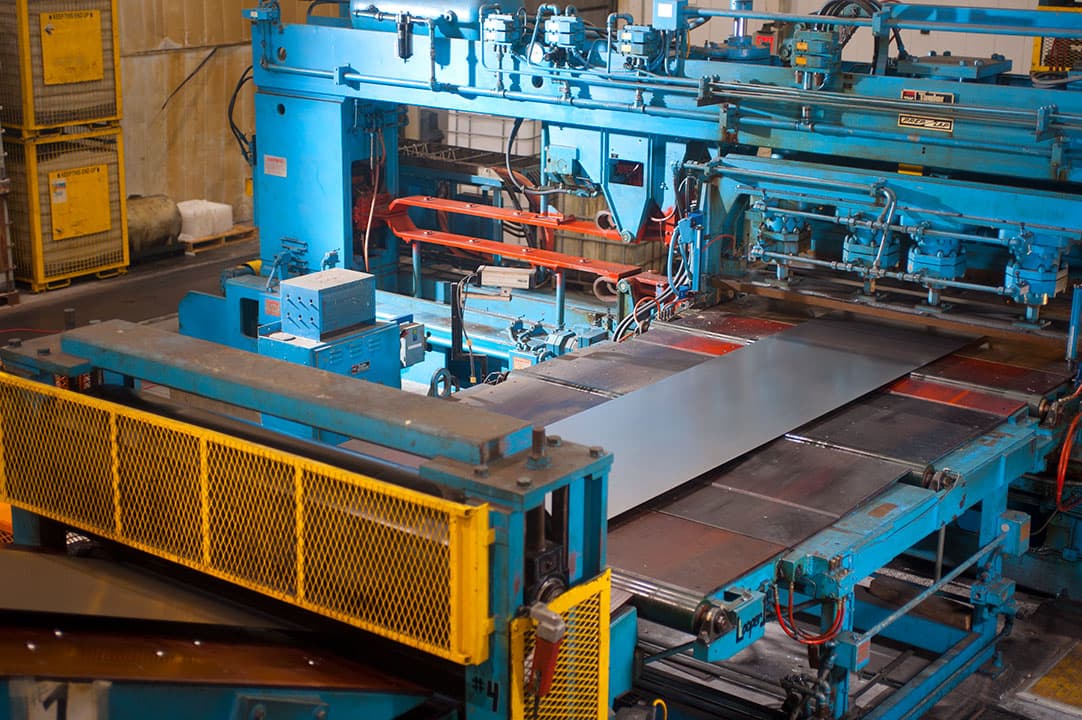
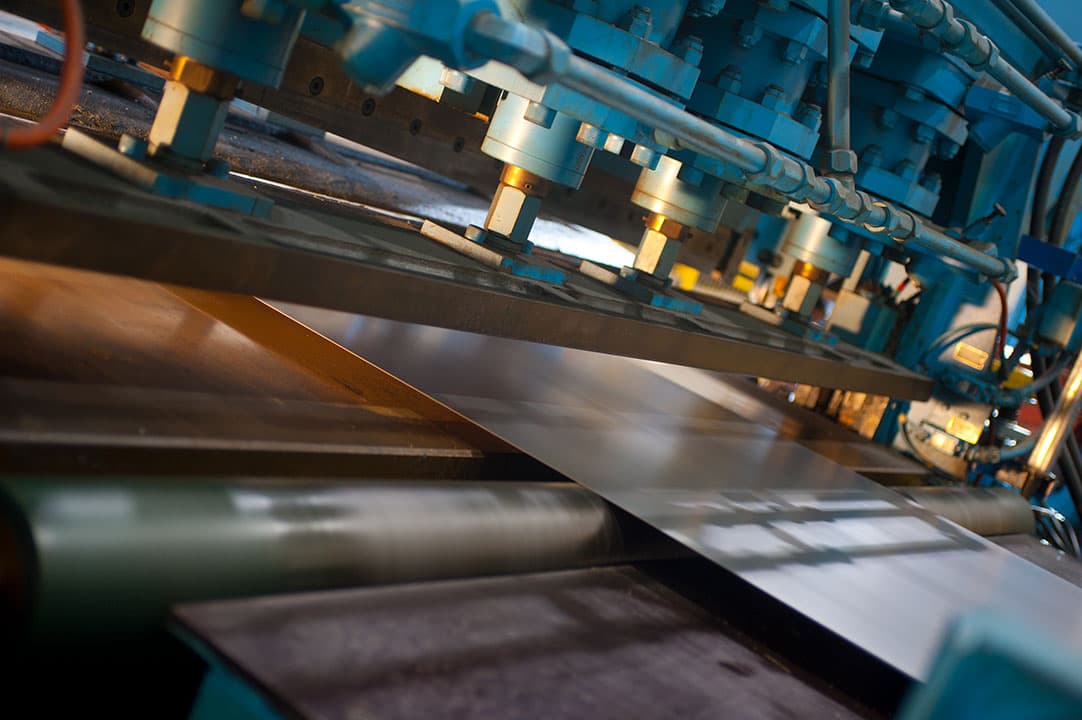
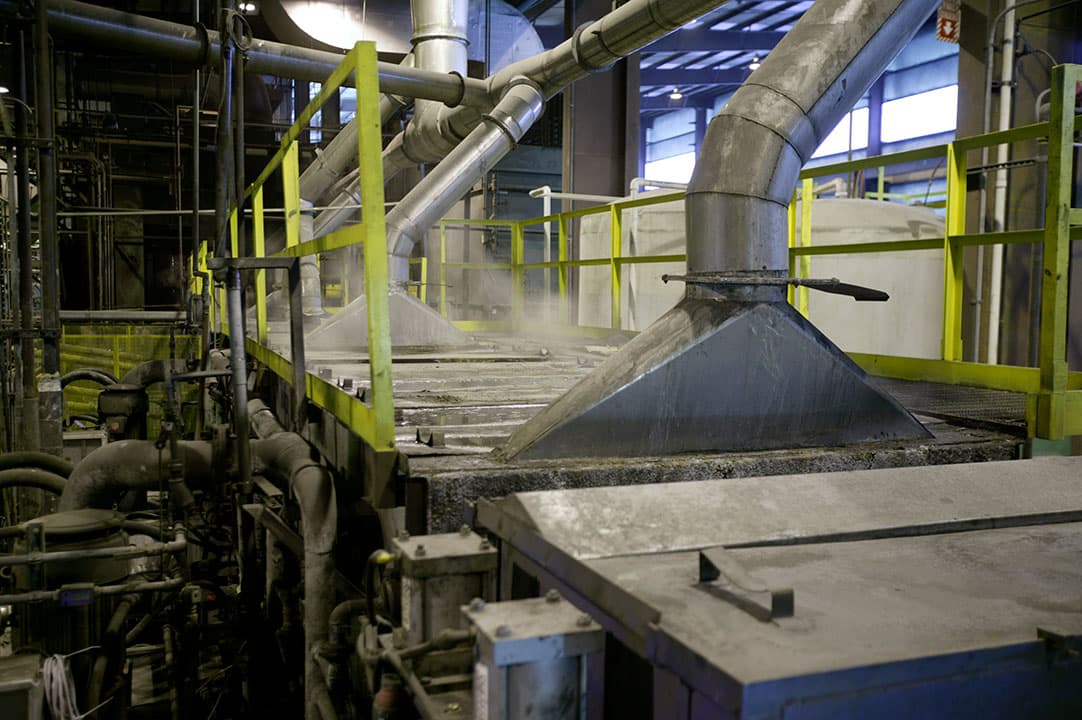
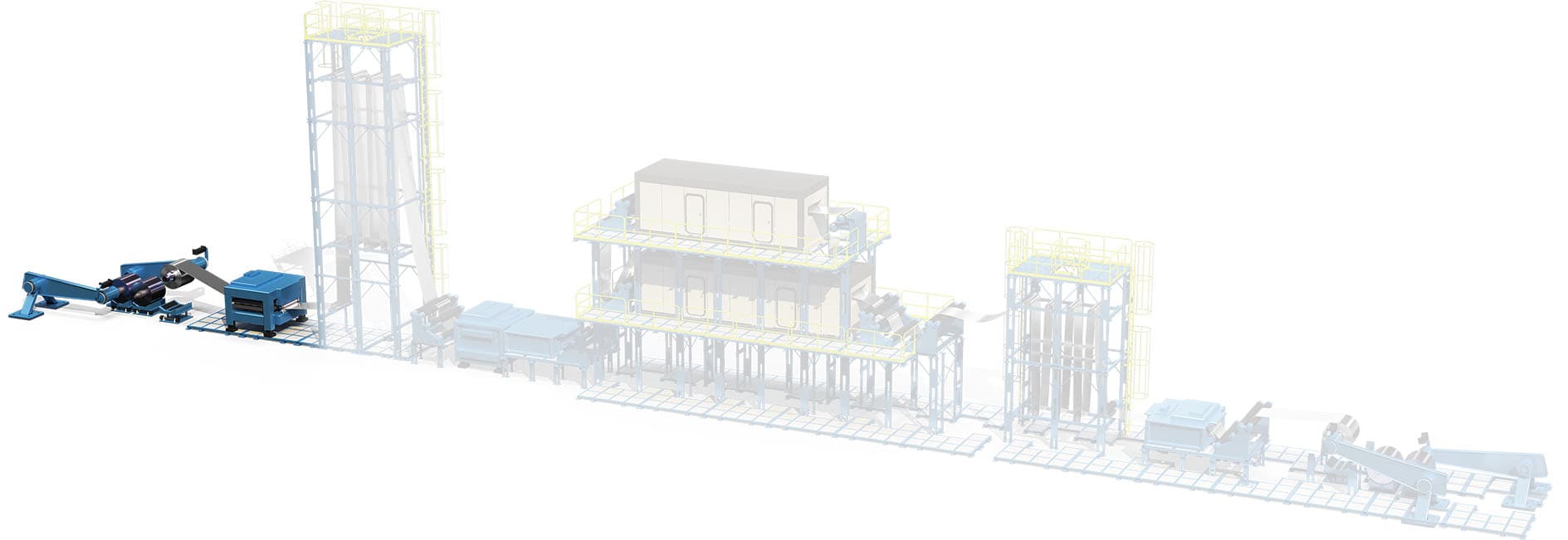
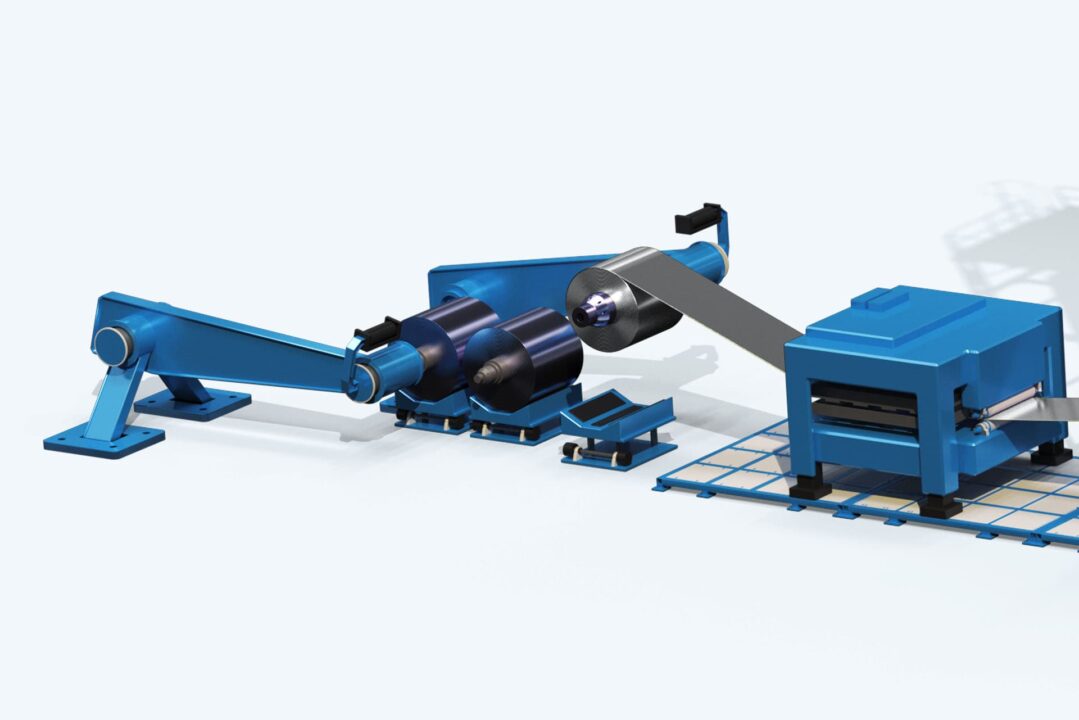
Once the metal is cleaned, treated, and painted, the strip is rewound into a coil size prescribed by the customer. From there, the coil is removed from the line and packaged for shipment or additional processing.
After the primer is applied and cured, then the metal strip enters the finish coat station where a topcoat is applied. Topcoats provide color, corrosion resistance, durability, flexibility and any other required physical properties. Like primers, the topcoat is cured using thermal cure ovens.
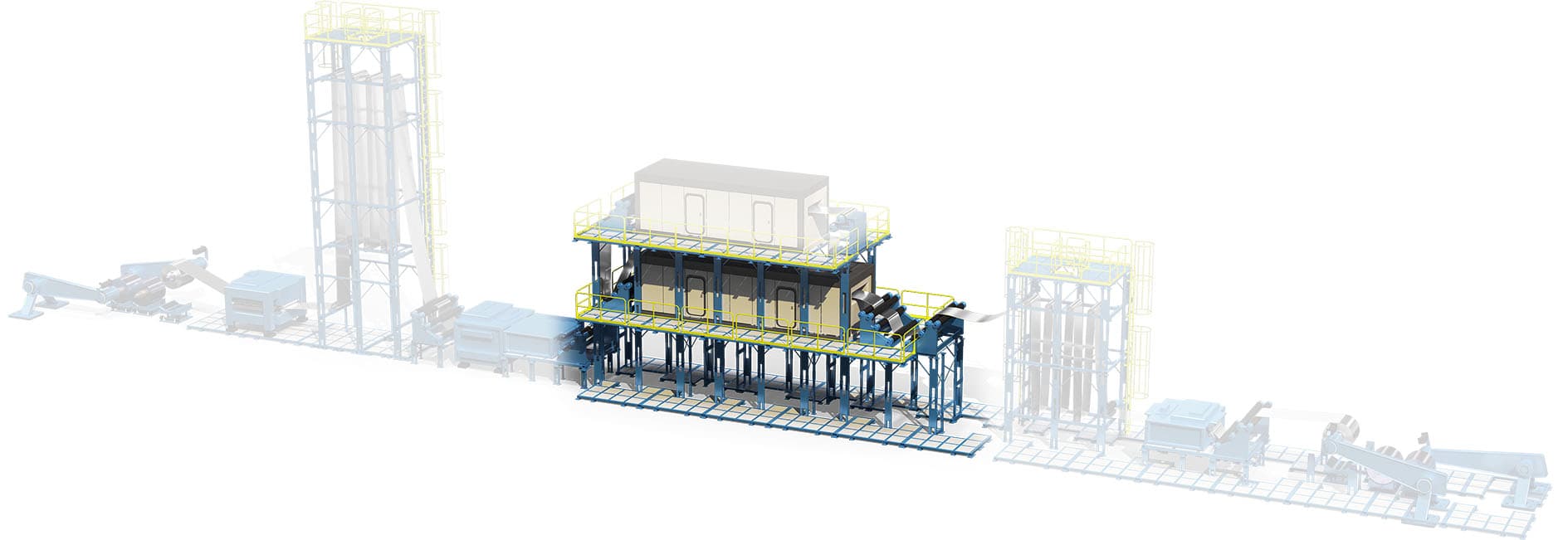
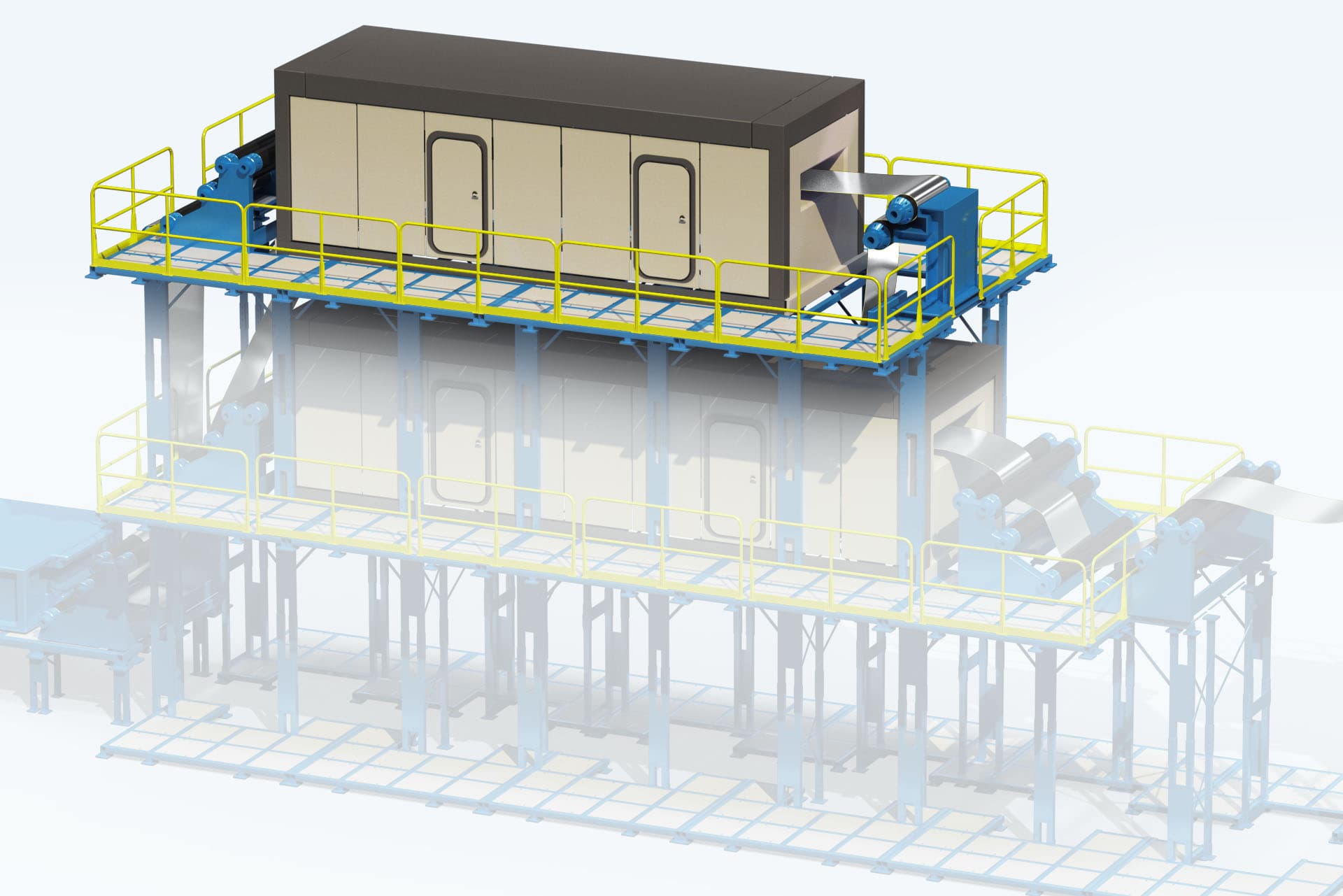
Oven
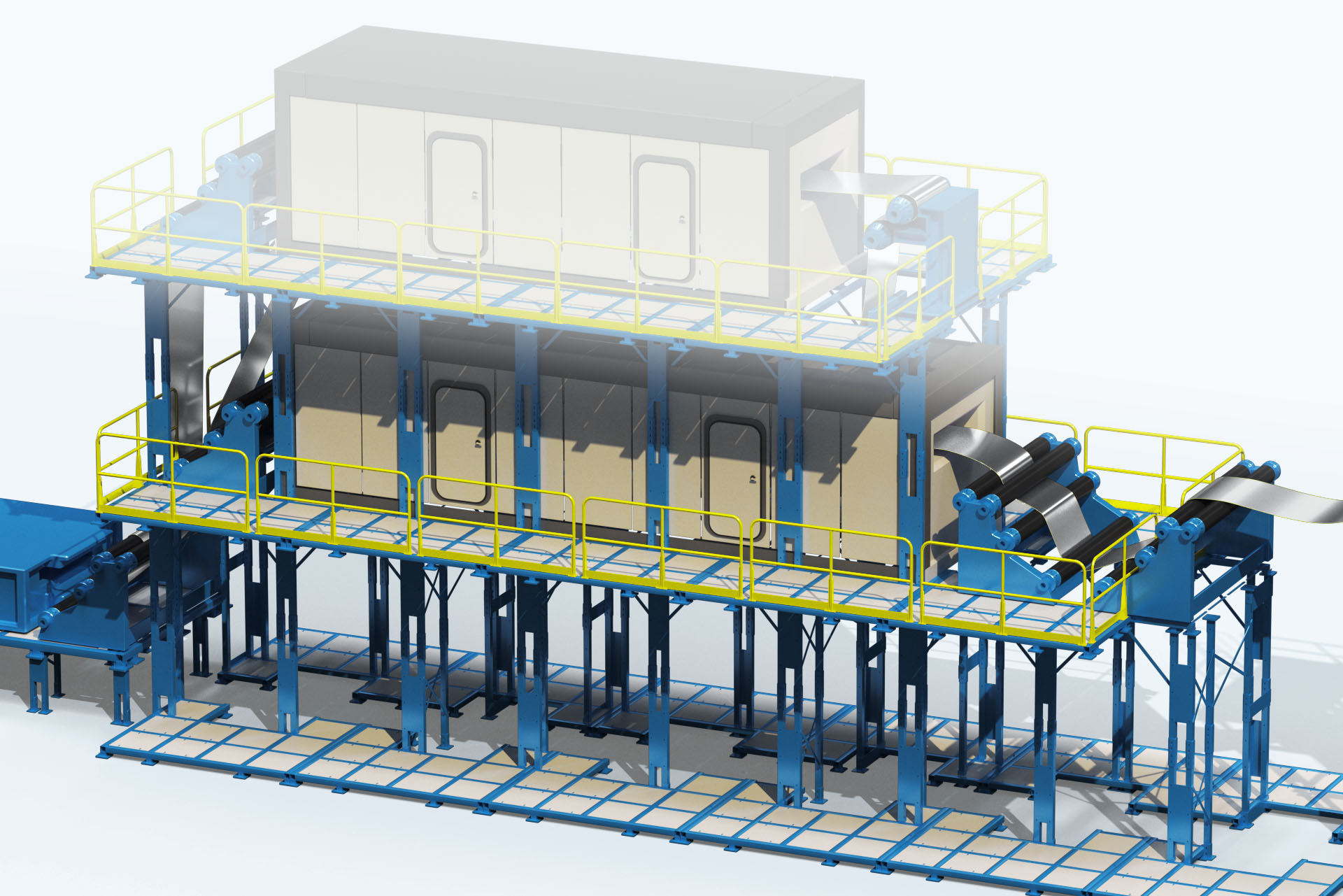
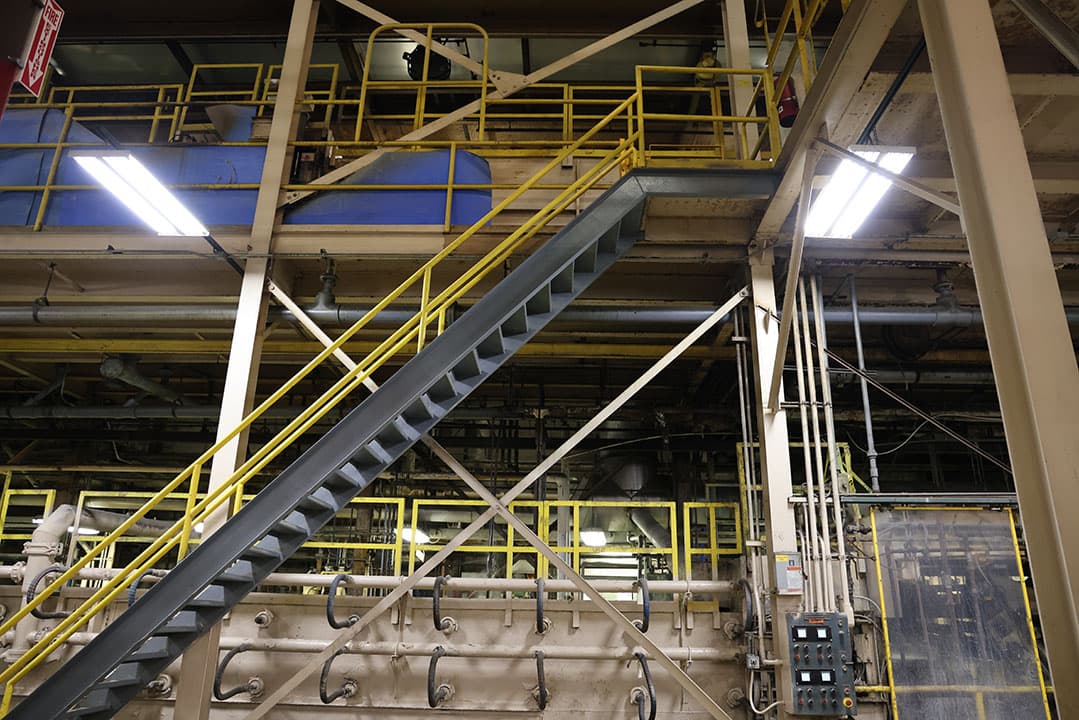
Coil coating ovens can range from 130 feet to 160 feet and will cure the coatings in 13 to 20 seconds.
During this stage, the strip enters the prime coat station whereby a primer is applied to the clean and treated metal. After the primer is applied, the metal strip travels through a thermal oven for curing. Primers are used to aid in paint adhesion, improve corrosion performance and enhance aesthetic and functional attributes of the topcoat.
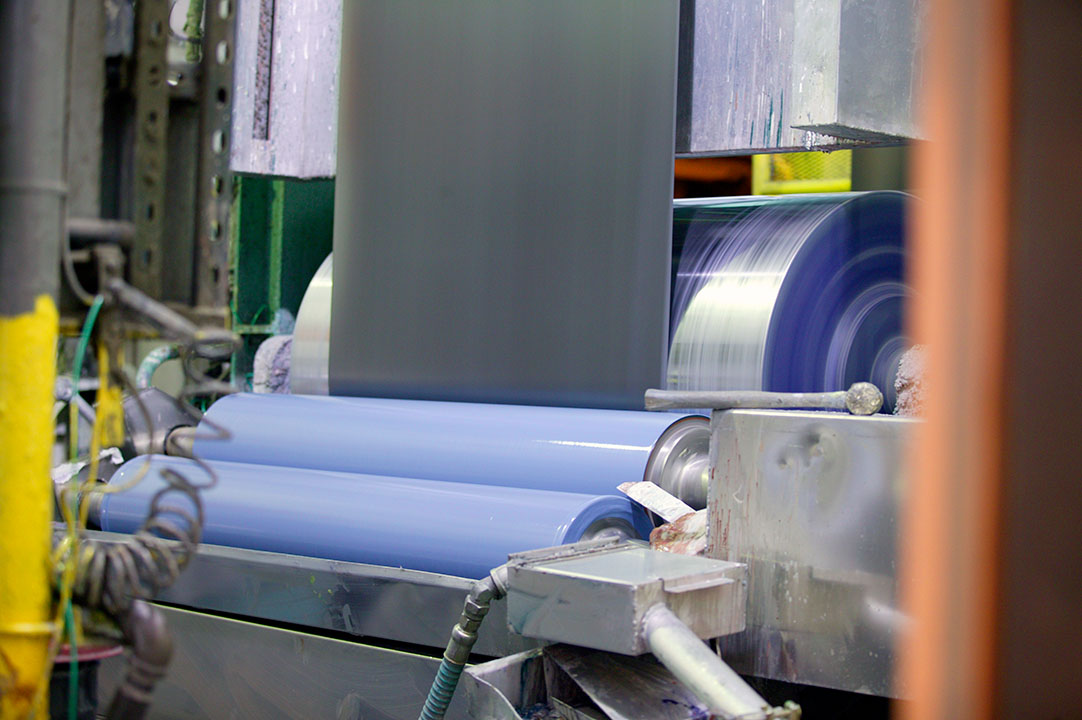
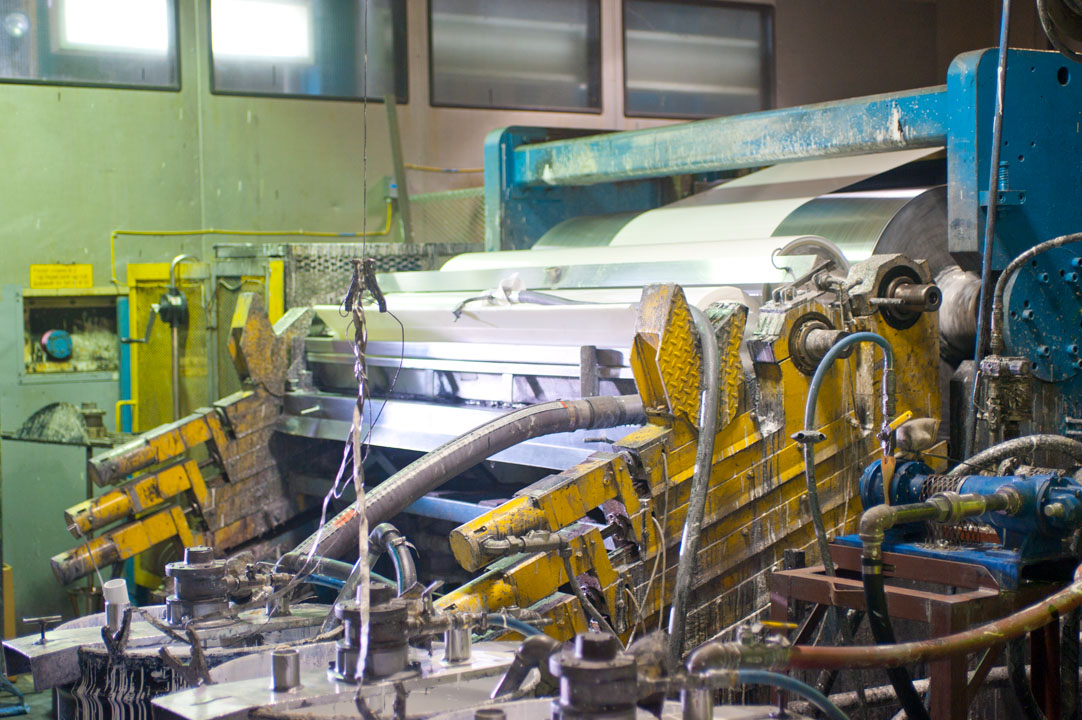
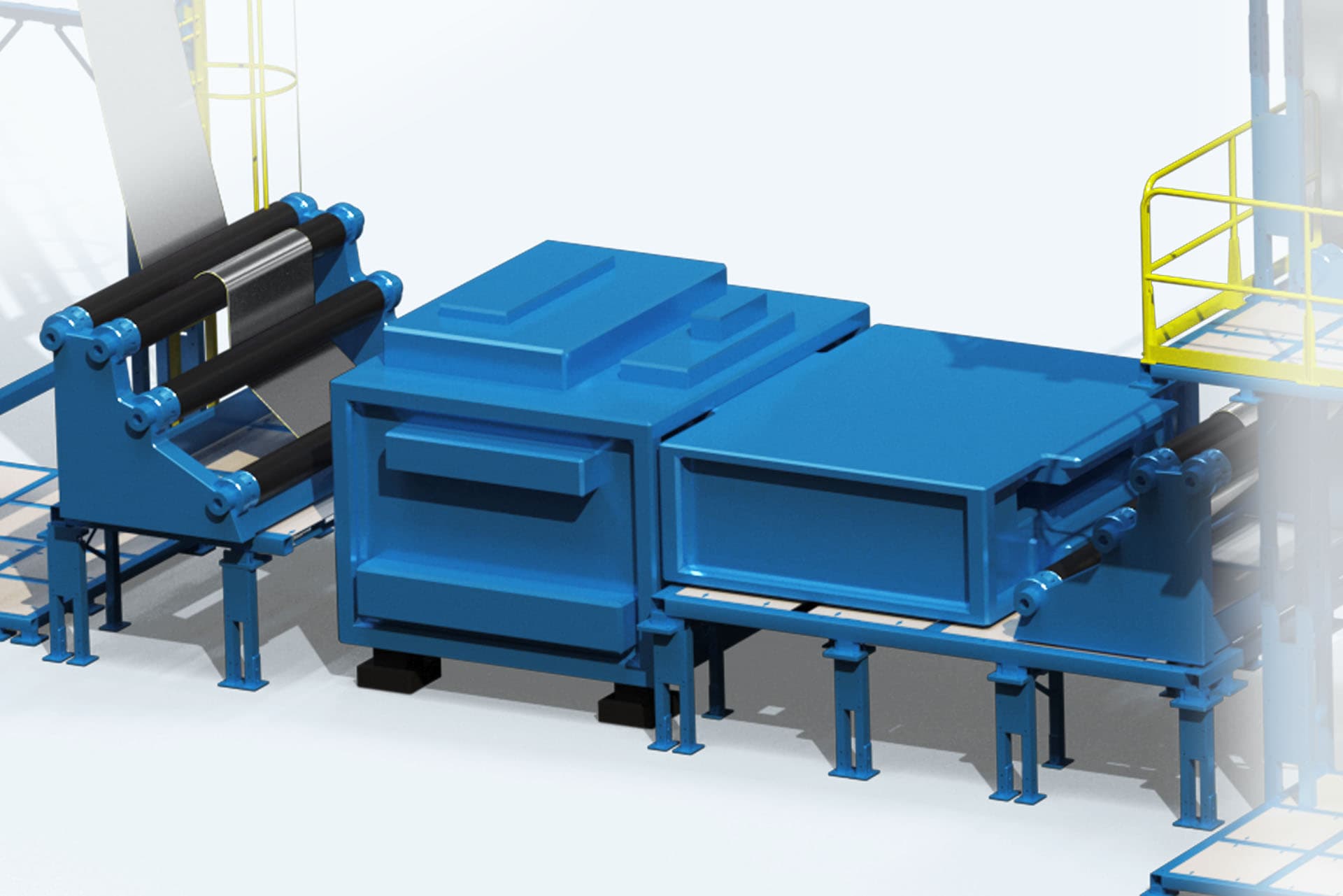
S Wrap Coater
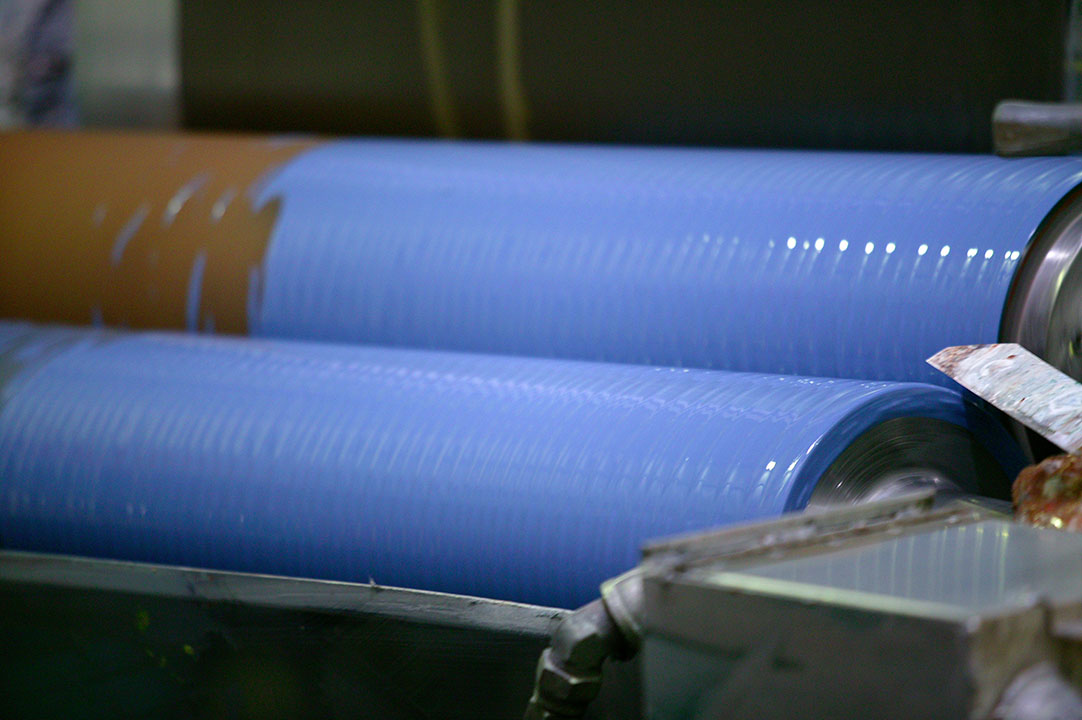
The S wrap coater design allows for primers and paints to be applied to the top and back side of the metal strip simultaneously in one continuous pass.
The cleaning and pretreating section of the coil coating process focuses on preparing the metal for painting. During the cleaning stage, dirt, debris, and oils are removed from the metal strip. From there, the metal enters the pretreatment section and/or a chemical coater whereby chemicals are applied to facilitate paint adhesion and enhance corrosion resistance.
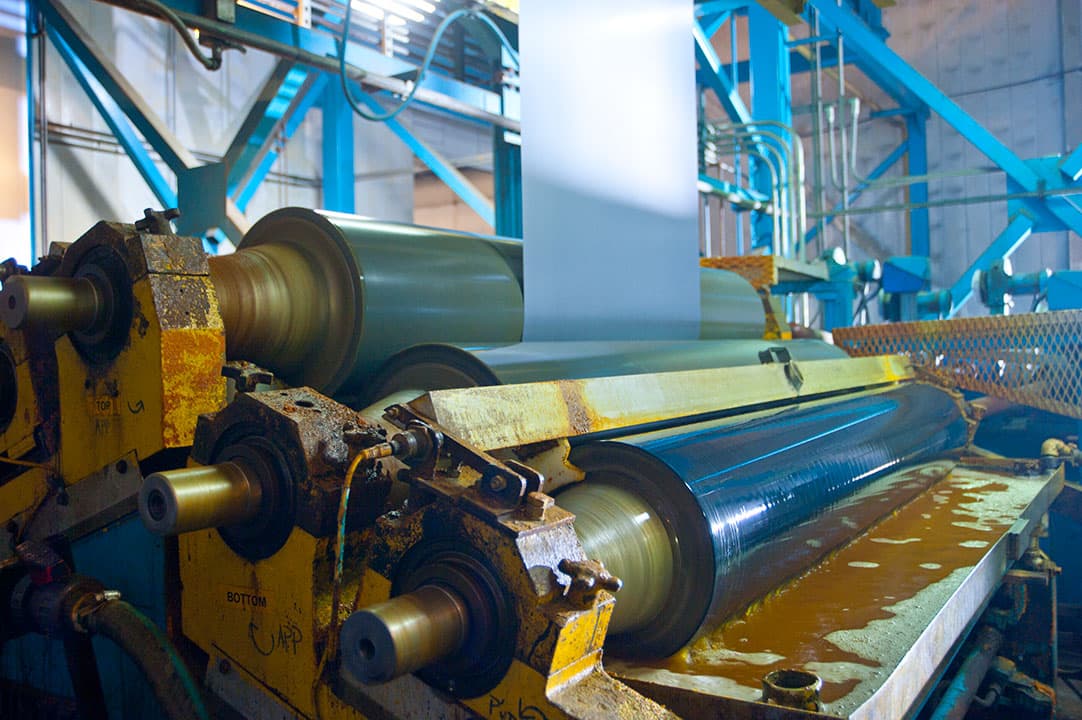
Dried-In-Place
In this stage a chemical that provides enhanced corrosion performance is applied. This treatment can be chrome free if required.
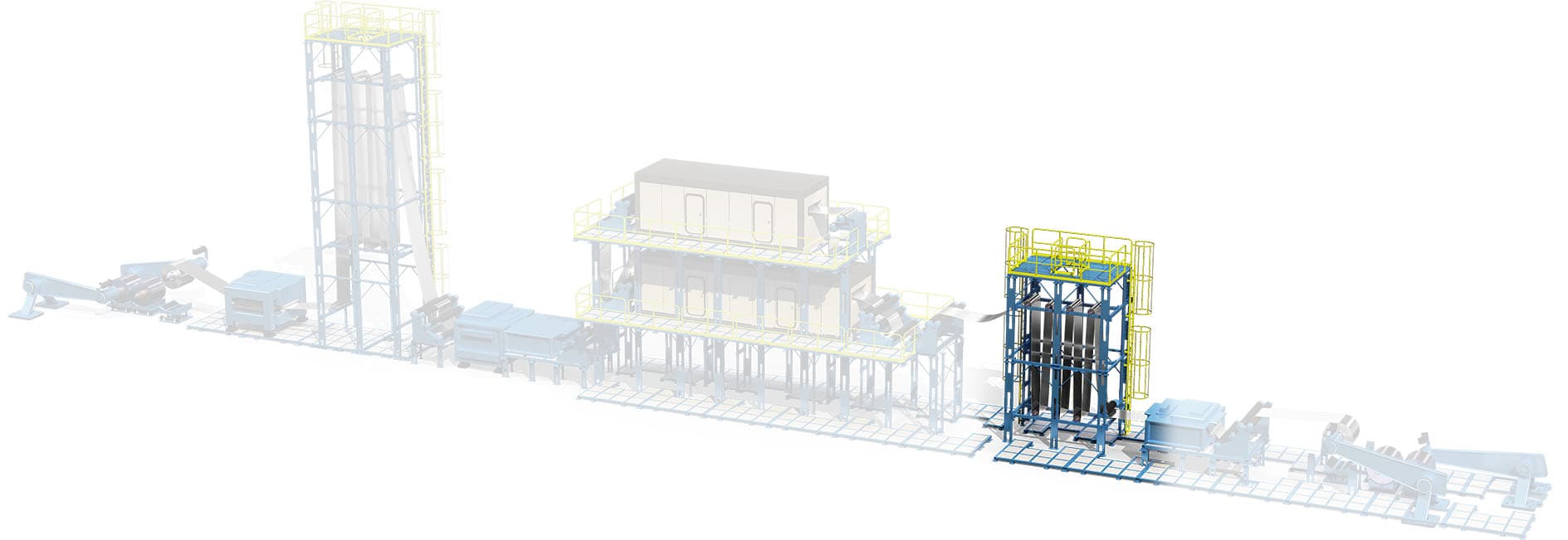
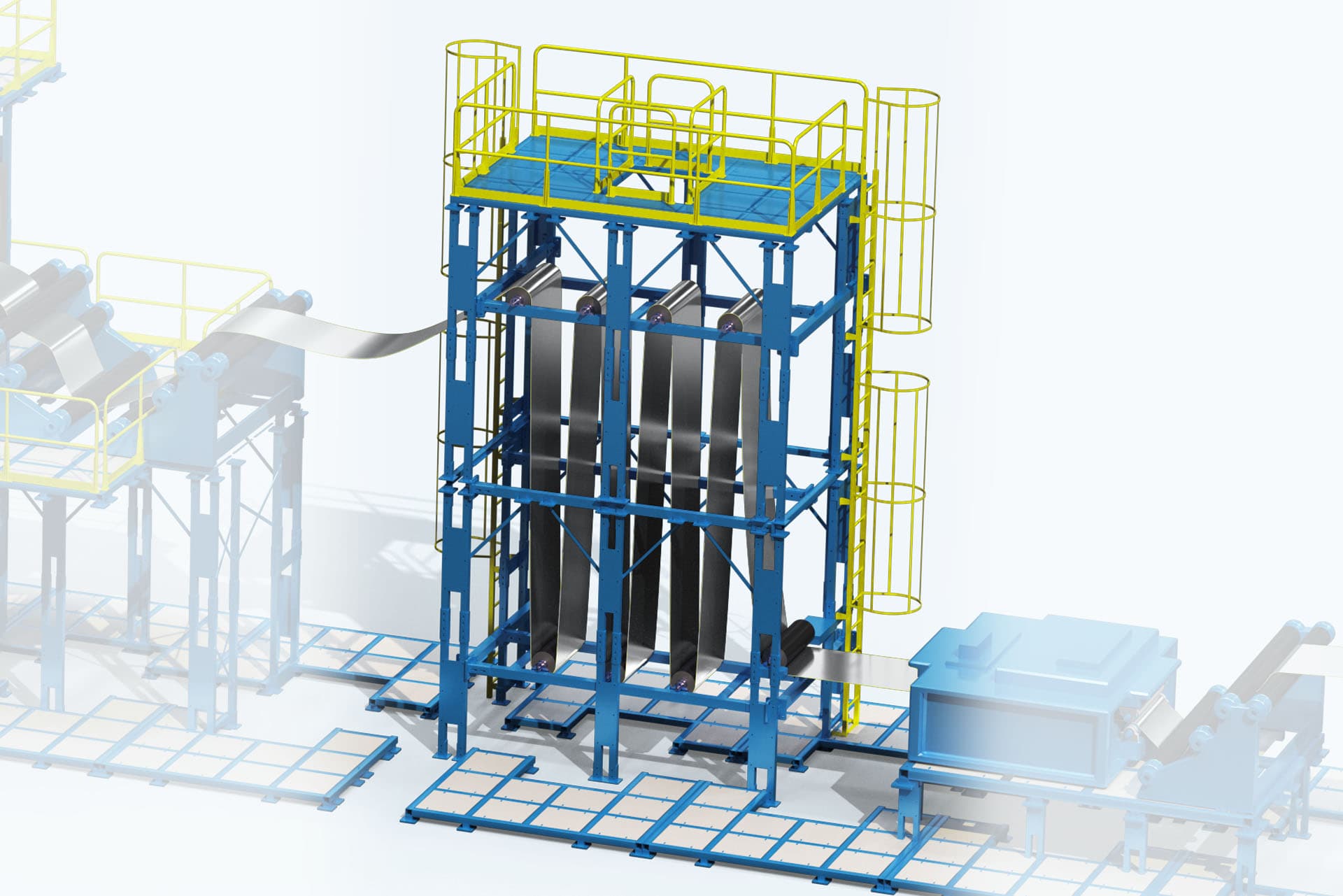
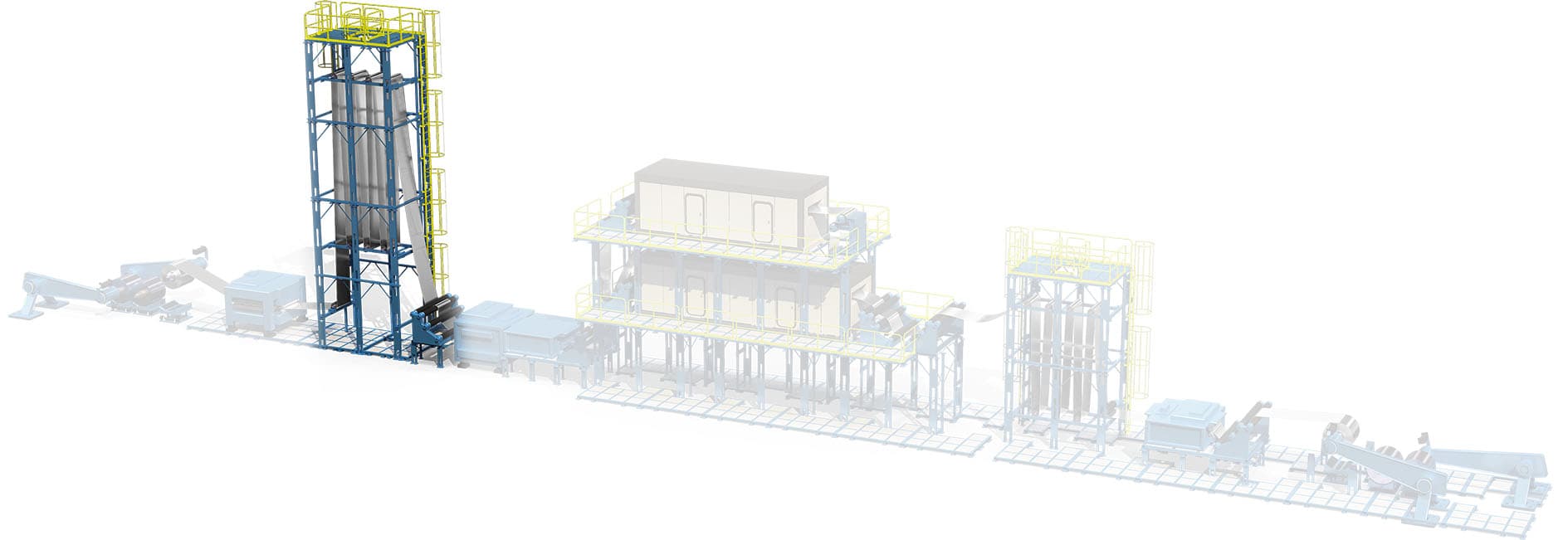
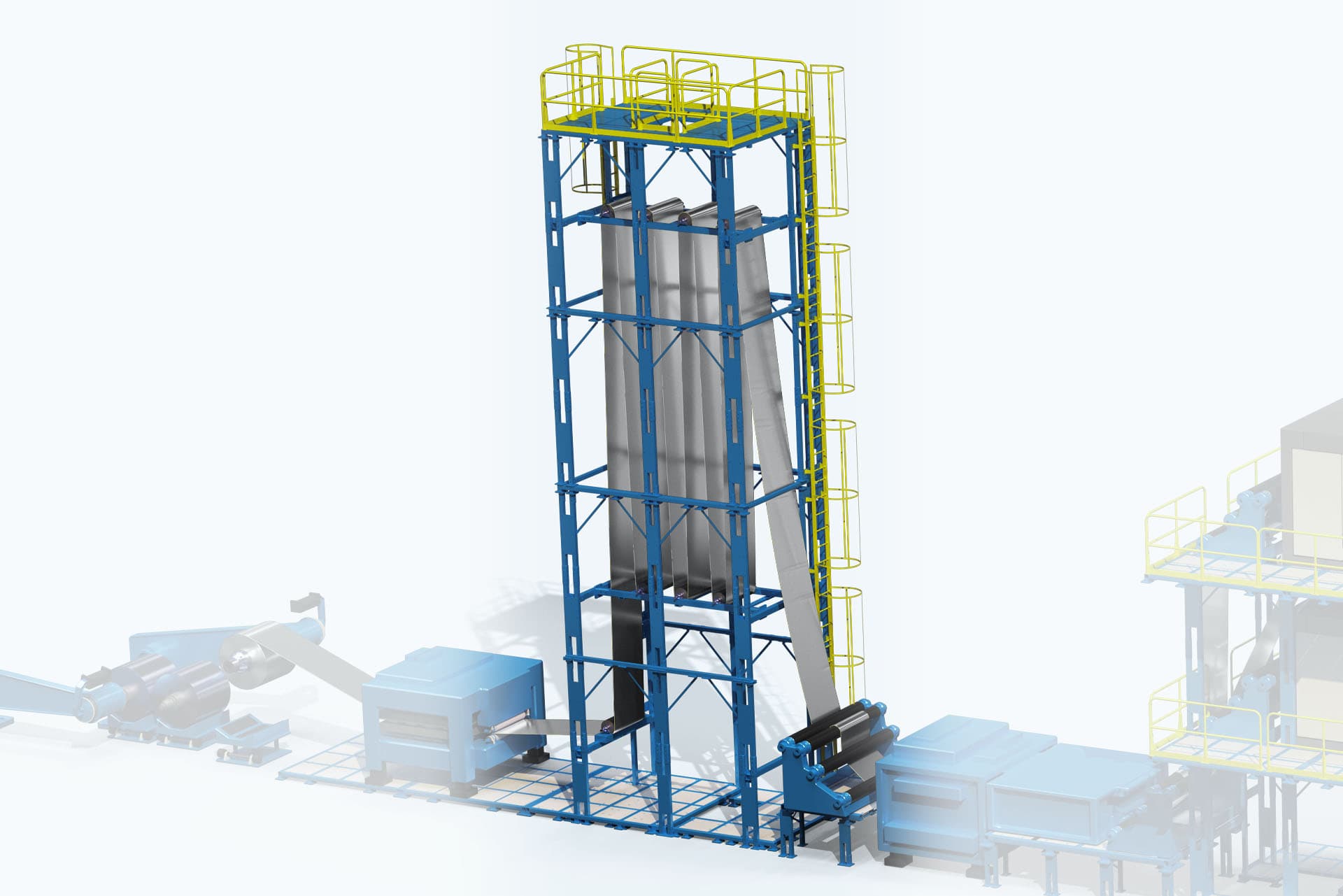
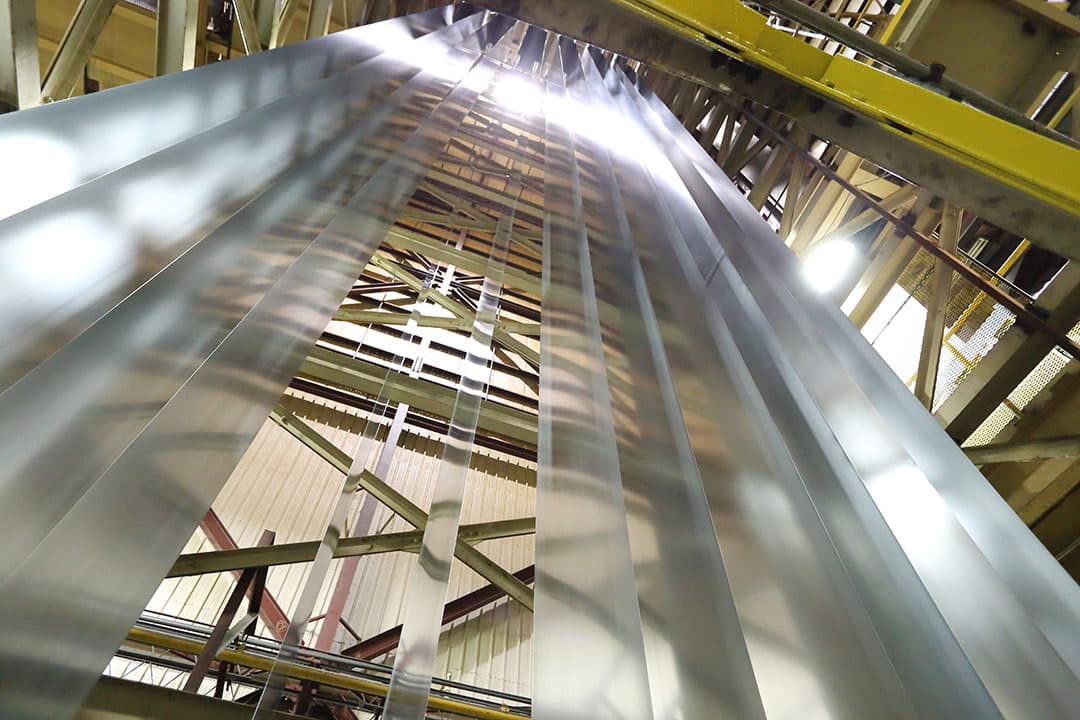
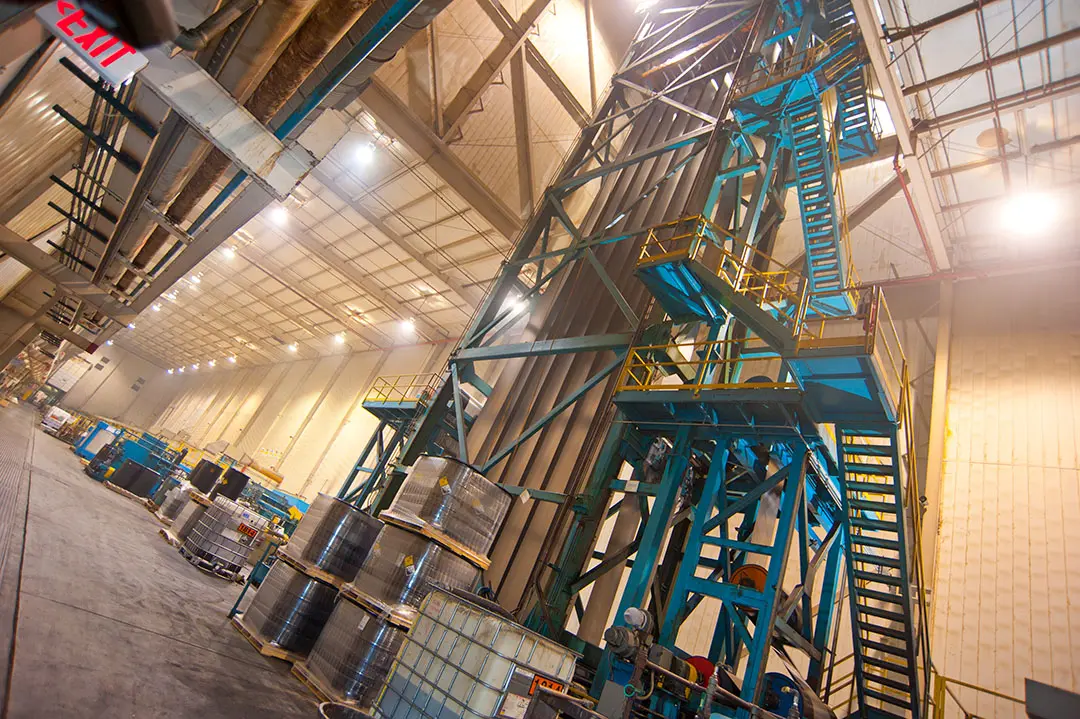
The accumulator is a structure that adjusts up and down to store material, which makes continuous operation of the coil coating process possible. This accumulation will continue to feed the coil coating processes while the entry end has stopped for the stitching process. As much as 750 feet of metal can be collected.
Livestock containment areas are exposed to an onslaught of corrosive conditions. Outdoor corral panels are constantly exposed to the elements: moisture, freezing temperatures and humidity contribute to the corrosion of metal components.
This exposure is especially problematic in regions with high levels of precipitation or extreme weather conditions. The acidic nature of animal waste and high livestock traffic can accelerate the corrosion process, leading to deterioration of fences, gates, and other metal structures within the pens. Additionally, fairgrounds typically employ cleaning agents to maintain hygiene in animal pens. While these agents are essential for sanitation, some cleaning solutions may contain chemicals that can contribute to corrosion. If not properly rinsed or if the cleaning agents are corrosive, they can affect the longevity of metal components.
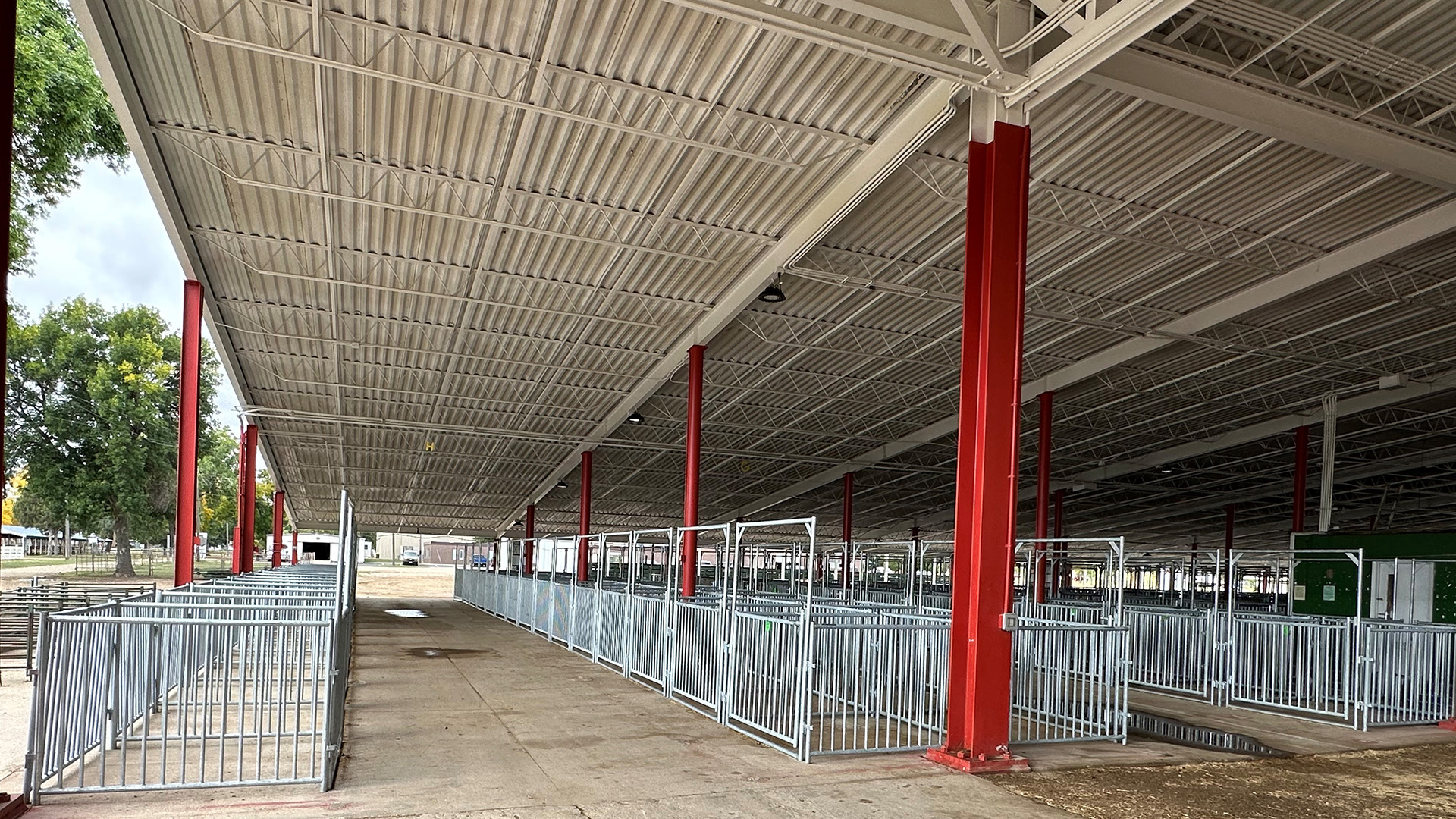
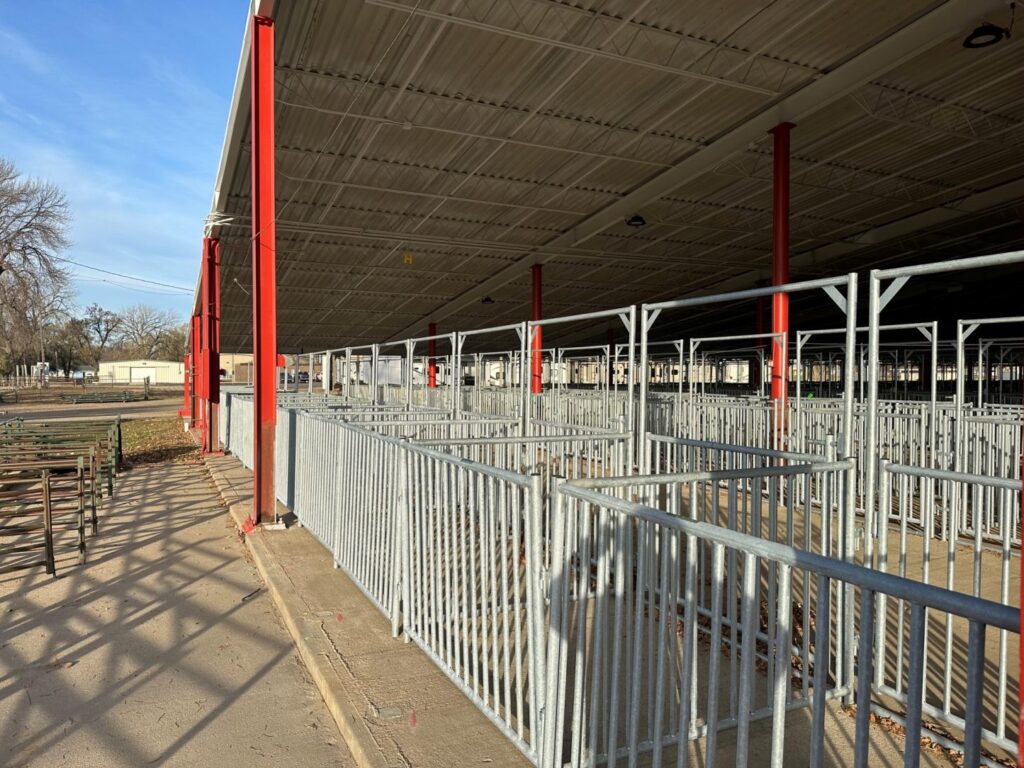
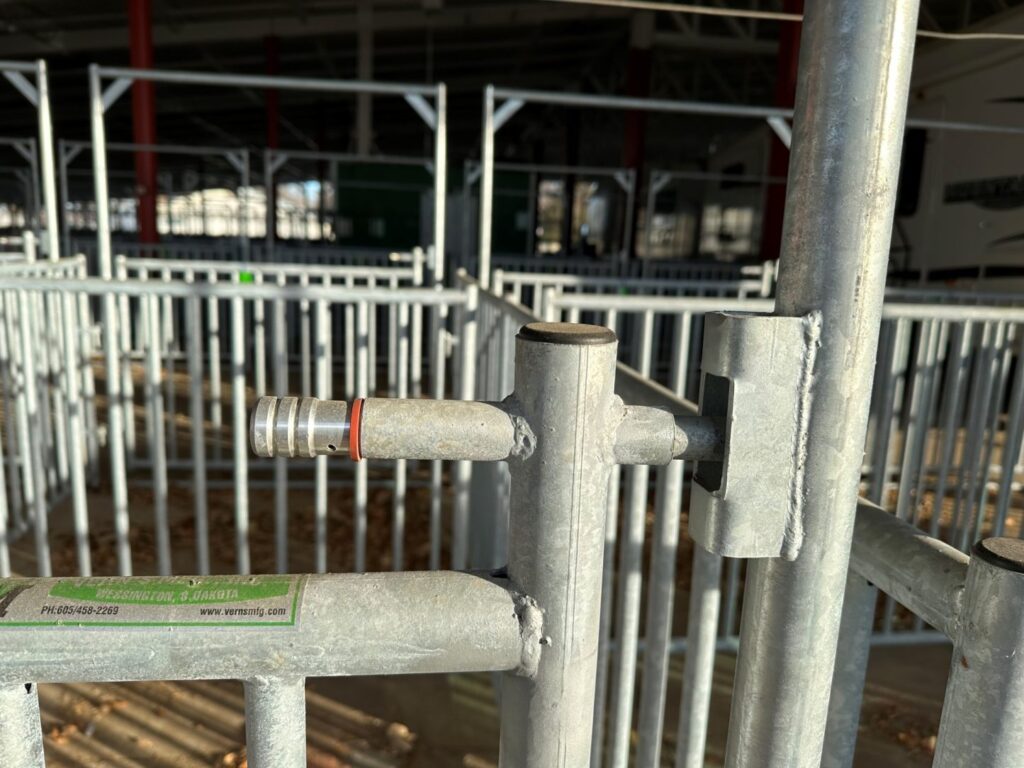
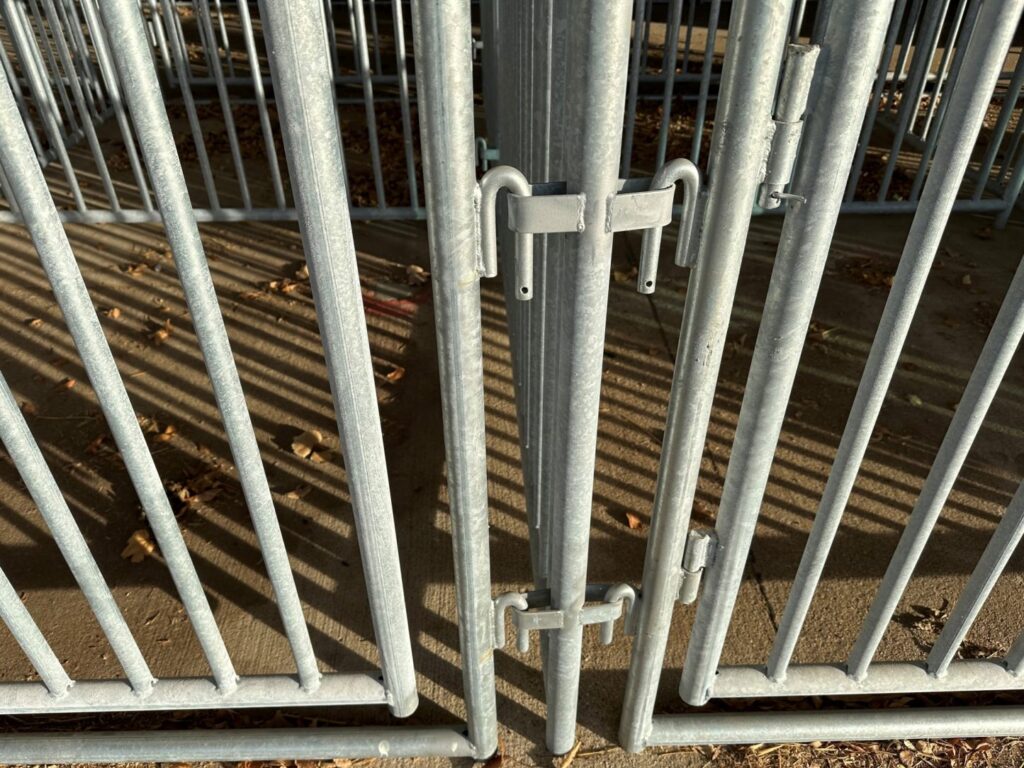
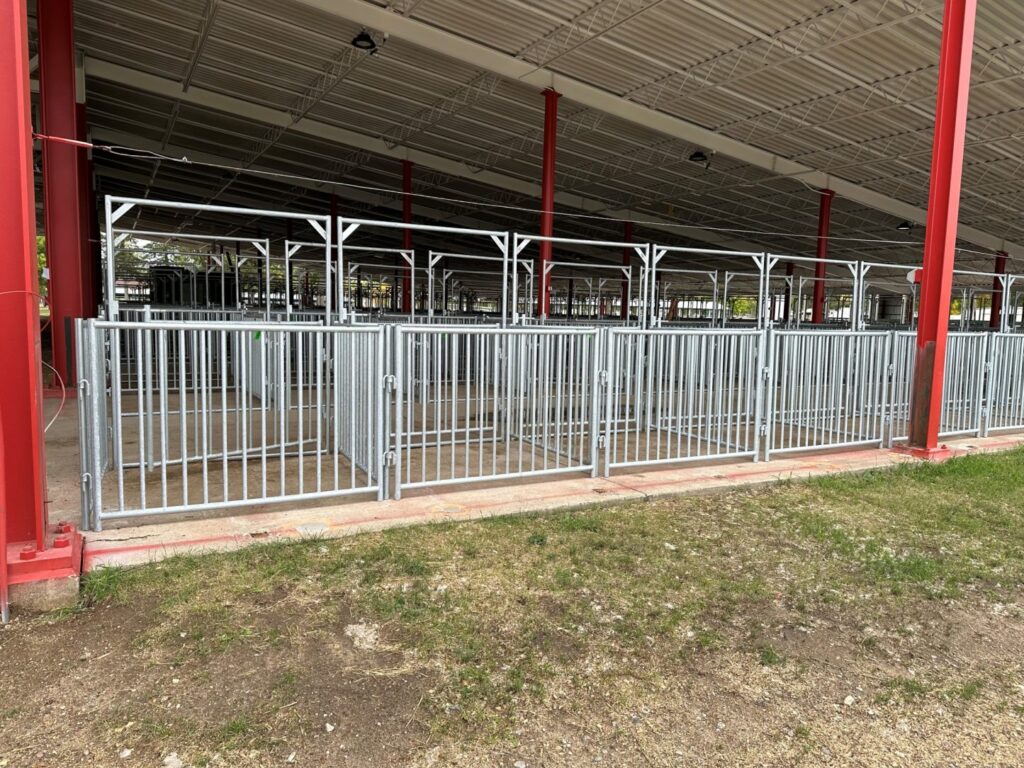
Recognizing the challenges at hand, the South Dakota State Fair Board chose to explore a galvanized product when the time came to replace the panels in their show barns. Hot-dip galvanizing (HDG) emerged as a standout choice, offering robust protection for outdoor animal pens. This process forms a durable and corrosion-resistant coating on metal surfaces. Given South Dakota’s harsh weather conditions, the shielding against the elements provided by hot-dip galvanizing proved significantly advantageous compared to paint. Notably, galvanized steel demands minimal maintenance in comparison to alternative methods, establishing it as a practical and cost-effective solution to ensure the longevity and durability of structures that may remain unused for extended periods throughout the year.
The new galvanized panels are also movable, so scratching isn’t a concern when stacking and transporting. The previous panels (and those yet to be replaced) display rust and discoloration where the paint had worn or been chipped, while hot-dip galvanizing offers a maintenance-free solution, ensuring a clean and uniform appearance for years without the need for annual repainting.
Cody Kleinsasser, General Manager of Vern’s Mfg., consulted with his local galvanizer about replacement panels, and has been extremely pleased with the results. “This was the first time ever working with a galvanized product, and the job went really well,” Kleinsasser stated. “I am looking at expanding my galvanized product line as an option. The galvanizing representative came out and spent time in our design and fabrication stages and the finished product is great.”
In fact, the Fair Board has ordered an additional 200+ tons of replacement panels over the next two years and is strongly considering additional panels as part of their future expansion plans. With the capability to safeguard vast acres of display areas not only at the South Dakota Fairgrounds but also in numerous similar applications across the country, hot-dip galvanizing is well positioned as the protective coating of choice!
“This was the first time ever working with a galvanized product, and the job went really well,” Kleinsasser stated. “I am looking at expanding my galvanized product line as an option. The galvanizing representative came out and spent time in our design and fabrication stages and the finished product is great.”