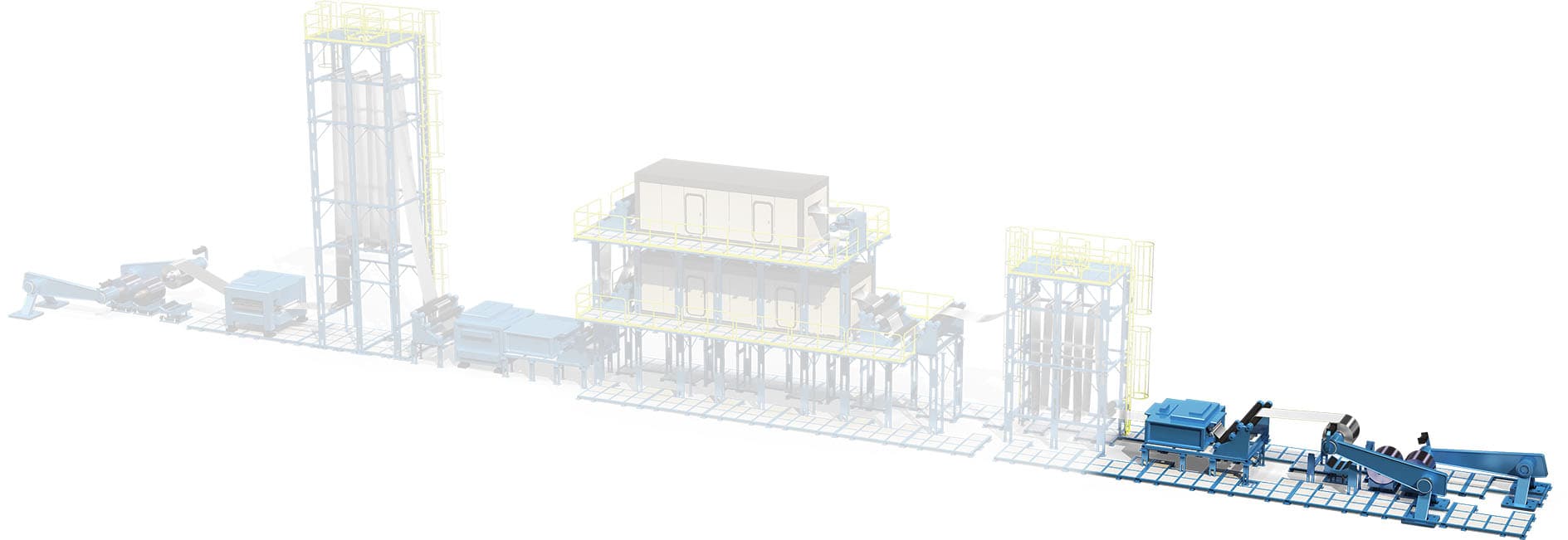
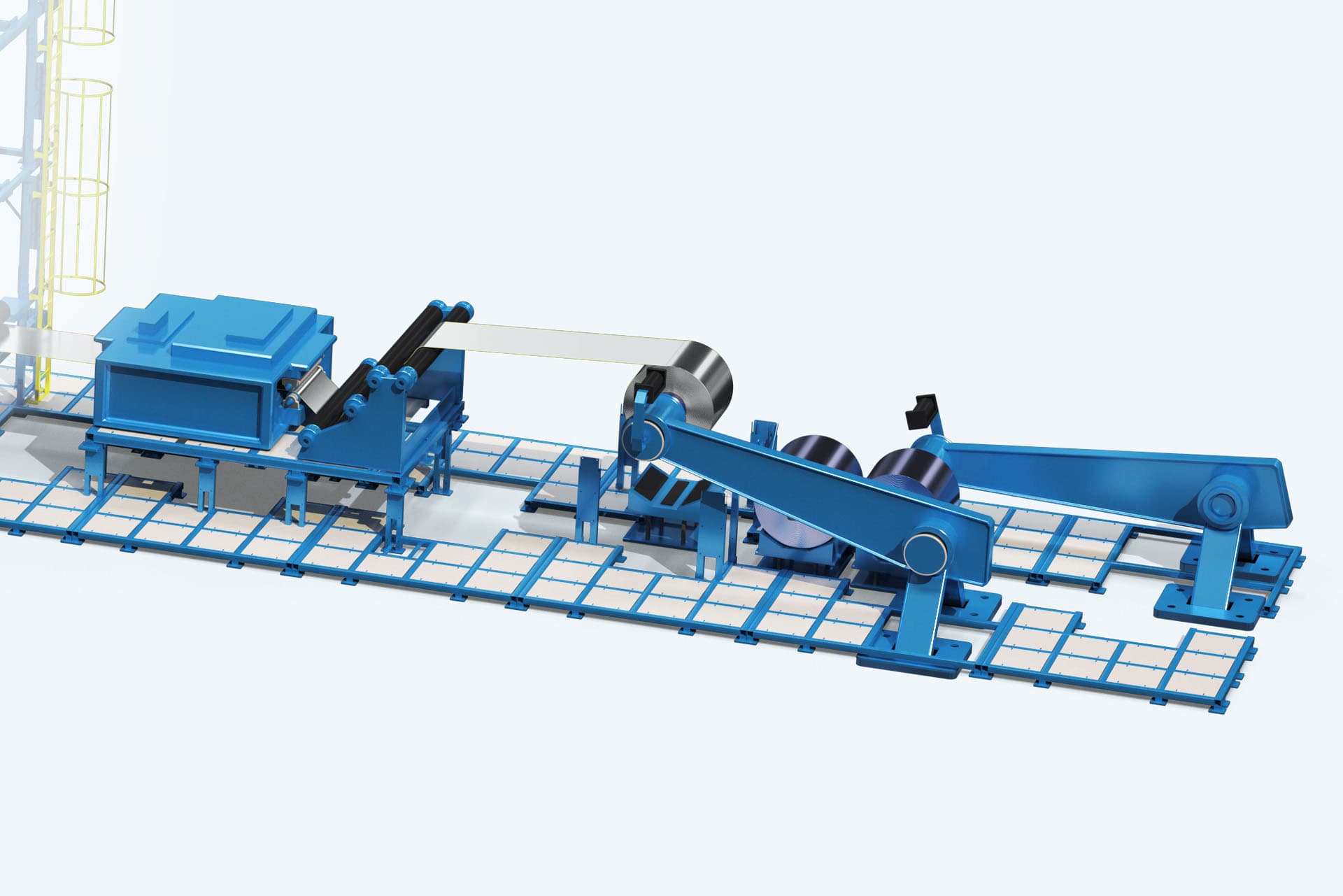
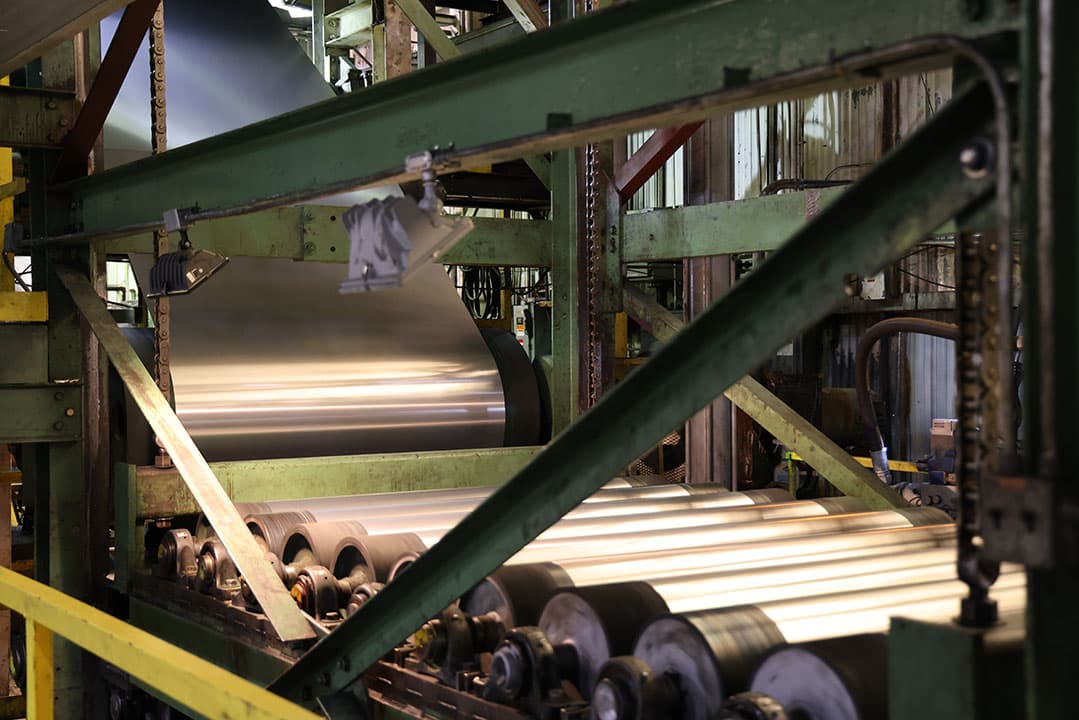
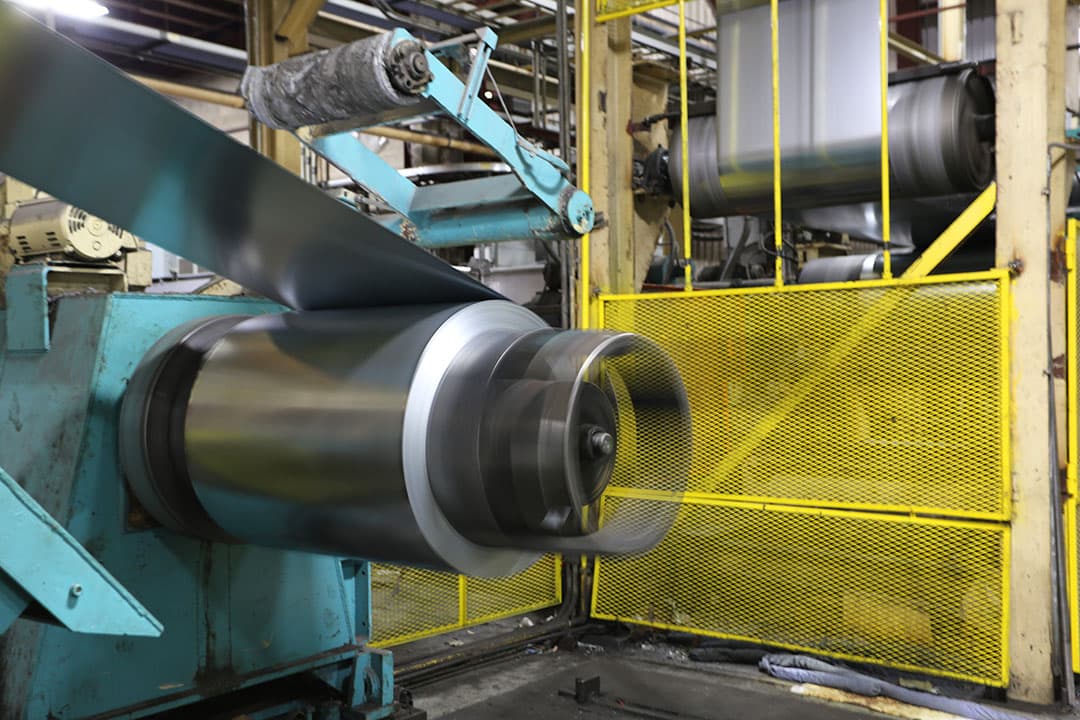
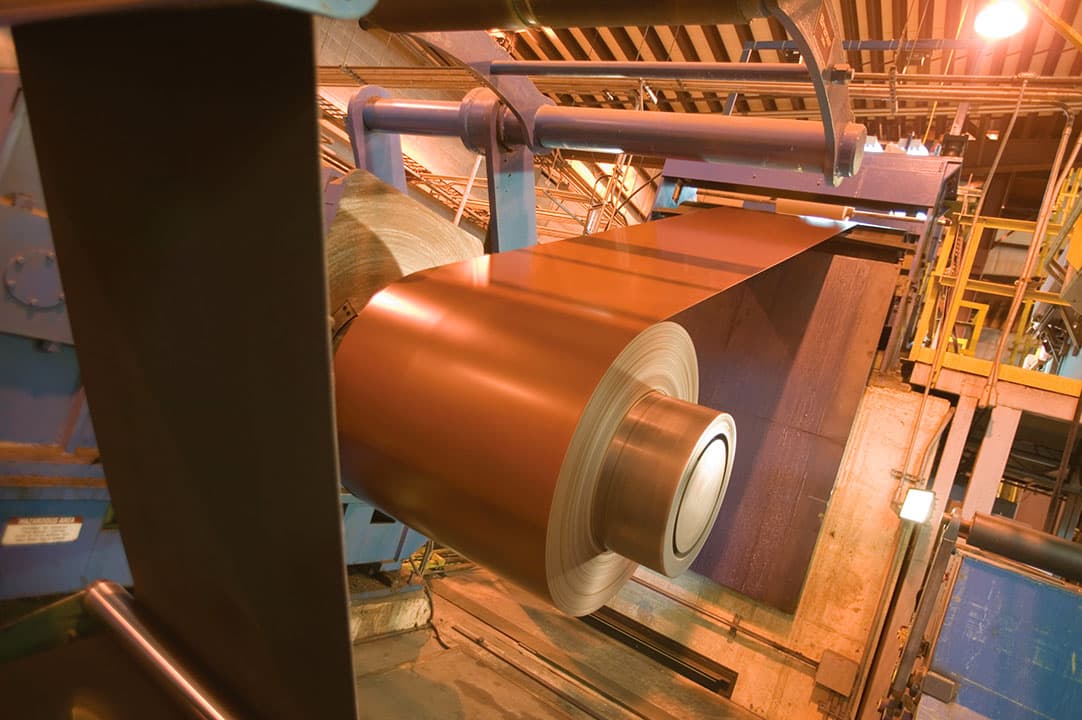
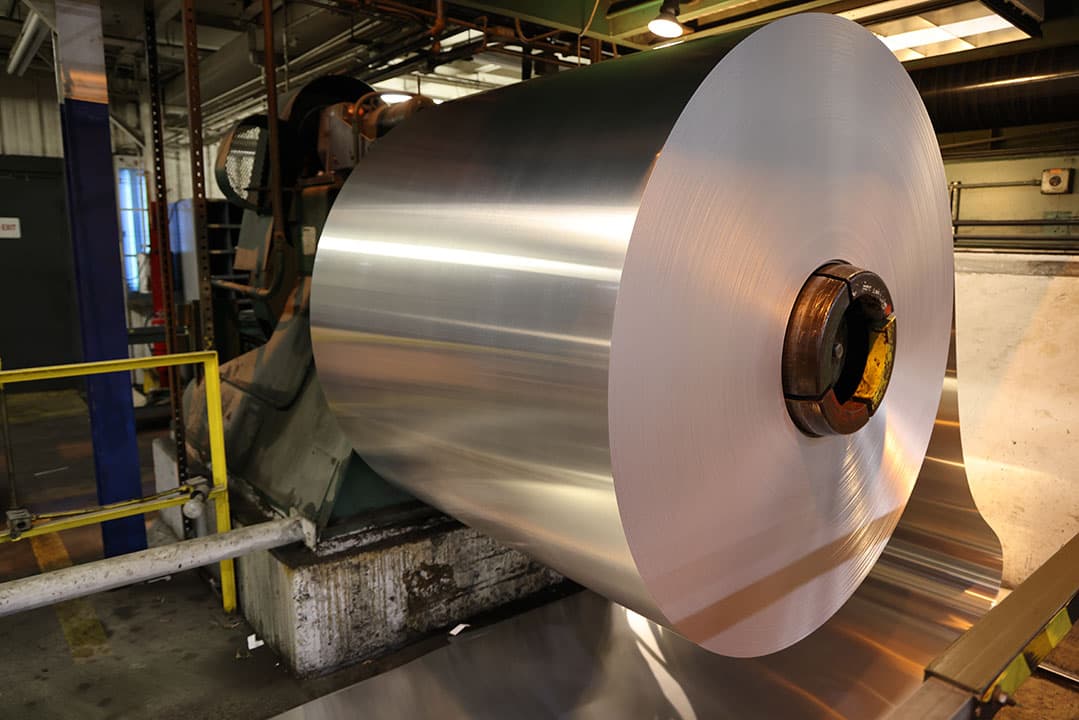
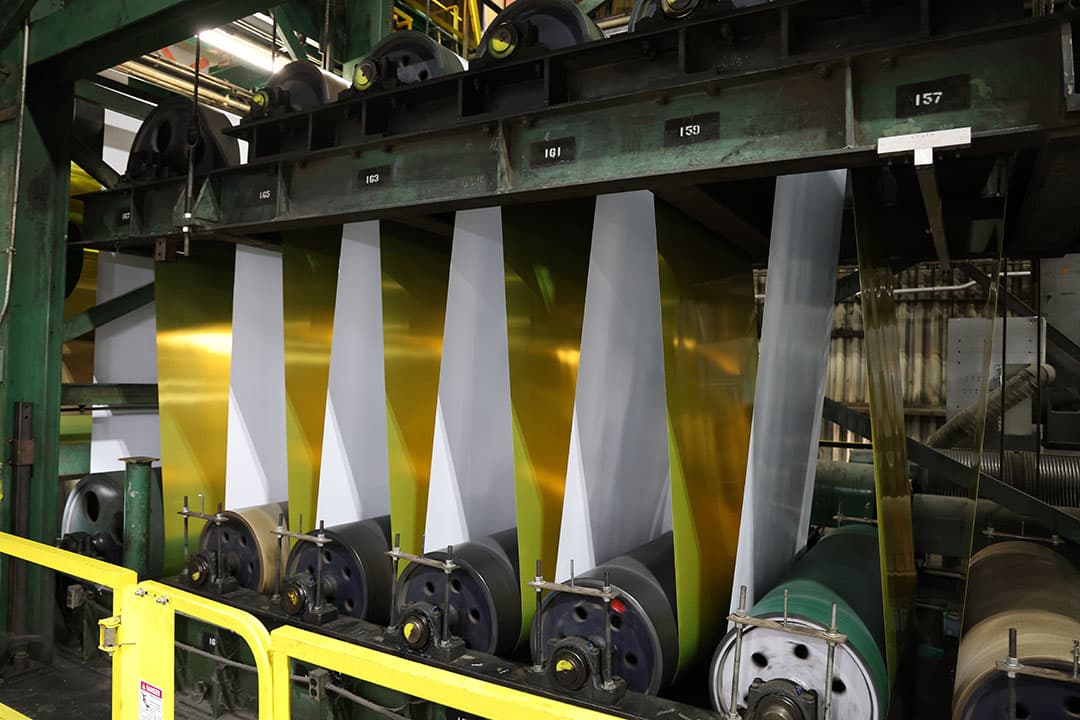
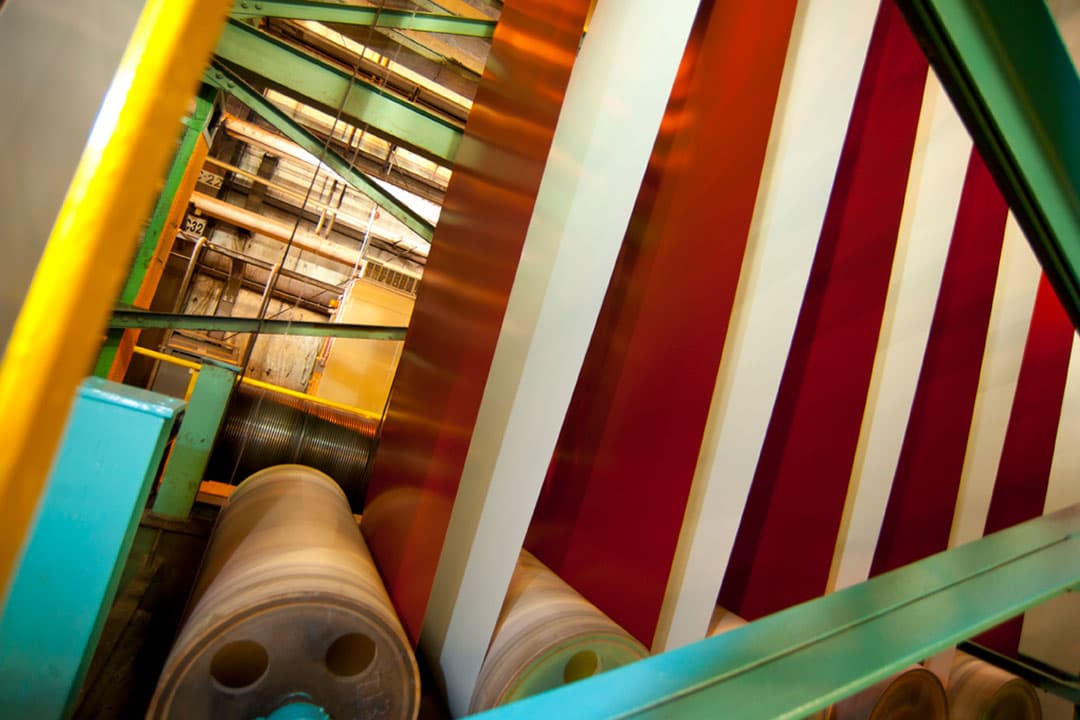
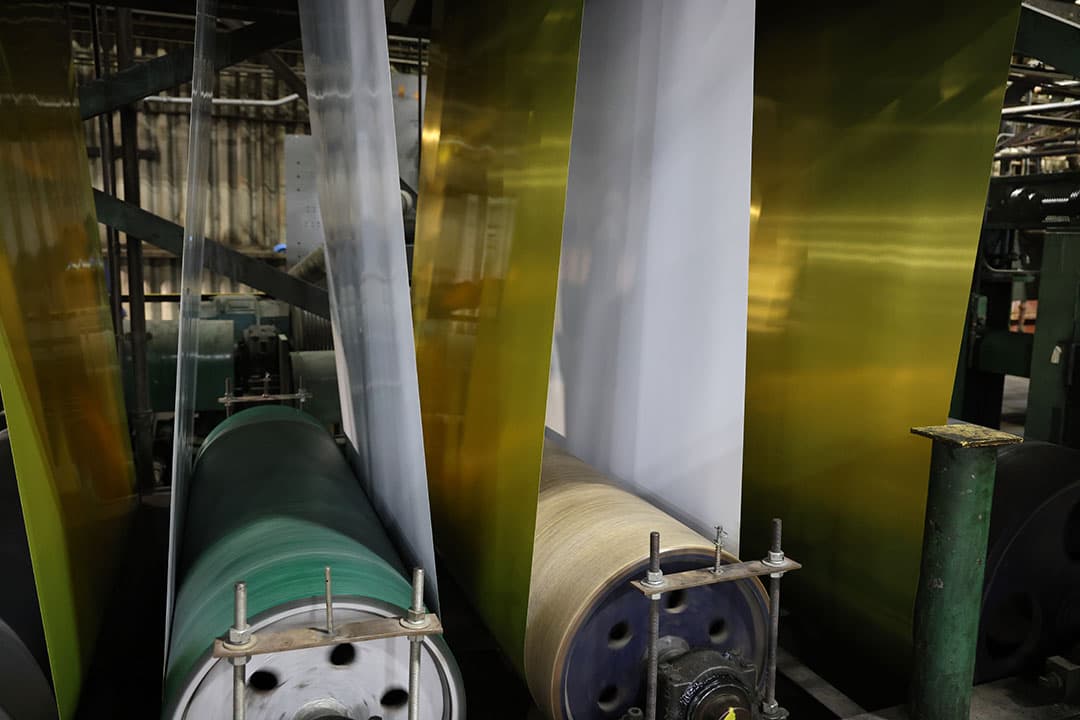
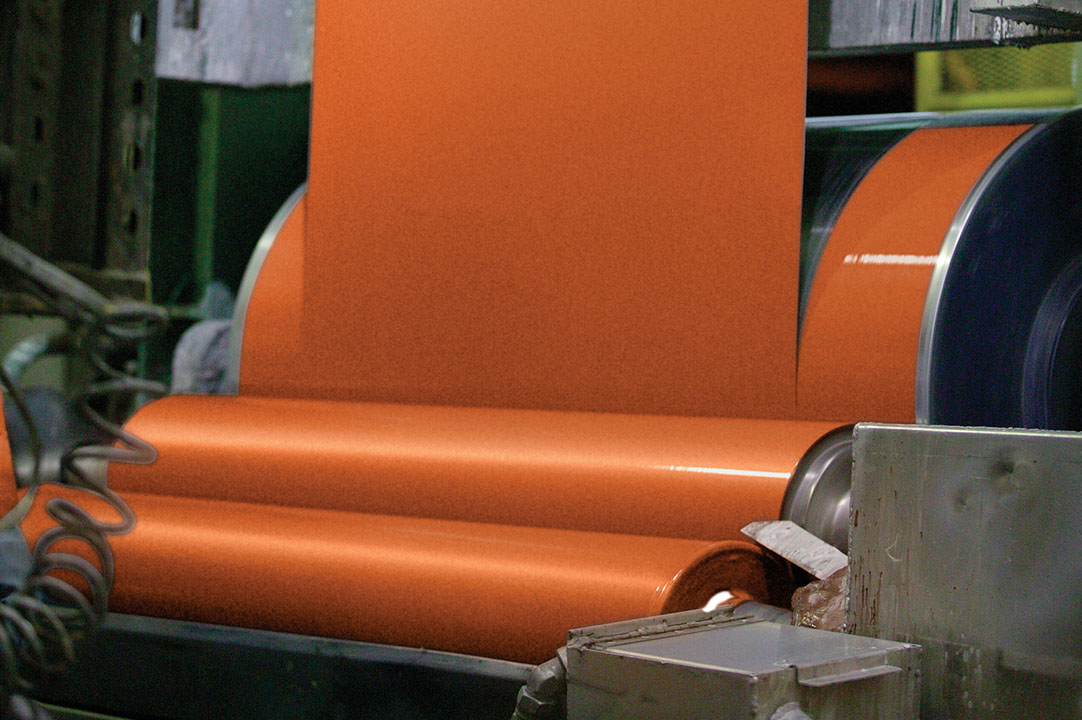
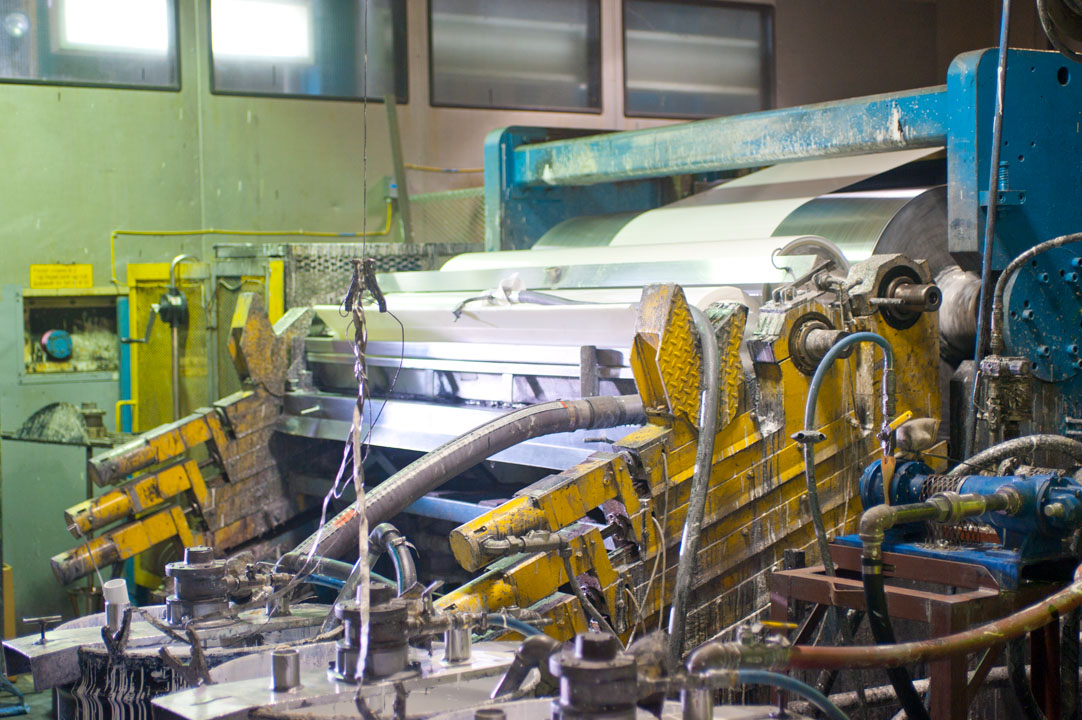
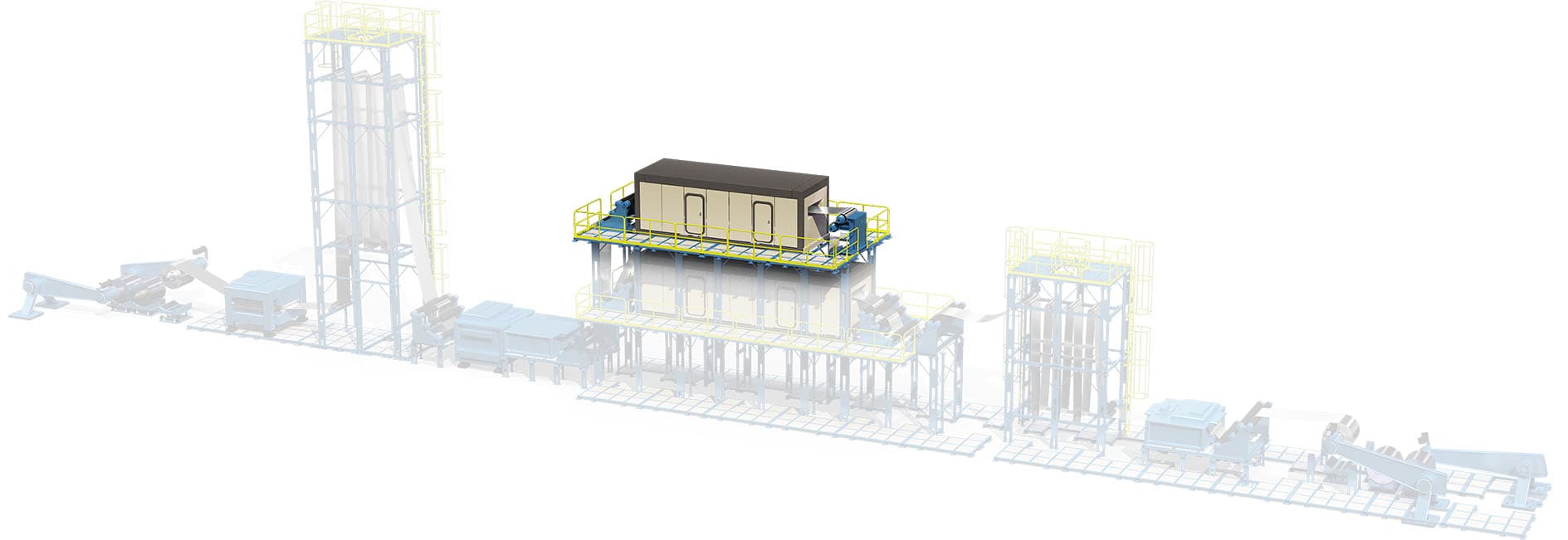
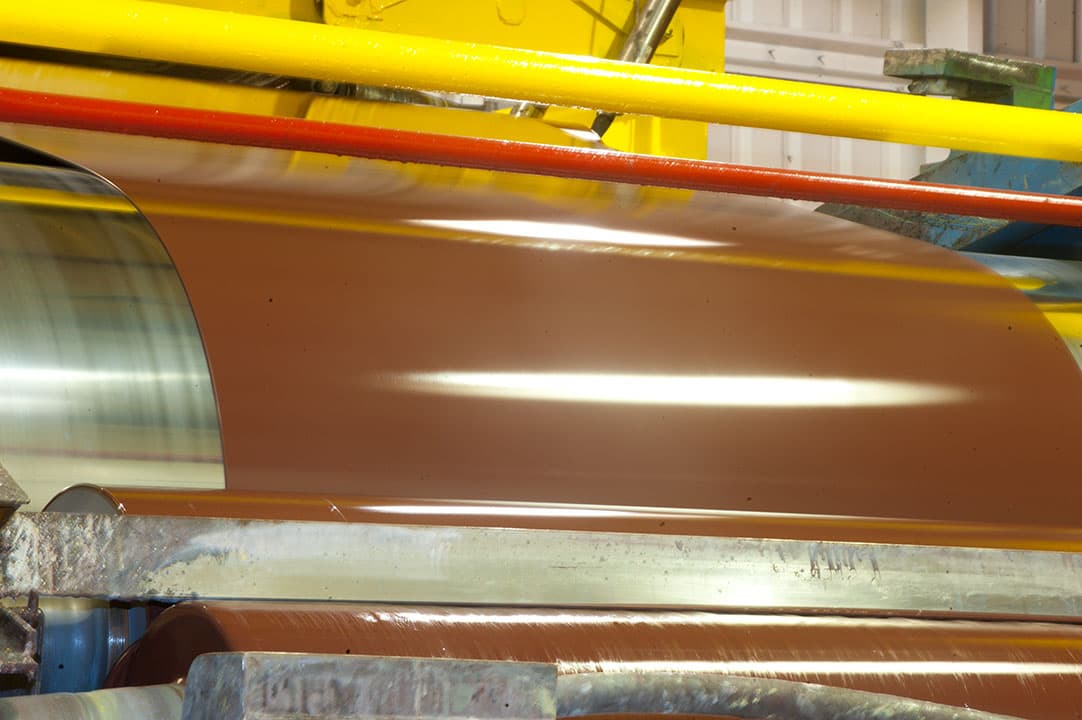
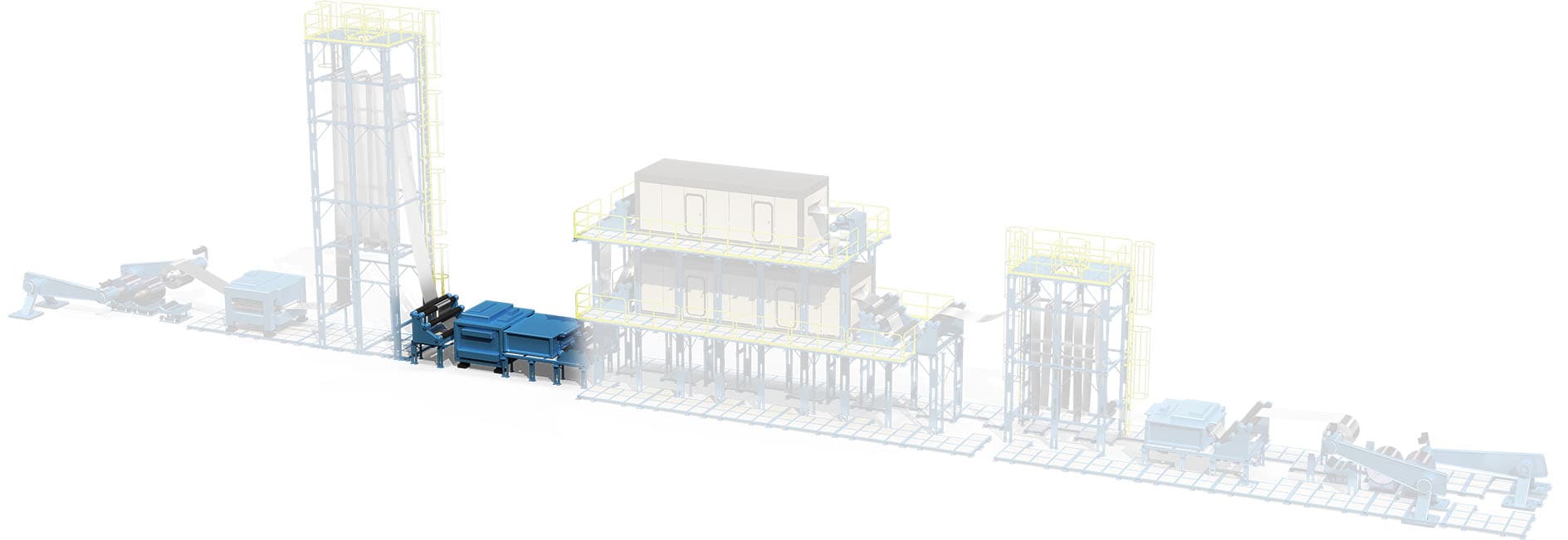
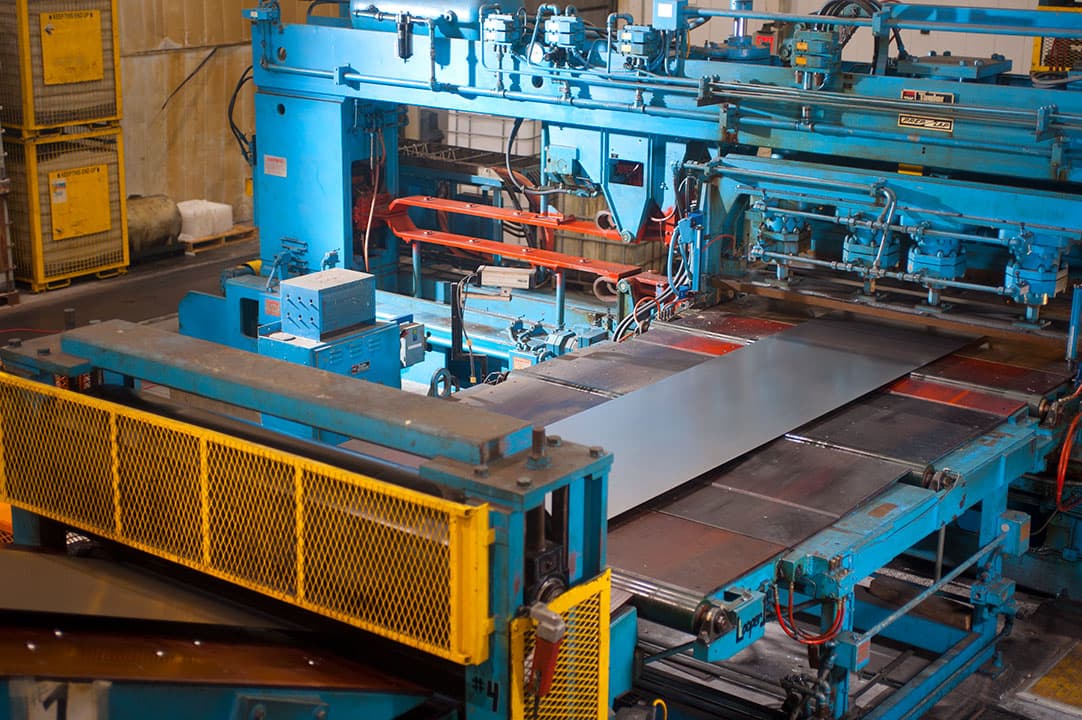
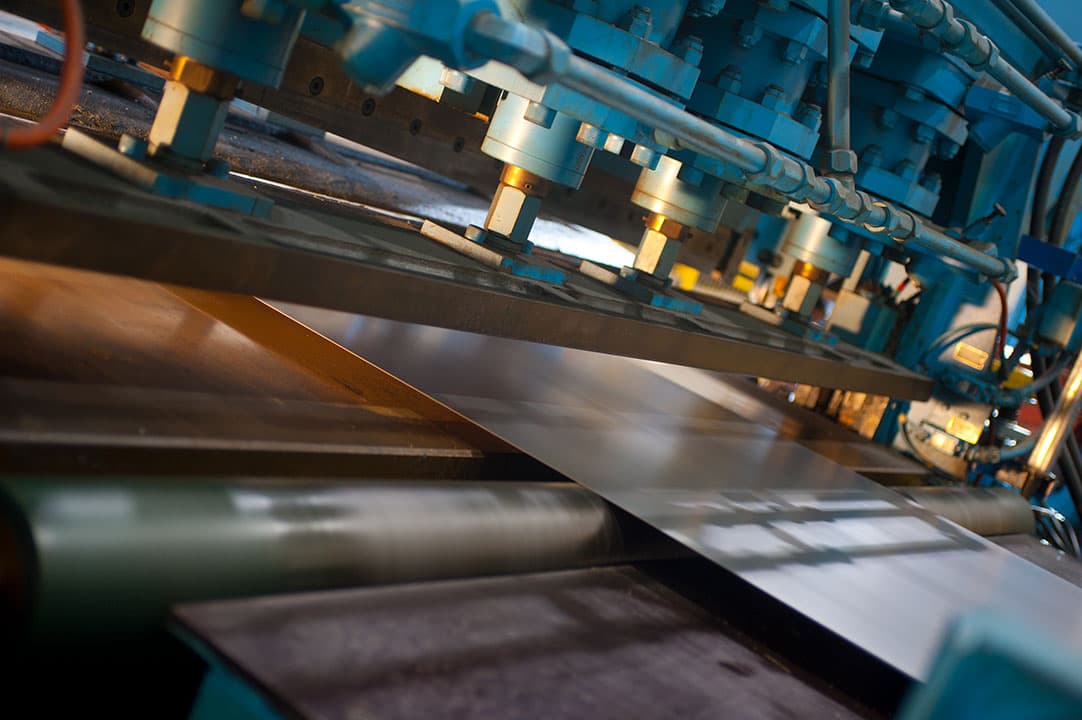
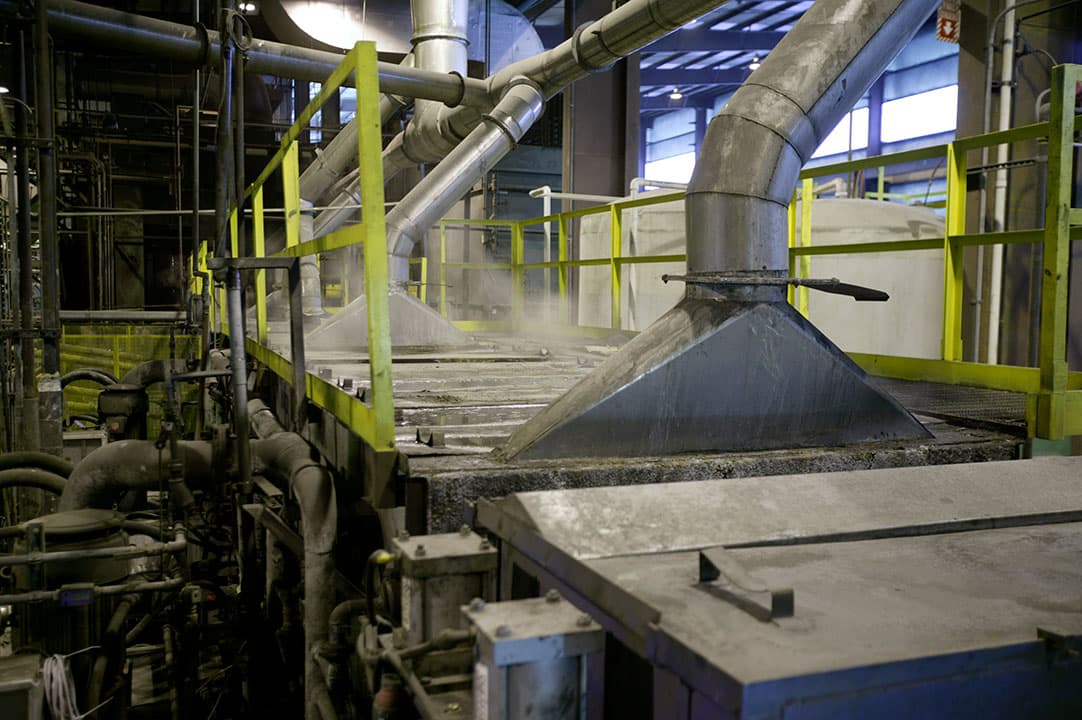
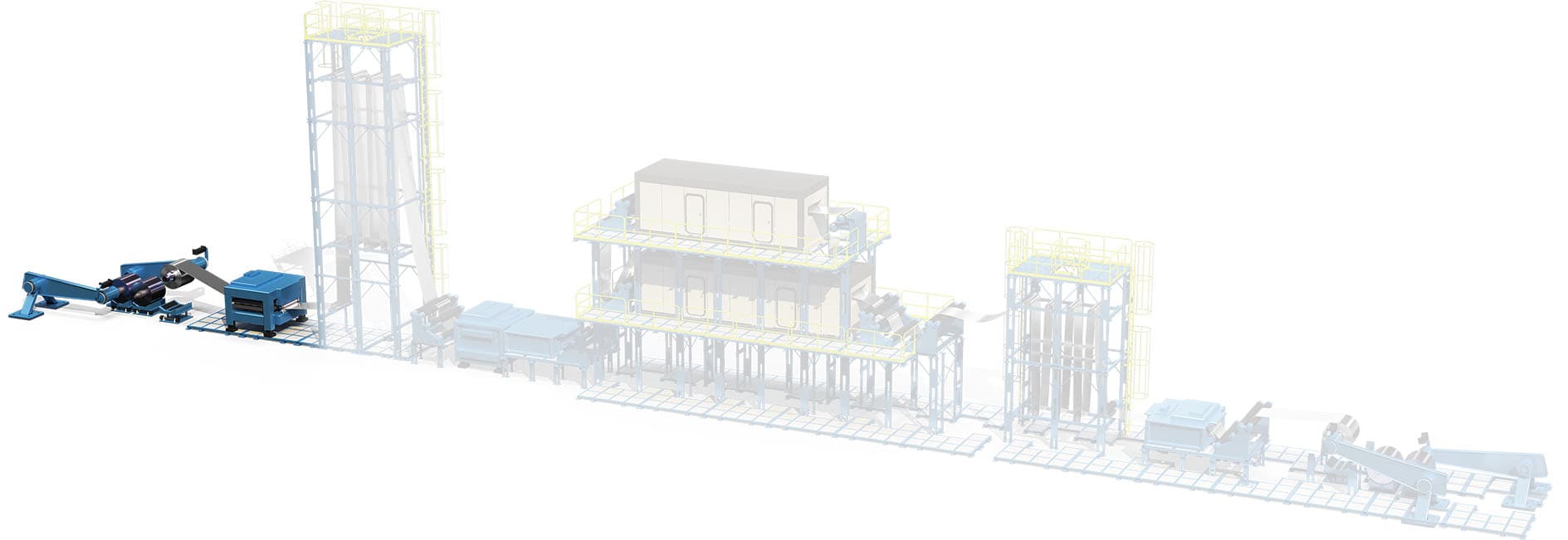
Once the metal is cleaned, treated, and painted, the strip is rewound into a coil size prescribed by the customer. From there, the coil is removed from the line and packaged for shipment or additional processing.
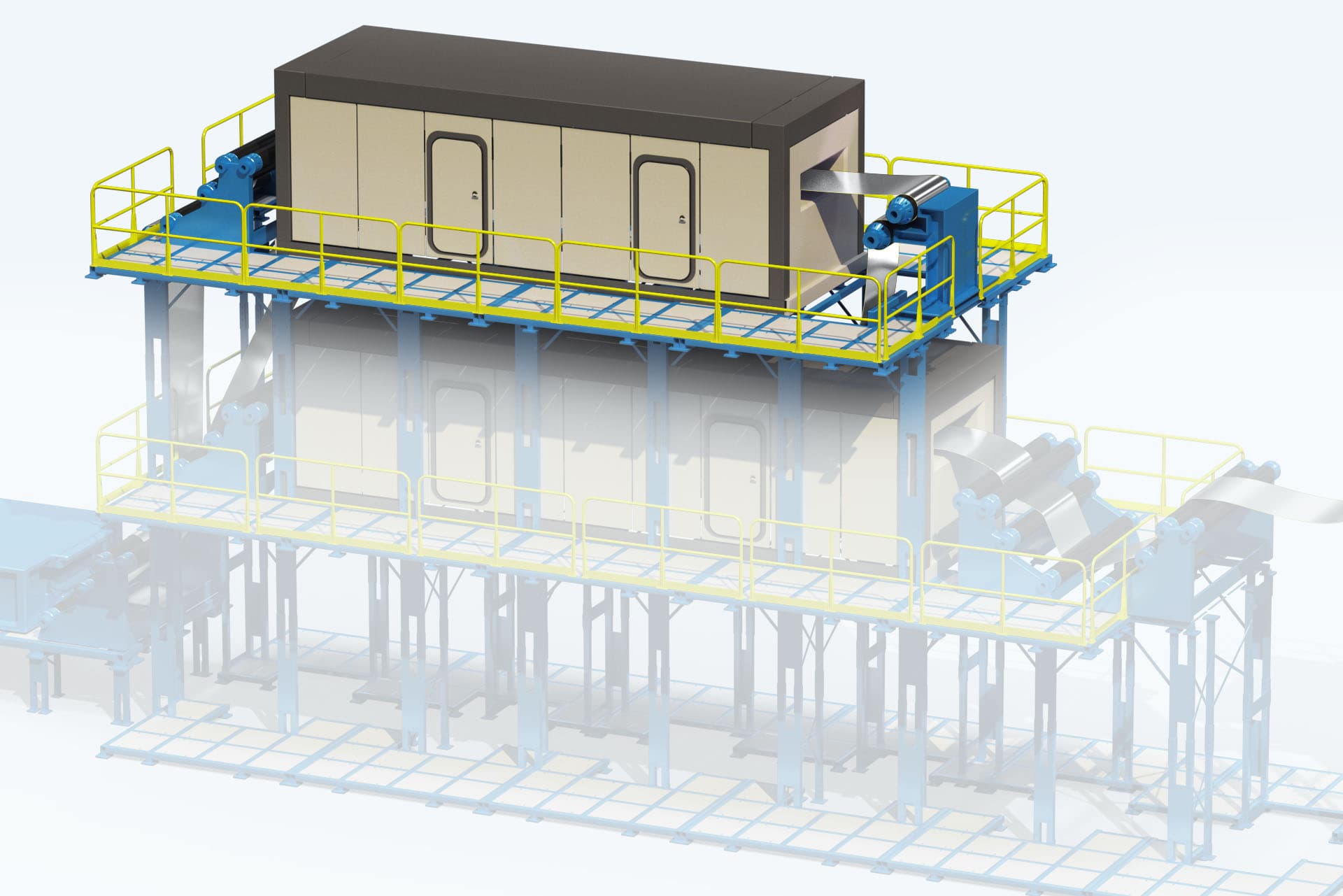
After the primer is applied and cured, then the metal strip enters the finish coat station where a topcoat is applied. Topcoats provide color, corrosion resistance, durability, flexibility and any other required physical properties. Like primers, the topcoat is cured using thermal cure ovens.
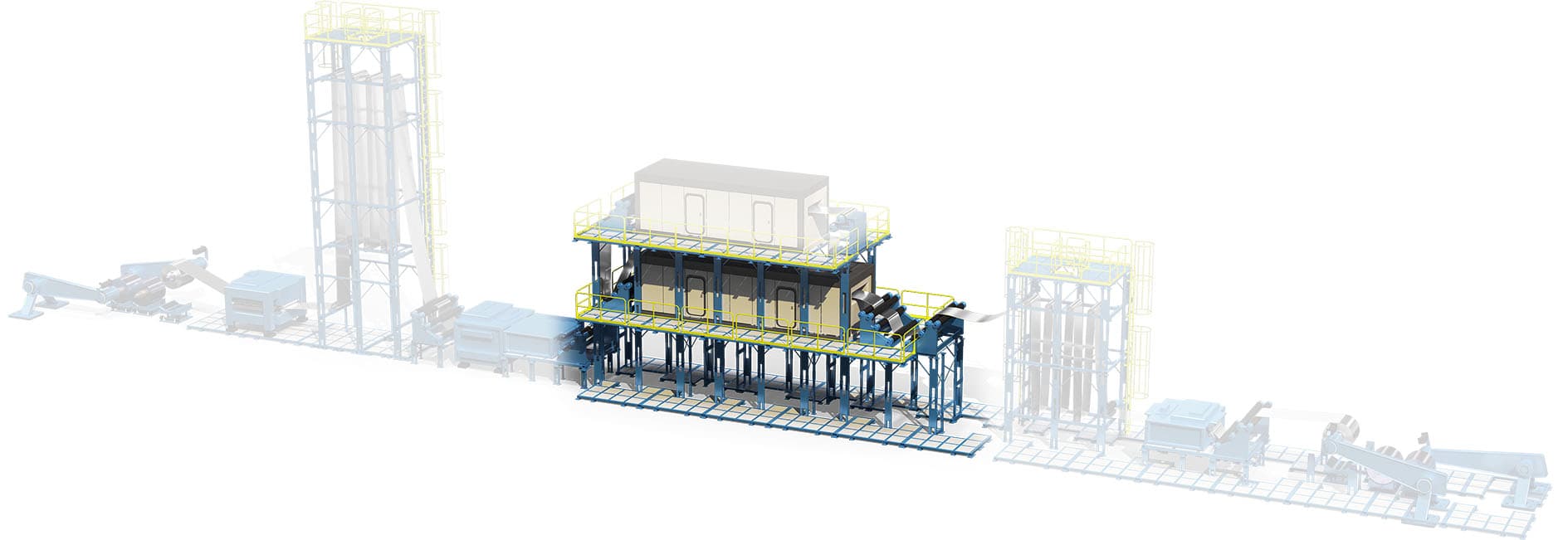
Oven
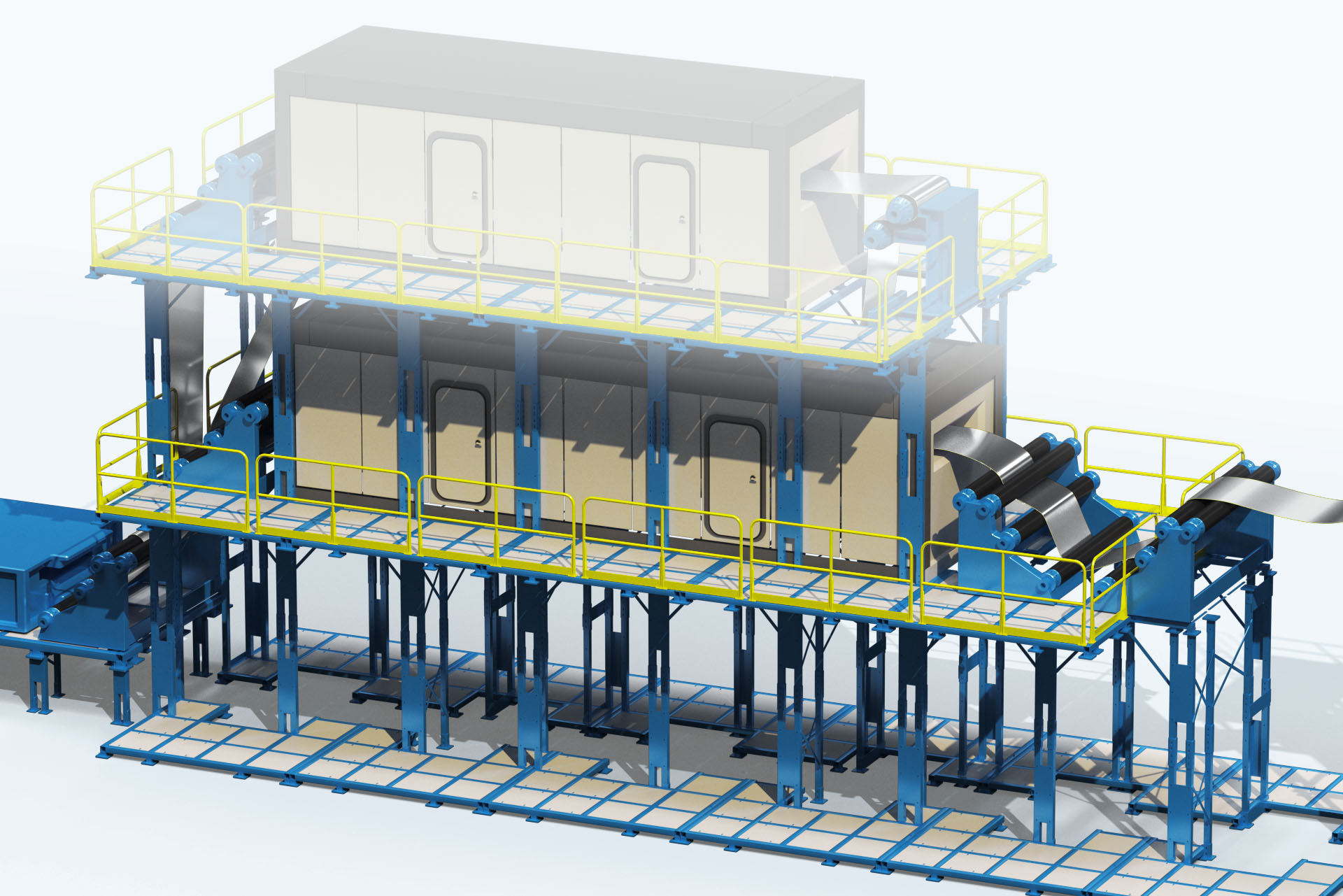
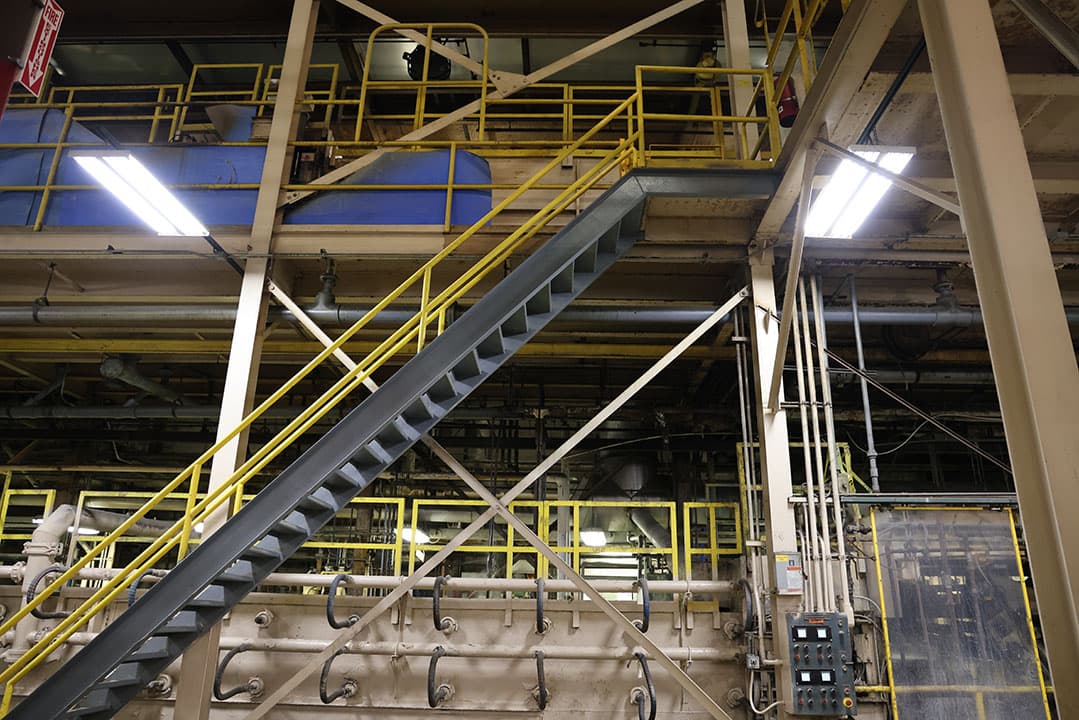
Coil coating ovens can range from 130 feet to 160 feet and will cure the coatings in 13 to 20 seconds.
During this stage, the strip enters the prime coat station whereby a primer is applied to the clean and treated metal. After the primer is applied, the metal strip travels through a thermal oven for curing. Primers are used to aid in paint adhesion, improve corrosion performance and enhance aesthetic and functional attributes of the topcoat.
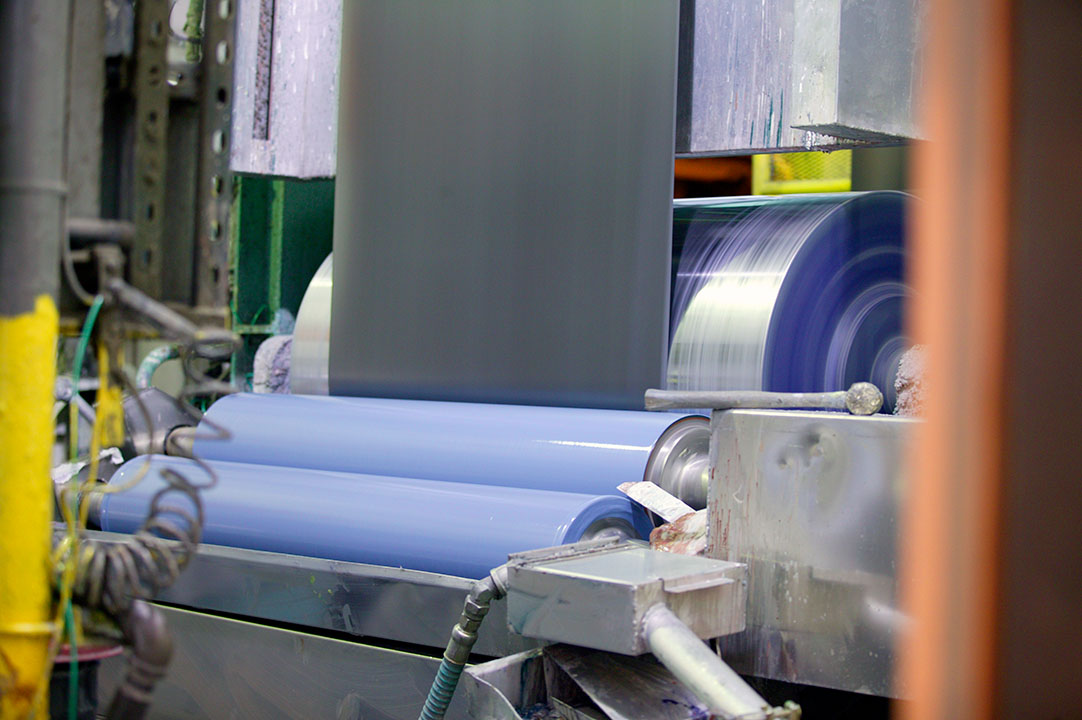
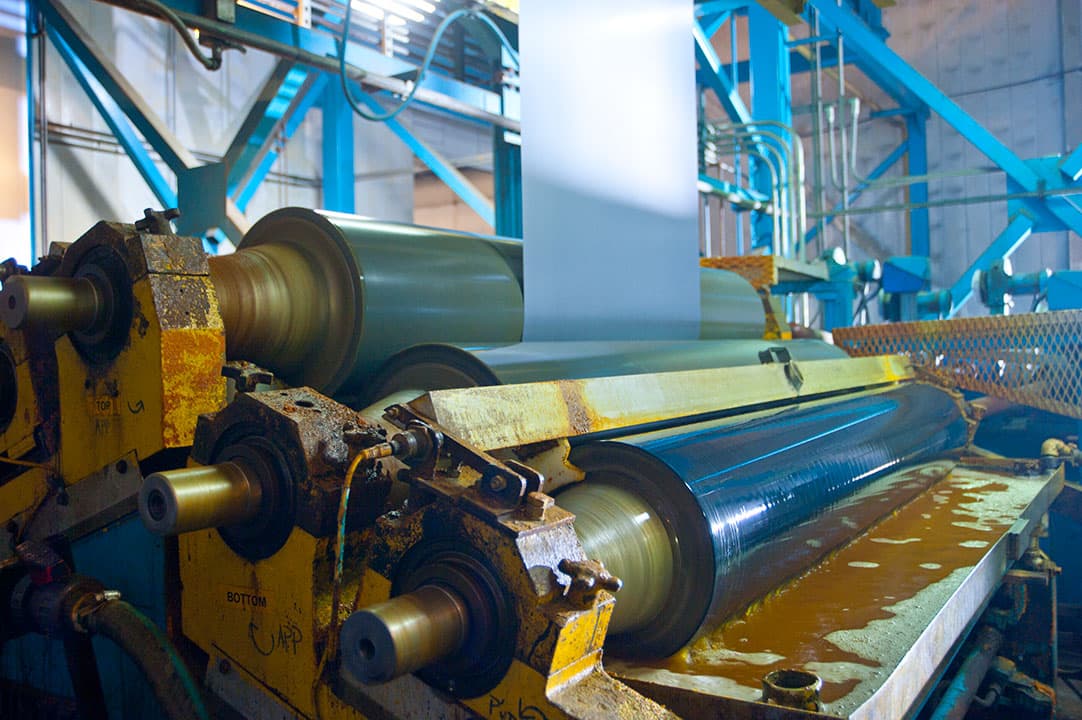
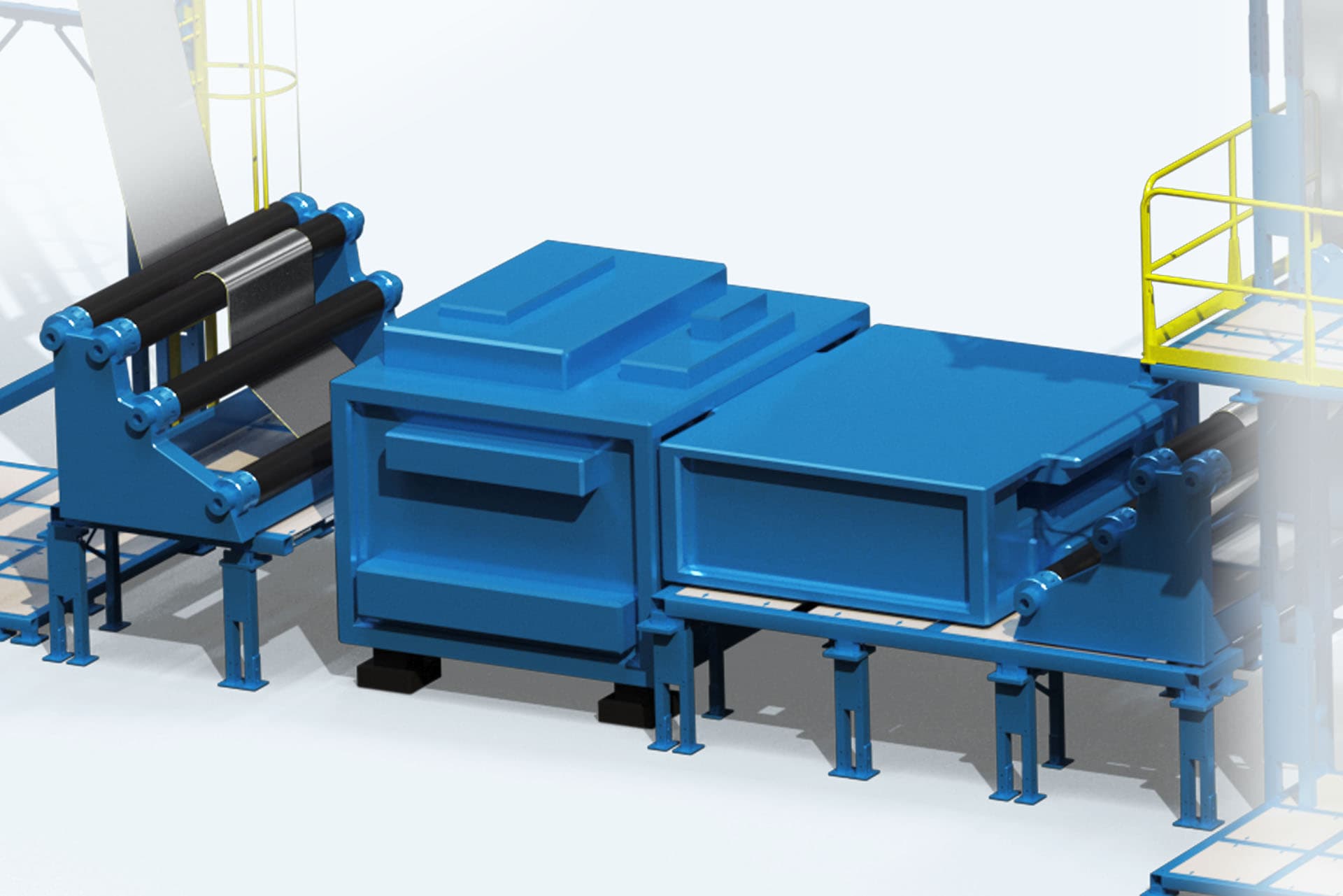
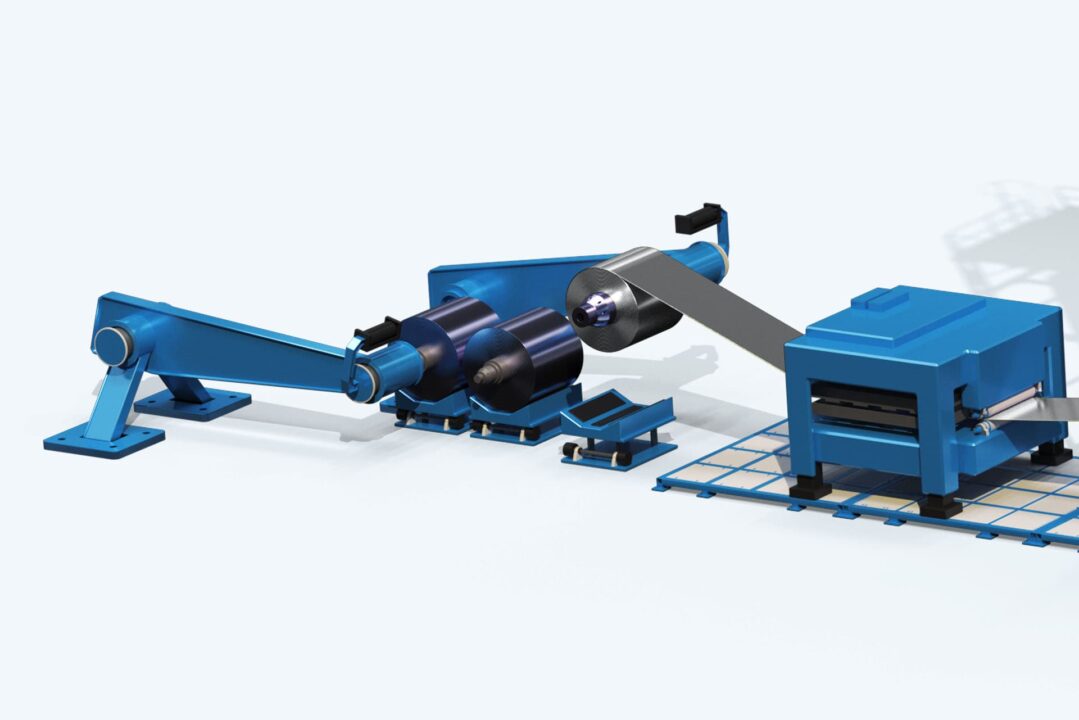
S Wrap Coater
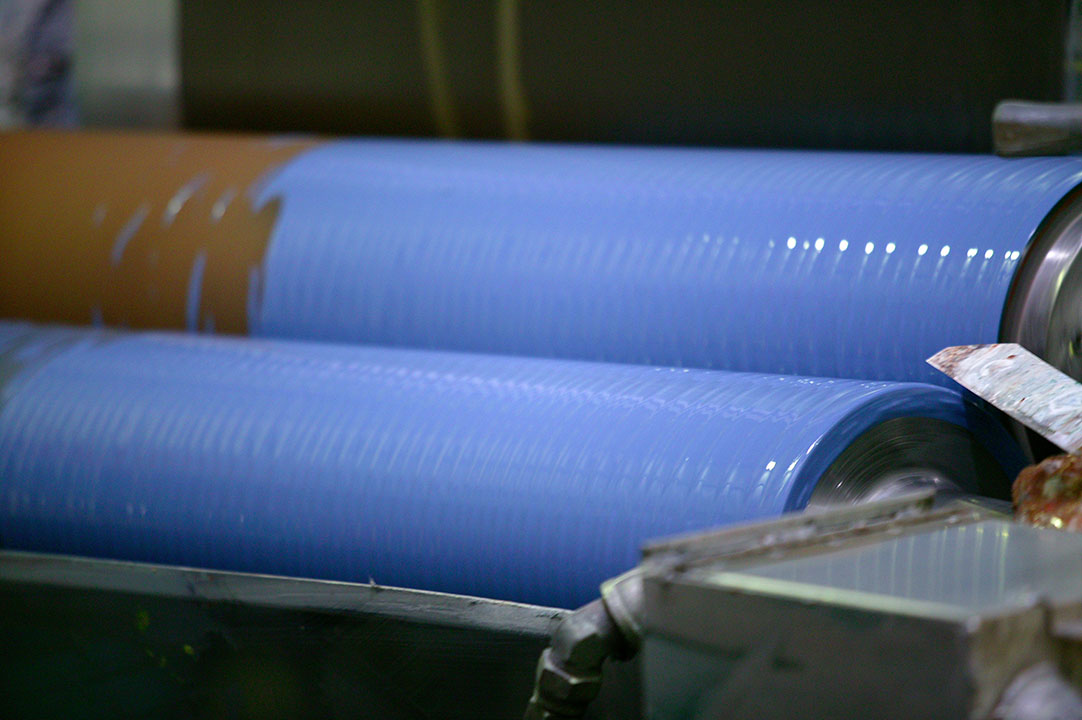
The S wrap coater design allows for primers and paints to be applied to the top and back side of the metal strip simultaneously in one continuous pass.
The cleaning and pretreating section of the coil coating process focuses on preparing the metal for painting. During the cleaning stage, dirt, debris, and oils are removed from the metal strip. From there, the metal enters the pretreatment section and/or a chemical coater whereby chemicals are applied to facilitate paint adhesion and enhance corrosion resistance.
Dried-In-Place
In this stage a chemical that provides enhanced corrosion performance is applied. This treatment can be chrome free if required.
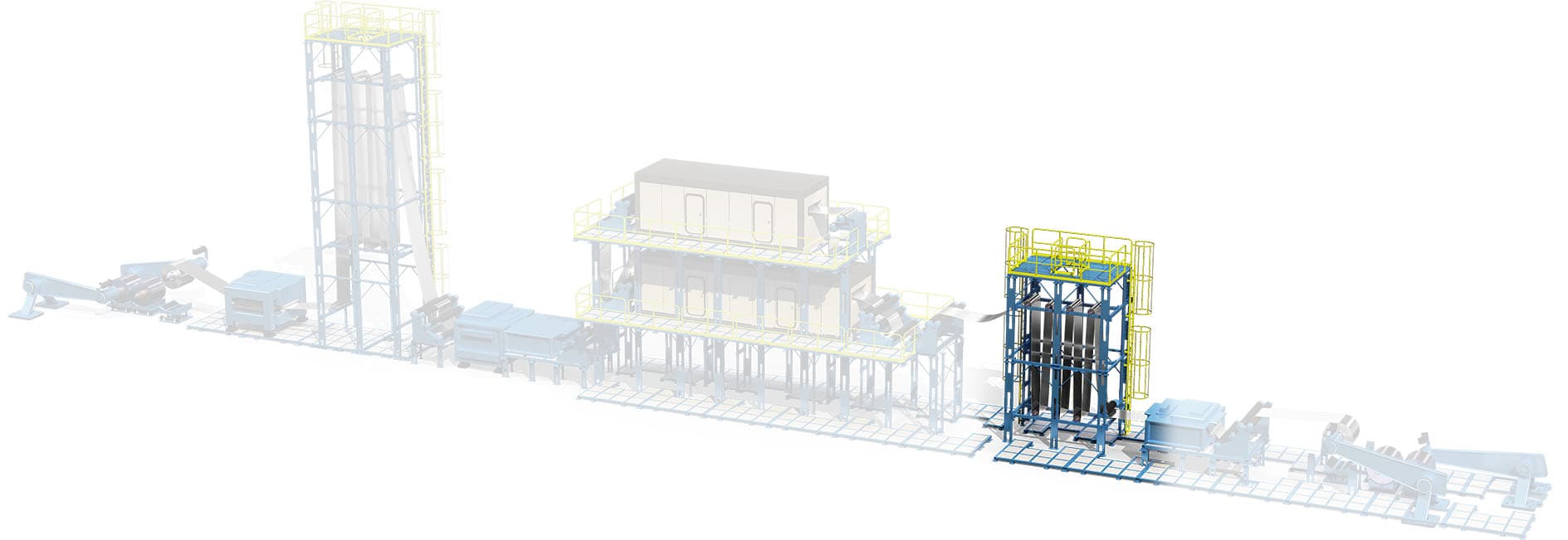
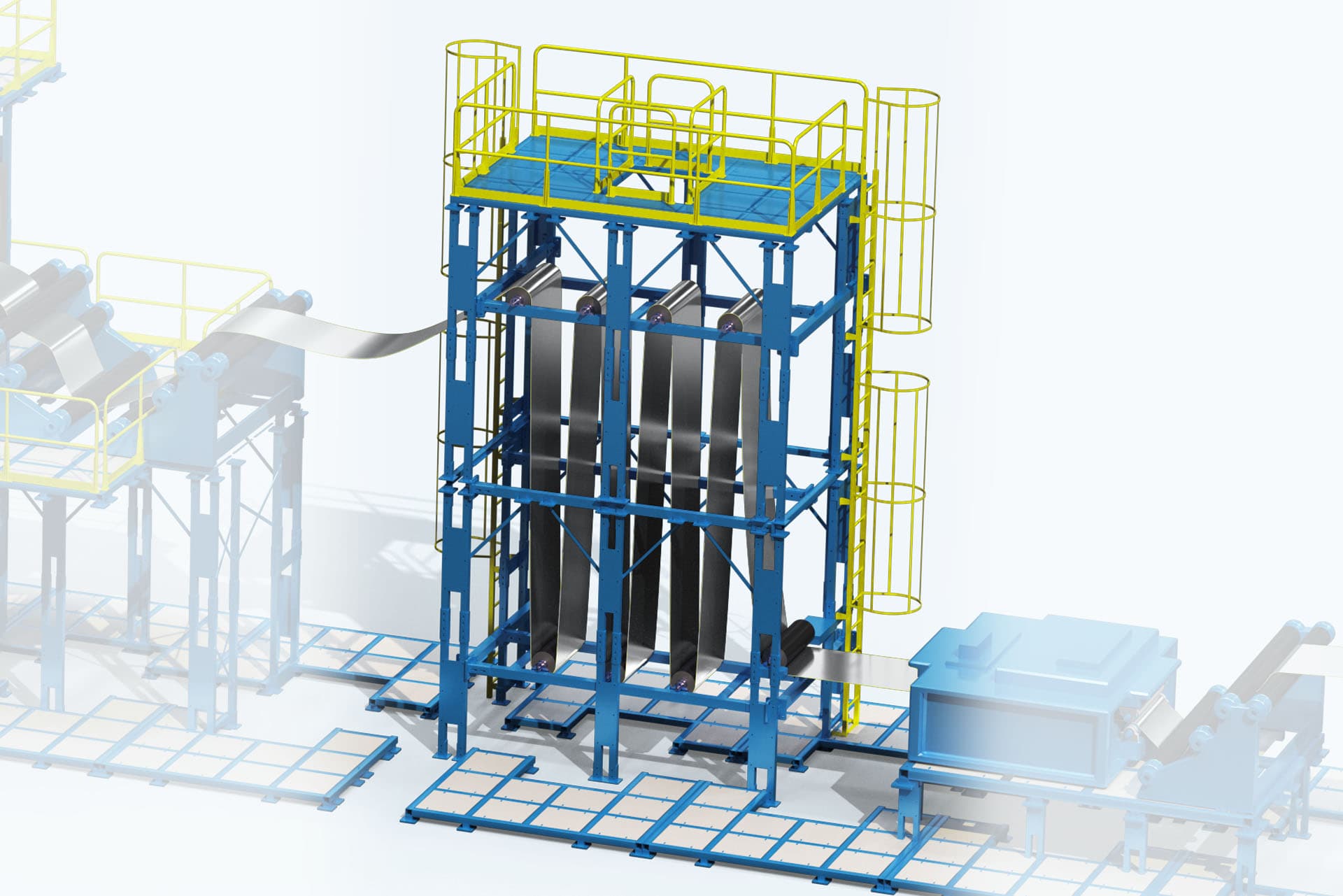
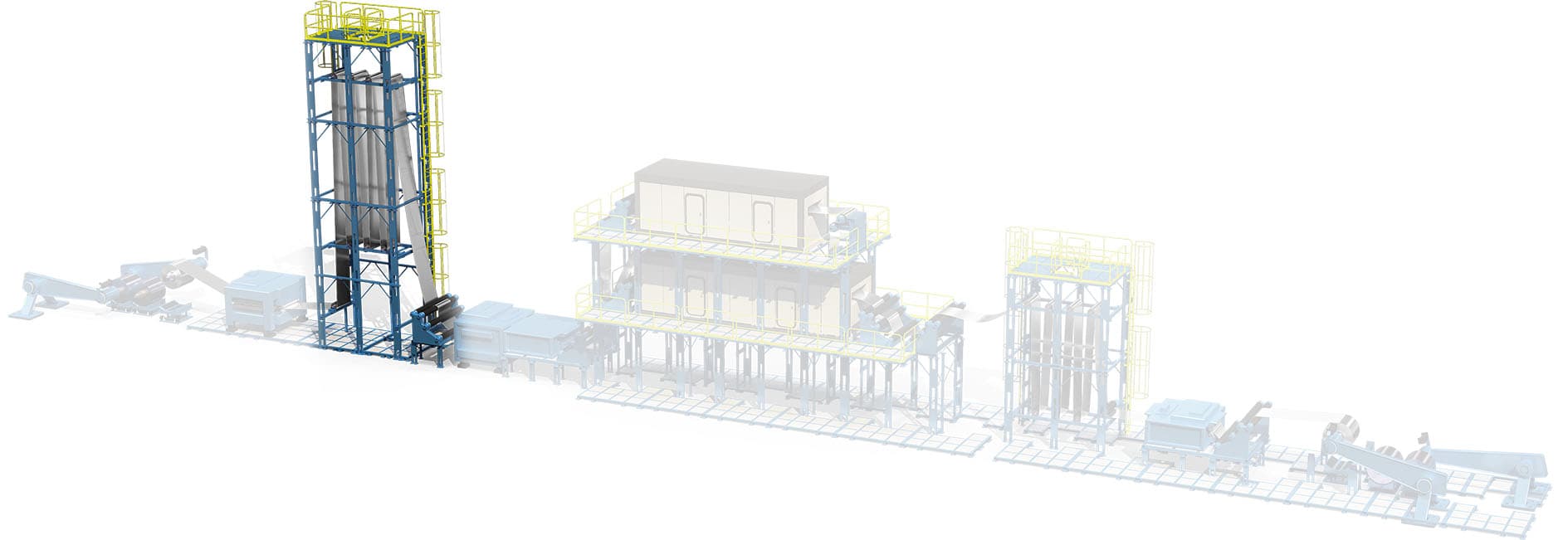
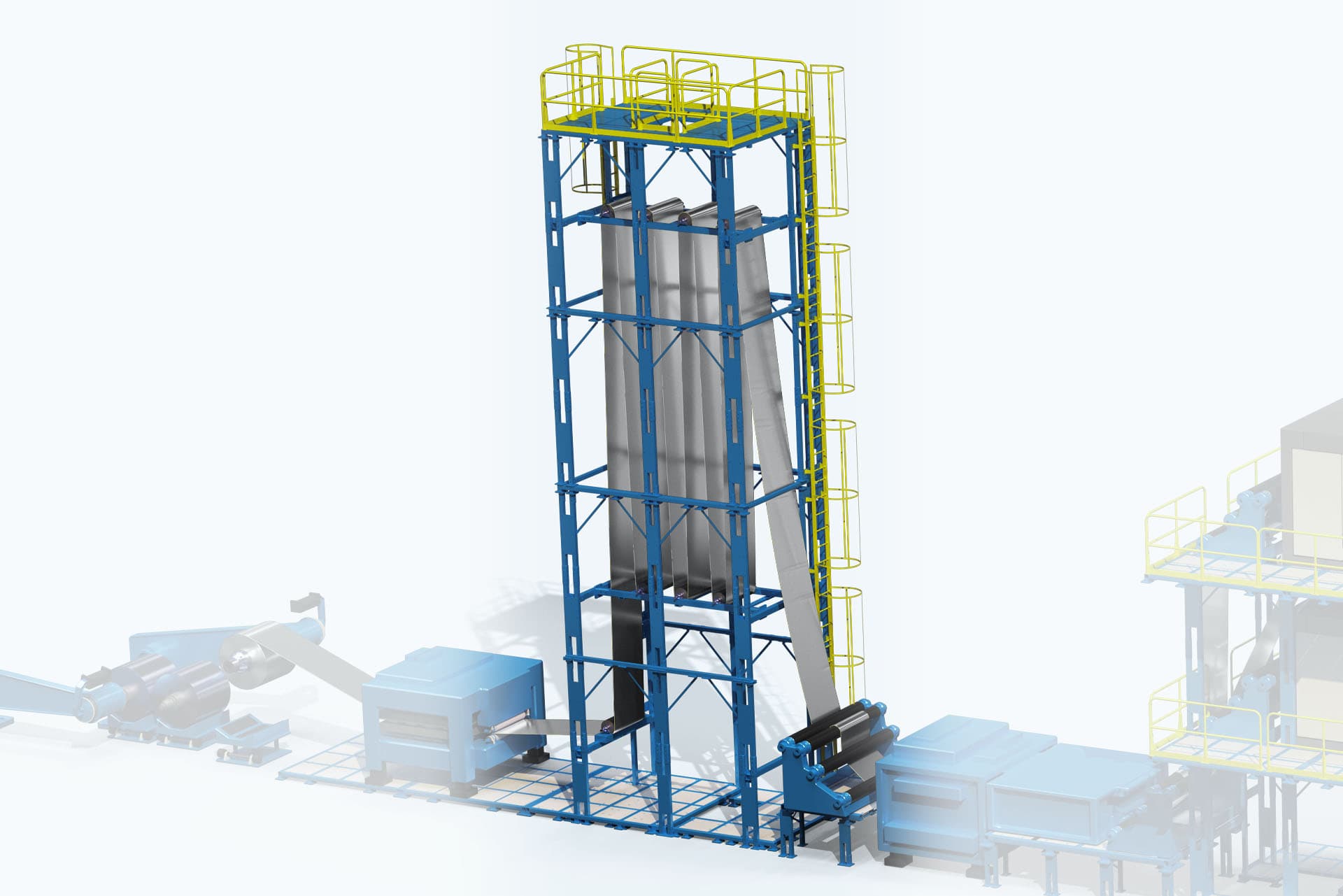
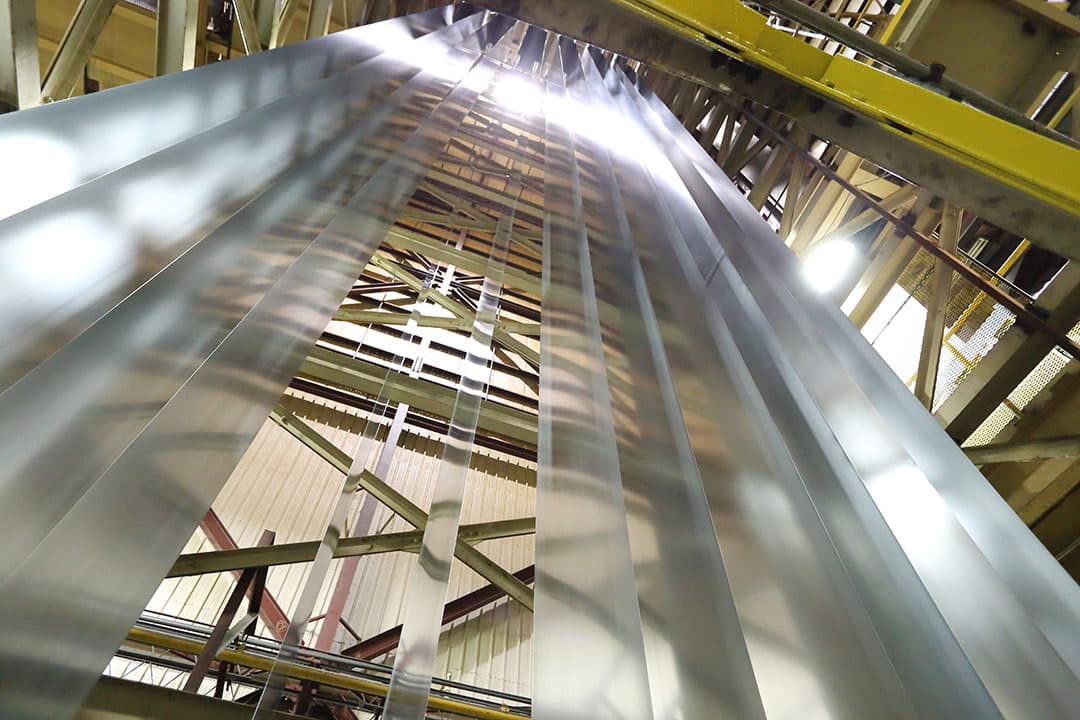
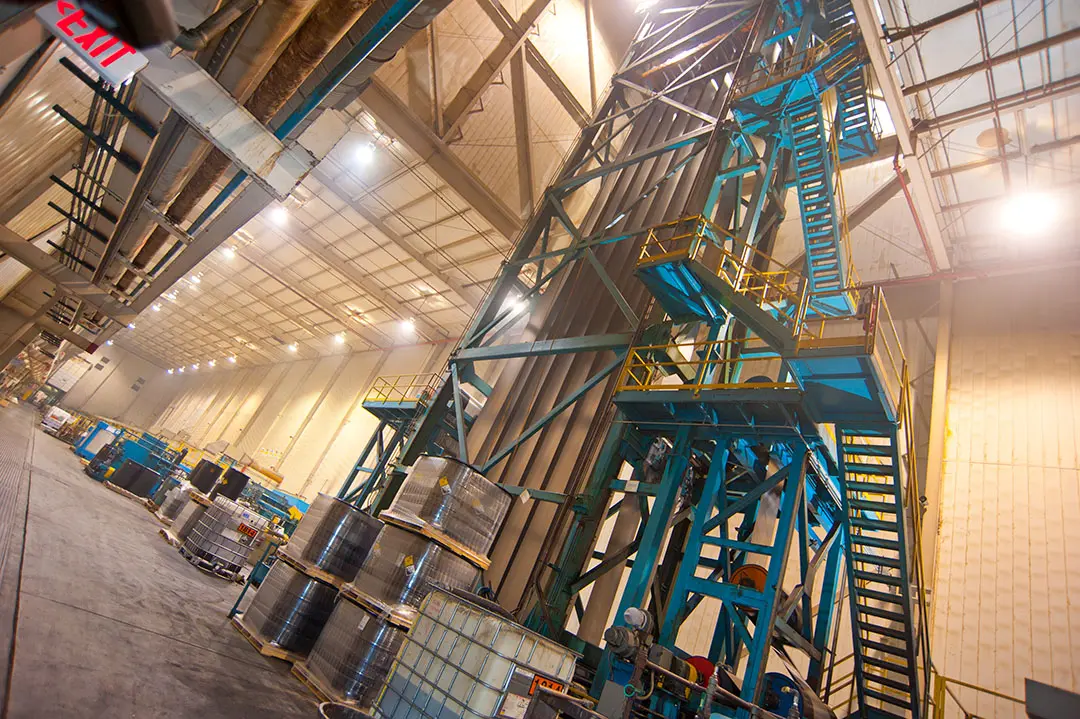
The accumulator is a structure that adjusts up and down to store material, which makes continuous operation of the coil coating process possible. This accumulation will continue to feed the coil coating processes while the entry end has stopped for the stitching process. As much as 750 feet of metal can be collected.
Before the Next Storm: How AZZ helped restore a critical flood control system
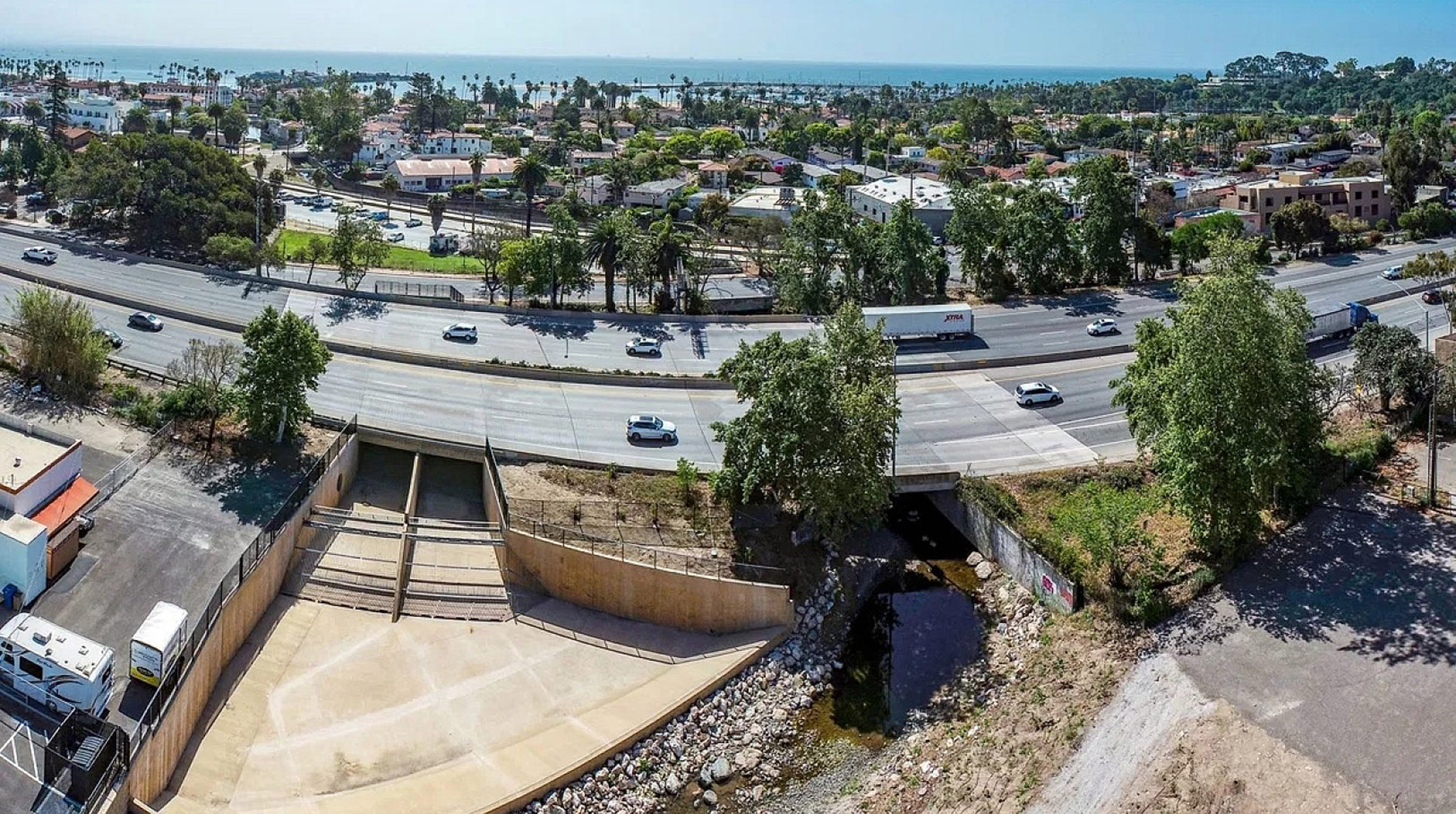
When record storms swept through Santa Barbara, California, in 2023, they left behind more than flooded streets and damaged property. They also destroyed a critical debris rack protecting the Lower Mission Creek Flood Control Project, leaving downstream neighborhoods and infrastructure vulnerable until it could be replaced.
Protecting More Than a Creek
Lower Mission Creek winds from the Santa Ynez foothills through downtown Santa Barbara before reaching the Pacific Ocean. During major storm events, the channel carries far more than water. Entire trees, branches, and other large debris can surge downstream with tremendous force.
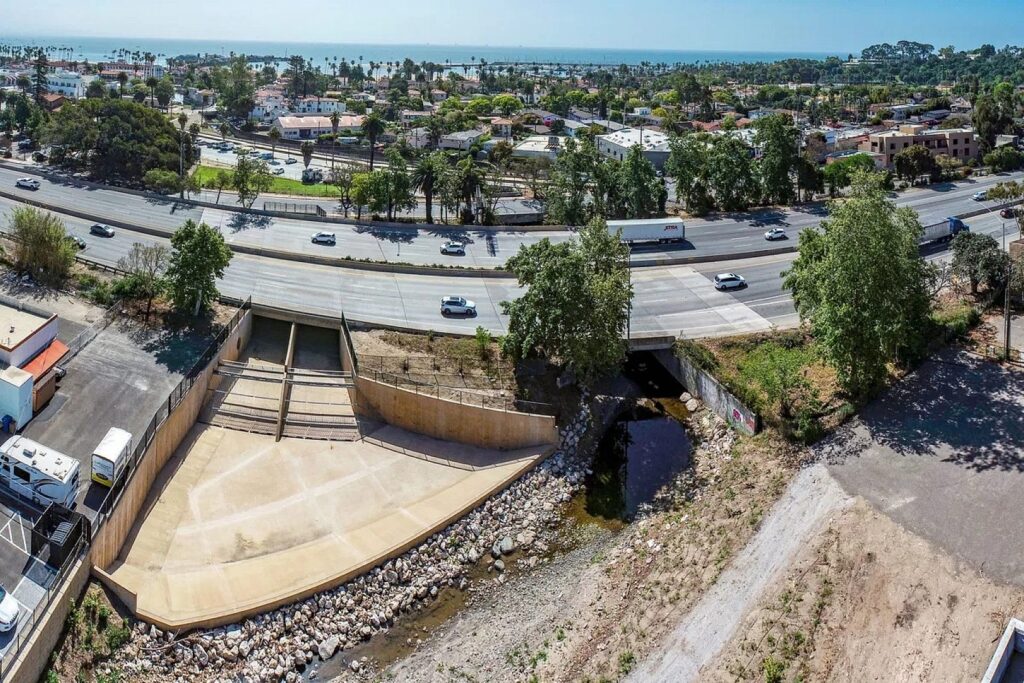
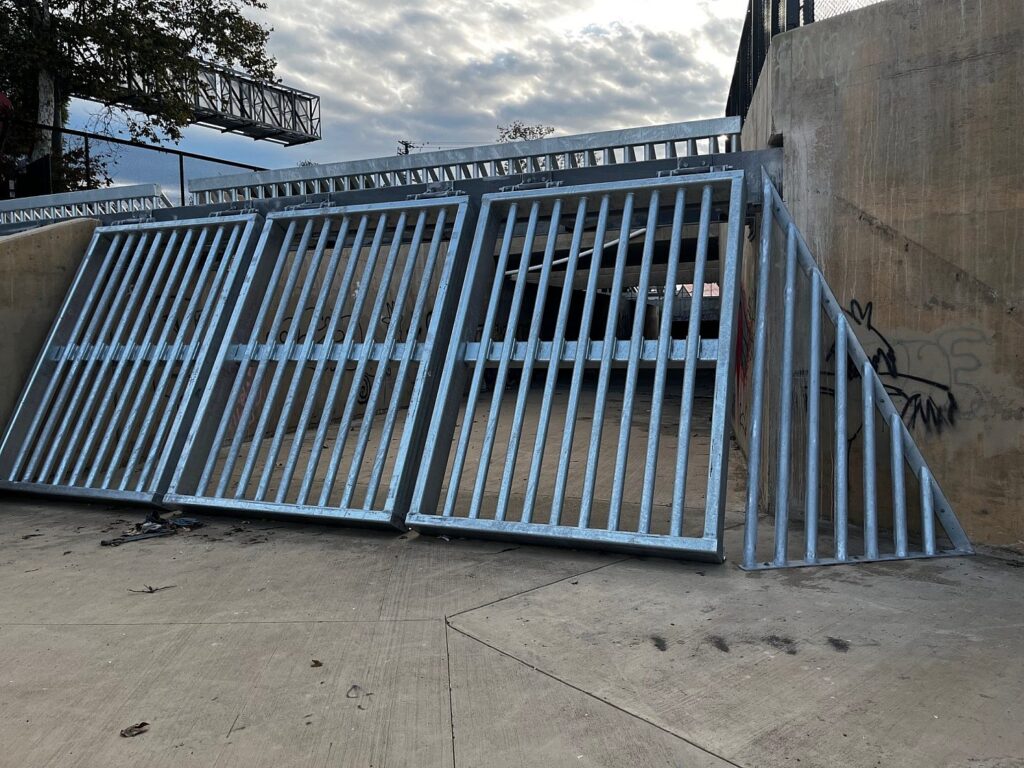
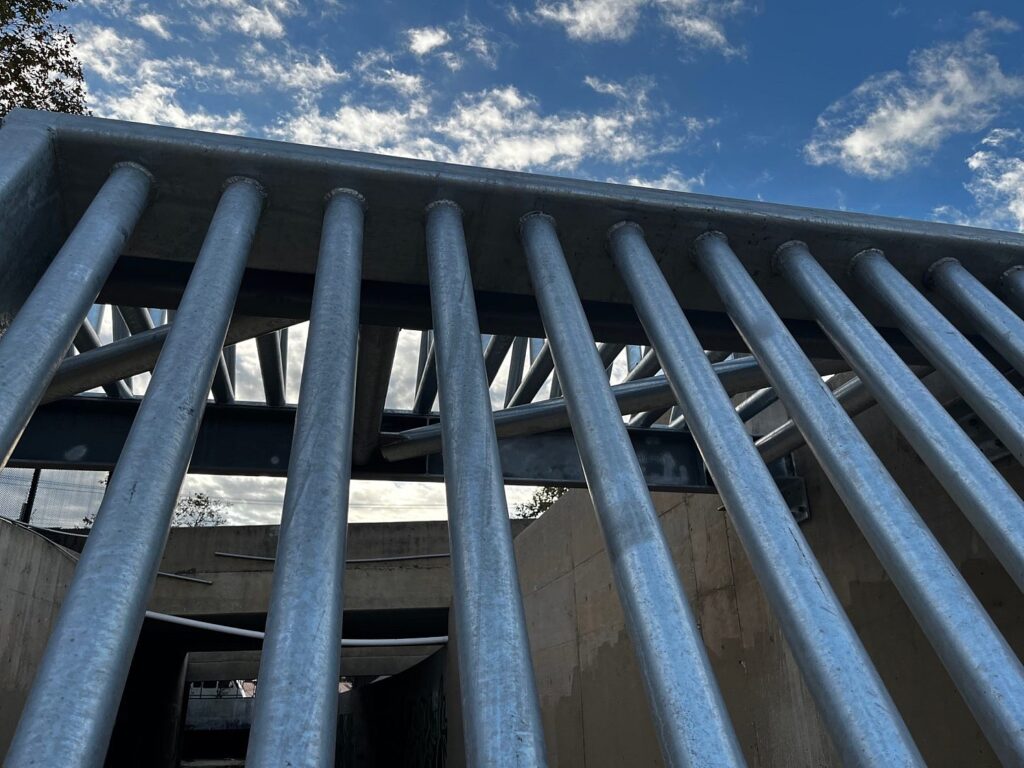
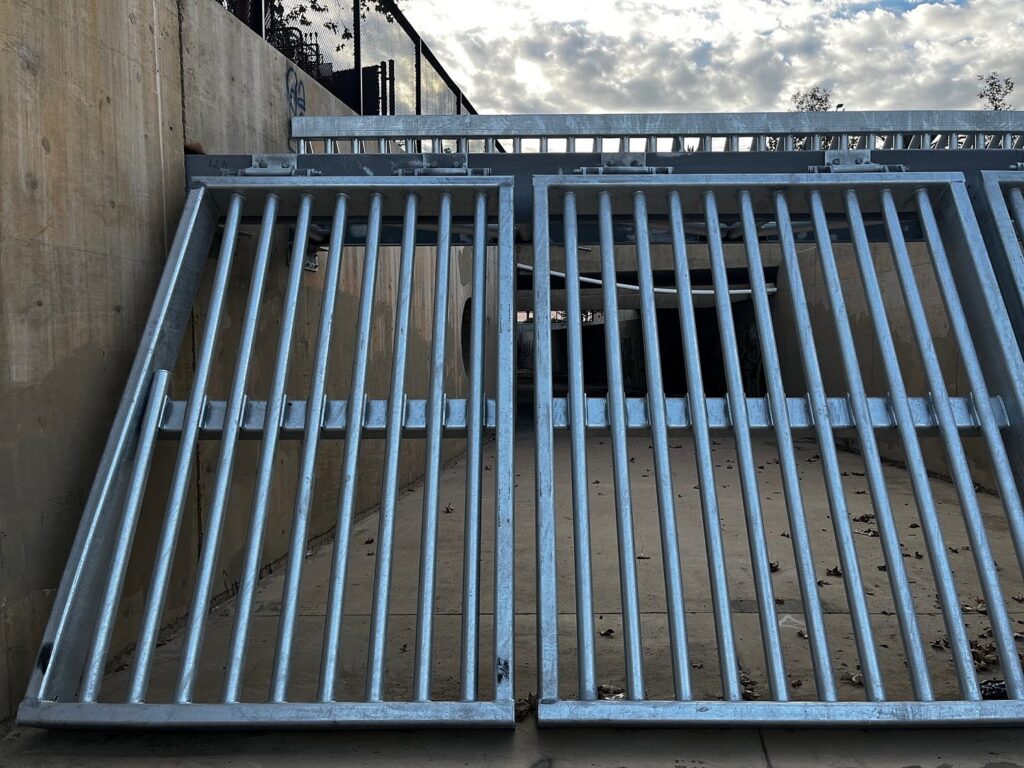
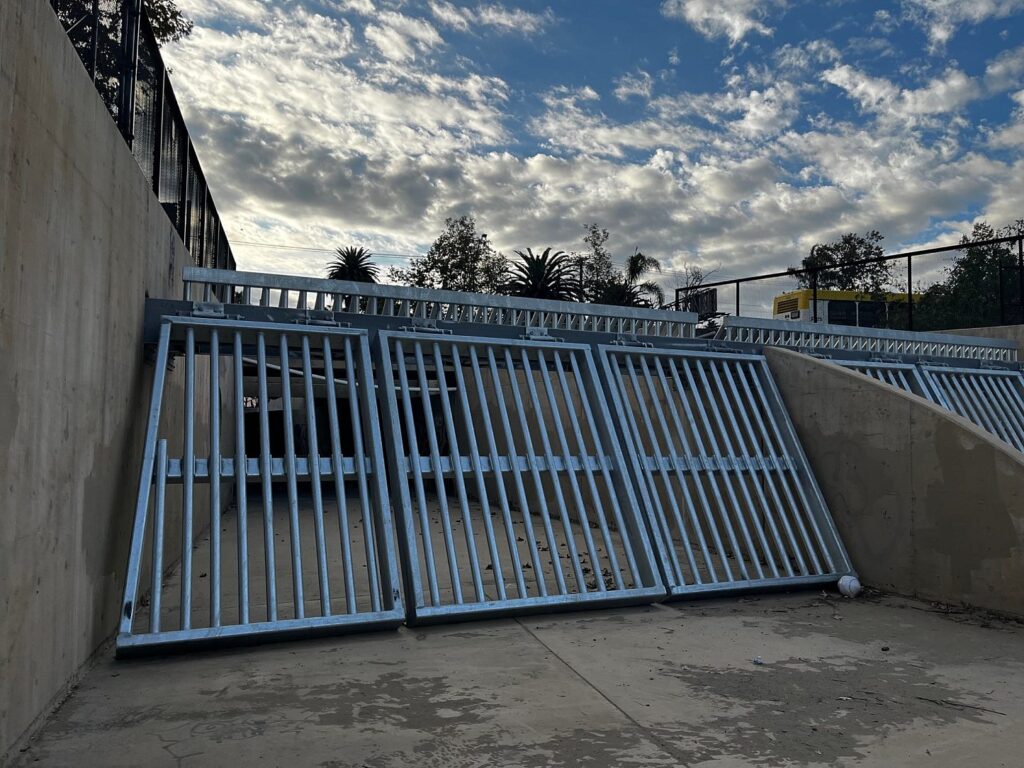
The debris rack serves as the first line of defense, intercepting this material before it reaches the project’s bypass culvert beneath Highway 101. Without that protection, debris can obstruct critical flood control infrastructure, increasing the risk of flooding in surrounding neighborhoods.
When the original rack failed during the record 2023 storms after massive amounts of debris accumulated against it, temporary repairs kept the system operational. But a permanent replacement was essential before winter weather returned. With another rainy season approaching, time became one of the project’s greatest challenges.
A Project on an Accelerated Timeline
Replacing the debris racks wasn’t simply another maintenance project.
The fabrication, galvanizing, and installation all had to be carefully coordinated within a compressed schedule to restore the system before seasonal storms arrived once again.
Working closely with the fabricator and project team, AZZ Galvanizing – Arizona galvanized the replacement debris racks on an accelerated timeline, helping keep construction moving during a critical window. The seamless coordination between the project partners ensured installation could proceed without delay, restoring the system’s full debris-control capability before the next rainy season.
Built for a Demanding Environment
Located only a short distance from the Pacific Ocean, the debris racks face a uniquely demanding combination of challenges.
Salt-laden marine air continuously attacks exposed steel, while floodwaters carry logs and heavy debris capable of repeatedly impacting the structure during major storm events.
Hot-dip galvanizing was selected because it provides complete metallurgical coverage across every surface of the steel while delivering the long-term corrosion and abrasion resistance needed in an environment where moisture, chlorides, and mechanical wear are unavoidable. The durable coating also minimizes future maintenance in a confined flood control channel where repairs can be difficult and costly.
Ready for Whatever Comes Next
The replacement debris racks are only one component of the broader Lower Mission Creek Flood Control Project, a long-term partnership between the U.S. Army Corps of Engineers, the Santa Barbara County Flood Control and Water Conservation District, and the City of Santa Barbara. Together, the improvements are increasing flood capacity, reducing the risk of property damage, and helping preserve the creek’s natural habitat.
For most people, the debris racks will never be noticed.
But when the next major storm arrives, they’ll quietly perform the job they were designed to do—intercepting storm debris, protecting critical flood control infrastructure, and helping safeguard the communities that depend on it.
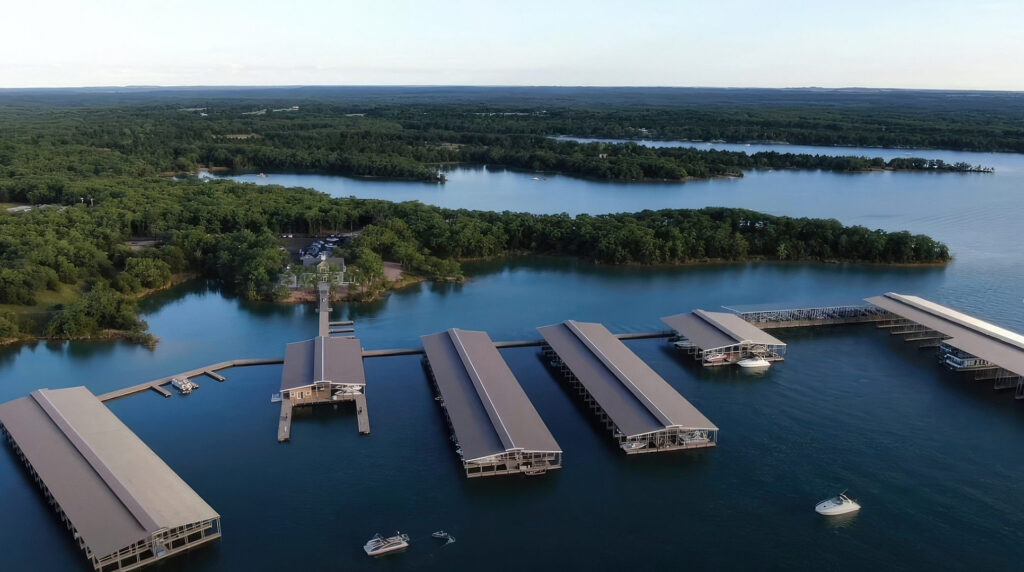
Waterfront infrastructure faces relentless exposure to moisture, heavy use, and changing conditions. Discover how thoughtful material selection helps marinas and public access structures deliver decades of reliable service.