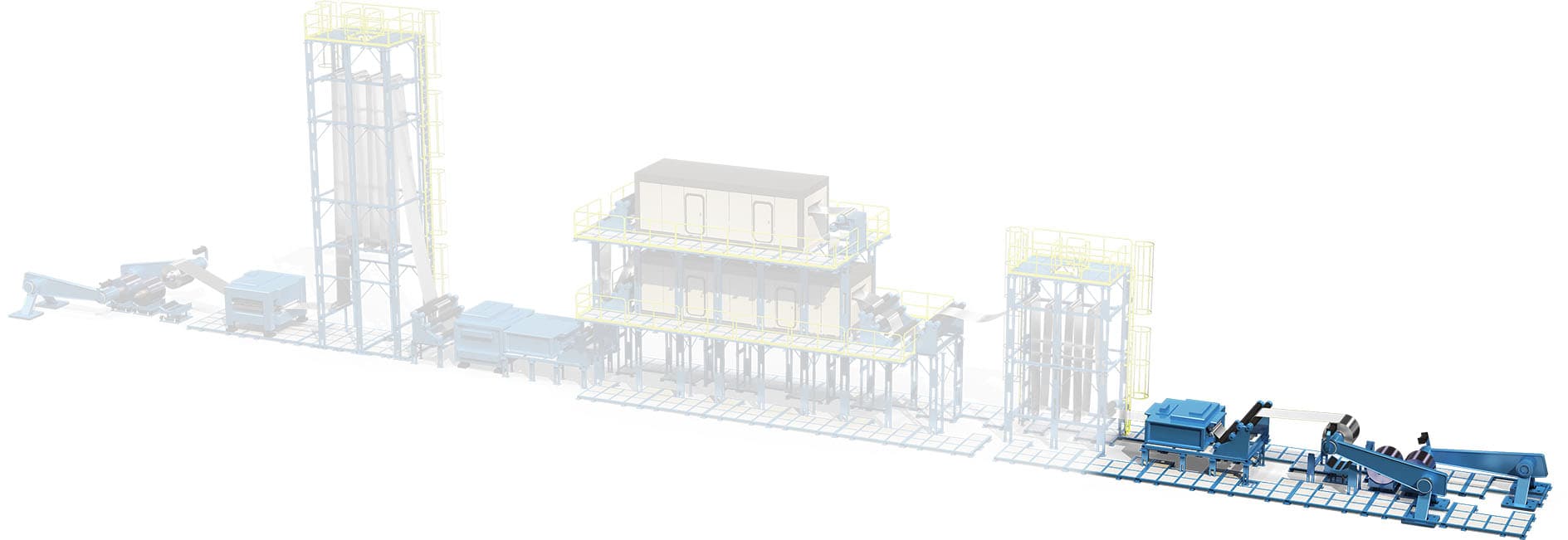
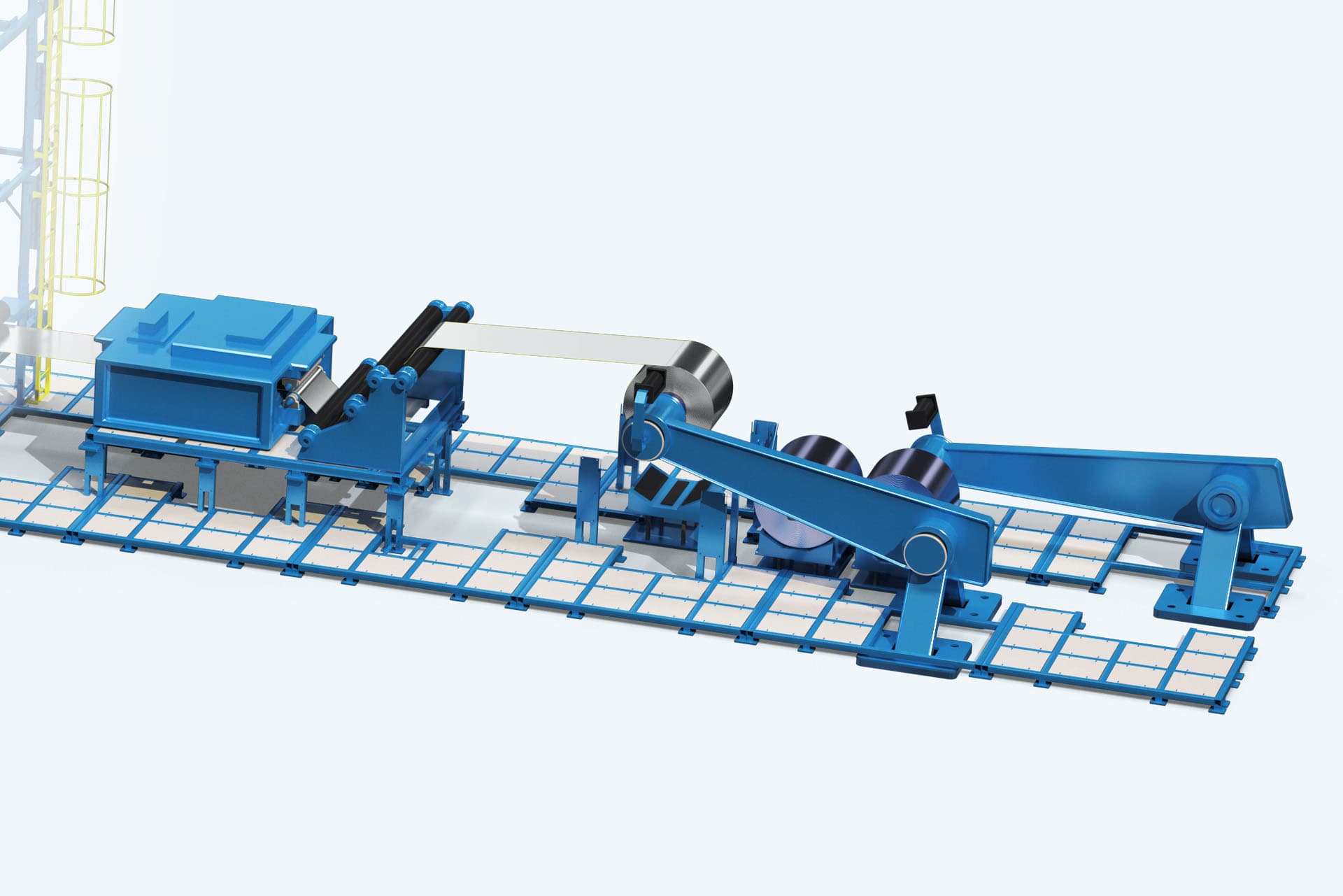
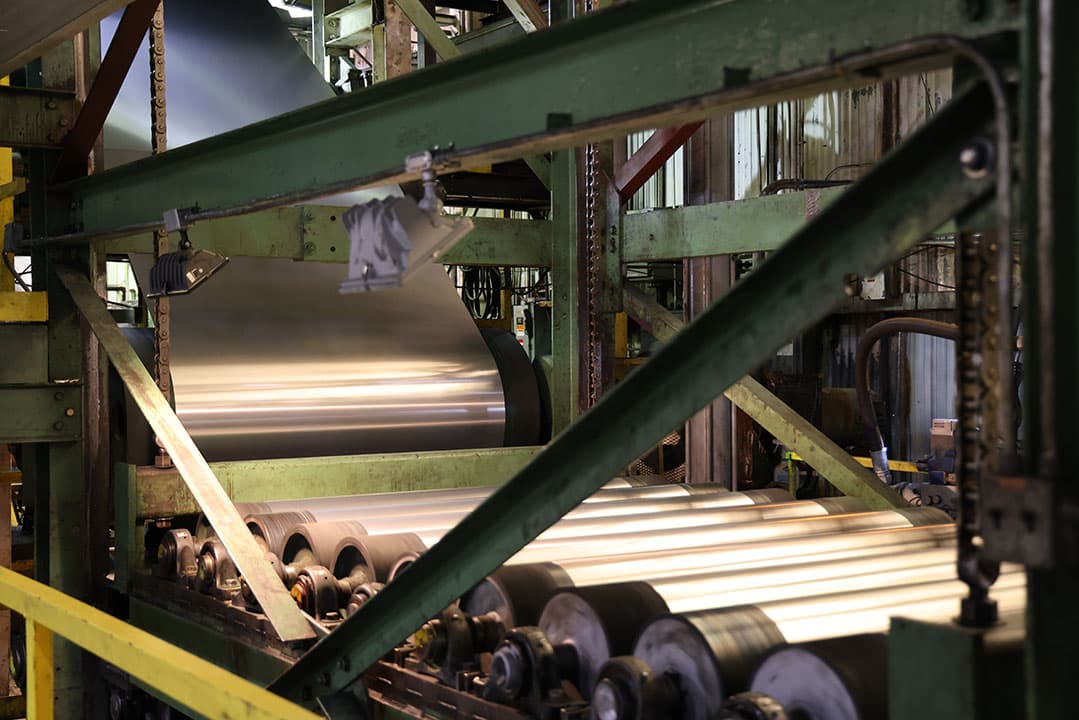
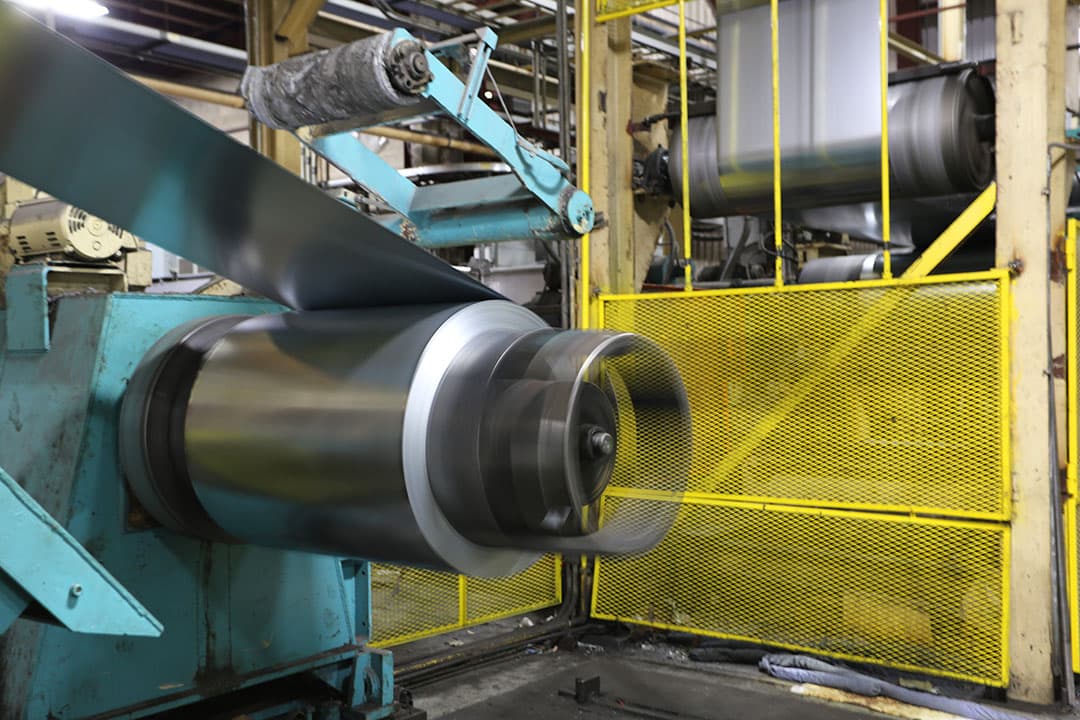
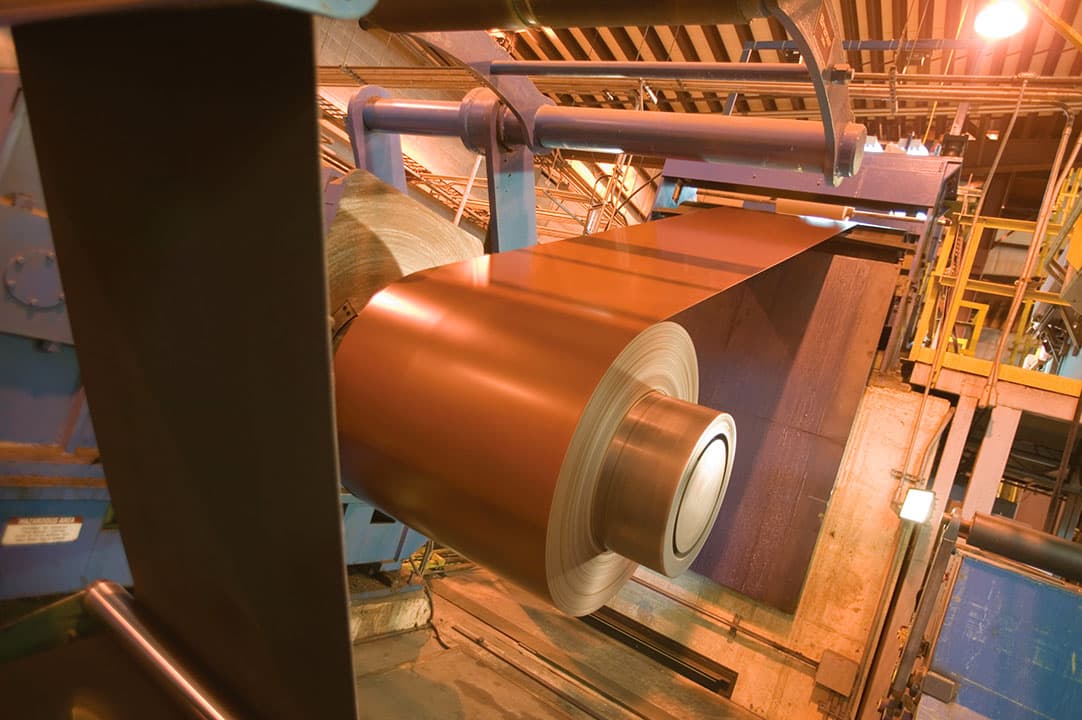
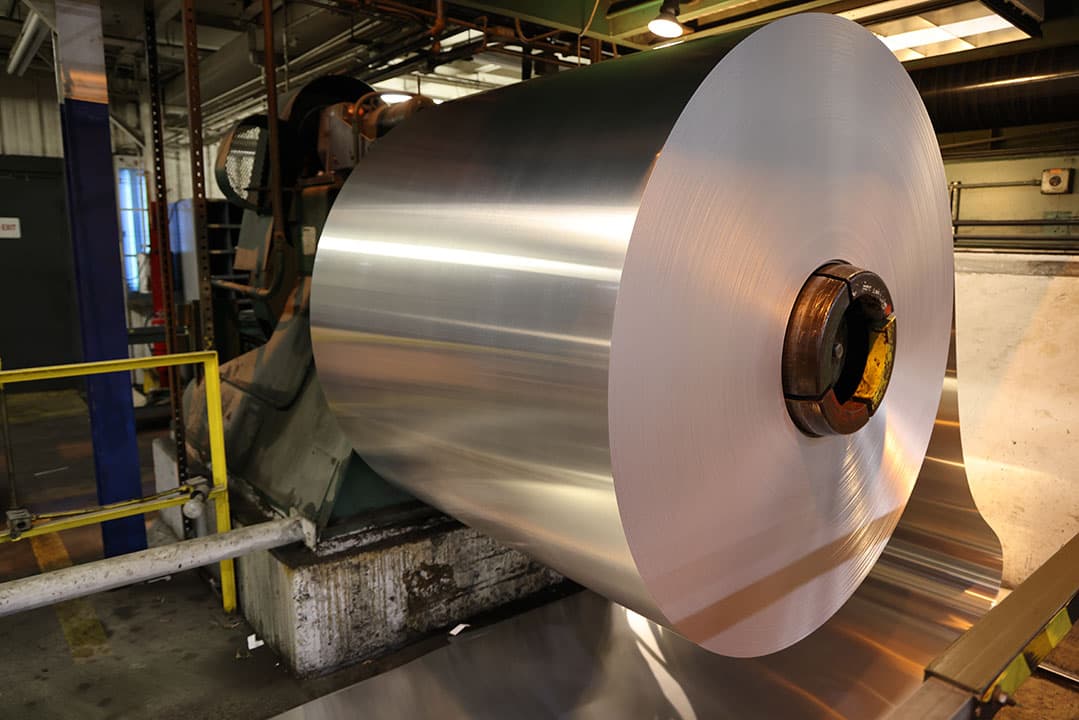
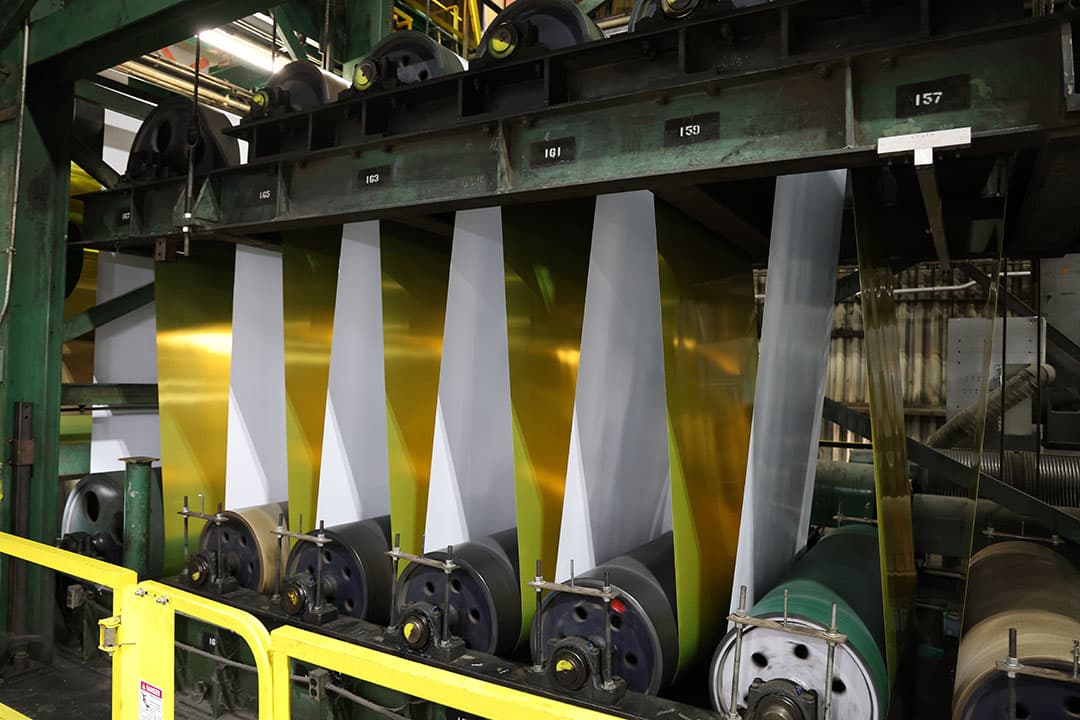
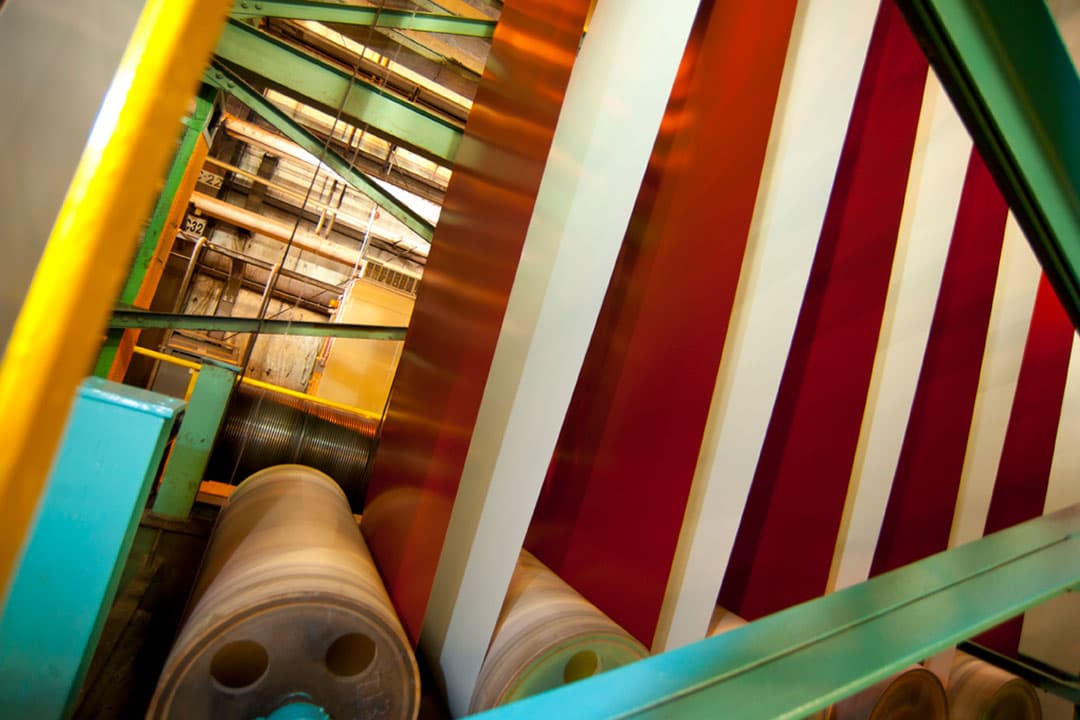
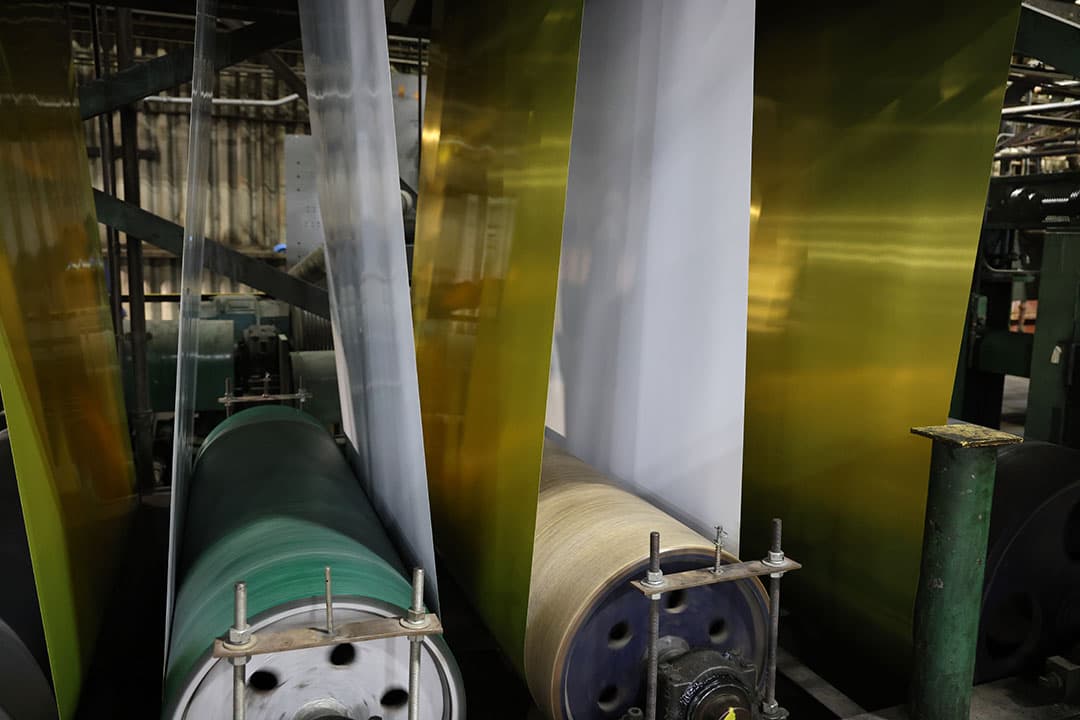
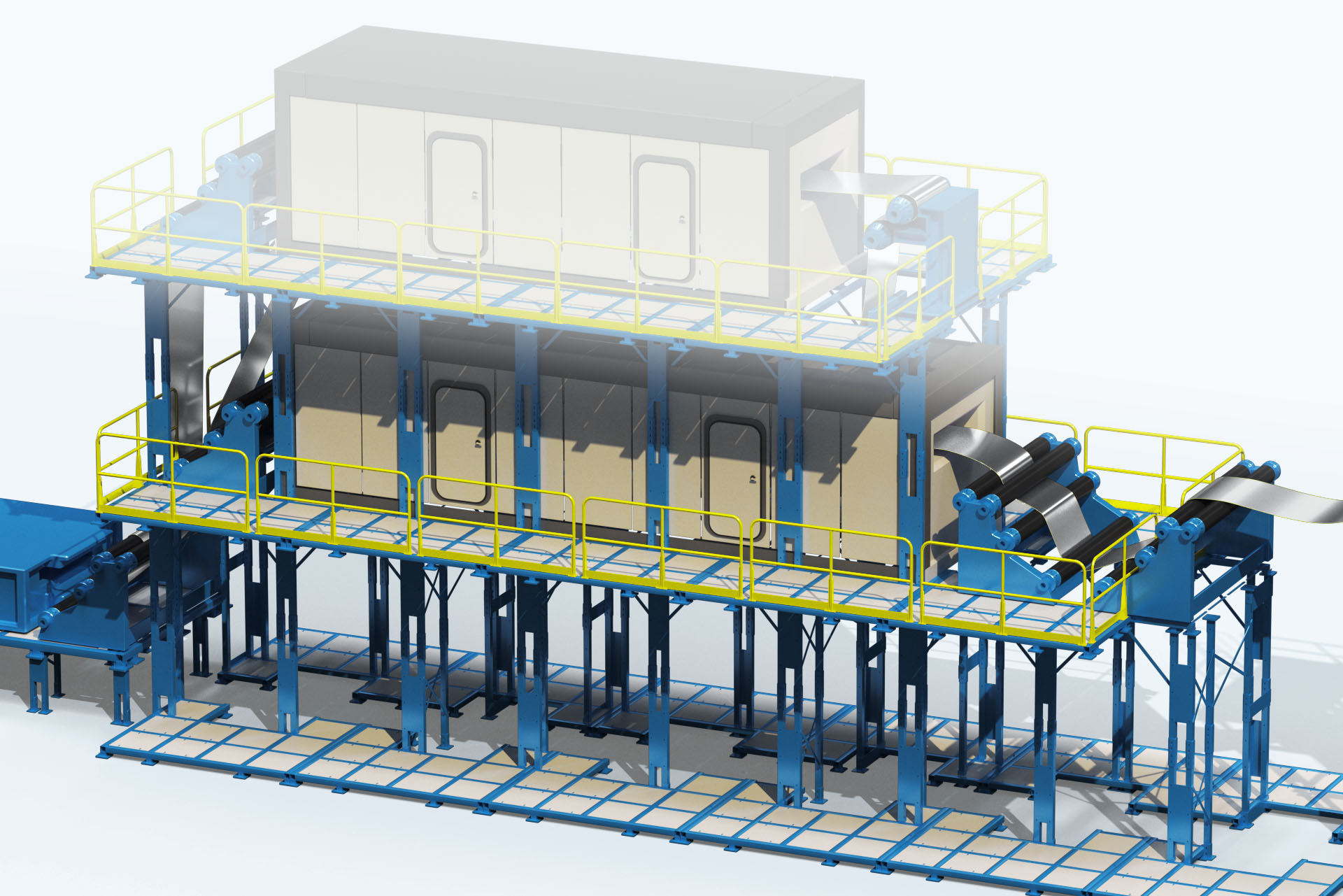
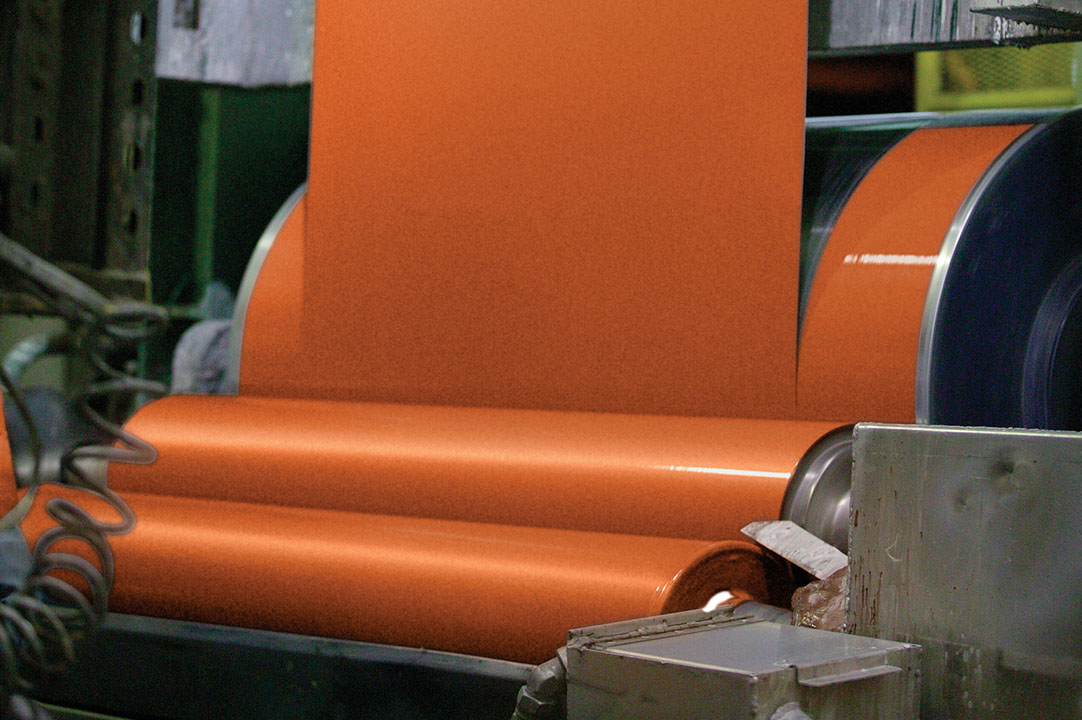
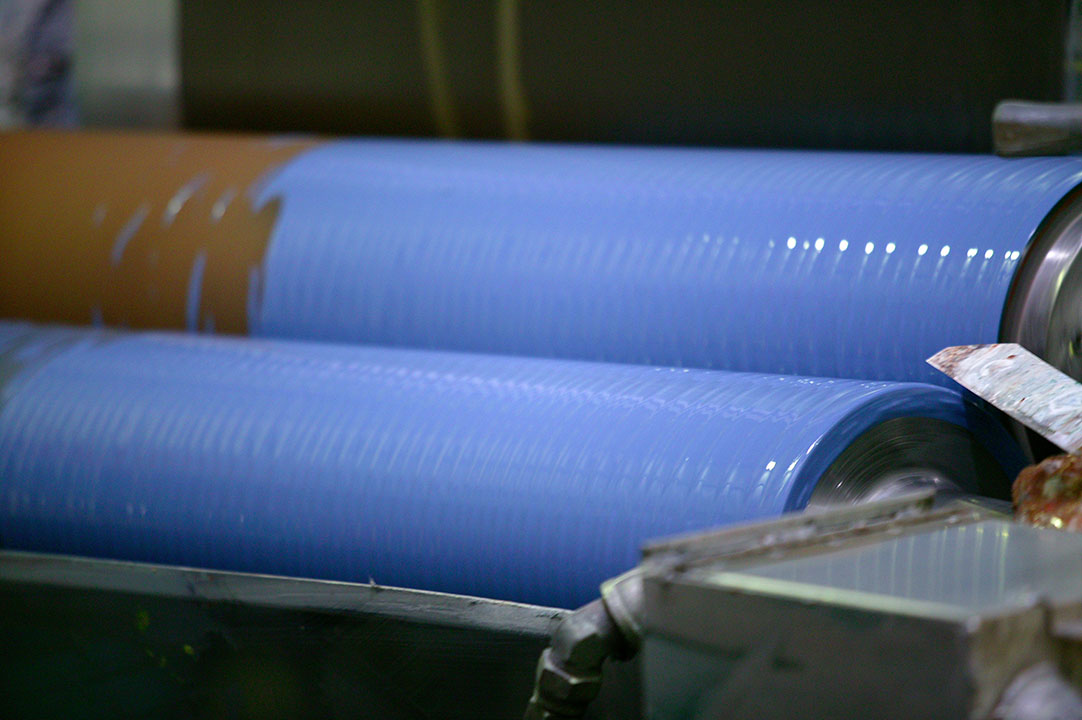
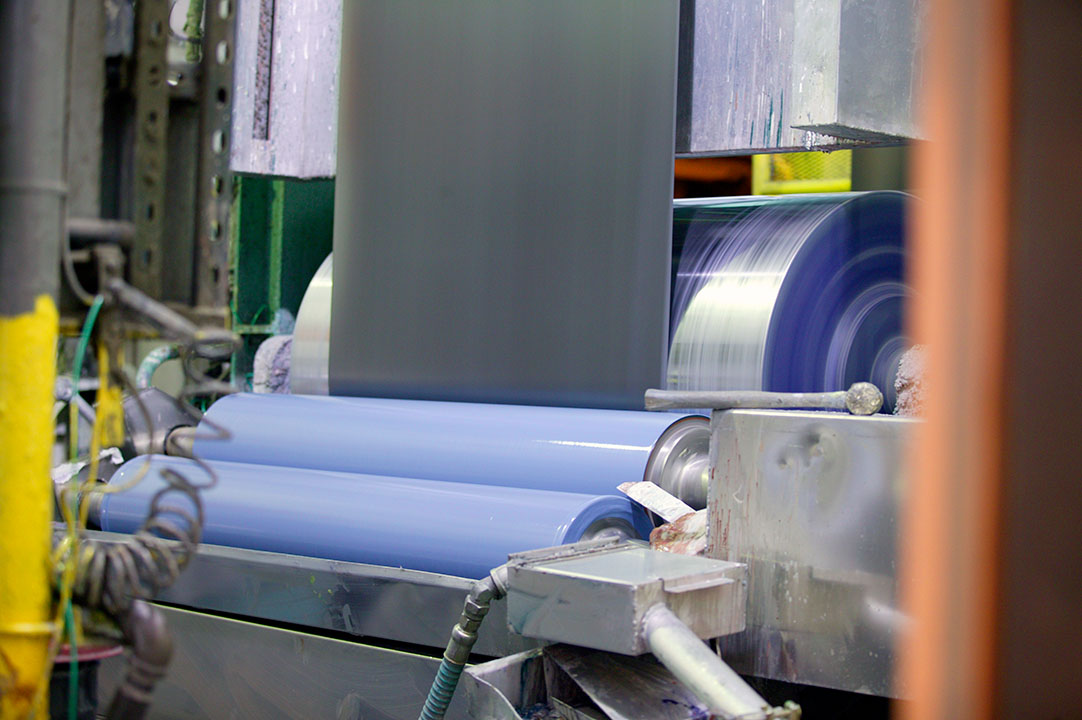
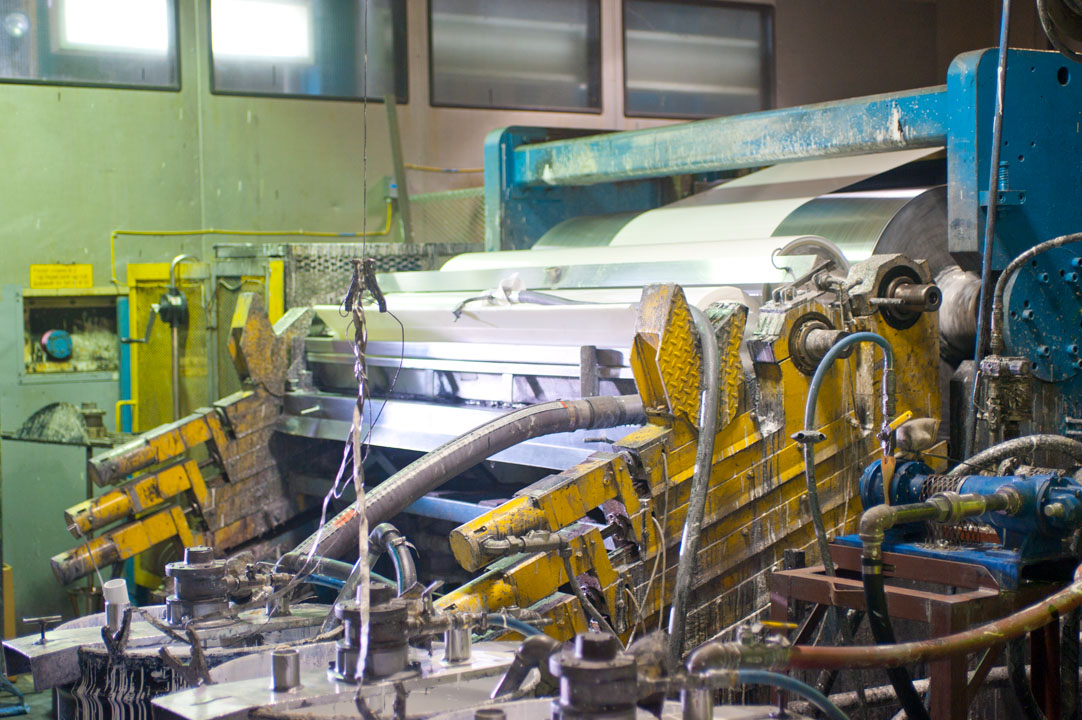
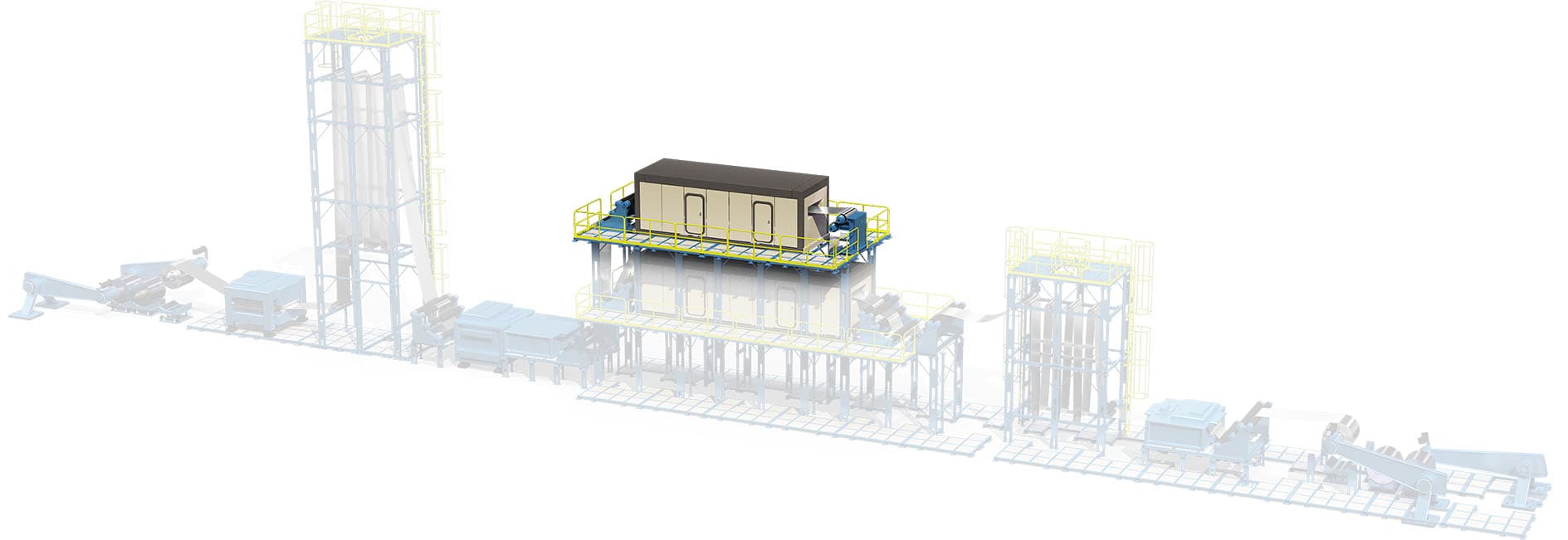
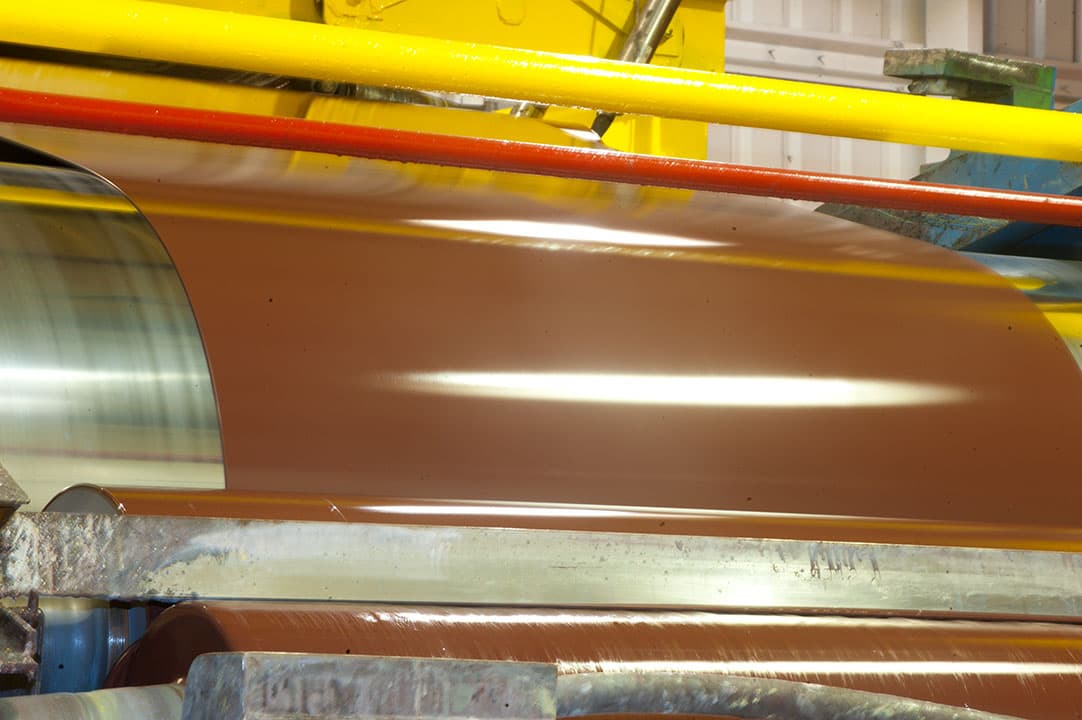
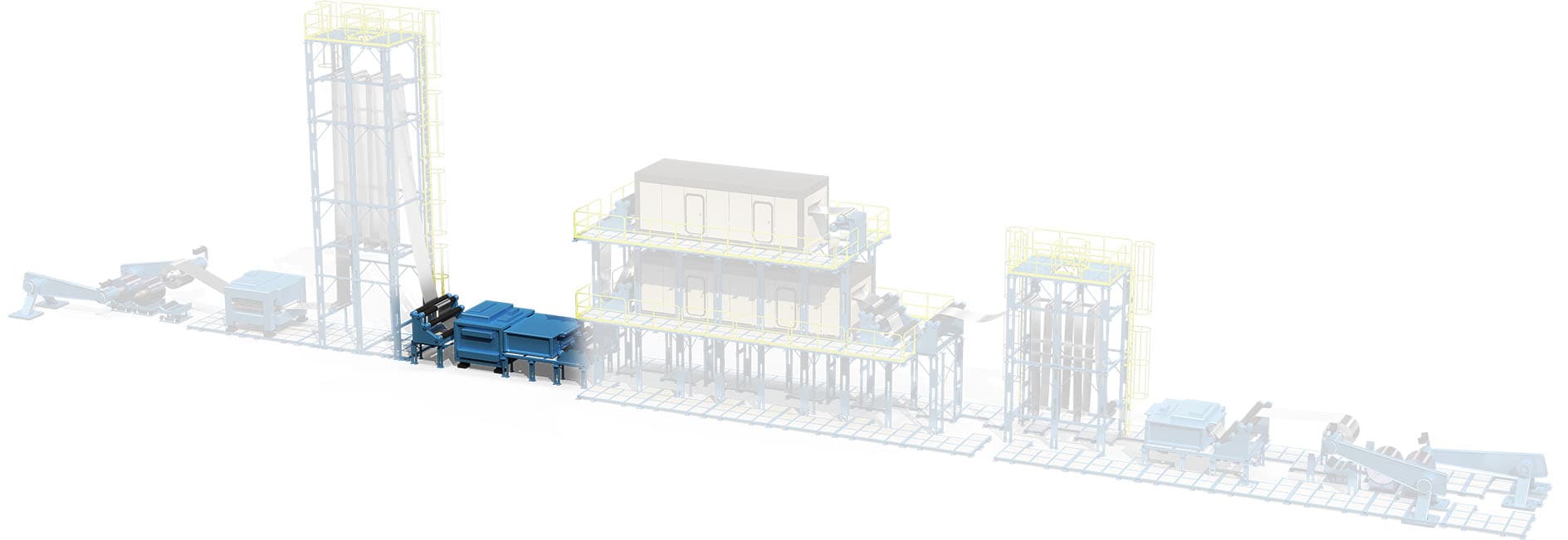
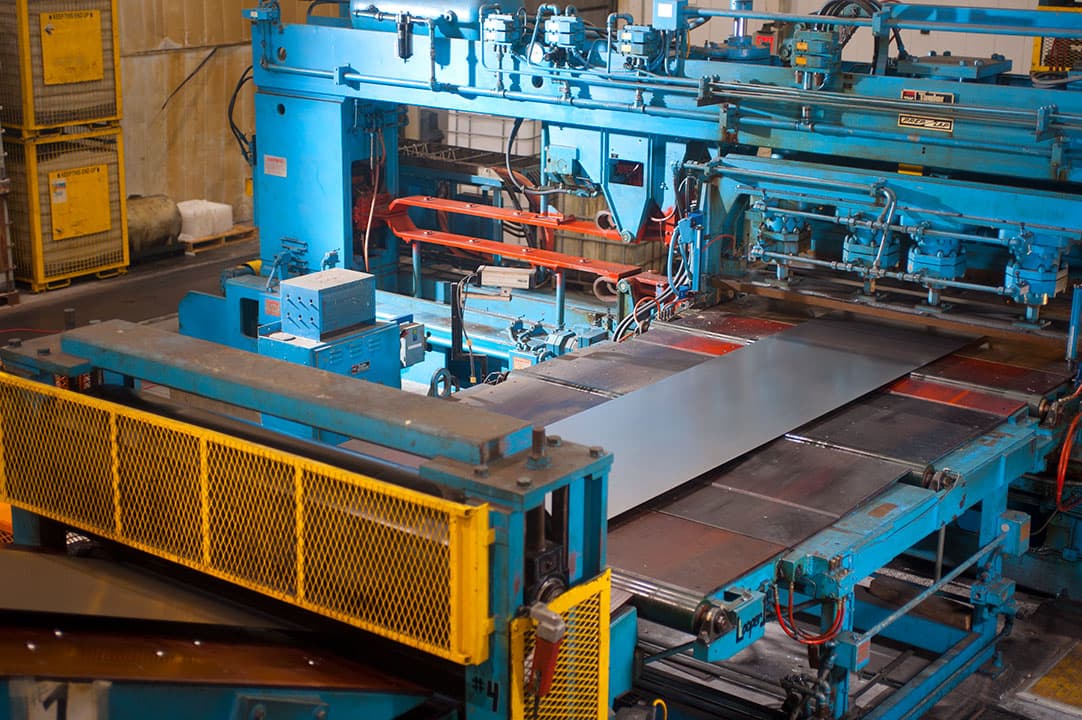
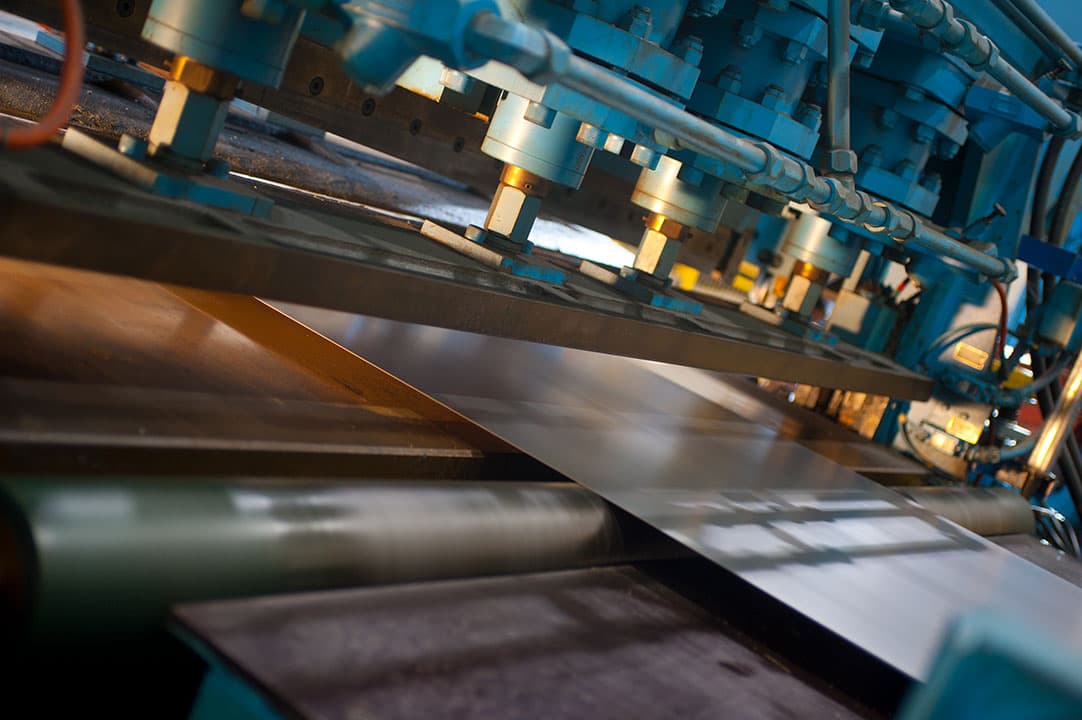
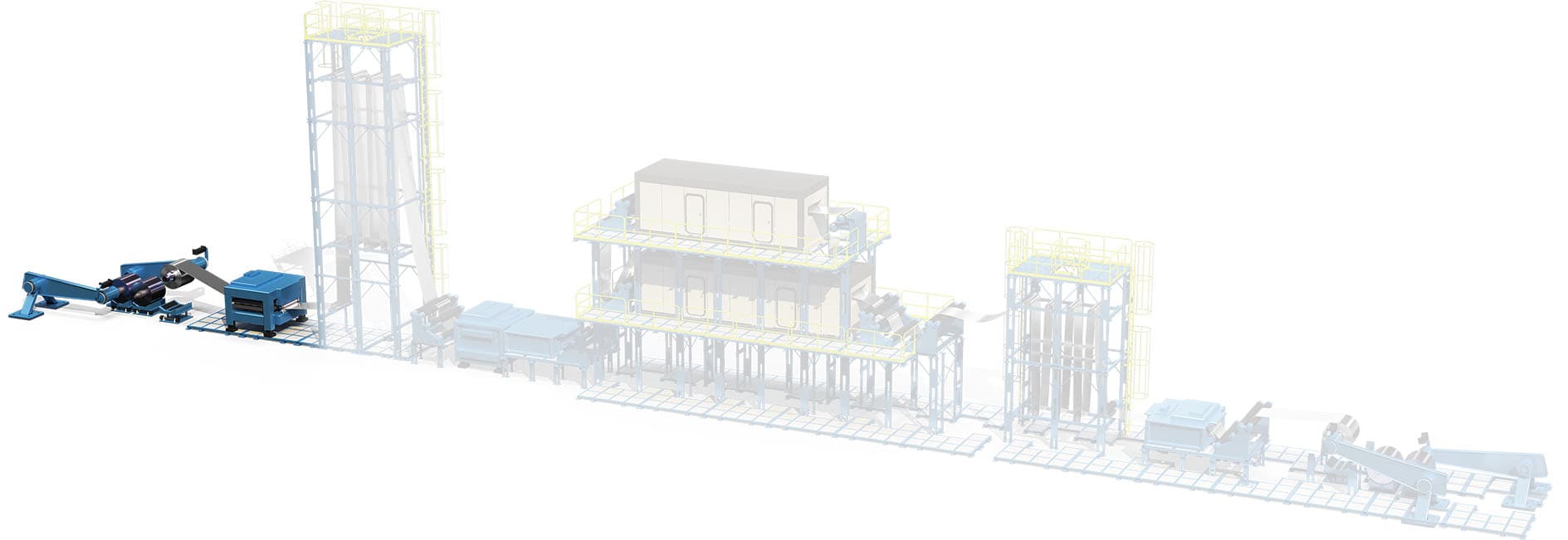
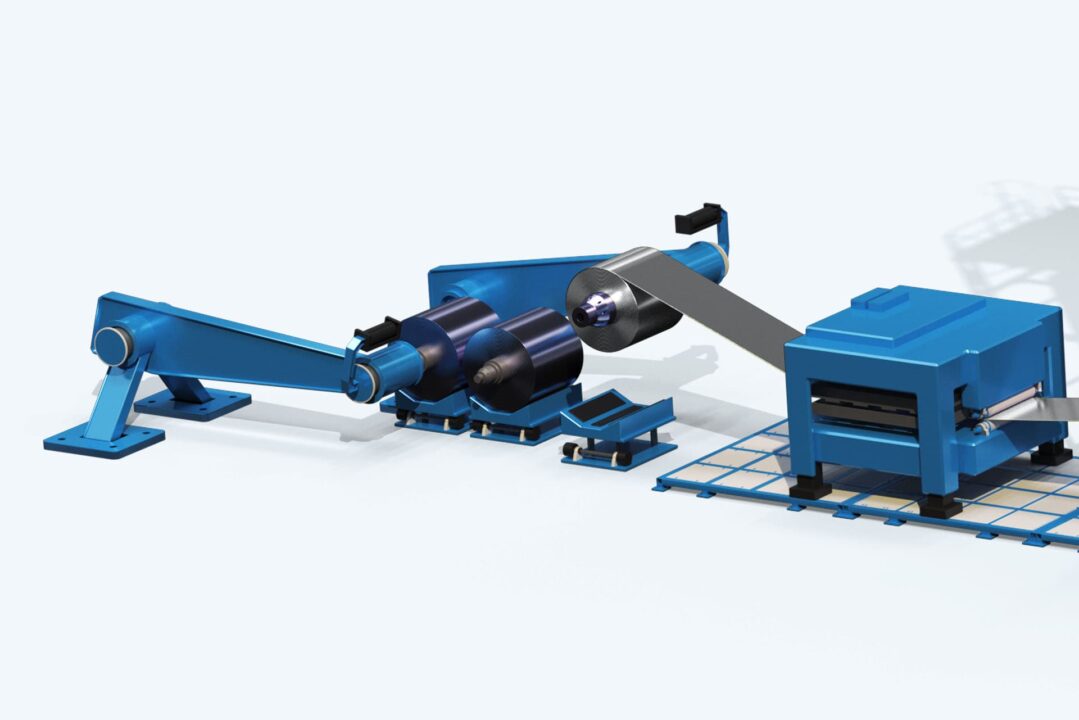
Once the metal is cleaned, treated, and painted, the strip is rewound into a coil size prescribed by the customer. From there, the coil is removed from the line and packaged for shipment or additional processing.
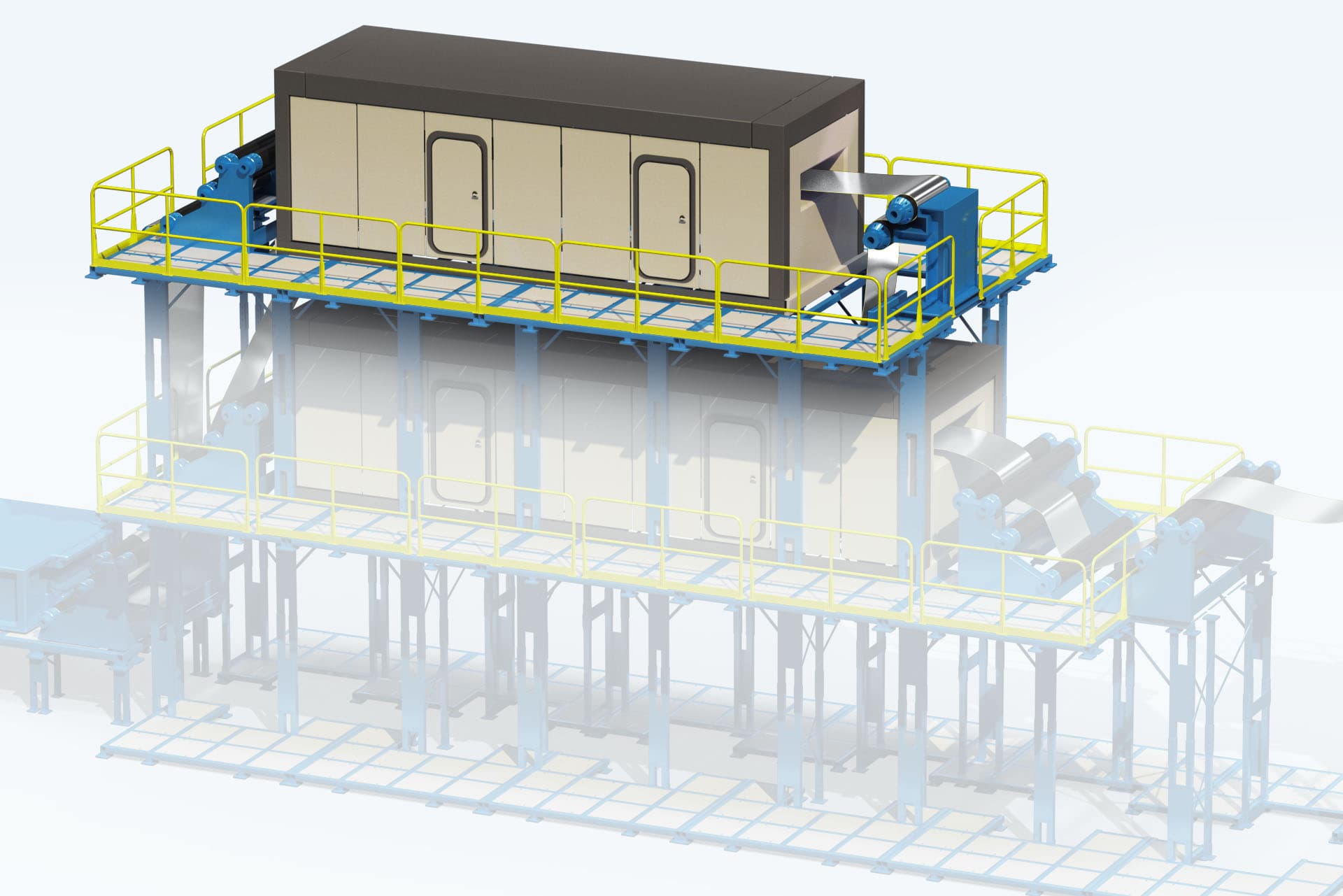
After the primer is applied and cured, then the metal strip enters the finish coat station where a topcoat is applied. Topcoats provide color, corrosion resistance, durability, flexibility and any other required physical properties. Like primers, the topcoat is cured using thermal cure ovens.
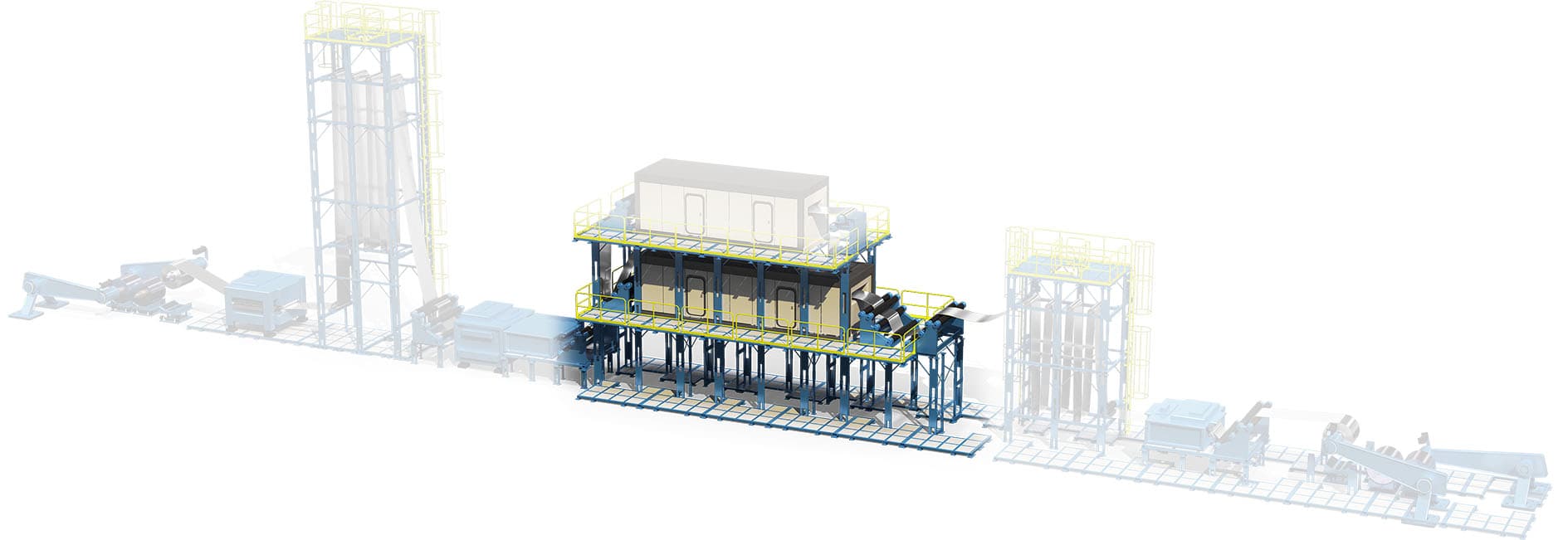
Oven
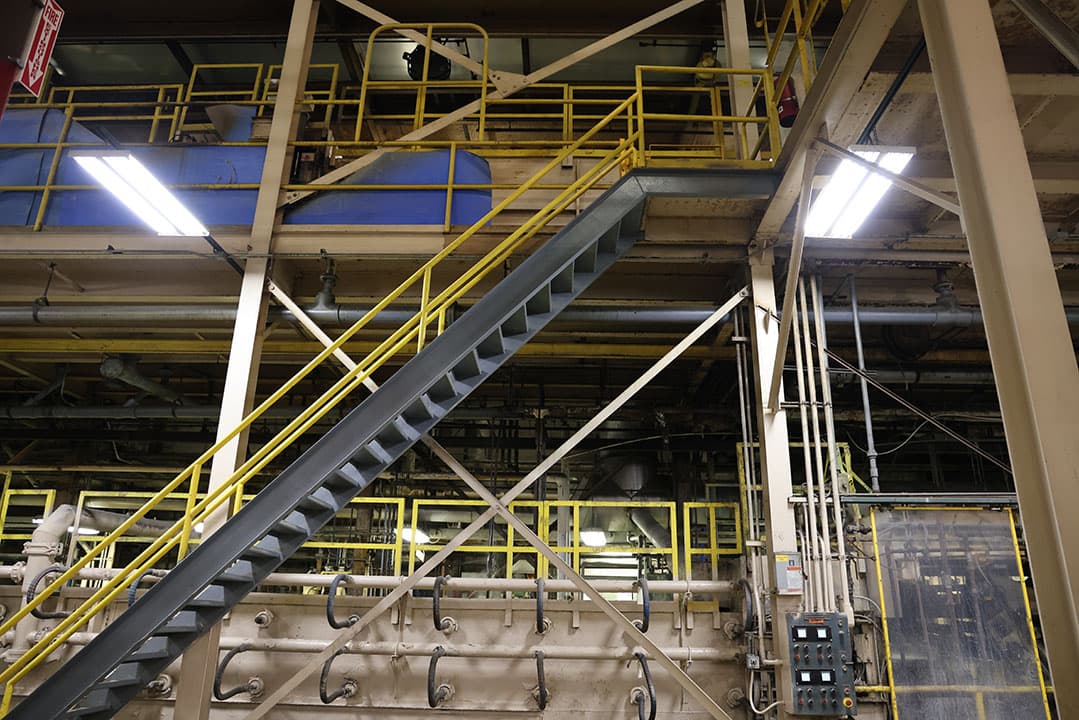
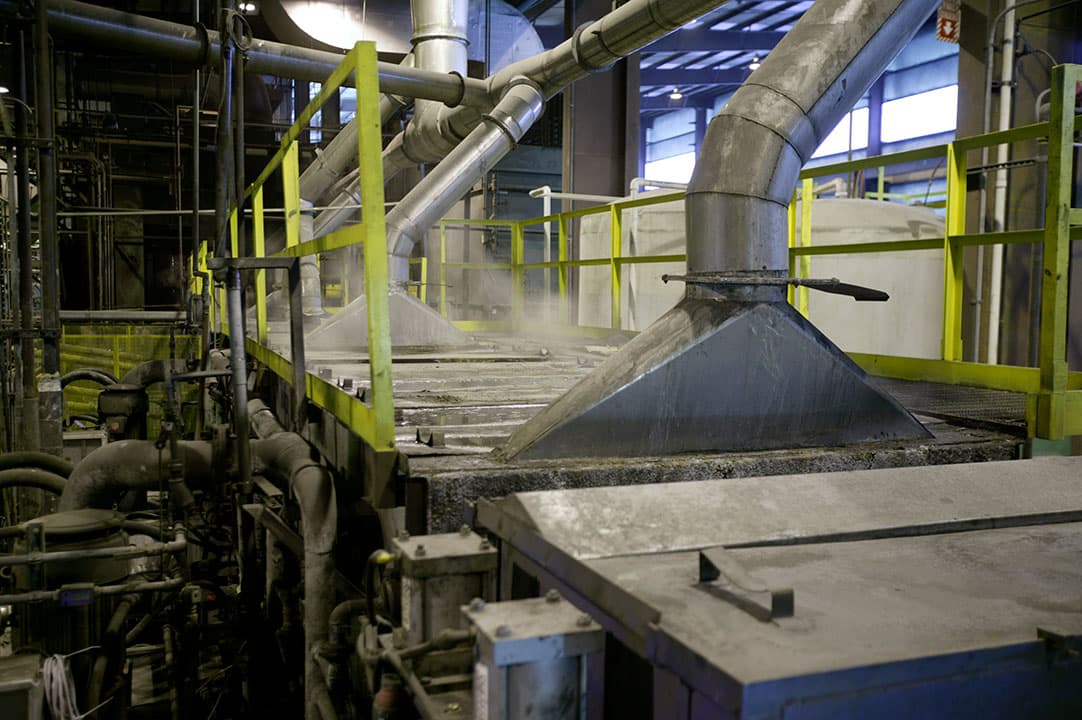
Coil coating ovens can range from 130 feet to 160 feet and will cure the coatings in 13 to 20 seconds.
During this stage, the strip enters the prime coat station whereby a primer is applied to the clean and treated metal. After the primer is applied, the metal strip travels through a thermal oven for curing. Primers are used to aid in paint adhesion, improve corrosion performance and enhance aesthetic and functional attributes of the topcoat.
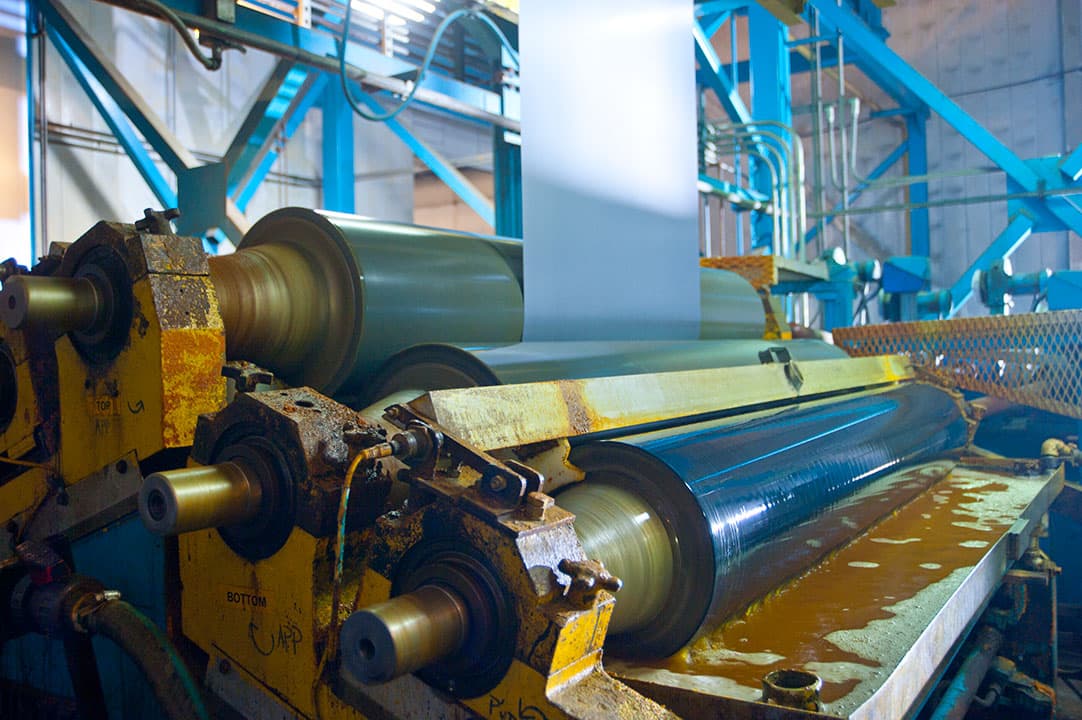
S Wrap Coater
The S wrap coater design allows for primers and paints to be applied to the top and back side of the metal strip simultaneously in one continuous pass.
The cleaning and pretreating section of the coil coating process focuses on preparing the metal for painting. During the cleaning stage, dirt, debris, and oils are removed from the metal strip. From there, the metal enters the pretreatment section and/or a chemical coater whereby chemicals are applied to facilitate paint adhesion and enhance corrosion resistance.
Dried-In-Place
In this stage a chemical that provides enhanced corrosion performance is applied. This treatment can be chrome free if required.
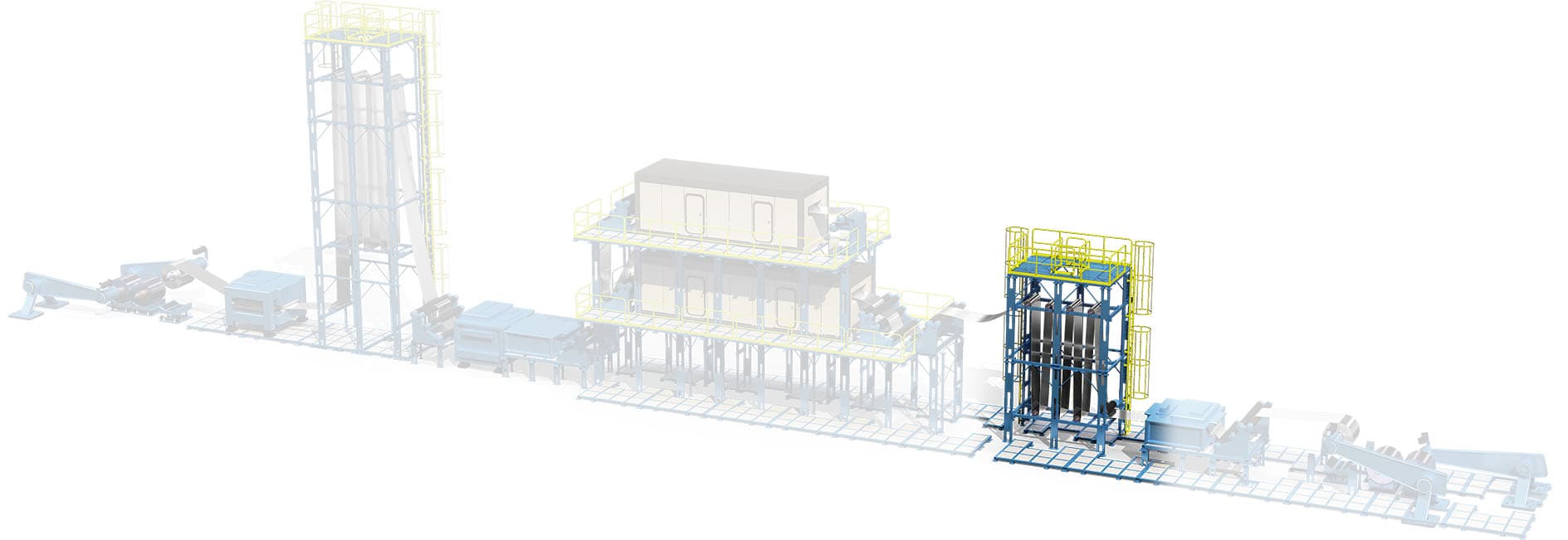
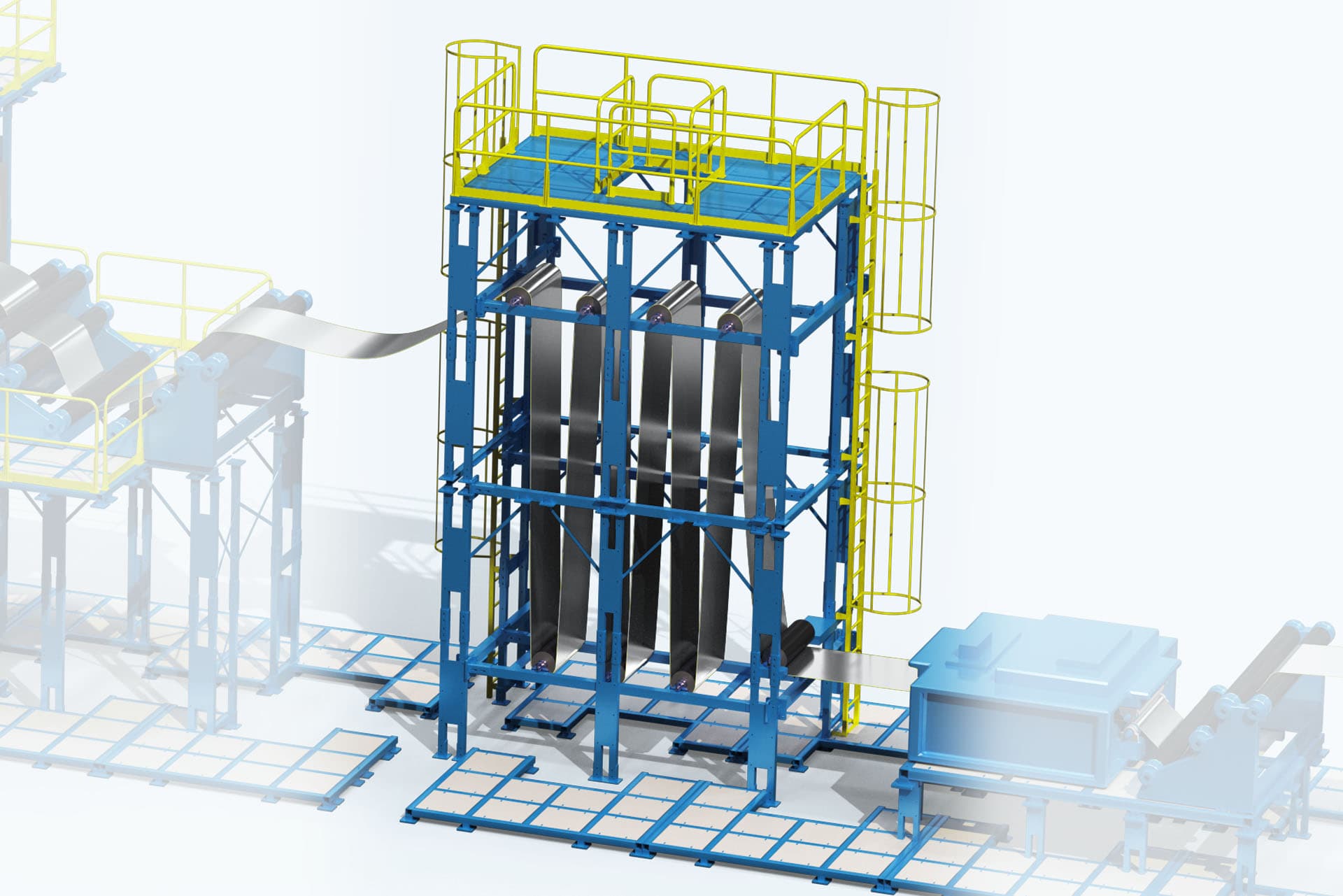
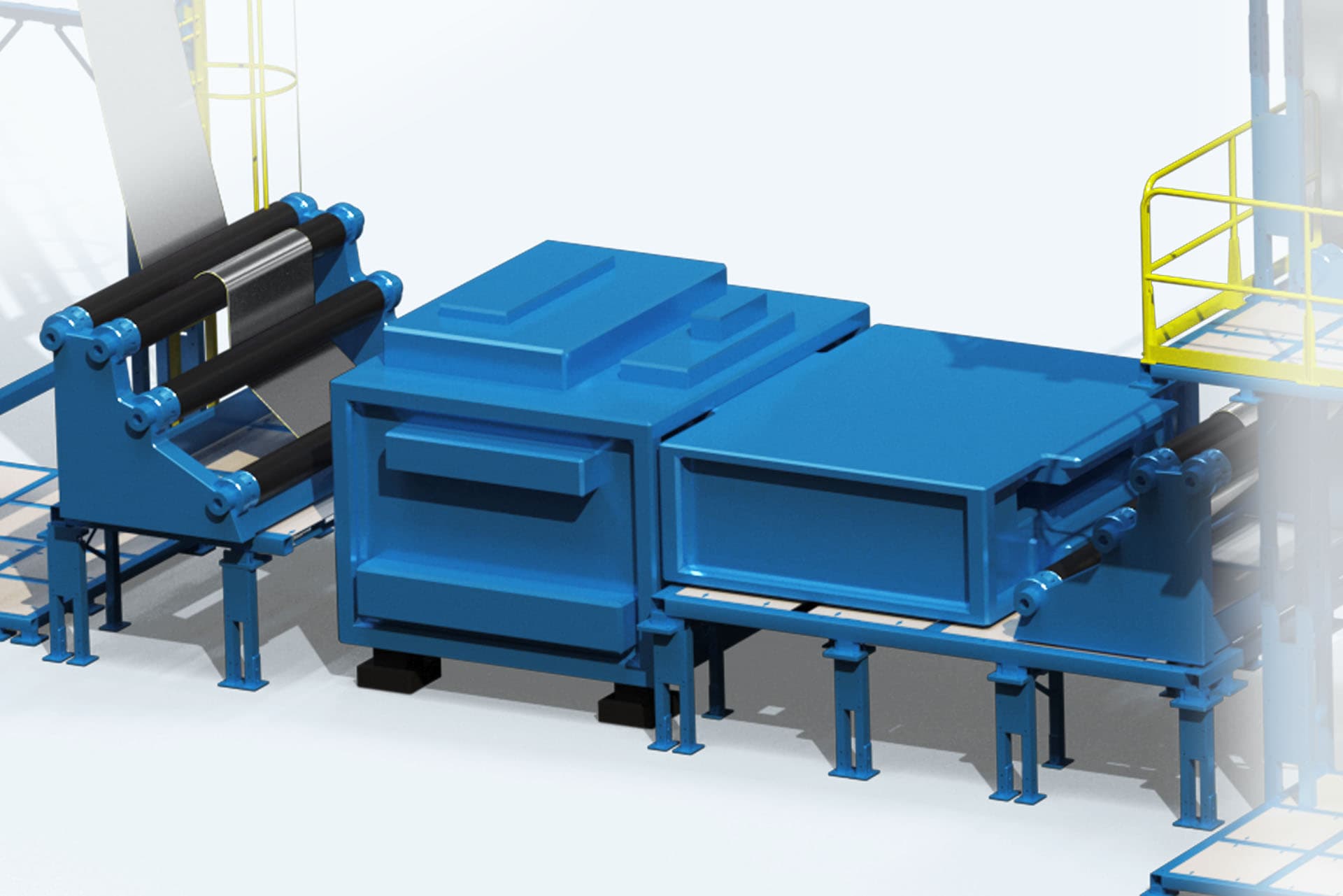
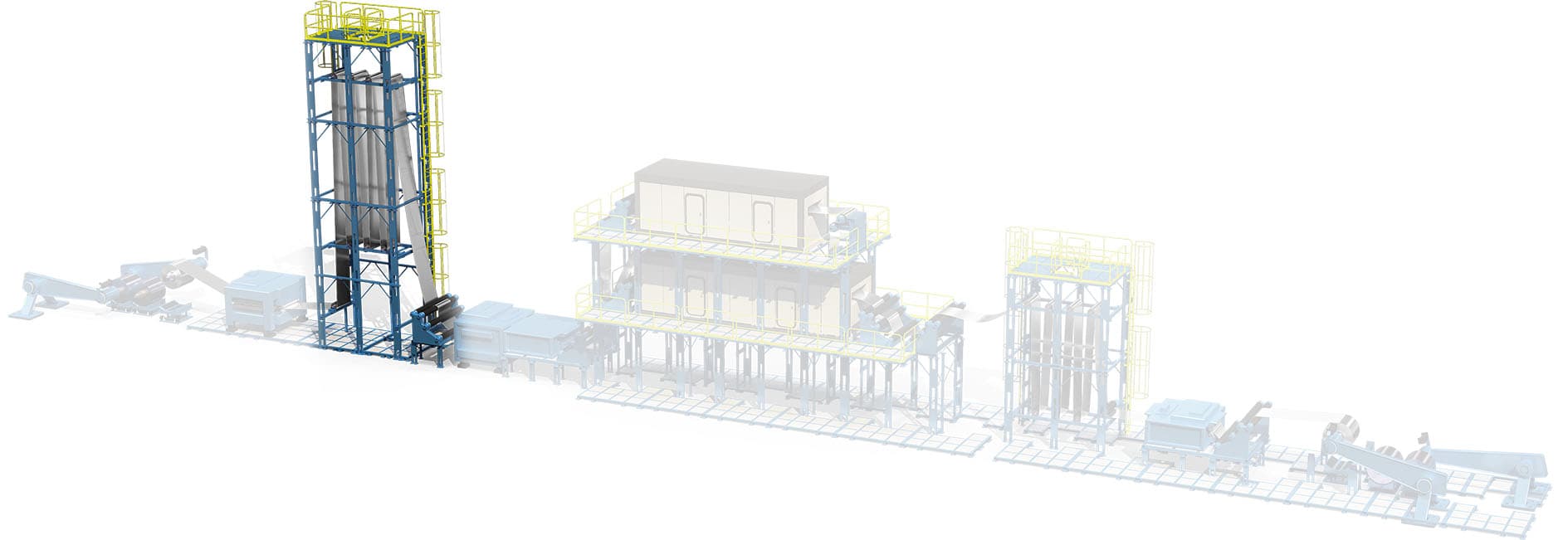
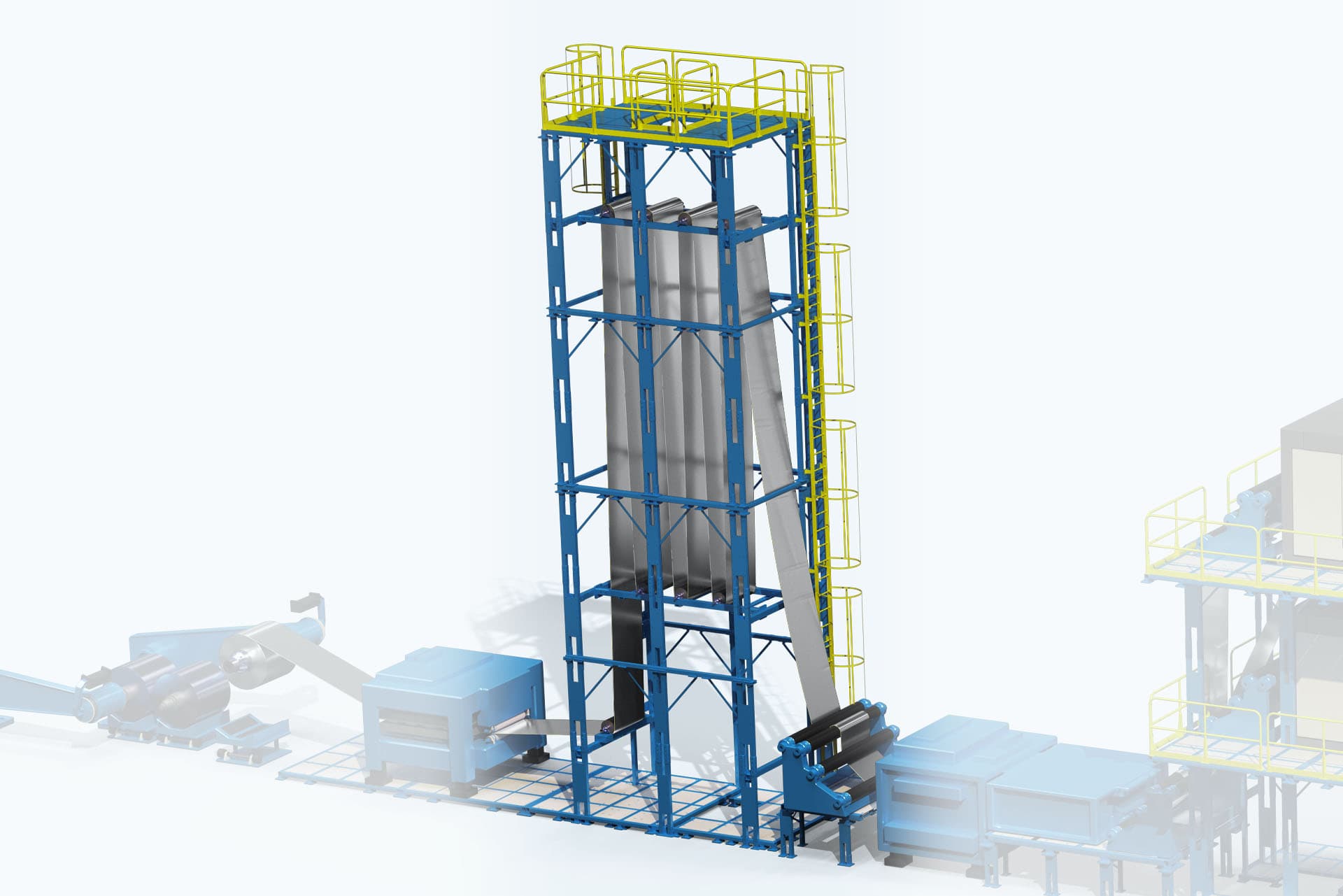
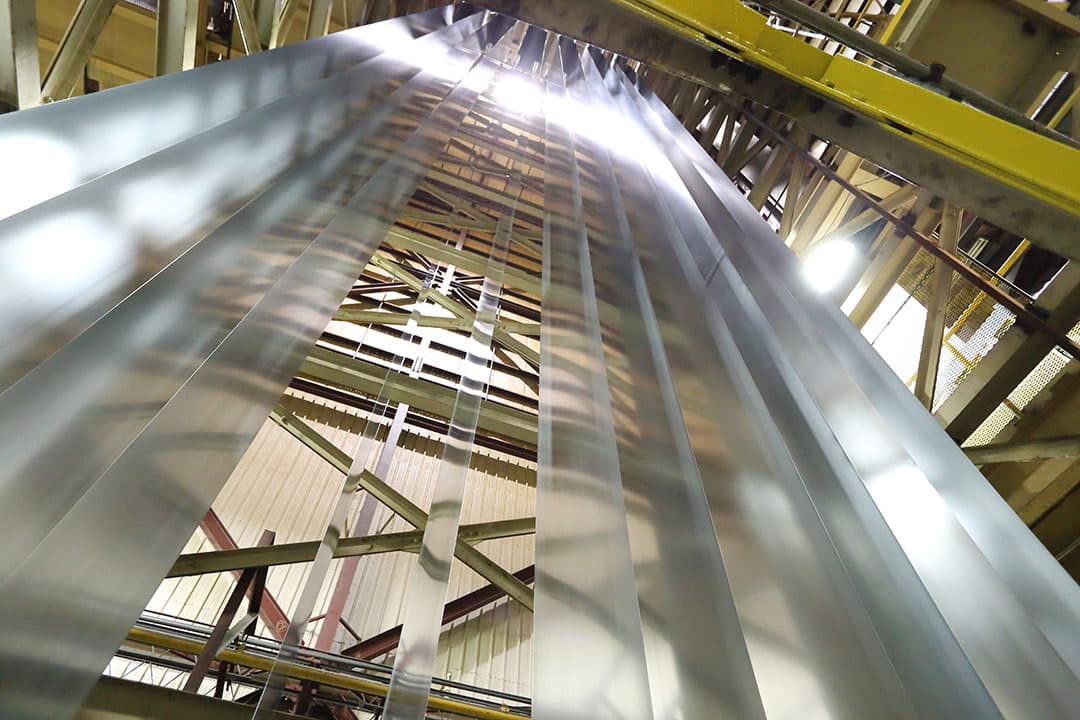
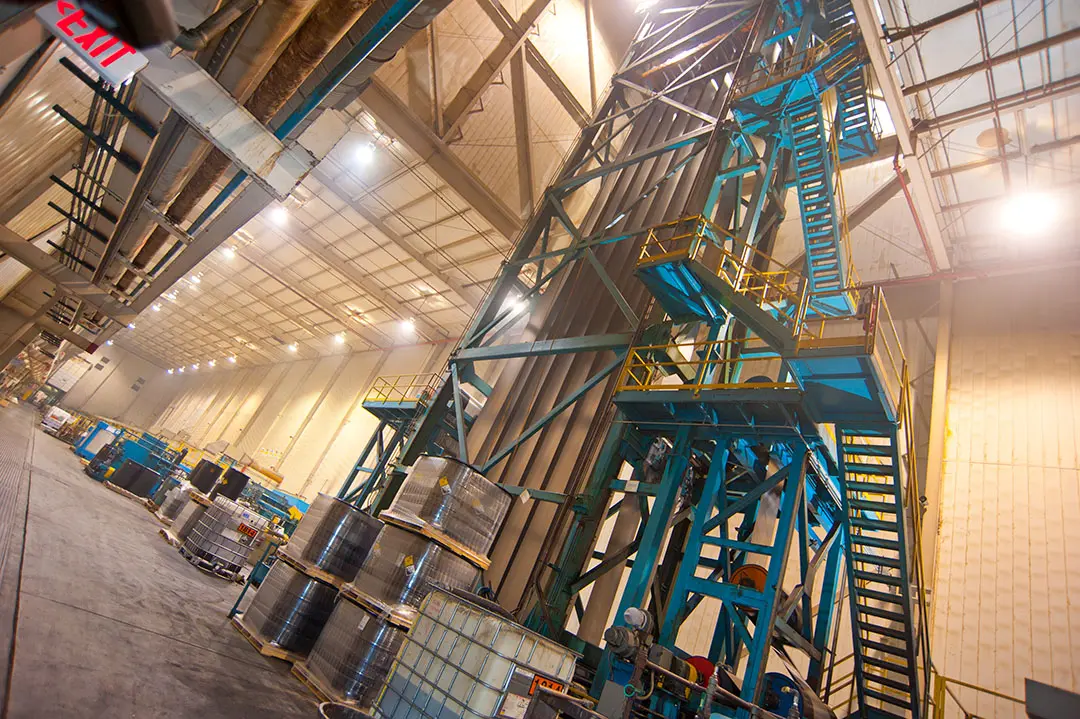
The accumulator is a structure that adjusts up and down to store material, which makes continuous operation of the coil coating process possible. This accumulation will continue to feed the coil coating processes while the entry end has stopped for the stitching process. As much as 750 feet of metal can be collected.
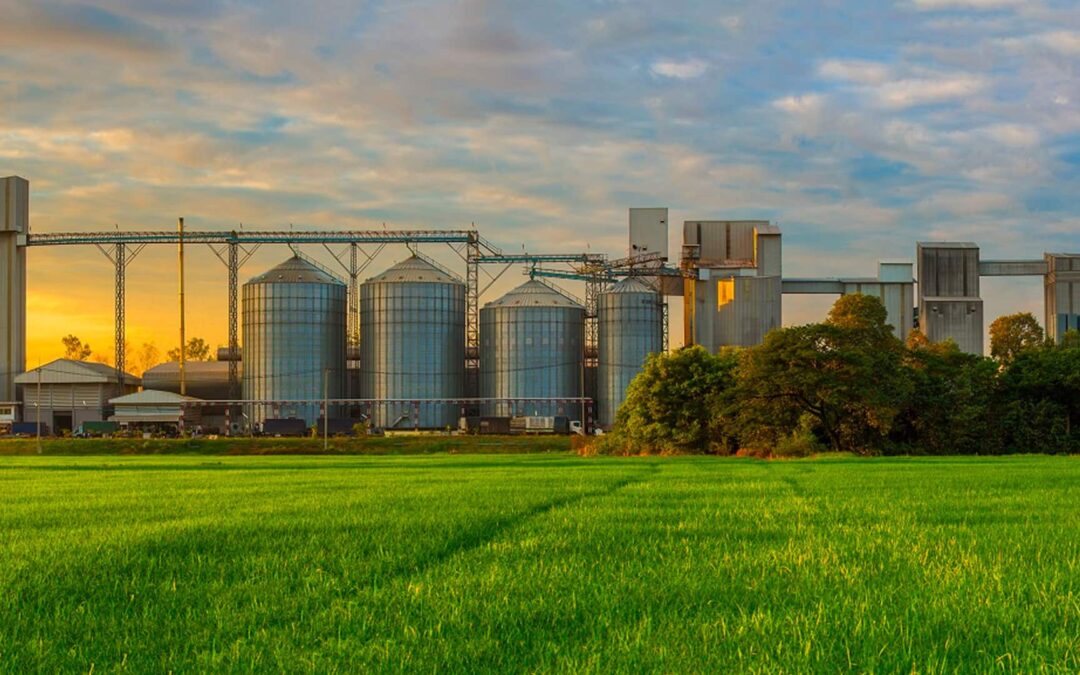
The simple answer is that almost anything on a farm or other agriculture operation can utilize galvanized steel. It can be used for stronger tractor parts, trailers, irrigation systems, fencing, tools, animal pens, barns, storage facilities, and more. Just about anything that sees heavy use, especially in an outdoor environment, can and should benefit from the power of galvanized steel.
At Cherry Creek Systems, the company works closely with customers to design and execute custom systems for greenhouse applications, using hot-dip galvanization to protect versatile, but hollow, steel tubing that brings strength to these systems. Galvanized solutions are also hygienic for use around animals and protect hollow parts and equipment in other areas of agricultural operations, such as conveyor castings, chains, supports, storage racks, irrigation equipment, refrigeration components to stand up to frigid temps and condensation, and much more.
In Agriculture, It’s Not Just Rust that Threatens Equipment
Other than the ever-present threat of rust and corrosion, equipment is exposed to other dangers, as well. Powerful storms and gusting winds fling debris at structures, machinery and fences, causing dents and more serious damage. Frequent use of equipment causes wear and tear, and extreme or changing temperatures can be dangerous, as well. The toughened zinc alloy coating of galvanized steel protects it from all of these things, repelling debris, shielding from abrasions, and maintaining overall structural integrity through the most extreme conditions.
Protecting the Budget
At first glance it might seem like all this extra protection makes galvanized steel a much more expensive investment than regular steel. However, not only is galvanized steel comparably priced, it also saves money down the road. The sturdiness of galvanized steel means it doesn’t need repairing or maintaining as often as other materials. That means less money spent on repairs and less downtime caused by maintenance. The abrasion-resistant surface makes it easier to clean and paint, and the rust-proof nature means it can go decades without needing to be replaced or patched up.
Toughen Up
Everybody should be aware of what they’re getting when choosing the best tools for the job. In almost every case, those tools are made with galvanized steel. The agriculture life will always be tough, but there’s no reason that equipment shouldn’t be up to the task.
A critical component to ensure reliable and resilient operations
Hot-dip galvanized steel is essential to protecting transmission and distribution structures and components for decades. Whether traditional or renewable sources, AZZ Hot-Dip Galvanizing plays a vital role in present and future electric infrastructure.
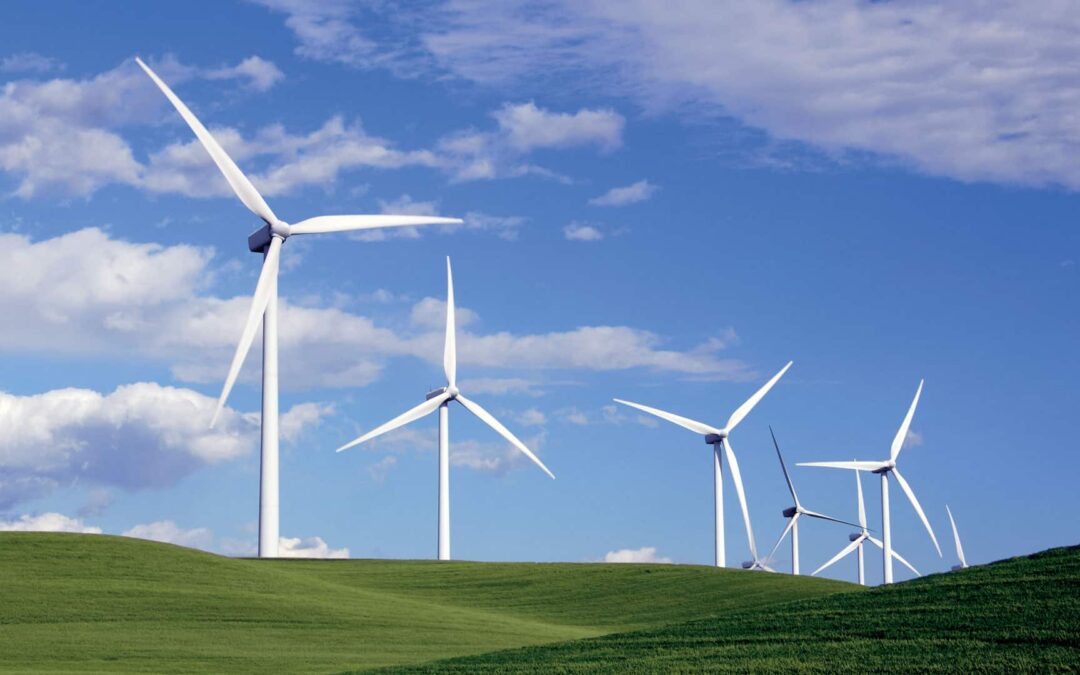
As North America’s largest galvanizer of fabricated steel, AZZ is a leading supplier of galvanizing to the renewable market. Hot-dip galvanizing provides the utility and T&D industry with corrosion protection for power transmission poles and lattice towers. To ensure wind and solar operations are a reliable power source, AZZ provides the proper corrosion protection needed for utility-scale racking systems, support structures, and other critical infrastructure assets.
Whether used in atmospheric, concrete, soil, or fresh- or salt-water applications, hot-dip galvanizing delivers maximum service life. There will be no difficult field repairs and no labor and material costs normally associated with replacing unprotected fasteners.
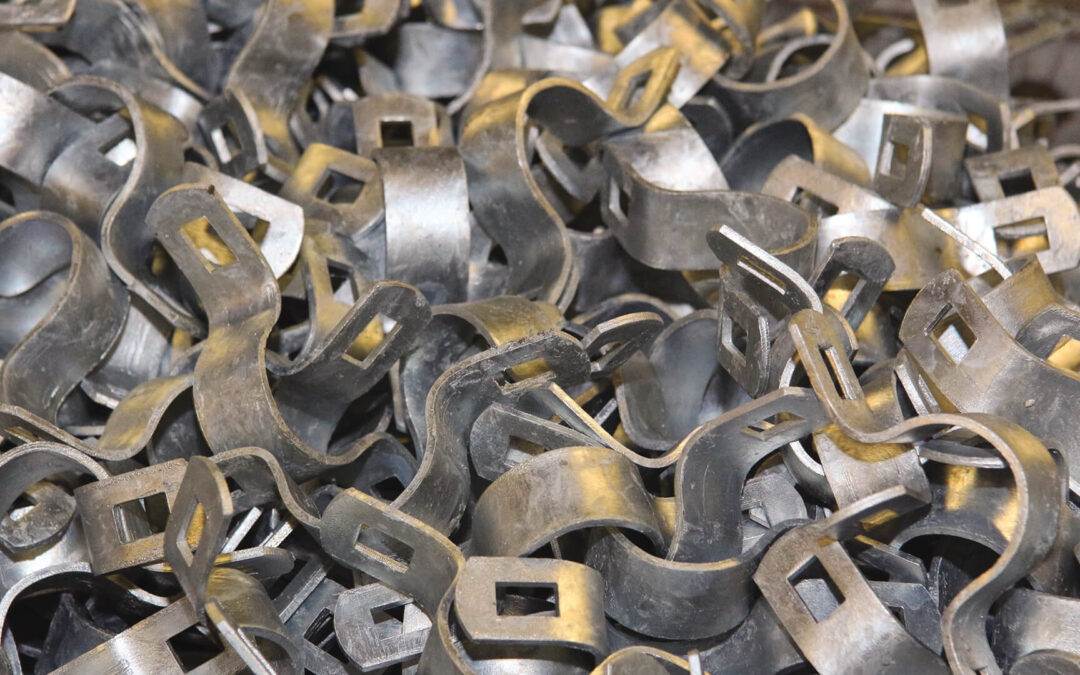
Left unprotected, steel will corrode and suffer loss of mechanical properties and integrity that is very dangerous when it happens to fasteners. Hot-dip galvanizing prevents corrosion by coating steel with zinc. The galvanized coating is metallurgically bonded to the underlying steel, forming an impervious barrier between the steel substrate and the corrosive environment. The hot-dip galvanized coating also preferentially corrodes to protect the fasteners underlying steel and is able to protect small areas of the fasteners steel that may become exposed when mechanically damaged. Hot-dip galvanizing is the most effective method for delivering both long-term barrier protection and cathodic protection.
Hot-dip galvanized fasteners are produced in the same galvanizing process, but are centrifuged in special equipment or spun when they are removed from the galvanizing bath to remove excess zinc. Items too long or too large to centrifuge, such as long threaded rods, may be brushed while hot to remove any excess zinc from the threads. Studs welded to assemblies may have to be cleaned after the assembly has cooled. This requires reheating with an acetylene torch and brushing to remove excess zinc. Alternatives to welded studs should be considered when possible.
The hot-dip galvanized process delivers an excellent fastener for a variety of reasons:
Complete & consistent coverage – the complete immersion in molten zinc ensures excellent corrosion protection for 100% of the exposed surfaces, with a consistent zinc thickness.
Coating thickness – hot-dip fasteners, depending upon diameter, will have from 1.7 to 3.4 (43 to 86 microns) mils of the impervious zinc coating. Zinc-plated fasteners have a thin zinc coating, up to only 1 mil (25 microns).
Cathodic protection – unlike other barrier coatings, such as paint, zinc is a sacrificial metal and preferentially corrodes to protect the underlying steel.
Bond strength – hot-dip fasteners have a coating bond strength in the range of 3600 psi (24.82 MPa). The coating is extremely difficult to damage. Painted and zinc plated coatings have a typical bond strength of only a few hundred PSI and are easily scratched and removed.
Hardness – Hot-dip galvanized fasteners have zinc-iron alloy layers, formed during the galvanizing process, that are harder than the base steel itself. These abrasion resistant layers make the galvanized coating difficult to damage during tightening.
Temperature range – Galvanized fasteners perform well across a broad temperature range, from continuous exposure in the arctic climates to the extremes of 392°F (200°C) in processing plants.
Paintable – Prepared according to ASTM D 6386 (Practice for Preparation of Zinc [Hot-Dip] Galvanized Coated Iron and Steel Product and Hardware Surfaces for Painting), hot-dip coatings are successfully painted, providing long-lasting under film corrosion protection.
Applicability – Hot-dip galvanizing is a factory-controlled process, independent of weather conditions, and touch-up in the field is rarely necessary. However, should field touch-up or repair of the galvanized coating be needed, zinc coatings can be repaired following the guidelines of ASTM A 780 (Practice for Repair of Damaged and Uncoated Areas of Hot-Dip Galvanized Coatings).
Suitability – The thicker zinc coating on hot-dip fasteners translates into excellent performance in extreme weather and atmospheric conditions. Larger connections are most commonly hot-dip galvanized. Additionally, hot-dip galvanized fasteners are suitable for use in contact with treated wood.
So, how do we protect the very things we’ve installed for protection? The answer is hot-dip galvanization, which makes the steel stronger, longer-lasting, and resilient against all sorts of damage and allows fences to excel in an impressive variety of use cases.
Use Cases for Hot-Dip Galvanized Fencing
There are a lot of uses for galvanized steel fencing. While many people choose the superior protection and durability for agricultural purposes, the benefits can have creative applications. Let’s explore a few of the possibilities for using galvanized steel fencing.
Sound Dampening Barrier
The Department of Transportation and Development in Louisiana has chosen to use galvanized steel fencing to create a barrier alongside Interstate 12. The tough galvanized properties of the barrier allow it to dampen the sound of traffic for local residents while ensuring it will last a long time with little maintenance.
Sound and Weather Dampening
Likewise, a galvanized steel barrier is being used alongside I-465 in Indiana. The durable nature of the barrier will allow it to withstand the corrosive salt used on the interstate during the tough Midwest winters.
Chicken Barn
There are nearly endless examples of galvanized steel being used in structures to house animals. For instance, Versova has constructed a barn to house around 200,000 chickens using galvanization.
Not only will the structure have the sturdiness and long lifespan of galvanized steel, but the galvanization process results in metals that are environmentally safe and free of any toxins or pollutants that might harm the barn’s inhabitants.
Any Day Now Farm in Kentucky has also leveraged galvanized steel for everything from horse stall gates to fence paneling to provide efficiency and durability alongside aesthetics.
Defying the Forces of Nature
Galvanized fencing is a stalwart first line of defense against the elements in all their fury. Unlike other materials, it can take a beating from all sides in all weather and remain standing strong.
Rust
Untreated steel and iron are at the mercy of moisture and oxidation, rusting away and requiring frequent maintenance and cleaning.
Galvanized steel, on the other hand, turns away rust with its impenetrable zinc-alloy coating. Zinc is a natural rust repellent and the perfect material to protect vulnerable metals against corrosion.
Weather
The winds buffet, downpours soak, hail pelts and batters, storms rumble, and none of it matters to galvanized steel fencing. Not only is the zinc-alloy coating resistant to moisture and rust, it’s also strong against abrasions. That means no amount of debris or falling rocks of ice will penetrate to the steel underneath. And, because of that resistance to abrasion, any cleaning or repainting that needs to be done will be easier on the smooth, galvanized surface of the fencing.
Time
The most powerful force of all, time moves through all things in an unstoppable wave of change and erosion. And while a galvanized steel fence will eventually succumb and need repairing or replacement, it could be decades before that happens. Galvanized fencing doesn’t just last years, it lasts generations.
Affordable and Efficient Protection that Lasts
All of these benefits might seem like they should come with a high price tag to match, but that couldn’t be further from the truth. In fact, galvanized steel fencing actually saves money.
Sturdier fencing means less damage, which means less money spent on repairs and maintenance. Less maintenance means fewer man hours spent on the fencing, which means more time to work on other things. Longer lasting galvanized steel means fewer replacements than stone, wood or untreated steel, and a stronger fence means better protection for everything inside of its protective barrier.
When the decision is made to hot-dip galvanize, the design engineer should ensure that the pieces can be suitably fabricated for highest-quality galvanizing. Best practice suggests steel to be galvanized should be symmetrical and of similar thickness.
Steel being galvanized progresses through a temperature cycle upon immersion into and withdrawal from the galvanizing bath. Because parts are immersed at an angle, uneven heating occurs, creating a temperature profile along the part being galvanized. This temperature profile allows the steels internal stresses to be relieved at different times in the immersion cycle. These stresses may cause changes in shape and/or alignment (distortion and warping).
The following steps can be taken to minimize this risk:
Where possible, use symmetrically rolled sections in preference to angle or channel frames. I-beams are preferred to angles or channels.
Use parts in an assembly of equal or near equal thickness, especially at joints.
Use temporary bracing or reinforcing on thin-walled and asymmetrical designs.
Bend members to the largest acceptable radii to minimize local stress concentration.
Accurately pre-form members of an assembly so it is not necessary to force, spring, or bend them into position during joining. Continuously weld joints using balanced welding techniques to reduce uneven thermal stresses. Pinholes from welding are very dangerous in items to be galvanized and must be avoided. Staggered welding techniques to produce a structural weld are acceptable. For staggered welding of 1/8-inch (4 mm) or lighter material, weld centers should be closer than 4 inches (10 cm).
Avoid designs that require progressive-dip galvanizing. It is preferable to build assemblies and subassemblies in suitable modules so they can be immersed quickly and galvanized in a single dip. In this way, the entire fabrication can expand and contract uniformly. Where progressive dipping is required, consult your galvanizer.
Consult your galvanizer regarding the use of temporary bracing or reinforcing.