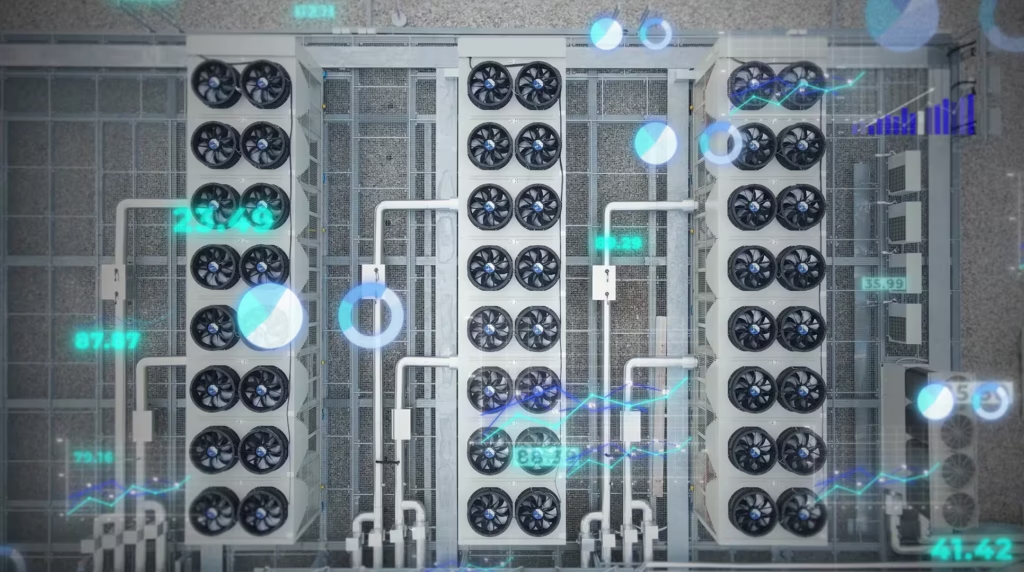
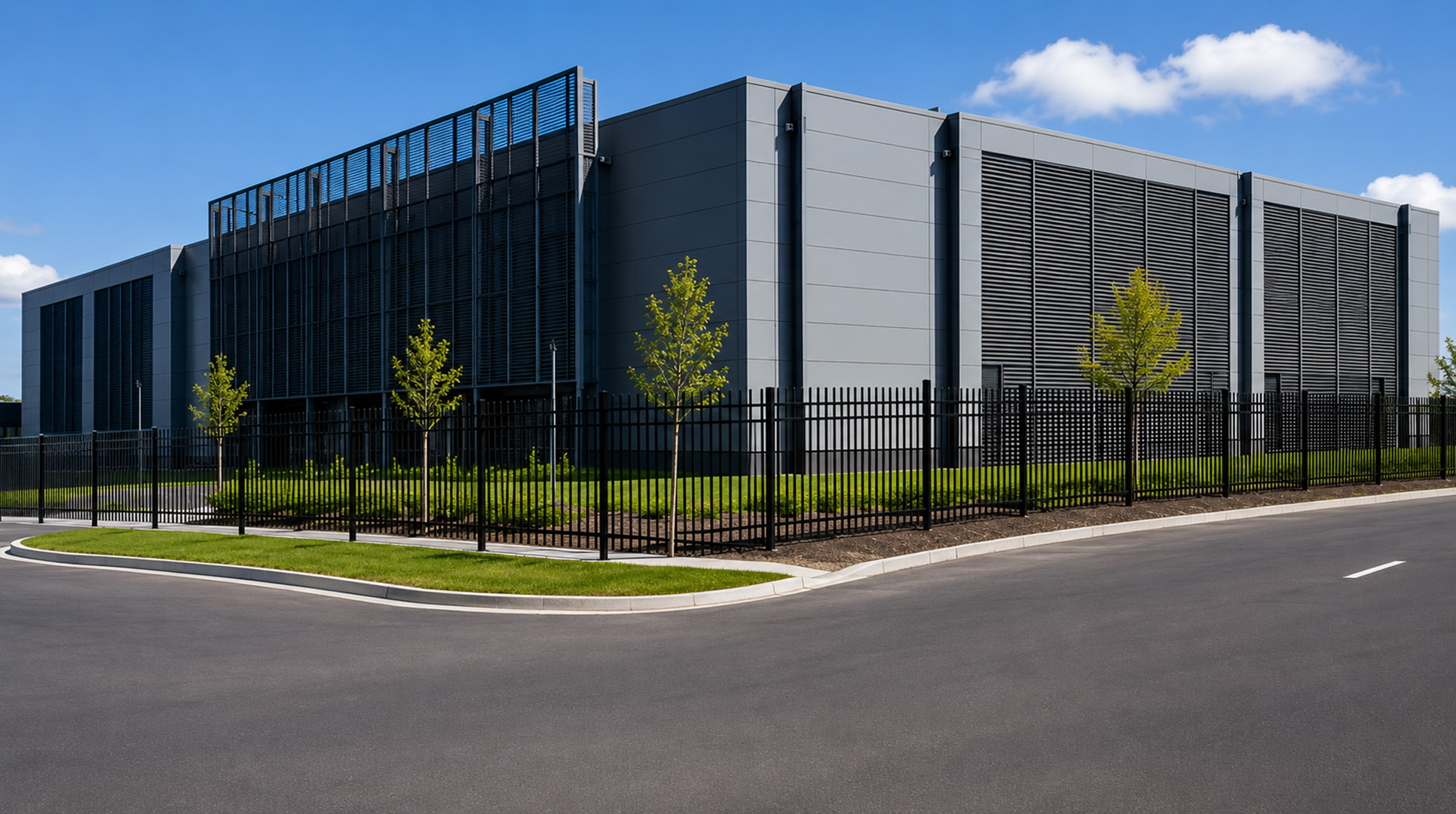
Today’s facilities are larger, more visible, and increasingly integrated into corporate campuses, suburban developments, and high-profile commercial environments.
As hyperscale, colocation, and edge computing facilities continue expanding across North America, developers are placing greater emphasis not only on operational reliability, but also on appearance, durability, and long-term maintenance performance.
This shift is helping drive increased interest in powder coating for exposed data center infrastructure.
Data Centers Are No Longer Hidden Infrastructure
The rapid growth of AI, cloud computing, and digital services has transformed data centers into some of the most important pieces of infrastructure being built today. In many markets, these campuses are highly visible developments designed to operate for decades while maintaining a clean, modern appearance.
Unlike traditional industrial facilities, modern data centers often feature:
- Architecturally finished exterior elements
- Decorative screening systems
- Public-facing perimeter infrastructure
- Branded campus environments
- Rooftop mechanical screening
- Enhanced landscaping and pedestrian access areas
As a result, owners and developers are increasingly evaluating exterior finishes not only for corrosion protection, but also for aesthetics and lifecycle performance.
Why Powder Coating Fits Modern Data Center Design
Powder coating offers a durable, attractive finish capable of supporting both the functional and visual demands of modern data center environments.
Because the finish is applied electrostatically and cured into a hard, protective coating, powder coating provides excellent resistance to weathering, chipping, fading, and general environmental exposure. This makes it particularly well suited for exposed infrastructure expected to maintain appearance over long service lives.
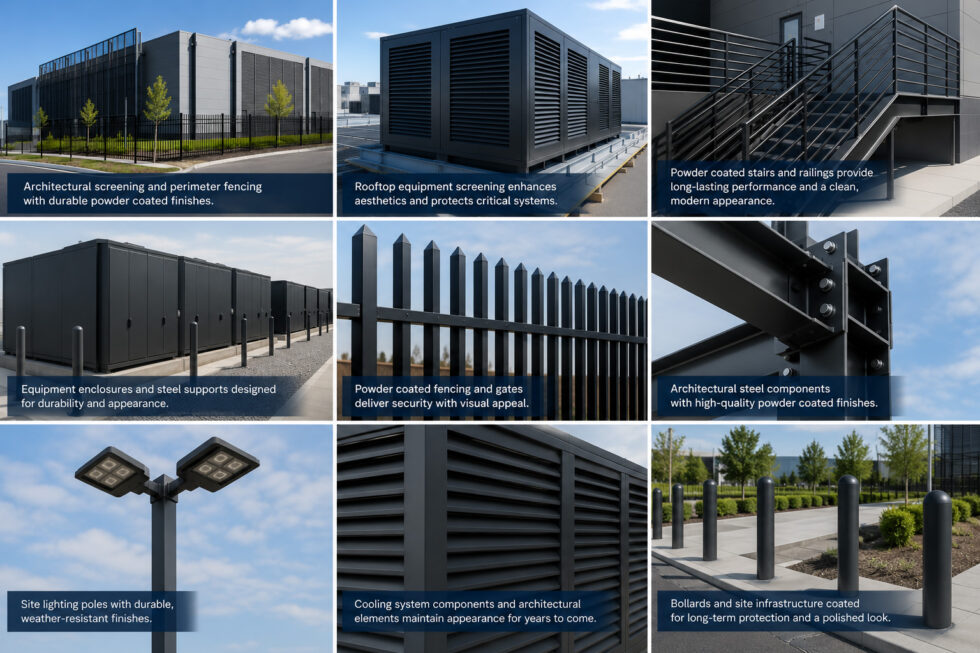
In data center applications, powder coating is commonly used on:
- Rooftop screening systems
- Exterior railings and stair systems
- Equipment enclosures
- Site fencing and gates
- Lighting poles
- Architectural support steel
- Cooling system components
- Bollards and barriers
- Mechanical support structures
- Exterior metal panels
These components often remain highly visible throughout the life of the facility, making appearance retention an important consideration alongside durability.
Balancing Industrial Performance with Architectural Expectations
Data centers present a unique challenge for designers and developers. The infrastructure must perform like heavy industrial equipment while often meeting the visual standards of commercial architecture.
This is particularly true for hyperscale campuses and urban-adjacent developments where facilities may be visible from major roadways, corporate developments, or surrounding communities.
Powder coating helps bridge that gap by providing:
- Consistent color and finish quality
- Strong UV and weather resistance
- Enhanced appearance retention
- Design flexibility across a wide range of colors and textures
- Long-term durability with minimal maintenance
For developers seeking a modern, high-quality appearance across large campuses, powder coating provides an effective solution for exposed metal infrastructure.
The Value of Duplex Systems in Harsh Environments
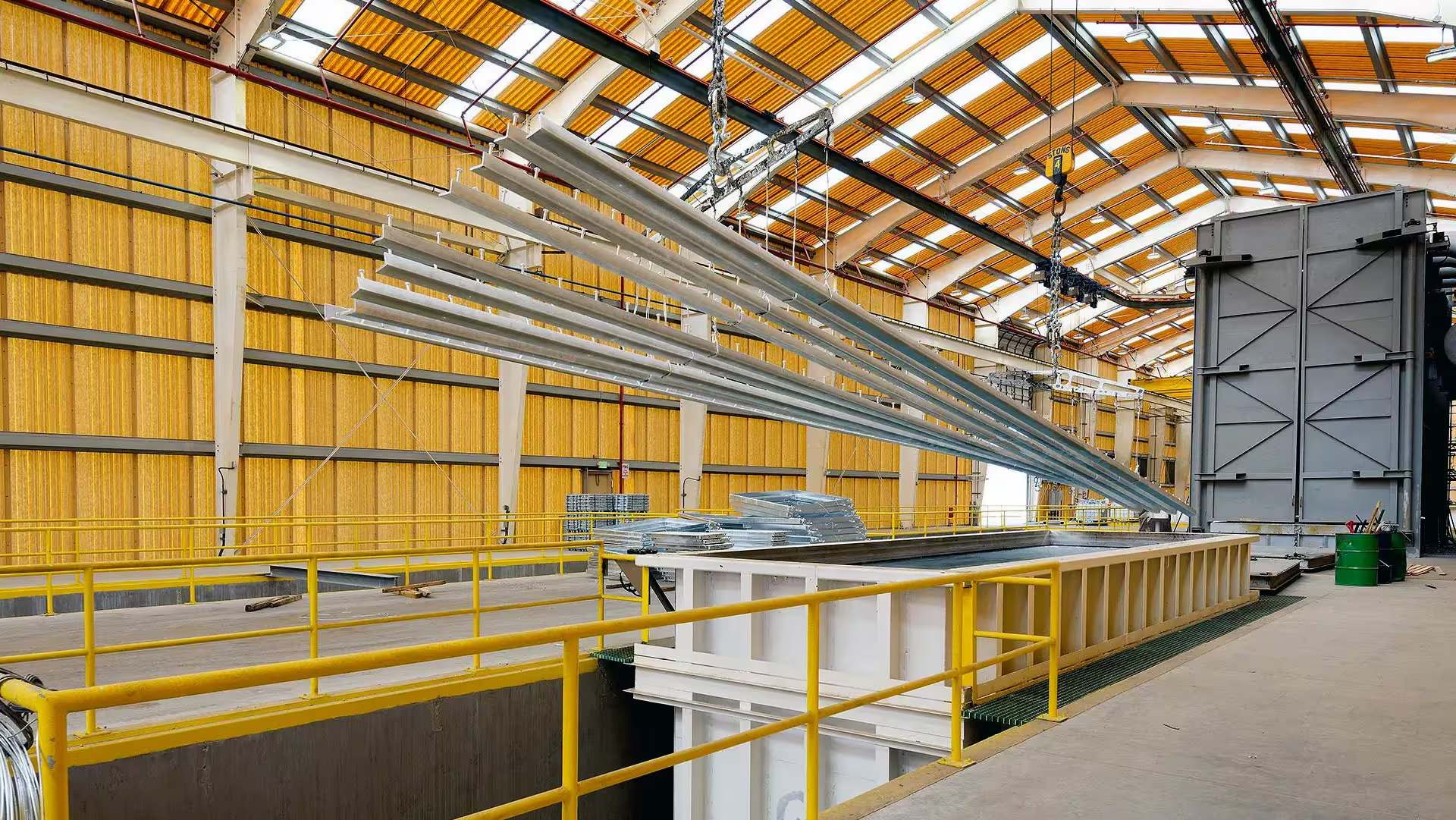
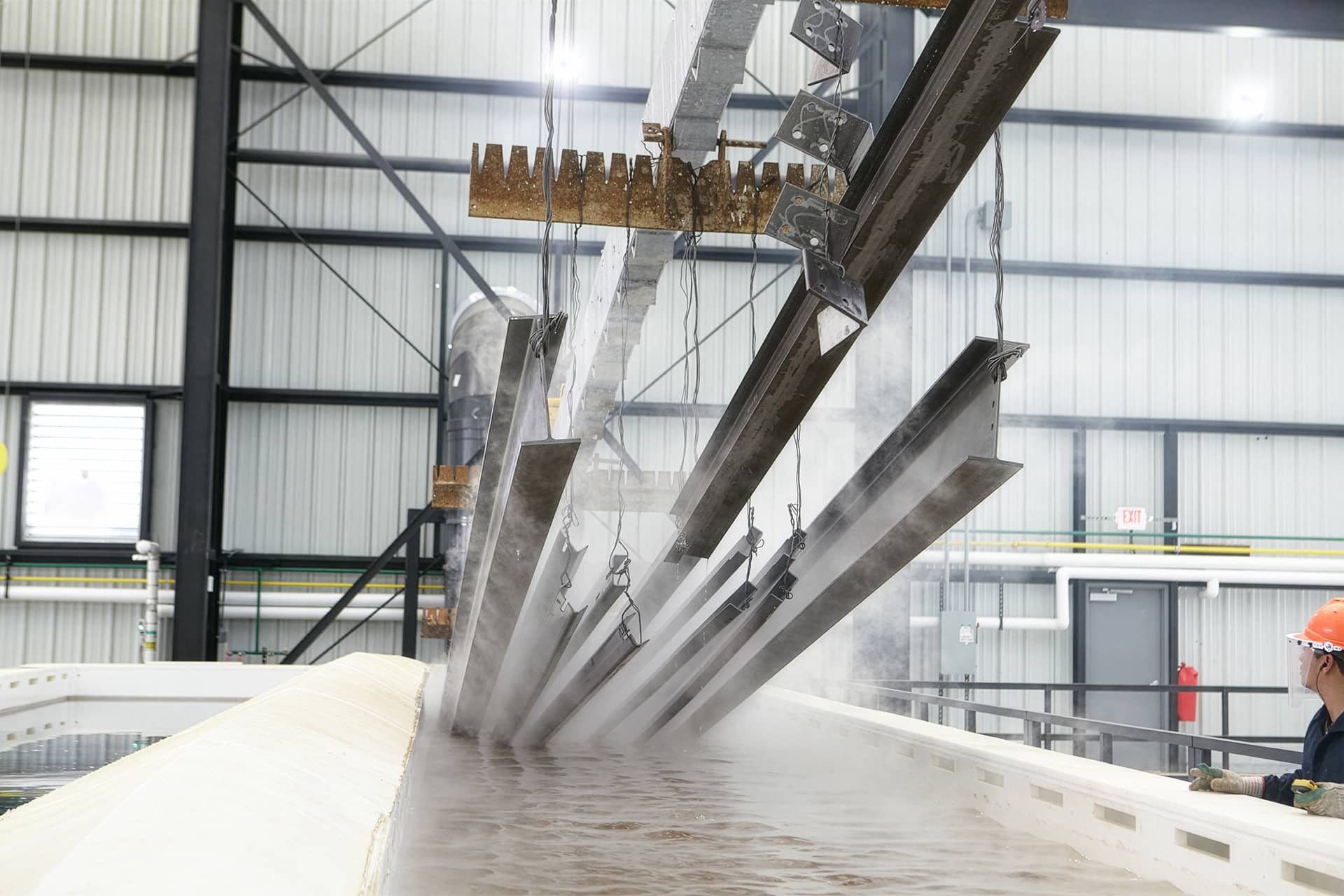
In many cases, powder coating is paired with hot-dip galvanizing in a duplex coating system.
This combination delivers two important advantages:
- The galvanizing protects the steel from corrosion.
- The powder coating provides enhanced aesthetics and additional environmental protection.
Duplex systems are especially valuable for data center projects located in:
- Coastal regions
- High-humidity climates
- Industrial environments
- Areas with aggressive weather exposure
The combined system can significantly extend the service life of exposed steel infrastructure while helping maintain a clean, uniform appearance over time.
For mission-critical facilities designed around long-term reliability and reduced maintenance, duplex systems can provide meaningful lifecycle value.
Supporting Large-Scale Infrastructure Projects
As data center construction accelerates, developers and fabricators are increasingly looking for partners capable of supporting complex projects with demanding schedules and large production volumes.
AZZ Surface Technologies provides powder coating, blasting, and duplex coating solutions for infrastructure, industrial, and architectural applications across North America. Combined with AZZ’s hot-dip galvanizing network, these capabilities help support large-scale projects requiring both corrosion protection and durable architectural finishes.
From structural support components and mechanical infrastructure to highly visible exterior features, powder coating continues to play an increasingly important role in modern data center construction.
Designing for Long-Term Performance
Modern data centers are designed for decades of continuous operation. As developers continue prioritizing durability, appearance, and lifecycle performance, powder coating is becoming an increasingly important part of the conversation surrounding exposed infrastructure.
By combining long-term durability with architectural flexibility, powder coating helps support the evolving demands of today’s data center environments while contributing to infrastructure built to perform and maintain appearance over time.
Key Takeaways
- Modern data centers increasingly prioritize both durability and appearance.
- Powder coating provides durable, weather-resistant finishes for exposed infrastructure.
- Common applications include screening systems, railings, enclosures, fencing, and support structures.
- Powder coating helps bridge the gap between industrial performance and architectural expectations.
- Duplex systems combine galvanizing and powder coating for enhanced corrosion protection and aesthetics.
- Long-term lifecycle performance and reduced maintenance are becoming increasingly important in data center construction.